Articles 7 & 8: ‘All children have the right to a registered name, a nationality, an identity’

Article 7 (Registration, name, nationality, care): All children have the right to a legally registered name, recognised by the government. Children have the right to a nationality (to belong to a country). Children also have a right to know and, as far as possible, to be cared for by their parents.

Article 8 (Preservation of identity): Children have the right to an identity – an official record of who they are.  Governments should recognise their right to a name, a nationality and family ties.

How easy it is to take these rights for granted.  Most children, whether living with their birth parents, other relatives, in foster or adoptive families, or even in an informal care situation, enjoy these rights.  Their identity and the right to belong to their community and country is secure.  But what about children who, because of intolerable conflict situations in their country of birth, are removed to another, safe country, perhaps on another continent?  War has firstly violated their right to be cared for by their own parents, but they retain their identity as a citizen of that country, right?

A report by The Independent has the headline: ‘Hundreds of Afghans who grew up in UK face deportation to a country they “barely remember”.’  This refers to children who were sent to the UK to live with British foster parents; they went to school here, took GCSEs and A Levels and became active members of their communities. Sadly, they mostly had little or no contact with their country of birth. But as these young people reach the age of 18 they face deportation ‘to a country that they barely now remember’.  Under international law, the UK can’t send unaccompanied asylum-seeking minors back to their home country, instead it issues temporary leave to remain, which ends of course, on reaching adulthood.  It then becomes much harder for them to apply for permanent asylum in their adopted country.

What awaits them when they return to Afghanistan?  Often, they can’t trace their birth families, not having had contact whilst living in the UK. The article says: ‘Their Westernised mannerisms and accents also mean they are often regarded with suspicion…..and some…..have been left homeless, chased by the Taliban, kidnapped, ransomed and beaten.’  Those who remain in the UK, waiting for their application to be considered, are in limbo.  They can’t get a job, they can’t go to university.  The article doesn’t say whether they can remain living with their foster families, but in any case, this isn’t their country any more.  So, while these young adults have a registered name and they have ties to a ‘temporary’ family, they don’t ‘belong to a country’, surely a huge part of anyone’s identity.  Needless to say, both the UNHCR and the UK’s Children’s Commissioner’s office have criticised The Home Office’s policy towards asylum-seeking children.  You can read the full article here.

Yet another example of the trauma, devastation, even the ruination of young people’s lives caused by war.

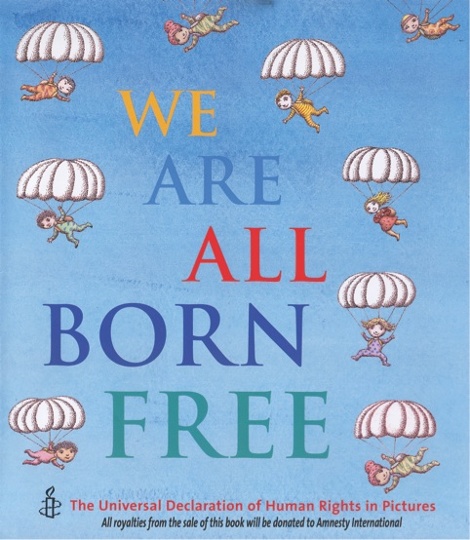
Image result for we are all born free book

‘We all have the right to belong to a country’

We are all born free: The Universal Declaration of Human Rights in Pictures

Published by Frances Lincoln Children’s Books www.franceslincoln.com in association with Amnesty International.

A
Article 6 (Survival and development): Children have the right to live. Governments should ensure that children survive and develop healthily.

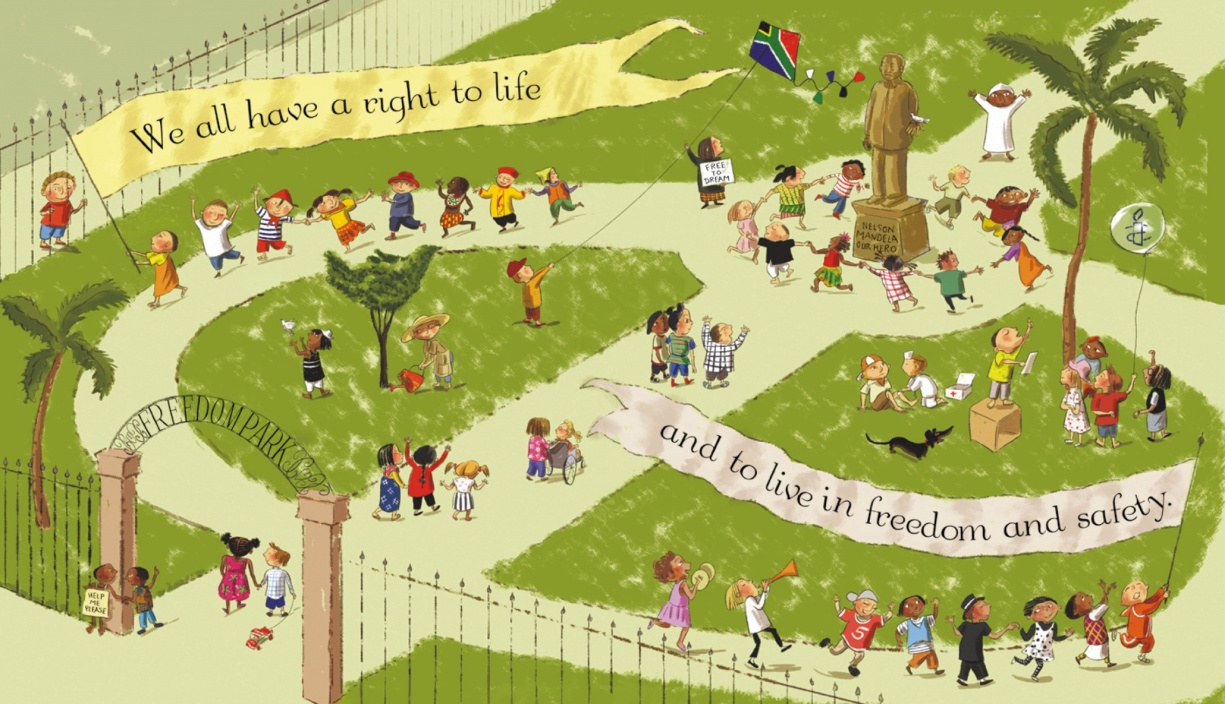
Article 6 reflects Article 3 of The Universal Declaration of Human Rights which states: ‘We all have the right to life, and to live in freedom and safety.’  I’ve got a beautiful book called ‘We are all born free: The Universal Declaration of Human Rights in Pictures.’* Each ‘Right’ is colourfully illustrated by a different artist.  The illustration for Article 3 is a picture of ‘Freedom Park’, a garden with children of all nationalities running, playing, parading with instruments, one is flying a kite, another watering a plant, others join hands dancing round a statue of Nelson Mandela.  The feeling is of enjoyment, being with your friends, in the uninhibited way that children do things.  I mean of course, children who are lucky enough to live in freedom, without daily fear for their lives and those of their families.

So the right to life isn’t just simply to stay alive, it’s about mental and physical health and emotional well being (as a Christian I would add spiritual well being).  On a training course recently I learned that by the age of two years, 75% of a child’s brain growth has occurred and that the experiences of the child up to that age physically affect brain structure.  A child who has experienced fear, pain, confusion, separation and loss of loved ones as a result of living with conflict will actually grow and develop differently than if they had not had those experiences.  Most children, whatever their environment will grow up loved and cared for to the best of their parents’ ability, which will give them a certain amount of resilience, but this will not, in the long term, protect them from the ‘risk factor’ of war.  This is a sobering thought, isn’t it?  Is any war worth that?

A video clip I was sent shows children aged about 8 to 12 in Syria talking about no longer being able to go to school, playing in the war damaged street, the deaths of friends and family.  Suddenly there was the sound of gunfire.  The children stood up unhurriedly and started to go inside.  One boy said calmly to the interviewer, ‘It’s a sniper, it’s normal’.  This was obviously an everyday occurrence, just an inconvenient interruption, not a cause for panic or fear.  Perhaps it once was, but now these children are desensitized.  In a few years’ time will they be wielding the guns?

I’m sorry this is such depressing reading, I have been deciding how, and even whether, to approach writing about this Article for some weeks.  But ultimately, it needs to be said, for the sake of the children.  And can I mention again the brilliant ongoing work by UNICEF, Save the Children, Tearfund, Christian Aid and many other organisations, to increase resilience and decrease some of the damage which war inflicts on the youngest, least powerful members of society.

34f23d50-e466-4e8a-af56-cc83ae38248c-470x540 823327fd-ed3a-42be-8136-008dde4cad54-2060x1185

*Published by Frances Lincoln Children’s Books www.franceslincoln.com in association with Amnesty International. One of my favourite books!

Article 3: ‘All adults should do what is best for children’

Article 3.  The best interests of the Child: ‘The best interests of children must be the primary concern in making decisions that may affect them.  All adults should do what is best for children. When adults make decisions, they should think about how their decisions affect children…..’

Years ago, we were a foster family for our local authority and during that time, we cared for children ranging from 10 months old to 12 years.  As the main carer, I was frequently involved in Care Plans and permanency planning for the children, and the proposed plans always kept the best interests of the child at the forefront.   This requires particular attention if children are below the age where they can participate and give their views about what was going to happen to them.  It often felt as if planning procedures were taking an unnecessarily long time, but in retrospect I can see how important it is to make the right decisions for each and every child.  Children don’t always have enough knowledge or life experience to make informed decisions about what should happen to them, so adults have to take the responsibility of getting it right.

I wanted to mention this to put into context the situation of children living in a conflict zone.  Sadly, such children are not at the forefront of their country’s policy making.  They are left to survive as best they can in circumstances which do not meet their physical, emotional, cognitive and spiritual needs.  The thing about war is, it’s always to provide a better future, a better place for children to grow up in.  Terrible things have to be endured for the glorious day, somewhere in the future.  But how can that be, if the legacy of war is landmines which will continue to maim and kill, long after the fighting is finished, as in Vietnam and Laos?  And that’s just the potential for physical harm; the psychological and emotional damage is equally devastating.  This quote from Father Manuel Musallam in the Gaza Strip:  ‘Children and adolescents have been hurt in body and spirit, unable to find joy, talk about peace or offer it to others.  How can we convince these kids not to hate Israelis?’  aisianews.it.   Will child victims of war ever have a ‘normal’ life again?

And think about those rights I talked about previously: if the local school has been bombed, there will be no education.  If the streets aren’t safe from mortar fire, there will be no place to play.  If it’s impossible to get to the health centre for basic health care, or worse, the hospital, for urgent medical treatment, even survival is threatened, and this is a daily experience for so many children.  Having said that, in some areas there are considerable efforts to work in the best interests of children.  Local communities are working alongside NGO’s (amazingly, given the circumstances) to organise evacuation programmes for women and children to places of safety; or to set up makeshift schools and health care centres, and even to provide play and activity programmes against a backdrop of fear, uncertainty and chaos.  These slightly more fortunate children can experience at least a degree of ‘normal life’.

normal_kids_out_in_spring

Is this how childhood should look, innocent and carefree?

‘All children have the right to be treated equally’

Article 2 is concerned with non-discrimination: ‘The Convention applies to all children, whatever their race, religion or abilities, whatever they think or say…….no child should be treated unfairly on any basis.’  I’ve left out a bit about language/gender/disability/culture/status of parents.

Of course in one sense war doesn’t discriminate, all children affected by war are at risk of trauma, injury and death.  And all children in a war zone are denied the right to education, healthcare, shelter, and a ‘normal’ childhood; they are definitely ‘treated unfairly’.

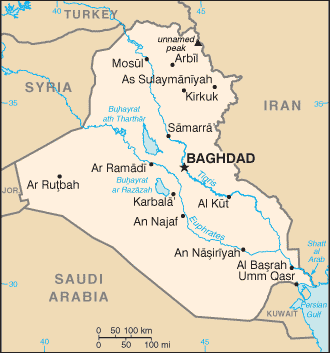
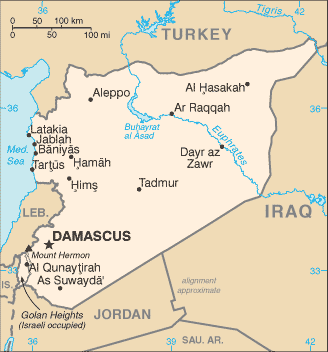
But further discrimination can be evidenced: poorer families are unable to move to safer areas because of low income/status.  These families struggle to survive at the best of times, they certainly don’t have the resources to move themselves and their possessions away from the conflict zone.   And you might remember the story about the Yazidi (Iraqi) father who was forced to abandon his 4 year old disabled son as the family fled from the advance of IS jihadists on their village.  The family travelled on foot for days over a mountain range and were unable to carry little Aziz any further.  Although, Aziz was rescued and taken to hospital in Syria, sadly he died.  His father was devastated, distraught, heartbroken.  But I don’t condemn him, he didn’t leave his son to die, war killed him.

‘How is it that women and girls make up the highest proportion of refugees and displaced populations and yet they are the least visible?’ asks David Miliband, former Labour politician and now CEO and president of the International Rescue Committee.  This question prefaces a report from the IRC entitled ‘Are we listening? Acting on our Commitments to Women and Girls affected by the Syrian conflict.’  And women and girls in conflict situations face much worse:  in Iraq they are captured and sold into sexual slavery by IS militants, considered to be the spoils of war. A 17 year old girl says:  ‘Nor do they spare the girls.  Some of our group are not even 13 years old….They say we are like goats bought at a market’.  Both these quotes are taken from an article in Premier Christianity, November 2014 issue: ‘The Female Cost of War’  (premierchristianity.org.uk).  In countries affected by war, the powerful will always exploit the vulnerable.

I talked in the first post about the BBC documentary by Lyse Doucette on the children who live constantly with the threat of violence and death.  At the end of the programme we see a girl, about 8 or 9, with one leg, supported on crutches.  She doesn’t have a prosthesis (artificial leg) and moves along the road with difficulty.  She stands and watches a group of her friends playing in the war ravaged street, chasing each other and sitting playing games with pebbles in the rubble.  She can’t join in their games but she doesn’t look sad, just resigned to her situation.  War has robbed her of her right to play and join in (Article 31.)   

We can clearly see that certain groups of children are more likely to experience discrimination than others.


Children in the Conflict Zone

What is the UNCRC?  (Section 2 of 2)

‘A legally-binding international agreement setting out the civil, political, economic, social and cultural rights of every child, regardless of their race, religion or abilities.’(savethechildren.org.uk.)  It was adopted by the UN in November 1989 and has to date received 194 ratifications from member states of the UN.  These states  ‘ have agreed to do everything they can to make the rights a reality for children around the world.’   Many of the Articles reflect the Universal Declaration of Human Rights, such as the right to education, the right to belong to a country, the right to freedom of conscience, association and beliefs.  NGOs such as Save the Children and UNICEF have powers to implement  the Articles of the UNCRC.

In May 2000, two optional protocols were added which I think are crucial to children’s rights when considering conflict situations, and more than 120 states have so far signed up to these.  They are: that governments ensure that those under 18 are not forcibly recruited into their armed forces (and if under 18s are members of the armed forces, that they do not take part in combat); and secondly that governments prohibit child prostitution, child pornography and the sale of children into slavery.

The UNCRC is concerned with Provision: e.g., the right to an adequate standard of living, education, health services.  Protection: e.g. from abuse and neglect, from sexual exploitation, from inappropriate forms of work.  Participation: e.g. the right to freedom of thought and expression, the right to have a say in decisions made about them.   I think it goes without saying that nations in a state of war are going to struggle to maintain the minimum standards recommended by the Convention, even if their previous Human Rights record was good.

There are 42 Articles, and a few more which are to do with how they should be implemented.  My plan is to look at most, but not all, of the Articles in turn and explore how they are violated by states or countries at war.   As I said last time, I’m not out to take sides, I’m blaming war itself, if you like.   Some of the Articles can be doubled up to form one blog entry, and some are not relevant, so I estimate it will take about six months to work through the Charter.  It’s going to be a bit of a challenge!   But first, we have to ascertain: What is a child and how is childhood defined, in order to determine who exactly the Convention refers to, and why.  This is the subject of the first Article  of the UNCRC and will be the subject of the next blog entry.

Children in the Conflict Zone

United Nations Convention for the Rights of the Child: How children’s rights are violated in conflict situations.

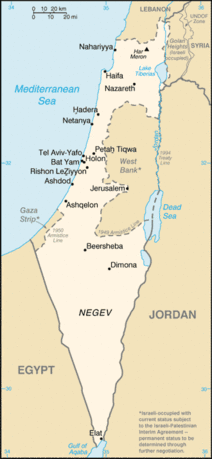
Country_Iraq Country_Syria normal_Country_Israel

Introduction (Section 1 of 2)

 Why write a Blog about the effects of war on children?    I’ve been thinking about this subject for about 6 months and started doing some research: news articles, blogs, charities’ websites.  (Thanks to those who sent me links to articles they thought might be useful.)  So I’ll begin by talking about what in particular got me started.

In June last year I watched a TV documentary written and presented by BBC journalist Lyse Doucett, who followed the day to day lives of six Syrian children, and also reported on the experiences of children in Gaza.   This film was distressing to watch, not just because of their experiences but because of how they talked and behaved, their attitudes and opinions about life.  Secondly, on 4th August I watched the first of the BBC programmes marking 100 years since Britain’s entry into the First World War.  It struck me as ironic that the news that day in 2014 reported on conflicts in four separate regions: Gaza, Syria, Ukraine and Iraq.  This made me consider that war is always with us; many thousands of people including children have never known a time of peace.  Of course it’s right to remember and commemorate those who sacrificed their lives in ‘The war to end all wars’ but it wasn’t, was it?  War continues as it always has done, but it’s fought differently in the 21st Century.   ‘Gone are the days when wars were fought between countries’ armies on a remote battlefield.  The vast majority of modern conflicts take place within countries, not between them.  And whereas civilians were once far removed from the fighting, they’re now routinely targeted and make up 90% of the casualties.’ (warchild.org.uk ).  So I started to think about how children, who are given no choice in the matter and don’t understand what’s happening, only that their lives are being turned upside down,  ultimately will be most affected. The UNCRC, a charter which seeks to promote children’s rights (to protection, provision and participation) is a good place to start when considering the effects of war on children.

You may be asking, what’s the point of documenting this, it doesn’t change anything.   But as I research the subject, I’m realising the valuable work that NGOs such as Save the Children and UNICEF are doing which does change things.  It’s really encouraging and inspiring to read how children are being helped to overcome trauma, injury and disability, so I suppose one reason for this blog is to raise awareness.   My intention is to be non political and non religious with no comment about actual conflicts, only their effects.