Article 6 (Survival and development): Children have the right to live. Governments should ensure that children survive and develop healthily.

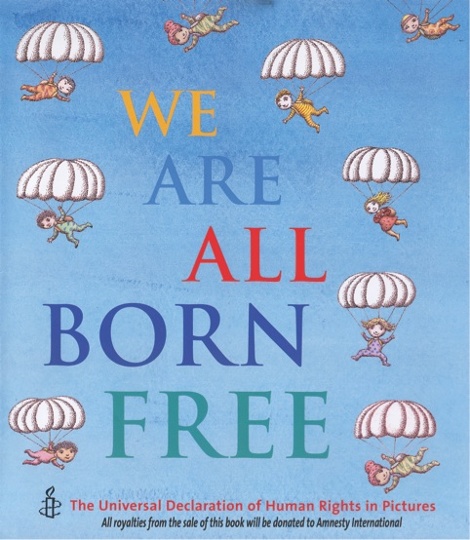
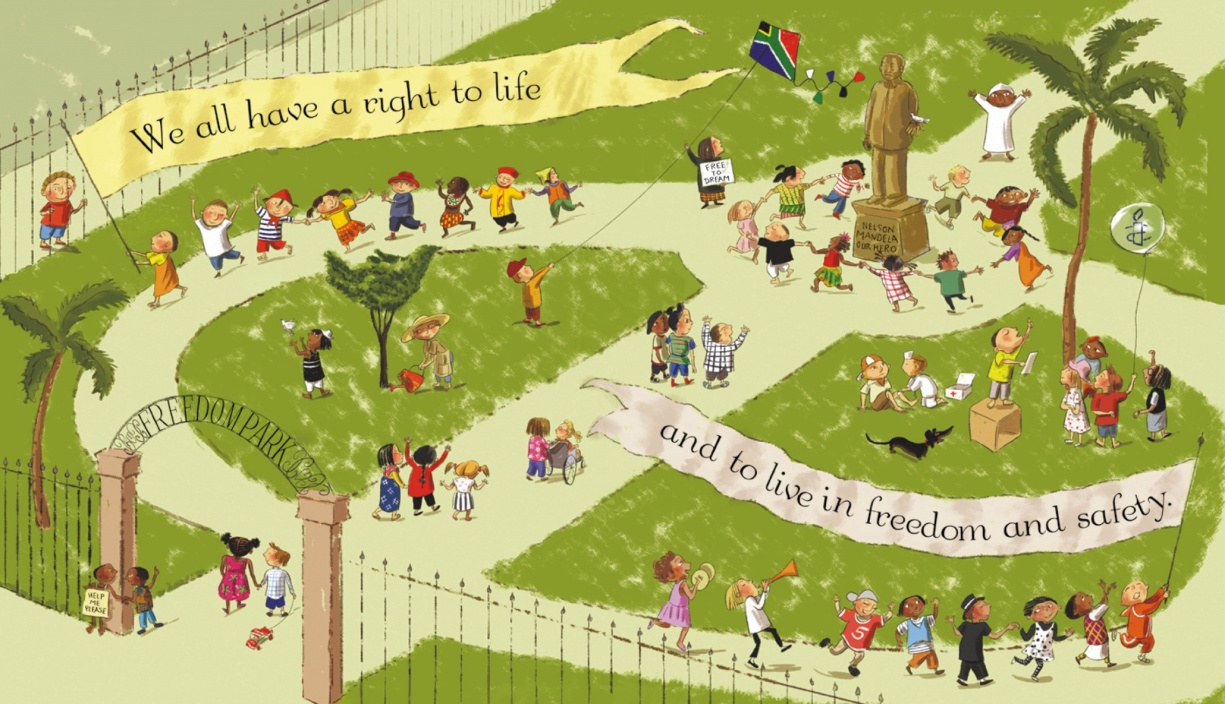
Article 6 reflects Article 3 of The Universal Declaration of Human Rights which states: ‘We all have the right to life, and to live in freedom and safety.’  I’ve got a beautiful book called ‘We are all born free: The Universal Declaration of Human Rights in Pictures.’* Each ‘Right’ is colourfully illustrated by a different artist.  The illustration for Article 3 is a picture of ‘Freedom Park’, a garden with children of all nationalities running, playing, parading with instruments, one is flying a kite, another watering a plant, others join hands dancing round a statue of Nelson Mandela.  The feeling is of enjoyment, being with your friends, in the uninhibited way that children do things.  I mean of course, children who are lucky enough to live in freedom, without daily fear for their lives and those of their families.

So the right to life isn’t just simply to stay alive, it’s about mental and physical health and emotional well being (as a Christian I would add spiritual well being).  On a training course recently I learned that by the age of two years, 75% of a child’s brain growth has occurred and that the experiences of the child up to that age physically affect brain structure.  A child who has experienced fear, pain, confusion, separation and loss of loved ones as a result of living with conflict will actually grow and develop differently than if they had not had those experiences.  Most children, whatever their environment will grow up loved and cared for to the best of their parents’ ability, which will give them a certain amount of resilience, but this will not, in the long term, protect them from the ‘risk factor’ of war.  This is a sobering thought, isn’t it?  Is any war worth that?

A video clip I was sent shows children aged about 8 to 12 in Syria talking about no longer being able to go to school, playing in the war damaged street, the deaths of friends and family.  Suddenly there was the sound of gunfire.  The children stood up unhurriedly and started to go inside.  One boy said calmly to the interviewer, ‘It’s a sniper, it’s normal’.  This was obviously an everyday occurrence, just an inconvenient interruption, not a cause for panic or fear.  Perhaps it once was, but now these children are desensitized.  In a few years’ time will they be wielding the guns?

I’m sorry this is such depressing reading, I have been deciding how, and even whether, to approach writing about this Article for some weeks.  But ultimately, it needs to be said, for the sake of the children.  And can I mention again the brilliant ongoing work by UNICEF, Save the Children, Tearfund, Christian Aid and many other organisations, to increase resilience and decrease some of the damage which war inflicts on the youngest, least powerful members of society.
34f23d50-e466-4e8a-af56-cc83ae38248c-470x540 823327fd-ed3a-42be-8136-008dde4cad54-2060x1185

*Published by Frances Lincoln Children’s Books www.franceslincoln.com in association with Amnesty International. One of my favourite books!
Article 3: ‘All adults should do what is best for children’

Article 3.  The best interests of the Child: ‘The best interests of children must be the primary concern in making decisions that may affect them.  All adults should do what is best for children. When adults make decisions, they should think about how their decisions affect children…..’

Years ago, we were a foster family for our local authority and during that time, we cared for children ranging from 10 months old to 12 years.  As the main carer, I was frequently involved in Care Plans and permanency planning for the children, and the proposed plans always kept the best interests of the child at the forefront.   This requires particular attention if children are below the age where they can participate and give their views about what was going to happen to them.  It often felt as if planning procedures were taking an unnecessarily long time, but in retrospect I can see how important it is to make the right decisions for each and every child.  Children don’t always have enough knowledge or life experience to make informed decisions about what should happen to them, so adults have to take the responsibility of getting it right.

I wanted to mention this to put into context the situation of children living in a conflict zone.  Sadly, such children are not at the forefront of their country’s policy making.  They are left to survive as best they can in circumstances which do not meet their physical, emotional, cognitive and spiritual needs.  The thing about war is, it’s always to provide a better future, a better place for children to grow up in.  Terrible things have to be endured for the glorious day, somewhere in the future.  But how can that be, if the legacy of war is landmines which will continue to maim and kill, long after the fighting is finished, as in Vietnam and Laos?  And that’s just the potential for physical harm; the psychological and emotional damage is equally devastating.  This quote from Father Manuel Musallam in the Gaza Strip:  ‘Children and adolescents have been hurt in body and spirit, unable to find joy, talk about peace or offer it to others.  How can we convince these kids not to hate Israelis?’  aisianews.it.   Will child victims of war ever have a ‘normal’ life again?

And think about those rights I talked about previously: if the local school has been bombed, there will be no education.  If the streets aren’t safe from mortar fire, there will be no place to play.  If it’s impossible to get to the health centre for basic health care, or worse, the hospital, for urgent medical treatment, even survival is threatened, and this is a daily experience for so many children.  Having said that, in some areas there are considerable efforts to work in the best interests of children.  Local communities are working alongside NGO’s (amazingly, given the circumstances) to organise evacuation programmes for women and children to places of safety; or to set up makeshift schools and health care centres, and even to provide play and activity programmes against a backdrop of fear, uncertainty and chaos.  These slightly more fortunate children can experience at least a degree of ‘normal life’.

normal_kids_out_in_spring

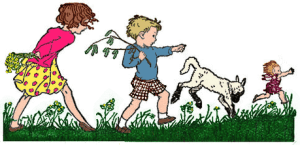
Is this how childhood should look, innocent and carefree?