There are some beautiful ruins right in the middle of London, you just need to know where to look. The best thing about them is that they’ve been left in their romantic ruinous state and nature has been allowed to take its course, surrounded by the concrete, glass and steel of 21st Century London. I think the contrast between ancient and ultra-modern adds to their charm. Sometimes you can even climb on their walls! All these sites are free to visit. I’ve included their addresses and nearest tube, in case you fancy a visit.
St Dunstan’s in the East
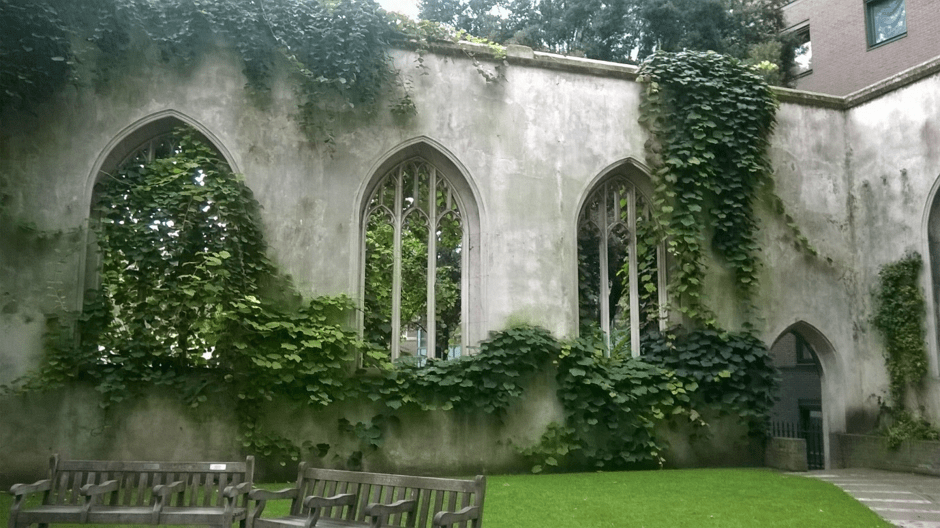
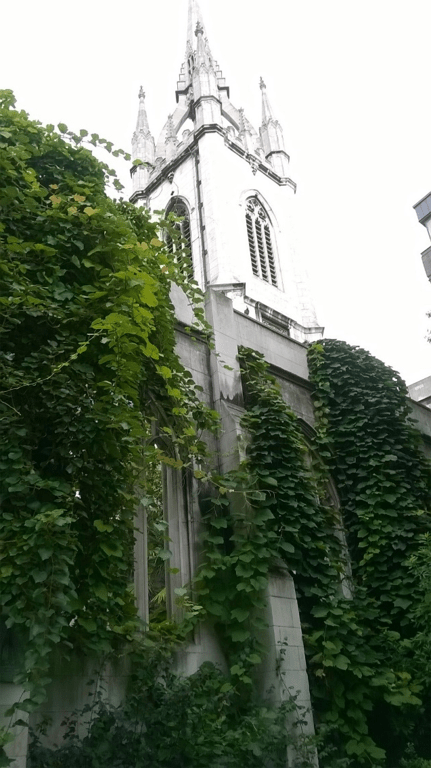
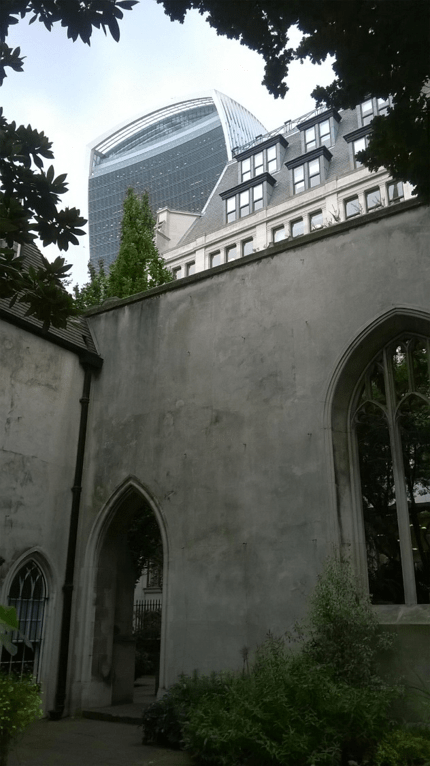
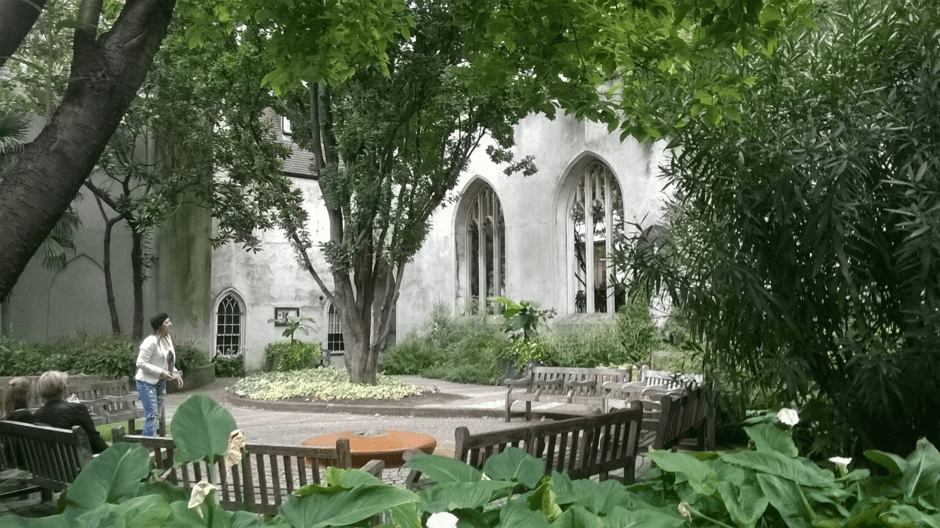
This is St Dunstan’s-in-the-East, now a public garden, one of Time Out’s top Romantic Venues in London. The church has had an unlucky history: severely damaged in the Great Fire, rebuilt twice and finally bomb damaged in the Second World War. In 1967 the decision was taken not to rebuild it but to create ‘one of the most beautiful gardens in the City of London’. The lovely fairy-tale tower escaped bombing, and I also love the arched windows, it’s a wonderful space to sit and relax. Outdoor church services are held here, and it’s also used as a setting for plays when that gothic look is required. The Walkie Talkie building peeping over the wall provides a 21st Century touch!
Address: St Dunstan’s Hill, London EC3R 5DD
Nearest Tube: Monument/Tower Hill
Christchurch Greyfriars
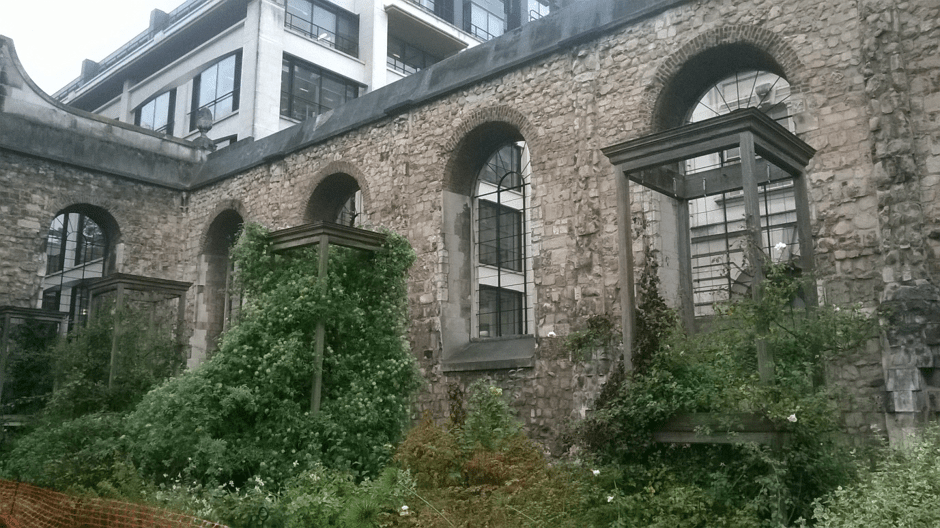
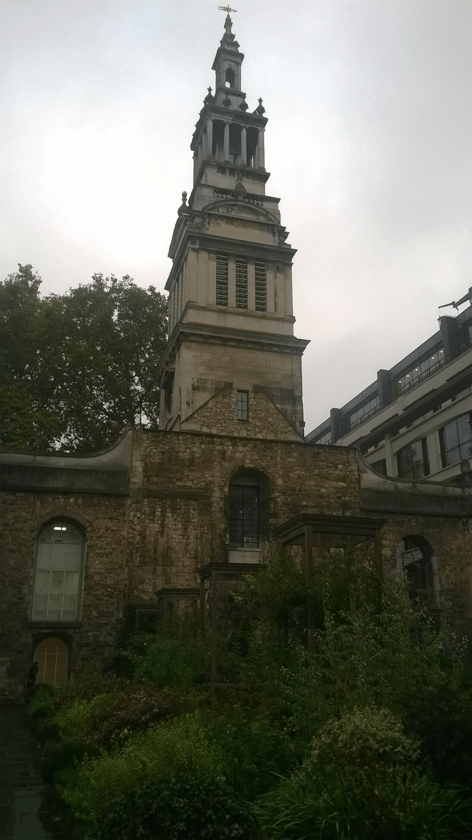
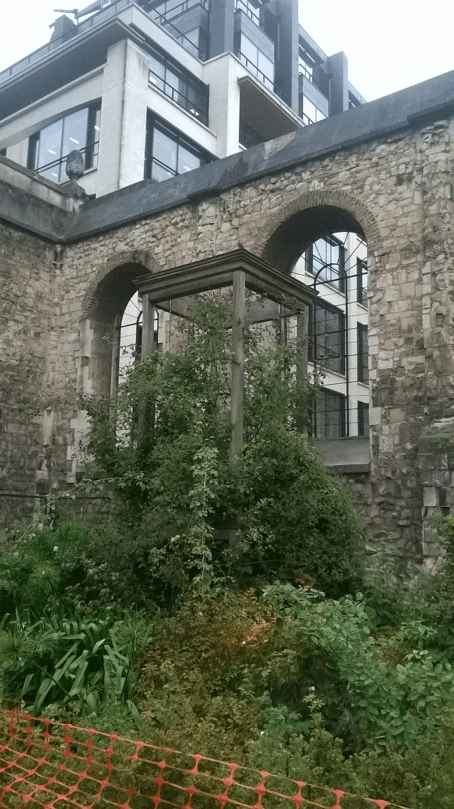
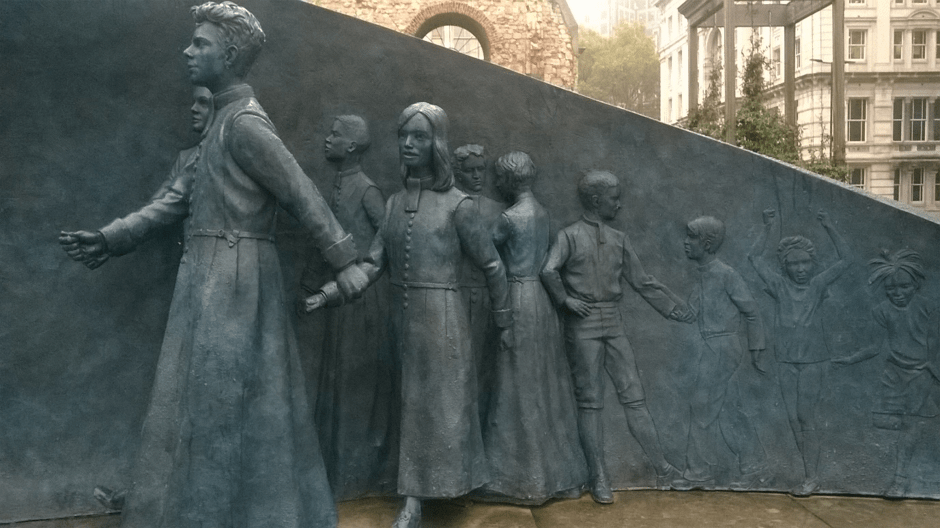
Turn left out of St Paul’s Station and you’ll come across another of the City Gardens, Christchurch Greyfriars. The original site of the Franciscan church of Greyfriars was established in 1225 and was destroyed by the Great Fire in 1666. A new church, designed by Wren, was completed in 1704, but this was destroyed by incendiary bombs in 1940; the fate of so many City churches. As with St Dunstan’s, the Tower of the rebuilt church escaped bombing and has remained pretty much intact, which I think adds to its charm. The square wooden frames with the climbing plants are situated where the original stone pillars were. Near the church is the site of Christ’s Hospital, founded by Edward VI in 1552. Not actually a hospital but a school built to house, feed and educate needy children. The school still exists in Horsham. Interesting fact: In previous centuries, hospital meant school and hospice meant a place of refuge, very different from today’s meanings.
Address: King Edward Street, London EC1A 7BA
Nearest Tube: St Pauls
St Alphage London Wall
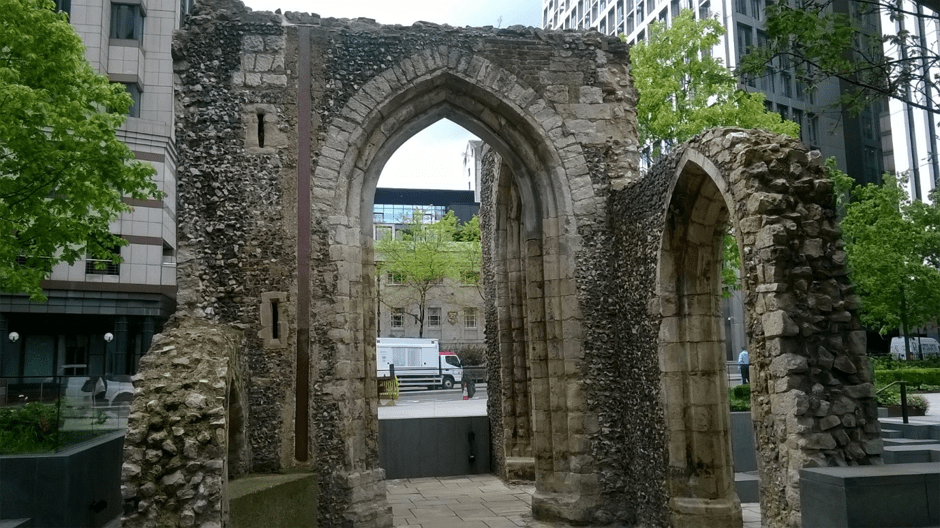
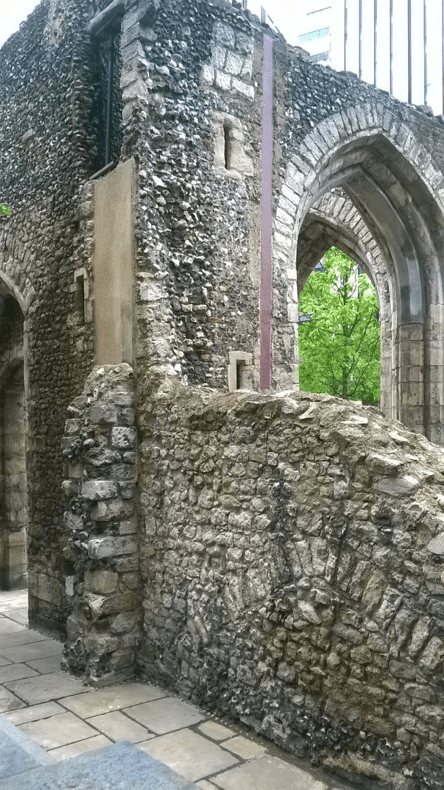
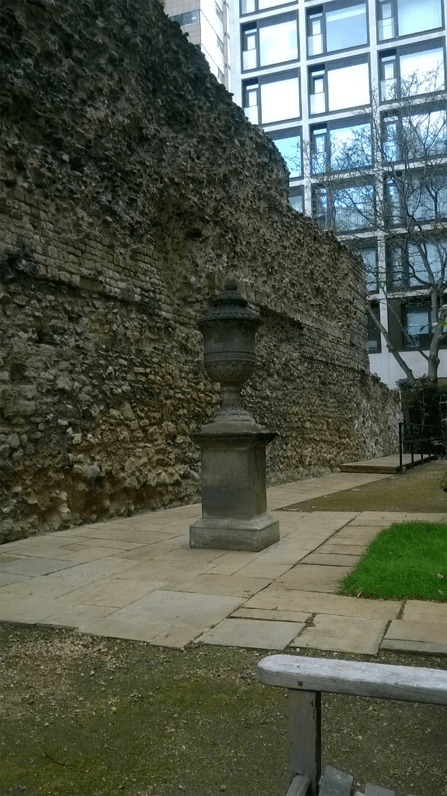
This is the one you can climb on: St Alphage. I think this is my favourite because it’s right next to the Roman London Wall, parts of which are nearly 2,000 years old. The walls of the church we see today are the remains of the tower, dating from the 14th Century, all other parts of the church were destroyed in the two World Wars. However, bombing uncovered the remains of the Roman Wall behind the church, previously hidden by more recent buildings, how amazing is that? I love the location of this church, an oasis of ancient in the modern City buildings. I would love to travel back in time 1,000 years just for a glimpse of London as it was then. The adjoining churchyard was built over, thank goodness they left the church alone!
Address: St Alphage Gardens, London Wall Place EC2Y 5EL
Nearest Tube: Moorgate
Palace of Westminster
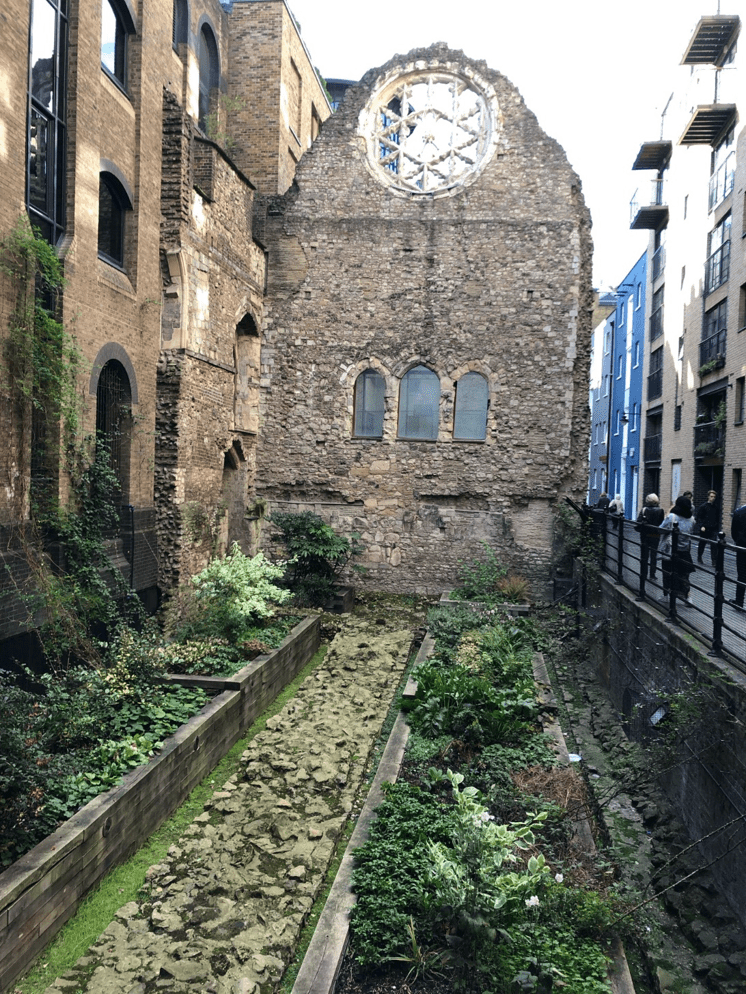
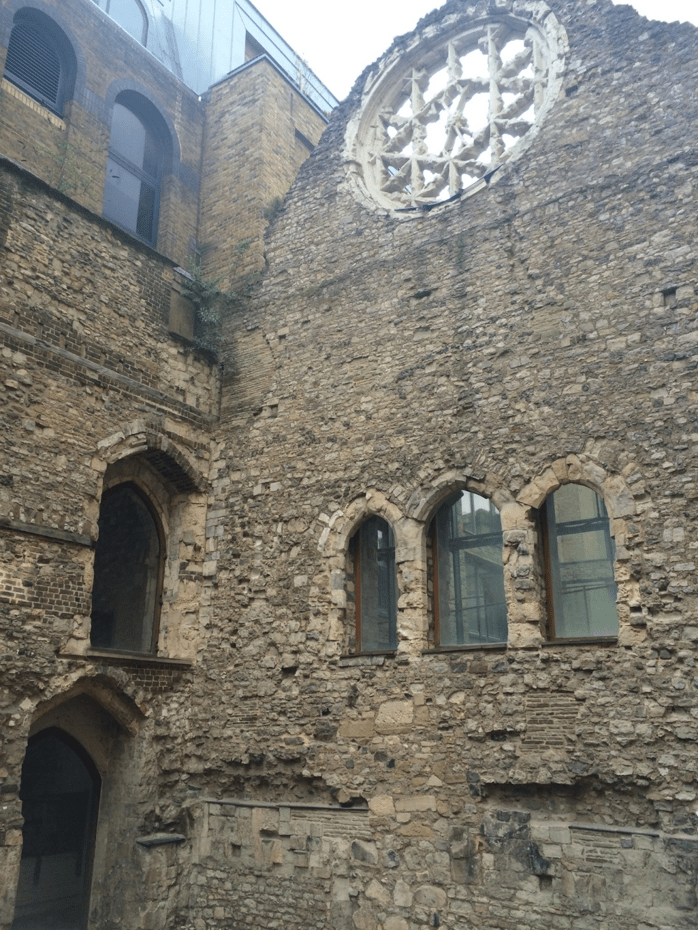
This is all that remains of the palace of the powerful bishops of Winchester, one of the largest and most important buildings in Medieval London. ‘Founded in the 12th Century by Bishop Henry de Blois, it was built to house the bishops in comfort when staying in London on royal or administrative business.’ So says the sign at this site. This is another of the historic buildings that could have easily been completely demolished in subsequent centuries but was revealed when the Southbank area was redeveloped in the 1980s. This area is packed with historic interest: nearby is the Anchor pub on Bankside where Pepys watched the Great Fire burn in 1666; there’s a replica of the Golden Hinde; the Clink Prison Museum; and the replica of Shakespeare’s Globe Theatre.
Address: Clink Street, Southwark, London SE1 9DG
Nearest Tube: London Bridge
Next Month: Museums in March
 claresimons1