I’ve just returned from a trip interrailing around Central Europe, also known as Mitteleuropa in German. Travelling by train across multiple countries without visible borders is a fascinating, if somewhat exhausting experience: arriving at each new city and exploring its treasures before moving on to the next a few days later. Of course, top of my list for must-see places to visit were some of Europe’s beautiful churches and cathedrals, so these will be the subject of the Blog for the next few months.
Ah, Vienna! as Midge Ure of 80s band Ultravox once sung. A city of imperial rococo palaces, coffee-and-cake houses, concert halls, art galleries – and these two fabulous churches.
St Stephen’s Cathedral (Stephansdom)
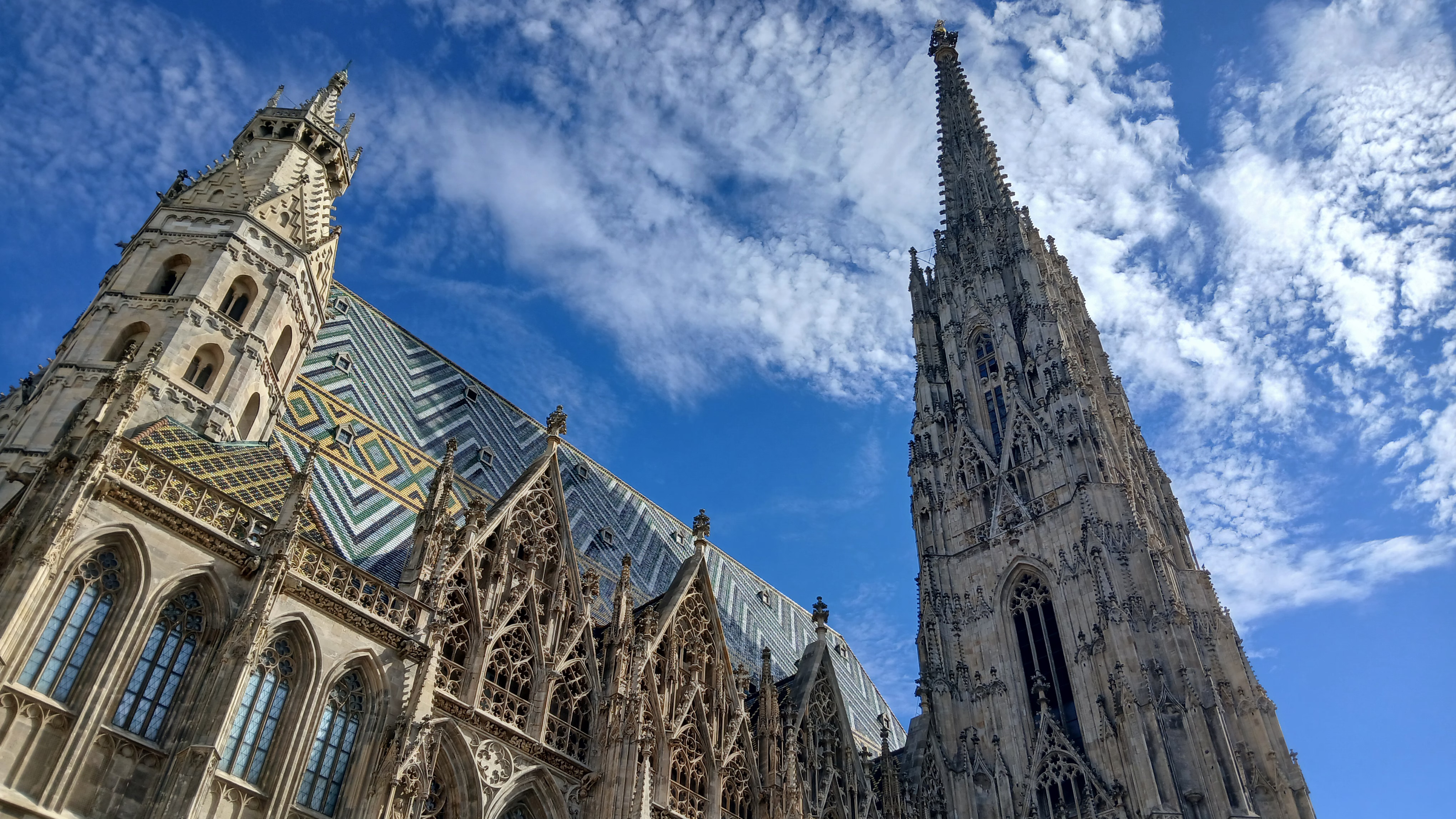
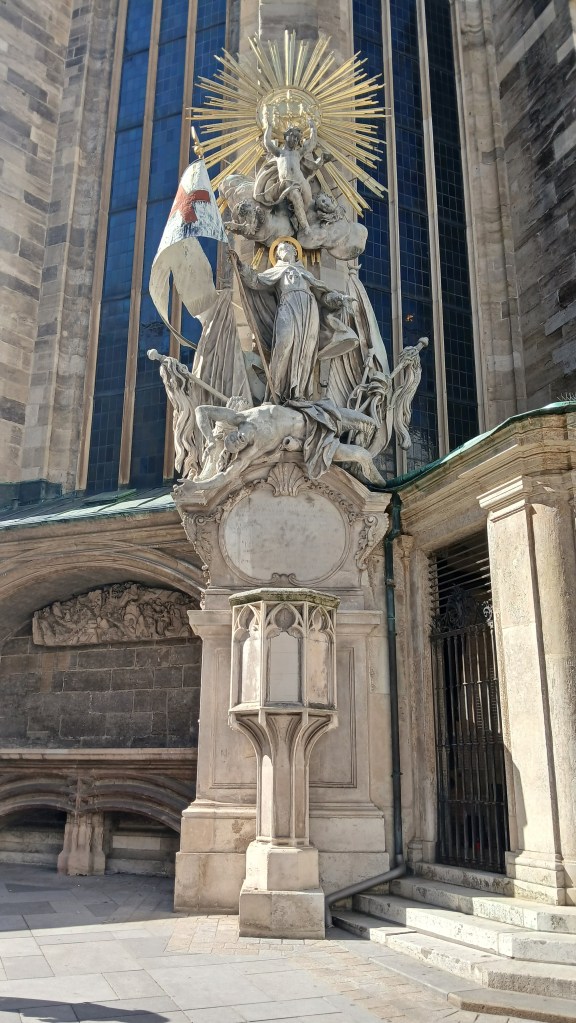
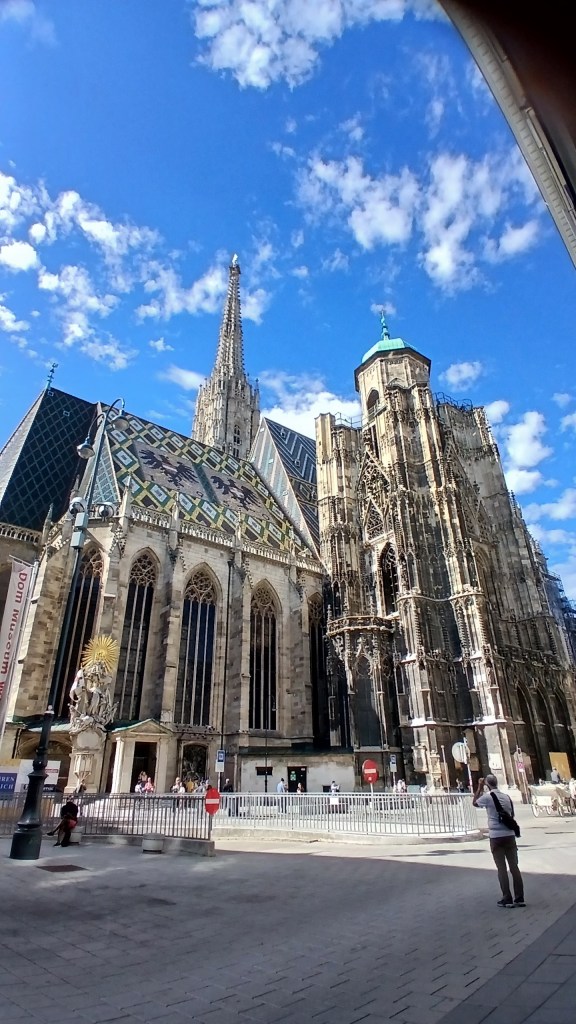
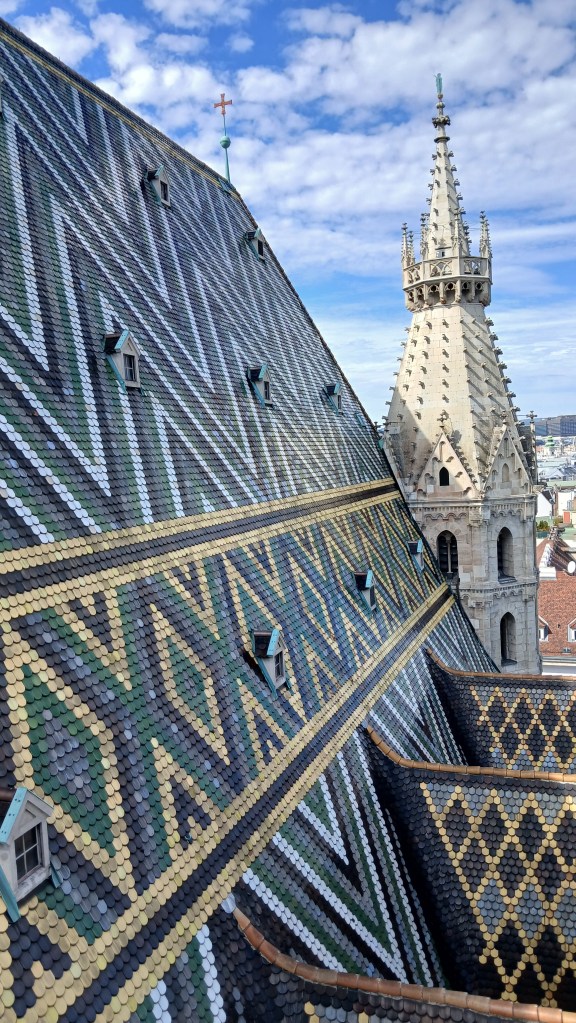
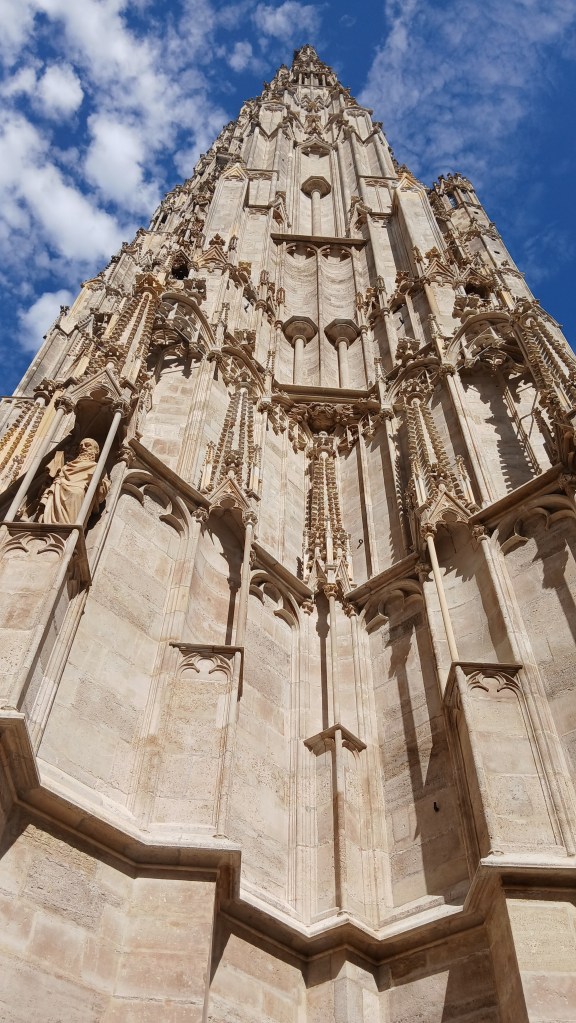
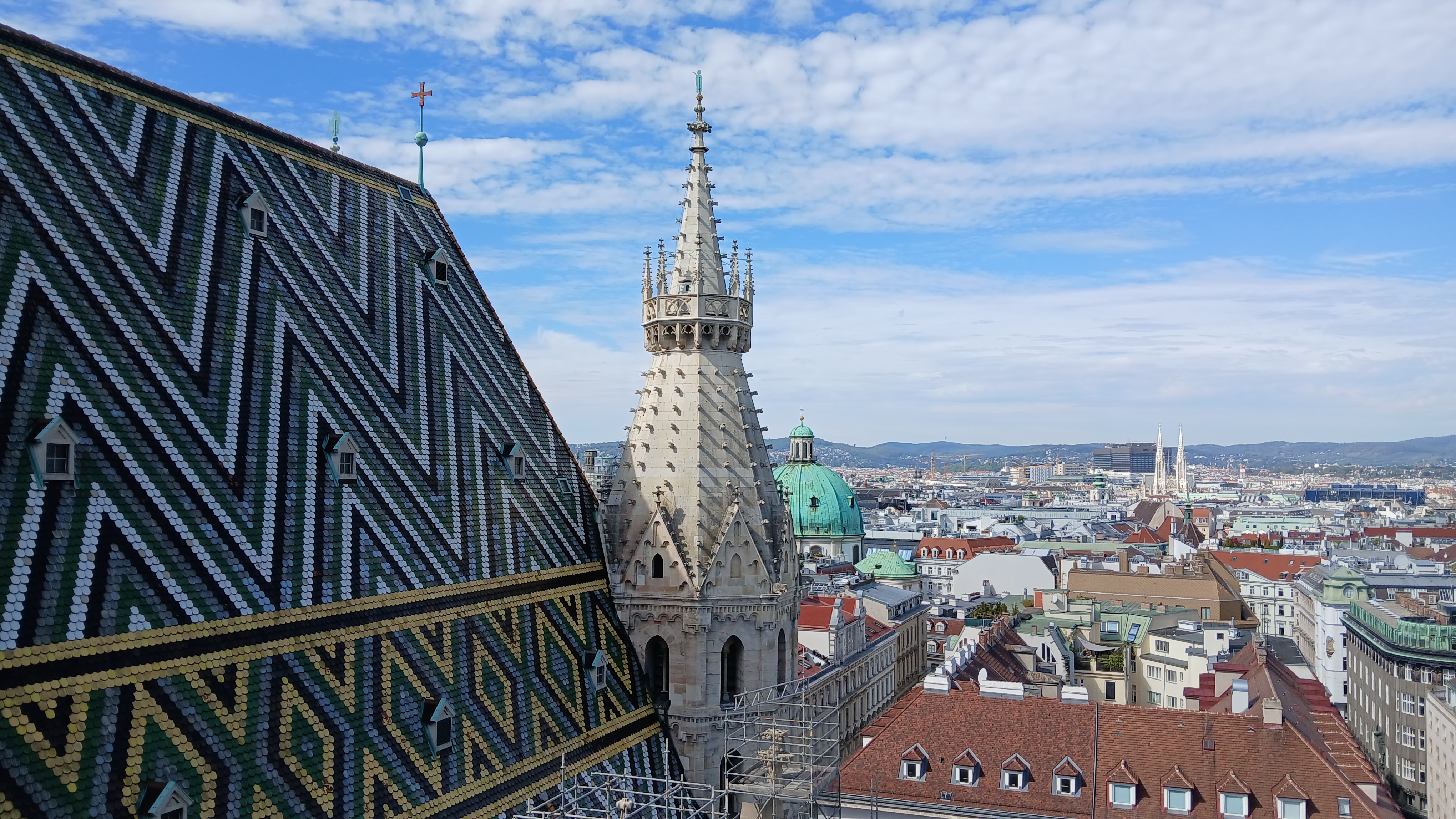
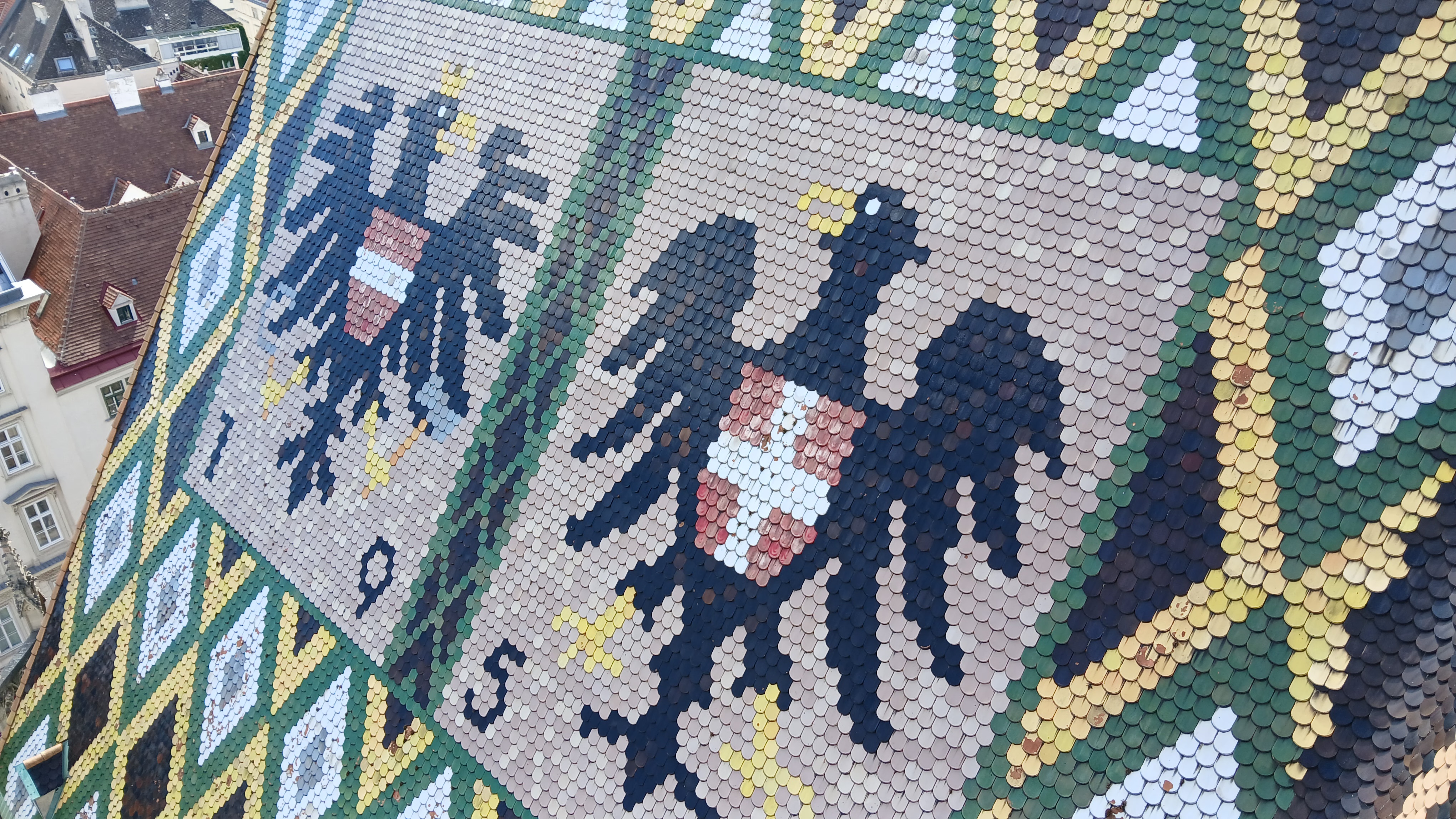
The colourful roof of the cathedral strikes you immediately it comes into view as you come round the corner into Stephansplatz, the large piazza or square at the geographical centre of Vienna. The cathedral is one of the tallest in the world, its South tower is a height of 136 metres (446 feet); it is affectionately known as Steffi by the inhabitants of Vienna. Today’s cathedral is Romanesque and Gothic in form and stands on the ruins of two earlier churches, the first a parish church founded in 1137 and replaced in 1230. Very little of the original church remains as there were extensive building programmes between the 14th and 18th centuries. The Archdiocese of Vienna was established in 1469, making St Stephen’s a cathedral, seat of the Archbishop of Vienna. A visit to the cathedral would not be complete without viewing the marvellous roof close at hand, by way of a convenient lift to a viewing platform, rather than the 256 steps to almost the top of the tower. The roof is 111 metres (364 feet) long and covered with 230,000 glazed tiles. On the North side the coats of arms of the City of Vienna and the Republic of Austria are depicted, this is the roof which can most easily be seen. The roof is so steep that it is kept clean by rainwater alone and is rarely covered by snow in Winter. Back at ground level, the Capistran pulpit is located outside the cathedral on the North West wall. A Franciscan Friar, Giovanni da Capestrano, is said to have preached here in 1456 against the Turkish invasion of Vienna, and the 18th century Baroque statue above the pulpit graphically depicts the Friar under a sunburst, trampling on a defeated Ottoman invader. Not sure how the good Friar would have responded to this!
Source: Wikipedia
The Votive Church (Votivkirche)
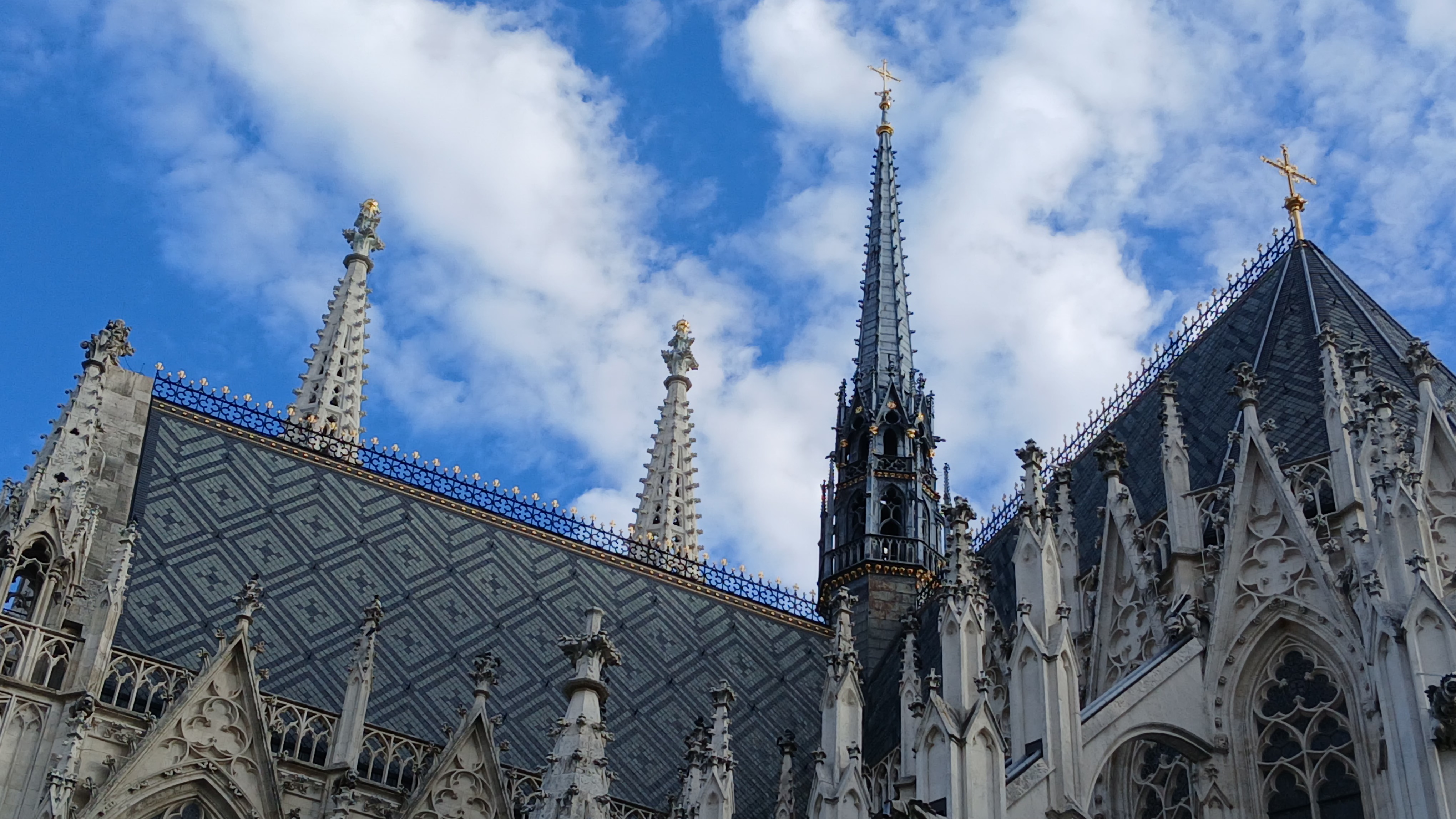
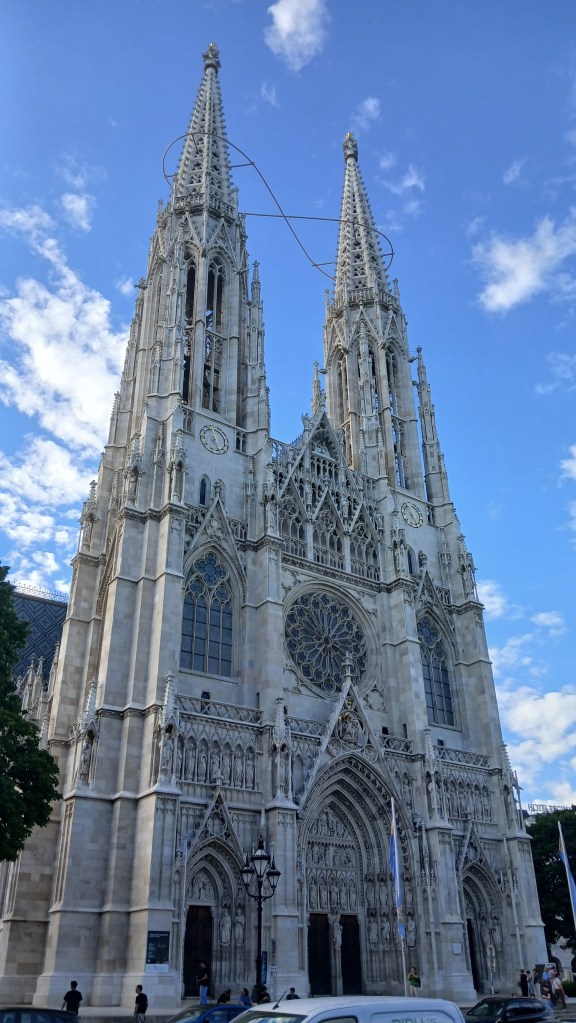
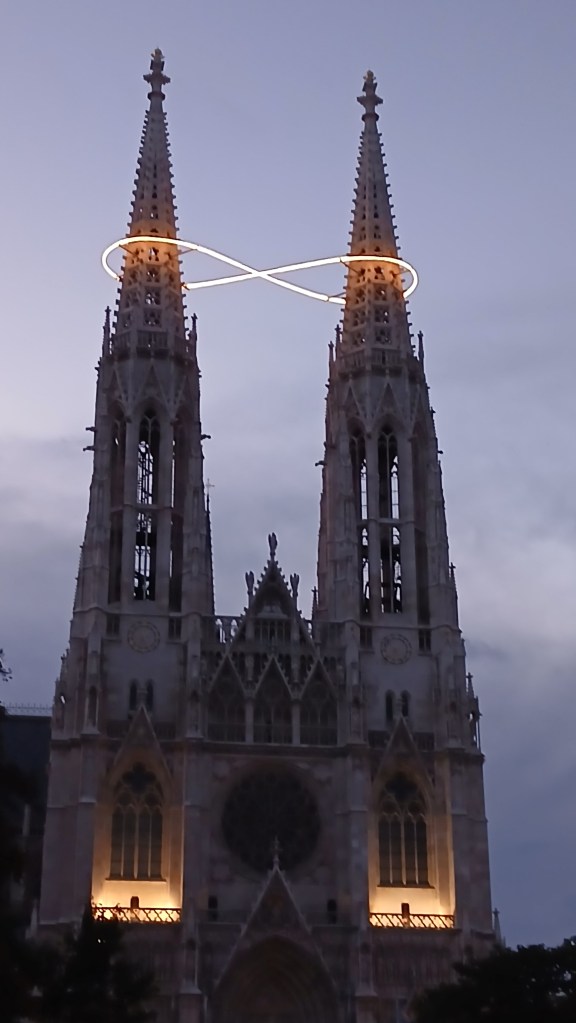
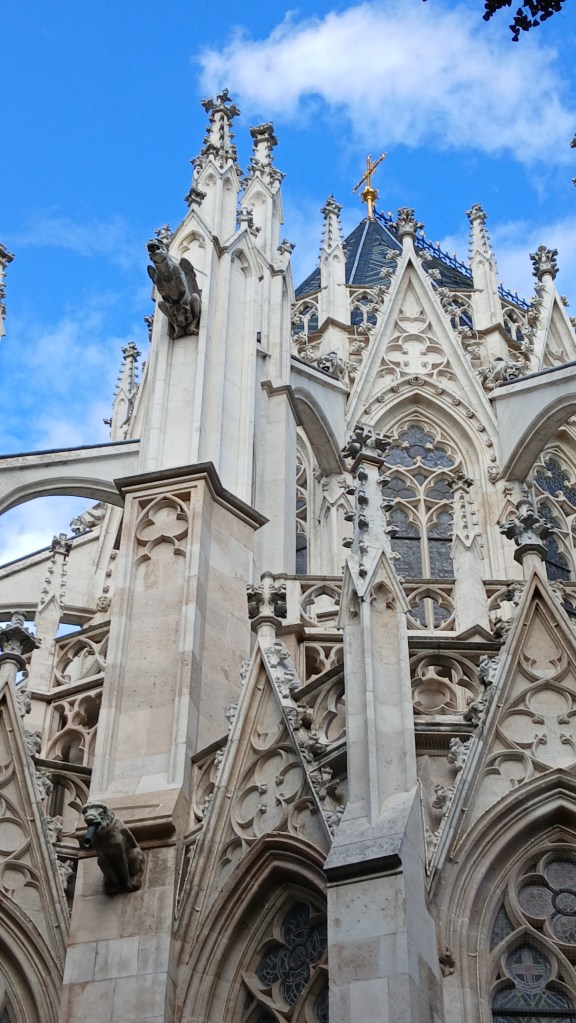
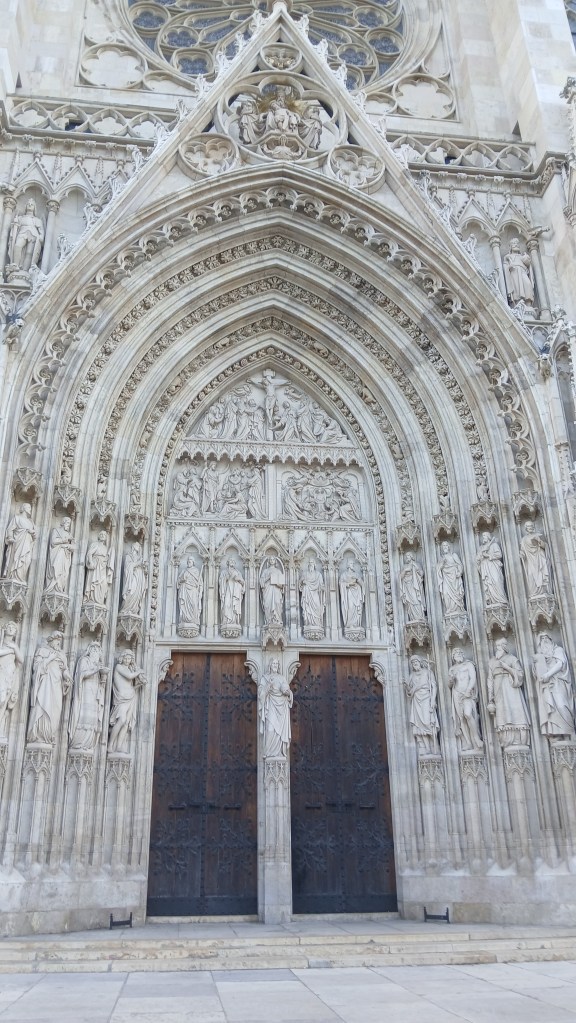
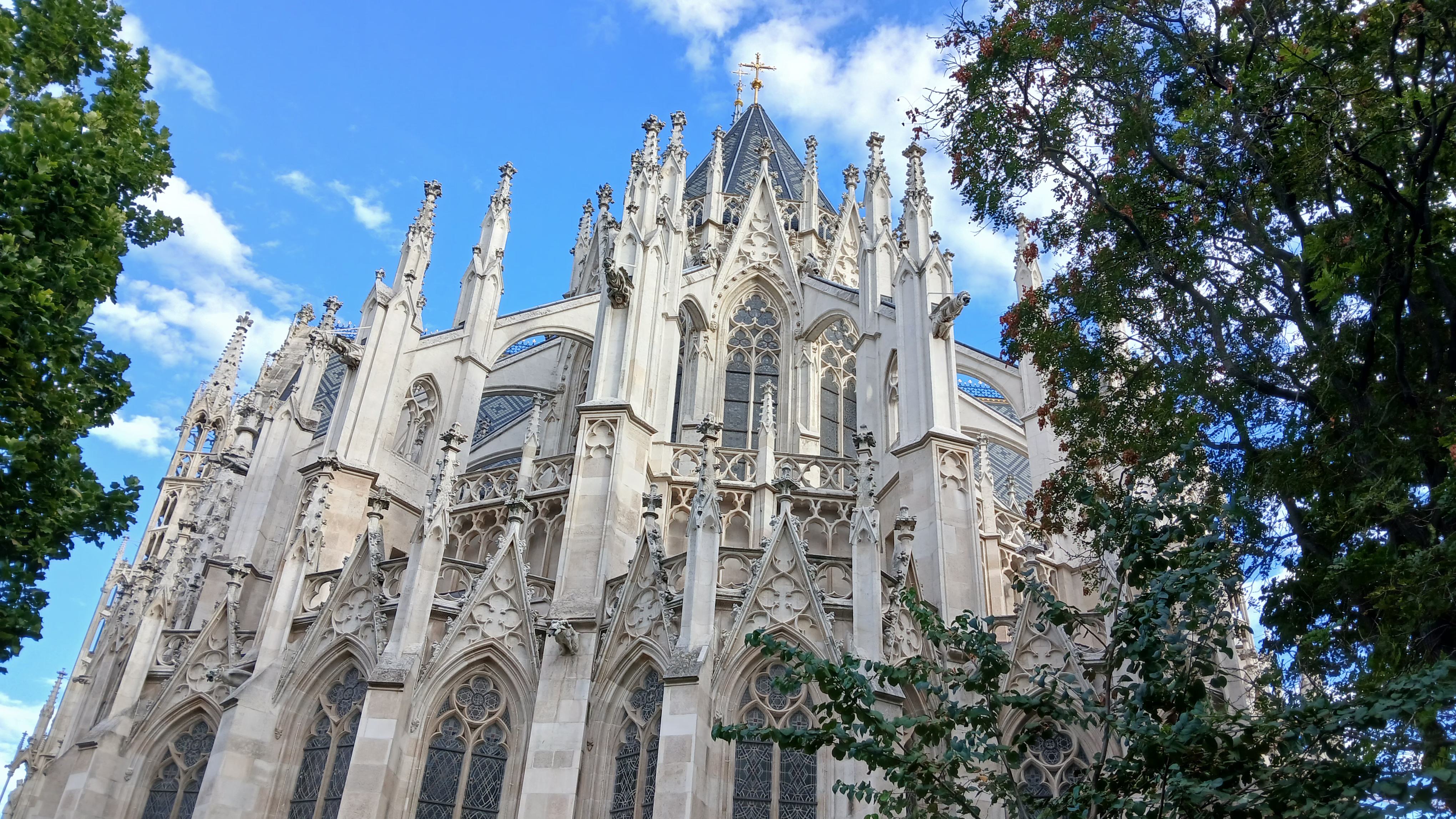
This pretty Neo-Gothic church is often mistaken for Stephansdom as the architectural style and roof tiling are similar. In fact, the age-difference between the two is more than 700 years. The church has an interesting origin: in 1853 an assassination attempt was made on Emperor Franz Joseph by a Hungarian nationalist. Although badly wounded, the Emperor survived the attack because the knife blow was deflected by the heavy embroidered collar he was wearing. Also a passer-by, Dr Joseph Ettenreich, came to the Emperor’s assistance and helped to overcome the assailant; he was later admitted to the nobility by the Emperor as a reward. After the unsuccessful assassination attempt the Emperor’s brother Maximillian decided to raise funds to establish a new church on the site of the attack; the church was to be a votive, or thanksgiving offering to God for sparing the Emperor’s life. In 1854 an architectural competition was established to decide the design of the proposed church. Projects were submitted from the Austrian Empire, Germany, England and France, and finally local boy Heinrich von Ferstel from Vienna was chosen as the successful architect, at the age of just 26. Construction began in 1856 and von Ferstal chose the neo-Gothic style, borrowing from the architecture of Gothic French cathedrals; for this reason it is often assumed to be an original Gothic church. The Votivkirche is made from white sandstone which looks beautiful, with its lacy turrets and spires, but needs constant renovation to protect it from pollution and acid rain which erodes the soft stone. At dusk, the church becomes even more beautiful with its permanent ‘Infinity of Light’ installation, it was worth waiting for!
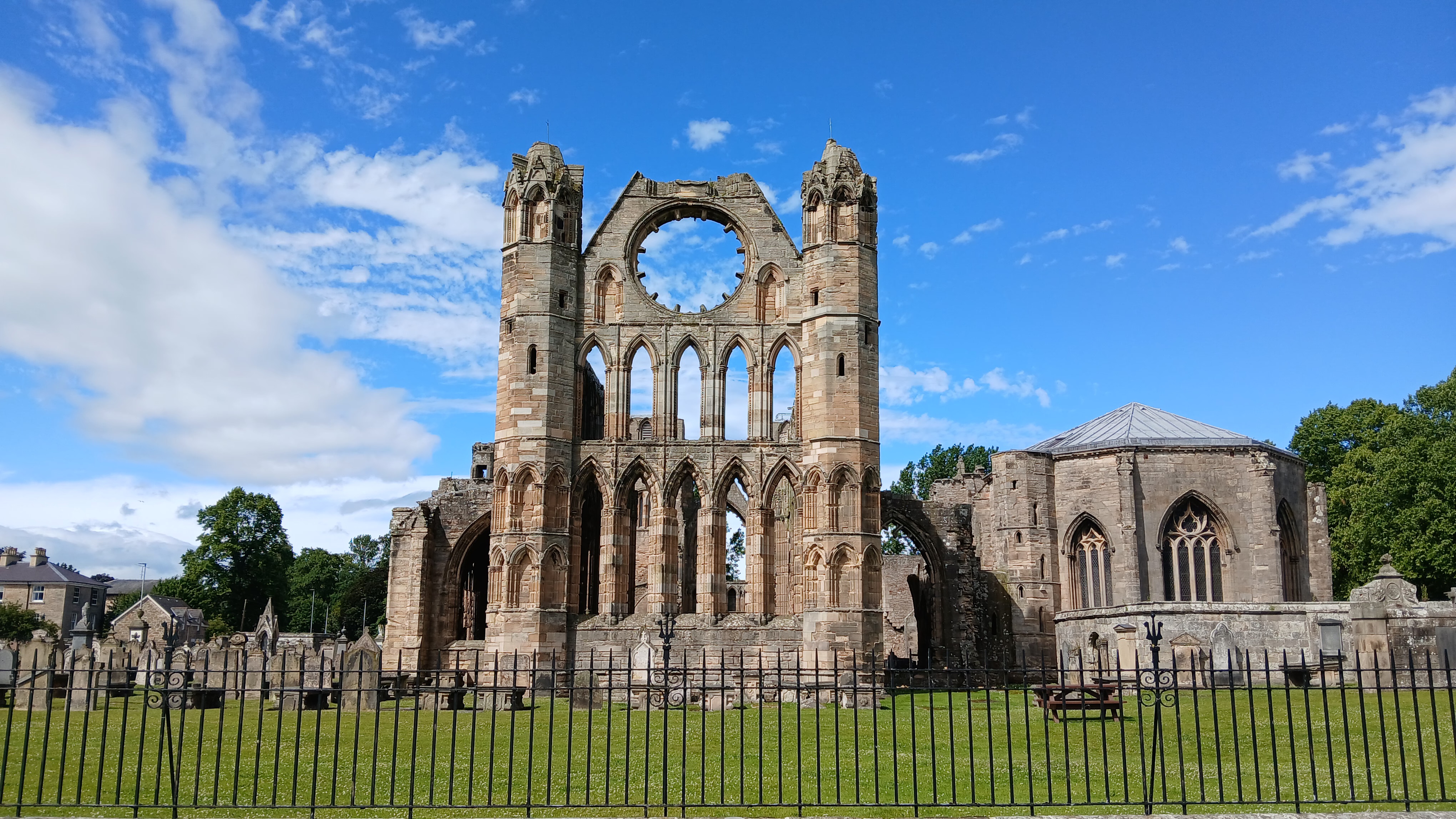
August was mostly too hot to visit the capital, so instead I searched my photos and decided to share visits I made to Elgin and Ely Cathedrals in June and July respectively. Elgin Cathedral is a spectacular ruin with much of its structure still standing. Ely would be a small East Anglian town were it not for its huge, somewhat out of proportion cathedral, which gives it city status. I’ve also included some photos and info about the Elgin Biblical Garden, adjacent to the Cathedral.
Elgin Cathedral
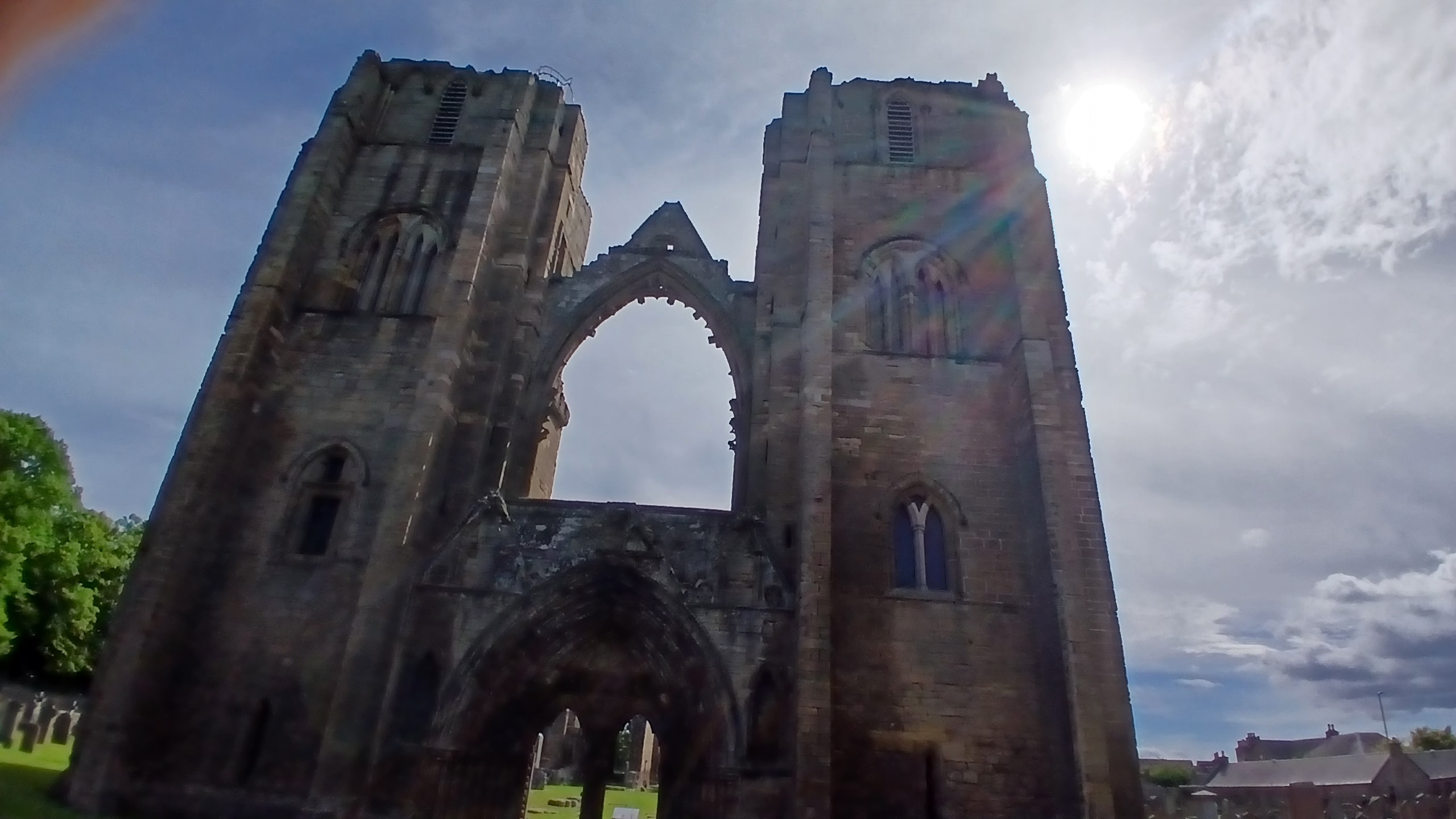
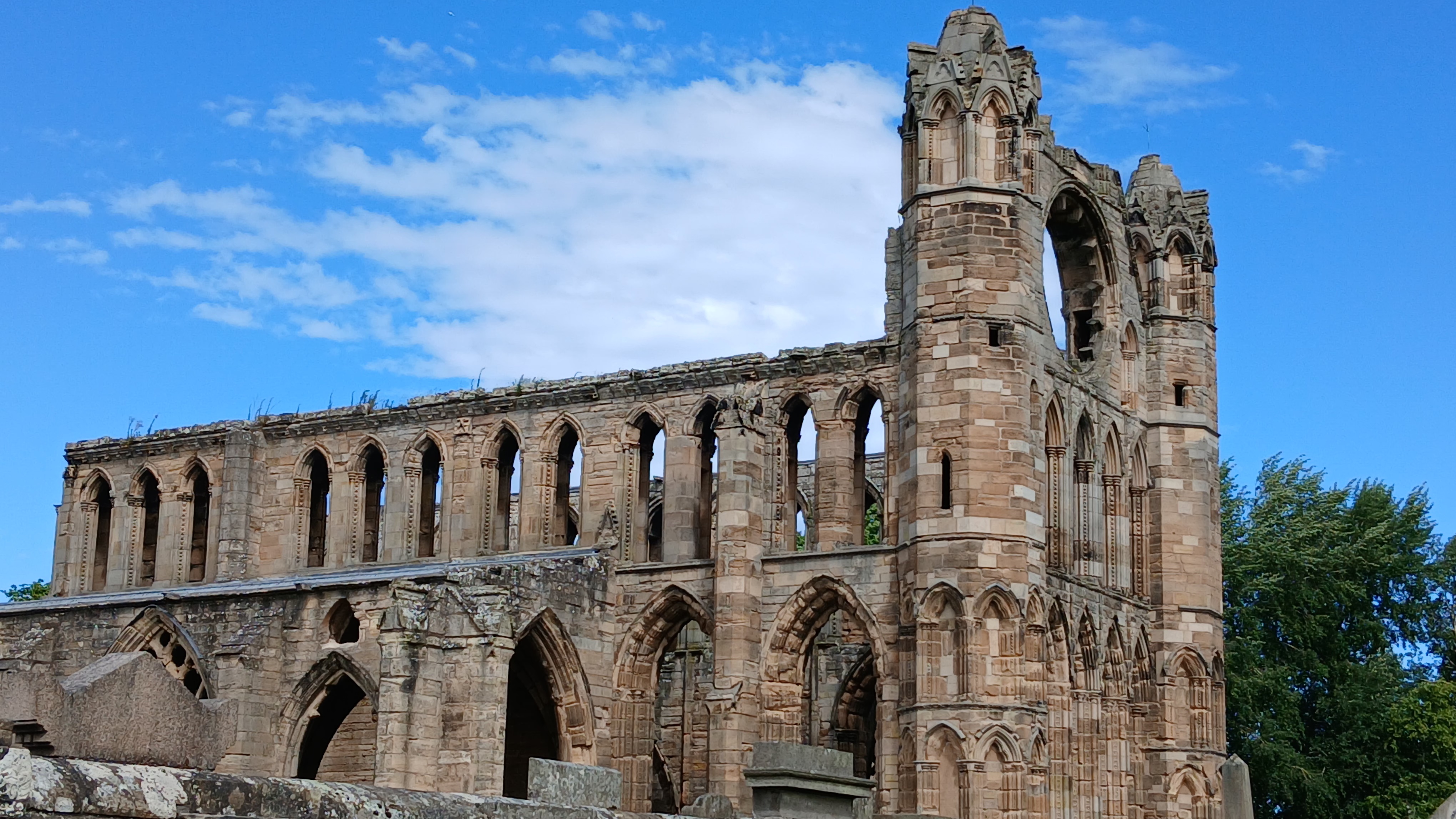
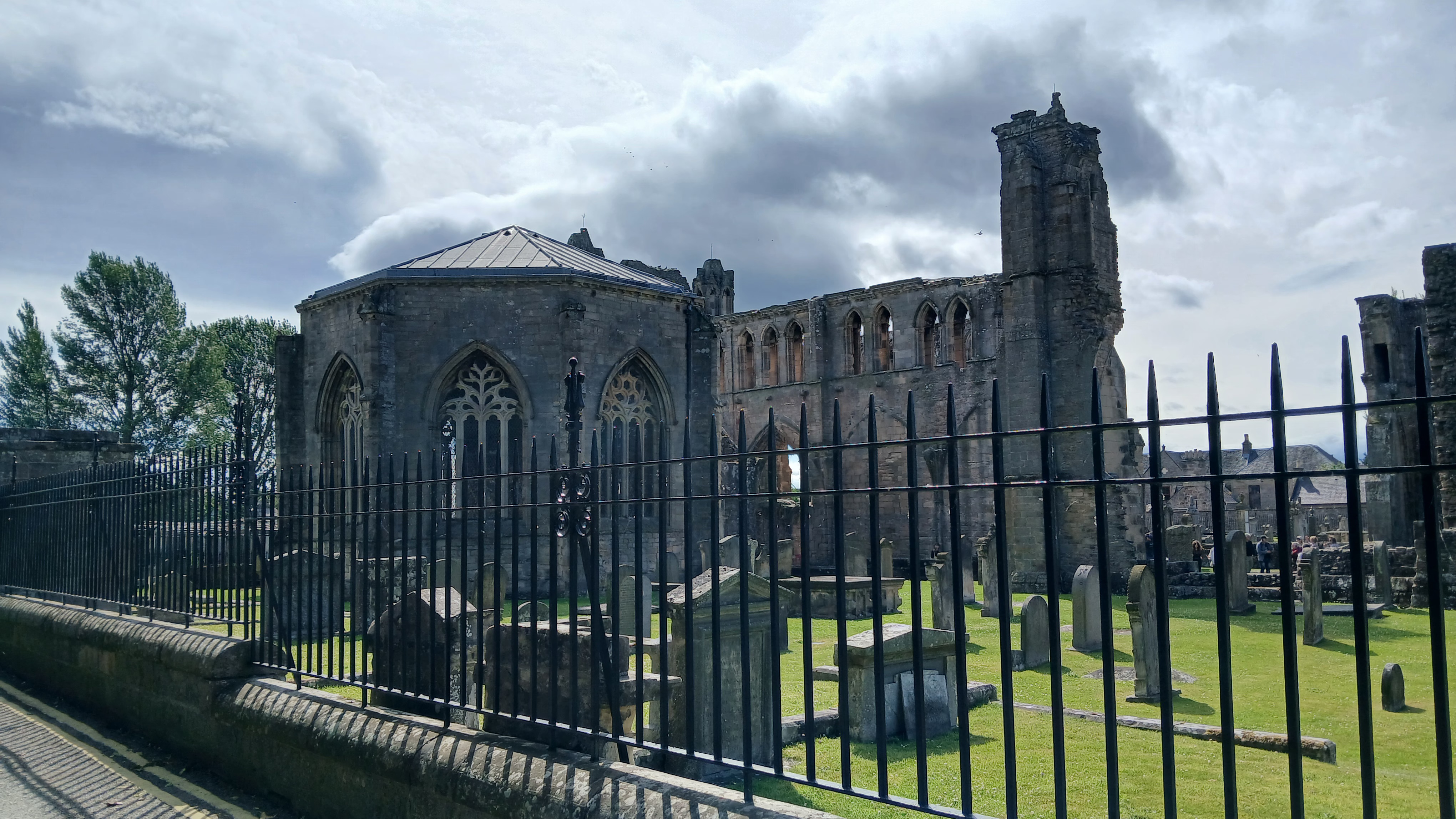
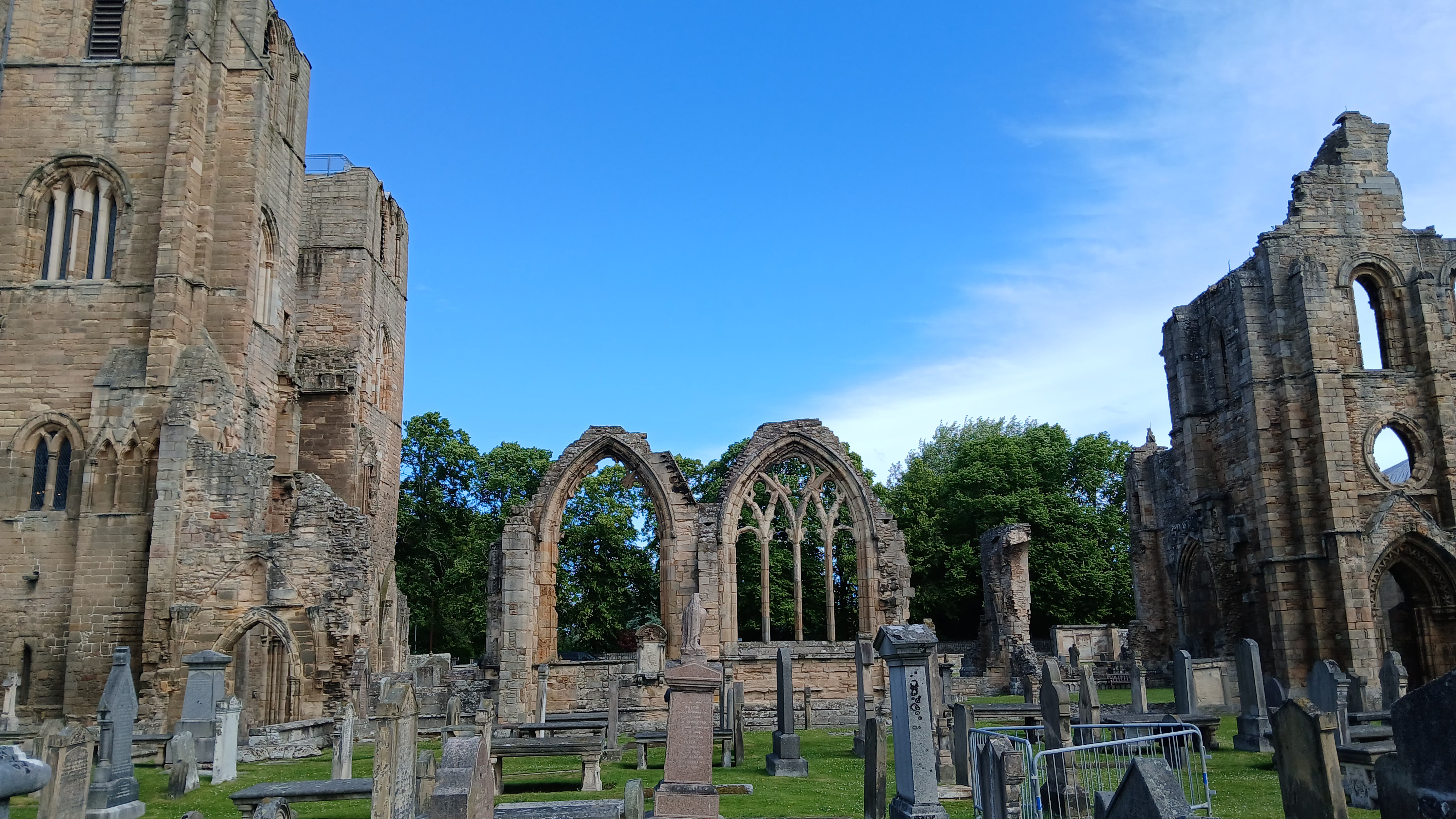
The cathedral is also known as the ‘Lantern of the North’ and is located in Moray, North East Scotland; it was established in 1224 and was the seat of the Bishops of Moray. At the time of its construction it was regarded as ‘the ornament of the realm’ and ‘the glory of the Kingdom’, second largest cathedral in Scotland after St Andrews. Over its 800-year history the cathedral has experienced ups and downs, you could say. Widespread fire damage in 1270 and an incendiary attack in 1390 was followed by extensive rebuilding and additions, including the wide west front with its twin towers and the octagonal chapter house, both of which are still standing. However in the 1560s the congregation was moved to the parish church of St Giles and the Privy Council ordered the removal of the cathedral’s lead roof to sell to help fund the military. Subsequently there were structural failures (I don’t know what they thought would happen) resulting in the collapse of the choir roof and the central tower much later in 1711. One hundred years later at the beginning of the 19th century, major conservation and refurbishment work begun, followed by stabilisation and maintenance work which is ongoing to make the structure safe to visit. Elgin Cathedral is a scheduled monument managed by Historic Environment Scotland.
Source: Wikipedia
Octagonal Chapter House
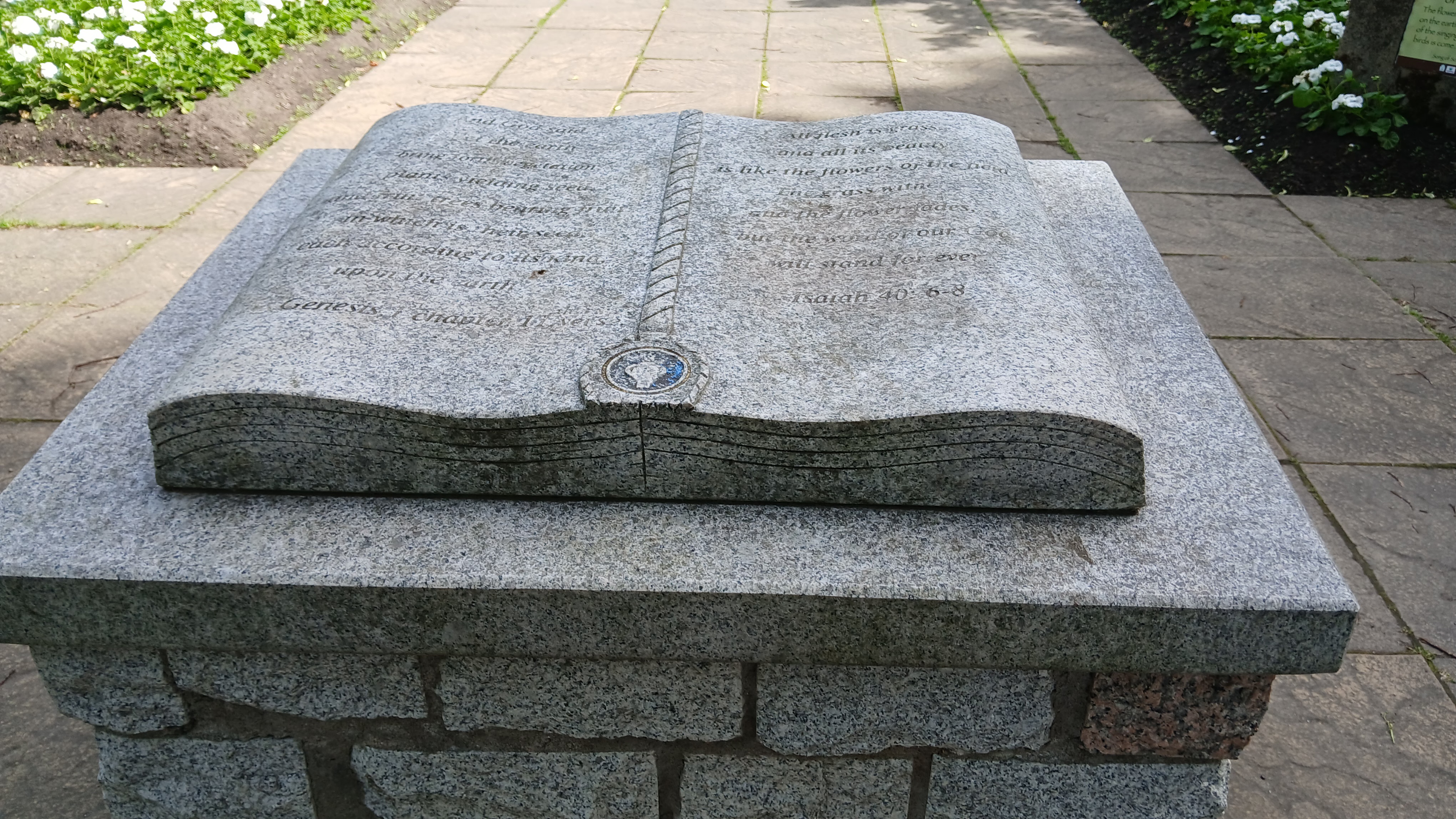
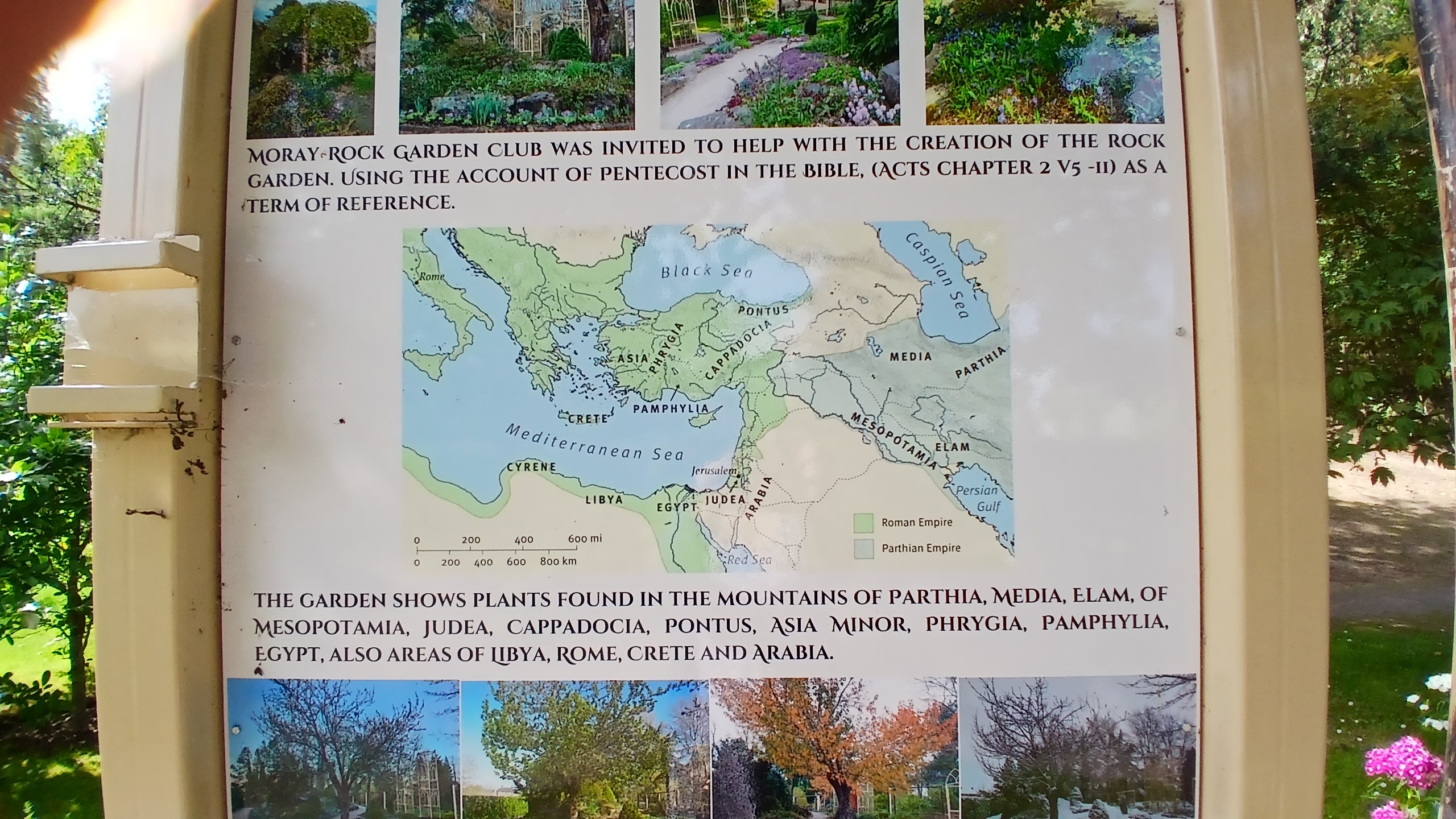
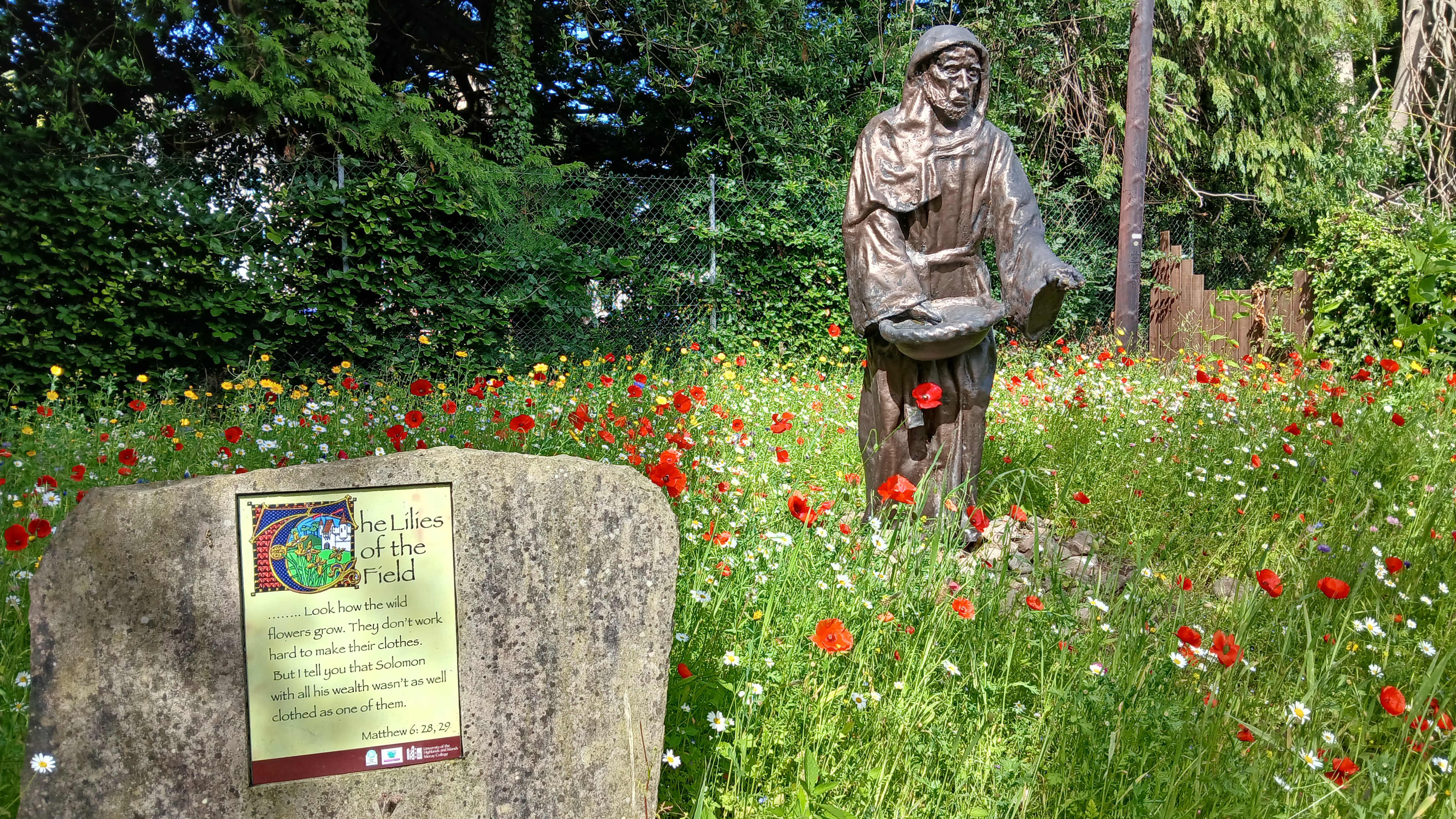
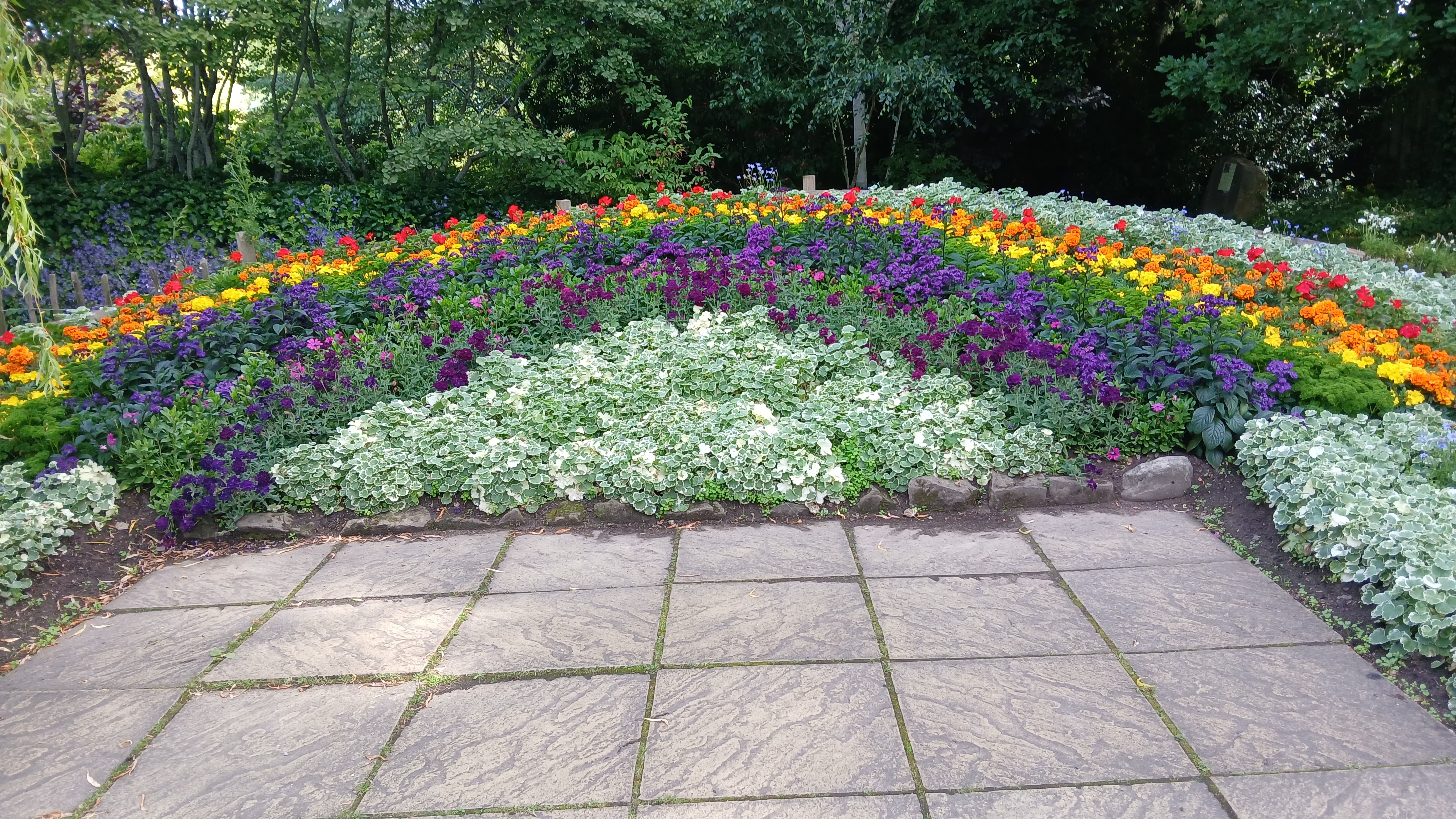
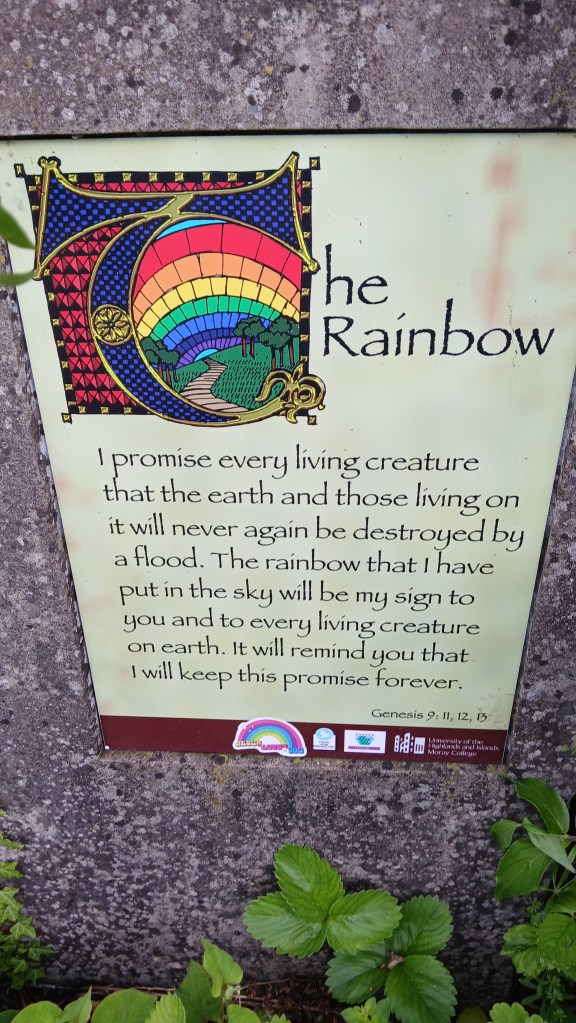
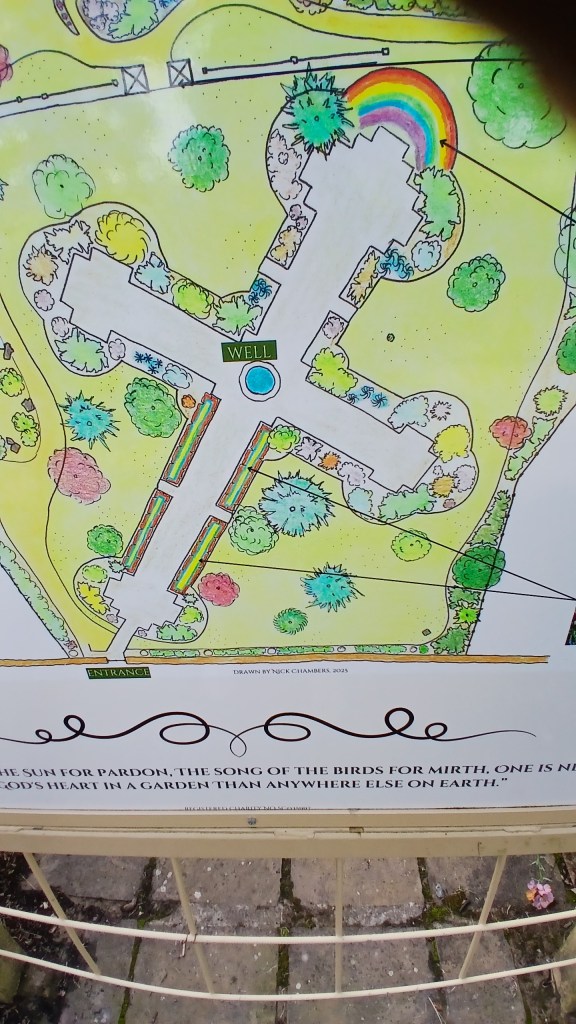
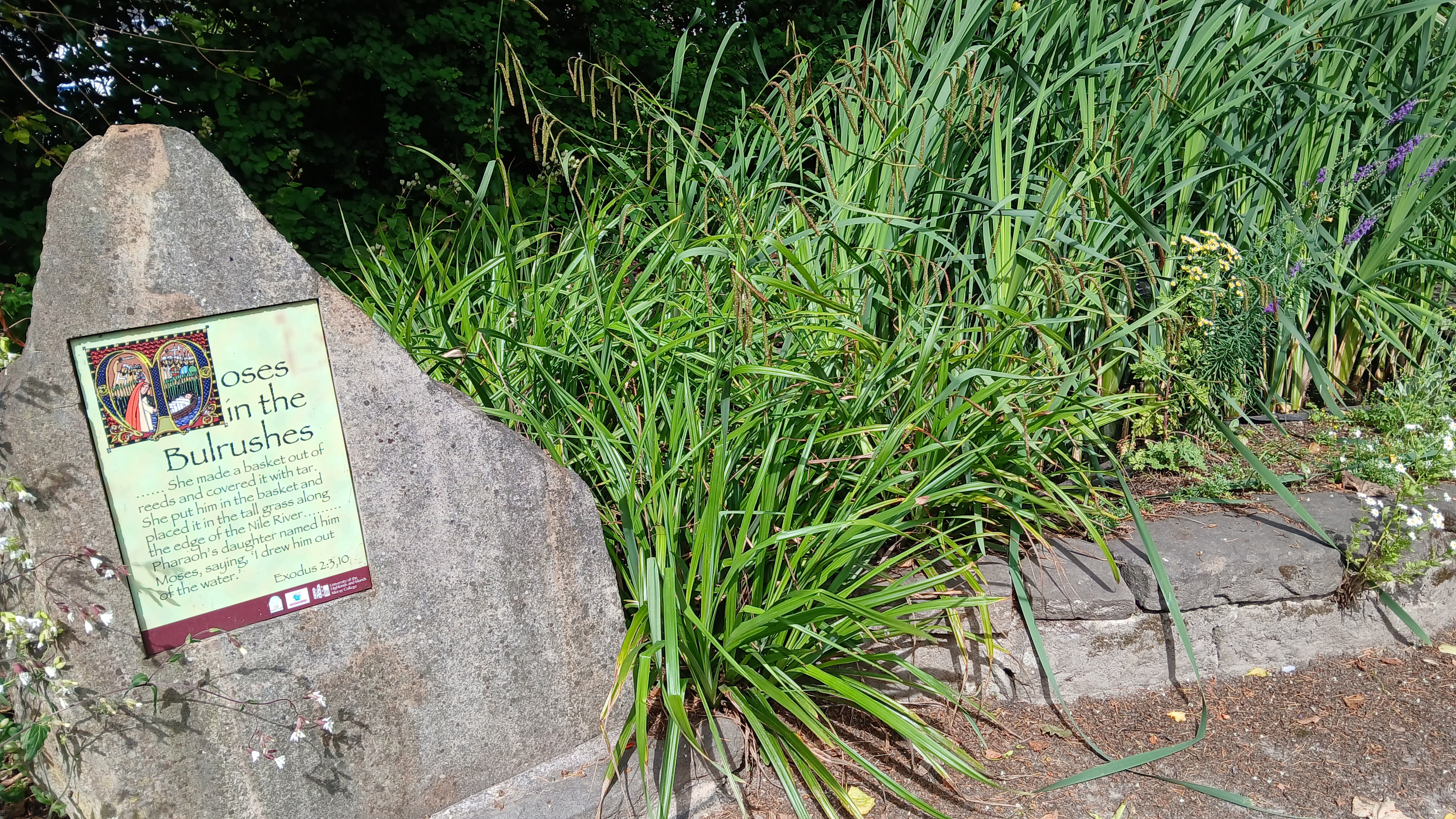
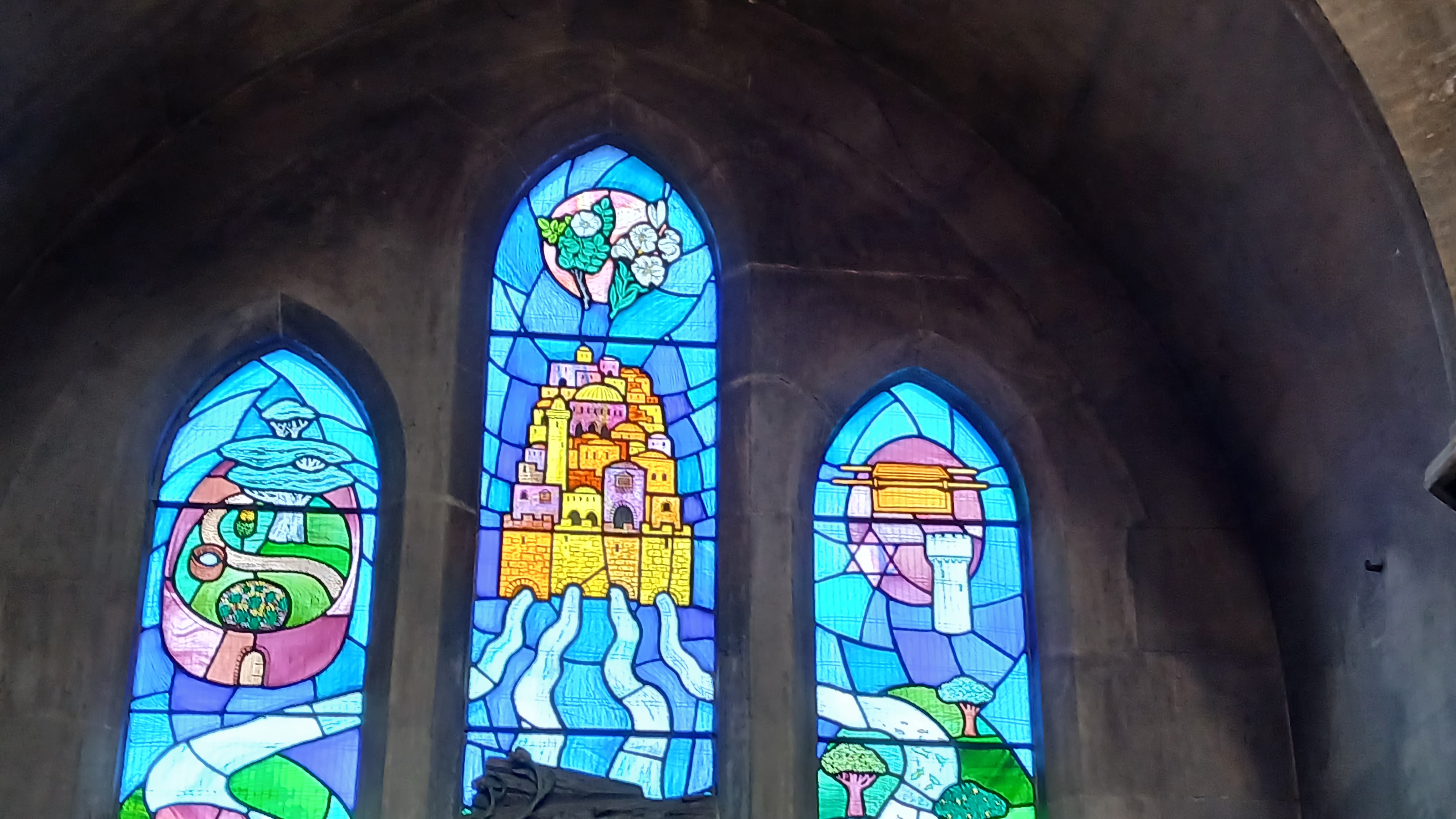
Across the road from the Cathedral is the Elgin Biblical Garden, a community garden which opened in 1996, a partnership between the Friends of the Biblical Garden, Moray Council and Moray College UHI. Students of horticulture use the Garden to develop their skills and generous donations from local businesses, churches, schools and individuals help to maintain the Garden. It is a beautiful community space featuring well-known Bible stories and containing plants mentioned in the Bible. Free to enter and well worth a visit if you’re in the Aberdeen area of Scotland.
Source: biblicalgardenelgin.co.uk
Ely Cathedral
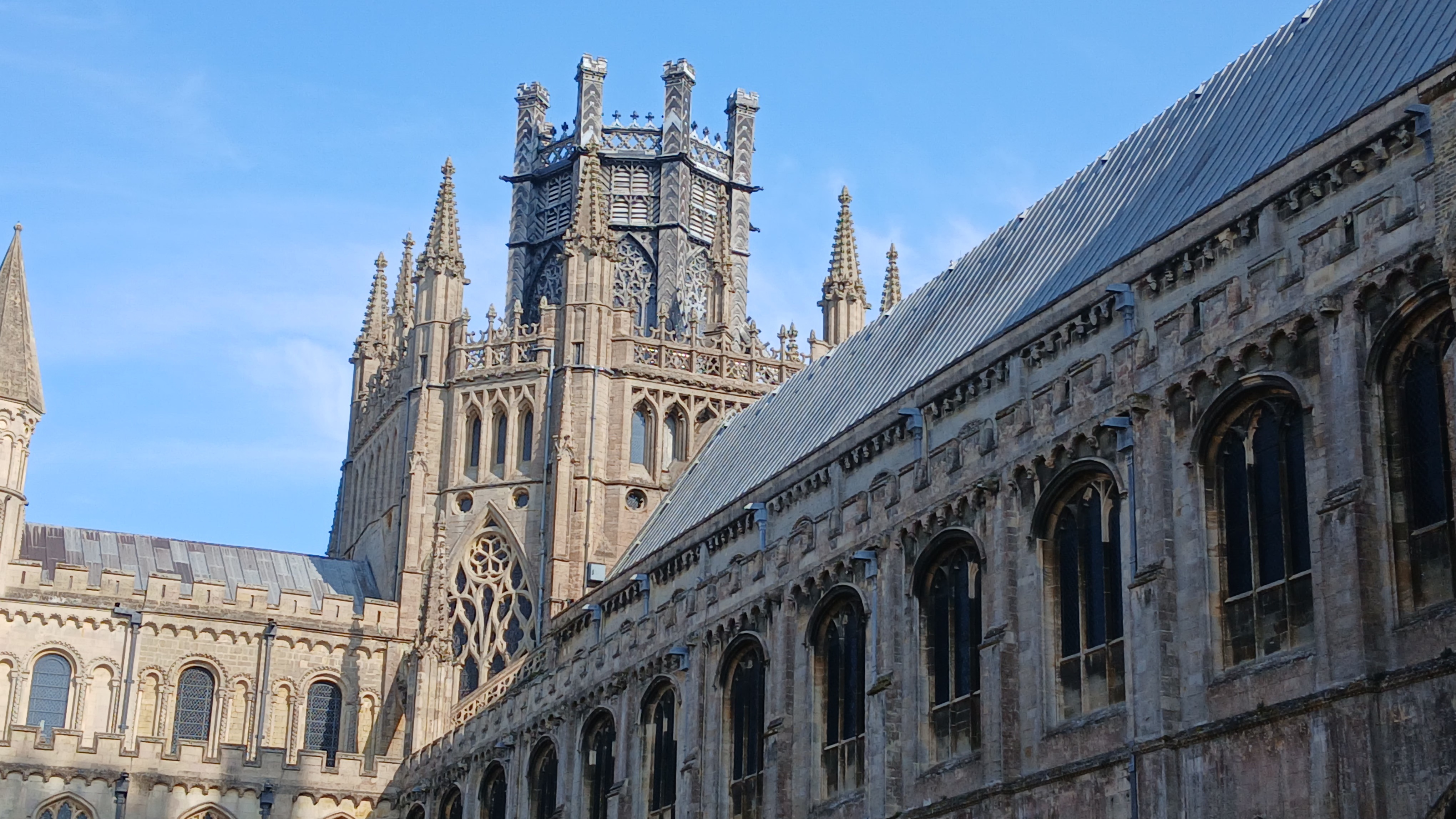
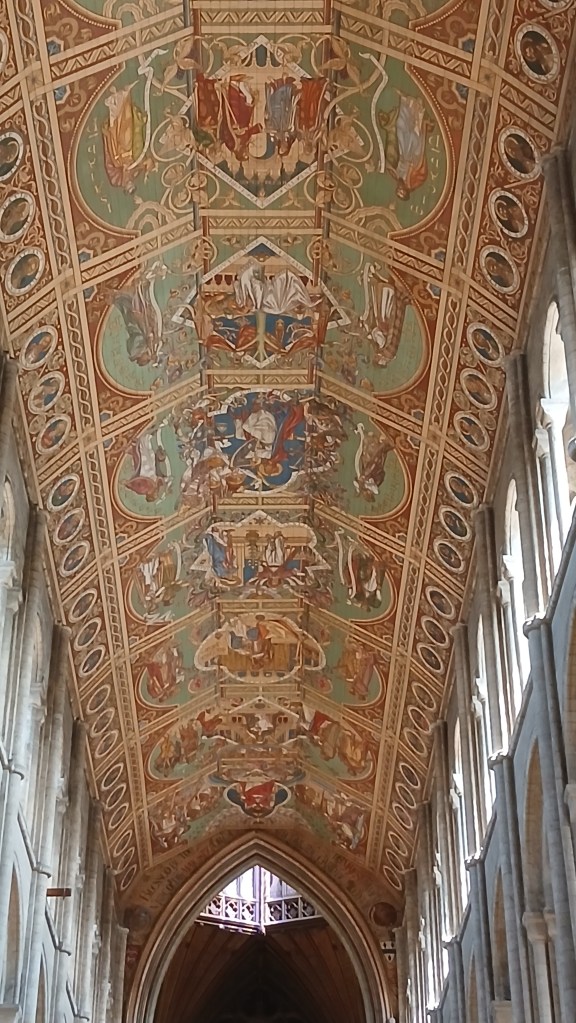
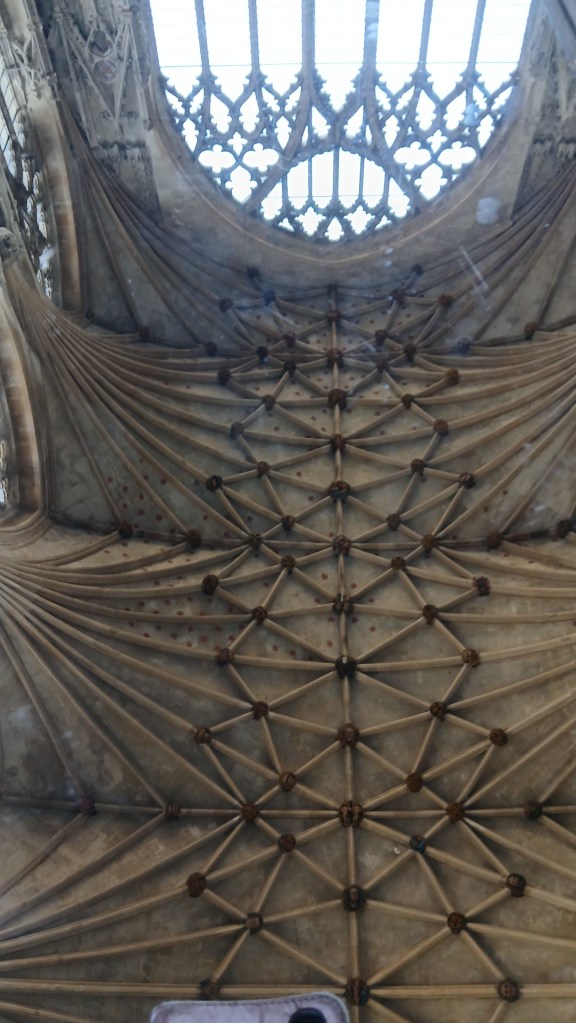
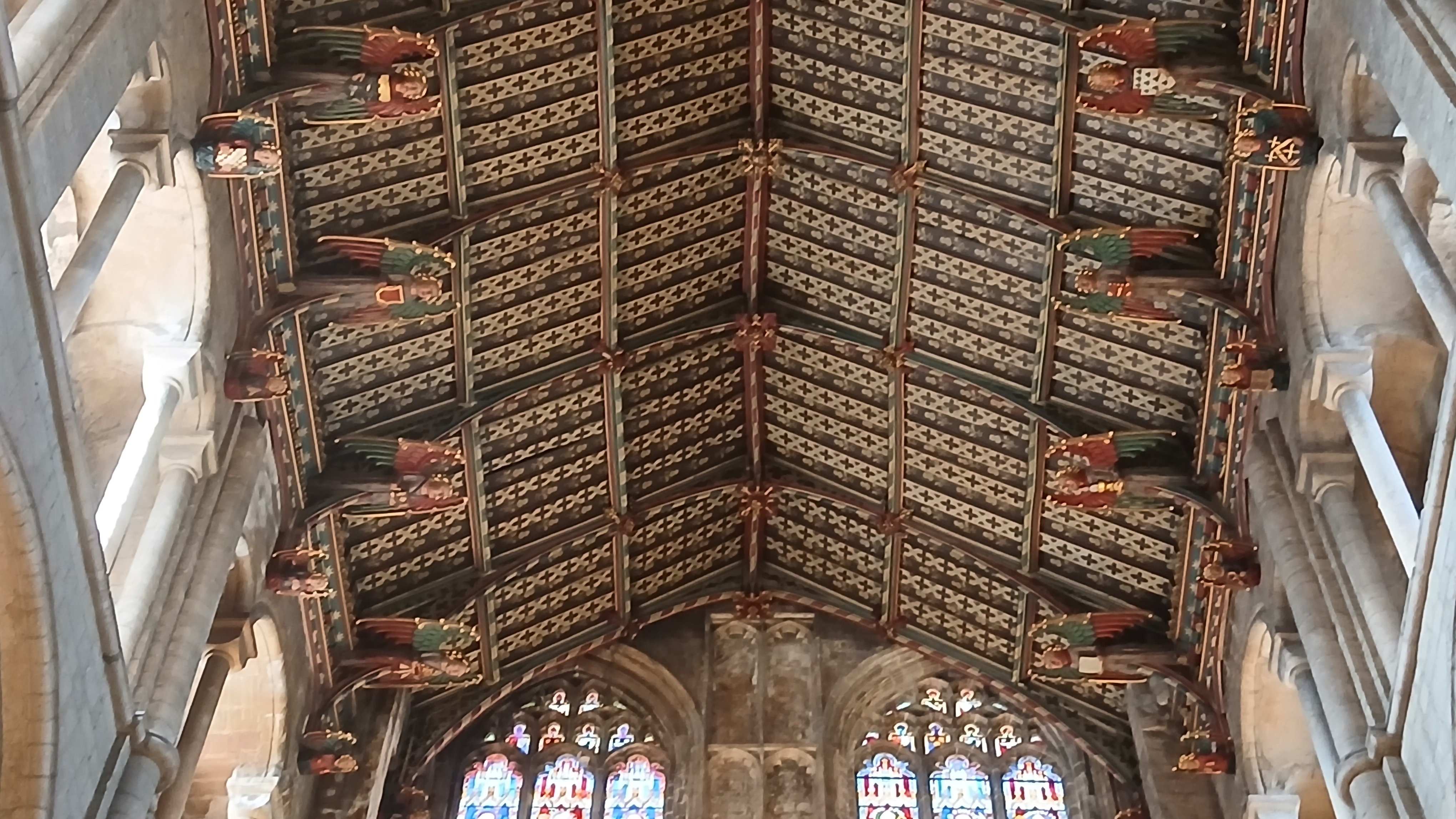
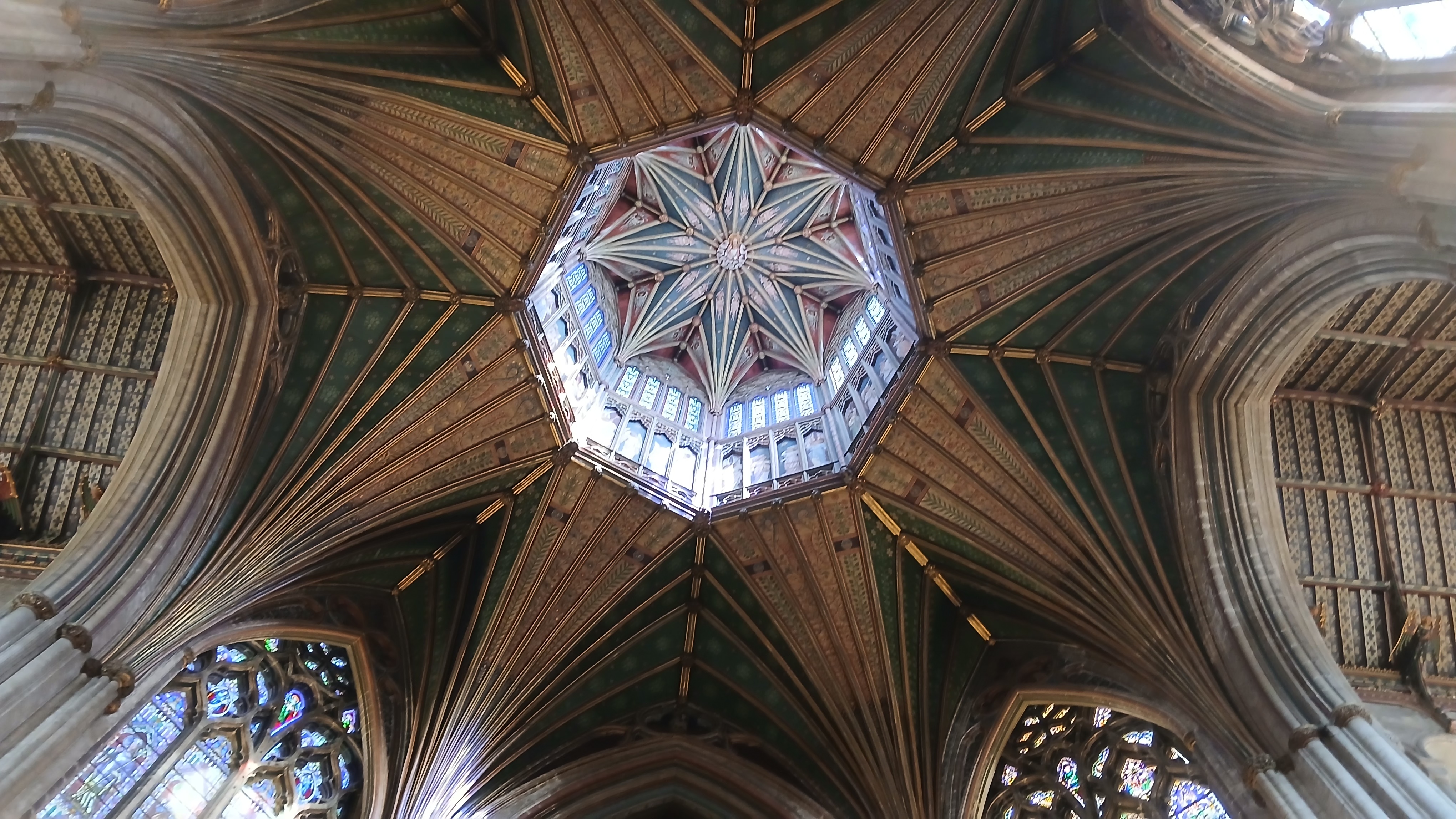
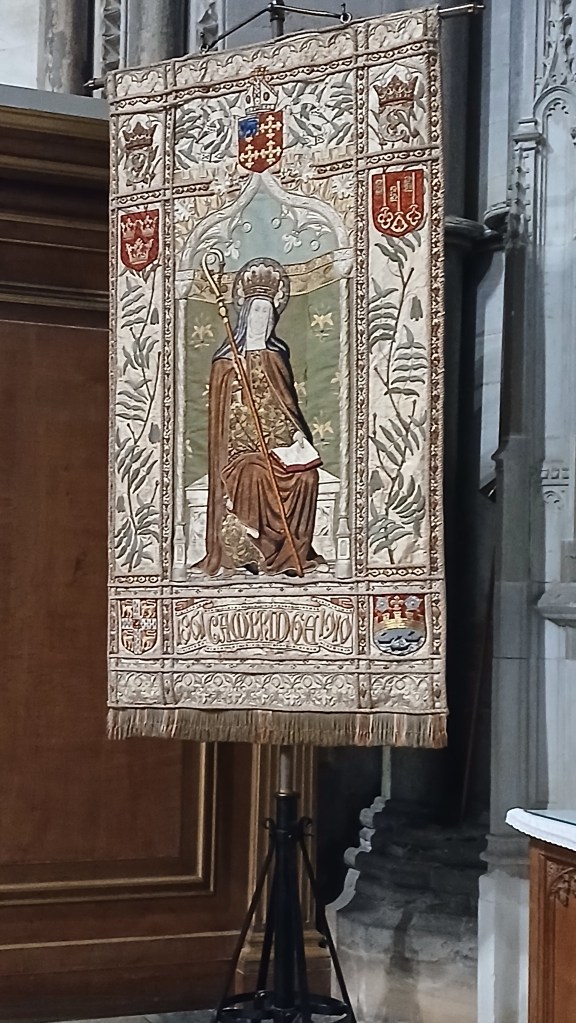
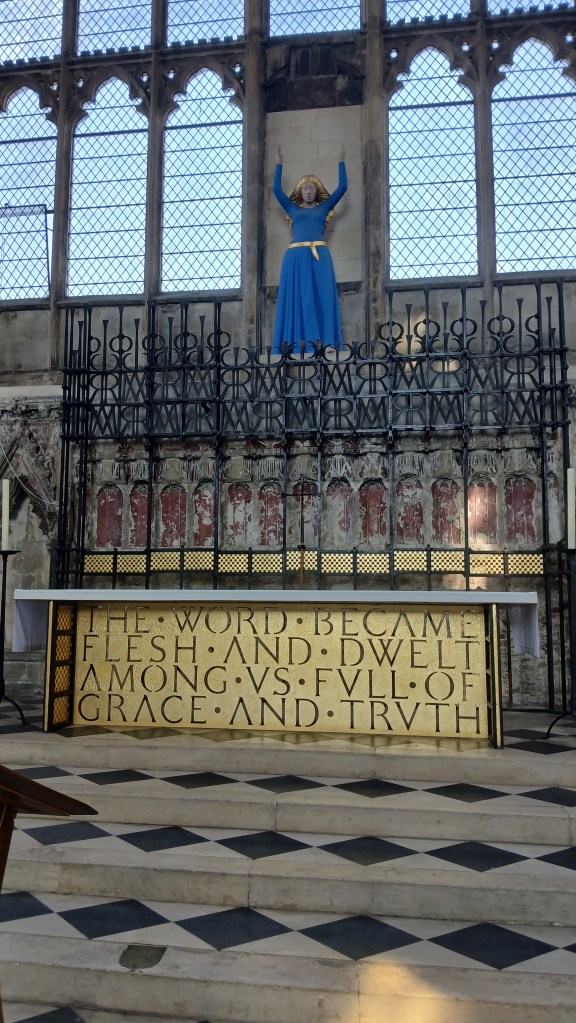
An impromptu visit to Ely while in Norfolk for the weekend attending a wedding! The cathedral’s origins date from 672AD when an abbey was founded on the site by St Aeelthryth (Etheldreda). The abbey was refounded in 970 under the Rule of St Benedict, later becoming one of the most successful Benedictine abbeys owning extensive lands, a library and means of book production. At the time of the Norman Conquest, almost 400 years after its establishment, the abbey was exceeded only by Glastonbury. The earliest parts of the standing building date to 1083 and it was granted cathedral status in 1109. Because of the cathedral, Ely has city status but is only the size of a small town; this is because the area around the cathedral was marshy and could not be built on until the marshy areas were drained much later. In fact the cathedral used to be on an island in the River Great Ouse and was known as the Ship of the Fens. It is the Cathedra (Bishop’s Seat) of the Diocese of Ely, covering most of Cambridgeshire and western Norfolk. The first cathedral was built in a ‘monumental Romanesque style’; later additions were in ‘exuberant Decorated Gothic’, these are descriptions from Wikipedia! The cathedral has a central octagonal tower with a roof lantern above, not actually a lantern but an architectural structure providing natural light into the space below. I could write much more about this magnificent cathedral, but I’ll just mention the beautiful and diverse ceilings, which you can view through a mirror to save looking up! Also the Lady Chapel, added in 1321 and originally a separate structure. The life-size statue of Mary, installed in 2000 above the alter, was criticised by some local people, but its vibrancy reflects that when originally built, the chapel would have been decorated in bright colours; I like it!
On 4th July 1776 the thirteen united states of America voted unanimously to become independent sovereign states no longer subject to British colonial rule. 4th July 2026 marked the 250th anniversary of the Declaration of Independence, so what better time to explore churches which have an historic connection to London? Turns out there are quite a few churches, some with quite a few connections! Here are four, with two short bonus entries at the end.
St Mary Aldermanbury, Aldermanbury Street
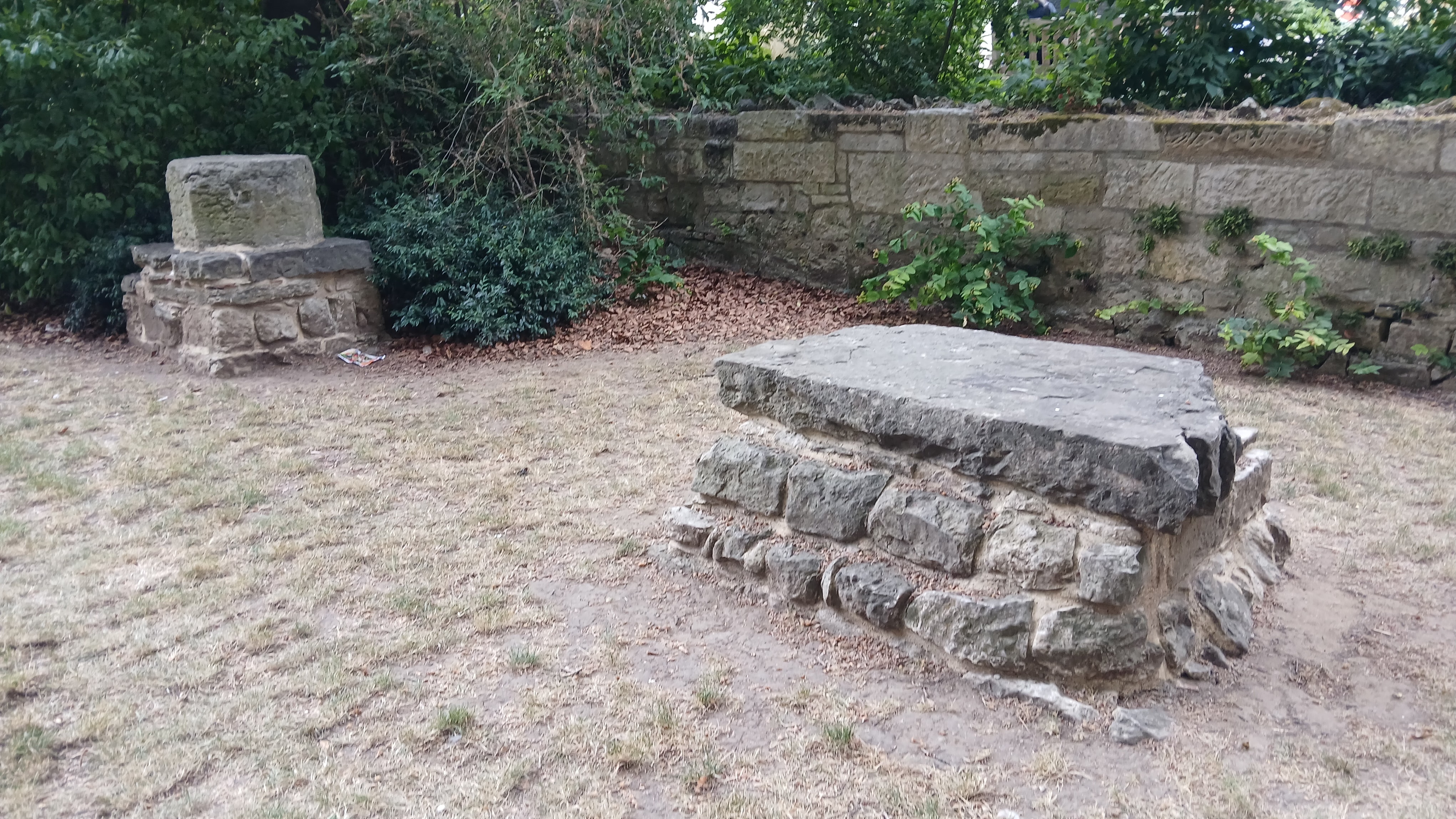
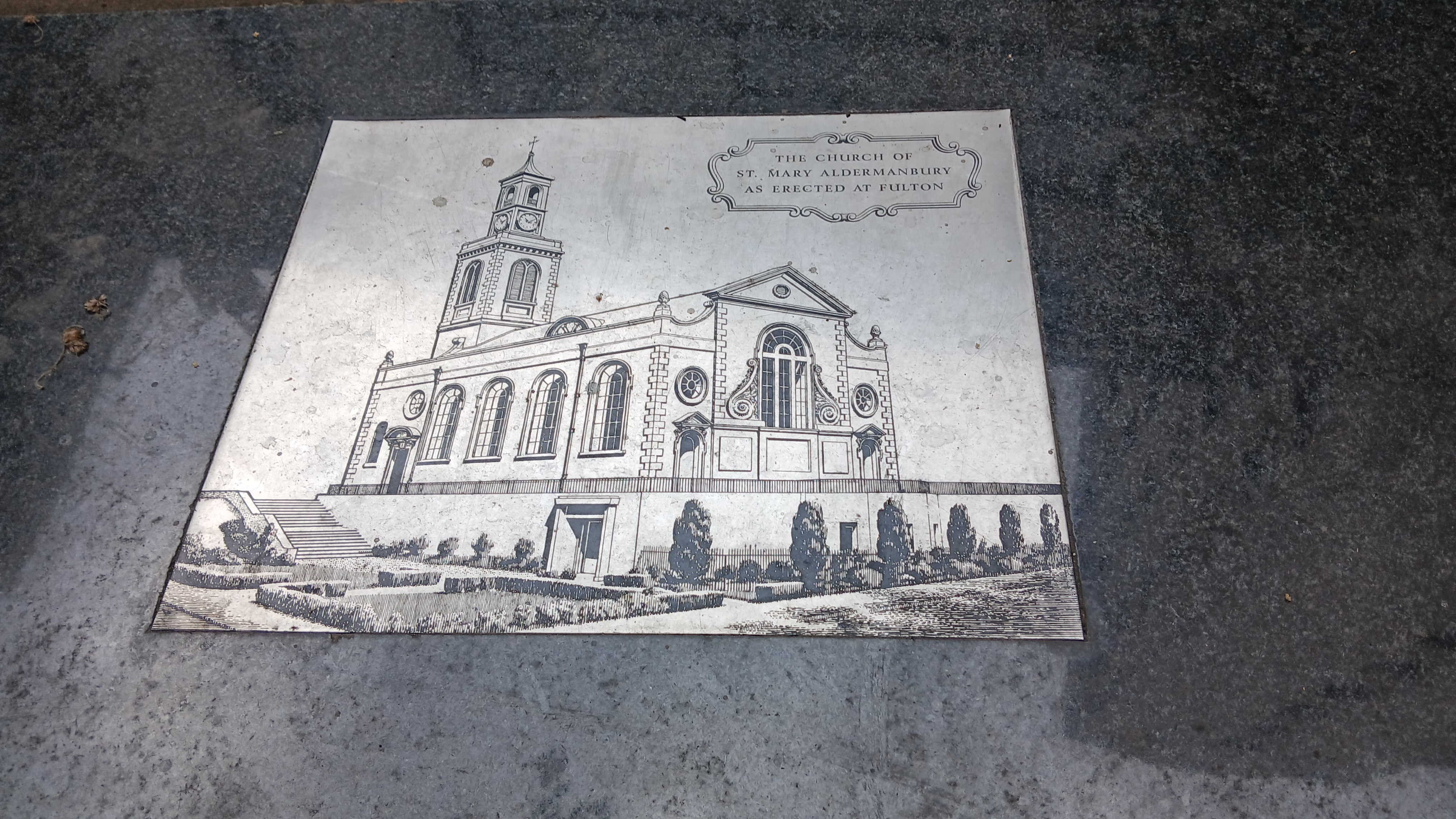
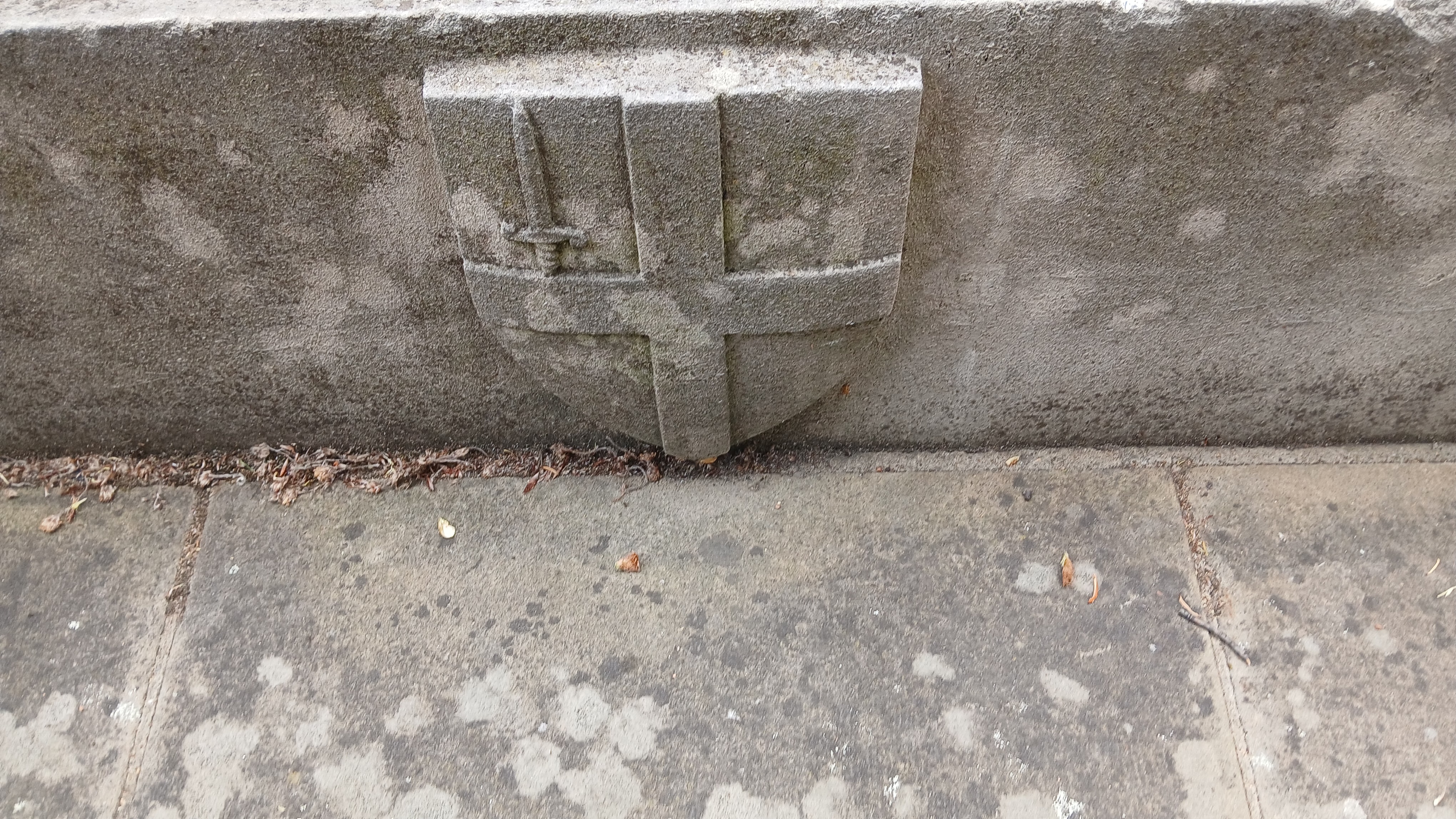
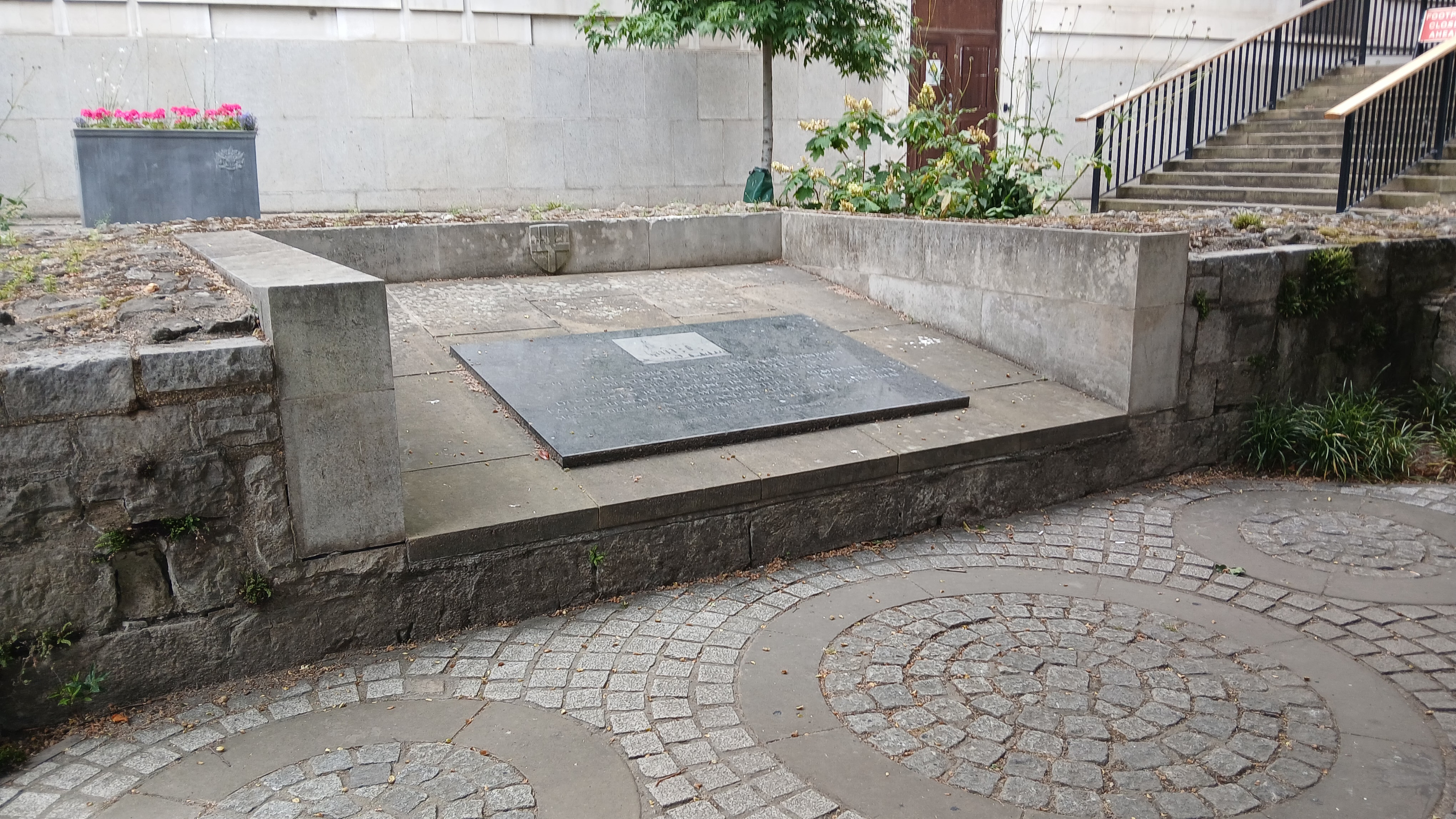
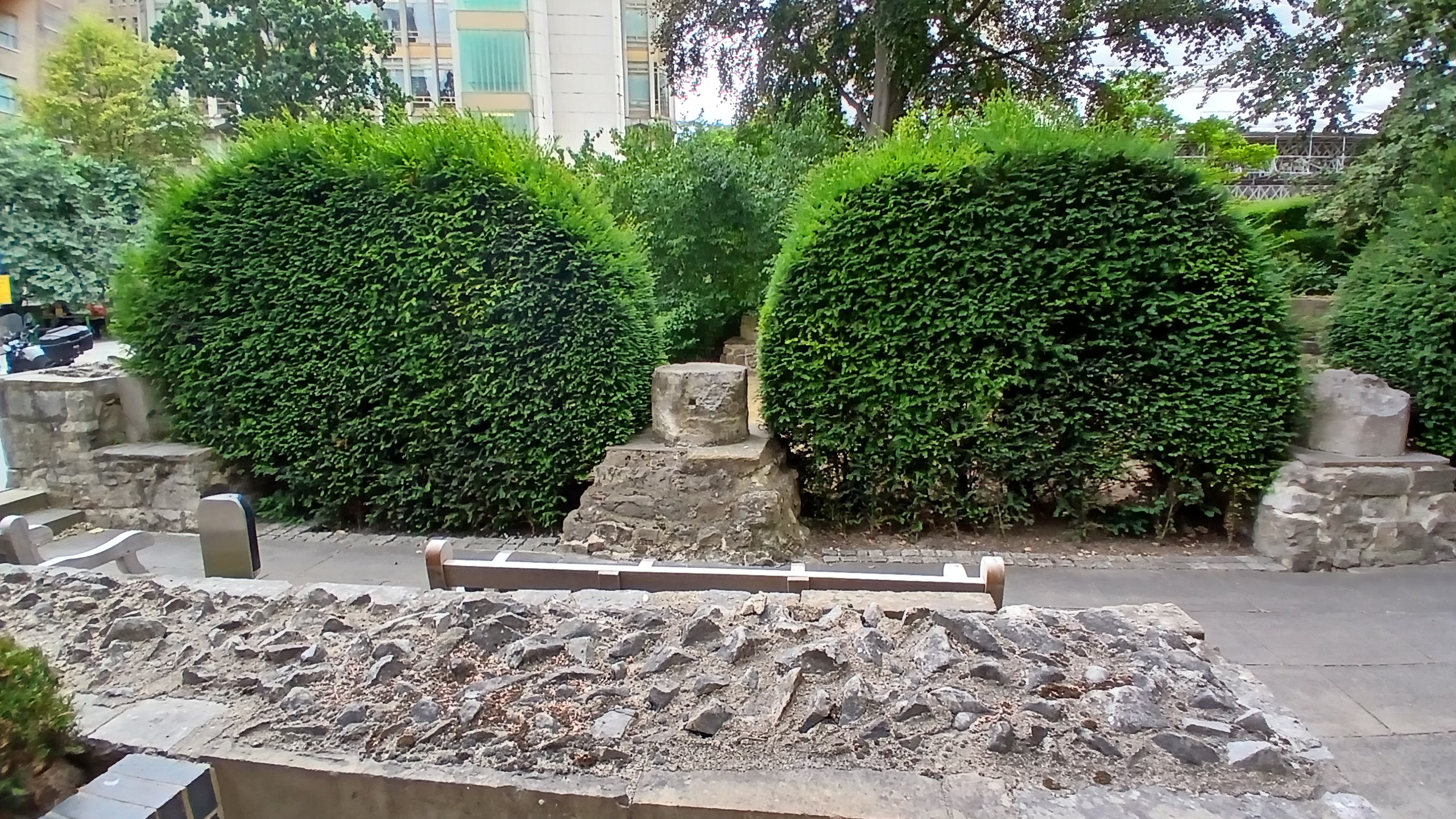
The first of these churches is no longer here! The church formerly on this site has its origins in the 12th century, was destroyed in the 1666 Great Fire and subsequently rebuilt by Sir Christopher Wren in the 1670s. This building stood for nearly three centuries until the night of 29th December 1940 when it was damaged almost beyond repair in the London blitz. For 20 years the church was left in its ruined state; then something surprising happened. Across the Atlantic Ocean, Westminster College in Fulton, Missouri, was looking for a way to commemorate the famous ‘Iron Curtain’ speech made by Winston Churchill on the college’s campus in 1946. ‘Among the suggestions of plaques and statues, someone proposed bringing over a Christopher Wren church and rebuilding it in honour of Churchill’s visit.’ As you do! The plan was endorsed by Churchill himself and every stone of the ruined church was carefully removed and taken by ship and rail to Missouri, where it was ‘meticulously’ rebuilt on the campus. The original site is now a City Church Garden with a plaque commemorating the church’s interesting history. The remaining foundations show the footprint of the church and there are also some footings (remaining low walls) interspersed with plantings of hedges. The City of London’s shield carved in stone can be seen on part of the foundations.
Source: anglotopia.net
All Hallows by the Tower
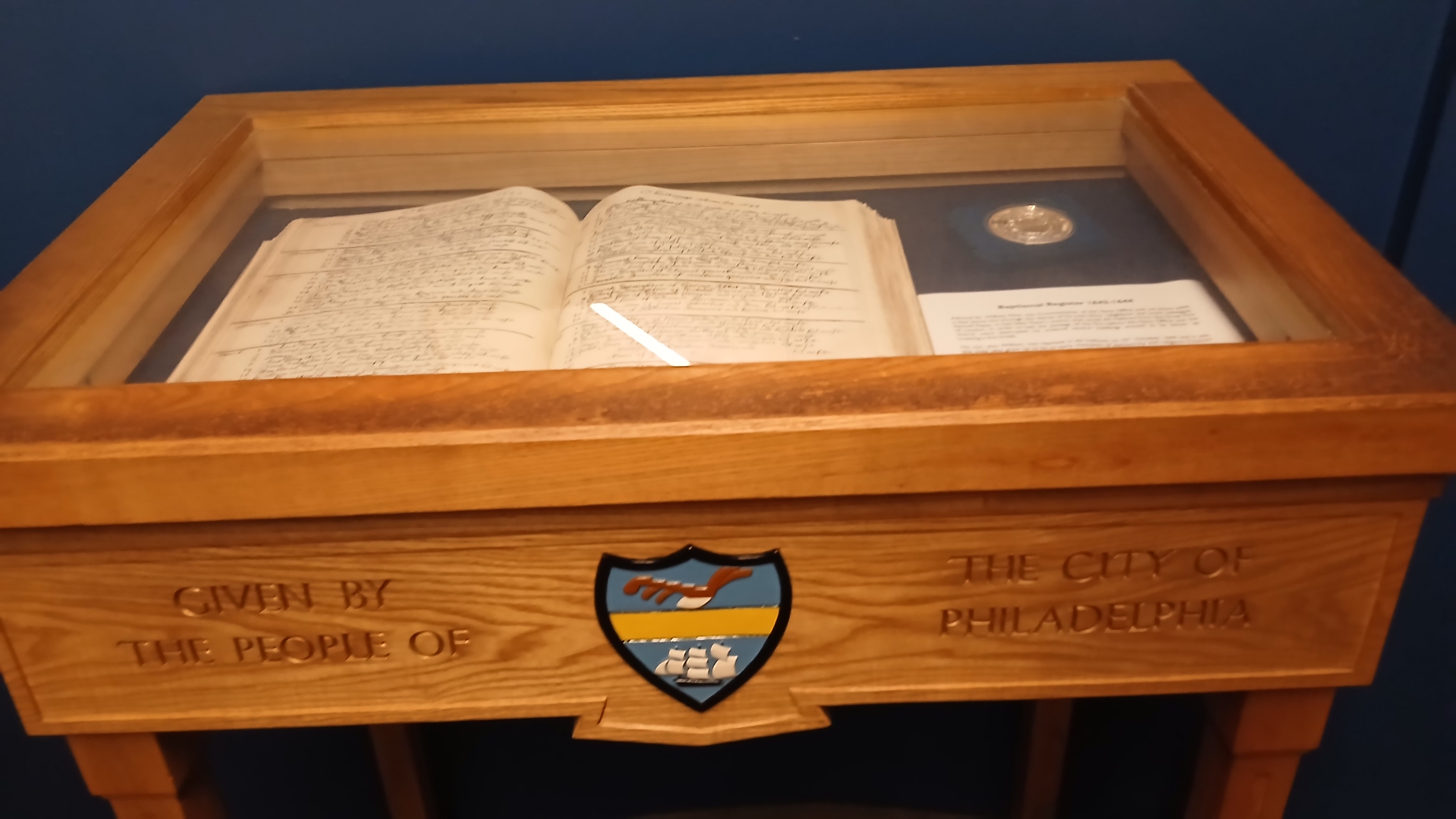
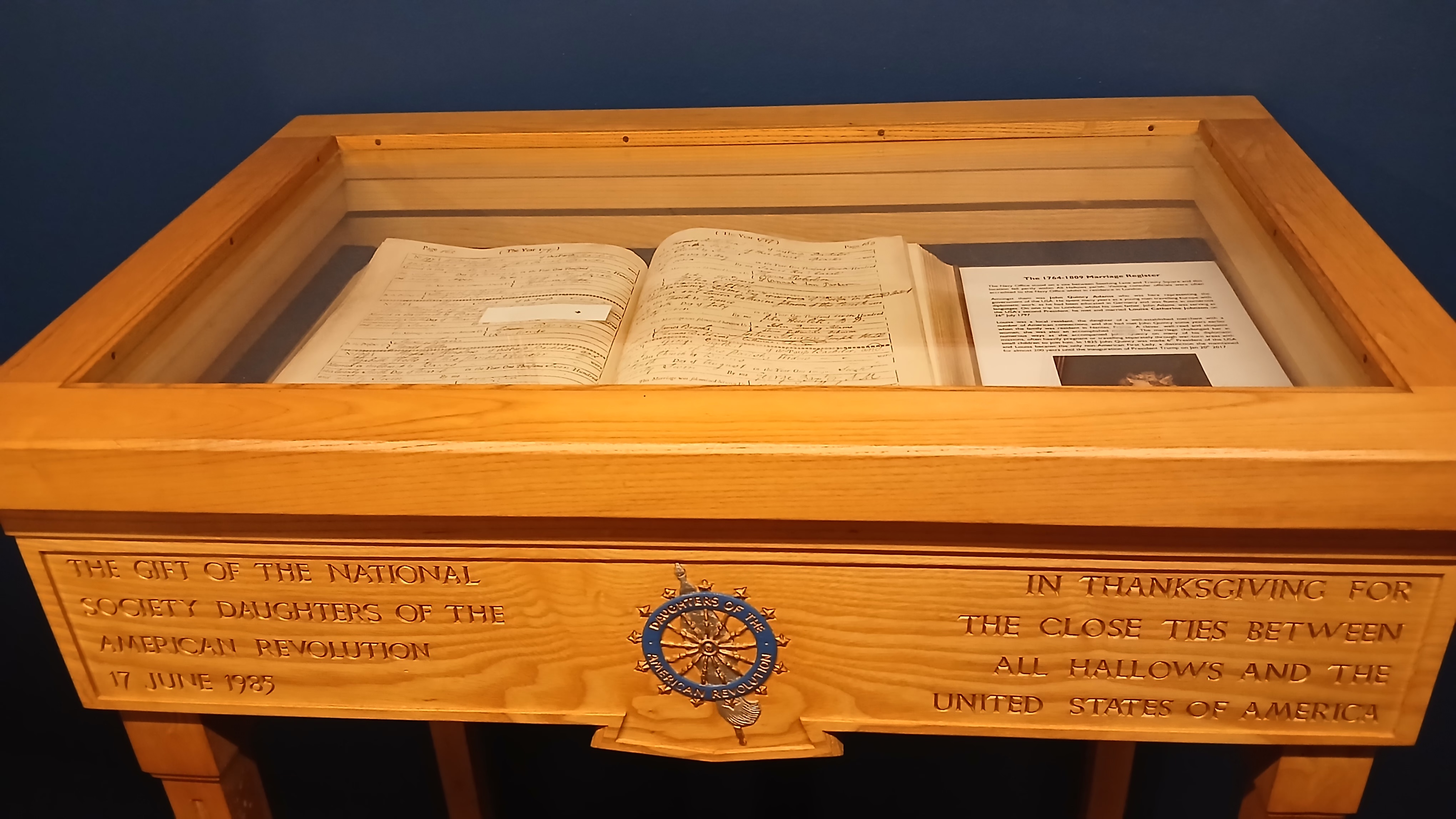
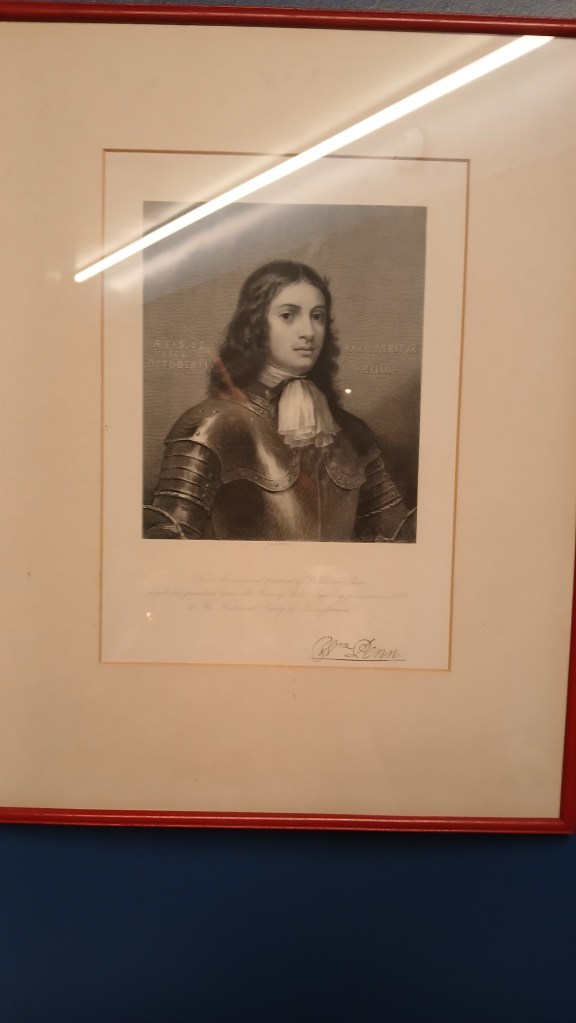
There are two American connections with All Hallows, said to be the City of London’s oldest church founded in AD675. Firstly, William Penn, son of Admiral Sir William Penn, was baptised in the church in 1644. The younger William Penn grew up to be a champion of democracy and religious freedom, and founded the US Province of Pennsylvania, one of the original 13 states. In 1681 King Charles ll granted Penn an area of land in the American colonies in lieu of money owed by the Crown to his father the Admiral. The story goes that Penn wanted to call the new province ‘New Wales’ which was objected to by the Secretary of State, a Welshman. Penn suggested the name ‘Sylvania’ meaning wood and the Privy Council added the prefix ‘Penn’. Being a modest chap, the younger Penn protested but then reluctantly accepted the name. The second US connection is the marriage at All Hallows of the 6th President of the United States, John Quincy Adams. Born in Massachusetts, Adams spent much of his life in Europe including an appointment as the US Minister to the Netherlands by then President George Washington in 1794. Spending the winter of 1795-96 in London, he met Louise Catherine Johnson, daughter of American merchant Joshua Johnson. Louisa accepted Adams’s marriage proposal but his parents disapproved of his choice of marriage to a woman ‘who had grown up in England.’ Adams would not change his mind and the couple were married at All Hallows on 26th July 1797. They returned to the United States and Adams served as President from 1825 to 1829.
Source: Wikipedia
Baptism Register in Display Case in All Hallows Crypt Museum
Marriage Register in Display Case in All Hallows Crypt Museum
Portraits of William Penn and John Quincy Adams respectively in the crypt of All Hallows; apologies for the reflection of the strip lighting, which I was unable to avoid!
St Bride’s Church, Fleet Street
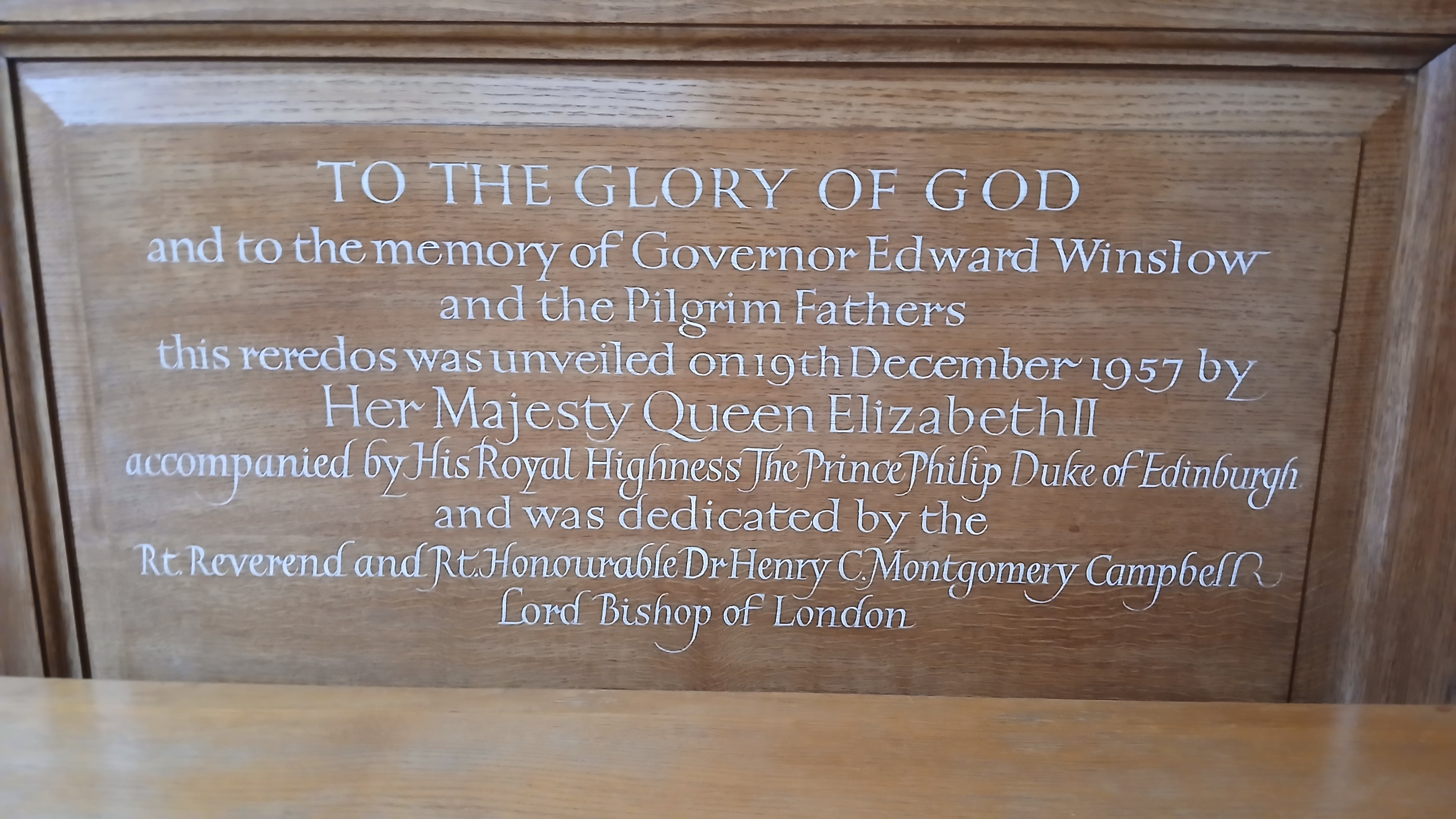
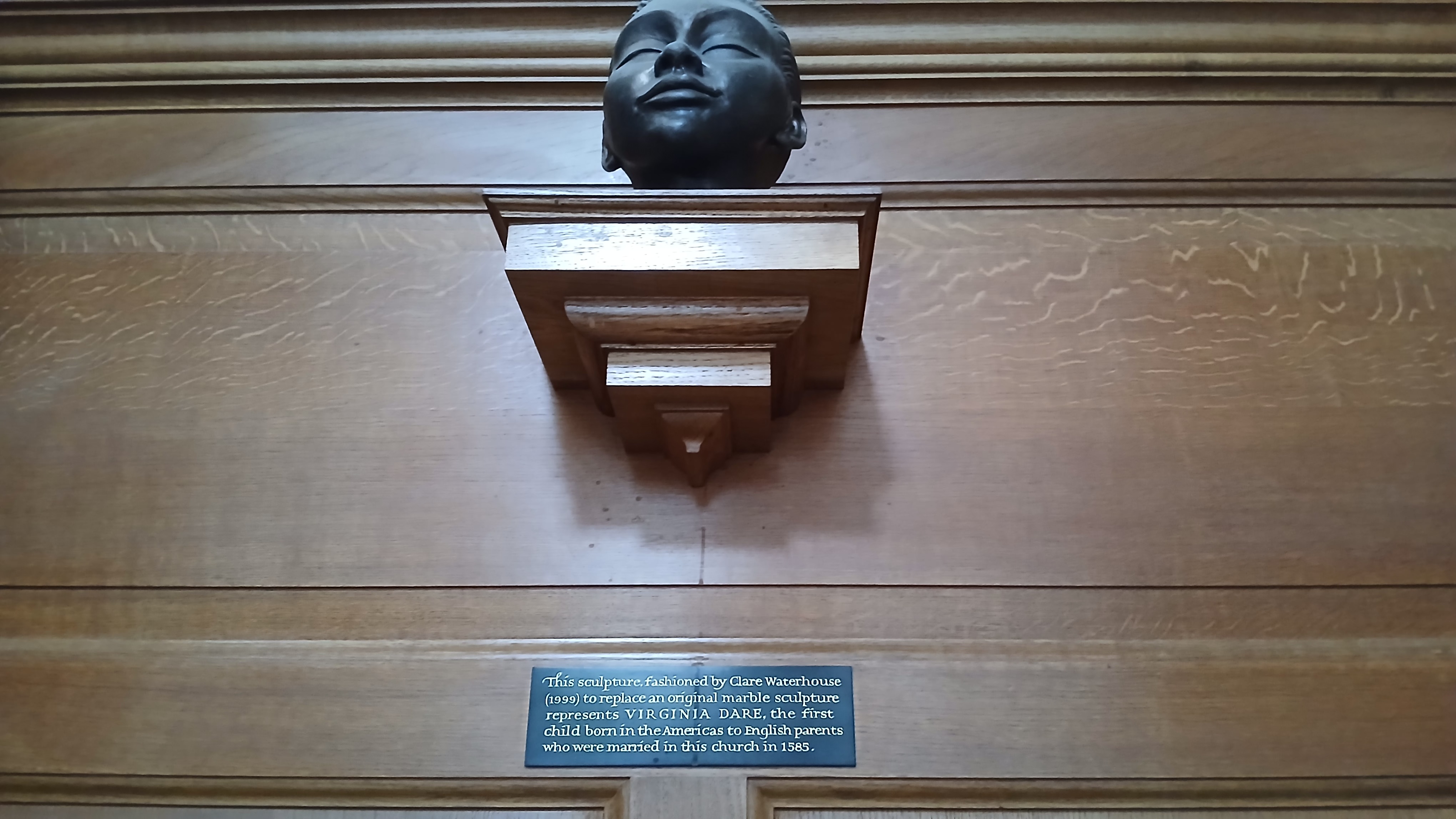
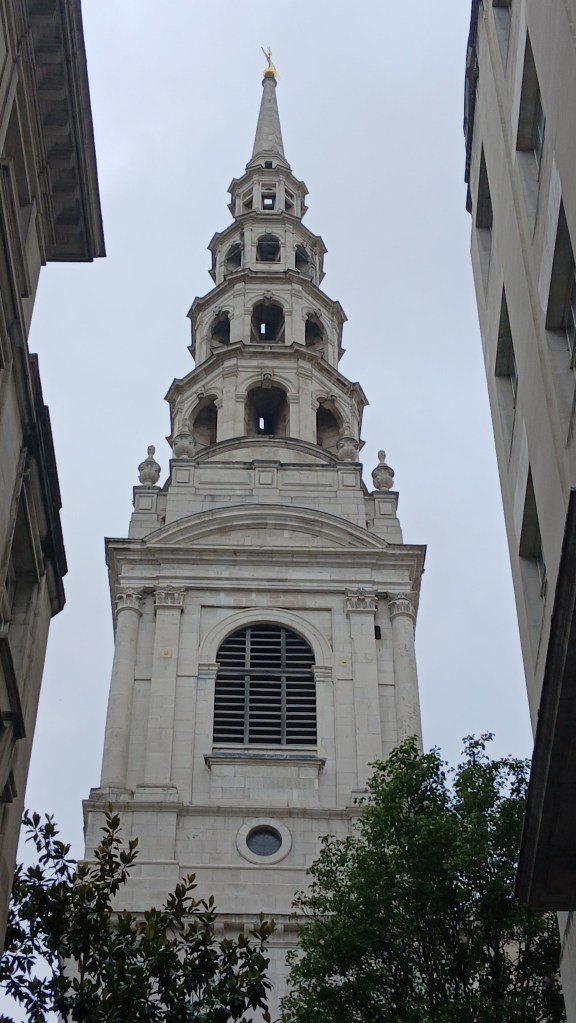
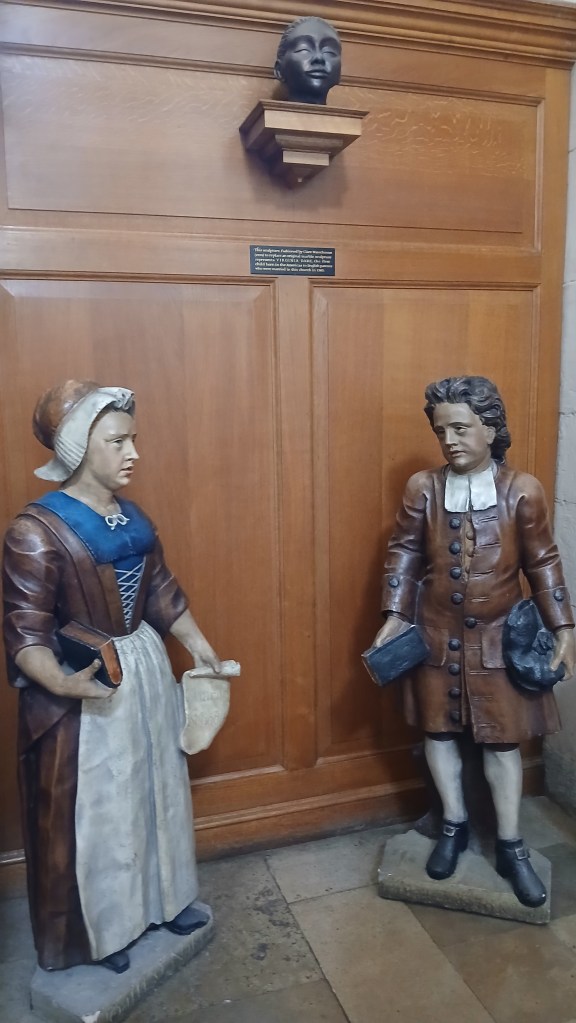
There are no less than three American connections to St Bride (the church’s name is a variation of St Brigid). The church’s famous ‘wedding cake’ spire was struck by lightening in 1764. American Founding Father Benjamin Franklin, inventor of the lightening rod, had a ‘discussion’ shall we say, with King George lll about the type of lightening rod to be installed: those with a pointed end (Franklin) or those with a blunt end (the King.) Of course, the King got his way, despite Franklin being the expert! Secondly, in the church there is a plaque commemorating Edward Winslow and the Pilgrim Fathers. Winslow sailed on the Mayflower in 1620 and went from being an apprenticed stationer in the City of London to becoming Governor of New Plymouth, Massachusetts, being re-elected twice more. St Bride is the Printers’ and Journalists’ church and in Winslow’s time the Worshipful Company of Stationers managed the printing trade. Winslow attended St Bride before travelling to America and his parents were married here. The third connection with the first American colonies is the bust of Virginia Dare, the first English child born in the ‘New World’. Her parents were married in St Bride in 1585 before travelling to the Roanoke Colony in Virginia, hence their daughter’s name. The bust was made by sculptor Clare Waterhouse in 1999, replacing the original which was stolen. The figures beneath the bust don’t depict Virginia’s parent as I first thought. They were originally situated outside the Bridewell Hospital Orphanage, which sent 100 orphaned boys and girls to Virginia in the 1600s to populate the new colony. The scheme was so successful that the Governor requested a further 100; on their coming of age all the young people received grants of land to begin their adult lives with promising prospects.
American International Church, Tottenham Court Road
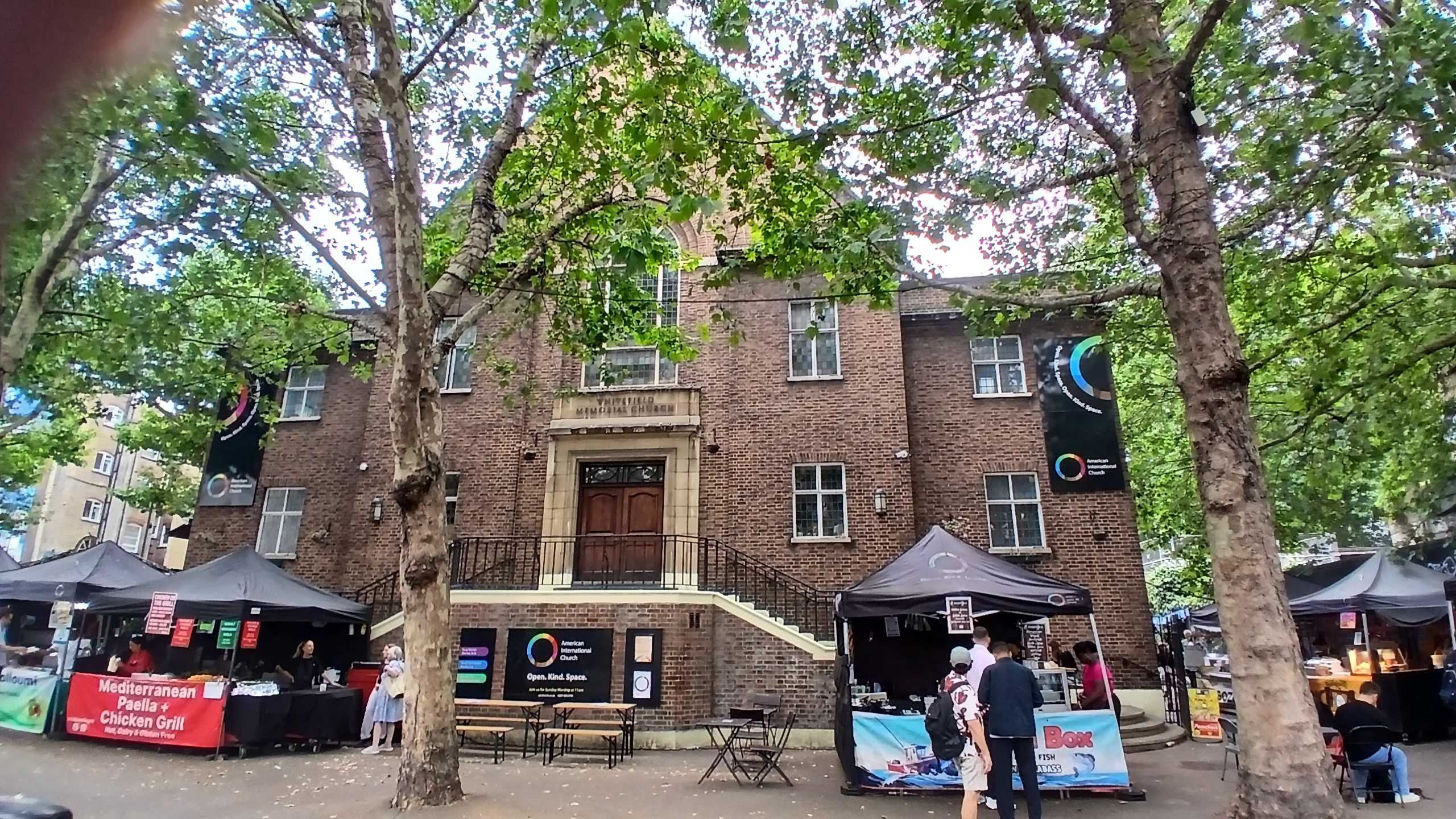
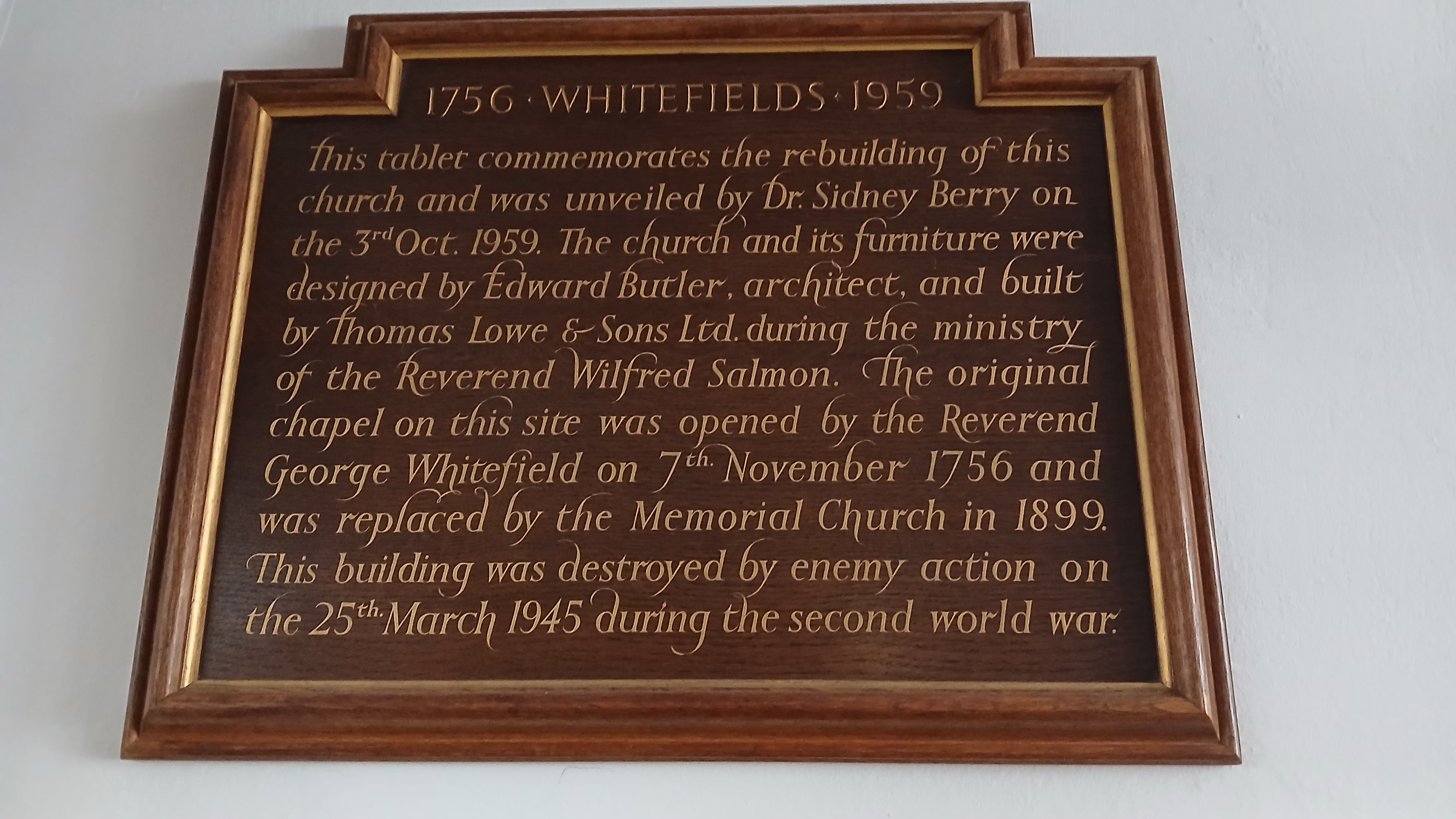
The church is located in the Whitefield Memorial Church on Tottenham Court Road, originally being located in a building in North Audley Street, close to the former site of the American Embassy. The church was known as the American Church in London as it was set up to provide a place of worship for American expats living and working in London. The name change in 2013 reflects the 30 plus different nationalities now attending the church. History of this site: a chapel was built on the site in 1756 for Evangelical preacher John Whitefield, a contemporary of John and Charles Wesley. In 1890 the chapel was taken down and re-erected as Whitefield’s Central Mission, but on Palm Sunday 1945 the building was destroyed by the last V-2 rocket to fall on London. The present church was built in 1957, becoming the home of the American Church in 1972. The church stands in a pedestrian thoroughfare and in the front and right hand side of the building is a wonderful World Food Market, independent vendors selling street food which the church hosts from 11am to 2pm, Monday to Friday. There’s plenty of seating in the market and in Whitfield Gardens to the left of the church. The variety of food available is amazing; I wasn’t able to stop for lunch but I did try some fee samples on offer! In 1986 the church launched The Soup Kitchen which serves hot meals to local people in need six days a week; they also support C4WS Homeless Project, offering a seasonal night shelter for homeless people and staffed by volunteers in the congregation.
Sources: wikipedia;amchurch.co.uk
Two more American connections:
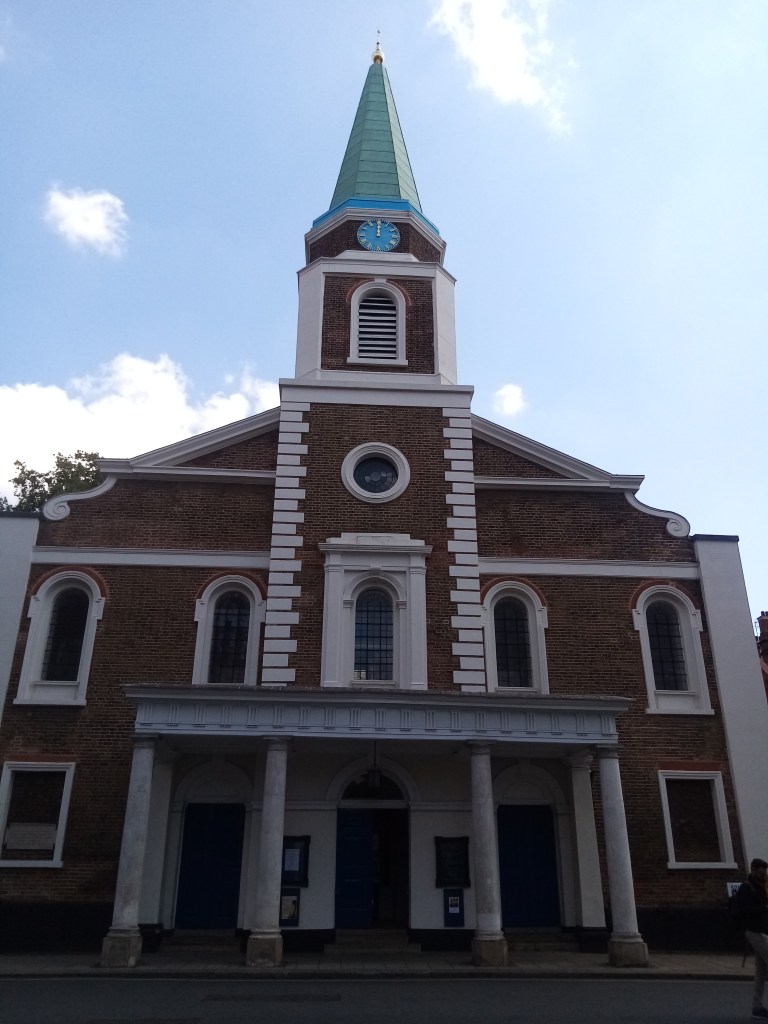
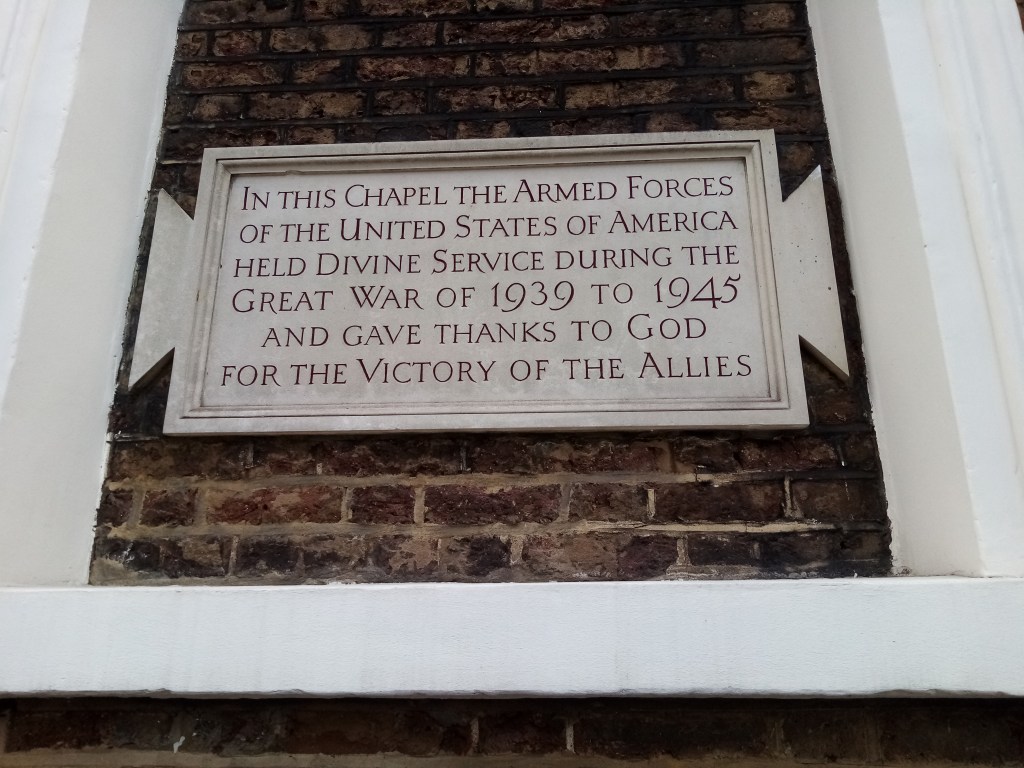
The Grosvenor Chapel in Mayfair, constructed in 1730, was the inspiration for many church buildings in New England in the Northeastern USA. During the Second World War American servicemen and women were welcomed into the Chapel for Sunday services. The Chapel is located in South Audley Street, close to the former site of the American Embassy.
Source: Wikipedia
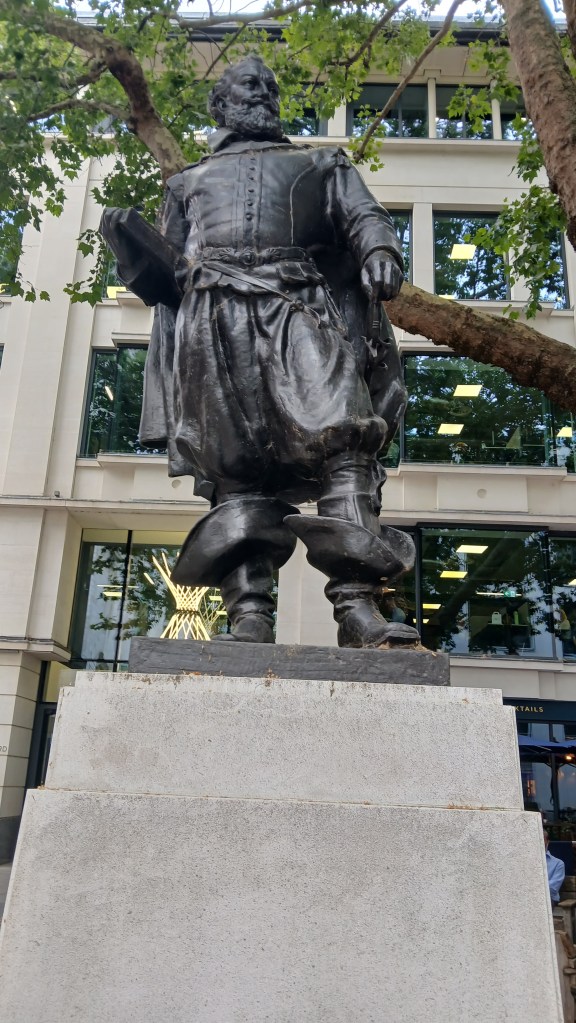
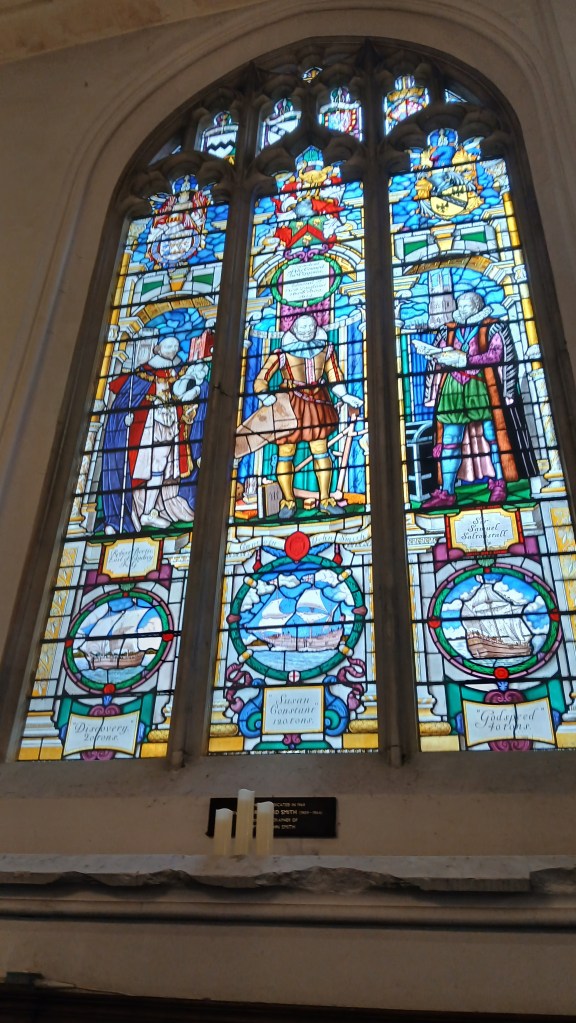
Outside Mary le Bow Church on Cheapside is a statue of American explorer and settler Captain John Smith, which as the website Lookup London says: ‘doesn’t look quite the same as Disney’s reimagining of him.’ Smith sailed to Virginia in 1606 and helped to establish the colony of Jamestown, later becoming Governor of Virginia. He was captured by the Powhaton tribe and was said to have been saved from execution by the chieftain’s daughter, Pocahontas, who threw herself across Smith to save him. The Disney version of the story has her marrying John Smith, but she actually married another settler, John Rolfe. Smith was buried at St Sepulchure-without-Newgate and is commemorated with this lovely stained glass window in the church which depicts the three ships from his first Virginia expedition: the ‘Discovery’, the ‘Susan Constane’ and my favourite name, the ‘Godspeed.’
I was back in the Royal Borough of Kensington and Chelsea in June – so how did it obtain its royal status? The Metropolitan Borough of Kensington was granted royal status in 1901 by Queen Victoria who was born in Kensington Palace in 1819. The boroughs of Kensington and Chelsea merged in 1965, and surprisingly RBKC as it’s known is the smallest London Borough and also one of the most densely populated. Despite being small, the two parts of the borough have retained their unique characteristics and recognisable institutions: Kensington has its museums, royal palace and ultra posh shops, and Chelsea its Football Club (though Stamford Bridge stadium is actually located in Hammersmith and Fulham), Flower Show, Royal Hospital and expensive properties. Here’s a look at some more Chelsea churches, perhaps I’ll explore Kensington churches another time.
St Columba’s Chelsea (Church of Scotland)
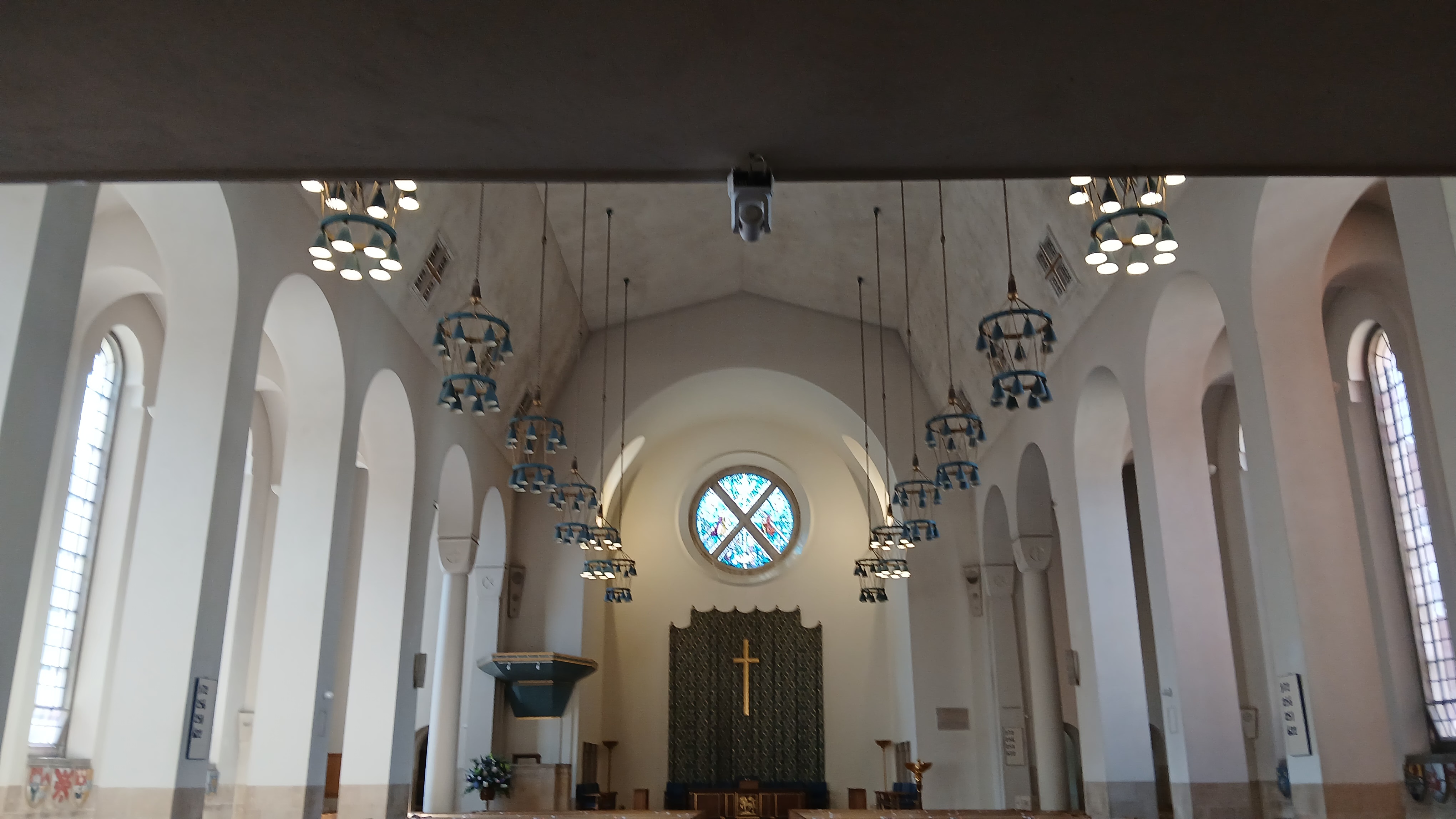
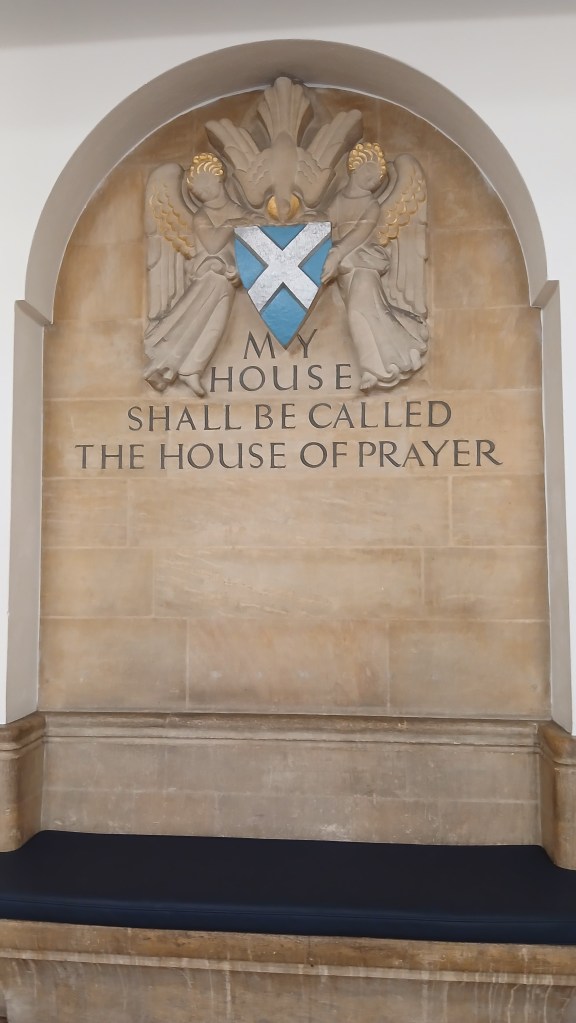
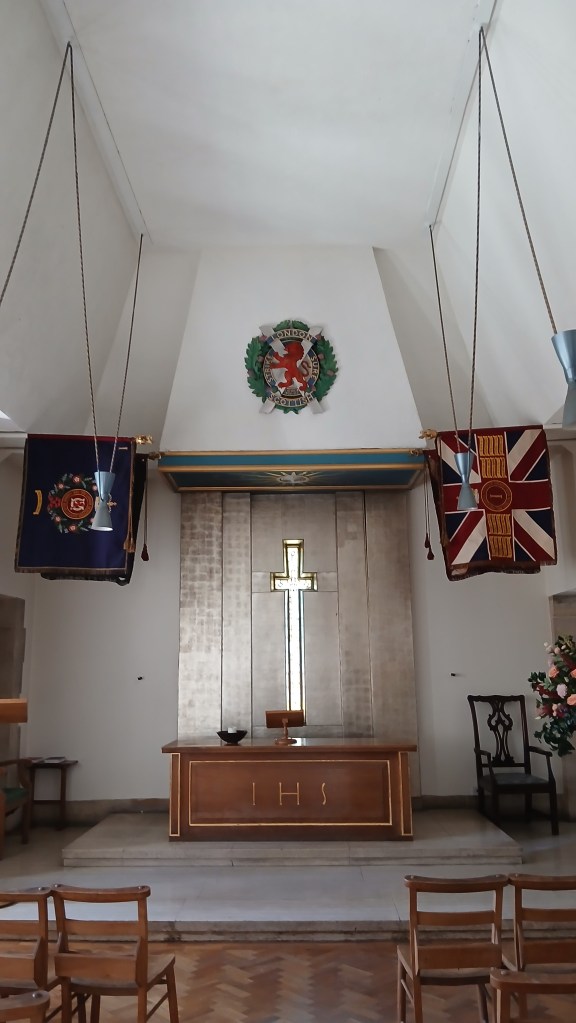
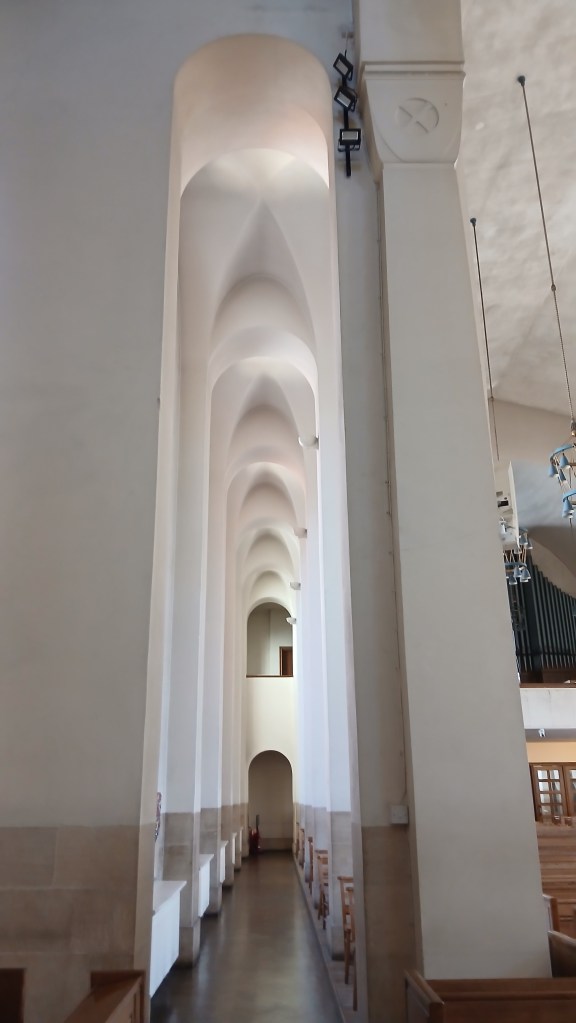
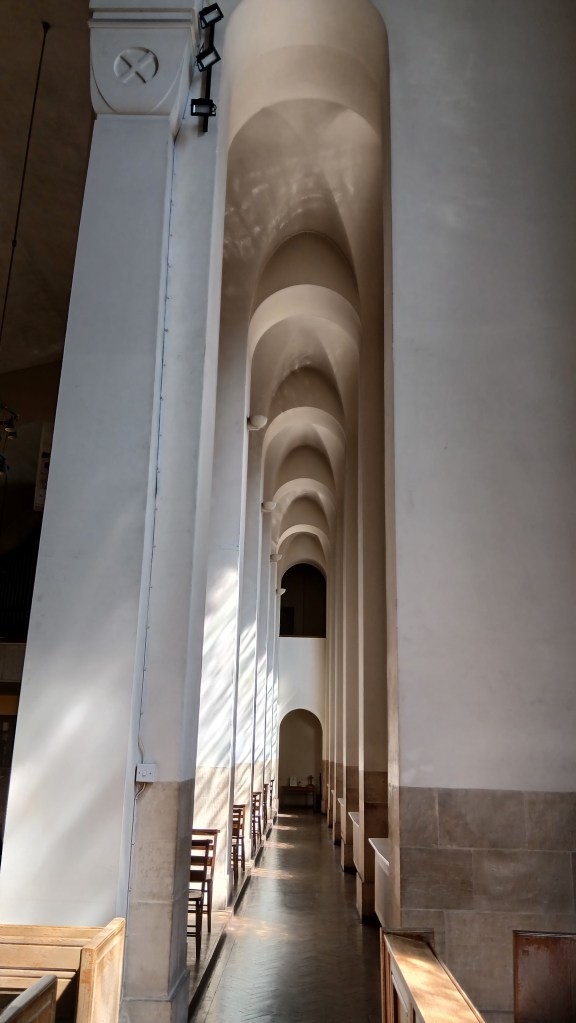
The interior of St Columba’s is stark but beautiful; the pale stone, simple alters and high arches contribute to a peaceful, contemplative atmosphere. The first Scots church in London was Crown Court Church in Covent Garden in 1719, but a growing Scottish congregation in the London area gave rise to the idea of establishing a sister church to the west and a new ‘kirk’ was finally built in 1884. The church thrived under visionary leadership, including providing hospitality and welfare to nearly 50,000 Scottish troops in World War ll. On the night of 10th May 1941, however, an incendiary bomb landed on the church and completely destroyed it. The large congregation used Imperial College for their Sunday services, spiritually and emotionally sustained during this dark time by the ‘wise leadership’ of the Rev Robert FV Scott. Work began on a new church after the war, and the new St Columba’s was dedicated in 1955. The 60th anniversary service and celebration was attended by HM the Queen and HRH the Duke of Edinburgh. Today the church regularly hosts music recitals, an annual Burns Supper (of course) and every Friday evening of the year, the ReStart Lives Drop In provides a hot meal, support and company for homeless people and those experiencing housing insecurity. The Founding Fathers of St Columba’s would be proud of the continuation of their legacy 142 years later!
Source: stcolumbas.org.uk/our-history; magazine in the church
St Simon Zelotes
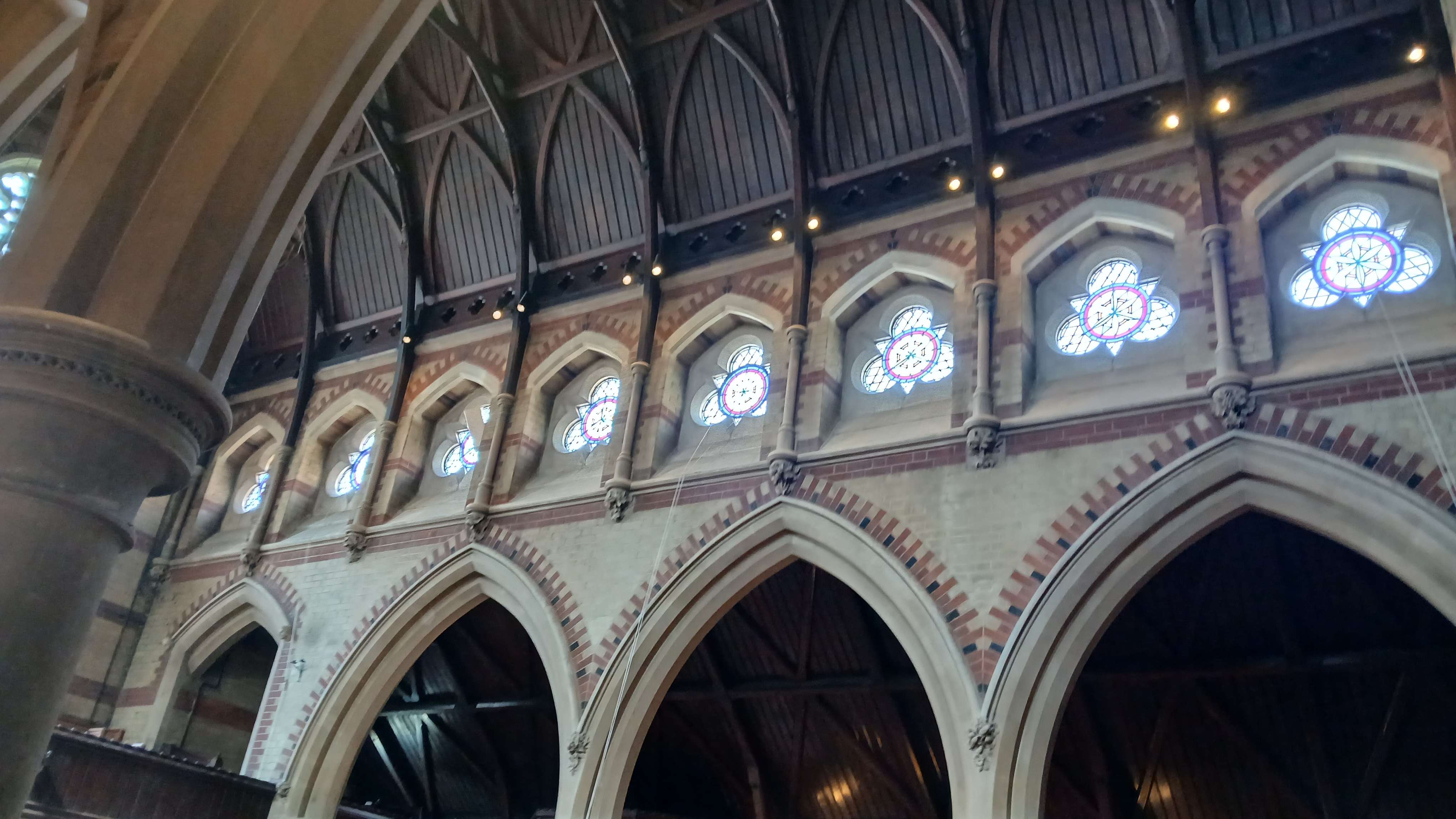
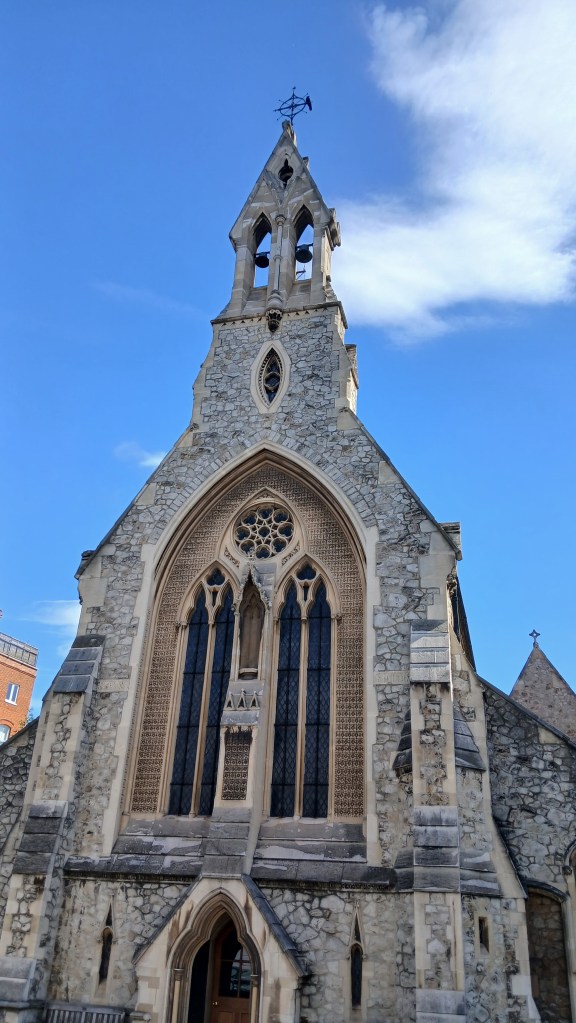
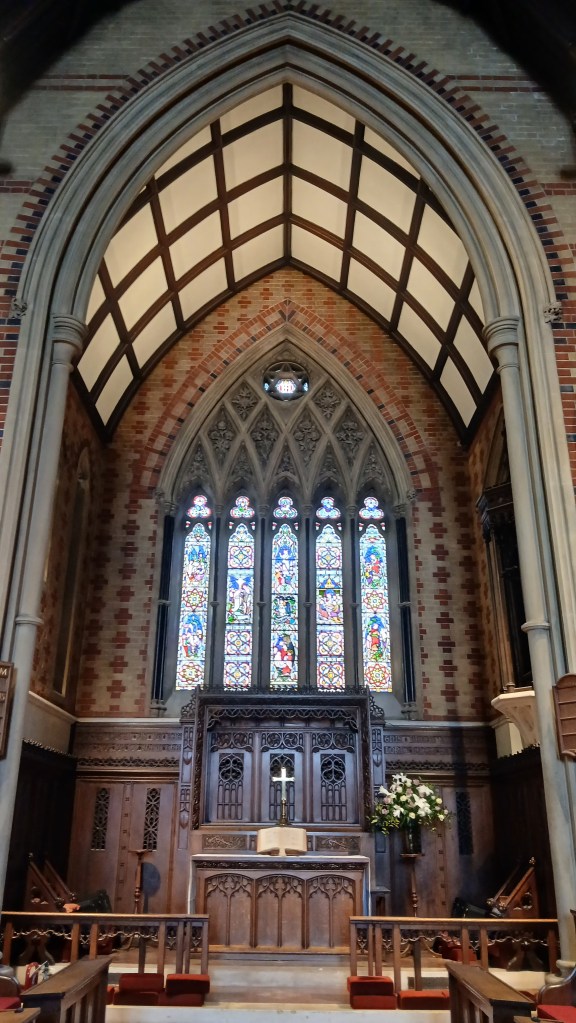
This is a small, pretty Victorian church which I popped into on the way to St Columba’s, noticing it was open. It was built in 1858-59 by the architect Joseph Peacock and described as his ‘most complete surviving work.’ St Simon’s as it’s known, has a Kentish Ragstone exterior and a polychrome brick interior, to which alterations have been made in recent years, all done to blend into Joseph Peacock’s original designs. Certainly a ‘striking and distinctive church’ as stated on their website. I thought the church had a curious name, so I decided to find out more about its saint. Simon the Zealot was one of the disciples of Jesus, born in Cana and so-named because he was probably a former member of the Zealots, an anti-Roman political movement. Therefore he was given the name ‘Zelotes’ to distinguish him from Simon Peter. Tradition holds that he travelled overseas, preaching in Egypt, Persia and possibly the Roman Province of Britain, where he may have died as a martyr. The small church community of St Simon’s support London City Mission, Compassion UK, Elam and St Barnabas Bible Church.
Sources: Wikipedia; stsimonzelotes.com
Chelsea Old Church
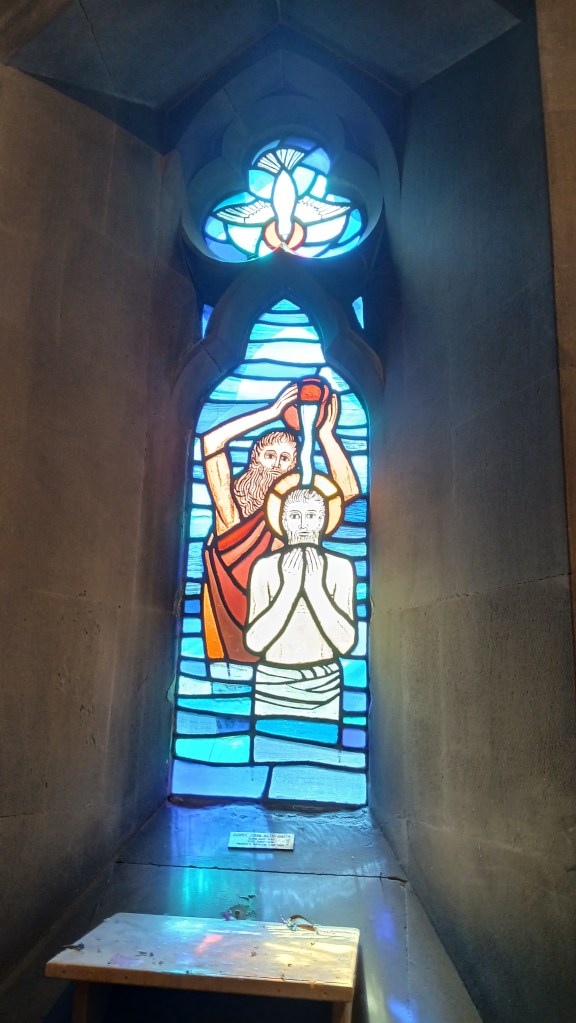
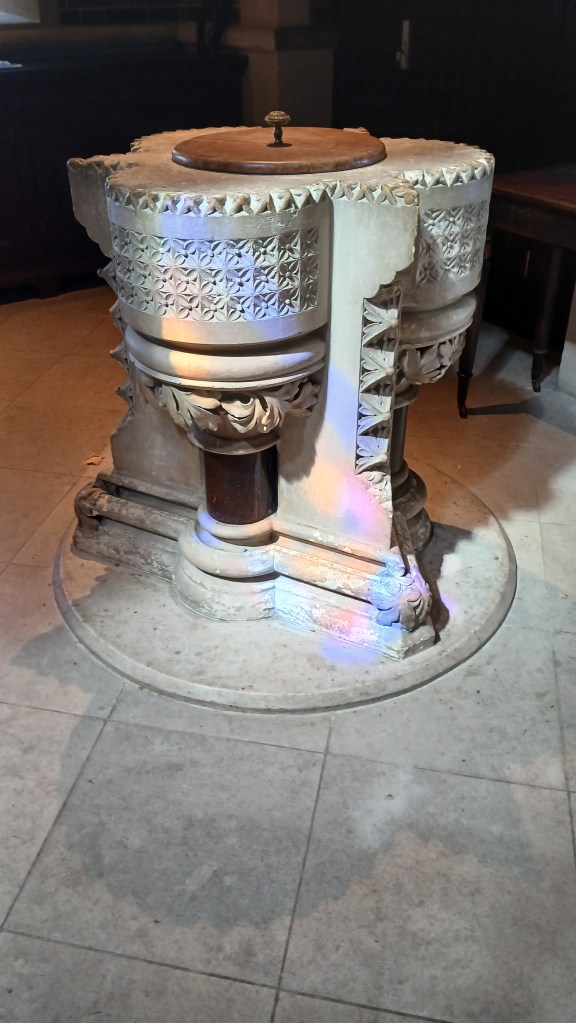
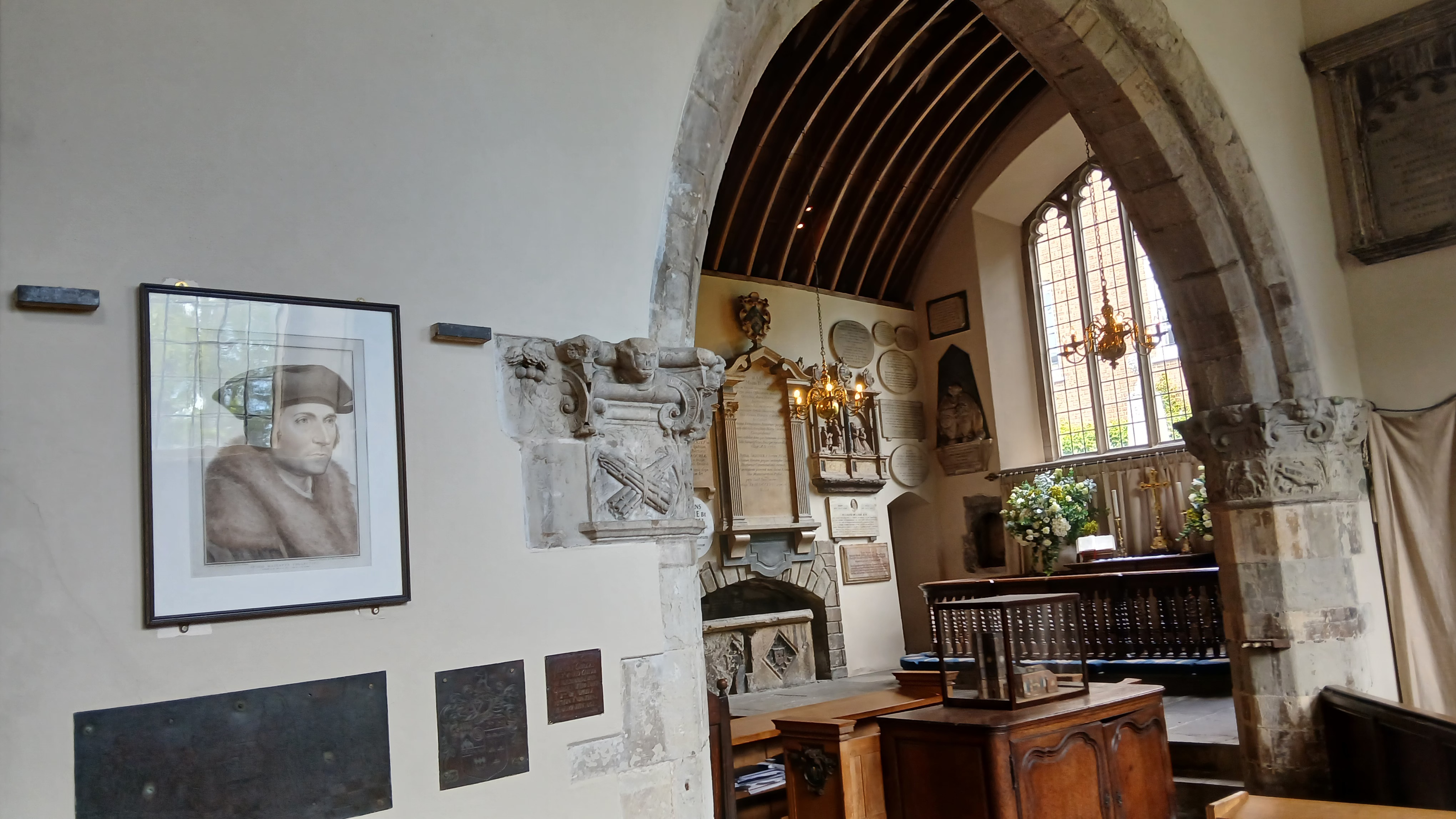
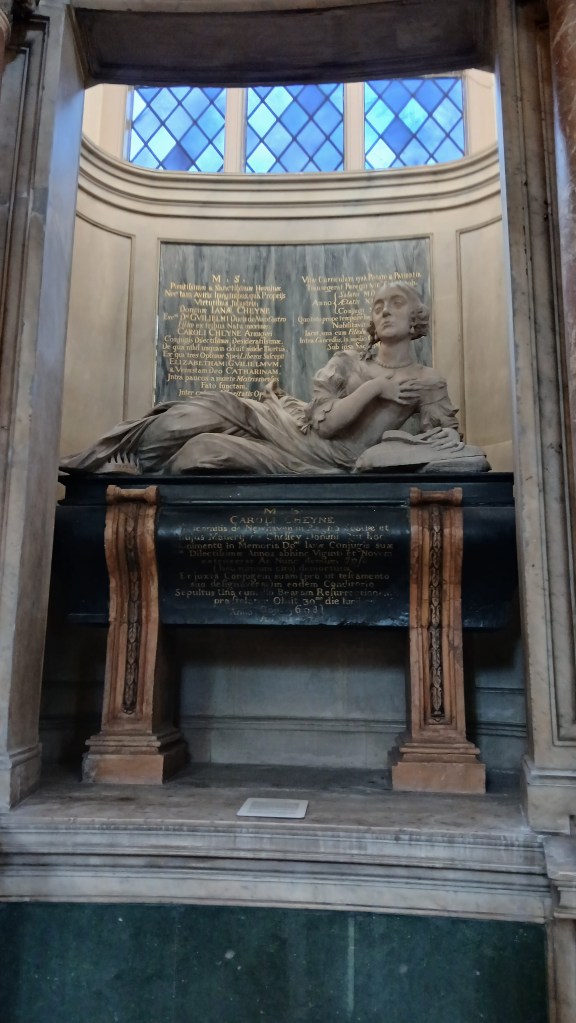
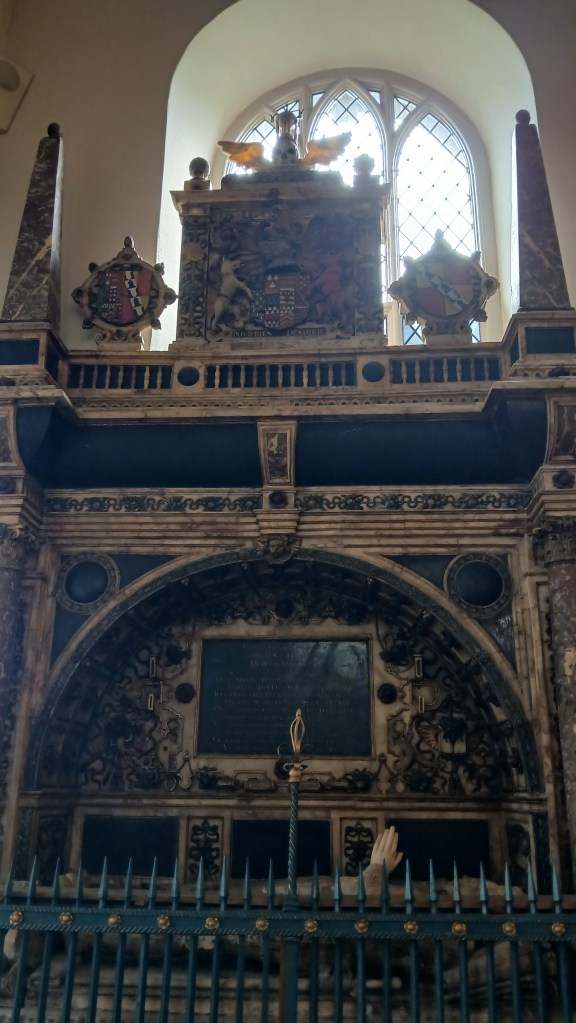
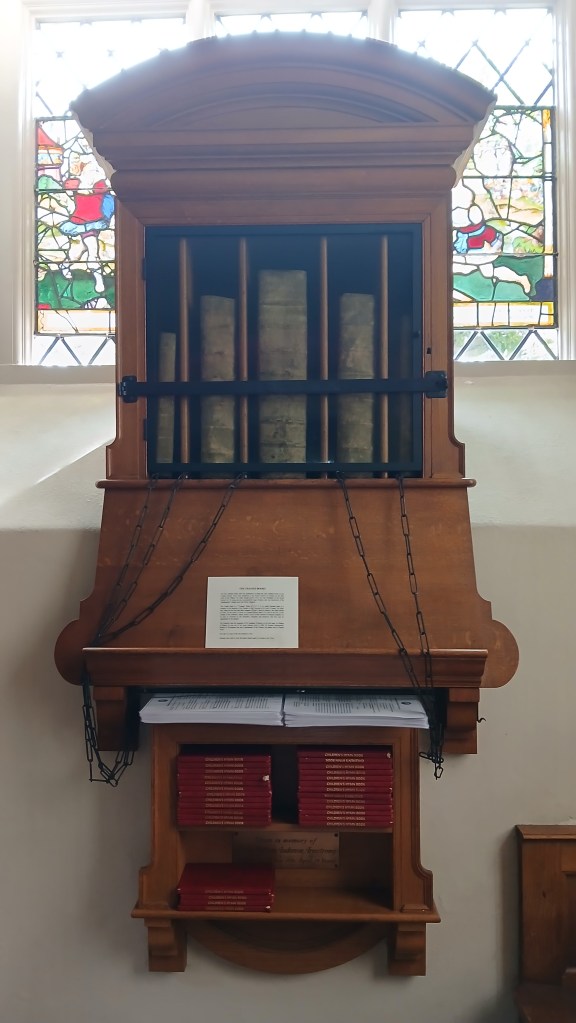
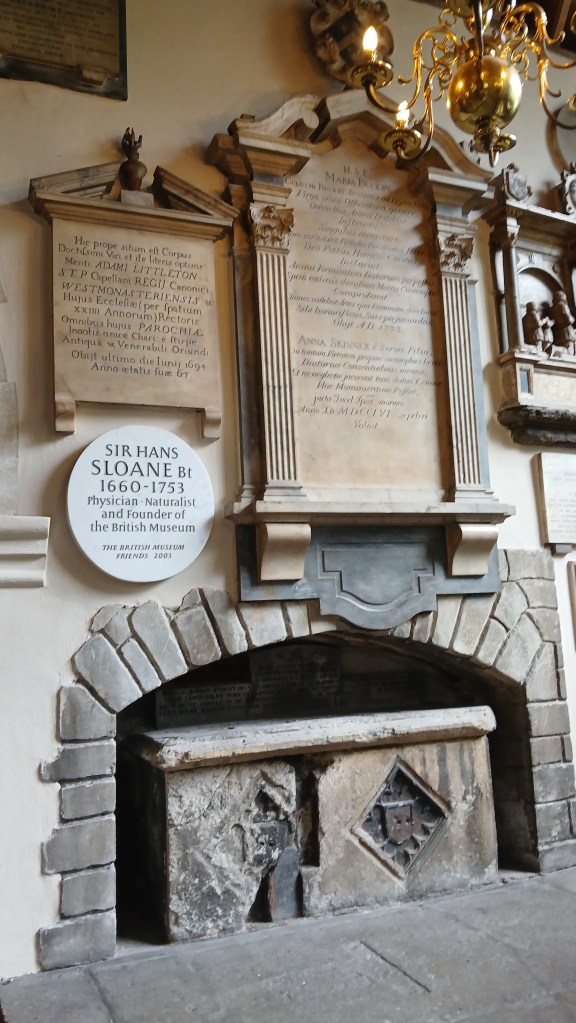
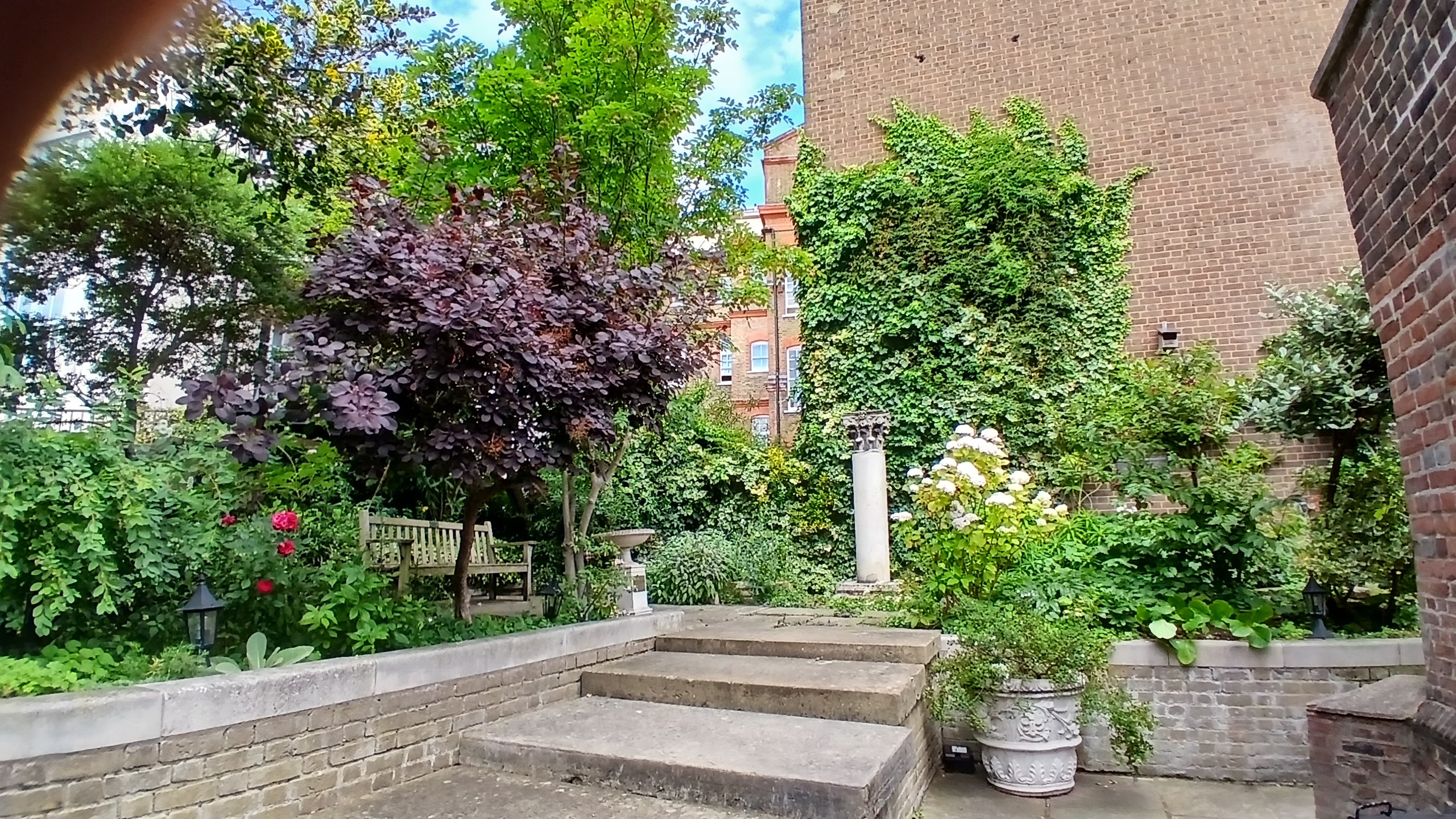
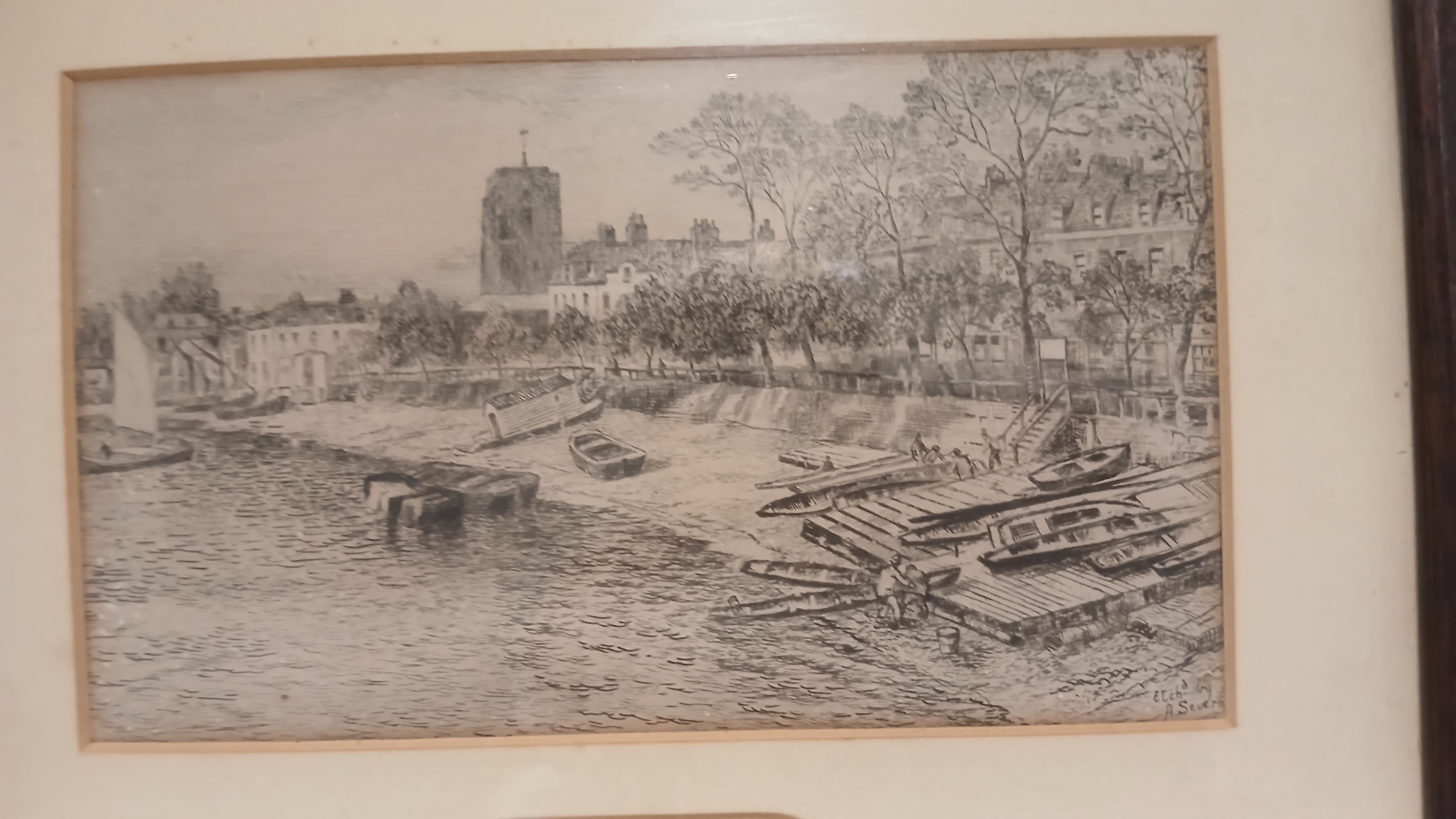
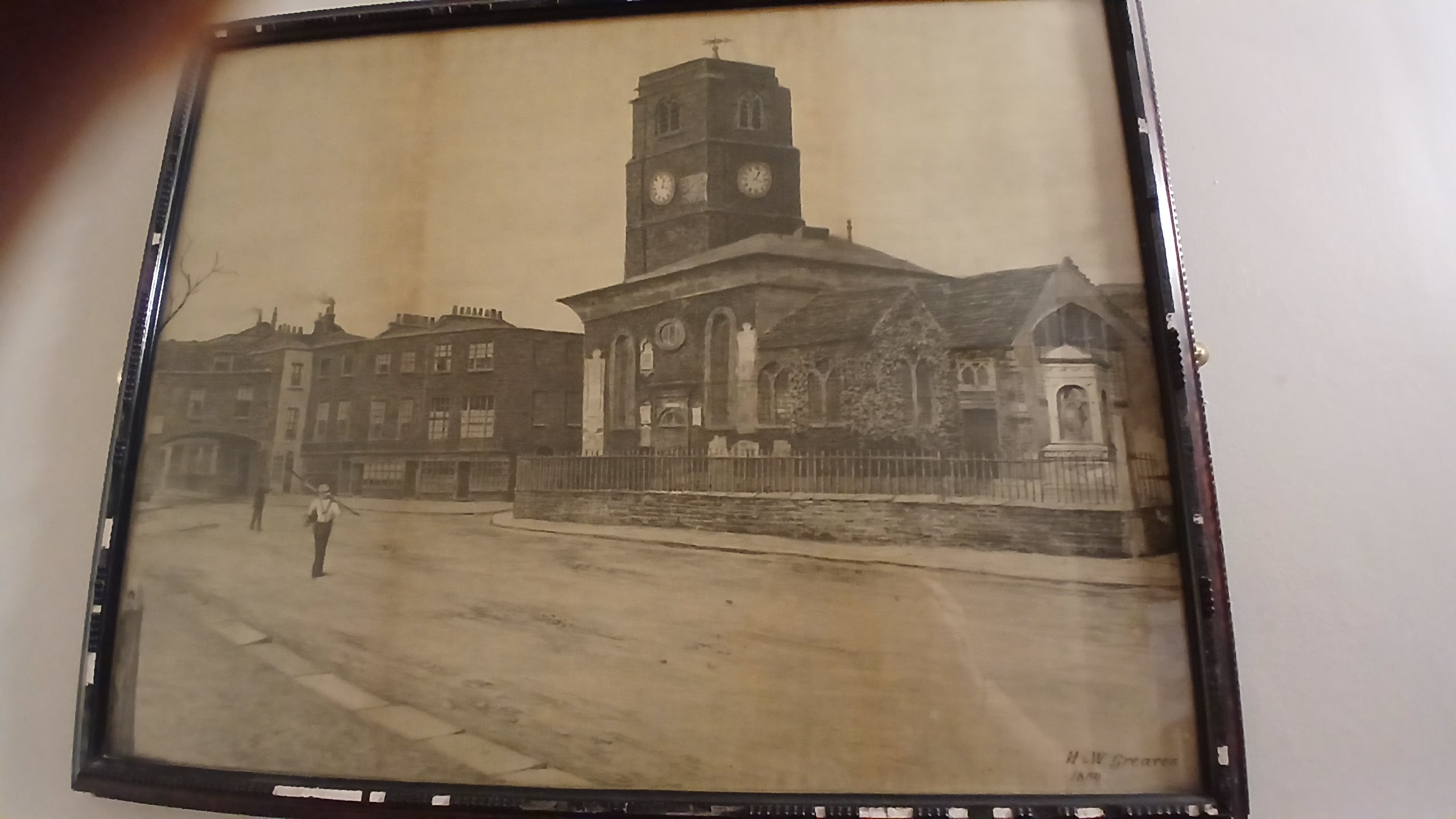
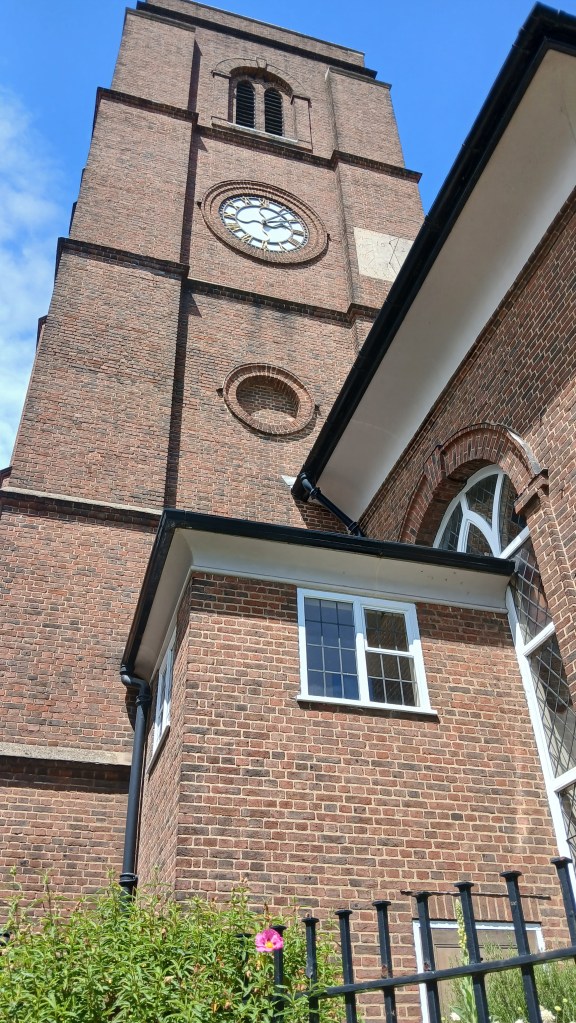
A gem of a church steeped in history. A leaflet in the church says that there has probably been a place of worship on this site ‘since Christianity came to England’. In 1120 a church and monastery were established in the village Parish of Chelsea and the church was added to over the centuries. In the early 16th century, Sir Thomas More, lawyer, MP and one-time Lord Chancellor to Henry VIII, purchased land between King’s Road and the River Thames and built a large house across the road from the church, building a chapel for his private use. King Henry often visited More and in 1536 he bought Chelsea Manor which he rebuilt. He never lived there but his daughter, Princess Elizabeth, son and heir Prince Edward and their relative, Lady Jane Grey, lived there under the care of Henry’s last wife, Catherine Parr, who settled there after his death. They all worshipped at Chelsea’s then Parish church. I was surprised to learn that the church was completely destroyed by bombing in the Second World War, and the then congregation made the momentous decision to have the church rebuilt ‘as it was, where it was.’ Hence the church and its many monuments have been restored to almost exactly how they would have looked before the war. Below are photos of notable features of the church: monument to Lady Jane Cheyne (1669), benefactor to the church and village of Chelsea, Cheyne Walk is named after her; elaborate Dacre monument (1595) to Gregory Fiennes Lord Dacre and his wife, who inherited Thomas More’s Chelsea properties. The chained books, these were a gift of Sir Hans Sloane and are the only chained books in a London church. The collection includes a Bible, prayer books and Foxe’s Book of Martyrs. I absolutely recommend a visit to this intriguing church!
Sources: leaflet in church; chelseaoldchurch.org.uk
Petyt Hall and Chelsea Old Church Garden
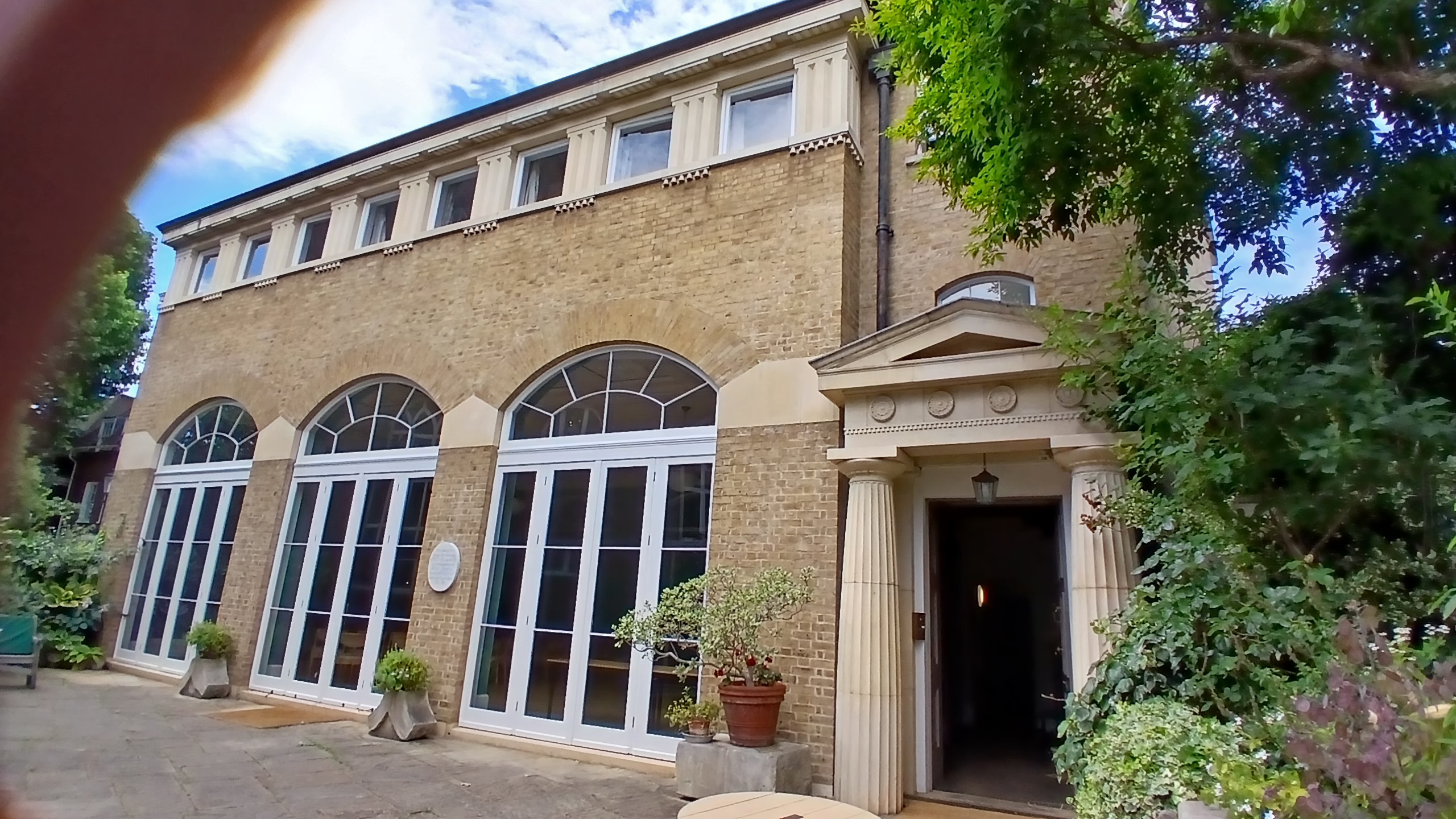
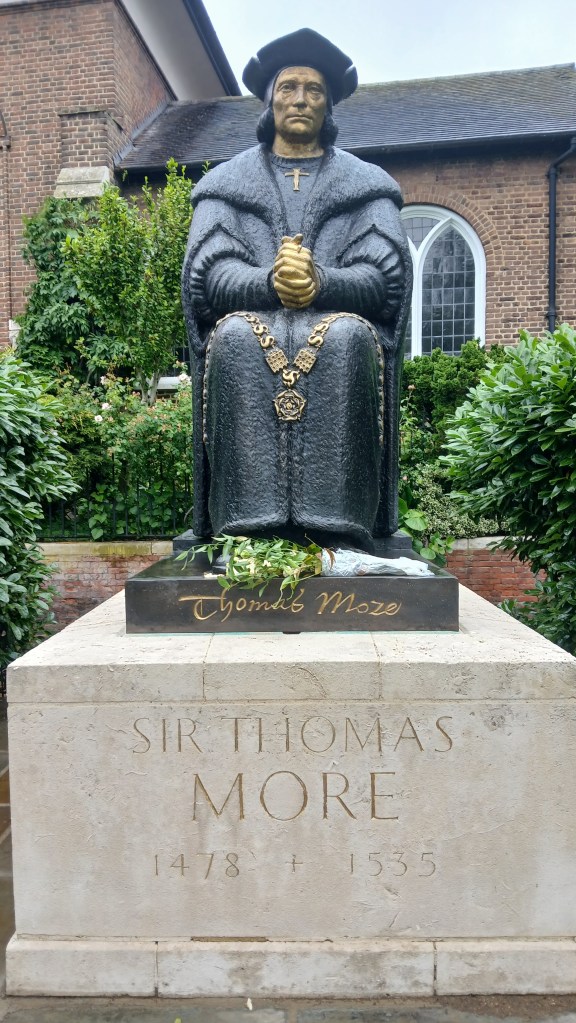
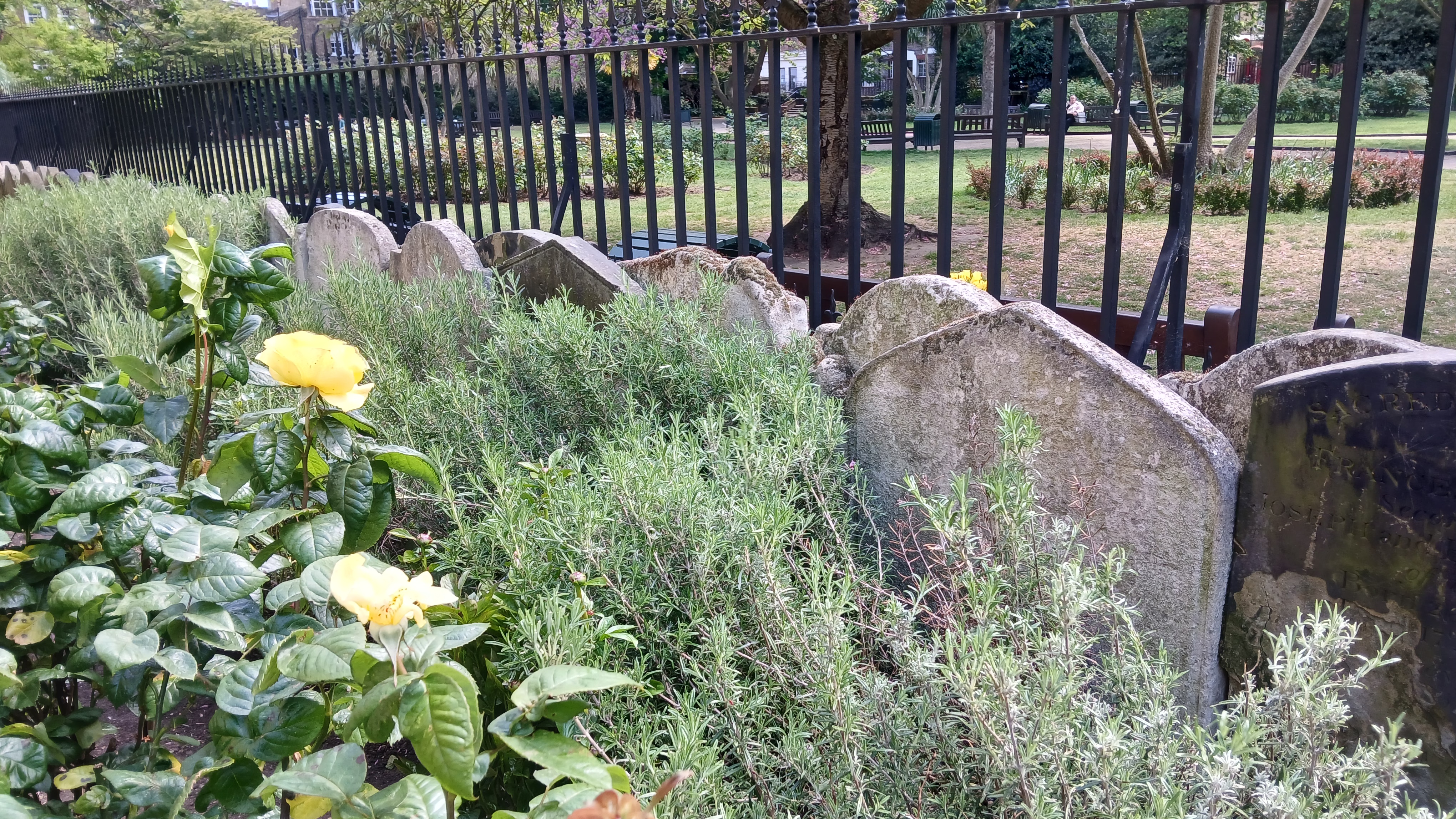
Continuing at this location, I’m finishing with the church’s hall and garden. The vicarage and Petyt House, the buildings on this site, were demolished along with the ruins of the bombed church; subsequently a new vicarage and church hall, Petyt Hall, replaced them, being opened in 2002. The buildings were designed by John Simpson, architect of the King’s Gallery of Buckingham Palace. The hall is used by the church for their own events and is available to hire for private functions. What piqued my interest was the ‘gallery’ of pictures of the pre-war church and riverbank in the entrance hall and basement. Surrounding the church on all sides is the prettiest ‘cottage’ garden, which is maintained, I was told, by two ladies from the church congregation. In front of the church is a statue of Sir Thomas More designed by L Cubitt Bevis and erected in 1969. Despite being a loyal servant to King Henry, More was executed at the Tower of London in 1535 for refusing to acknowledge Henry as Supreme Head of the Church of England.
Sources: leaflet in church; chelseaoldchurch.org.uk
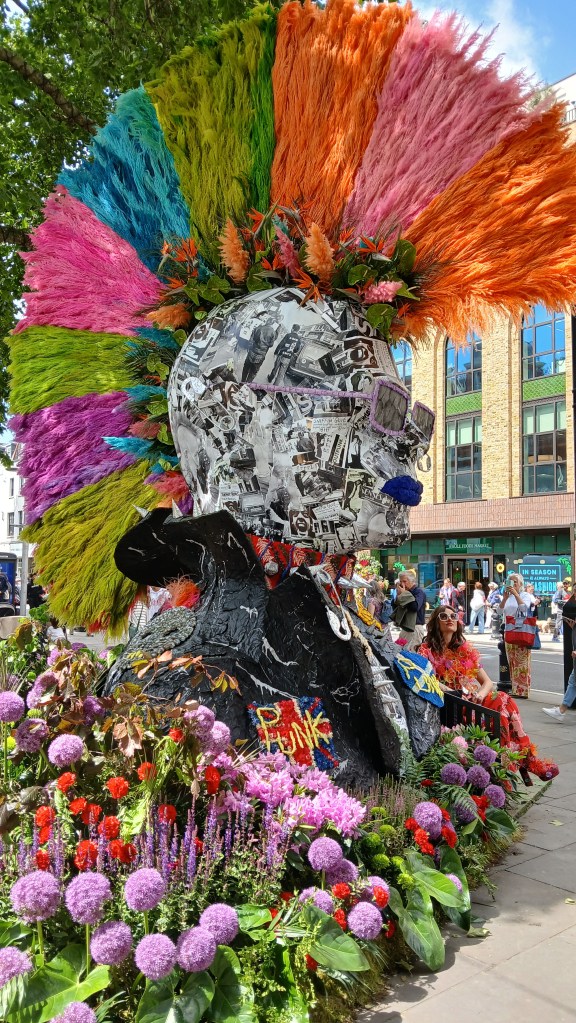
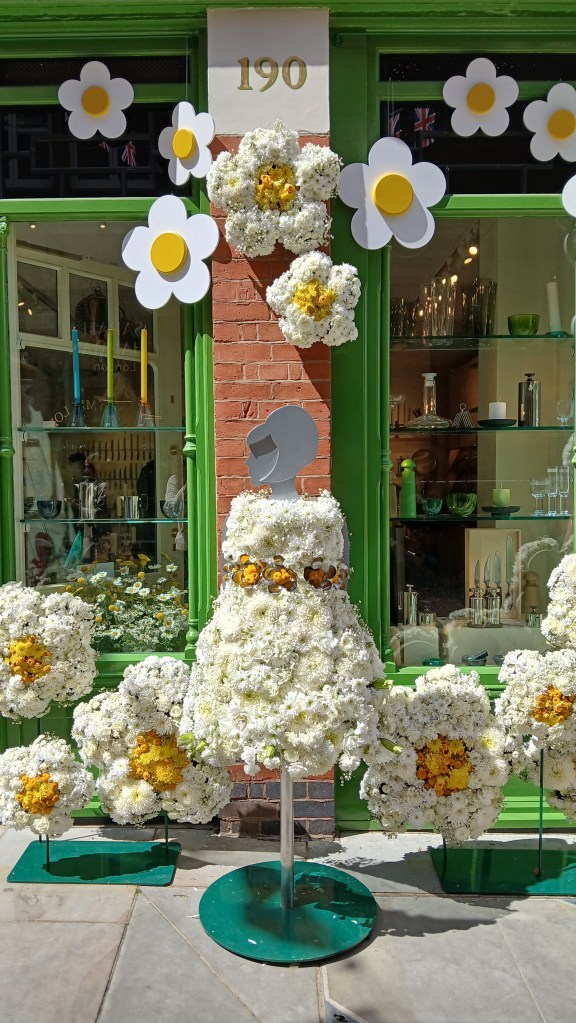
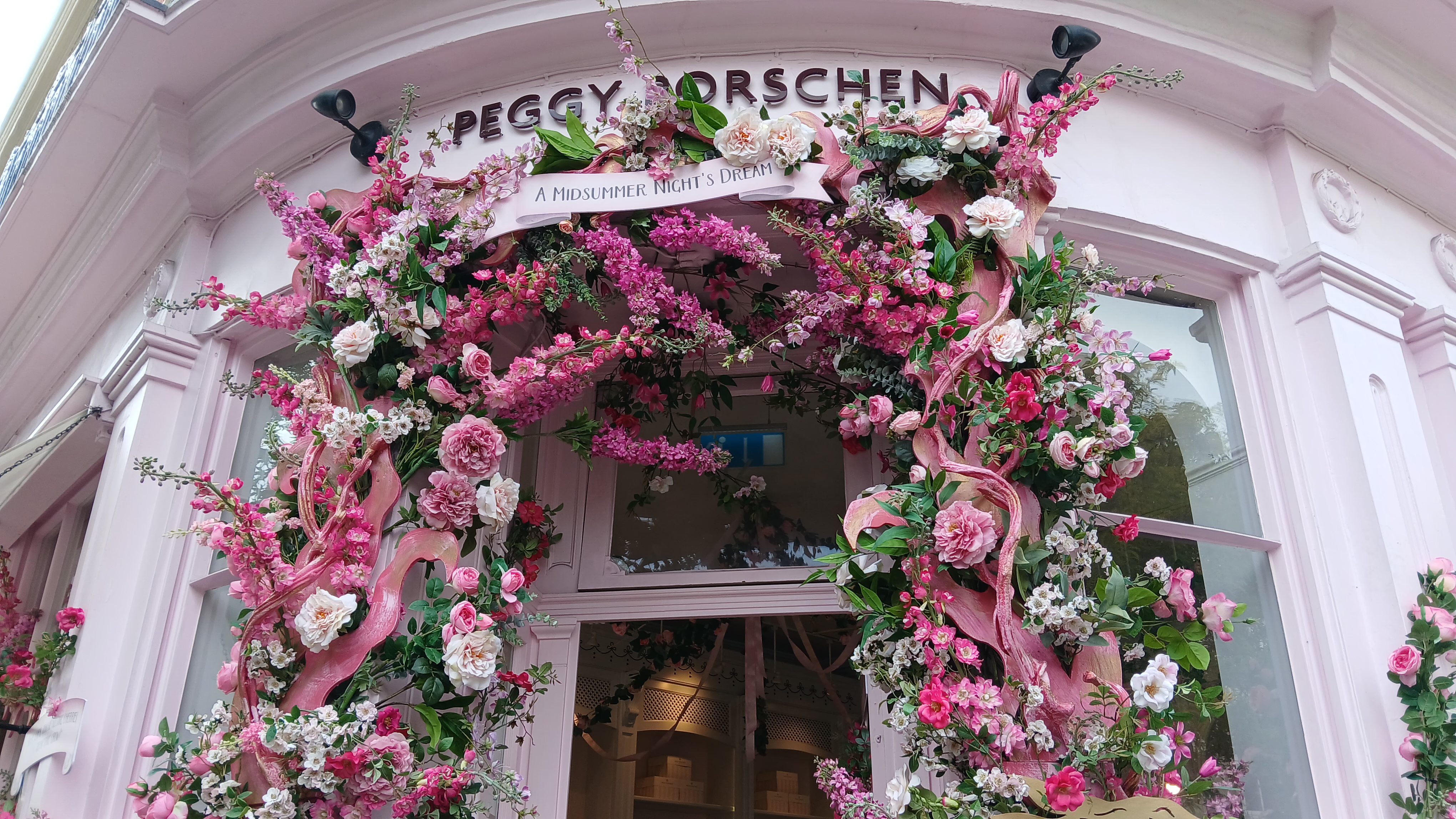
Chelsea is world famous for so many things: Chelsea Flower Show, Chelsea FC, Chelsea Pensioners. There always seems to be a lot going on in Chelsea, particularly this month; I have included a couple of photos from Chelsea in Bloom 2025 at the end. A brief history: originally a rural Anglo-Saxon fishing settlement called Cealc-hythe meaning ‘chalk wharf. From Saxon times until 1900AD (over 1,000 years) Chelsea formed a manor and parish in the Ossulstone ‘hundred’ or subdivision of Middlesex. From 1900 it became the Metropolitan Borough of Chelsea and then in 1965 along with Kensington, the Royal Borough of Kensington and Chelsea. The royal connections I will say more about next month, as ‘Churches in Chelsea’ will continue into June. Historically one of the most affluent areas of London, this part of the borough boasts high-end boutiques and restaurants, and estate agents displaying eye-wateringly expensive properties for sale. In the 1970s the term ‘Sloane Ranger’ was coined to describe the residents of the ultra-posh Sloane Square area.
Source: Wikipedia
Holy Trinity Church, Sloane Street
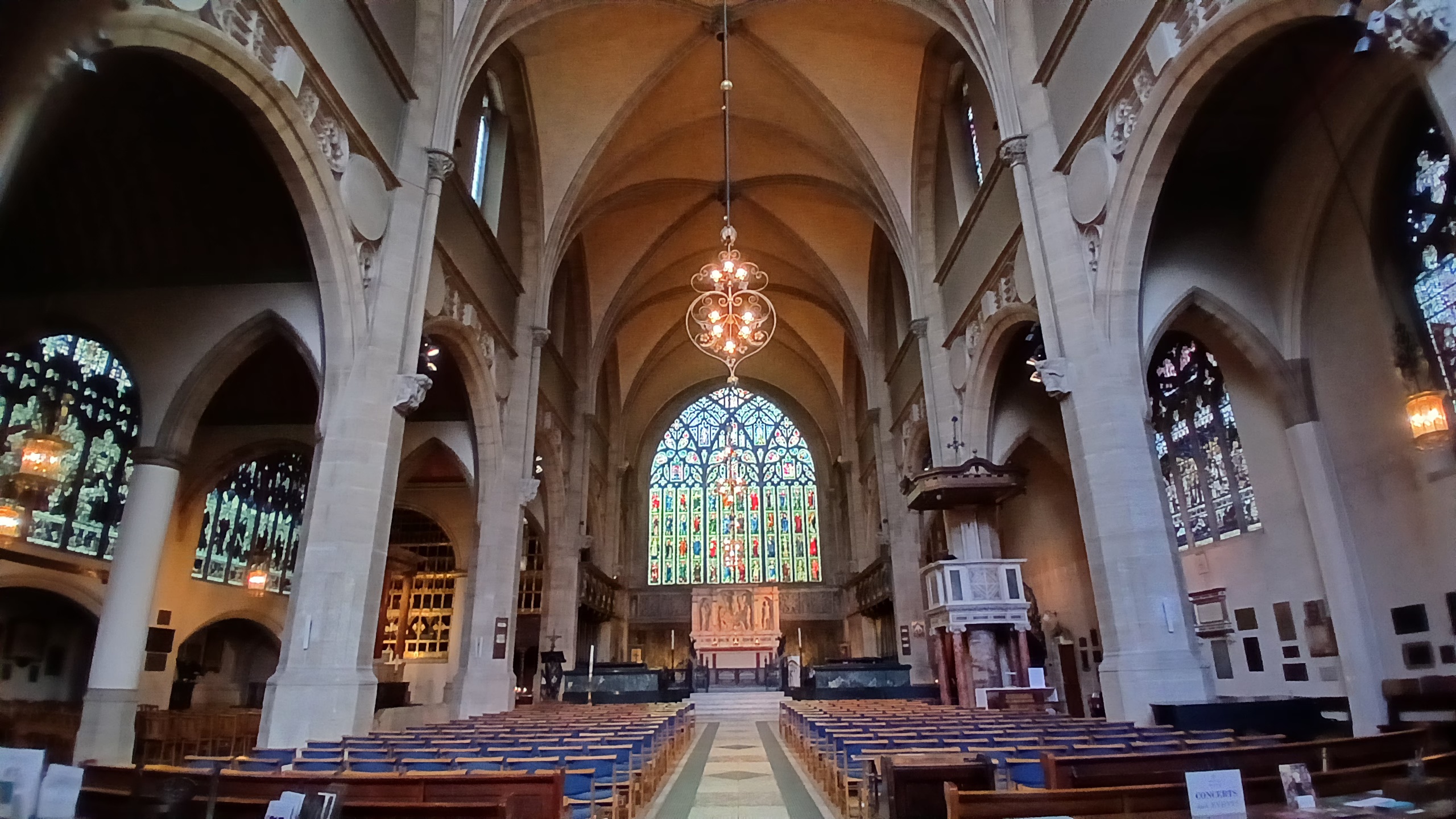
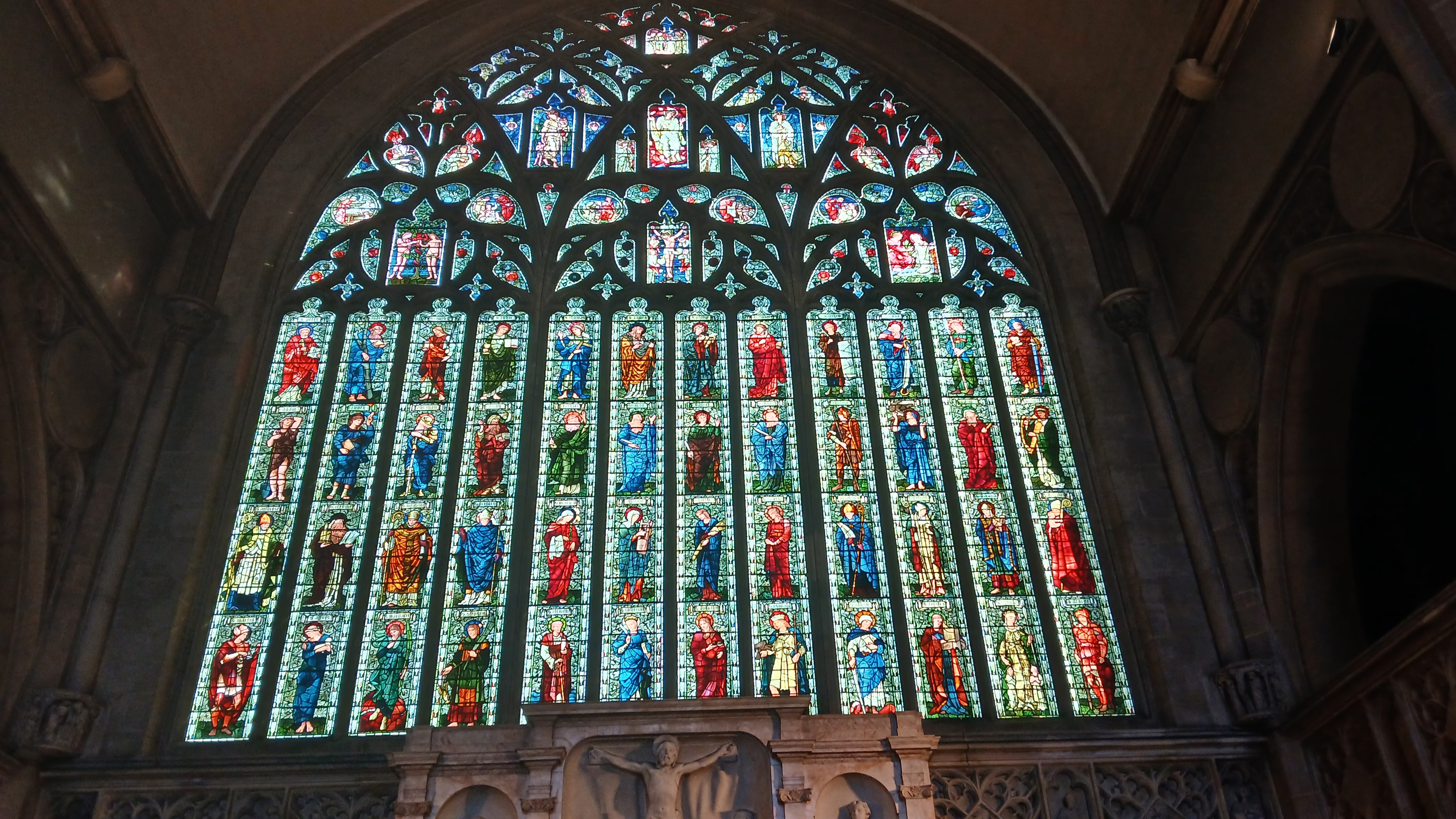
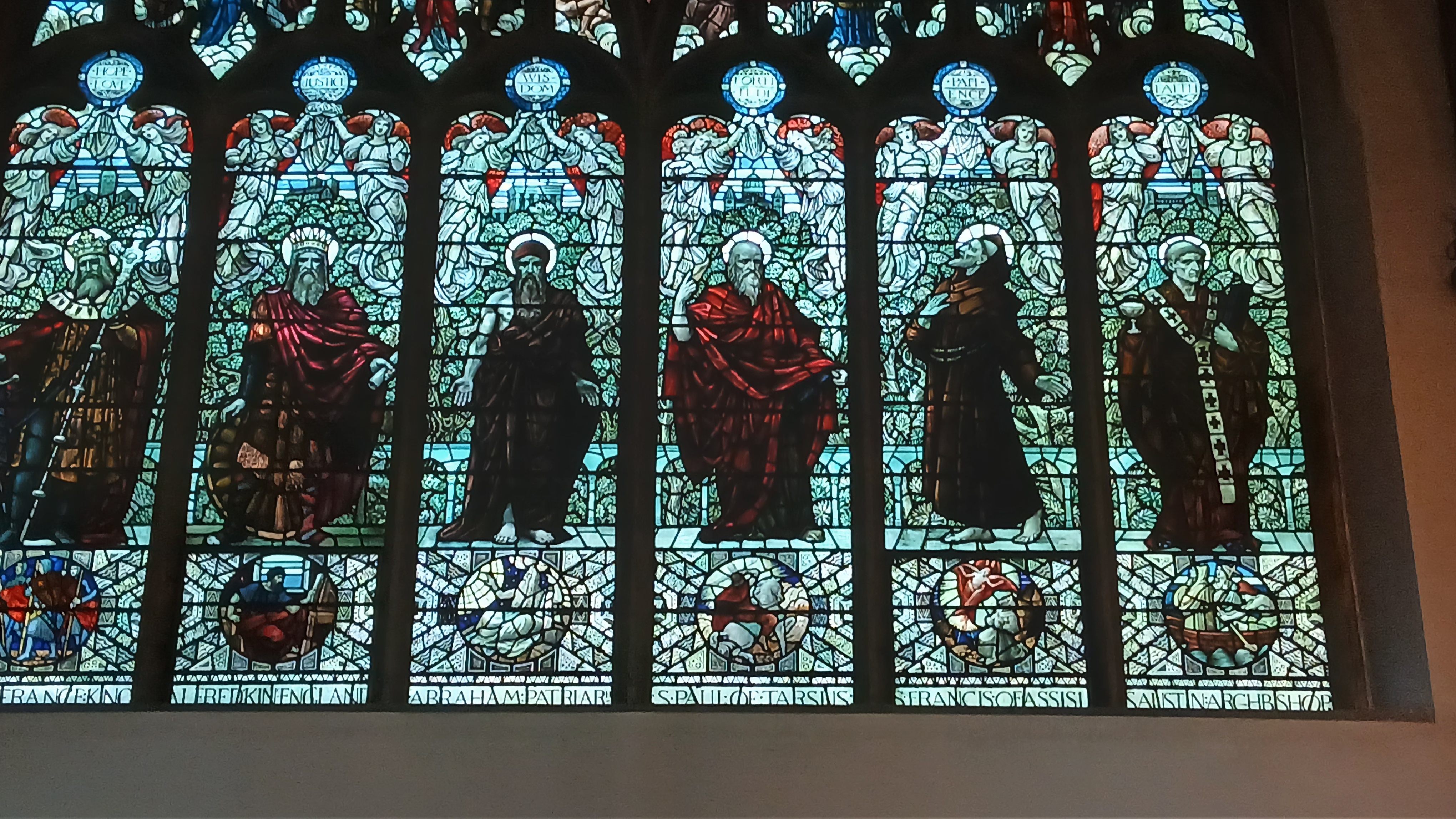
Known as the ‘Cathedral of the Arts and Crafts’, the church is famous for its large East window designed by Edward Burne-Jones and William Morris, prominent artists and textile designers of the 19th century. The first church on the site was a Gothic design construction built between 1828 and 1830. This was completely demolished less than 60 years later, being too small for its growing congregation. The current church, built in 1888- 90, is twice the size of its predecessor, it was designed by the architect John Dando Sedding and paid for by 5th Earl of Cadogan, being located in his London estate. It is the widest church in London, exceeding St Paul’s Cathedral by 23cm (9 inches.) The church was badly damaged by incendiary bombs in World War Two but was faithfully restored in the 1960s. After that, there was an attempt by church authorities to close and demolish the building and replace it with a smaller one (how could they even think such a thing?) Happily, this was thwarted by a campaign led by the poet John Betjeman and the Victorian Society. Today the church has a large congregation and continues its long connection with the world of fine art and music. Because the pews have been removed and replaced by moveable chairs, the large nave provides flexible space for concerts and other events, including an annual summer festival, the Chelsea Schubert Festival.
Source: Wikipedia
East Window
The figures in this window are Louis King of France, Alfred King of England, Abraham the Patriarch, St Paul of Tarsus, St Francis of Assisi, Saint N (presumably Nicholas) Archbishop
St Luke’s and Christchurch, Chelsea
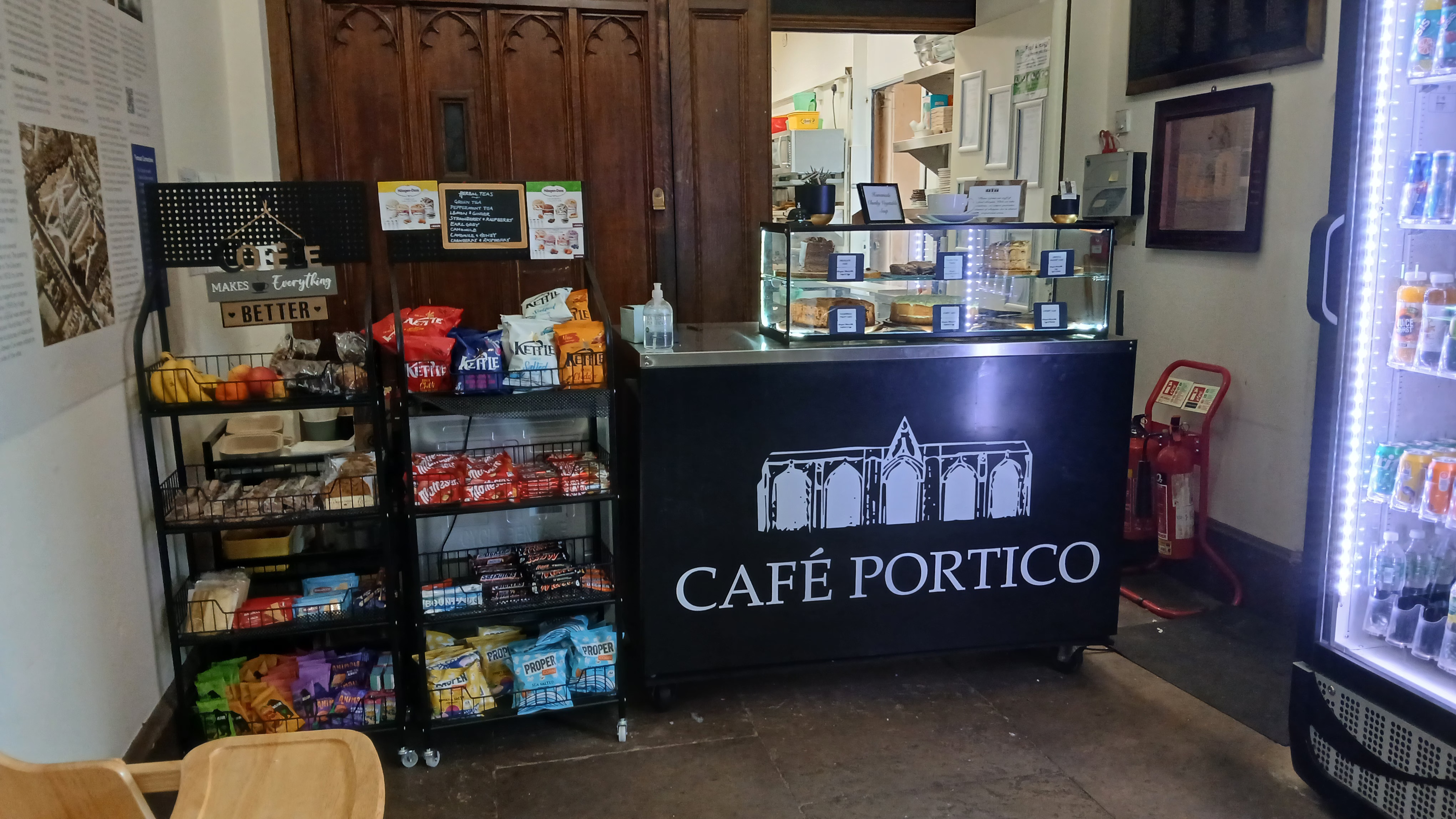
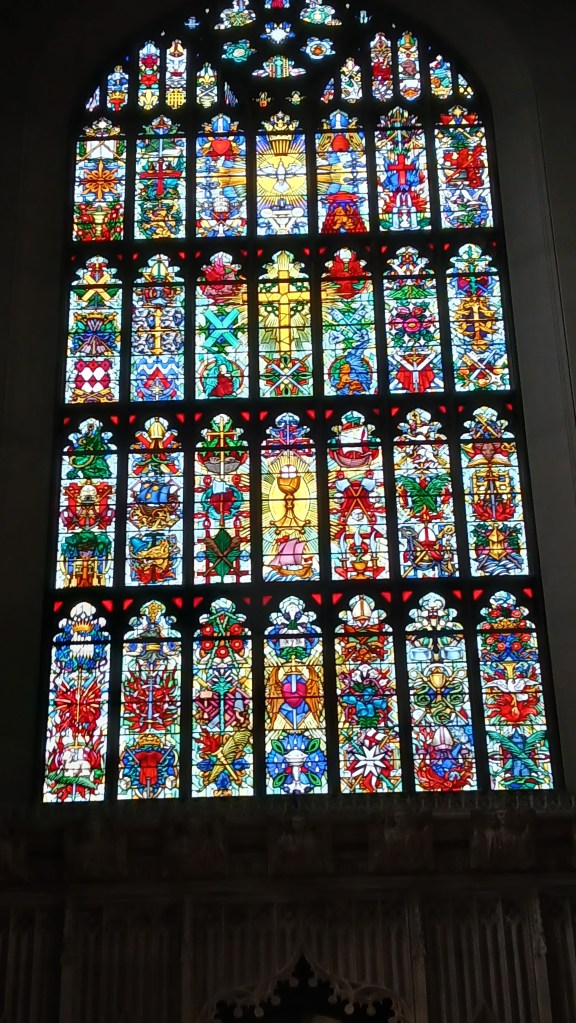
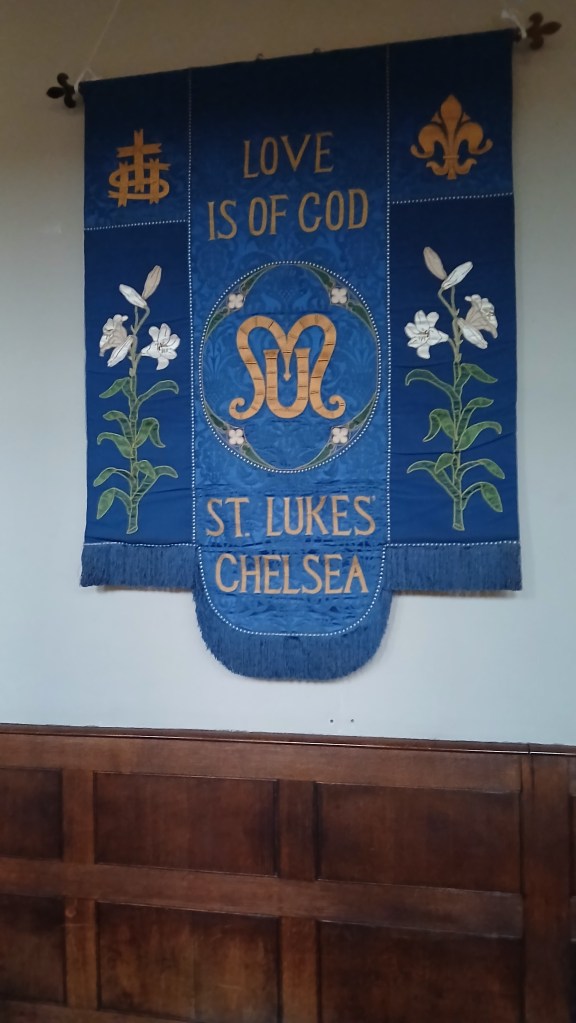
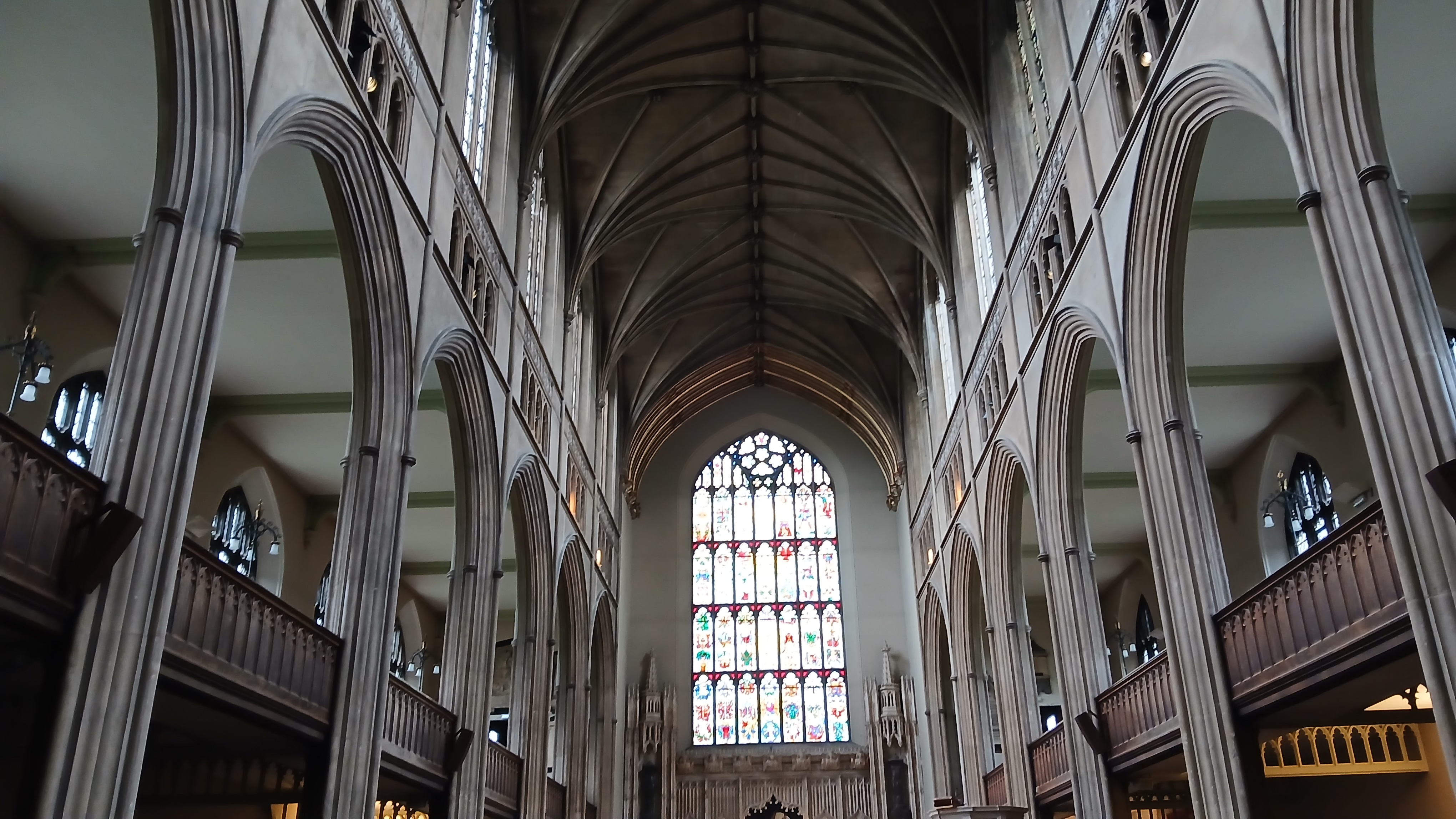
Of course, I had to visit Café Portico first – the Café in the Porch of St Luke’s. The church is situated just off the Kings Road, opposite the Royal Brompton Hospital; it is Grade 1 Listed in National Heritage and sits in beautiful Grade 2 listed gardens in Historic Parks and Gardens – photo at the top of this post. Designed by James Savage in 1819, the church is the earliest of the Gothic Revival churches in London to be a completely new construction. In the early 19th century Chelsea was expanding from a village west of central London to being part of the capital. St Luke’s replaced Chelsea’s original parish church, now known as Chelsea Old Church. It was one of the first group of Commissioners’ churches, being partly funded by Parliament as a result of the Church Building Act 1818. Another London church which lost stained glass during the Blitz, a replacement East window was installed in 1959, designed by prolific stained glass artist Hugh Eaton. Unusually, rather than depicting Biblical characters, the window incorporates the heraldic symbols and devices of the Evangelists, Apostles and Doctors of the Church. The most famous of people associated with St Luke’s is Charles Dickens who married Catherine Hogarth, a resident of Chelsea, here in 1836. The wedding took place two days after the publication of The Pickwick Papers, his first successful novel.
Source: Wikipedia
HTB Onslow Square
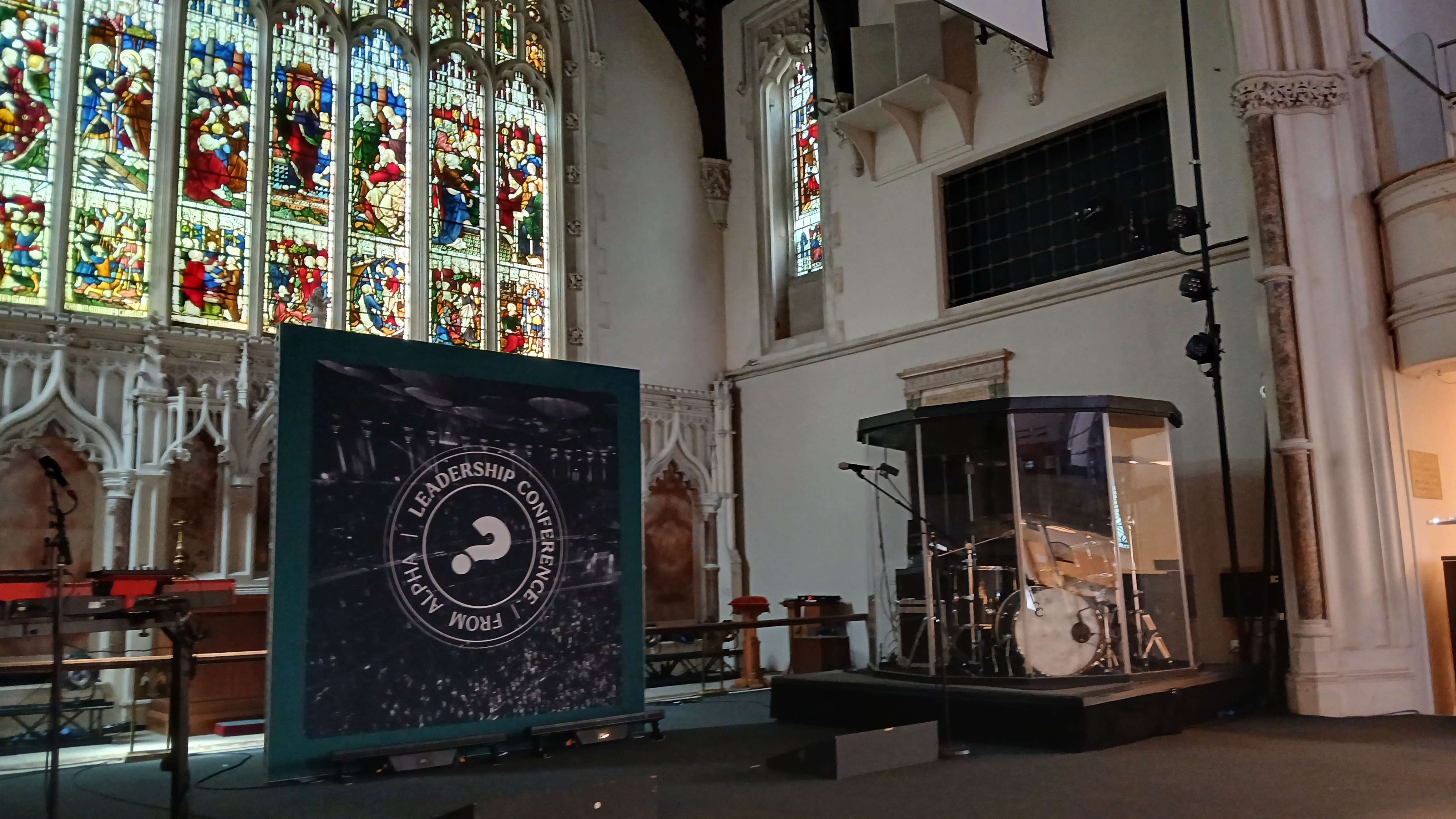
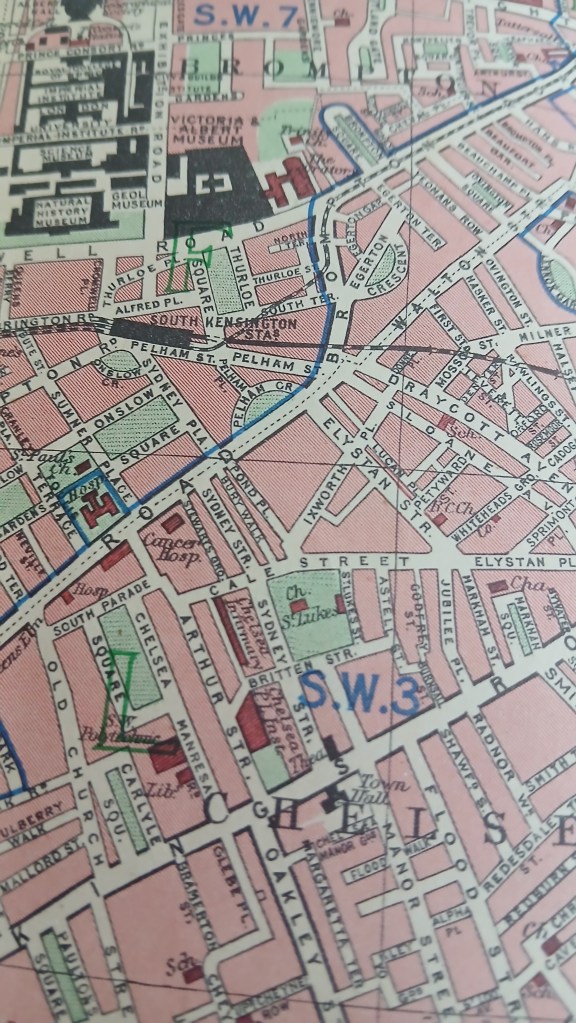
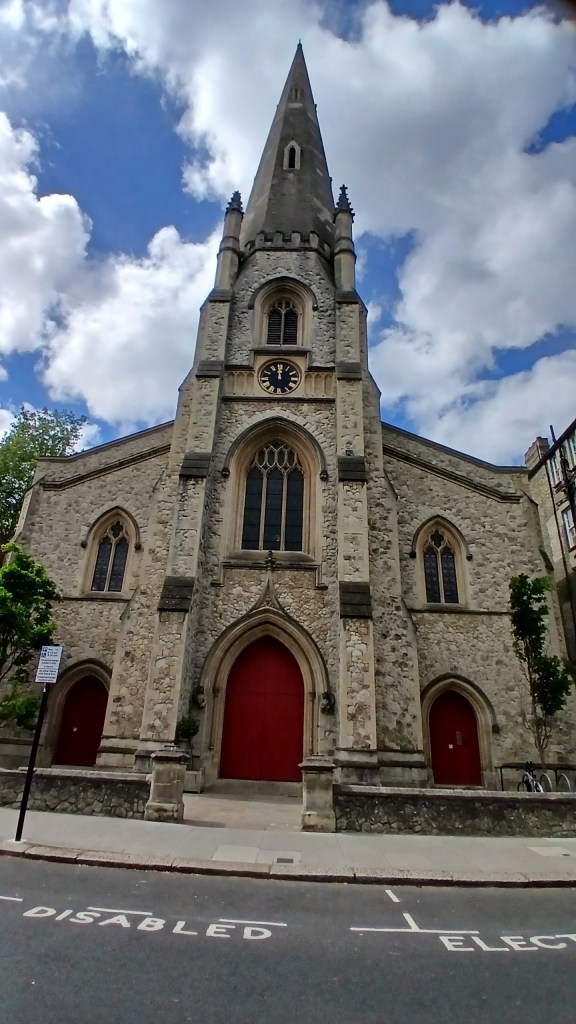
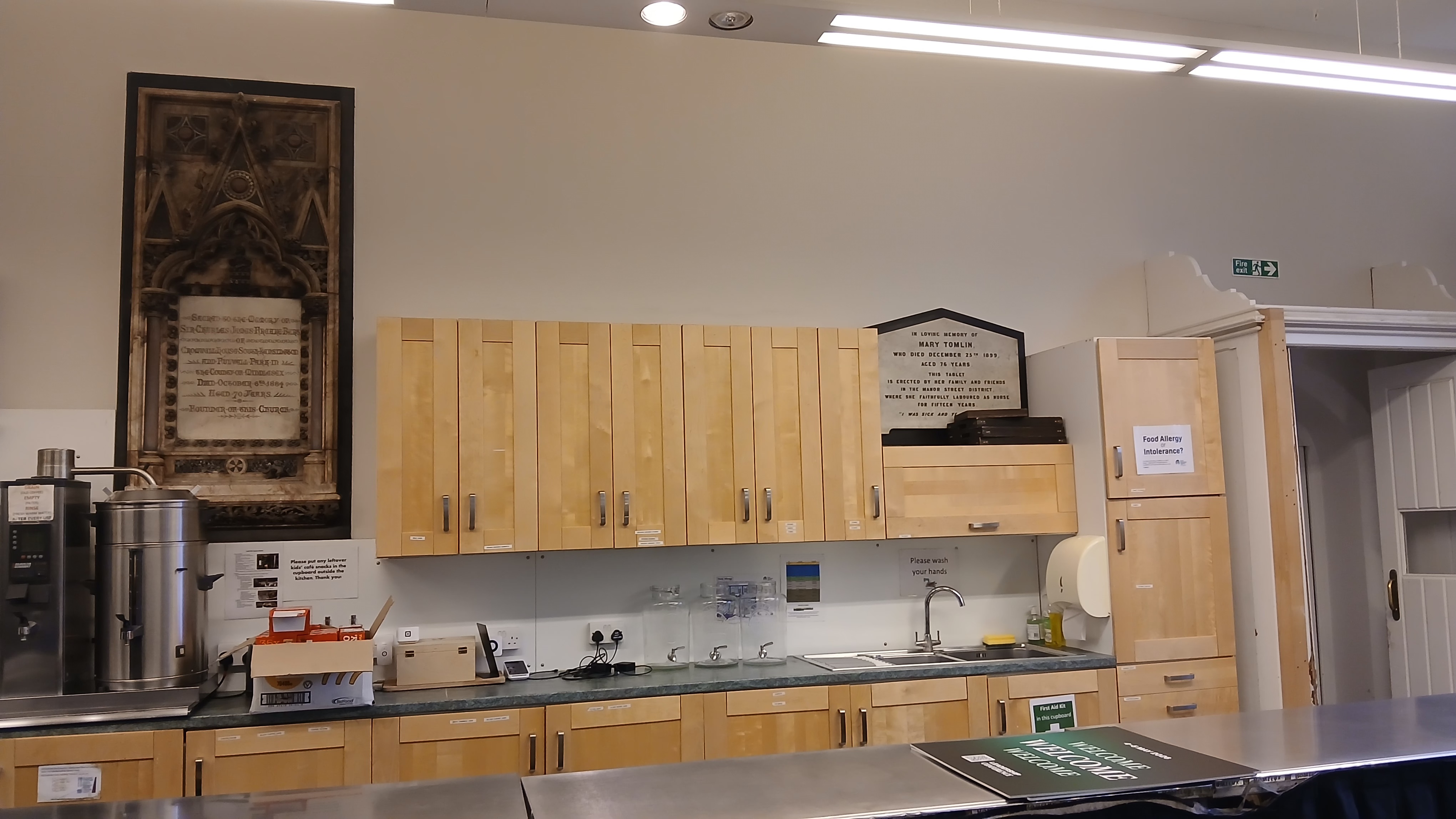
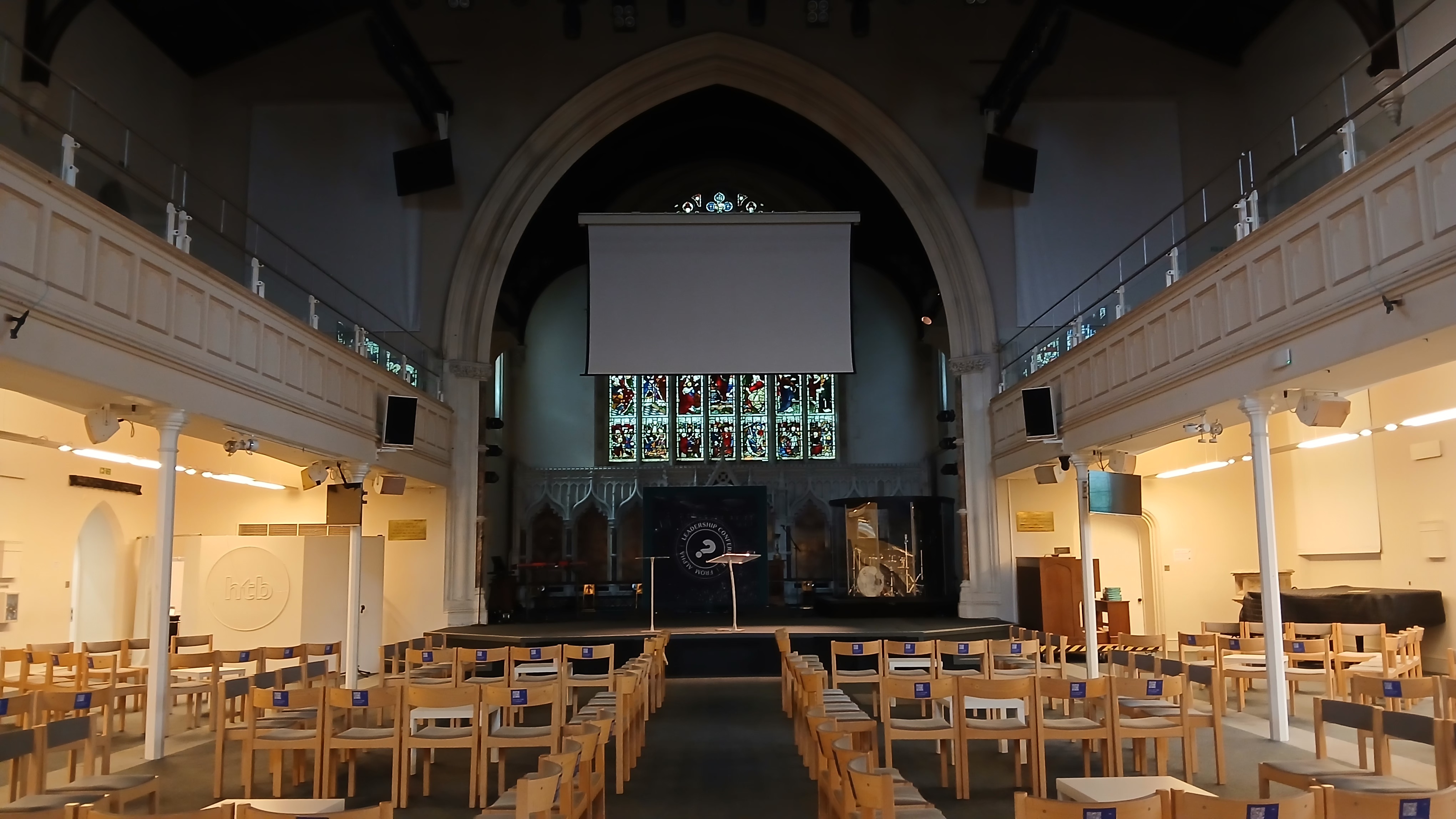
The map below shows that this church was once known as St Paul’s Parish Church. It is now part of the Holy Trinity Brompton church organisation which has six church sites across West London. The map shows the church’s proximity to South Kensington Railway Station (now Underground Station) and also shows St Luke’s Chelsea. I inherited from my late Dad Bartholomew’s Reference Atlas of Greater London published in 1949, which maps the whole of the Greater London area, and which I often look at to see ‘how things were.’ The Onslow Square church, while having all the latest tech required for the 21st century church, has retained many of its mid-Victorian features both inside and out. The church was built in 1859-60 in the Perpendicular style; it was extended to include a church hall and accommodation for the incumbents through the following 100 or so years, but by the 1980s congregation numbers had fallen and eventually services ceased altogether. Enter HTB and the church is thriving once again; there are three Sunday services including a specific youth service at 4.30pm. Being part of a para-church organisation, the church offers a range of courses and events, including the world famous Alpha Course, and also several social action projects.
This church has some beautiful, modern stained glass windows; the church itself is one of the oldest Roman Catholic parishes in central London. In 1812 a Catholic chapel was erected close to the present church, one of the first since the Reformation. It was founded by Abbe Jean Voyaux de Franous who had arrived in London in 1793 and had been given special charge of the spiritual welfare of veterans soldiers at ‘Chelsey Colledge’, now the Royal Hospital and home of the Chelsea Pensioners, and the soldiers at Chelsea Barracks. When the Abbe died, his work was continued by Joseph and Mary (great names!) Knight who established a foundation to purchase 2 and a half acres of land, a site which now contains the church, a rectory, St Josephs’ Primary School and St Josephs’ Almshouses, all built between 1845 and 55. The church was designed by John Francis Bentley, a church architect, primarily of Roman Catholic churches. His chief work was Westminster Cathedral near Victoria Station. Today the parish has a diverse congregation including people from continental Europe, the Philippines, South America, the US and Africa.
Source: stmaryscadoganstreet.co.uk
And to finish, some photos from Chelsea in Bloom 2025
This month’s post is one of an ‘occasional series’ about other cities in the UK and Europe. I visited Lisbon, capital of Portugal last year, a city small enough to explore its highlights in a week. Lisbon was a landing post established by the Phoenicians in circa 1200BC, it was later occupied by the Romans and then North African Moors. When the city was retaken from the Moors in 1147, Afonso Henriques declared himself King of Portugal and Lisbon was properly established as the capital city. The 15th century was known as the ‘Age of Discoveries’ when maritime explorers set off from Lisbon to explore (and conquer) new lands: first the island of Madeira, and later parts of West Africa and India and notably, Brazil. In 1755 The Great Earthquake struck Southern Portugal and devasted Lisbon and its surroundings, affecting most of the buildings of the city, and followed by equally devastating fires and tidal waves. Here are three beautiful (for different reasons) churches and one spectacular statue.
Source: Explore Lisbon, Insight Guides
Igreja de Sant Antonio de Lisboa (Church of St Antony of Lisbon)
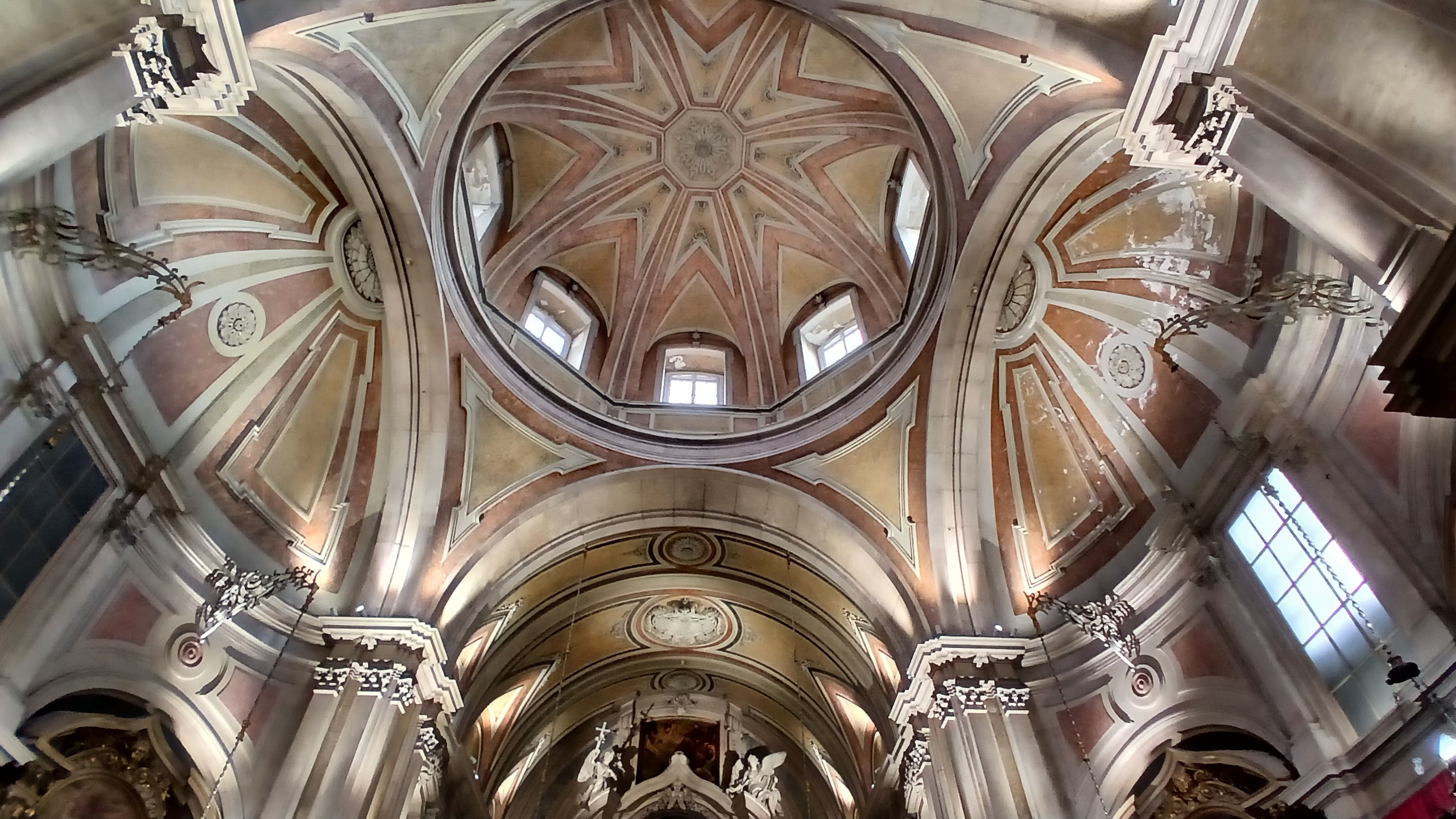
Domed ceiling of Sant Antonio
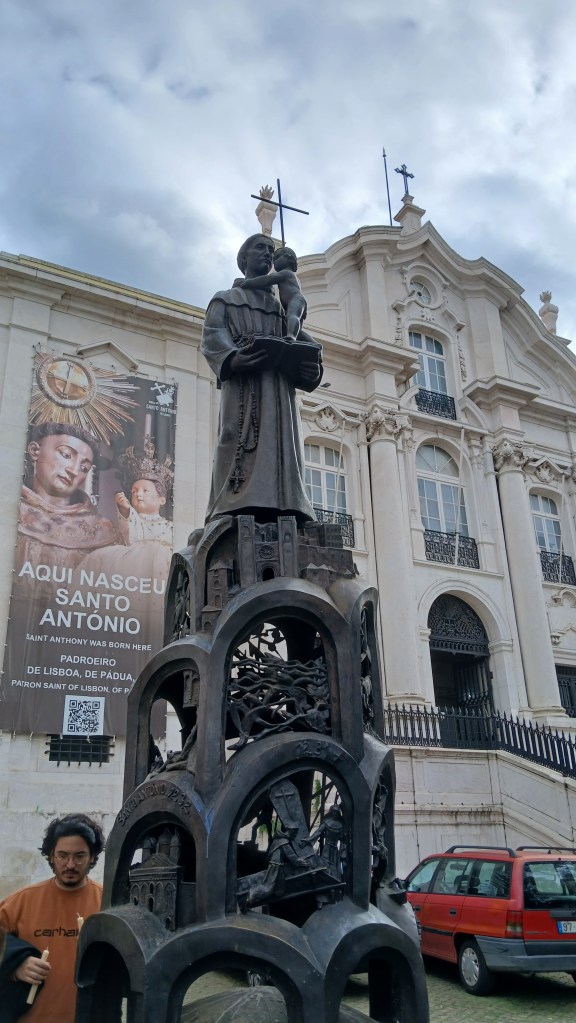
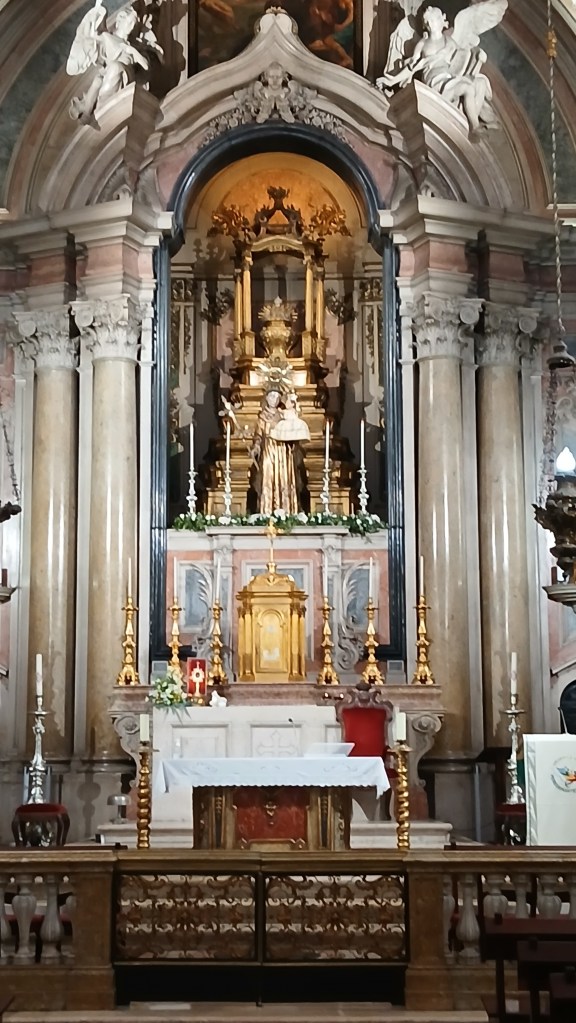
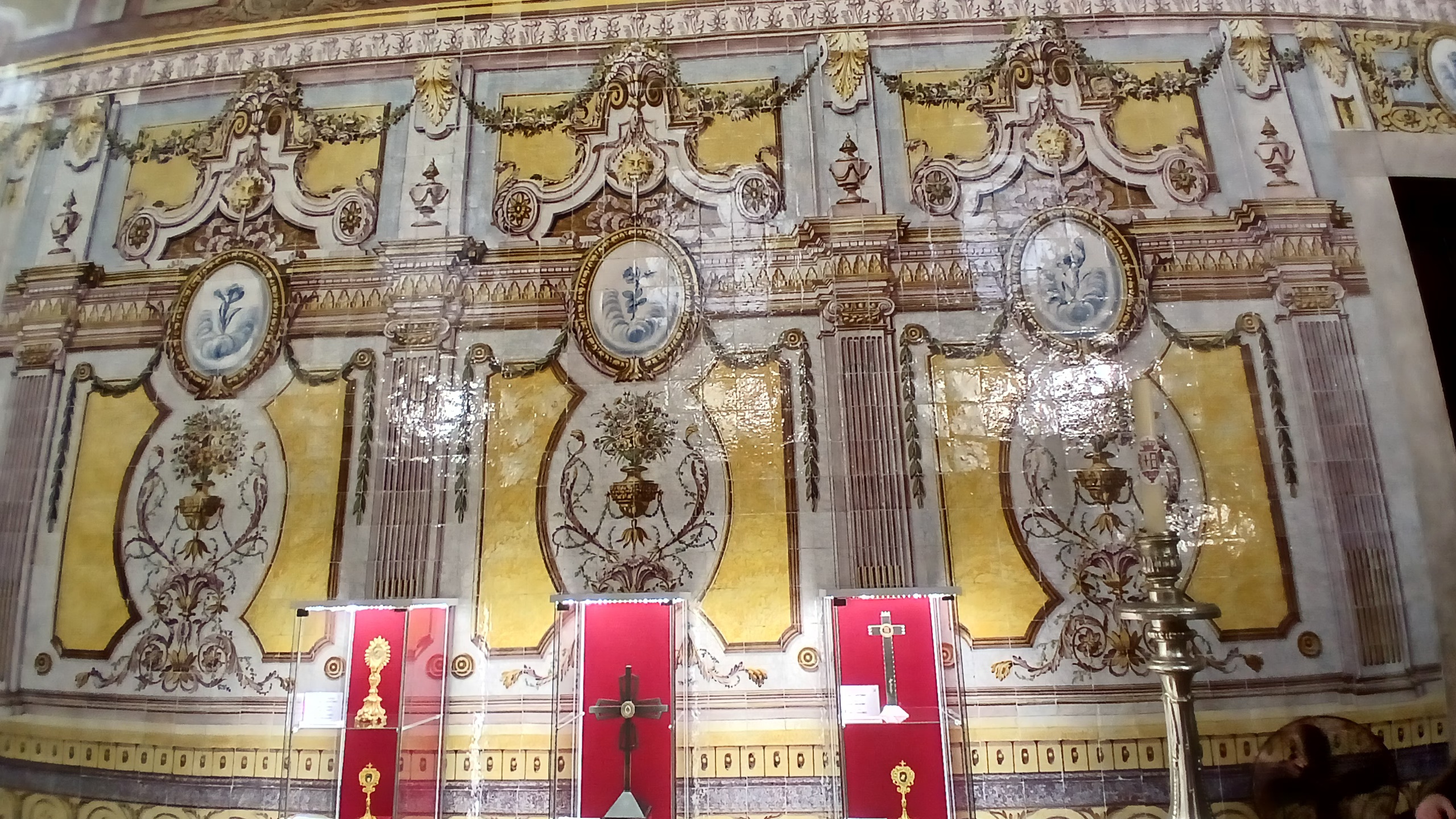
The church is built on the site of the house where St Antony was born in 1195. He is known worldwide as Antony of Padua because his missionary journey took him to Padua in Italy, but he is Santo Antonio de Lisboa to its citizens. A small chapel was built on the site in the 15th century, rebuilt in the early 16th and again in 1730, but this one survived only 15 years, being destroyed in the 1755 earthquake. The church that stands today was built in 1667 in the Baroque Rococo style. St Antony’s Feast Day is 13th June and is the most important of the ‘Popular Saint Festivities’ celebrated in Lisbon. There are street parties across the city with music, food and dancing all day and into the night, and a ‘cheerfully noisy’ parade down the wide Avenida da Liberade.
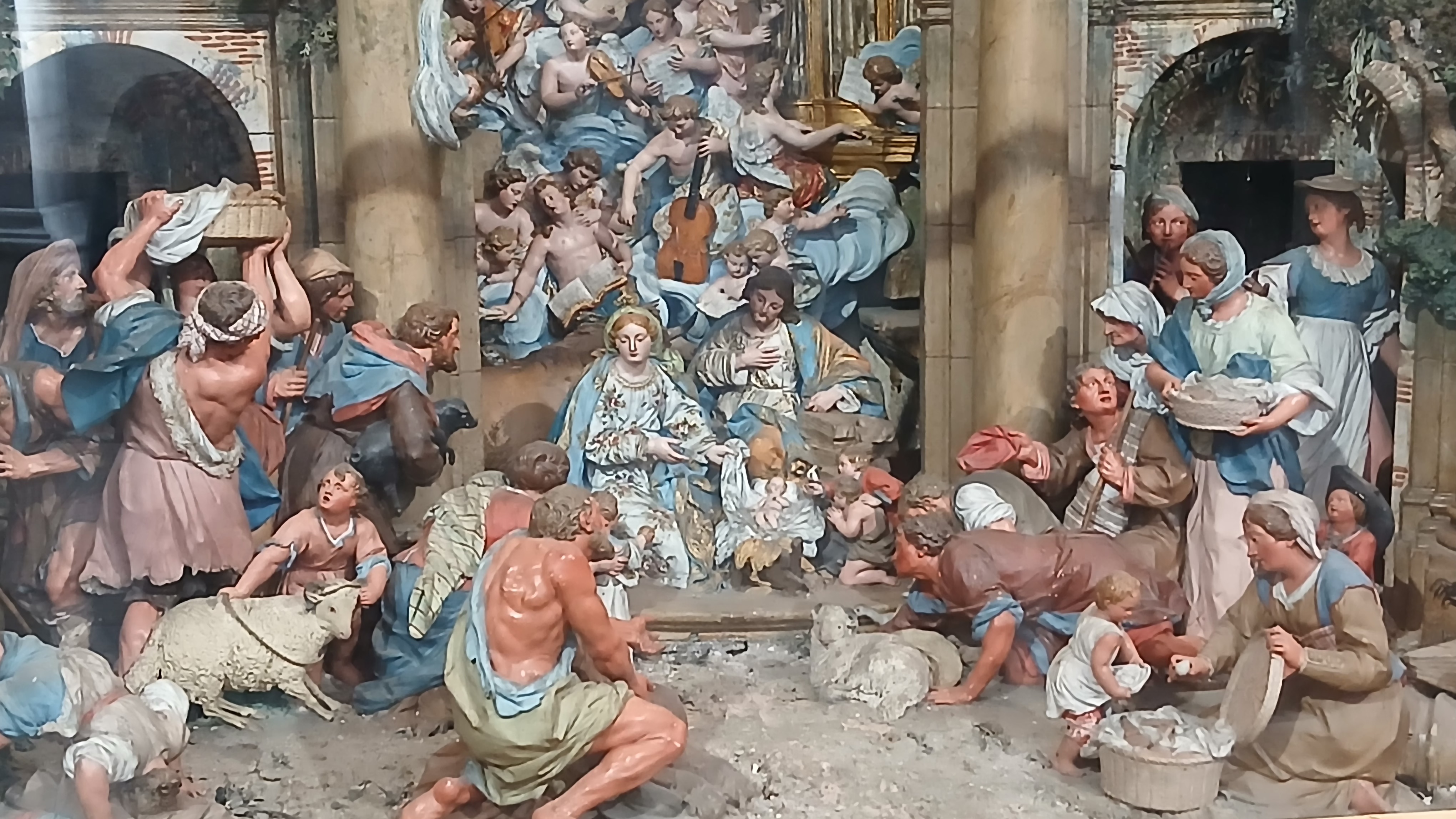
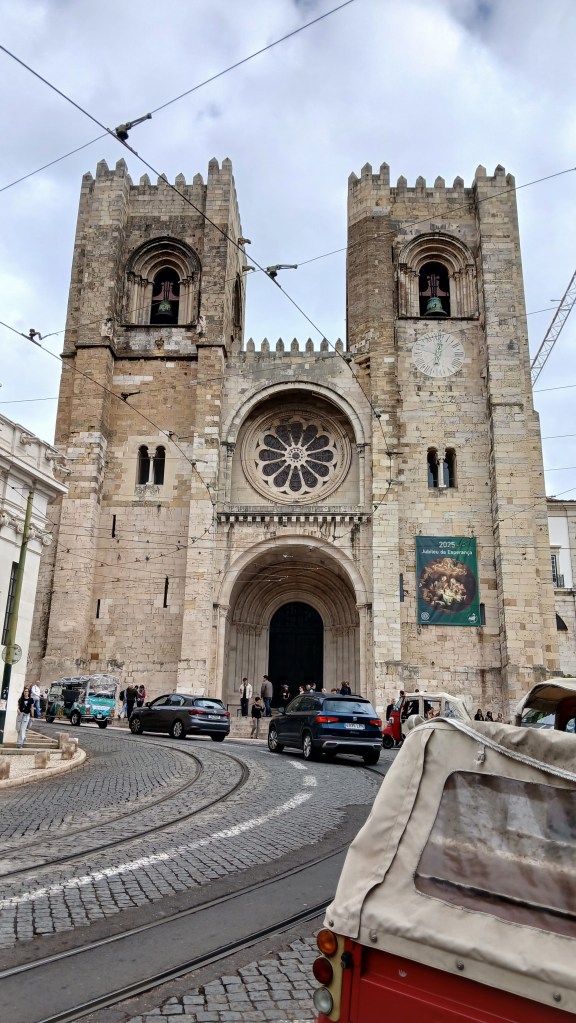
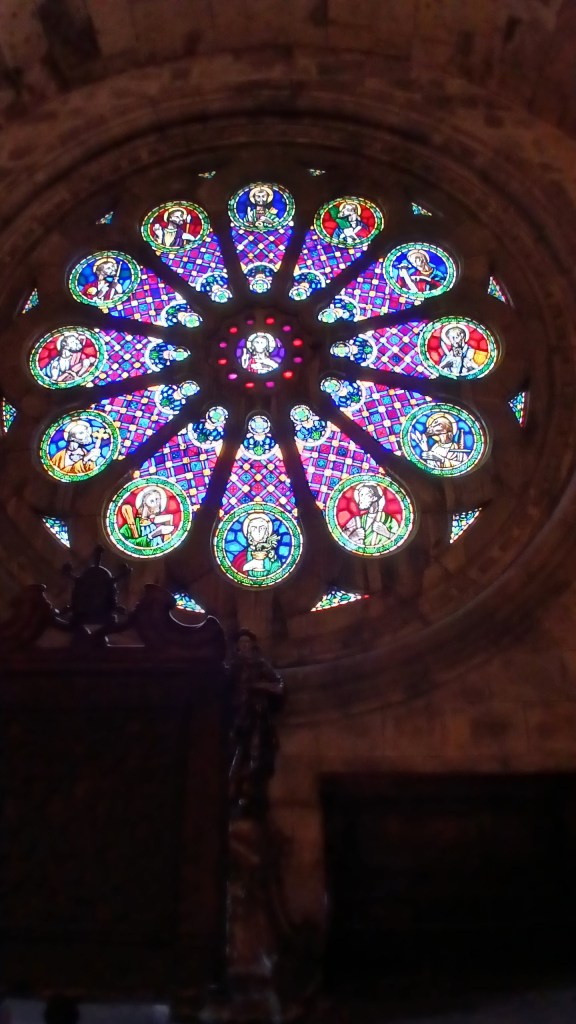
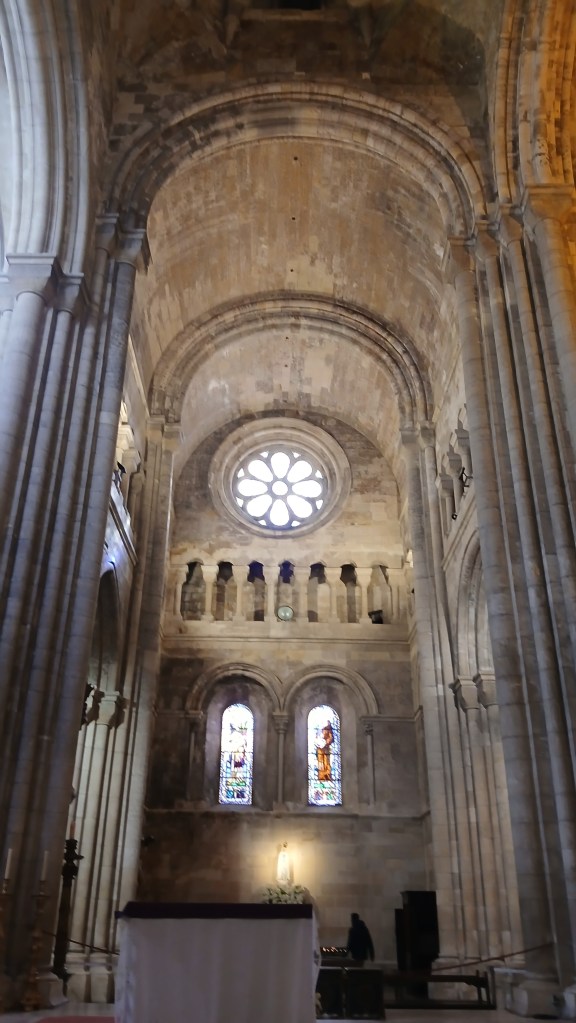
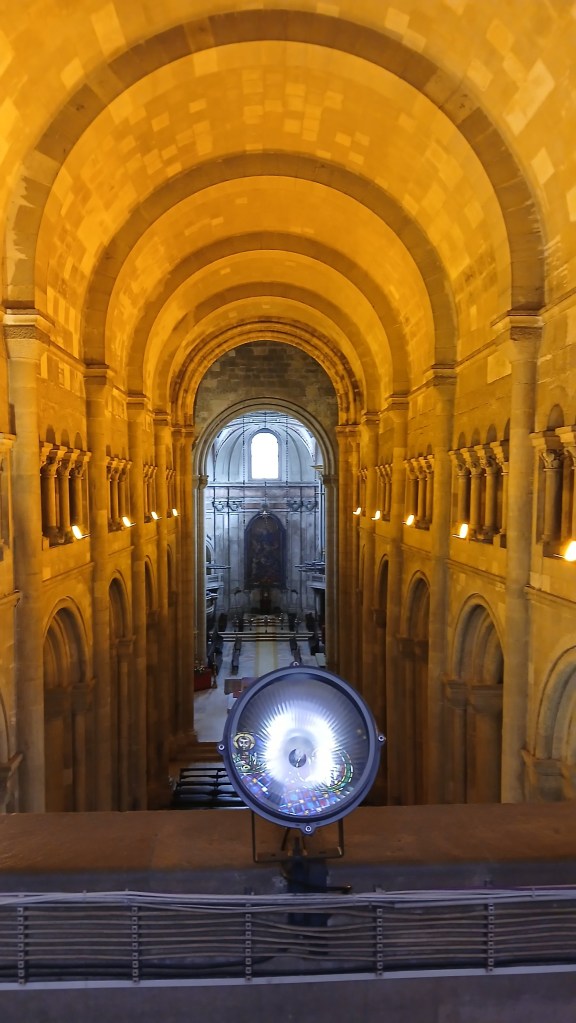
Just up the road from St Antony’s is the city’s cathedral, with its Romanesque facade: twin castellated towers and stunning rose window. A cathedral was built shortly after the recapture of Lisbon from the Moors in 1147. The site was formerly that of the city’s main mosque when under Moorish occupation. The cathedral was extensively restored following severe damage from the 1775 earthquake, including the destruction of a third tower, taller than the two towers we see today. St Antony of Lisbon was baptised in the original cathedral and is said to have attended the cathedral school. Today there is a small museum, The Treasury, which houses artworks and a collection of elaborate clergy vestments. The 13th century cloisters have been excavated and signs of Iron Age, Roman and Moorish occupation have all been discovered. Among the interesting things to see, I particularly like this tableau of the Nativity, which includes a heavenly choir and orchestra and lots of ordinary ‘country folk’ looking on.
Source: Top 10 Lisbon, DK Eyewitness
Igreja do Carmo
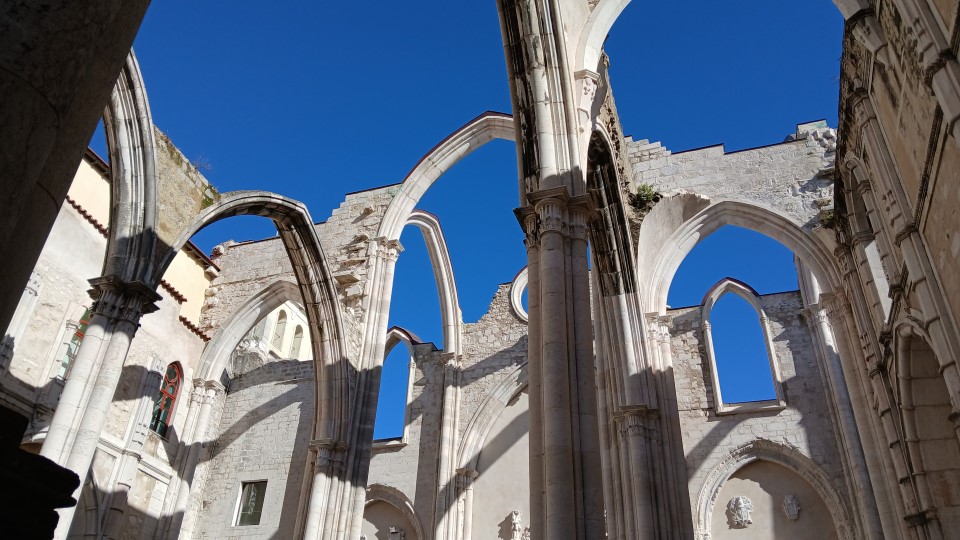
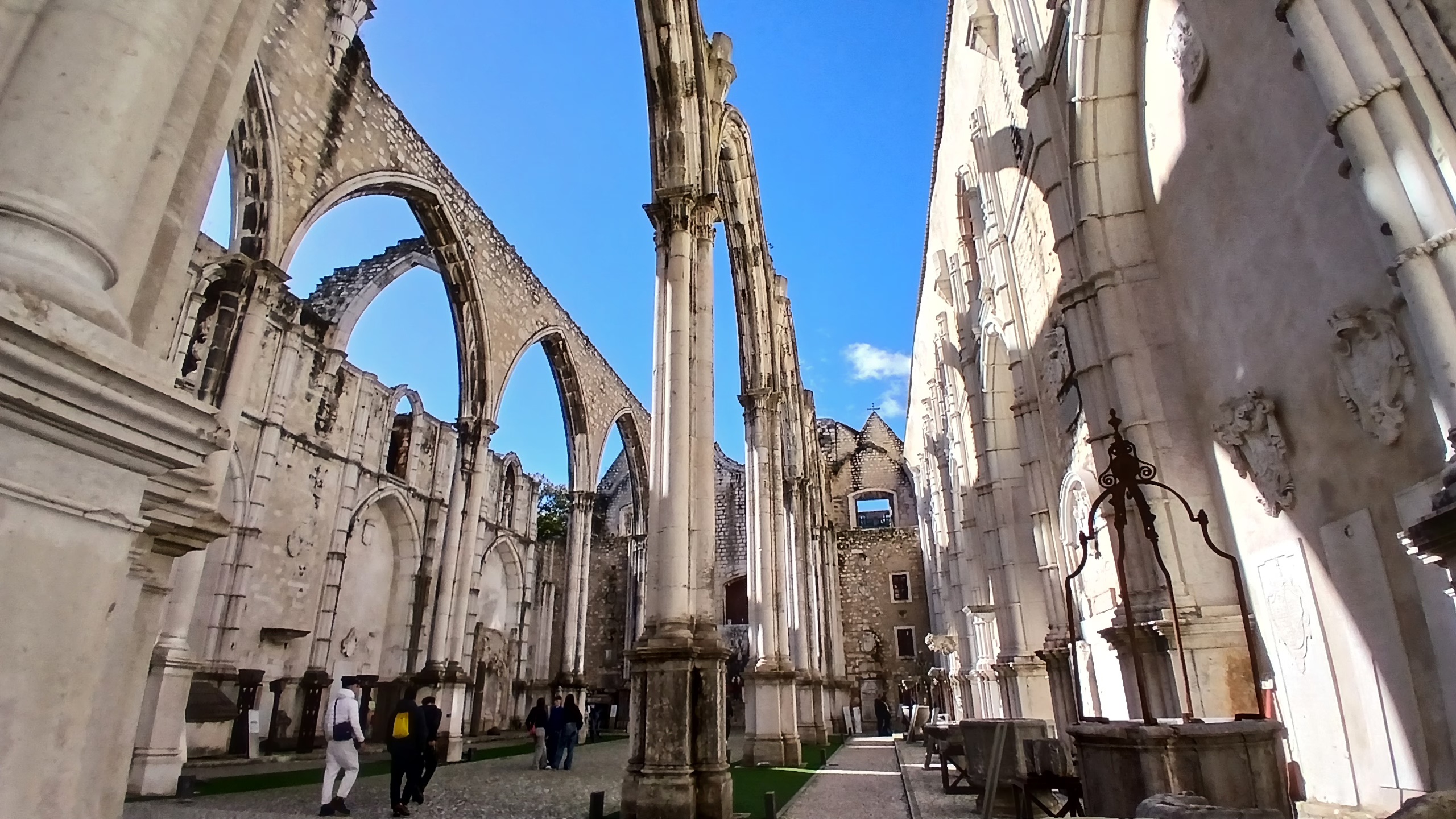
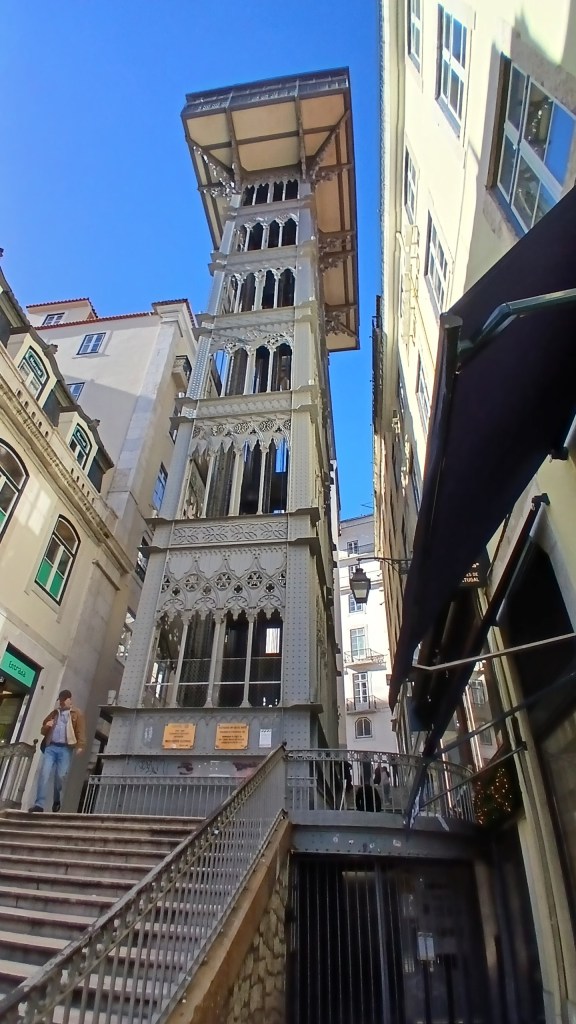
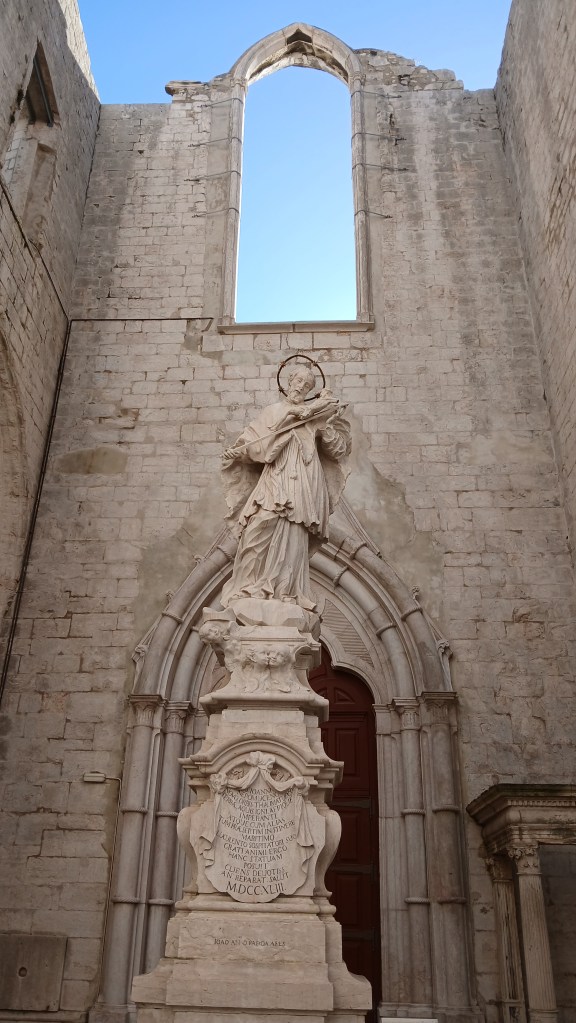
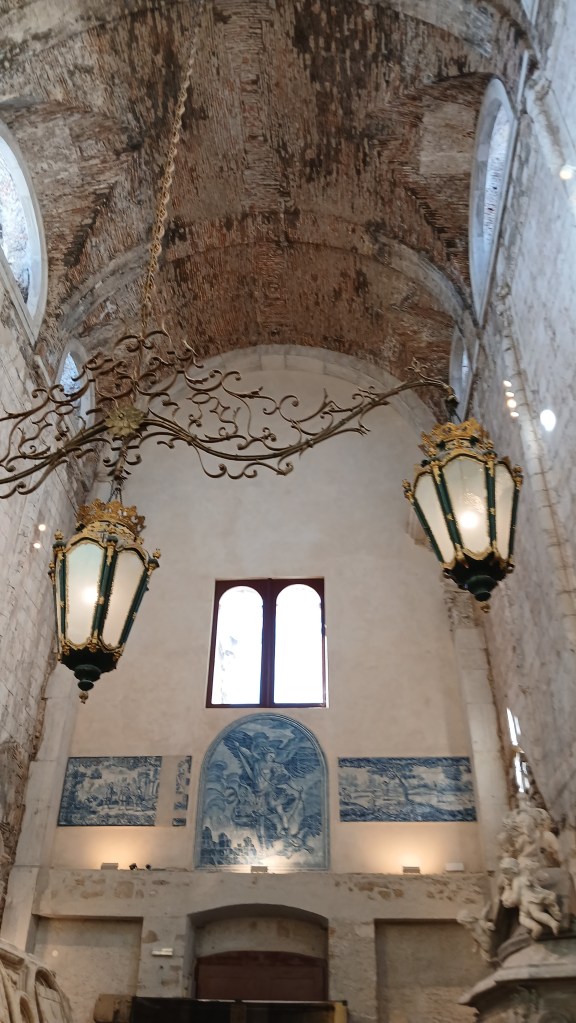
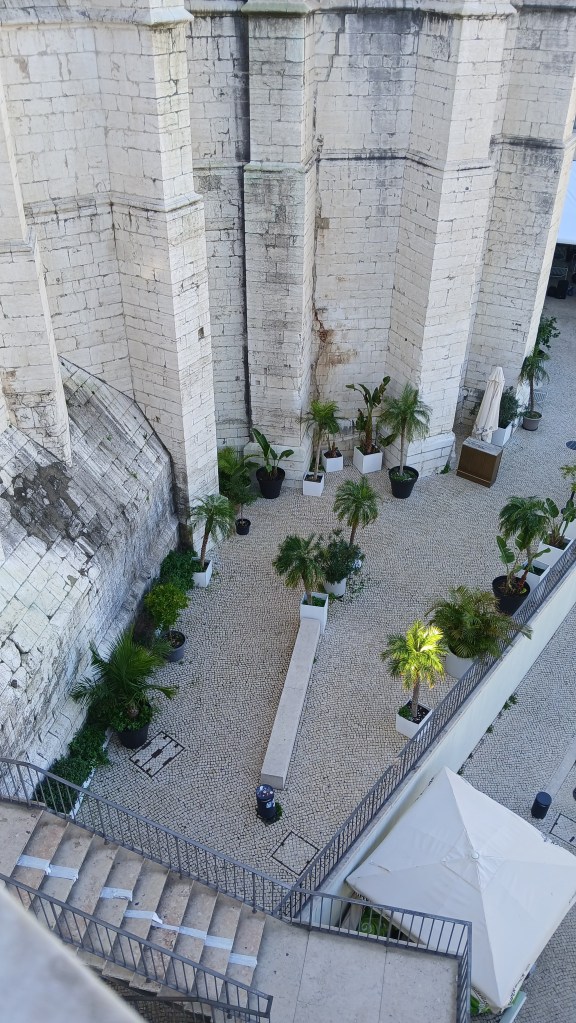
In my opinion, the exposed Gothic arches of this church ruin are Lisbon’s most spectacular attraction. This 14th century Carmelite church was partially destroyed in the 1755 earthquake and the beautiful remains have been restored as a memorial to those who died. The earthquake struck on All Saints Day, consequently the church was full of worshippers who all perished when the roof of the main part of the church caved in. Reconstruction work started in 1756 but was suspended in 1834. The Museo Arqueologico do Carmo was installed in 1864 housing a valuable collection of historical, archaeological and artistic pieces, ranging from the pre-historic era to contemporary times. One of the rooms in the museum shows a 15 minute film charting the six centuries of the church. The church is accessible by the Elevador de Santa Justa, an outdoor lift which takes passengers from ground level to the hillside where the church stands. It’s fascinating to look down from the viewing platform to the foundations of the church, metres below.
Sources: Explore Lisbon, Insight Guides; Leaflet in the church
Cristo Rei (Christ the King) statue
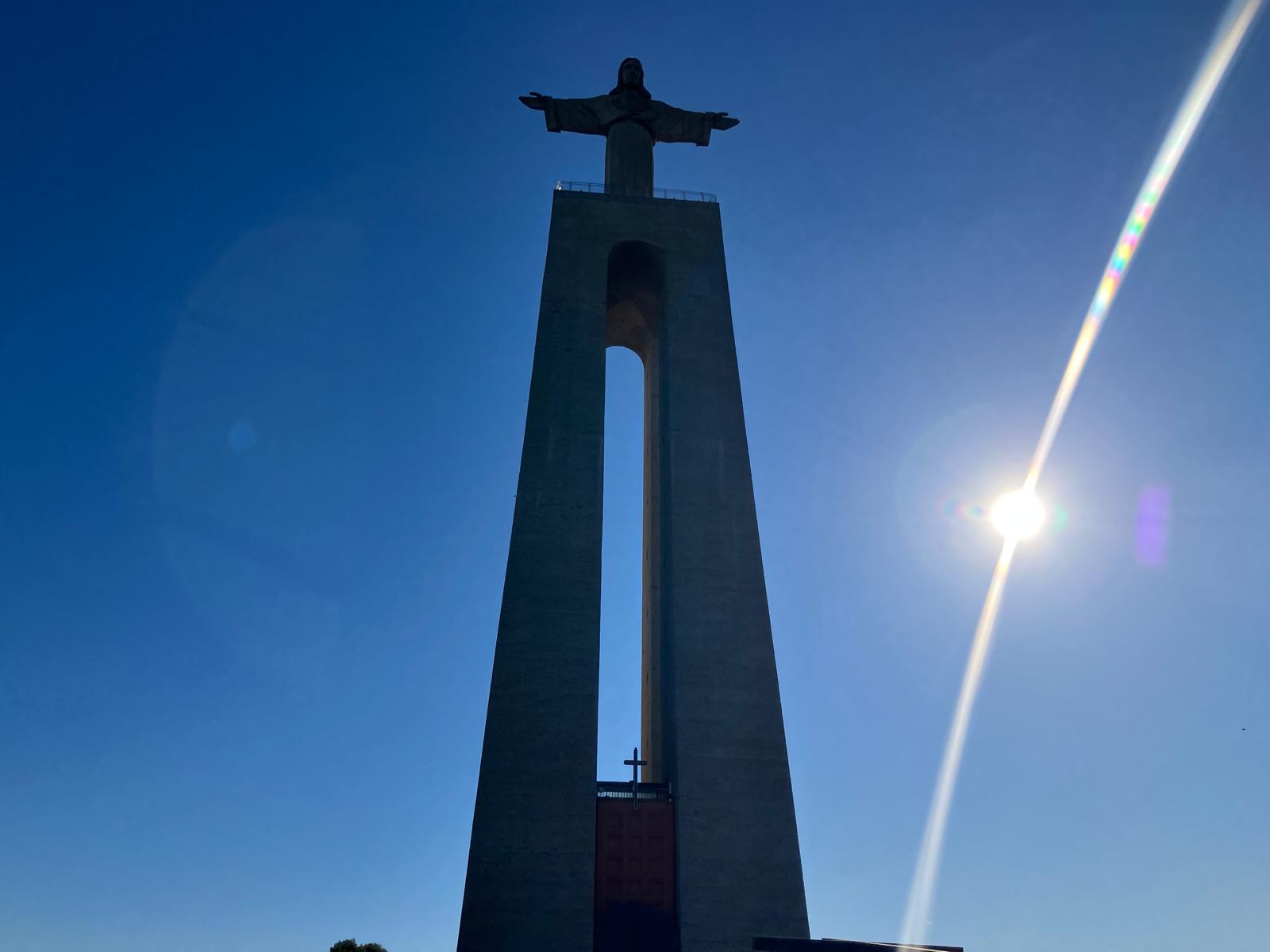
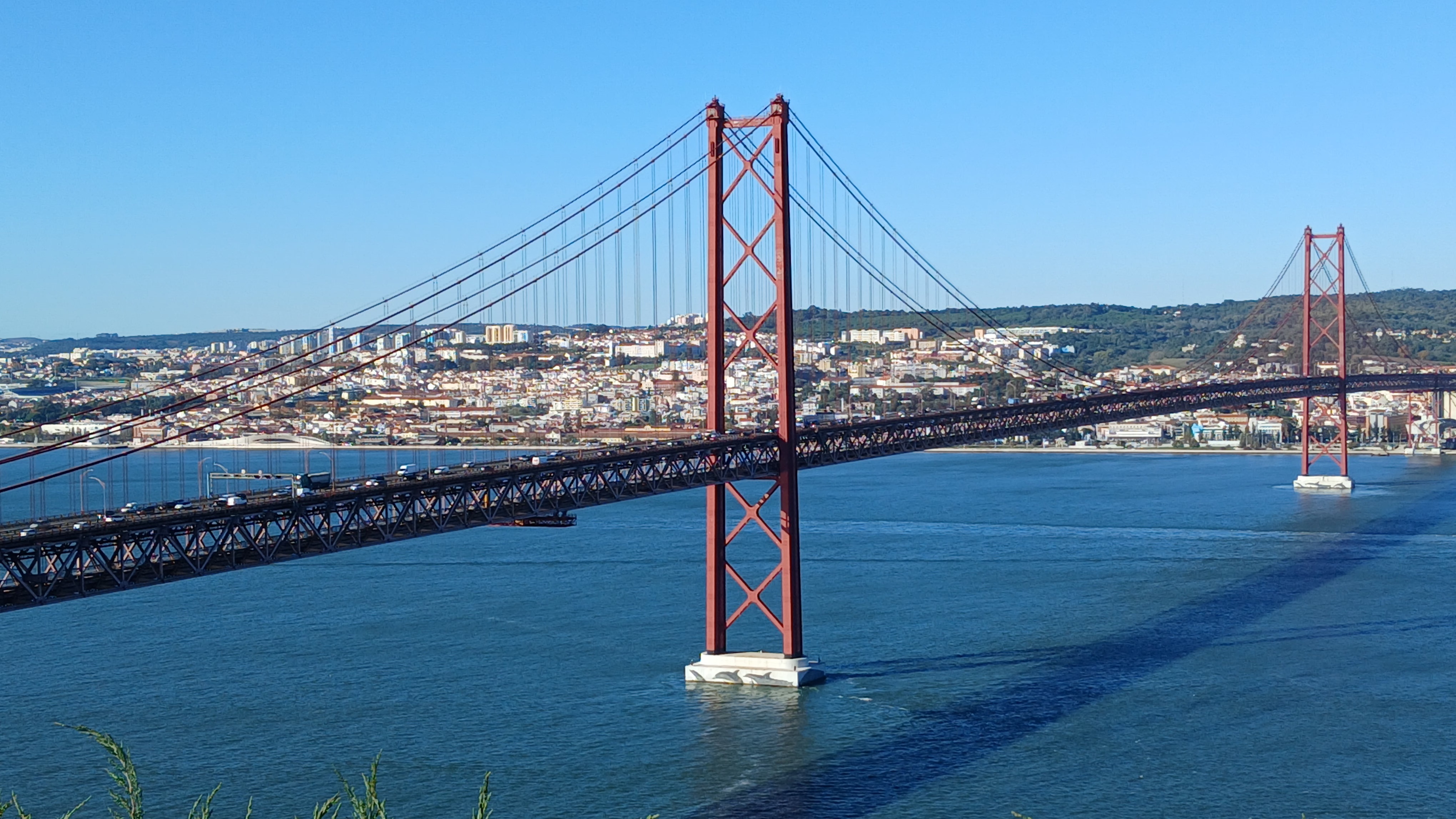
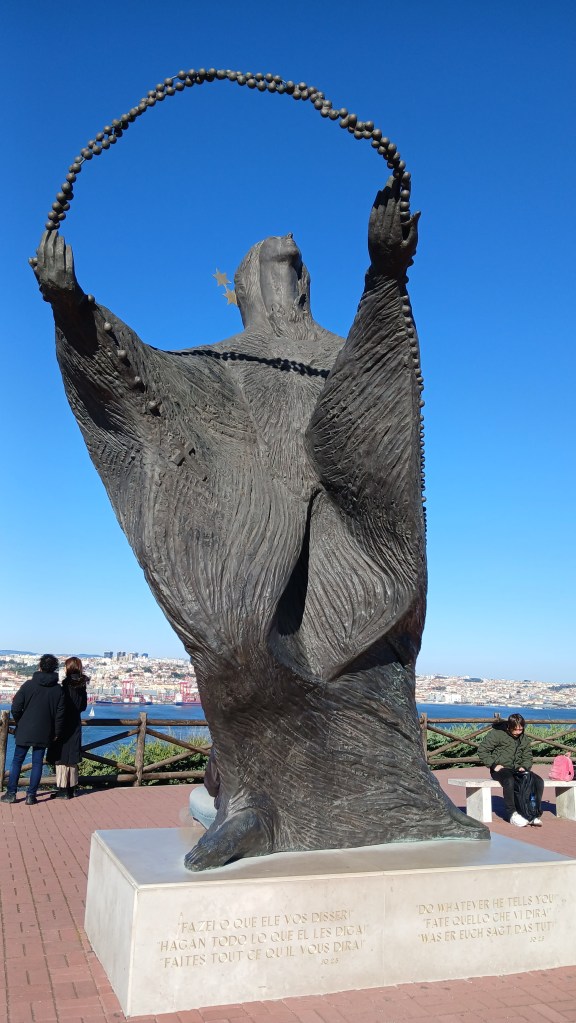
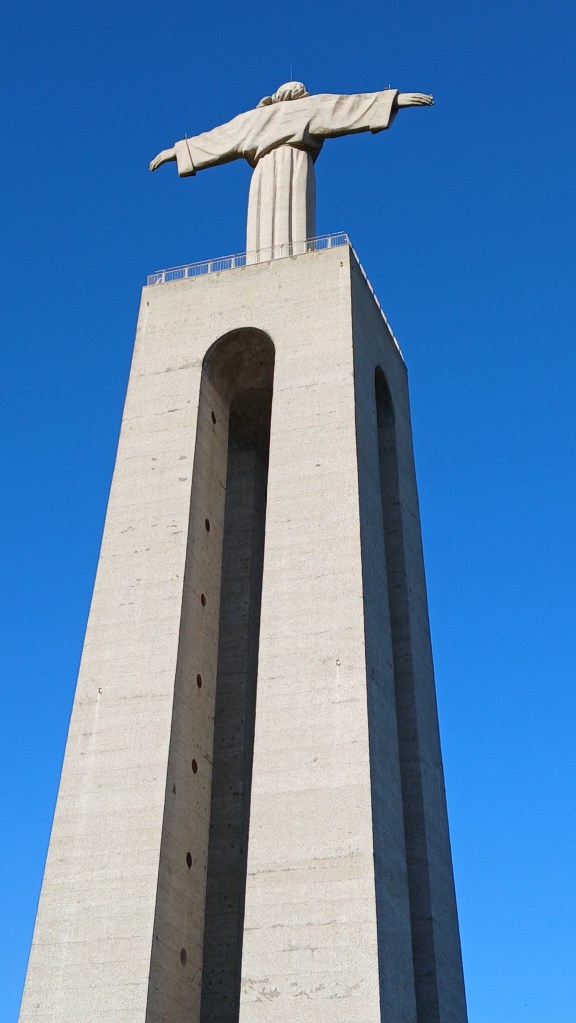
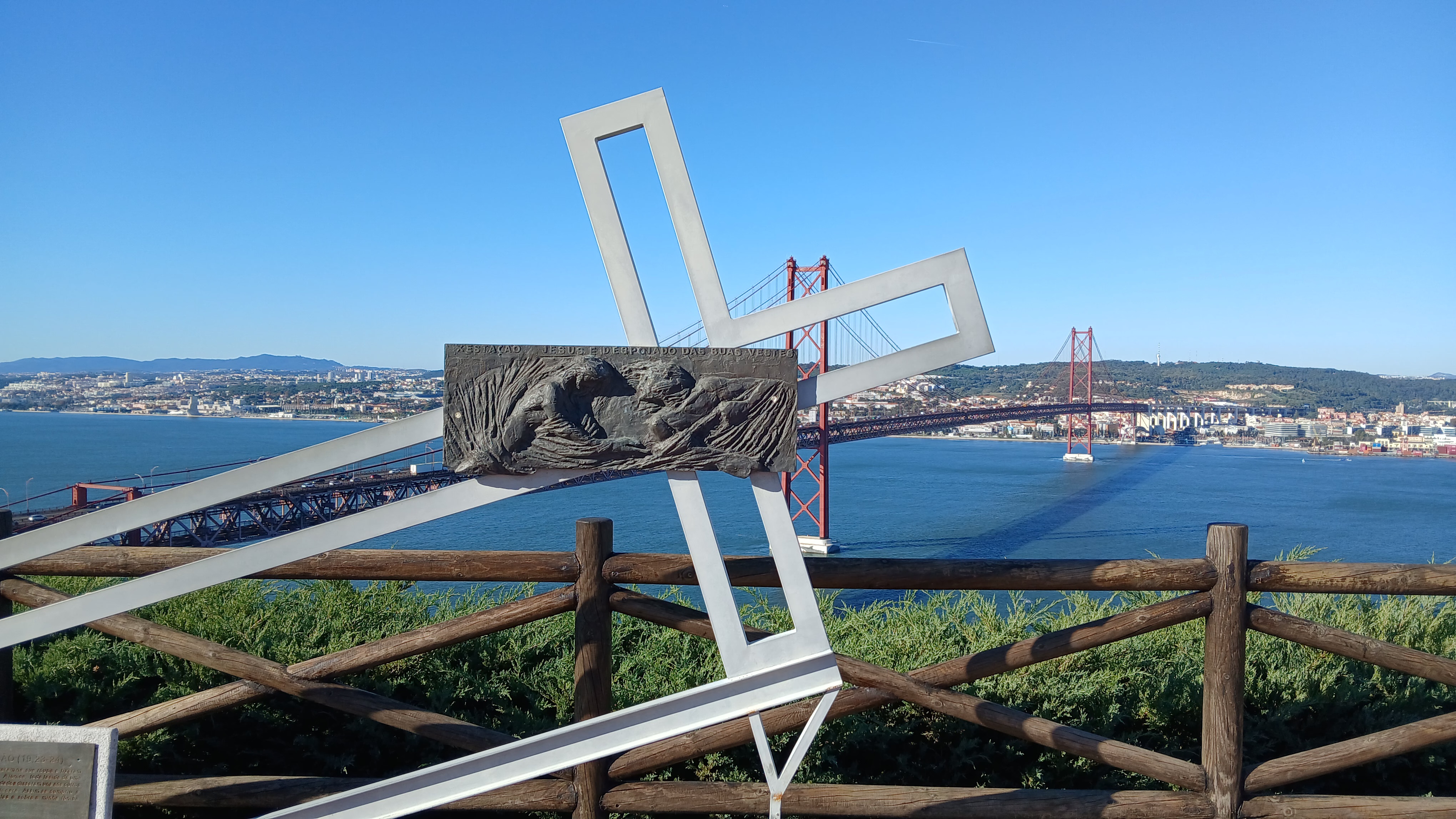
The Cristo Rei statue is another must-see. It can be viewed from many parts of Lisbon but is actually across the Tejo River in the smaller city of Almada, reached by ferry. The statue is 28 metres tall on an 82 metre pedestal and was inspired by the famous Christ the Redeemer statue in Rio de Janeiro, Brazil. In 1940 the bishops of Lisbon decided to erect a monument over Lisbon if Portugal was spared from the Second World War. Portugal maintained neutrality for the duration of the War. Construction began in 1949 and the statue was completed in 1959. There are lifts inside the pedestal which ascend to a viewing platform at the base of the statue, offering 360 degree views over the two cities. The statue is set in a beautifully landscaped garden featuring a modern statue of Jesus’ mother Mary, inscribed with the words ‘Do whatever He tells you’ (John 2:5) on the plinth; and two large crosses. The bridge spanning the Tejo is the Ponte 25 de Abril and was inspired by San Franciso’s Golden Gate Bridge. Originally named Ponte Salazar after Portugal’s long-time dictator, it was renamed in honour of the bloodless revolution, the so-called ‘Carnation Revolution’ of 25th April 1974 which restored democracy to Portugal.
Sources: Explore Lisbon, Insight Guides; Leaflet in Tourist Information
A diverse selection this month: a unique parish church, an innovative church building, a small park (formerly a cemetery) and a gem of a chapel. This is an area north-west of central London bordered by Euston Road to the north and Great Ormond Street, home of the famous children’s hospital to the south. Notable places of interest are the Charles Dickens Museum and the Foundling Museum, founded by 18th century philanthropist Thomas Coram. Several other interesting places to visit in the area, but as always, I’m focusing on the Christian aspects and locations!
Lumen United Reformed Church
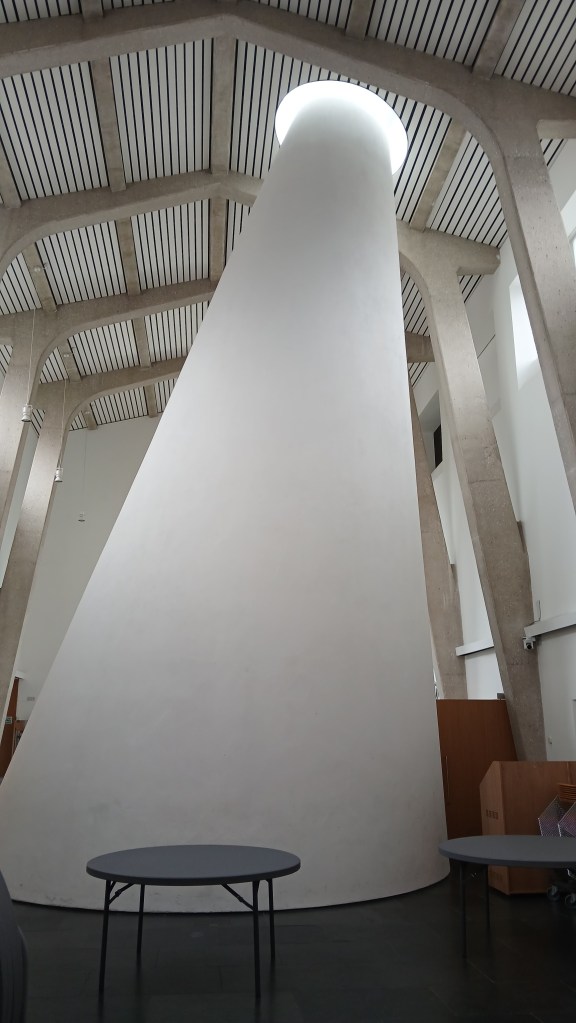
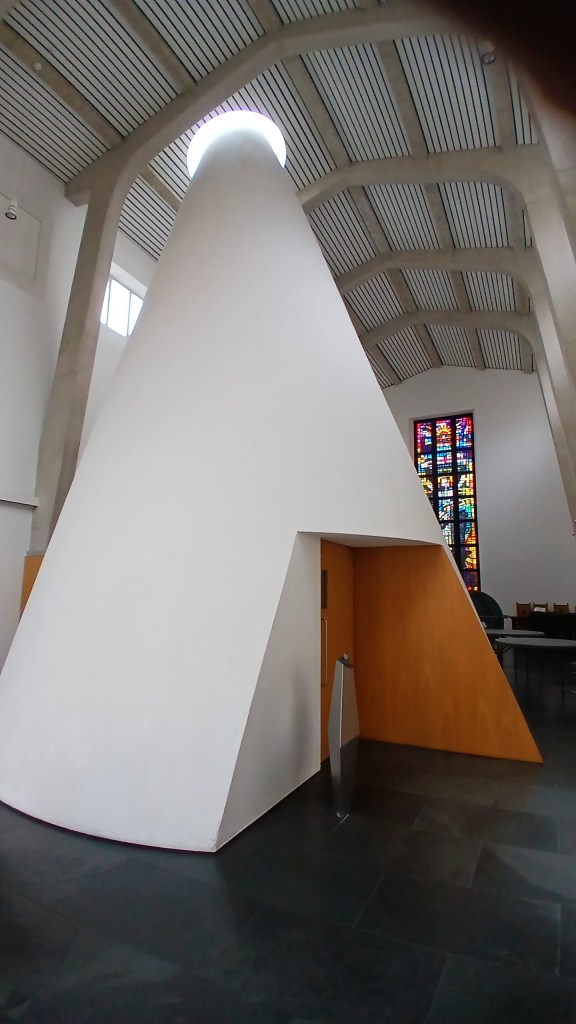
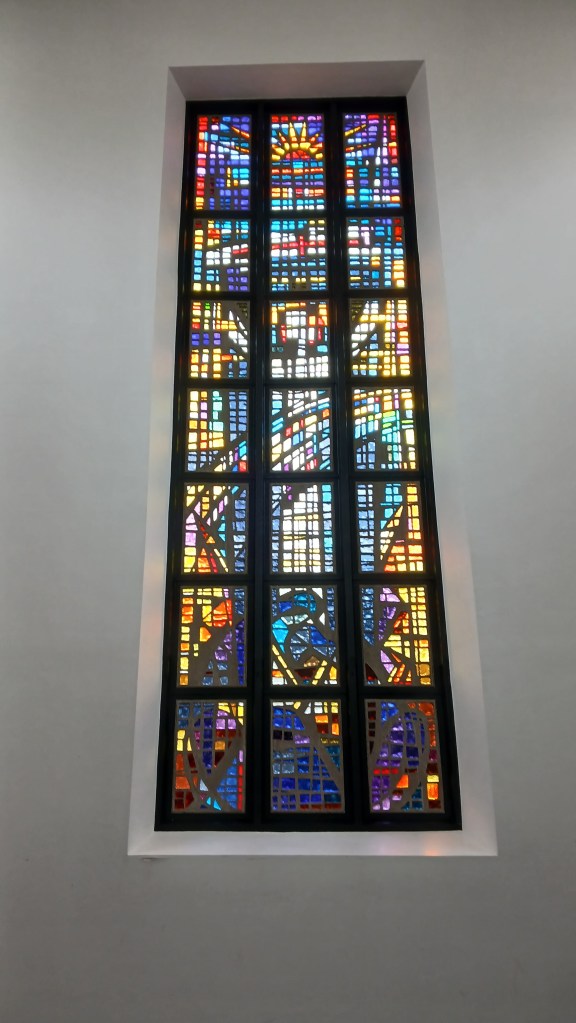
This RIBA award-winning church was designed by architects Patrick Theis and Soraya Khan and includes this unique floor to ceiling ‘quiet space’, for use as a room to worship, pray or meditate, alone or with a few others. In 1808 the Highland Society of London set up funds for Gaelic language worship in London and also an orphanage for the children of Scottish soldiers in London. A ‘Gaelic Chapel’ was erected in Hatton Garden, at the time one of the poorest areas of London. The Society relocated to the present site and a new, larger church was built in 1827, and became known as ‘The National Scotch Church’. This church was destroyed in 1945 by one of the last V2 rockets of the Second World War. The church was rebuilt in 1965, the foundation stone being laid by Lord Reith, founder of the BBC. In 2007-8 the building was remodelled ‘for a new century of service’ to become the church we see today. The beautiful and striking stained-glass window contains more than 1,000 pieces of one-inch thick glass in 21 panels and was created by French Master glassmaker Francois Pierre Fourmaintraux (1896 – 1974). There are some other modern windows in the church made with traditional stained-glass window techniques. In 1972 the church became part of the United Reformed Church.
Source: Leaflets in the Church
St Pancras New Church
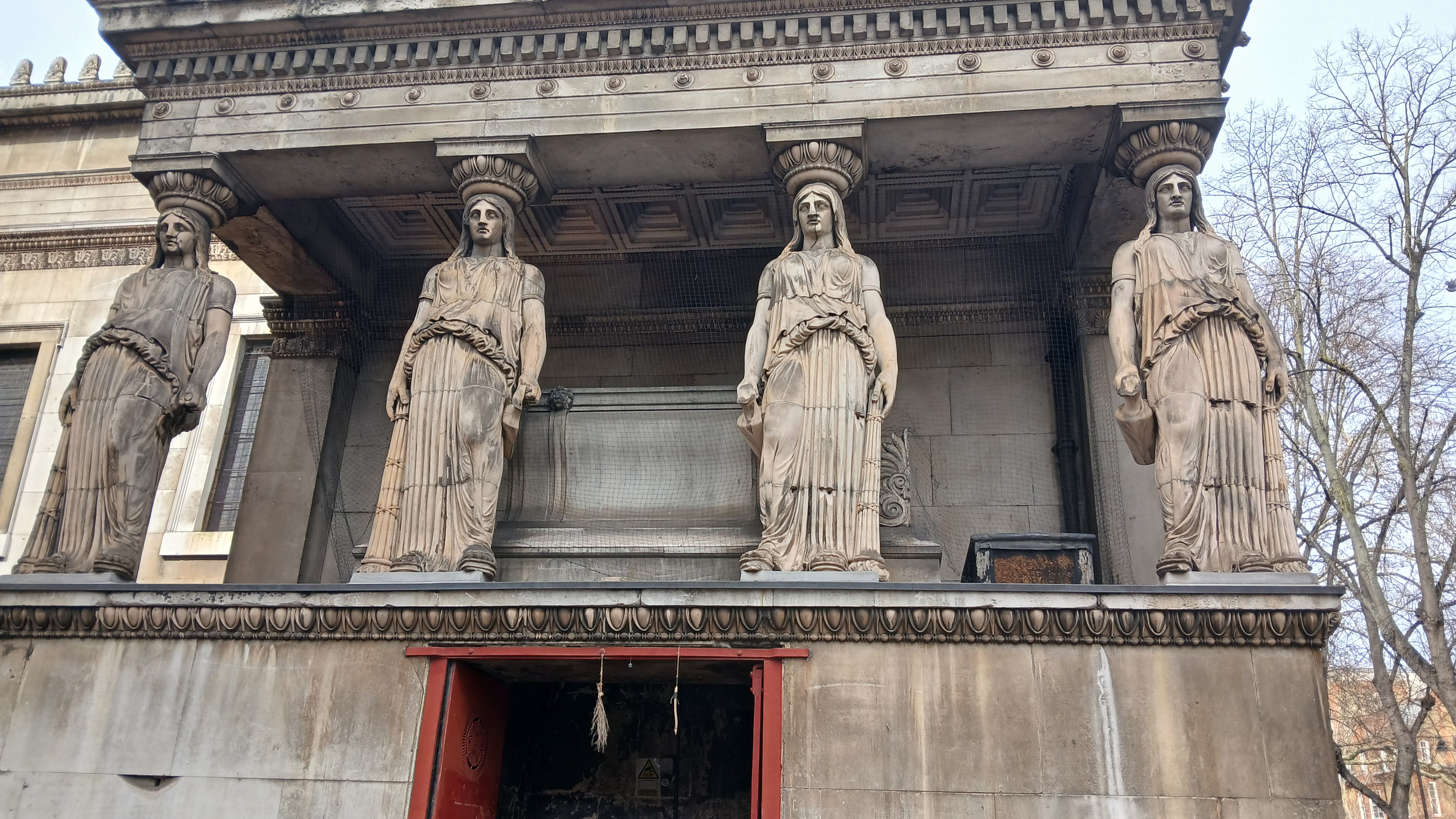
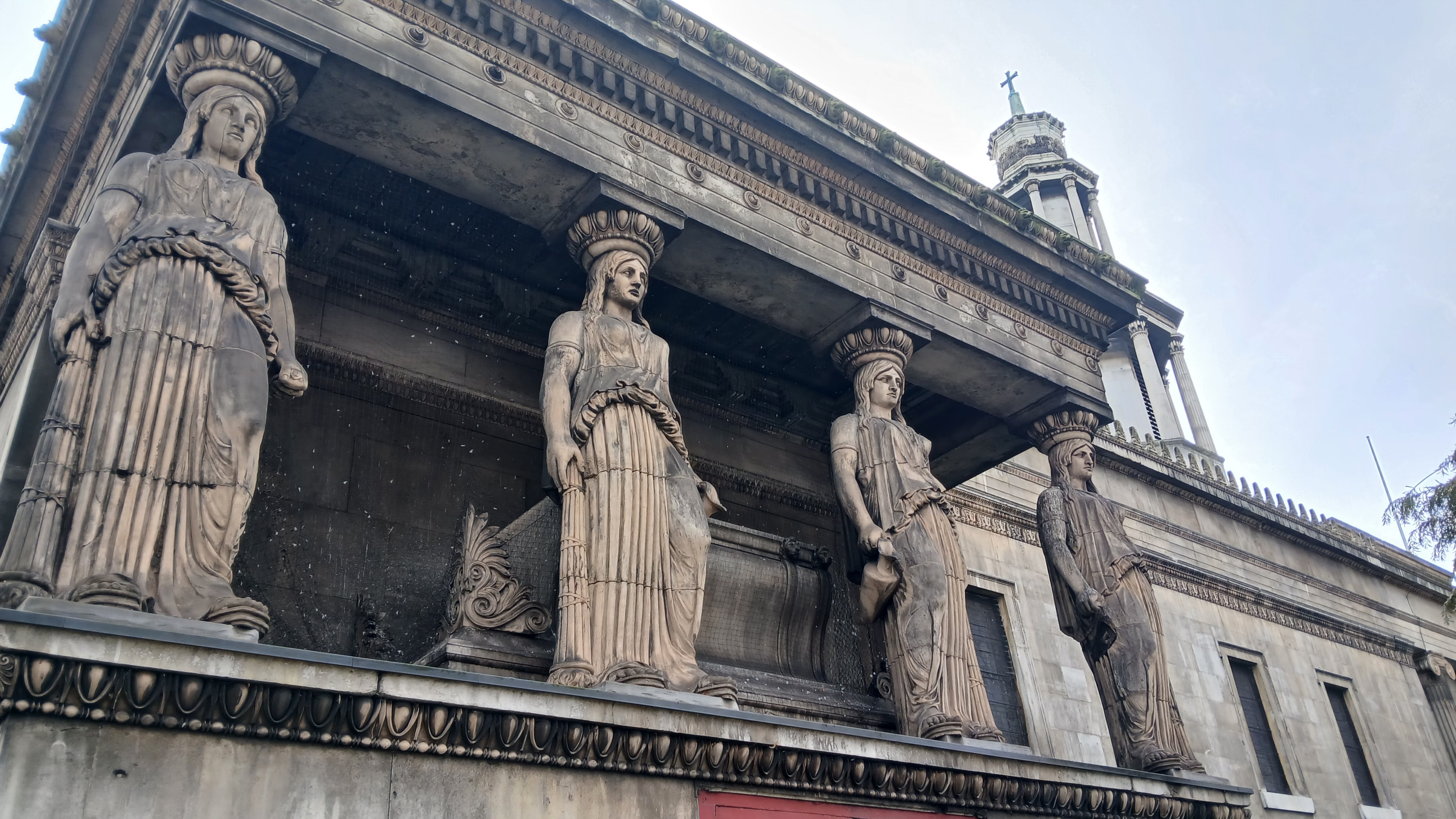
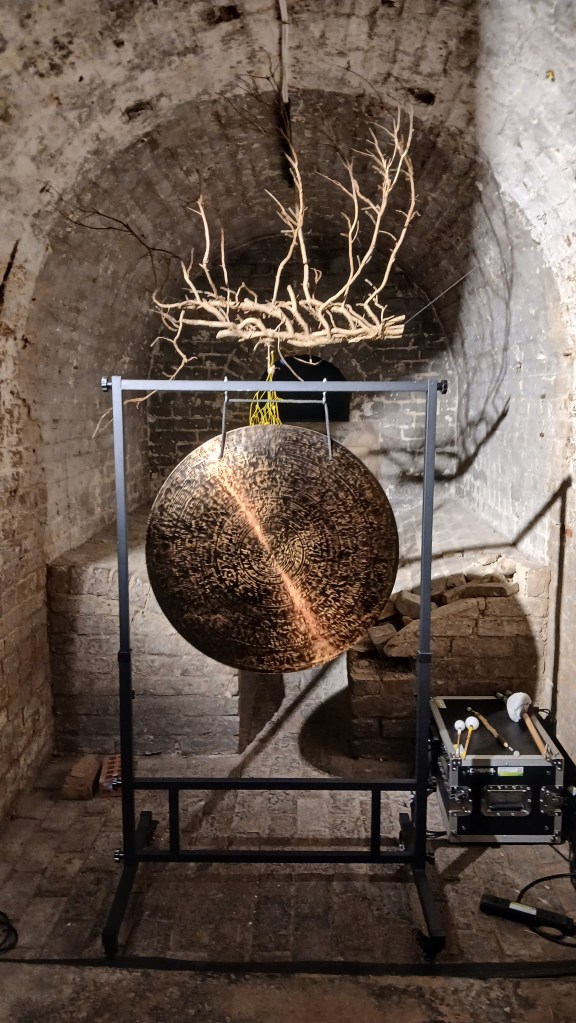
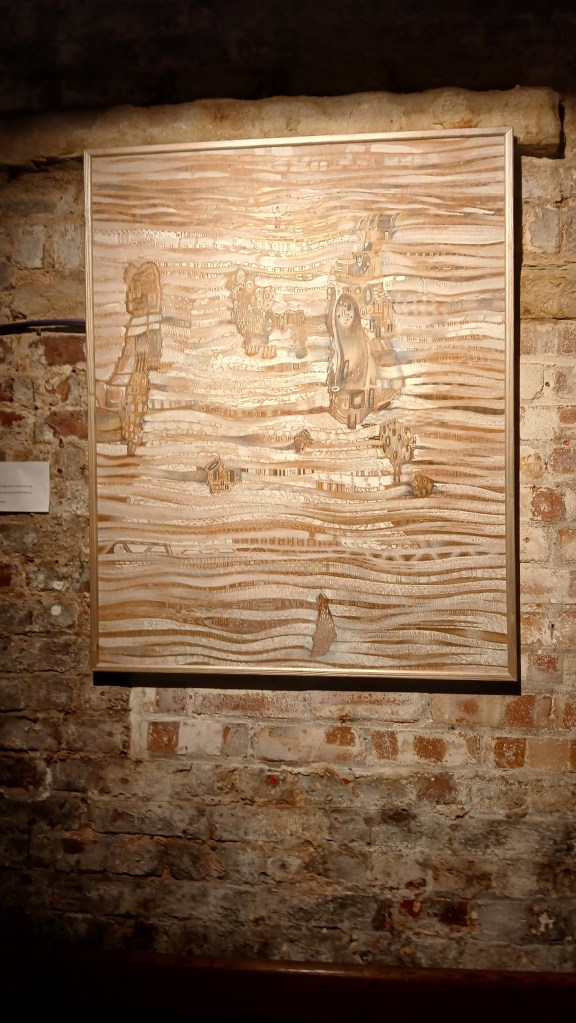
The church’s website describes it as ‘liberal Anglican Christianity in Central London.’ Located in Euston Road, it serves the communities of Euston, St Pancras and Somers Town. The church building was consecrated in 1822 and was known as ‘new’ St Pancras as it replaced the neglected and dilapidated ‘old’ St Pancras, which has since been restored as a parish church. The most celebrated features of the church are the two sets of caryatids: Greek statues copied from those on the Acropolis in Athens, designed by local architect William Inwood and his son, Henry Inwood. The statues are made of terracotta and were constructed in sections around cast-iron columns. They are certainly impressive at first sight. The total cost of the building was £76,679, making it the most expensive church to be built since the reconstruction of St Paul’s Cathedral following the Great Fire. The Crypt Gallery beneath the church is a spacious exhibition area hosting art displays, private events and film and photo shoots. The church holds lunchtime music recitals twice a week and a monthly Theological Reading Group. There is a Street Food stall in the church garden open Mondays to Fridays from 11.30 to 2.30 serving a variety of international food.
Source: stpancraschurch.org
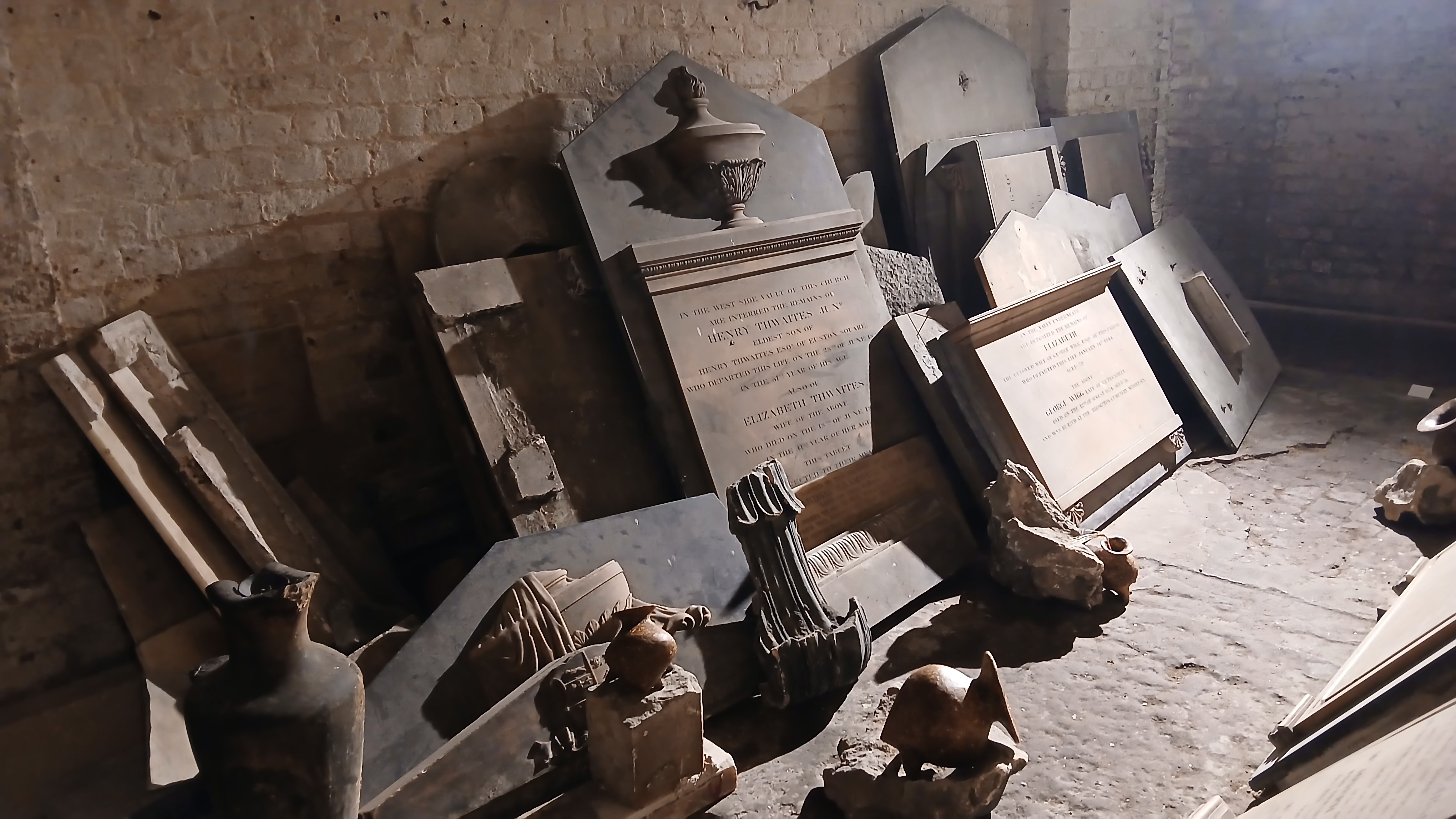
I think the arrangement of monuments stacked against the walls of the crypt is a piece of art in itself!
St George’s Gardens
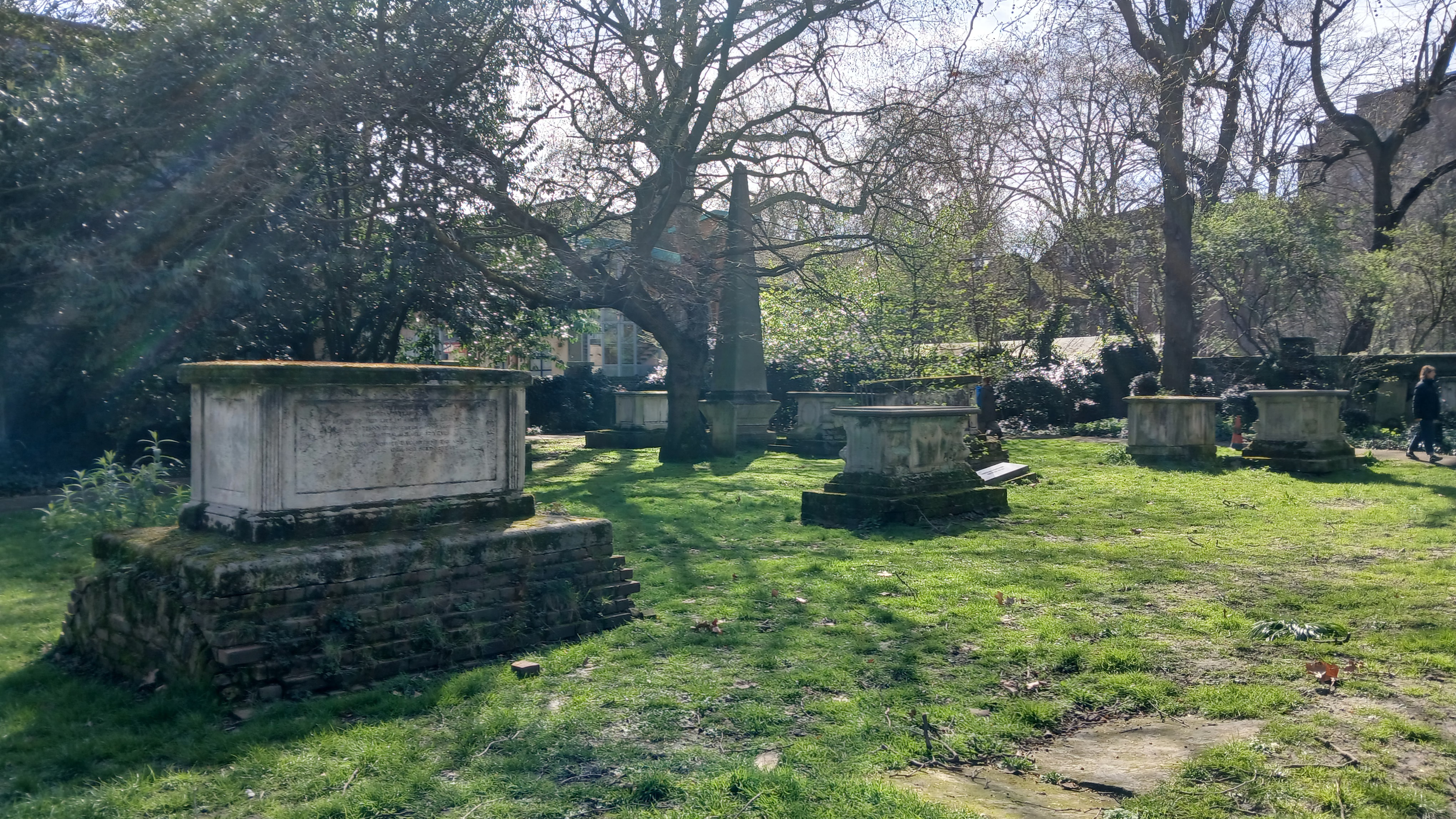
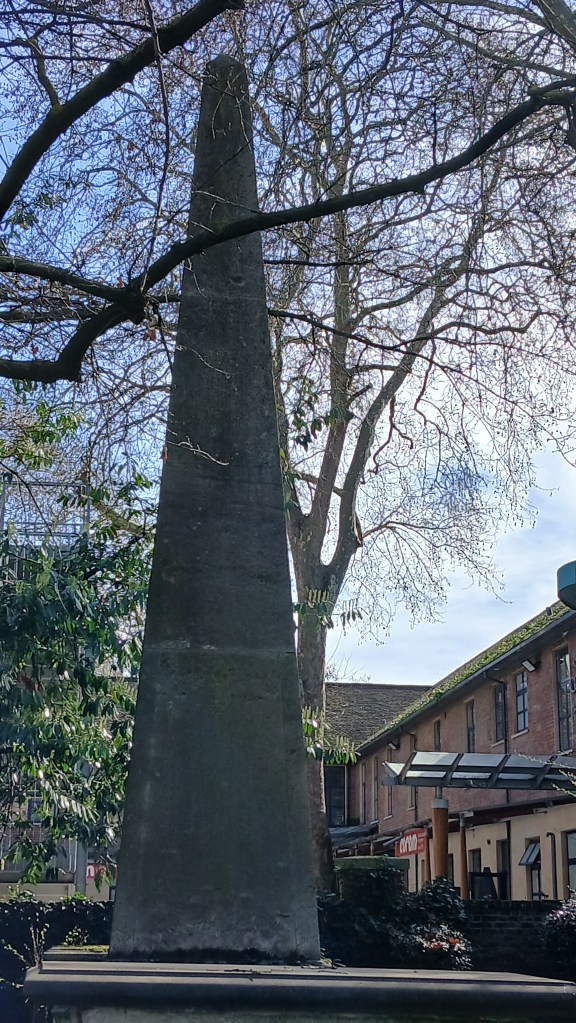
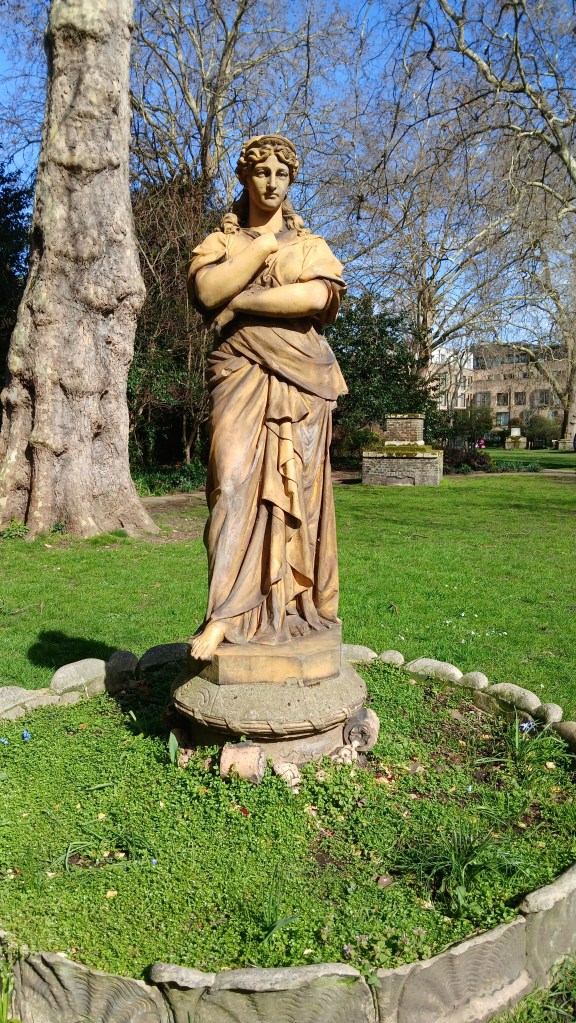
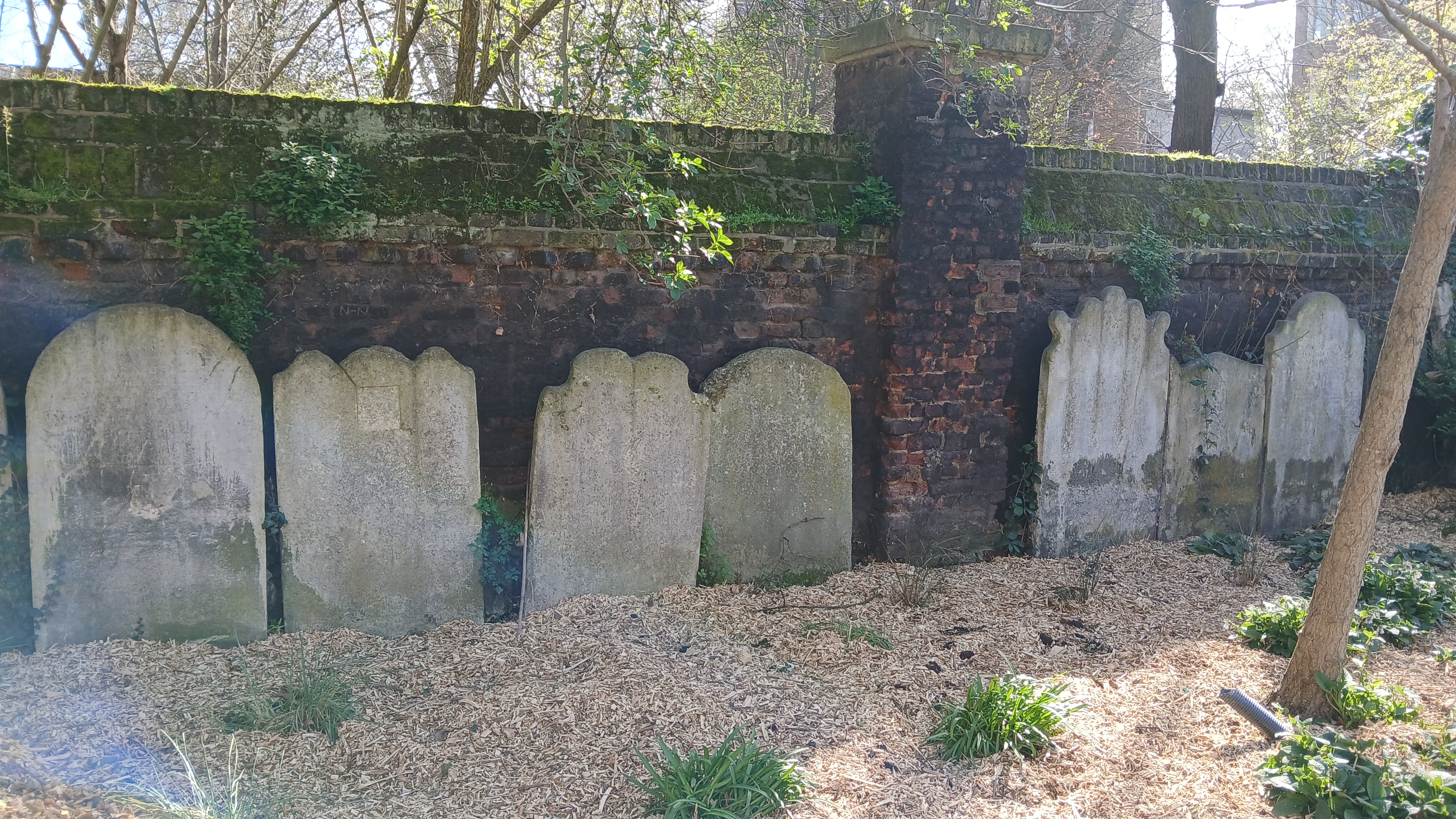
This is a small but attractive park behind the Coram Centre and Foundling Museum. From 1713 it was a cemetery serving two parish churches, both conveniently called St George: St George the Martyr Queen Square and St George Bloomsbury. By 1885 the burial ground was overcrowded and in a poor state of repair and was closed to burials. Thirty years later it was reopened as a public garden, part of a pioneering movement which redesigned overgrown urban graveyards into ‘open air sitting rooms’ in the words of housing reformer Octavia Hill. One notable burial in the cemetery is that of Eliza Fenning, a cook who was arrested in 1815 for allegedly poisoning her employers with arsenic. Sentenced to death, she was hanged outside Newgate Prison. More than 10,000 people joined her funeral procession from St George the Martyr to the burial ground. There was widespread belief that there had been a miscarriage of justice due to a reliance on circumstantial evidence alone, and highlighted the need for more accurate forensic science in crime scene investigation. The Friends of St George’s Gardens are currently consulting local residents about putting a memorial to Eliza on the wall of the Gardens. I shall go back in a few months’ time to find out if they decided to do so! In the Gardens there is a statue of Euterpe the Muse of Instrumental Music, this was one of nine which adorned the façade of the Apollo Inn on Tottenham Court Road, which was demolished in 1961.
Source: Notice boards in the Gardens
St Christopher’s Chapel, Great Ormand Street Hospital
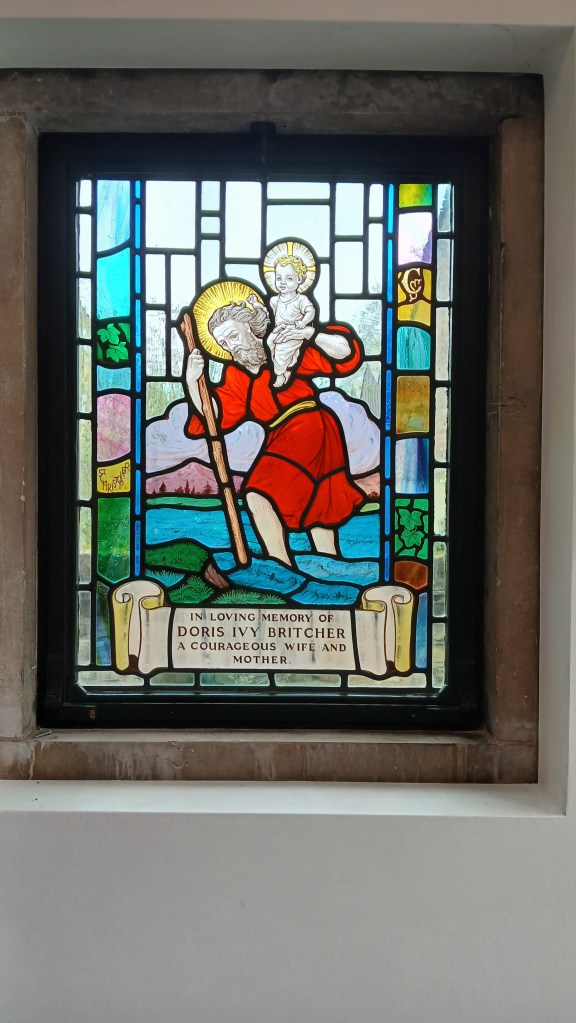
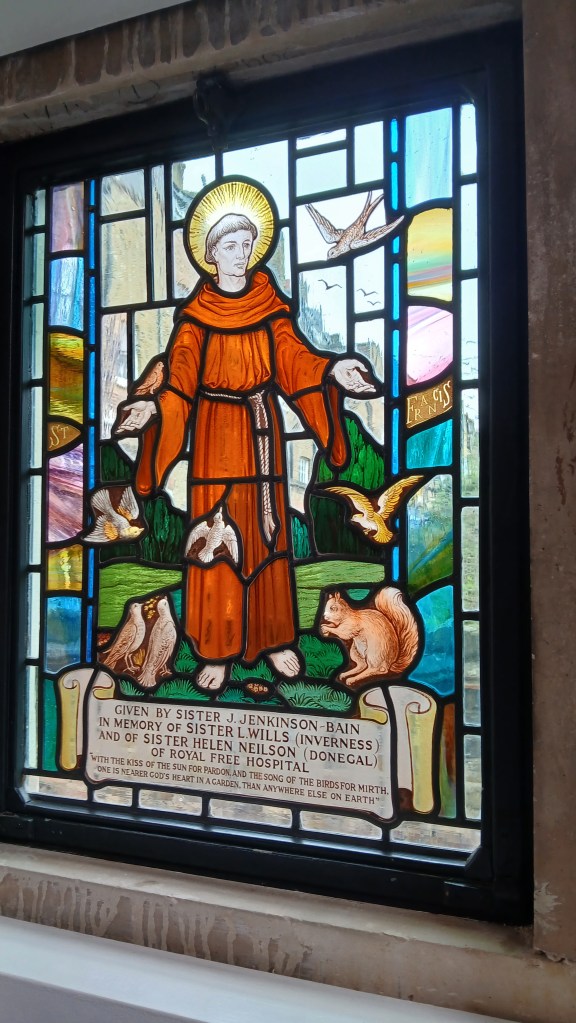
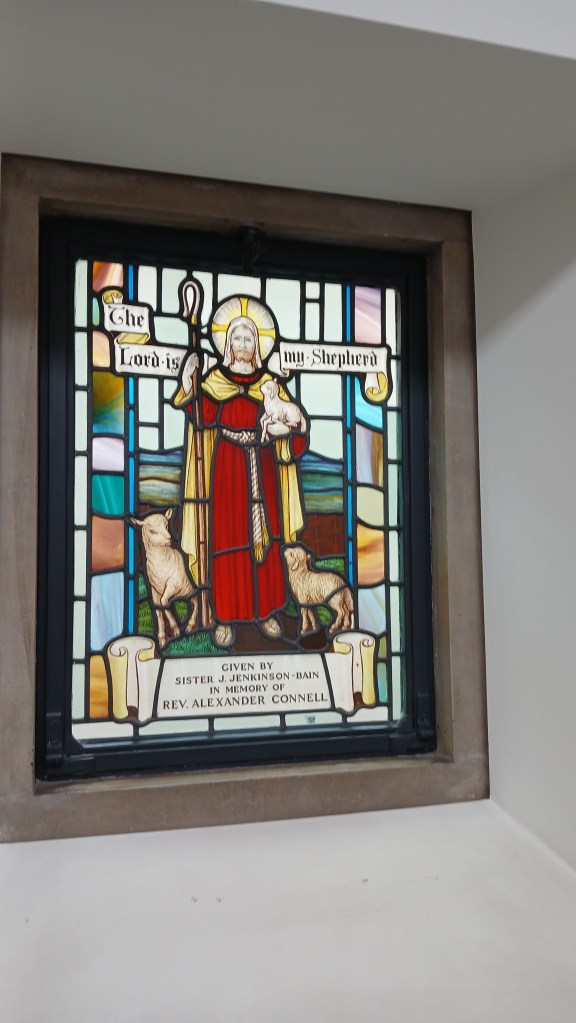
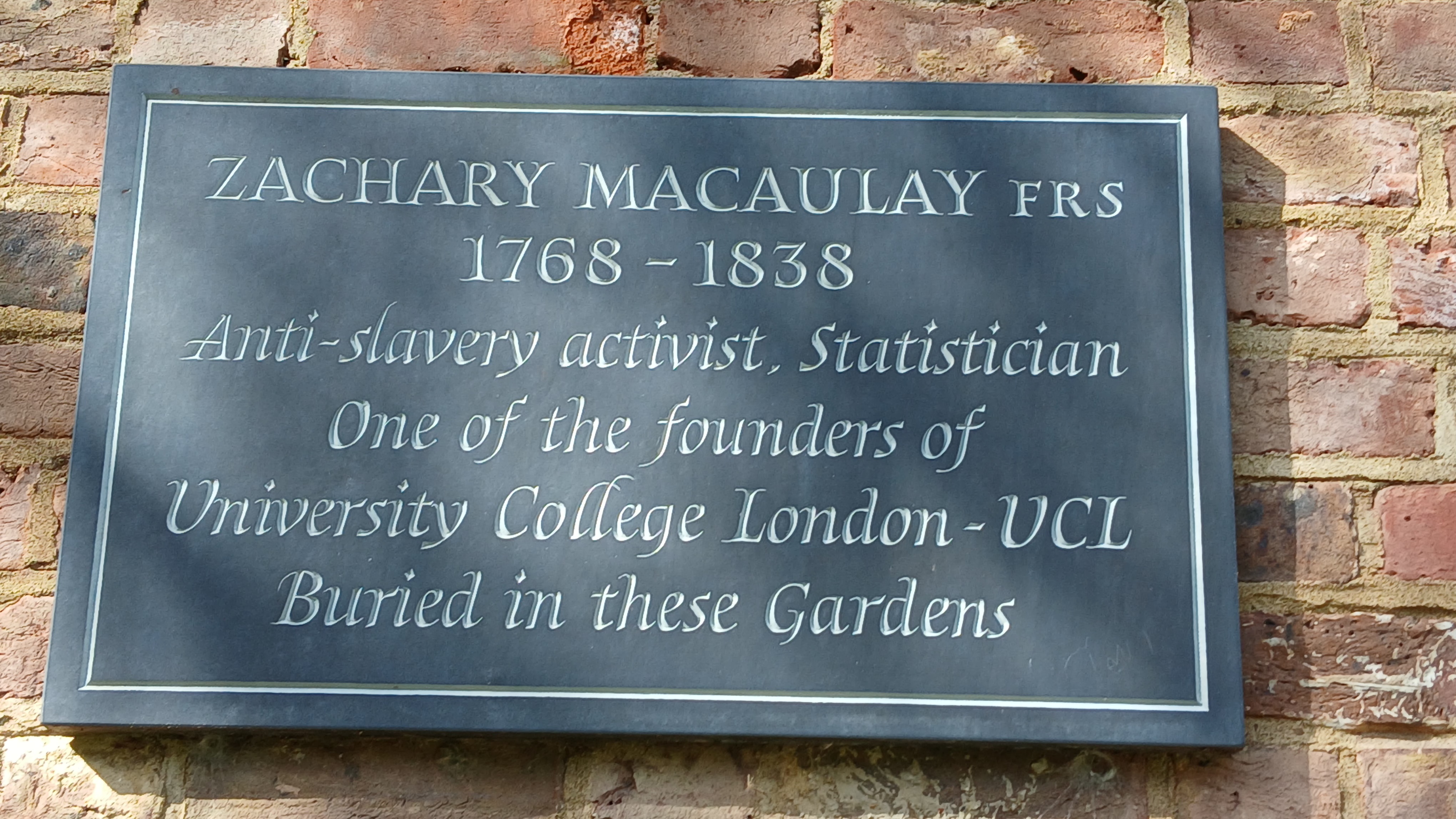
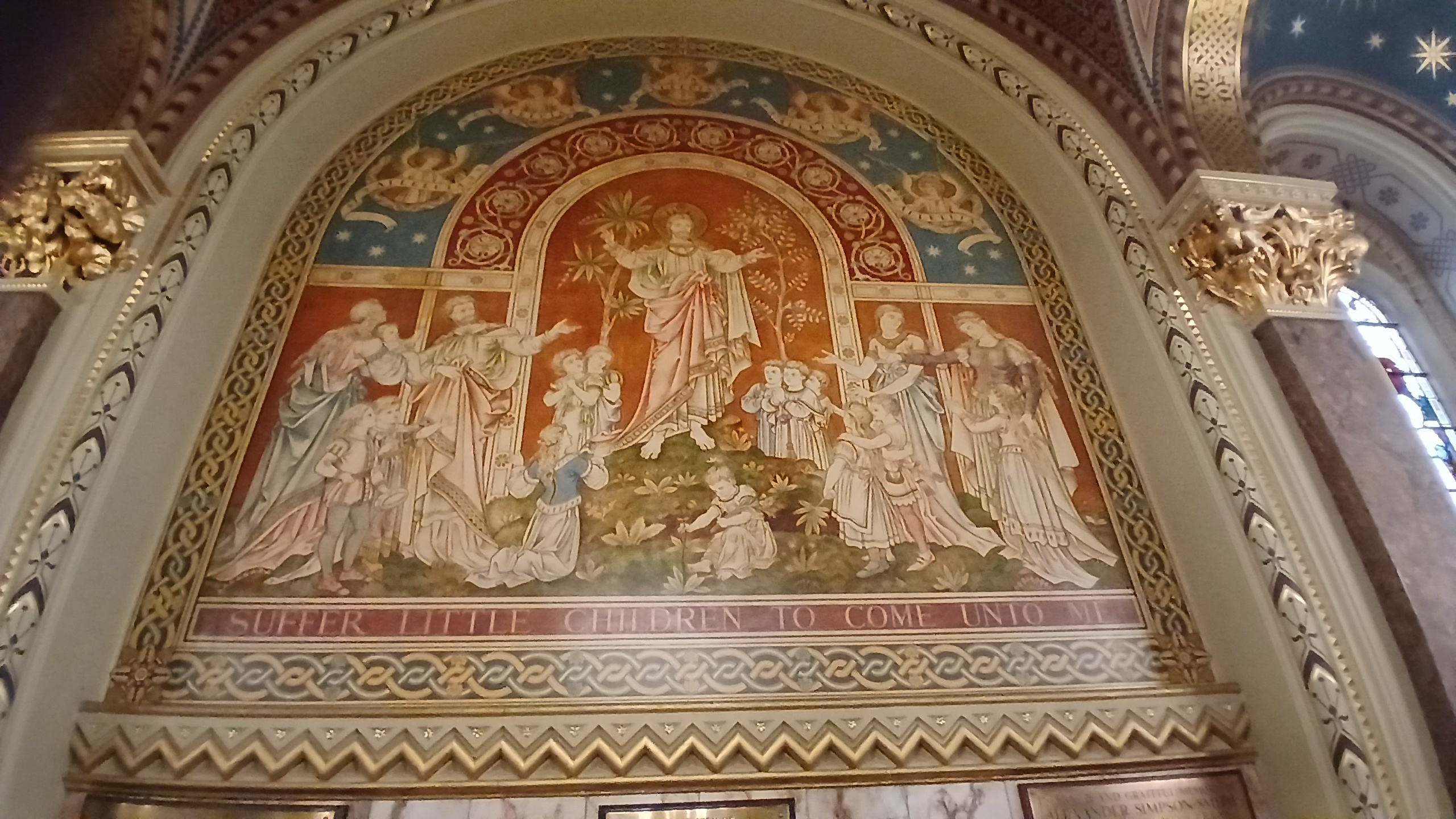
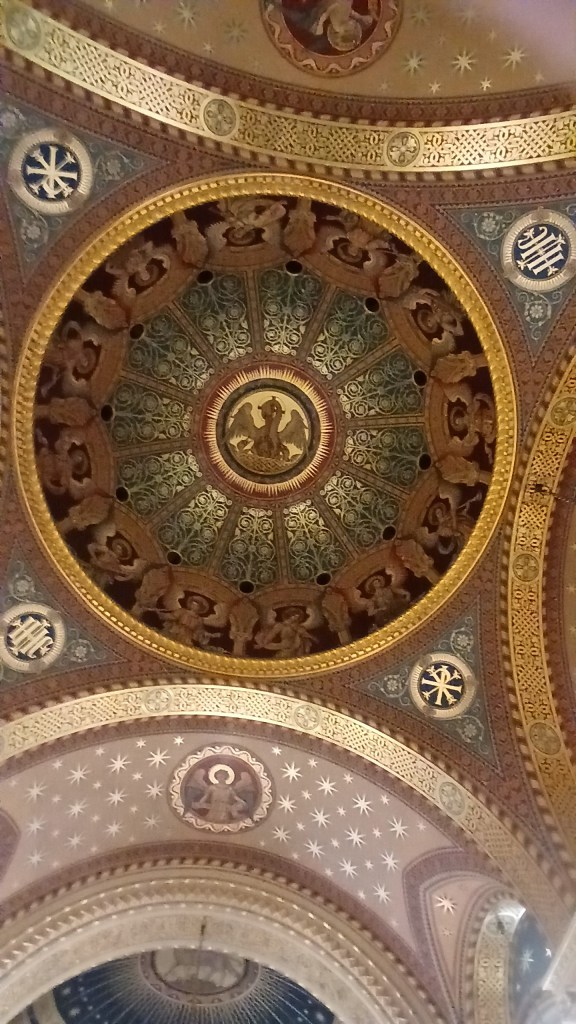
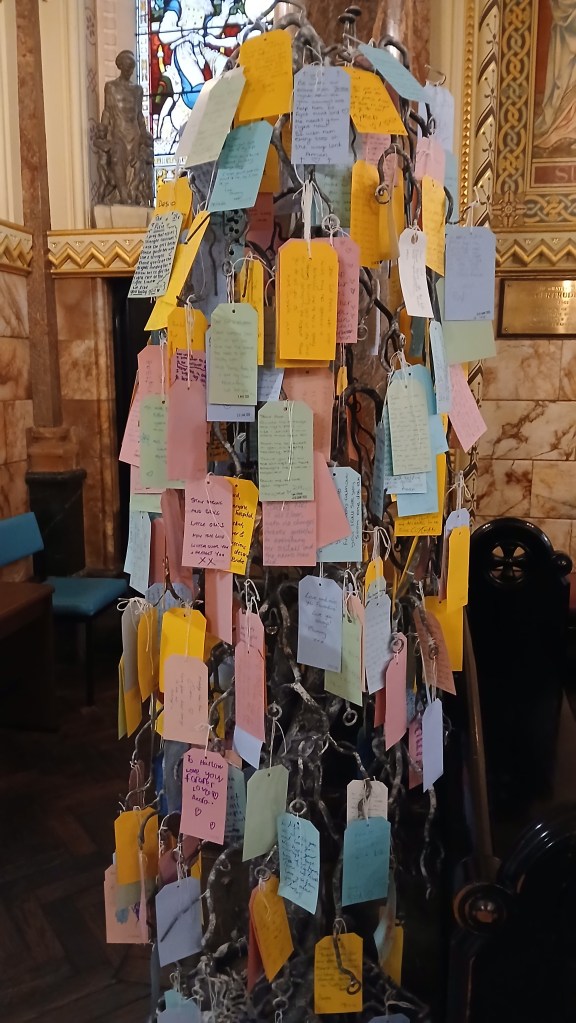
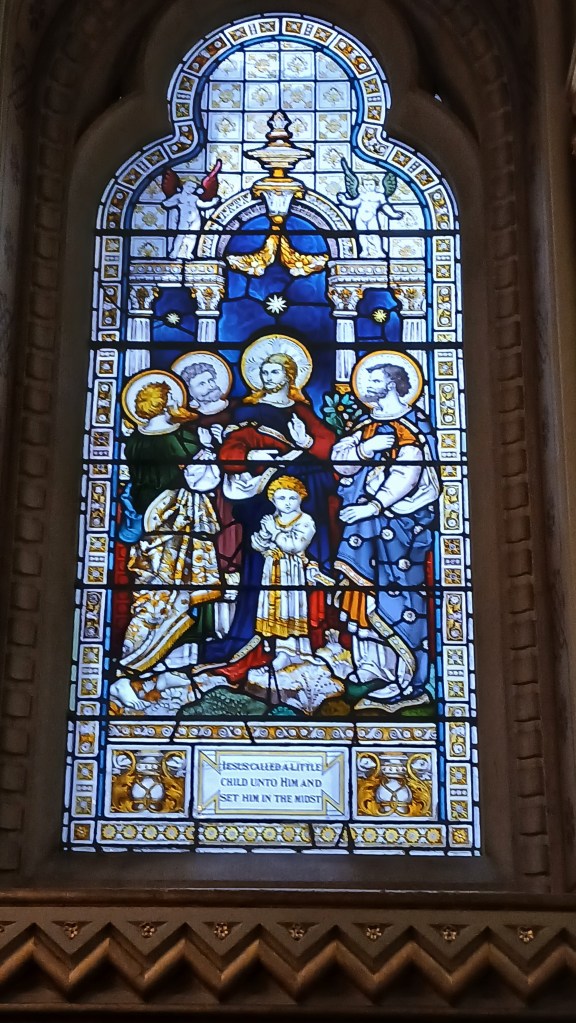
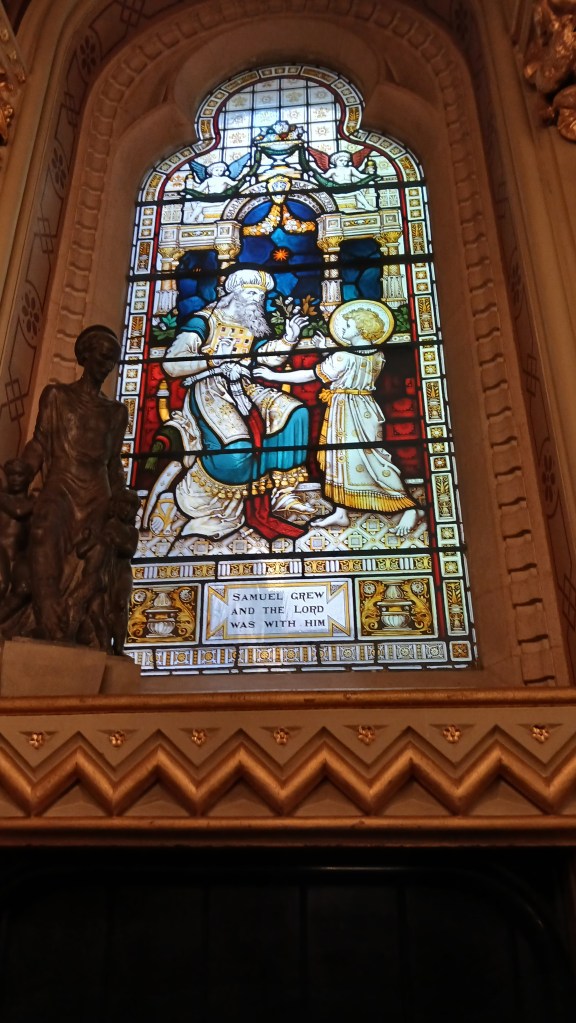
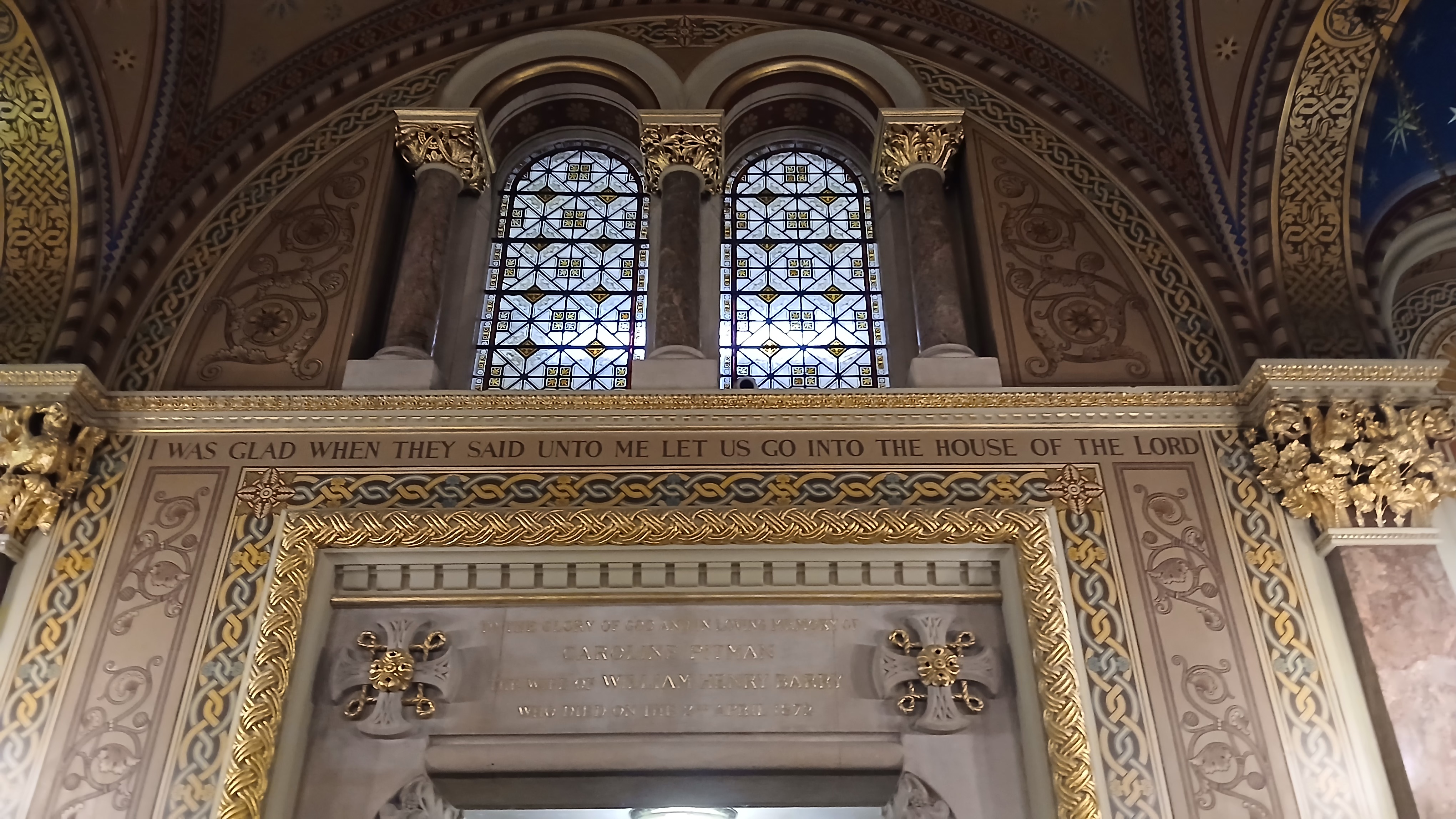
And lastly, this exquisite little chapel at the world famous GOSH. The original hospital was built between 1871 and 1876 and the chapel was completed in 1875. It was designed by Edward Barry who donated his work to the hospital in memory of one of his children who died in infancy. When the old hospital was demolished in the 1980s could not be pulled down due to its Grade ll listing. Instead the whole chapel was moved to its new site, GOSH’s new Variety Club Building, by encasing it in a huge waterproof box and using hydraulic rollers to transport it. All the furniture, fittings and the stained glass windows were removed prior to relocation of the chapel. Six years after it was moved, following extensive renovation the chapel was reopened on 14th February 1994 by Diana, Princess of Wales. The chapel is designed in the Franco-Italianate style and influenced by Renaissance Revival. Some of the stained-glass windows depict Bible stories relating to children: Jesus welcoming the children and the boy Samuel with Eli the Priest. I particularly liked the Prayer Tree which was commissioned to celebrate the chapel’s 140th anniversary. The chaplaincy team offers pastoral support regardless of religious belief and the chapel hosts daily prayers. It offers a quiet place for reflection and prayer for families and houses the poignant but beautiful Book of Remembrance.
Another four cosy church cafes visited in February, this time to escape the torrential rain rather than the cold! Walking from Victoria Station to the last two cafes, I passed at least 25 other cafes, restaurants and coffee shops, both chains and independents, so it’s good to visit those located in or connected with churches – there’s a lot of competition for business in tourist areas.
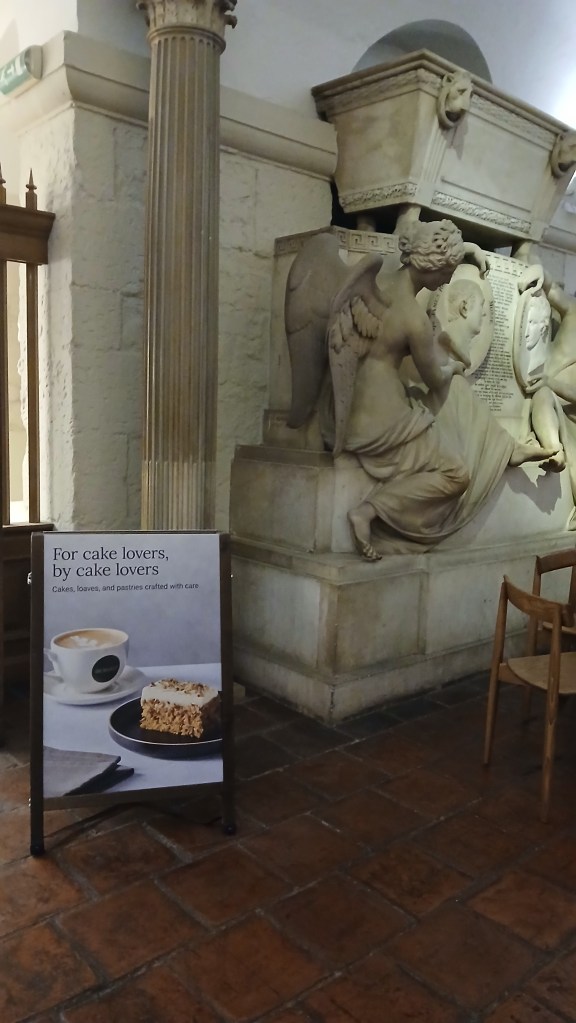
St Paul’s Crypt Café
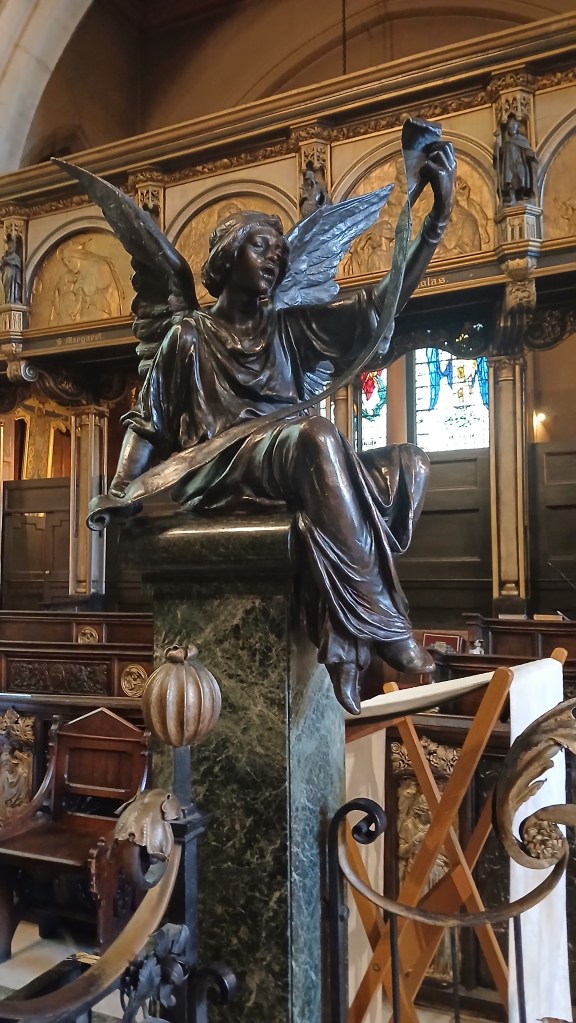
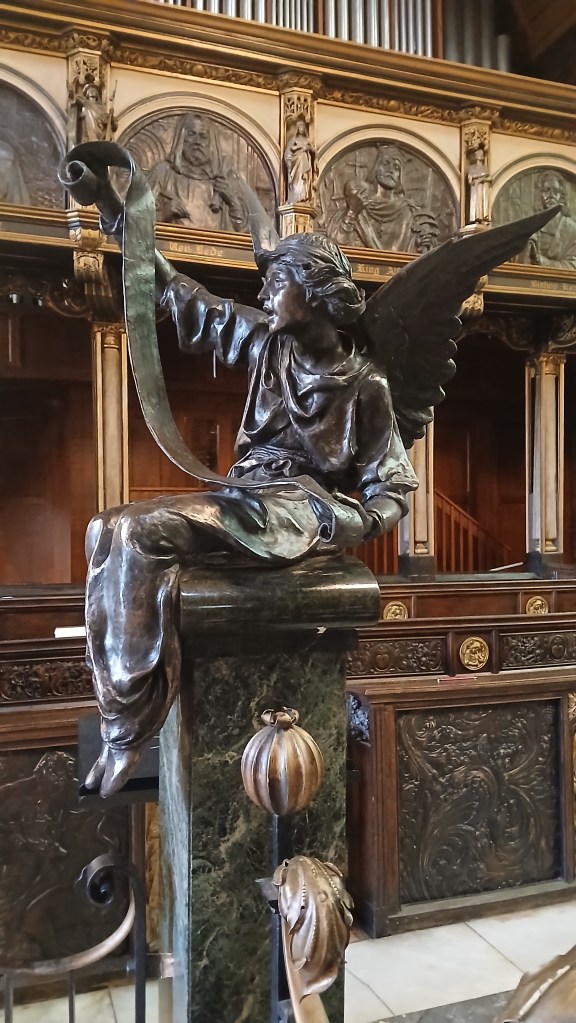
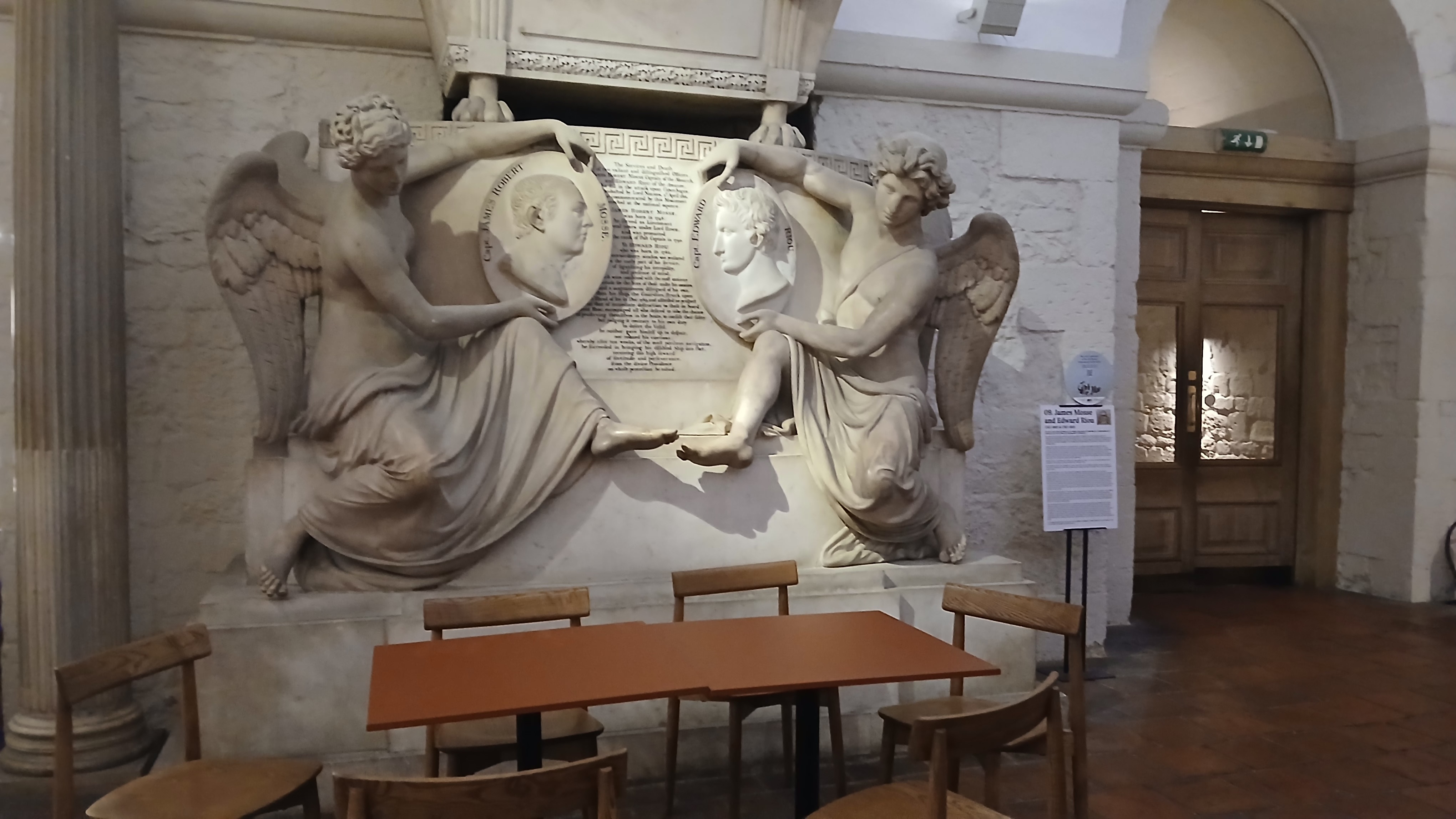
Angels cavorting on a dining table
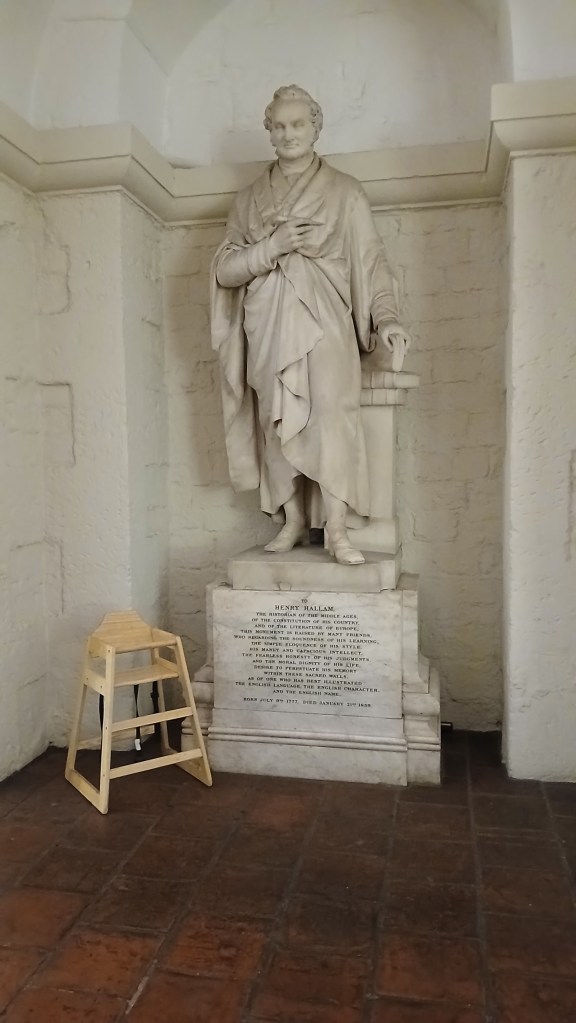
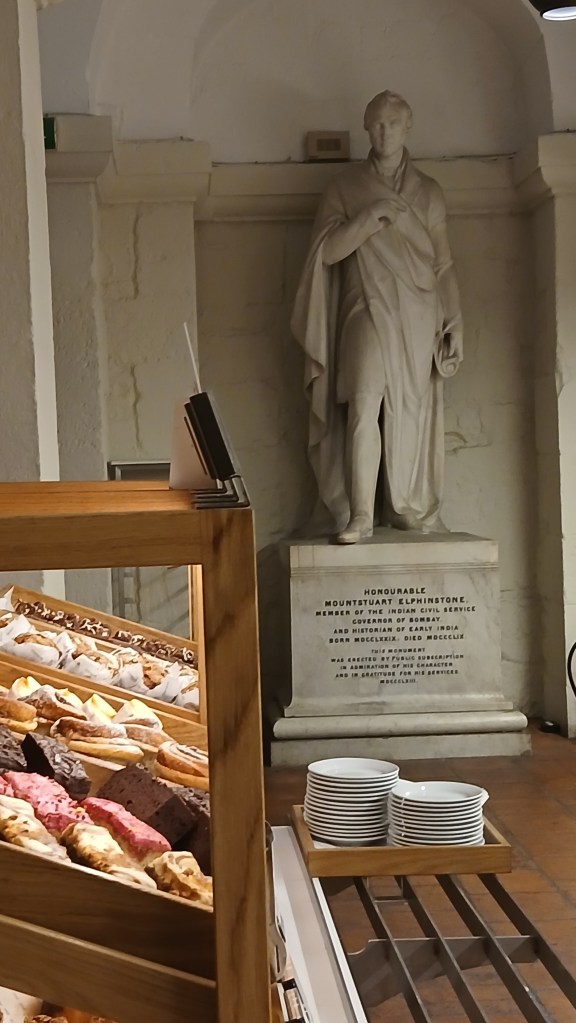
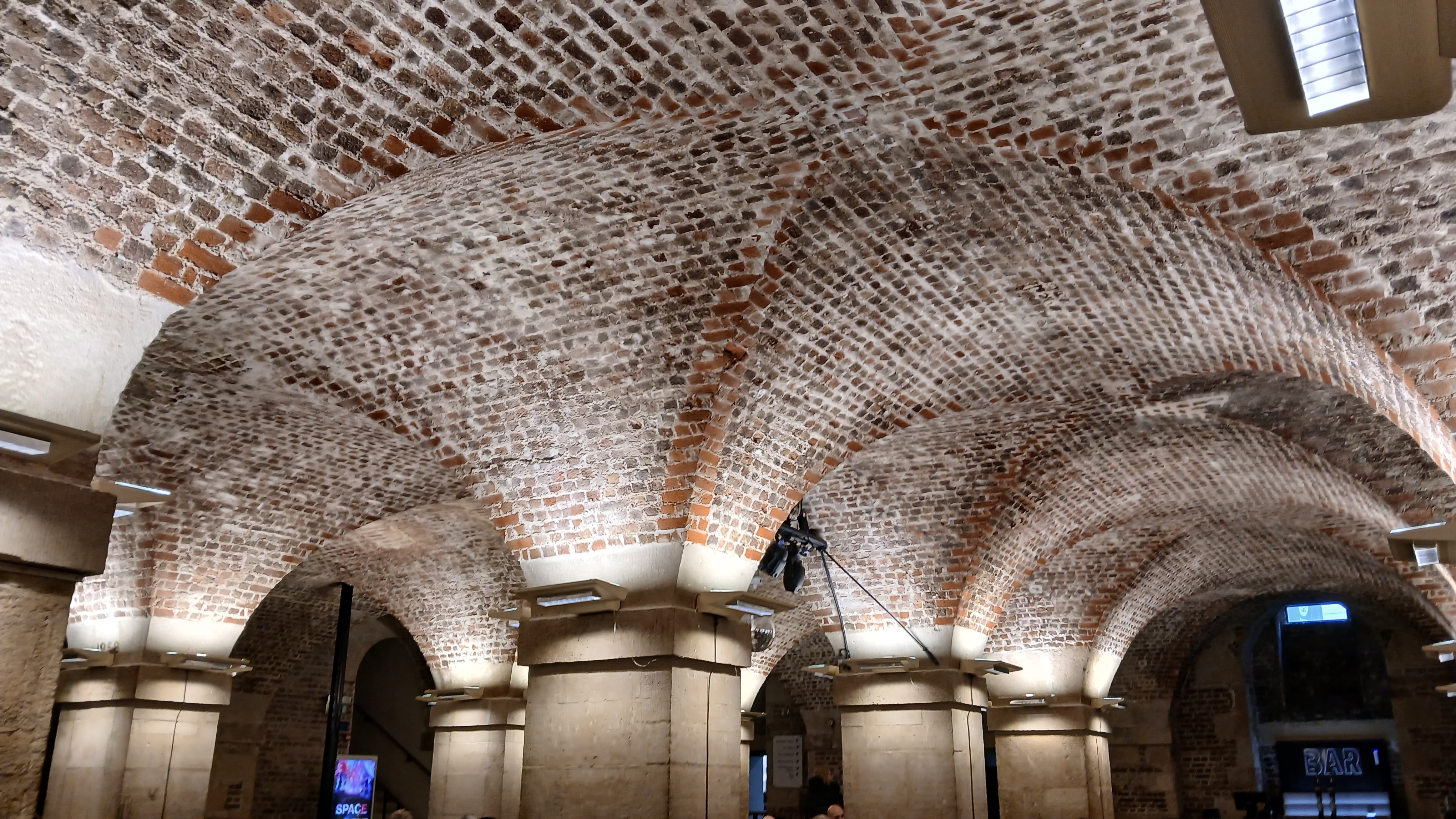
This café is situated beneath St Paul’s Cathedral, Sir Christopher Wren’s 17th century masterpiece which replaced the former church destroyed in the Great Fire. The crypt is the largest in Europe and in addition to the café it houses the Cathedral shop and a large seating area for school groups. The café and shop can be accessed from the North Crypt door so customers don’t need to pay to go into the Cathedral itself (although of course the Cathedral is a must-visit.) Going down to the crypt is an interesting experience on its own, with statues and monuments in situ occupying the alcoves and walls, providing an atmospheric space to sip your cup of coffee. The café serves hot and cold snacks and light lunches as well as all the beverages. I didn’t have any food this time but I’ll probably pop back when next visiting this part of the city. Note: the highchair in the second picture really was exactly in that position!
St Martin-in-the-Fields, Café in the Crypt
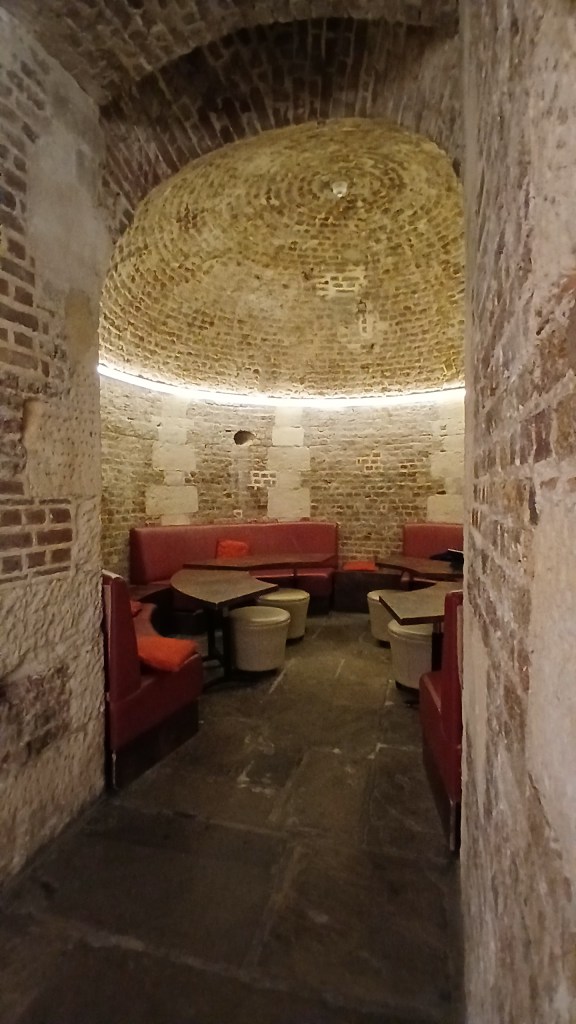
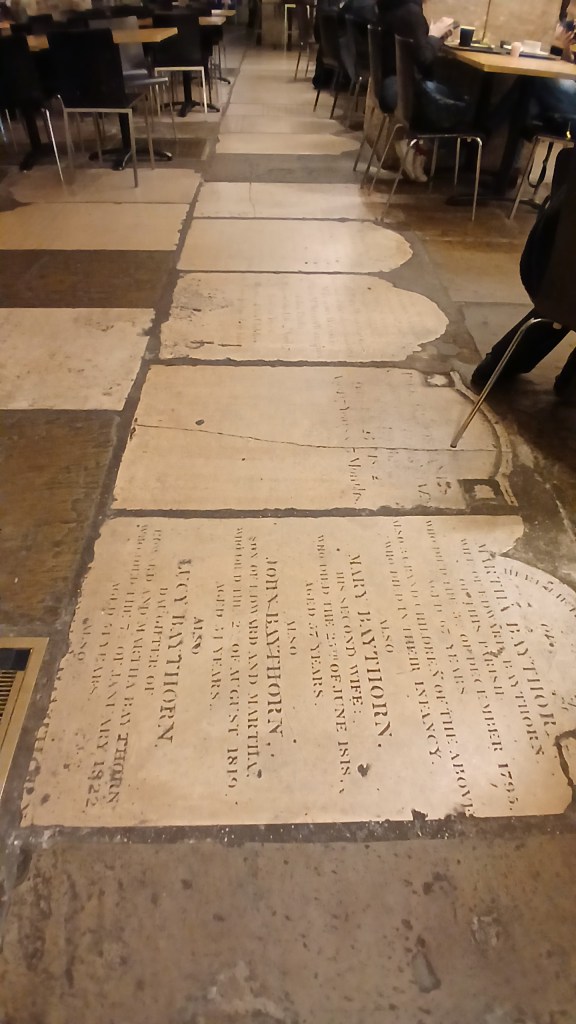
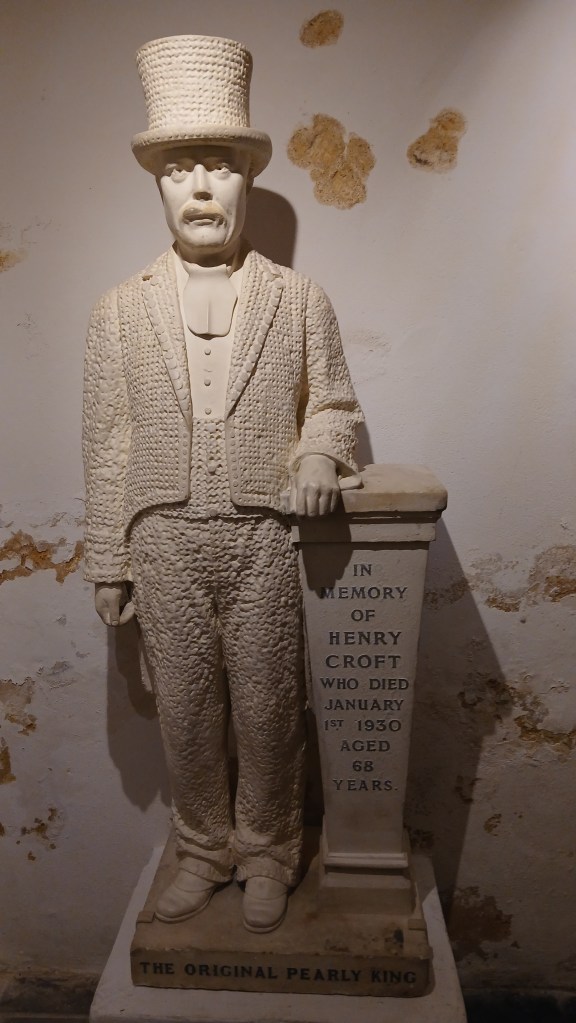
The Café in the Crypt below St Martin is a long-established and very popular eating place, just off Trafalgar Square. A circular lift inside a spiral staircase takes you down to the crypt with its shop, brass rubbing centre and the café with its vaulted brick ceilings. The café has secluded alcoves and historic tombstones right under your feet, dating back to when the crypt was a place of burial. It serves substantial breakfasts and lunches and snacks. I thought a freshly brewed flat white and an almond croissant for £6 was exceptional value for this part of London. If I’d wanted a more substantial meal, there was lots of choice, including fish and chips, macaroni and broccoli cheese, and chicken tikka. Also available are hot and cold puddings and fruit. also in the crypt is the Gallery, displaying artwork and monuments from the church above, and this intriguing statue of London’s first Pearly King.
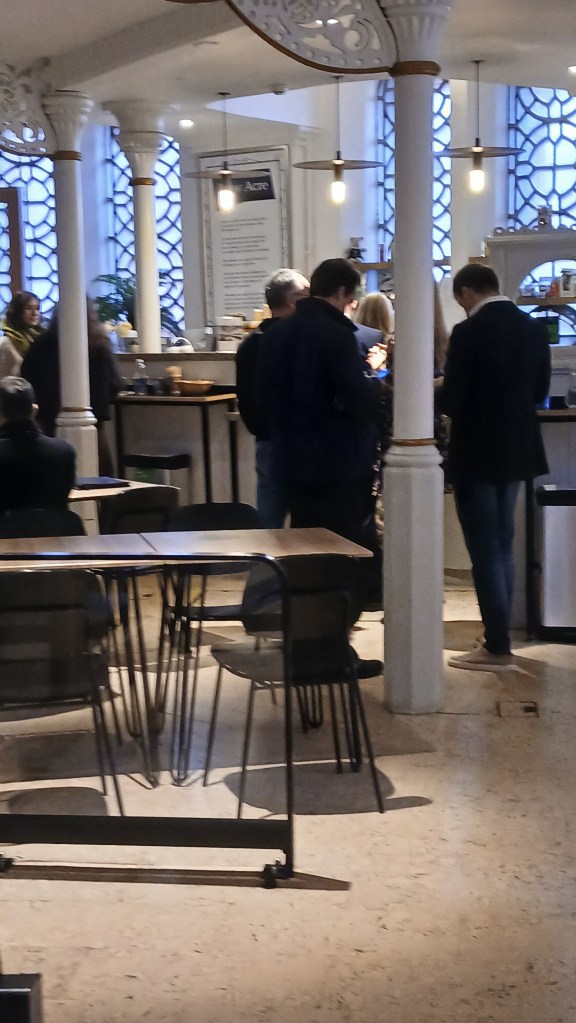
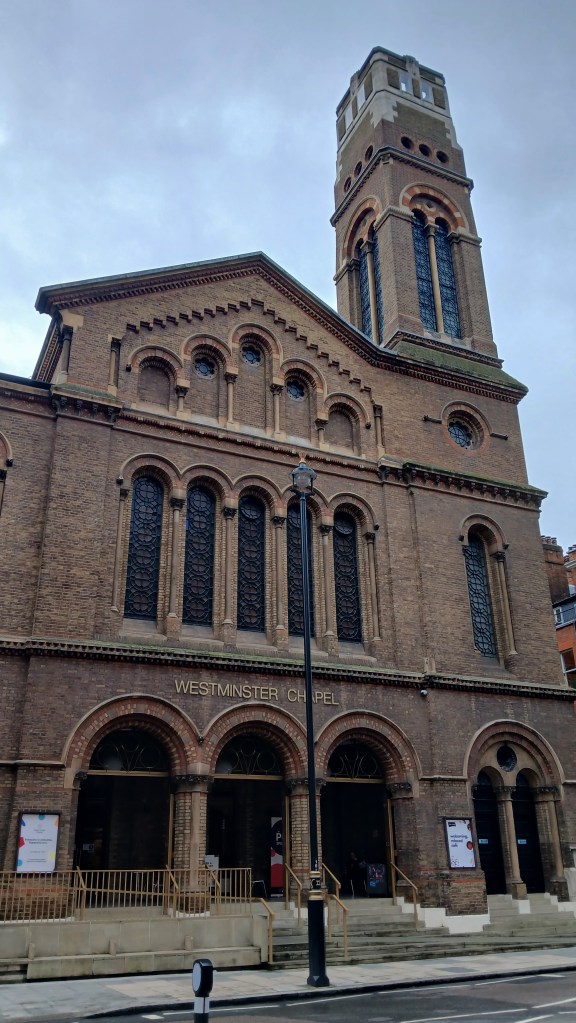
New Acre Café, Westminster Chapel
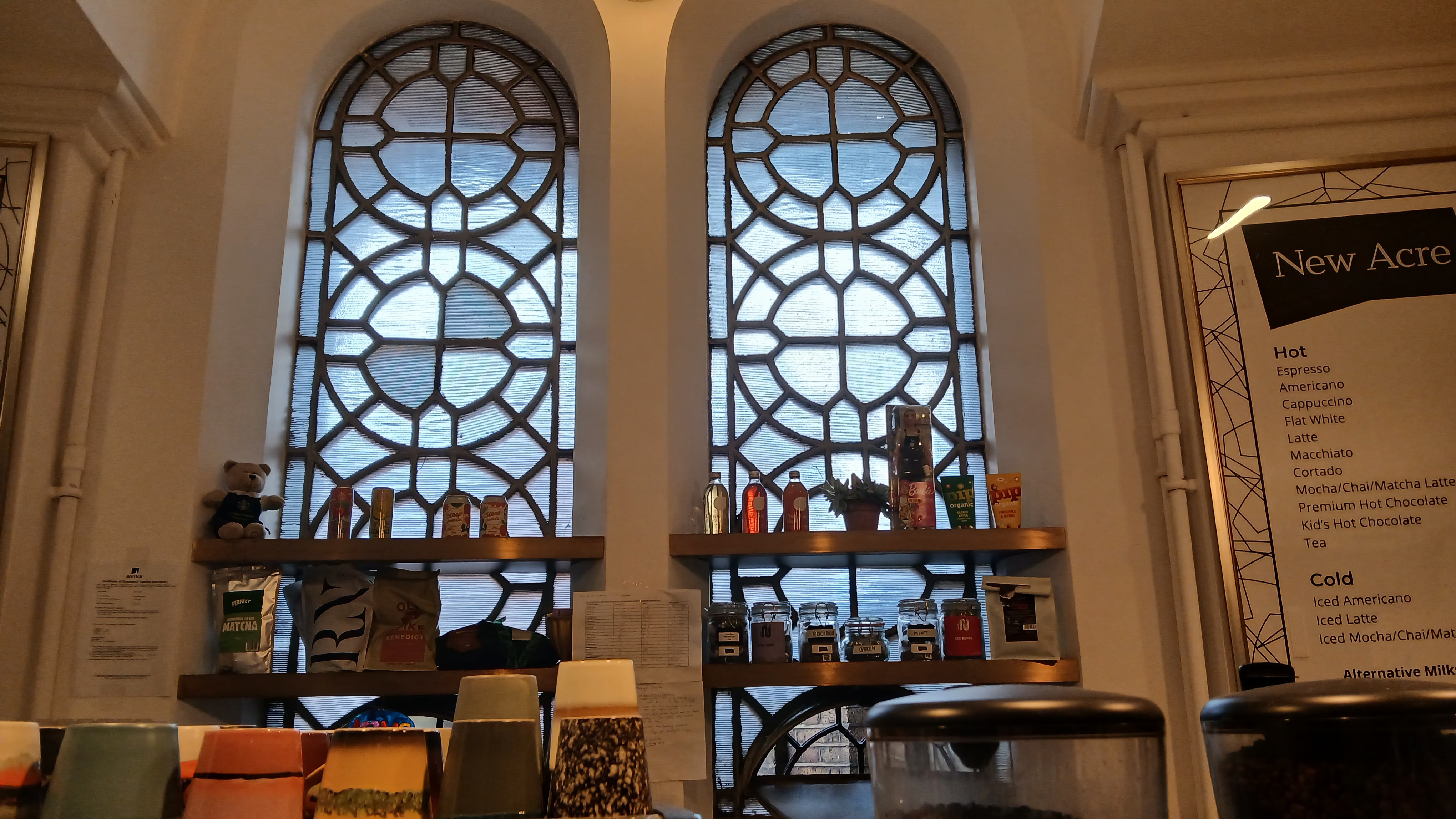
I visited this café last year when it was closed for a private function. This time there was a conference in the hall but the café was open so I had a latte and chatted to barista Darina, who told me about Church House Café (below.) I’ll repeat here what I wrote about New Acre’s interesting history last year: The area around Westminster Chapel was named ‘The Devil’s Acre’ by Charles Dickens in the 1800s, being a place of crime and extreme poverty. The Chapel established schools, alms-houses for the poor and work schemes for the unemployed, and Dickens was impressed by the way the Christians devoted their lives to the care of the inhabitants of the Devil’s Acre. The café was named New Acre ‘to remind us of the reason that God has put us here today.’ The profits from sales of the coffee sold here, Old Spike Benedict Blend, go directly to support people experiencing homelessness.
Sources: westminsterchapel.org.uk; notice in café
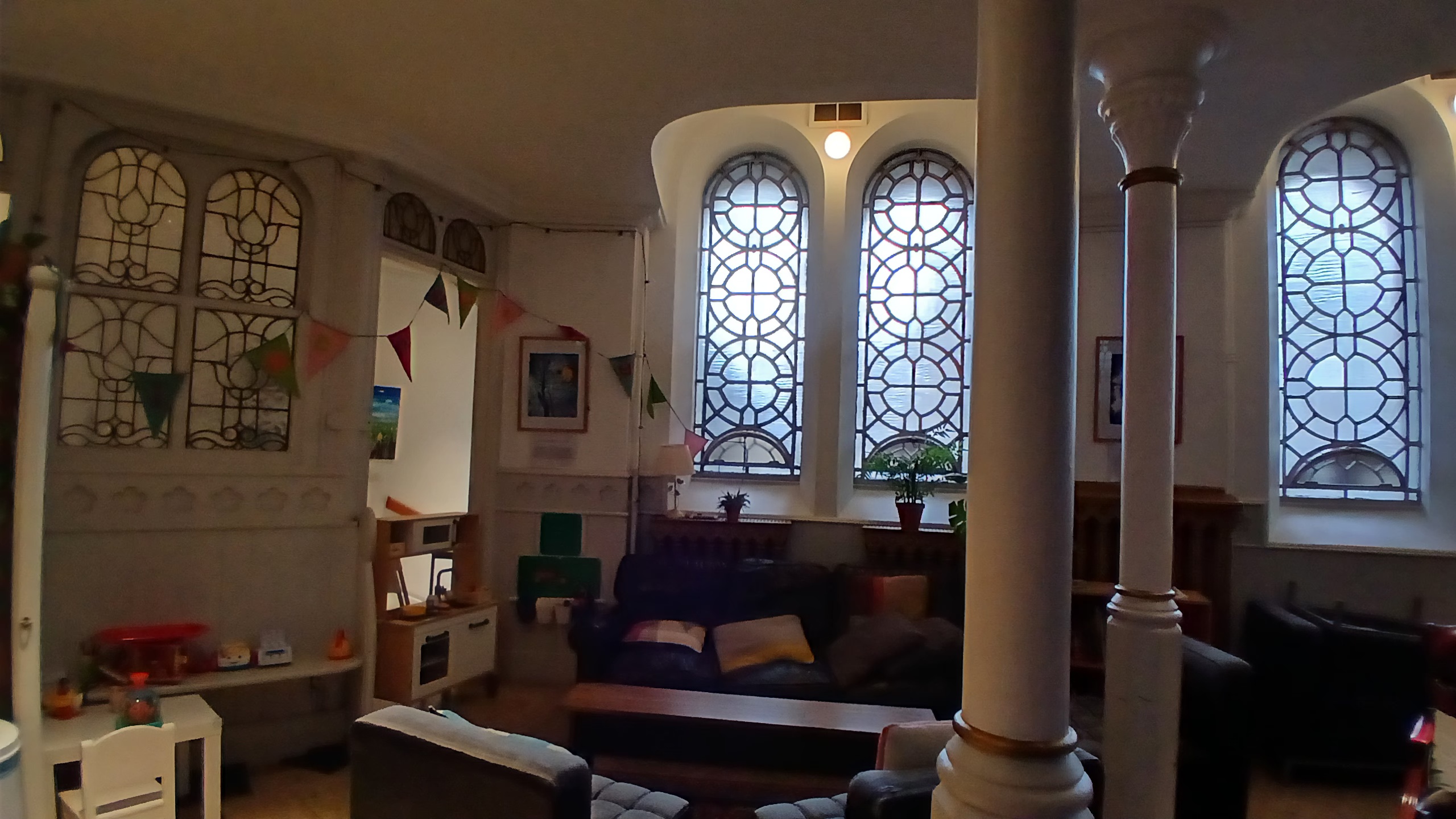
Comfy seating area with beautiful windows
Coffee break
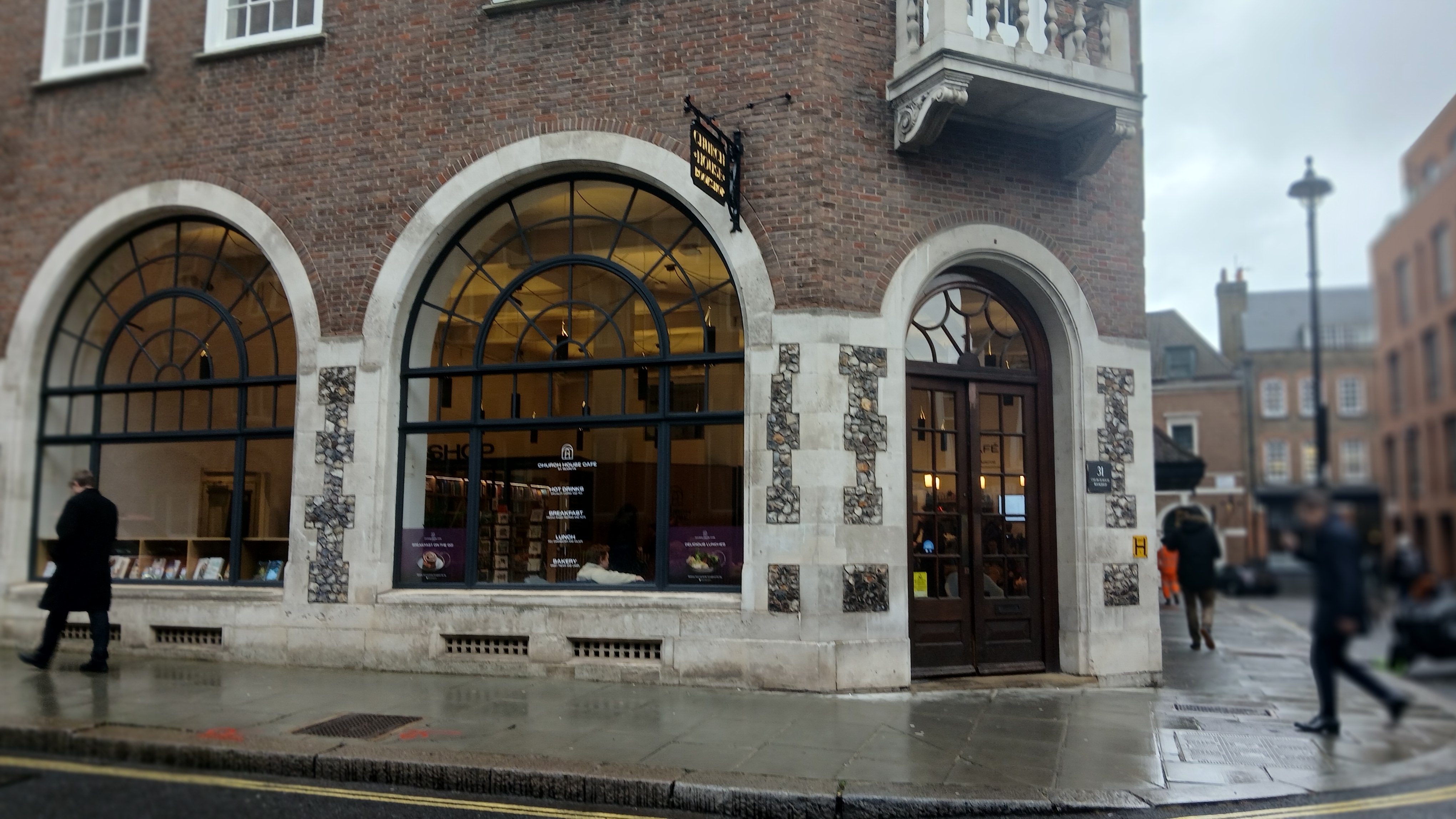
Church House Café
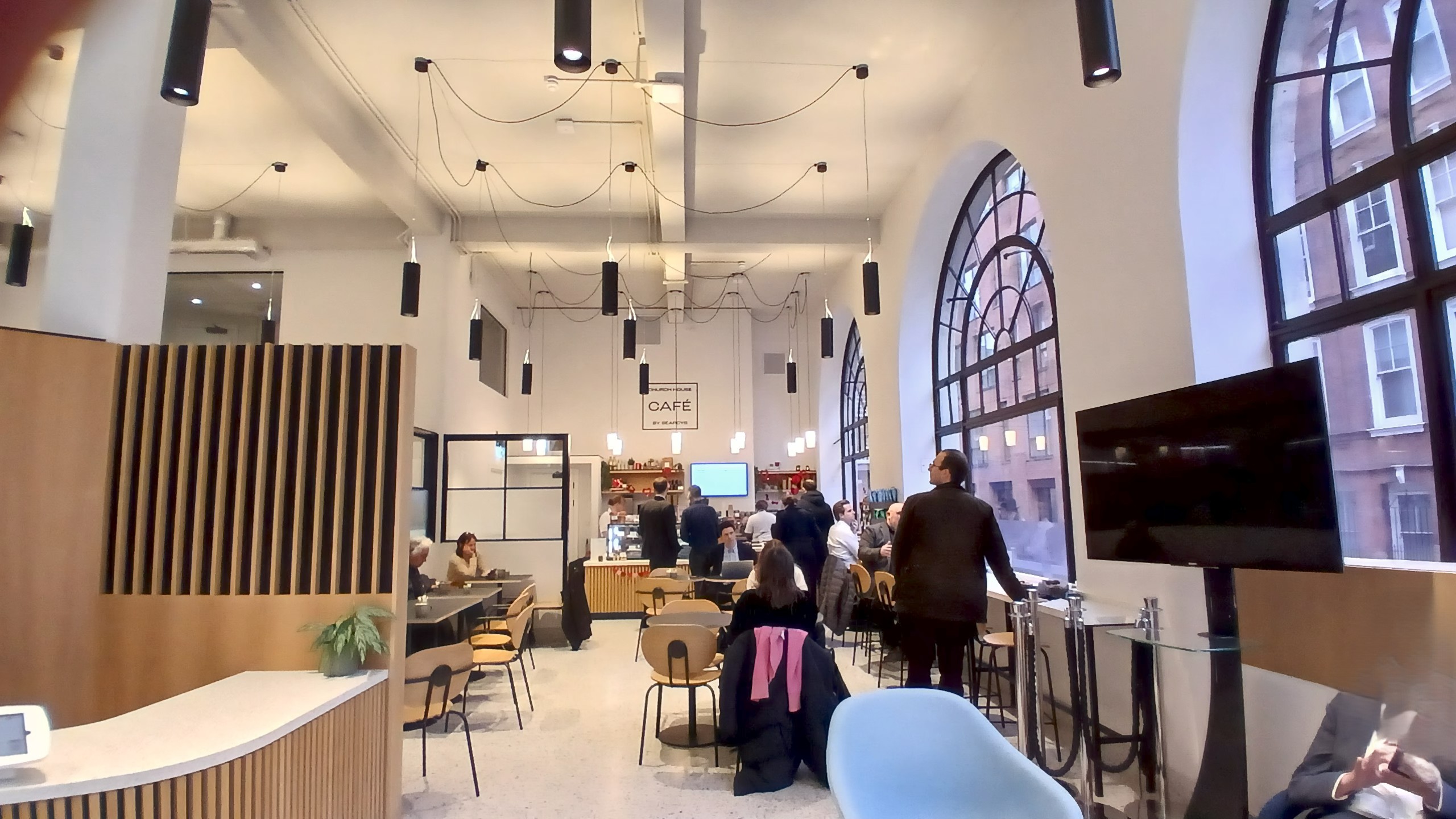
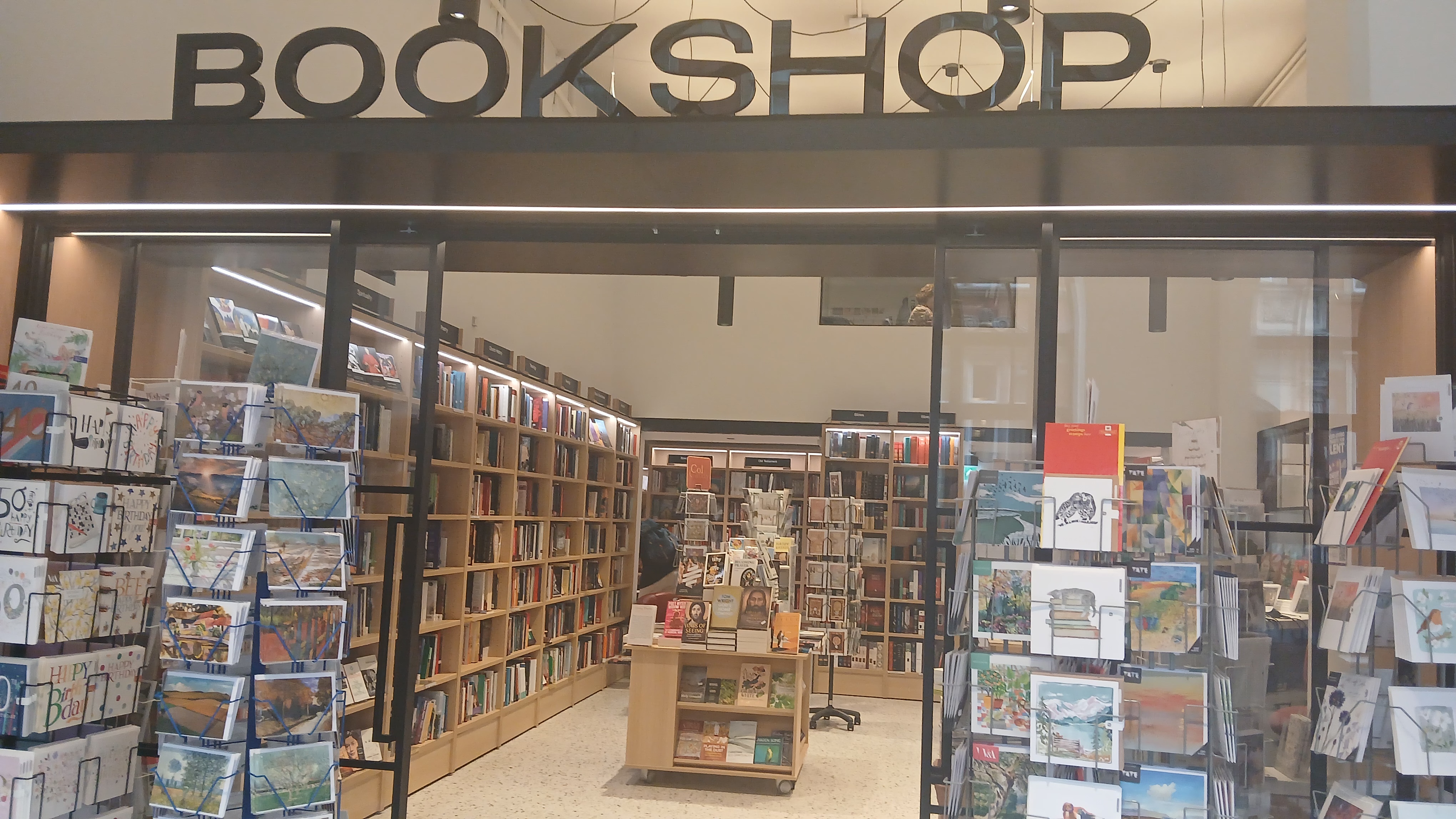
Café and Bookshop: a welcome respite from the rain
Church House, Westminster is a historic Grade ll listed building located close to Westminster Abbey which today hosts conferences, awards ceremonies and gala dinners in its 19 halls and meeting rooms. In the Second World War the then Prime Minister Winston Churchill relocated the two Houses of Parliament to Church House because of the building’s exceptionally robust construction. The café and bookshop occupy a small part of the building, with the café serving locally-produced coffee and speciality teas, breakfasts, lunches, homemade cakes and pastries. Arriving at lunchtime, I had to make the difficult choice between quiche of the day and a ham and cheese croissant. I’ll have to return and have the quiche another day! The well stocked bookshop is an added bonus with a particularly good selection of children’s books.
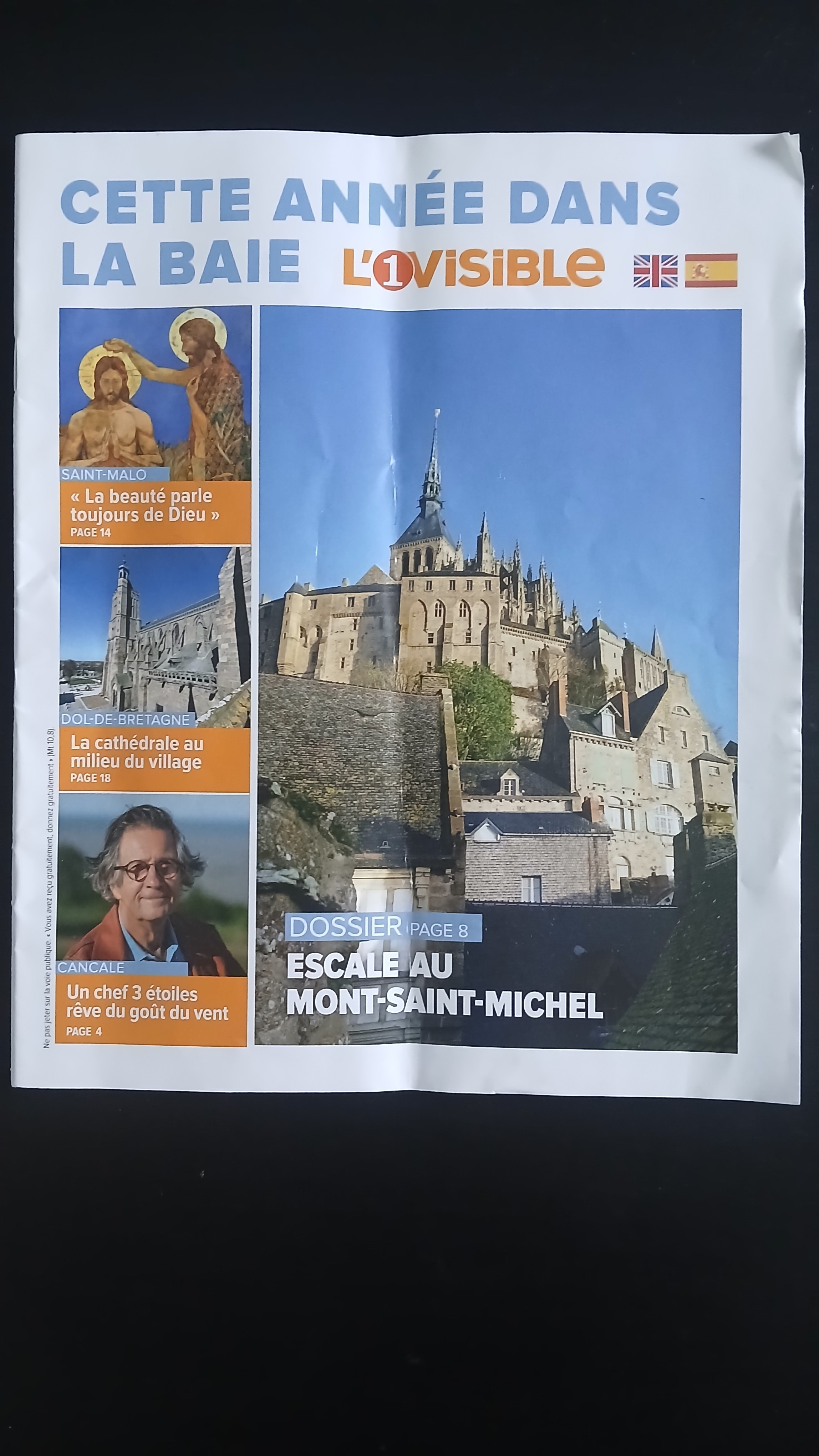
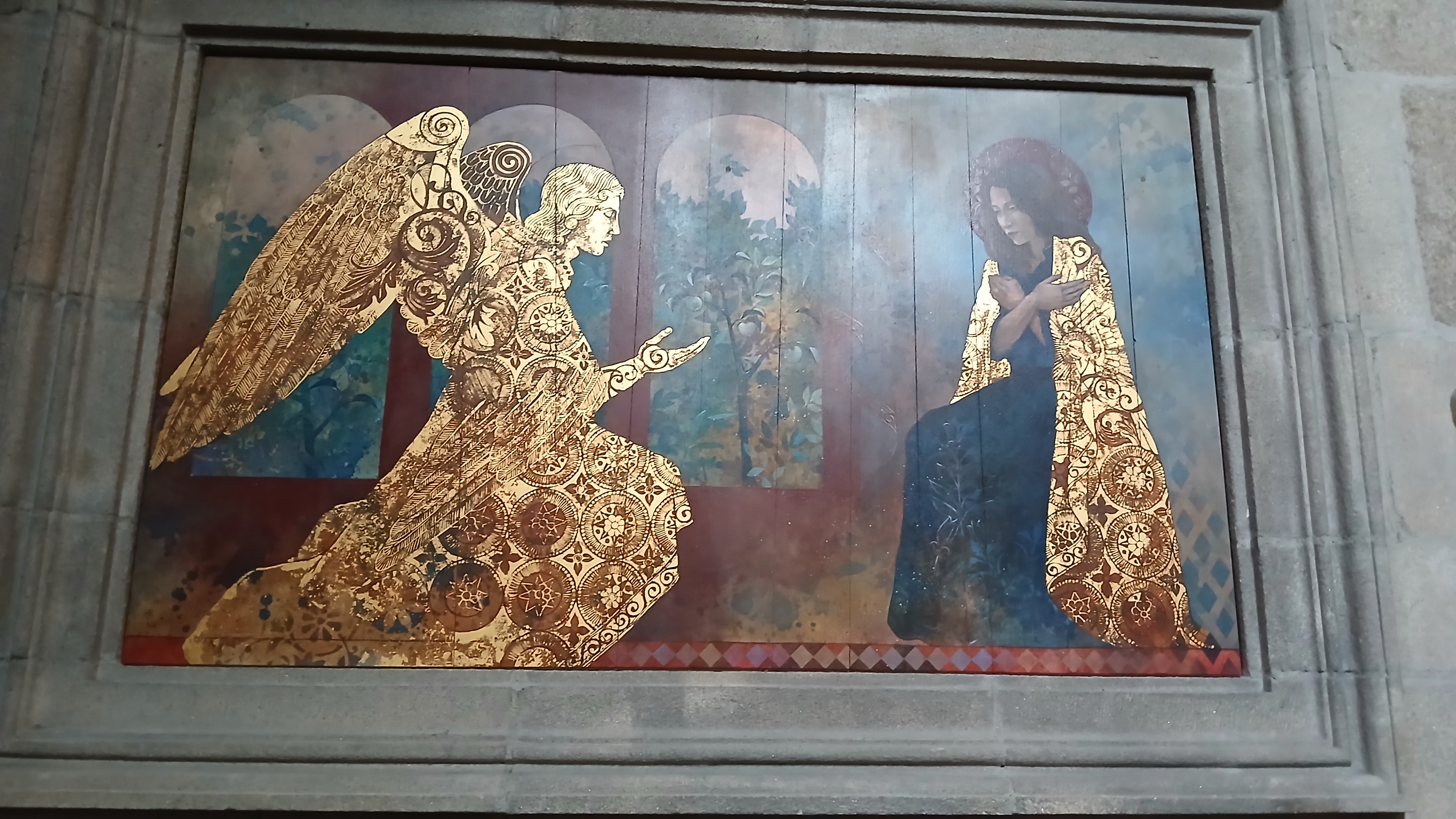
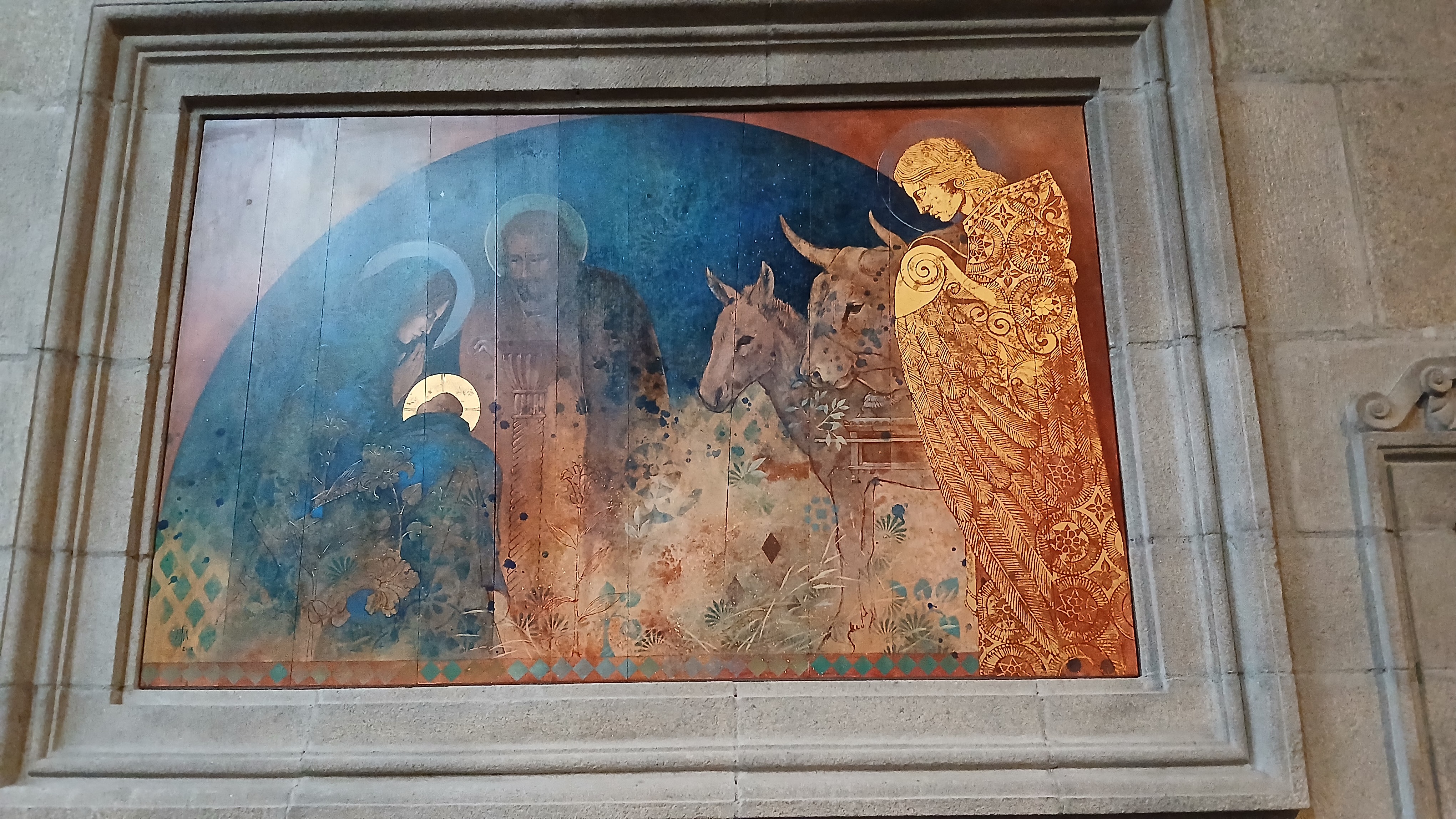
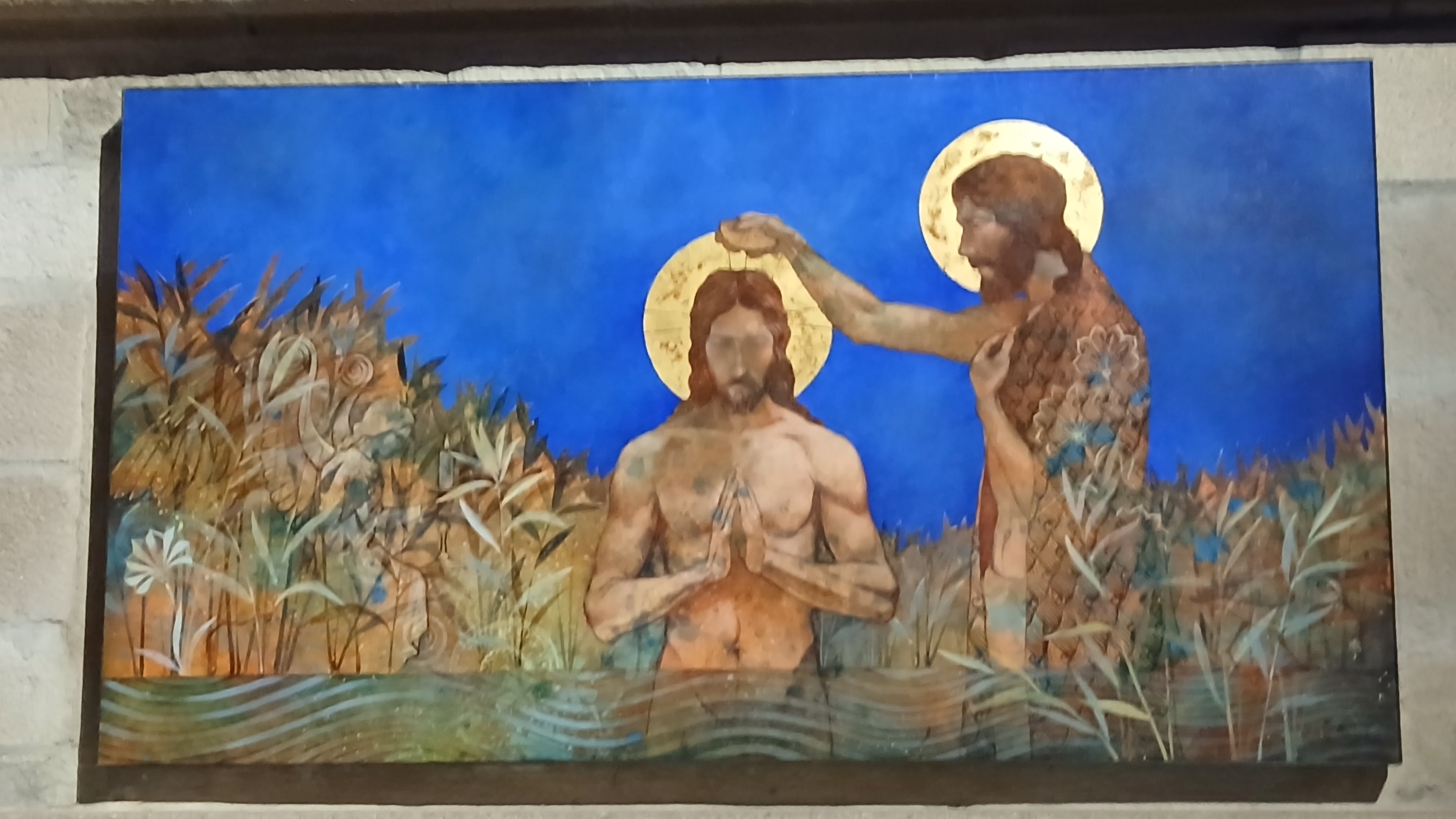
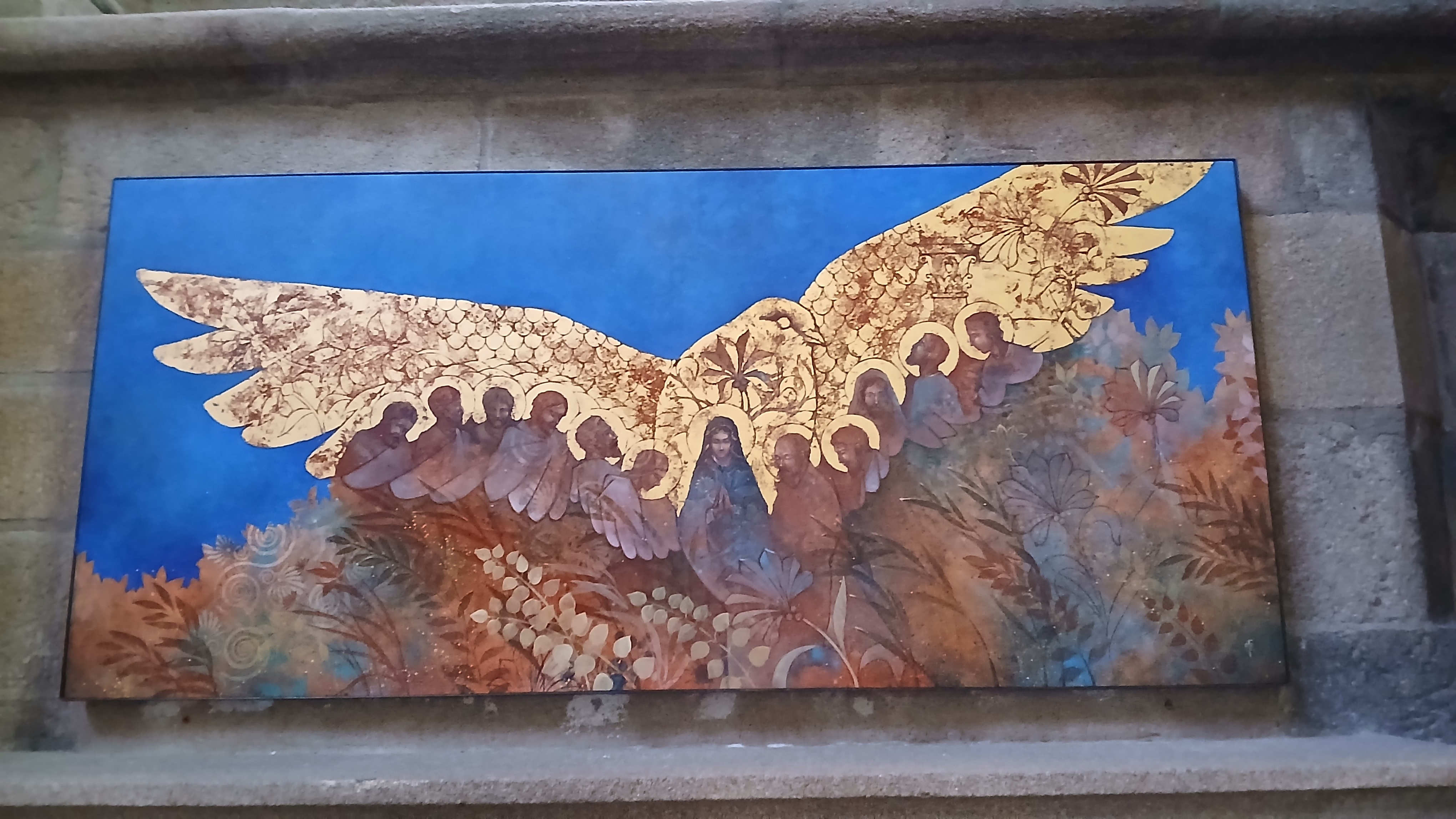
This is a brochure I picked up in the cathedral of St Malo in Brittany, Northern France. St Malo is a beautiful medieval walled city, and outside the city walls is the busy port and ferry terminal, a destination for both freight and tourists. The Cathedrale Saint Vincent-de-Saragosse was built in the 1150s/60s in the Romanesque and Gothic styles. When I visited last September there was a display of seven paintings by artist Augustine Frison-Roche, who explains ‘Beauty, whatever it may be, always speaks of God.’ The paintings depict the life of Jesus from the Annunciation and finishing with the Apocalypse. Here’s four of them; I particularly like the way the gold paint shone out in the low light of the cathedral interior.
Source: the above brochure, partly translated into English by me!
Visit of the Angel to Mary
The Nativity
Baptism of Jesus
I think this is Mary and the Disciples
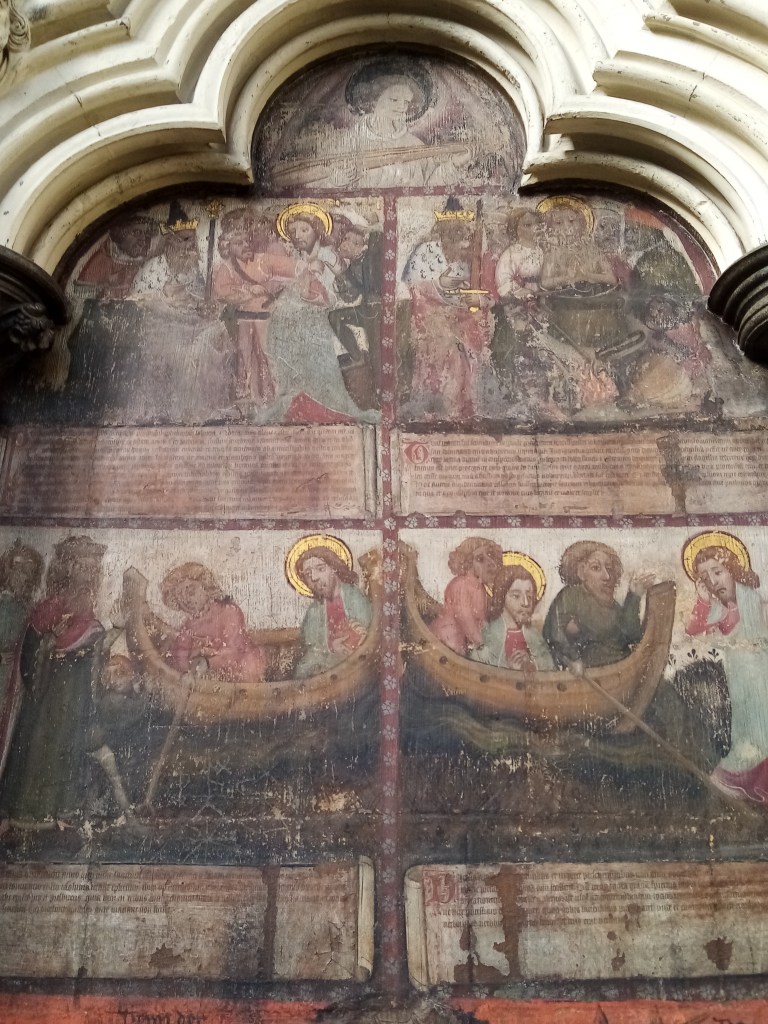
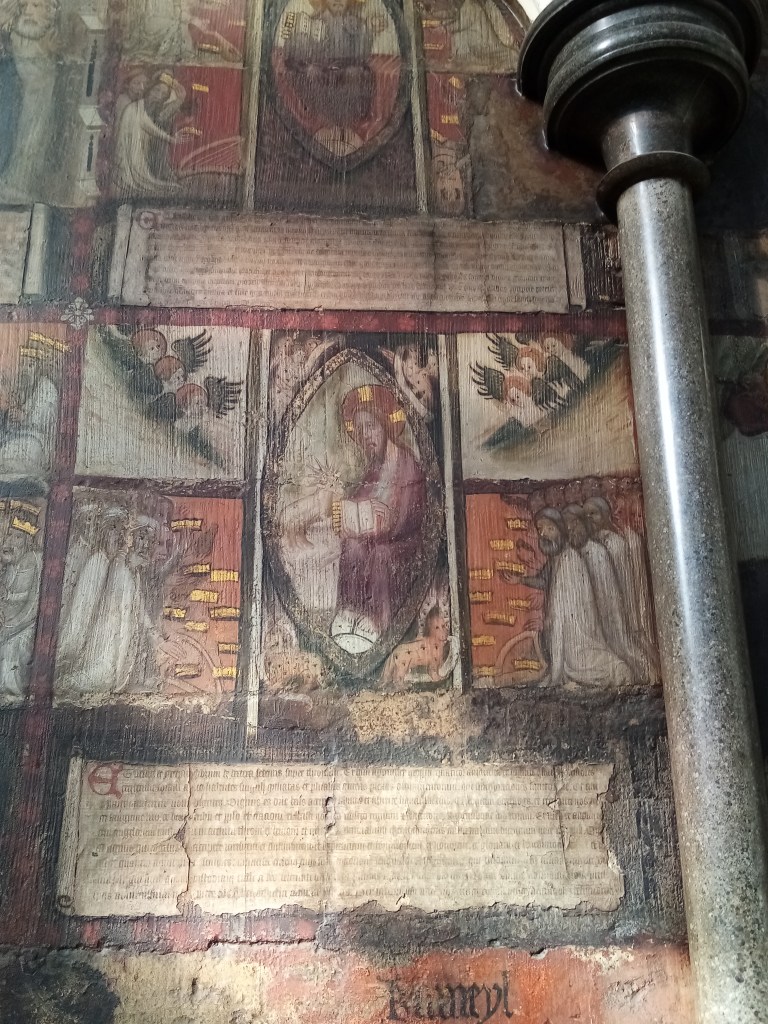
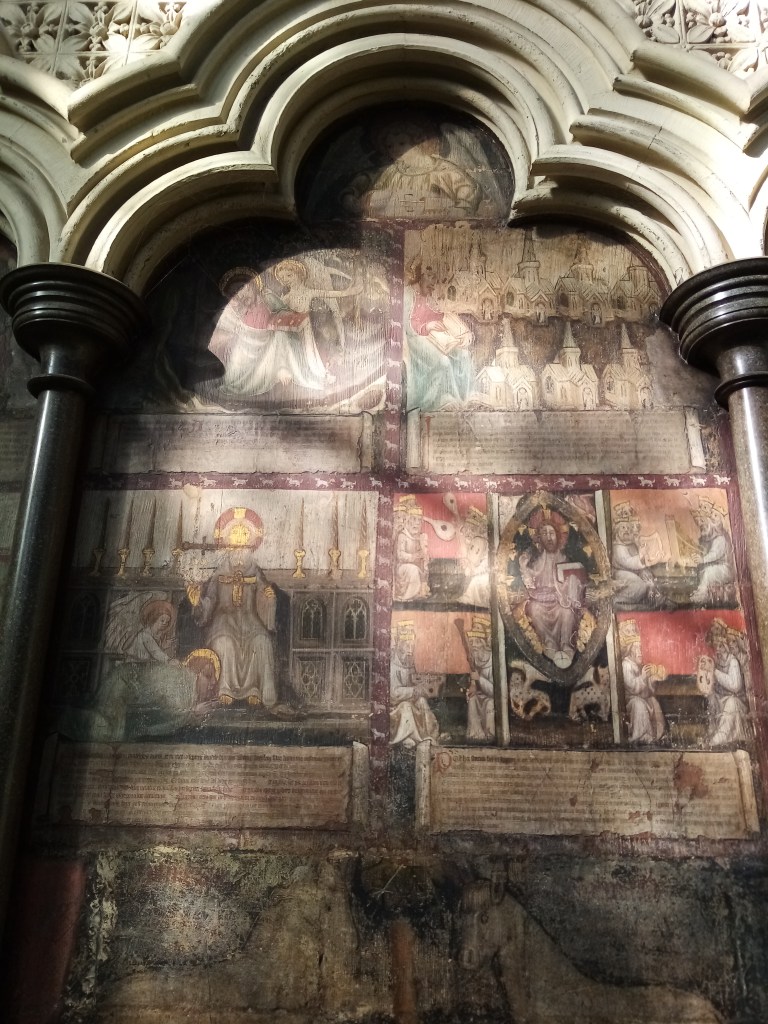
The Chapter House Wall Paintings, Westminster Abbey
Most of these wall paintings were painted in around 1400 in the ‘International Gothic Style.’ They were commissioned by one of the monks of Westminster Abbey and are remarkably well preserved considering alterations made to the Chapter House in the 16th and 19th centuries. The murals show scenes from the Apocalypse: visions from St John in the Book of Revelation and originally there were 96 painted around the octagonal room. The high quality artwork uses expensive pigments and glazes including gold and tin leaf.
Source: Information board in the Chapter House
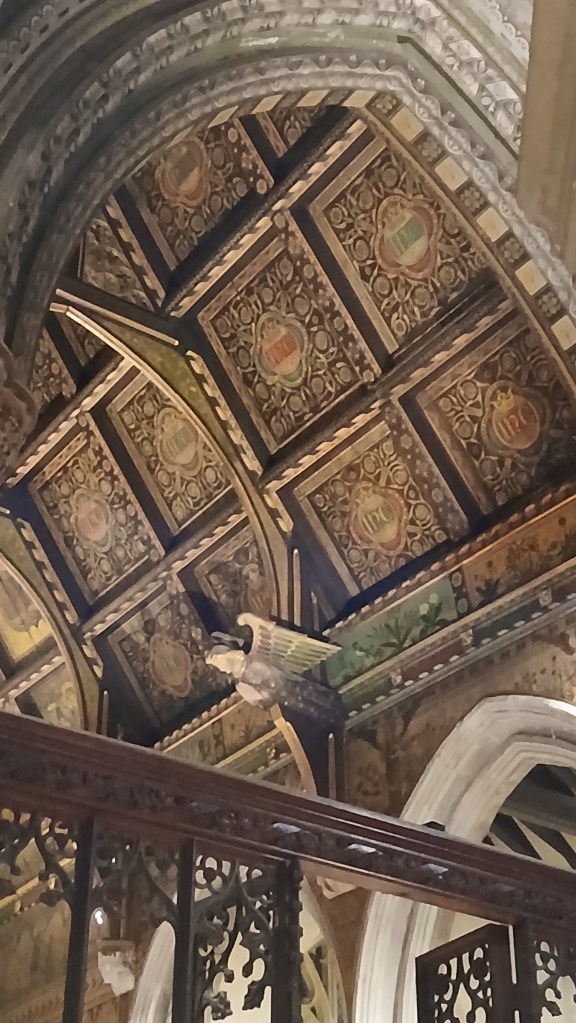
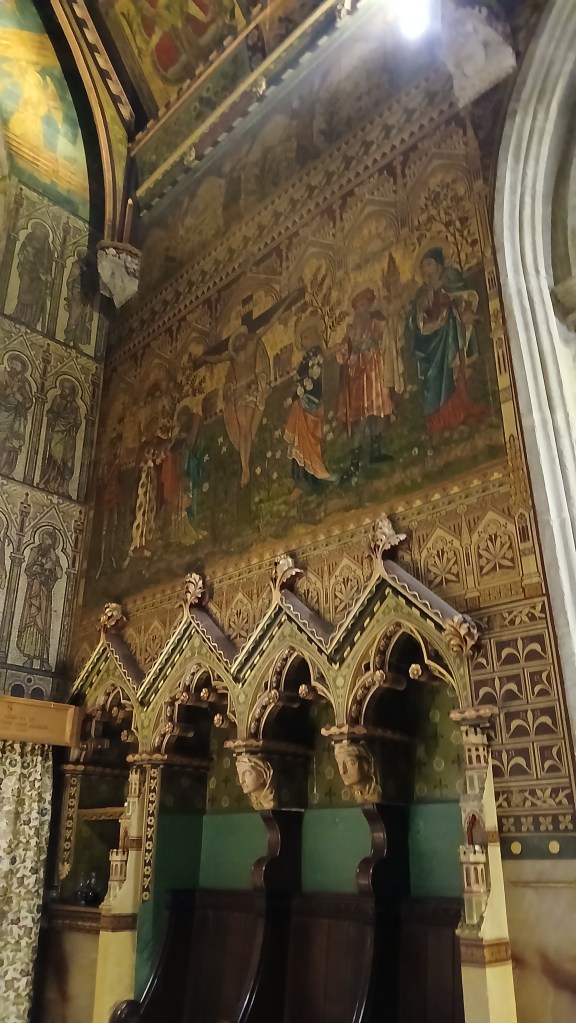
Four to finish: the first two are wall and ceiling paintings in St Mary the Virgin Church in Beddington. These look older than they actually are; they are in fact Victorian stencilled designs in the Arts and Crafts style, commissioned by Canon Bridges in 1868-69 as part of extensive church restorations.
Source: St Mary the Virgin Church Beddington website
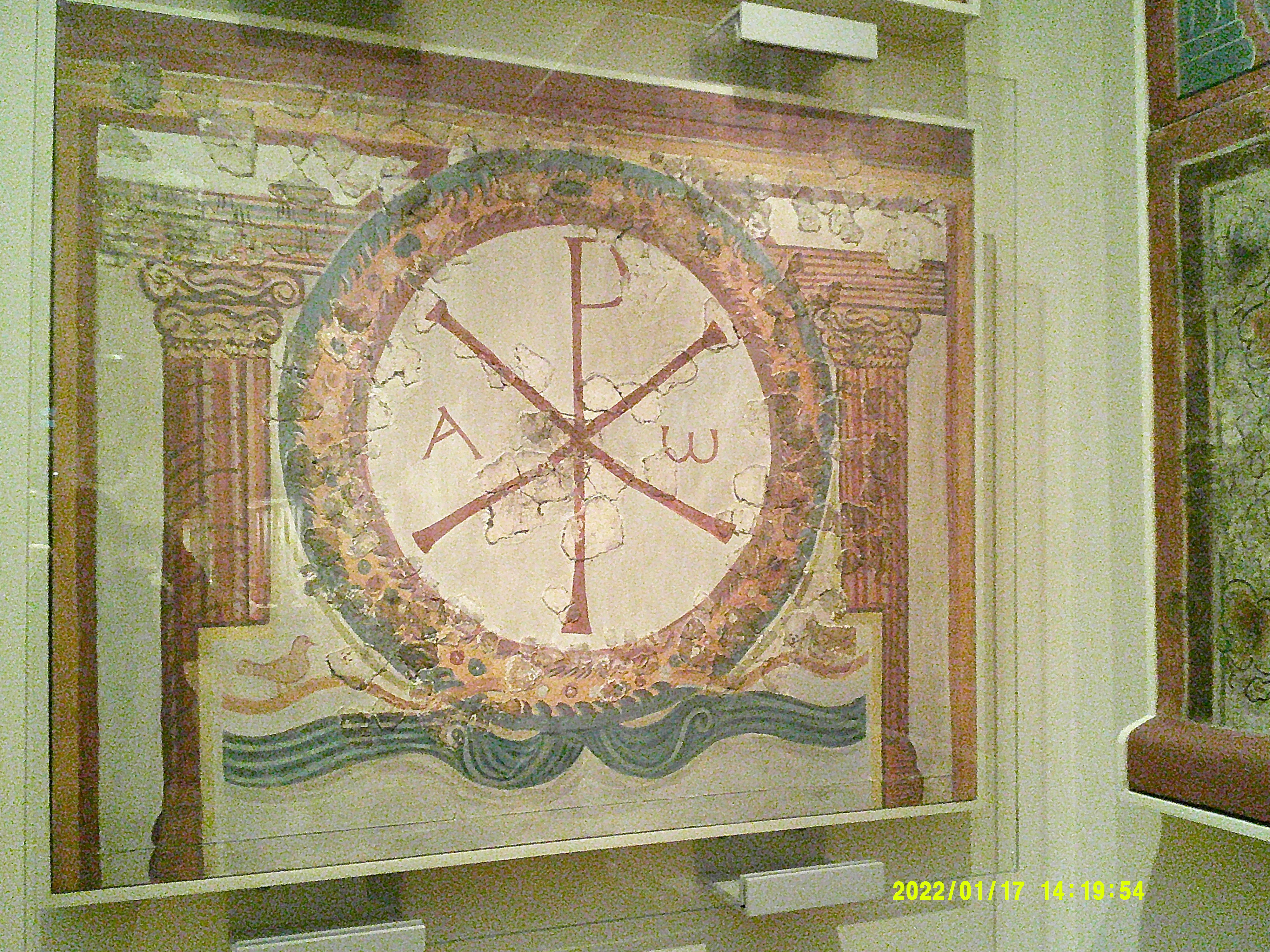
Next there is this mosaic of the Christian symbol, the Chi-Rho, which is currently displayed in the British Museum and came from a Roman villa in Kent, the home of a wealthy Christian family. ‘One of the most incredible discoveries of Lullingstone Roman Villa is the remains of an early site of Christian worship in the form of a house church’. The room used for the church was separate from the family’s dwelling and the Chi-Rho mosaic was part of the wall decorations.
Source: Englishheritage.org
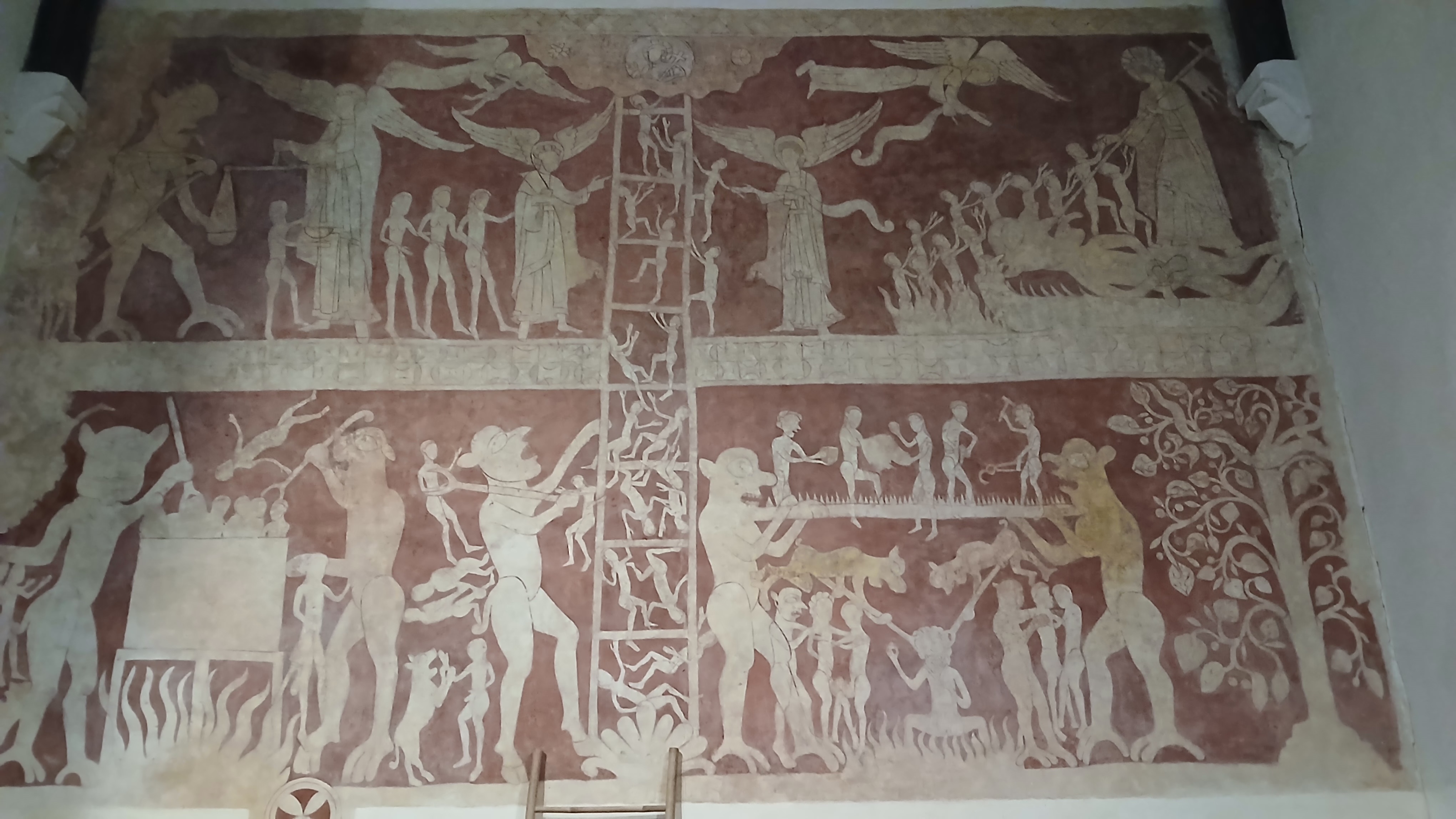
Lastly there’s this scary mural of the Last Judgement on the wall of the 11th century St Peter and St Paul’s Church in Chaldon. The 12th century painting covers most of the west wall and is believed to be the work of a travelling monk. It depicts the ‘Ladder of Salvation of the Human Soul’ and ‘Purgatory and Hell’. The painting was intended as a visual aid to accompany religious teaching – it would certainly frighten the congregation into behaving themselves!
Source: St Peter and St Paul Church Chaldon website
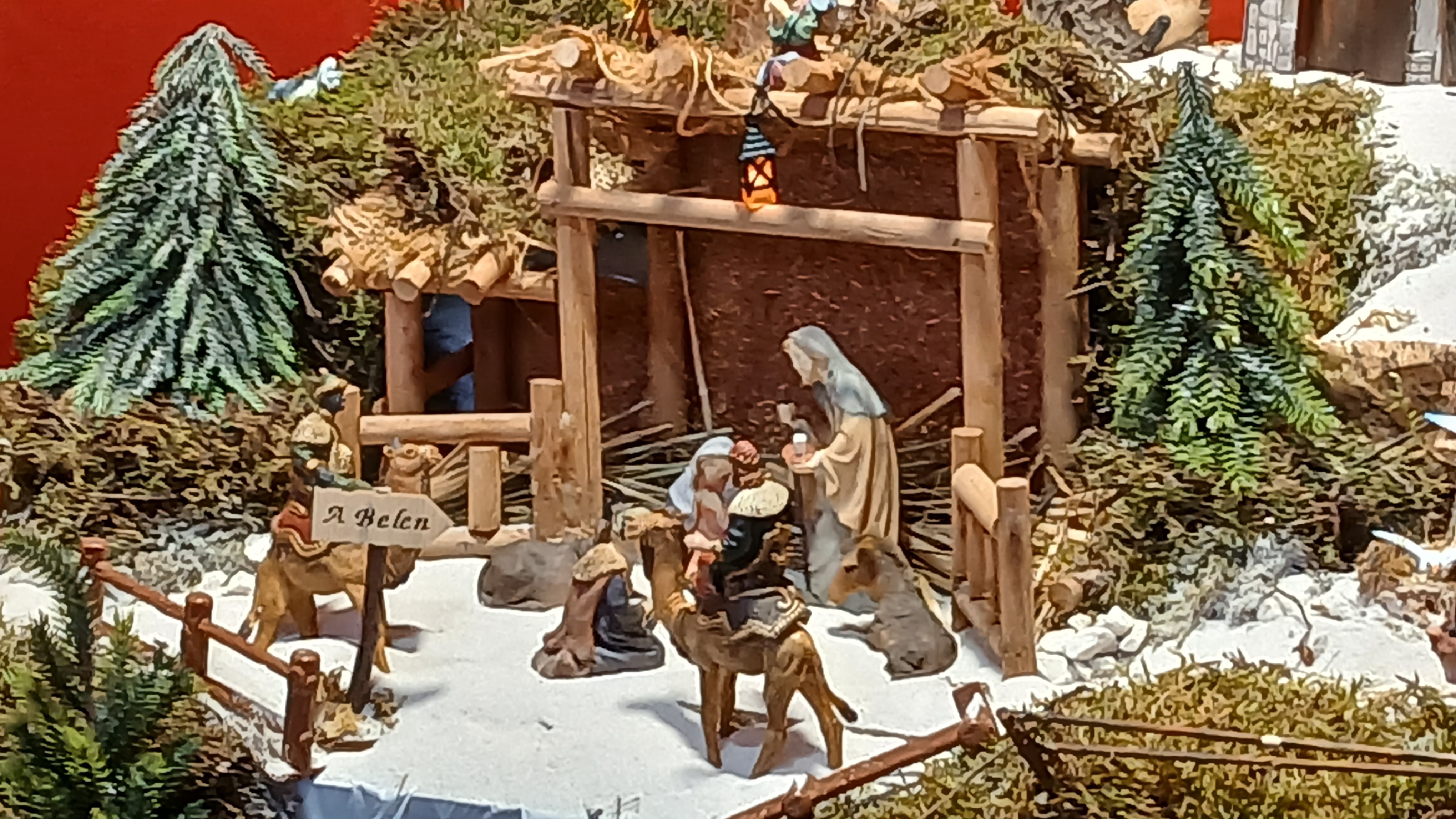
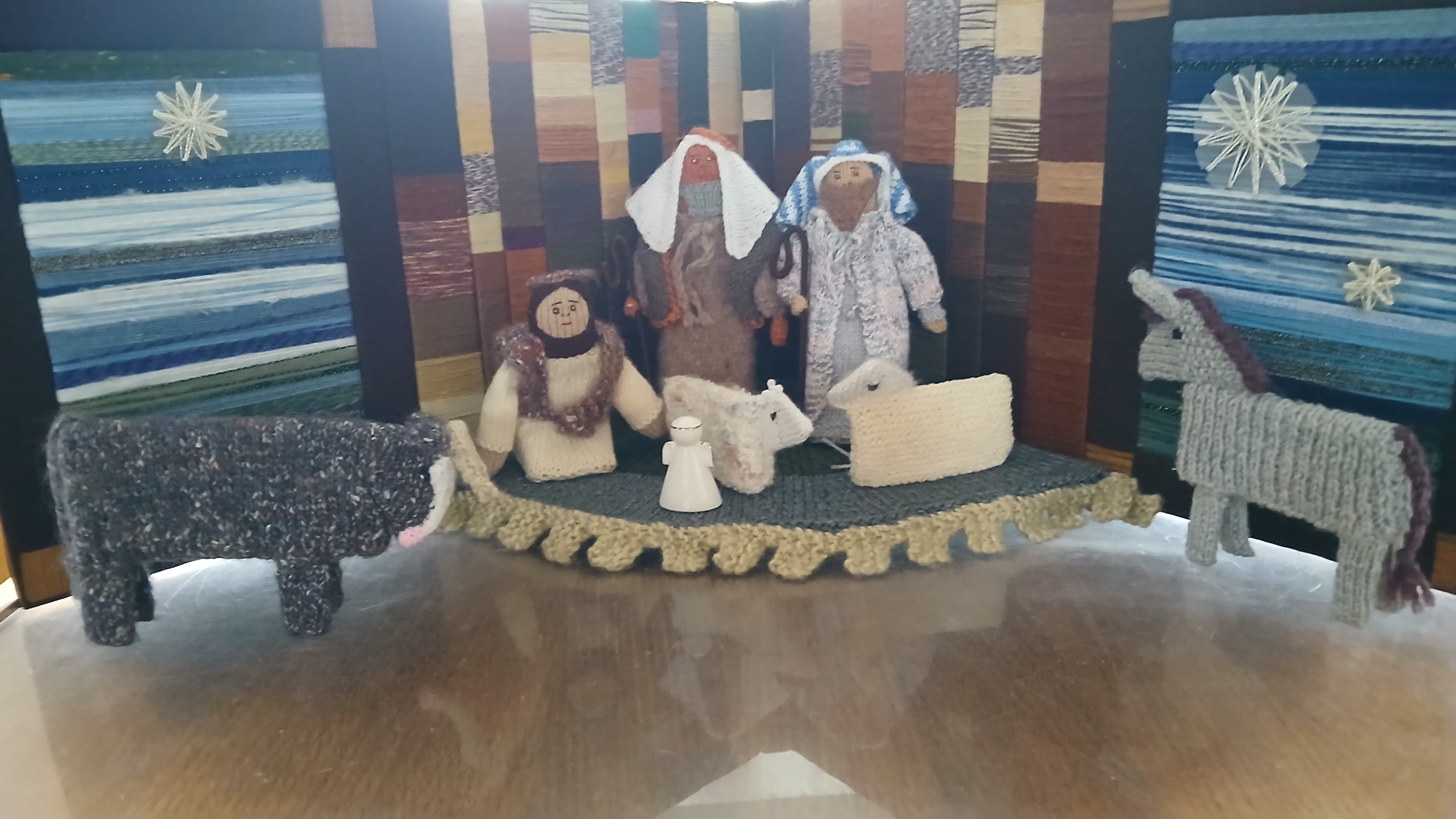
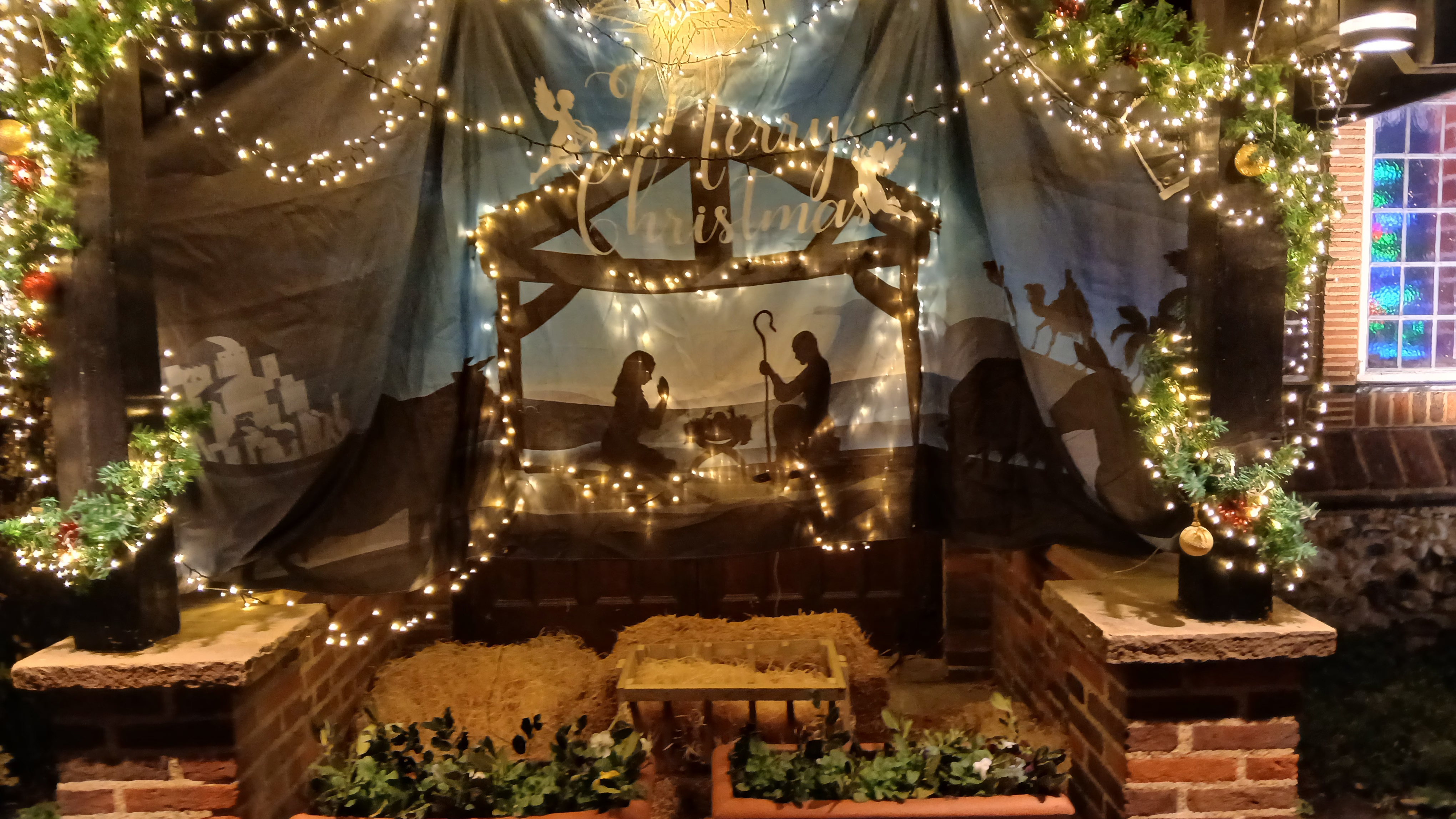
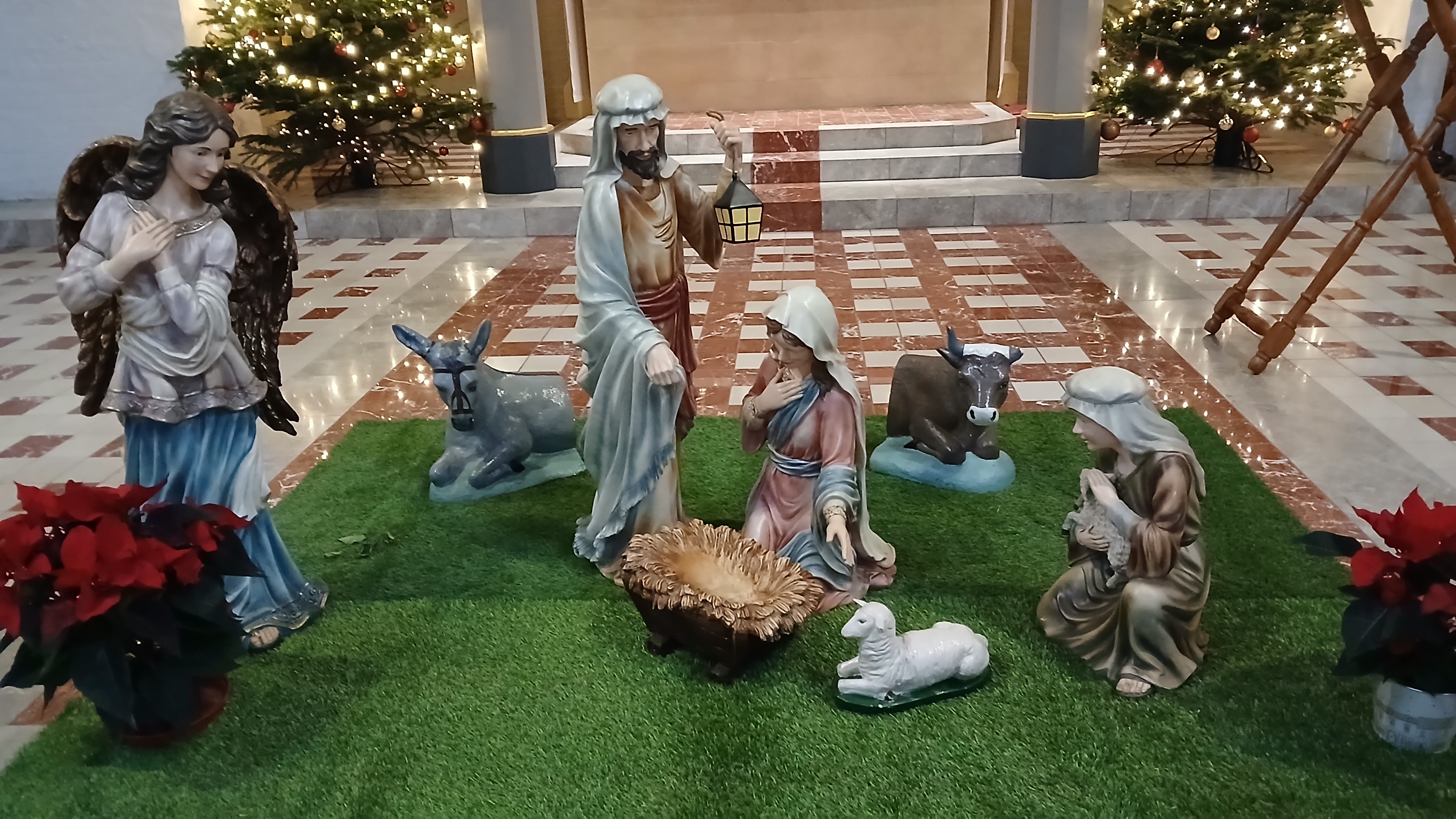
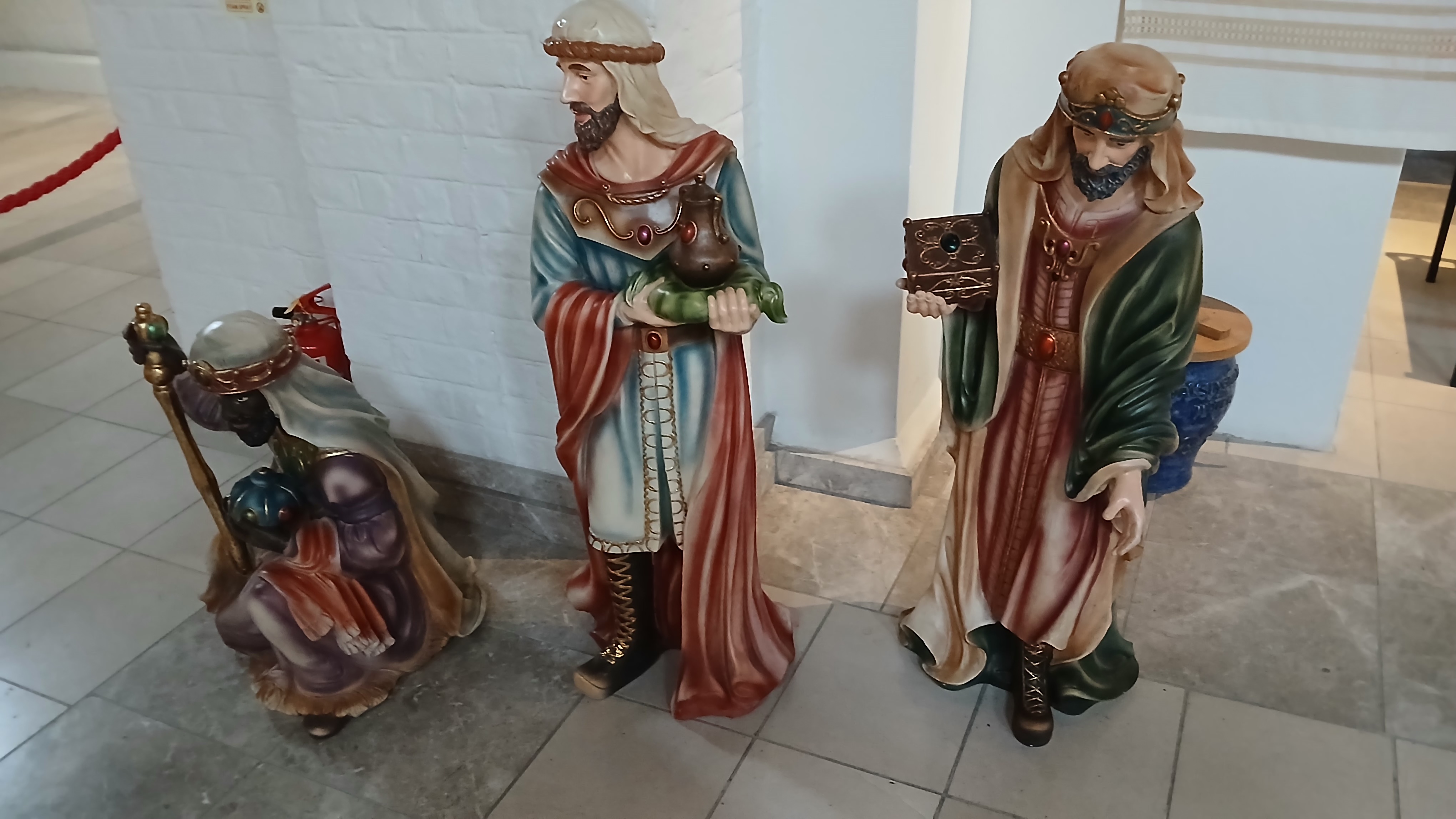
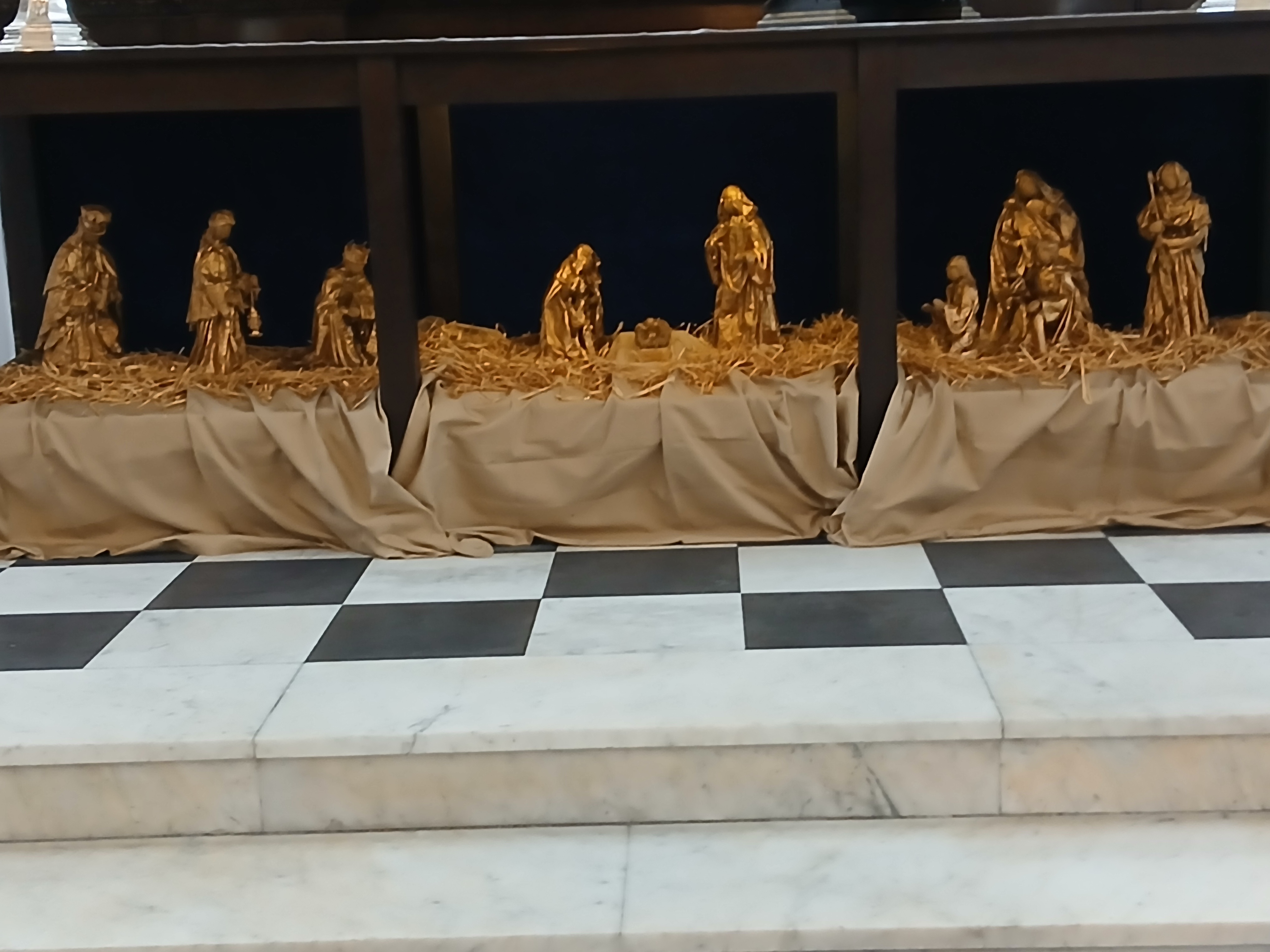
Here’s the usual round-up of Nativity scenes I’ve seen in and around the Capital. I would love to find a life-sized nativity outside a church, like the one in which Kevin hides in the film Home Alone. I’ll keep looking, meanwhile, this selection includes nativities from churches and a cathedral, a school and a shop – and a Christmas market!
Nativity Scene at Lisbon Christmas Market
Knitted Nativity at Good Shepherd, Carshalton Beeches
Outdoor Nativity, Chiltern Church
Southwark Cathedral’s nativity designed by local school children
Southwark Catholic Church Nativity……
….with Wise Men waiting to arrive
Salvation Army Sutton table top nativity
St Lawrence Jewry, Guildhall Nativity
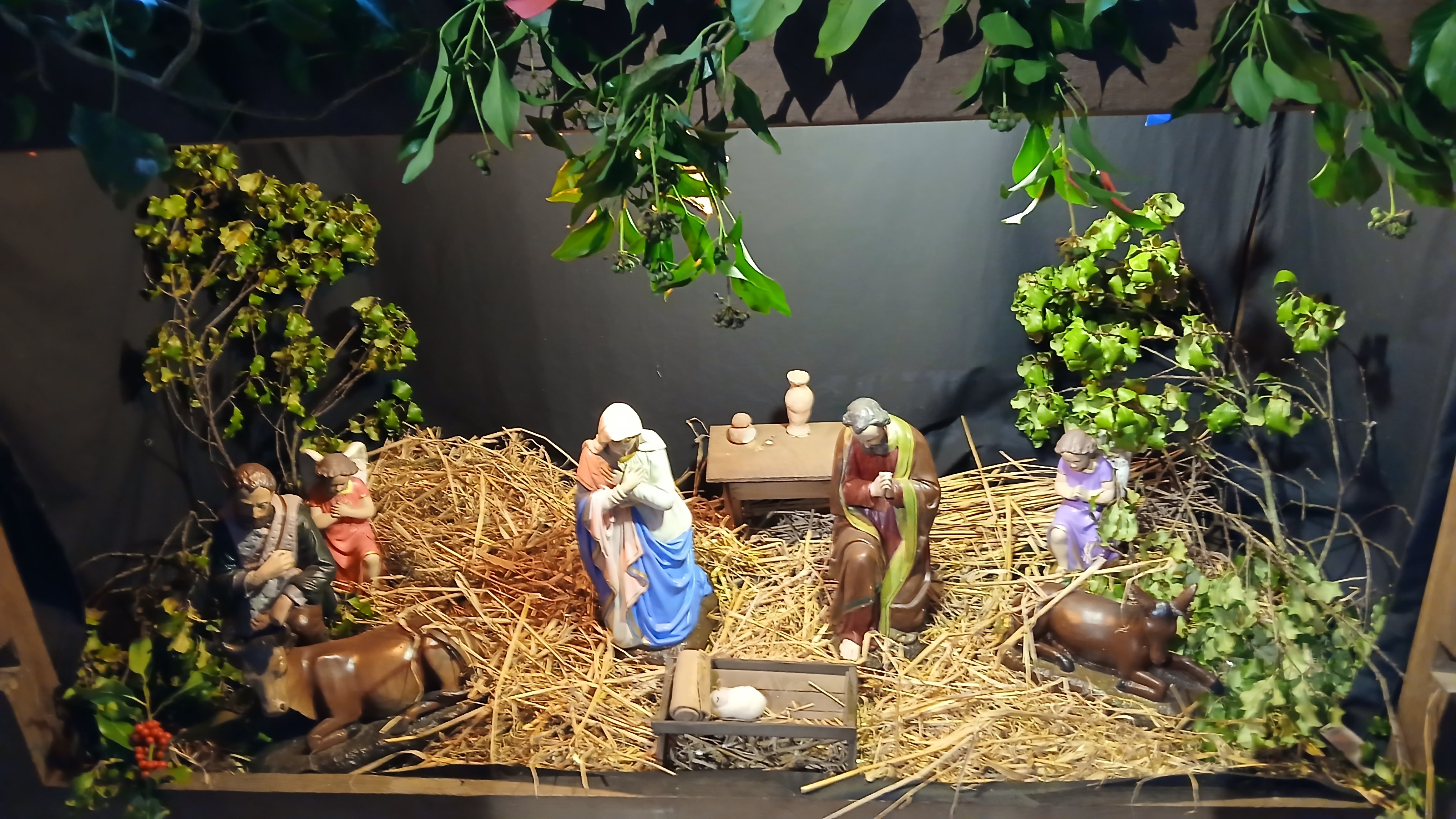
Nativity with Greenery, Chaldon Church
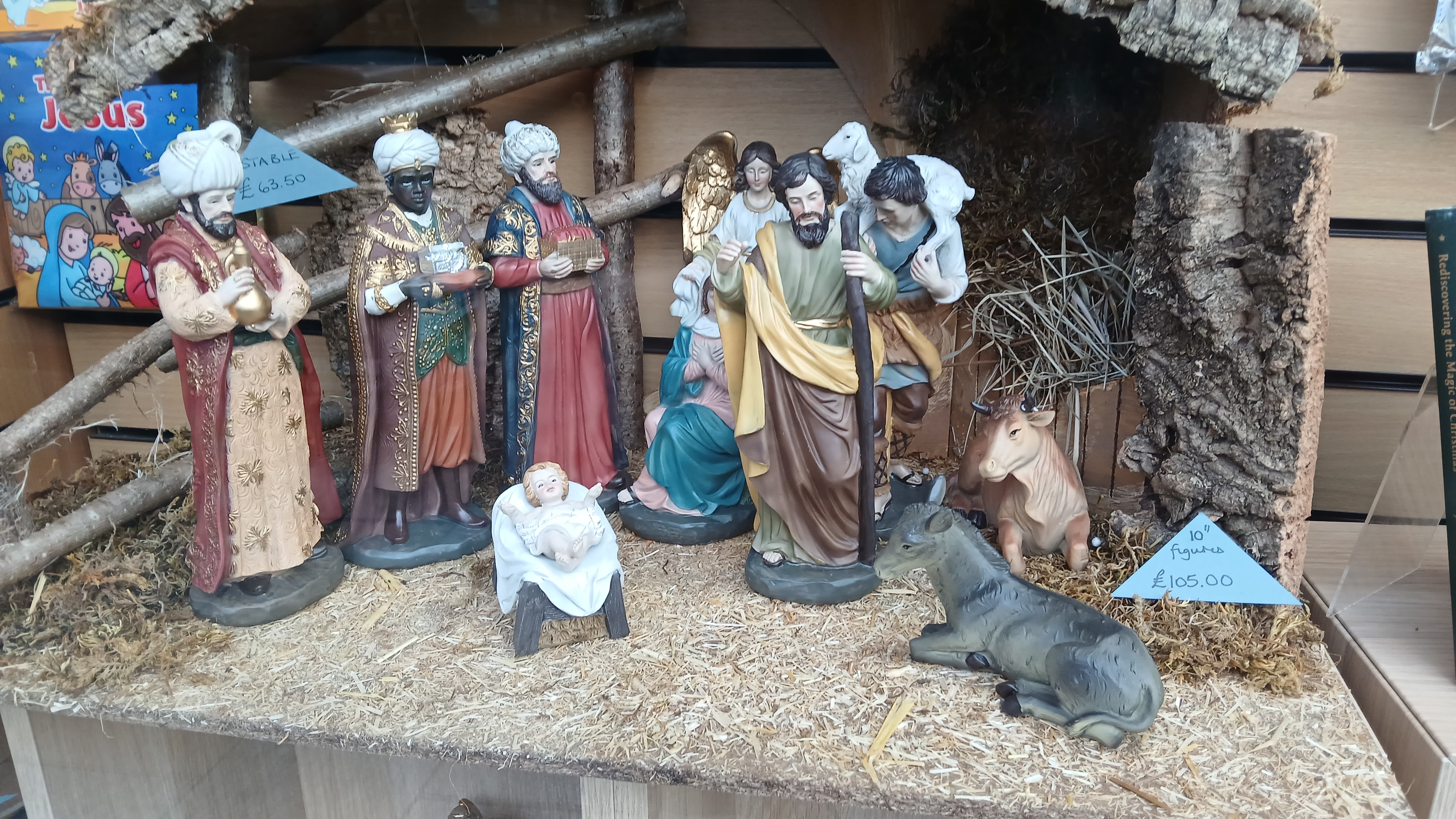
Oasis Bookshop Nativity
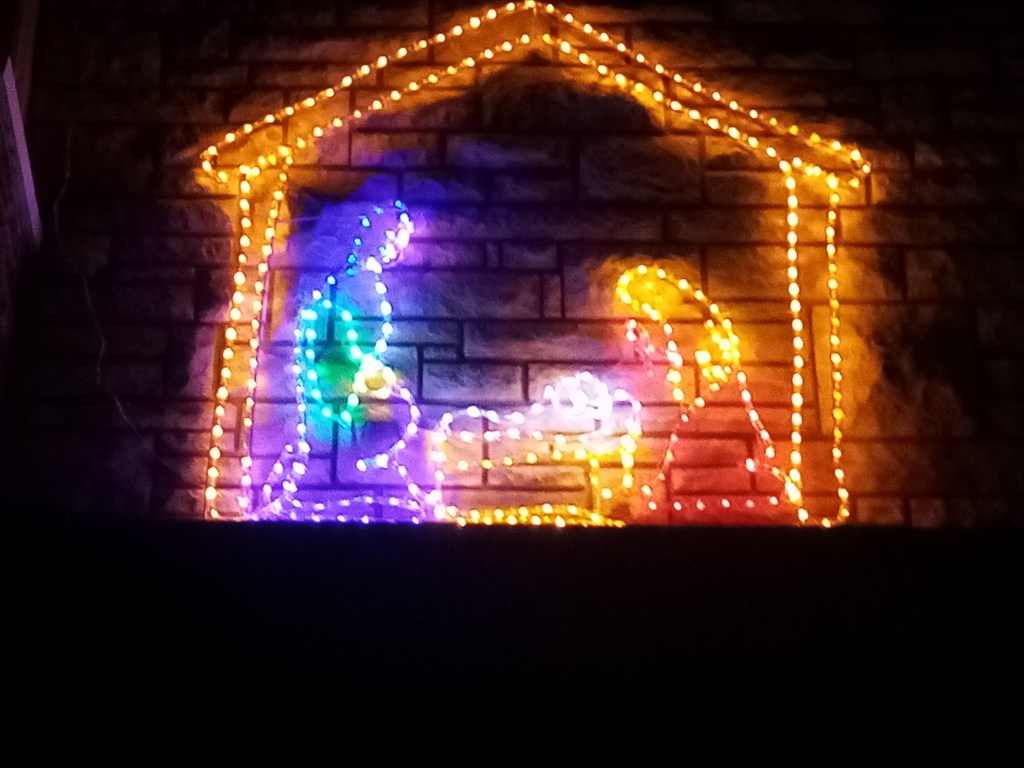
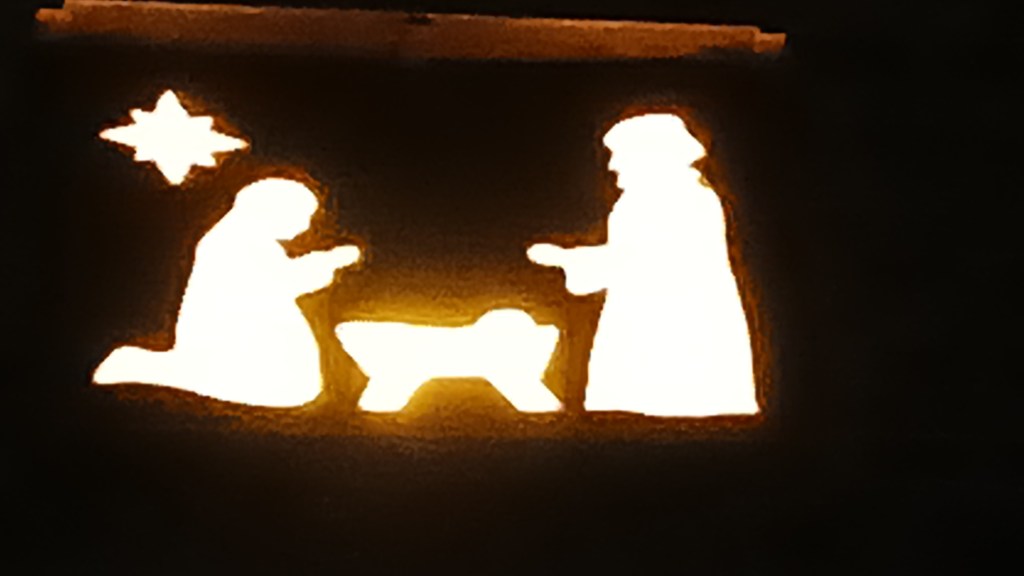
Illuminated nativities at Sutton Christian Centre and St Elphages RC Church, Wallington
For 2026 I’m going to continue with Christian London but I’m also looking further afield to churches and cathedrals in other cities that I’ve visited, or planned to visit. There’s so much beauty and history to be explored in Christian Britain and Christian Europe! Happy New Year to all!