The world has changed since I started writing this post. You won’t be able to visit these museums for a long time, and that’s a shame, because they are all well worth a visit, not least because each one shows the impact of Christianity on London and its people in different ways for nearly 1000 years. I’ve included their websites so you can learn more about them if you want.
I’ve chosen five London museums which have a Christian connection. Three of these tell the story of people simply obeying what they believe God has told them to do, resulting in worldwide recognition and huge changes in social and health care. Two had less of a global impact, but both gave rise to movements which changed the social and spiritual thinking of their day. I’m putting them in date order, from 1080 to 1867!
Museum of the Order of St John
Everyone’s heard of St John’s Ambulance Service, but did you know that it has its roots in an ancient order of monks and knights, nearly 1,000 years ago?
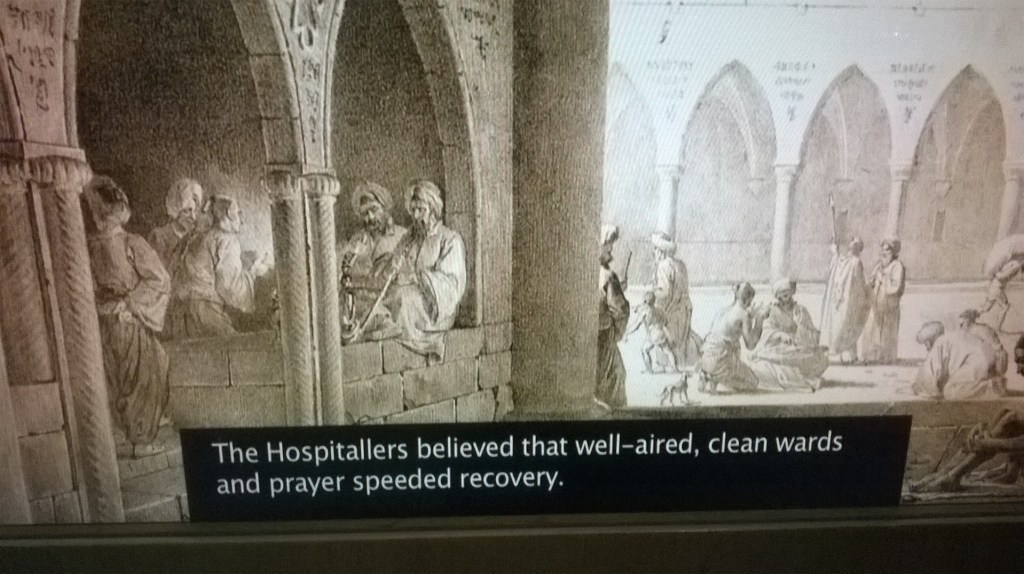
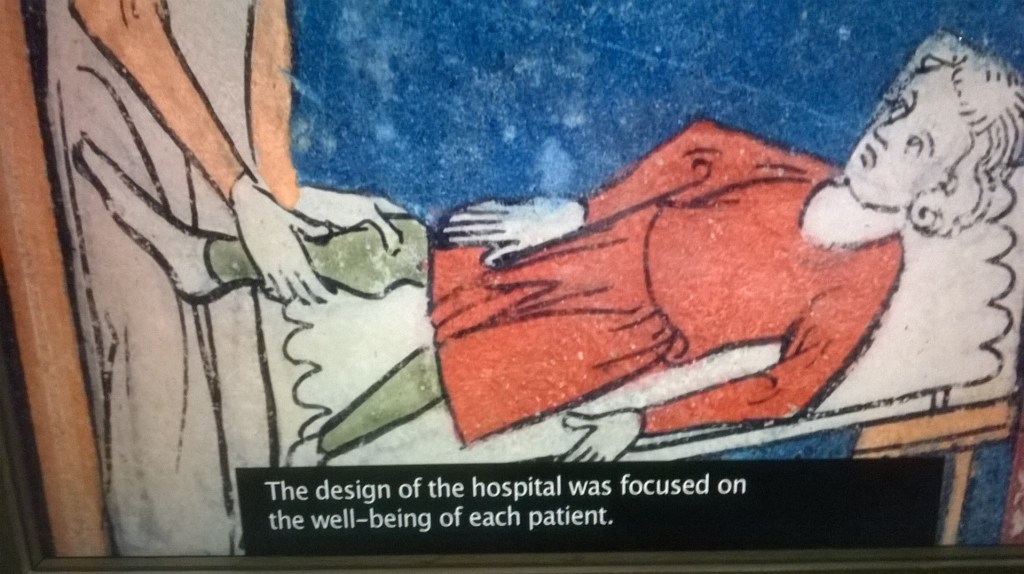
A group of monks founded a hospital in Jerusalem around 1080, to care for pilgrims who had become sick while travelling on pilgrimage to the Holy Land. They were known as the Hospitallers and they claimed they had been told by God that 1. They should care for all people, regardless of race or faith, and 2. They should care for individuals as if they were caring for Christ Himself. They became a military order during the Crusades (not engaged in combat but doing admin and medical duties), when they became the Knights of the Order of St John. The Order moved to Cyprus, then Rhodes, then settled on Malta. You can go and explore for yourself the following 800 years of St John’s history! The interesting thing to note is that because the Hospitallers believed ‘each patient represented Christ Himself’, they focused on provided the best care that they could, pioneering some very advanced practices: quarantine for people with infections, well-aired clean rooms, each patient to have his own bed and the dignity of hospice care for the dying. Cutting edge stuff for nearly 1,000 years ago!
Address: St John’s Gate, St John’s Lane, Clerkenwell EC1M 4DA. www.museumstjohn.org.uk
Nearest Tube: Farringdon

Bart’s Hospital Museum
‘Bart’s is the oldest hospital in Britain still providing medical services which occupies the site it was originally built on’ (Wikipedia). It was founded in 1123 by a courtier of Henry I, named Rahere, who was also a priest. On pilgrimage to Rome he fell ill and is said to have had a vision of St Bartholomew, who told him to establish a priory and hospital in London, specifically, at Smithfield, just outside the city walls. On his return to England, Rahere did just that, telling his master the King about his vision and his divine calling to build a hospital and priory on the site of the King’s Market at Smithfield. The King graciously agreed and Rahere built and subsequently became the leader of the priory of St Bartholomew. And then chroniclers of the time began recording miracles occurring in the priory: a lame man was healed at the altar, a woman had her ‘feeble’ limbs cured, a man who was mute began to speak again. Yet more healings took place in the adjacent small hospital, which grew in size, as people heard about the miracles, and the hospital gained a reputation for excellence in more conventional medicine! I like the way God doesn’t only do the miraculous but works with servant-hearted and willing people. A few hundred years later, King Henry VII, who was busy dissolving monasteries all over the country, granted ‘to the Mayor and Commonalty of London and their successors for ever the Hospital of St Bartholomew, its church and other properties.’ So that’s why the hospital (rebuilt several times) still stands in the same place after nearly 900 years. It became one of the first medical schools in the country, a training facility for surgeons. The museum is very small but charts 900 years of history. (Incidentally, the ‘King’s Market’ nearby became the famous Smithfield Meat Market!)
Address: Museum & Archives, St Bartholomew’s Hospital, West Smithfield EC1A 7BE
www.bartshealth.nhs.uk/bartsmuseum
Nearest tube: Farringdon, Barbican, St Pauls

Some early medical instruments 
These statues were once outside Bart’s Hospital
The Museum of Methodism & John Wesley’s House
A brief history: John Wesley was born in 1703 and his father Samuel was a nonconformist minister, whose two sons followed him into the priesthood. John and Charles became known as ‘Methodists’ because of their methodical way of studying the Bible. Interestingly, this was a derogatory term used by others, but the Wesley boys liked it, so it stuck. The actual name of their study group was ‘The Holy Club’, hmm, I can see why they preferred ‘Methodists.’ The group also placed importance on social action, working among the poor, especially the homeless and children, and prisoners, who at the time had to rely on people on the outside for food, etc. The Wesley brothers definitely had compassion for others, and an interest in the Bible but didn’t seem to apply the message of the Gospel to themselves. Then in May 1738 John had a ‘conversion experience’, during a church meeting: ‘I felt my heart strangely warmed. I felt that I did trust in Christ….and an assurance was given me that he had taken away my sins, even mine, and saved me from the law of sin and death’. Charles also experienced God’s love for himself and became a great hymn writer. John embarked on what today we would call a preaching tour, travelling across the country on horseback, stopping at villages and towns and speaking to people about God’s love for them in the open-air (unheard of at the time.) Amazingly, he travelled 4,000 miles per year and preached 40,000 sermons in his lifetime. He famously said, ‘The world is my parish’. The Museum of Methodism has a brilliant introduction video narrated by Huw Edwards from the BBC, which really brings Wesley’s story to life. You can also visit the Methodist Chapel and Wesley’s beautiful Georgian house, all on the same site. Again, I won’t say any more, you have to see for yourself!
Address: Museum of Methodism, 49 City Road, London EC1Y 1AU
Nearest tube: Old Street, Moorgate

Statue of Wesley at the Museum and Chapel 
The Prodigal Son 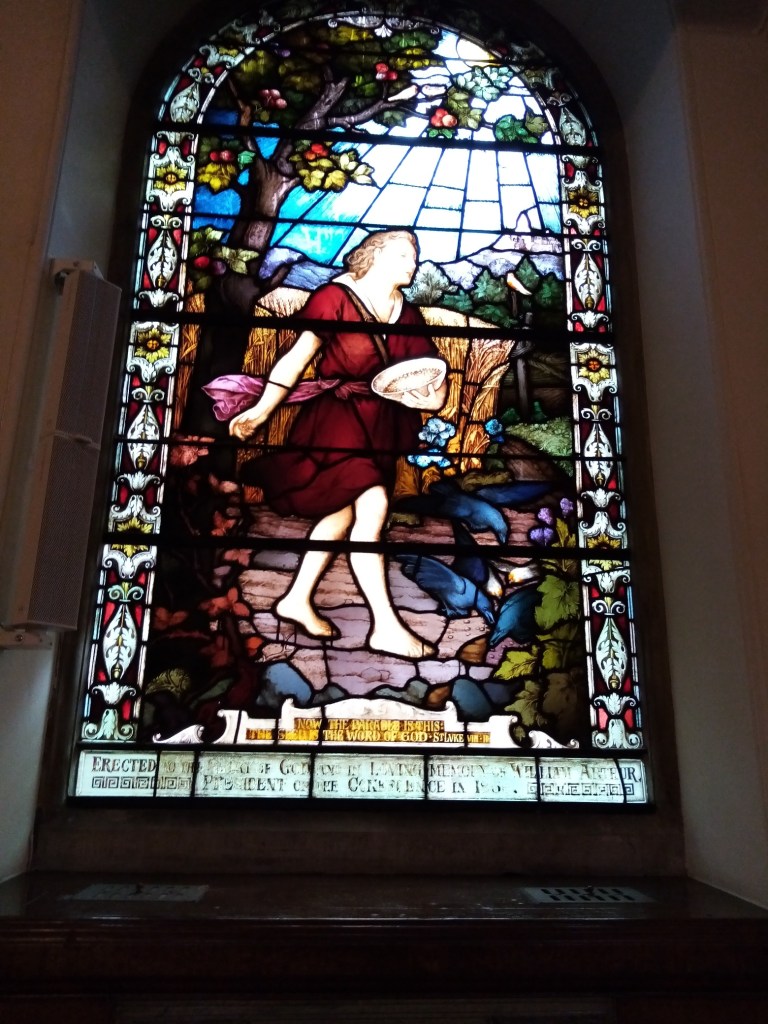
Parable of the Sower
Florence Nightingale Museum
Florence was born into a wealthy family in 1820; she and her sister were bought up to be fashionable and educated young ladies. Educating Florence meant she grew up with an enquiring mind, discussing philosophy with her father and excelling in Maths. That wasn’t what her parents intended, in those days young ladies were not supposed to use their accomplishments for a future career. Florence became interested in nursing, and at 16, she clearly felt God’s call to serve him. When she told her parents that she wanted to become a nurse, they were horrified, because ‘the stereotype of nurses at the time was of drunken women with loose morals who nursed the sick because they weren’t fit to do anything else. The only other kind of nurses were nuns.’ (Premier Christianity). A world away from the graduate profession of today! But, through her parents, Florence came into contact with independent, career-minded women; also because of the fashion of the idle rich for continental travel, she had had the opportunity to visit well-run German hospitals, with trained, competent nursing staff. So you could say Florence’s parents were responsible for her wanting to become a nurse, and eventually they agreed she could train.
After training, Florence was appointed as Matron-in-Charge of ‘The Institution for the Care of Sick Gentlewomen’ in London, but in 1854 she accepted an invitation to lead a team of nurses to Scutari, Turkey, where Britain had just entered the Crimean War. The conditions in the military hospitals were atrocious, with more soldiers dying in hospital than on the battle field. This wasn’t just due to appalling sanitary practices, but also appalling admin! Florence, with her talent for administration as well as being a highly competent nurse, set about organising hygienic nursing practices, recording information and organising supplies. She took an interest in the soldiers’ mental and spiritual health, and even paid for more nutritious food for them from her own pocket; basically, she cared. Florence Nightingale’s desire to serve God, her compassion for the sick and her exceptional administration skills, radically changed how hospitals were run. The exhibits and displays in the Museum trace Florence’s life story and show how nursing has developed in the last 200 years. I love that the new NHS hospital to be housed in the Excel Centre in Docklands, is being named The Nightingale.
Address: Florence Nightingale Museum, St Thomas Hospital, Lambeth Palace Road SE1 7EW
www.florence-nightingale.co.uk
Nearest station/tube: Waterloo, Westminster
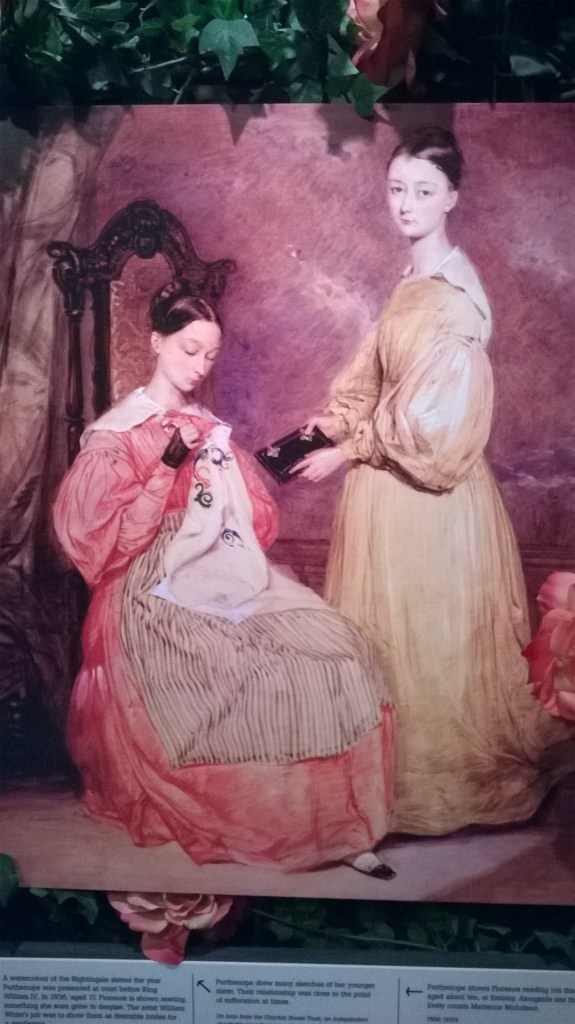
Florence and her Sister 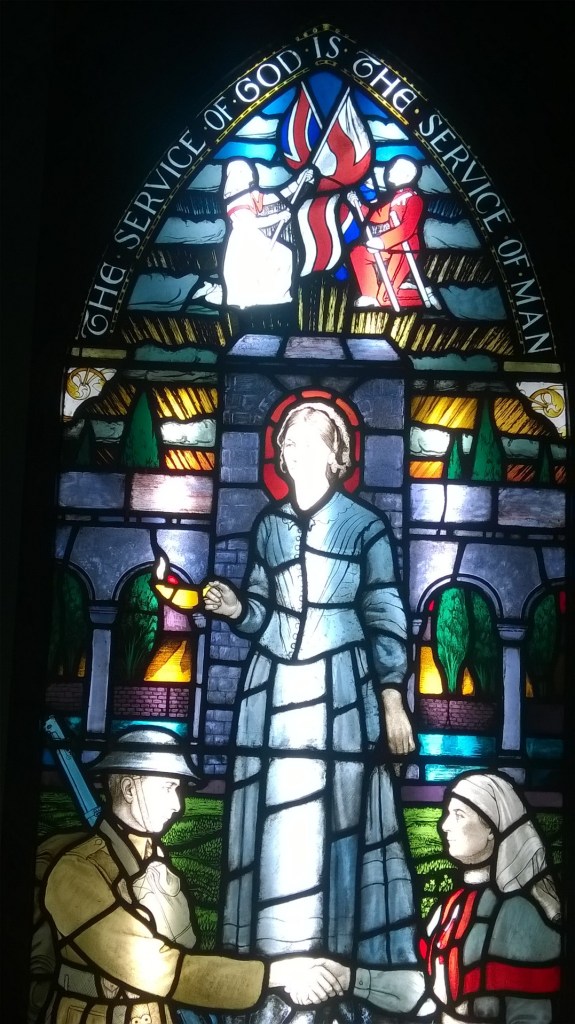
‘The Lady with the Lamp’ 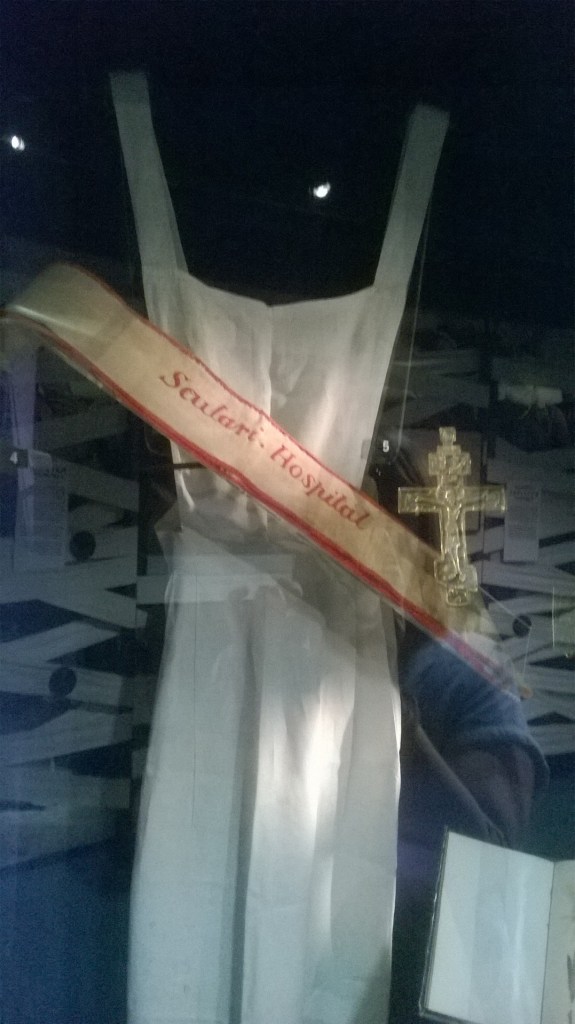
Nurses uniform at Scutari
The Ragged School Museum
The Ragged Schools were established by Dr Thomas Barnardo in 1860. He was born in Dublin in 1845 and said of himself that as a child he was ‘selfish and thought that everything that was not his should belong to him’. (Wikipedia). As he grew older, he changed dramatically and as a young man, he wanted to make up for his selfish attitude. He went to London to train as a doctor with the intention of going to China to become a missionary doctor. The hospital where Thomas trained was The London, in Whitechapel in the East End, one of the poorest areas of the country. Thomas saw disease and poverty every day, sick and malnourished adults, and children as young as three playing in the dirty streets. He walked among the people, reading to them from the Bible to try to give them hope, but he realised he could and should do more. He abandoned his plans to go to China and never completed his medical training, instead setting up his Ragged School. In Victorian times, there were no free schools, even at an elementary level, and Thomas realised that a child would never be able to change their circumstances without access to education, and the cycle of deprivation would continue. Any child who wanted to, could attend his school, they received a hot meal in addition to what we would call today basic literacy and numeracy. Thomas struggled to get the children to listen and even to sit still, but he persevered and gained their trust and respect. Then one day by chance, Thomas found out that almost all the children at the school were homeless and was shown a group of boys sleeping on the rooftop of a building, huddled together for warmth. Thomas was horrified and set about raising funds for a Boys Home, a place of shelter and safety, food and warmth. His first Home had 25 places and was quickly filled to capacity. Then came another turning point in his life: one winter’s night he had to turn a boy away from the Home. The next morning, in the lane beside the house, he saw two men carrying the body of a boy, the one he had turned away. He had frozen to death in the night; Thomas was heartbroken. He vowed never again to turn anyone away and had a large sign put up above the door: No destitute child ever refused admission. Eventually there were 96 Children’s Homes, caring for over 8,000 children. The work of Dr Barnardo’s Homes continues today, simply known as Barnardo’s. Their work has changed from providing residential care to adoption and fostering services and social care. The Museum is delightful, housed in the original school with the classroom, kitchen and laundry furnished as they would have been in the 1860s, and also an exhibition of local history.
Address: Ragged School Museum, 46 – 50 Copperfield Road, Mile End E3 4RR
Nearest tube: Mile End, Limehouse DLR

The original school was in this building 
This was how the children had to write! 
Rows of desks
 claresimons1