Many of London’s churches are over one thousand years old, and with the capital’s history of fire and war, not many have escaped unscathed, in fact several have been completely destroyed. Having been unable to get into any city churches for a while, fortunately I did get to visit some gardens and churchyards in November/early December where there used to be a church which has long since gone. The information about the gardens is mainly sourced from The London Gardens Trust website (londongardenstrust.org) which has an inventory of every public garden in every London Borough. Lots more for me to visit when circumstances allow!
St Alphage Gardens, London Wall
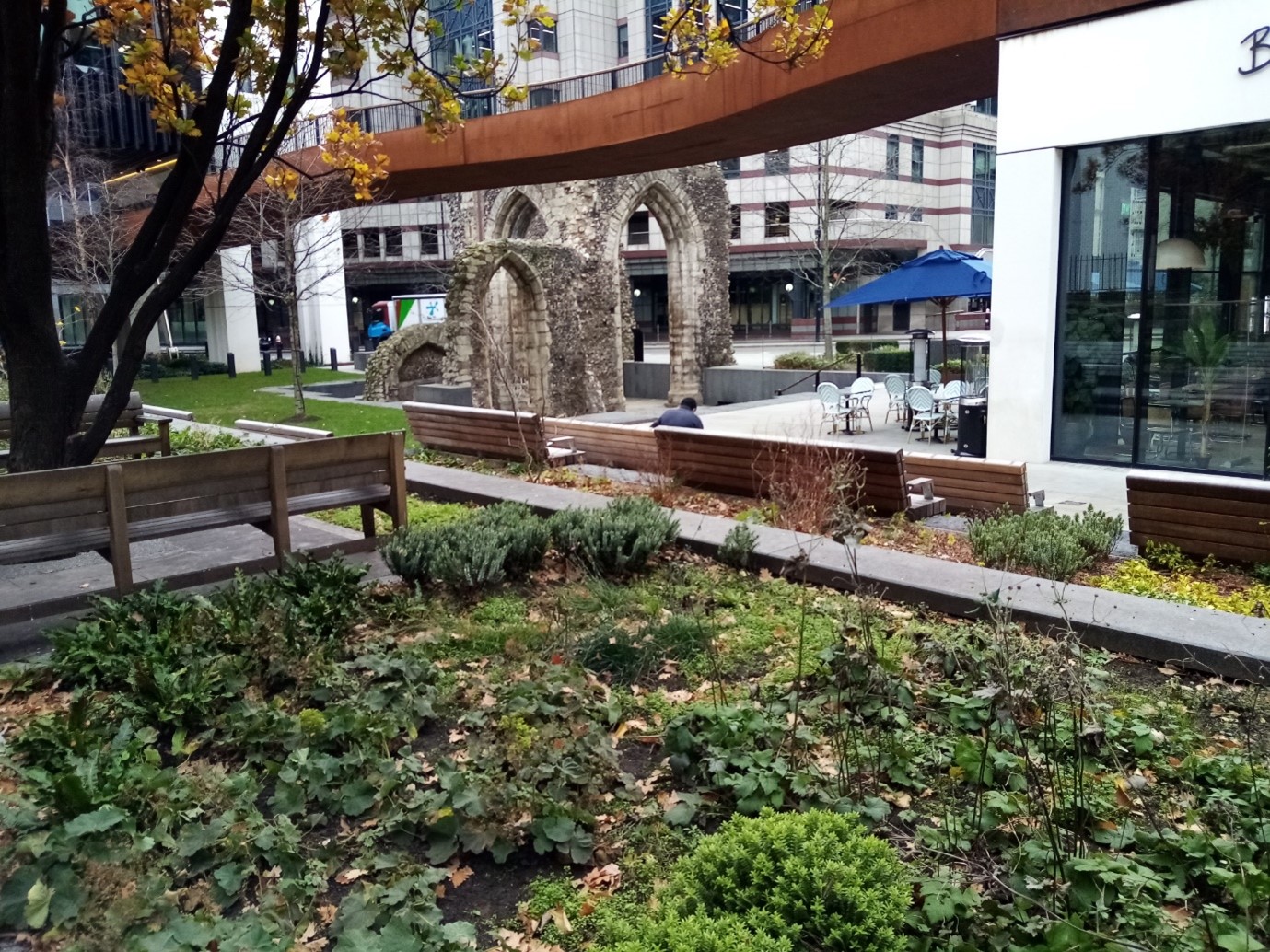
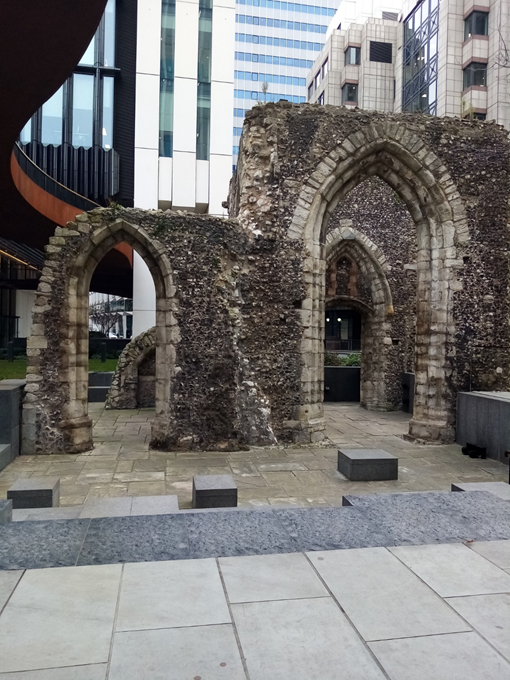
In February last year, in Romantic Ruins, I wrote about the beautiful remains of the tower of St Alphage church. The church fell into disrepair and was actually completely demolished in 1540 and the site was made into a public garden in 1872. One century later, the Barbican and London Wall areas were completely redeveloped, being the most heavily bombed sites of the City in WWll. The Corporation of London scheme created a new business and housing district and as part of the landscaping, a fragment of the old Roman Wall and the tower were retained and are now carefully maintained, to my eternal joy! This pic shows one of the famous Barbican Highwalks, the ‘pavements in the sky’. The garden isn’t very impressive in the pic, but it was November!
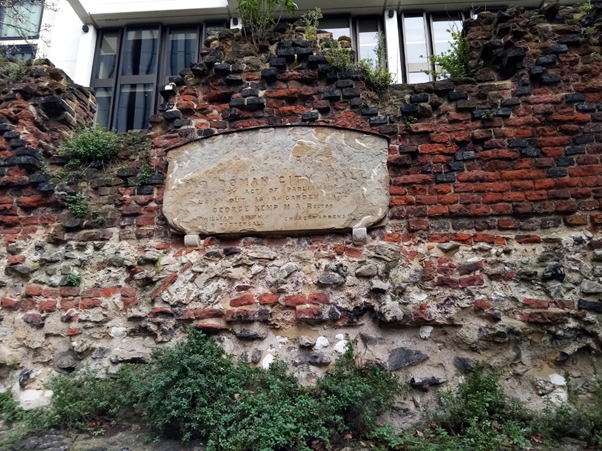
The tower suffered extensive bomb damage but has been carefully preserved and (I think) sits well with the later architecture, which dates from 1970 to brand new office blocks. I love that at one time the tower was used as a hospital for the blind and disabled, at a time when care for the poor and sick was inextricably linked with the Church and Christian service.
St Mary Aldermanbury
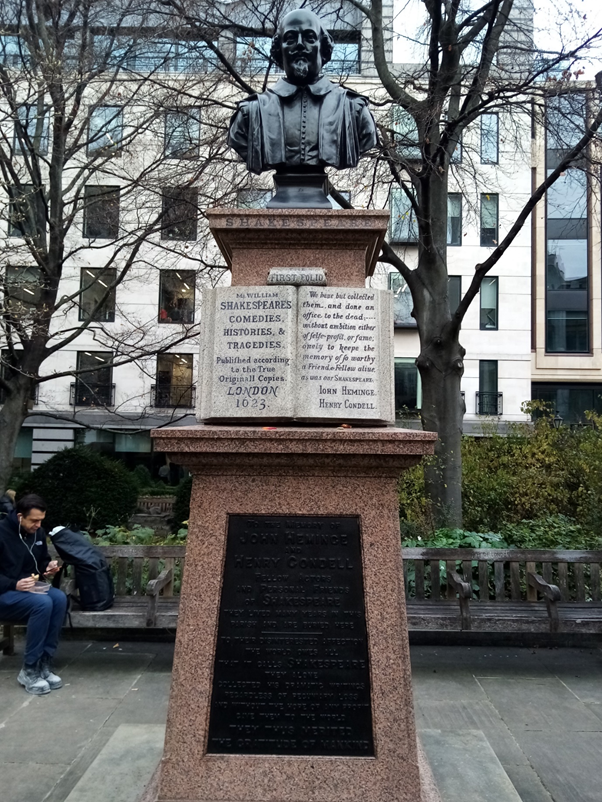
Just across the road from St Alphage (although it’s a very wide road, London Wall) is the garden of St Mary Aldermanbury. Probably named from the Aldermans’ ‘Berry’ or Court Hall, which stood nearby, there was a church here by 1181 and a churchyard by 1250. Interesting things about this site: this statue of Shakespeare is actually a monument to fellow actors John Heminge and Henry Condell, who, after the playwright’s death in 1616, collected his works and published them at their own expense. Shame there’s not a statue of the two of them, we all know what Shakespeare looks like!
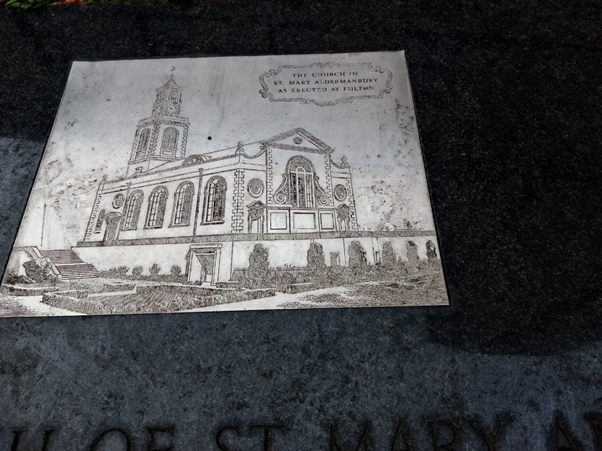
And now to the fate of the church that was once here. The plaque on the site reads: ‘Site of the church of St Mary Aldermanbury. First mentioned in 1181. Destroyed by the Great Fire in 1666. Rebuilt by Wren, destroyed by bombing in 1944. The remaining fabric was removed to Westminster College, Fulton Missouri, USA 1966 and restored as a memorial to Sir Winston Churchill’. So a somewhat different fate to most demolished City churches! There’s an engraving of the church in situ in Fulton, Missouri, above the plaque:
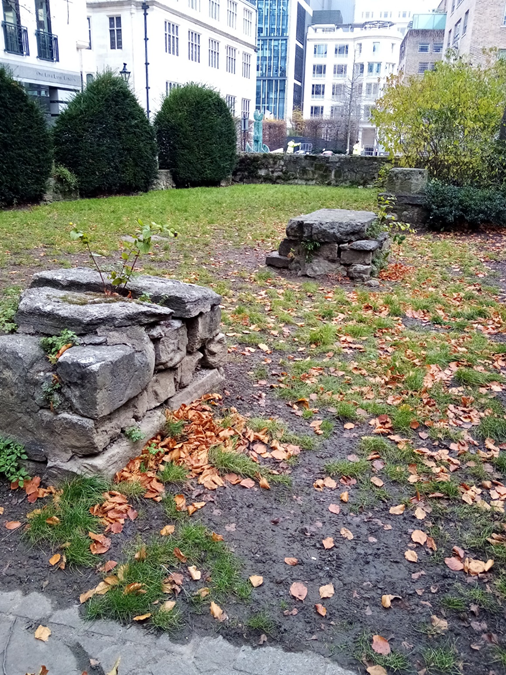
And lastly, some footings of the church in the garden:
St Mary Staining
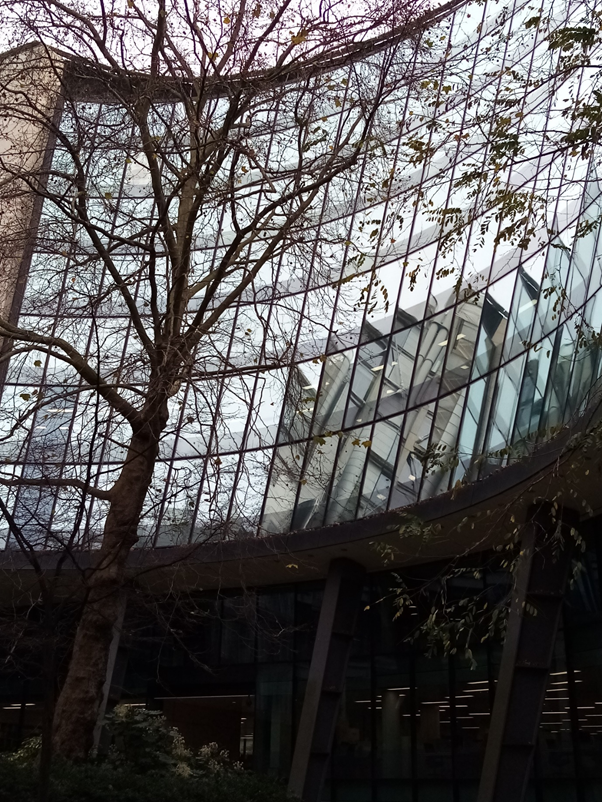
A hop skip and jump from St Mary A is St Mary S. There’s been a church on this site since 1189 and ‘Staining’ probably refers to a family living in Staines who held the land. The church was destroyed in the Great Fire and not restored. In 1965 the Corporation of London took over maintenance of the open space created on the site of the church and churchyard. I visited this site (and St Mary Aldermanbury) as part of a London Walks tour in December 2019, these are brilliant walks covering different areas and different themes around London. There are two interesting things about this site: firstly, the building next to the site was built sloping backwards to ensure that the London plane tree in the garden would receive enough light. Hope you get a sense of this from the pic.
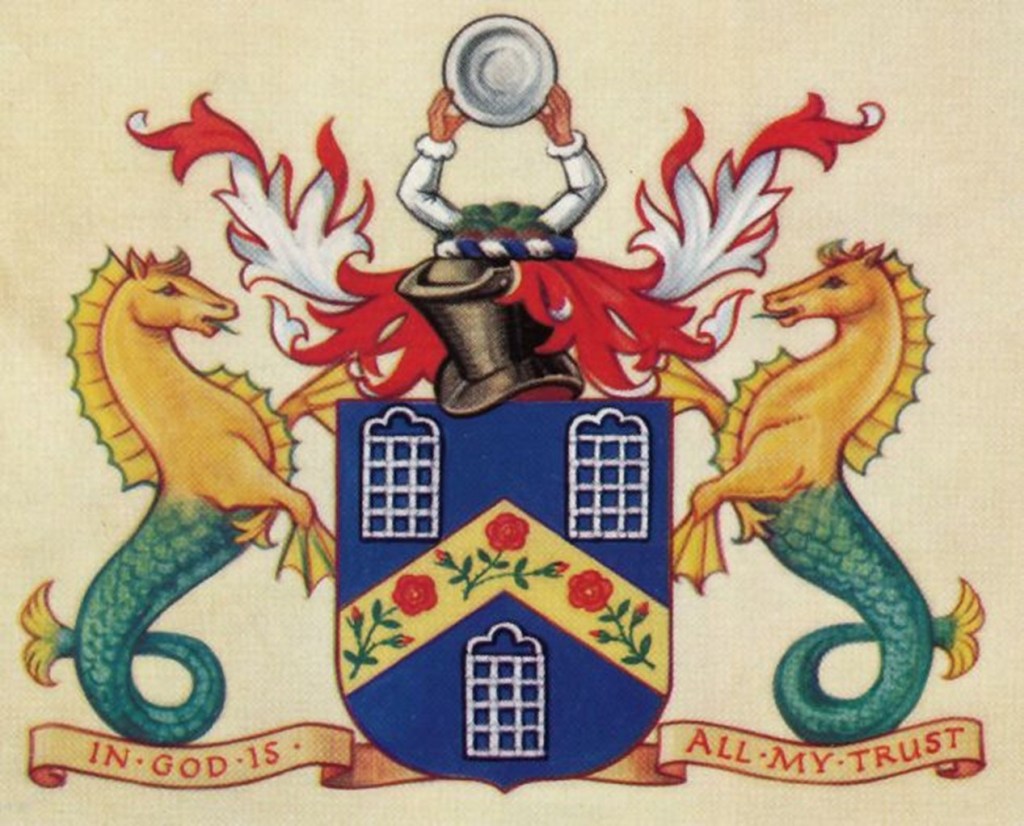
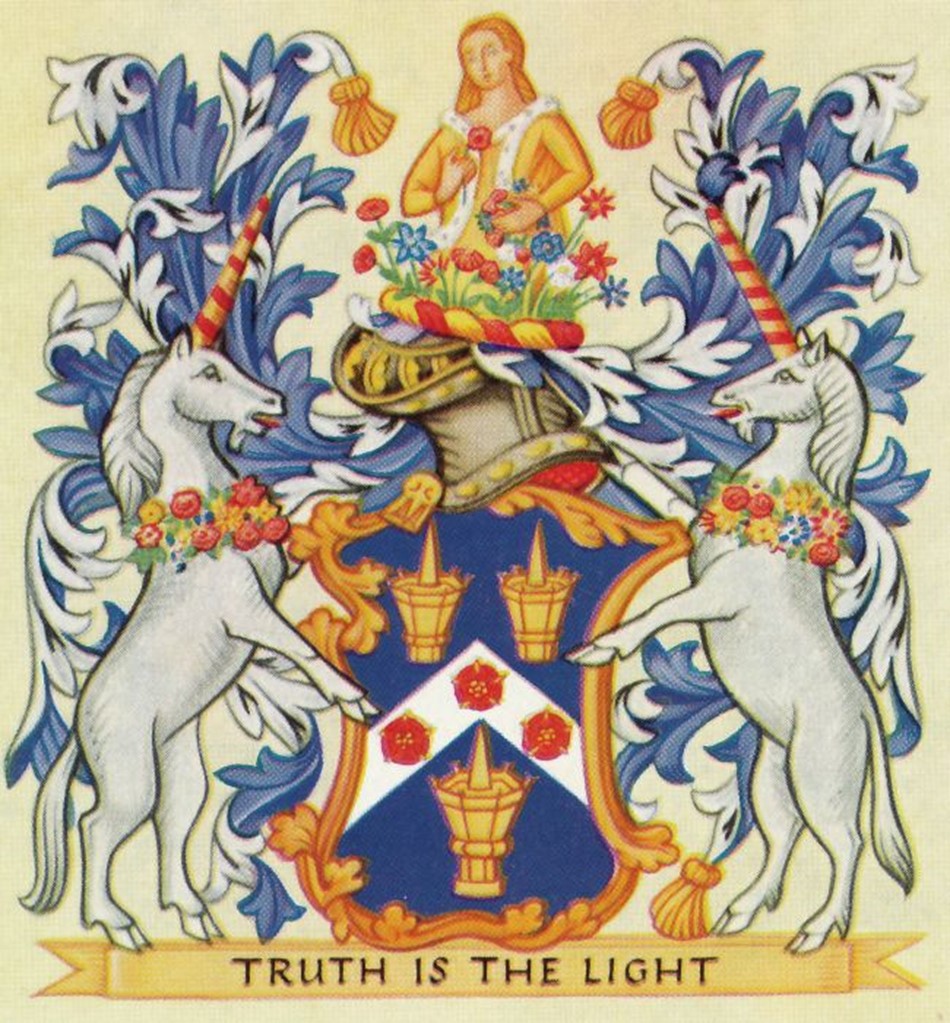
Secondly, around this area there are lots of Livery Company Halls, these started out in the 1300s clubs or guilds to protect the different trades or professions; you can look them up on Wikipedia if you’re interested. Each one has a Hall as its headquarters, e.g., the Worshipful Company of Ironmongers, Waxchandlers (they made candles), Saddlemakers, etc, and all are within a few streets of each other. The one closest to this site is the Pewterers Hall which was rebuilt here in 1961 following demolition of the original Hall. Here are the Coats of Arms of the Pewterers Company and the Waxchandlers Company, beautiful, aren’t they? I like their mottoes too.
All Hallows, Southwark
This was quite a recently built church (1880 by George Gilbert Scott Jnr) but was bombed twice in WW11, rendering it completely unusable and demolished in 1957. The only remains of the church are two stone arches and a chapel, now in residential use – great place to live! This pic is from The London Gardens Trust because when I visited, there was a lot of rubbish strewn around this area and I couldn’t take a good photo. The garden itself was well maintained.
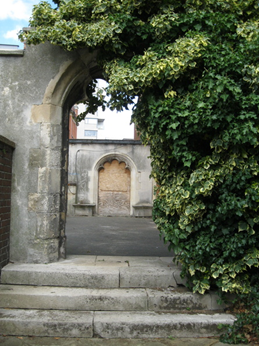
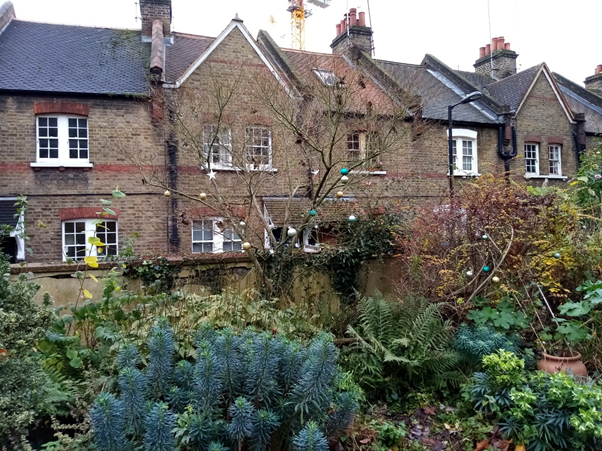
This garden, in Copper Street, is a couple of streets away from the St Saviour’s Union Workhouse at Mint Street, which is thought to have provided Charles Dickens with the model for the workhouse in Oliver Twist. When Dickens was young, he was in lodgings nearby and would have passed the workhouse on his way to work, seeing the pauper residents going to work in nearby factories and workshops. He revisited the area much later as a journalist on one of his fact-finding missions to schools, factories and workhouses in poor areas and more than likely would have visited St Saviour’s.* I wish I’d explored the surrounding streets and got a sense of how the area would have looked in Dickens’ time. Another time, maybe!
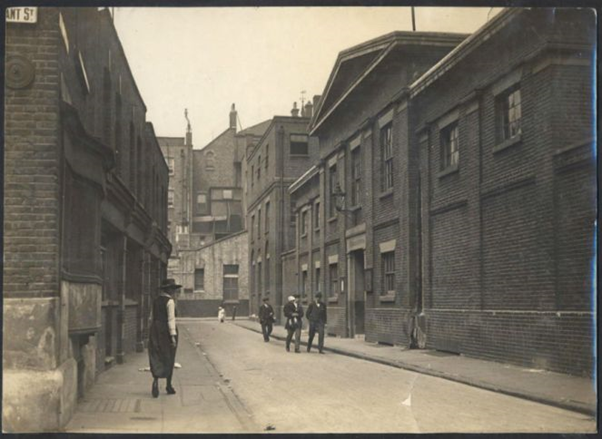
* Info and picture from Southwarkheritage.wordpress.com
 claresimons1