The weather is getting warmer, Spring blossom and flowers are everywhere, so I thought I’d continue with the gardens theme (and of course, I still can’t visit churches and other buildings yet.) Here are four more churchyard gardens, all with a church still standing.
Christchurch Garden Southwark
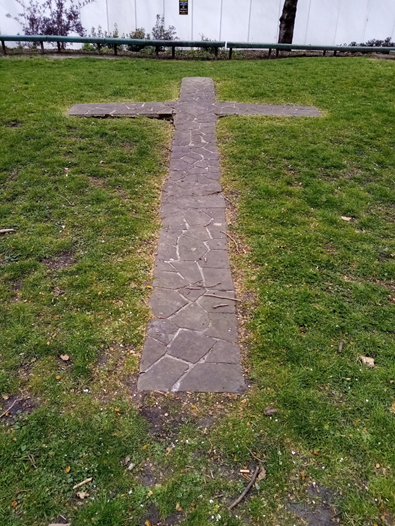
This small garden is the remains of the much larger Medieval Paris Garden mentioned in Shakespeare’s play Henry Vlll. The original Christ Church was built in 1671 but it began to sink into the boggy ground near the riverbank and had to be rebuilt in 1738. That one was destroyed by World War 2 bombing and the current church dates from 1960. The churchyard was closed to burials in 1856 and converted to a public garden in 1900. The most interesting thing about the churchyard is that when the church was bombed in April 1941, the cross on its roof caught fire and fell onto the grass, scorching the grass. Stones have been placed to mark the place where the burning cross fell. Dramatic!
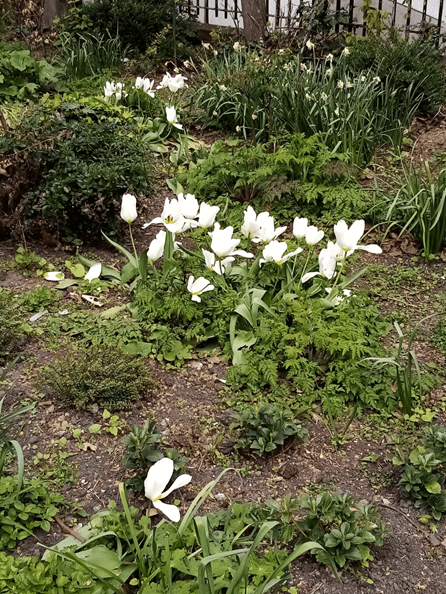
Pretty white tulips in the garden 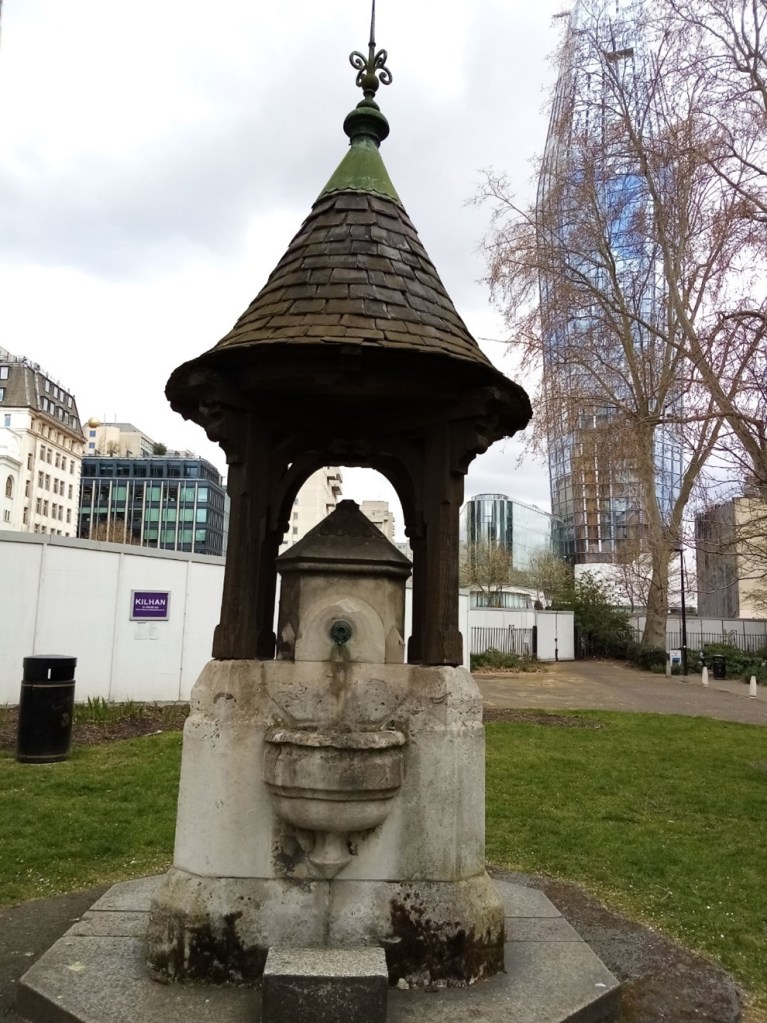
Drinking fountain with oddly shaped new build in the background
Trinity Church Square
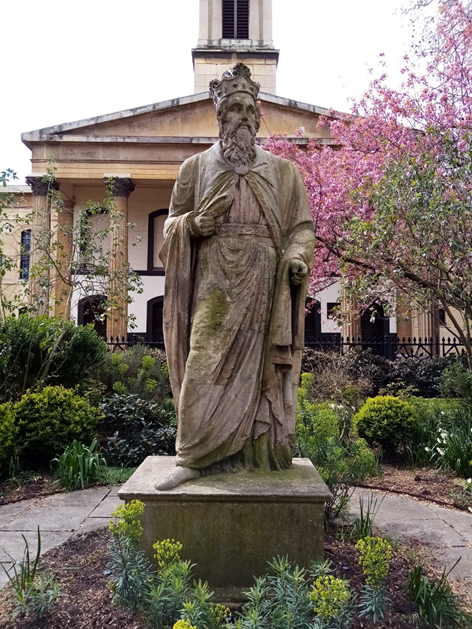
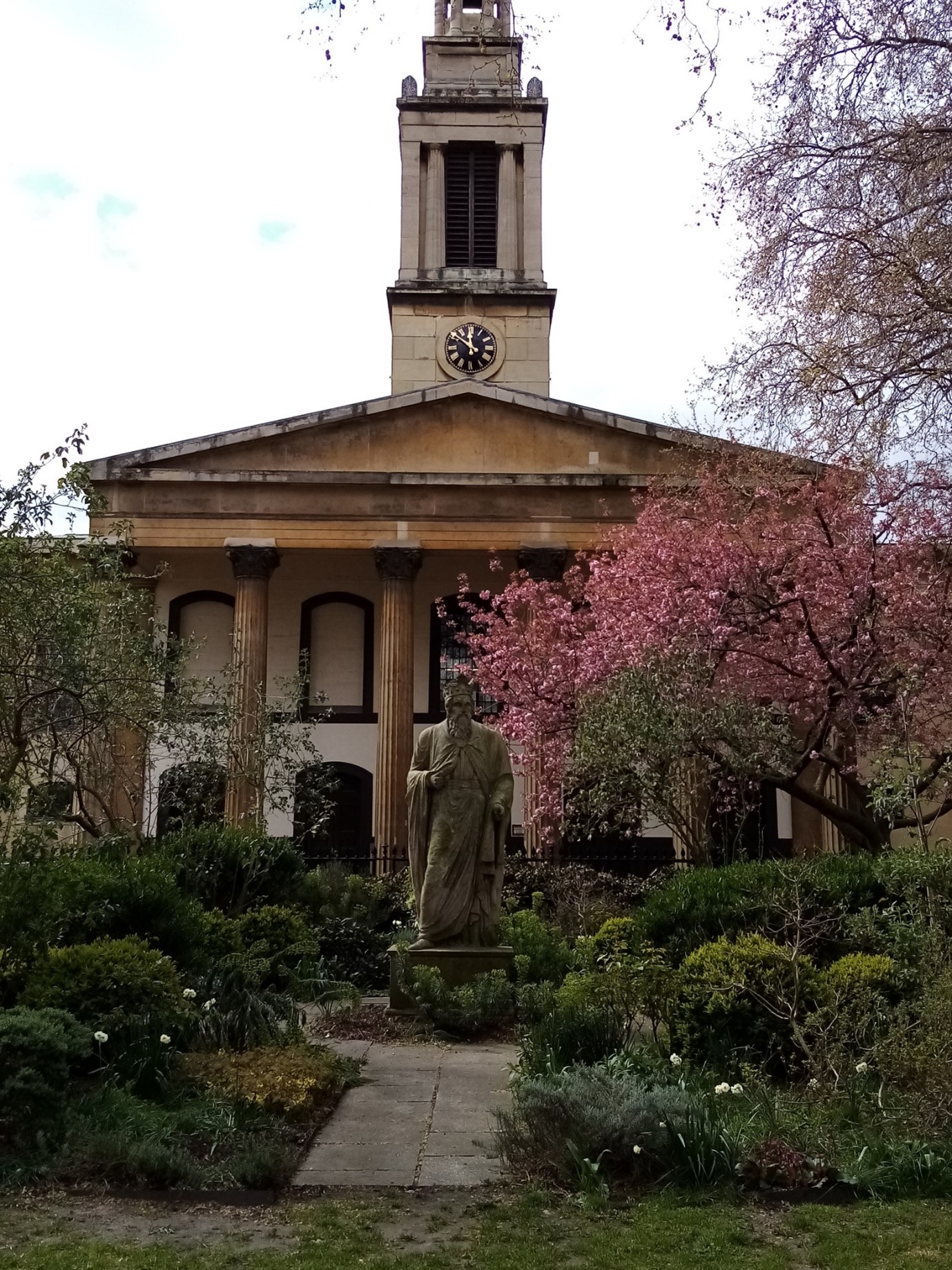
I was surprised to find that this is a private garden, one of those ones where local residents have a key to get in and the riff raff are kept out. I can appreciate why people without their own garden should have their own private recreational space, but it was frustrating that I had to take my photos through the locked gate! The building here was originally Holy Trinity Church built in 1823, with the gardens being laid out between 1824 and 1832 and the church converted to the Henry Wood Hall for music recitals in 1975. In the middle of the garden is a statue of King Alfred the Great on a stone pedestal which may once have stood in Westminster Hall.
St George the Martyr Churchyard and St George’s Gardens
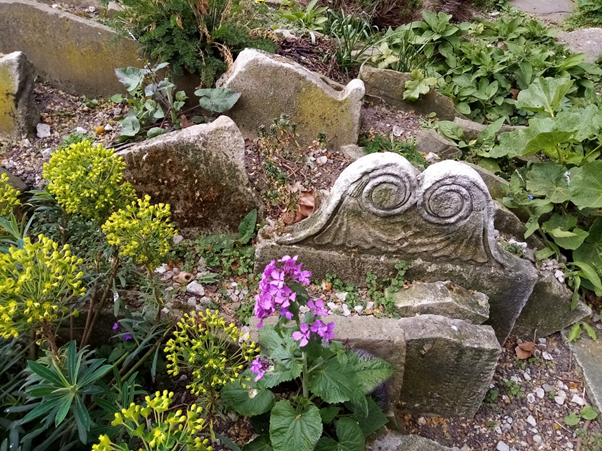
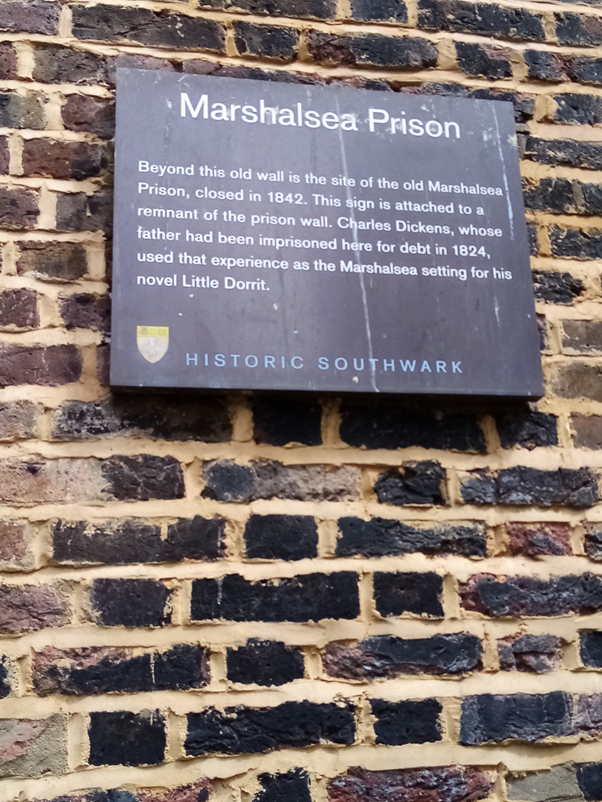
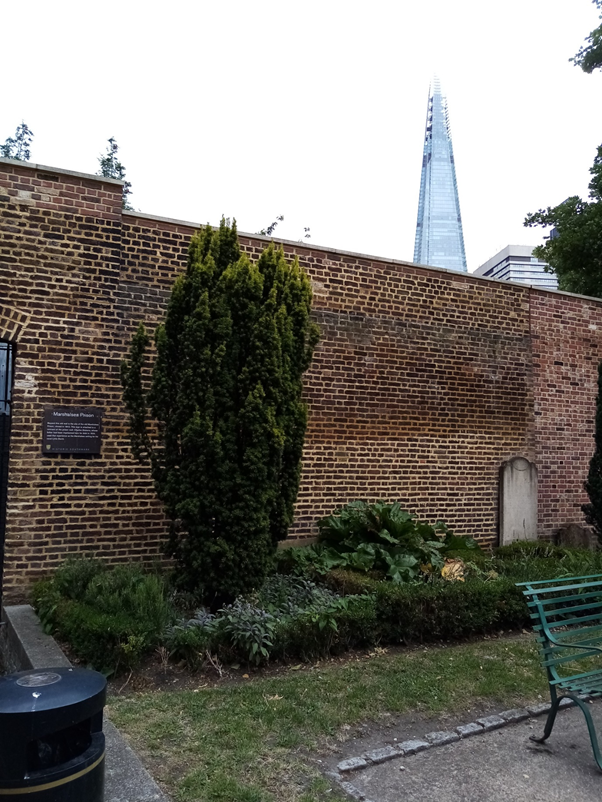
The churchyard surrounding St George the Martyr was once a much larger, single space but was split in two in 1902 by a road connecting to Borough High Street, Tabard Street (now pedestrianised). Hence there are now two separate gardens, the small one with the church in it and the larger, prettier, St George’s Gardens. There’s been a church on this site since the 12th Century and the present church dates from the 18th. Another Dickens connection: the Church is known as ‘Little Dorritt’s Church’ because the Dickens’ character was married here. A closer connection for Charles is that Marshalsea Prison, where his father was incarcerated, was situated behind the Northern boundary wall of St George’s Gardens. An unusual feature of the garden is the way some of the ancient gravestones have been made into an attractive rockery!
St Olave’s Hart Street Churchyard
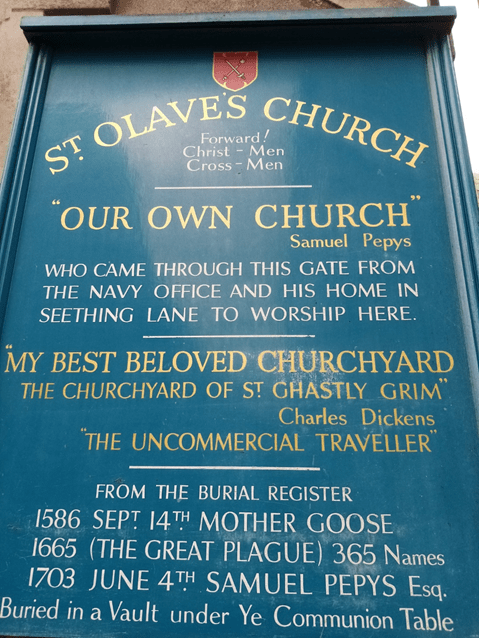
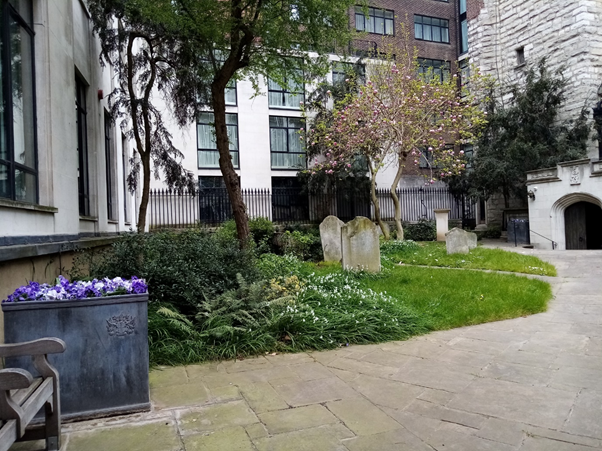
St Olave’s Church is the smallest intact medieval church in the city of London, the first building dating from the 12th Century and the current building from the 15th. St Olave’s has associations with Samuel Pepys (the Navy Office where he worked was nearby and his house was in adjacent Seething Lane) and Charles Dickens, who used the churchyard in one of his lesser-known works – with a somewhat different name! (see pic of noticeboard). Pepys was buried here in 1703, also 365 plague victims, and in 1586, Mother Goose! Who was she, I must Google that! The entrance to the churchyard is under an arch of skulls and bones, rather morbid to us today but signifying Life after Death. Seven years after the skulls were carved, the devasting Black Death gave a new significance to the sculpture. Another year of devastation followed, with the Great Fire of September 1666 destroying most of the City and surrounding area. St Olave’s survived, partly due to the ingenuity of Pepys who had many of the wooden structures surrounding it removed.
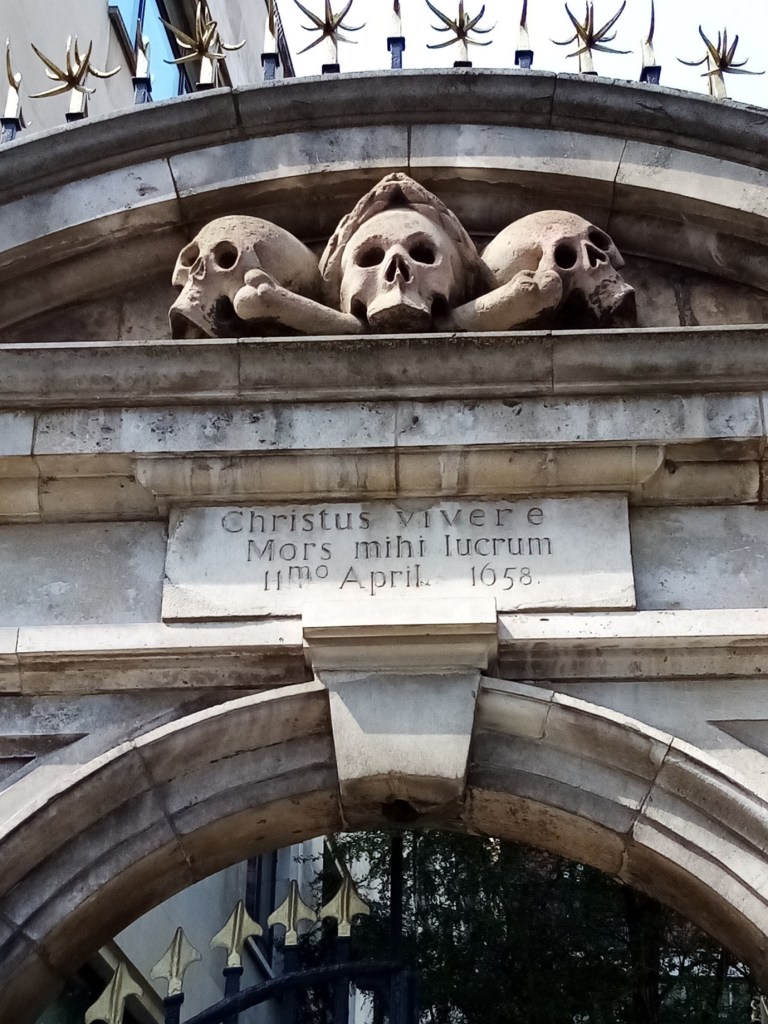
Translation: Christ is life, Death is my reward
 claresimons1