A little late with the blog post this month as I’ve spent the last three weeks travelling around England exploring its wonderful history further afield. Here are a few more Mary churches, two of them are among the 14 City churches named for the Virgin Mary, one is in the City of Westminster and the fourth is my ‘local’, St Mary’s Beddington.
St Mary Woolnoth
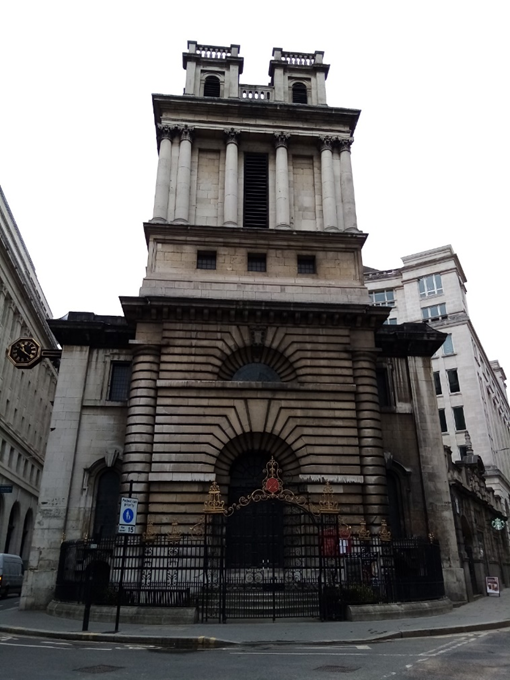
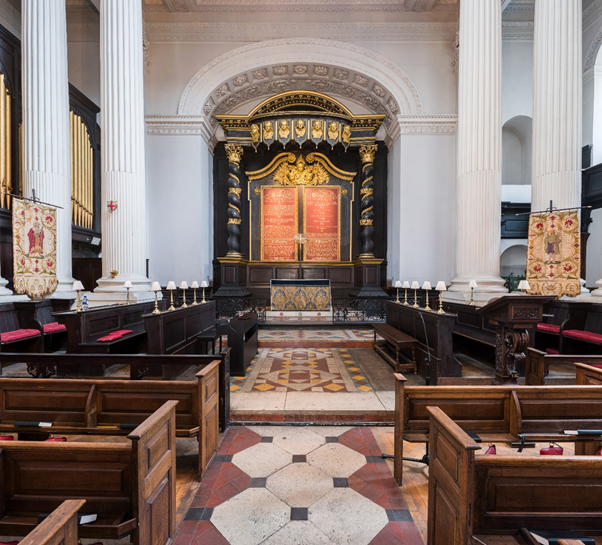
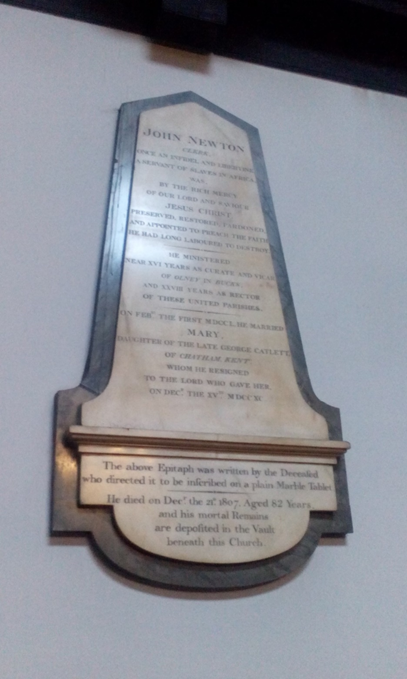
The site of this church has been used for worship for at least 2,000 years: Roman and Pagan religious buildings were discovered under the current church’s foundations, and an Anglo-Saxon church structure was recorded in 1191 on the site. The name of the church probably refers to Wulfnoth Cild, a Saxon nobleman, possibly a beneficiary. The current building was designed by Nicholas Hawksmoor, another giant of architecture commissioned to build replacement churches for those destroyed in the 1666 Great Fire. The church was completed in 1727 in the Baroque style, and is located on Lombard Street, close to the Bank of England and Bank Underground Station. I’ve only got an outside shot of the church; the website says it is open but the gates have been locked when I’ve visited. Inside there’s a plaque commemorating John Newton and his wife, Mary. Newton was a former slave owner who, following his dramatic conversion to Christianity, became an ardent abolitionist and famously wrote the hymn Amazing Grace about his salvation through belief in JesusChrist: ‘Amazing grace, how sweet the sound, that saved a wretch like me; I once was lost but now am found, was blind but now I see’.
St Mary Somerset
Situated in Lower Thames Street, this one is interesting because all that’s left of the church is the tower, in common with several other City churches. The name has nothing to do with the county of Somerset; it has links to Ralph de Somery, who is mentioned in contemporary records, or after Summer’s Hithe, a small haven on the Thames (the banks of the River were closer when the church was built in the 12th century). The original church was destroyed in the Great Fire and the new church was one of the 51 rebuilt by Sir Christopher Wren. However, in the late 1800s there was a movement of the City’s population to the new outer London suburbs leaving the City churches almost empty. St Mary Somerset was one of the churches selected for demolition as it had a congregation of about 70. The church tower was preserved as a building of interest and before the Second World War it was used as a ladies’ restroom and later a small public garden was added. It is currently being refurbished and extended into a private family home, I hope a lift is being installed! One unique feature of the church is the eight Baroque pinnacles on the top, probably designed by Nicholas Hawksmoor. That famous double-act, Wren and Hawksmoor!

Credit: Commons.wikimedia.org
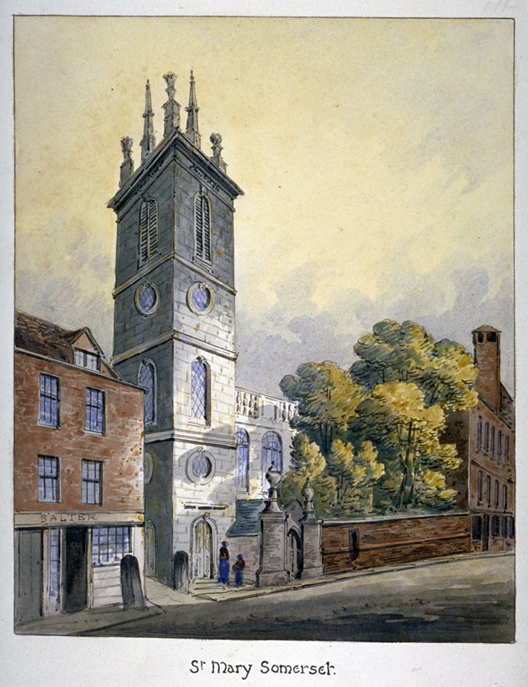
Credit: Magnoliabox.com Church of St Mary Somerset, William Pearson
St Marylebone Parish Church
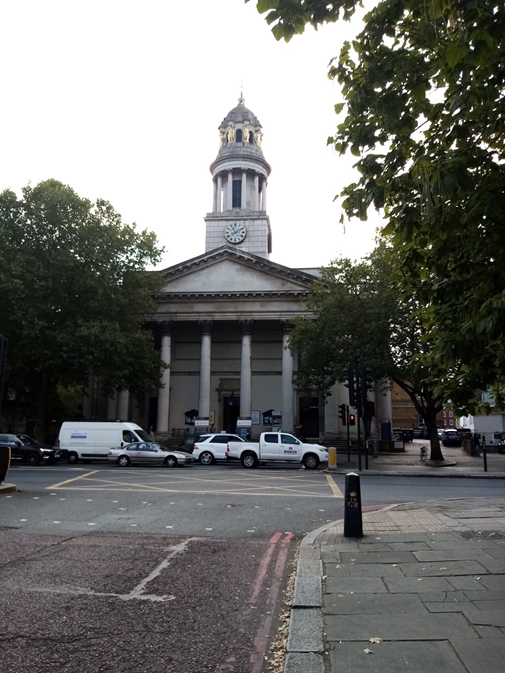
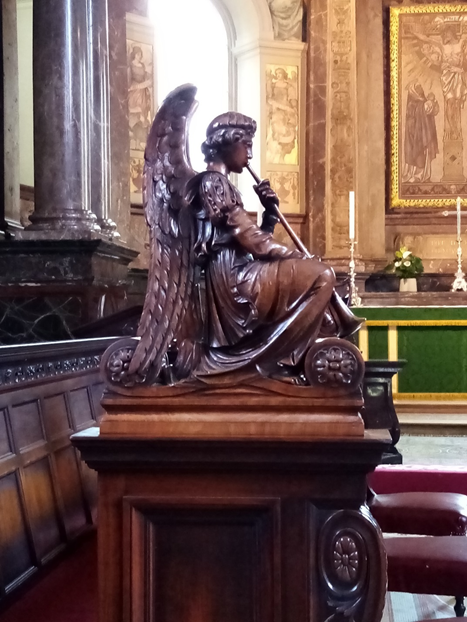
The area of Marylebone (pronounced ‘Marly-bon’) in NW1 takes its name from the Church. This is another church dedicated to the Virgin Mary and it’s been suggested that the name derives from the French ‘Marie le Bonne’; ‘Mary the Good’, but this is not correct. The original church was situated on the bank of a stream, or bourne, the Tyburn, near present-day Oxford Street, so the church became known as ‘Marybourne’. In the 17th century it became fashionable to add the French ‘le’ to place names, hence, Marylebone. The parish church of Marylebone has been in existence since at least the 12th Century and surprisingly, has been rebuilt several times in different locations. The present building was built in 1813 to the designs of Thomas Hardwick. There are several famous people connected with the church: Charles Dickens lived along the road at the corner of Devonshire Terrace; Robert Browning and Elizabeth Browning were married here in 1846; and Charles and Sarah Wesley are buried here. The area was once famous for its pleasure gardens and music halls along Marylebone Road, now it’s the home of the famous Madame Tussauds, and the Royal College of Music Museum is right opposite the church (interesting history of music and free if you want to visit.) The beautiful Regent’s Park is a short stroll away.
St Mary’s Beddington
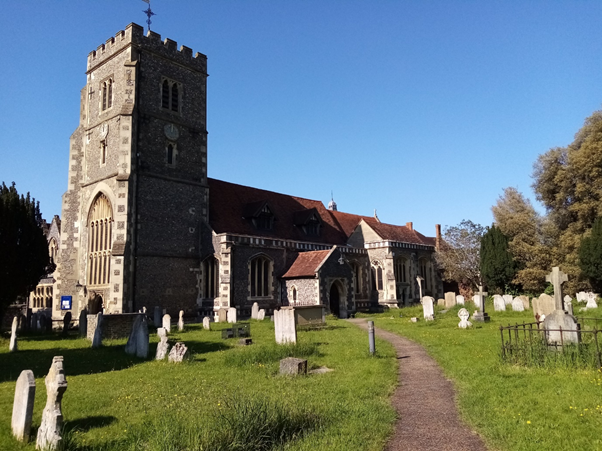
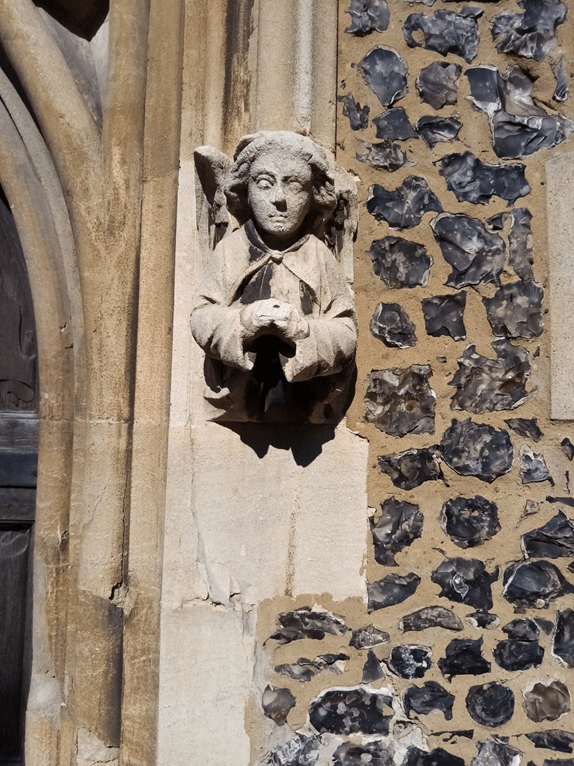
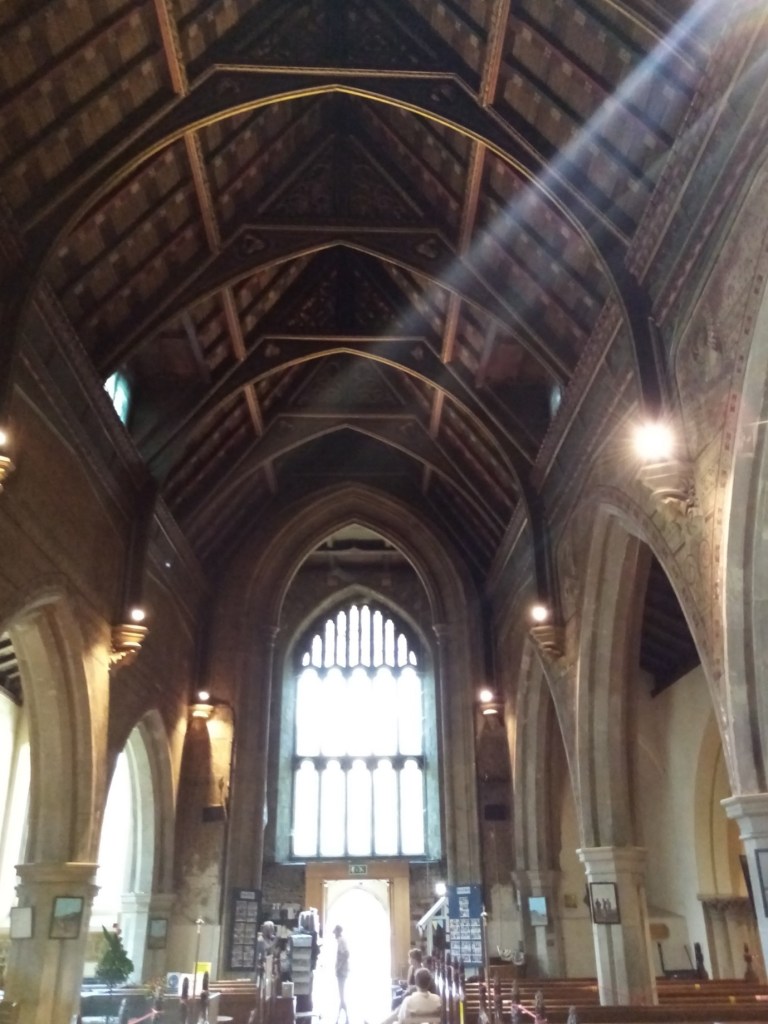
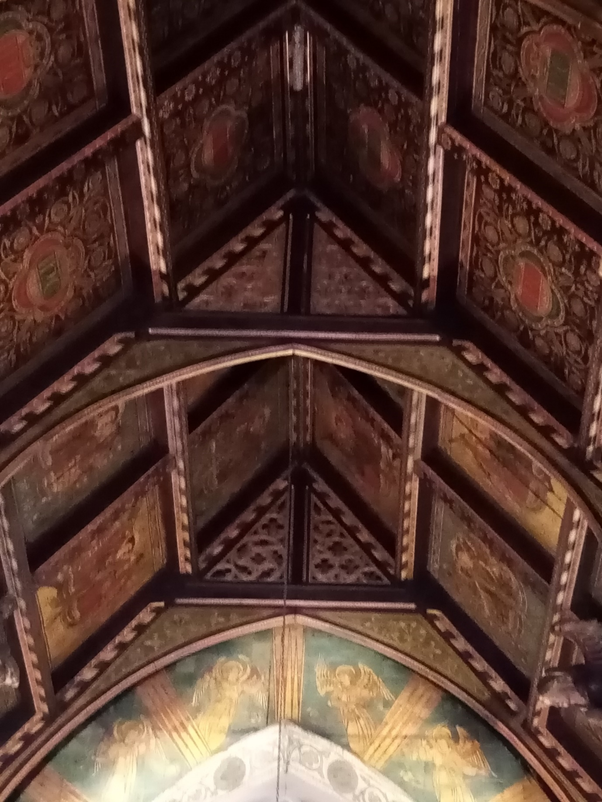
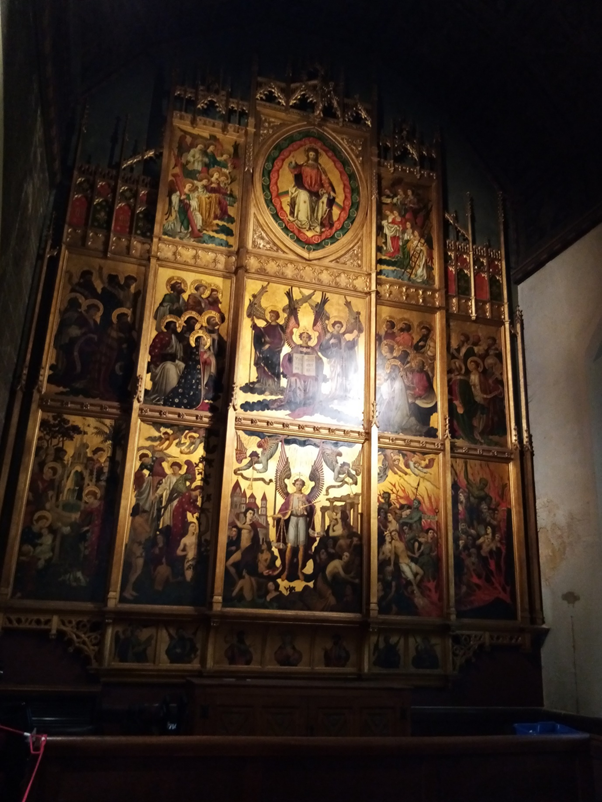
I’m really pleased that I’ve been able to include my ‘local’, the Parish Church of Beddington. The present church was built in the late 14th century and there’s evidence of a church structure on the site in 1085 when the Domesday Survey was taken. The church is situated in Beddington Park which in Tudor times was part of a deer park attached to Carew Manor (now a school) which was a major country house, home of the Carew family. Inside the church there is a striking hammer-beam roof and painted murals on the walls and ceilings. The organ screen was designed by William Morris and the church tower houses a ‘peal’ (yes, that’s the collective noun) of ten bells. There’s also a font made of Purbeck marble in the 12th century. Lovely to think of the font being used down the centuries; the church building changed but the font was preserved for future generations. The Carew chapel commemorates many of the family; there are also some brasses in the floor which are not visible, being covered over in the early 20th century for protection. The oldest commemorates Philippa Carew (1520) who died as a teenager, and 13 of her brothers and sisters who died in infancy; what a sad story. I’ll finish by modestly mentioning that I took part in an amateur production of Macbeth in the church in 2018, and watched the same company preform Hamlet there the following year. The perfect atmospheric venue for Shakespearian tragedies!
Pic Fest coming up…..
 claresimons1