Here are four more delightful London cemeteries, now closed for burials and carefully maintained by devoted ‘friends’ as wildlife havens and/or green spaces for the public to enjoy.
Tower Hamlets Cemetery Park
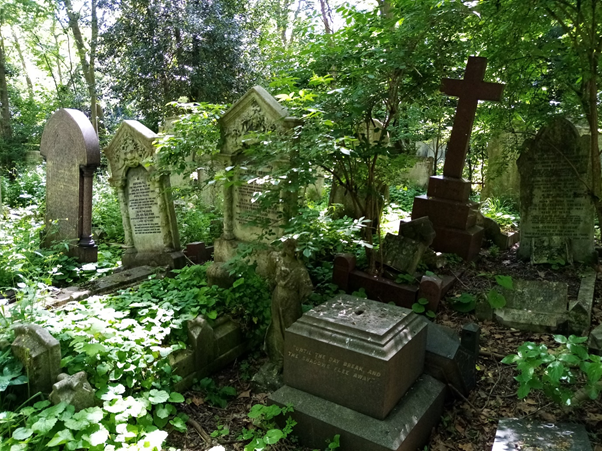
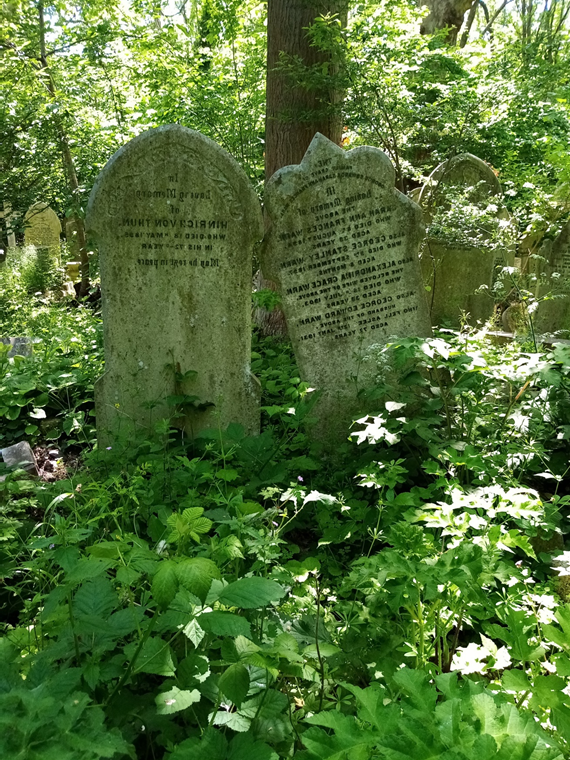
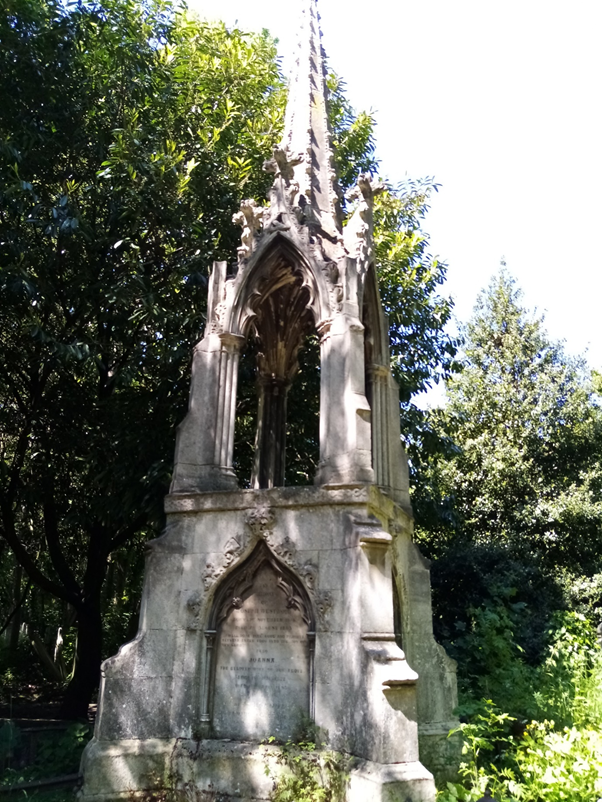
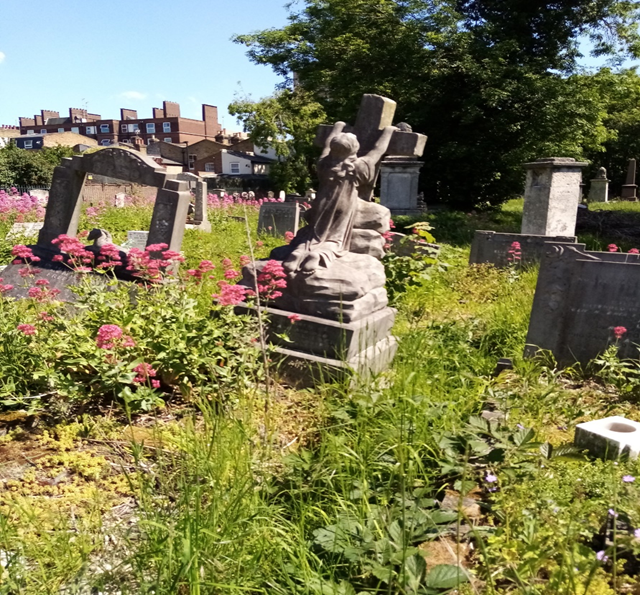
Created as one of the so-called ‘Magnificent Seven’ Victorian London cemeteries, Tower Hamlets Cemetery was closed to burials in 1966 and the site was designated a park by an Act of Parliament. The Friends of Tower Hamlets Cemetery Park is an independent charity which manages the site and ‘offers everyone a breathing space in the heart of East London’. There’s certainly a lot going on: Summer fairs, local history talks, concerts, guided walks, forest schools, a wildlife club and the intriguing sounding foraging courses! Above all, this is a beautiful place to stroll around, listening to birds singing and examining the interesting gravestones.
Reference: Friends of Tower Hamlets Cemetery Park
Bunhill Fields, City Road
Situated opposite John Wesley’s home and the Museum of Methodism (featured in March 2020), this is a non-conformist former burial ground; if you remember, non-conformists were Christians who didn’t ‘conform’ to the practices of the mainstream church. Only about 4 acres is left of a once much larger site, and it was used as a burial site from 1665 to 1854. The name ‘Bunhill’ (originally ‘Bone Hill’) has two possible derivations; firstly, that it has been used as a ritual burial site since Saxon times, but more likely is reference to its use as a mass deposit of human bones in 1549. The macabre story is that 1,000 cartloads of bones were brought from St Paul’s charnel house when it was demolished, and the dried bones were covered with soil, forming a Hill of Bones! Let’s move away from that image and move onto the famous people buried there: authors John Bunyan (Pilgrim’s Progress) and Daniel Defoe (Robinson Crusoe) and poet William Blake (Songs of Innocence and Experience.)
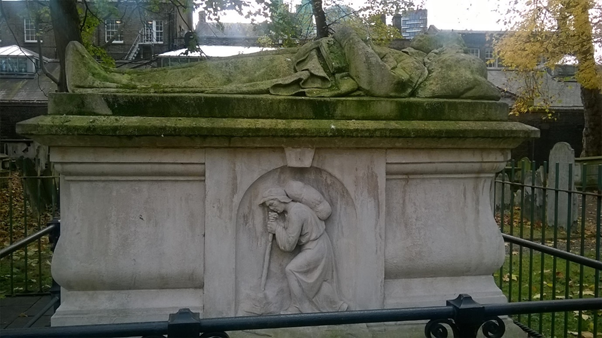
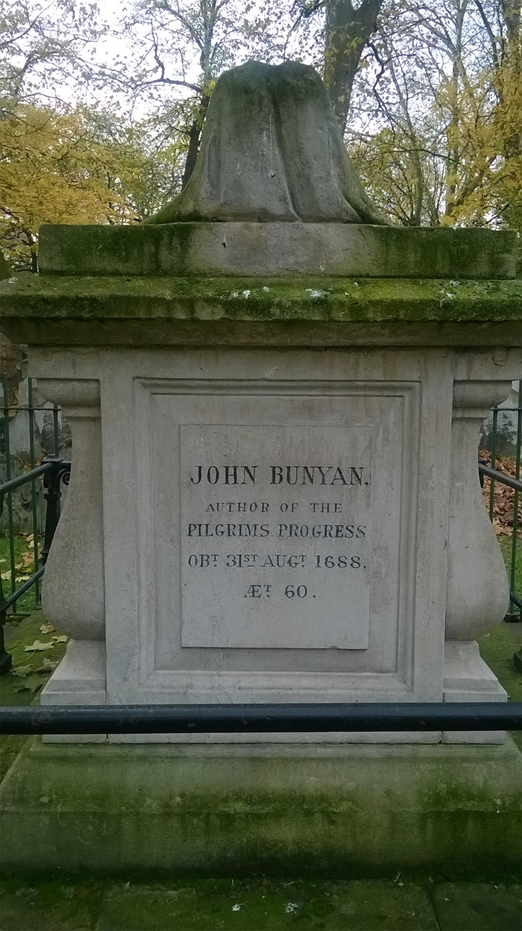
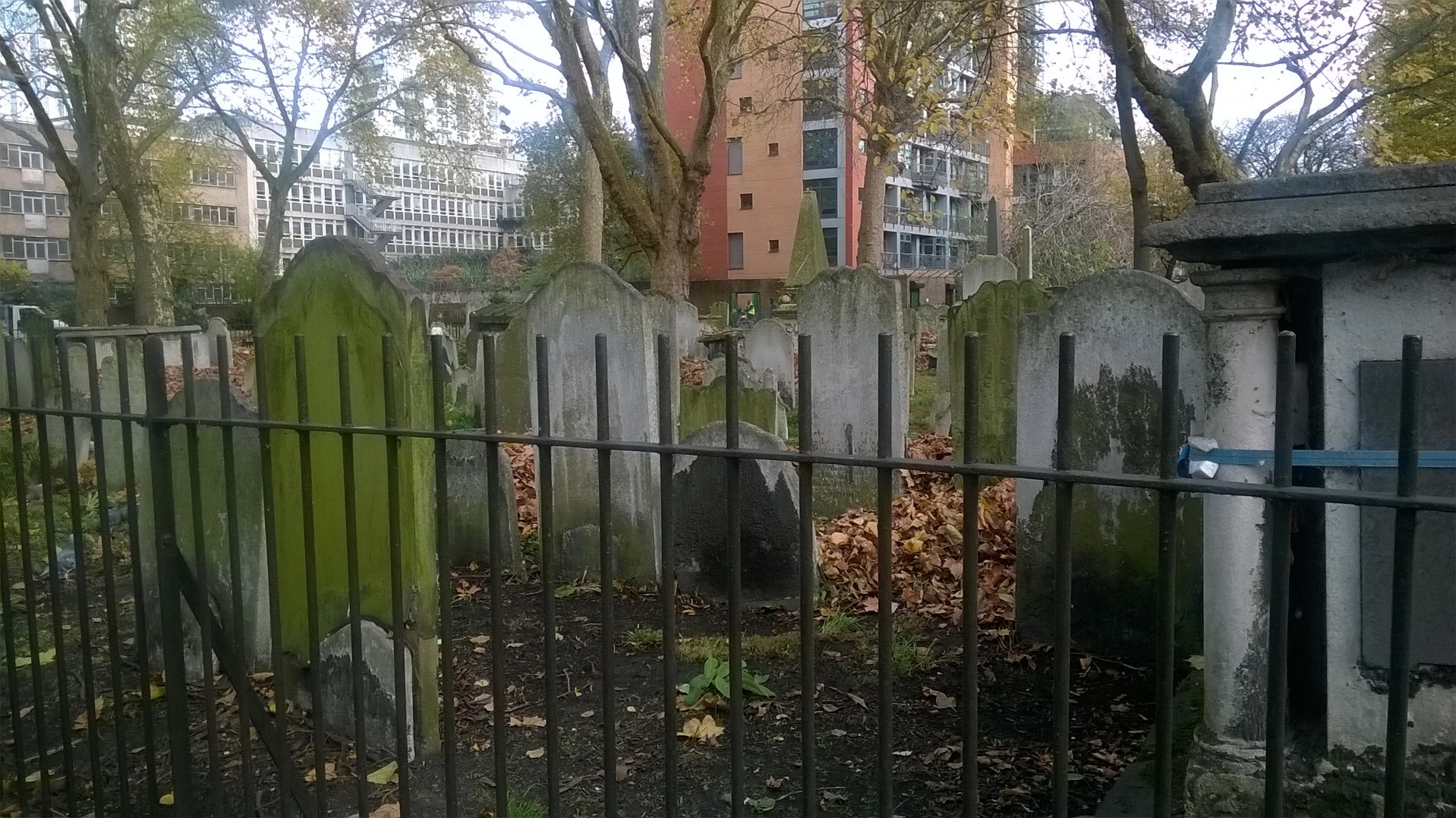
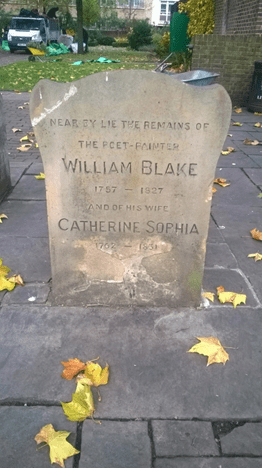

Reference: Wikipedia
Barnes Old Cemetery
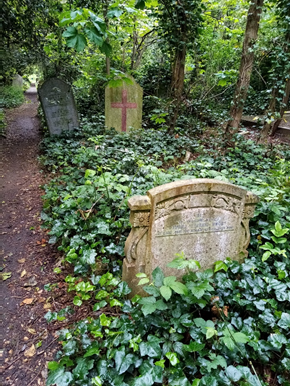
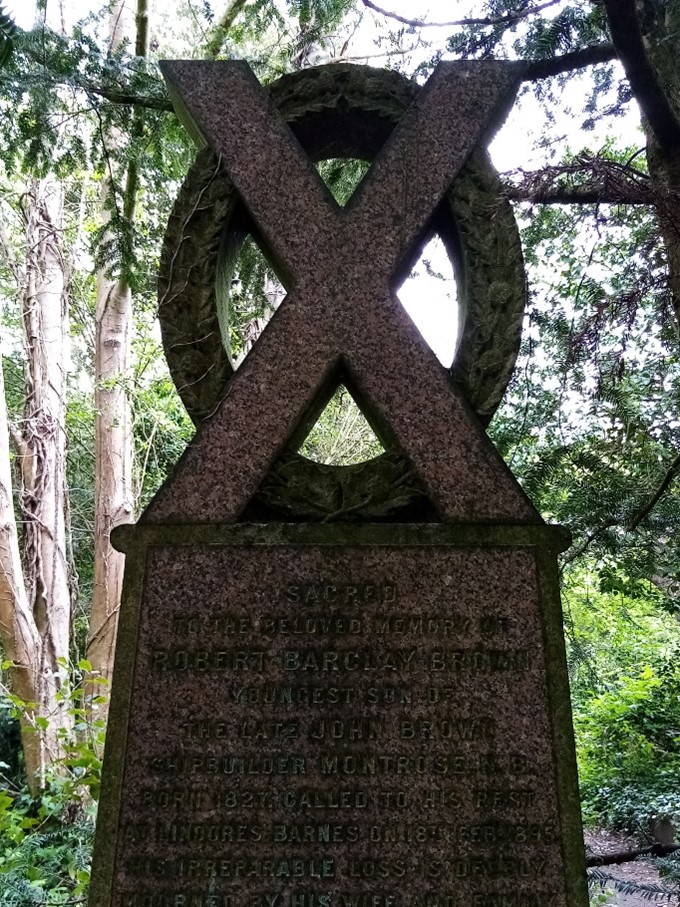
If you’re walking along the Beverley Brook path to the River Thames or wandering around Barnes Common, you may come across this cemetery, which is unique in that there are no boundary walls or railings, suddenly the gravestones appear! The cemetery began as a plot of land to provide an additional burial ground for St Mary’s Church, Barnes. It was landscaped and laid out with paths; a chapel and lodge were built and it was used until the mid 1950s. After it closed to burials it was taken over by Richmond Council in 1966, who removed the railings and demolished the chapel and lodge, with the intention of transforming it into a ‘lawn’ cemetery, i.e., monuments removed and replaced with flat gravestones. The Council abandoned these plans and the cemetery was neglected and subject to considerable vandalism to its monuments over the next 30 years. However, in the last decade or so, the site has gradually been reclaimed by Richmond Council and is now carefully managed to maintain its ‘neglected Gothic charm’. Selected thinning of vegetation has provided meandering paths and atmospheric light levels, and keeping the area mostly overgrown provides a secluded haven for wildlife. The sounds of the birds singing, the shafts of light coming through the trees and coming across half hidden, ivy-clad gravestones is a magical experience.


Reference: Wikipedia
Old St Pancras Churchyard
Not a cemetery as such but this old North London Churchyard has a fascinating history. The site of St Pancras Old Church is believed to be one of Europe’s oldest sites of Christian worship dating back to the 4th Century. The present church is picturesque and worth a visit, but it’s the churchyard and its interesting monuments that I’ll be talking about. Here’s three of the most interesting:
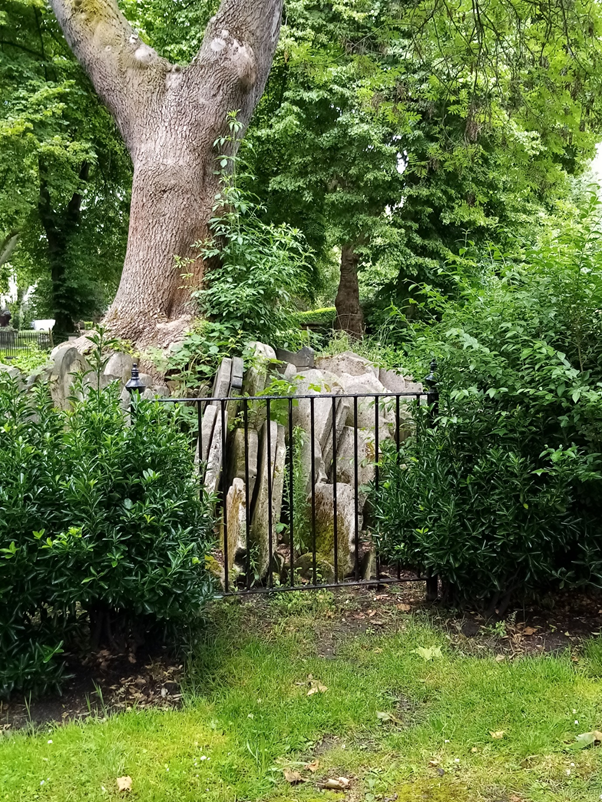
The Hardy Tree: In the 1860s, railway tracks cutting through the churchyard meant that the graves and their human remains in that part had to be exhumed and reburied, and the headstones removed. The task of relocating the headstones was given to the as yet unknown author, Thomas Hardy (Tess of the D’Urbervilles, Jude the Obscure, etc) who had associations with the church and was a trained land surveyor. The story goes that he, or an underling, stacked them around the base of this tree, now known as the Hardy Tree! Note: much better photos are available, a wire fence has been put up 3 metres from the Tree, so this is best angle, and as near, as I could get!
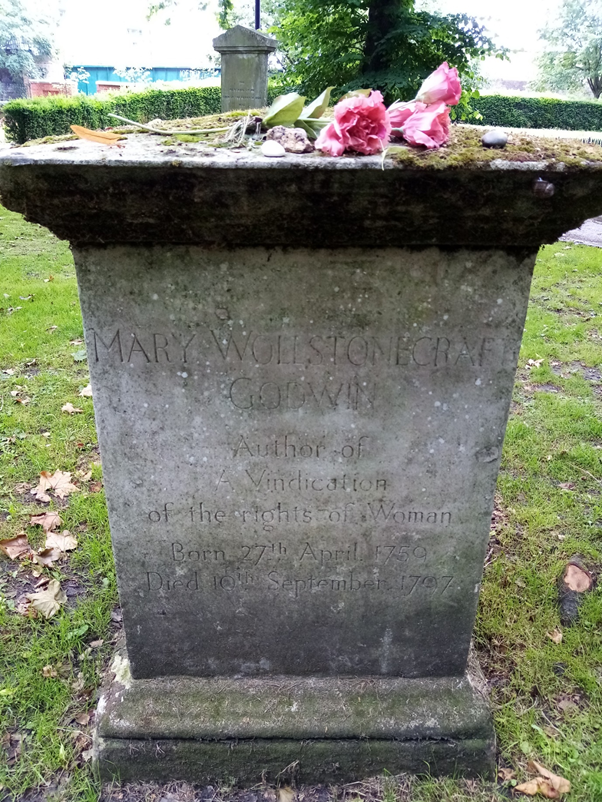
Secondly, there is a monument to Mary Wollstonecraft, a famous advocate of women’s rights and author of ‘A Vindication of the Rights of Women.’ Her more famous daughter, Mary Shelley, was the author of ‘Frankenstein.’ Mary Junior had her mother’s remains removed to Bournemouth when the new railway tracks disrupted the churchyard, but the monument remained. The fresh flowers placed on top of the gravestone show that 200 years after her death, she is still remembered with respect.
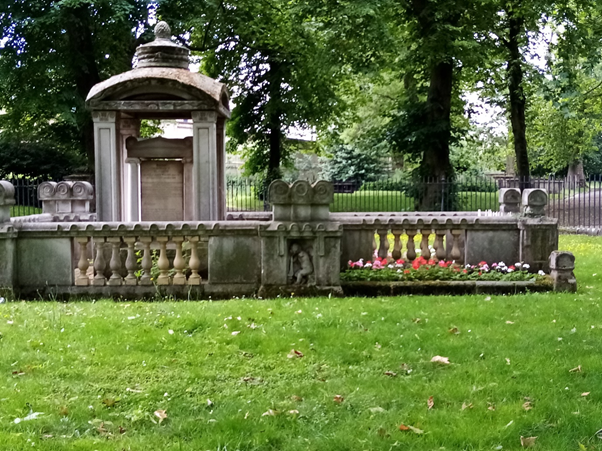
Lastly, this is the elaborate and ornate monument to the architect Sir John Soane, most famous for designing the Bank of England building. Interesting fact: this monument was one of the inspirations Sir Giles Scott took for his Telephone Box design, despite 100 years’ difference between them! Gilbert Scott was a trustee of the Soane Museum so he probably would have seen sketches of the monument in the Museum’s collection. I can definitely see it, can you?
Reference: lookup.london/old-st-pancras-churchyard
 claresimons1