I make no apology for posting yet another selection of delightful London churchyards, each with its own unique charm. These four all belong to churches outside the City, and all coincidentally, are named after male saints. August is a lovely month to wander through London’s green spaces; churchyards are tiny oases of calm and peace surrounded by the busy streets.
St John’s, Waterloo
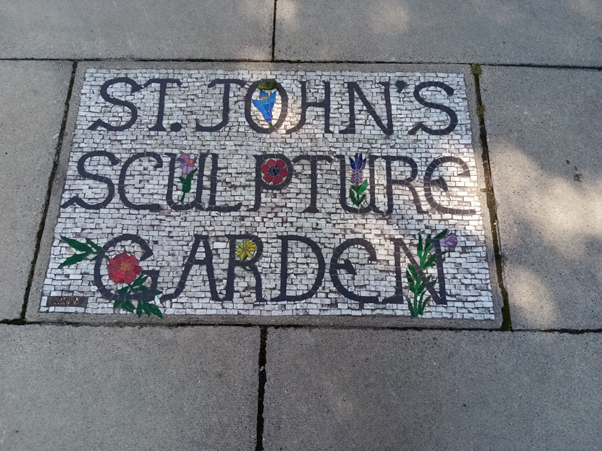
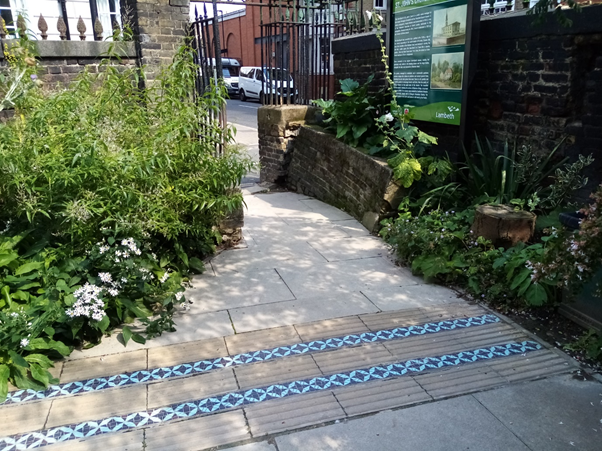
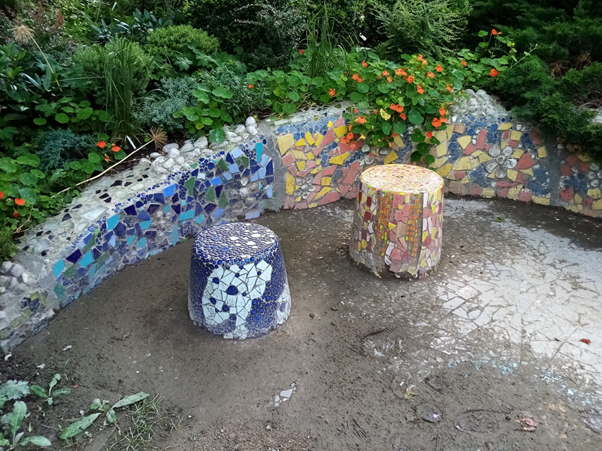
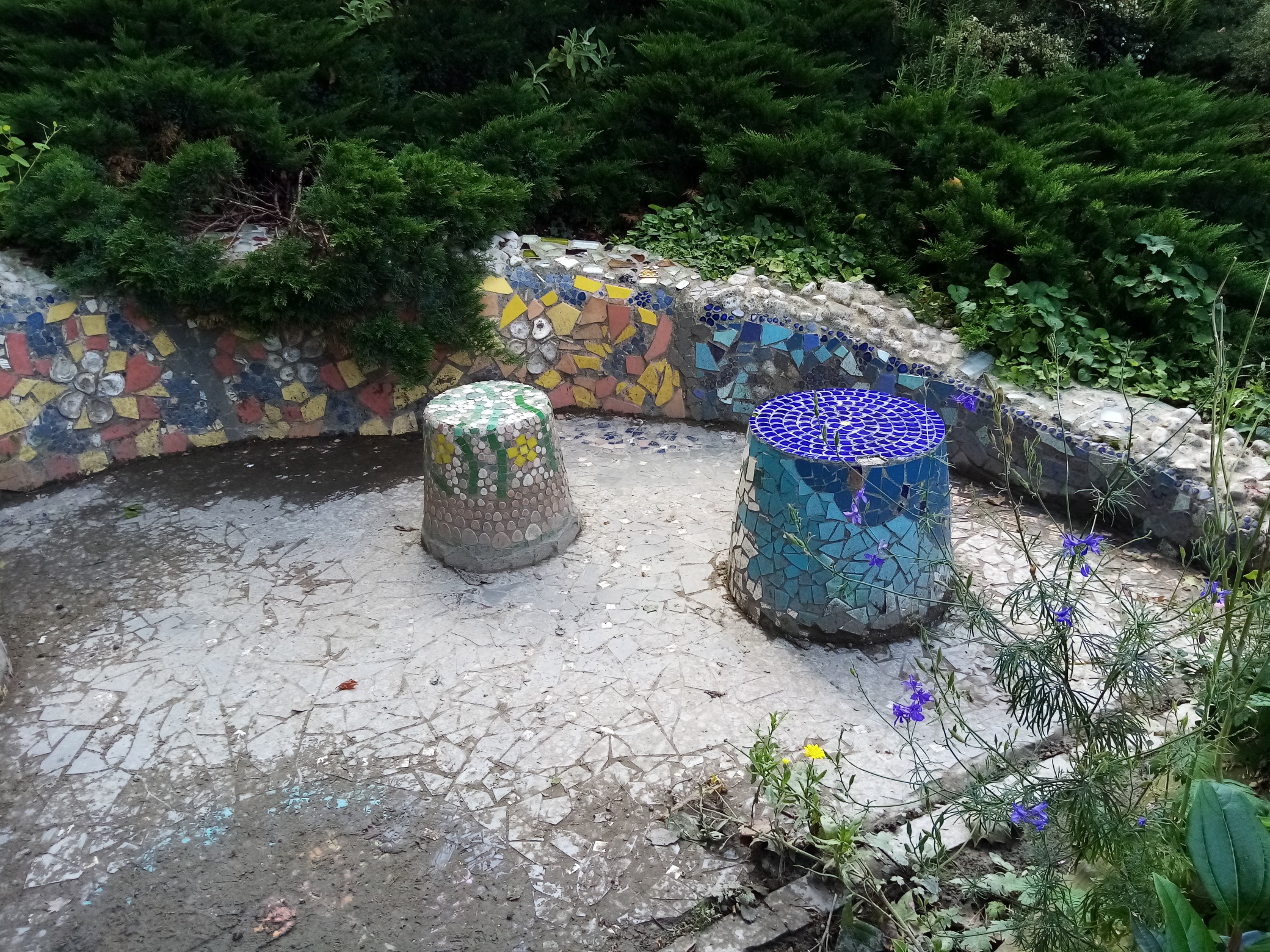
Located just off the Imax roundabout opposite Waterloo Station, St John’s is a large church which has connections with the Southbank Centre. The churchyard was converted into a garden in the 1870s by a forward-thinking Parochial Church Council, as a response to the social needs of the area (at that time, a run-down, overcrowded district.) Octavia Hill, one of the founders of the National Trust, was involved in creating the garden, and described it as ‘More like a country garden….than any other I have seen.’ I’m assuming she was referring to gardens in London, not those in the countryside! The garden is managed by volunteers and a professional community gardener and contains hedges that reduce air pollution and a wildlife garden. But what’s special about the garden is its mosaics, created by Southbank Mosaics in a community project with St Mungo’s Homeless Charity. All this information I got from the notice board in the picture. Unfortunately, some of the mosaics near the church were behind hoardings as work is being carried out on the building, but here are a few:
St James’, Piccadilly
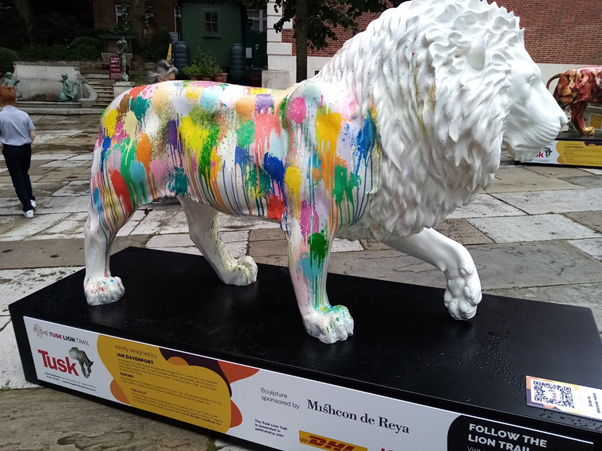
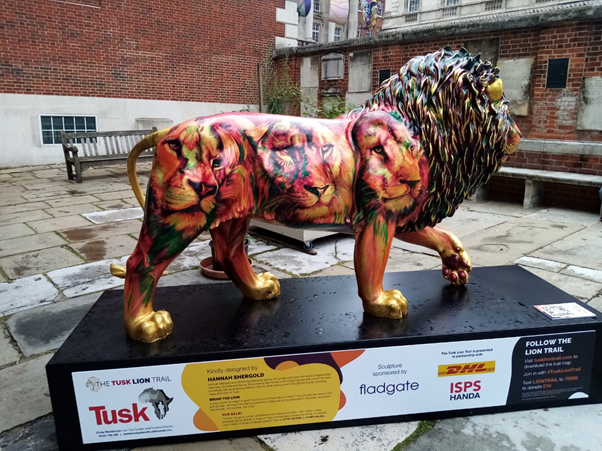
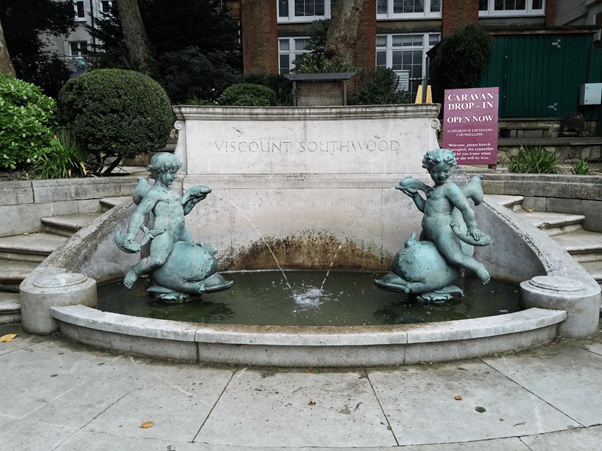
Stroll along Piccadilly from Green Park tube station, past the Ritz and the elegant 19th Century Arcades, and you reach St James’ Church. The churchyard was the home of Piccadilly Market from the 1980s until December 2020, when it was forced to close because of Coronavirus. The paved part of the churchyard now hosts art installations, currently there are four lions, part of a ‘pride’ of 27 in various locations around London. (A map showing the location of all the Lions is available from tuskliontrail.com). The Tusk Lion Trail features lion sculptures decorated by artists, musicians and comedians to raise awareness of the importance of conservation of African wildlife. The area at the side of the church was used as a burial ground for 200 years until just after the Second World War when philanthropist Viscount Southwood paid for a garden to be laid. It’s a lovely relaxing space just metres away from the hustle and bustle of Piccadilly. There’s a statue of ‘Peace’ and a stone memorial to Viscount and Lady Southwood decorated with bronze dolphins and cherubs. Again, all info is from a helpful notice board.

St Paul’s, Covent Garden
This church has been featured previously as the Actors’ Church (October 2020) but now I’m focusing on the churchyard. Just off one of the piazzas of Covent Garden, one minute you’re in a crowd watching a street performer, then suddenly the loud voices and the applause of the crowd fades as you step into this peaceful, compact garden. There’s a paved area surrounding the church displaying some interesting art and a garden with flowerbeds and lawns at the front of the church. The churchyard’s connection with Covent Garden as a space for open-air performance began in May 1662 when the diarist Samuel Pepys noted that the first ‘Italian Puppet Play’ took place under the portico of the church; the church has continued to host an international Punch and Judy show every year in May. Today the churchyard can be hired for all kinds of open-air events: music festivals, youth and schools events, theatre and opera concerts. Information from Wiki and from actorschurch.org.
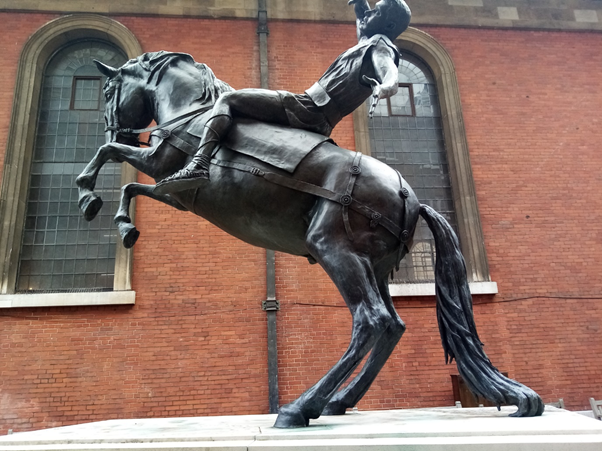
Conversion of Saul. The inscription reads: I saw a bright light from heaven, brighter than the sun, blazing about me and my companions. We fell to the ground and I heard a voice saying to me, ‘Saul, Saul, why are you persecuting me?’ Then I asked, ‘Who are you Lord?’ and he said, ‘I am Jesus whom you persecute.’ Acts 26 v12-15

St Luke’s, Chelsea
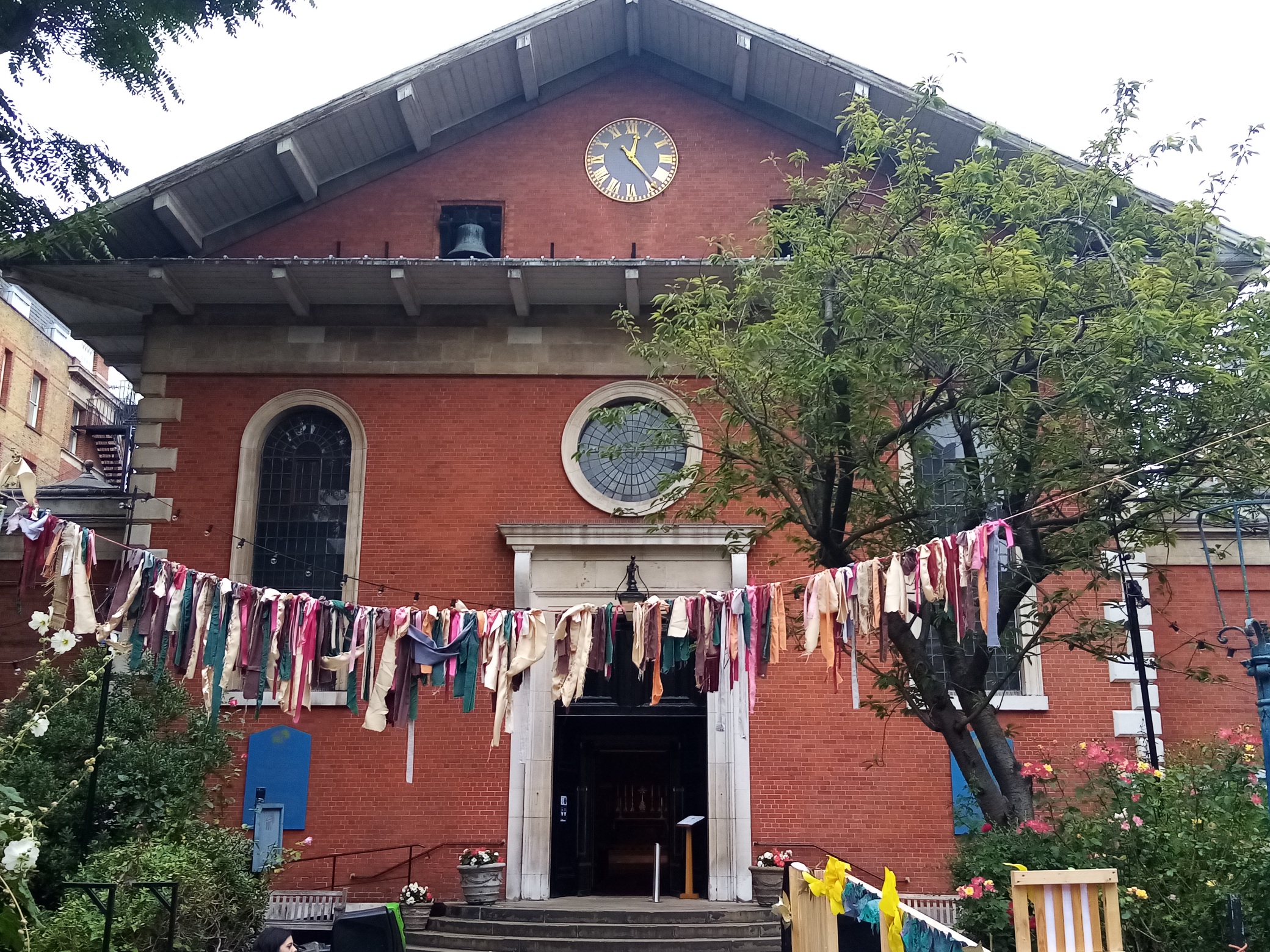
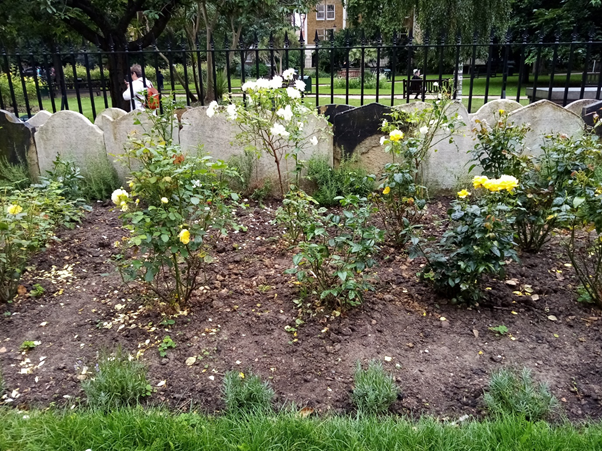
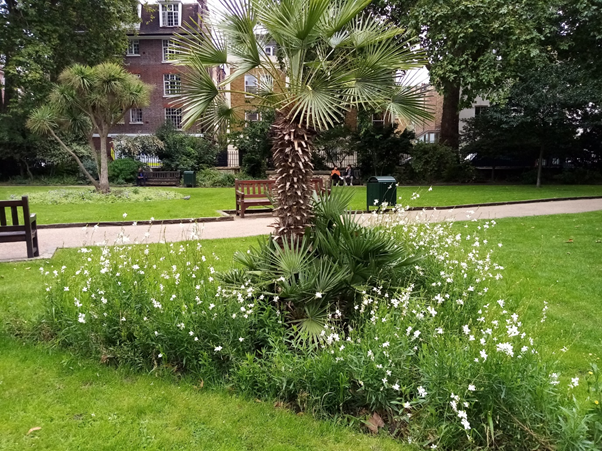
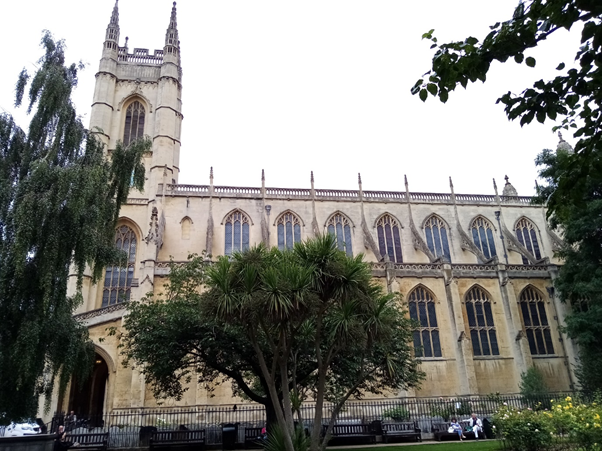
Opposite the Brompton Hospital is the magnificent St Luke’s church and its English Heritage Grade ll listed garden. St Luke’s Gardens is on the Register of ‘Parks and Gardens of Special Historic Interest in England.’ Formerly the graveyard of the church, it ceased to be a burial ground around 1857 and was converted to a public garden in 1881. The gravestones were moved to form a boundary wall of the garden and hundreds of them still remain in place. The garden was created with a grant from the London County Council and continues to be managed and maintained by the Royal Borough of Kensington and Chelsea. It’s more like a park than a churchyard, when I visited there were families having picnics, people exercising and walking dogs, and office workers buying lunch in the church’s café and eating in the garden. It’s also a quiet, contemplative place for people to come after visiting relatives in the Brompton across the road. Information from the noticeboard and from rbkc.gov.uk.
 claresimons1