Two years ago, I walked the deserted streets of the City of London, looking up at the ancient churches now dwarfed by the skyscrapers of the late 20th and early 21st centuries. In my July 2020 blog post, I mentioned that I would love to look inside these churches when circumstances allowed. So exactly two years later, I’ve revisited four of them, gone through their doors for the first time to explore their histories and present-day stories, and I wasn’t disappointed!
St Olave’s Hart Street
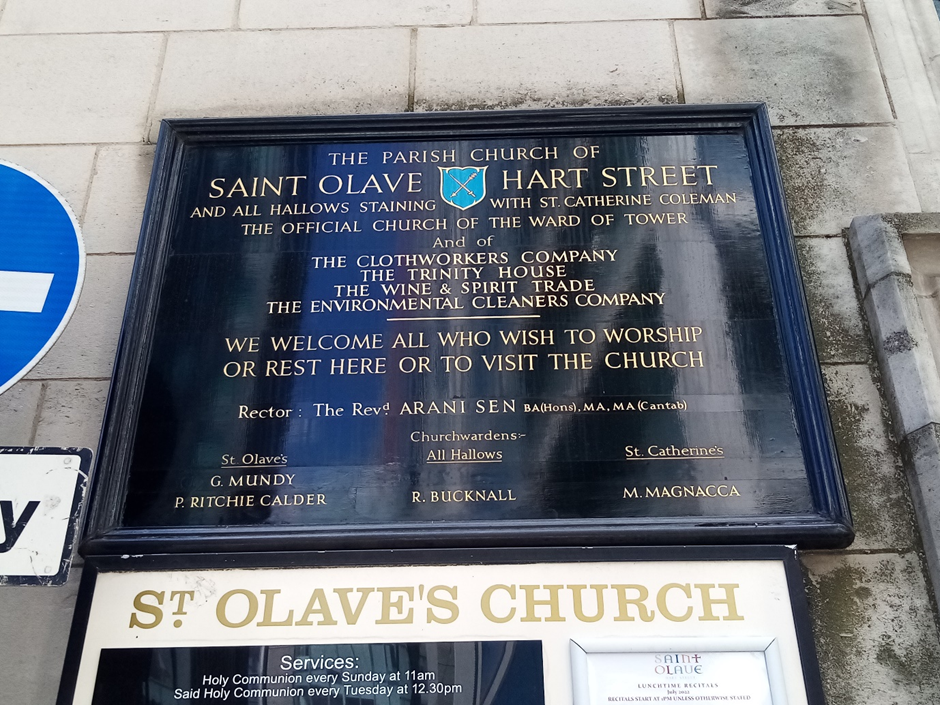
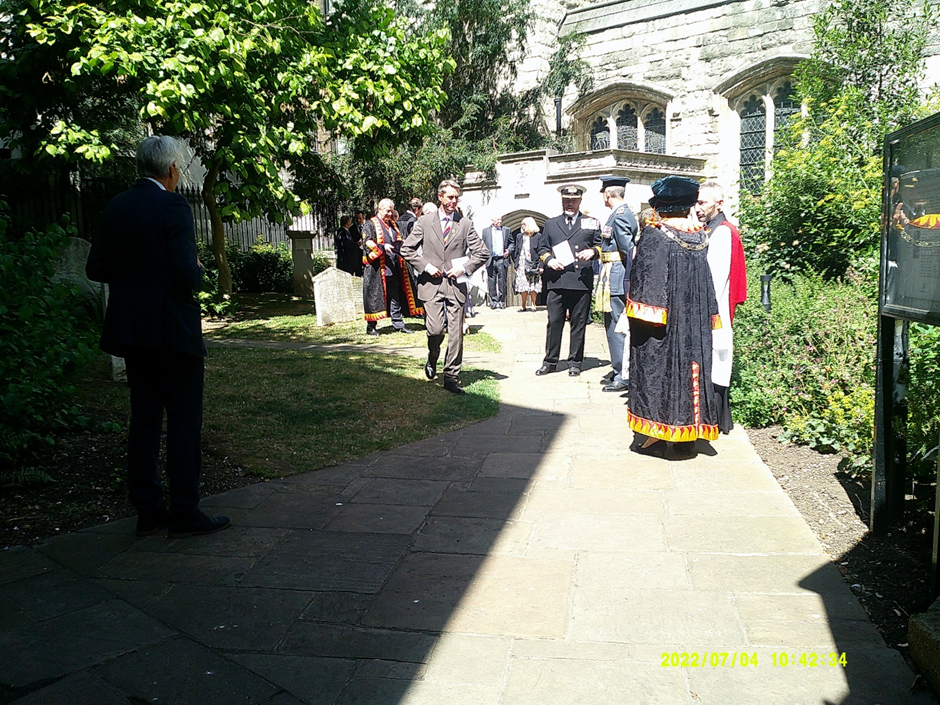
What’s interesting about St Olave’s is that it’s the Parish Church of several of the City’s Trade Guilds or Companies. When I visited I had to wait to go in because a service of thanksgiving for the Worshipful Company of Fuellers was taking place inside. The Company of Fuellers is associated with the whole energy sector and began as the Coal Traders Company. The company motto is In Carbone Robur Nostrum – Our Strength in Coal. St Olave’s is one of the smallest churches in the City and is one of the few that escaped the Great Fire of 1666, due to the surrounding houses being blown up to create a fire break. The flames came within 100 yards of the church, but a change of wind direction saved it. The church is dedicated to King Olave ll, the Patron Saint of Norway, who fought alongside the Anglo-Saxons against the Danes in the Battle of London Bridge in 1014, and a church was erected on the battle site. The current church dates from the 13th Century, replacing the earlier wooden construction. 1,000 years of history, right there! (My favourite Worshipful Companies – one very old: The Cordwainers Company; and one very new: The Environmental Cleaners’ Company!)
St Katherine Cree
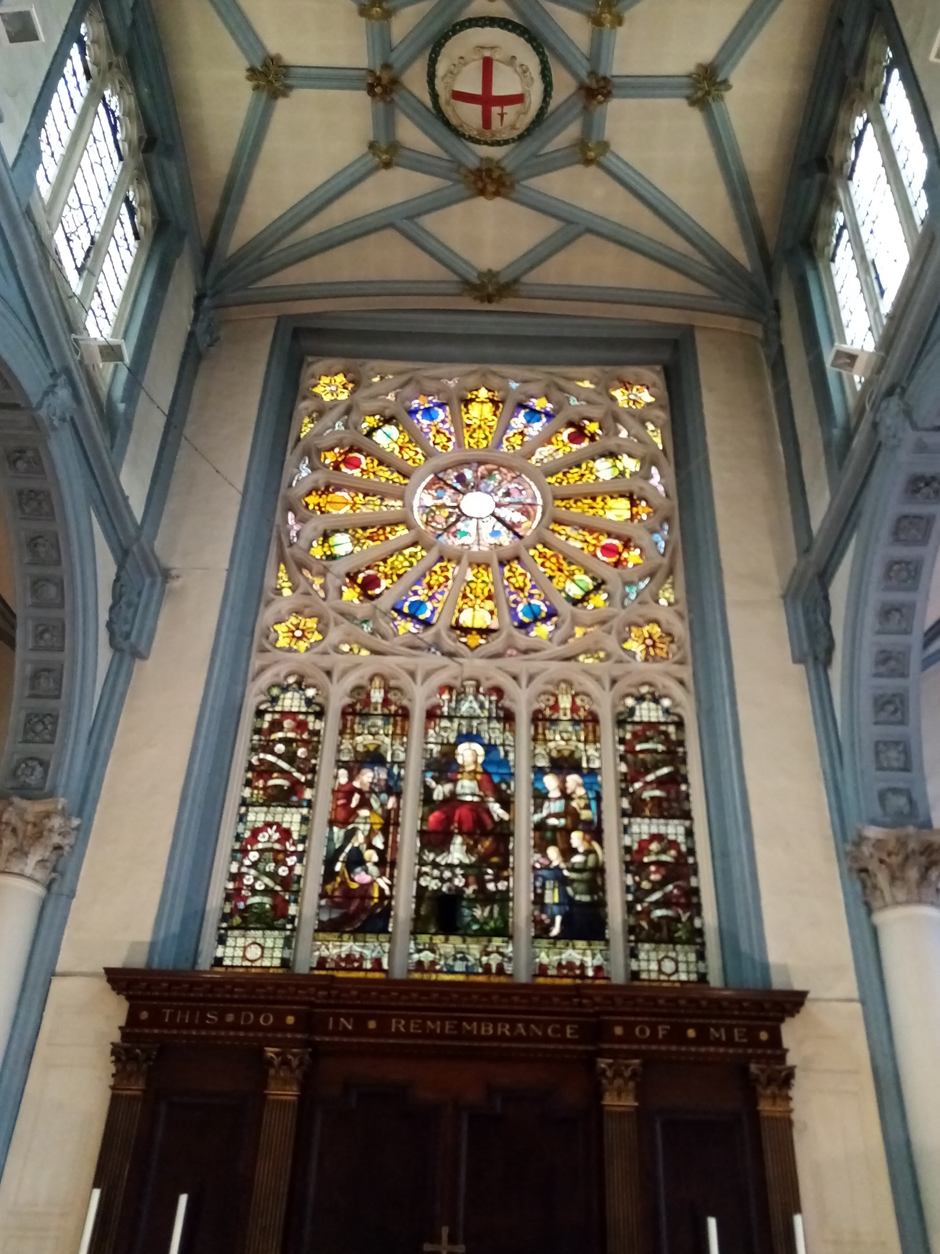
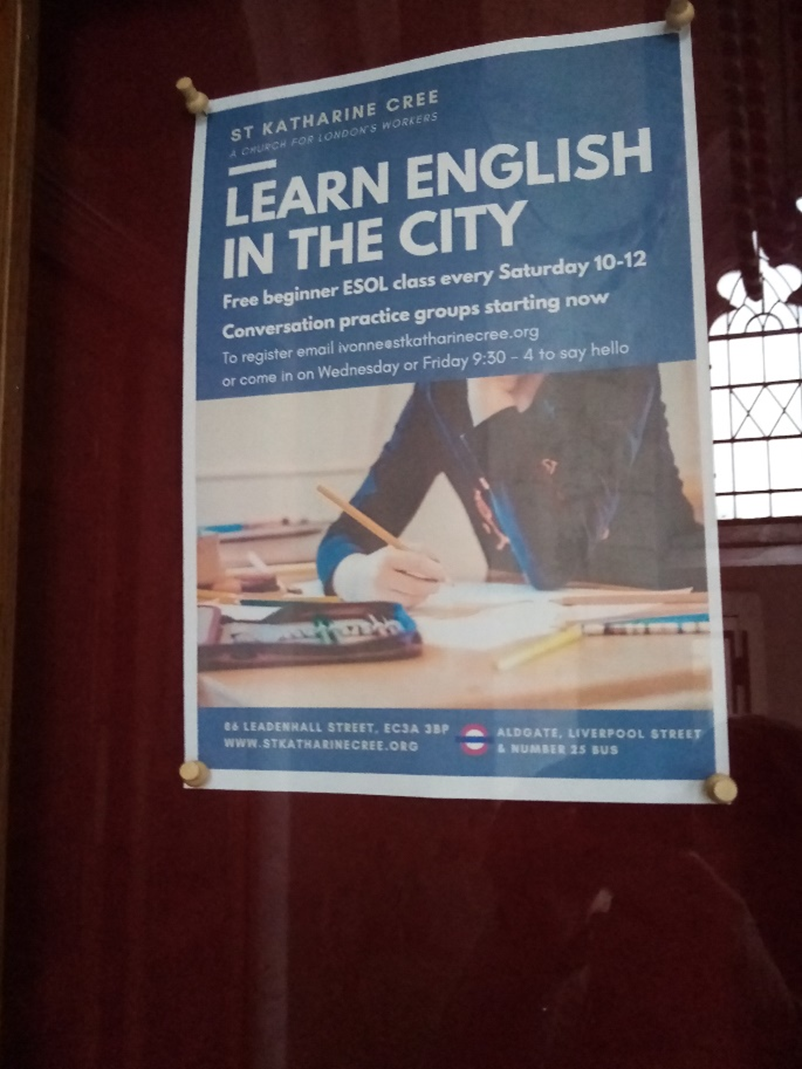
A priory was founded on this site in 1108 and a separate Parish church was built in 1280 for the growing population. The present building was built in 1628-30 ‘a significant church of the Jacobean period, a time when few churches were being built. It is the only Jacobean church to have survived in London’ (Wiki). I’m guessing that all other churches are either much older or much newer! Inside, there is a spectacular rose window, reputedly modelled on a larger one in the old St Paul’s Cathedral which was destroyed in the Great Fire. On the vaulted ceiling are bosses (small plaster sculptures) representing the Arms of seventeen of the City’s Livery Companies. Tradition has it that these Companies used St Katherine Cree after the 1666 Fire while their own churches were being rebuilt. The church is another Guild church with a specific ministry to finance, commerce and industry, reflecting the activity which goes on around it. the Today St Katherine Cree serves its week-day community with English Language courses, lunchtime Bible study and Holy Communion and Lloyd’s choir practices. A church with 1,000 years of service to its changing community.
St Andrew Undershaft
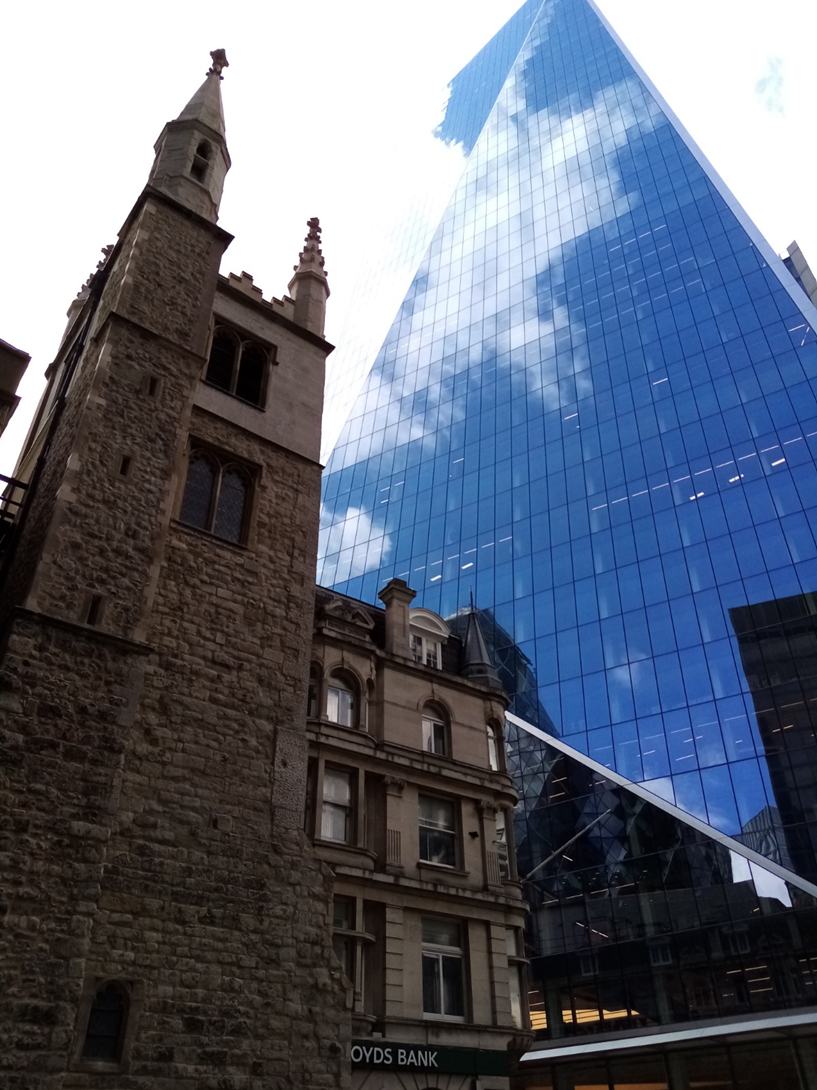
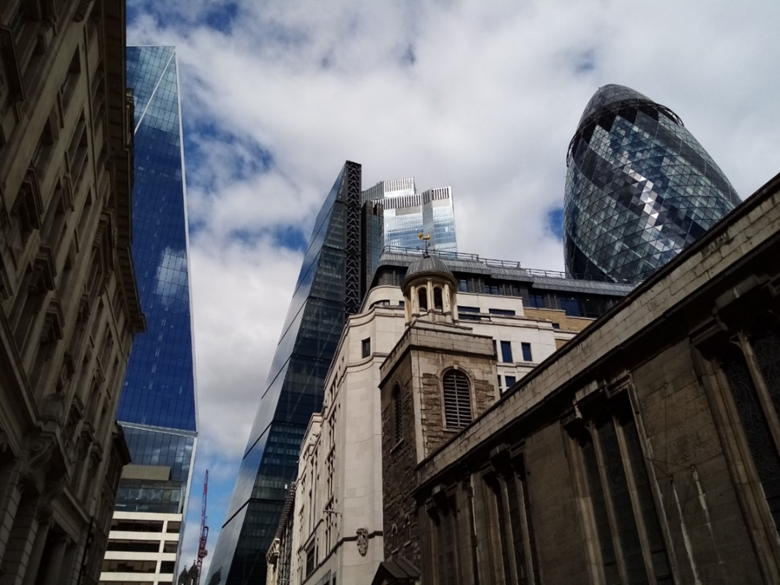
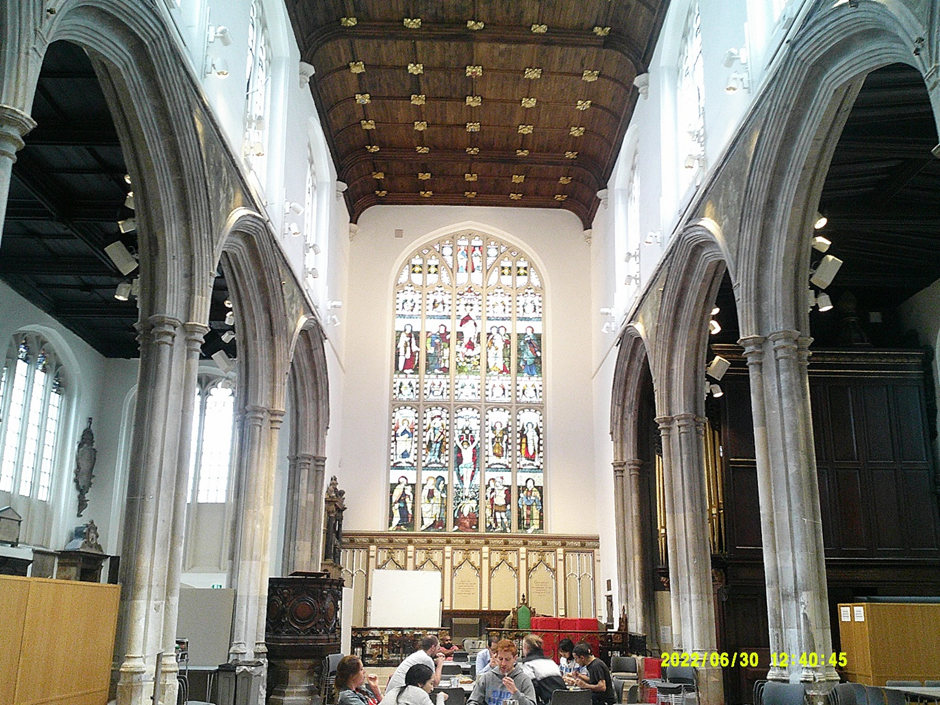
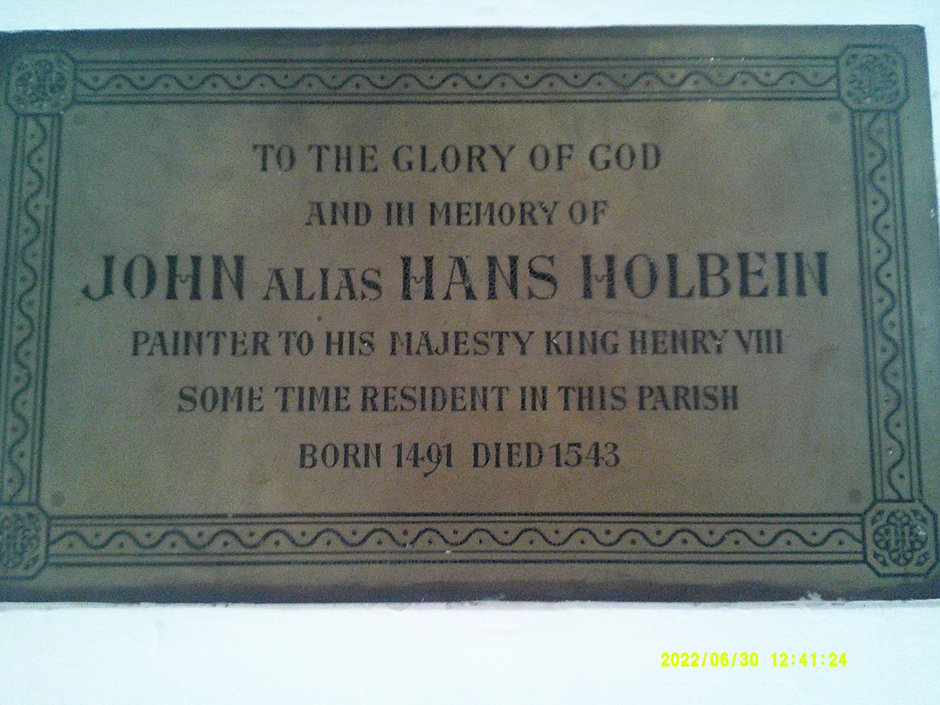
This is my favourite photo of St Andrew, with The Scalpel looming up into the sky, and The Gherkin reflected in its lower windows. Situated in St Mary Axe, you probably know St Andrew’s famous neighbour at Number 30, The Gherkin, built on the site of the Baltic Exchange, which was destroyed by an IRA bomb in 1992. St Andrew has survived the 1666 Great Fire, the 1940s Blitz bombings and the 1992 bombing; however, its large stained-glass window, apparently one of the finest in London, was destroyed. When I visited the church on a weekday I had to buzz an intercom to gain access, which I thought was unusual for a City church, whose doors are always open to visitors. The welcoming lady who let me in explained that the team of workers from three neighbouring churches were having their lunch break in the church:, but that I was welcome to look around. One of the team kindly offered to show me round, pointing out some items of interest: a monument to John Stow, an English historian, author of The Survey of London, published in the 1560s. The quill pen in his hand is renewed annually by, alternatively, the Lord Mayor of London and the Master of the Worshipful Company of Merchant Taylors. There’s also a plaque dedicated to Hans Holbein the Younger, portrait painter to Henry Vlll. Holbein is either buried here, or possibly at St Helen’s Bishopsgate, no one seems to know for certain!

St Helen’s Bishopsgate
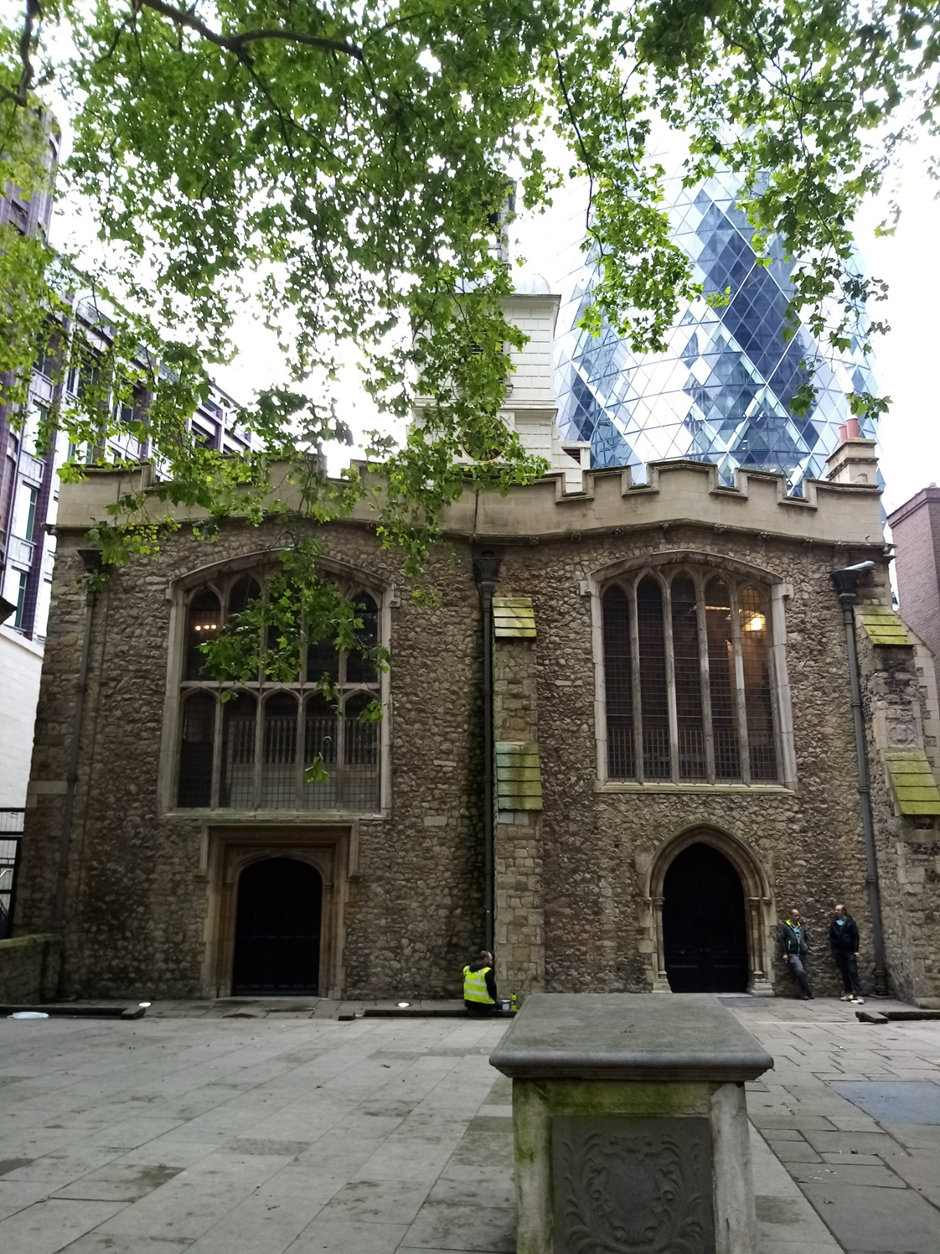
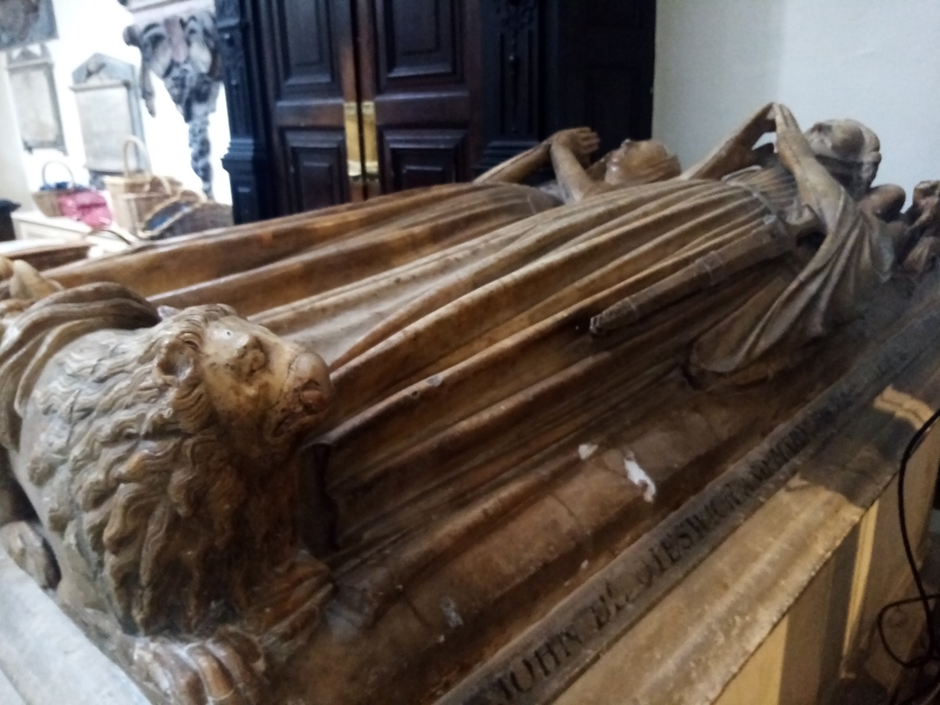
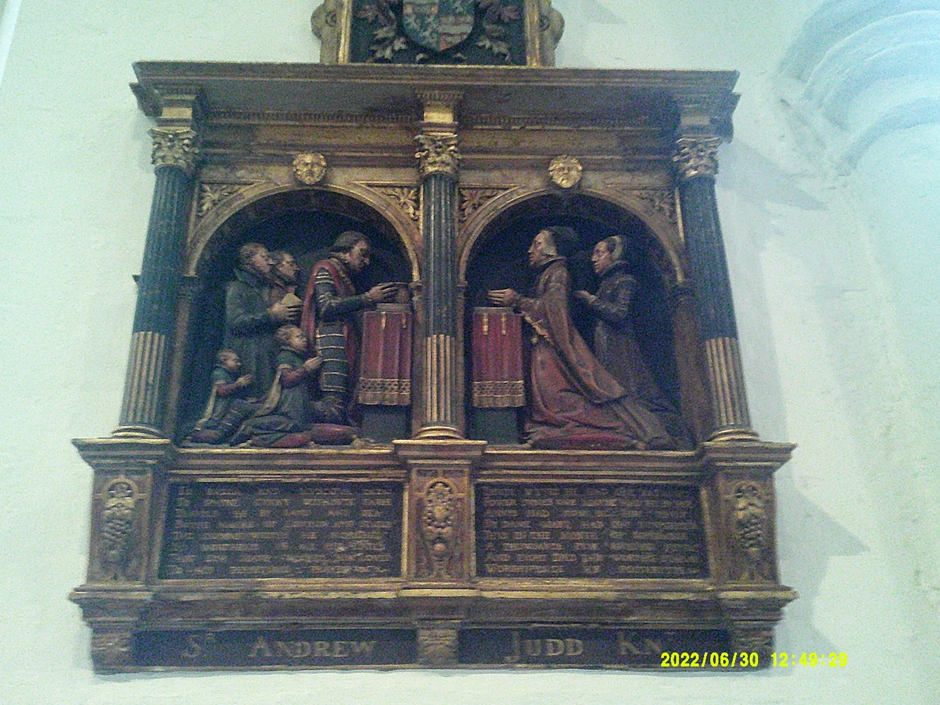
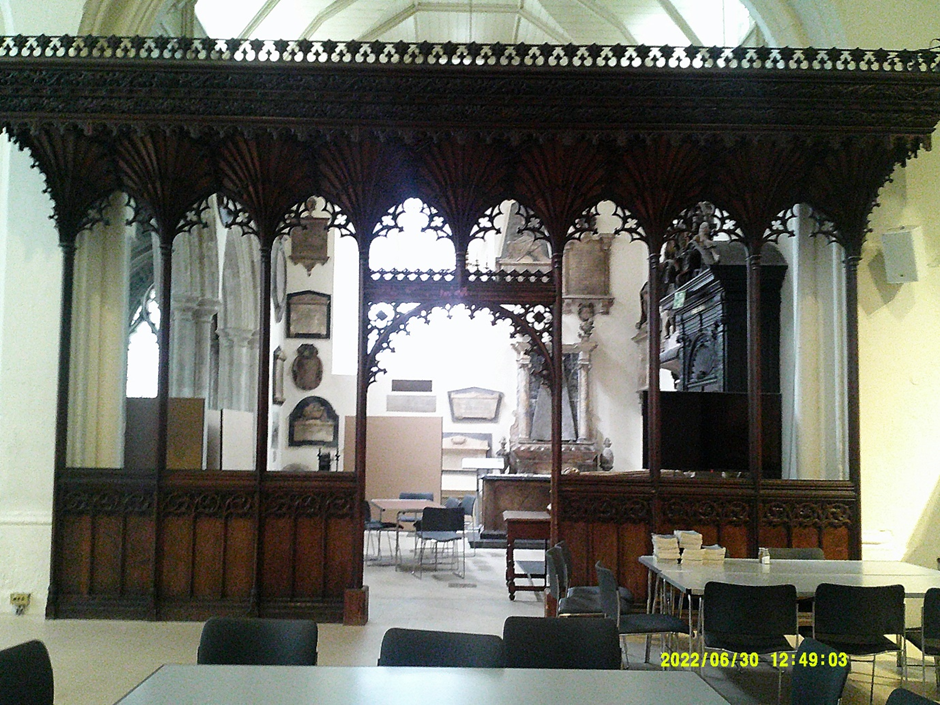
The largest surviving Parish church in the City of London, and containing the most monuments of any London church, St Helen’s is referred to as the ‘Westminster Abbey of the City’. The church was very badly damaged, but not destroyed, in the 1992 bombing of St Mary Axe, and architect Quinlan Terry, an enthusiast of Georgian architecture, was commissioned to carry out a full restoration. The interior space was redesigned to suit a large Evangelical congregation, with the addition of a baptistry and a new gallery, increasing the seating capacity to 1,000, with a clear view of the pulpit for everyone. What I like about this church is that the design suits a 21st century congregation, but some ancient monuments remain in situ, making it a fascinating place to explore. As long ago as the 1960s, forward-thinking Rector Dick Lucas grew the congregation from a few individuals to a church which served City workers all week round. This legacy has continued, with St Helen’s administrating St Andrew Undershaft and nearby St Peter upon Cornhill, between them offering an extensive range of meetings, courses and events: lunchtime talks, ‘Read, Mark, Learn’ groups which study the Gospels, and the Christianity Explored course. In addition, St Helen’s holds three English-speaking services each Sunday and also a Mandarin-speaking service. There are also midweek and Sunday lunches and other social events.
 claresimons1