Working my way through the City churches, I’ve noticed that several have quite odd names, all of which are explainable after a little research. Here are the four most unusual:
St Andrew by the Wardrobe
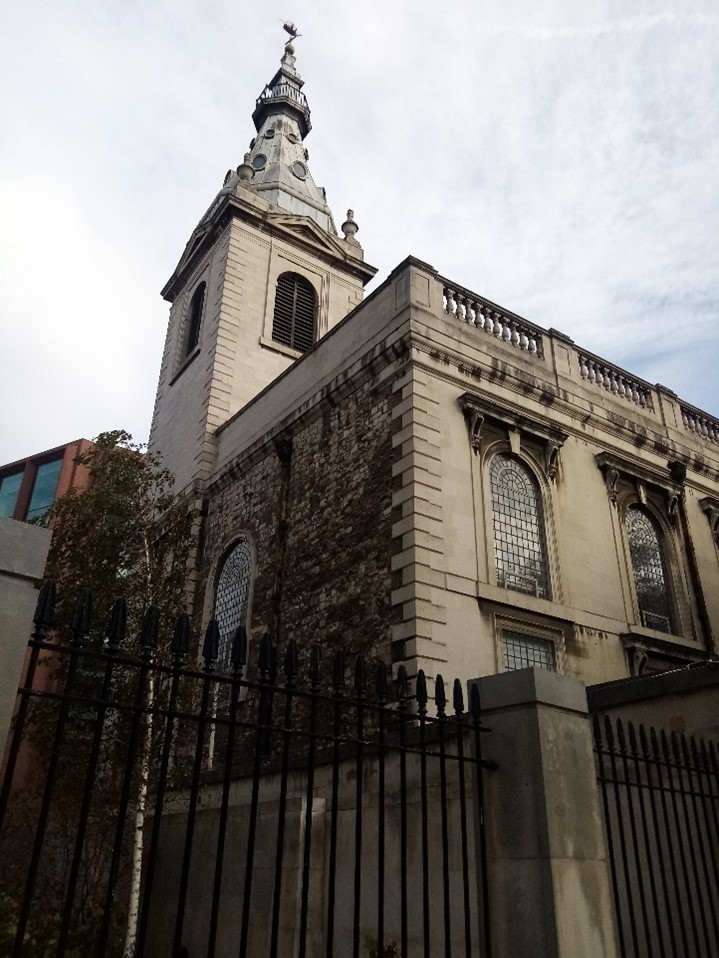
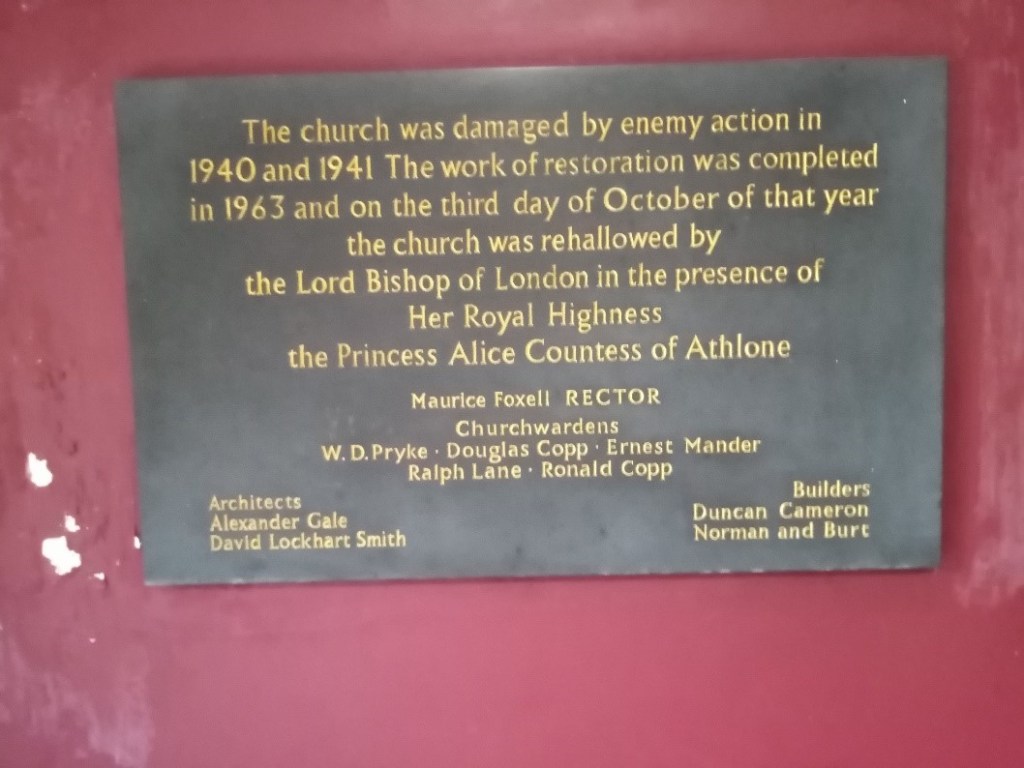
Possibly the most curiously named church in the City and founded in the 12th century, during the 13th century the church became part of Baynard’s Castle, a former medieval palace which stood on the banks of the Thames near Blackfriars (see picture below). In 1361, the resident King Edward lll moved his storehouse of arms, ceremonial robes and personal items, the ‘Royal Wardrobe’, from the Tower of London to a building close to the church and the castle. The Wardrobe was not just a building, it was also a State Department responsible for keeping the accounts of the Royal Household. Both the Wardrobe and the Church were destroyed in the Great Fire, and the replacement church, one of 51 new churches built by Sir Christopher Wren, is one of the simplest of his designs. St Andrew by the Wardrobe was gutted during the London Blitz bombings, leaving only the tower and walls standing. The church was rebuilt and rededicated in 1961 and some of the interior fittings were procured from other destroyed Wren churches. William Shakespeare was a member of the parish for 15 years while he was working at the nearby Blackfriars Theatre.
Source: Wikipedia

St Andrew by the Wardrobe has an imposing position on a steep terrace (apologies for the roadworks!)
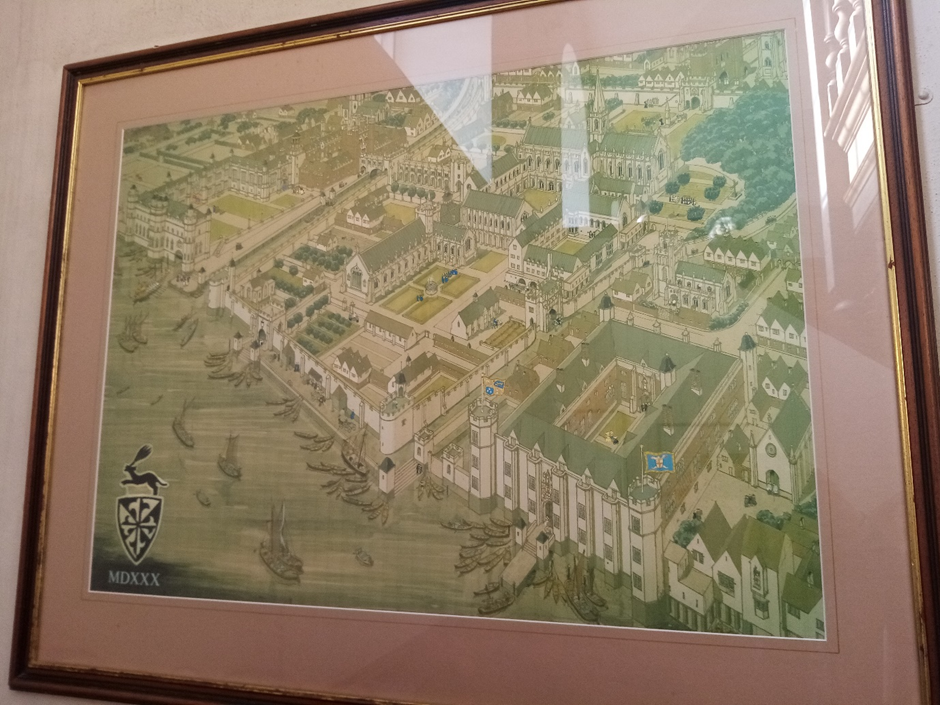
You can just make out the original church situated behind Baynard’s Castle.


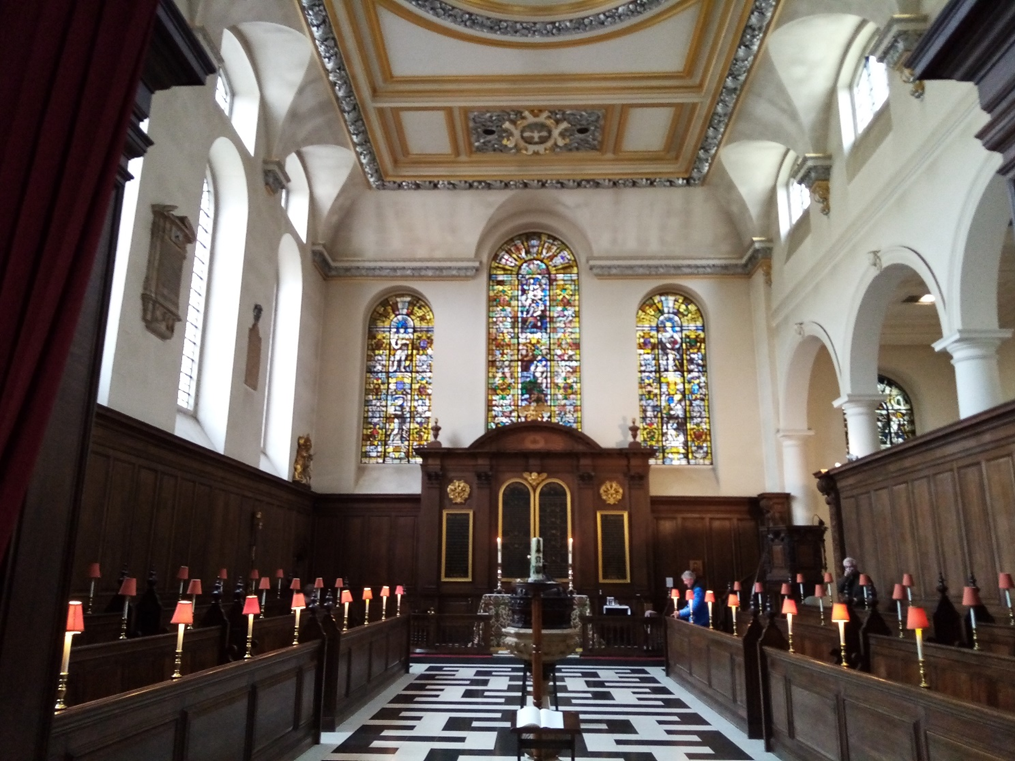
Faithfully restored Wren interior
St Nicholas Cole Abbey
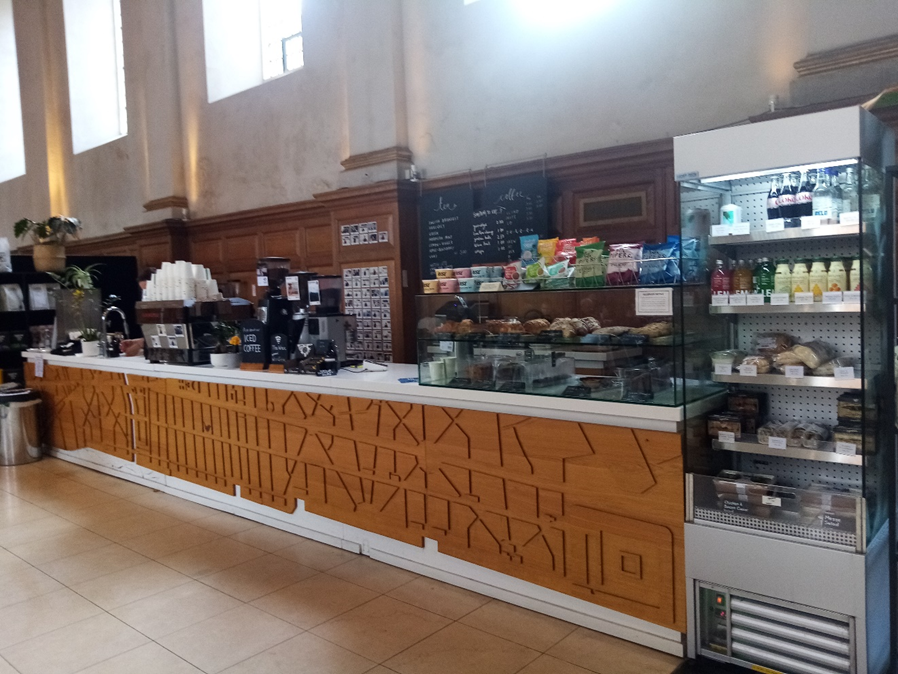
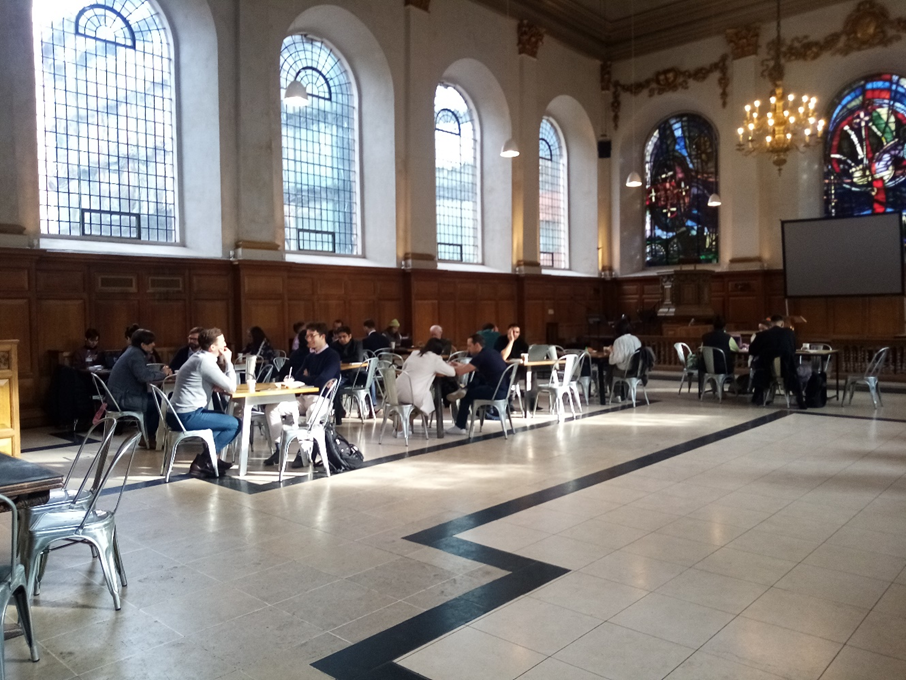
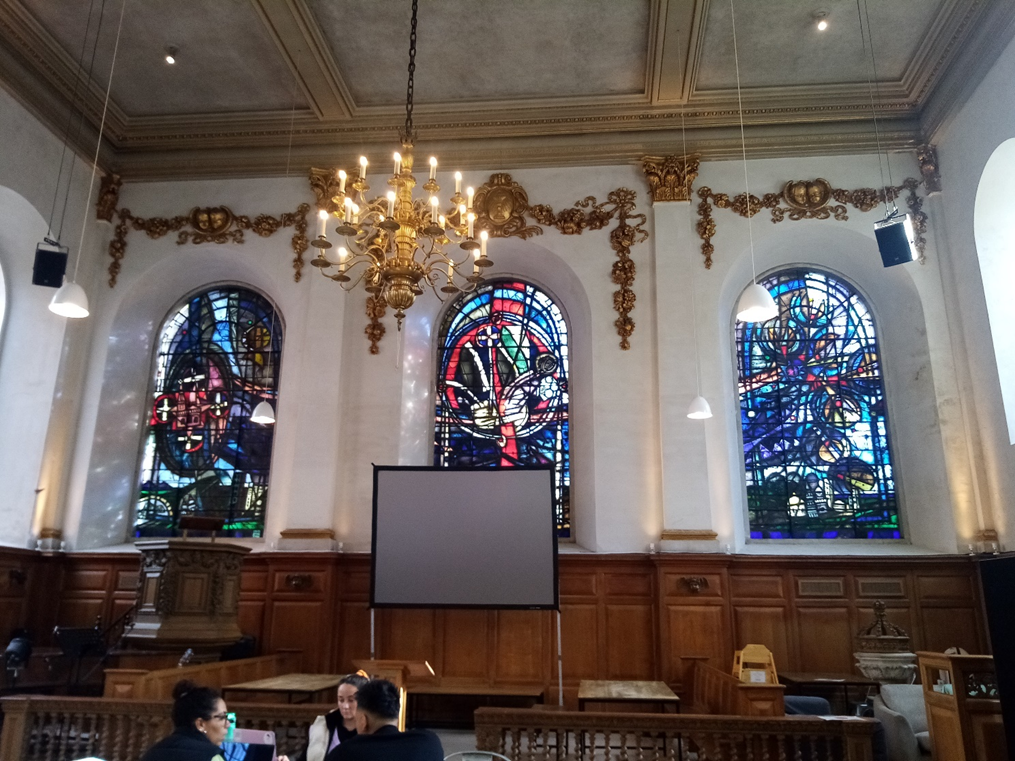
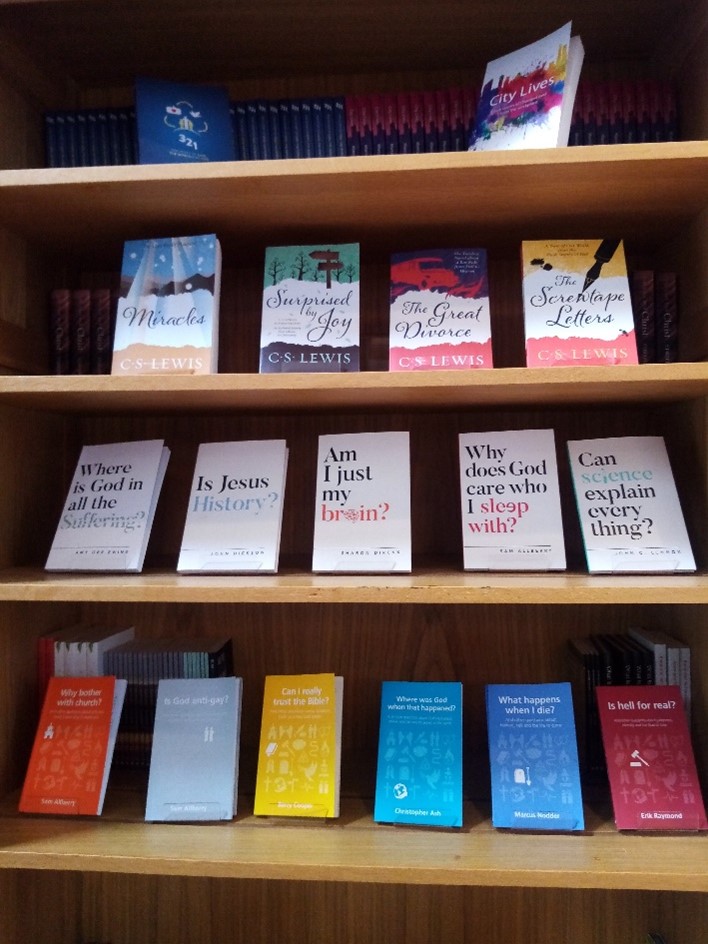
Just along Queen Victoria Street from St Andrew is St Nicholas Cole Abbey. So who is St Nicholas Cole, and was this church once an abbey? This is a misleading name; the church is dedicated to the 4th century St Nicholas of Myrna but ‘Cole Abbey’ is derived from ‘Coldharbour’, a medieval word meaning shelter from the cold for travellers and those seeking sanctuary. The original church was founded in about 1144, but I’m going to skip 900-odd years to focus on what’s been happening at St Nick’s Church (as it’s now known) this century. In 2006 the church was due to become a National Centre for Religious Education, promoting RE in schools, but this never happened, and the church closed. In 2014 the building reopened as the St Nicholas Cole Abbey Centre for Workplace Ministry, and in 2016 Sunday services resumed alongside midweek meetings. When I visited the church at about 11am on a Wednesday morning, I was greeted by the sight of a permanent coffee bar and sandwich shop along one wall, office workers seated at tables, and a bookshop. St Nick’s is a cafe Monday to Friday and also hosts ‘Christianity Explored’ courses and ‘Lunchtime Talks from the Bible’, as well as Sunday Services for a local congregation, including youth and children’s clubs. Another busy, thriving church in the City!
Sources: Wikipedia, stnickschurch.org.uk
St Vedast-alias-Foster, Foster Lane
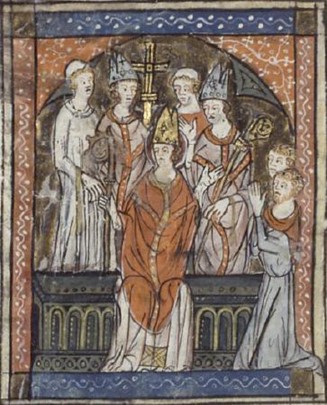
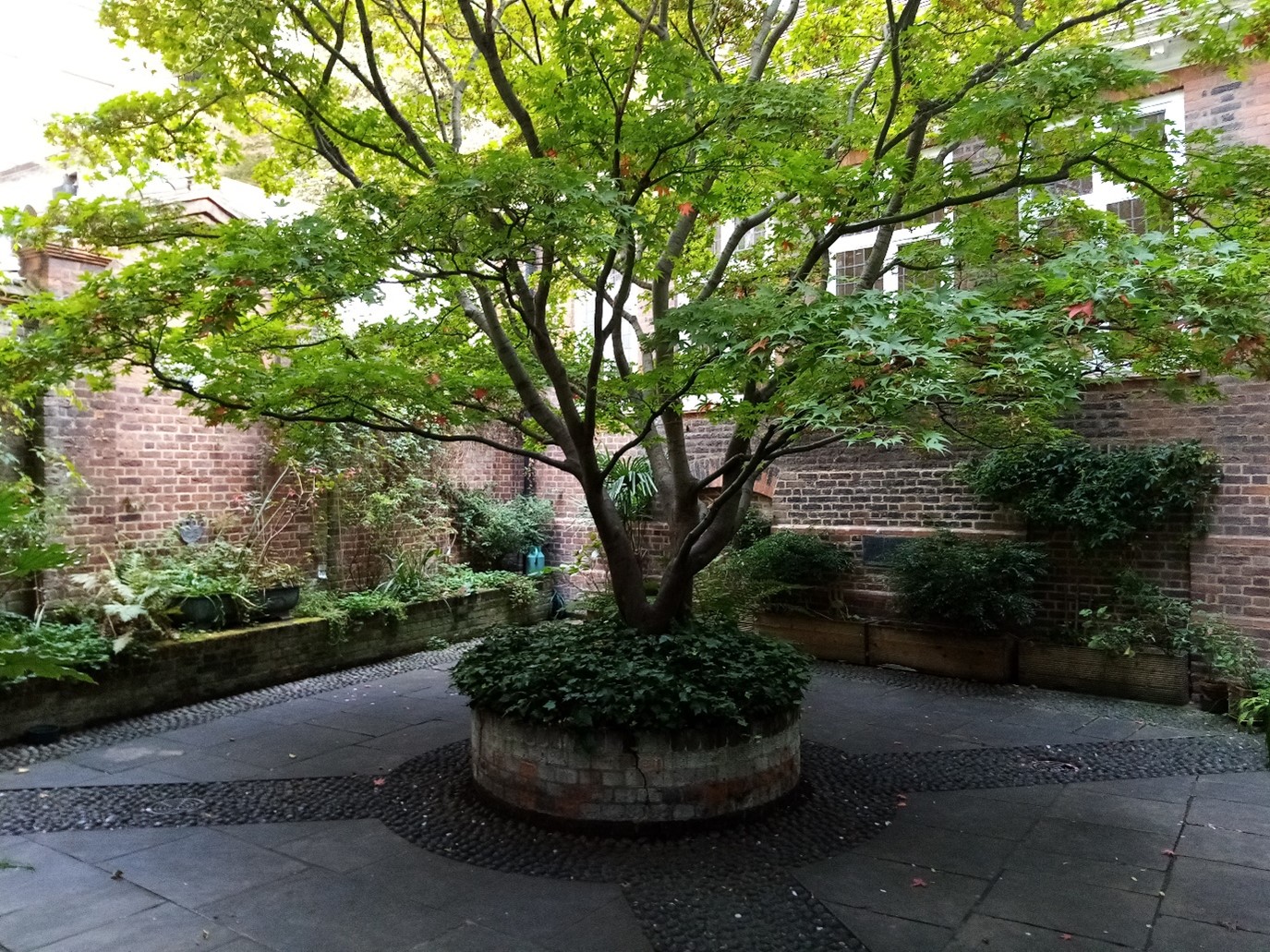
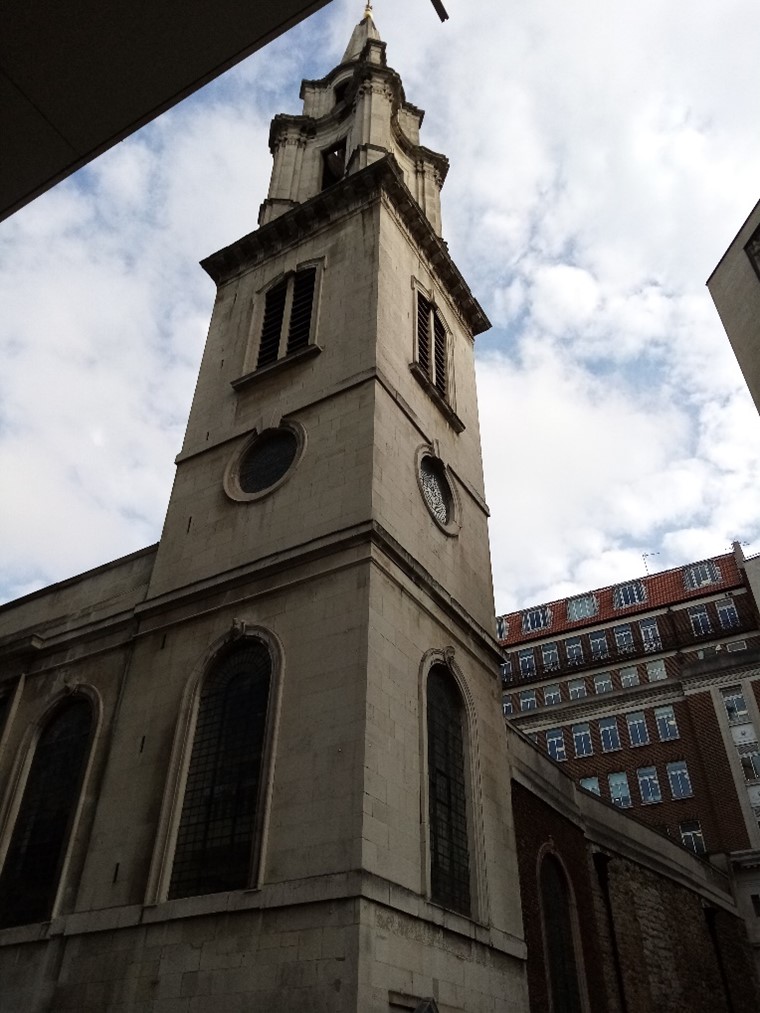
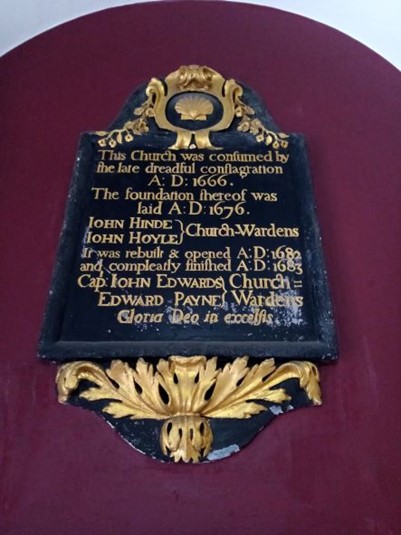
Vedast (Vaast in French) was a 6th century bishop of Arras in Gaul who helped to restore Christianity to the region after destruction by invading tribes. The church’s unusual name is because the Saint’s name in England has been corrupted from St Vaast into Vastes, Fastes, Faster, Fauster, Forster and finally, Foster, which shows how the English language has changed over time. It’s possible that the original church was founded by the Flemish community in London in the 12th century, but this is uncertain. St Vedast has suffered much damage over the centuries; extensive repairs to the 350-year-old church in 1662 were somewhat wasted as it was almost destroyed in the Great Fire four years later. It was rebuilt under Wren in 1670-73 but then gutted by firebombs in the London Blitz. The original plan was to leave the church as a roofless ruin, to serve as a war memorial, but this proposal was never carried out, instead the church was repaired. The church is situated on a busy junction near St Paul’s Cathedral, surrounded by the much taller buildings of the modern city, so the ‘open to the sky’ memorial would have been a lovely idea, perhaps becoming a garden church like St Dunstan’s in the East. The church does have a tiny courtyard for office workers to enjoy their lunch, but a leafy green garden would be nicer!
Source: vedast.org.uk/about
St Vedast 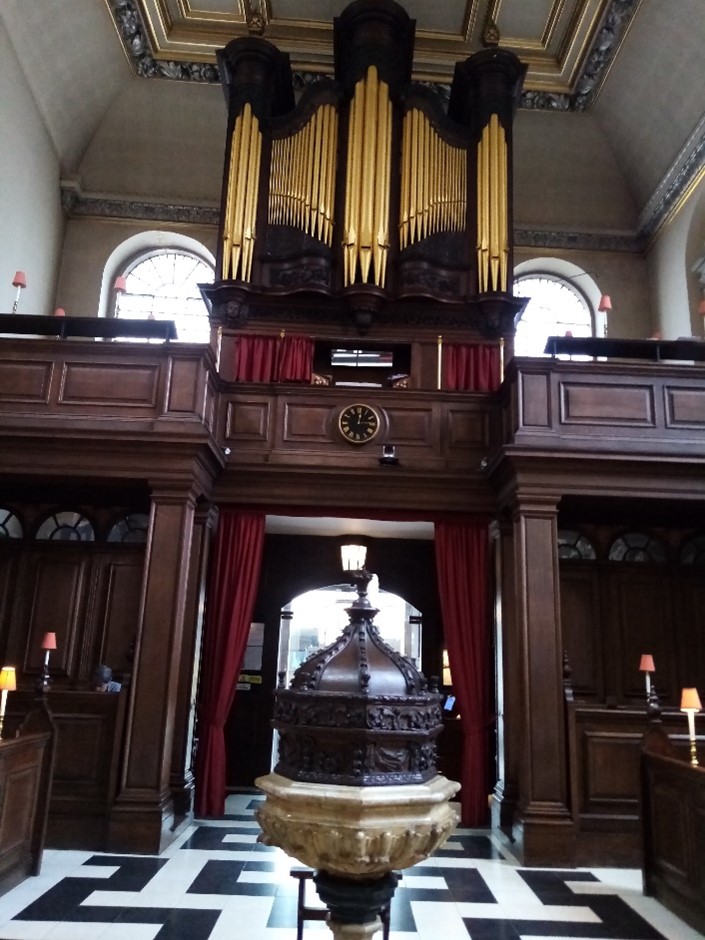

St James Garlickhythe
Situated at the bottom of Garlick Hill, St James Garlickhythe gets its name from the nearby landing place or ‘hythe’, where ships from France unloaded garlic and also wine in medieval times. St James has had a long association with the wine industry and the original 12th century church was also known as St James in the Vintry (wine merchants were called vintners) and St James by the Thames. It is the official church of eleven City livery companies and is the burial place of six Lord Mayors. Another church lost to the Great Fire and rebuilt by Sir Christopher Wren, it was nicknamed ‘Wren’s Lantern’ as it has so many large windows which at the time, would have let in a lot of light. Quirky anecdote: the mummified remains of a corpse were found in the chancel in 1830 during excavation and repair work. Instead of having the body reburied in the new City of London Cemetery, the church wardens (rather disrespectfully) kept it and put it on display for visitors to pay a shilling to view, naming it Jimmy Garlick! I couldn’t find out whether poor Jimmy was eventually given a dignified final resting place. The church had a lucky escape in the 1941 Blitz: a bomb crashed through the roof and buried itself in the floor. However, it didn’t explode and was removed to Hackney Marshes and detonated safely.
Sources: Wikipedia, stjamesgarlickhythe.org.uk
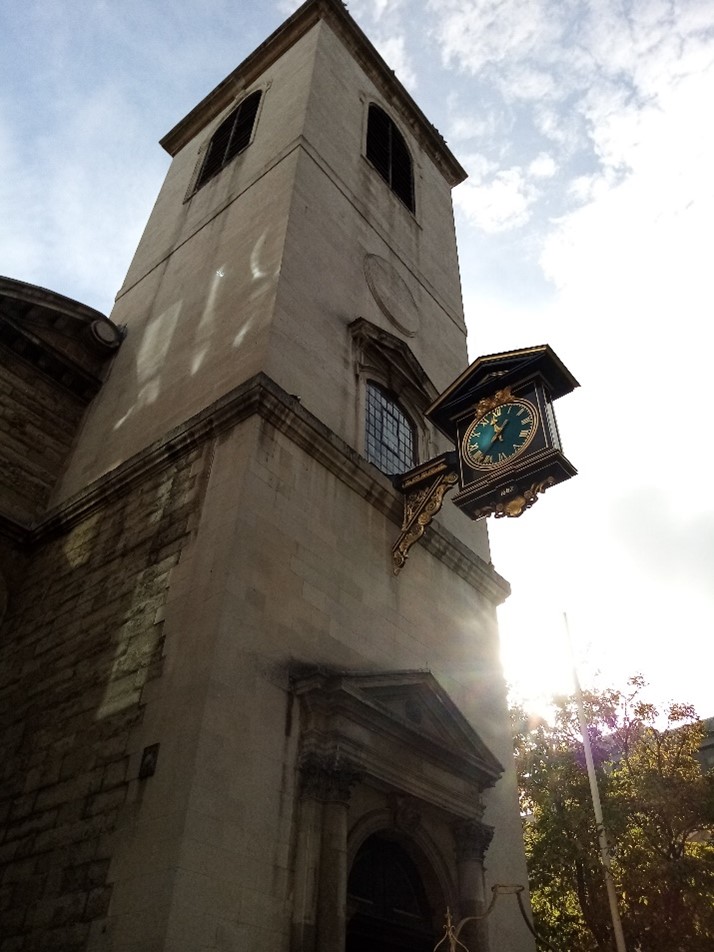
St James’ distinctive clock 

 claresimons1