The dome of Christopher Wren’s masterpiece church, St Paul’s Cathedral, is one of the most iconic and recognisable landmarks in the City of London, a must-see for every tourist. It even features on the moquette seats of the London Underground, along with the London Eye! I’ve featured St Paul’s before, but the wonderful dome has its own interesting story and deserves its own entry. There are several other London churches which feature domes, all with interesting histories and beautifully designed interiors:
Notre Dame de France, Leicester Square
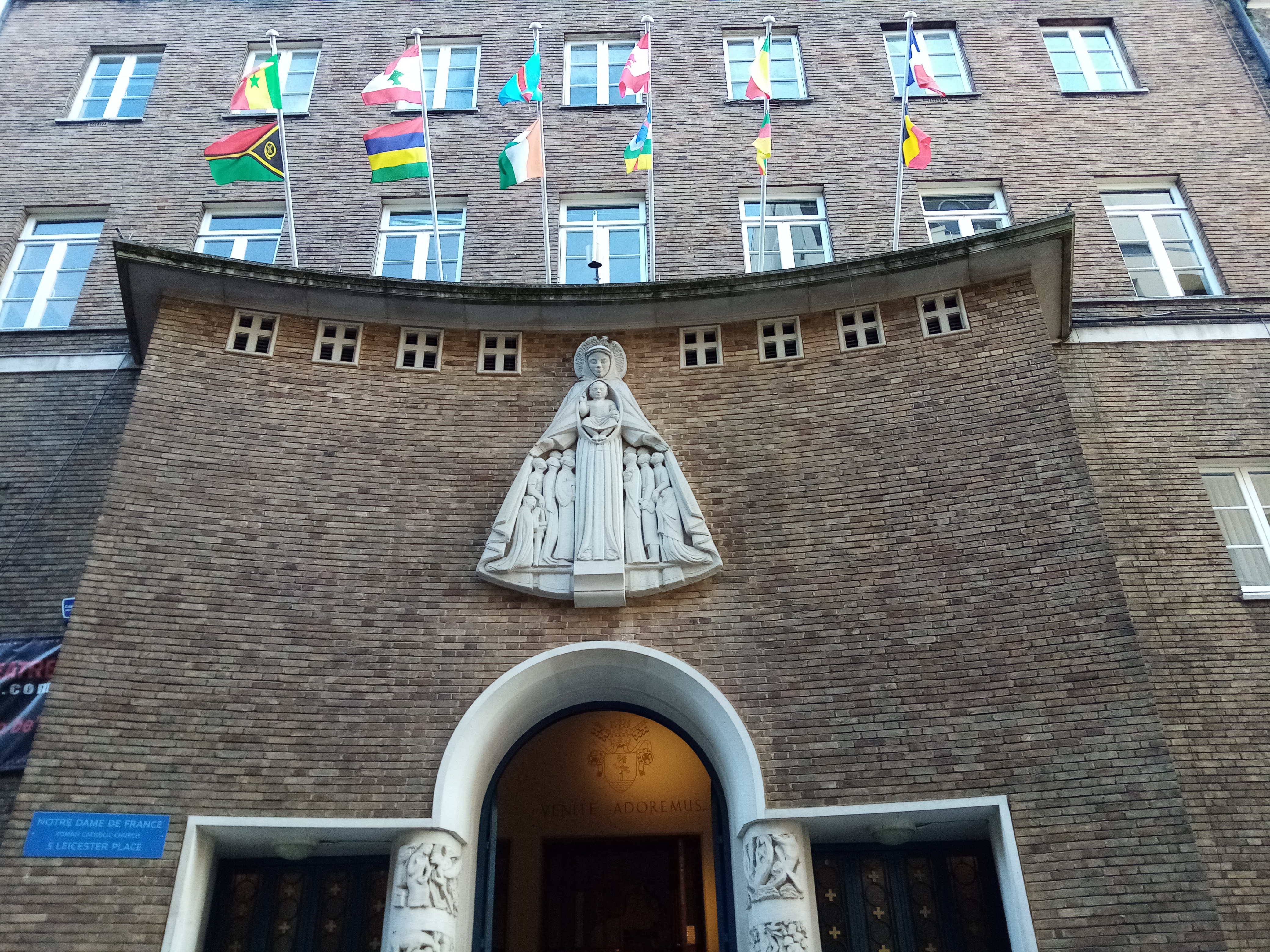
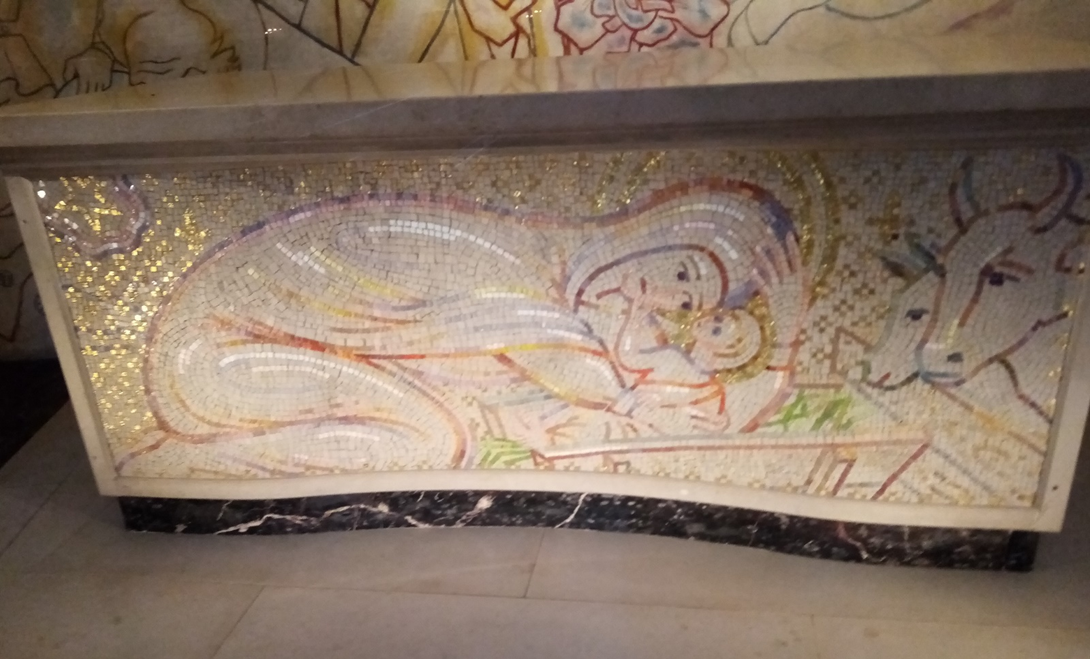
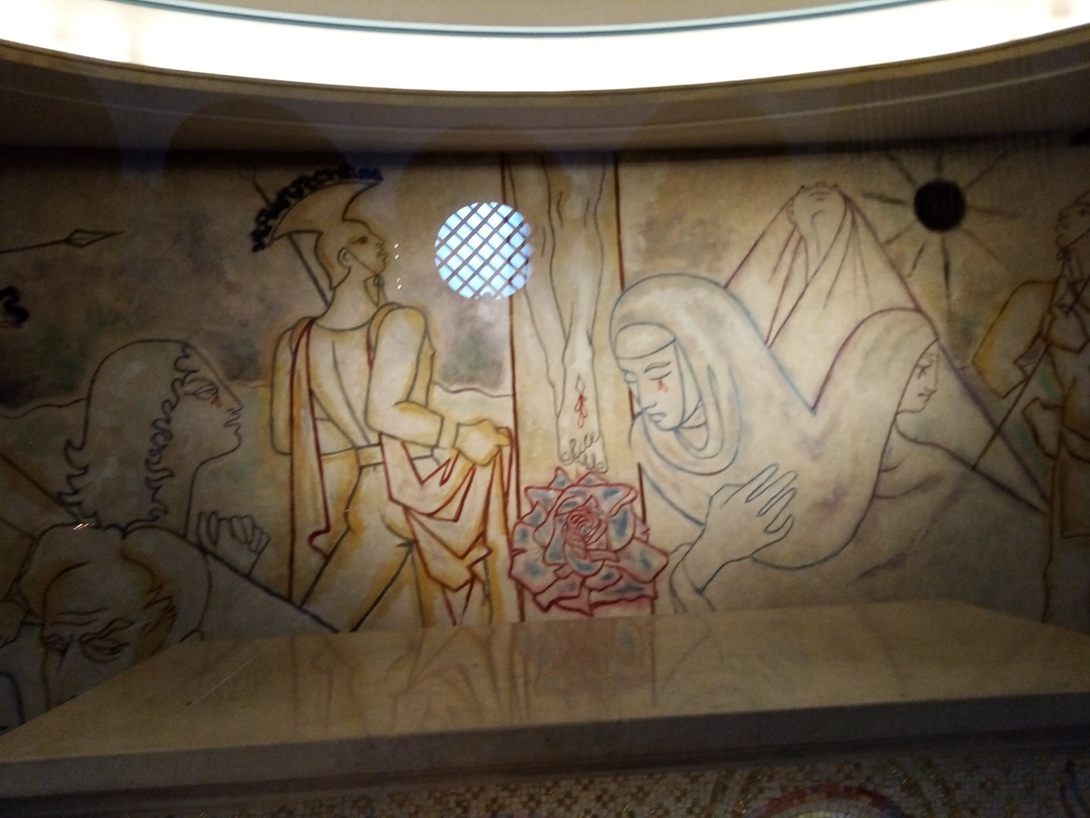
This is a French Roman Catholic Church located just off Leicester Square. The use of the building as a church dates back to the mid-1800s, but the building itself is older and previously served a completely different purpose. In 1861 the Archbishop of Westminster, Cardinal Wiseman, wanted to establish a church to support the large French community in the area around Soho. In charge of the project was Father Charles Faure, who discovered and purchased a circular building known as Burford’s Panorama; an early form of visual entertainment and a tourist attraction in the early 1800s (precursor to the moving picture house which now dominates Leicester Square.) Faure employed a French architect to transform the building into a church, retaining the dome as a feature. The church was badly damaged by bombing in 1940 and had to have extensive structural repairs and redecoration, finally reopening in 1948. The French cultural attaché Rene Varin, with the support of the French Ambassador and British Prime Minister Anthony Eden, wanted to create ‘a sacred space that would honour France’ and approached eminent artists of the time to create artworks to decorate the newly rebuilt church. The interior of the church feels like part worship space, part art gallery and looks surprisingly modern, definitely not 75 years old. Worth a visit if you are in Leicester Square, here’s a taster of the artworks:
Sources: Notre Dame de France Church Website; Wikipedia

Tapestry by Dom Robert, a Benedictine monk 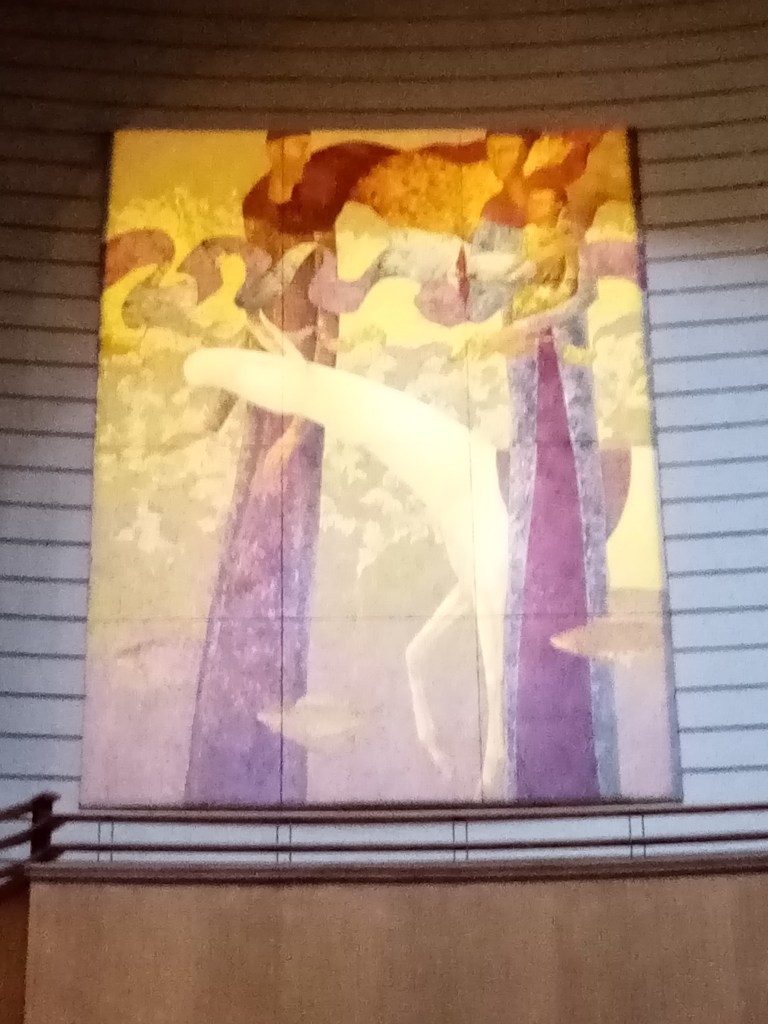
Mural by Jean Cocteau (1960)

St Stephen Walbrook
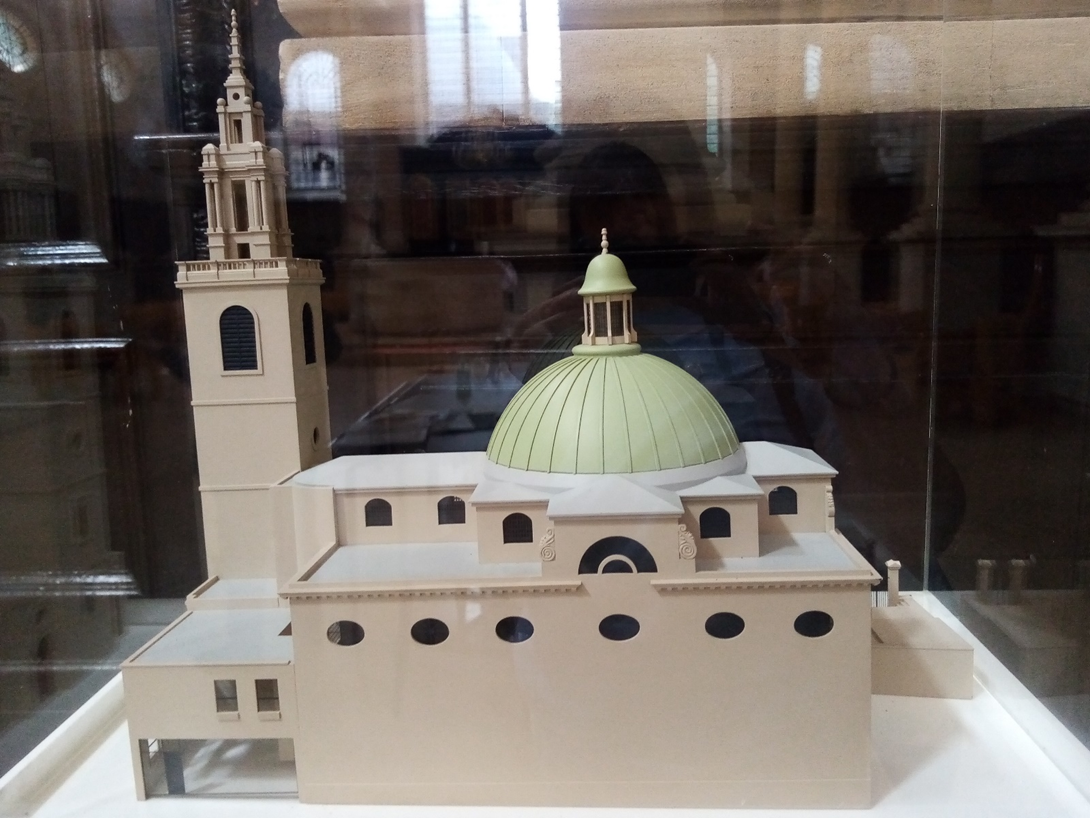
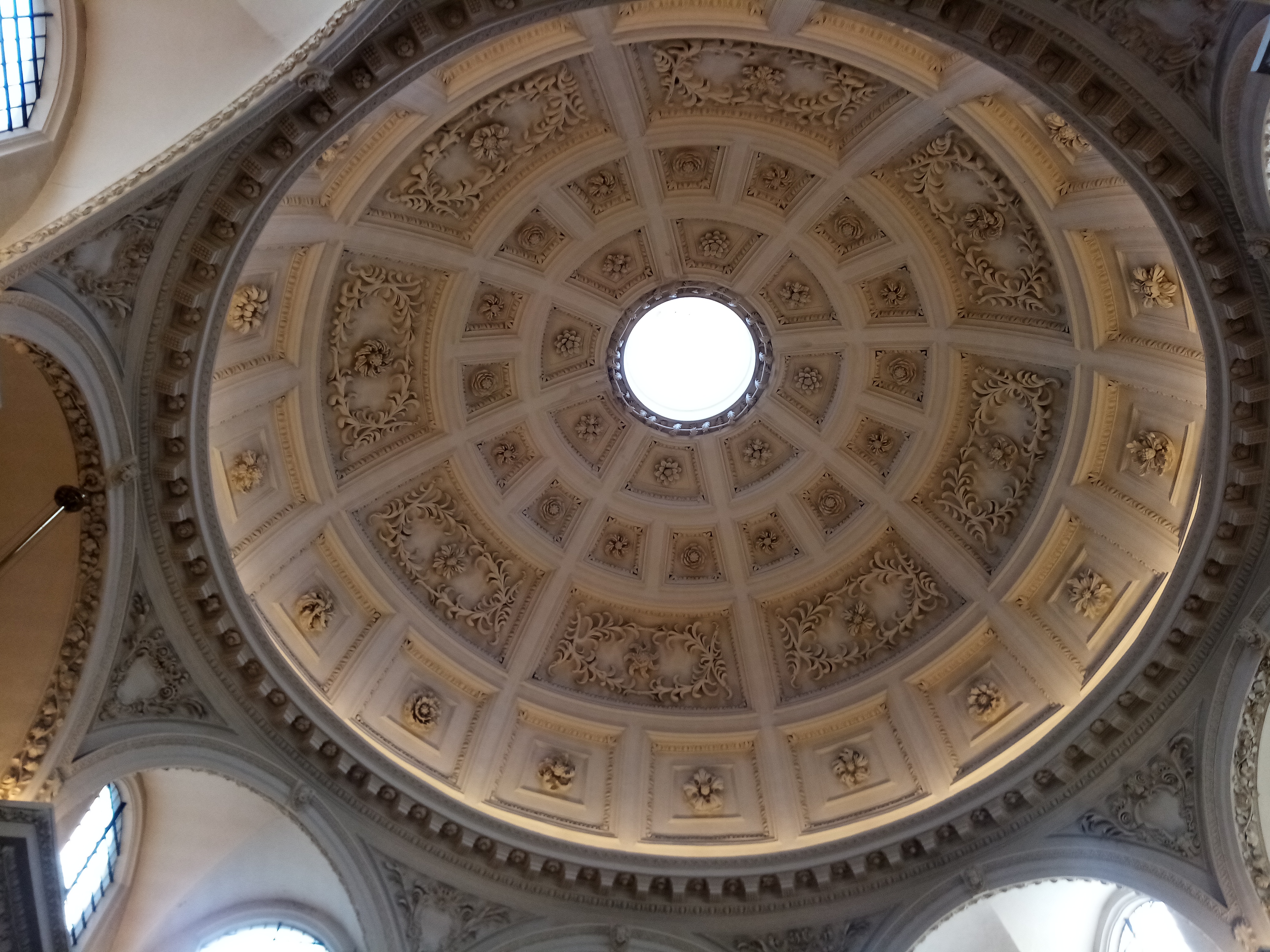
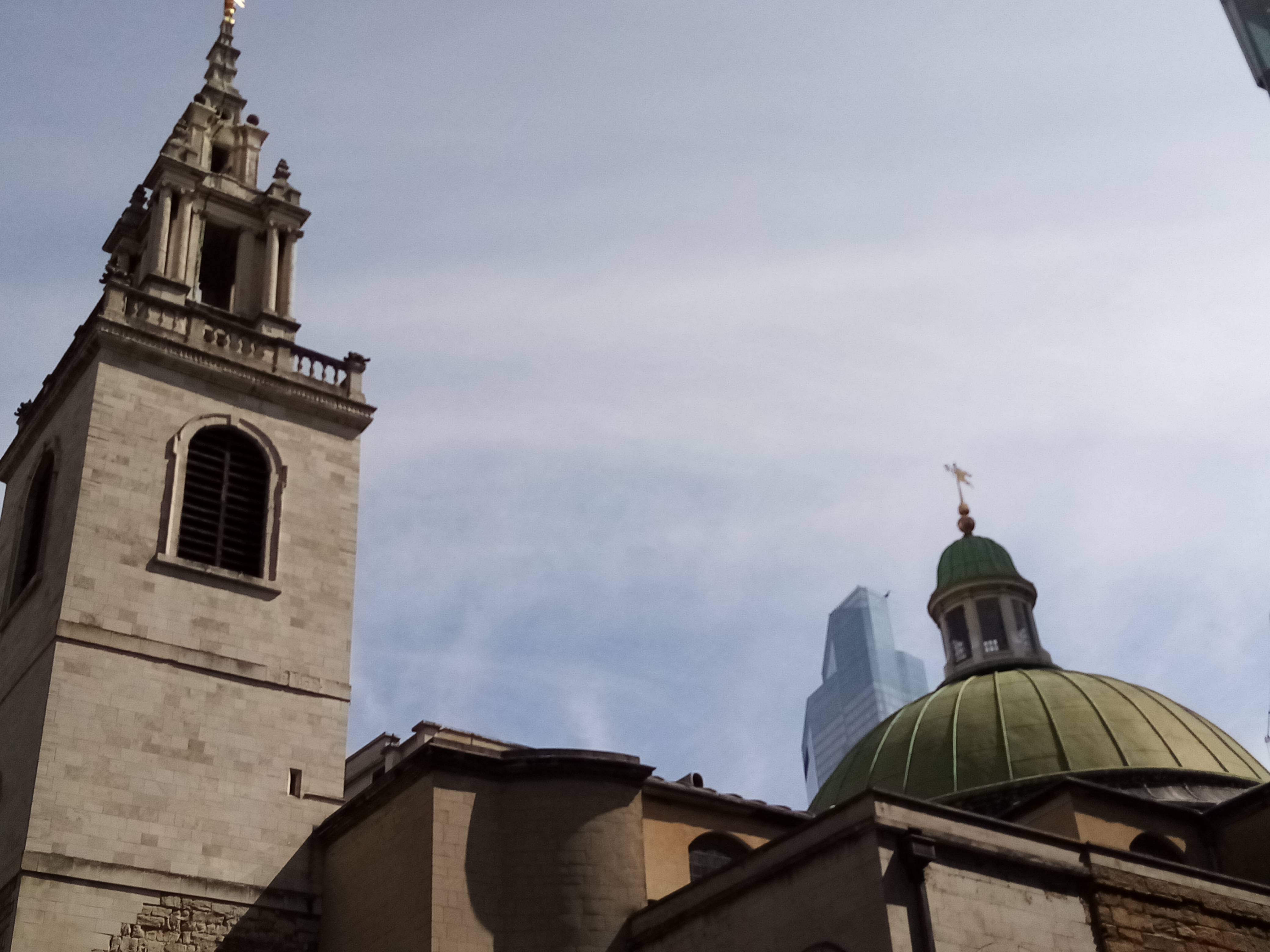
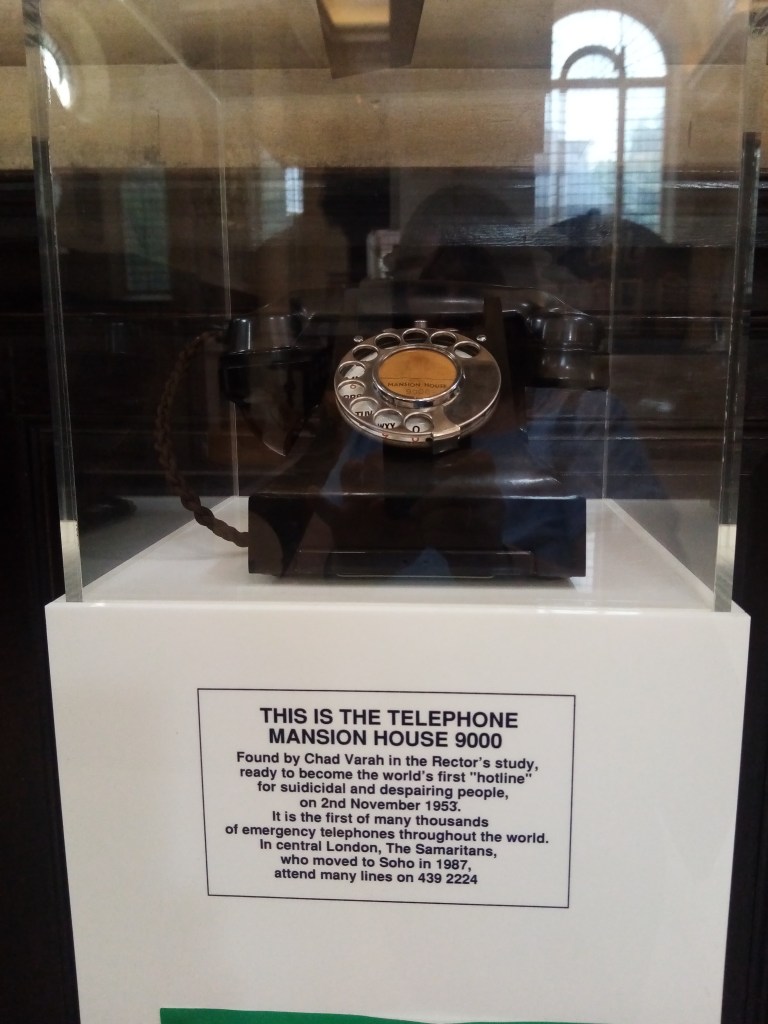
Situated in the City, originally beside the Walbrook stream, the first church on this site was built as early as 700AD, or more likely, 980AD. A Saxon church, it was built on the foundations of the Roman temple of Mithras, following the practice of hallowing a pagan site. By 1428 this church and its graveyard were too small for the parish and a larger church was built on higher ground twenty metres to the East; soon after, the Walbrook was culverted and became a street. This church was completely destroyed in the Great Fire of 1666, and was one of the churches chosen to be completely redesigned and rebuilt. Enter Sir Christopher Wren, creative genius, who worked as surveyor, architect, structural engineer and in the case of St Stephen, labourer; it is said that he was personally involved in the construction of the church. The rebuilding of the church began in 1672 to a unique design; Wren lived at No. 15 Walbrook, so this was his own parish church. The 19-metre-high dome is based on Wren’s original design for St Paul’s Cathedral and is centred over a square of twelve columns. The walls, tower and columns are made of stone, but the dome is made of timber and plaster covered with copper. In 1953 the Samaritans charity was founded by the rector of St Stephen’s, Dr Chad Varah. The first branch of the charity operated from the crypt beneath the church before moving to Marshall Street in Soho. The first telephone used by the charity is displayed in a glass box in the church. In 1987 a massive white polished stone altar commissioned from the sculptor Henry Moore by churchwarden Peter Palumbo was installed in the centre of the church, a dramatic addition to the church furnishings.
Sources: Leaflet in the church; Wikipedia

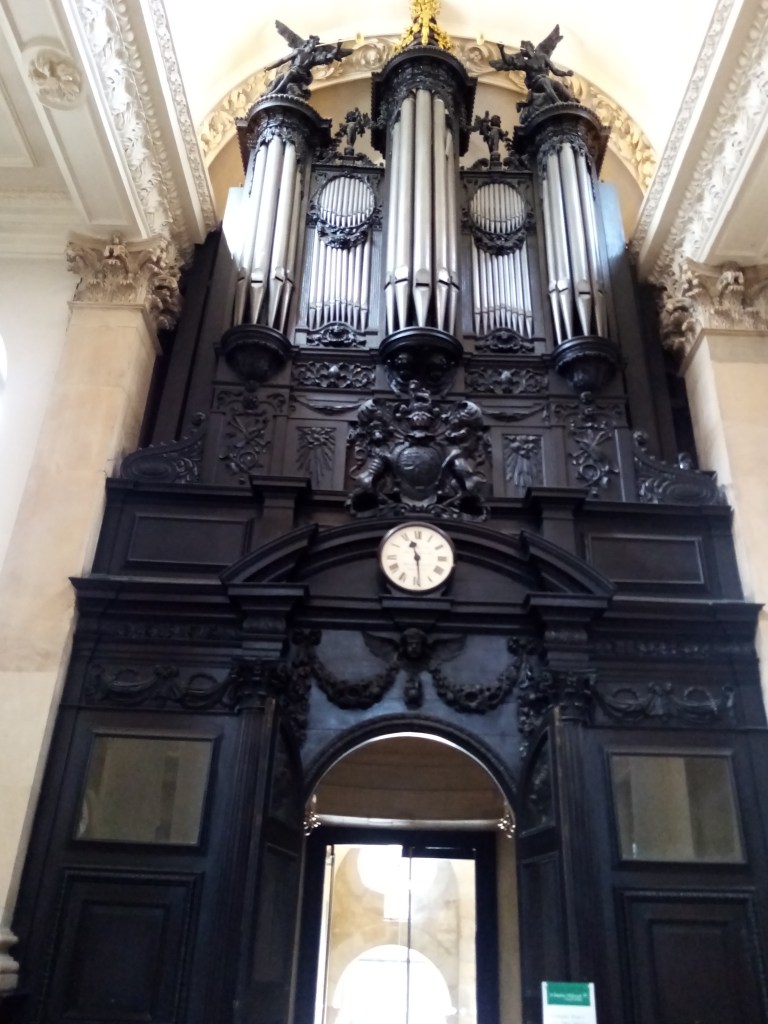
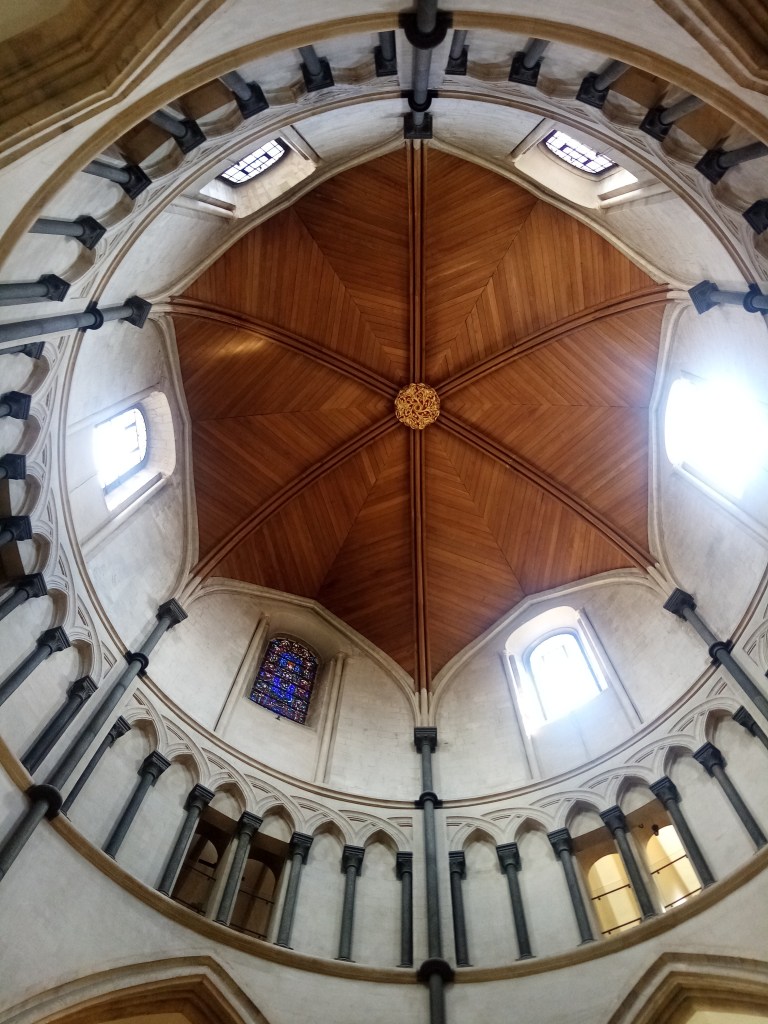
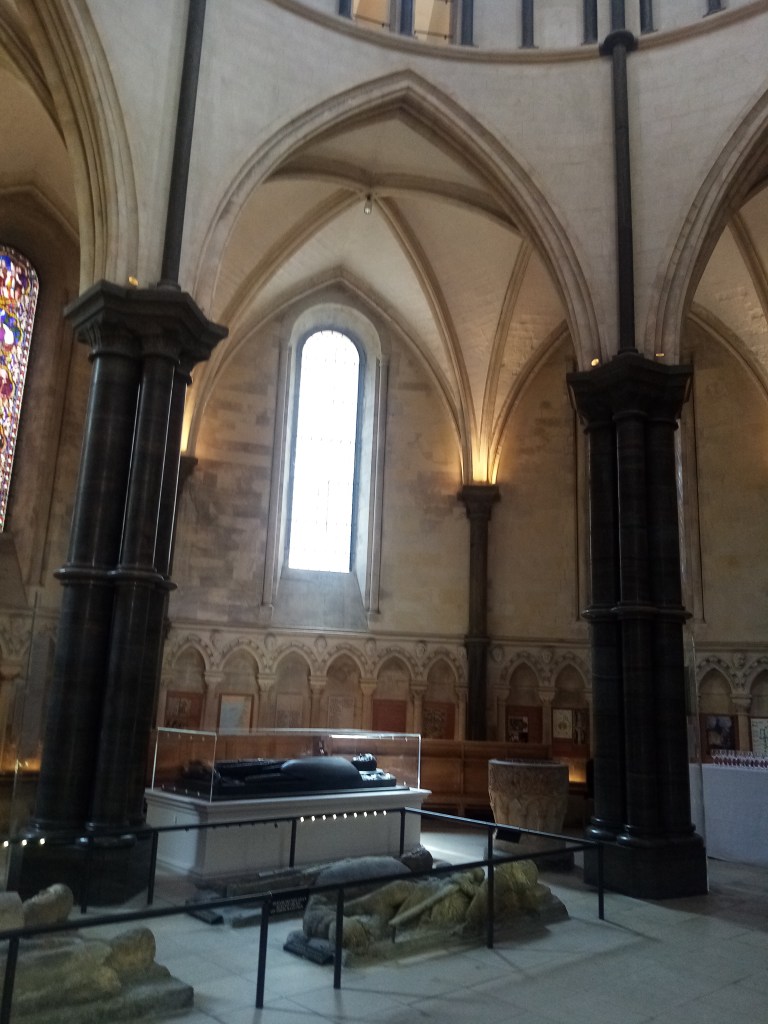
Temple Church, Inns of Court
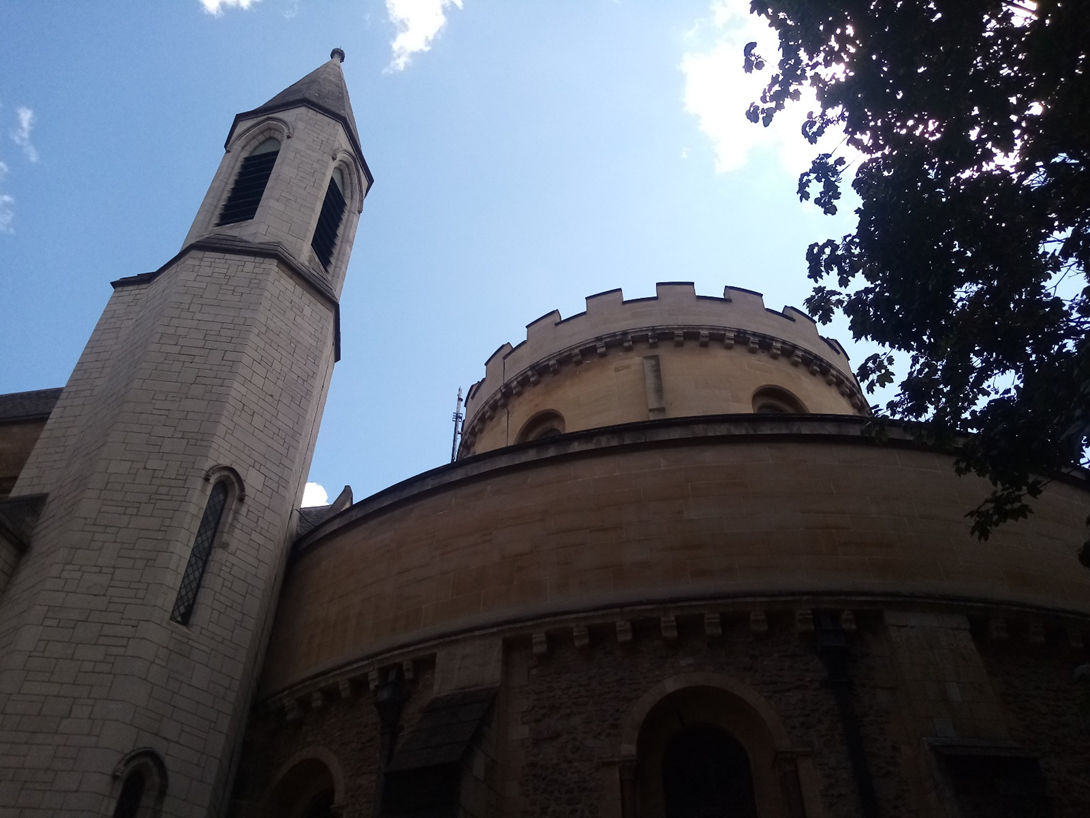
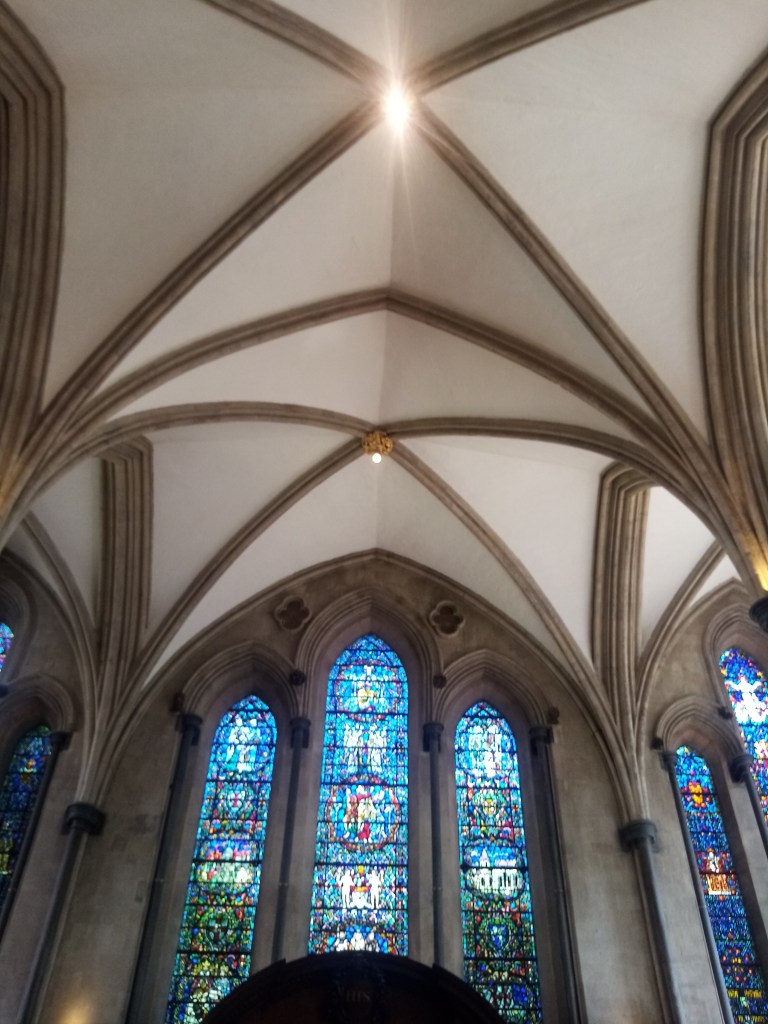
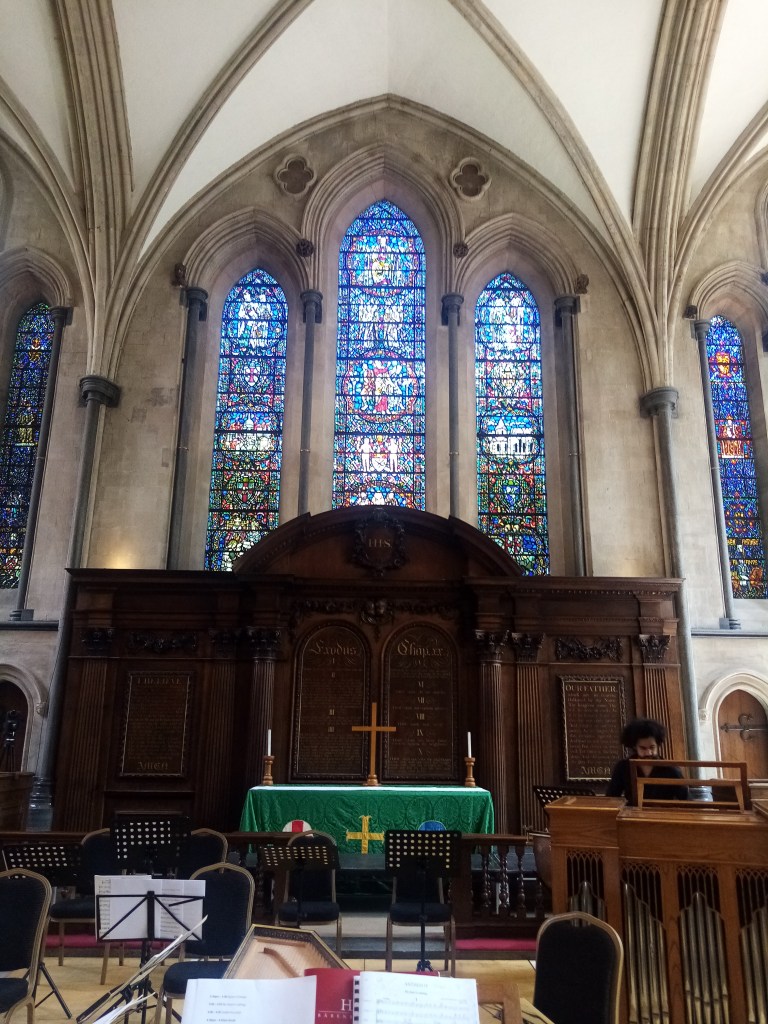
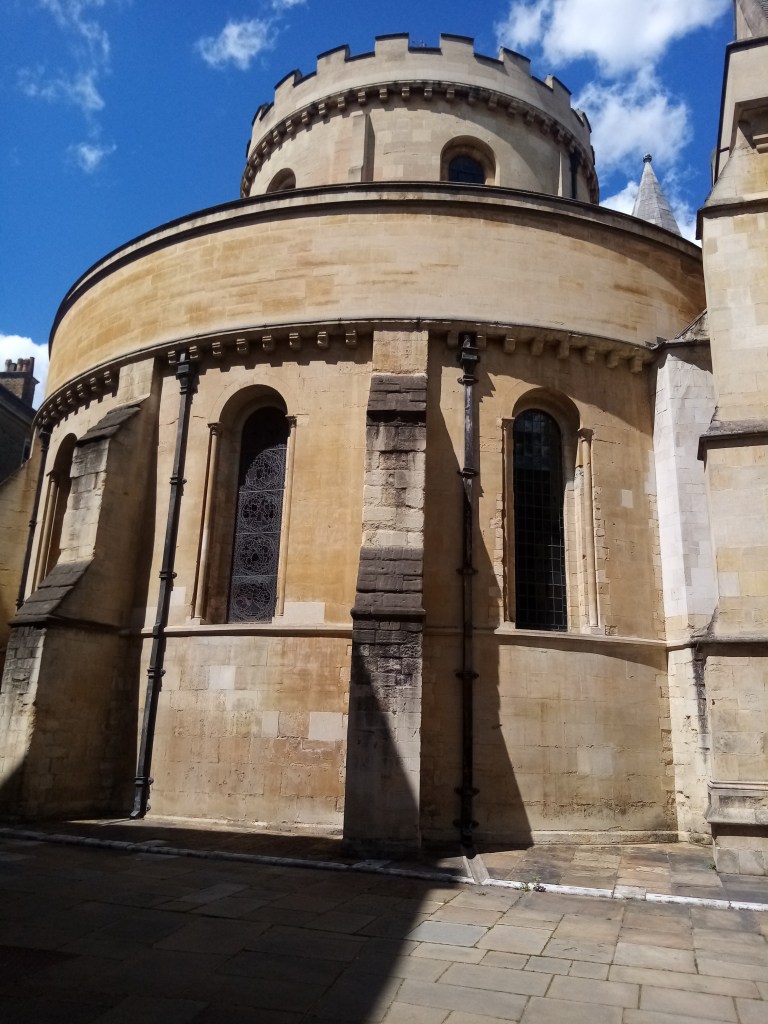
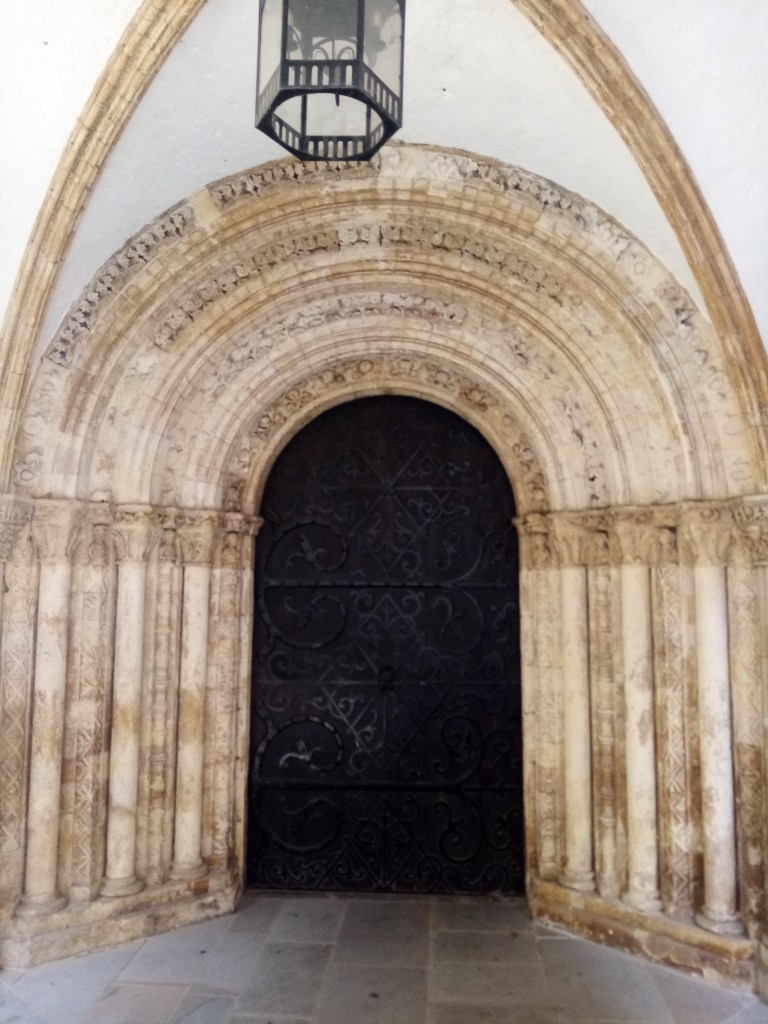
The church’s website says: ‘Welcome to the prayerful and beautiful Temple Church, steeped in the history of Christendom, this country and the whole Common Law World.’ The ‘Round Church’ as it was once known was constructed in 1162, probably England’s earliest Gothic building. It is modelled on the round church of the Holy Sepulchre of Jerusalem, the site of Jesus’ death, burial and resurrection. In medieval times, Jerusalem was the centre of the world, so the Round Church in London represented Jerusalem in the capital of England. If you were standing under the dome of Temple Church, you were spiritually as close as you could be to Jerusalem. The site was originally a much larger monastic complex, headquarters of the Knights Templar and a military training facility for the military branch of the Order. Fast forward to 1215 and Temple Church is King John’s London Headquarters. Here, in January 1215, the King was confronted by barons who demanded that the monarch be subject to the Rule of Law like every other citizen. Six months later, as proof of his allegiance to the Rule of Law, John signed the Magna Carta at Runnymede on the banks of the River Thames: the very beginning of democracy and the Rights of the Common Man. Temple Church is owned jointly by the Inner Temple and Middle Temple Inns of Court, and the Church serves the lawyers and other staff of the Inns of Court with pastoral care, church services and a dedicated programme of music. Not surprisingly, the church is hired for use as a film location, concert venue, lecture hall and reception venue. A wonderfully atmospheric space!
Sources: Temple Church website; Wikipedia
Dome of St Paul’s Cathedral
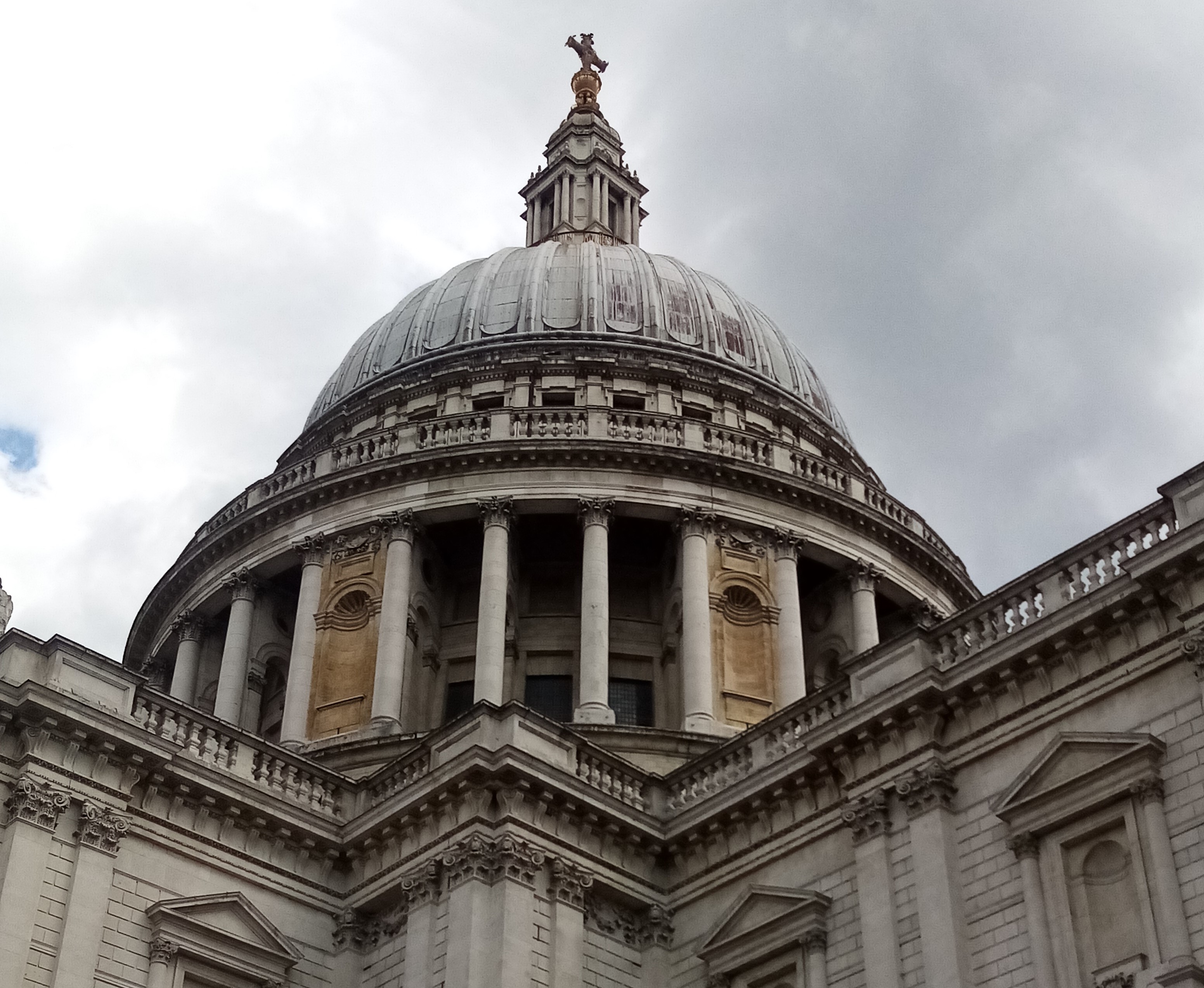
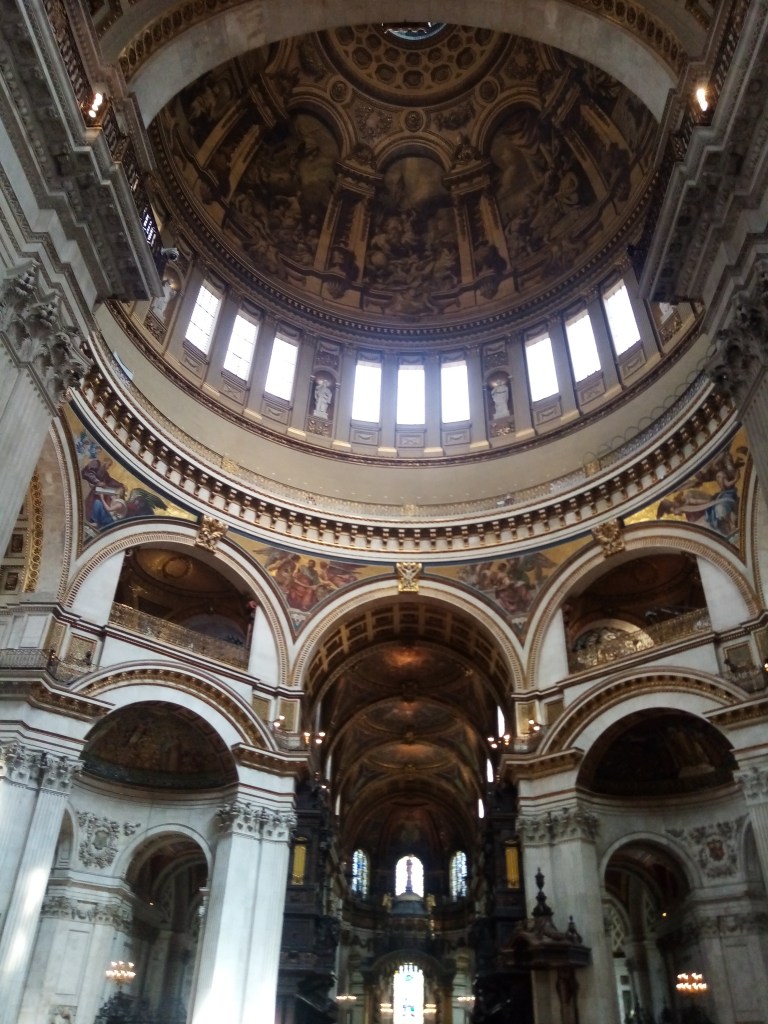
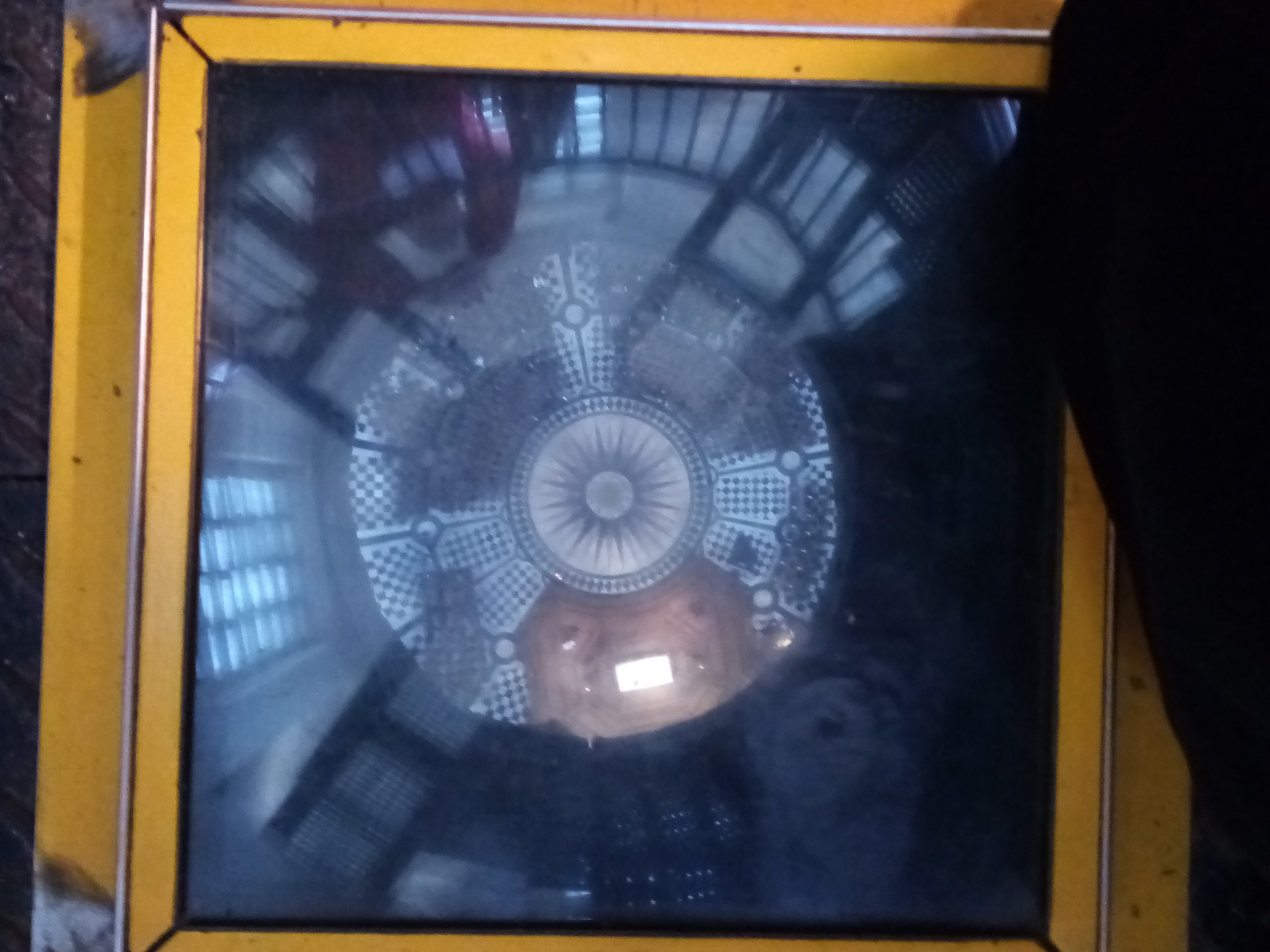
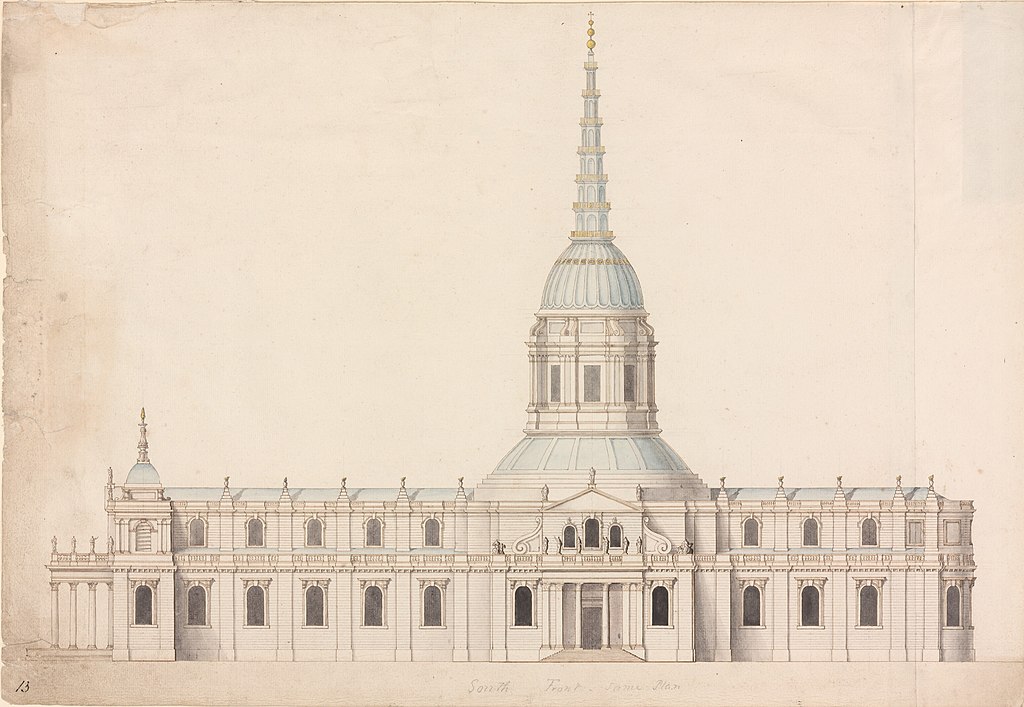
When Sir Christopher Wren submitted his designs for his new cathedral to the Church Commissioners, they were not keen on his plan for a huge dome, preferring the idea of a more traditional steeple topped by a spire or cross. After extensive negotiations a compromise was agreed: a smaller dome would be topped by a spire, but Wren never actually added the spire! Instead, he designed a magnificent stone lantern to be built on top, which Wren believed would dominate the horizon – he was right there! A golden cross completes the iconic look. The dome weighs 65,000 tonnes, one of the largest cathedral domes in the world and there are three galleries incorporated into its design. The Whispering Gallery runs around the interior of the dome, so-called because a whisper against the wall can be heard on the opposite side of the gallery. The Stone Gallery and the Golden Gallery run around the outside, the latter is just below the lantern and is 85 metres (528 steps) from the floor. During the Second World War, Winston Churchill declared ‘St Paul’s must be saved at all costs’, and at the height of the Blitz, he would ask on waking each day, ‘Is the dome still safe?’ He rightly believed that the cathedral was a target for enemy bombers and that its destruction would have been a severe blow to the morale of Londoners and to the whole country. To this end, he deployed teams of volunteers to patrol the network of passages and roof spaces of the cathedral 24 hours a day, putting out fires from incendiary bombs before they could spread. The cathedral received two direct hits, but the dome was undamaged. After a night of intensive bombing in 1940, the area around St Paul’s was mostly reduced to rubble, but the cathedral remained standing.
Source: St Paul’s Cathedral Official Souvenir Guide


 claresimons1