This group of pocket parks is situated in the East part of the City. I hadn’t noticed before how different the size of the buildings is on the East side; the pocket parks are literally overshadowed by the huge sky scrapers. Some of the gardens look as if they are actually in an enclosed space, although all manage to catch some shafts of sunshine on a sunny day.
St Botolph without Bishopsgate Churchyard
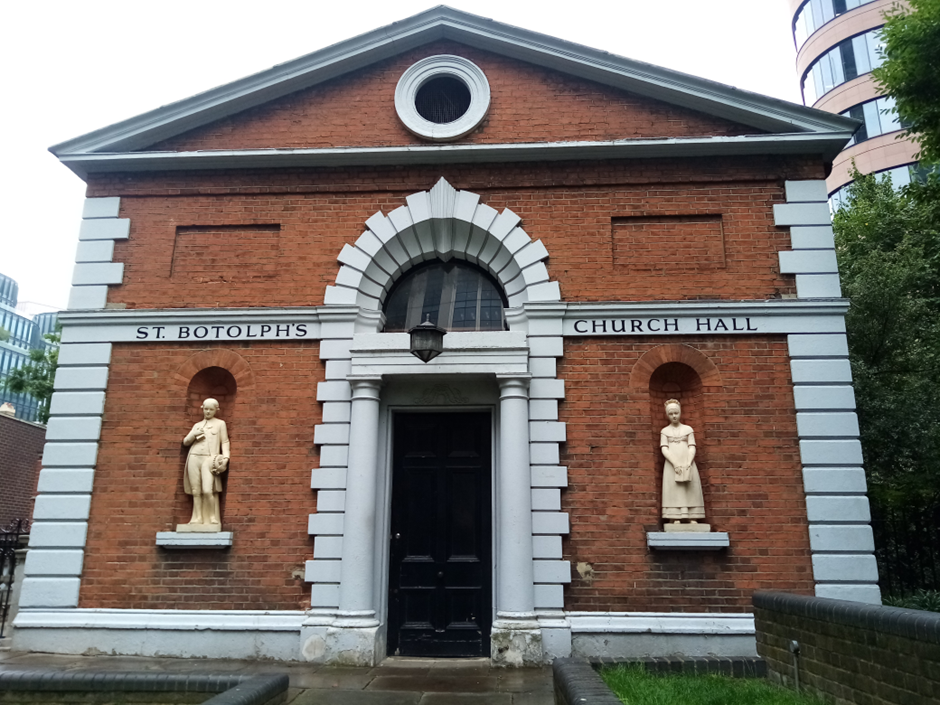
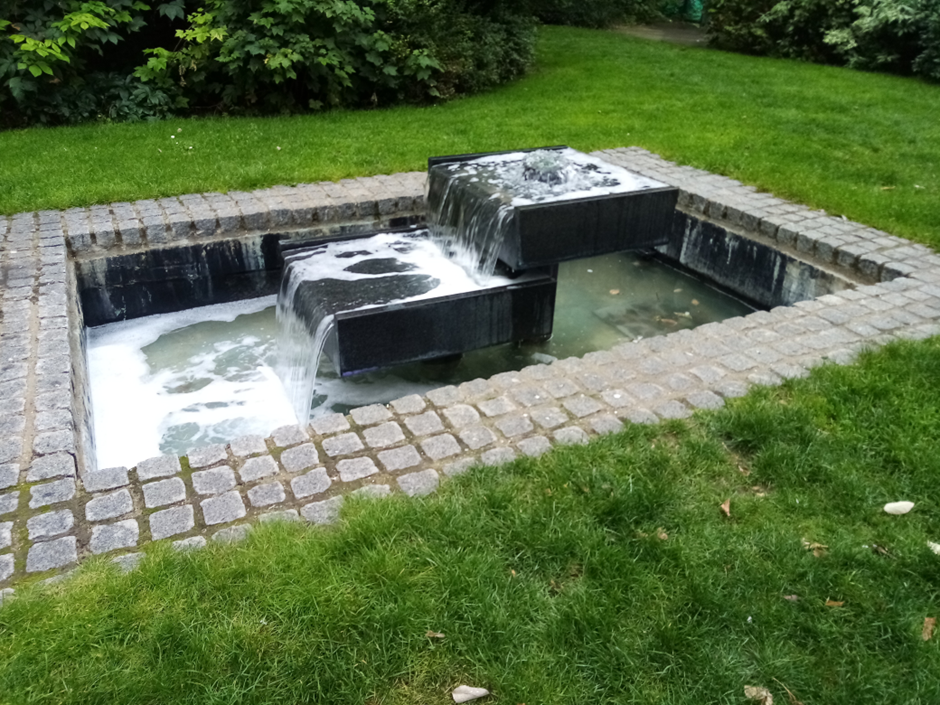
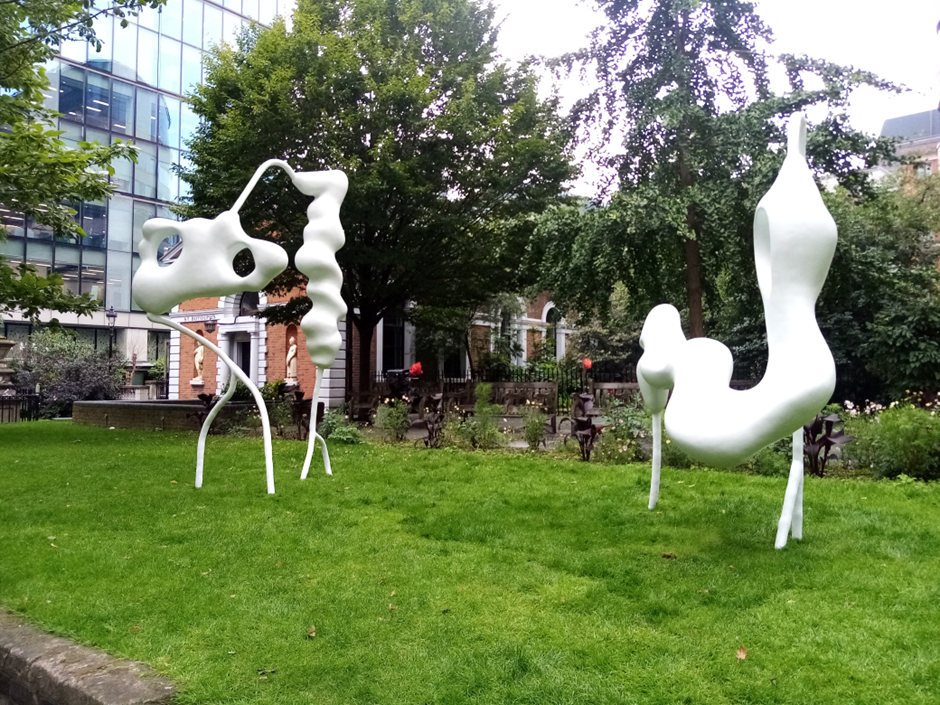
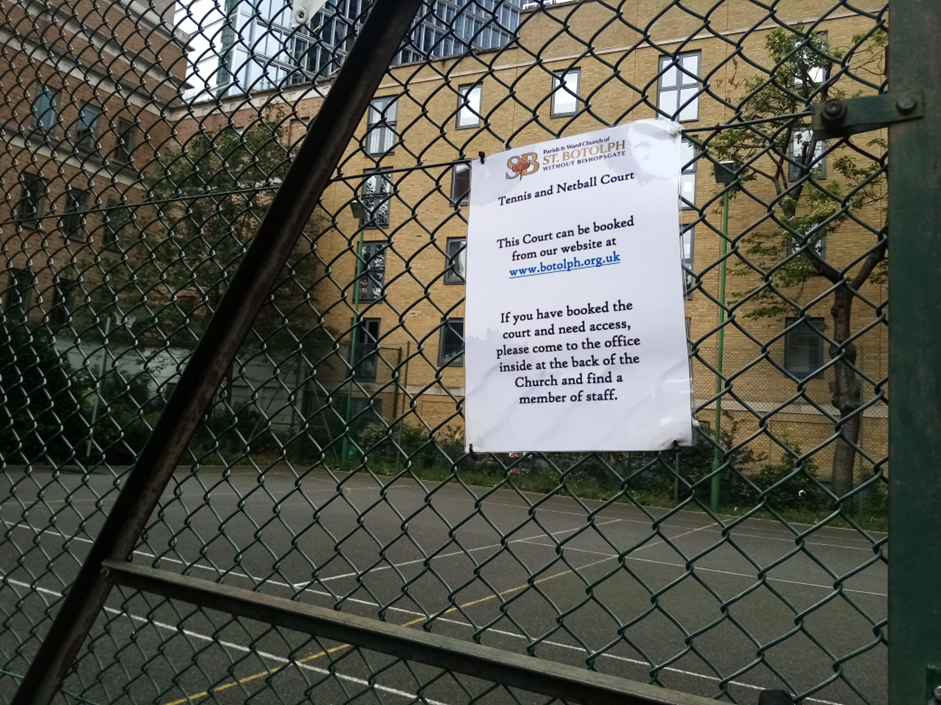
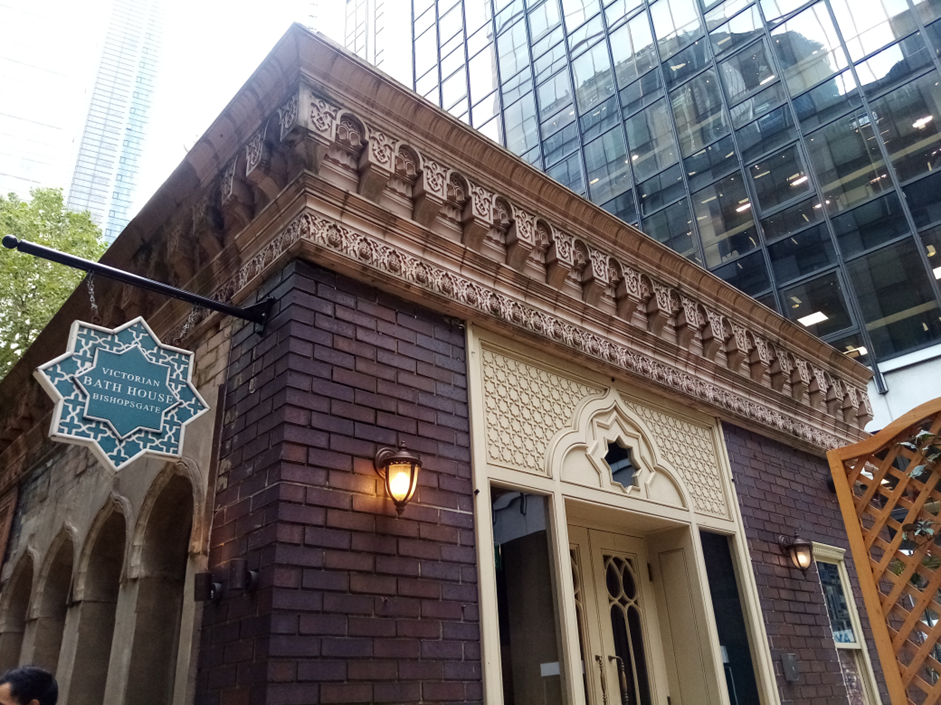
Actually, this one is too large to be described as a pocket park, but it has to be included because of its wealth of interesting features. The church of St Botolph lies outside the (now demolished) Eastern London Wall. The 7th century Saint Botolph or Botwulf was regarded as the patron saint of boundaries, travel and trade; there are four churches of this name on the London Wall, which travellers would visit on their journey into or out of the City. The churchyard has been transformed from a burial ground to a truly delightful park, featuring a Grade ll church hall, formerly the livery hall of the Worshipful Company of Fan Makers. The niches in the front of the building contain figures of ‘charity children’, these are actually replicas due to repeated attempted thefts; the originals are inside the hall. There are also some art installations, a fountain and, unusually, a tennis court, which can be hired from the church. Equally unusual is a Turkish bath situated just outside the churchyard but within the church grounds, which was designed by architect Harold Elphick and opened in 1895.
Source: Wikipedia
St Swithin’s Churchyard
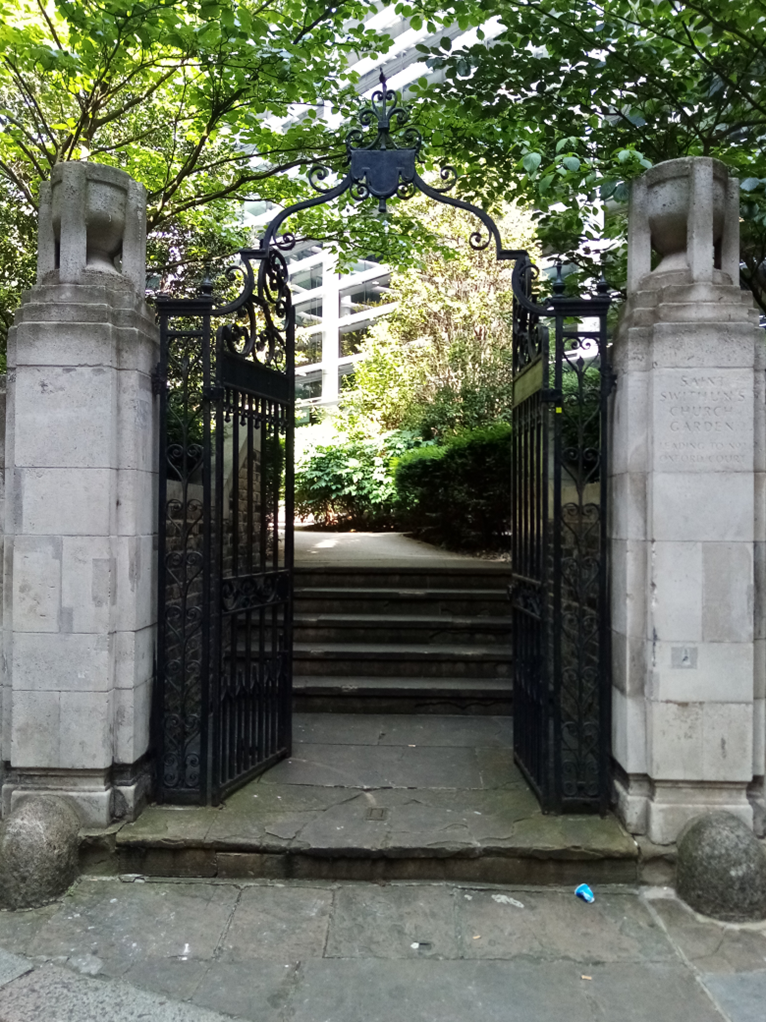
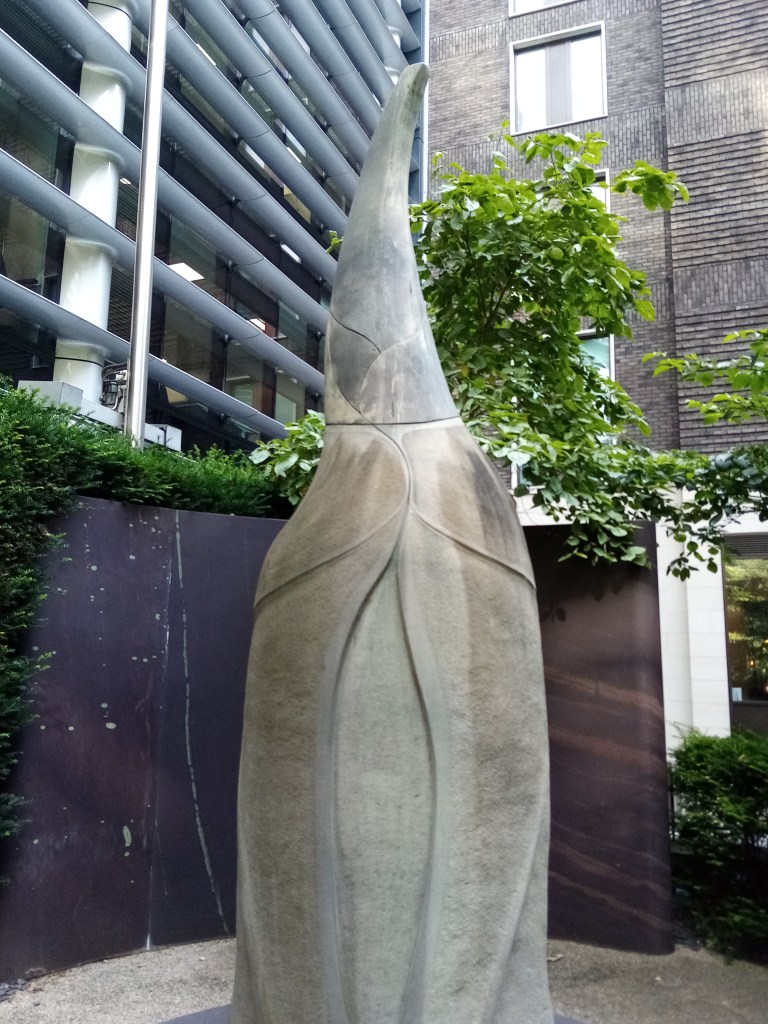
A small, attractive garden situated down a little side street opposite Cannon Street Station, an oasis of green in the concrete and glass. The beautiful stone gates are all that remains of the original church, looking somewhat out of place among the surrounding newbuilds. The first St Swithin church was recorded in 1270, it was rebuilt in 1420 but the medieval church was burnt down in the Great Fire. The Wren church which replaced it was subsequently destroyed in the December 1940 Blitz bombing and was not rebuilt. The most interesting thing about the park is the memorial to Catrin Glyndwr, whose husband Sir Edmund Mortimer and father Owain Glyndwr rebelled against King Henry lV to get the English out of Wales. Catrin was taken hostage by the English in 1409 and imprisoned in the Tower of London, where she mysteriously died. The memorial is dedicated to women and children who suffer in war. A single remaining gravestone in the garden is that of a merchant, Nathaniel Thornton.
Source: livinglondonhistory.com; Wikipedia

Memorial to Catrin Glyndwr 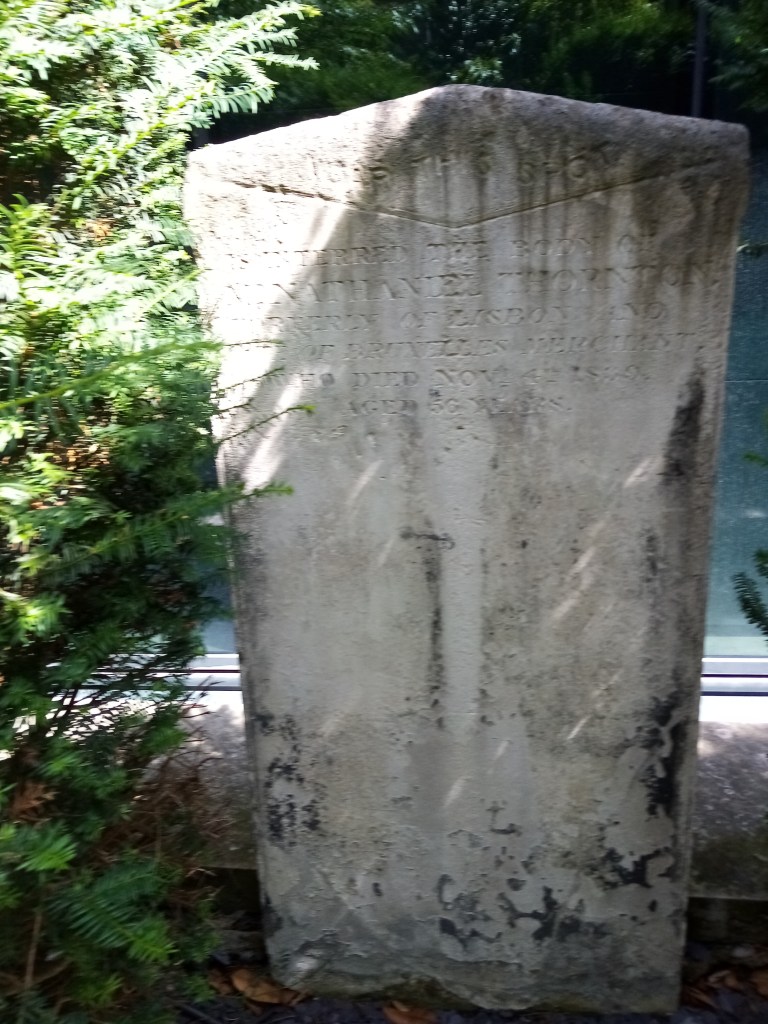
St Peter upon Cornhill, St Michael Cornhill
I’ve put these two churchyards together because they stand almost next door to each other on the ancient thoroughfare of Cornhill. Also they are the main contenders in the ‘tiniest churchyard’ competition. These two pocket parks are almost identical, each with a magnificent London Plane tree and a pocket-handkerchief lawn with benches. When I visited, there were the usual office workers enjoying lunch in the sunshine, and no less than three separate guided walking tours jostling for space! Both churches are sited directly above the location of the former Roman basilica built around AD90 – 120. Some of the foundations of both churches are directly on top of the Roman foundations; there is believed to be a pagan shrine room under the high altar of St Peter. However, the original churches were not built at the same time but actually over 800 years apart! The original church dedicated to St Peter is believed to have been founded by Lucius, the first Christian king in Britain in AD179. St Michael was founded in 1055 by a priest called Alnod who gifted it to the Abbey of Evesham.
Source: Wikipedia
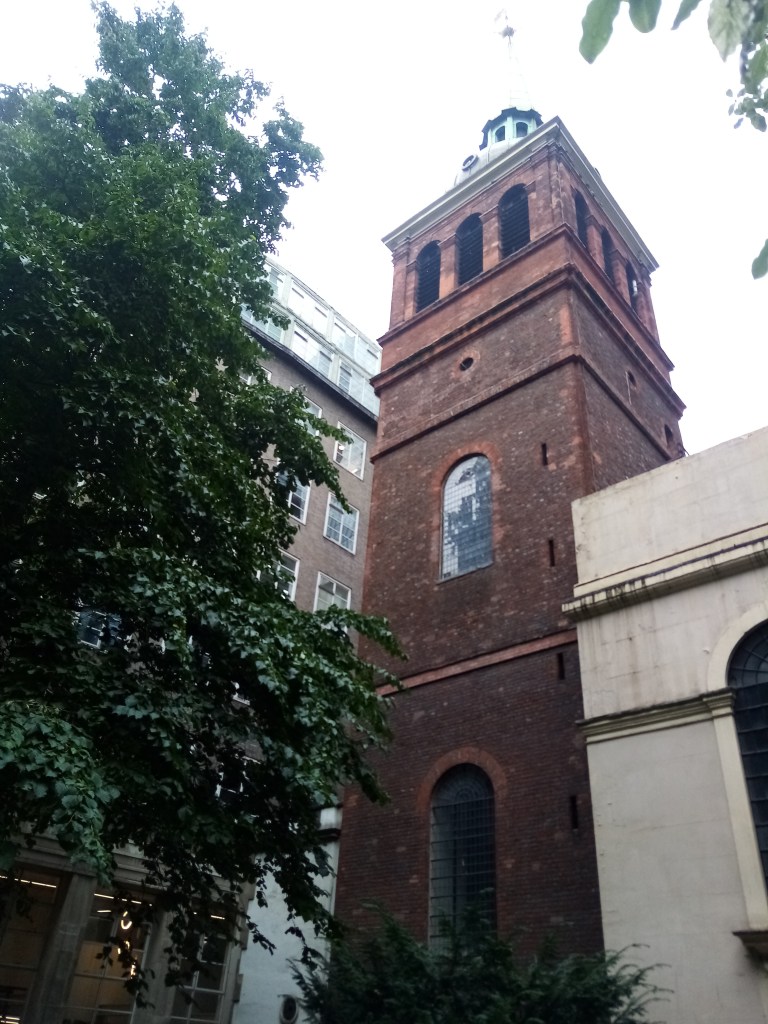
St Peter upon Cornhill 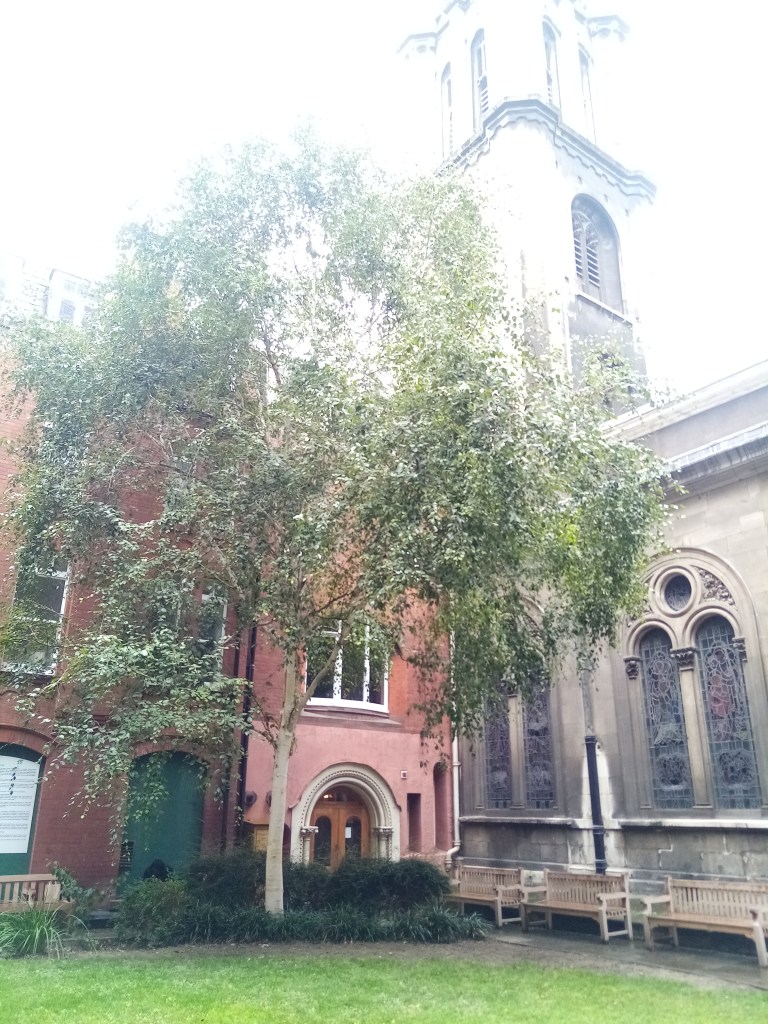
St Michael, Cornhill
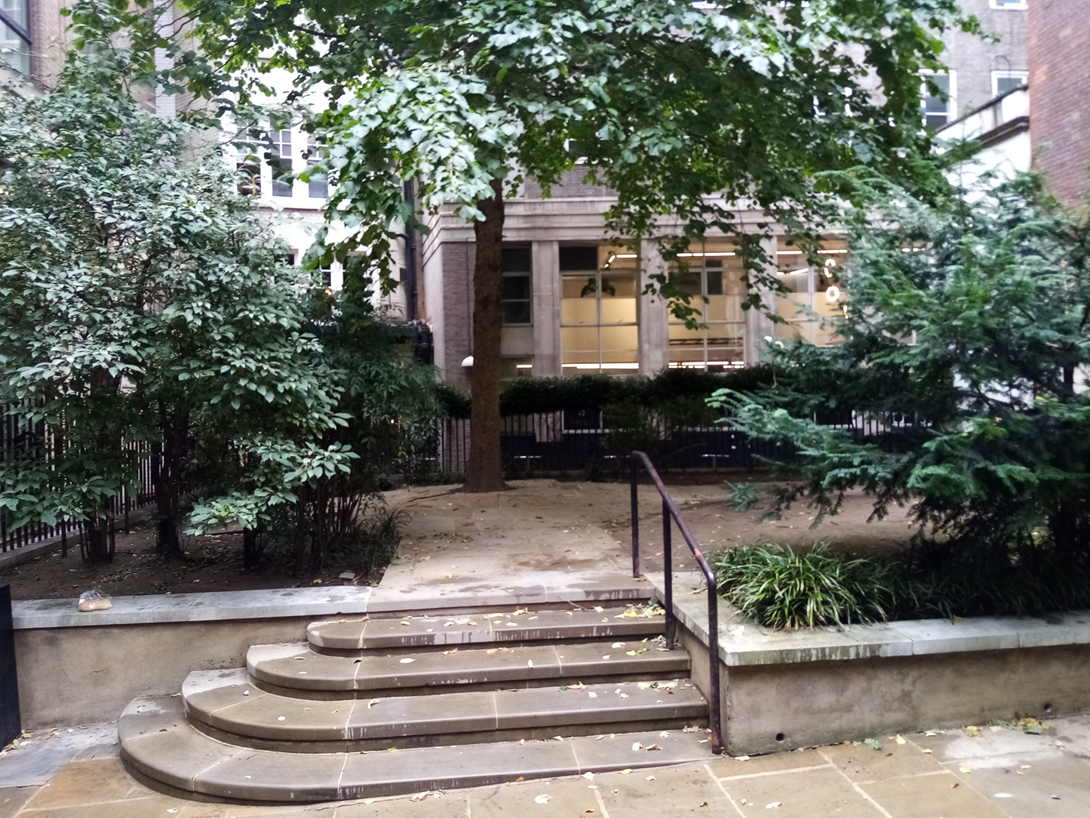
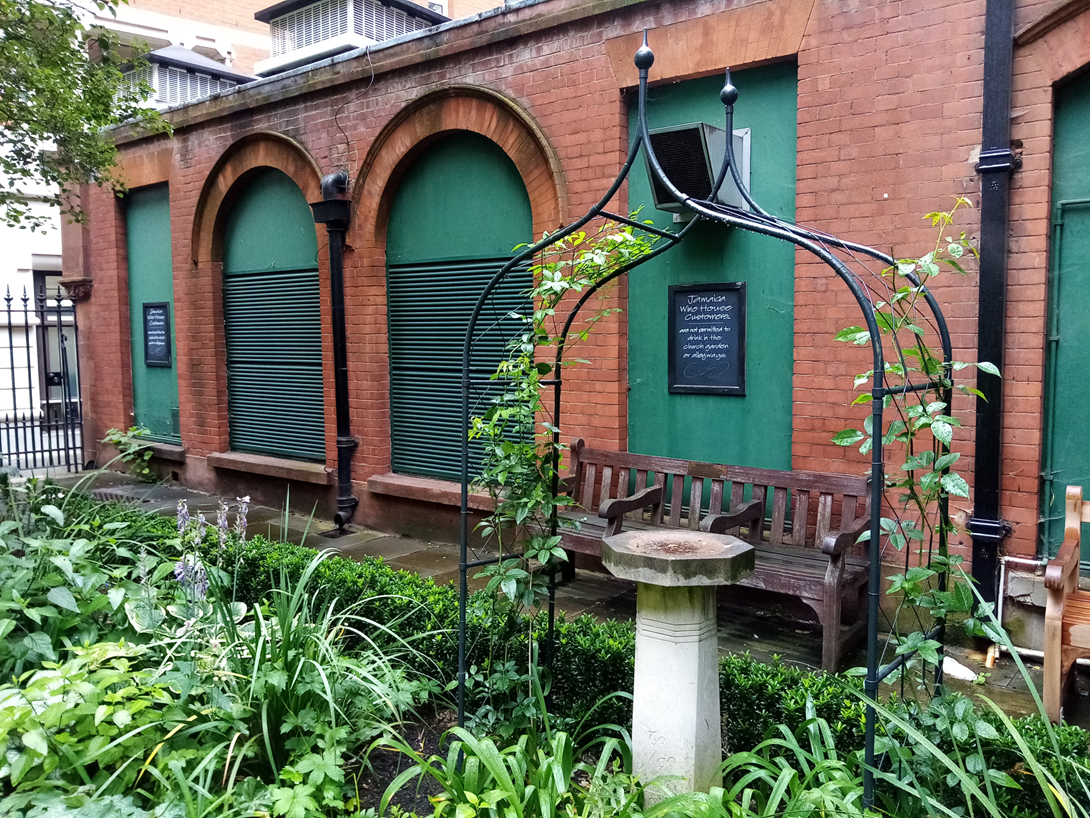
Fen Court, formerly St Gabriel’s Fenchurch Churchyard
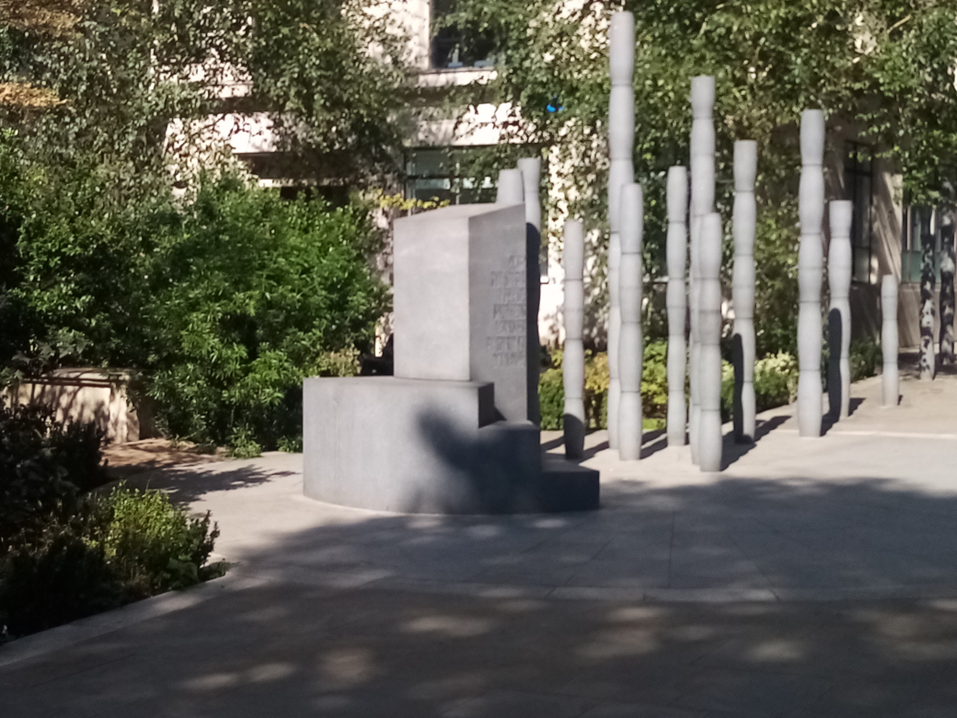
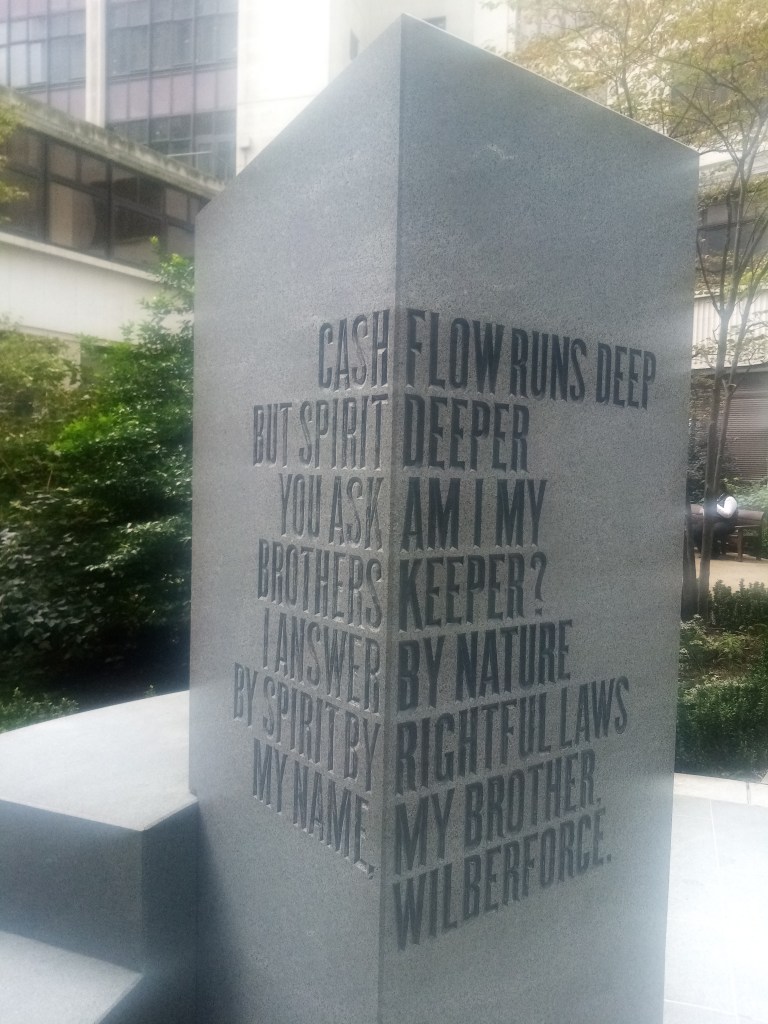
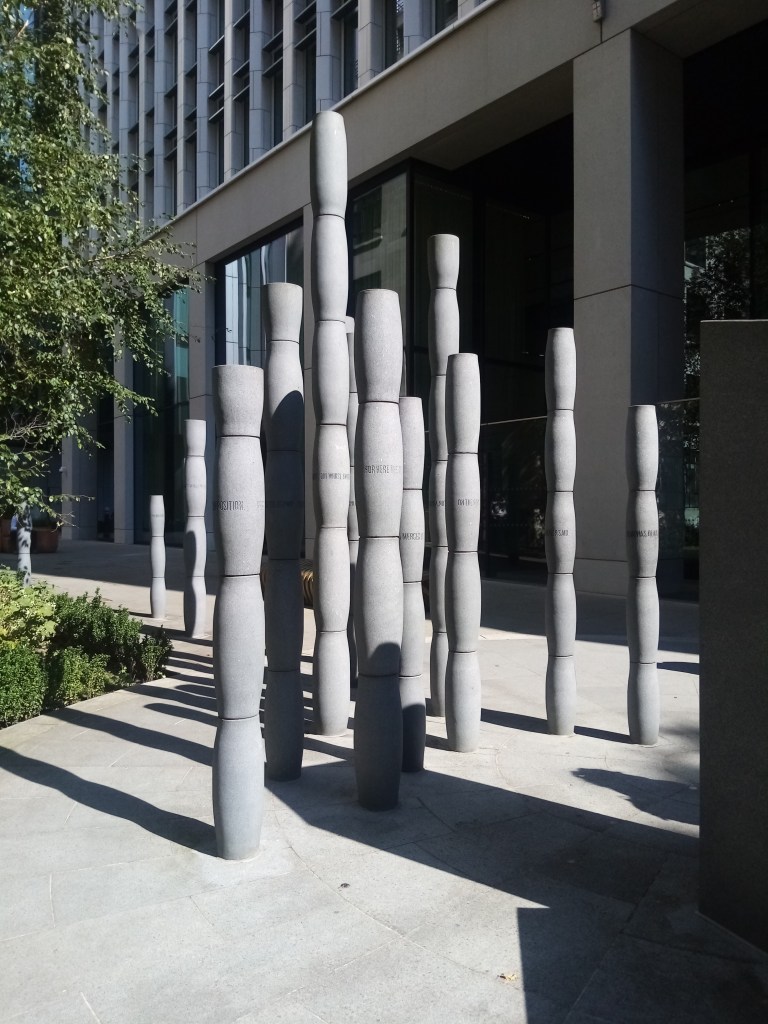
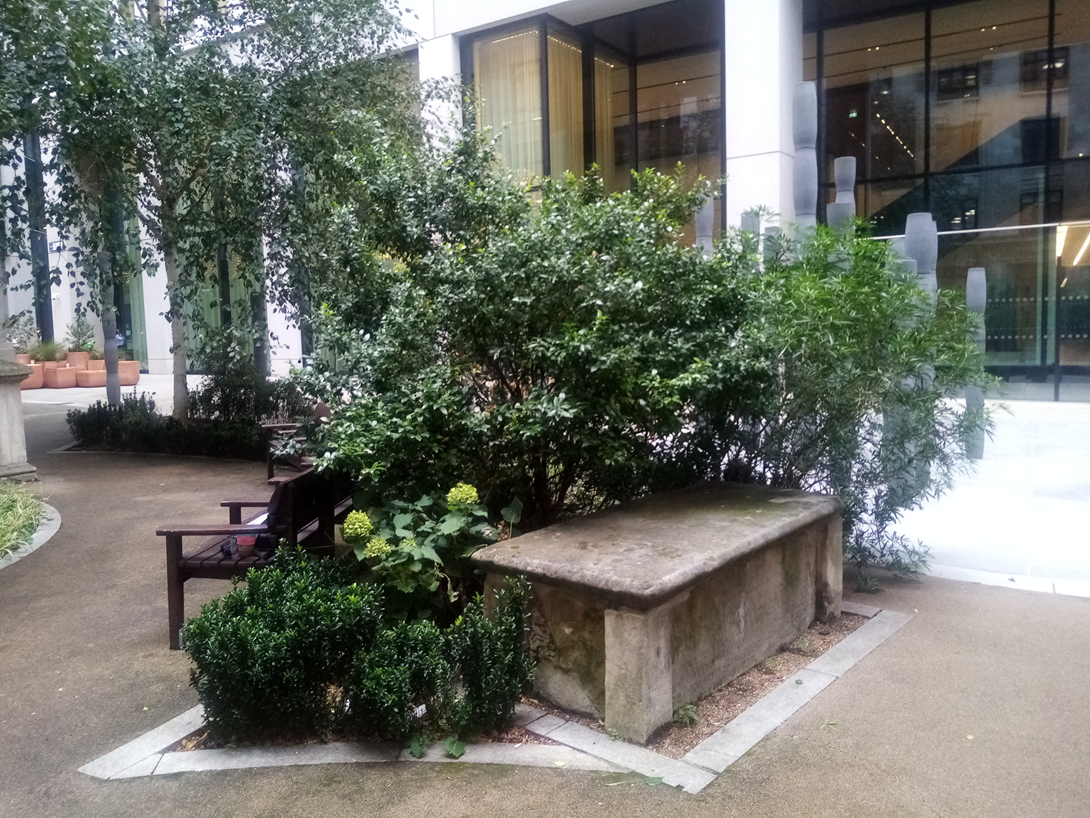
St Gabriel’s Fenchurch was destroyed in the Grear Fire and not rebuilt. The site lies in the parish of St Mary Woolnoth, Lombard Street which has a strong historical connection with the abolitionist movement. The Reverend John Newton, slave trader turned preacher and abolitionist, was rector of St Mary Woolnoth from 1780 to 1807, and worked alongside William Wilberforce. The granite sculpture in the garden commemorates 200 years since the abolition of slavery and was unveiled by Archbishop Desmond Tutu in 2008. It is composed of a group of columns surrounding a podium which could be a pulpit or alternatively a (slave) auctioneers platform. The columns are engraved with lines from a poem ‘The Gilt of Cain’ by Lemm Sissay, which links the slave trade with the City of London’s financial markets. ‘Gilt of Cain’ is a multiple pun: gilt is a reference to gold, but could also be spelt Guilt. Cain is a reference to the son of Adam who killed his brother Abel, but could also be spelt Cane, as in sugar cane, the crop grown on slave plantations in the West Indies. I had never come across this fascinating sculpture garden until a few weeks ago!
Source: Plaque displayed in the garden; londonontheground.com
 claresimons1