Along with London churches, my other passion is the London River, the mighty Thames. This month I’m combining the two and exploring four churches situated close to the River. Three of these are out to the West of the capital and the fourth is right next to London Bridge in the City of London. All these churches have seen the Thames change dramatically over the centuries, from an important method of transport for people and goods to other parts of the country and out into the rest of the world, to a waterway now mainly used for pleasure.
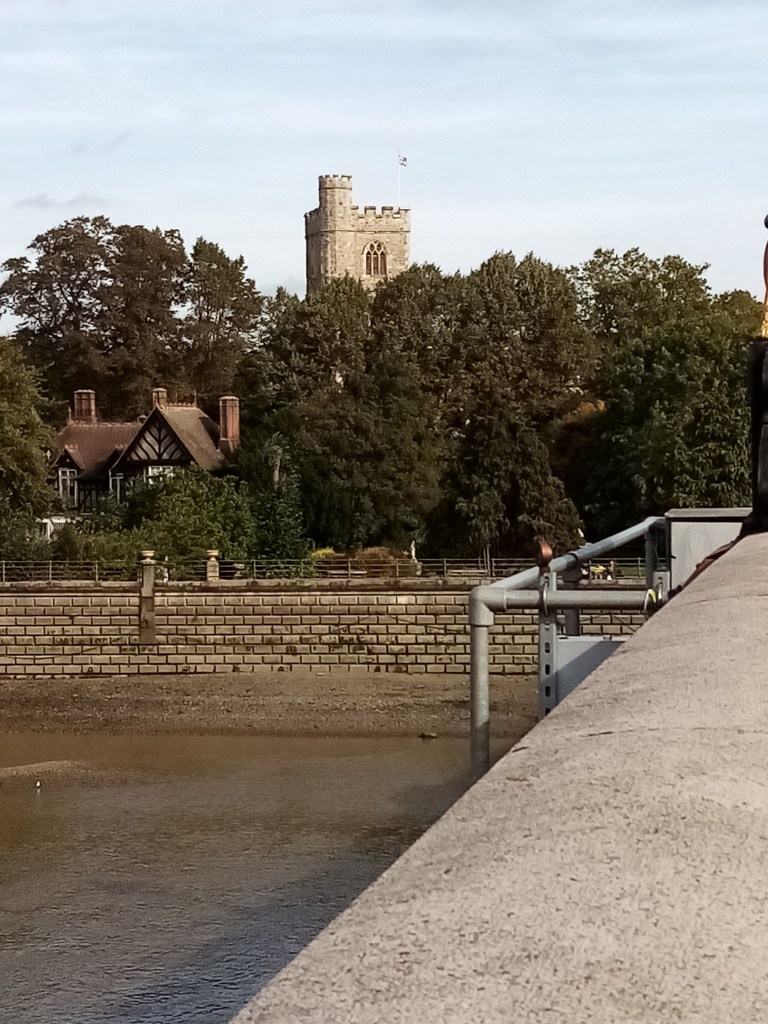
All Saints from Putney Bridge 
St Mary from Putney Bridge
St Mary the Virgin, Putney
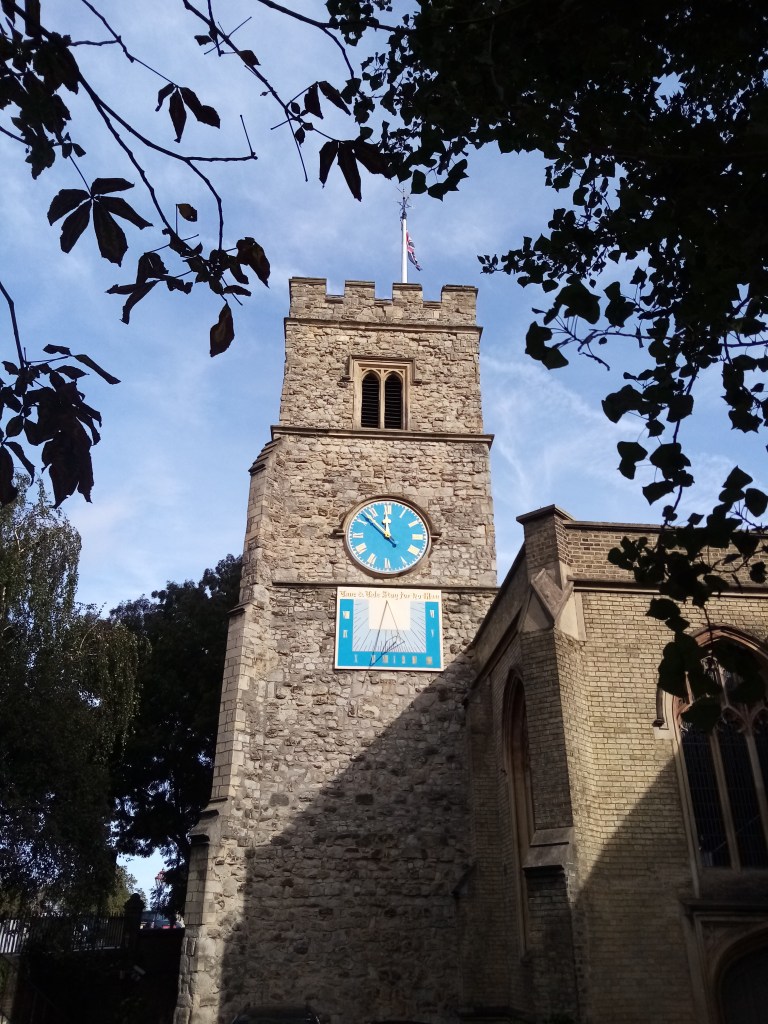
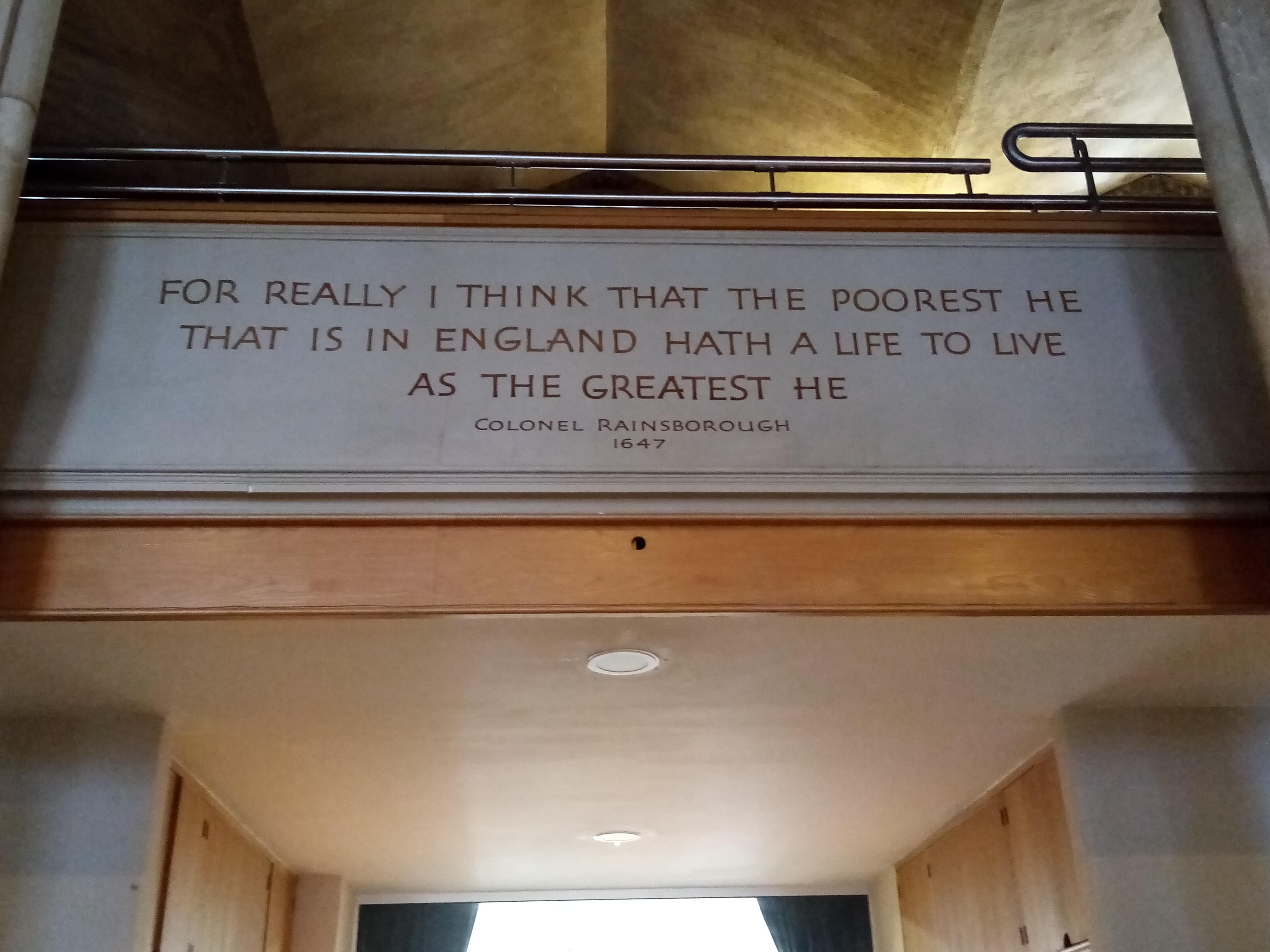
Putney Bridge is the only Thames bridge which has a church at both ends. Both St Mary’s, in Putney, and All Saints, in Fulham, have retained their almost identical 15th century towers, making them look confusingly similar from a viewpoint in the middle of the bridge. Looking back through my photos, I had to remember which tower was which! The first church on the St Mary site dates from the 12th century; the tower is the oldest remaining part of the church, which has been rebuilt several times. St Mary’s is famous for being the location of the Putney Debates of 1647: a series of discussions about the English Constitution following the success of the Parliamentarians in the English Civil War. One particular subject up for debate was whether political power should lie with a democratically elected parliament, rather than with the monarch! The interior of St Mary’s was substantially altered following a fire in 1973, after which the altar was repositioned halfway down the nave. The ceiling looks like its had a makeover too!
Source: Wikipedia
St Mary Tower 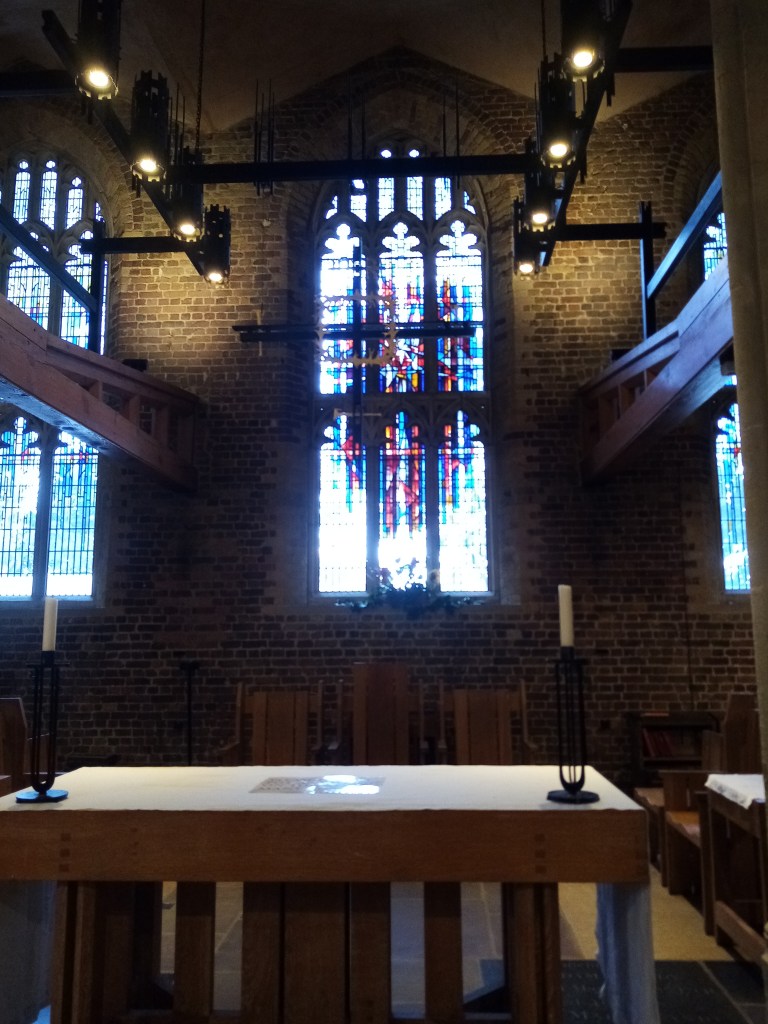
St Mary Altar

All Saints, Fulham
On the North bank of the River is the ancient parish church of Fulham, formerly in the County of Middlesex. There has been a church on this site for more than 900 years. The construction of the tower dates from 1440 but the present church is late Victorian, having been rebuilt in 1880/1. The church and churchyard are situated next to Bishops Park and the Tudor Fulham Palace, the country residence of the bishops of London from the 11th century until 1973. The churchyard is thus the burial place for most of the former bishops of London. Both the Park and the Palace (including a museum) are open to the public, free to enter and well worth a visit. The interior of the church is Grade ll Listed and boasts a beautiful hammerbeam ceiling and an interesting font. In the delightfully overgrown churchyard is the family tomb of Granville Sharp, abolitionist and contemporary of William Wilberforce.
Source: Wikipedia

All Saints Tower 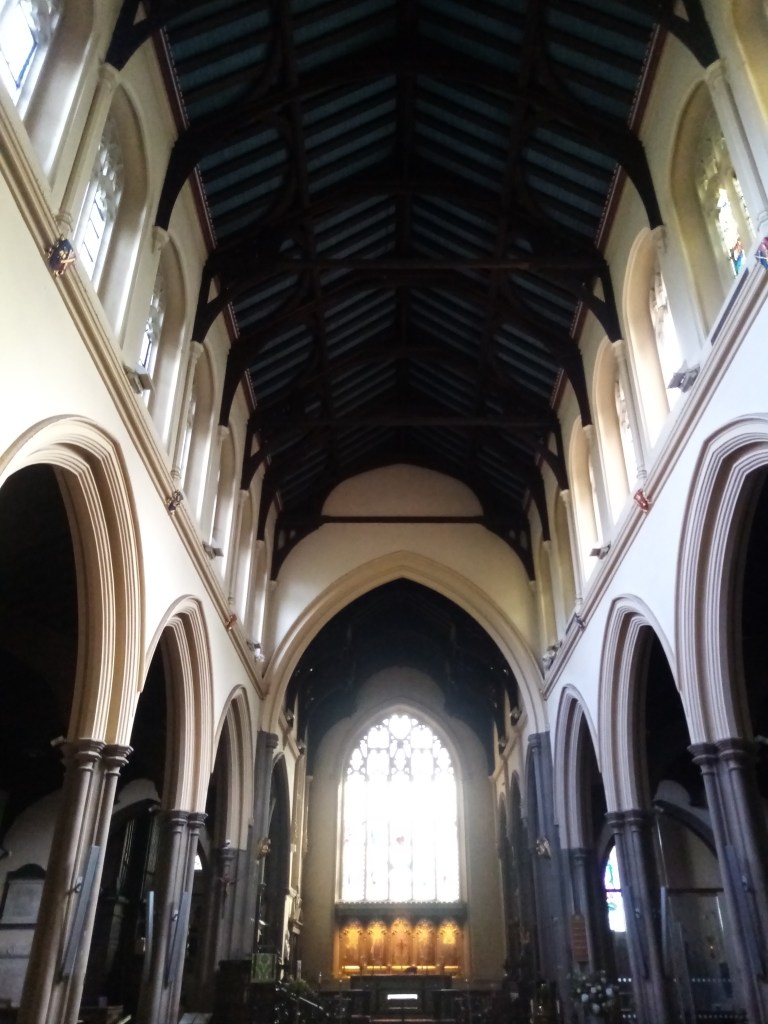
Hammerbeam Ceiling 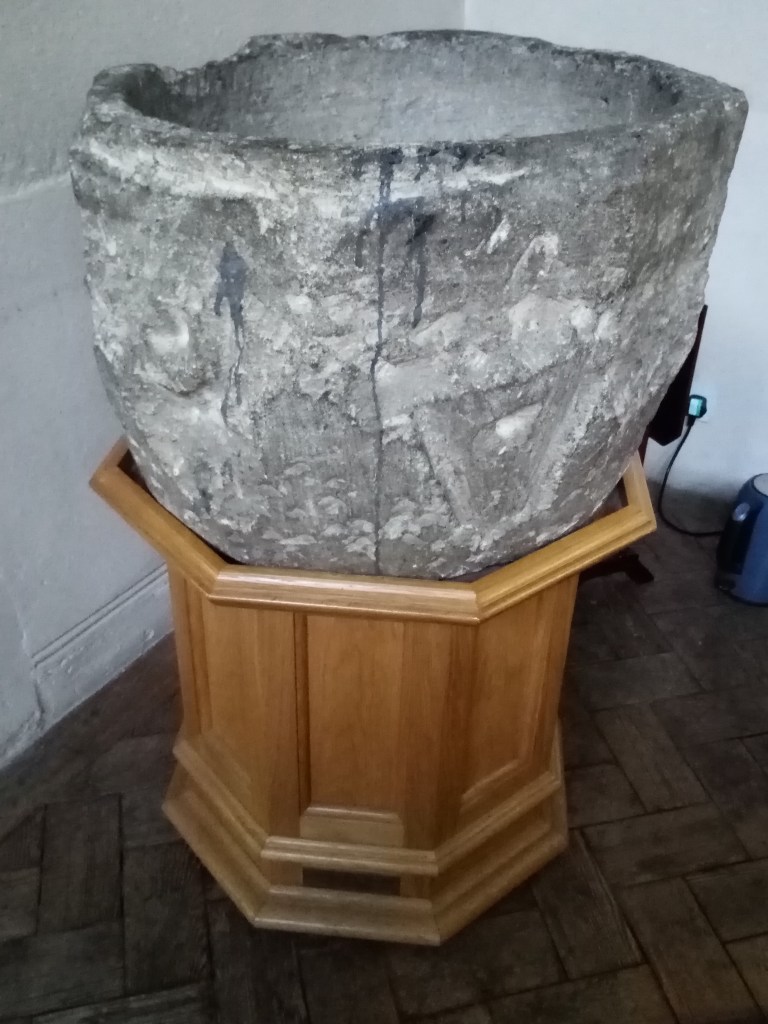
Font in All Saints 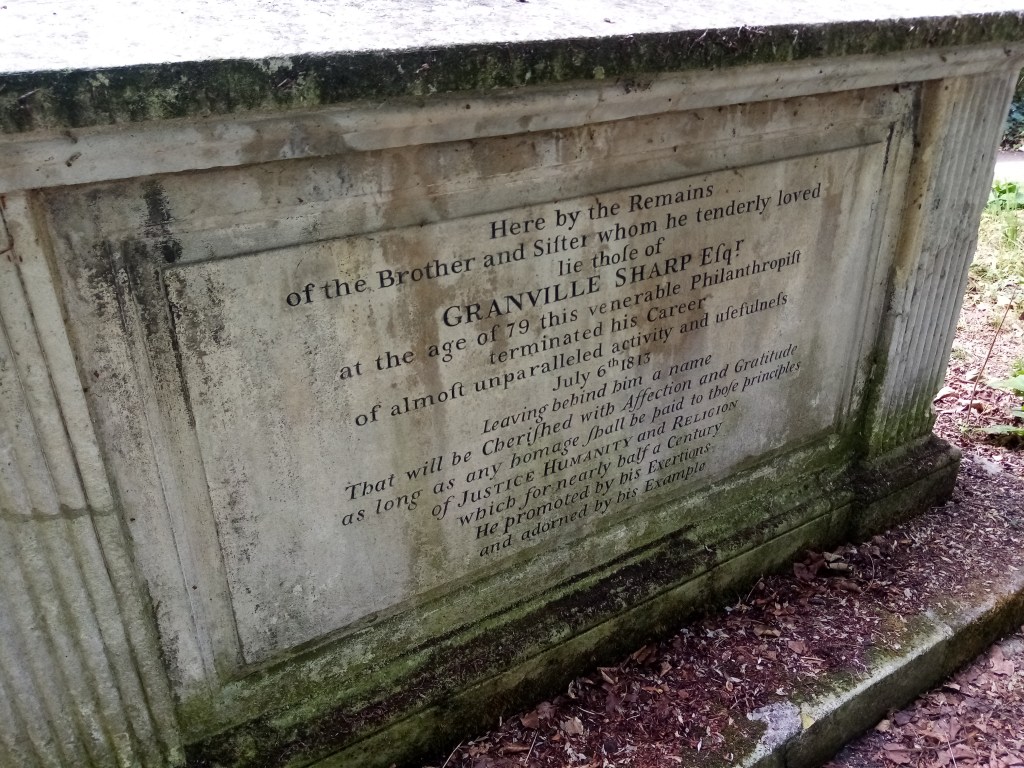
Tomb of Granville Sharp
St Nicholas Church, Chiswick
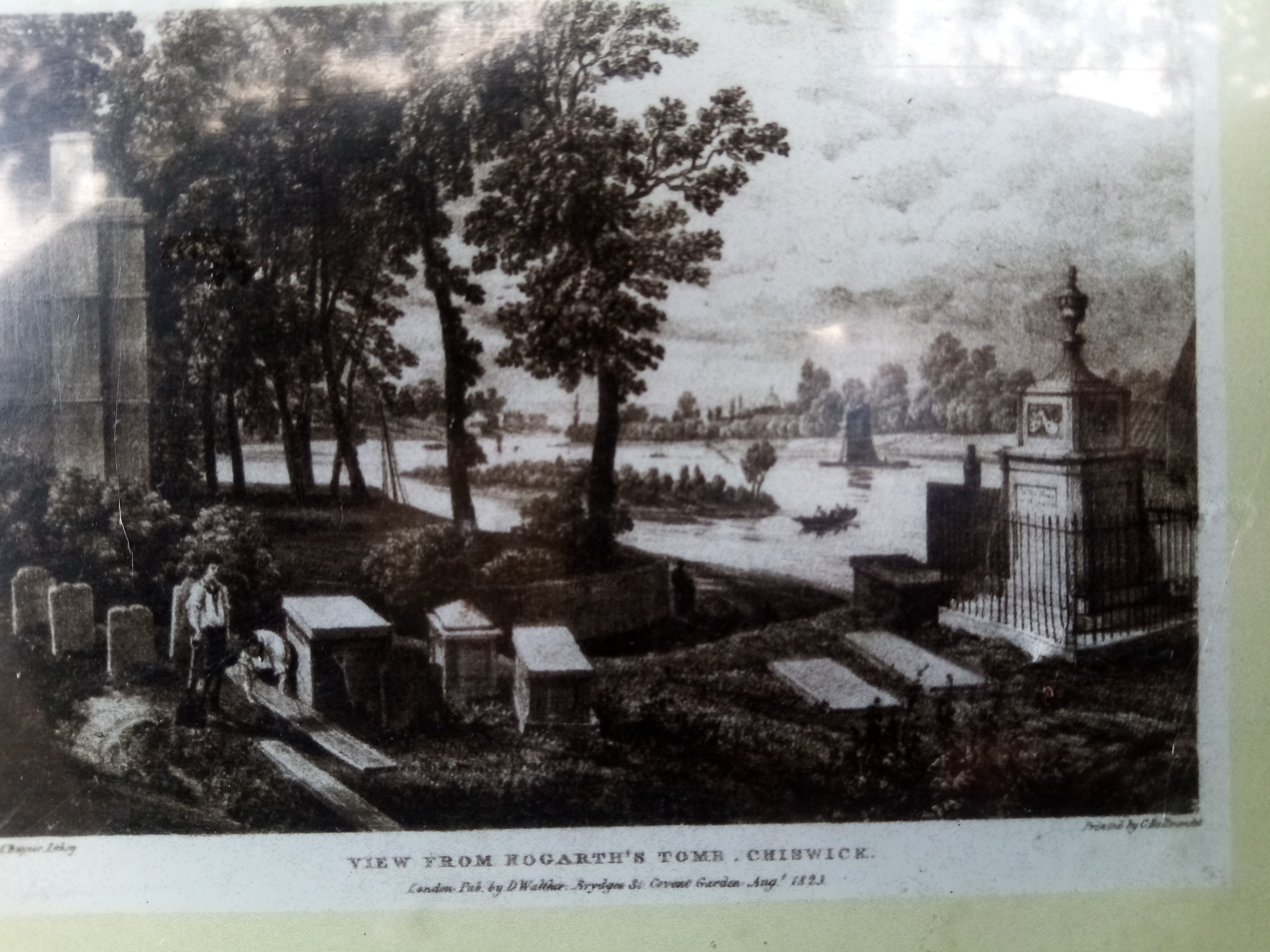
Upstream from Putney Bridge is St Nicholas, the Parish Church of Chiswick, situated unsurprisingly in Church Street, which once led down to the banks of the Thames to the ferry, the only means of crossing the River at this point for hundreds of years. The church is dedicated to St Nicholas, the patron saint of sailors and fishermen, a common practice where the livelihood of the parishioners depended on rivers or seas. The village of Old Chiswick grew up around the first Norman church from about 1180, but there is some evidence of a pagan shrine on this site in the seventh century which was converted to Christian worship. Like the previous two churches, the tower, built between 1416 and 1435 is the only remaining part of the current church, which dates from 1882. The rebuilding of the church was financed by the brewer Henry Smith of the nearby brewery Fuller, Smith and Turner, now known as Fullers, Chiswick. The artist William Hogarth is buried in the churchyard; an engraving on the accompanying plaque shows how close to River the church used to be.
Source: Wikipedia, St Nicholas Website
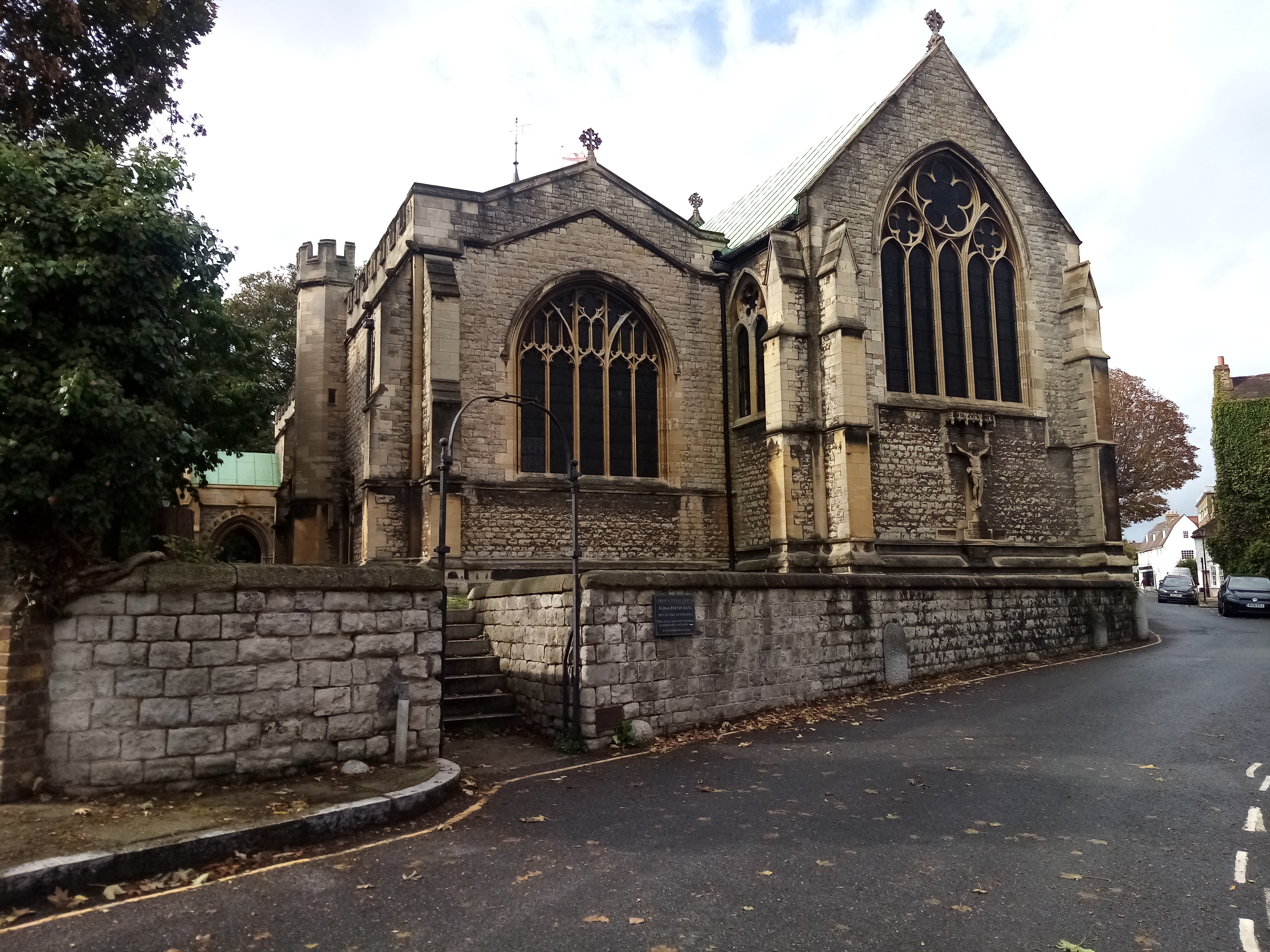
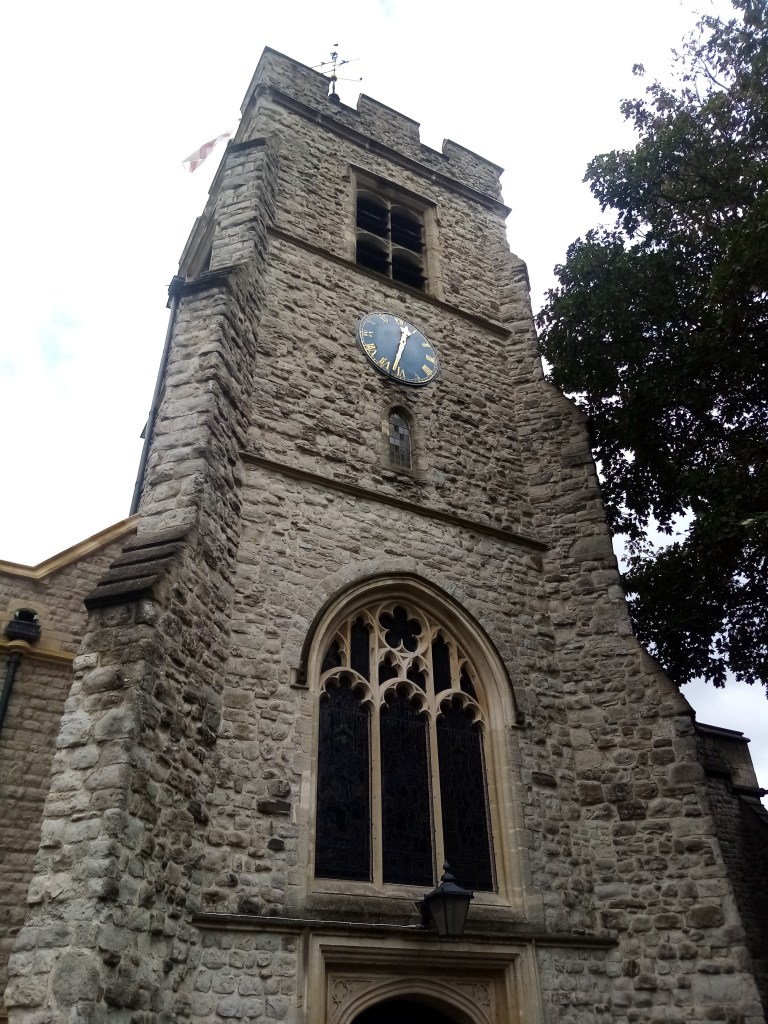
St Nicholas Tower 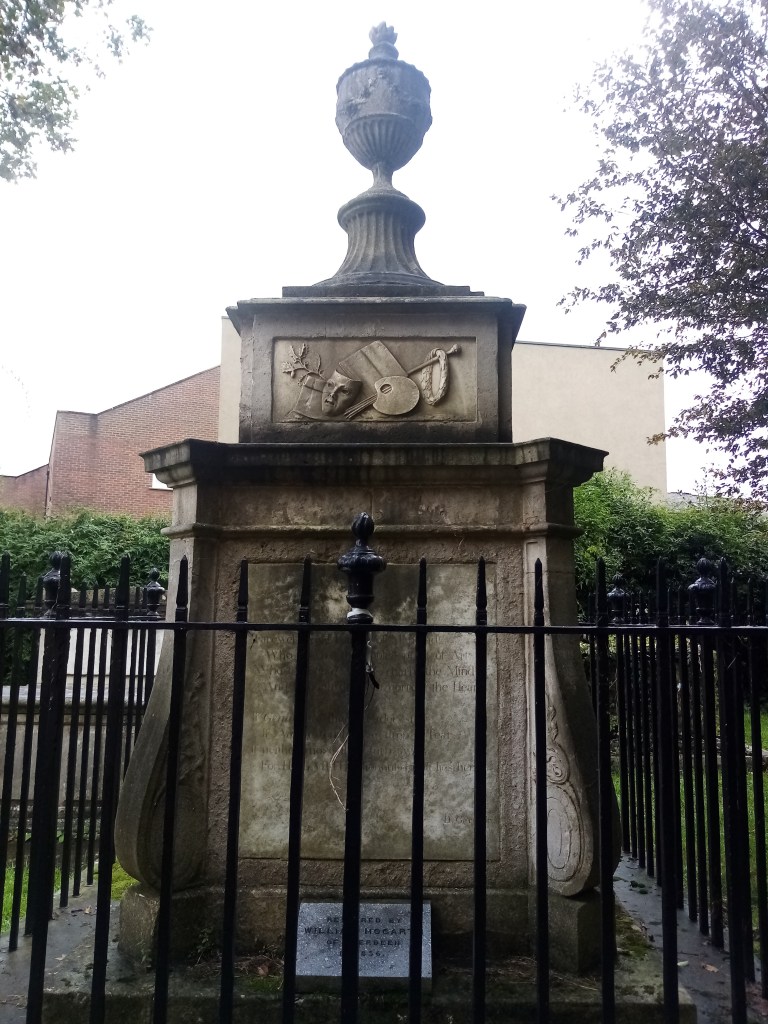
William Hogarth Tomb

St Magnus the Martyr
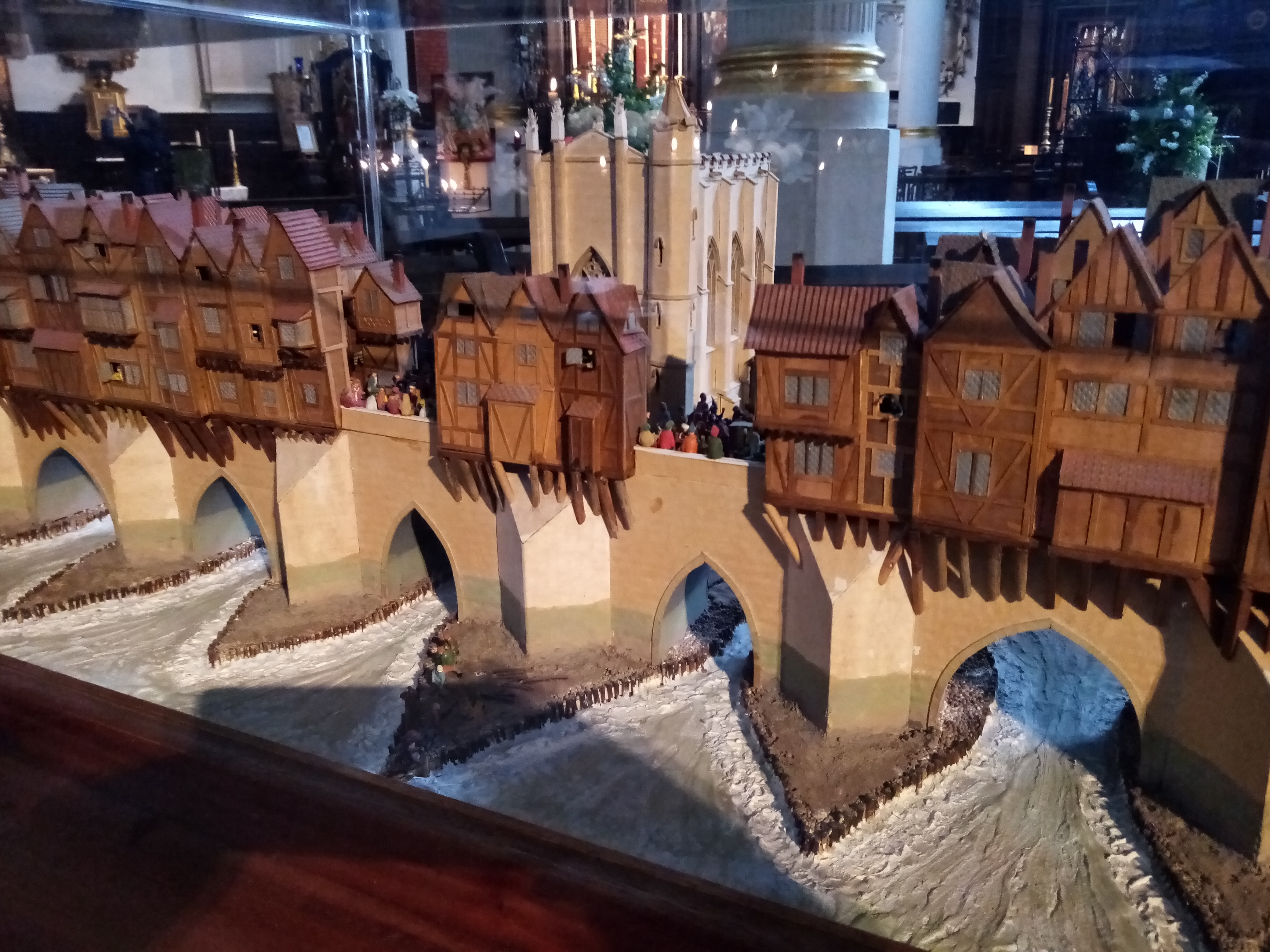
The first church on this site was built in the 11th century and the churchyard was formerly the gateway to the bridge that spanned the Thames there from 1176 to 1831, Old London Bridge. This was the bridge which was lined with houses and shops, and there is a beautiful scale model of the bridge inside the church. St Magnus was one of the first to burn down in the Great Fire of 1666, due to its proximity to Pudding Lane where the fire started, and following the fire, the first rudimentary fire brigade was established. Christopher Wren designed and built the present church in 1670, his design included arches which people had to pass through to set foot on the bridge; consequently it got very congested, as this was London’s only bridge. When a new bridge was commissioned in the 1830s it was built further upriver, where the Romans had built a series of bridges. In the churchyard outside there is a piece of wood from the Roman London Bridge and some stones from the Mediaeval bridge.
Source: Wikipedia
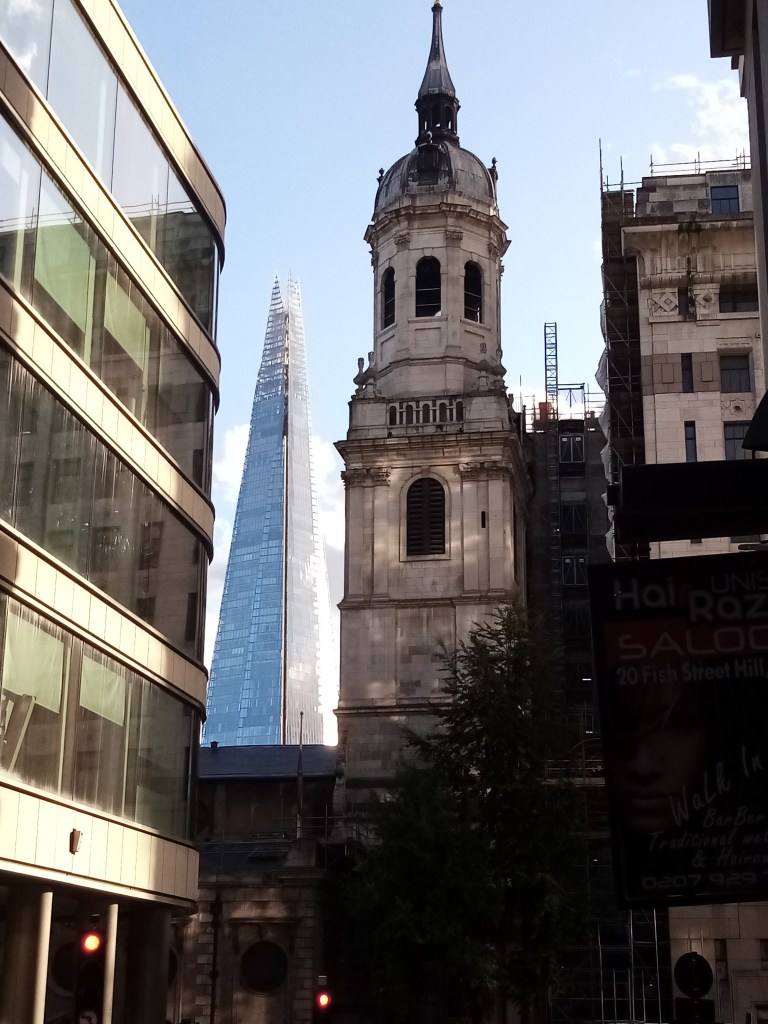
St Magnus from Fish Street Hill 
Statue of St Magnus 
Early fire engine in, St Magnus 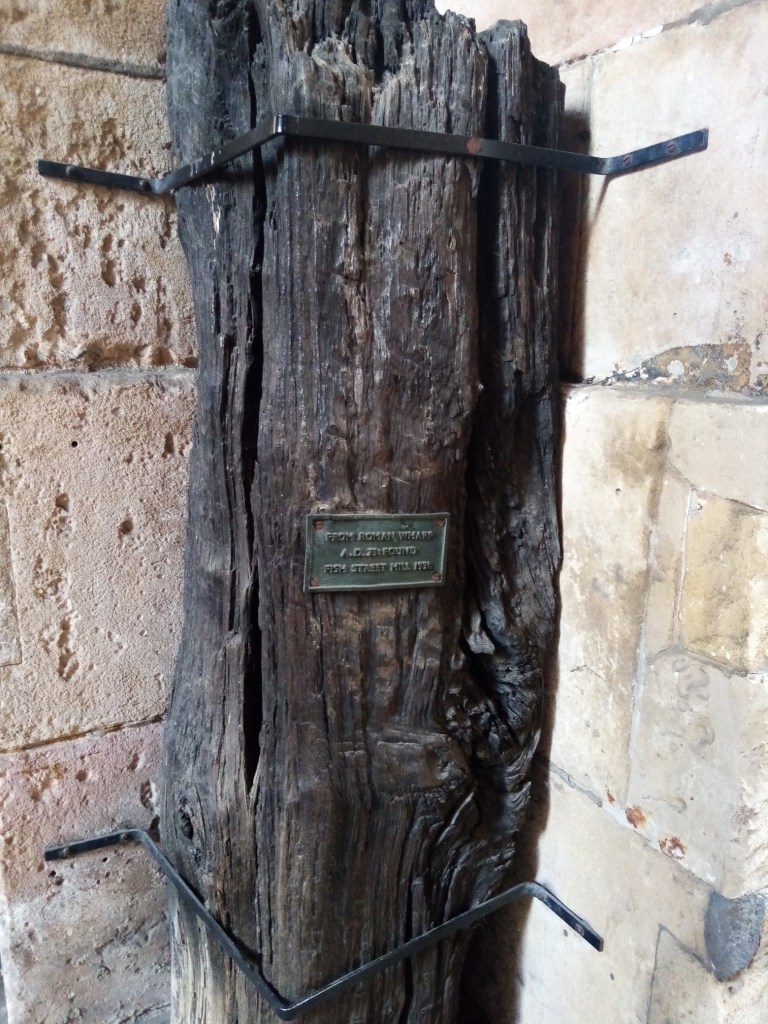
Wood from Roman pier, c75AD

 claresimons1