Four more churches situated close to the River Thames; two of them were actually built on the river banks, before extensive embankments were constructed in Victorian times. Three of the churches are located in West-Central London, one is further to the West, but still in a South London borough. All eight of the churches featured in October and November are mentioned in Thames Path by David Sharp, the Official National Trail Guide. I must have passed all of these churches without realising it, as I’ve walked the Path from Windsor to the Thames Barrier (as well as lots of other parts upstream!)
Chelsea Old Church
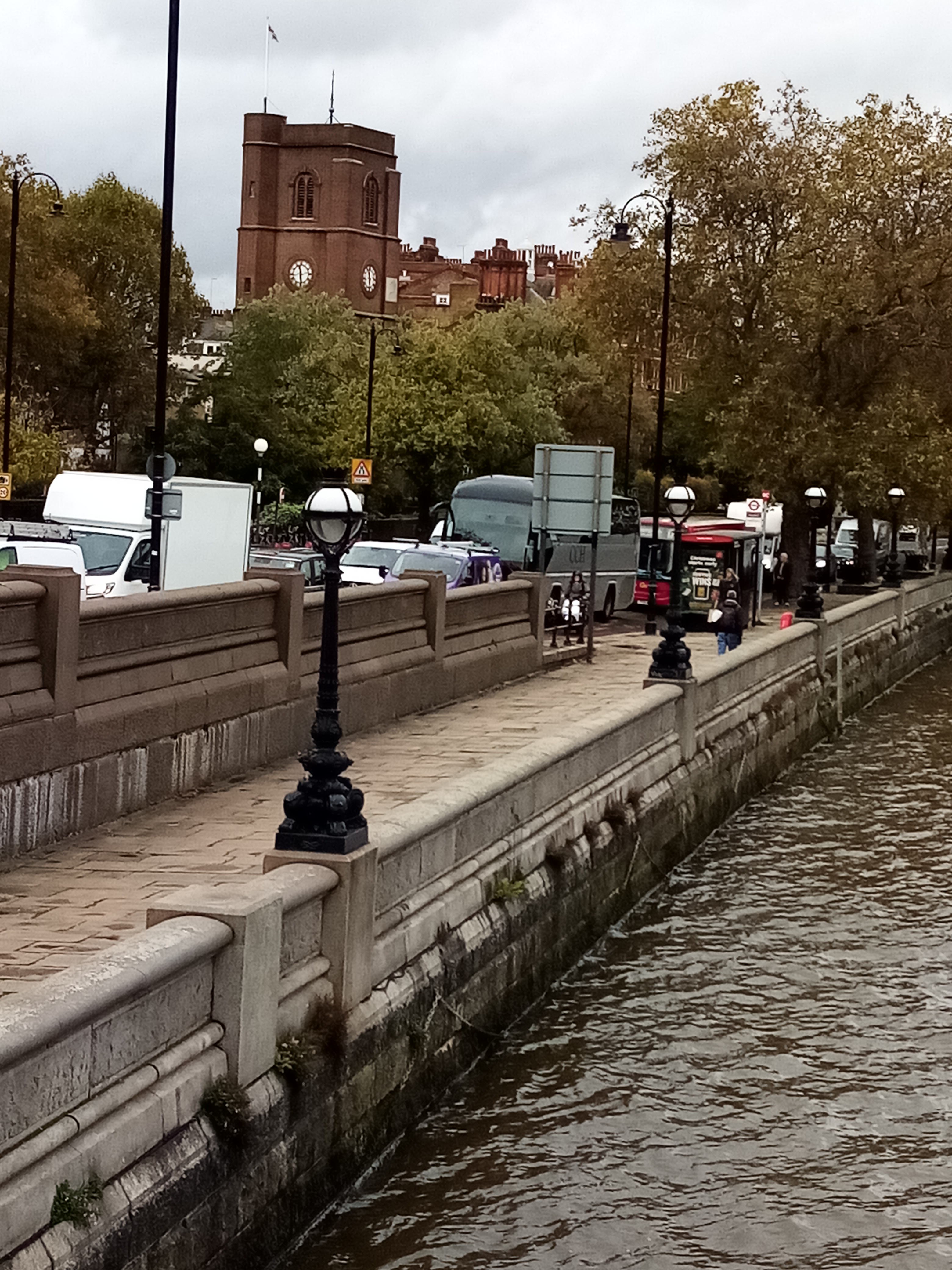
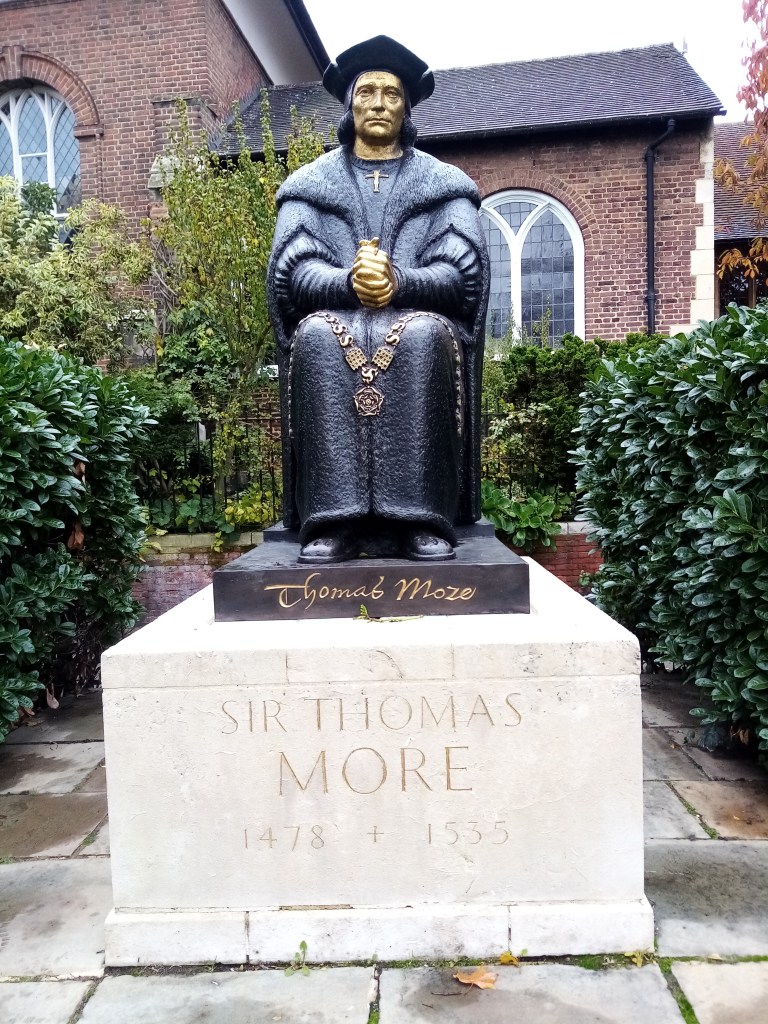
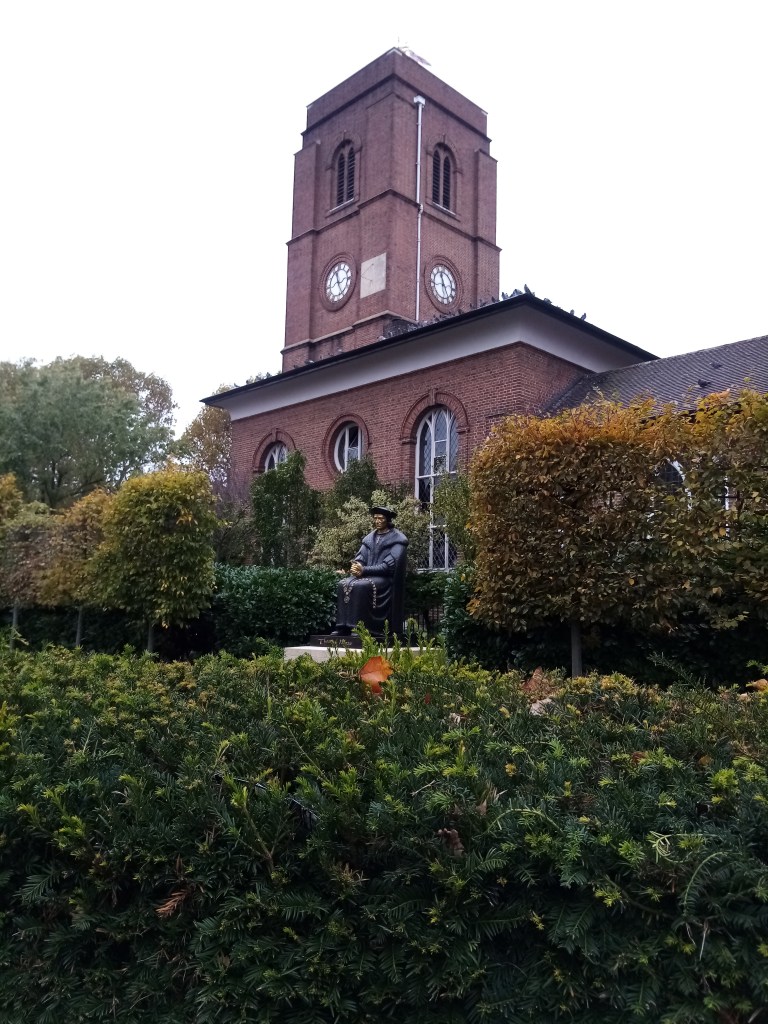
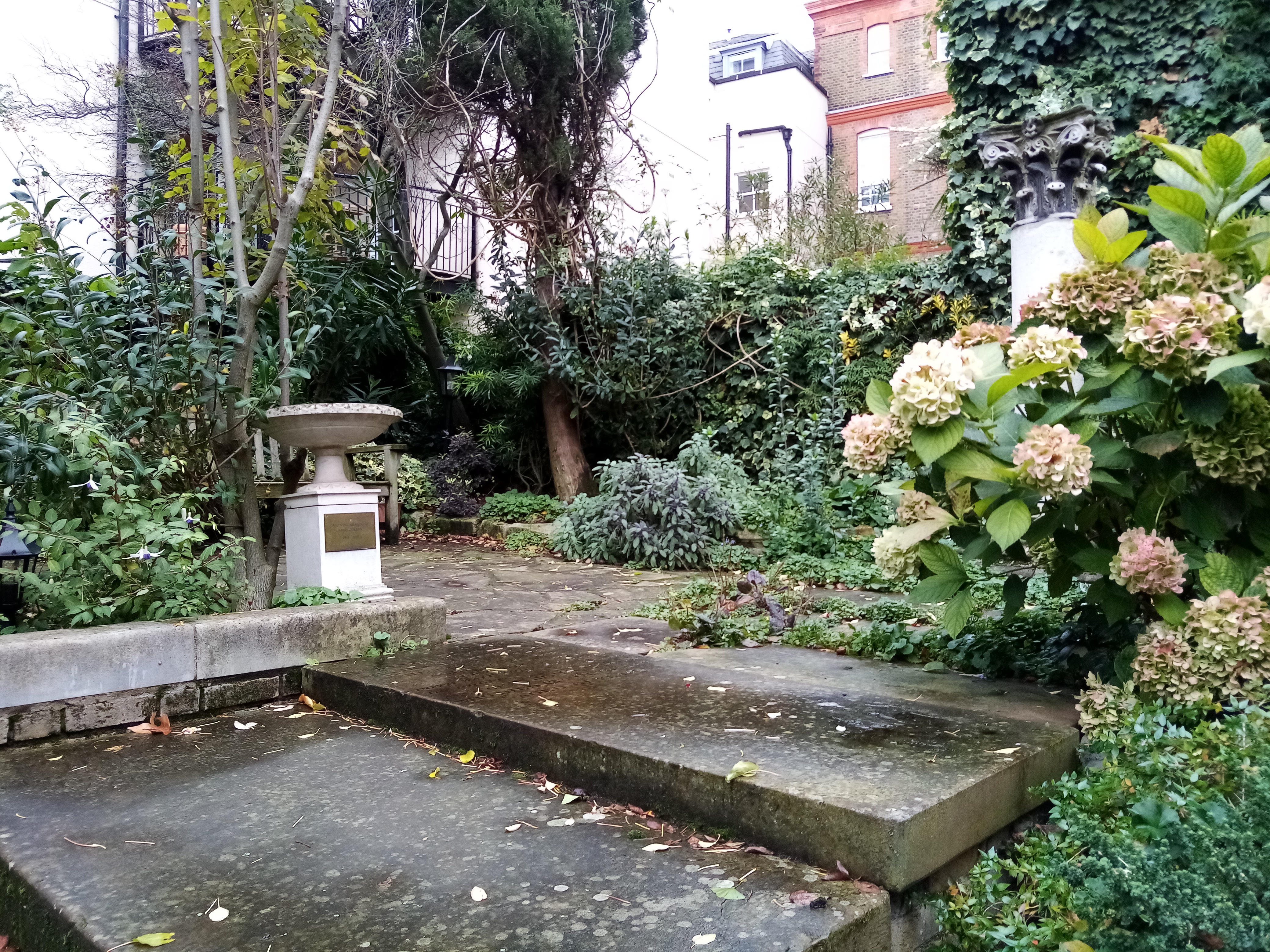
Also known as All Saints, this church is situated at one end of Cheyne Walk, which fronted the River before the construction of the Chelsea Embankment. Once the parish church of the village of Chelsea, the site comprised two private chapels as well as the public church building, which dates from the 13th century. One of the chapels was rebuilt in 1528 by Thomas More, Henry Vlll’s High Chancellor, for his private use. There’s a statue of More in the church grounds facing the River. Another royal connection is that Henry’s 6th wife, Katherine Parr who survived him, moved to the Manor House in the rural parish of Chelsea after the king’s death. She had been caring for her younger step-children, Princess Elizabeth and Prince Edward at court, and when 9 year old Edward ascended the throne, she continued as guardian to 13 year old Elizabeth and also to the ill-fated 9 year old Lady Jane Grey. So a former queen and two future queens would have attended this small country church together! The churchyard has a small, pretty garden which contains a memorial to Sir Hans Sloane, co-founder of the British Museum and the Natural History Museum. Nearby Hans Place and more famously, Sloane Square, are named after him.
Sources: Wikipedia, Chelsea Old Church website
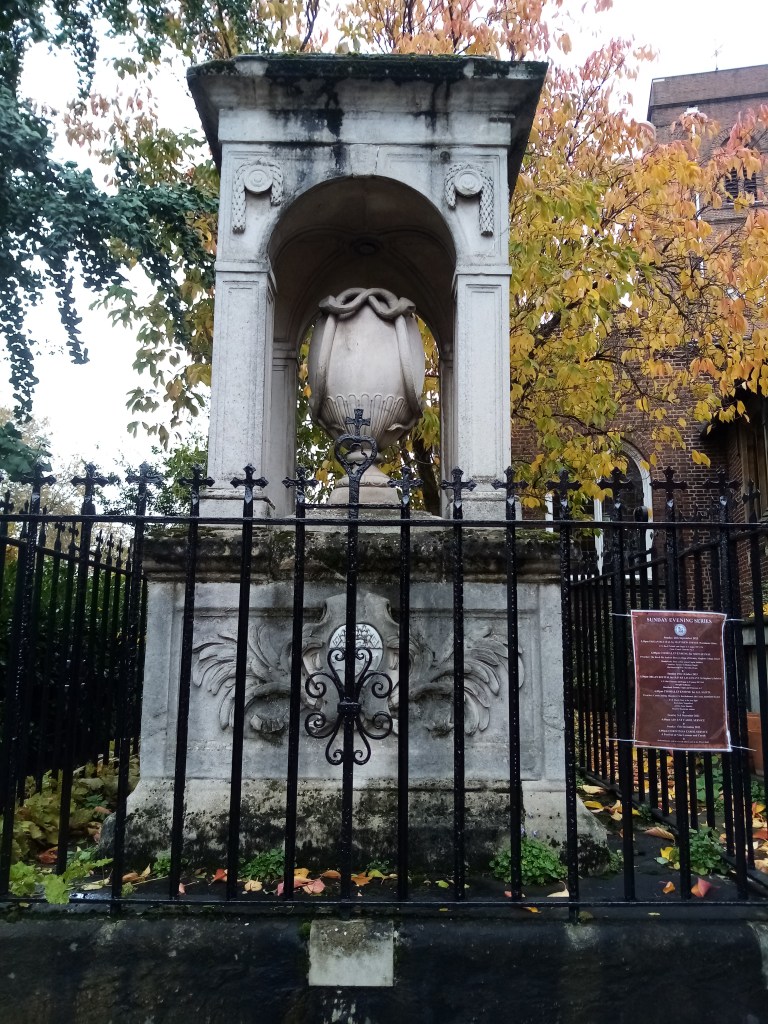
Monument to Hans Sloane 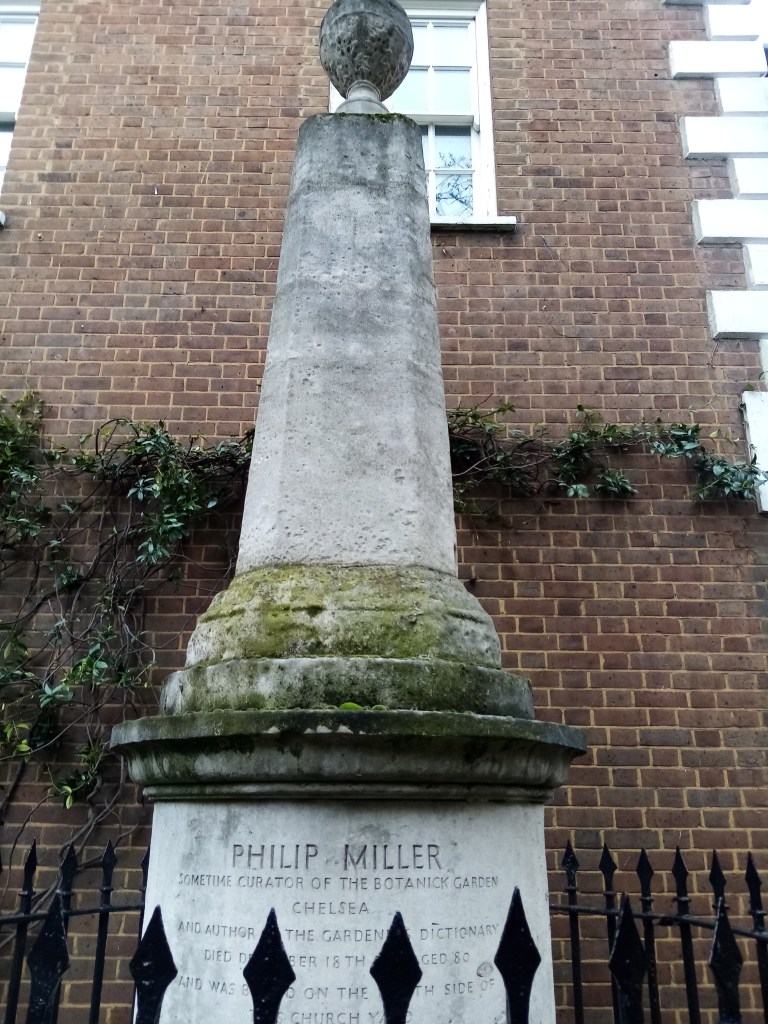
Monument to Philip Miller, Creator of the Botanic Garden, Chelsea
St Mary’s, Battersea
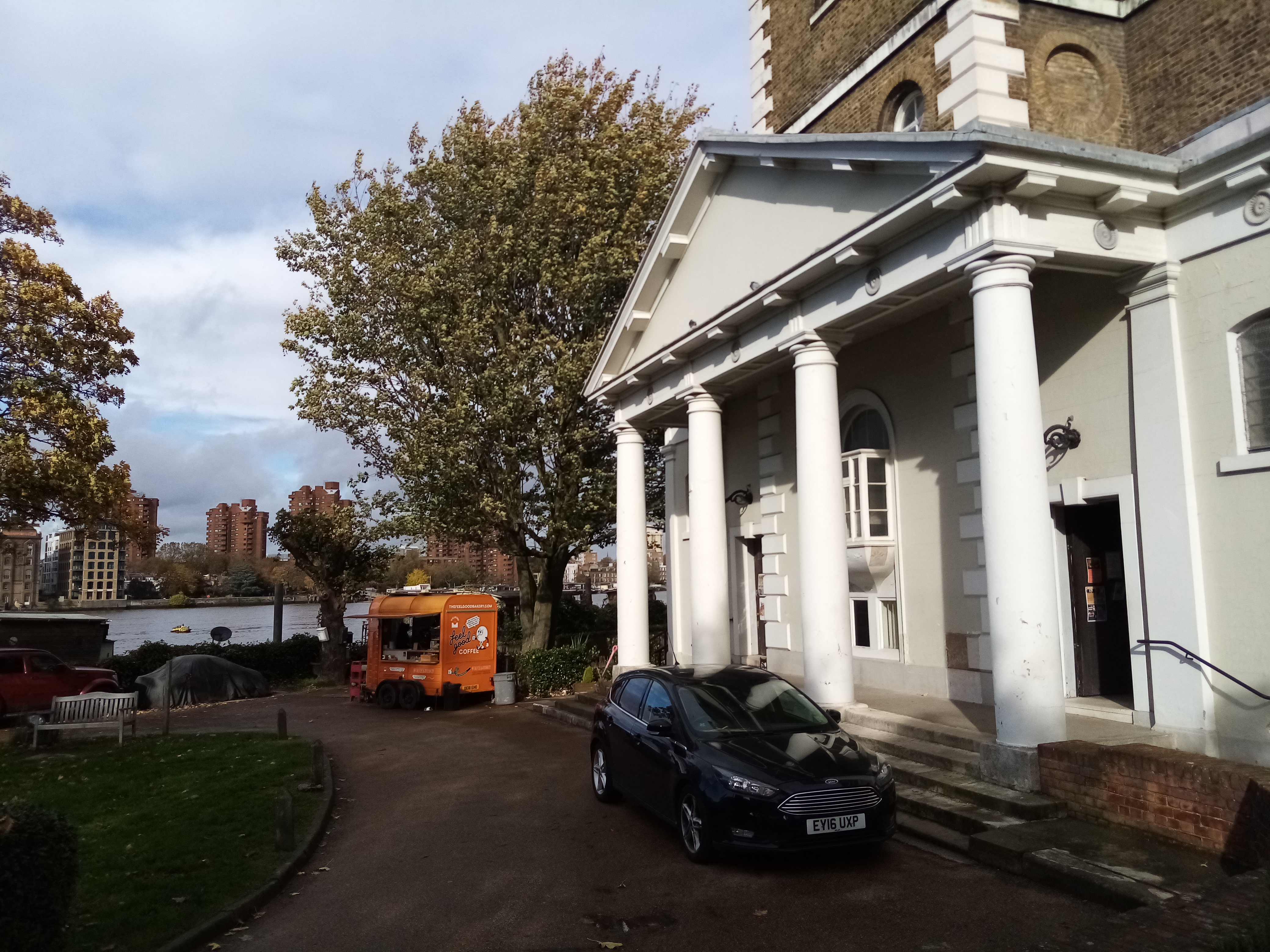
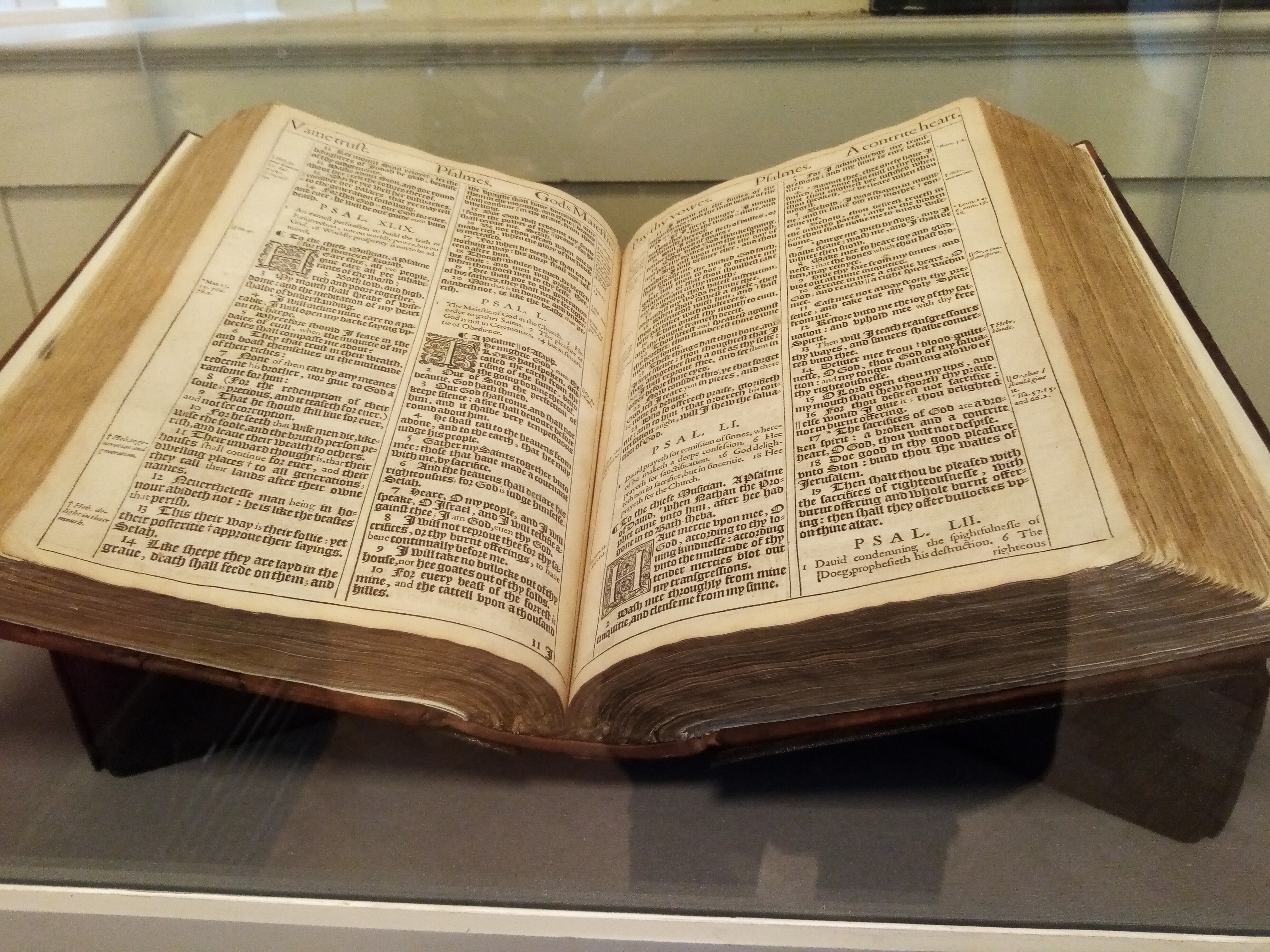
This church has so many interesting features, here are just three: Number 1, the Thames Path actually goes through the churchyard. With its garden benches and bright orange coffee van, this is a great place to pause your journey along the Path. I bought a cup of excellent coffee and learned from the coffee guys that the week before, the Thames had flooded over the banks and into the churchyard, up to the wheels of the van! Number 2, inside the church there are four stained glass windows commemorating four famous people with a connection to the church: artist JMW Turner, poet William Blake, botanist William Curtis and one Benedict Arnold, who fought with George Washington in the American War of Independence and who ended his days in Battersea; he is buried in the crypt. Number 3, the church contains a very rare first edition of the King James Bible, on display in a glass case. Unfortunately, it was too difficult to read the print! The original church was one of the earliest Christian sites south of the Thames, being built around 800AD. The Manor of Battersea and the church were listed in the Doomsday Book in 1086, and the present church was designed by local architect Joseph Dixon and completed in 1777.
Source: Wikipedia
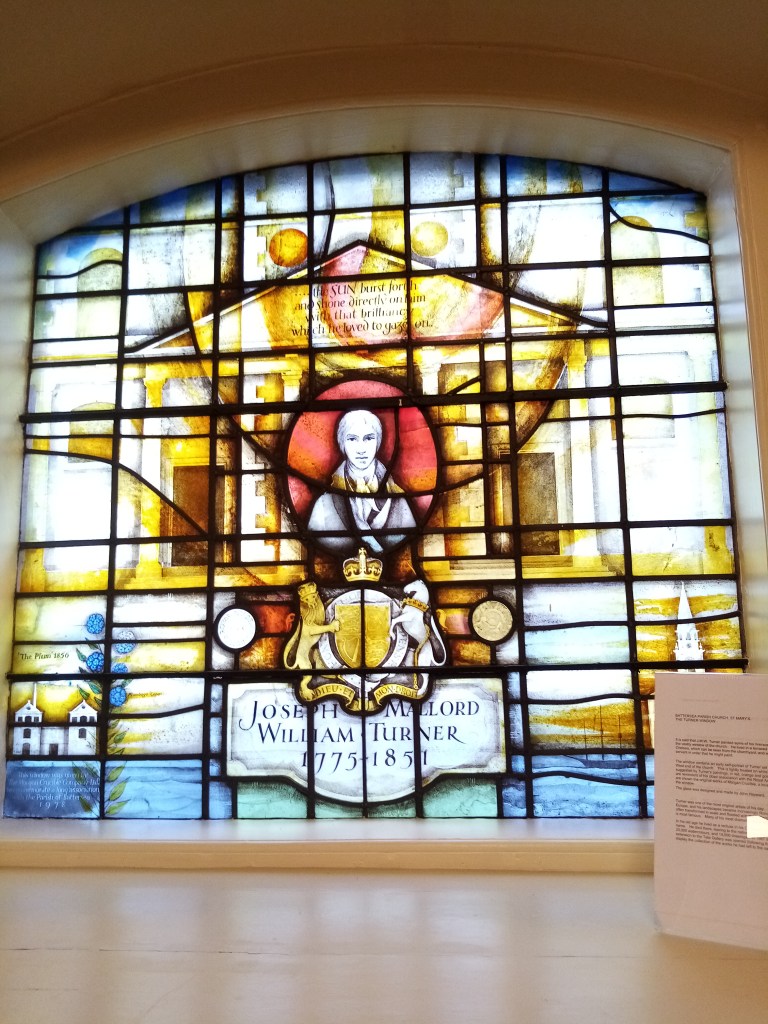
JMW Turner 
William Blake 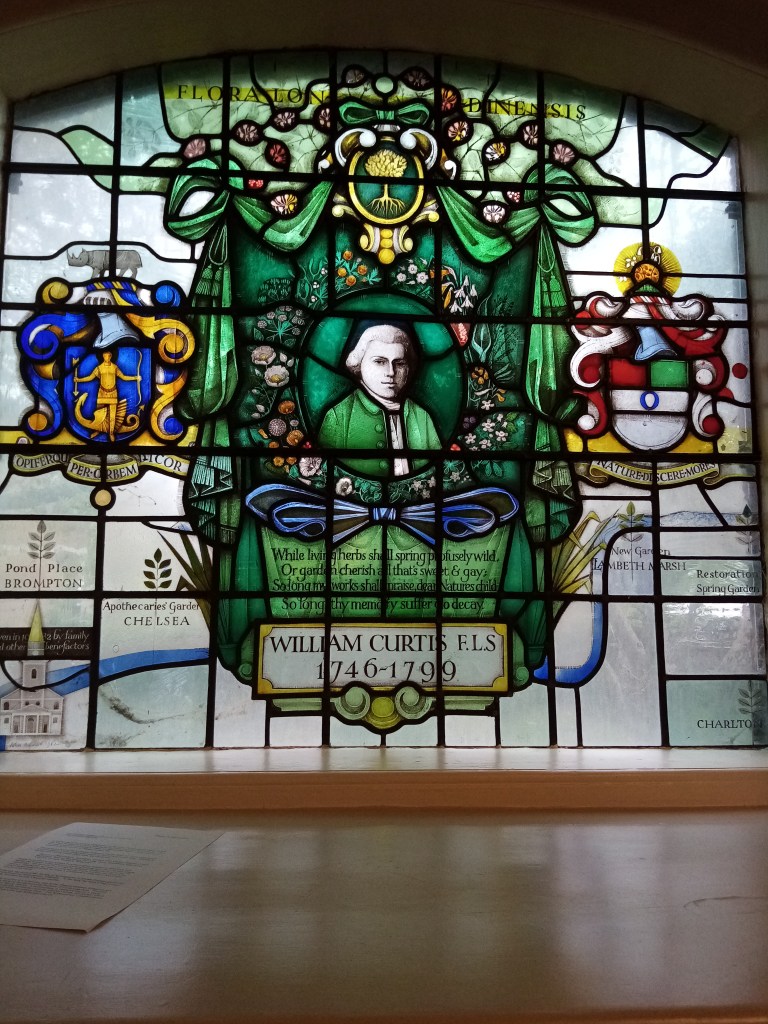
William Curtis 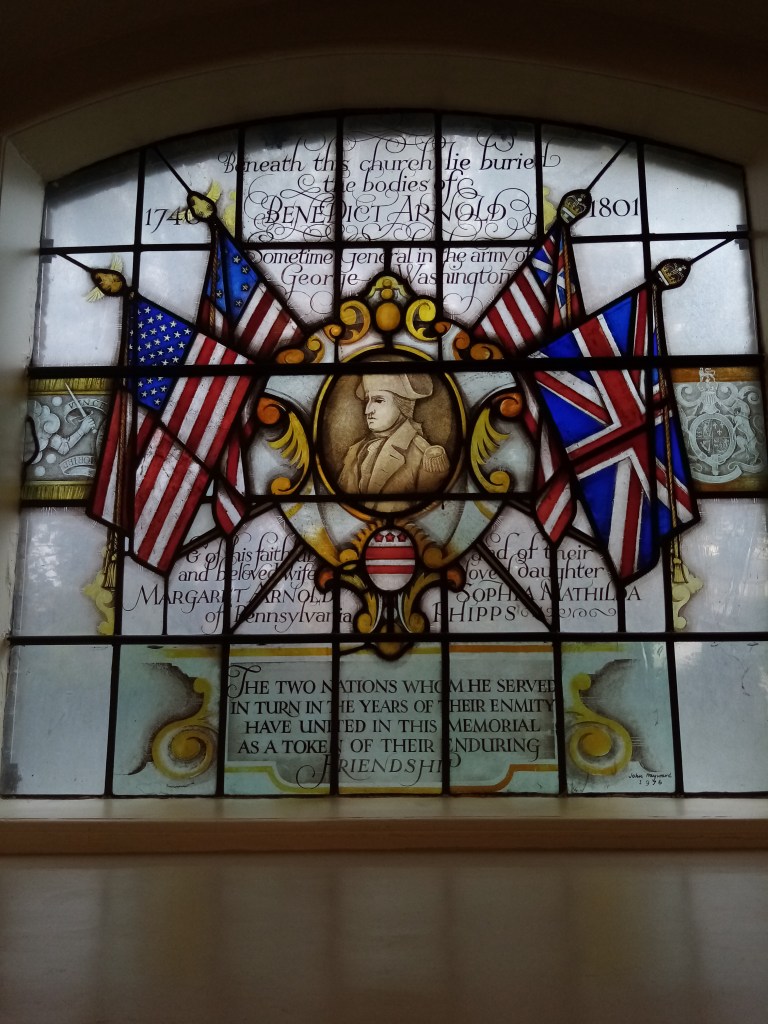
Benedict Arnold
St Mary-at-Lambeth
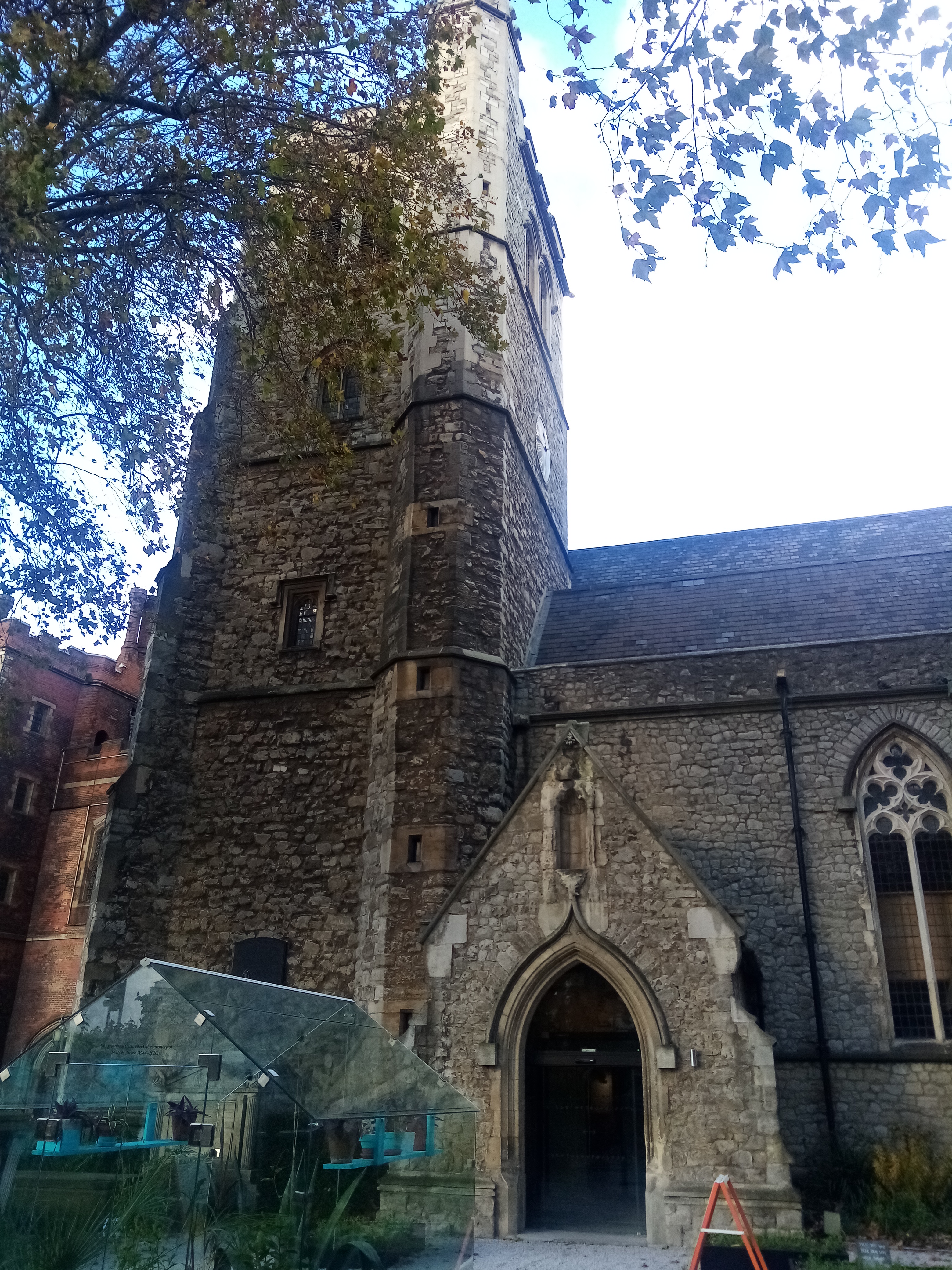
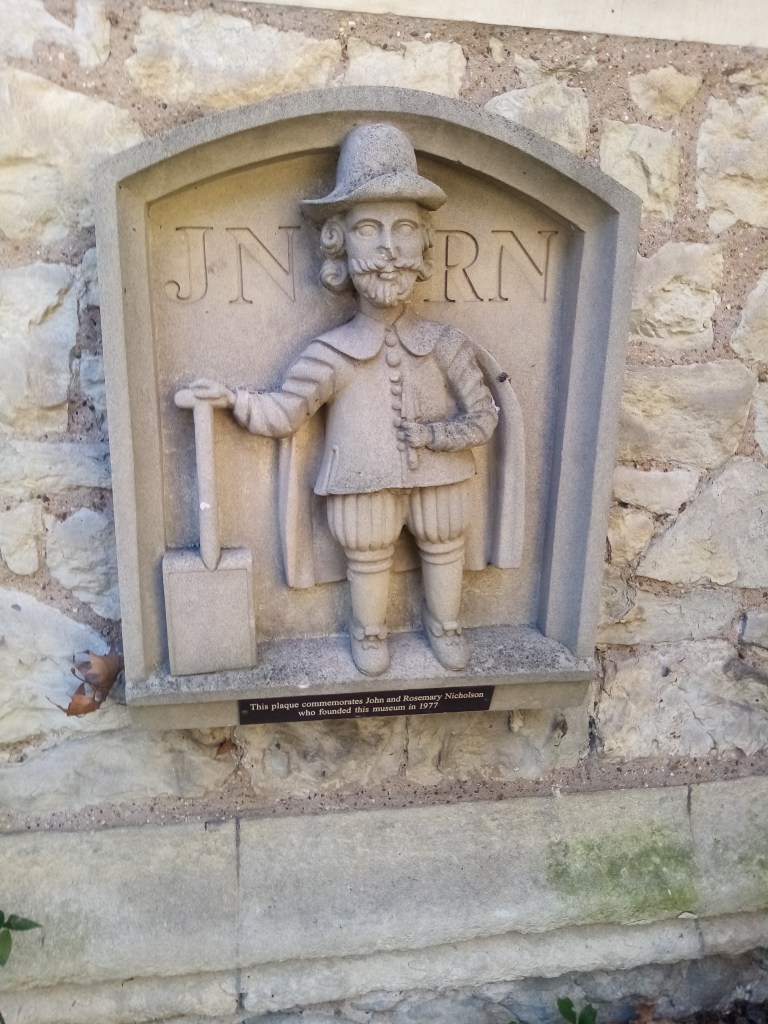
This Victorian church was scheduled for demolition in the 1970s as it was heavily bomb damaged in World War 2 and considered beyond repair. It was rescued and restored, not as a church but as the world’s first Garden Museum. In 1977, keen gardeners John and Rosemary Nicholson discovered in the churchyard the graves of John Tradescant the Elder and Younger who were royal gardeners in the 17th century. (Photo of commemorative plaque below.)The Nicholsons successfully applied for a government grant to create a unique museum dedicated to the history of gardening and garden design. The museum is upstairs and downstairs there’s a lovely open space for exhibitions and art installations. For me, the interesting part of the church is the original ‘artwork’, including a beautiful and very lifelike relief mural of the boy Jesus in the temple. The first church here was built by Goda, the sister of Edward the Confessor in 1062. Before the Norman Conquest it was common for women of noble birth to own lands in their own right on which they would establish a religious house (church or abbey) and a manor house.
Source: Wikipedia
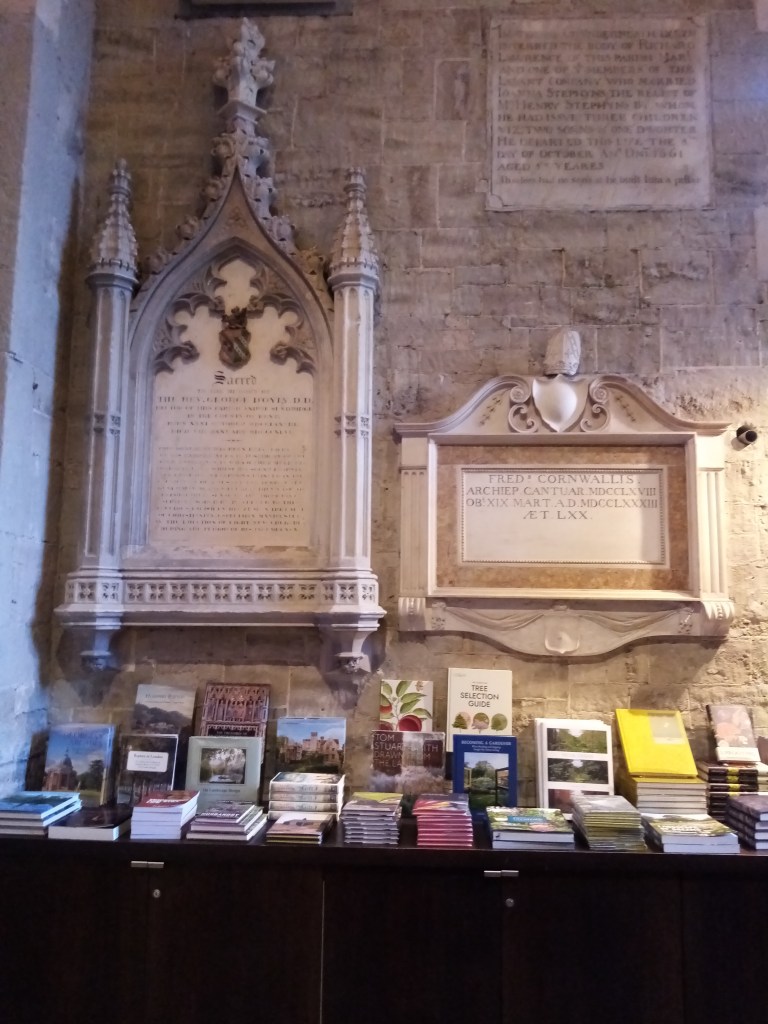
Bookshop under church monuments


St Mary’s Hampton
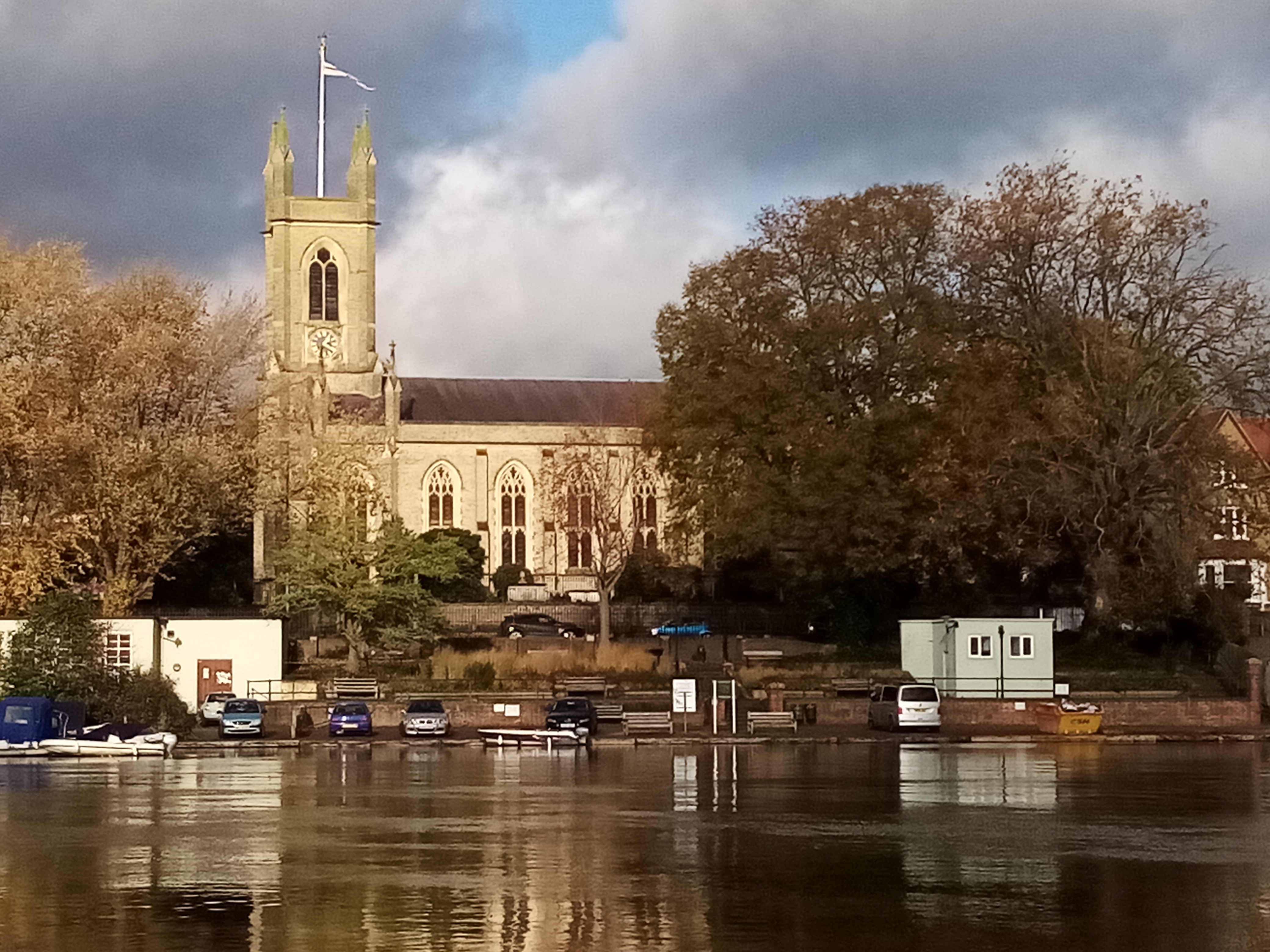
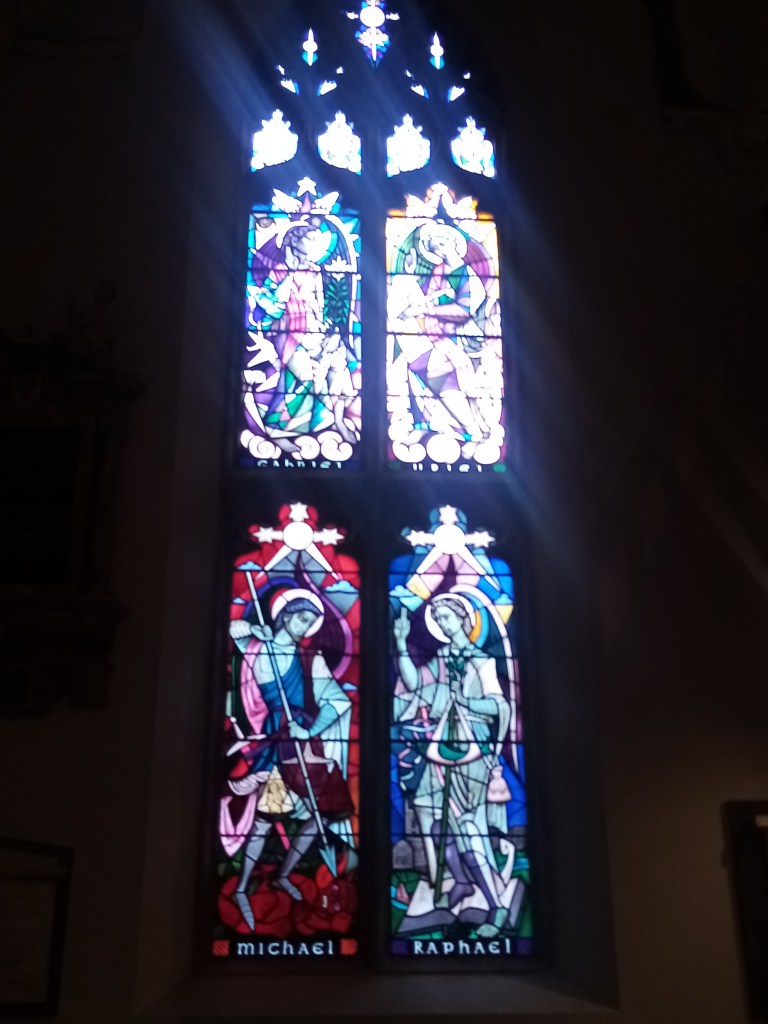
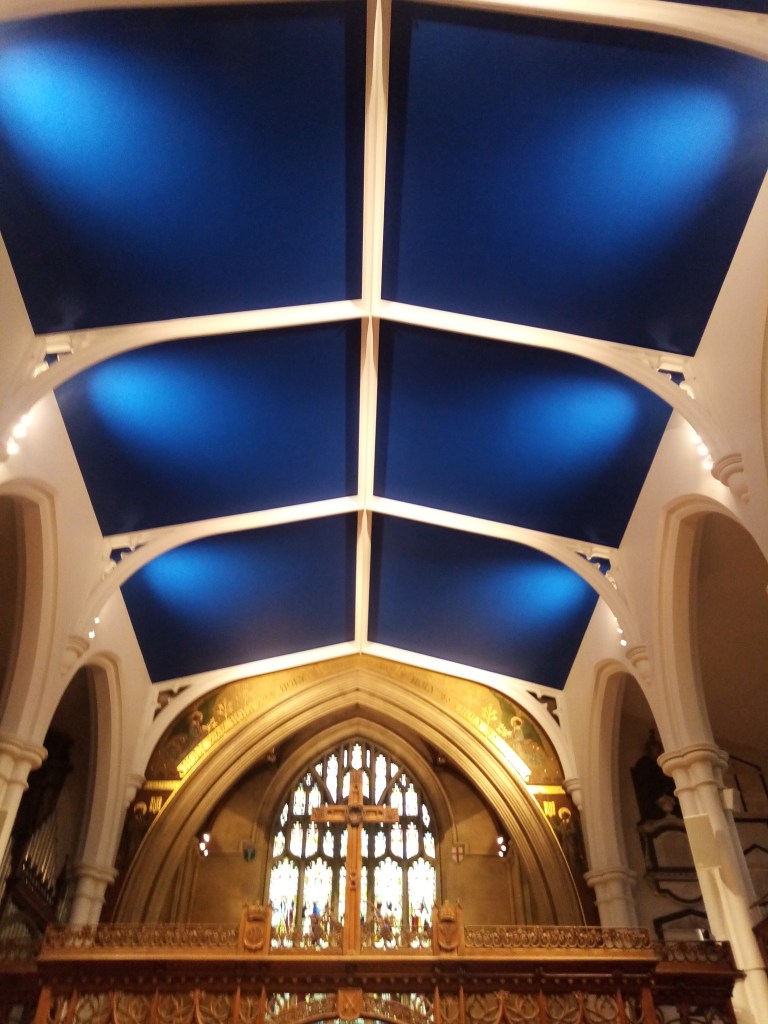
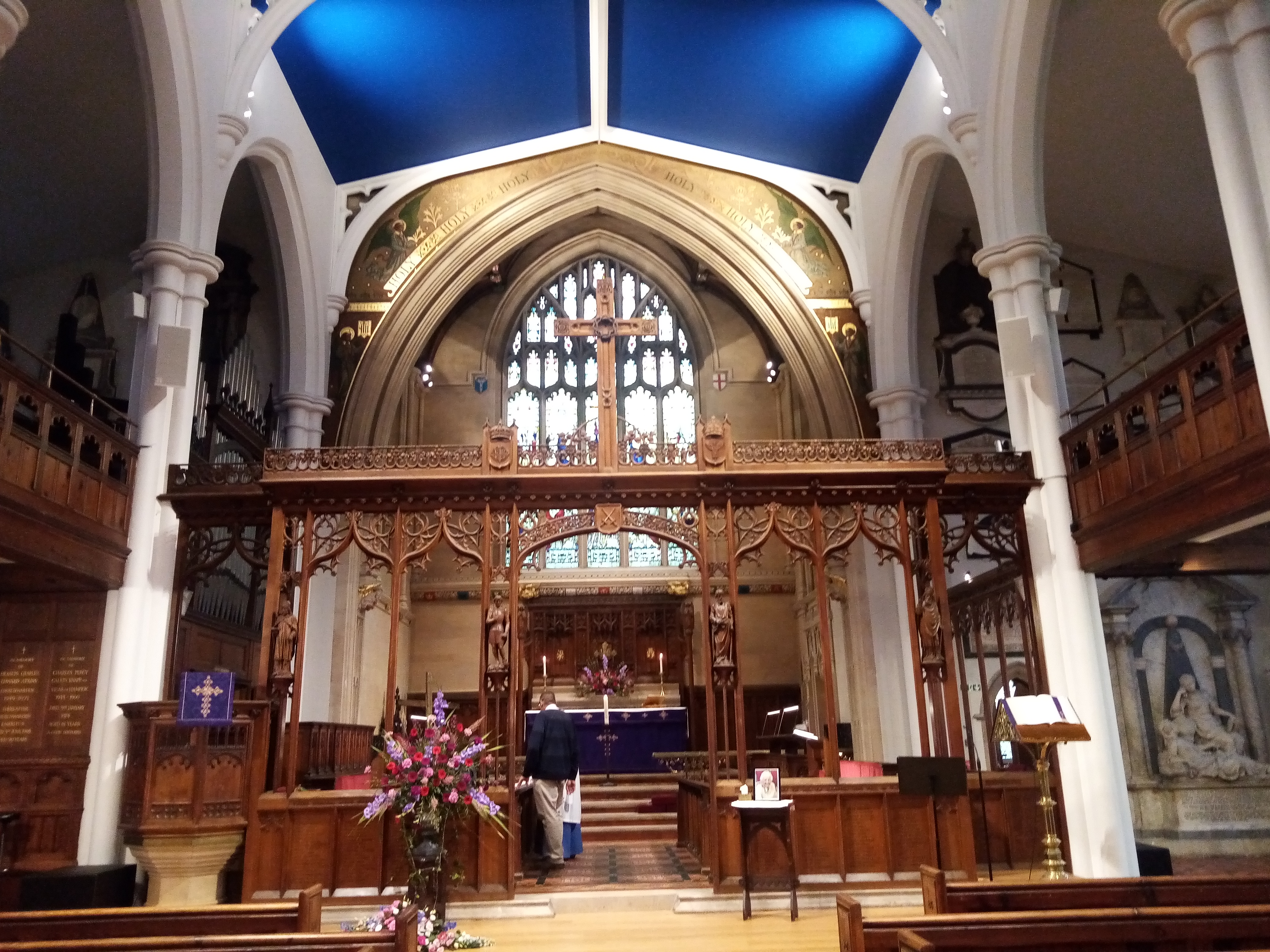
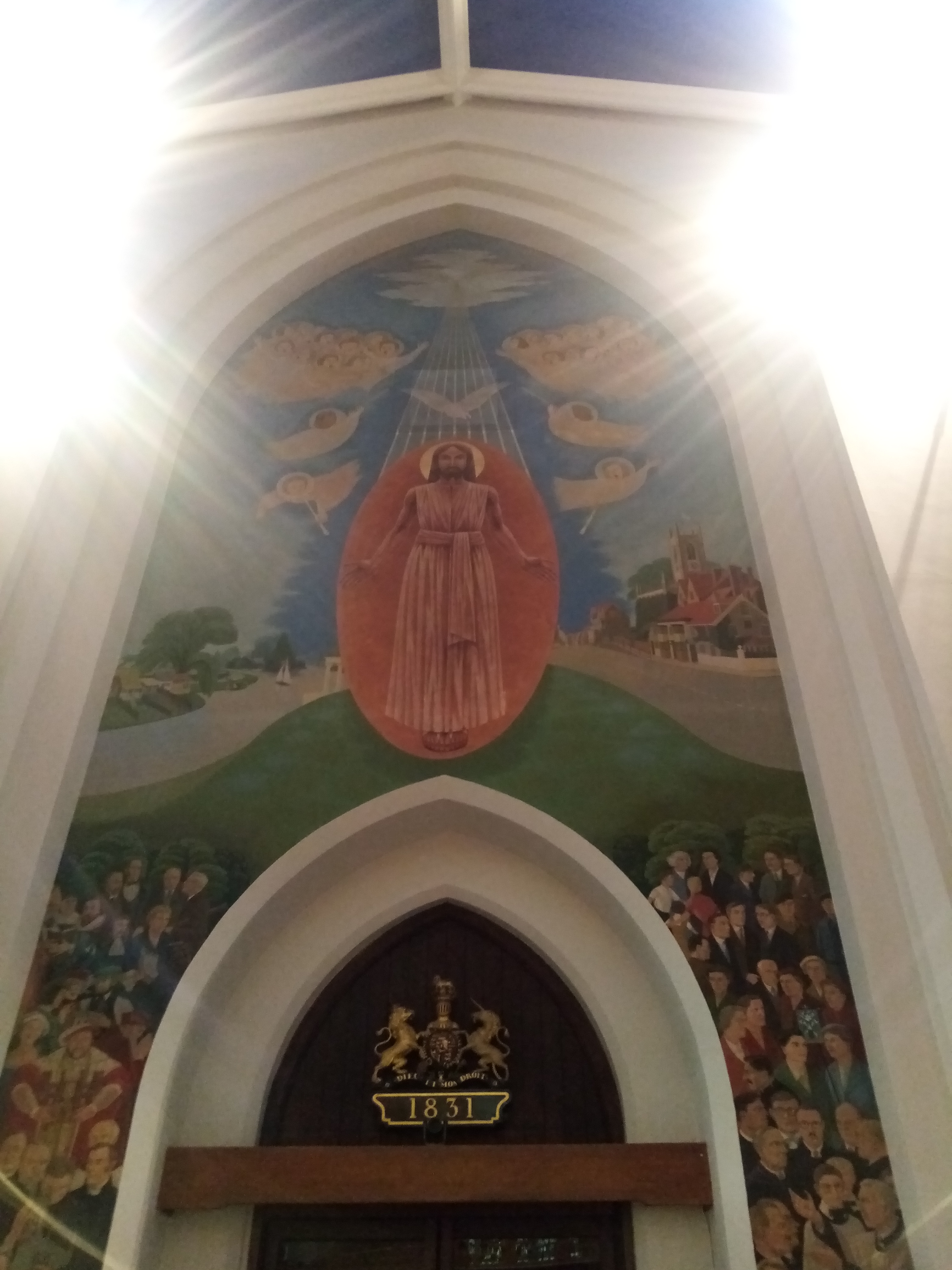
This church has the most picturesque setting in Hampton Village overlooking the Thames just down river from Hampton Court Palace. There has been a church here for at least 650 years so Henry VIII would passed by from his palace on the way to his hunting grounds or aboard the royal barge. The first recorded building was flint and stone in the 14th century, it was extended and repaired over the next 500 years but closed in December 1829 due to poor condition. The then congregation decamped to the Great Hall at Hampton Court Palace while the new church was built, I would liked to have attended one of those services! The church was open when I visited so I was able to see the striking interior. There’s a beautiful bright blue ceiling, recently repainted according to a churchwarden, and a lovely stained-glass window depicting the four Archangels: Michael, Raphael, Gabriel and Uriel. This was made by local artist Eric Fraser; his son Rev Geoffrey Fraser, designed and painted the mural on the West wall, which shows the figure of Jesus above the River Thames. The left-hand panel depicts people from local history and on the right side are members of the congregation of the time (1952.)
Source: Wikipedia
 claresimons1