Charles Dickens was born on 4th February 1812, so this month I thought I’d take a look at some of the London churches which feature in his novels and other works. Most of the churches and lots of other buildings remain almost unchanged since Dickens’ lifetime, at least on the outside. I’m not going to say anything about the churches as I’ve written about all of them before; but I found some brilliant websites which give interesting information about the places mentioned in Dickens’ works, so I’m going to show how they feature and their significance to him personally, if any.
St Paul’s Cathedral
Sir Christopher Wren’s 1675 rebuild would have looked from the ground in the 1800s exactly as it does today. The iconic dome dominated the London skyline for nearly 300 years and is mentioned in at least seven of Dickens’ works, notably:
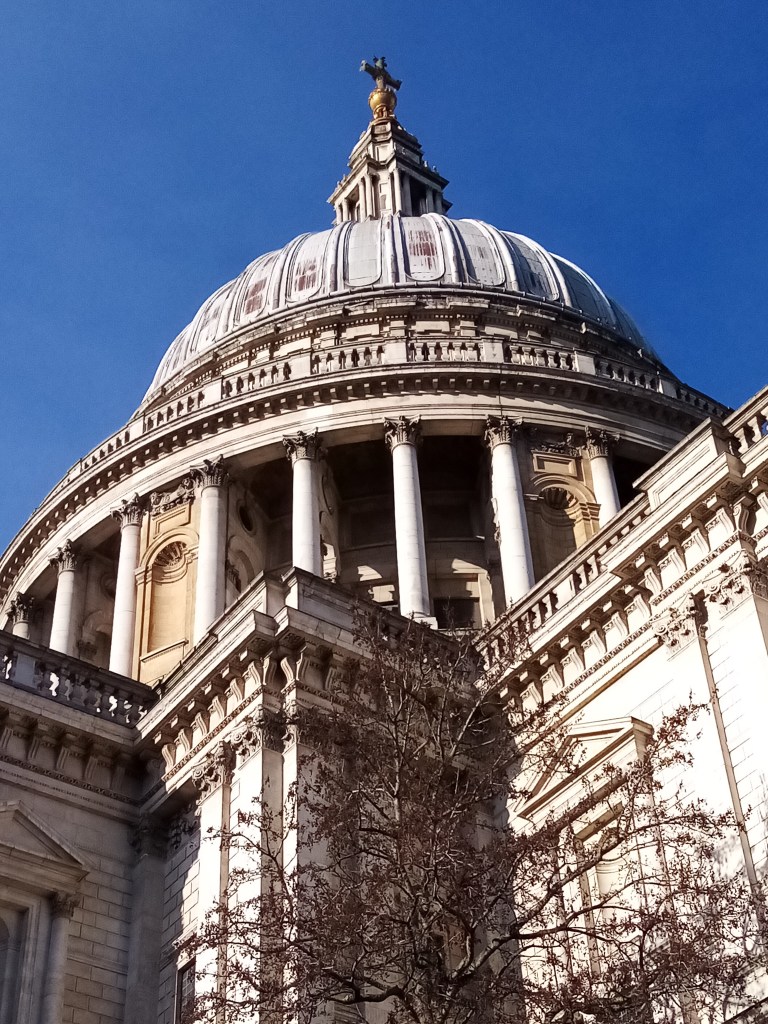
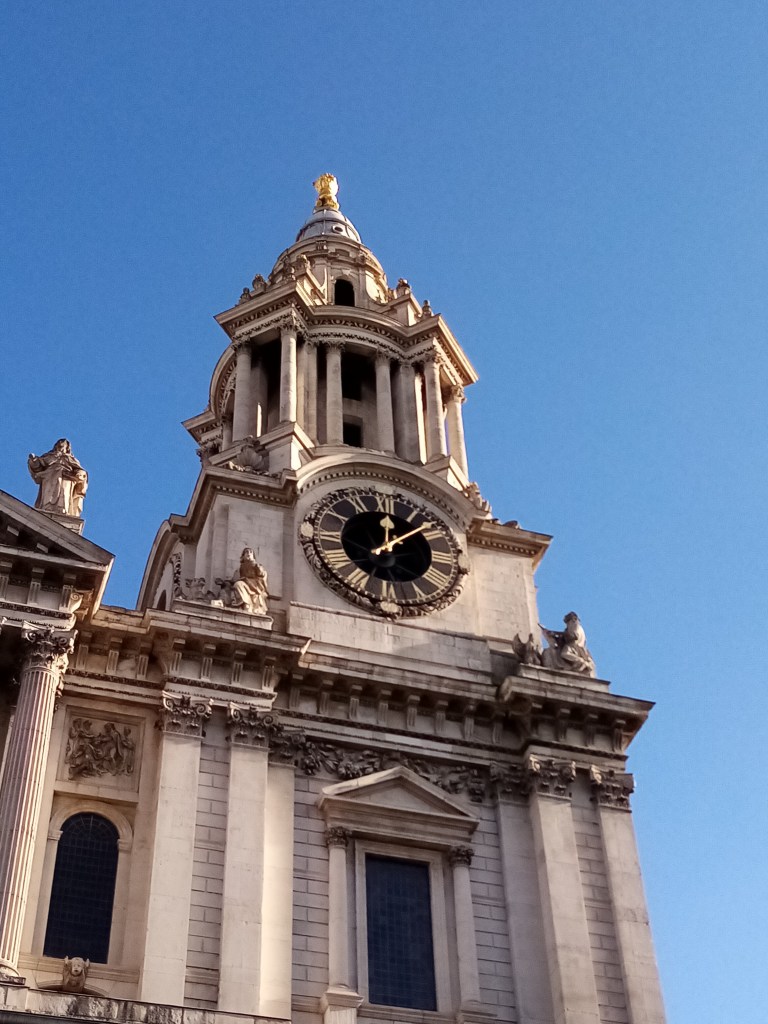
David takes Clara Peggotty to the top of St Paul’s in David Copperfield. Ralph Nickleby stops to set his watch right by the clock of St Paul’s in Nicholas Nickleby.
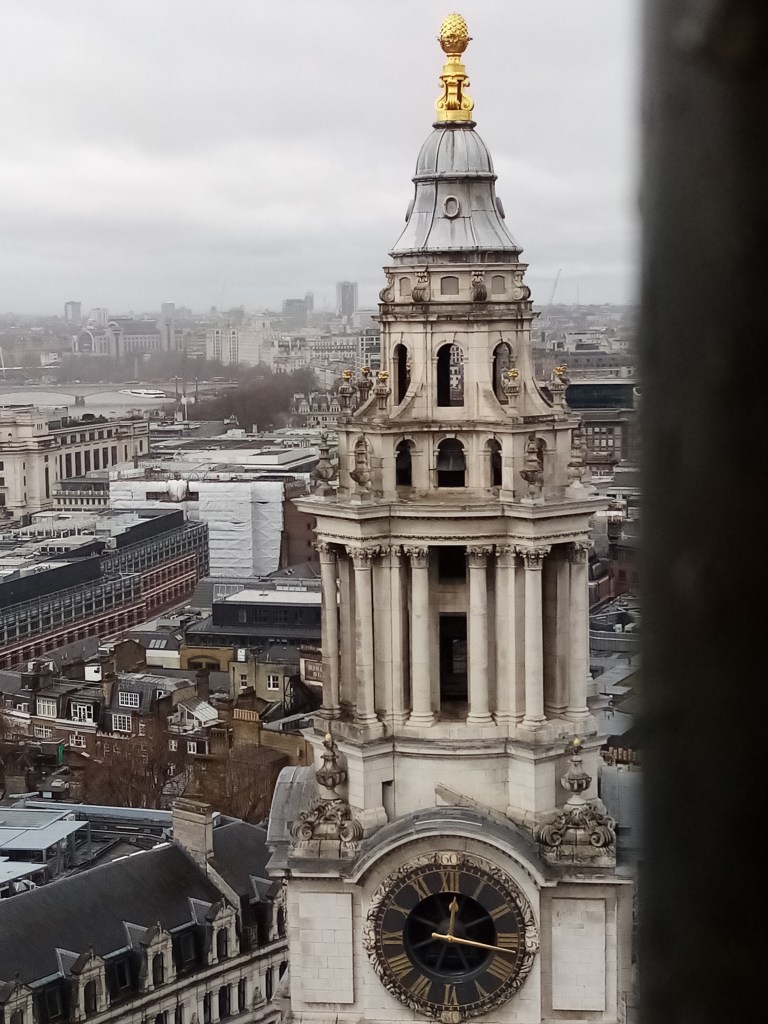
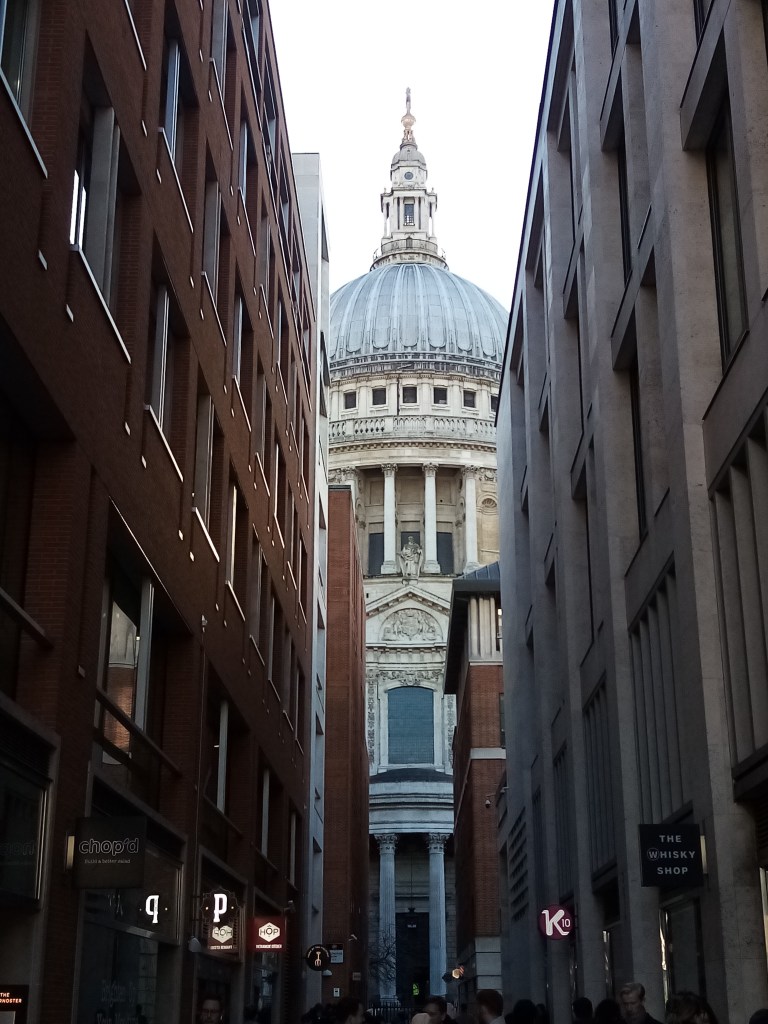
In Oliver Twist, Nancy hears the mournful bell of St Paul’s toll midnight on her way to meet Rose and Mr Brownlow on London Bridge. And in A Visit to Newgate, a magazine article in Dickens’ work Sketches by Boz, a condemned prisoner in Newgate Prison hears the bell strike one in the morning and knows he has only seven hours left to live. The second picture is one of my favourite views of St Paul’s; the modern buildings in this narrow alley have roughly the same footprint as they had in Dickens’ time, in fact, since mediaeval times.
Source: charlesdickenspage.com
St Peter upon Cornhill
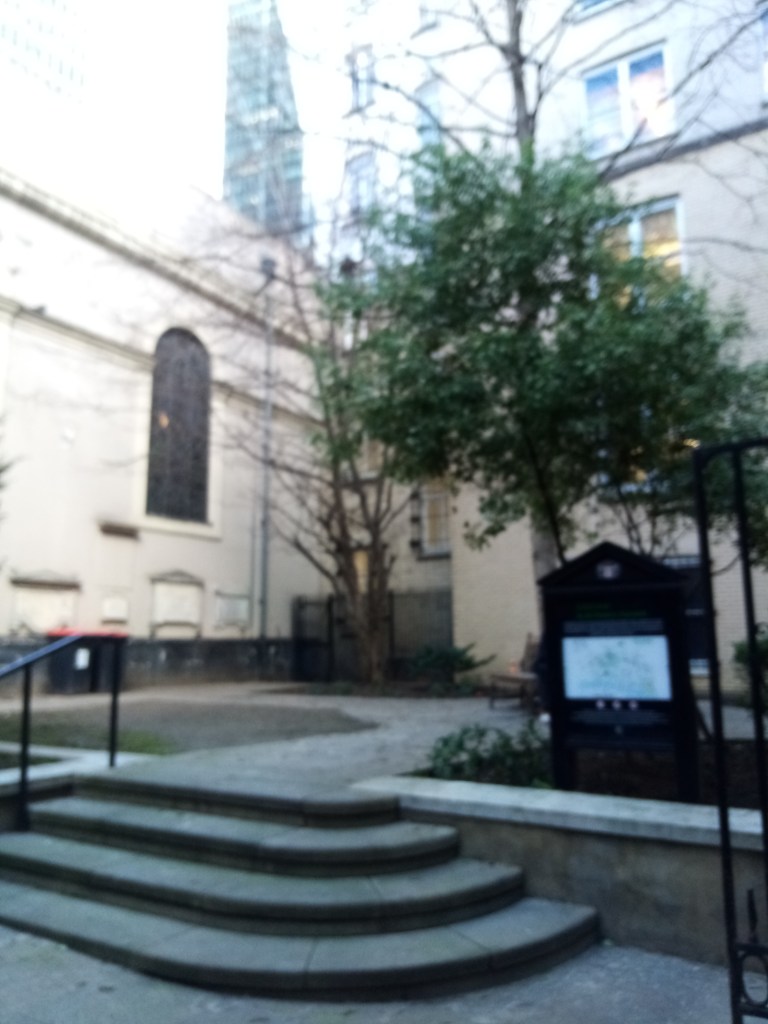
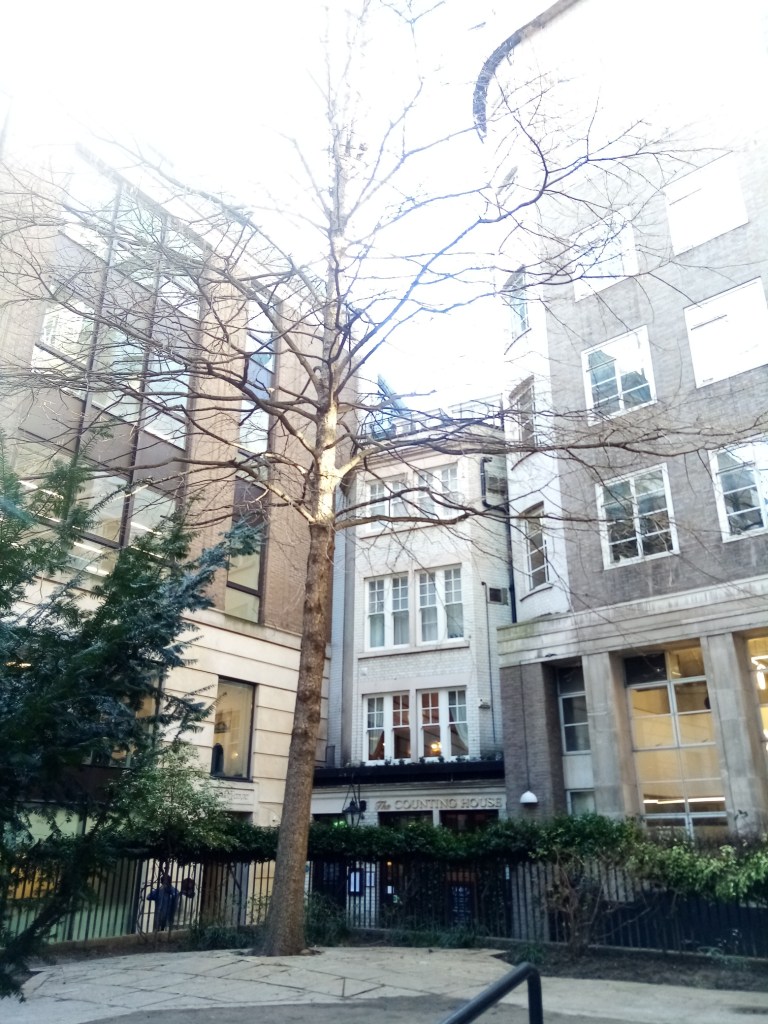
These are two views of the tiny, now paved over, St Peter upon Cornhill churchyard, which is generally believed to be the churchyard where The Ghost of Christmas Yet to Come shows Ebeneezer Scrooge his own gravestone, in a future which will come to pass if Scrooge doesn’t change his miserly ways. At the time of writing A Christmas Carol, this churchyard was a disused burial ground, derelict and overgrown with vegetation. Dickens describes it in his story as being choked with weeds and being surrounded by buildings, so it seems that St Peter’s might fit the bill. This whole area is wonderfully atmospheric, full of tiny courts and narrow alleys, just as it was in the 1800s.
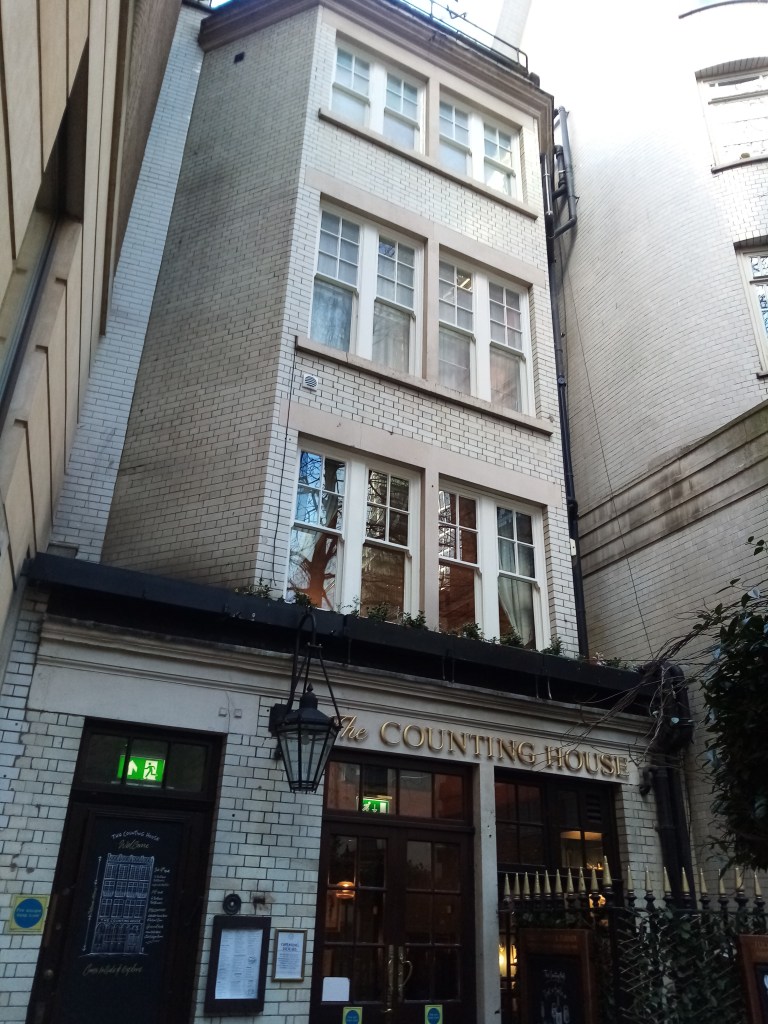

The first picture is of a side entrance to The Counting House in Cornhill, an opulent restaurant, bar and hotel just across the alley from the churchyard. I’ve tried to find out how it got its name without success, but I like to think that it could be the setting for Scrooge’s office, which is described in A Christmas Carol as a ‘counting-house’. The Ghost of Christmas Yet To Come leads Scrooge past his former office in a narrow court before reaching the churchyard, so that seems to fit. And lastly, a picture of the church surrounded by iron railings. The Spirit and Scrooge left the court and entered the churchyard through an iron gate, further evidence that this is the very place!
Source: london-beyond-time-and-place.com
St Olave’s Hart Street
A little further north is St Olave’s church to which Dickens gives the name ‘The Church of Ghastly Grim’ in his collection of short stories The Uncommercial Traveller and calls it ‘my best beloved churchyard.’ He seems to have been fascinated with the 17th century gateway to the churchyard, once visiting it at midnight in a thunderstorm (for the true gothic horror experience, I suppose!) The actual church today is not as Dickens would have known it, having been gutted by bombs in 1941 and restored in 1954.

smart 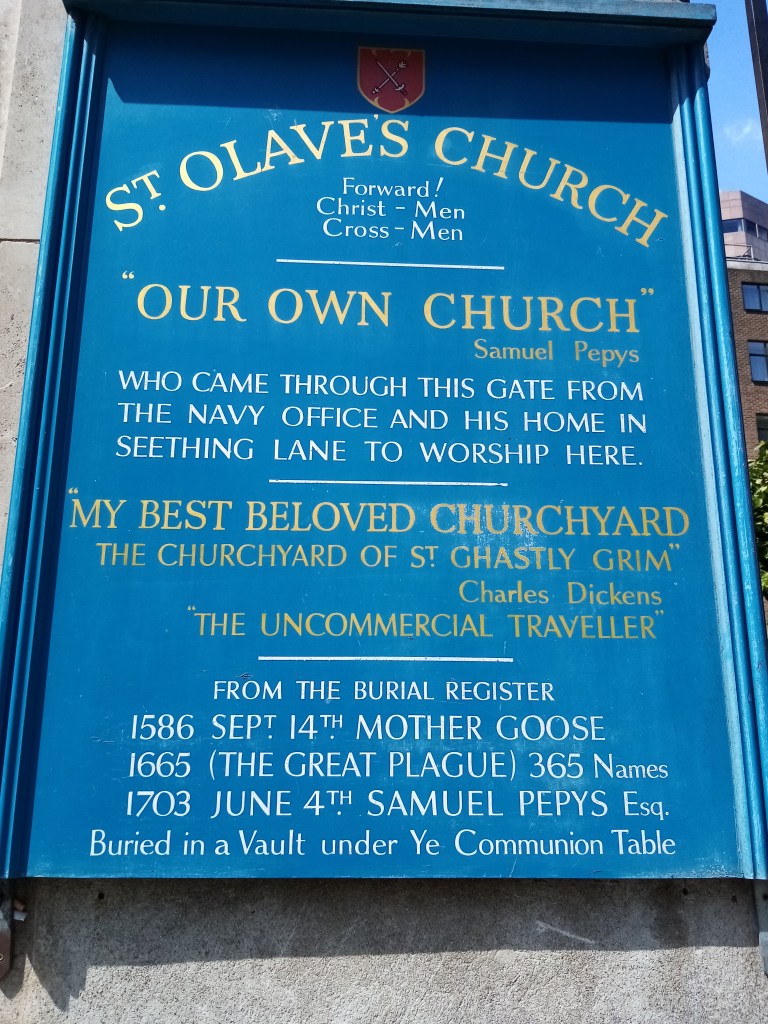
smart
Dickens described the spikes on top of the gate as going down into the skulls! St Olave’s was a favourite church of Samuel Pepys too.
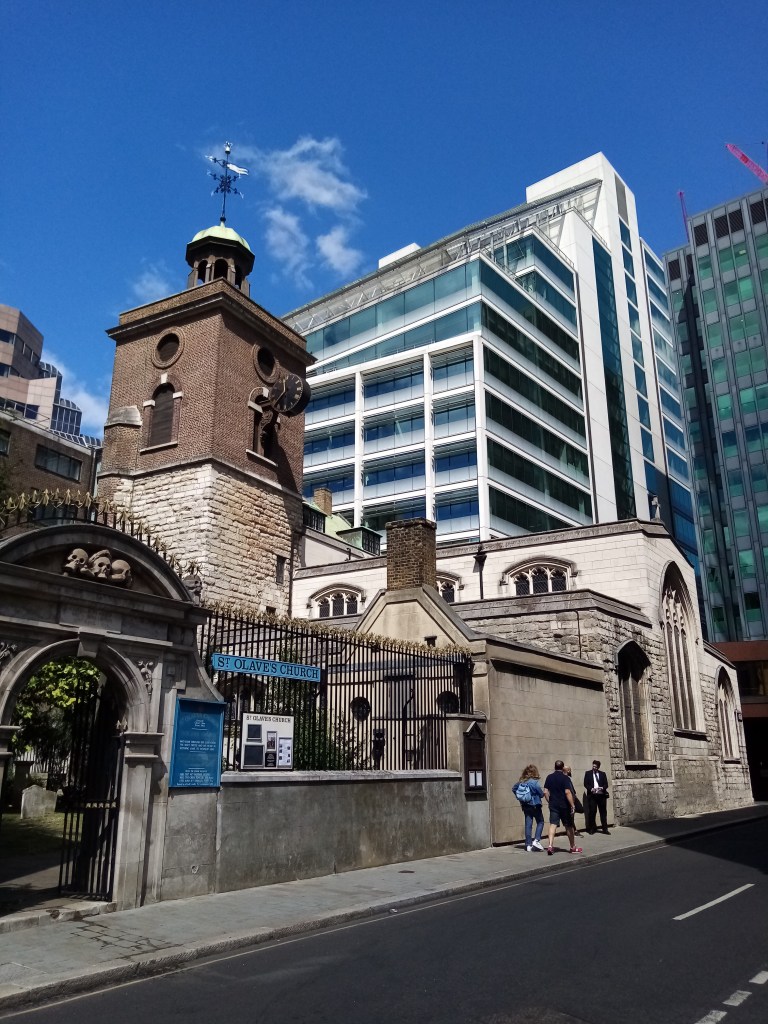
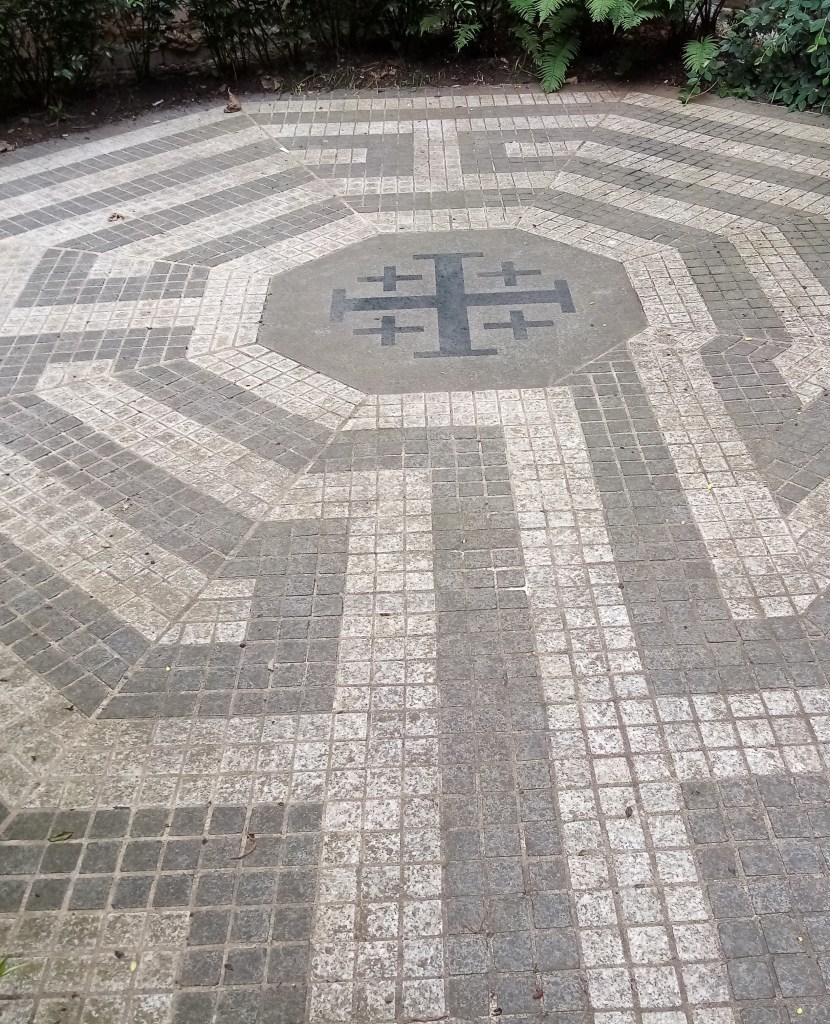
A maze in the churchyard today
Source: Wikipedia
St George the Martyr, Southwark
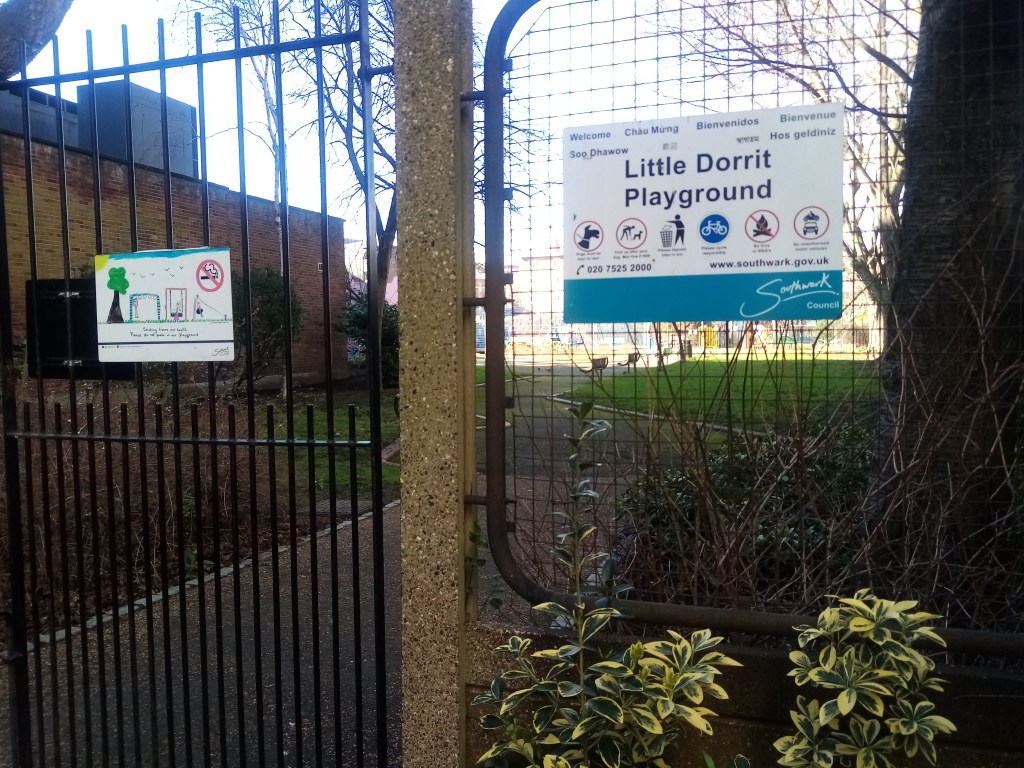
The borough of Southwark, south of the Thames, was also an area Charles Dickens knew well. He lodged with a family in Lant Street close to the Marshalsea Prison where his father was incarcerated for non payment of debts in 1824. The 12 year old Charles had to go out to work to help support the family, and this had a profound effect on him, and he often featured prison and debt in his works. Part of the remaining wall of The Marshalsea is a boundary of St George the Martyr churchyard, which in the 1800s would have been a burial ground. Both the church and the prison featured in Little Dorrit; Amy Dorrit was christened in the church and later married Arthur Clensham there. Amy’s father, William Dorrit was imprisoned in The Marshalsea. Little Dorrit Children’s Playground is across the road from the church, named in memory of the novel.
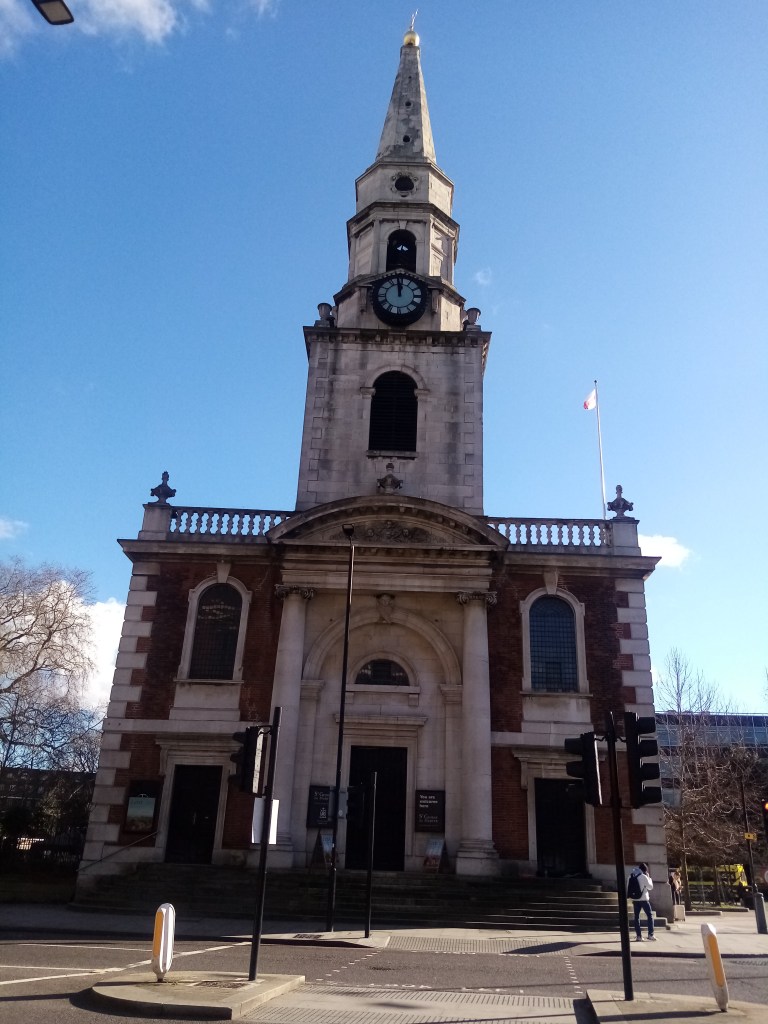
Front view of the church 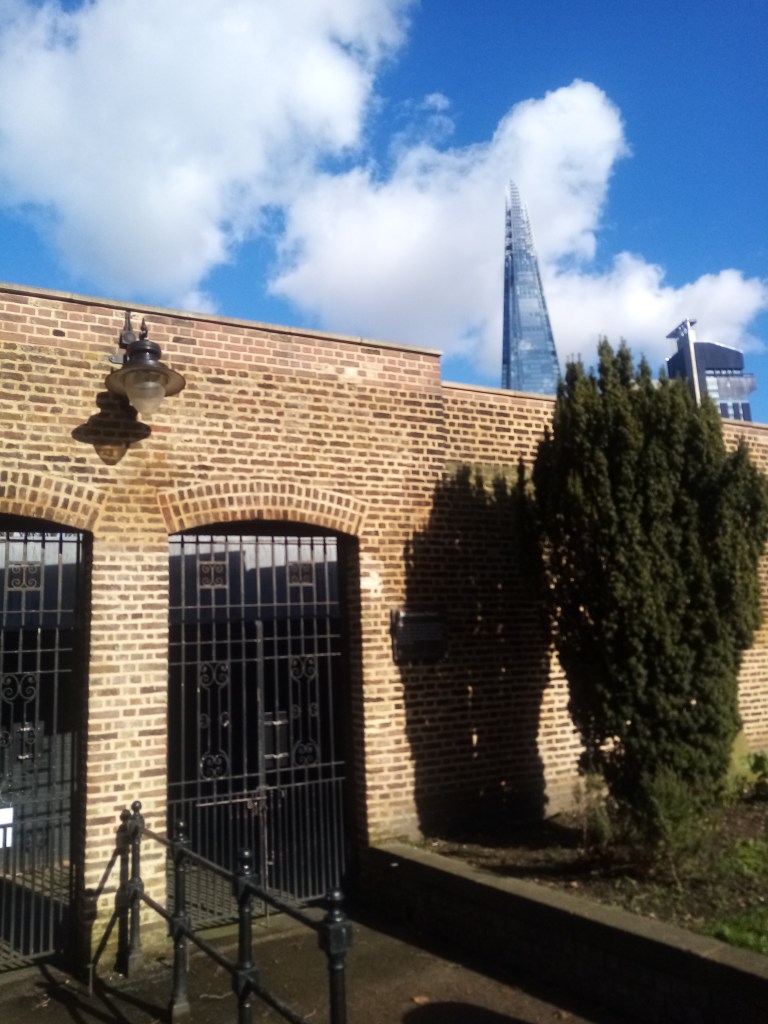

Source: charlesdickenspage.com
St Marylebone, Marylebone Road
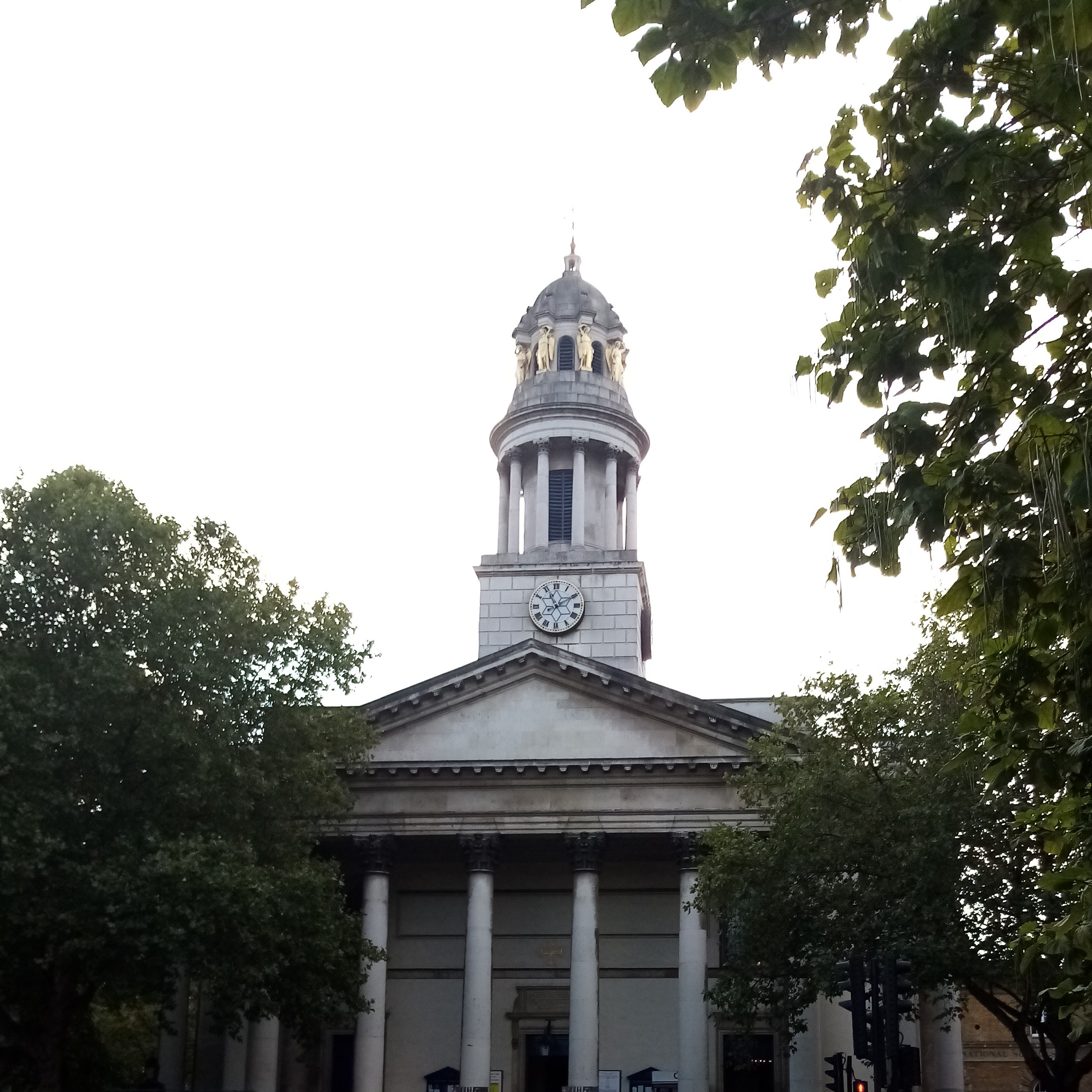
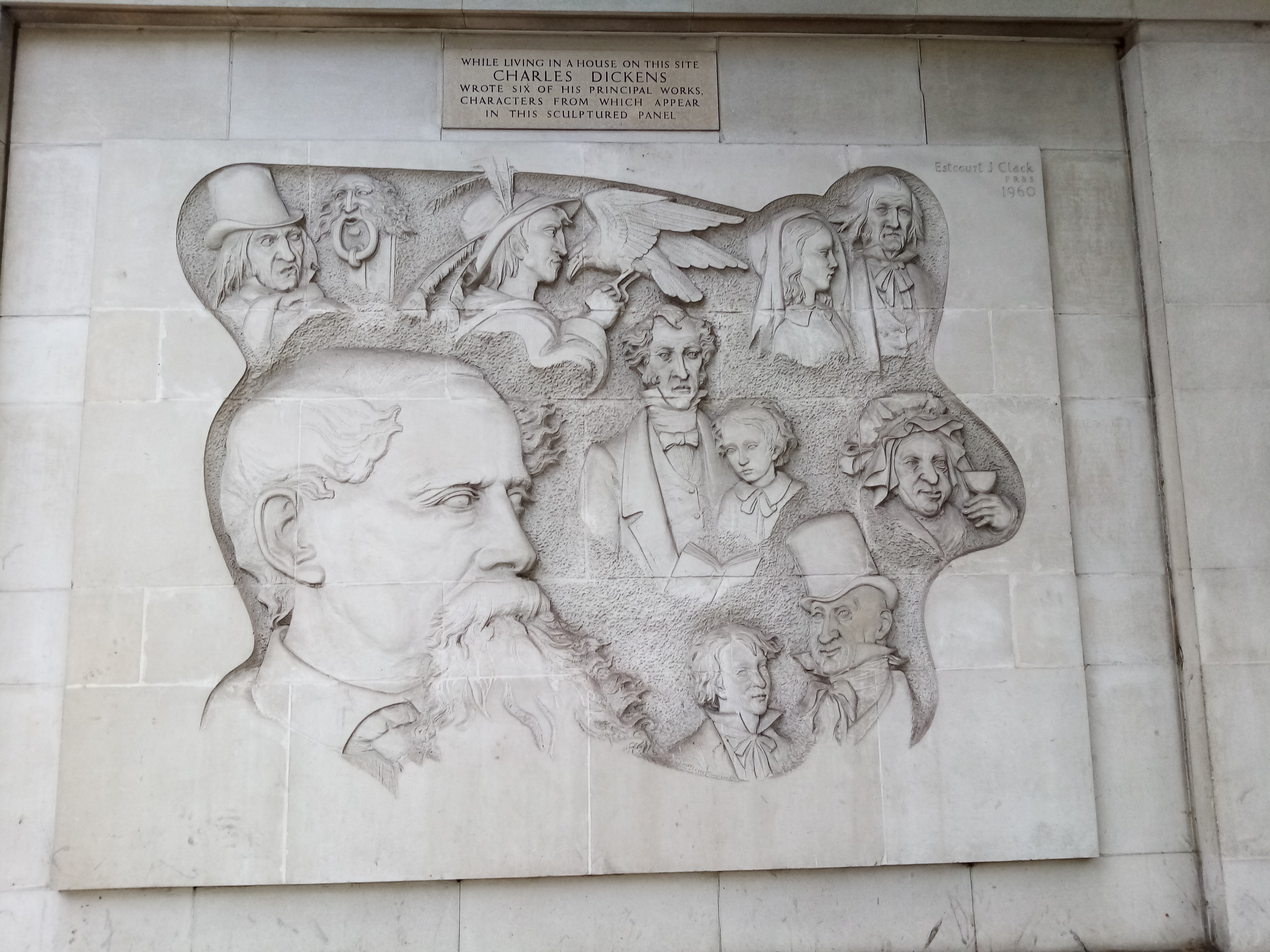
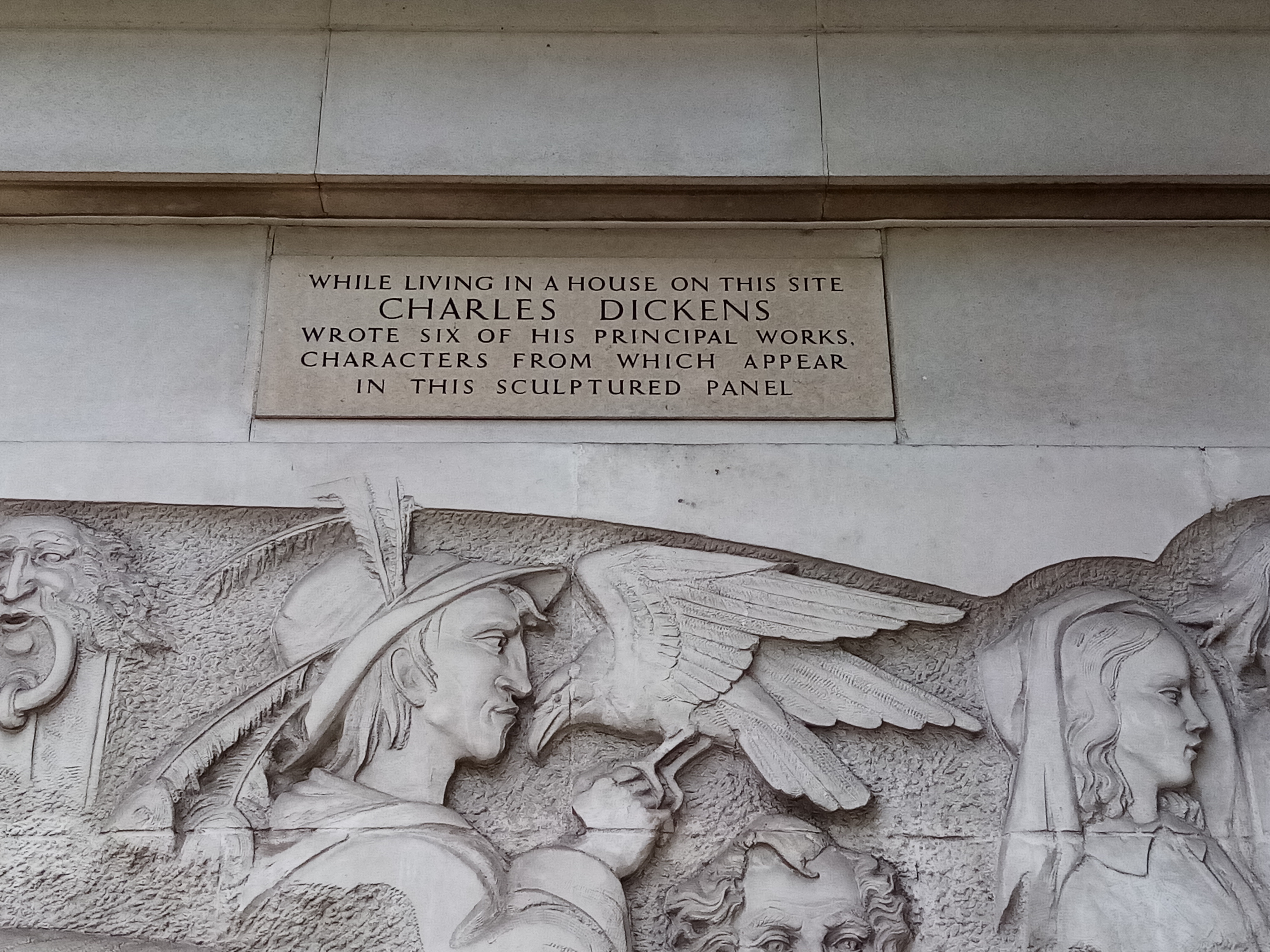
Dickens lived from 1839 to 1891 in Devonshire Terrace, close to the Parish Church of St Marylebone. His own son was baptised here and he used his experience of the ceremony in his novel Dombey and Son for the baptism of baby Paul. The house that Dickens lived in no longer stands but a relief plaque was erected on the present building showing characters from the six works he wrote while living here: Scrooge, Barnaby Rudge, Little Nell and Granddad, Dombey and daughter, Mrs Gamp, David Copperfield, Mr Micawber. The large head is unmistakably Dickens himself.
Source: londonremembers.com
 claresimons1