The difference between a church and a chapel: ‘A church is a community, while a chapel is a place.’ So says Wikihow, which appears to be a children’s Wikipedia. Churches usually have a permanent congregation and have a pastor or priest to lead regular services. Chapels are smaller places of worship and can be situated in a hospital, school, a private residence or a churchyard. Some large churches and cathedrals have chapels in the side aisles. Nowadays there are also chapels in airports and work places; some are simply rooms set aside for private prayer and contemplation. The four I’m going to write about are all separate structures with lots of history. All these chapels are free to enter, all well worth a visit.
Source: Wikihow
Fulham Palace Chapel
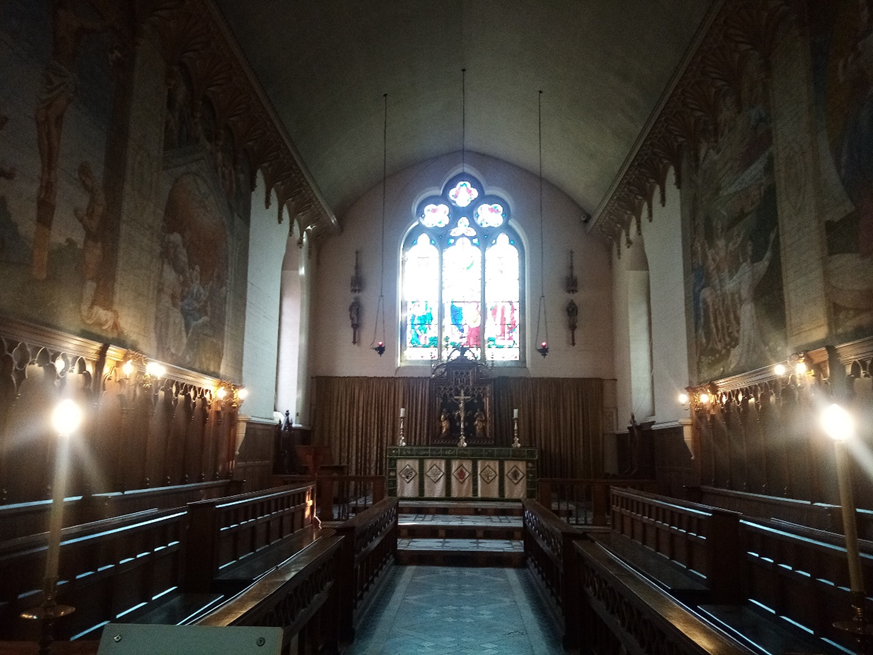
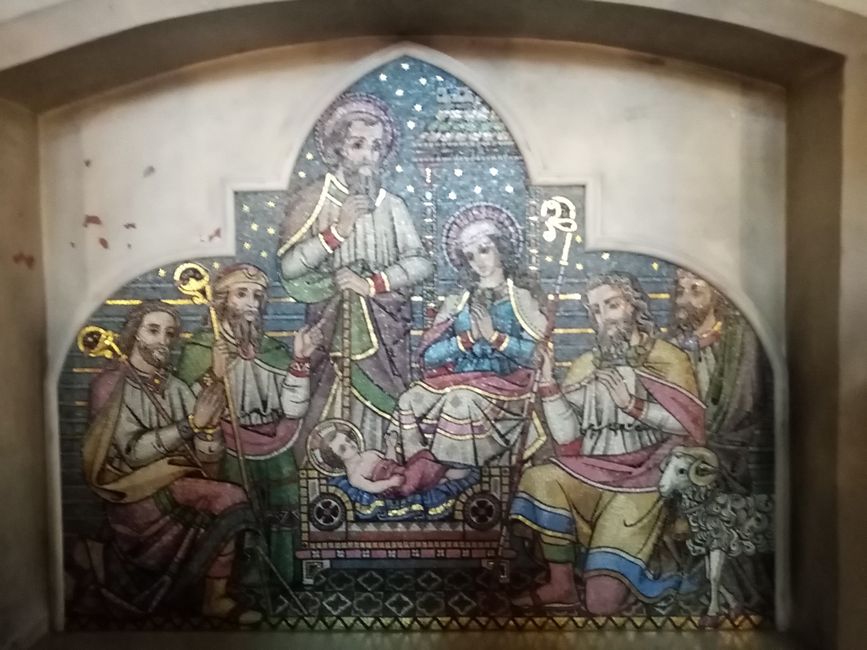
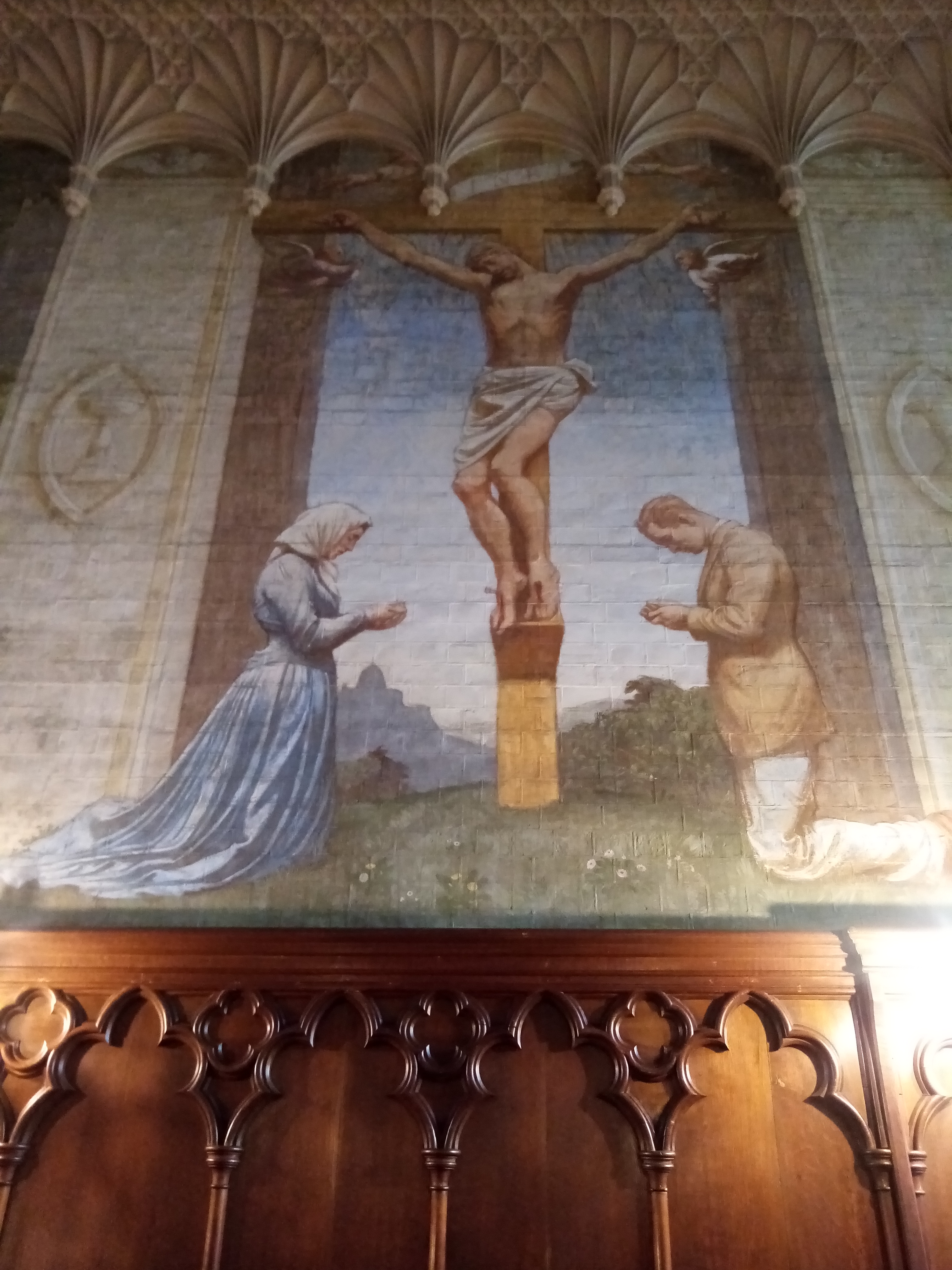
Fulham Palace was the home of the Bishops of London from the 11th century until 1973. It’s still owned by the Church of England though today it’s managed by the Fulham Trust and open to the public. The first chapel on the site dates from 1231 and the fourth one, the Tait Chapel was designed by William Butterfield for Bishop Tait in 1867. Damaged by a bomb in World War ll, the chapel was reorganised and redecorated in the 1950s for Bishop Wand. Students from the Byam Shaw School of Drawing and Painting painted murals over Butterfield’s decorative brickwork in 1953; the murals feature events from the New Testament. The large East stained-glass window shows the risen Jesus giving the command to Peter ‘Feed my sheep.’ On each side of this are portraits of Bishops Wand and Creighton.
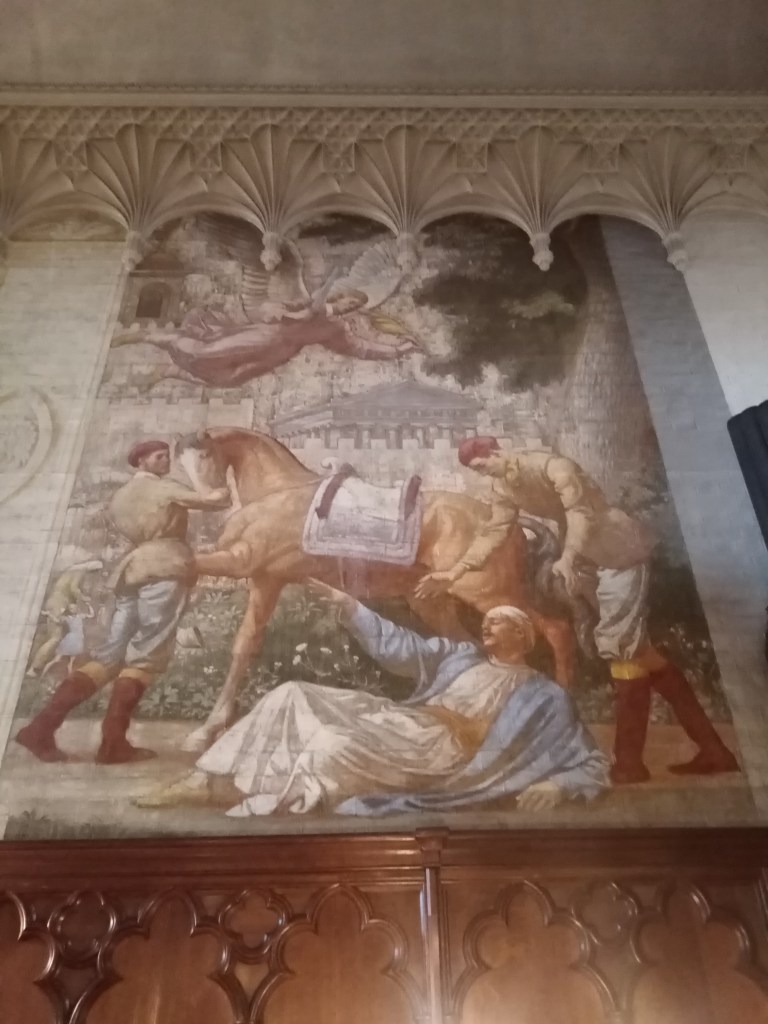
The Conversion of St Paul 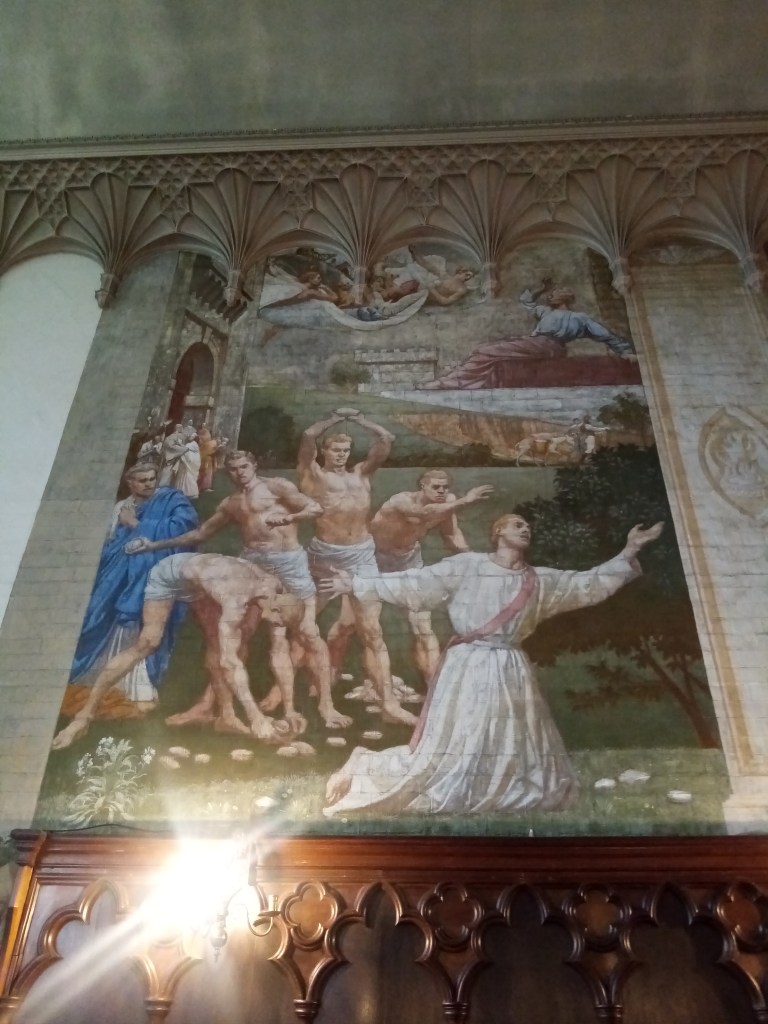
The Stoning of Stephen
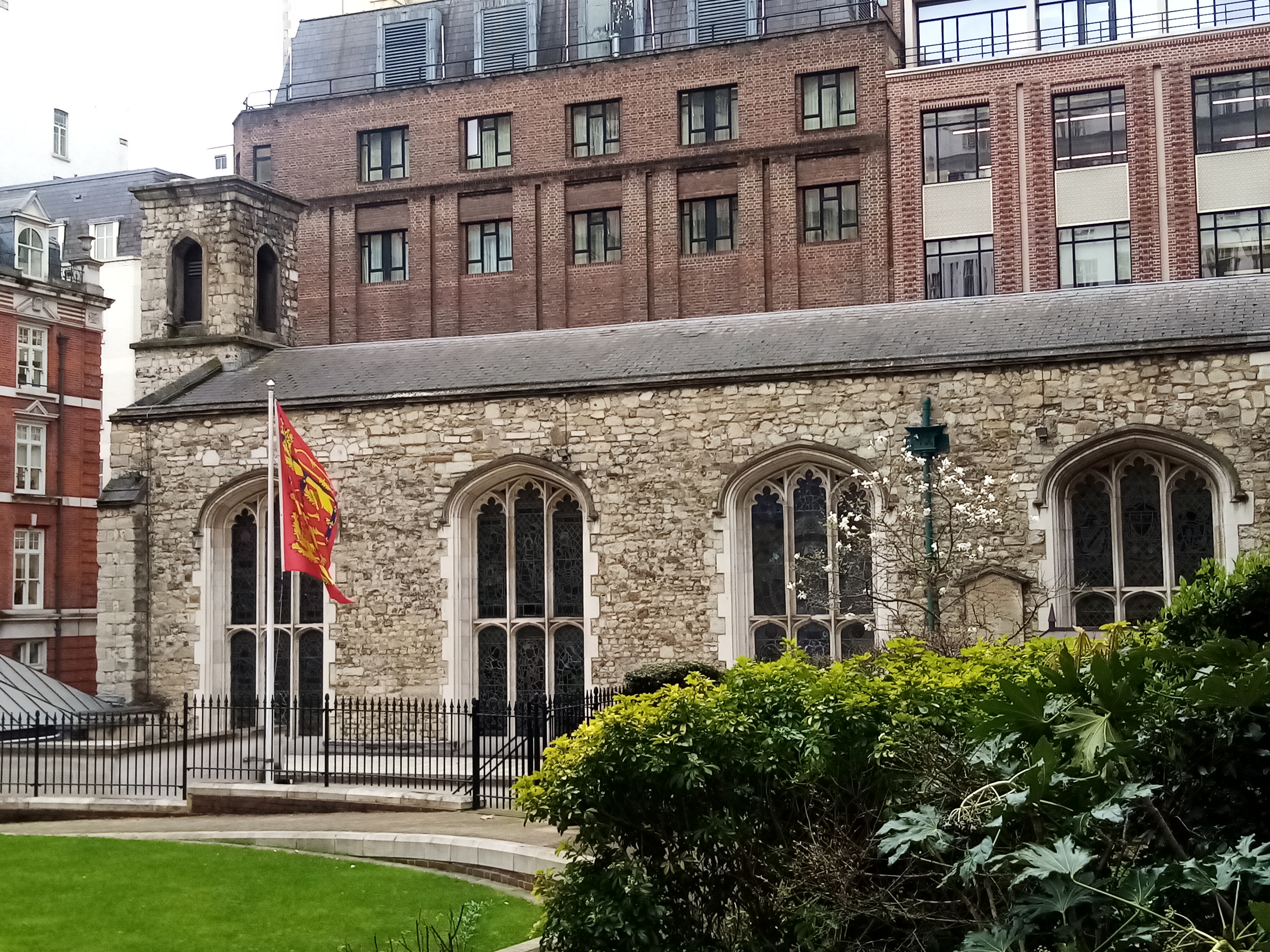
The King’s Chapel of the Savoy
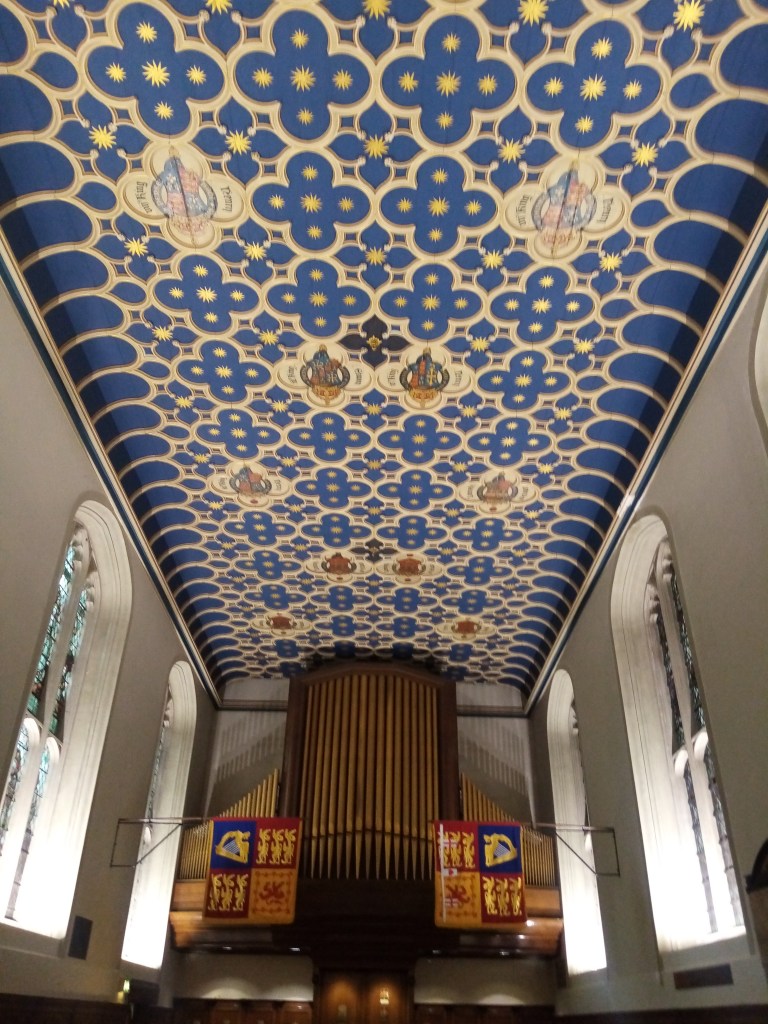
Also known simply as the Savoy Chapel, it was built as part of a charitable foundation under the terms of the will of King Henry Eighth. The chapel is all that remains of the Savoy Hospital, which replaced a 14th century palace on the site of the Savoy estate, built by John of Gaunt, younger son of King Edward Third. King Henry set up the foundation to provide lodging and food for 100 ‘poore and nedie’ men, presumably homeless. The original hospital, completed in 1515 consisted of a Great Dormitory and no less than three chapels; obviously the souls of the men were considered as important as their physical needs. The hospital was demolished in the early 19th century because of redevelopment of the area; the survival of the 500-year-old chapel is probably because it adjoined the main buildings rather than being an integral part. In 1937 the chapel became the home of the Royal Victorian Order and today it is still consecrated for services and also hosts musical concerts.
Source: royalchapelsavoy.org
Spectacular Ceiling 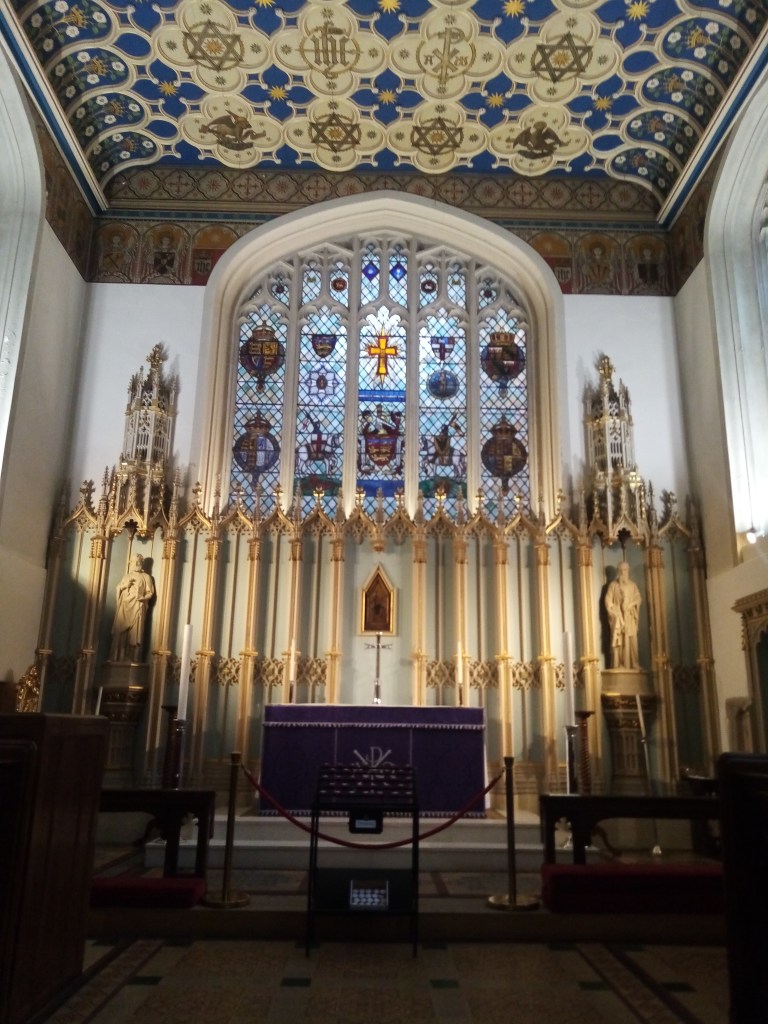
Altar 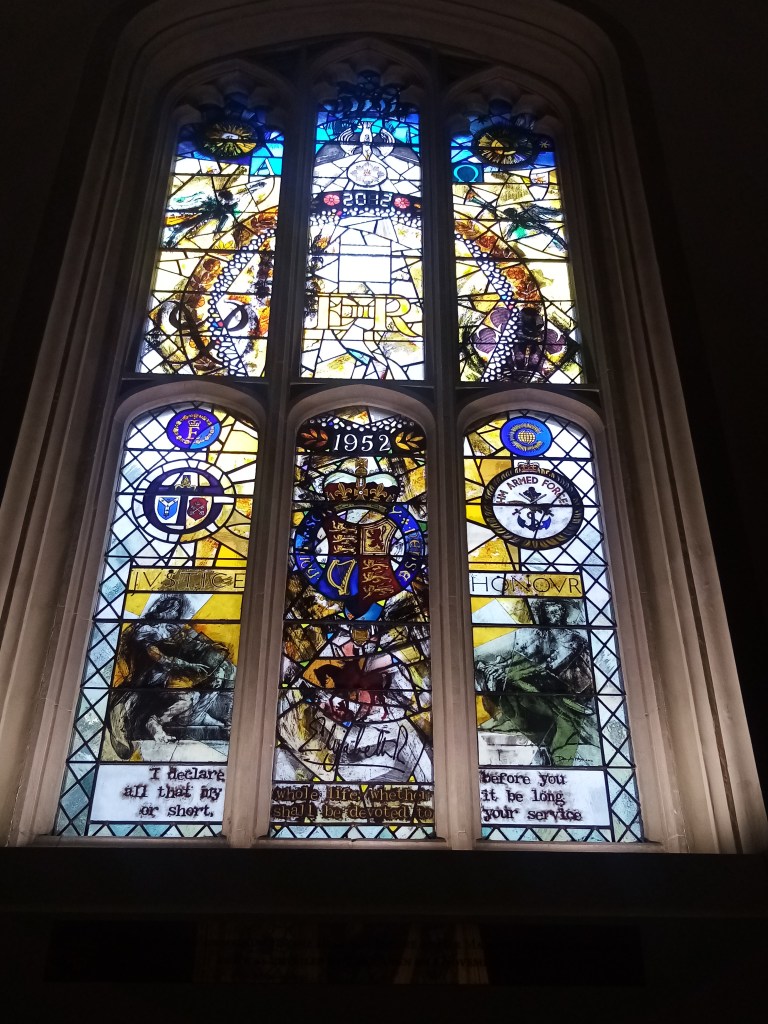
Queen Elizabeth ll Golden Jubilee 
Memorial Window
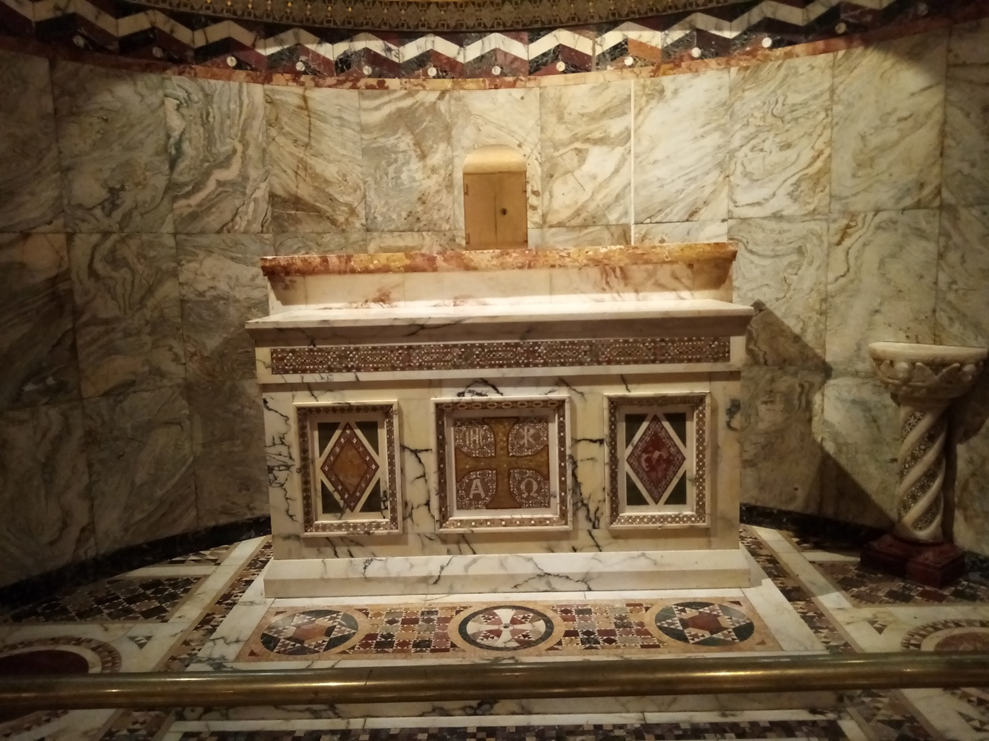
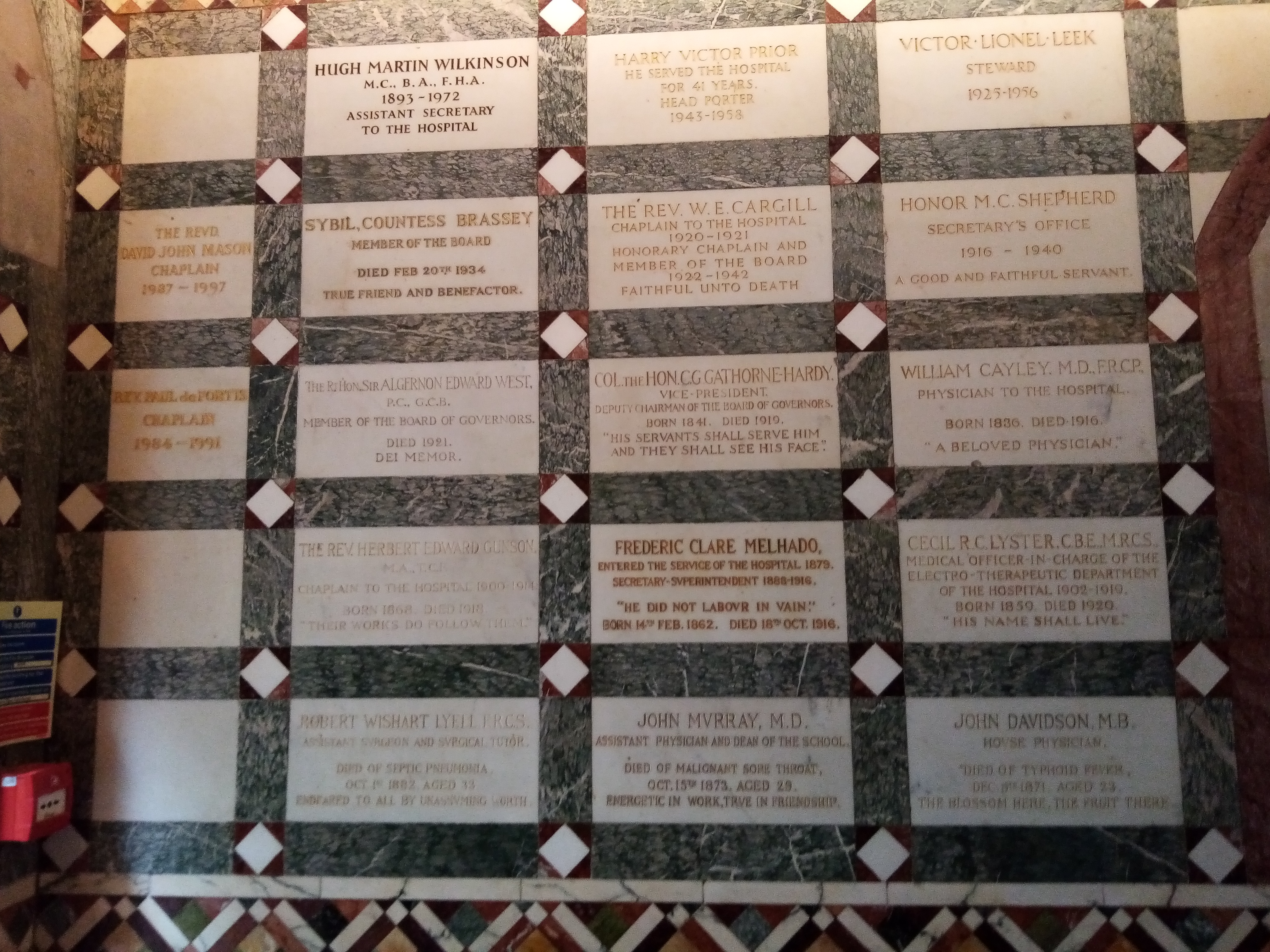
Fitzrovia Chapel
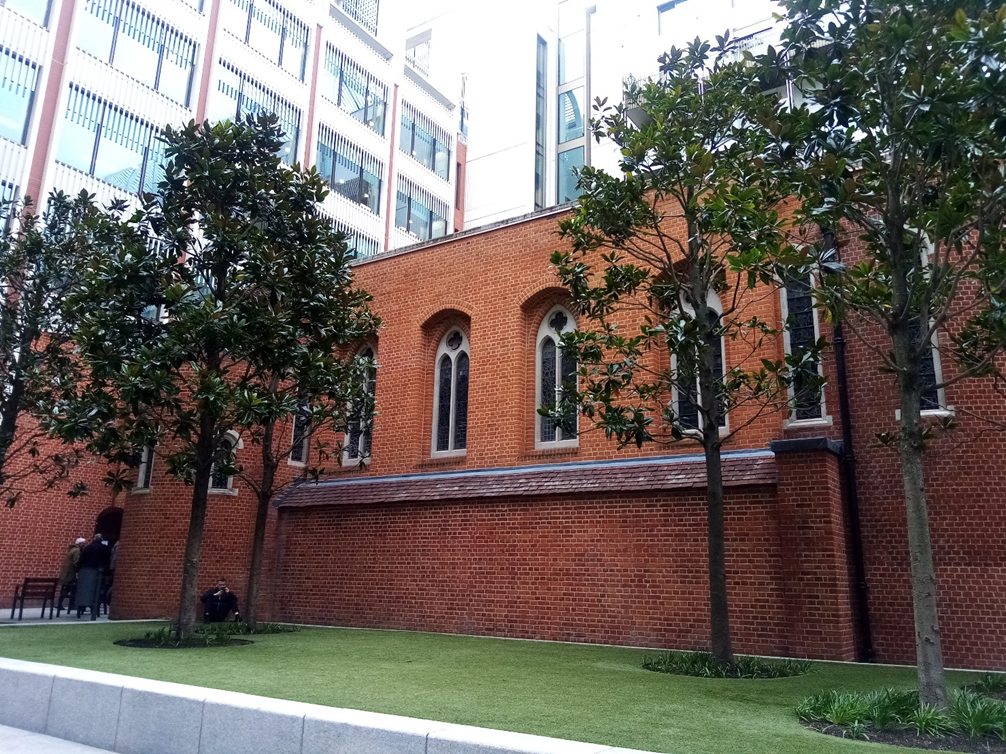
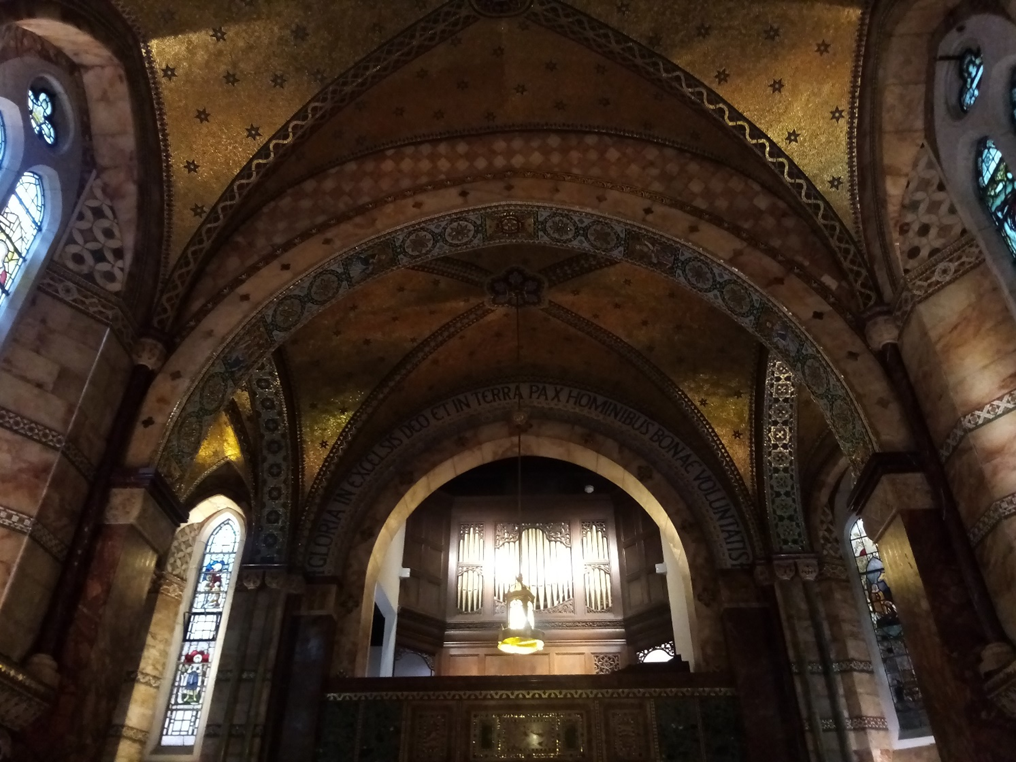
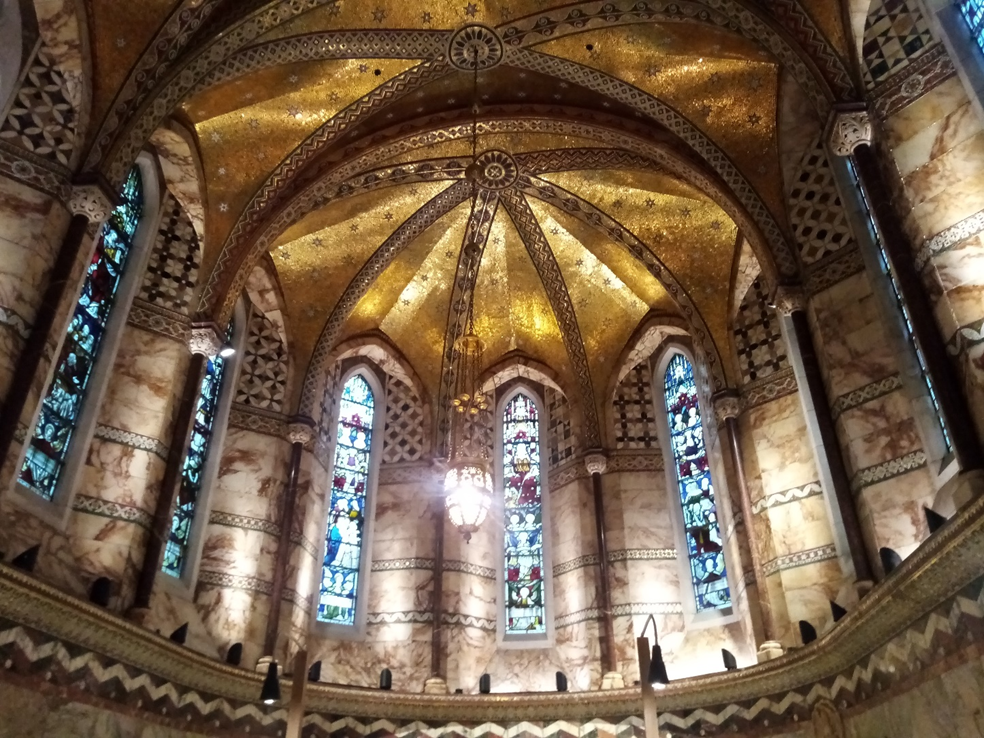
The Fitzrovia Chapel is located in the Fitzrovia Place Development in the central courtyard of the former Middlesex Hospital. It’s something of a surprise to enter the courtyard surrounded by residential and office buildings completed in 2015, and to see the late 19th century chapel, built in the Gothic Revival-style. It was built in 1892 as the Middlesex Hospital Chapel; the hospital itself was completely demolished between 2008 and 2015. Standing on a base of artificial grass with carefully spaced trees, the exterior of the chapel isn’t particularly impressive, but the moment you step inside – WOW! A written description, or even my photos, cannot do justice to the interior of this amazing space, it’s a must-visit! The Fitzrovia Chapel Foundation manages the Chapel today and regularly hosts art exhibitions.
Source: Wikipedia
The Lumley Chapel, Cheam
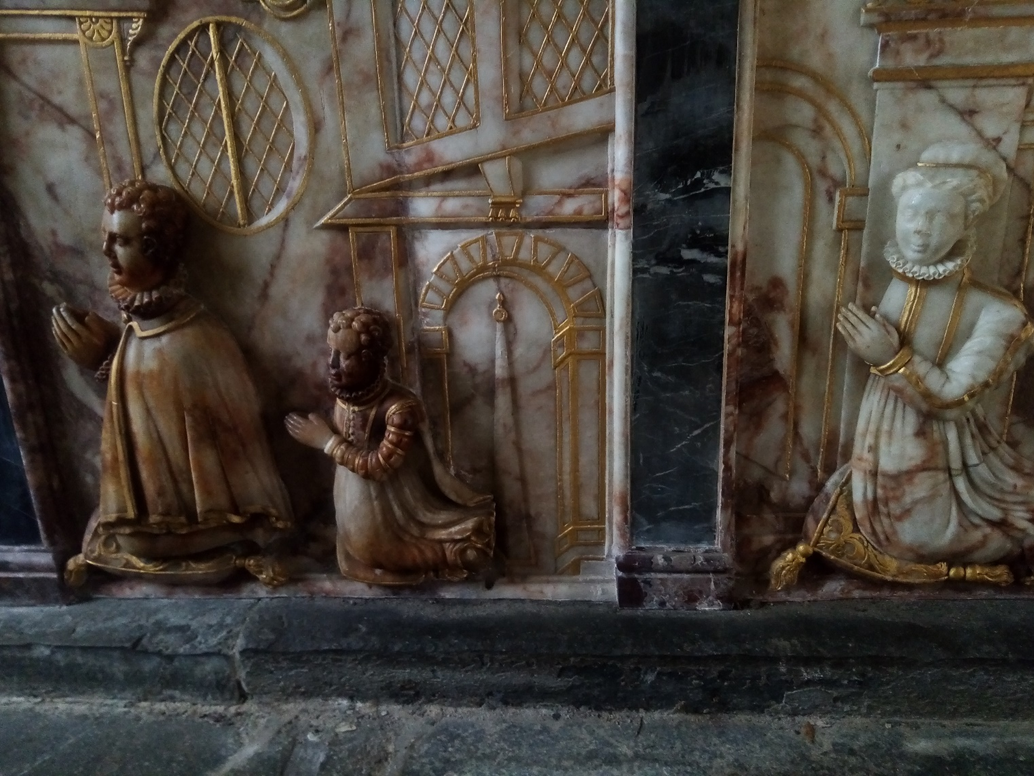
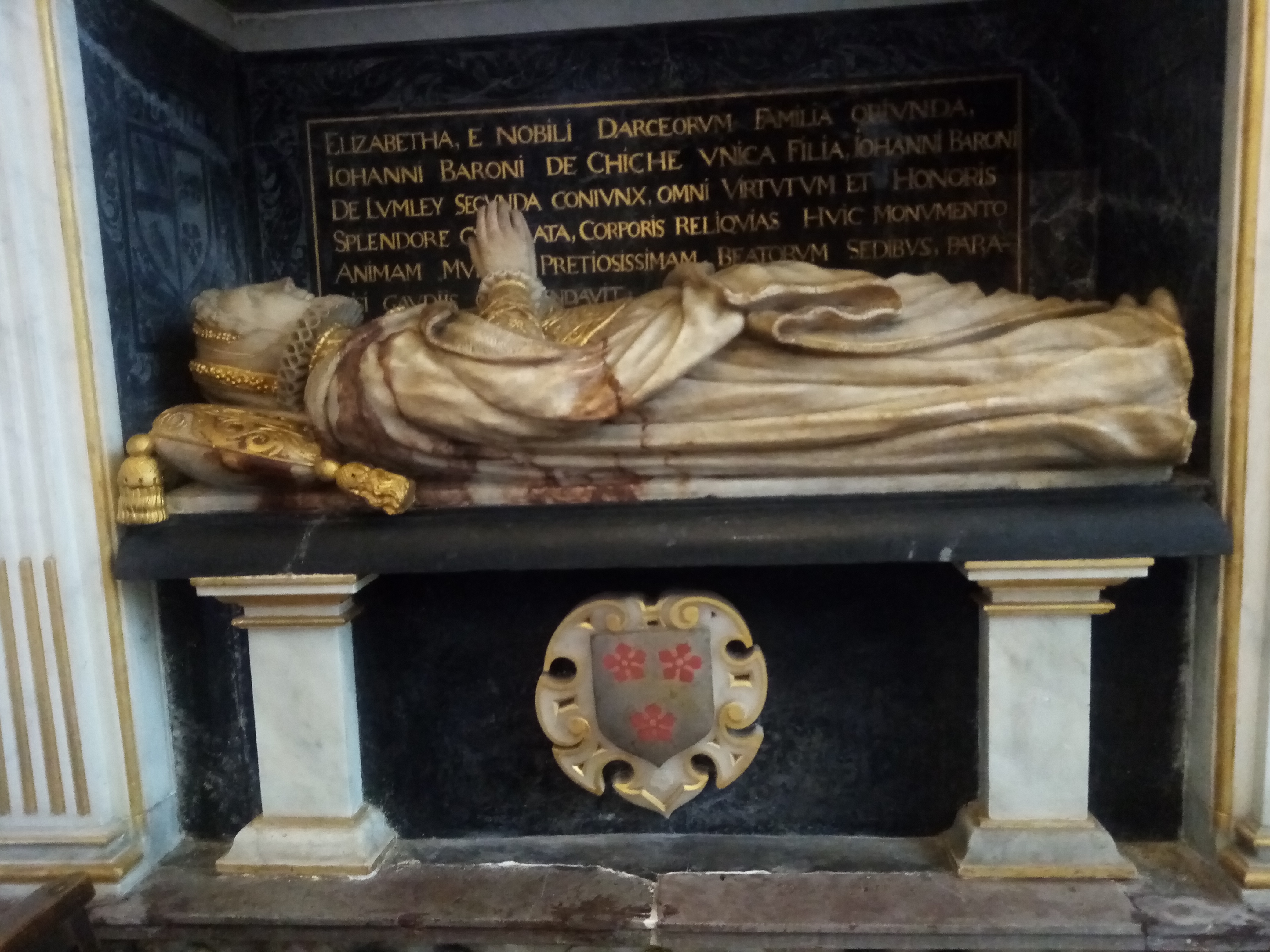
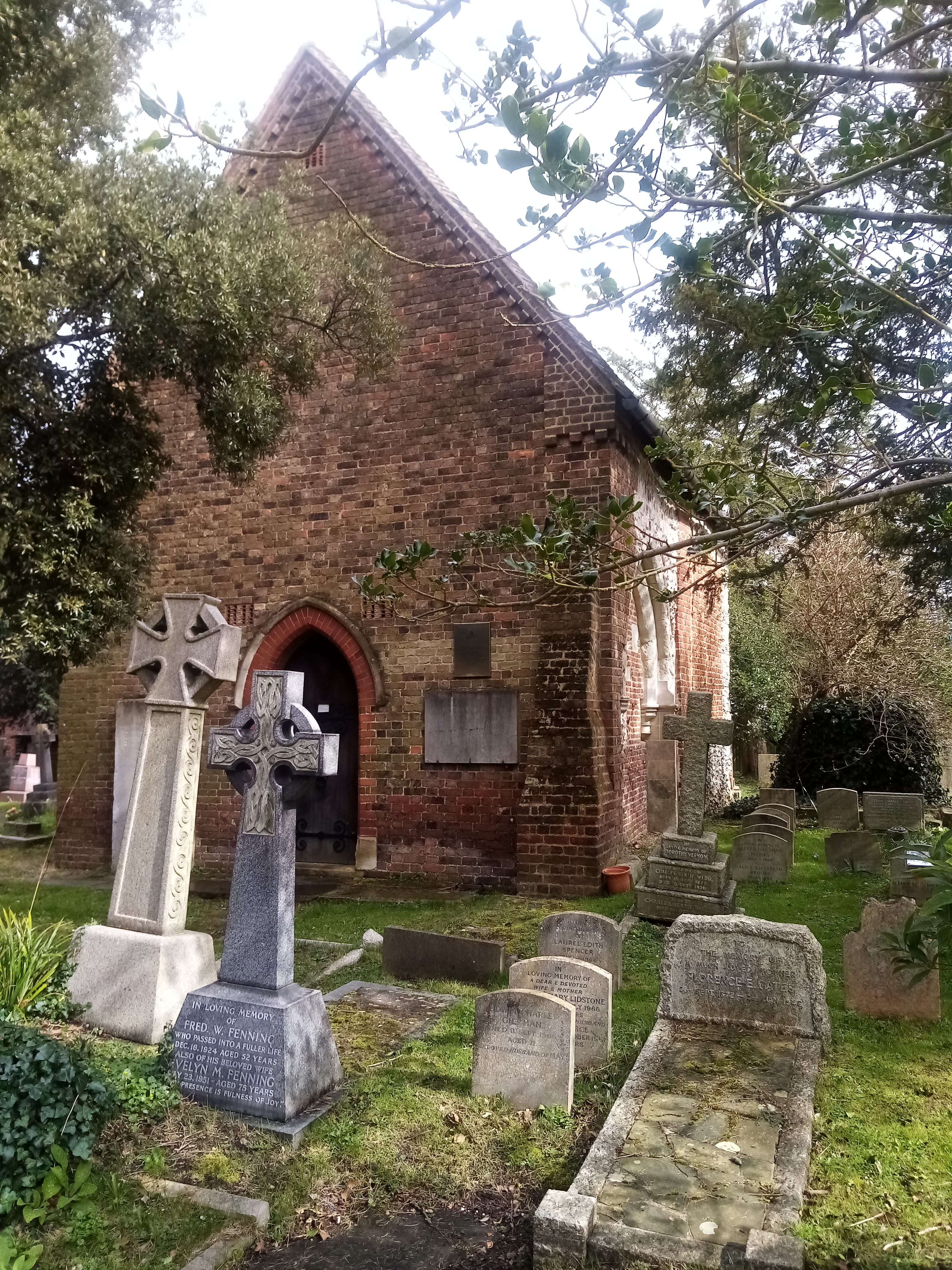
The Lumley Chapel is the oldest building in Cheam in the London Borough of Sutton and is in the care of the Churches Conservation Trust. It is situated in the churchyard of a Victorian church, St Dunstan’s and was the chancel or sanctuary of the original church of St Dunstan which was founded soon after 1018. Parts of the chapel itself are believed to be pre-Norman Conquest. In 1580, 1st Baron John Lumley inherited nearby Nonsuch Palace and in the 1590s he converted the church into a memorial chapel to his two wives. The most striking memorial is that to John’s first wife Jane, who died in 1578, which features depictions of their three children at prayer. Sadly all three children died in childhood. Lumley’s second wife Elizabeth died in 1617 and her recumbent effigy lies on her tomb in the chapel. This tiny chapel is crammed with memorials, monuments and wall plaques but somehow does not look overcrowded.
Source: cheamparish.org.uk; Wikipedia
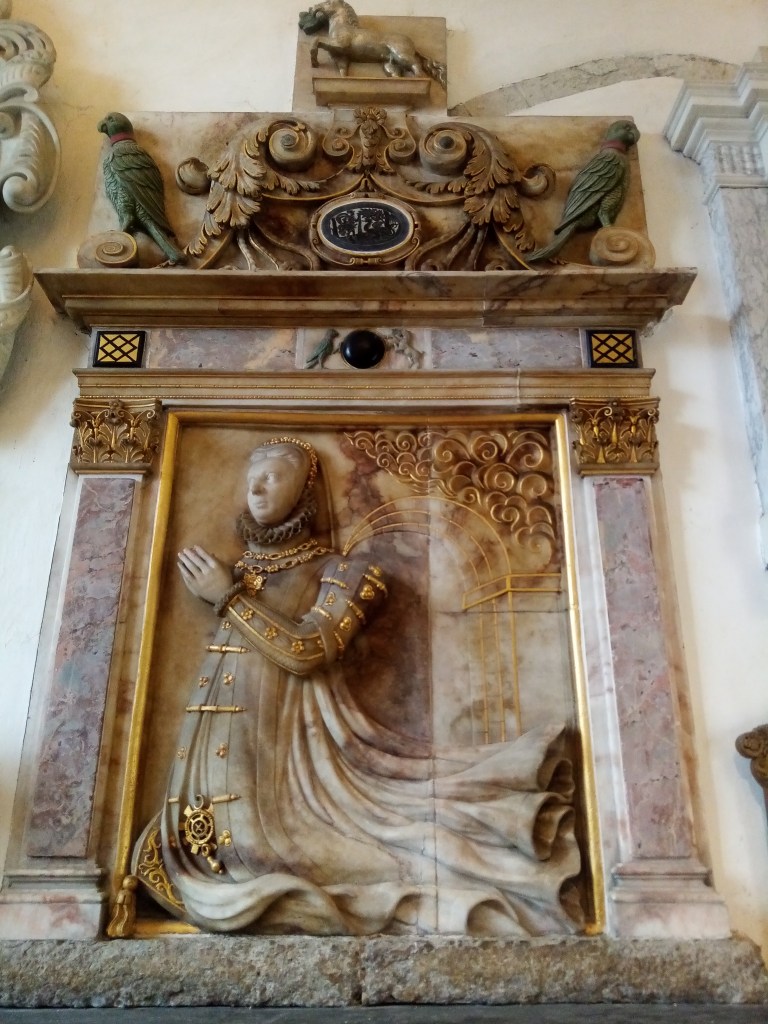
Jane Lumley Memorial 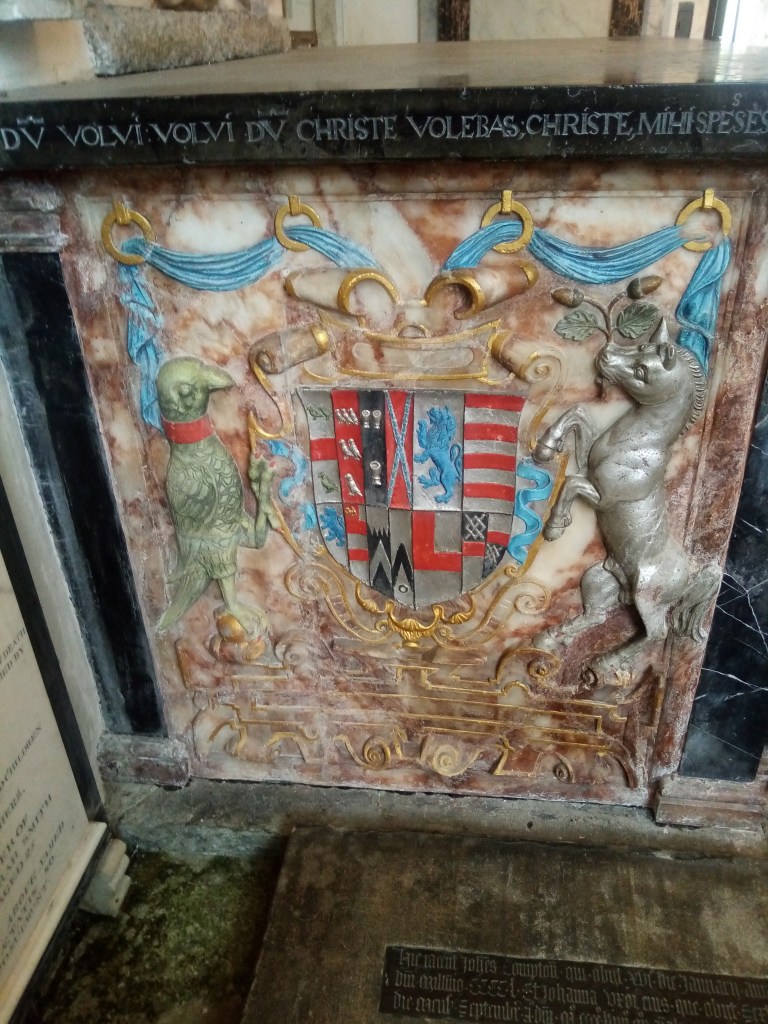
Lumley Coat of Arms
 claresimons1