This month I visited four London church spires. I love London’s skyline with its huge modern tower blocks interspersed with contrasting ancient slender church spires (I know some people won’t agree with me!) So these four: the tallest of London’s church spires, the second tallest, one of my favourite spires, and lastly, a spire without a church!
St Mary Abbot
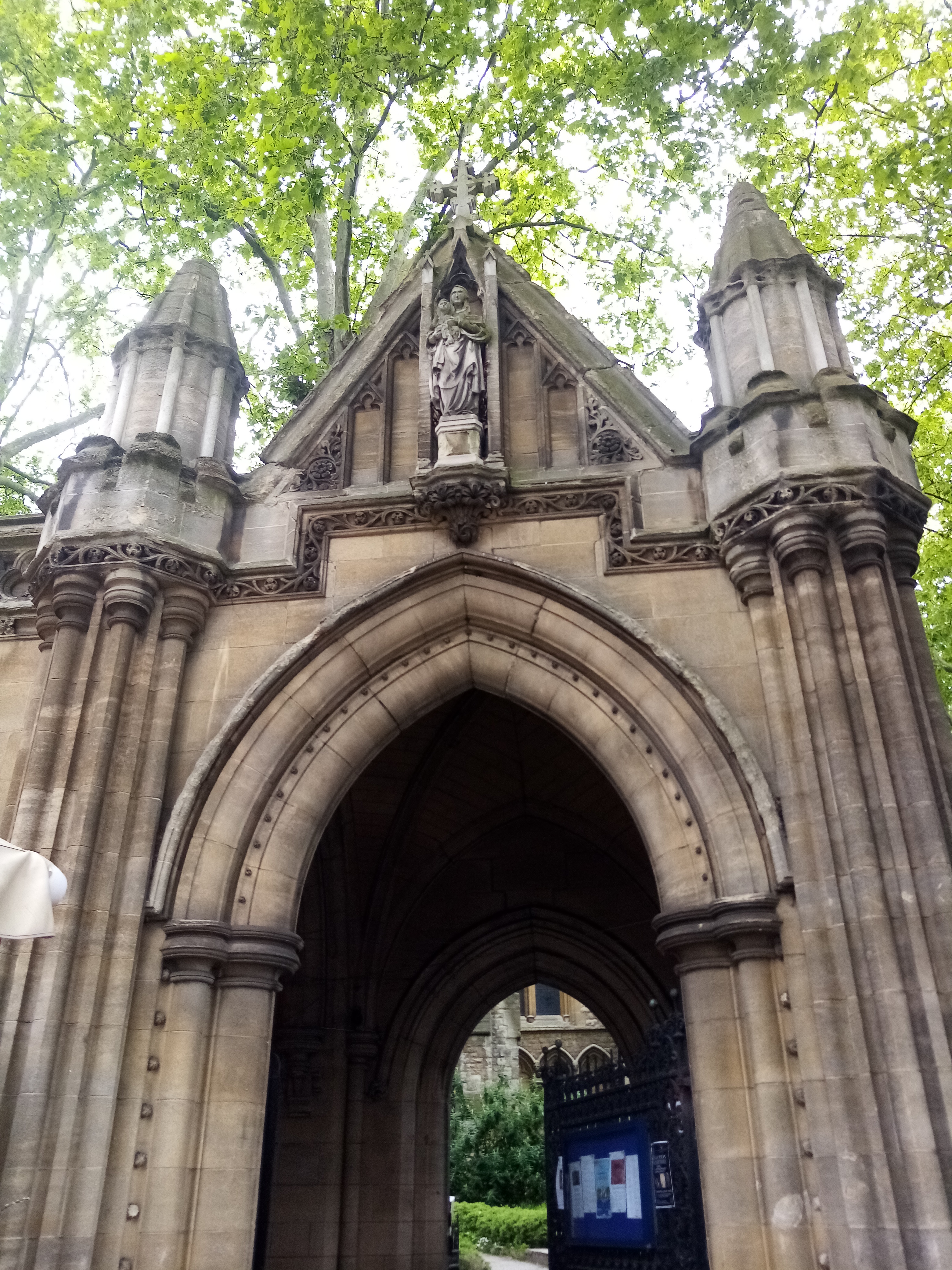
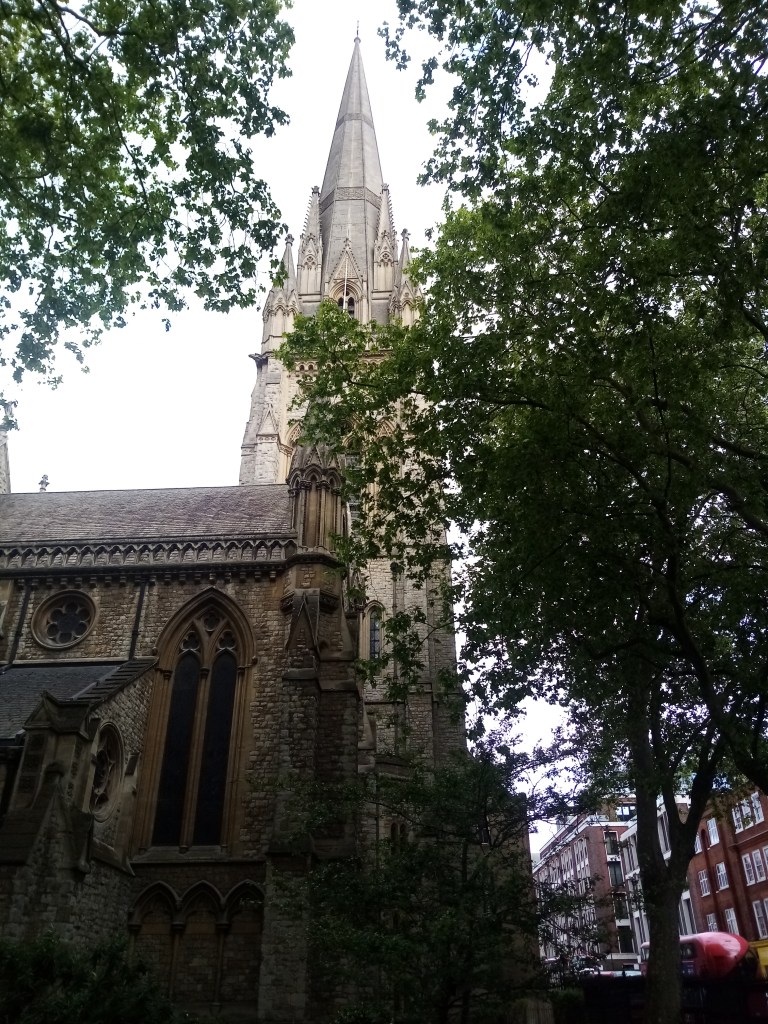
The Gothic spire of St Mary Abbot rises gracefully above Kensington in West London. The first church on this site was established in 1262 in medieval ‘Chenesitun’. Gothic-revival architect George Gilbert Scott was commissioned to design a new church building for fashionable Kensington and work began in 1869, completed in 1872, with the spire, London’s tallest at 278 feet (84.73 metres), being added in 1879. The church has an unusual and beautiful entrance in Kensington High Street: an archway leading to a vaulted cloister-like passage to the main door of the church.
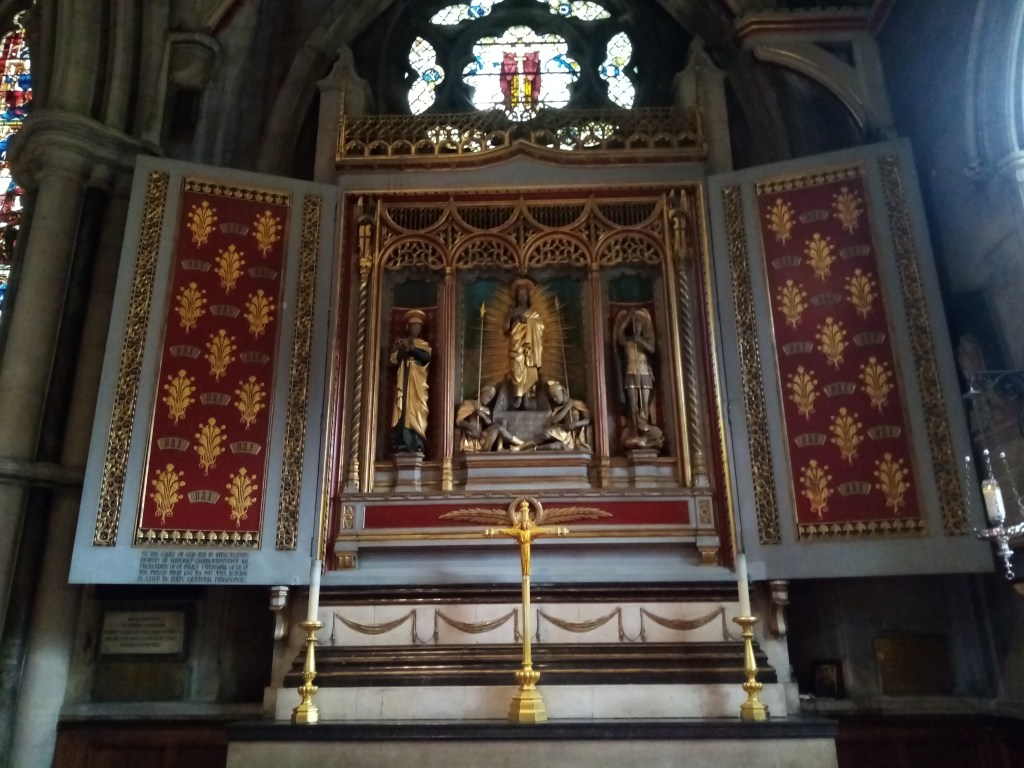
The interior of the church is equally spectacular: the unusual green ceiling which was reconstructed after World War ll following heavy incendiary bomb damage to the roof. Then there are the towering arches and pillars, the beautiful ornamental screens, and an intricate scale model of the church made entirely from 41,300 matchsticks. The model took parishioner Mr R Smith three years to complete and was presented to the church in 1963. The church hosts regular events: concerts by the Royal College of Music, free weekly piano recitals, a Summer garden party as well as Sunday services.
Source: Livinglondonhistory.org
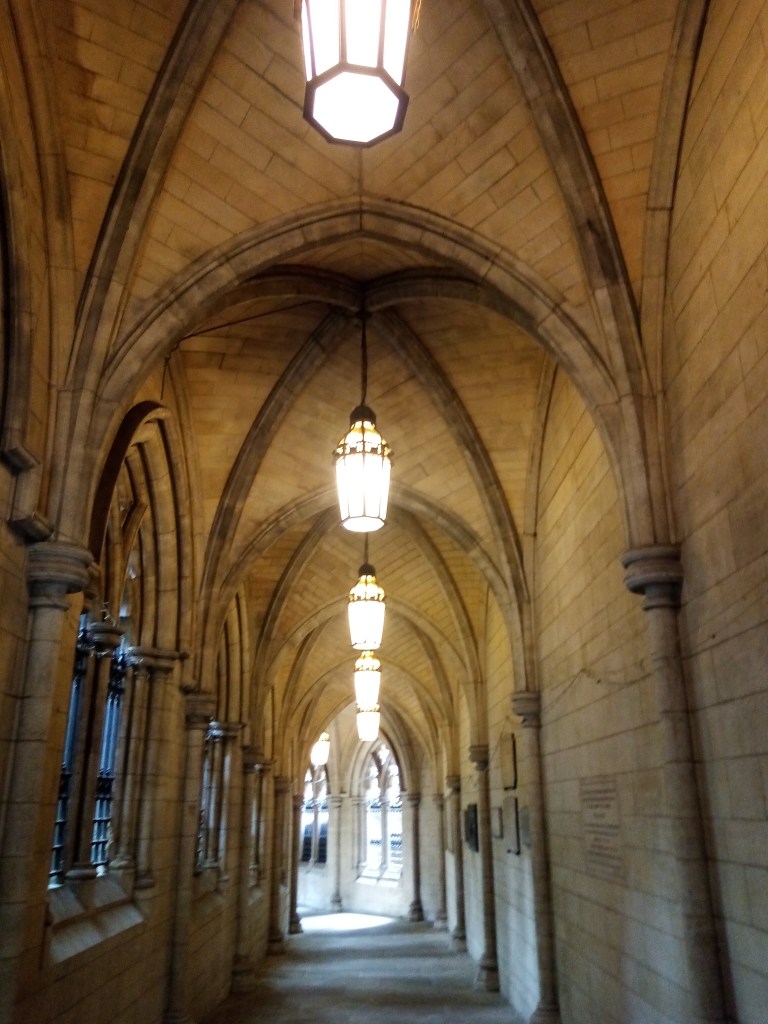
Vaulted passage to the entrance 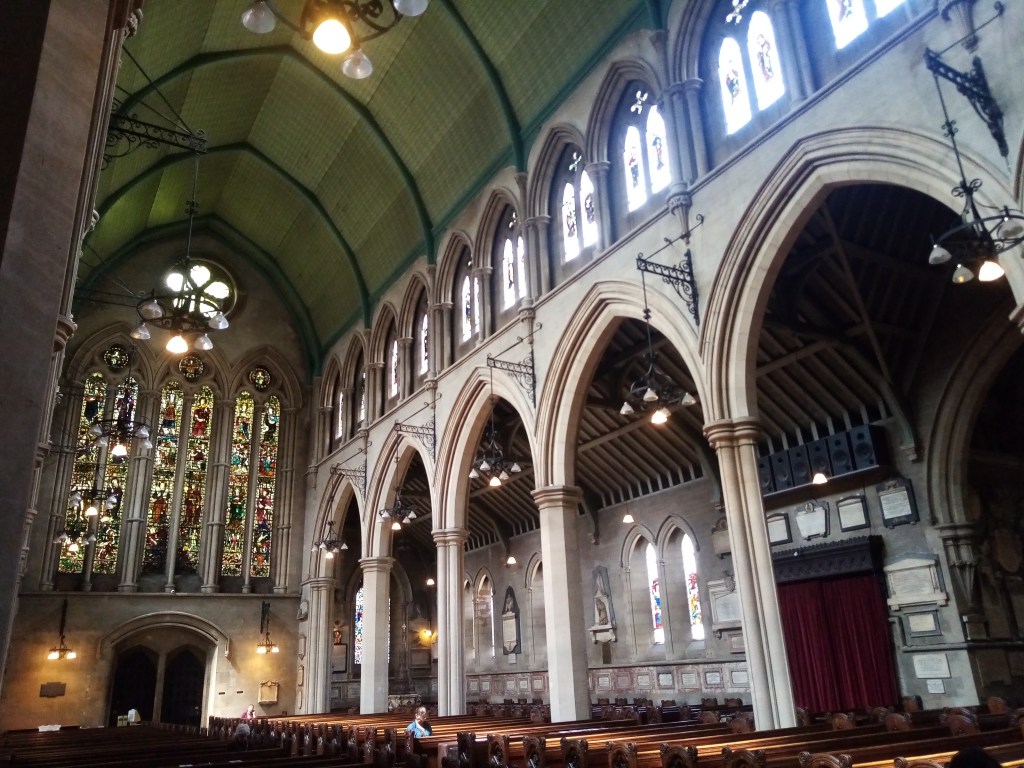
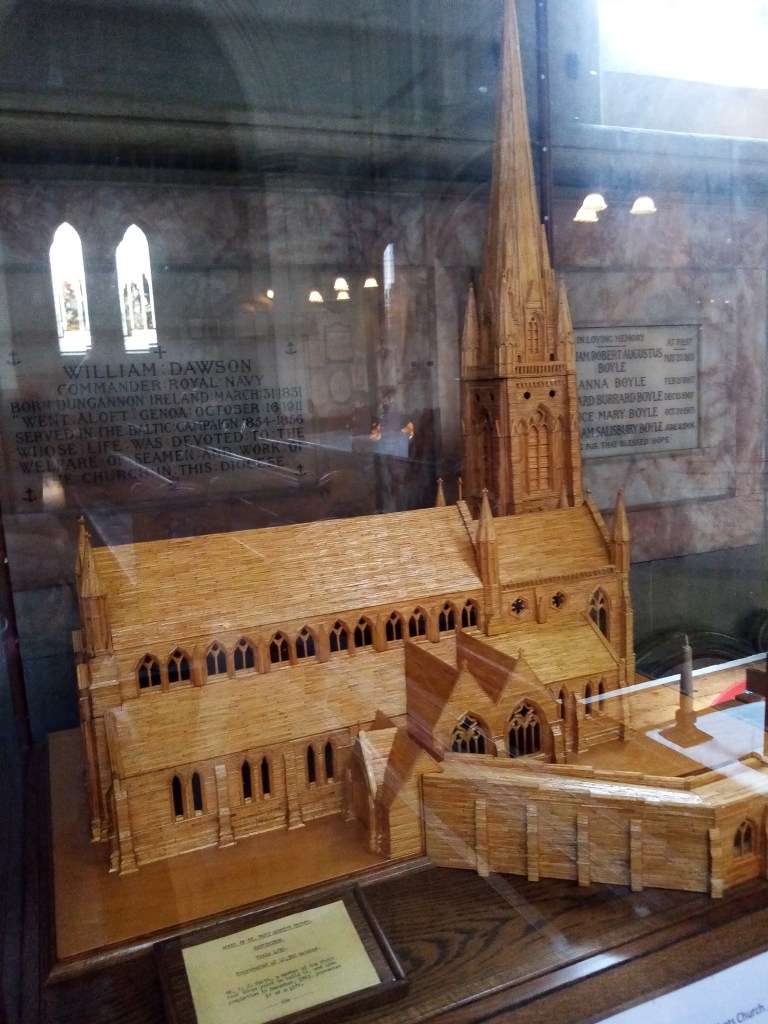
Matchstick Model 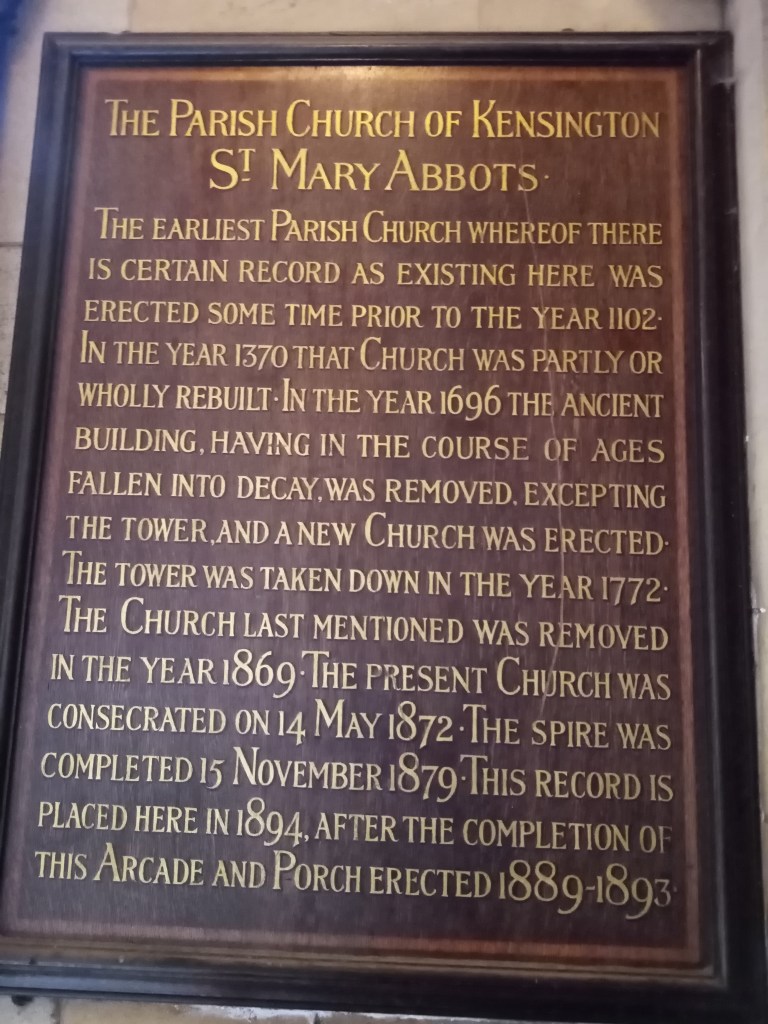
St Augustine’s Church, Kilburn
This church has London’s second tallest spire at 253 feet (77 metres) tall and towers over all the nearby buildings. Because of its large size and ornate architecture it is known as the ‘Cathedral of North London’ although it is not designated a cathedral. Constructed between 1871 and 1897, this is another Gothic- revival church designed by architect John Loughborough Pearson, renowned for his design of churches and cathedrals and best known for Truro Cathedral. The tall tower and spire were constructed in 1897 and were unusual for the Victorian era, Unfortunately I wasn’t able to go inside the church, definitely a visit for another time when it’s open, so I thought I’d tell you a little about the saint who the church is dedicated to. Augustine of Hippo was born in AD354 in a province of the Roman Empire in what is now Algeria in North Africa. He converted to Christianity and was baptised in AD386, after which he developed his own original approach to philosophy and theology. When the Western Roman Empire began to disintegrate, Augustine imagined the Christian church as a spiritual City of God on earth, as distinct from earthly cities. He is recognised as a saint in the Catholic Church, the Anglican Community, the Eastern Orthodox Church and Lutheran Church.
Source: Wikipedia

Spire of St Augustine 
Rose Window
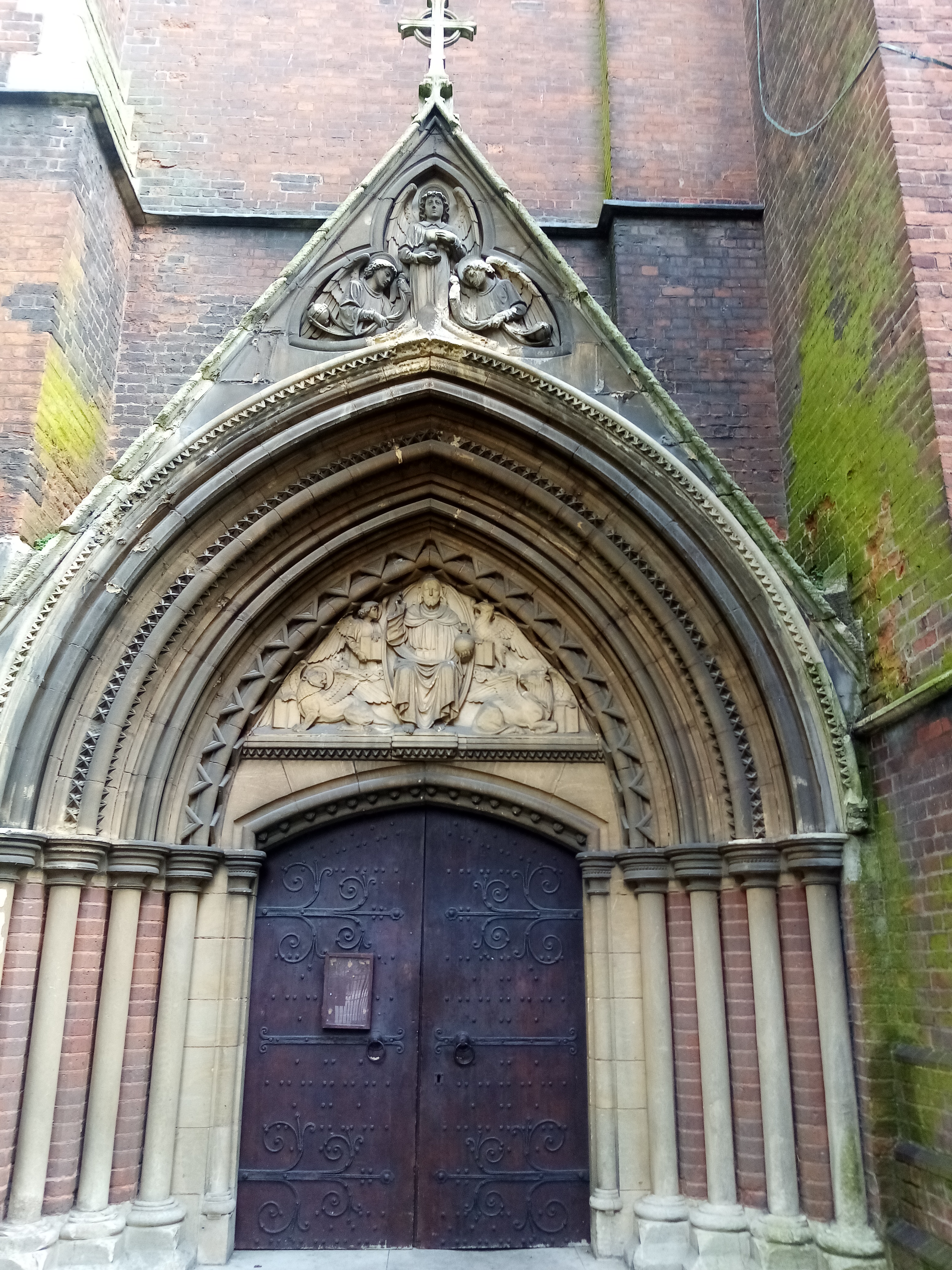
Christchurch, Spitalfields
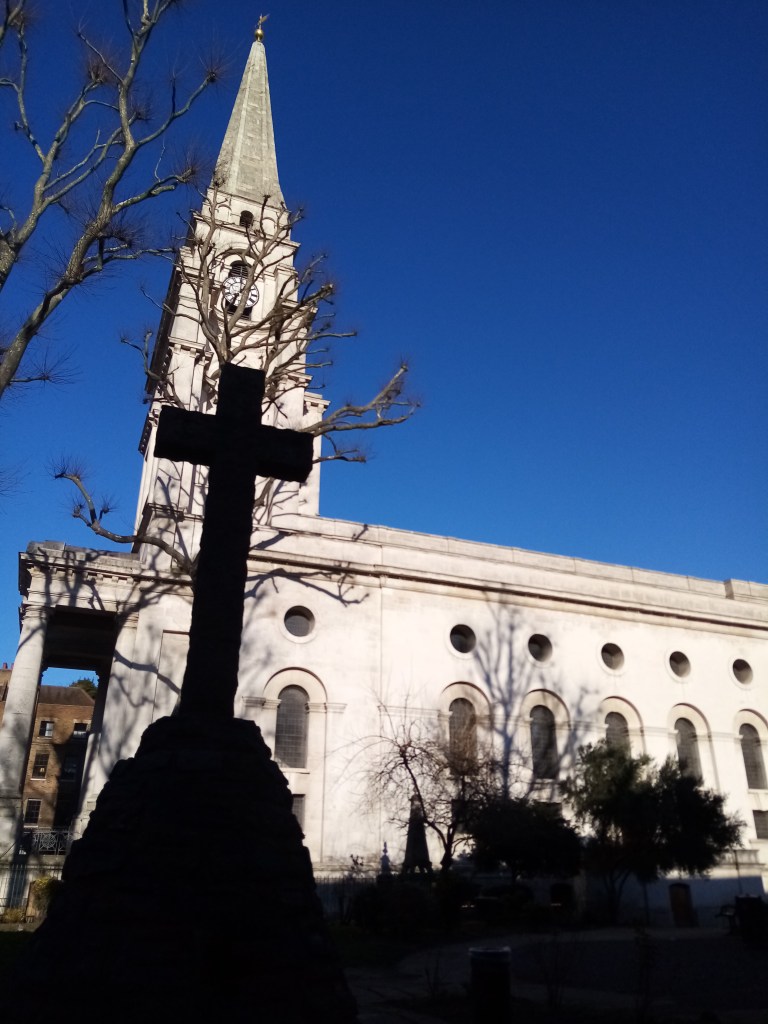
With a spire a mere 202 feet (62 metres) tall, Christchurch in Spitalfields, Tower Hamlets isn’t the tallest, but it looks extremely tall because of the absence of any other buildings nearby. It was completed in 1729 to a design by Nicholas Hawksmoor in the English Baroque style and must have looked colossal, dominating the City and East End skyline at the time. The church was one of the first ‘Commissioners’ Churches’, a commission for building 50 new churches in 1711 following the destruction of so many churches in the Great Fire of 1666. The parish of the church was home to French Huguenots, dissenters who had fled France because of persecution. They used the church for baptisms, marriages and burials but preferred their own, much plainer chapels for Sunday worship. Hard to imagine now, but in the 1960s the church had fallen into such a state of disrepair that it was almost derelict. In 1976 the Friends of Christchurch Spitalfields was formed to raise money to restore the Grade 1 Listed building to its former glory. Work was finally completed in 2004 and today the church is part of the HTB network.
Source: Wikipedia
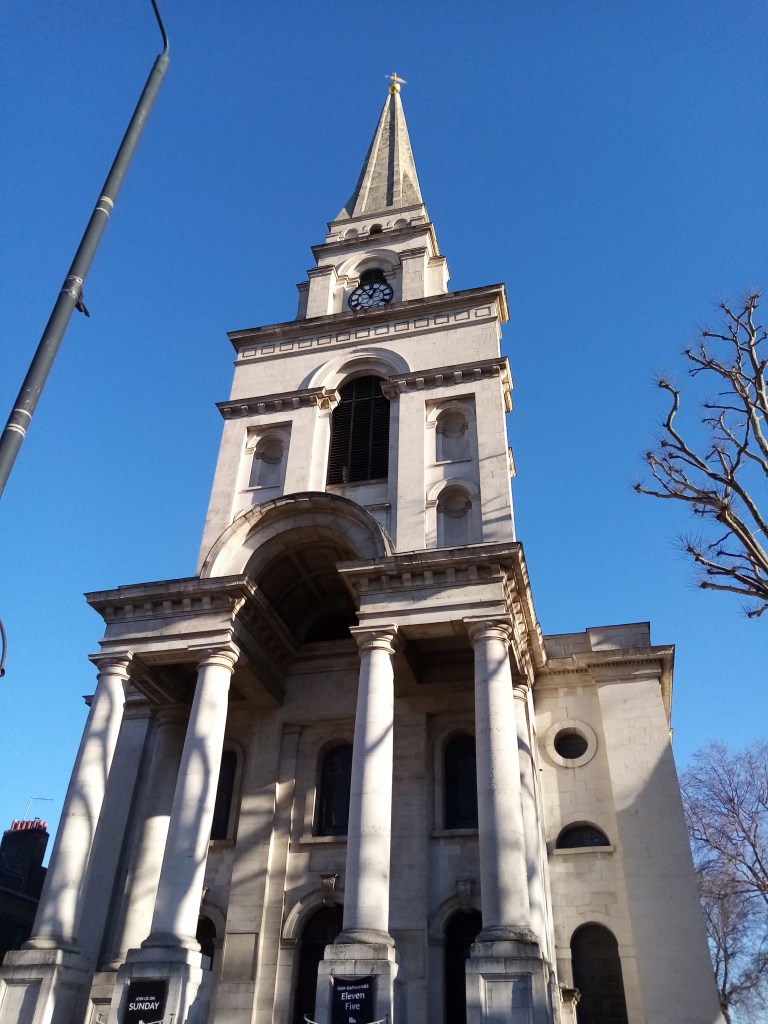
Spectacular Christchurch! 
Photo taken from across the road
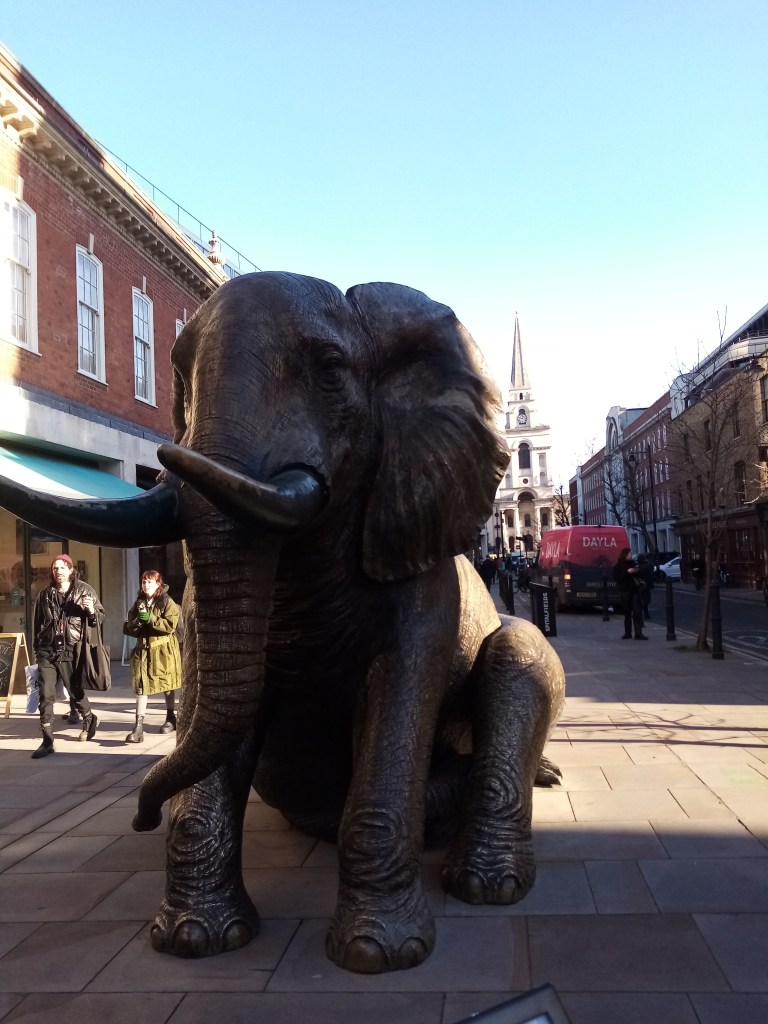
Street art elephant with Christchurch in the background!
St Antholin’s Spire, Forest Hill
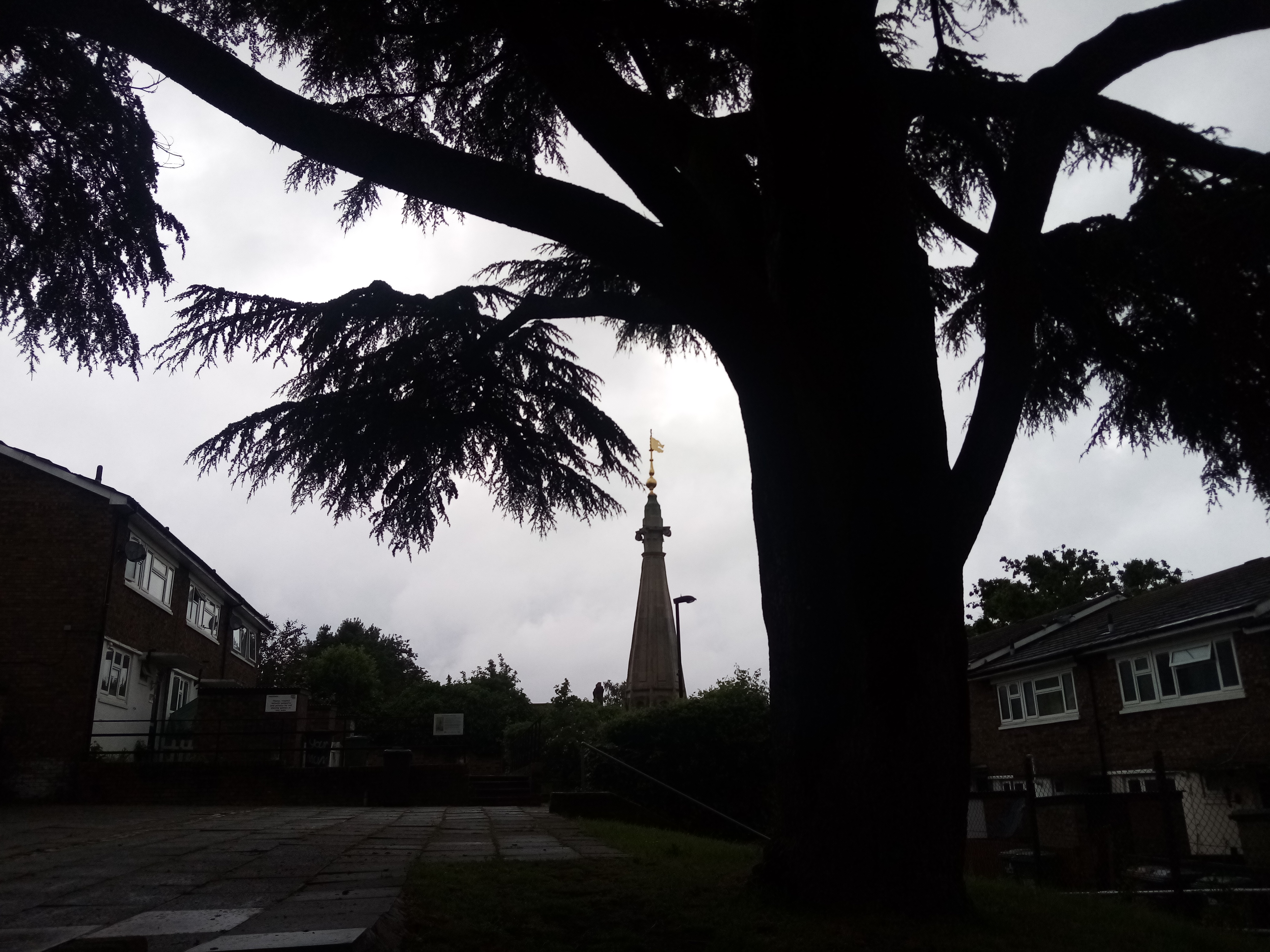
And lastly, a spire without a church. This spire sits incongruously in the middle of a 1960s South London housing estate. It once topped St Antholin’s church in the City of London, a Wren church which replaced the original medieval one which was destroyed in the Great Fire. So how did the spire end up in Forest Hill? Unusually, the spire is constructed entirely from Portland stone, rather than timber and stone, so consequently it is very heavy. When the church was damaged in a storm in 1829, the spire was removed and replaced with a more conventionally constructed one. It was destined to be demolished, until one of the churchwardens, Robert Harrild, bought it for the sum of £5. Mr Harrild was a pioneer in the printing industry and his invention of a revolutionary new way of printing had afforded him the means to purchase a large manor house in Forest Hill, Round Hill House. Apparently, he could see the church spire from his office window in the city and admired it, so he saved it and had it transported to the garden of Round House as a garden ornament. The house was demolished in the 1960s and the new housing estate was constructed around it. There is also a large cedar tree near the spire which was also part of the garden. The spire is Grade ll listed, so presumably it will stay in situ for ever.
Source: livinglondonhistory.org
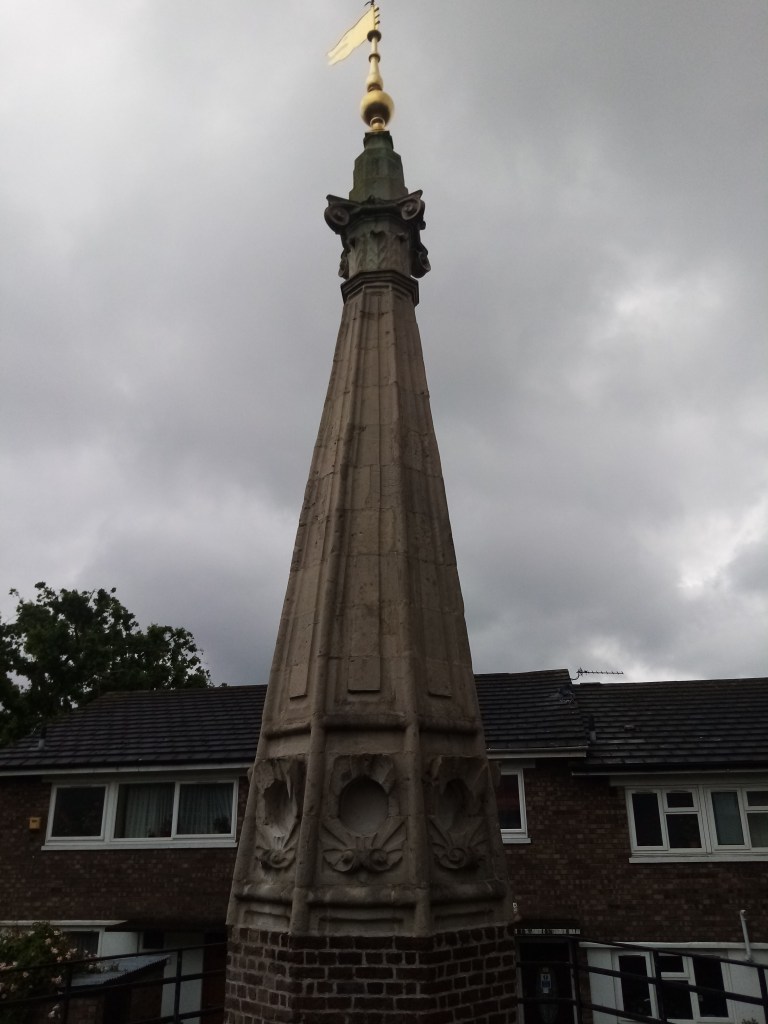
St Antholin’s Spire 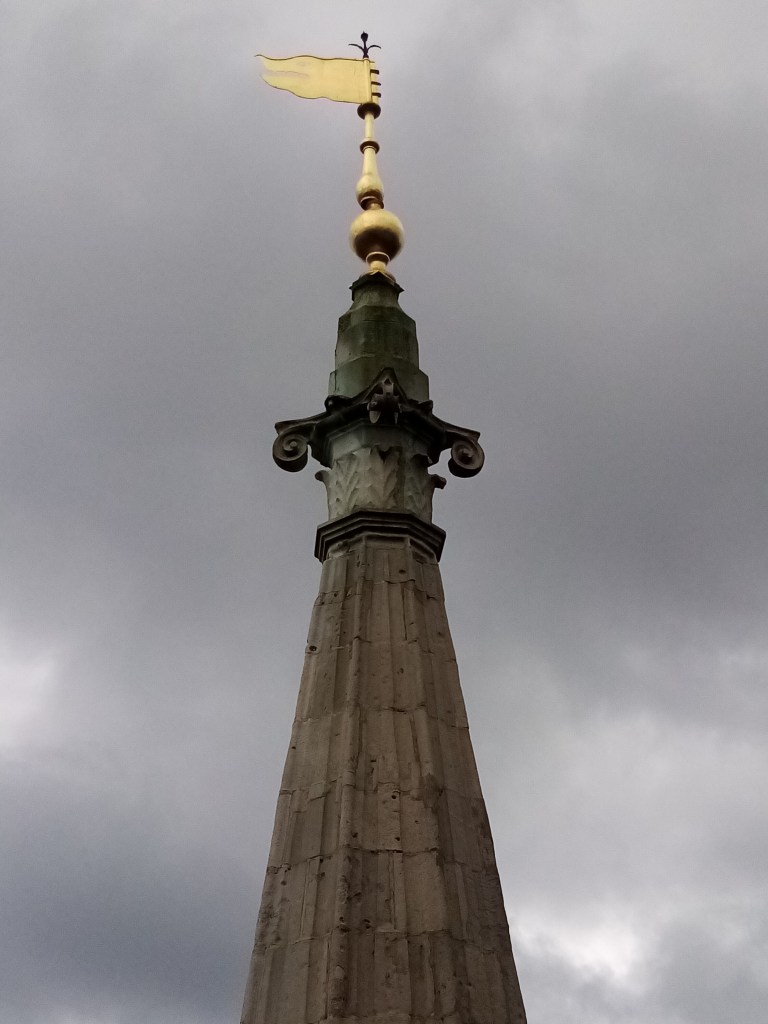
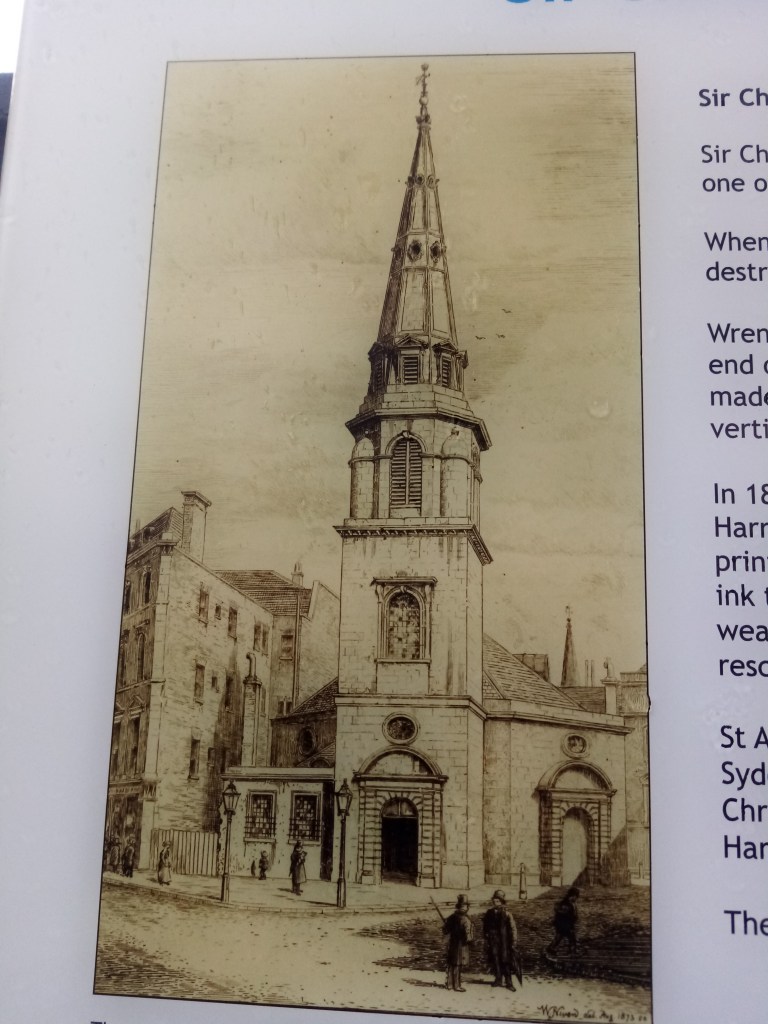
Original church with spire on top! 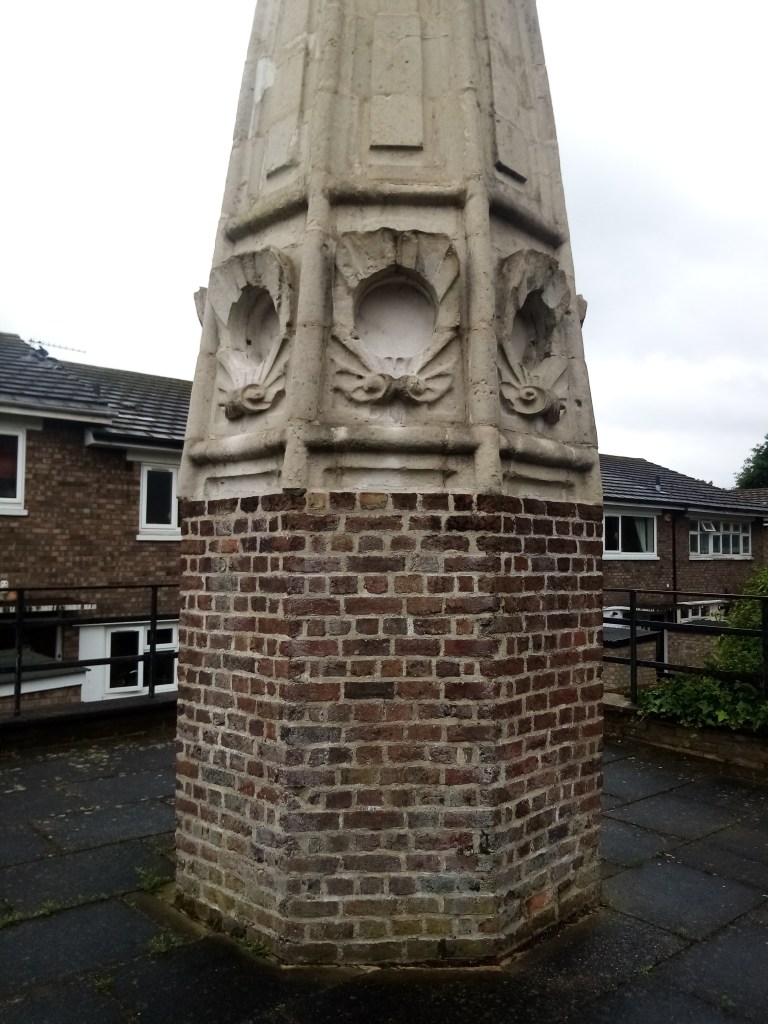
Base of the spire
 claresimons1