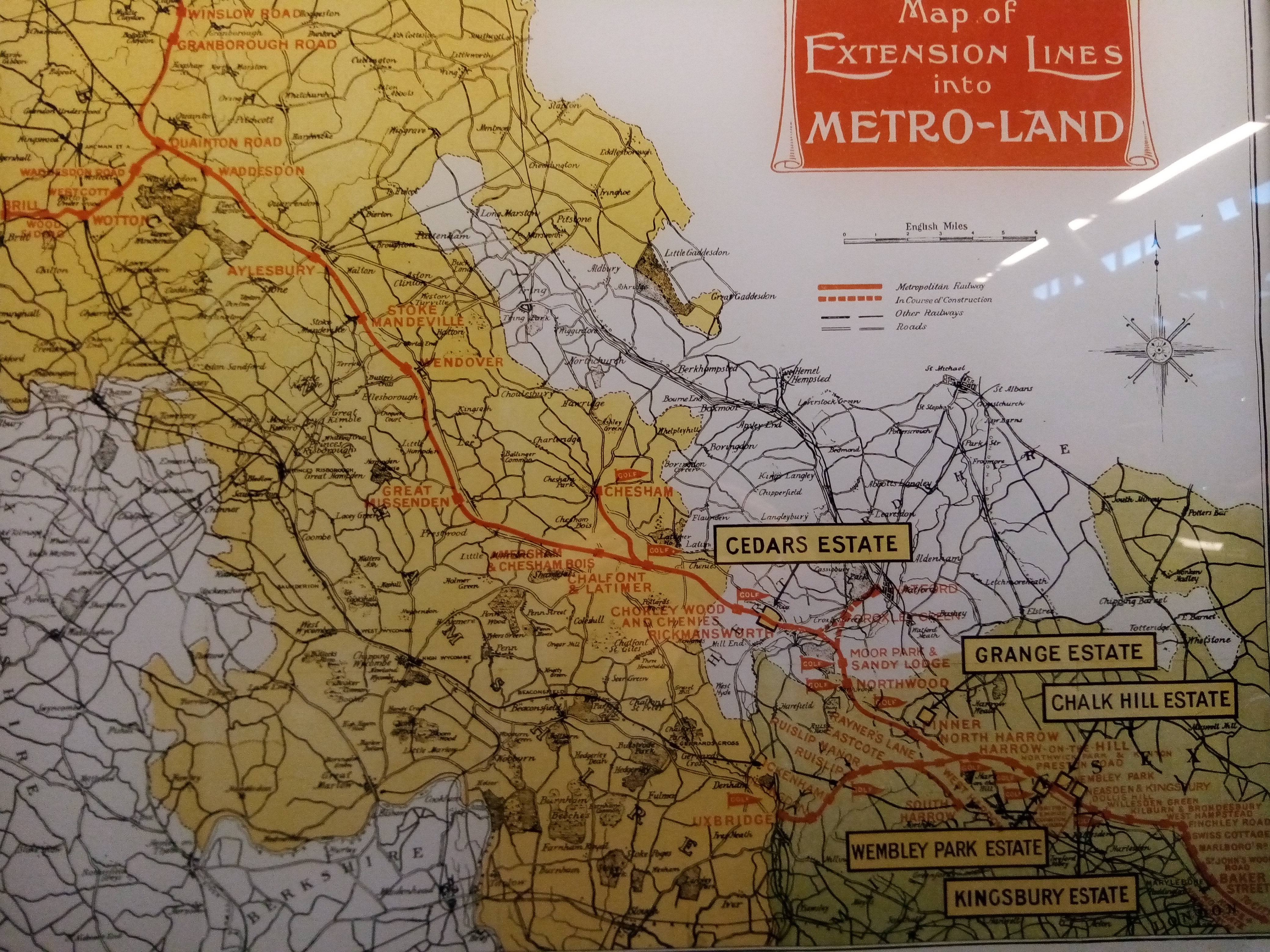
In 1915 the Metropolitan Railways Marketing Department came up with the phrase ‘Metro-land’ to help sell surplus land that the Met had acquired in extending its railway network beyond the London suburbs into the counties of Middlesex, Buckinghamshire and Hertfordshire. The Metropolitan Railway County Estates (MRCE) began creating Garden Villages and Garden suburbs in 1920 along the extended lines: modern homes in an idyllic rural setting. The ‘Metro-land Guide’ promised a fast journey time for commuters in and out of the City with delightful views from your carriage window of pretty, newly created villages with fields and woodland between them. The architecture was mostly in the popular Arts and Crafts style: a nostalgic mix of mock Tudor and Elizabethan – ‘Tudorbethan’, a word coined by poet laureate John Betjamin, who wrote extensively about Metro-land, and in 1973 made a whimsical documentary about it. By the early 1930s a new style of architectural design, Modernism, was starting to break out among the traditional suburban villas, and these are the subject of ‘A Guide to Modernism in Metro-land’ by Joshua Abbott, Unbound, 2020. Among the designs for underground stations, libraries, town halls, factories and housing, there are the Modernist churches; here are four of the best.
Source: Joshua Abbott, A Guide to Modernism in Metro-land.
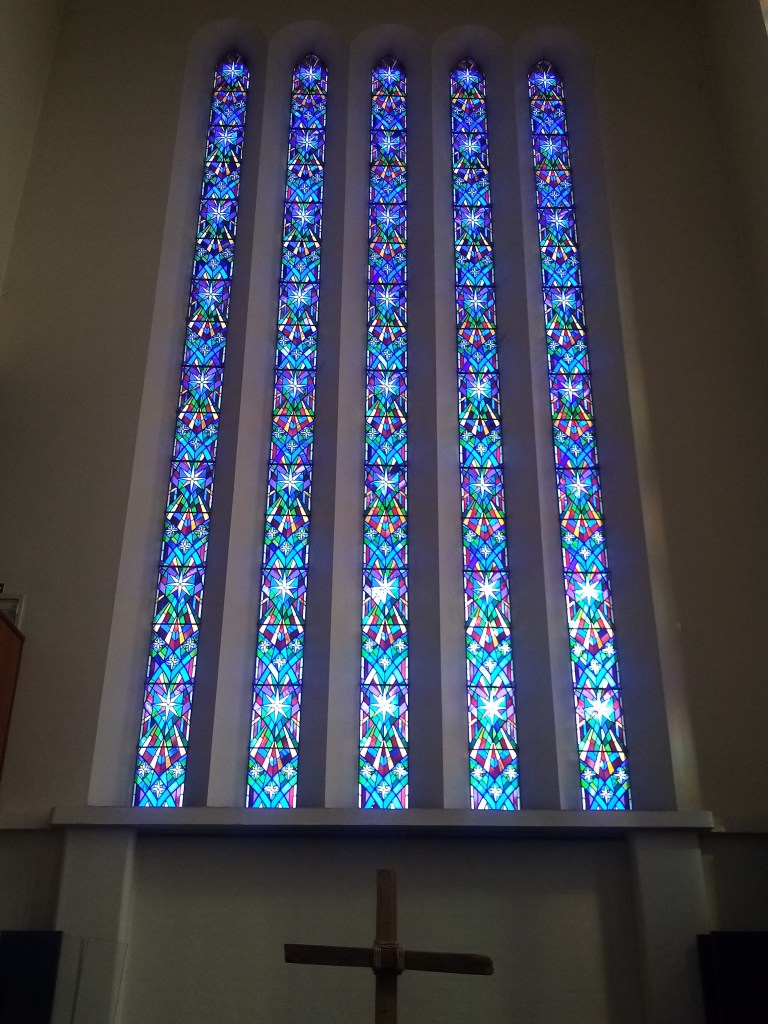
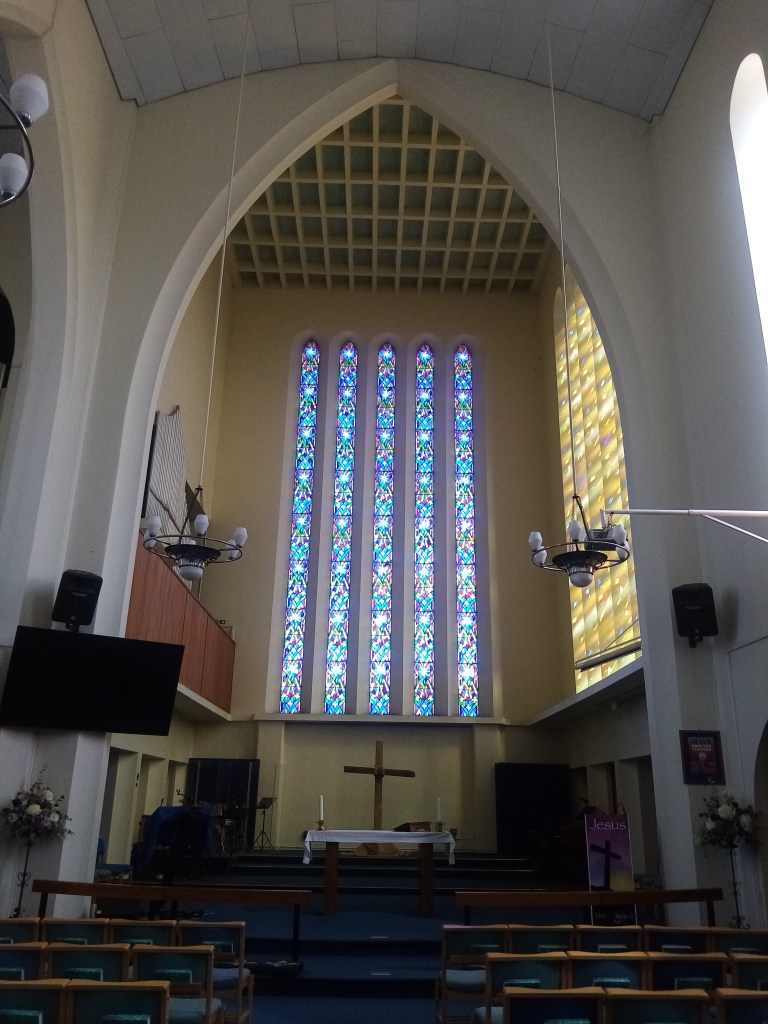
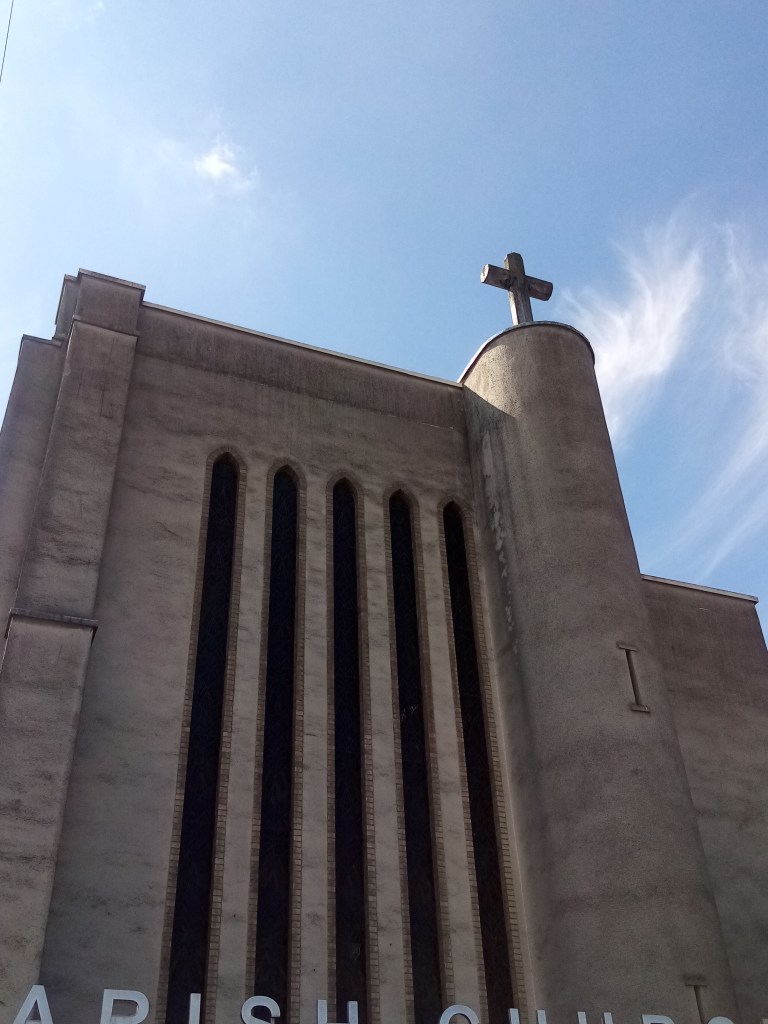
St Paul’s Parish Church, South Harrow
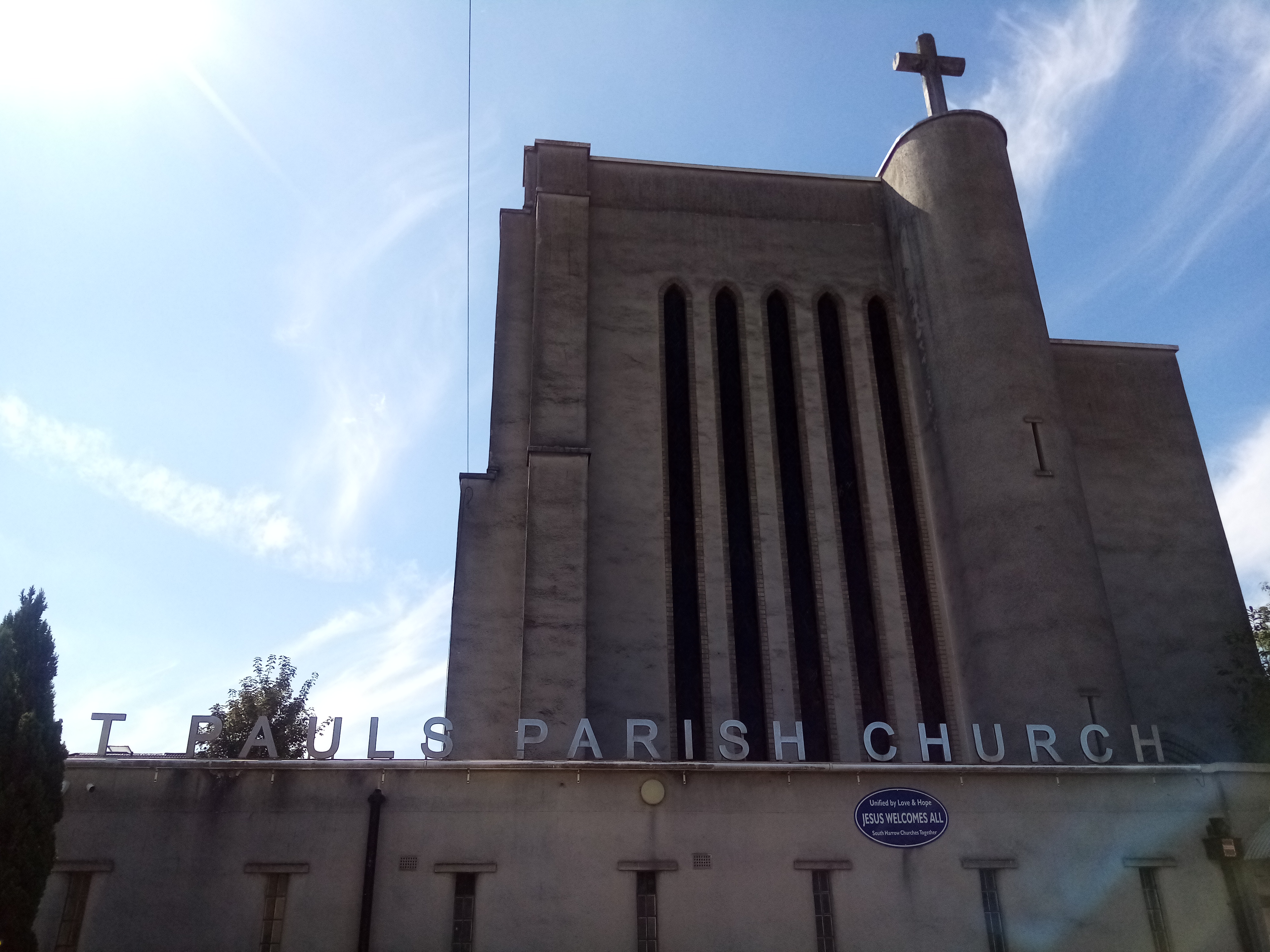
Joshua Abbott refers to St Paul’s as ‘a quietly radical church design’, and it certainly stands out in an ordinary residential street. It was designed by architect NF Cachemaille-Day, who was a leading exponent of Expressionist Architecture. From the 1930s he became known for his church designs, one of which was described as ‘a milestone in the history of church architecture in England’. The foundation stone of St Paul’s was laid in 1937, and the church is built in brick ‘but rendered on the outside to resemble an austere factory building’ – why? It wasn’t one of my favourites, the only thing I liked about the exterior was the name of the church in white concrete lettering on the front of the building, which I’ve never seen before. Fortunately a lady from the office, Jill, let me into the church and allowed me to look around and take photos. The interior is quite plain also, apart from the beautiful stained glass windows, which, Jill told me, catch the light shining through them in the mornings and spread colour around the church on a sunny day.
Sources: Joshua Abbott; Wikipedia

St Gregory the Great, South Ruislip

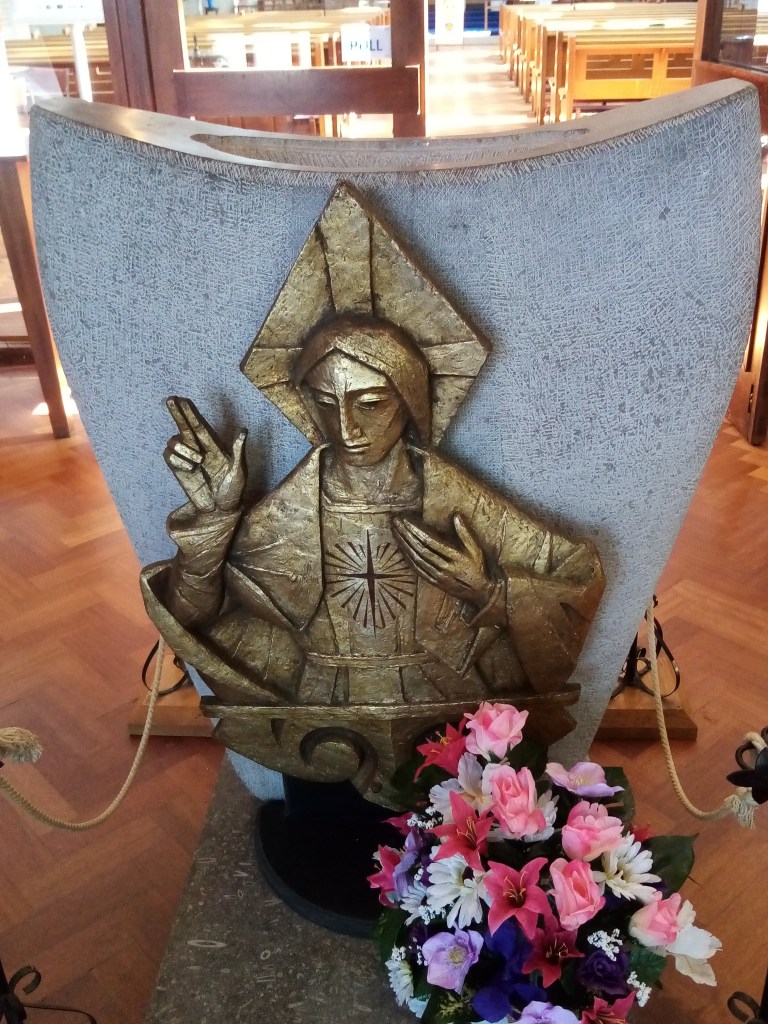
This church was designed by Gerald Goalen and built comparatively recently in 1967. It is constructed in dark brick in an oval shape, with beautiful stained-glass windows around the whole church at ceiling height. The oval or round church design became popular in the 1960s after the Second Vatican Council, which allowed congregations to be much closer to the altar. St Gregory’s was the first church in the Westminster Diocese to have been planned and built for Mass with the priest facing the people. I was fortunate that the church was open, as it was a sheer joy to see the interior. I loved the design and fittings of St Gregory’s, particularly a side chapel which contained the font and had a floor to ceiling stained-glass window with words connected with baptism on it. Outside the church is a small, pretty Garden of Remembrance. This is my favourite of all the churches I visited.
Sources: Joshua Abbott; Wikipedia

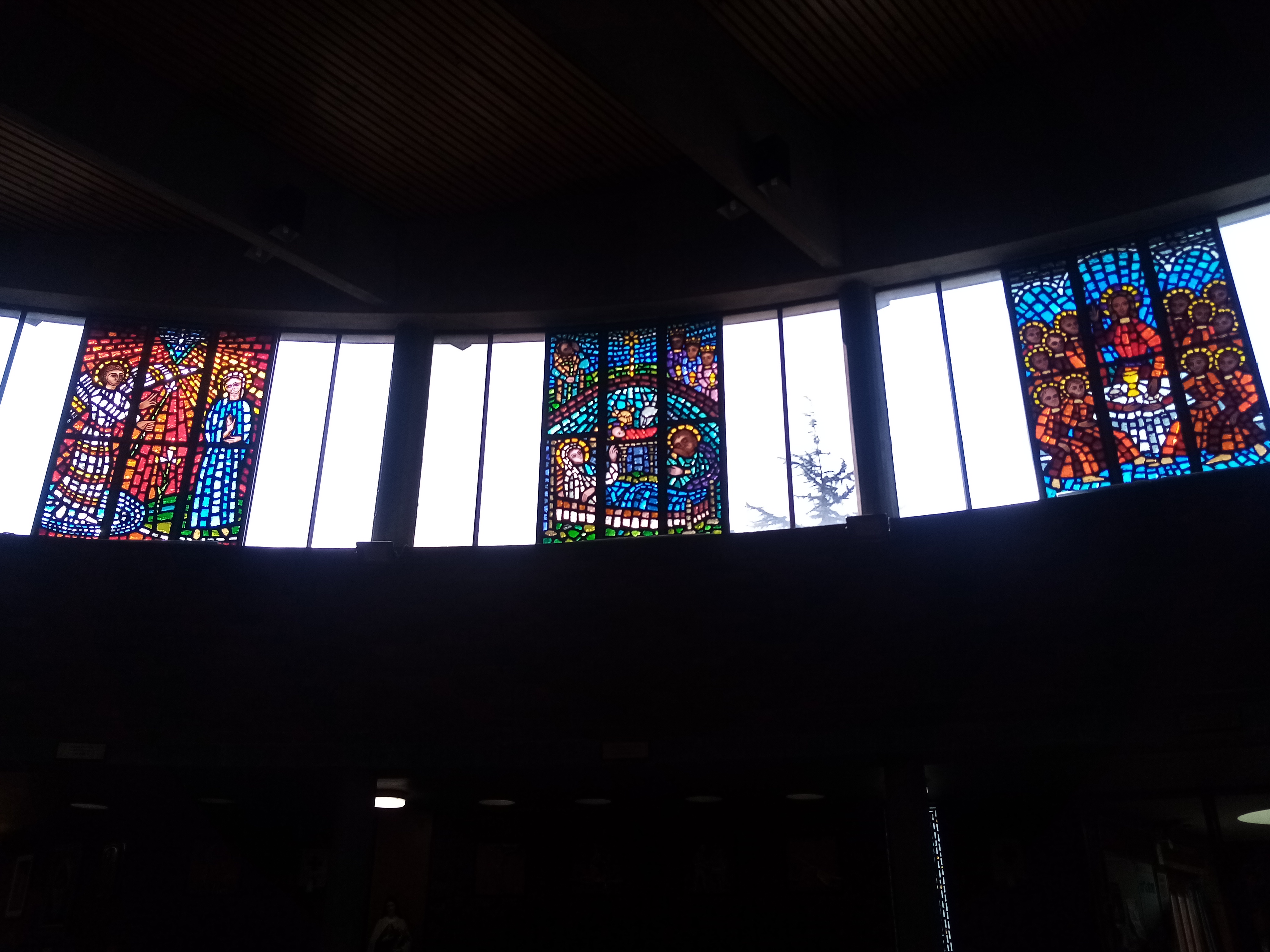
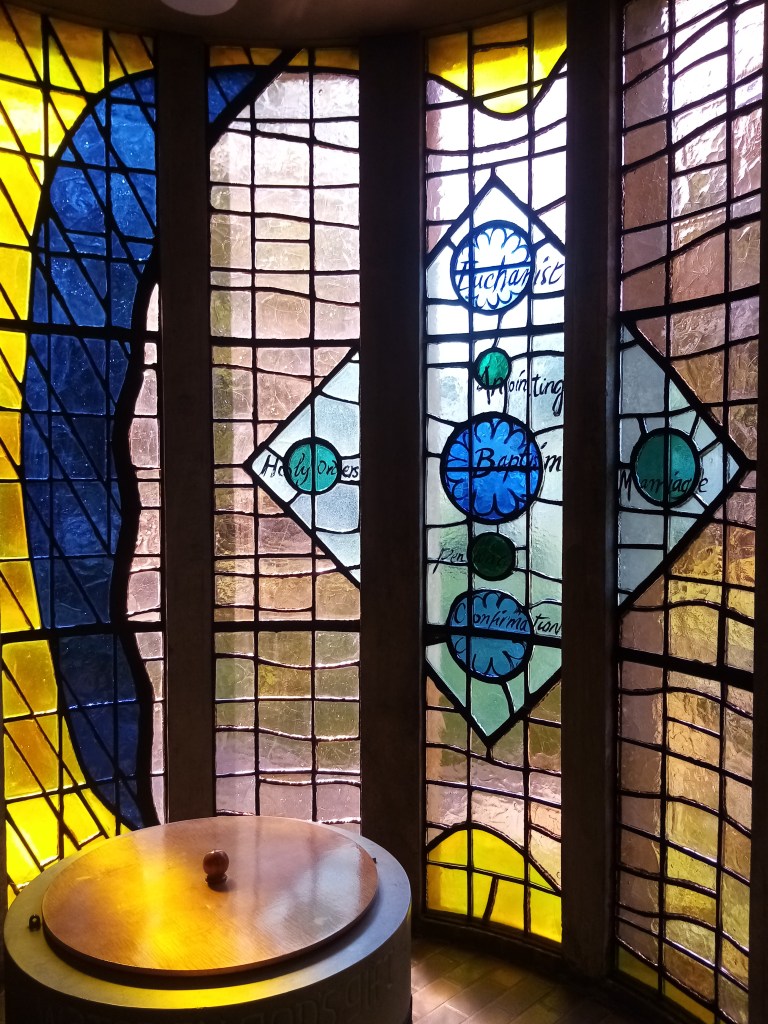
Font room 
Garden of Rememberance
The Catholic Church of St Aiden of Lindisfarne, East Acton

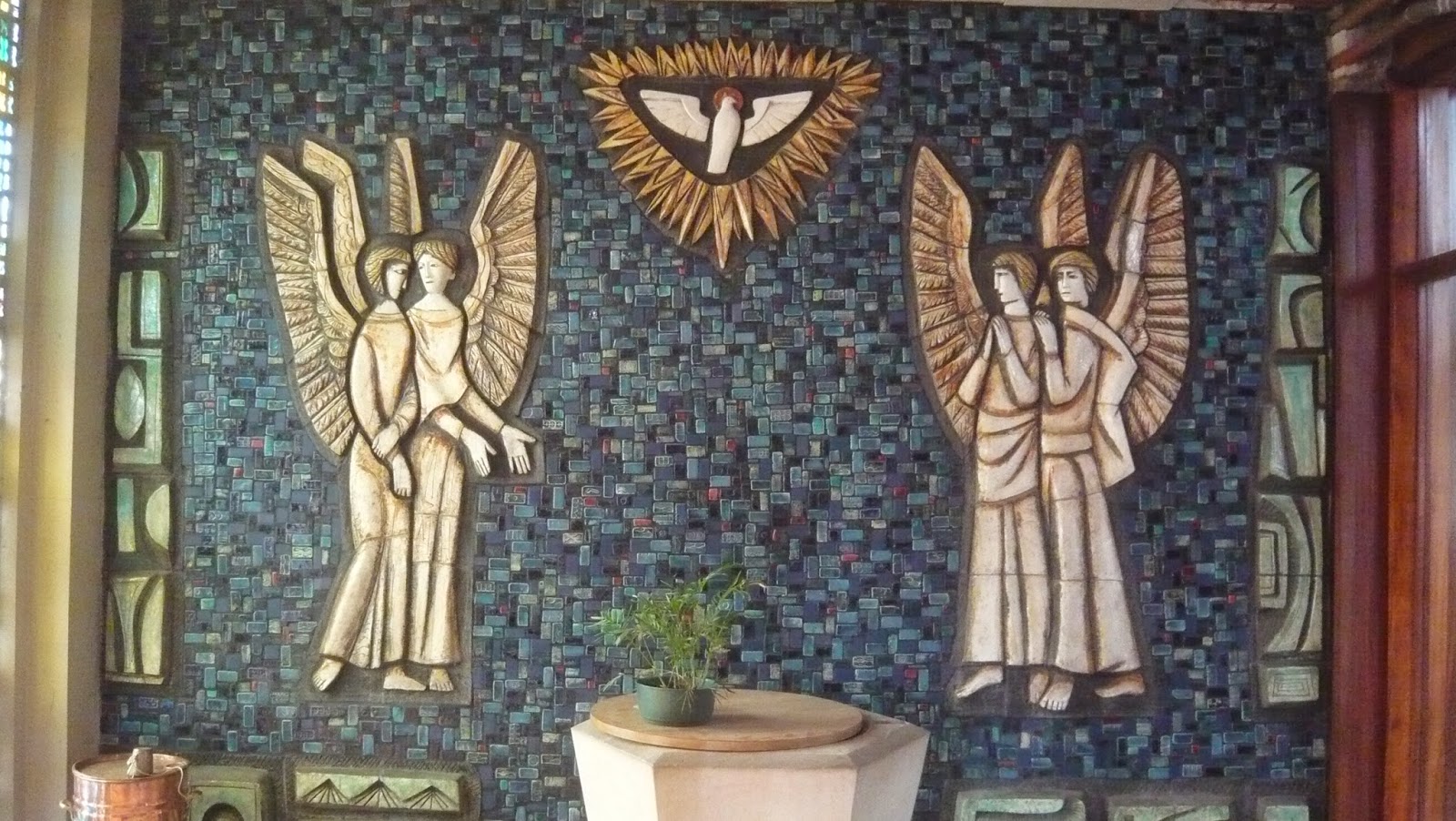
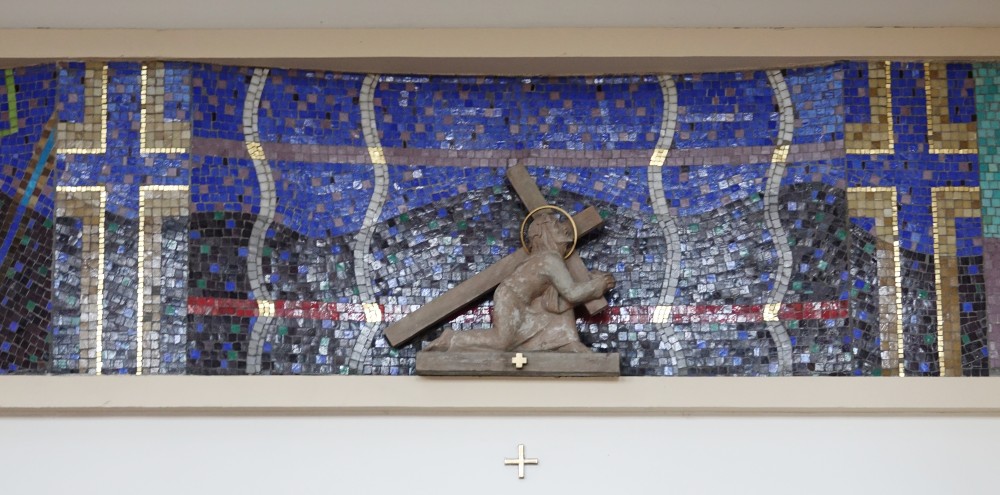
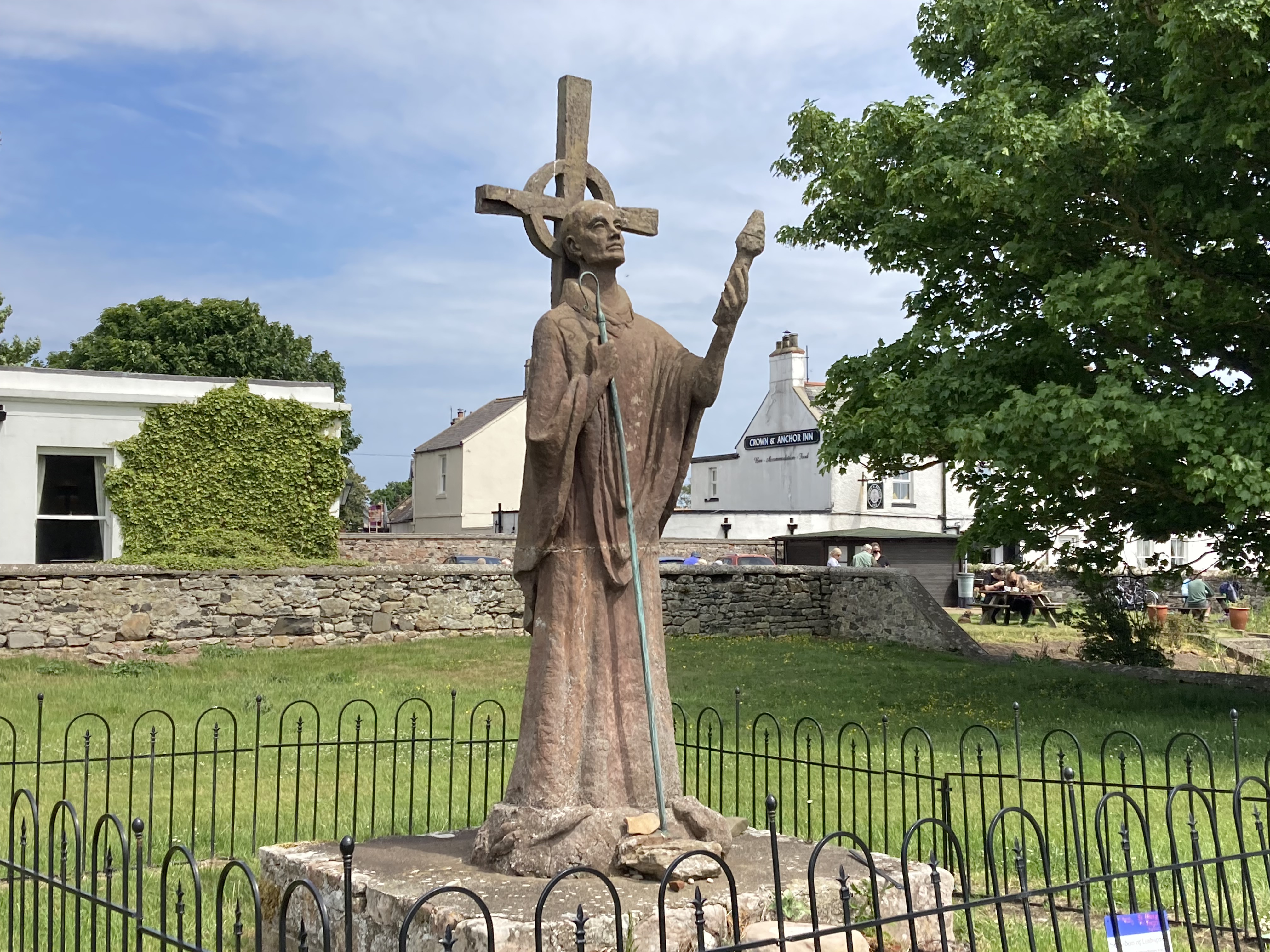
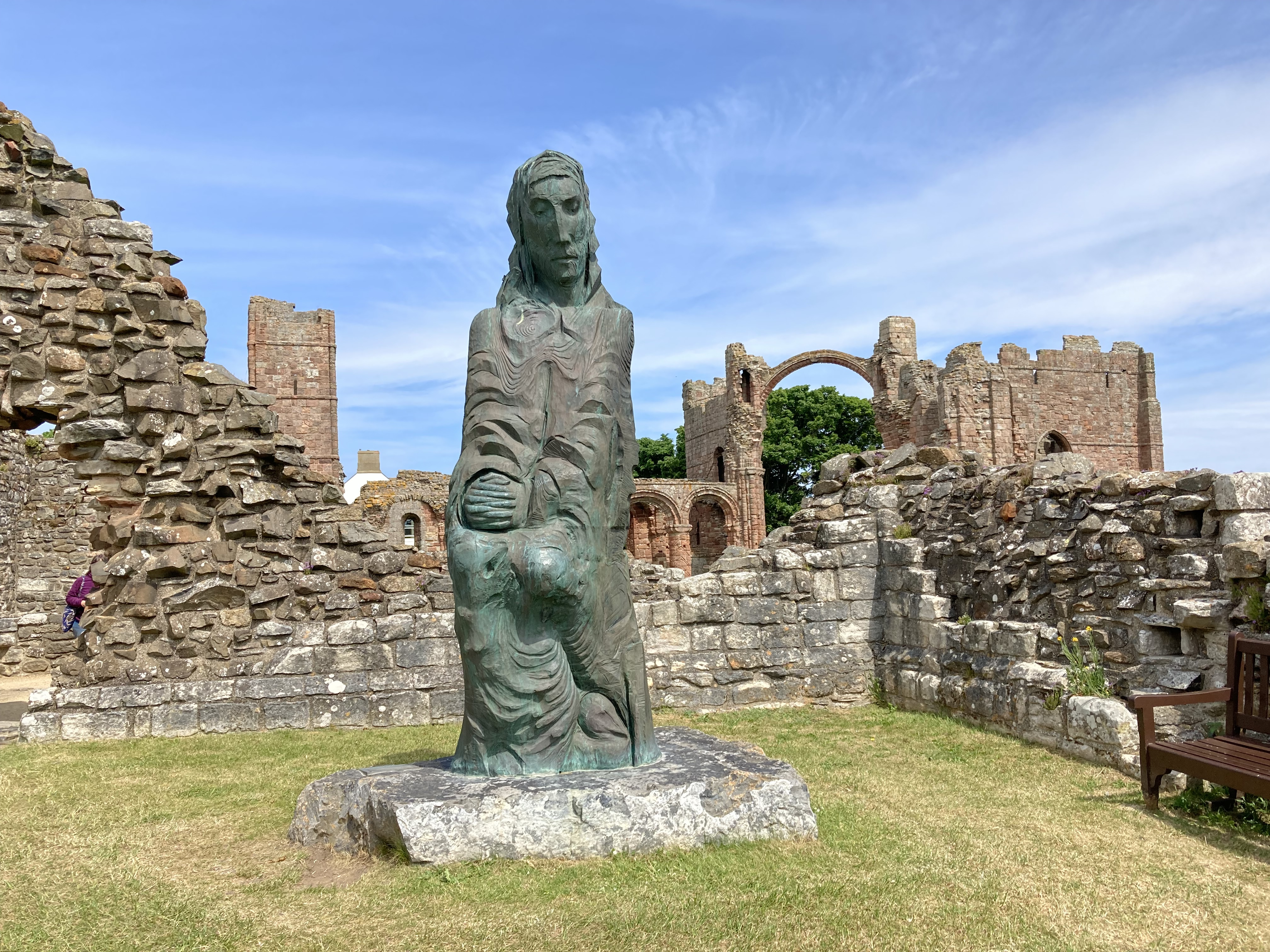
Joshua Abbott describes the church as having ‘a plain exterior but a wealth of artworks inside.’ I wish the church had been open so I could have seen them! No more information on the church website, so I Googled ‘St Aiden’s East Acton and was directed to Artway.eu, a website about church artwork. This church has been described as a small echo of Coventry Cathedral – ‘a plain jewel casket with many jewels.’ The building was designed and built in 1961 by architect John Newton in brick and concrete with an open bell tower (and helpful clock!) The ‘jewels in the casket’ include a decorated ceramic wall in the baptistry and stained-glass windows in the dalle de verre style: small, thick pieces of coloured glass set in concrete. The church website does, however, mention St Aiden, the first Bishop of Lindisfarne, an Irish monk and missionary who came to teach Christianity to the wild, fierce Anglo-Saxons of Northumbria. I have included my own photos of two modern statues of St Aiden at the beautiful ruined Lindisfarne Abbey on Holy Island.
Sources: Joshua Abbott; Artway.eu; church website
St Mary’s, South Ruislip

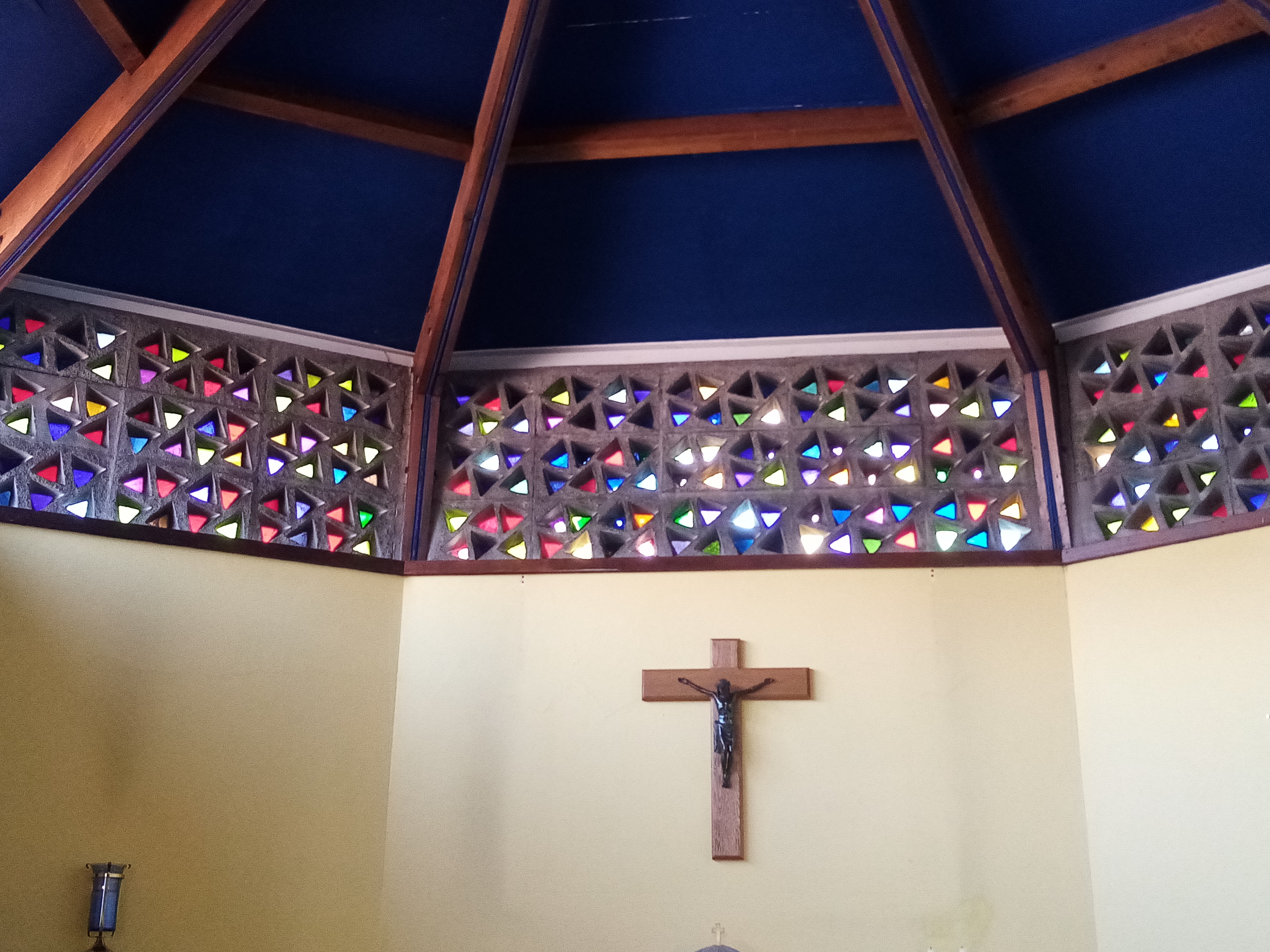
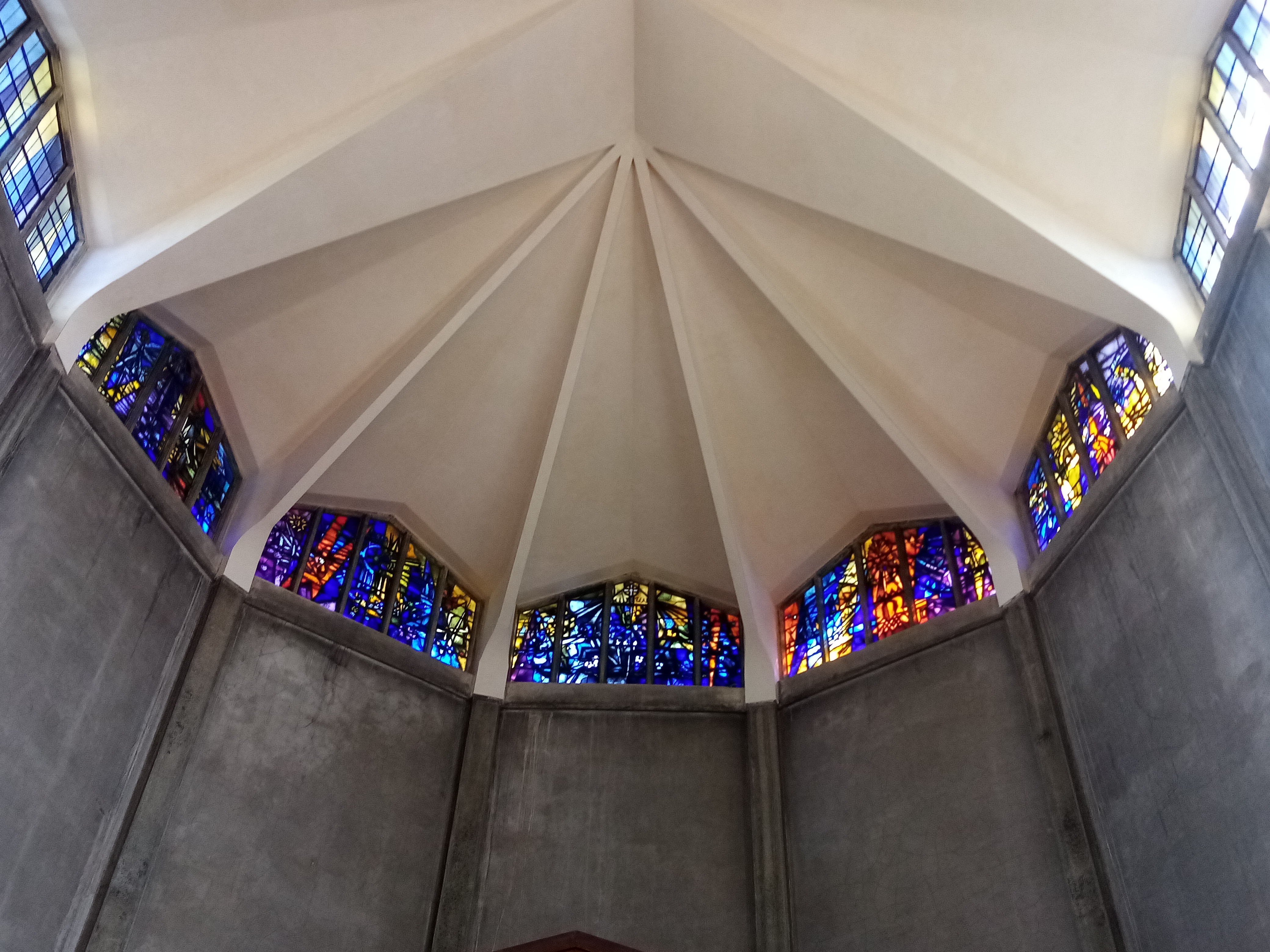
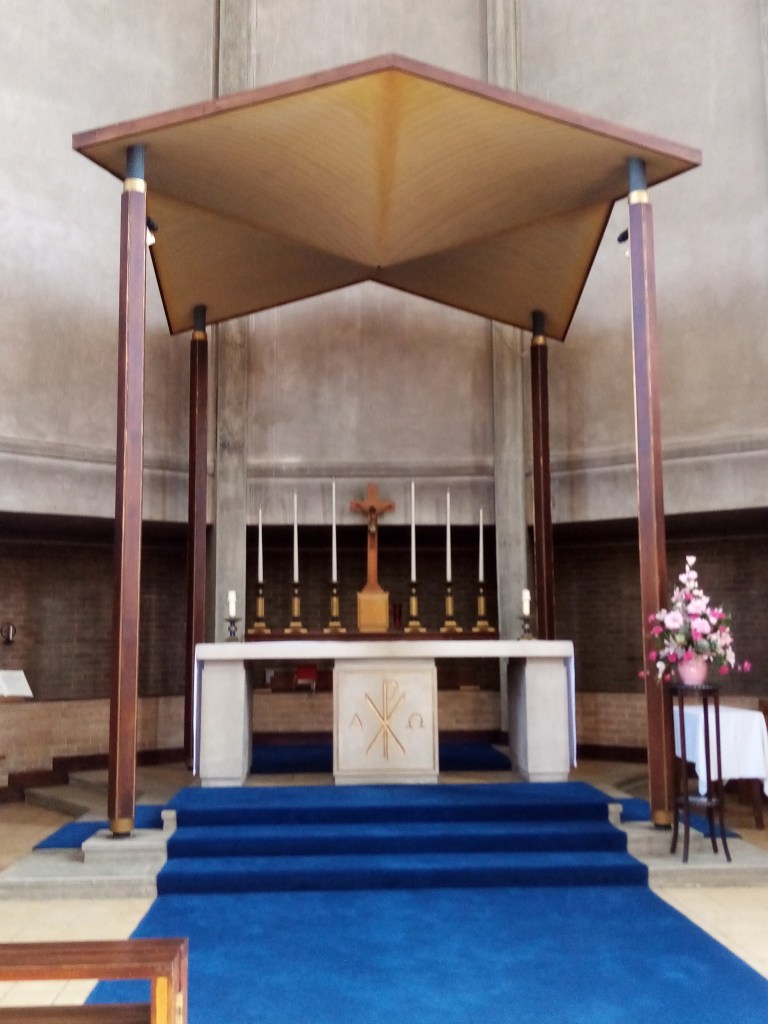
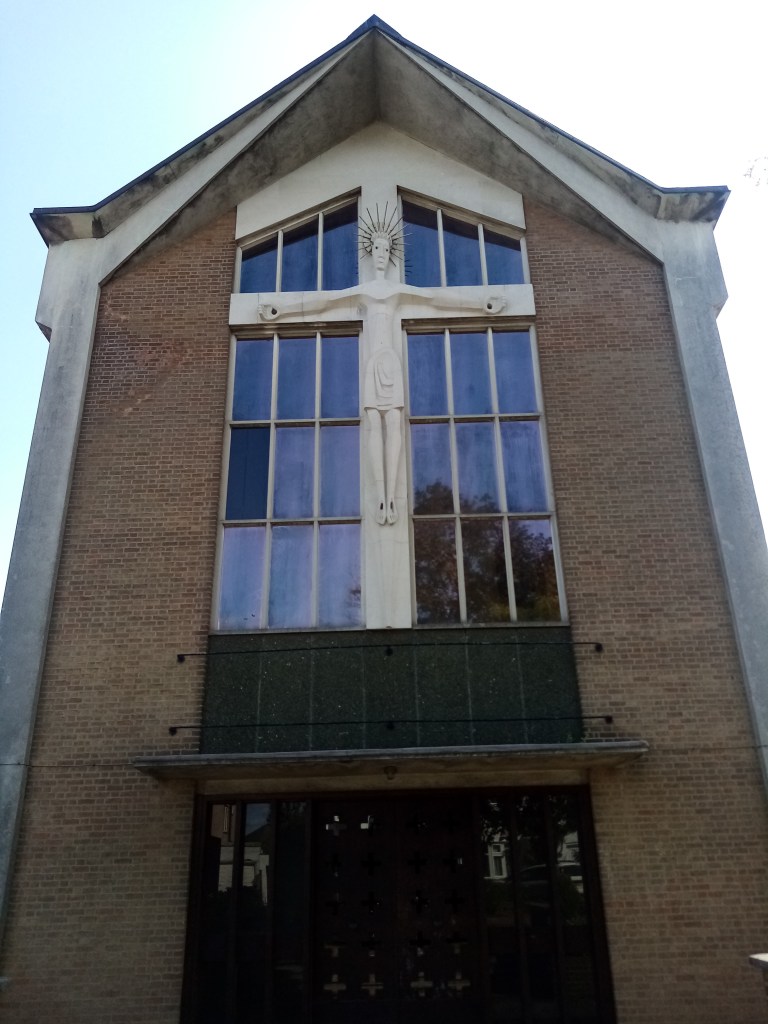
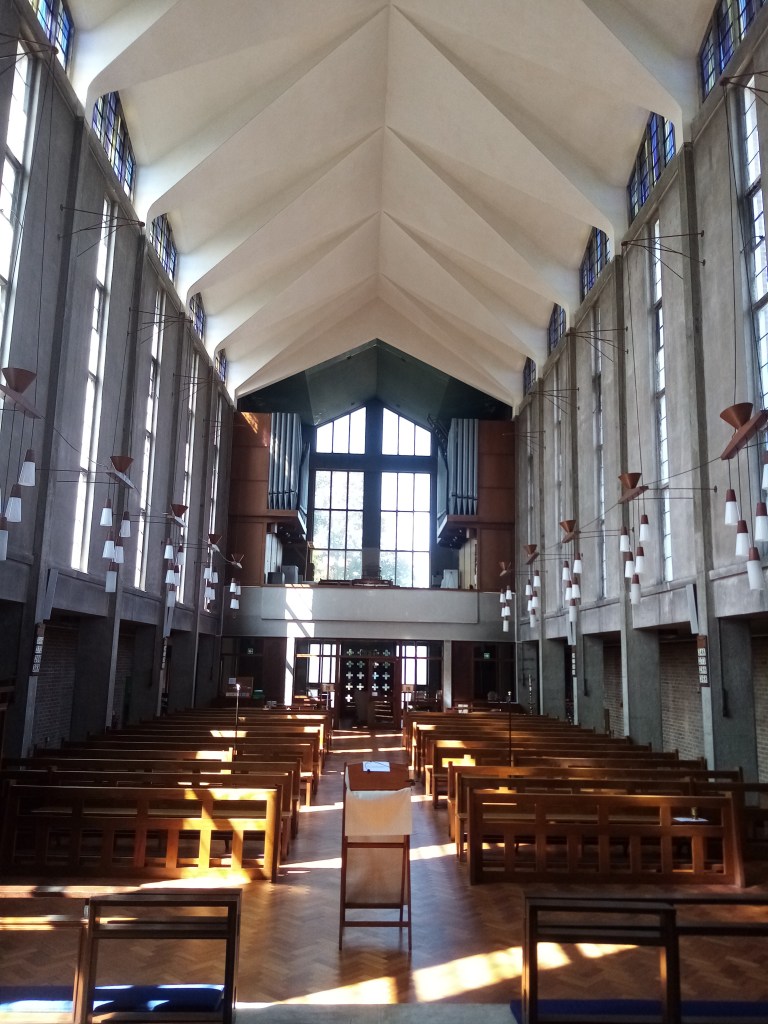
Just round the corner from St Gregory’s is The Assumption of the Blessed Virgin Mary. Known locally as St Mary’s, the church was built in 1959 and designed in the ‘Festival’ style, influenced by Scandinavian Modernism. This is evident in the ‘folded concrete slab roof covered in copper.’ The large striking crucifix statue was designed by Brian Asquith. Inside the altar has a canopy over it representing a veil over the Holy Place. There are two types of stained-glass windows: those over the altar at the East end are of an abstract design and the ones in the side chapel are triangles of coloured glass set in concrete, dalle de verre design as mentioned above. The long windows on each side of the church are plain glass, allowing sunlight to come flooding in. I also liked the modern design of the font.
I particularly love the use of modern stained glass windows in all the churches I visited this month. They have all been designed and constructed with such care and creativity, wonderful expressions of love and worship to God.
Source: Joshua Abbott
 claresimons1
Dear Clare.
My name is Paulo Bagini and I am the parish priest of St. Gregory the Great, South Ruislip. I just read your post on our Church and I was very happy and touched by the lovely words you wrote about our Church, especially when you said it was one of your favourite churches. I realised Eucharistic Adoration was on when you came which may have made it difficult to take pictures and if you would like to return we can arrange for you to come when the church is empty. Also we were using a temporary Tabernacle when you came to visit, while the Church tabernacle was being restored and is now back in church. Our church tabernacle is quite simple but it is meant to be a miniature of the church which makes it quite unique. Again, thank you very much for your lovely words and please come to visit us again.
LikeLike