The Eastern or Orthodox Christian denomination is the third largest after Catholic and Protestant and has approximately 300 million adherents. It is the primary denomination of many East European countries including Ukraine, Romania, Greece, Serbia and Cyprus as well as Russia and some regions of North Africa. The history of Orthodoxy is complicated; the most important event was the Great Schism of 1056 which led to separation between the church of the West, Catholicism, and the Eastern Byzantine Church, now known as Orthodox. However, my interest was aesthetic rather than spiritual: the lavish splendour of the church interiors – stepping into such churches is like stepping out of London and into Eastern Europe!
Source: Wikipedia
Greek Orthodox Cathedral, Bayswater
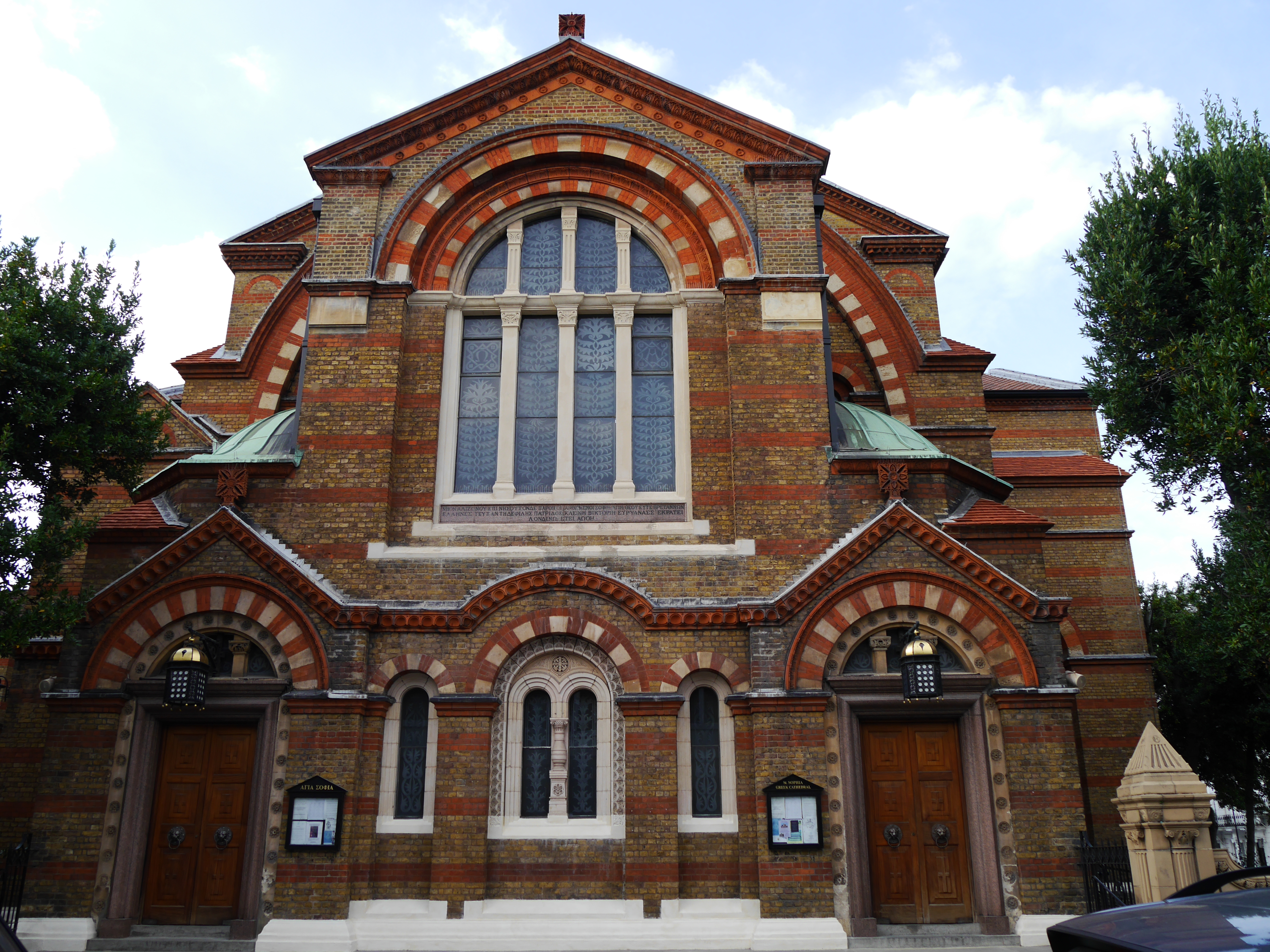
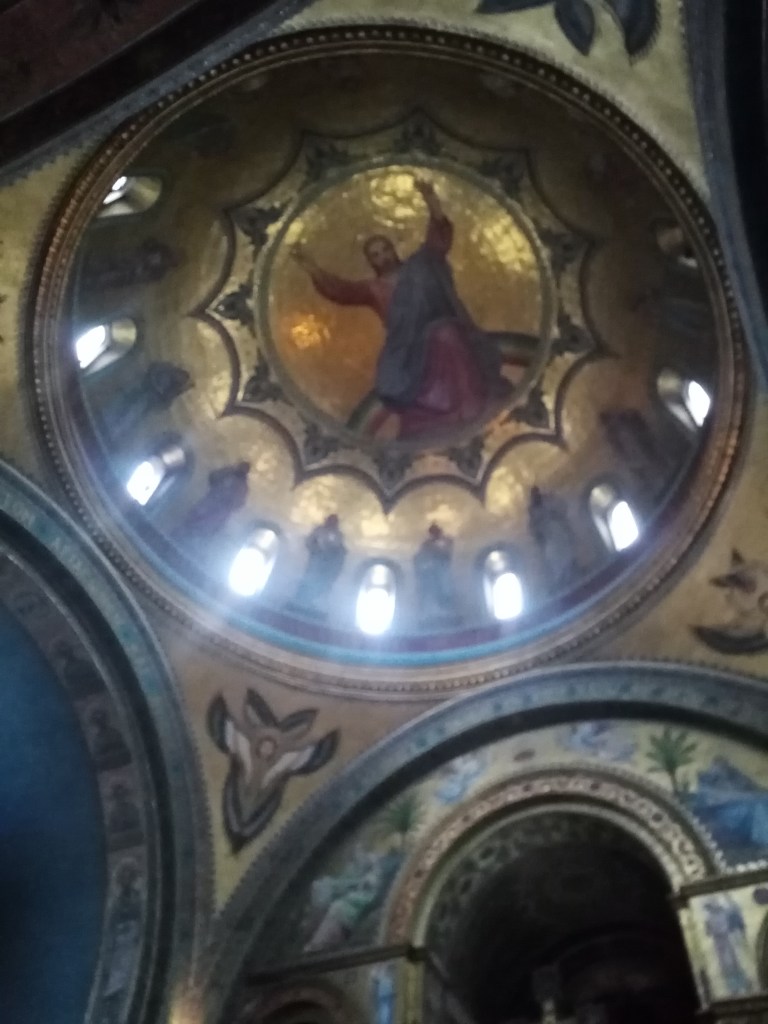
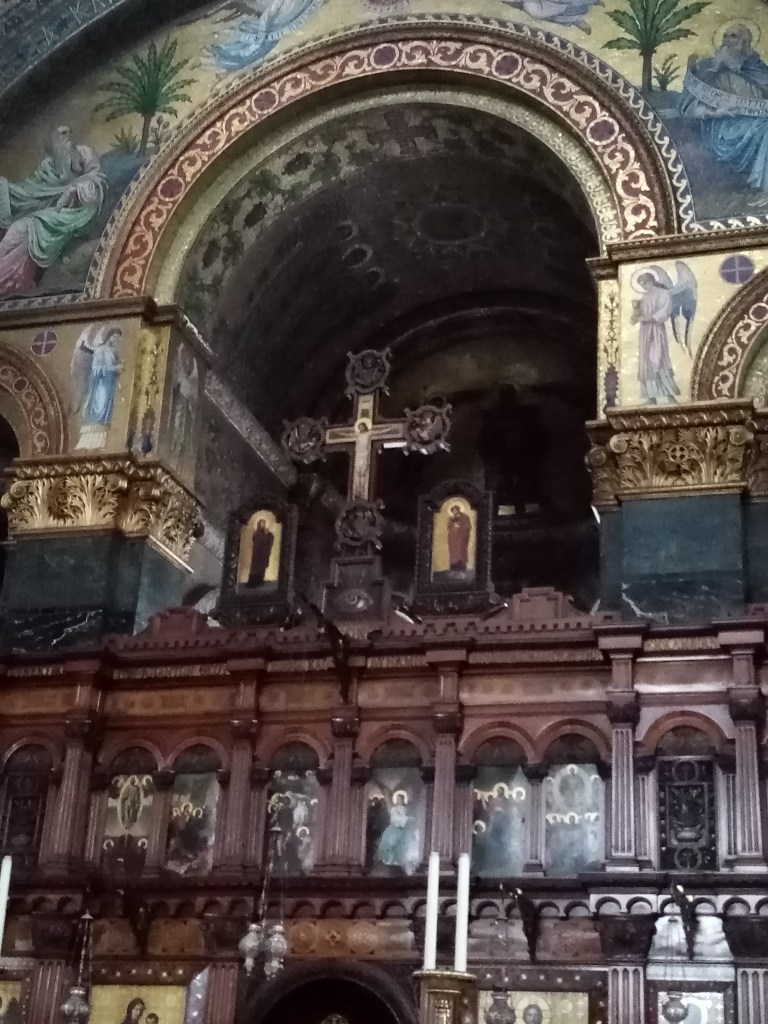
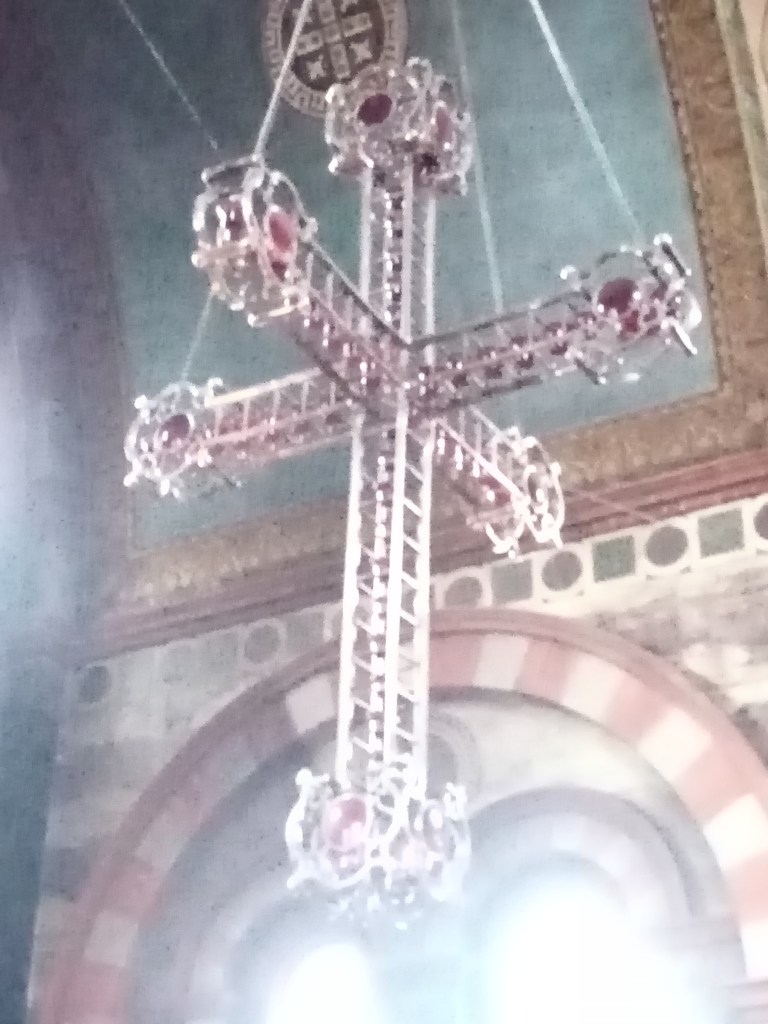
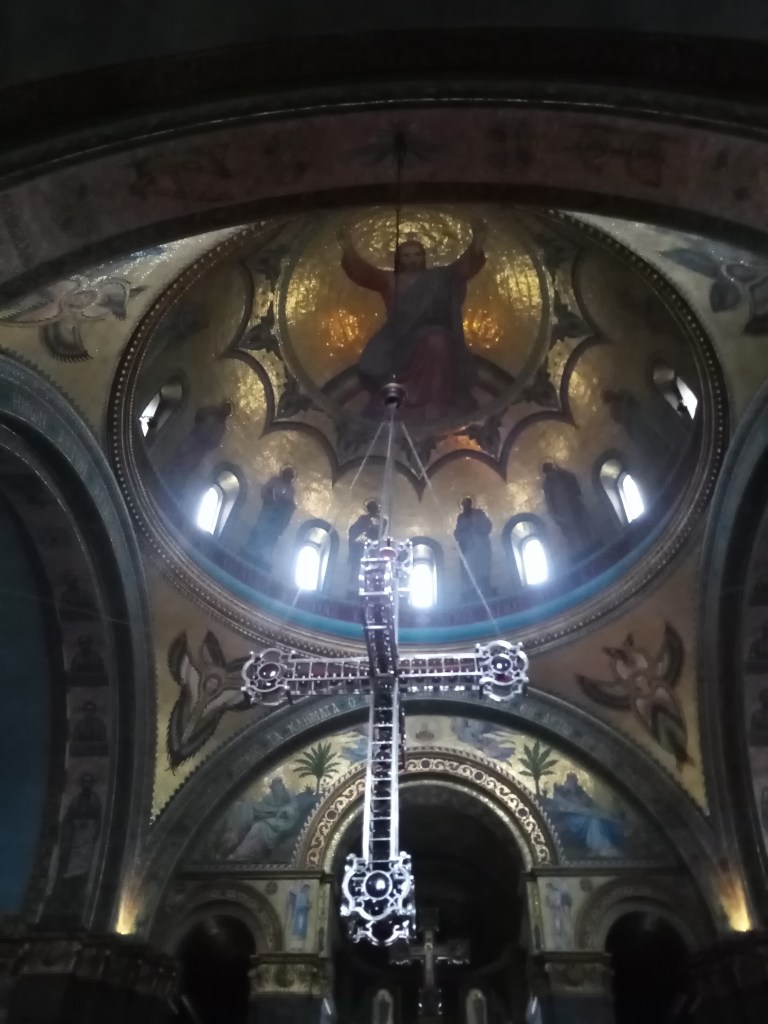
Also known as Saint Sophia Cathedral, this church in Bayswater has an interesting but quite ordinary exterior which hides its breathtakingly-beautiful interior. When I visited, an event (not an actual service) was taking place so all my shots are of the ceiling and above people’s heads, so my photos don’t really do it justice! The cathedral was consecrated as the Church of the Holy Wisdom in February 1882 to serve the prosperous Greek community which had settled around Bayswater and Notting Hill. The architectural style is Byzantine Revival by architect John Oldrid Scott, who was also responsible for St Stephen’s Greek Orthodox Chapel in West Norwood Cemetery, another one for me to visit! The interior is decorated with gold and polychromatic marble and the overall effect is spectacular.
Source: Wikipedia
Russian Orthodox Cathedral, Knightsbridge

Also known as the Dormition of the Mother of God and All Saints, the building is the former Anglican church of a wealthy parish of the mid 1800s. The church was let to the Russian Orthodox Church and consecrated as an Orthodox church in 1956, again to serve the Russian community in the area. Finally in 1978 the building was purchased by the Russian Orthodox Diocese of Sourozh which covers Great Britain and Ireland. The Western façade was remodelled in 1891 to closely resemble that of the Basilica of San Zeno, Verona; the interior of the church is largely unchanged unchanged from the original Anglican church. When I visited, a baptism service was taking place, both the parents and the priest conducting the service seemed quite happy for people to be wandering around the church!
Source: Wikipedia
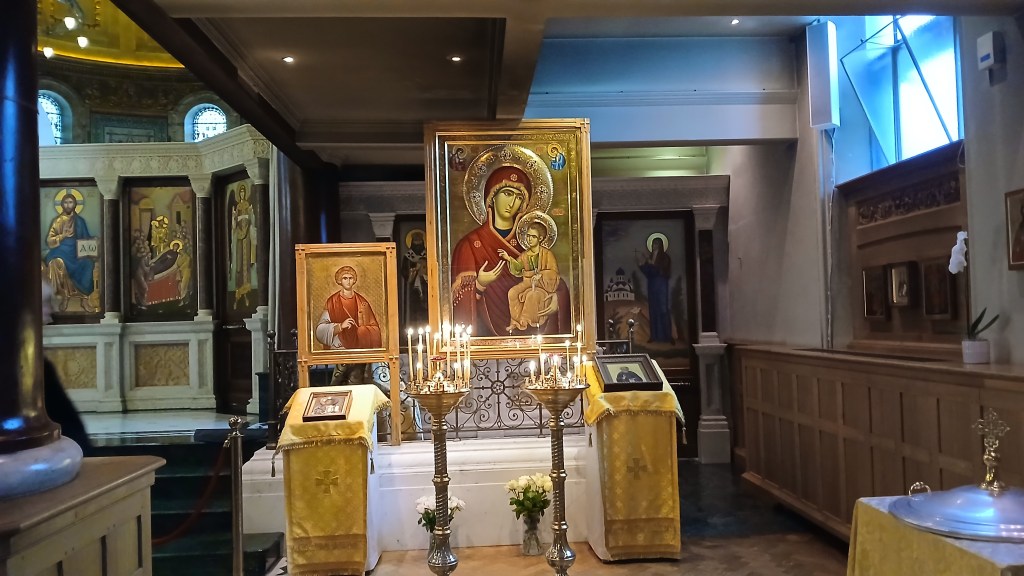
Serbian Orthodox Cathedral
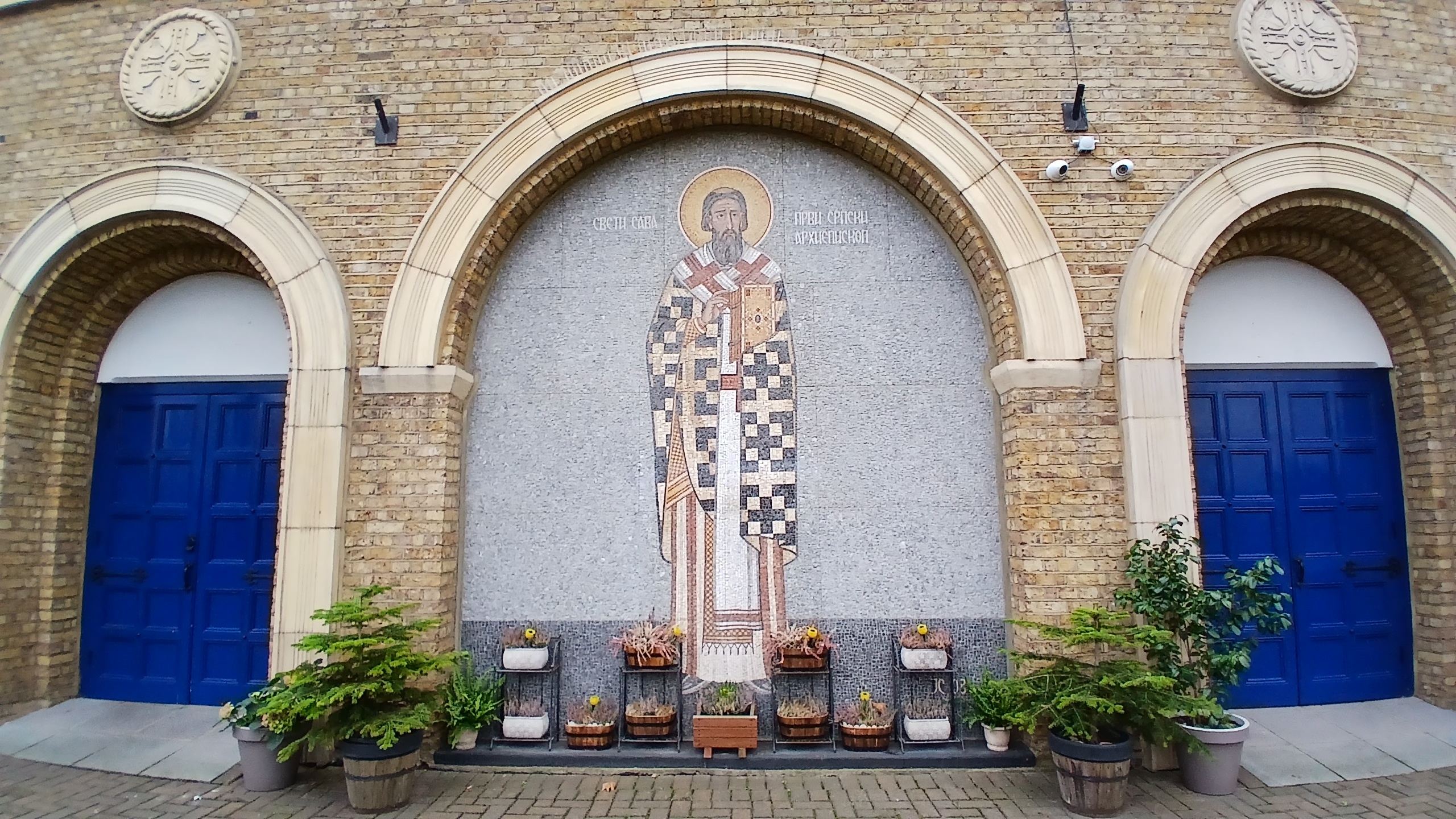
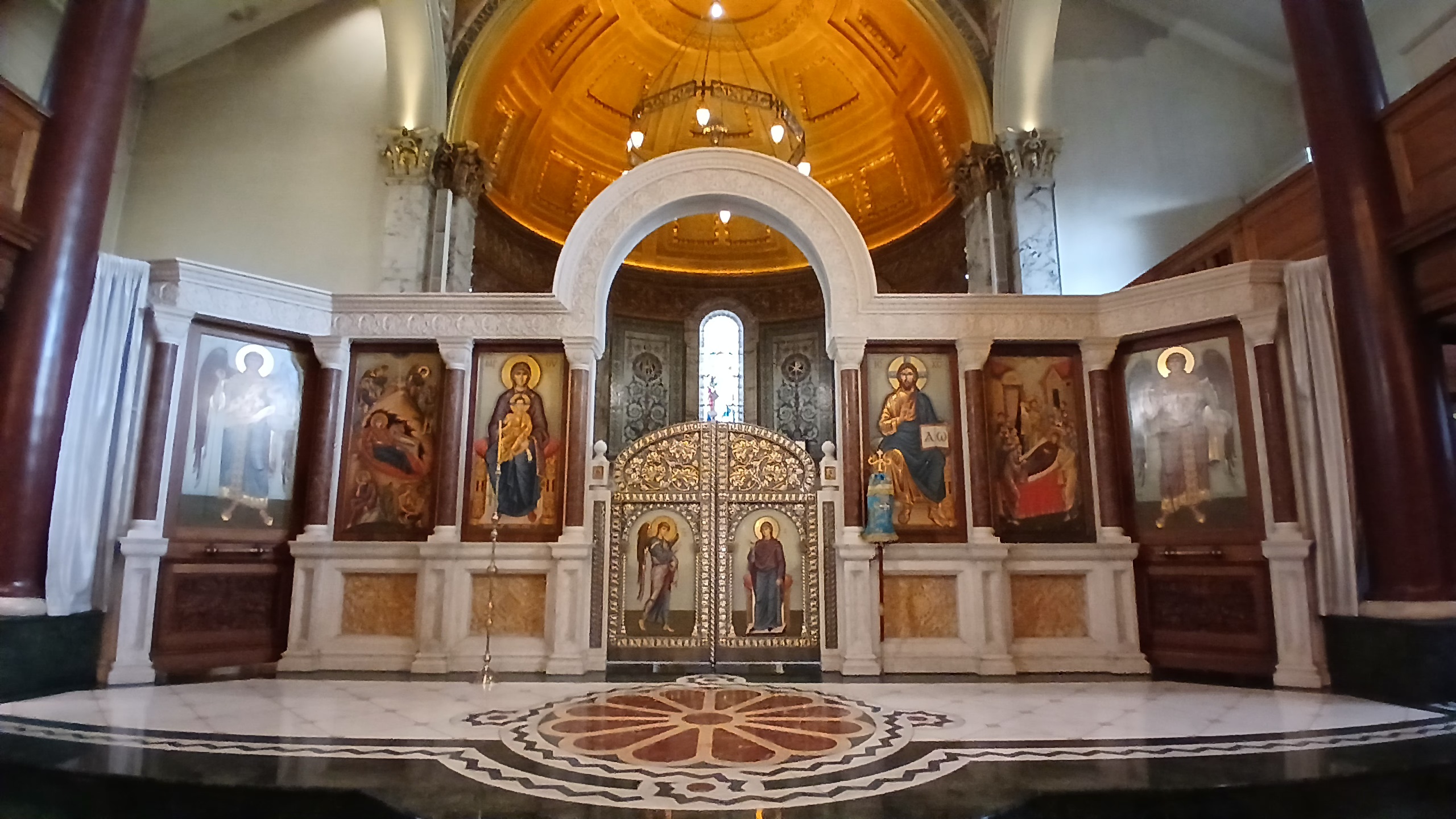
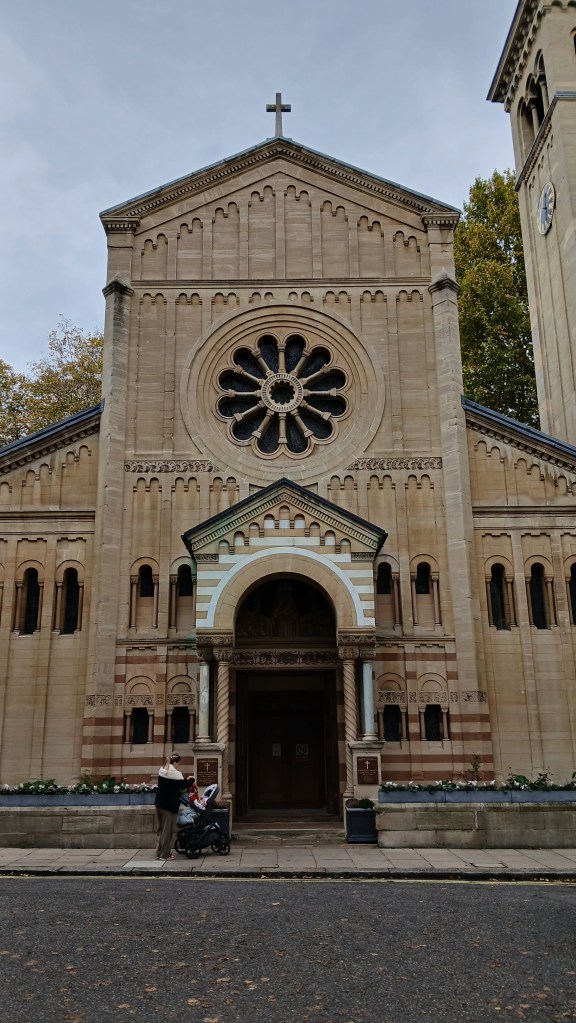
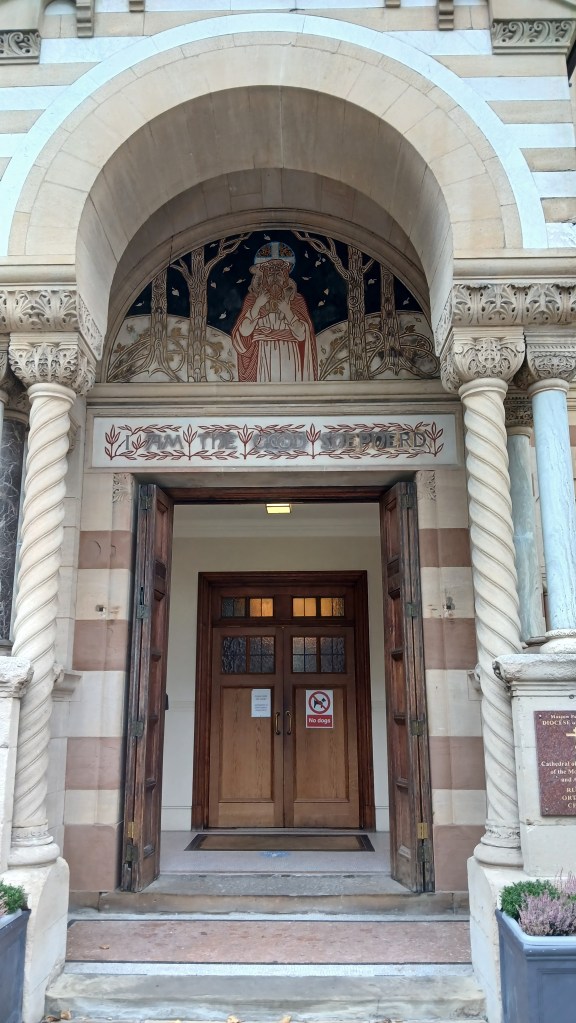
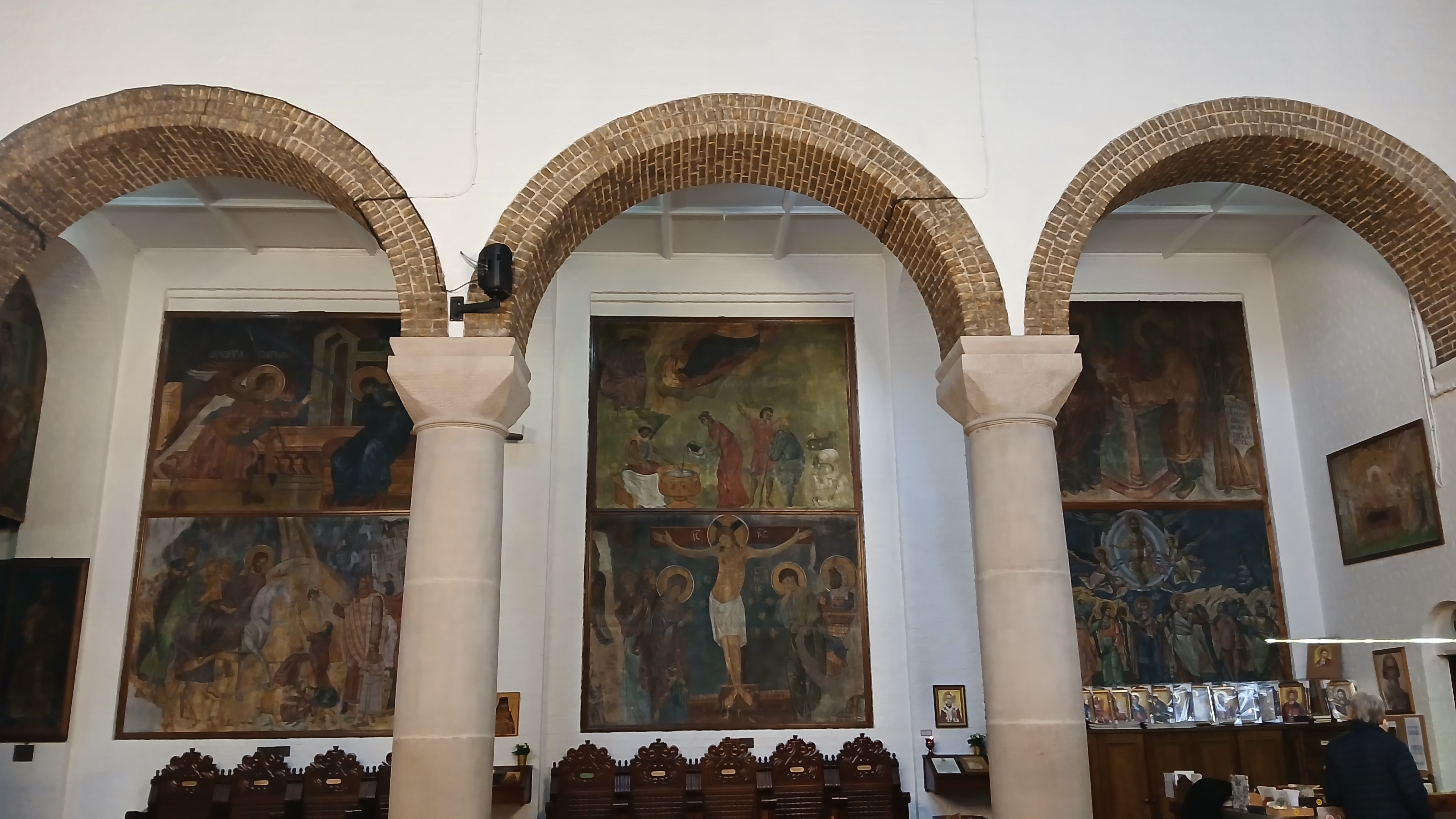
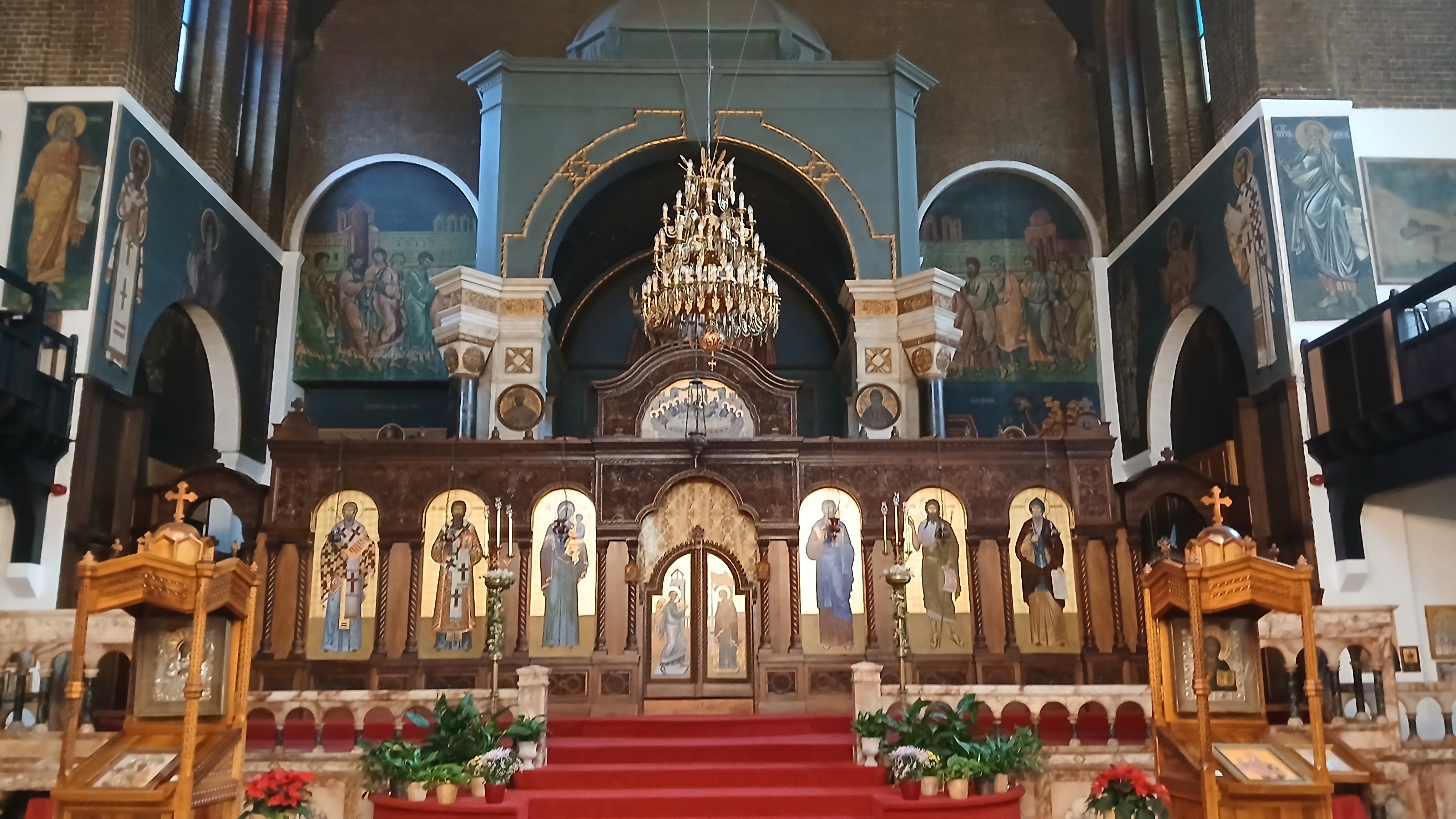
The Cathedral of St Sava, Notting Hill, is the seat of the Serbian Orthodox diocese in Great Britain and Ireland. Another former Anglican church built in 1903, after the Second World War, the church was purchased and adapted for the divine services of the Serbian Orthodox Church. Funds to buy the building were raised with the support of Queen Maria Karadjordjevic and British Lady Paget who was a great friend to the Serbian people in London, and by generous donations from the congregation. My favourite thing about the church is the large murals showing stories from the Bible, perhaps an alternative to stained glass windows. Adjacent to the church is the Community Centre which serves as the Headquarters of the Serbian Church, a Sunday School for children to learn the Serbian language and history, and also accommodates the St Sava Choir and ‘Rastko’ folk dance group.
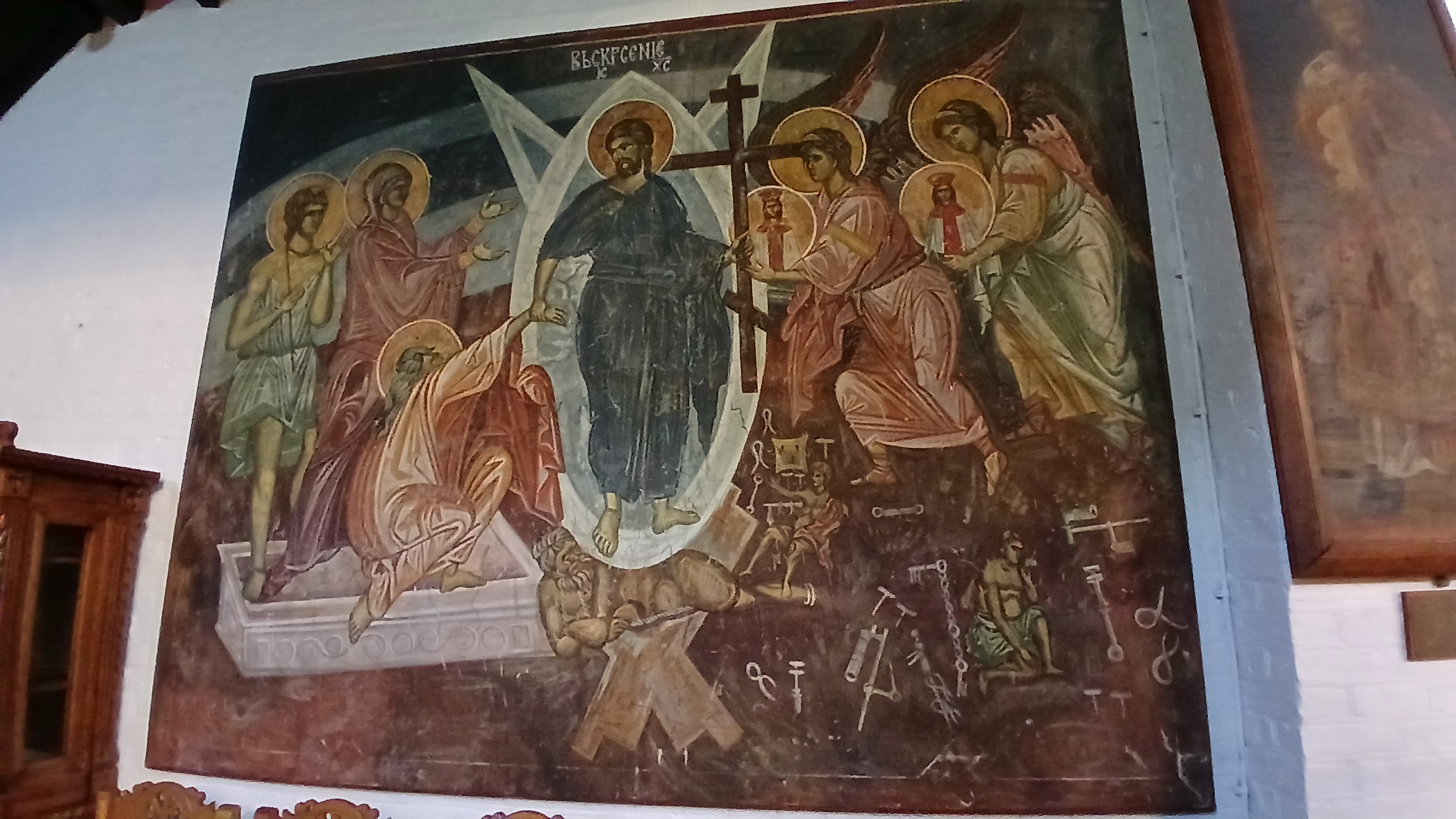
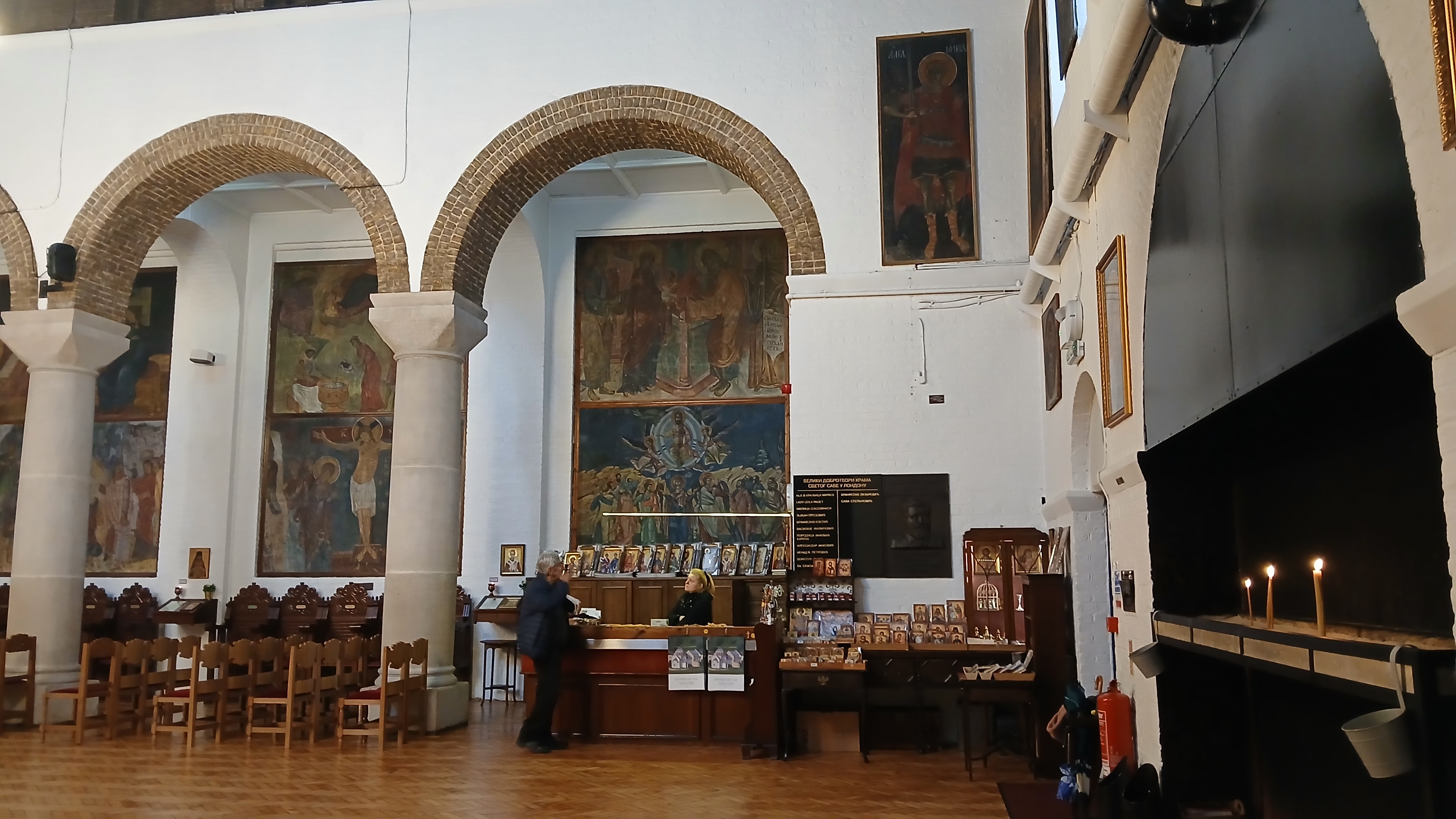
Source: spclondon.org.uk; Wikipedia
St Mark’s Coptic Orthodox Church, Kensington
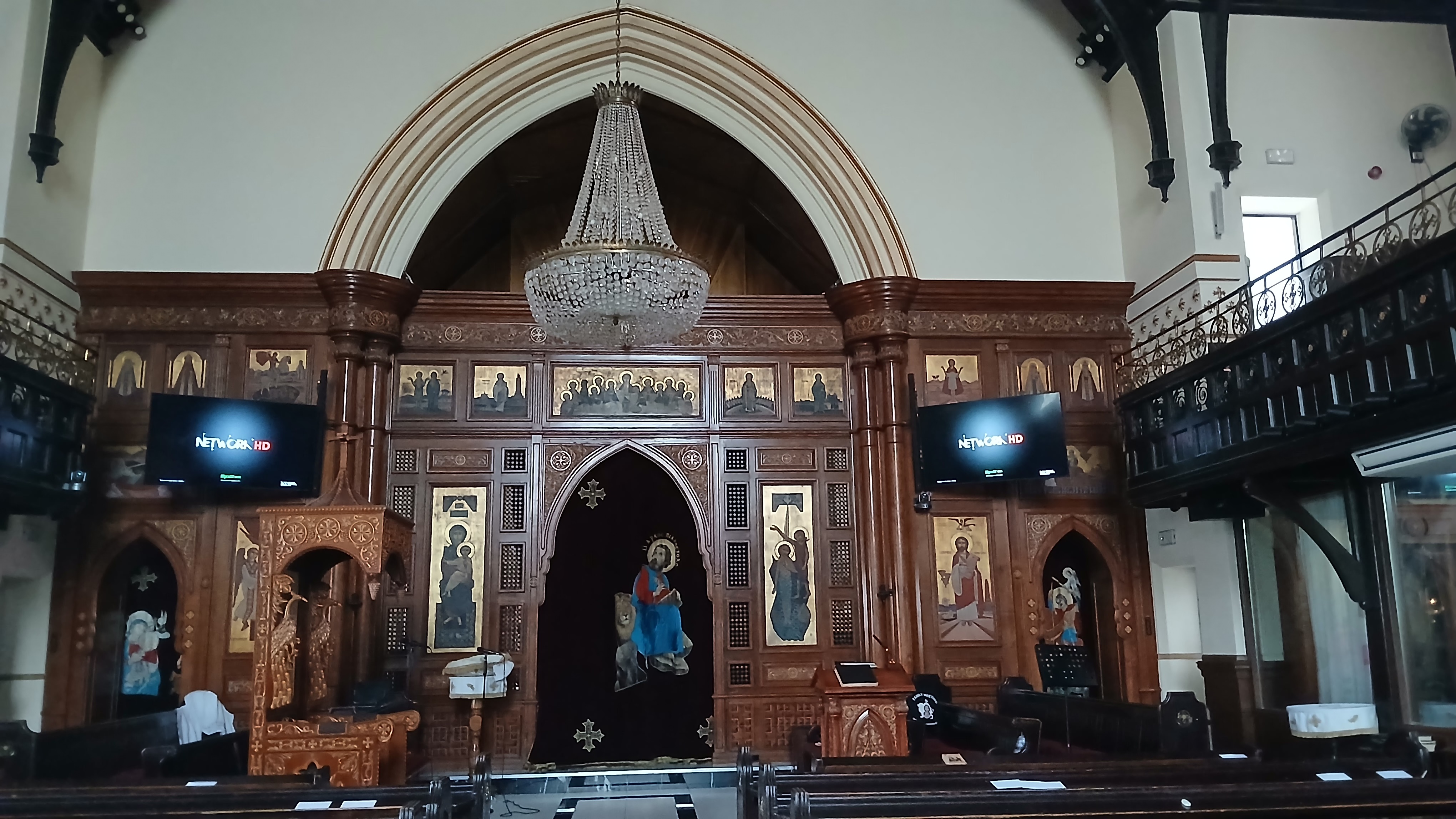
Formerly St John’s Presbyterian Church which opened in 1863, the building was purchased from the Scottish Presbyterians in 1975. It is dedicated to St Mark the Evangelist and was the first Coptic Orthodox church in Europe. Copts are a Christian denomination originating in North Africa, primarily modern Egypt. Mark was a missionary companion of Paul and is credited with establishing the church in Alexandria in the first century AD, later the Coptic Orthodox Church. St Mark is symbolised by a winged lion, presumably to represent Africa; hence the lion in the stained glass window in the church. I was shown round the church by a lovely lady called Nora, who told me that St Mark’s has a thriving Young Peoples’ Ministry that meets in the basement of the church which attracts a diverse group of young people – it’s run by her nephew! The church holds services in English and Arabic to cater for the diverse congregation.
Sources: Wikipedia; stmark.org.uk; allsaintstories.com
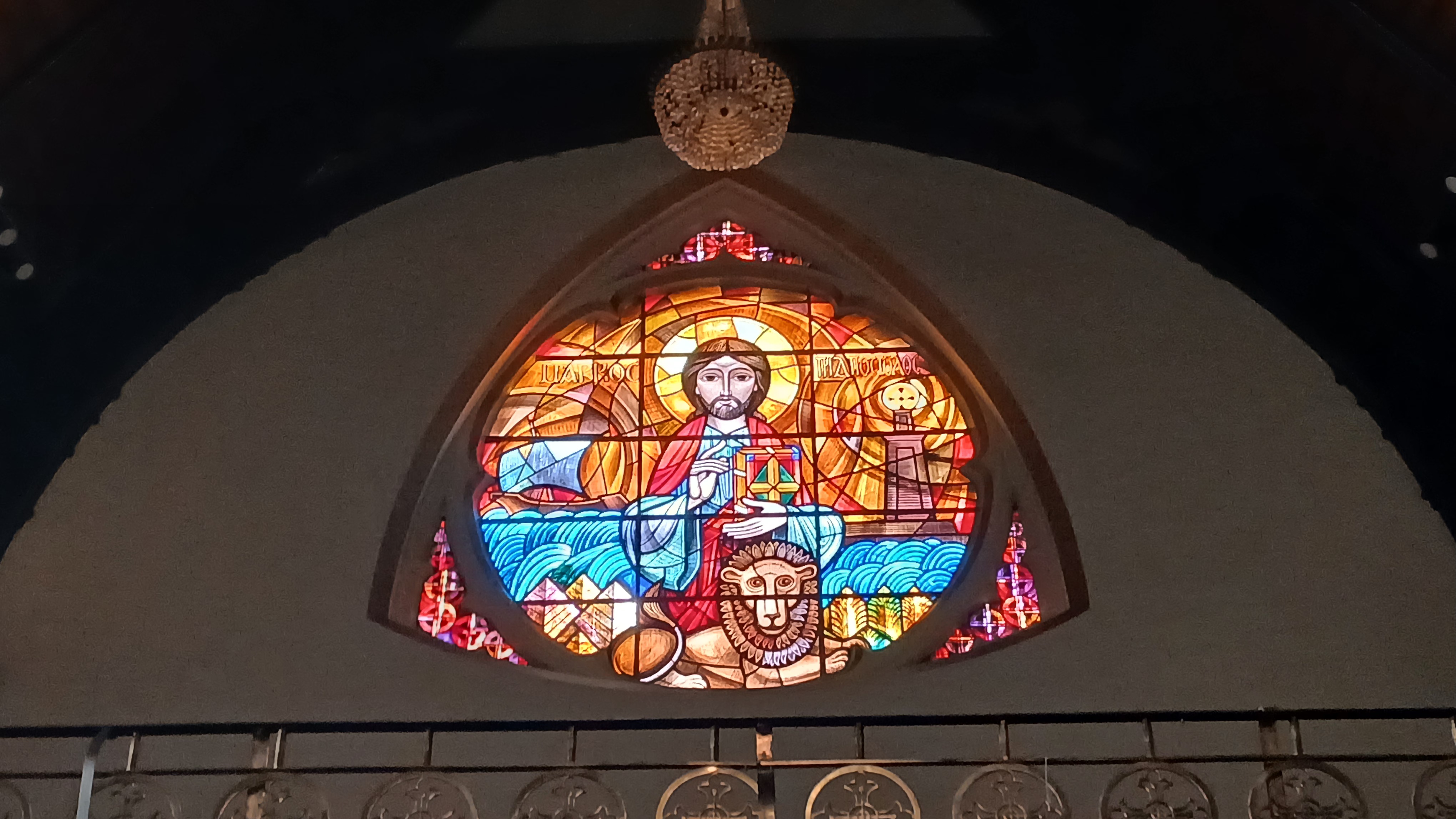
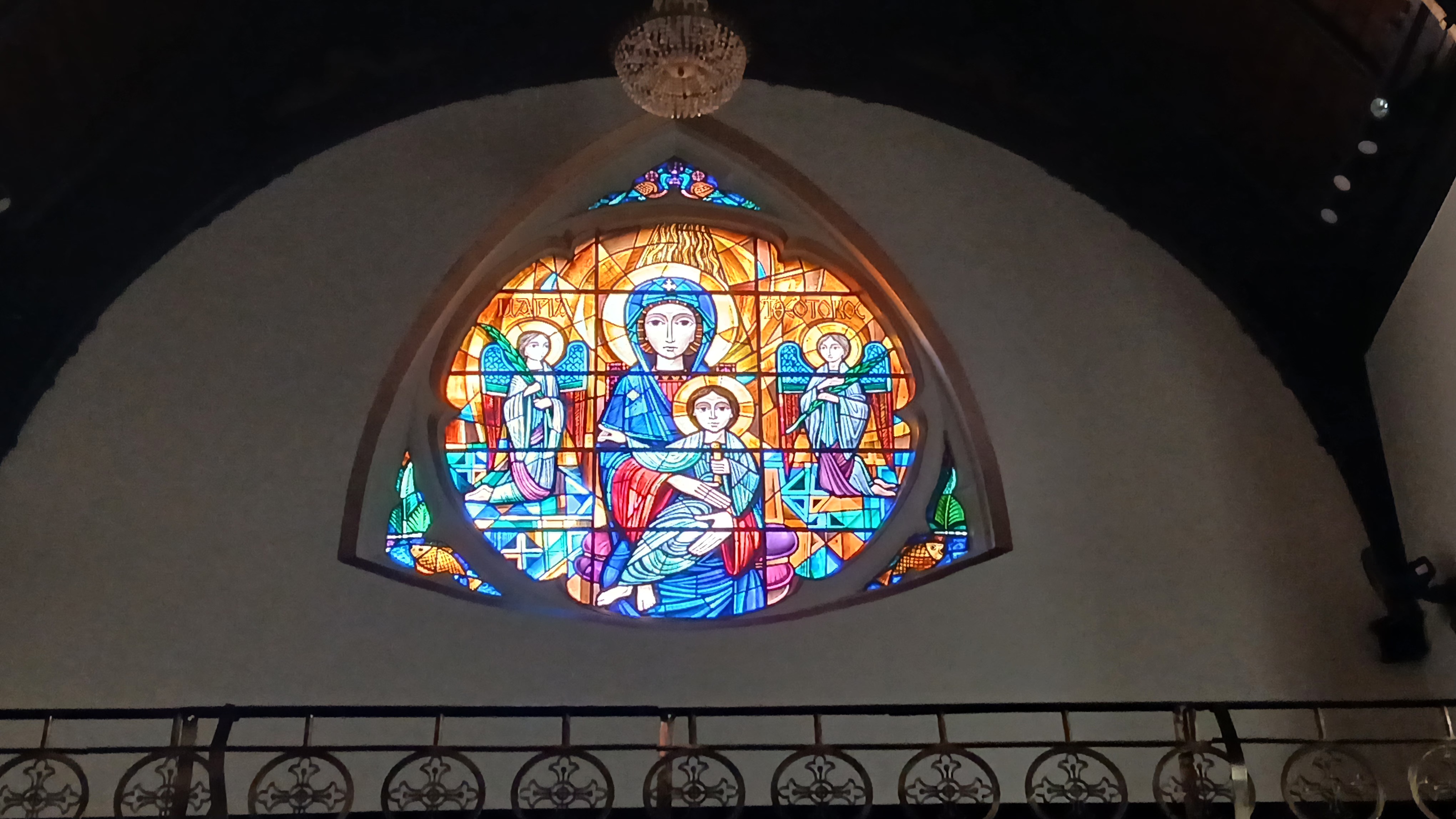
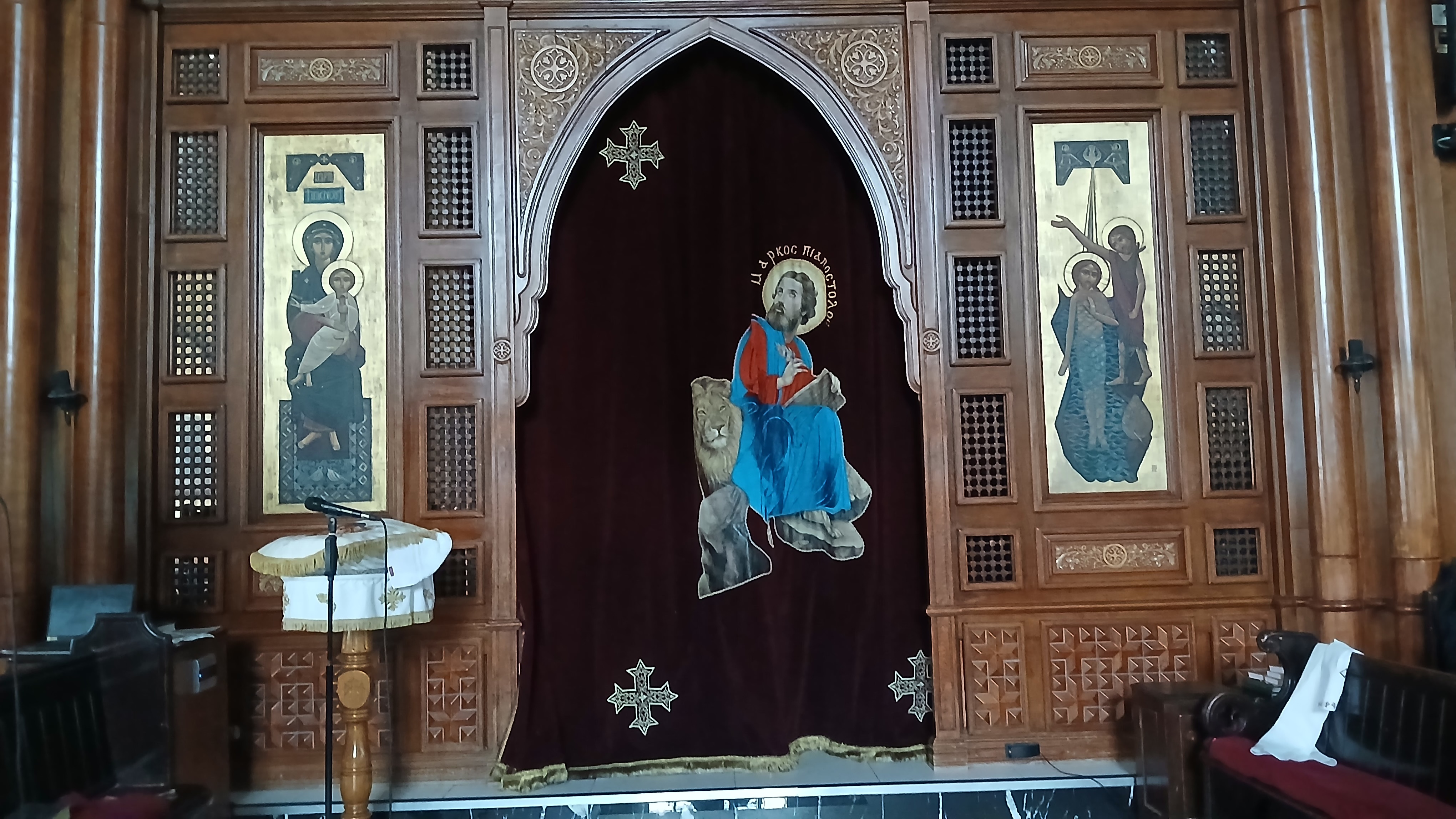
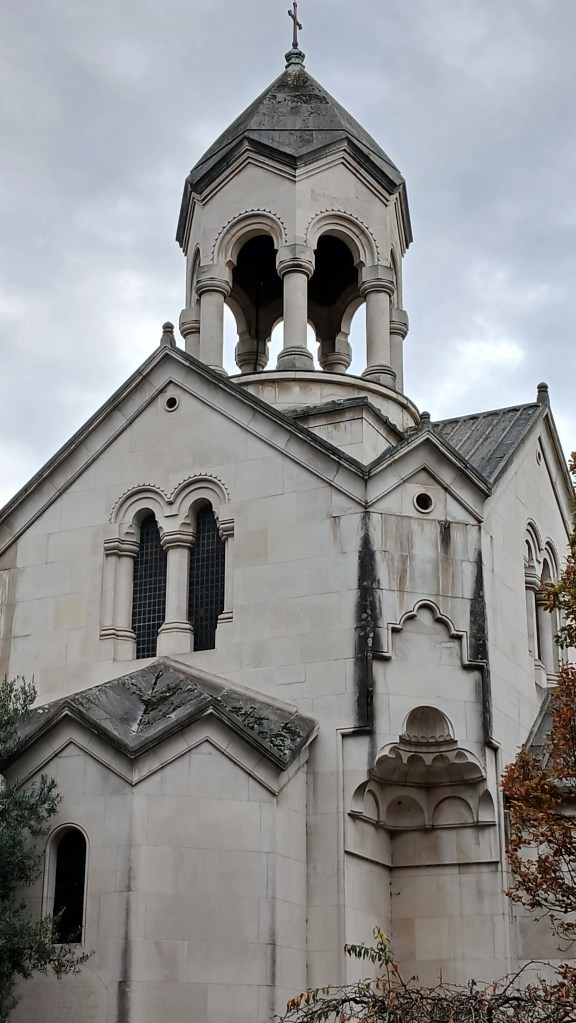
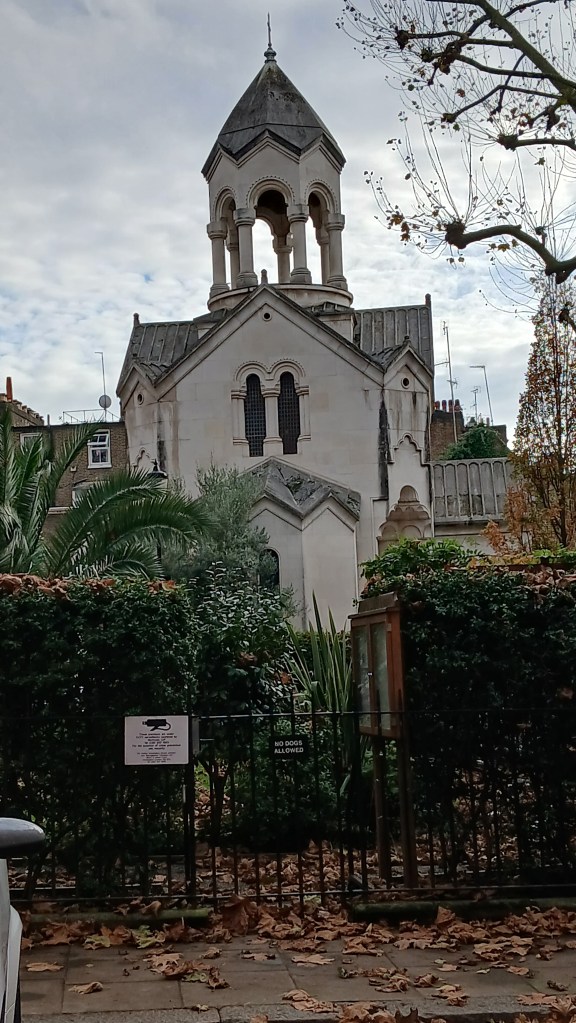
Lastly, I’ve included these two photos of St Sarkis Armenian Church, just off Kensington High Street. I was not able to visit, but I liked its Eastern design surrounded by Edwardian red-brick mansion blocks!
 claresimons1