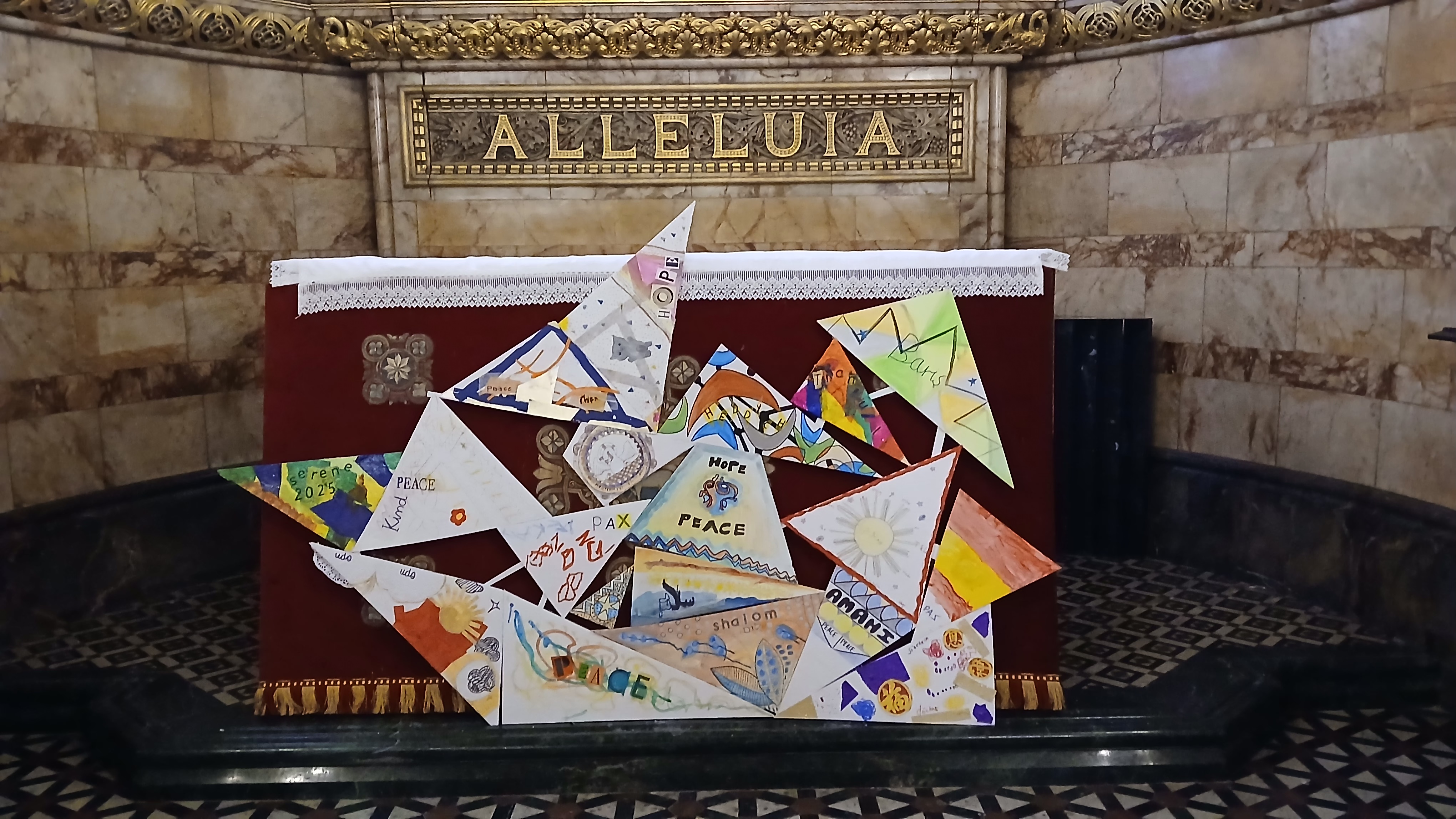
A diverse selection this month: a unique parish church, an innovative church building, a small park (formerly a cemetery) and a gem of a chapel. This is an area north-west of central London bordered by Euston Road to the north and Great Ormond Street, home of the famous children’s hospital to the south. Notable places of interest are the Charles Dickens Museum and the Foundling Museum, founded by 18th century philanthropist Thomas Coram. Several other interesting places to visit in the area, but as always, I’m focusing on the Christian aspects and locations!
Lumen United Reformed Church
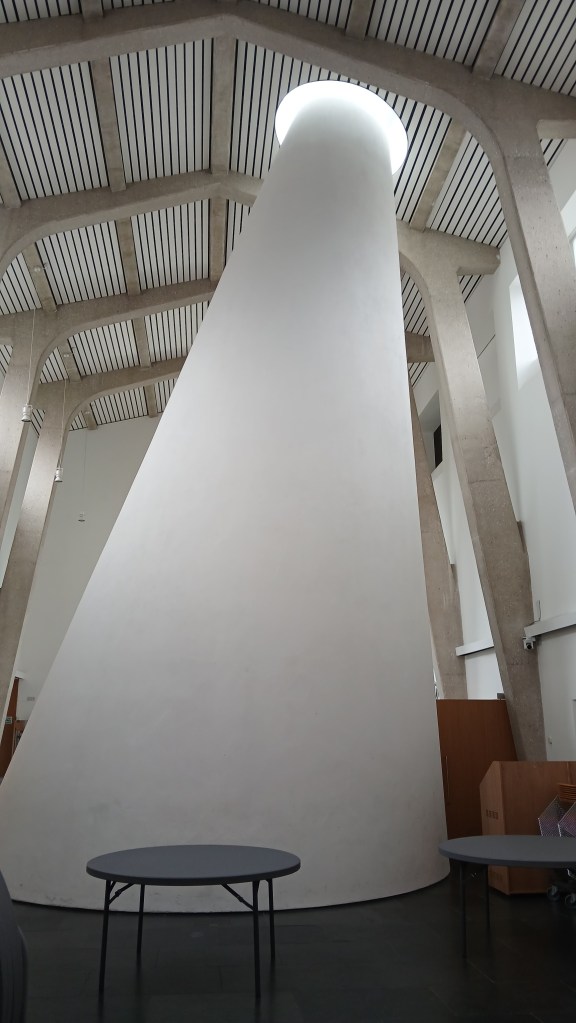
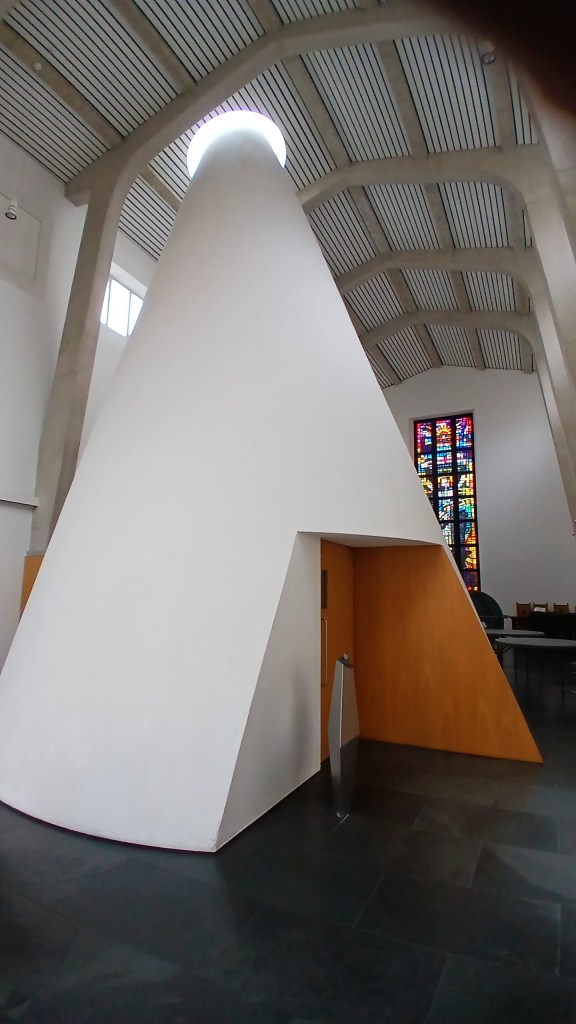
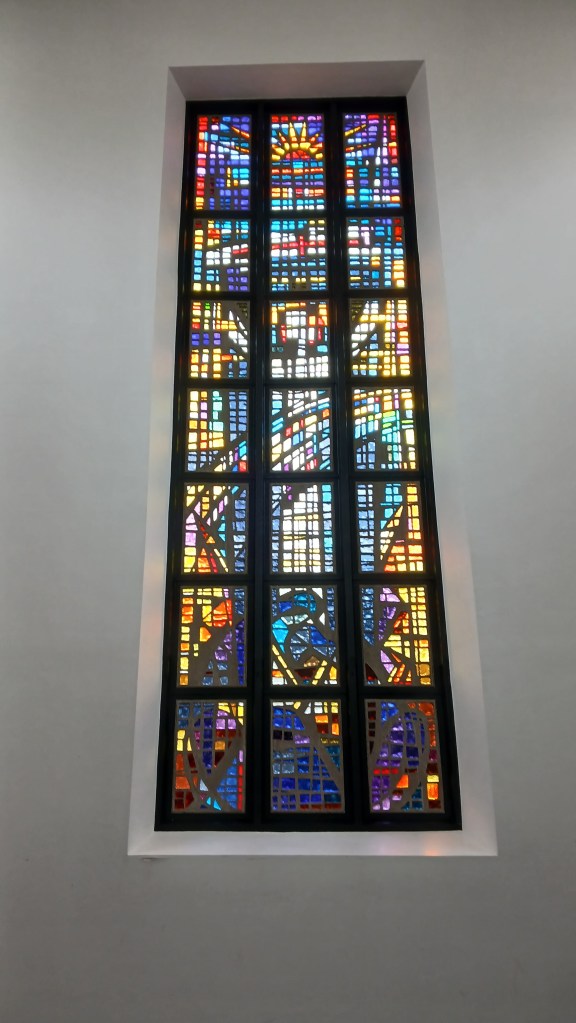
This RIBA award-winning church was designed by architects Patrick Theis and Soraya Khan and includes this unique floor to ceiling ‘quiet space’, for use as a room to worship, pray or meditate, alone or with a few others. In 1808 the Highland Society of London set up funds for Gaelic language worship in London and also an orphanage for the children of Scottish soldiers in London. A ‘Gaelic Chapel’ was erected in Hatton Garden, at the time one of the poorest areas of London. The Society relocated to the present site and a new, larger church was built in 1827, and became known as ‘The National Scotch Church’. This church was destroyed in 1945 by one of the last V2 rockets of the Second World War. The church was rebuilt in 1965, the foundation stone being laid by Lord Reith, founder of the BBC. In 2007-8 the building was remodelled ‘for a new century of service’ to become the church we see today. The beautiful and striking stained-glass window contains more than 1,000 pieces of one-inch thick glass in 21 panels and was created by French Master glassmaker Francois Pierre Fourmaintraux (1896 – 1974). There are some other modern windows in the church made with traditional stained-glass window techniques. In 1972 the church became part of the United Reformed Church.
Source: Leaflets in the Church
St Pancras New Church
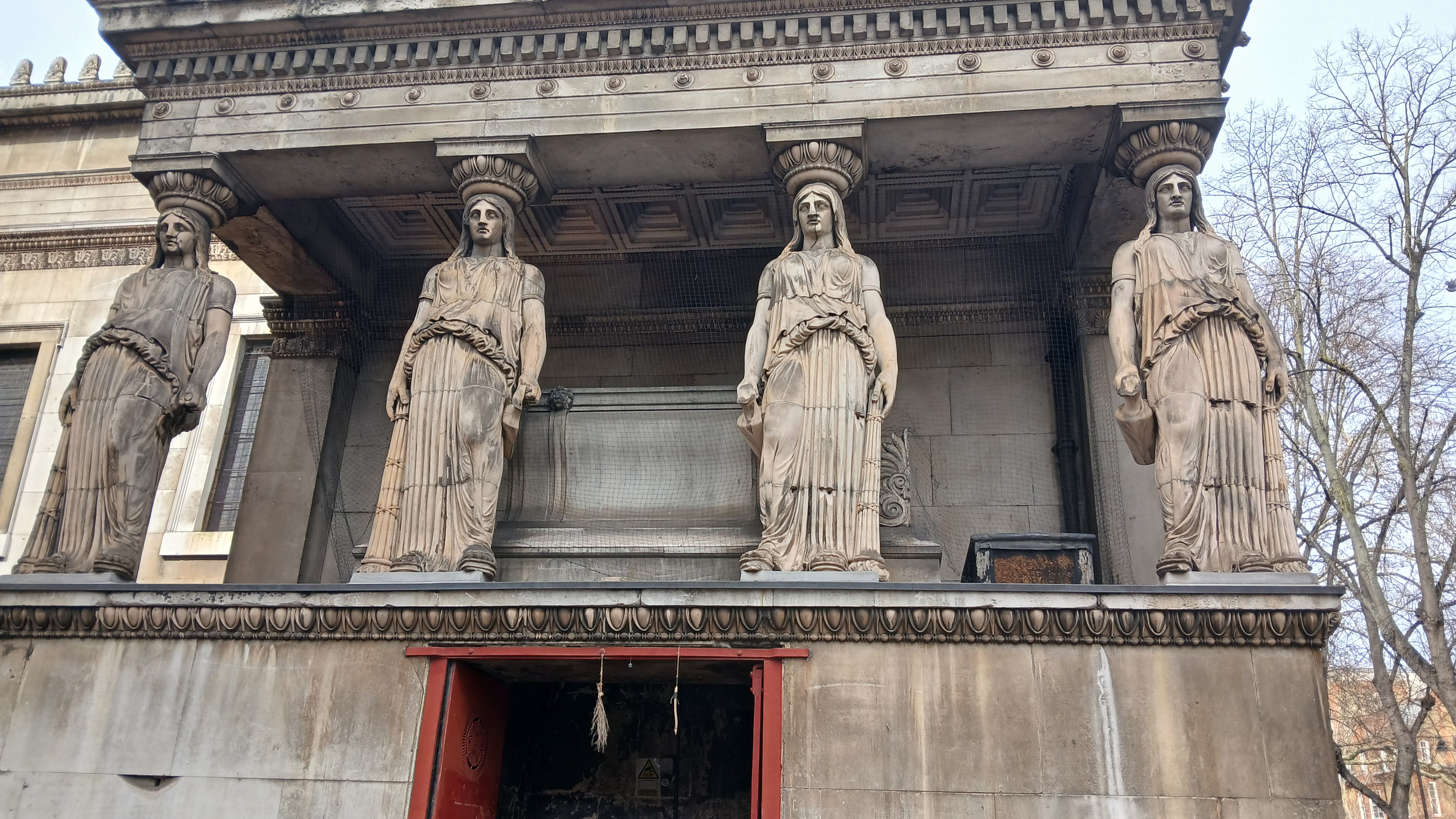
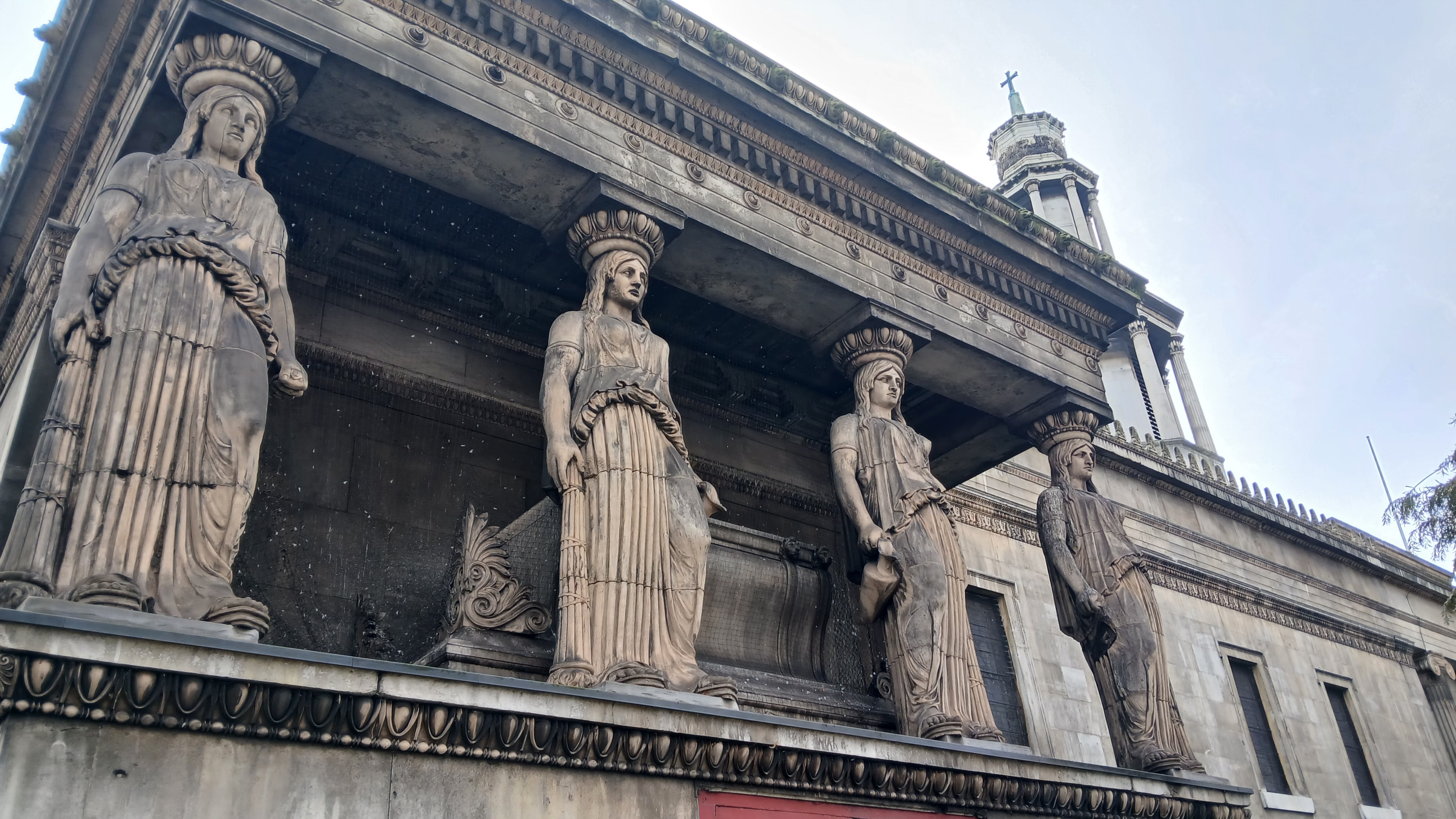
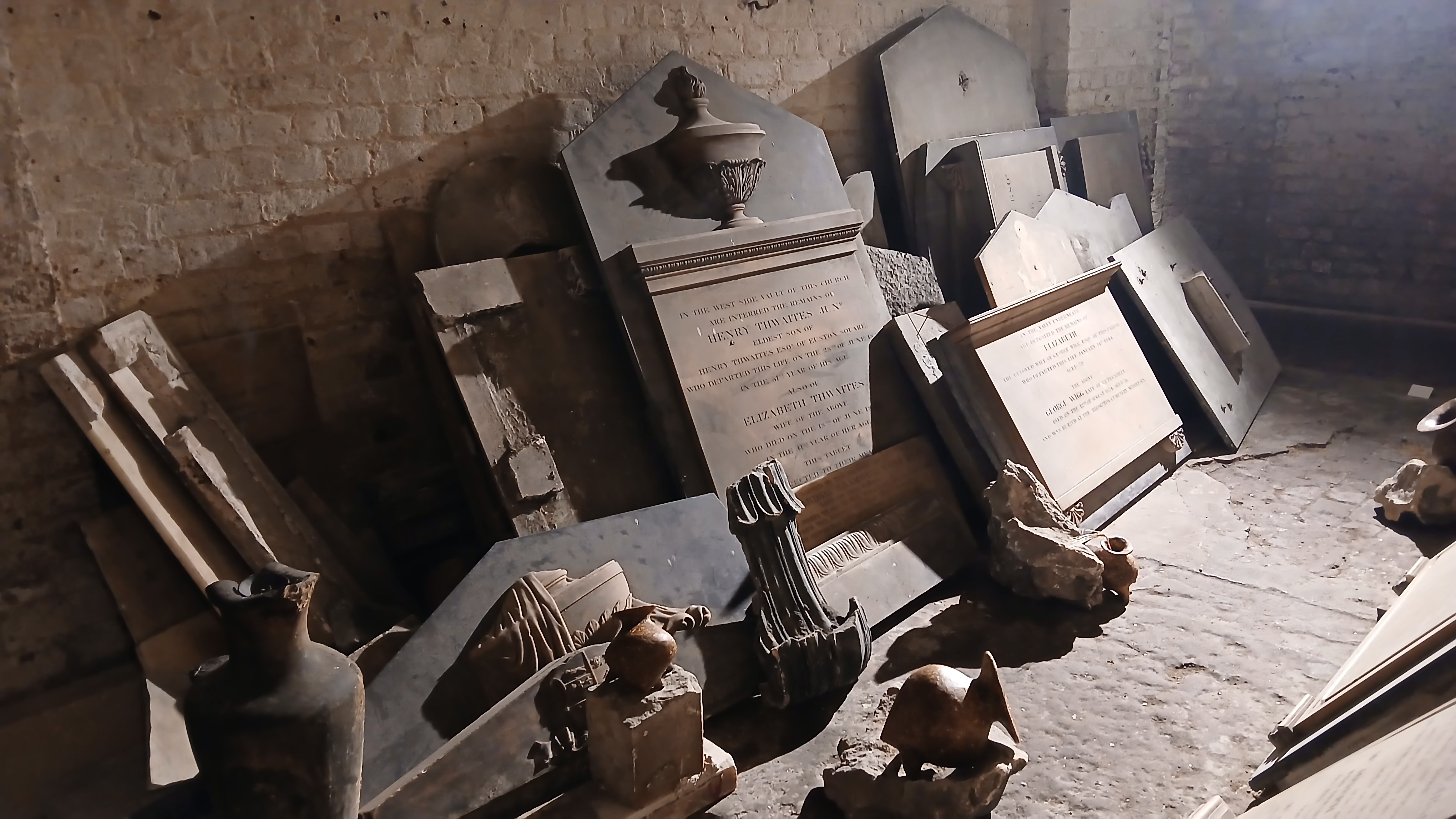
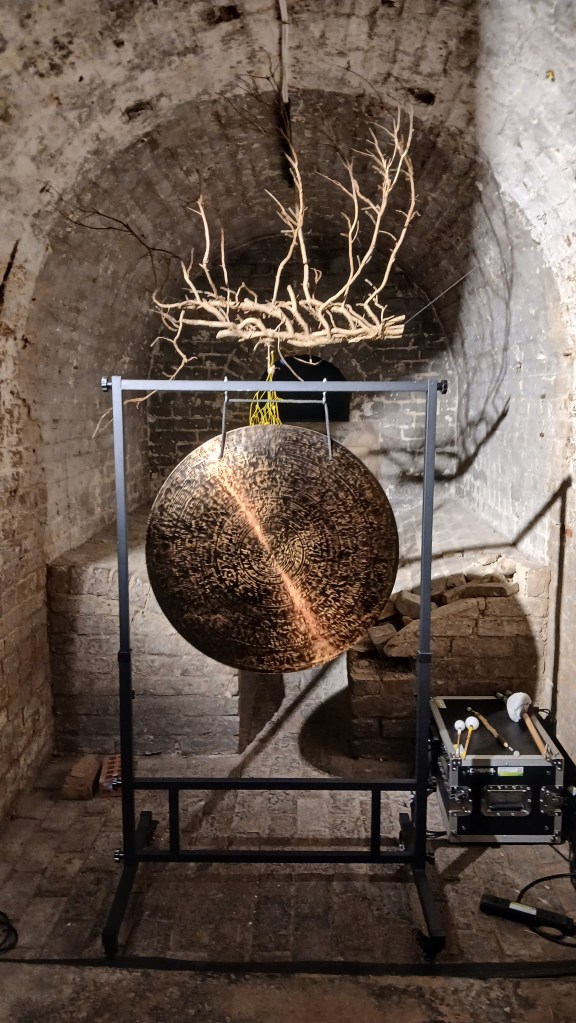
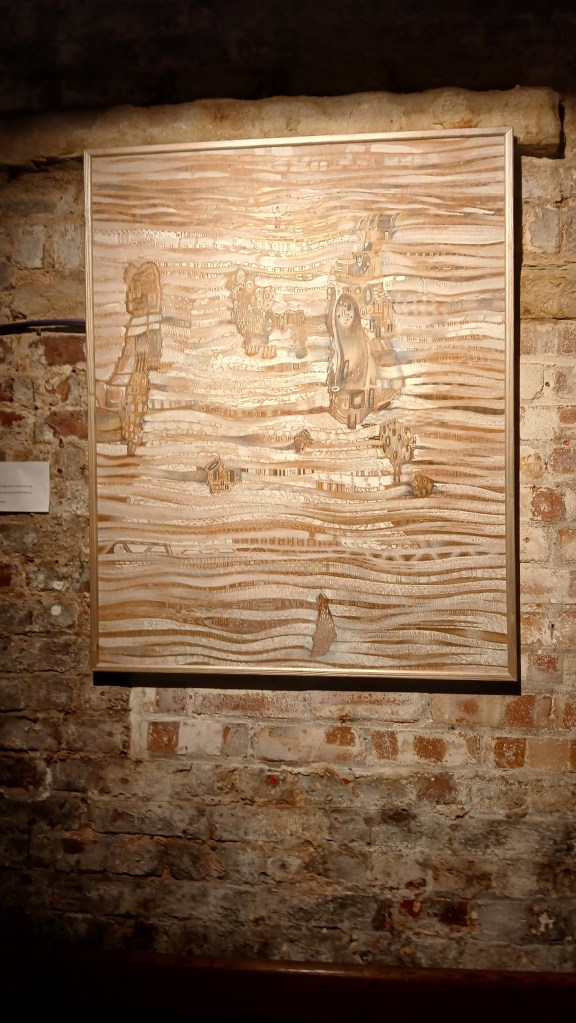
The church’s website describes it as ‘liberal Anglican Christianity in Central London.’ Located in Euston Road, it serves the communities of Euston, St Pancras and Somers Town. The church building was consecrated in 1822 and was known as ‘new’ St Pancras as it replaced the neglected and dilapidated ‘old’ St Pancras, which has since been restored as a parish church. The most celebrated features of the church are the two sets of caryatids: Greek statues copied from those on the Acropolis in Athens, designed by local architect William Inwood and his son, Henry Inwood. The statues are made of terracotta and were constructed in sections around cast-iron columns. They are certainly impressive at first sight. The total cost of the building was £76,679, making it the most expensive church to be built since the reconstruction of St Paul’s Cathedral following the Great Fire. The Crypt Gallery beneath the church is a spacious exhibition area hosting art displays, private events and film and photo shoots. The church holds lunchtime music recitals twice a week and a monthly Theological Reading Group. There is a Street Food stall in the church garden open Mondays to Fridays from 11.30 to 2.30 serving a variety of international food.
Source: stpancraschurch.org
St George’s Gardens
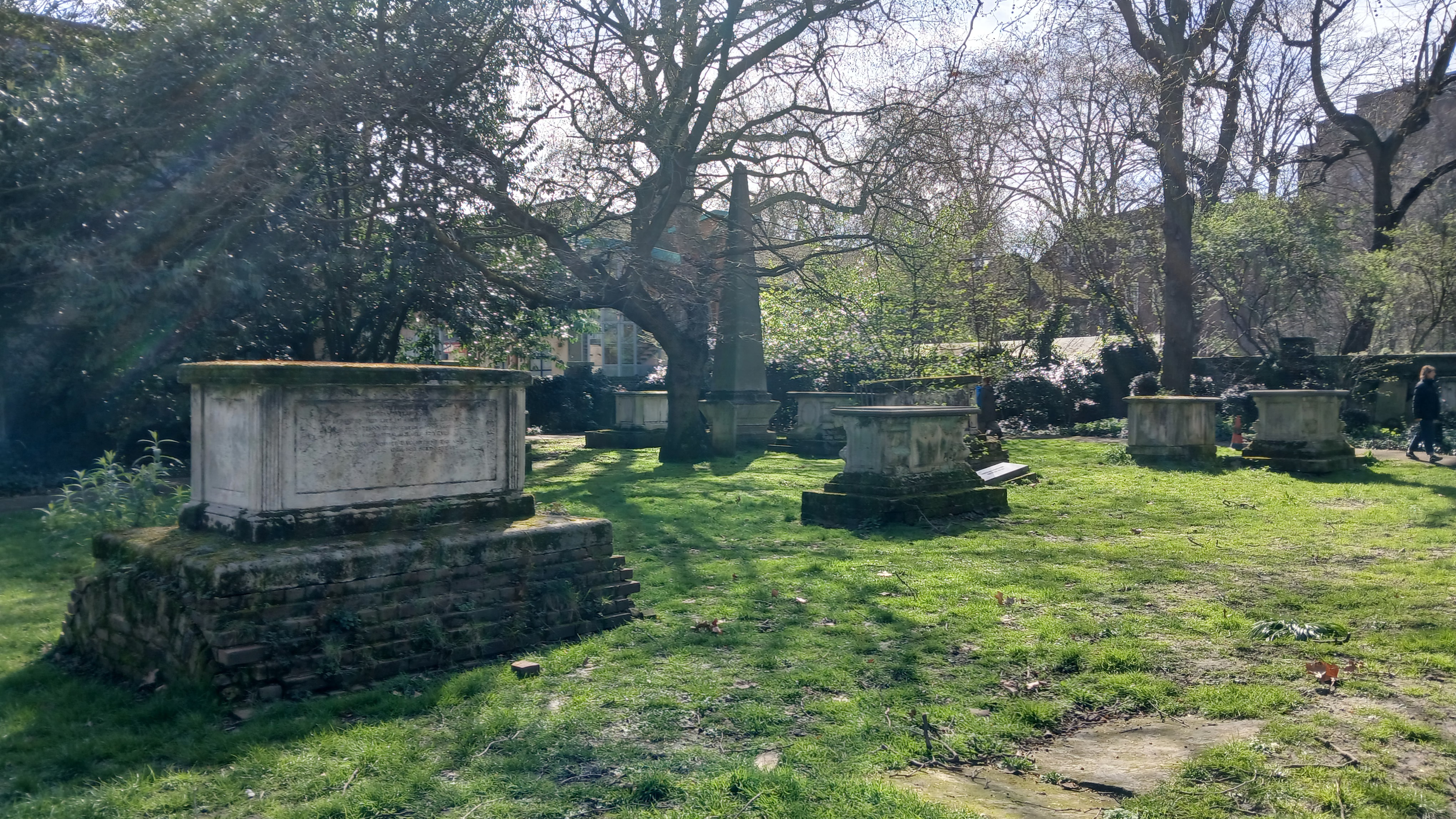
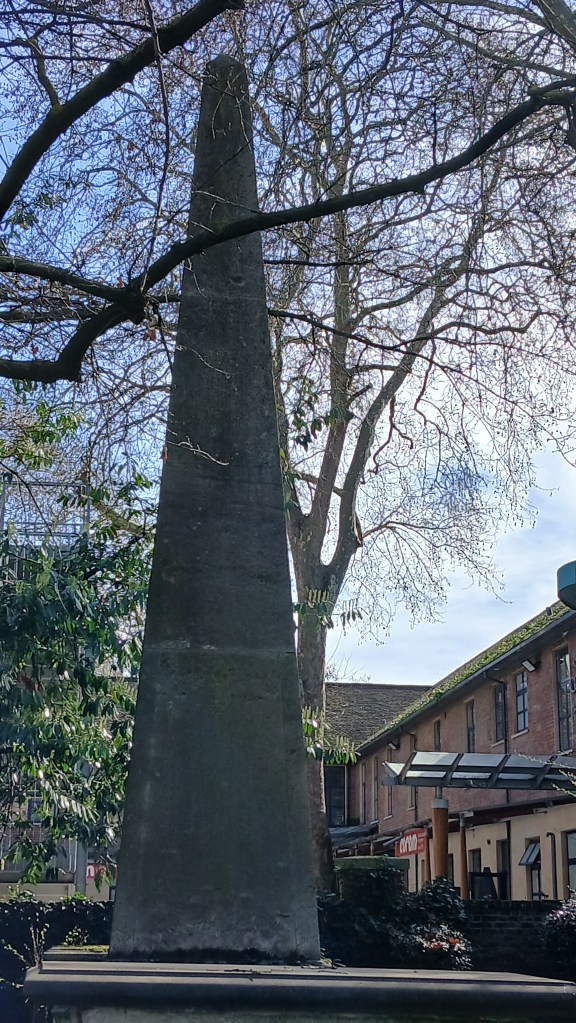
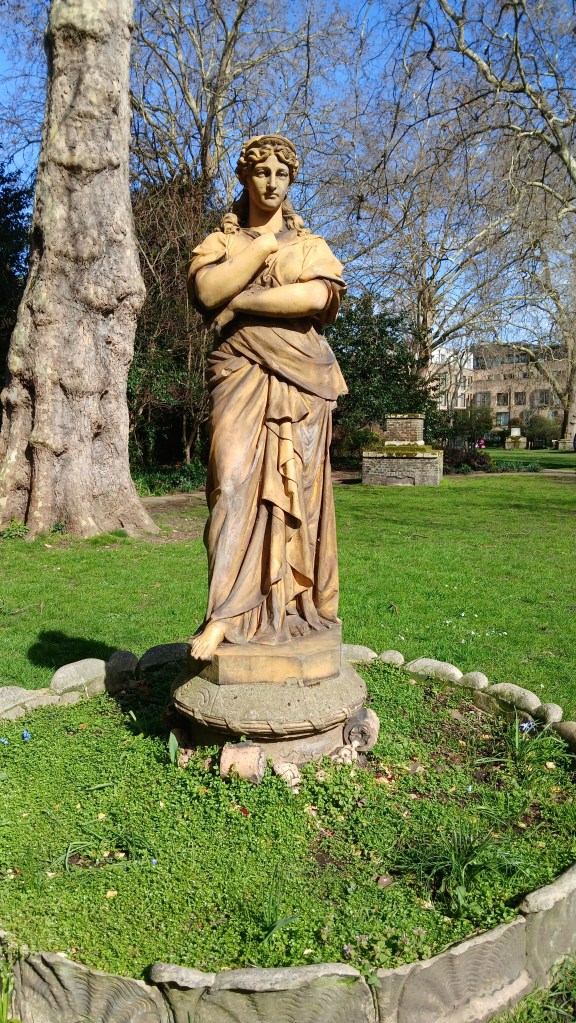
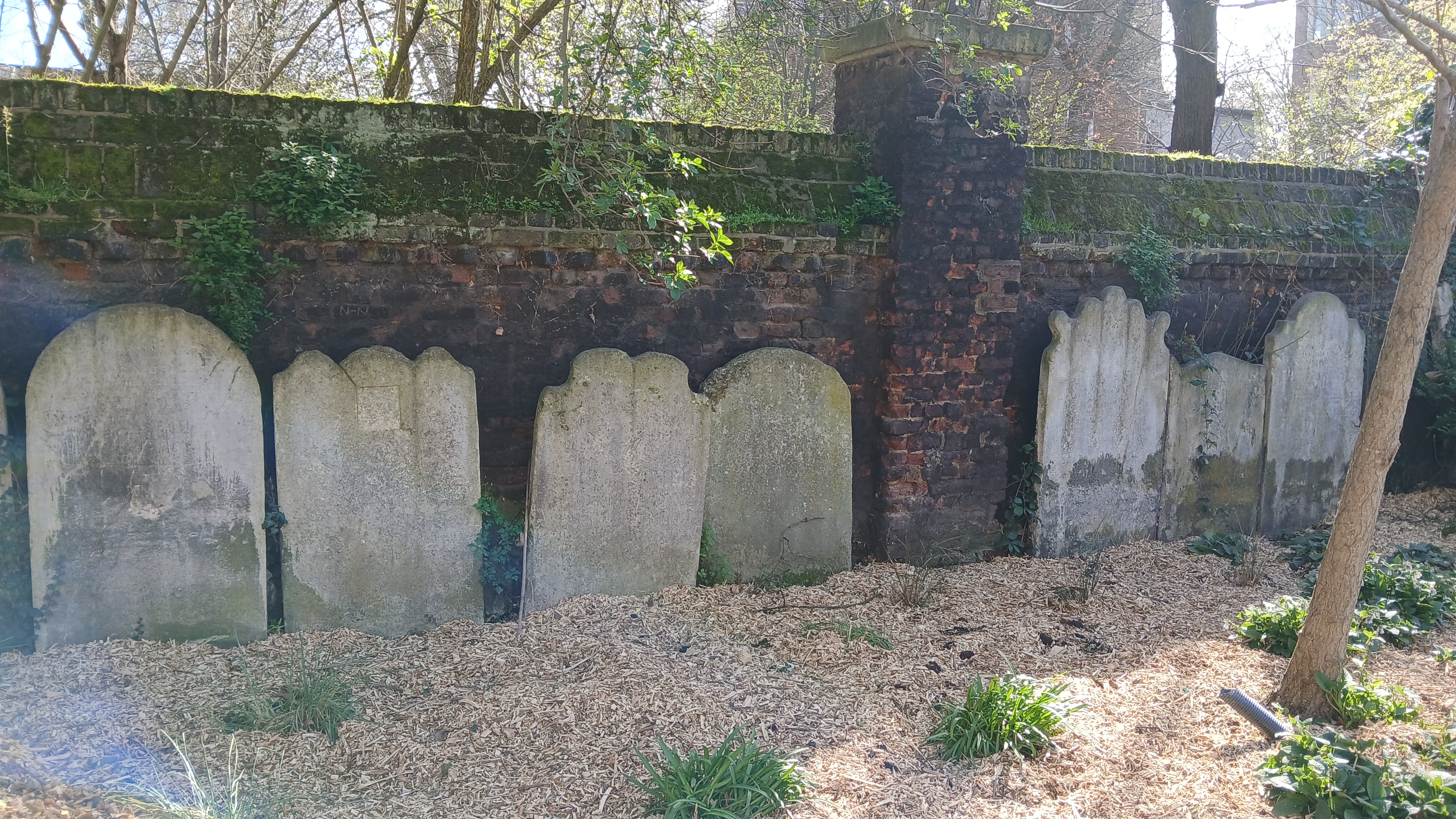
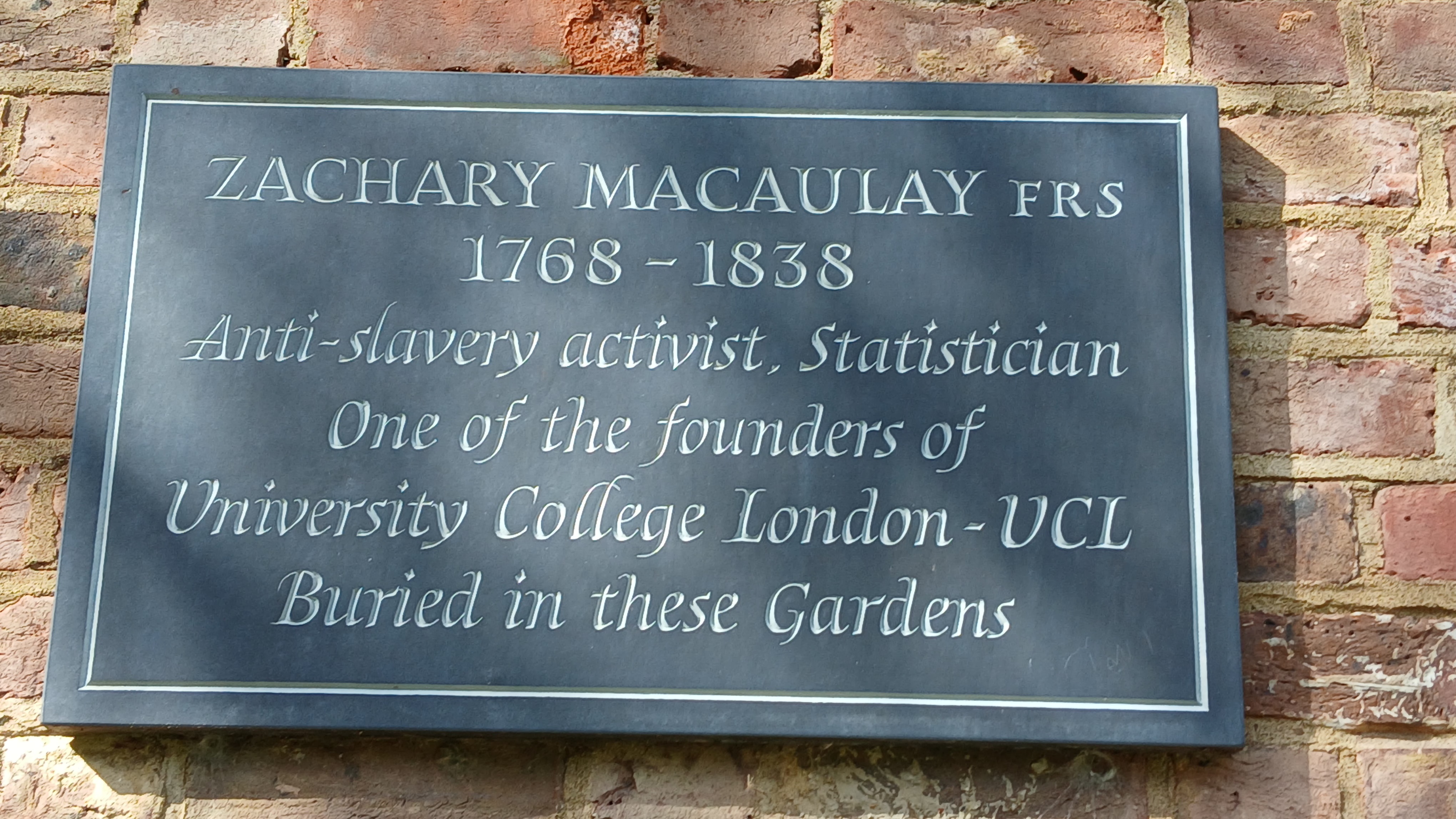
This is a small but attractive park behind the Coram Centre and Foundling Museum. From 1713 it was a cemetery serving two parish churches, both conveniently called St George: St George the Martyr Queen Square and St George Bloomsbury. By 1885 the burial ground was overcrowded and in a poor state of repair and was closed to burials. Thirty years later it was reopened as a public garden, part of a pioneering movement which redesigned overgrown urban graveyards into ‘open air sitting rooms’ in the words of housing reformer Octavia Hill. One notable burial in the cemetery is that of Eliza Fenning, a cook who was arrested in 1815 for allegedly poisoning her employers with arsenic. Sentenced to death, she was hanged outside Newgate Prison. More than 10,000 people joined her funeral procession from St George the Martyr to the burial ground. There was widespread belief that there had been a miscarriage of justice due to a reliance on circumstantial evidence alone, and highlighted the need for more accurate forensic science in crime scene investigation. The Friends of St George’s Gardens are currently consulting local residents about putting a memorial to Eliza on the wall of the Gardens. I shall go back in a few months’ time to find out if they decided to do so! In the Gardens there is a statue of Euterpe the Muse of Instrumental Music, this was one of nine which adorned the façade of the Apollo Inn on Tottenham Court Road, which was demolished in 1961.
Source: Notice boards in the Gardens
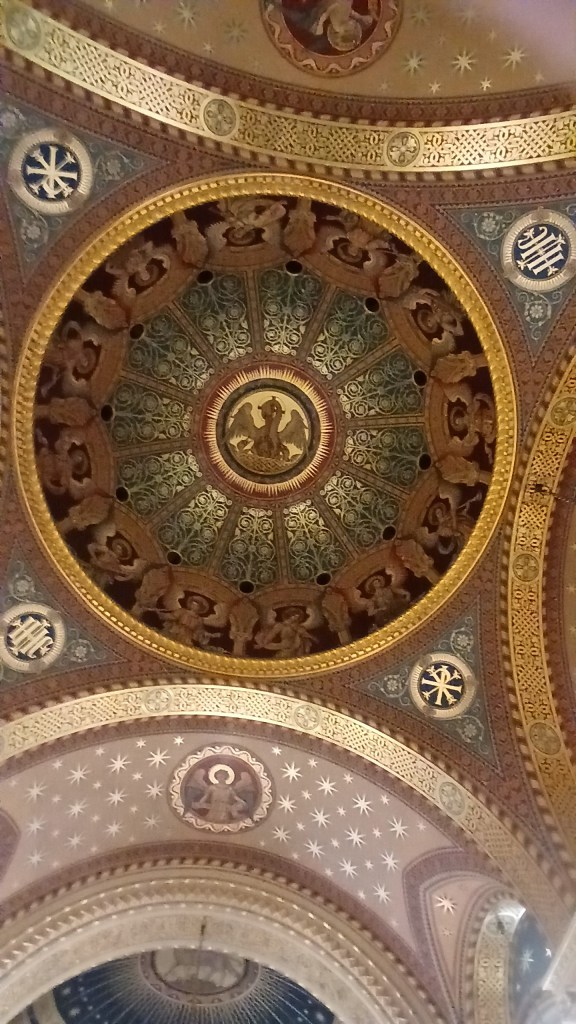
St Christopher’s Chapel, Great Ormand Street Hospital
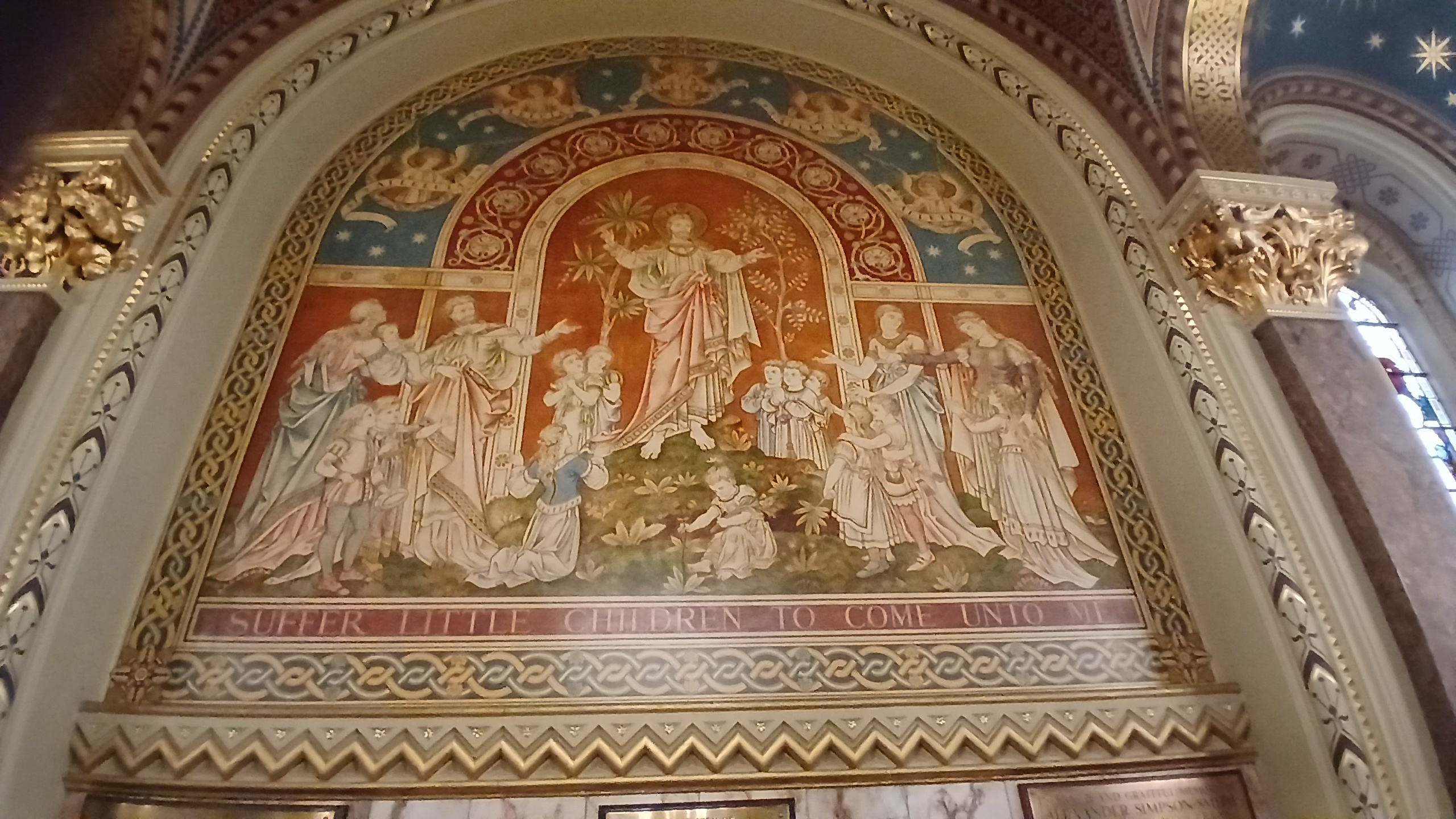
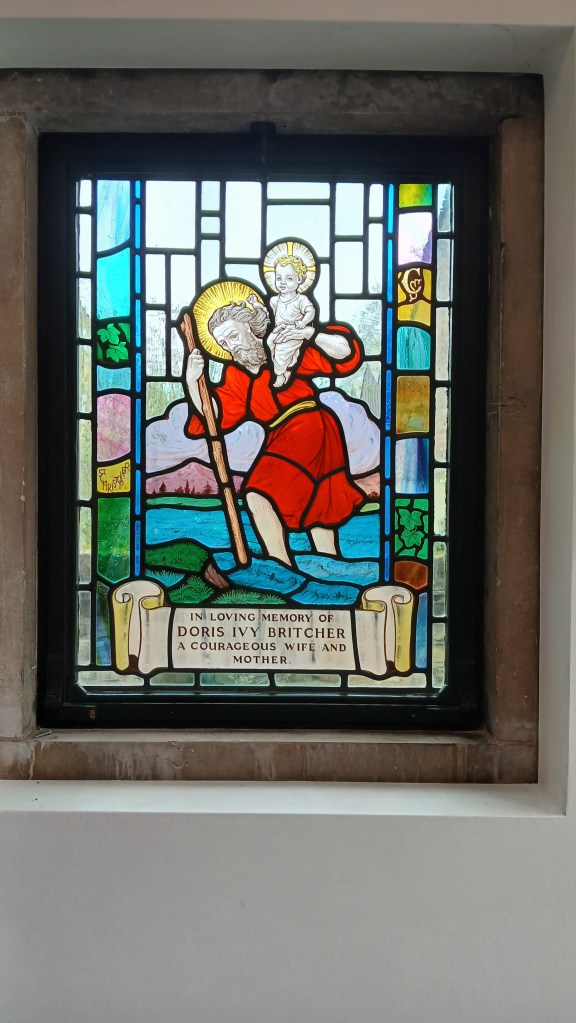
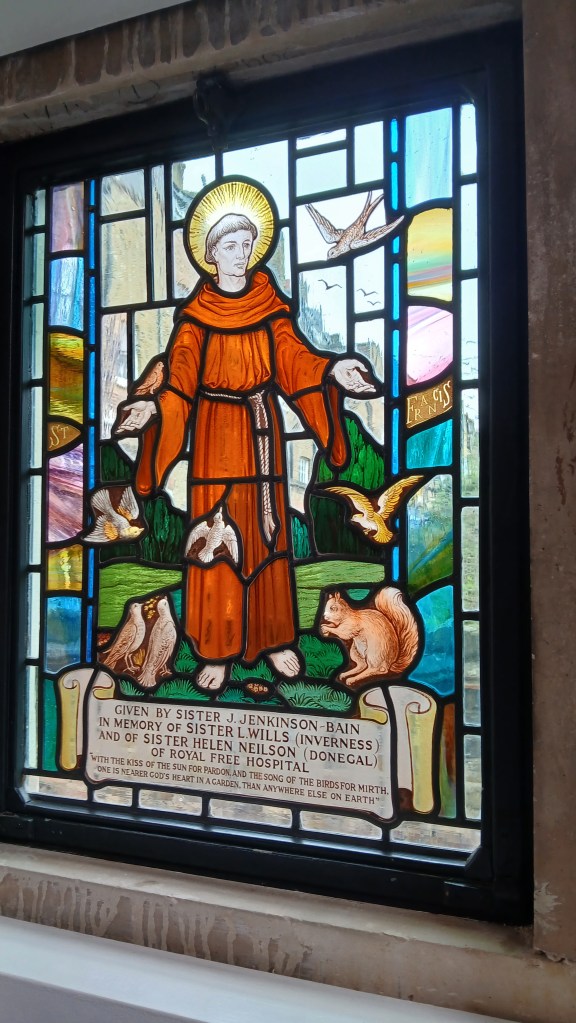
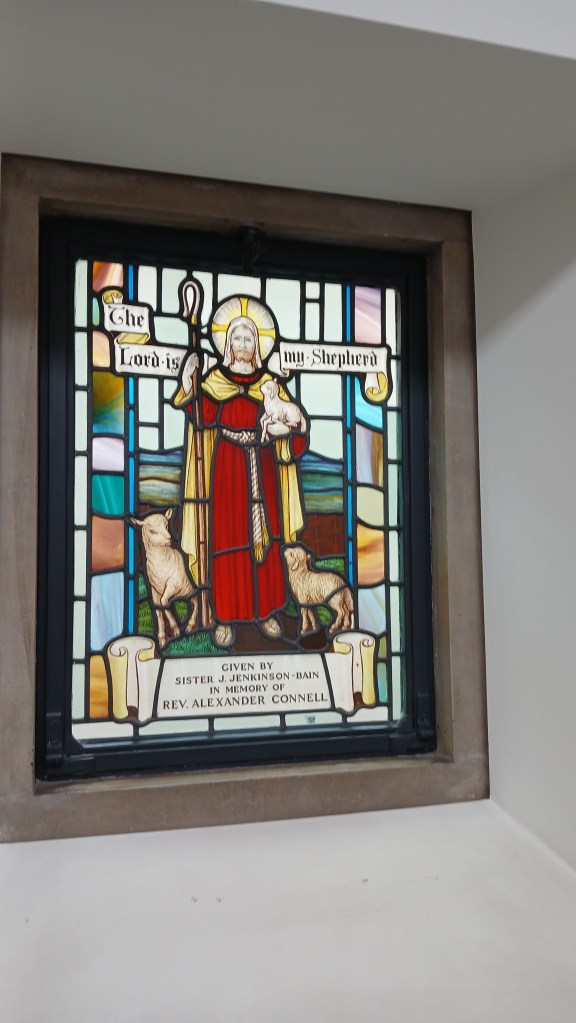
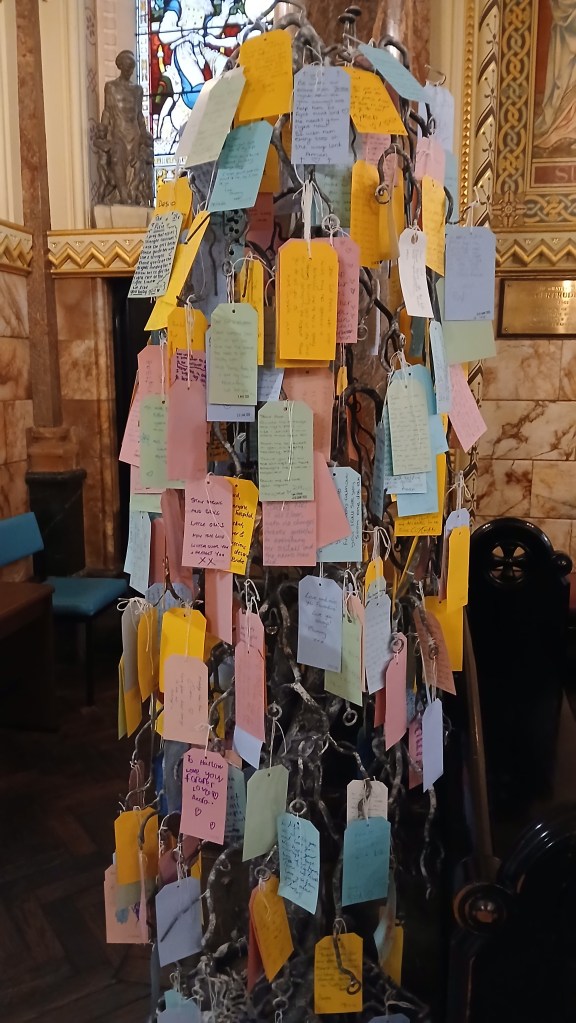
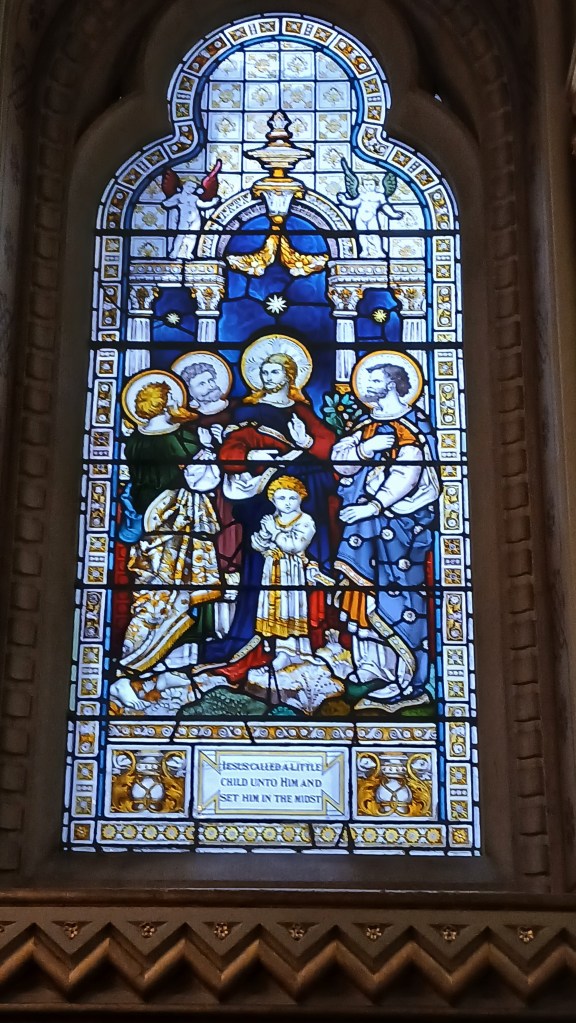
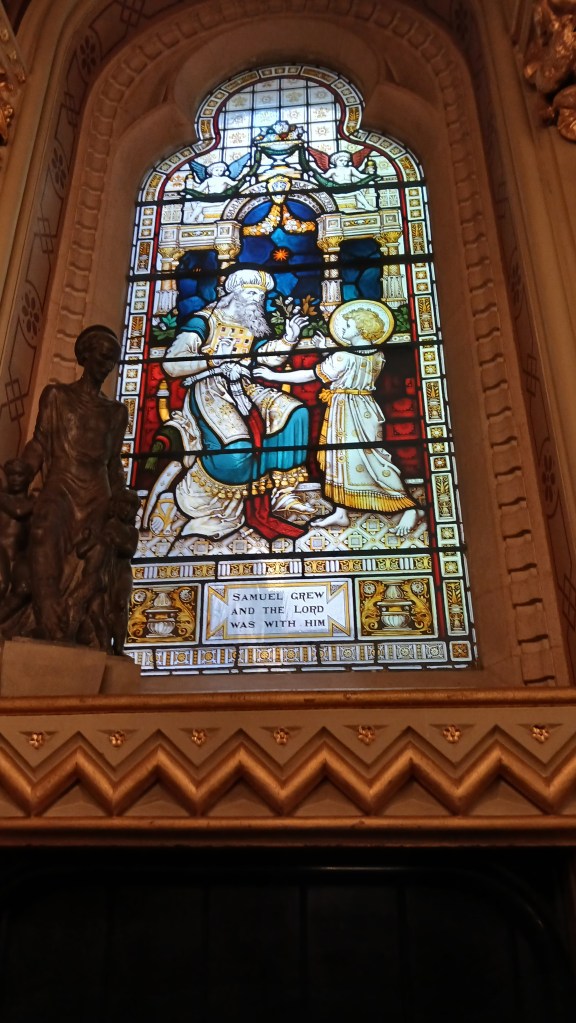
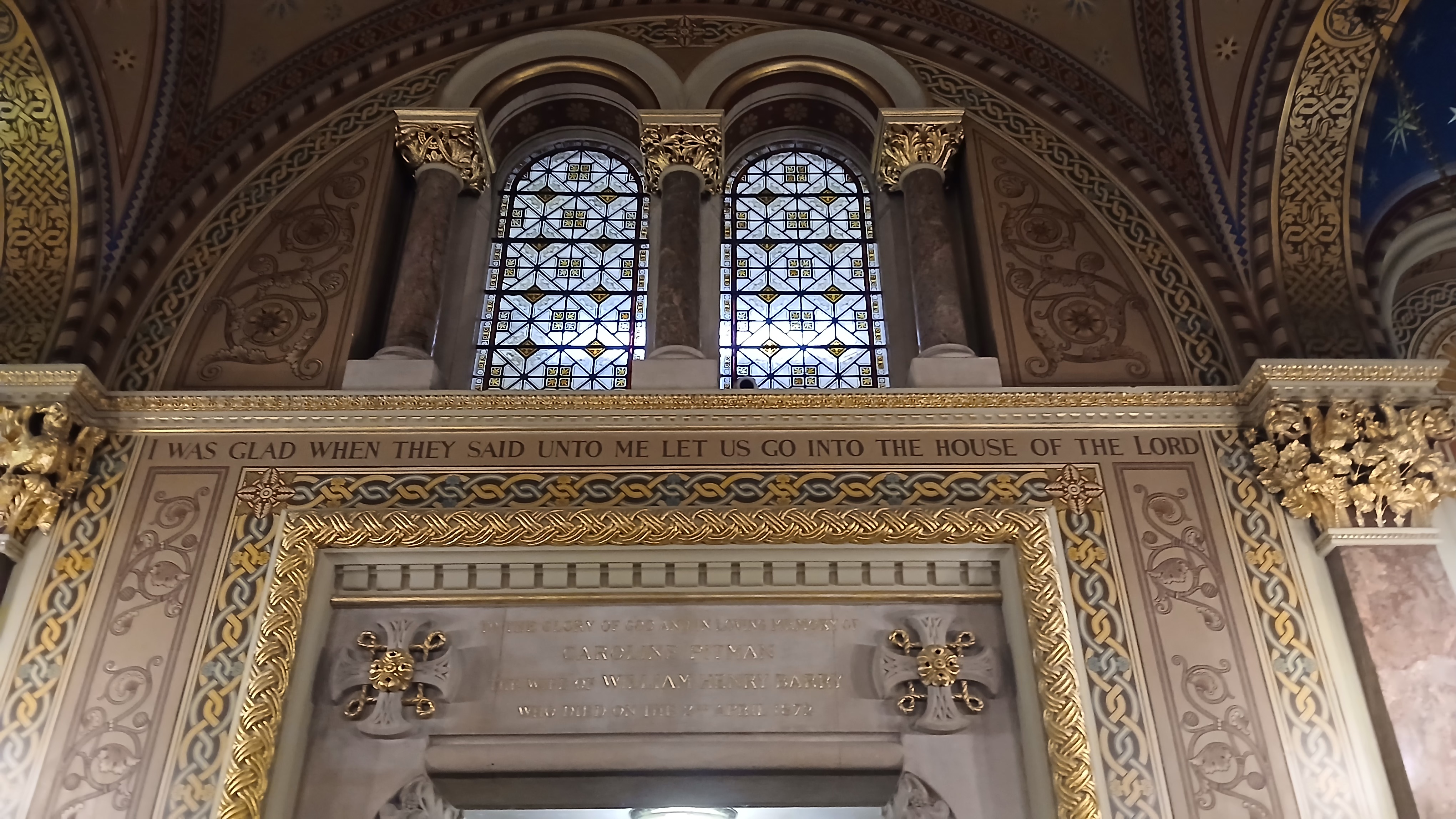
And lastly, this exquisite little chapel at the world famous GOSH. The original hospital was built between 1871 and 1876 and the chapel was completed in 1875. It was designed by Edward Barry who donated his work to the hospital in memory of one of his children who died in infancy. When the old hospital was demolished in the 1980s could not be pulled down due to its Grade ll listing. Instead the whole chapel was moved to its new site, GOSH’s new Variety Club Building, by encasing it in a huge waterproof box and using hydraulic rollers to transport it. All the furniture, fittings and the stained glass windows were removed prior to relocation of the chapel. Six years after it was moved, following extensive renovation the chapel was reopened on 14th February 1994 by Diana, Princess of Wales. The chapel is designed in the Franco-Italianate style and influenced by Renaissance Revival. Some of the stained-glass windows depict Bible stories relating to children: Jesus welcoming the children and the boy Samuel with Eli the Priest. I particularly liked the Prayer Tree which was commissioned to celebrate the chapel’s 140th anniversary. The chaplaincy team offers pastoral support regardless of religious belief and the chapel hosts daily prayers. It offers a quiet place for reflection and prayer for families and houses the poignant but beautiful Book of Remembrance.
Source: gosh.nhs.uk
 claresimons1