‘All children have the right to be treated equally’

Article 2 is concerned with non-discrimination: ‘The Convention applies to all children, whatever their race, religion or abilities, whatever they think or say…….no child should be treated unfairly on any basis.’  I’ve left out a bit about language/gender/disability/culture/status of parents.

Of course in one sense war doesn’t discriminate, all children affected by war are at risk of trauma, injury and death.  And all children in a war zone are denied the right to education, healthcare, shelter, and a ‘normal’ childhood; they are definitely ‘treated unfairly’.

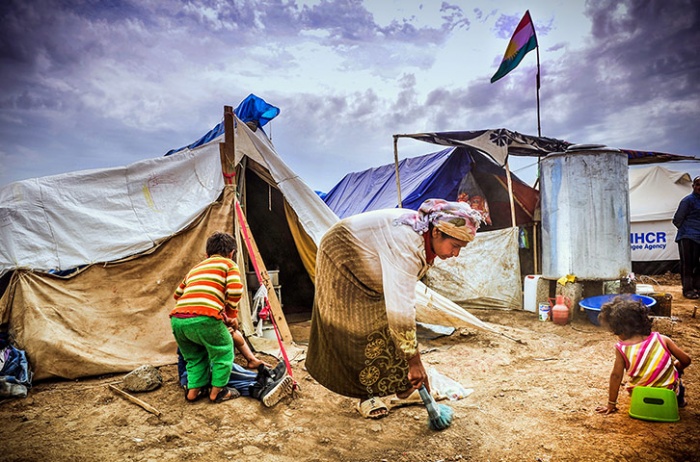
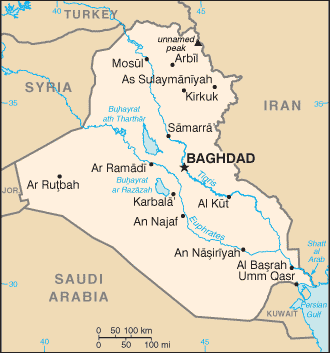
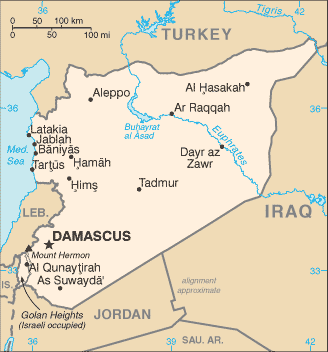
But further discrimination can be evidenced: poorer families are unable to move to safer areas because of low income/status.  These families struggle to survive at the best of times, they certainly don’t have the resources to move themselves and their possessions away from the conflict zone.   And you might remember the story about the Yazidi (Iraqi) father who was forced to abandon his 4 year old disabled son as the family fled from the advance of IS jihadists on their village.  The family travelled on foot for days over a mountain range and were unable to carry little Aziz any further.  Although, Aziz was rescued and taken to hospital in Syria, sadly he died.  His father was devastated, distraught, heartbroken.  But I don’t condemn him, he didn’t leave his son to die, war killed him.

‘How is it that women and girls make up the highest proportion of refugees and displaced populations and yet they are the least visible?’ asks David Miliband, former Labour politician and now CEO and president of the International Rescue Committee.  This question prefaces a report from the IRC entitled ‘Are we listening? Acting on our Commitments to Women and Girls affected by the Syrian conflict.’  And women and girls in conflict situations face much worse:  in Iraq they are captured and sold into sexual slavery by IS militants, considered to be the spoils of war. A 17 year old girl says:  ‘Nor do they spare the girls.  Some of our group are not even 13 years old….They say we are like goats bought at a market’.  Both these quotes are taken from an article in Premier Christianity, November 2014 issue: ‘The Female Cost of War’  (premierchristianity.org.uk).  In countries affected by war, the powerful will always exploit the vulnerable.

I talked in the first post about the BBC documentary by Lyse Doucette on the children who live constantly with the threat of violence and death.  At the end of the programme we see a girl, about 8 or 9, with one leg, supported on crutches.  She doesn’t have a prosthesis (artificial leg) and moves along the road with difficulty.  She stands and watches a group of her friends playing in the war ravaged street, chasing each other and sitting playing games with pebbles in the rubble.  She can’t join in their games but she doesn’t look sad, just resigned to her situation.  War has robbed her of her right to play and join in (Article 31.)   

We can clearly see that certain groups of children are more likely to experience discrimination than others.


What is a Child? (As defined by the UNCRC)

Article 1: Definition of a Child ‘…….a person below the age of 18, unless the laws of a particular country set the legal age of adulthood as younger’.*

normal_little_bugle_corp

For such countries, the Convention encourages them to consider increasing the age of majority to 18, however in practice, the Articles of the Convention apply to anyone under 18, regardless of the laws of their country.

Why is this important?  Because childhood is socially constructed; it is never an absolute.  An example: in certain countries, and historically in the UK, a girl of 12, 13, 14, 15 can be legally married to a man over the age of 18.  Under current UK law, this is not legal and the subsequent sexual relationship would be considered child abuse, resulting in a criminal conviction and possible imprisonment, placement on the Sex Offenders Register, debarment from certain jobs…..you get the picture.  In one country it’s illegal, in another, it’s the norm.  Perhaps in such countries a young female teenager isn’t considered capable of making responsible decisions for herself.  In that case, why is she getting married?  In the UK, those under 18 are protected under the Children Act 1989 (and subsequent Acts) from situations and activities that could potentially harm them; the UNCRC seeks to protect all the world’s children.

Let’s look at another example: my father-in-law started work at 14.  I’m not sure but I assume he worked a full day, though as an apprentice he wouldn’t have earned a ‘living’ wage (no Minimum Wage in those days.)  Considered an adult for the purposes of work, he couldn’t rent or buy a home, get married, drink alcohol, drive a car; and, not least, he couldn’t vote.  He paid Income Tax and National Insurance but played no part in deciding which political party should spend his hard earned contributions.  And he wouldn’t have, until he was 21!  Some people argue that the UK has gone too far the other way.  The age of majority is now 18, an age when some young people are just embarking on their university degrees, so all the responsibilities associated with adulthood (it’s argued) shouldn’t be given to ‘children’ still in full time education who can’t make ‘grown up’ decisions.  In some countries today children are working at 11 or 12, usually combining work with studying at school. There are countries in which full time secondary school education doesn’t finish til age 19.

Furthermore, all over the world there are religious and cultural celebrations of ‘Coming of Age’, for example, the Bar Mitzvah of the Jewish faith for boys aged 13.  Many of these originate thousands of years ago and don’t relate to modern times, but even today there are people groups who in practice set the age of adulthood at below 18.

The point I’m making is that the activities and responsibilities we associate with child/adulthood are flexible on the age to which they apply.  Therefore it’s important that the UNCRC is NOT flexible on its application: it’s everyone under the age of 18 years.  As we’ve seen, this is actually problematic in practice: ‘In many societies children’s births are not registered and they have no idea when they reach eighteen.  In other cultures, boys and girls marry much younger, often at puberty, they work as soon as is necessary and even have their own children, at ages which the UNCRC would still refer to as childhood’. (Understanding Childhood, Martin Woodhead and Heather Montgomery, The Open University, 2003.)  However, this Blog is not intended to apply policy or solve problems…….

*All ‘Article’ quotes are from http://www.unicef.org/arc/files/Rights_overview.pdf

Children in the Conflict Zone

What is the UNCRC?  (Section 2 of 2)

‘A legally-binding international agreement setting out the civil, political, economic, social and cultural rights of every child, regardless of their race, religion or abilities.’(savethechildren.org.uk.)  It was adopted by the UN in November 1989 and has to date received 194 ratifications from member states of the UN.  These states  ‘ have agreed to do everything they can to make the rights a reality for children around the world.’   Many of the Articles reflect the Universal Declaration of Human Rights, such as the right to education, the right to belong to a country, the right to freedom of conscience, association and beliefs.  NGOs such as Save the Children and UNICEF have powers to implement  the Articles of the UNCRC.

In May 2000, two optional protocols were added which I think are crucial to children’s rights when considering conflict situations, and more than 120 states have so far signed up to these.  They are: that governments ensure that those under 18 are not forcibly recruited into their armed forces (and if under 18s are members of the armed forces, that they do not take part in combat); and secondly that governments prohibit child prostitution, child pornography and the sale of children into slavery.

The UNCRC is concerned with Provision: e.g., the right to an adequate standard of living, education, health services.  Protection: e.g. from abuse and neglect, from sexual exploitation, from inappropriate forms of work.  Participation: e.g. the right to freedom of thought and expression, the right to have a say in decisions made about them.   I think it goes without saying that nations in a state of war are going to struggle to maintain the minimum standards recommended by the Convention, even if their previous Human Rights record was good.

There are 42 Articles, and a few more which are to do with how they should be implemented.  My plan is to look at most, but not all, of the Articles in turn and explore how they are violated by states or countries at war.   As I said last time, I’m not out to take sides, I’m blaming war itself, if you like.   Some of the Articles can be doubled up to form one blog entry, and some are not relevant, so I estimate it will take about six months to work through the Charter.  It’s going to be a bit of a challenge!   But first, we have to ascertain: What is a child and how is childhood defined, in order to determine who exactly the Convention refers to, and why.  This is the subject of the first Article  of the UNCRC and will be the subject of the next blog entry.

Children in the Conflict Zone

United Nations Convention for the Rights of the Child: How children’s rights are violated in conflict situations.

Country_Iraq Country_Syria normal_Country_Israel

Introduction (Section 1 of 2)

 Why write a Blog about the effects of war on children?    I’ve been thinking about this subject for about 6 months and started doing some research: news articles, blogs, charities’ websites.  (Thanks to those who sent me links to articles they thought might be useful.)  So I’ll begin by talking about what in particular got me started.

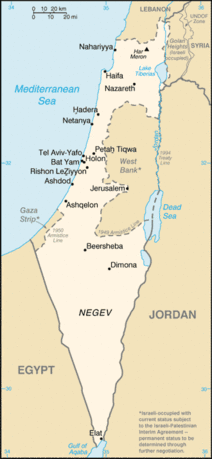
In June last year I watched a TV documentary written and presented by BBC journalist Lyse Doucett, who followed the day to day lives of six Syrian children, and also reported on the experiences of children in Gaza.   This film was distressing to watch, not just because of their experiences but because of how they talked and behaved, their attitudes and opinions about life.  Secondly, on 4th August I watched the first of the BBC programmes marking 100 years since Britain’s entry into the First World War.  It struck me as ironic that the news that day in 2014 reported on conflicts in four separate regions: Gaza, Syria, Ukraine and Iraq.  This made me consider that war is always with us; many thousands of people including children have never known a time of peace.  Of course it’s right to remember and commemorate those who sacrificed their lives in ‘The war to end all wars’ but it wasn’t, was it?  War continues as it always has done, but it’s fought differently in the 21st Century.   ‘Gone are the days when wars were fought between countries’ armies on a remote battlefield.  The vast majority of modern conflicts take place within countries, not between them.  And whereas civilians were once far removed from the fighting, they’re now routinely targeted and make up 90% of the casualties.’ (warchild.org.uk ).  So I started to think about how children, who are given no choice in the matter and don’t understand what’s happening, only that their lives are being turned upside down,  ultimately will be most affected. The UNCRC, a charter which seeks to promote children’s rights (to protection, provision and participation) is a good place to start when considering the effects of war on children.

You may be asking, what’s the point of documenting this, it doesn’t change anything.   But as I research the subject, I’m realising the valuable work that NGOs such as Save the Children and UNICEF are doing which does change things.  It’s really encouraging and inspiring to read how children are being helped to overcome trauma, injury and disability, so I suppose one reason for this blog is to raise awareness.   My intention is to be non political and non religious with no comment about actual conflicts, only their effects.