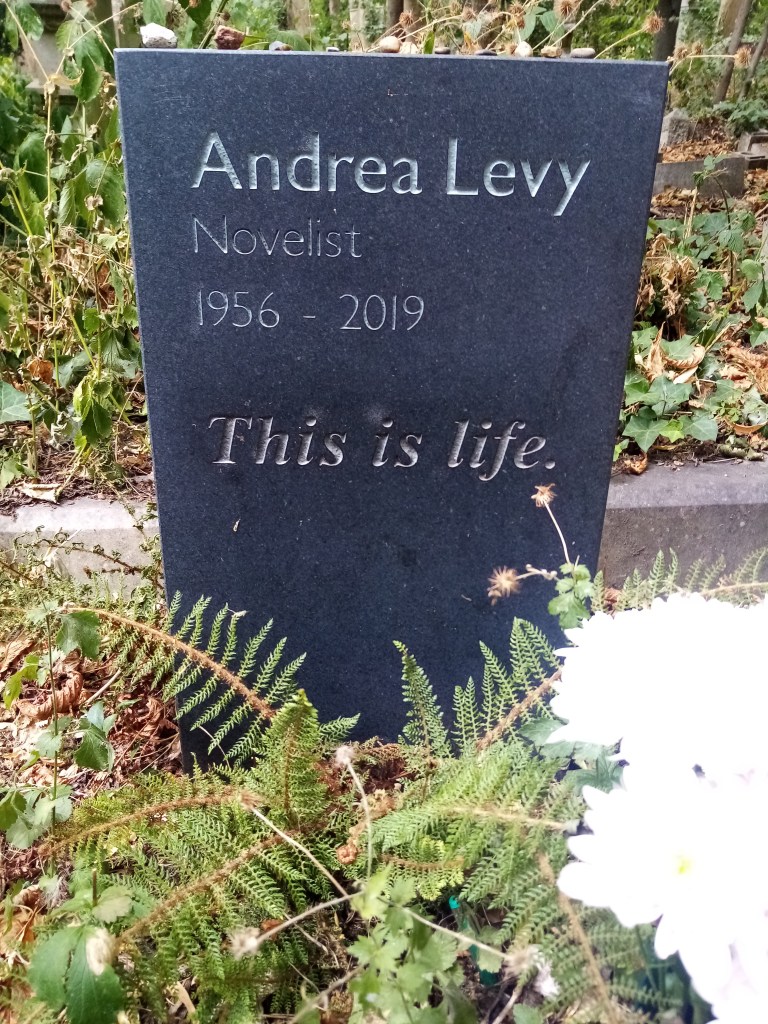
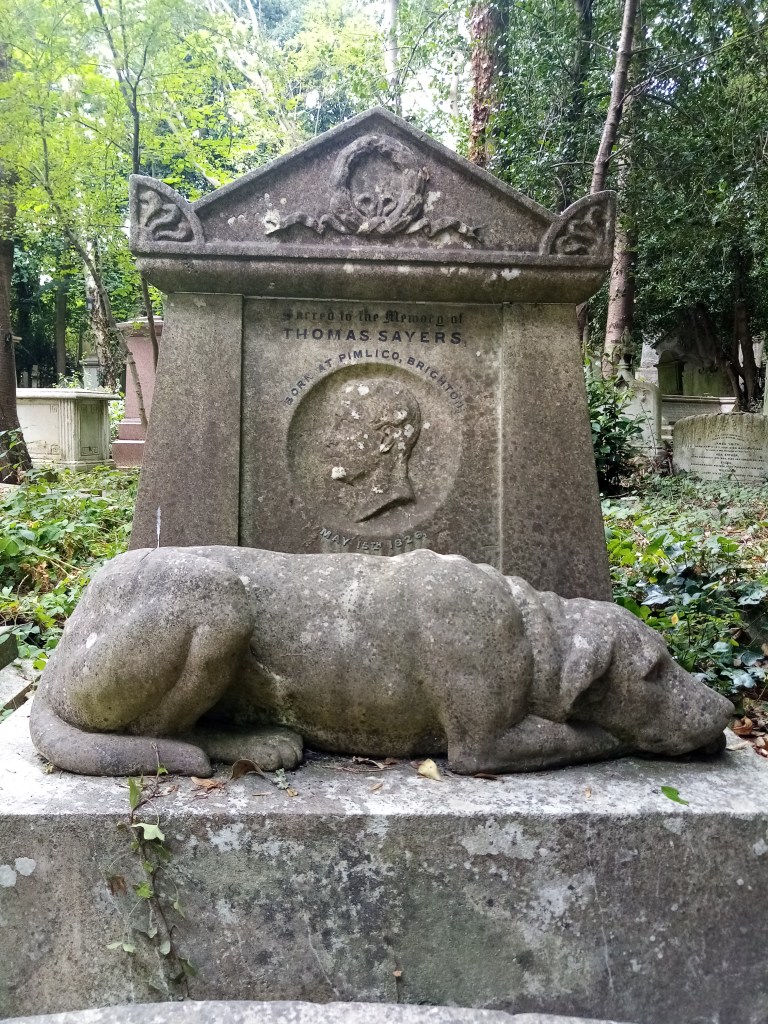
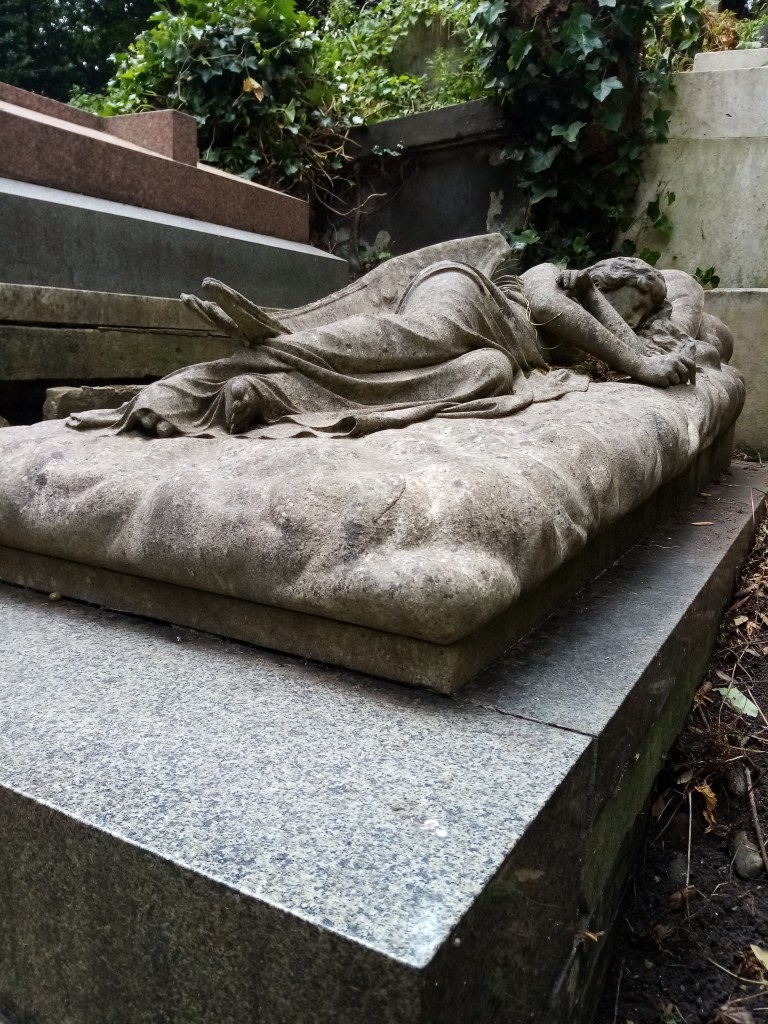
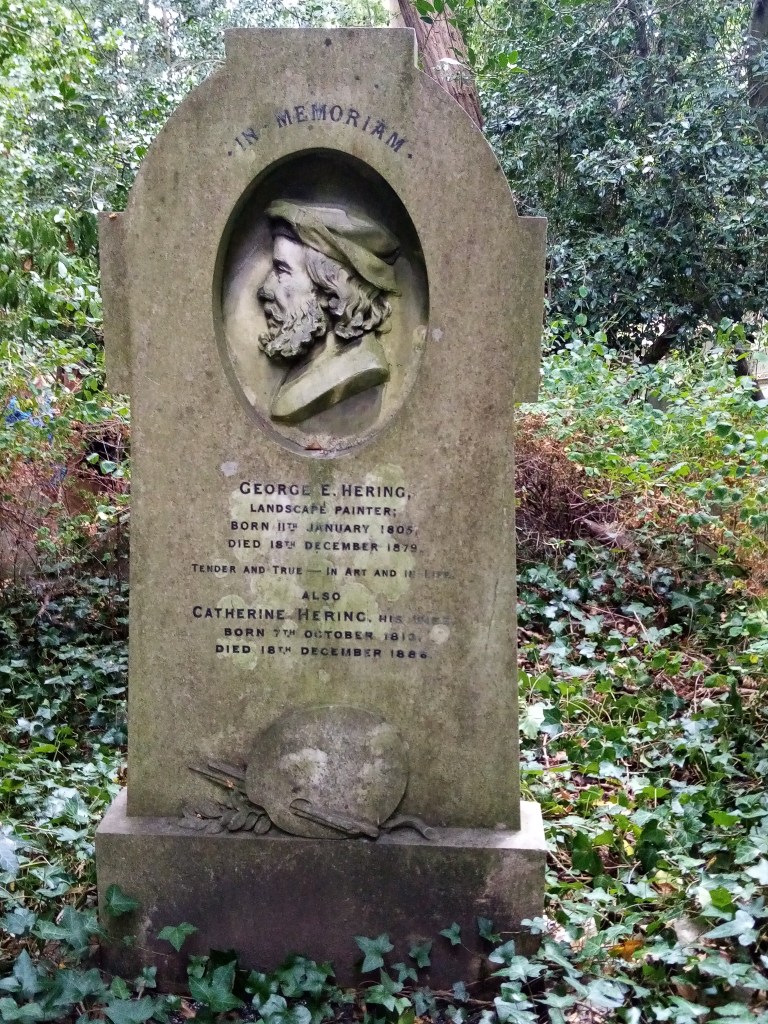
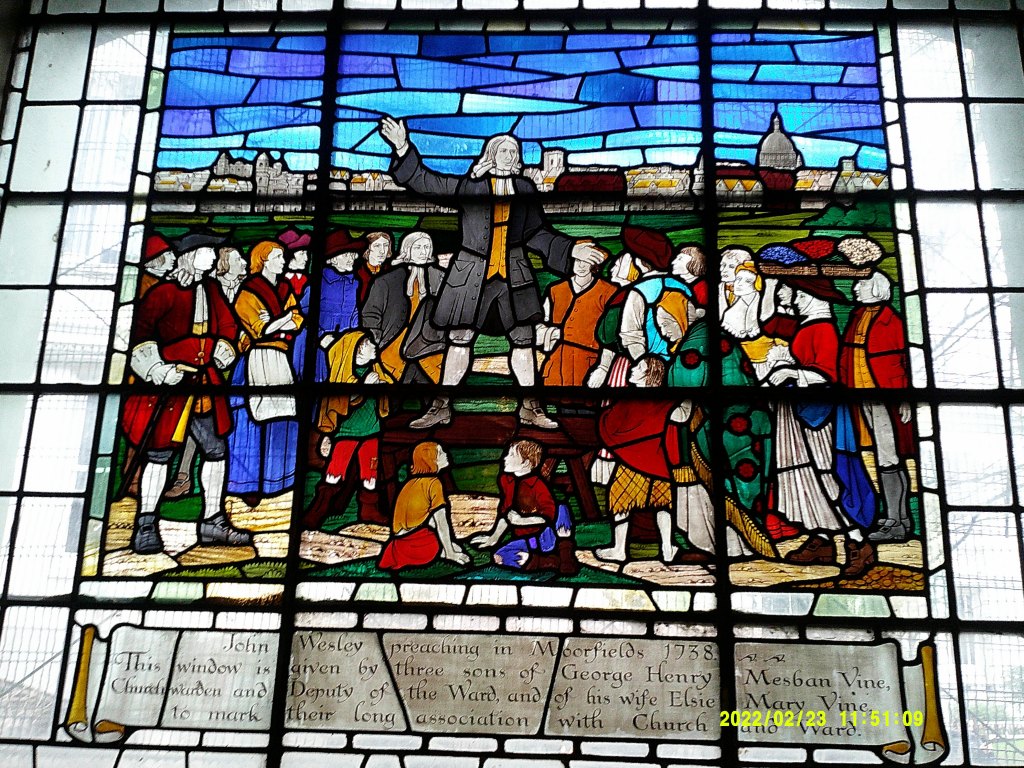
August – Cemeteries lll

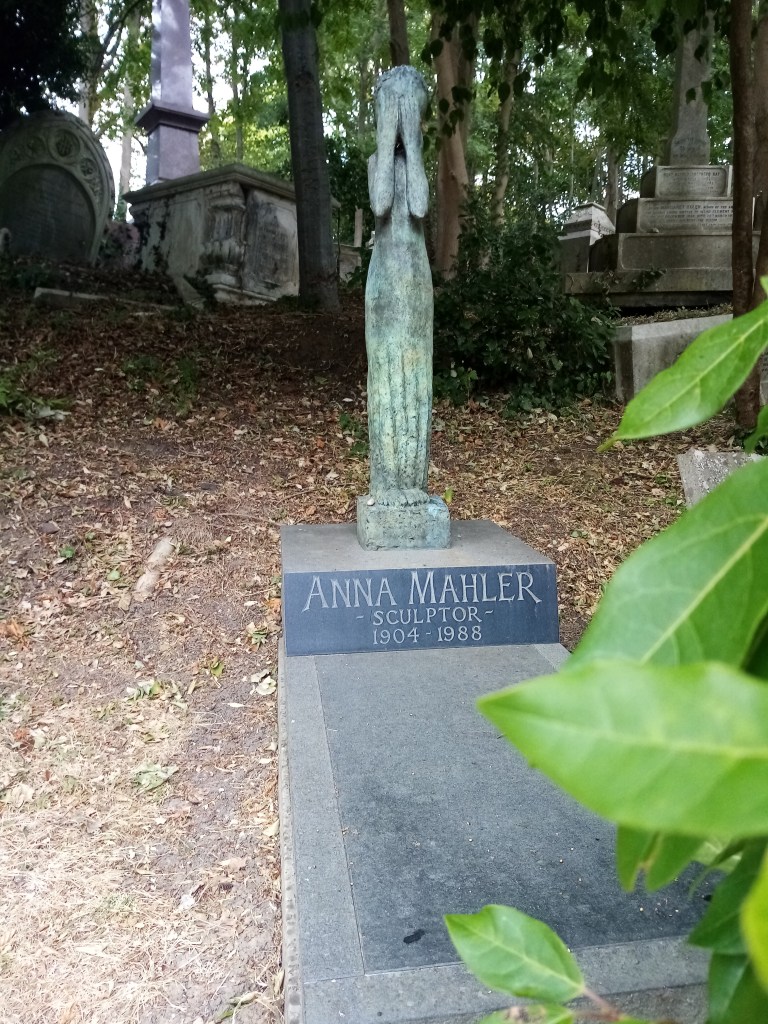
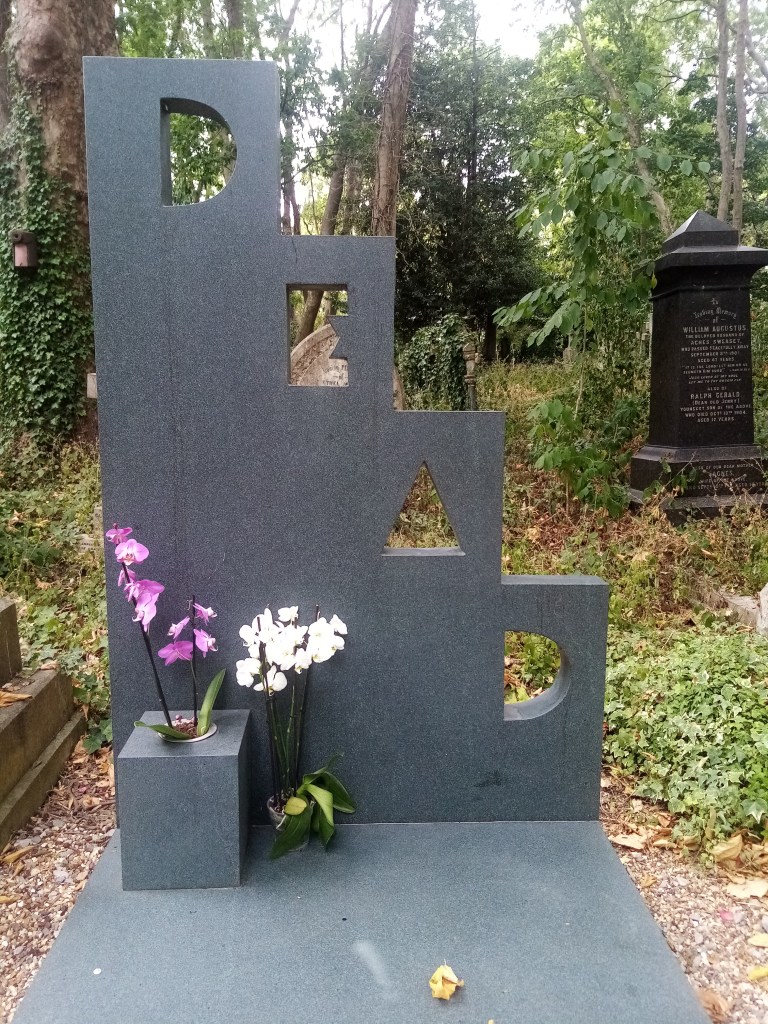
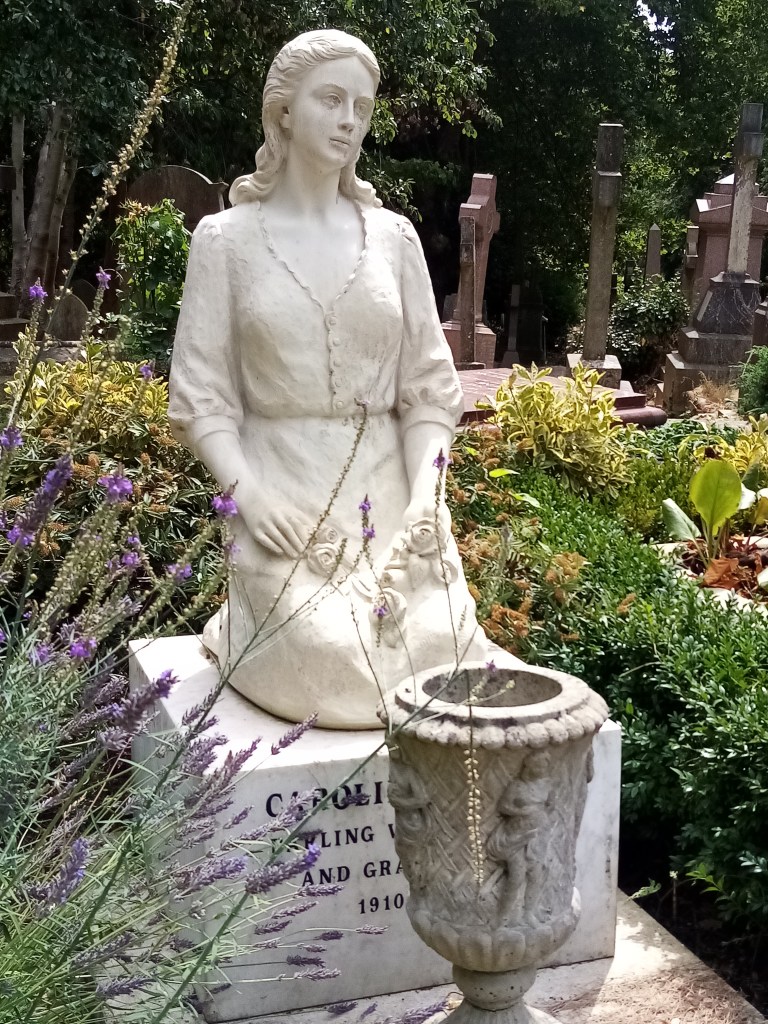
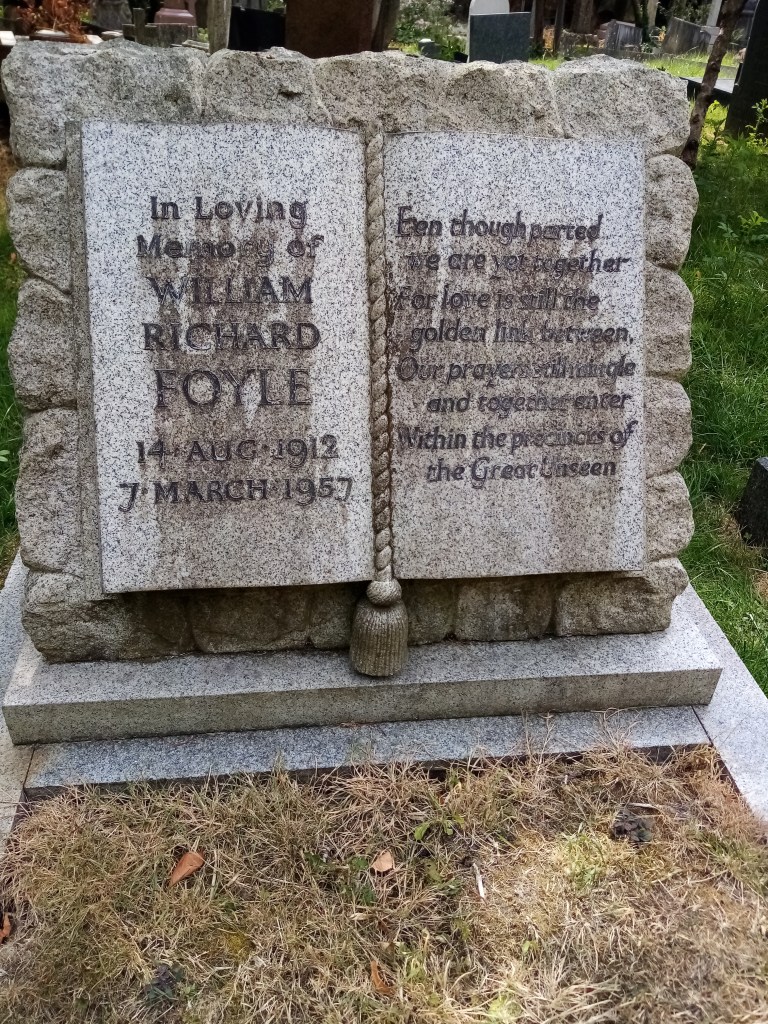
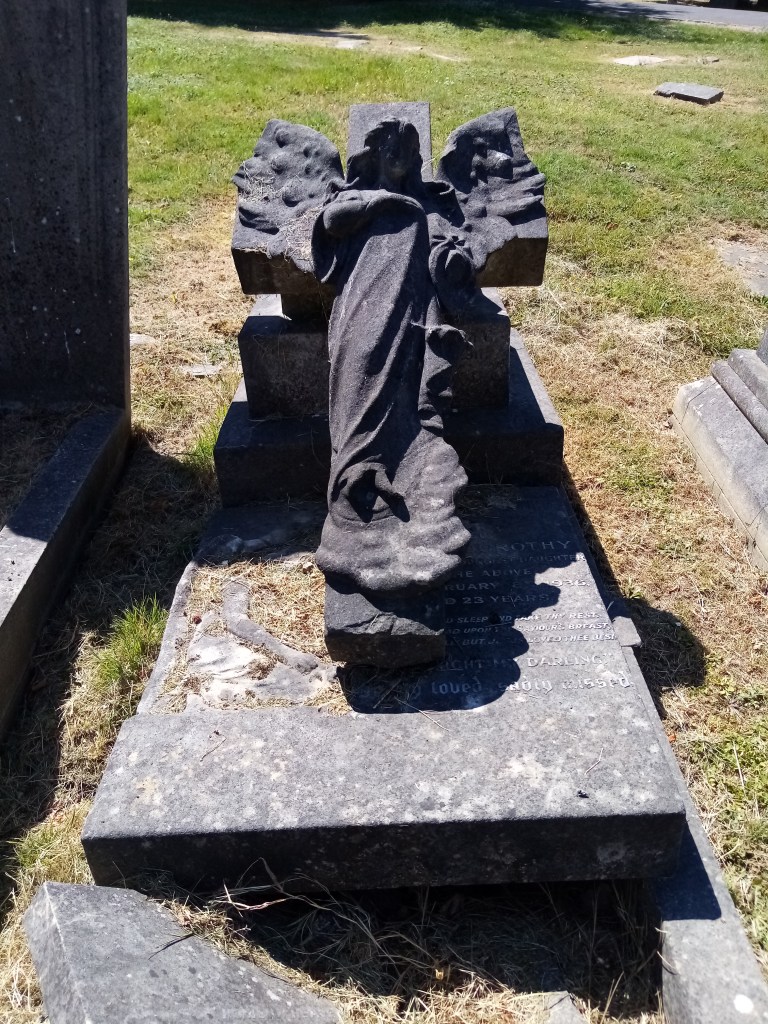
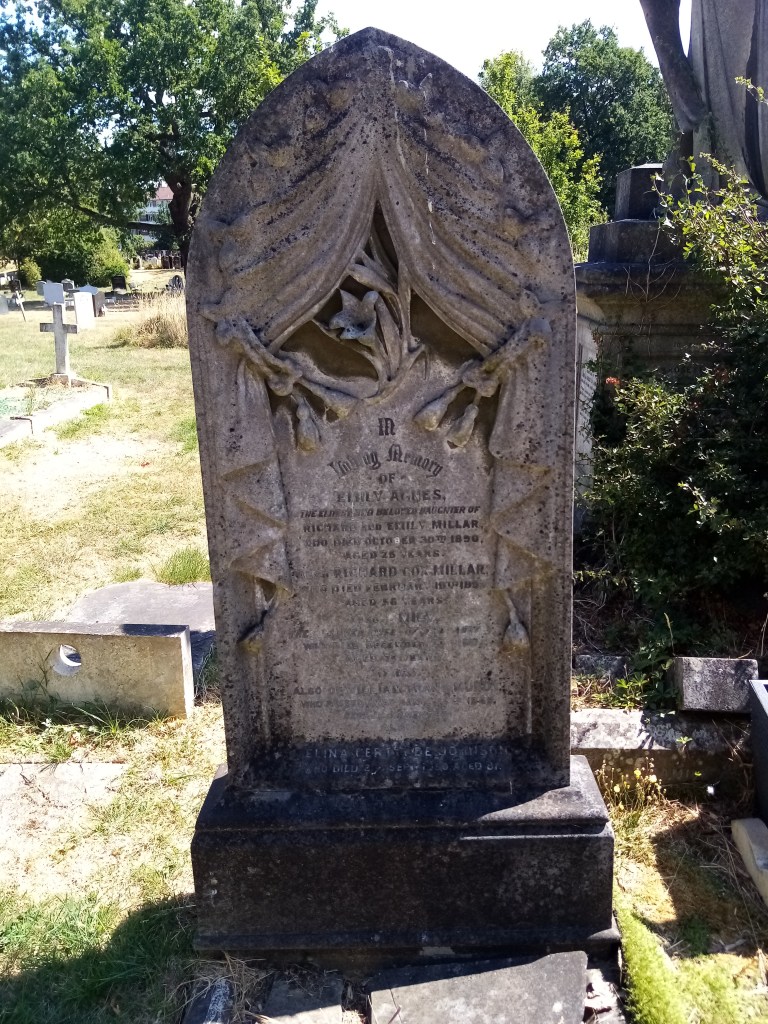
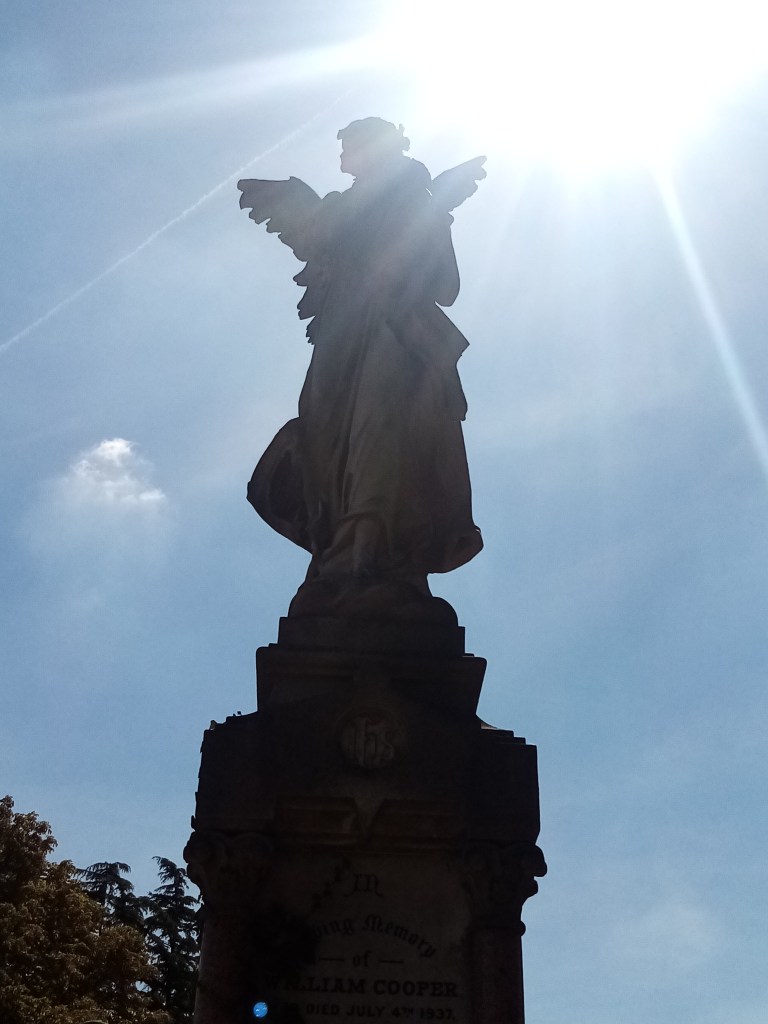
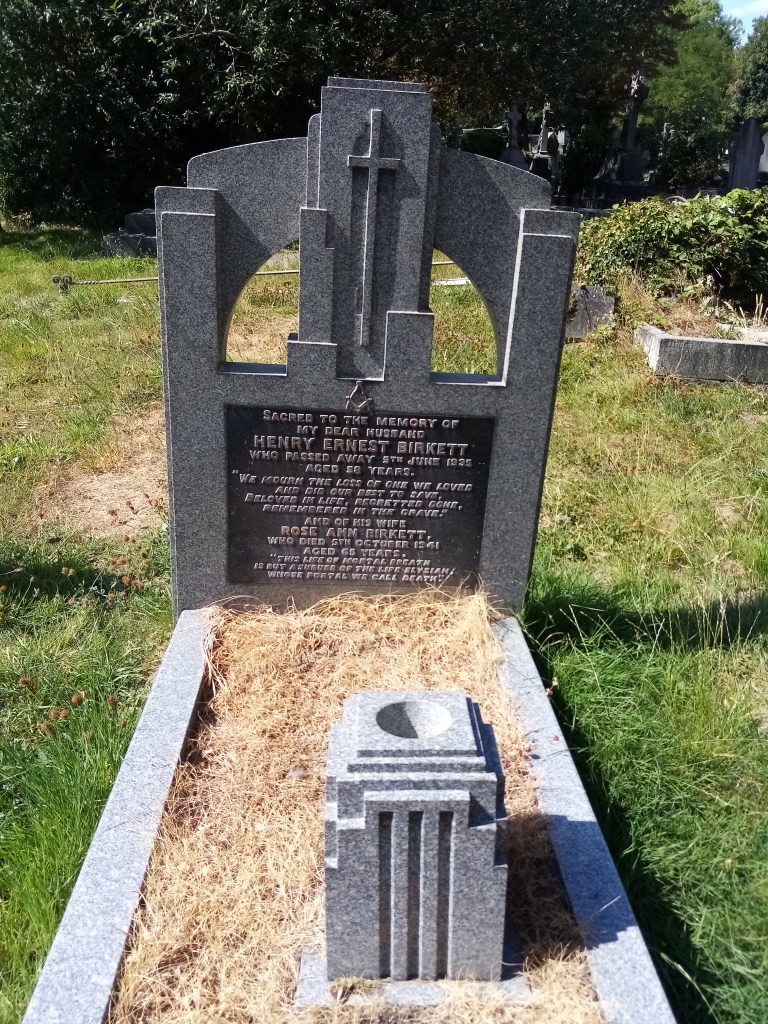
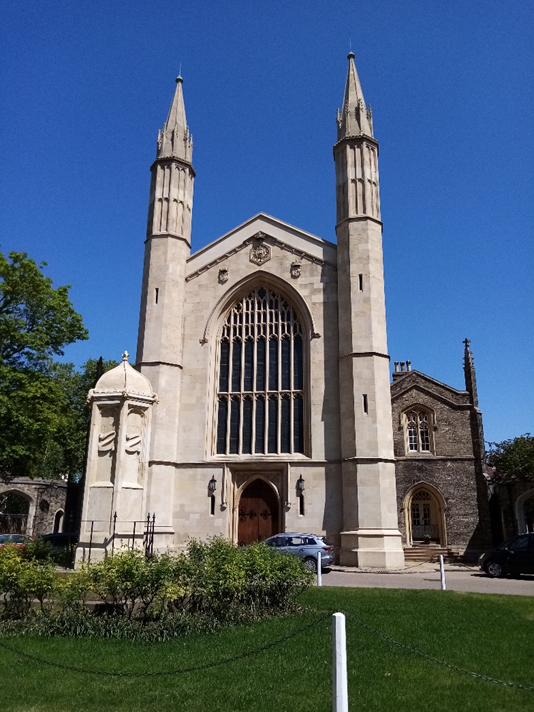
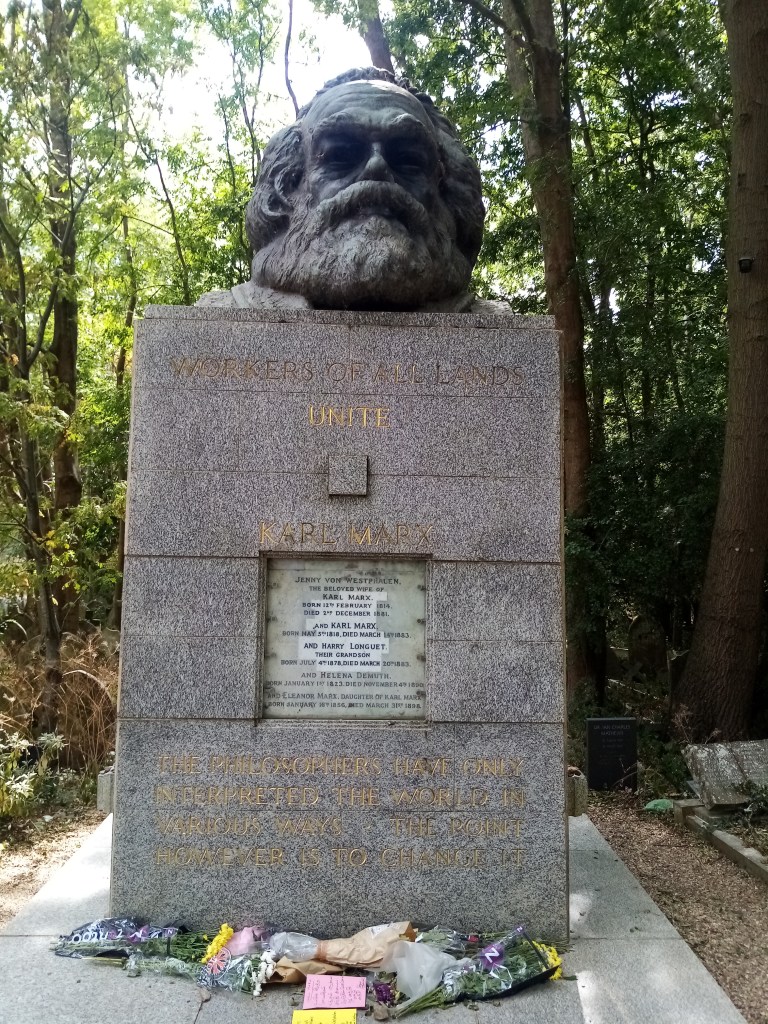
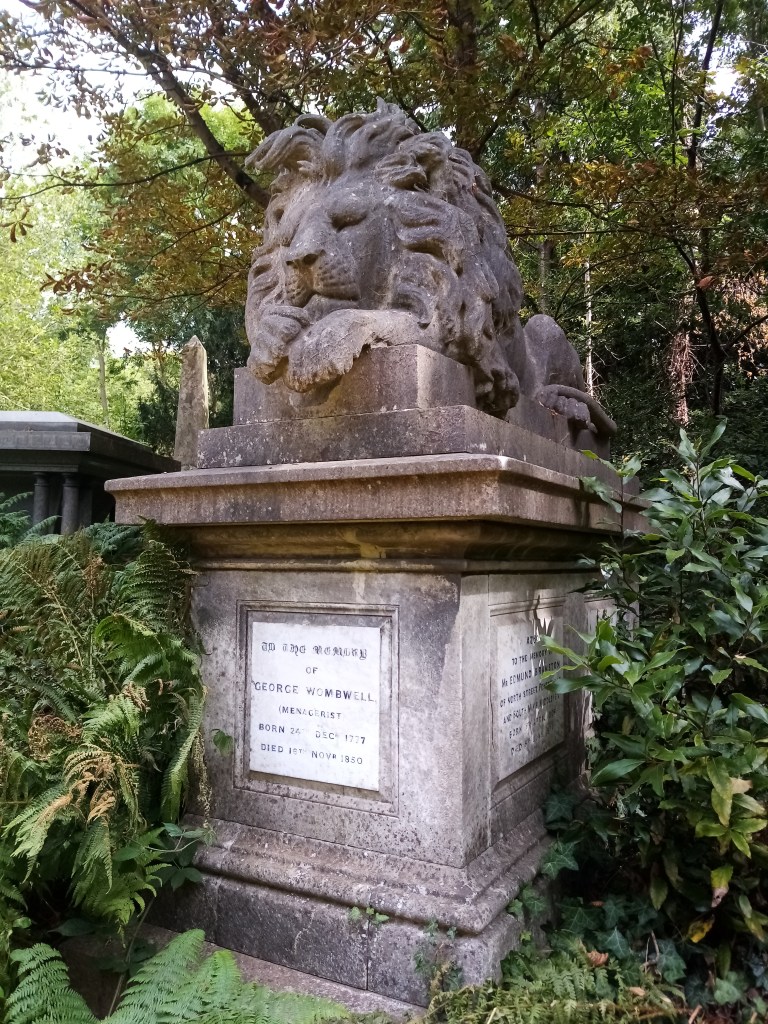
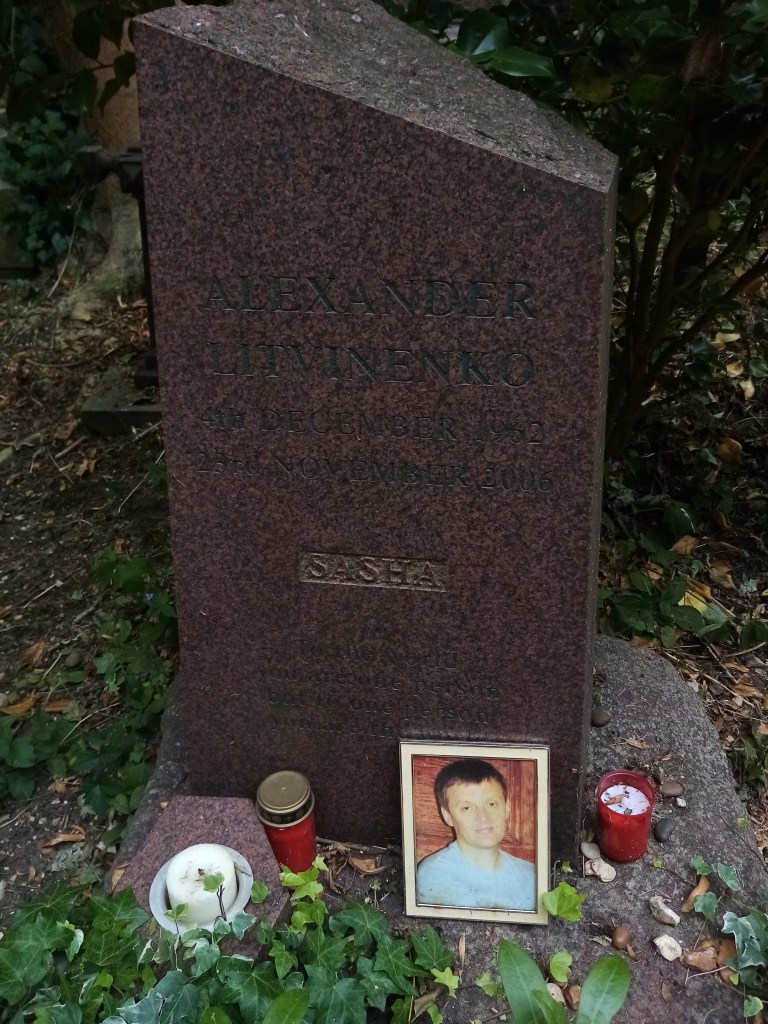
It’s been a challenge to visit all my London places this month. Train/tube strikes, and sweltering temperatures meant that some visits were delayed, which has never happened before in the five years since I started exploring the capital. The extremely hot weather has now hopefully come to an end, the strikes, who knows? Anyway, here are the last of the ‘Magnificent Seven’ cemeteries: Highgate, East and West, and Kensal Green. The fourth one, Camberwell Old Cemetery was built in the ‘second wave’ of outer London relocation of graveyards.

To recap, the Magnificent Seven are burial grounds established in Victorian times when central London graveyards ran out of space as the population increased and land in ‘urban parishes’ was approved for burial (the Burial Act 1832). These burial grounds are now carefully maintained as havens for wildlife and quiet, green spaces to visit in the urban environment.

Highgate Cemetery, East and West

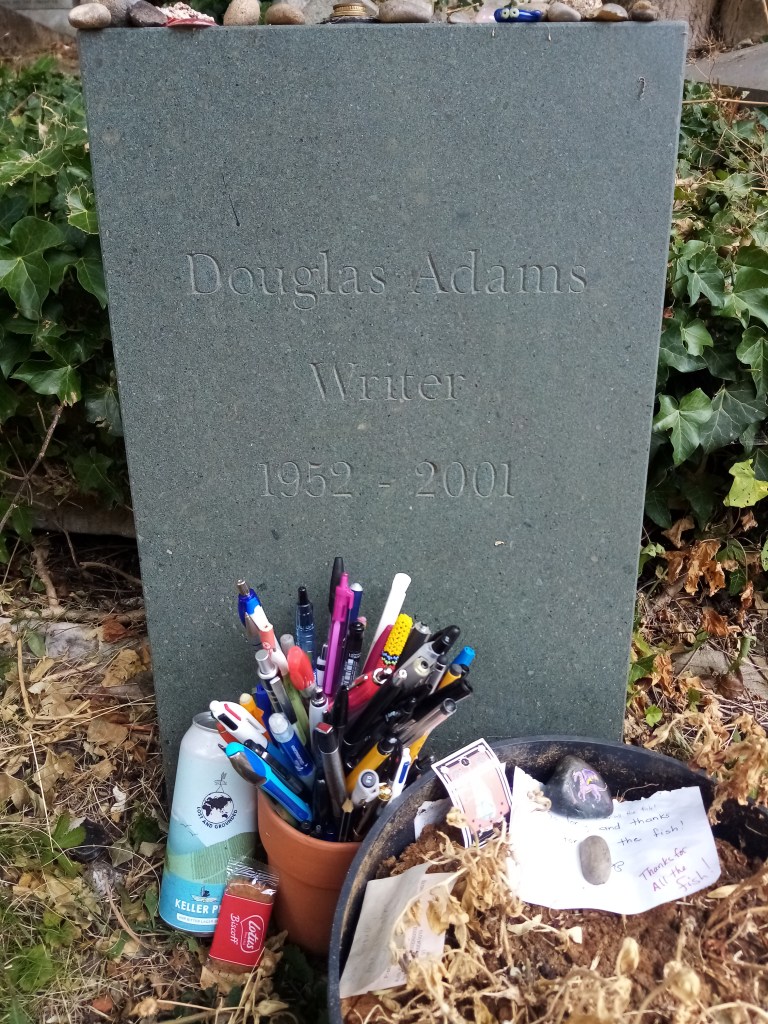
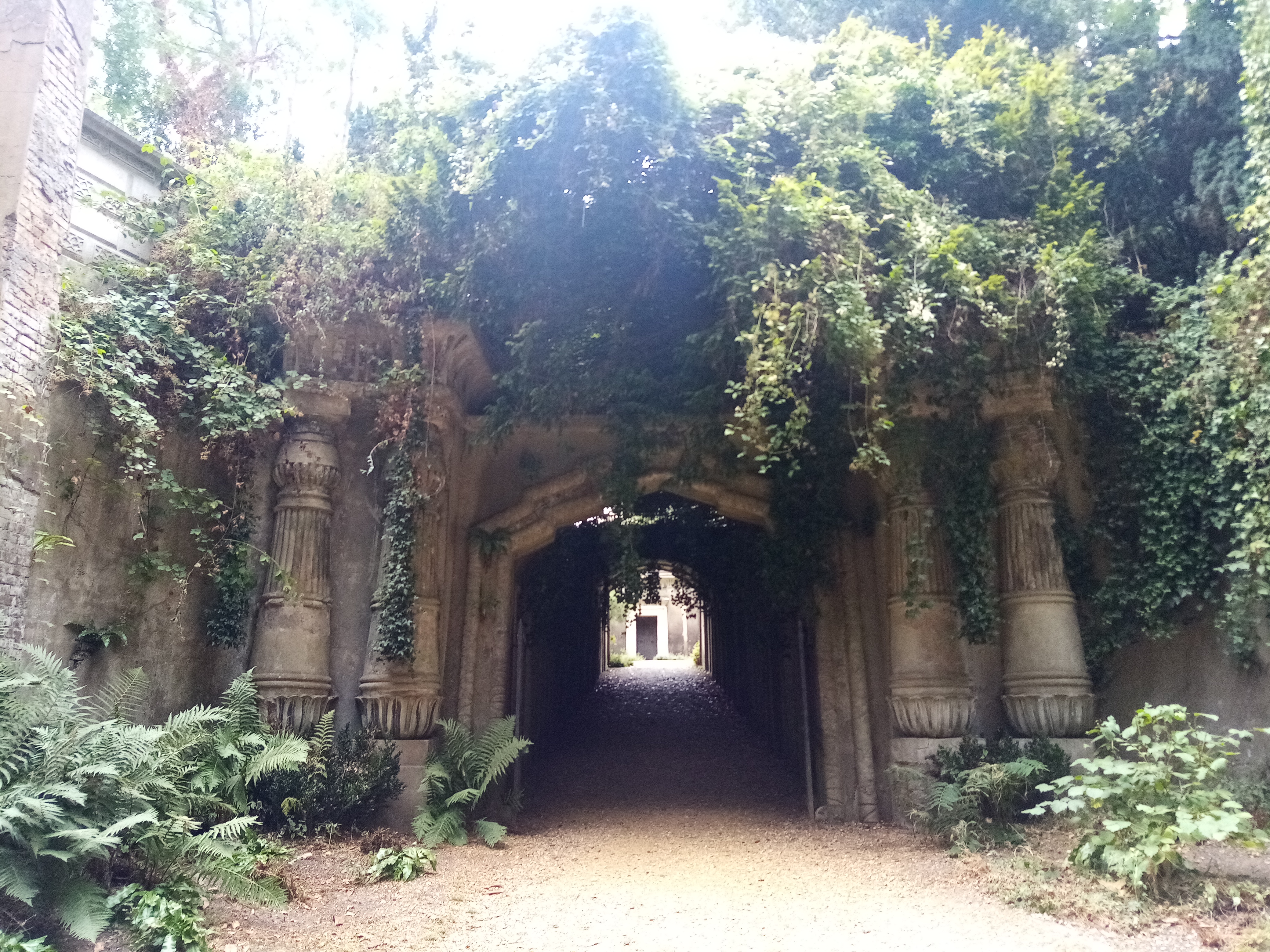
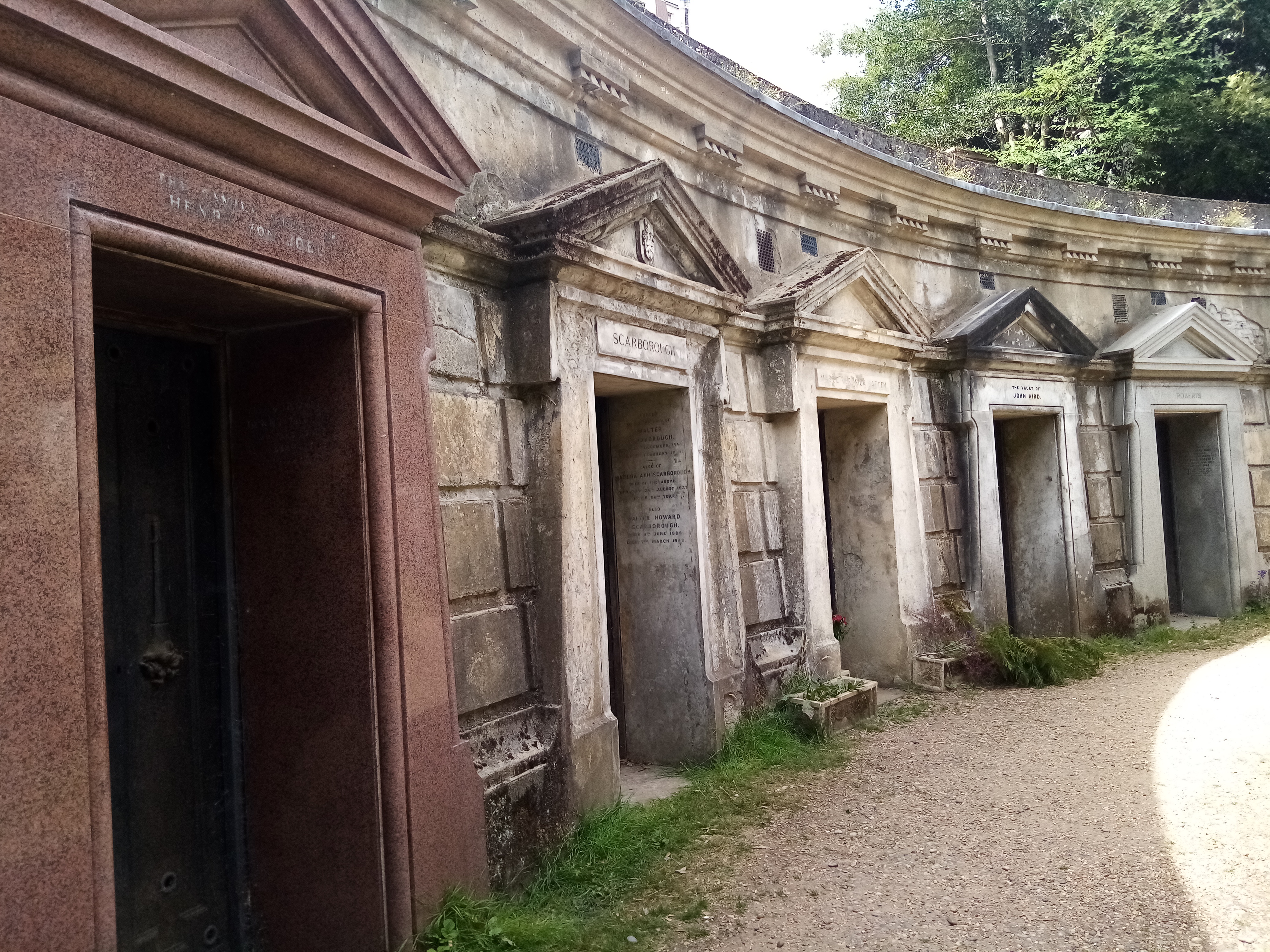
Highgate Cemetery was established in 1839 and there are 170,000 people buried in 53,000 graves across both sites; the cemetery is still open for burials. It’s owned and maintained by Friends of Highgate Cemetery Trust. It’s the most famous of the London Cemeteries and has been popular for both burials and as an interesting day out from Victorian times to the present day. The Victorians’ interest (or perhaps even obsession) with death and burial practices led to the creation of an area of Gothic tombs and catacombs and the Egyptian Avenue in the West Cemetery.

I never thought I’d be a ‘grave tourist’, but these two sites contain a fascinating combination of history, fame, notoriety and quirkiness and I spent over TWO HOURS wandering both sites; here are my favourites. First the East Cemetery:

West Cemetery

George Michael and members of his family are buried here, but it is forbidden to take photographs of the grave site.

Entrance to Catacombs
Catacombs

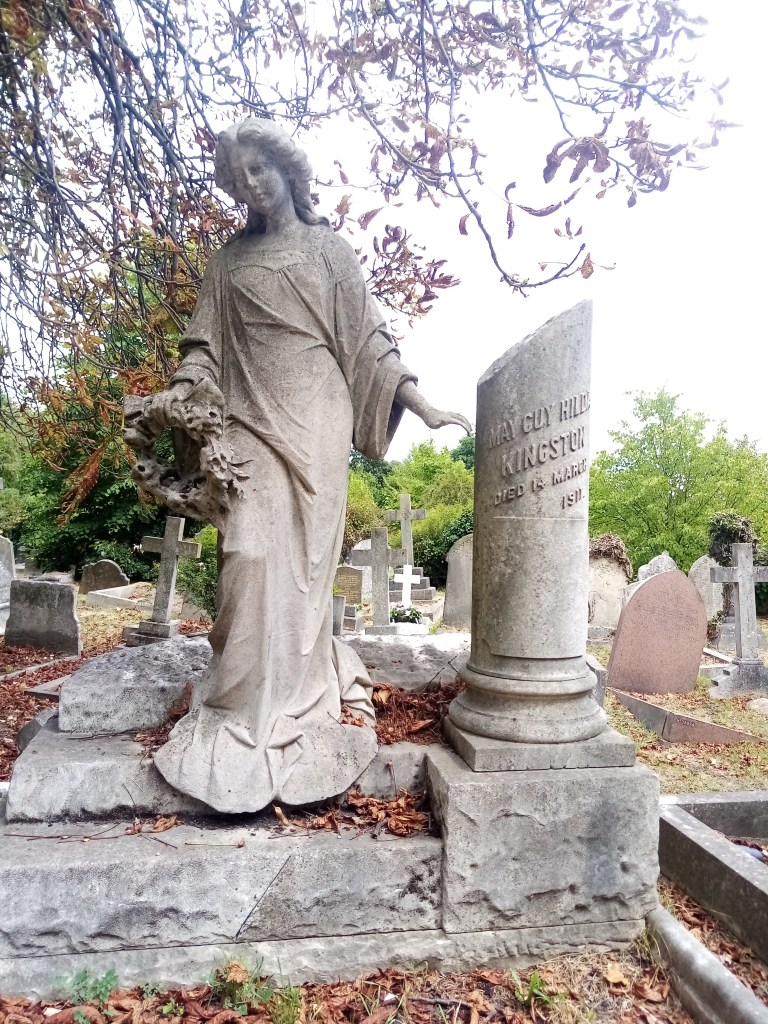
Kensal Green Cemetery   

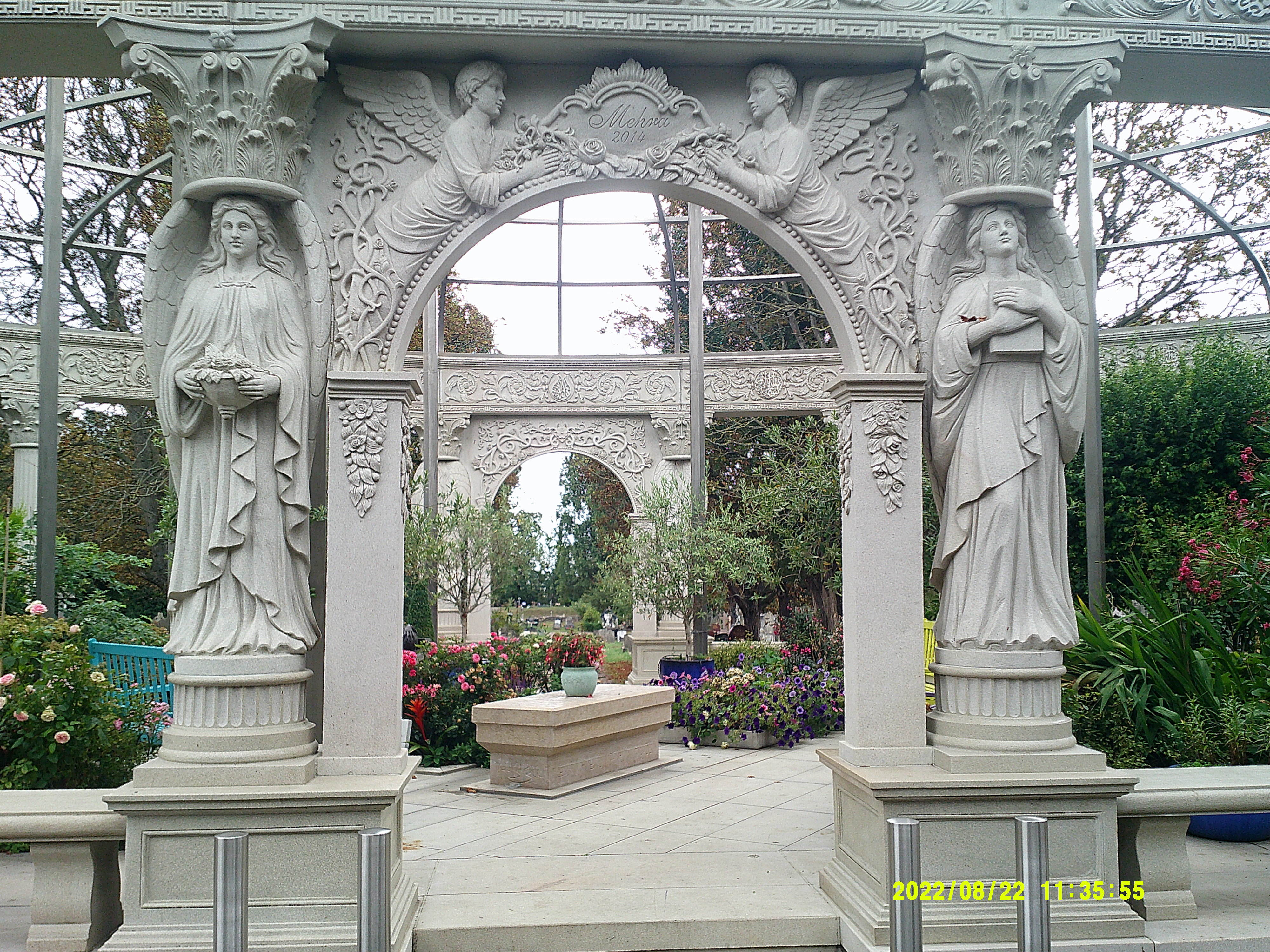
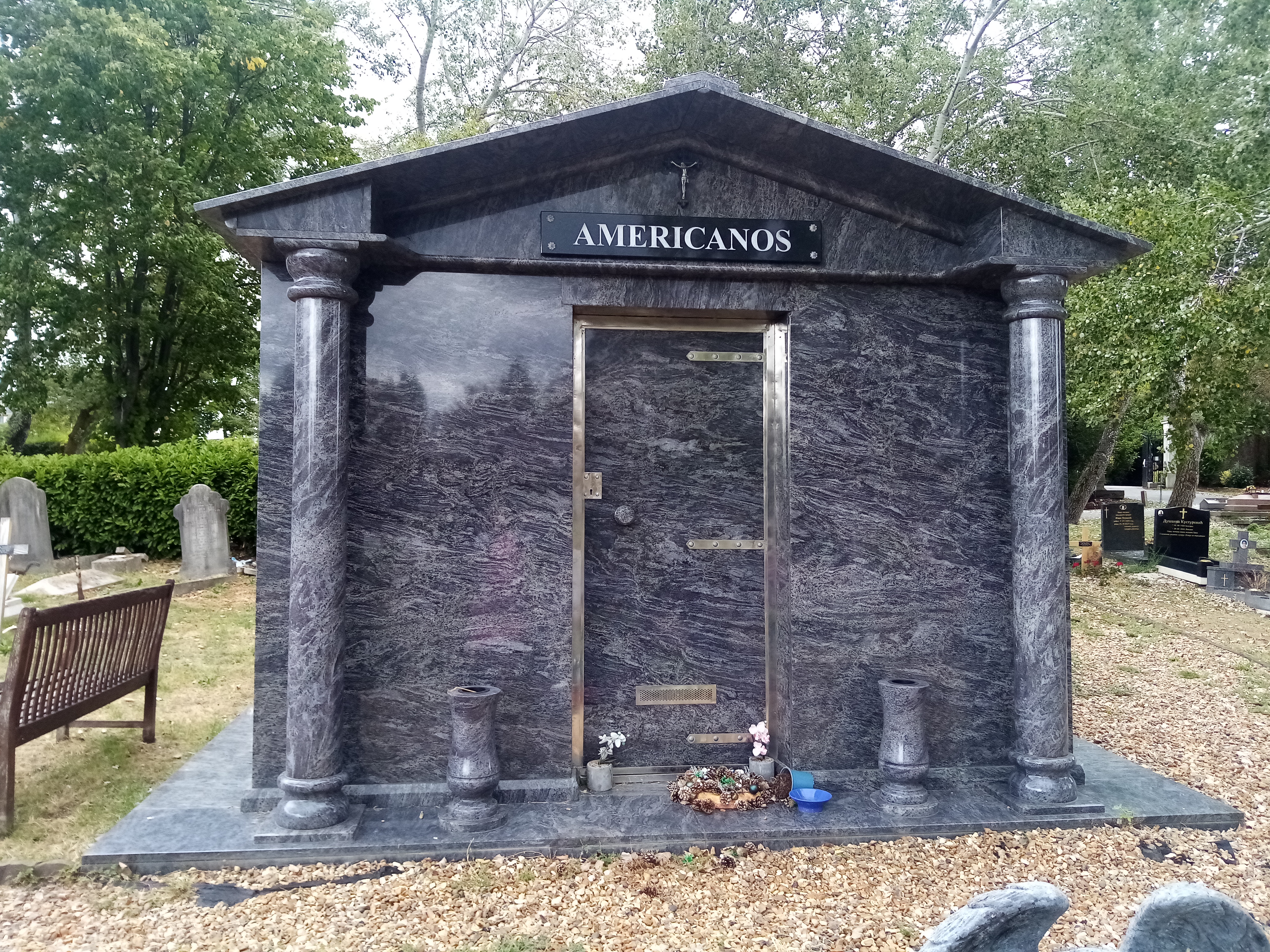
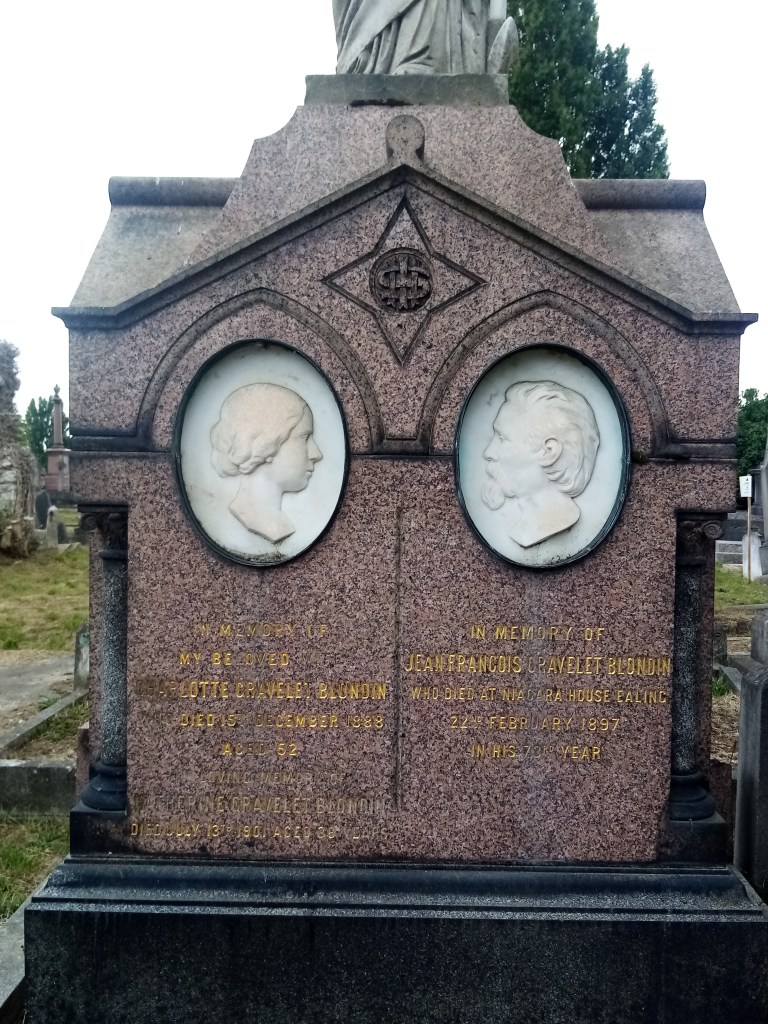
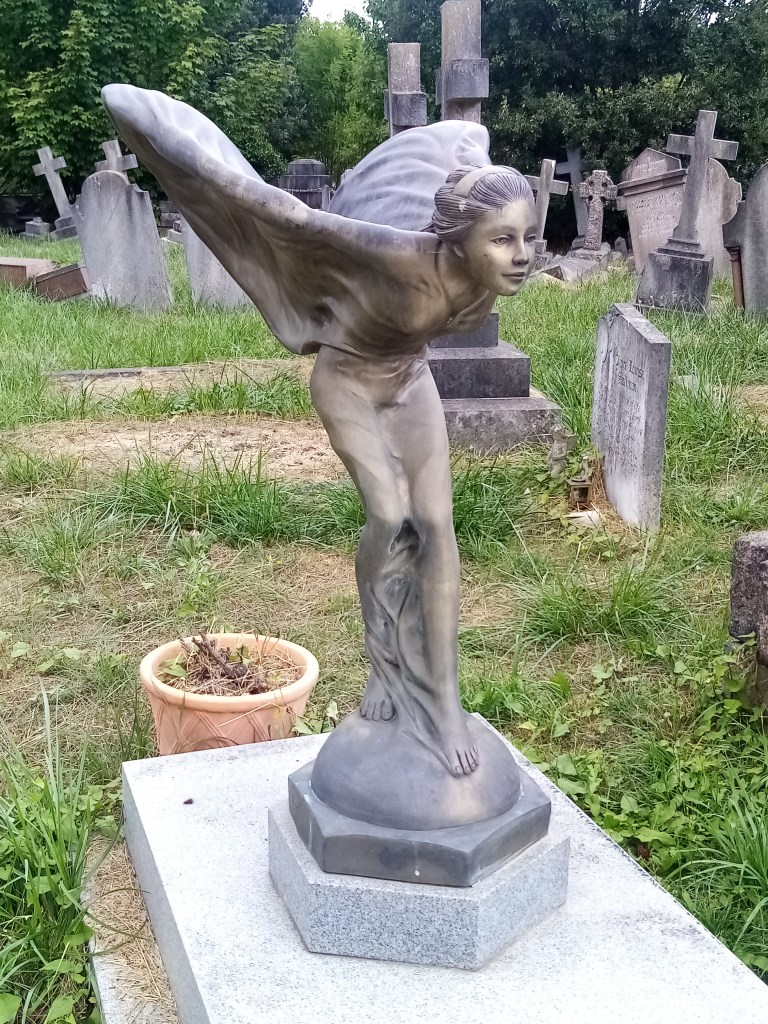
This was originally known as the General Cemetery of All Souls; it was established in 1833 and is the oldest of the Magnificent Seven and is still in operation. There are 65,000 graves and 250,000 interments, including 500 members of the British nobility.  There were originally four separate areas: Roman Catholic, Church of England, Christian Orthodox (Greek), and a Christian Dissenters cemetery. There are several large, imposing monuments dated in the 18 and 1900s, reflecting the status of the person buried therein; but there are also a couple of impressive modern ones (see pictures below.) There are also large burial chambers, individual ‘houses’ for whole families. Like most of the cemeteries, Kensal Green is built on London clay which has shifted and caused some of the monuments to lean precariously.

A spectacular monument to a 12 year old boy

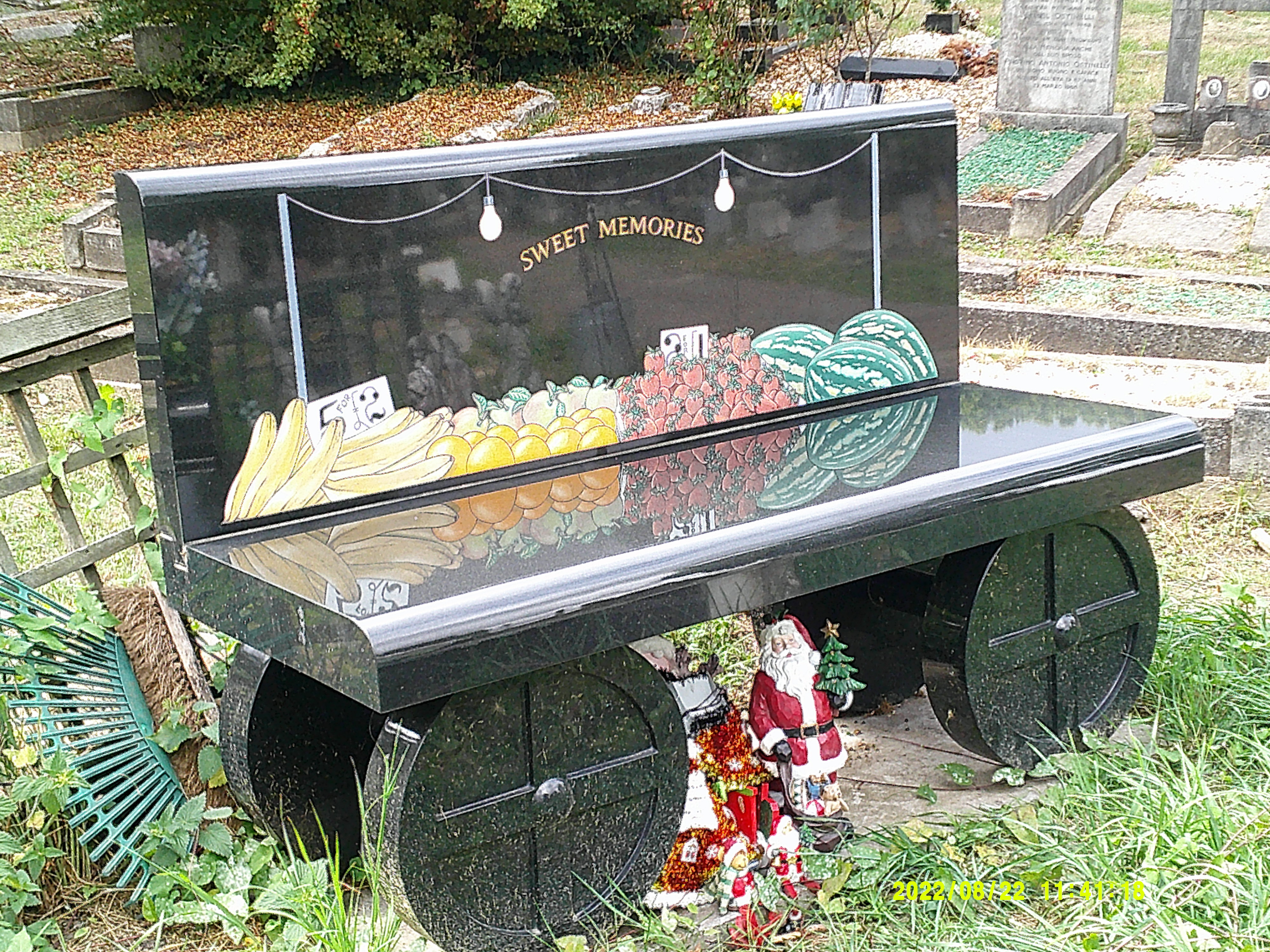
Memorial to a fruit and veg market trader – with Christmas decorations all ready!
Modern burial chamber

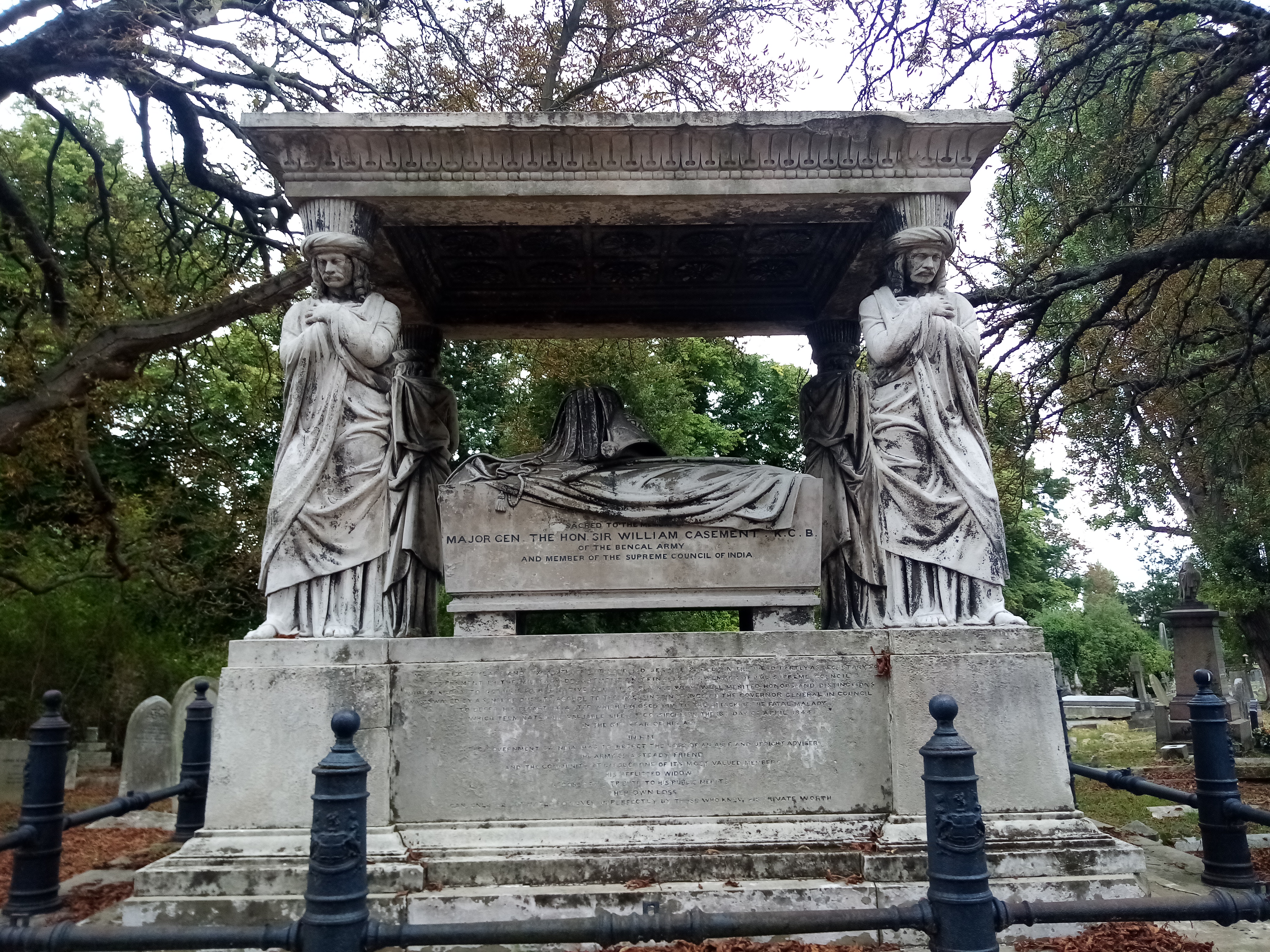
William Casement, Viscount of India
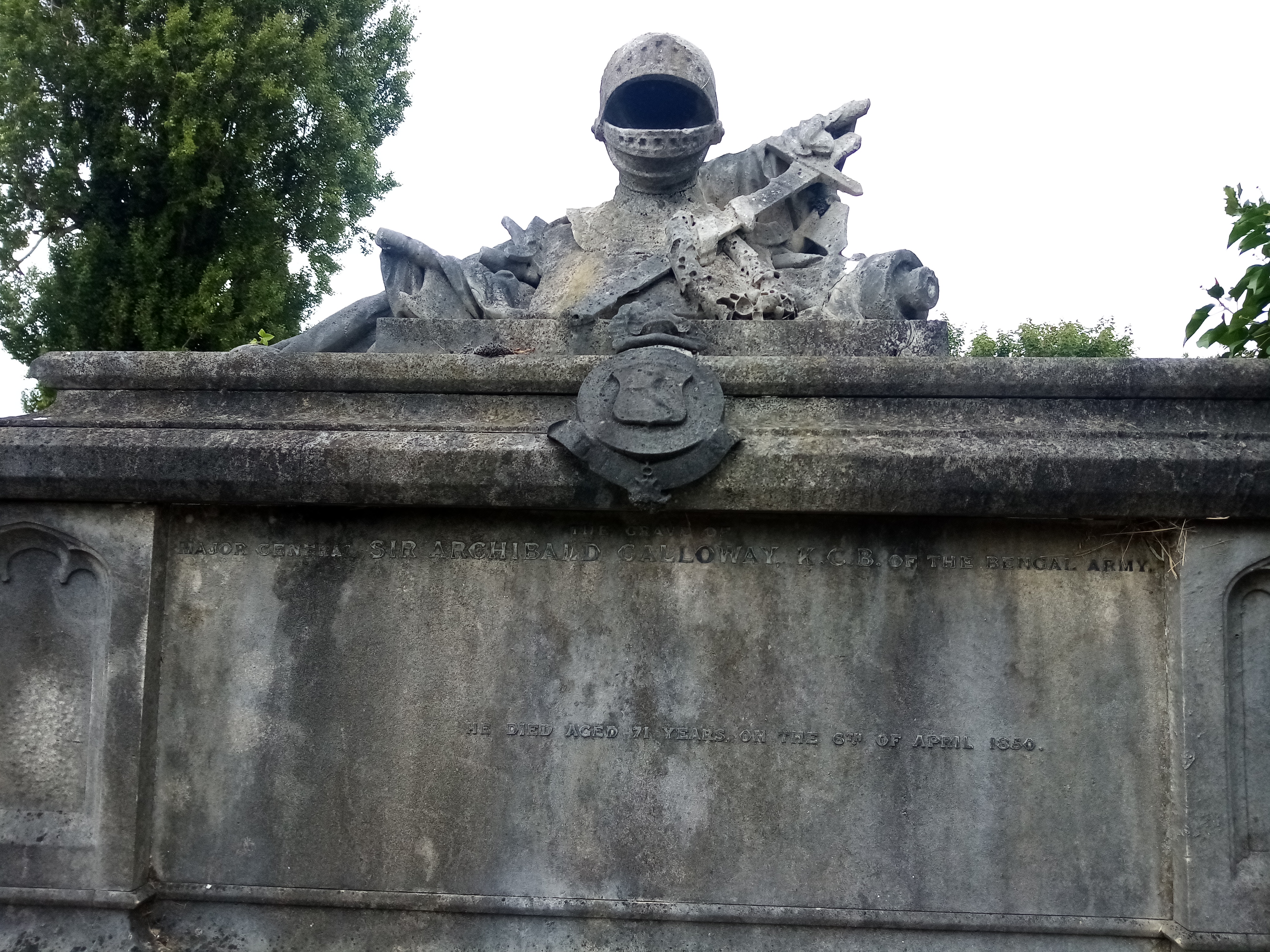
Another Viscount of India with battle armour monument

Camberwell Old Cemetery

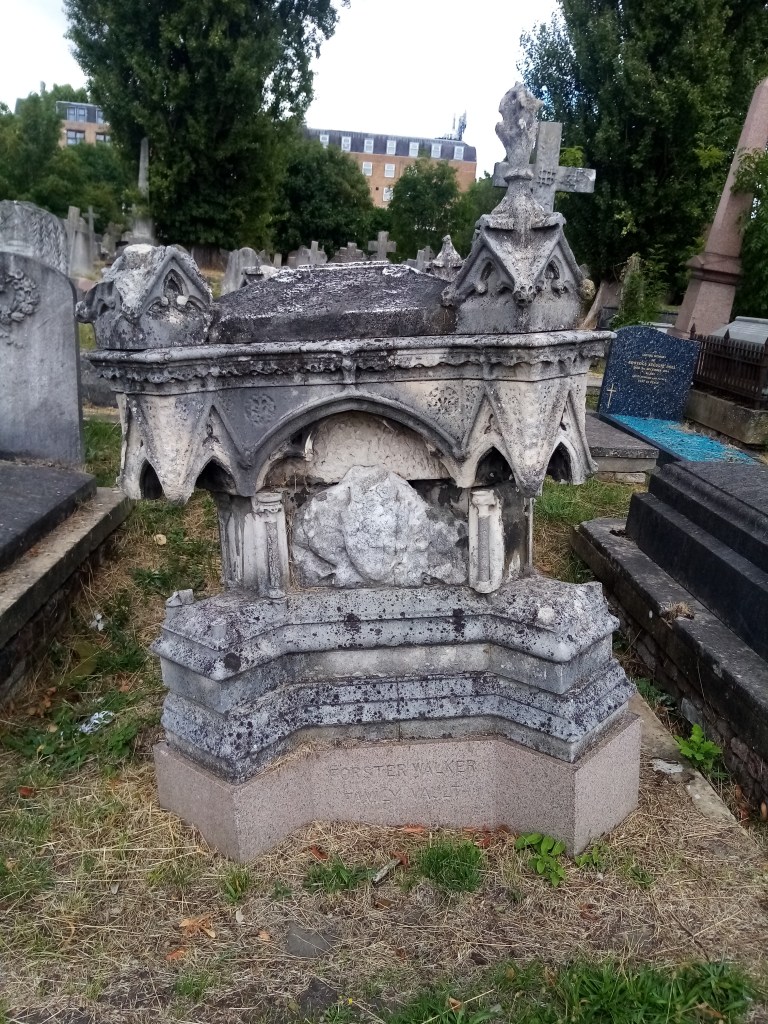
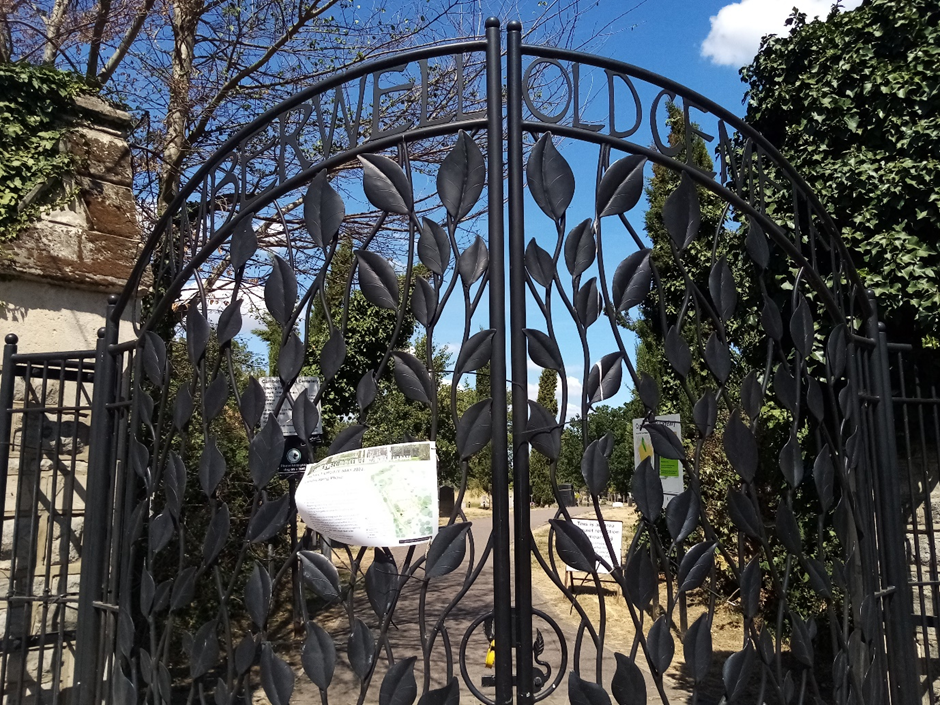
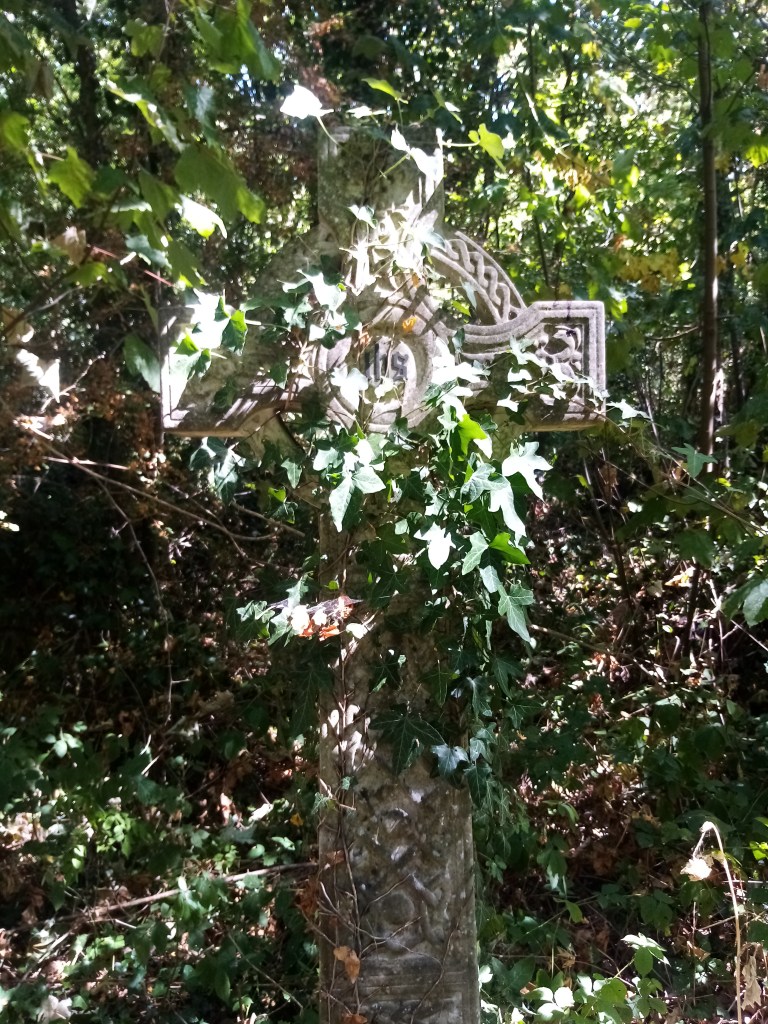
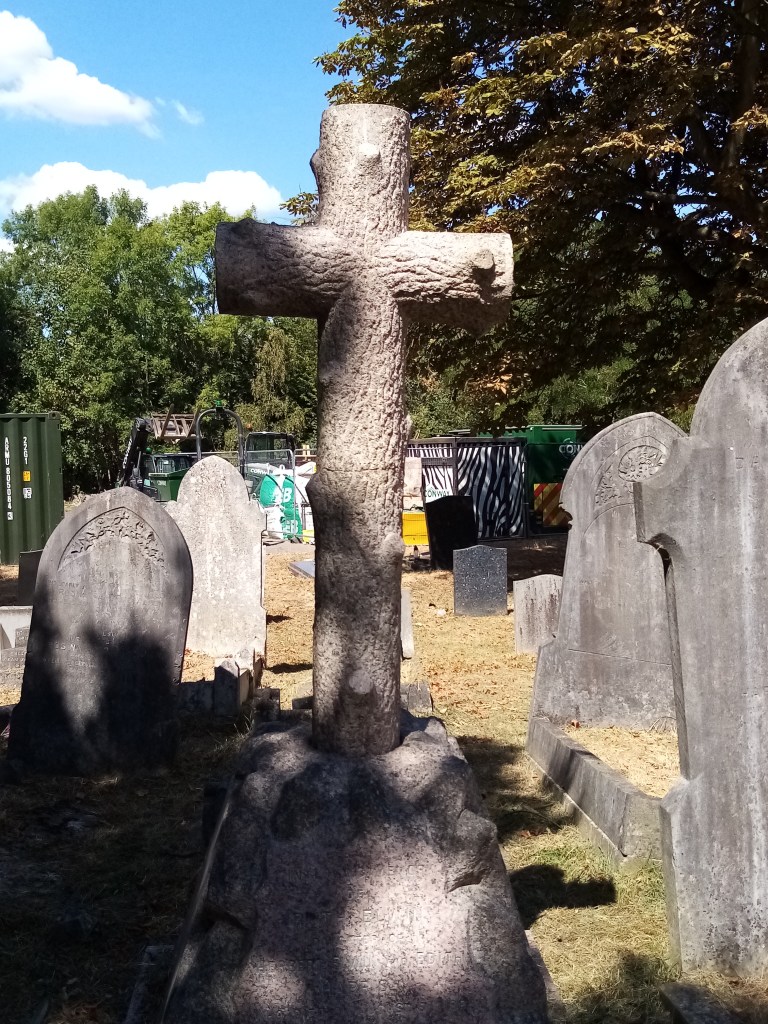
Two cemeteries were established in 1855 in Honor Oak, South East London, as part of the relocation of cemeteries to the suburbs. Over 30,000 burials took place in the next thirty years, and subsequently a new cemetery was established half a mile away. These cemeteries are still open for burials, and there were some very elaborate, ‘showy’ monuments from recent years, mostly commemorating the lives and premature deaths of children and young people; heart-breaking to read the tributes. Needless to say, I have not included any photos of these recent monuments. The following photos reflect Victorian Gothic romanticism in commemorating the deaths of loved ones; elaborate and showy in their own way at the time.  And check out these beautiful gates!

Gates of Camberwell Old Cemetery

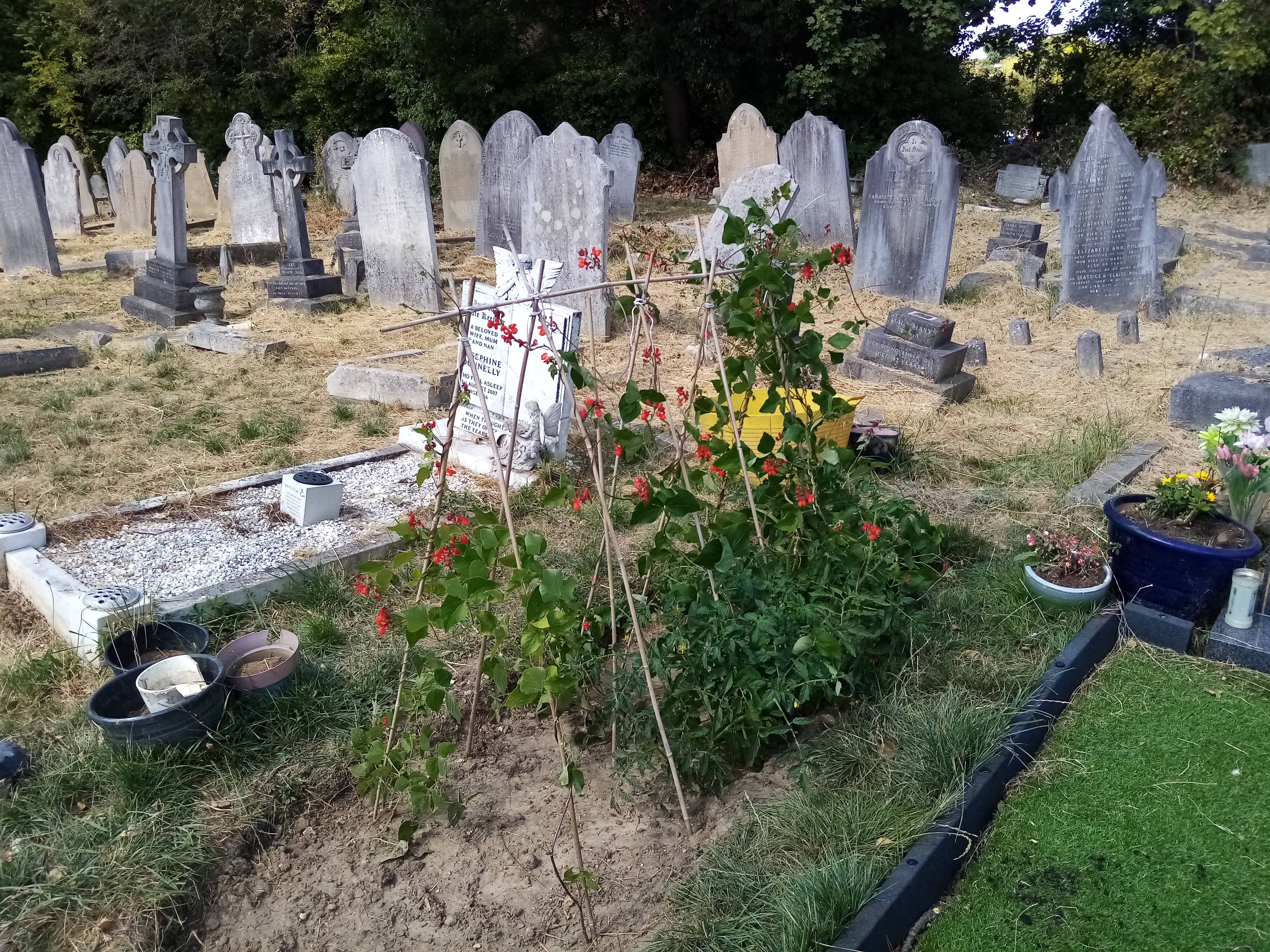
Good use of former grave site – growing runner beans!

It’s been fascinating to explore these Victorian cemeteries and observe how the fashion for commemorative monuments has changed over 180 years. Many of the graves, old and new, demonstrate the family’s dedication to celebrating their loved one’s life in a meaningful way. However, reading the inscriptions was very poignant and made me feel quite sad, even if the person had been dead for 100 years, especially if it was a child or young person. So I’m glad that the Cemeteries Series has now finished!

July – Skyscrapers and City Churches 2 (years later)

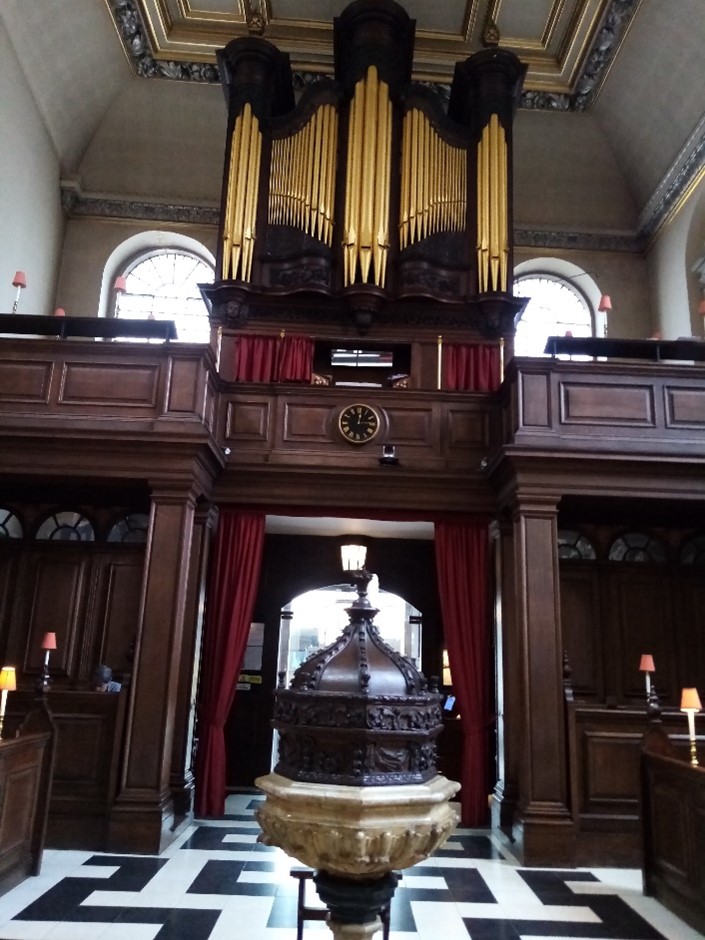
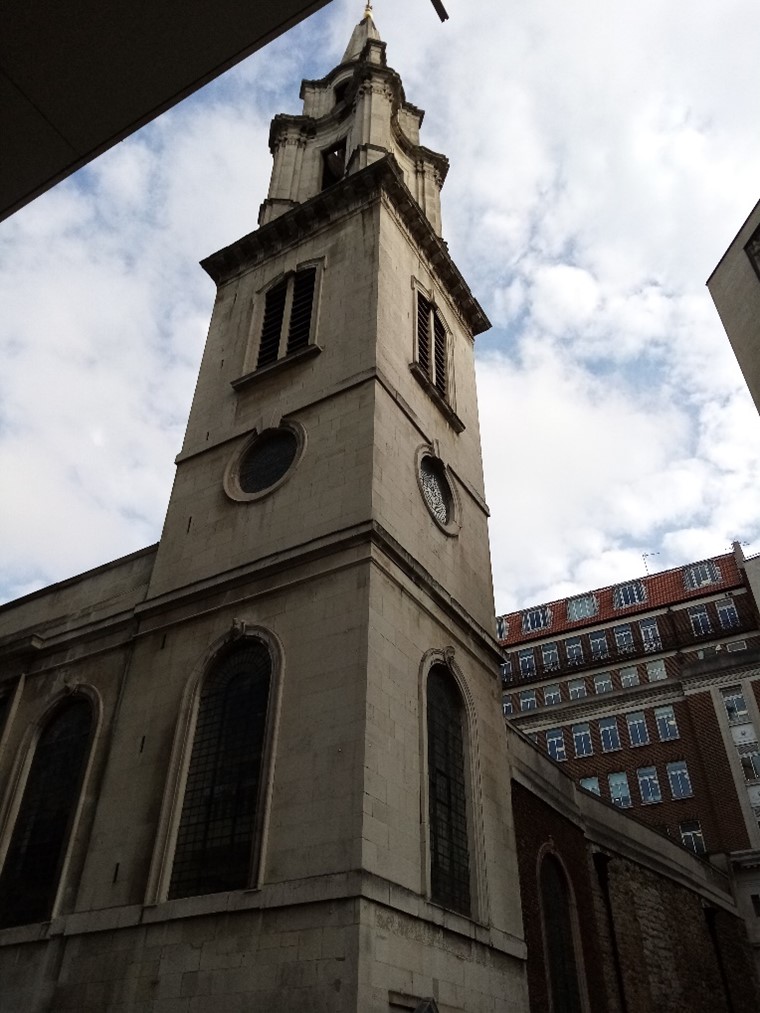
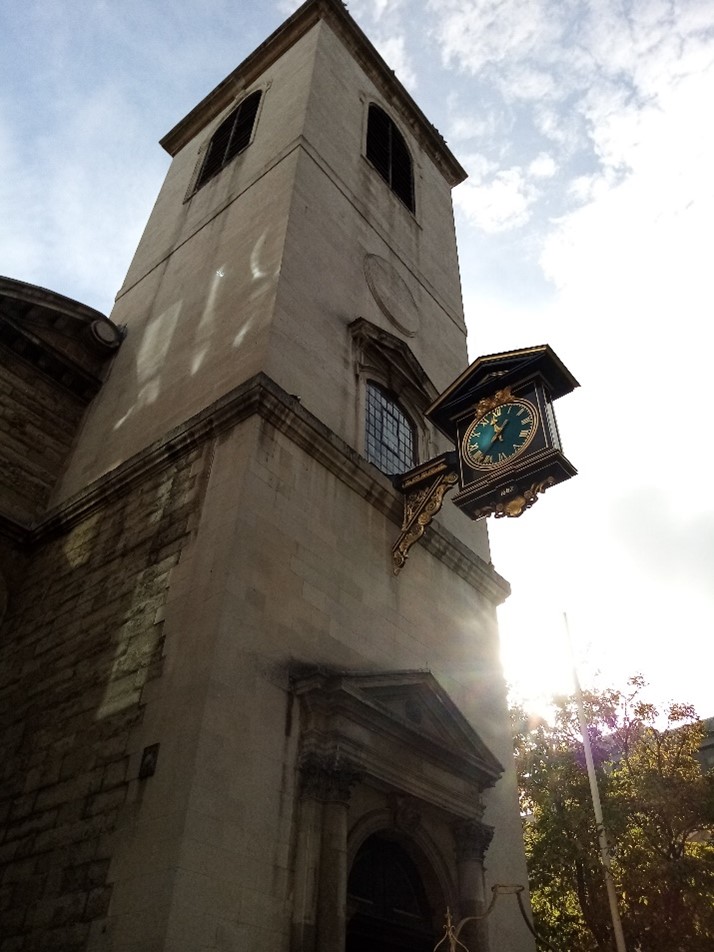
Two years ago, I walked the deserted streets of the City of London, looking up at the ancient churches now dwarfed by the skyscrapers of the late 20th and early 21st centuries. In my July 2020 blog post, I mentioned that I would love to look inside these churches when circumstances allowed. So exactly two years later, I’ve revisited four of them, gone through their doors for the first time to explore their histories and present-day stories, and I wasn’t disappointed!

St Olave’s Hart Street

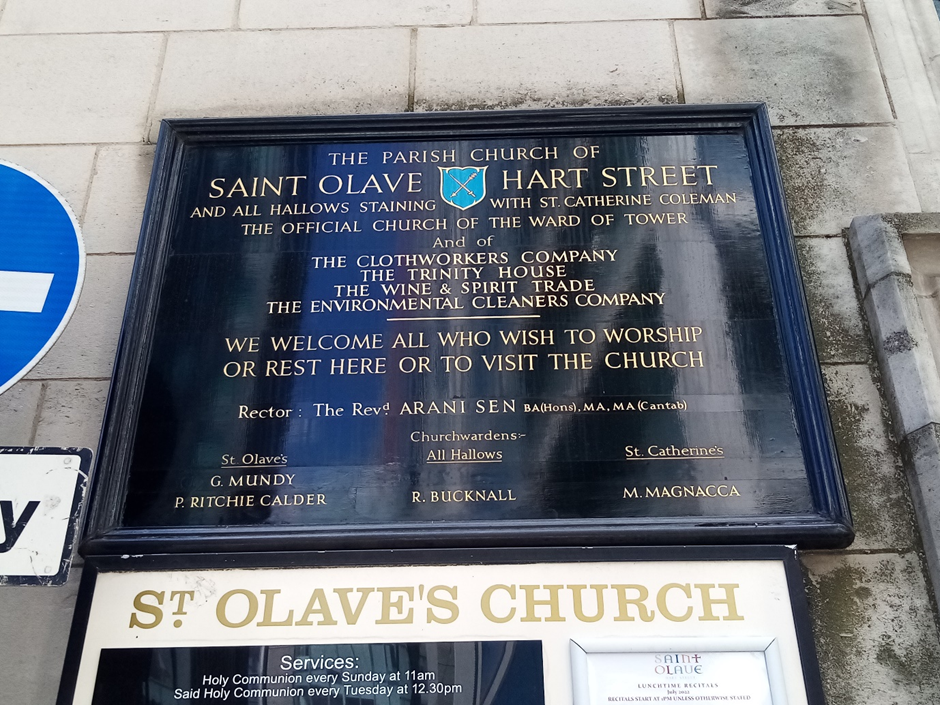
St Olave’s is the ‘official church’ of several City Livery Companies

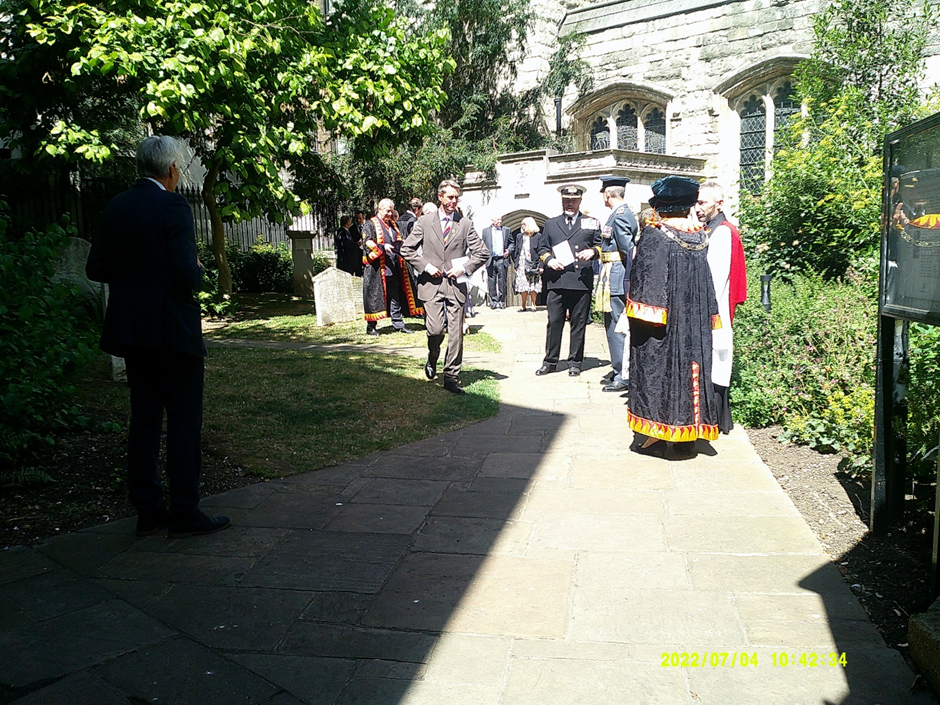
What’s interesting about St Olave’s is that it’s the Parish Church of several of the City’s Trade Guilds or Companies. When I visited I had to wait to go in because a service of thanksgiving for the Worshipful Company of Fuellers was taking place inside. The Company of Fuellers is associated with the whole energy sector and began as the Coal Traders Company. The company motto is In Carbone Robur Nostrum – Our Strength in Coal. St Olave’s is one of the smallest churches in the City and is one of the few that escaped the Great Fire of 1666, due to the surrounding houses being blown up to create a fire break. The flames came within 100 yards of the church, but a change of wind direction saved it. The church is dedicated to King Olave ll, the Patron Saint of Norway, who fought alongside the Anglo-Saxons against the Danes in the Battle of London Bridge in 1014, and a church was erected on the battle site. The current church dates from the 13th Century, replacing the earlier wooden construction. 1,000 years of history, right there! (My favourite Worshipful Companies – one very old: The Cordwainers Company; and one very new: The Environmental Cleaners’ Company!)

The Worshipful Company of Fuellers, taken from a respectful distance
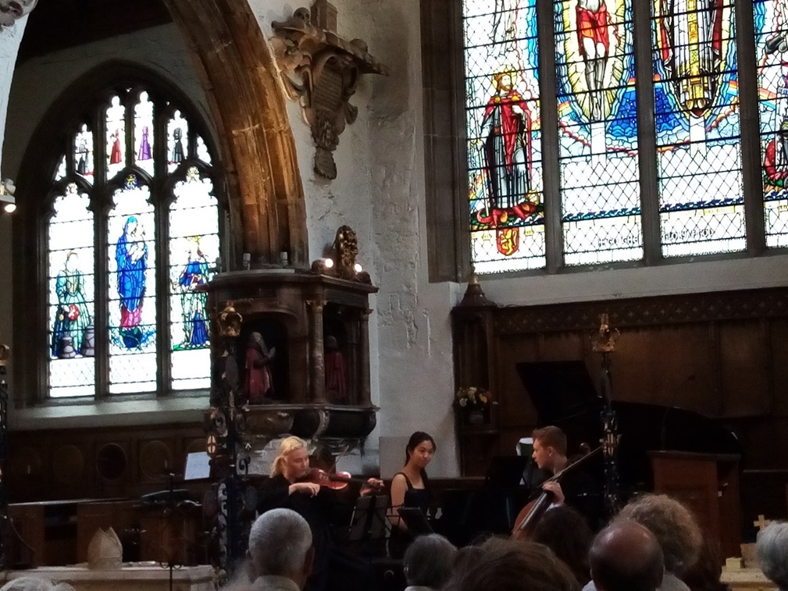
Lunchtime concert on a previous visit to St Olave’s

St Katherine Cree

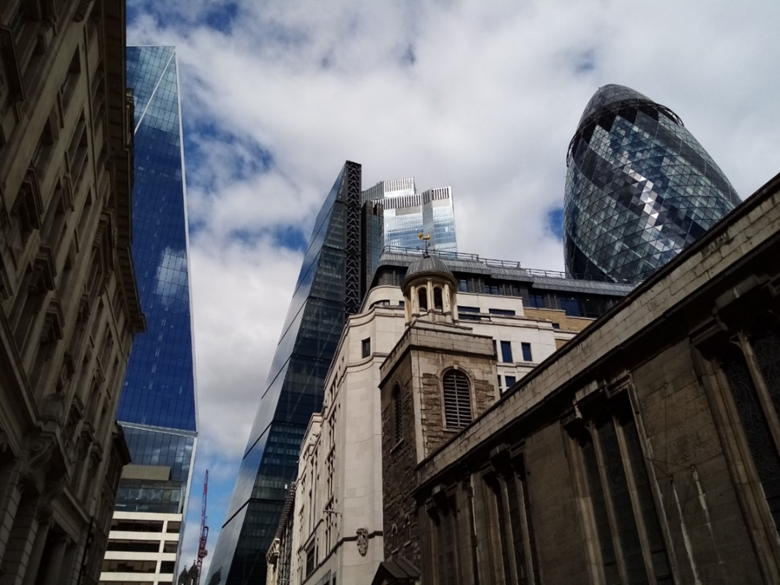
I like to think that the surrounding skyscrapers are protecting tiny St Katherine Cree!

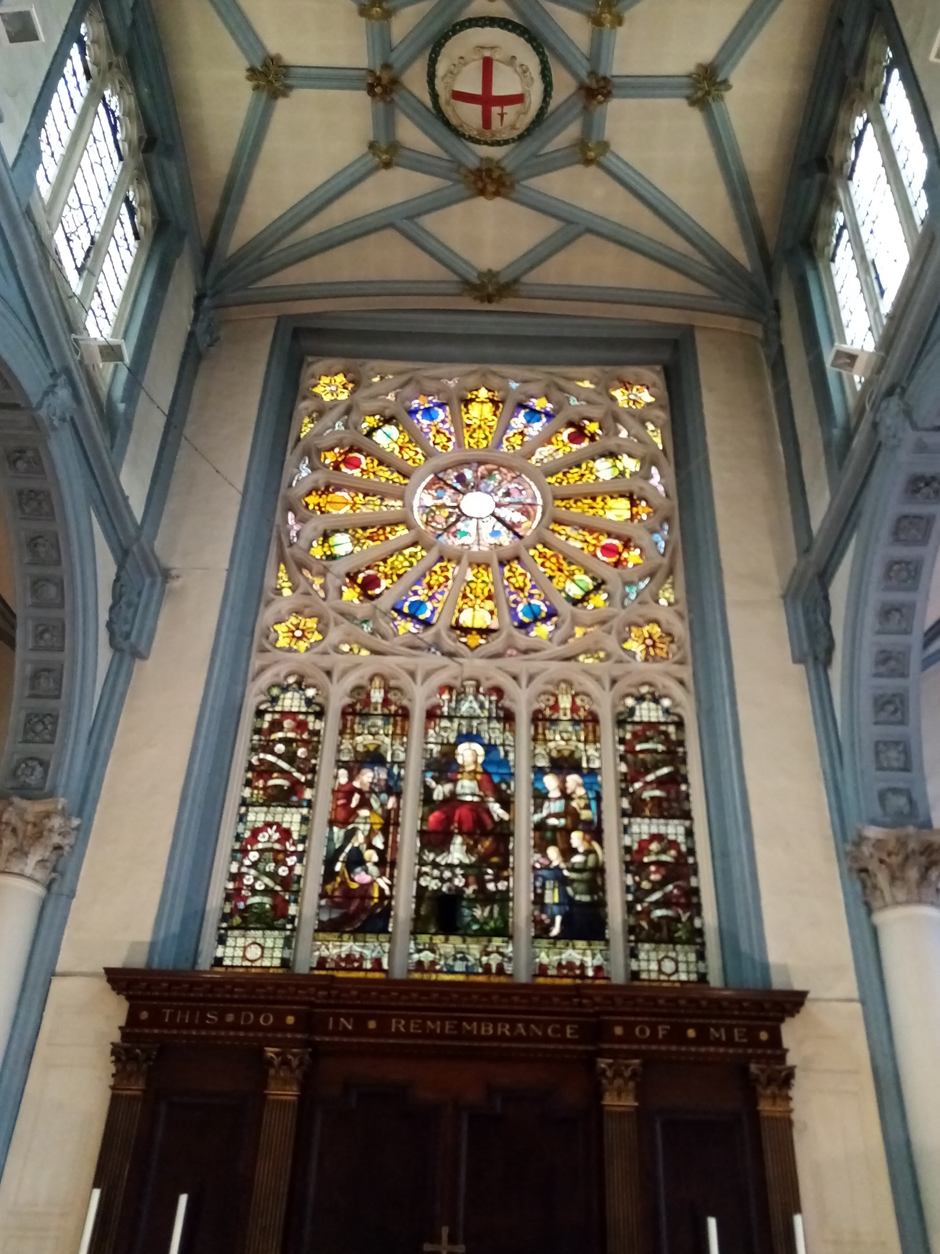
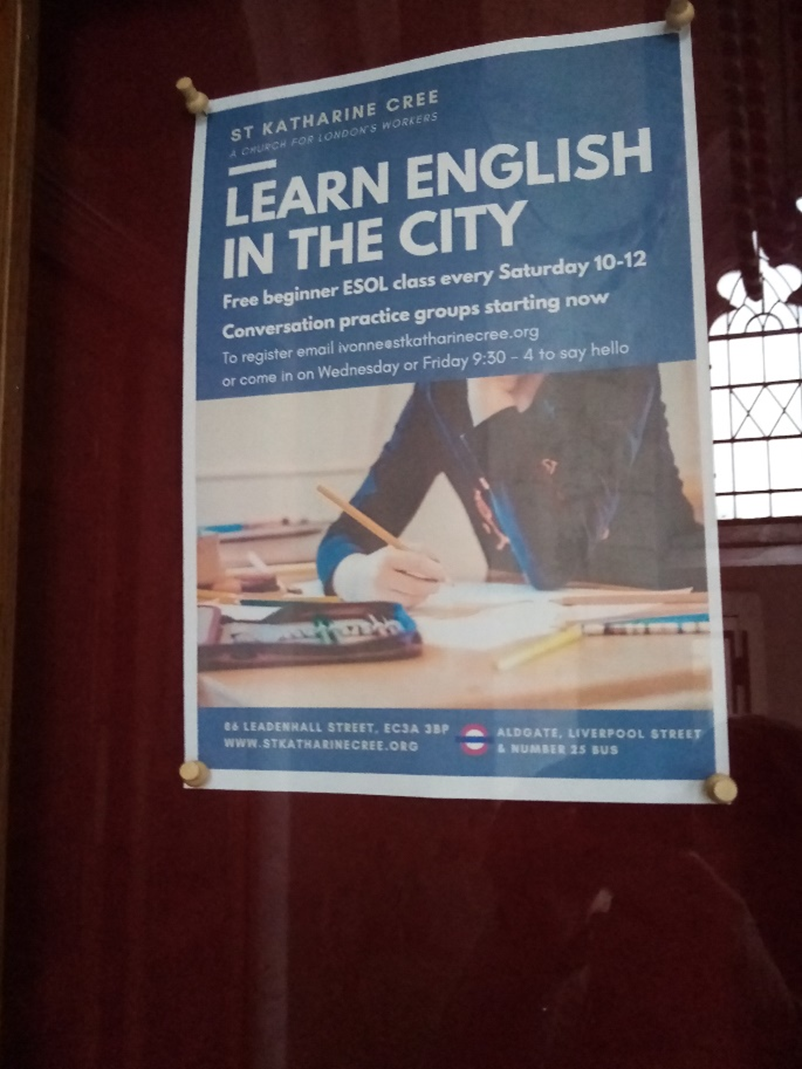
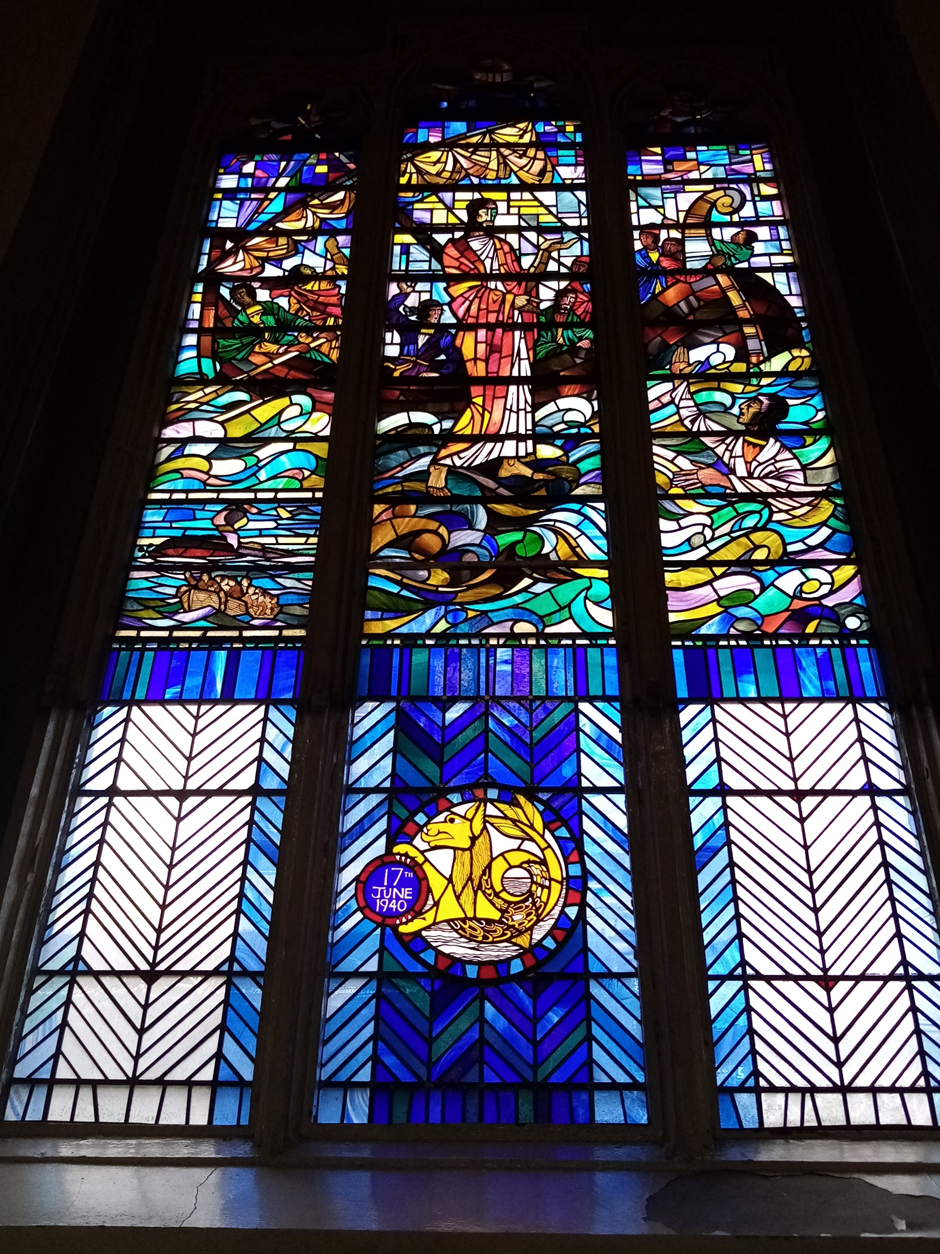
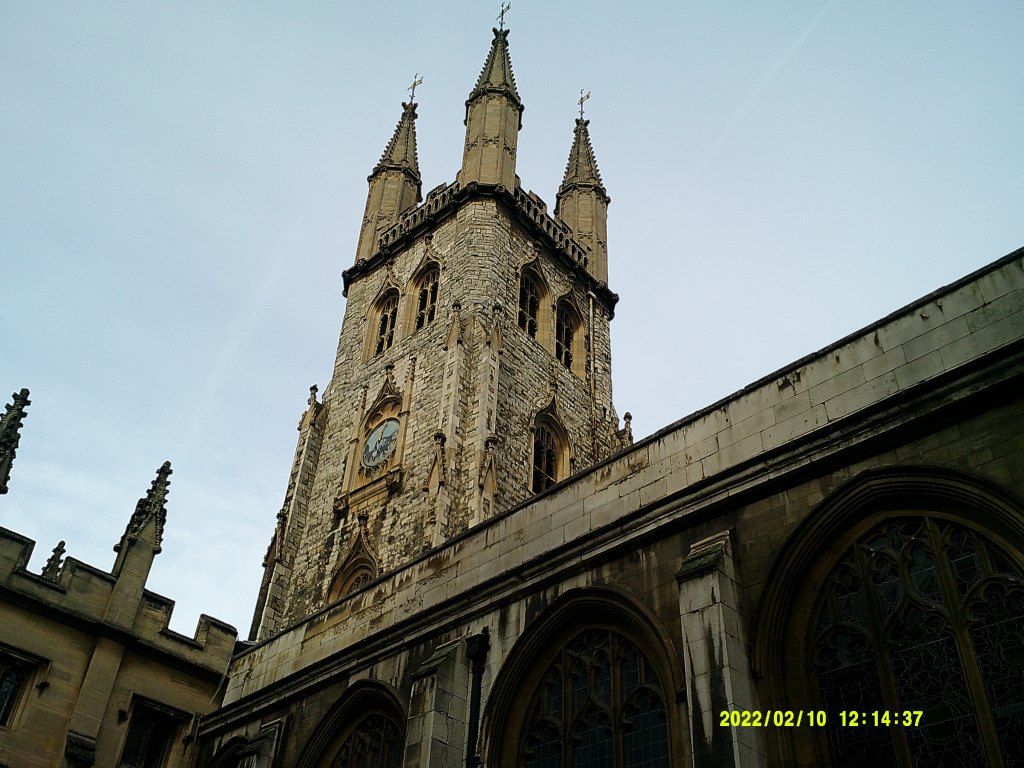
A priory was founded on this site in 1108 and a separate Parish church was built in 1280 for the growing population. The present building was built in 1628-30 ‘a significant church of the Jacobean period, a time when few churches were being built. It is the only Jacobean church to have survived in London’ (Wiki). I’m guessing that all other churches are either much older or much newer! Inside, there is a spectacular rose window, reputedly modelled on a larger one in the old St Paul’s Cathedral which was destroyed in the Great Fire. On the vaulted ceiling are bosses (small plaster sculptures) representing the Arms of seventeen of the City’s Livery Companies. Tradition has it that these Companies used St Katherine Cree after the 1666 Fire while their own churches were being rebuilt. The church is another Guild church with a specific ministry to finance, commerce and industry, reflecting the activity which goes on around it. the Today St Katherine Cree serves its week-day community with English Language courses, lunchtime Bible study and Holy Communion and Lloyd’s choir practices. A church with 1,000 years of service to its changing community.

Modern stained-glass window

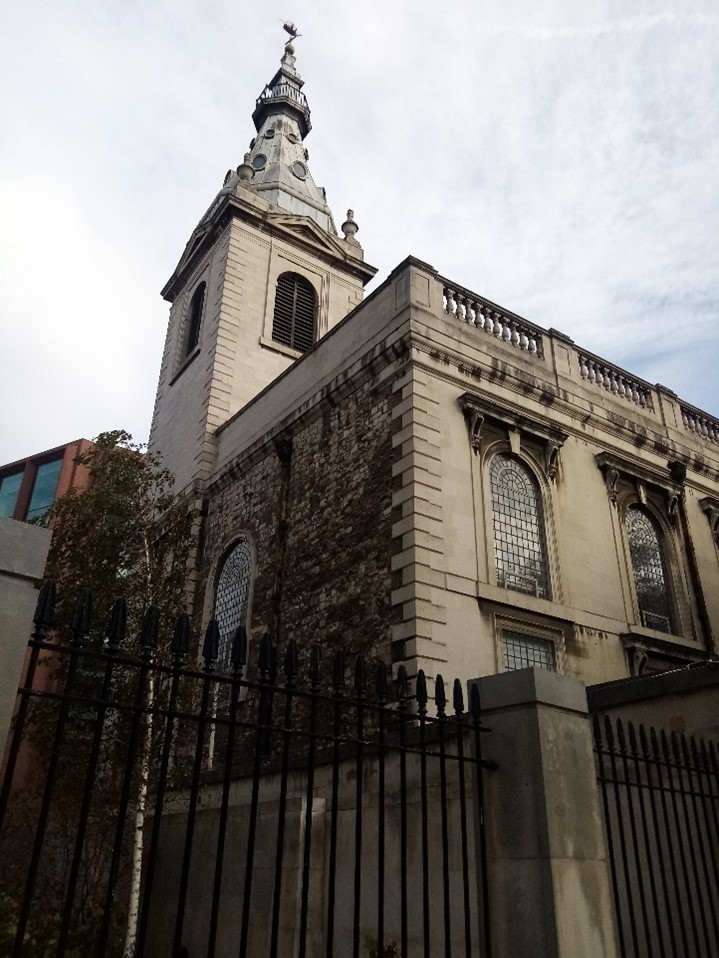
St Andrew Undershaft

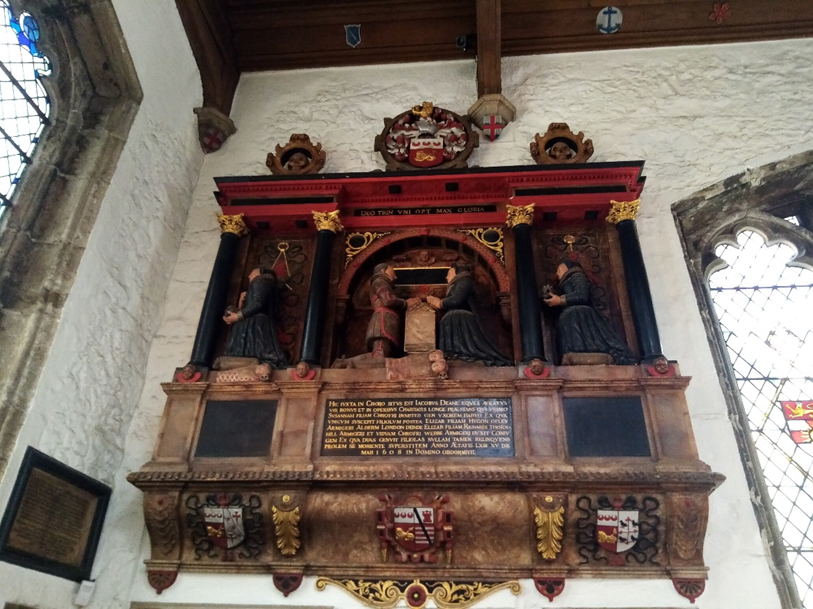
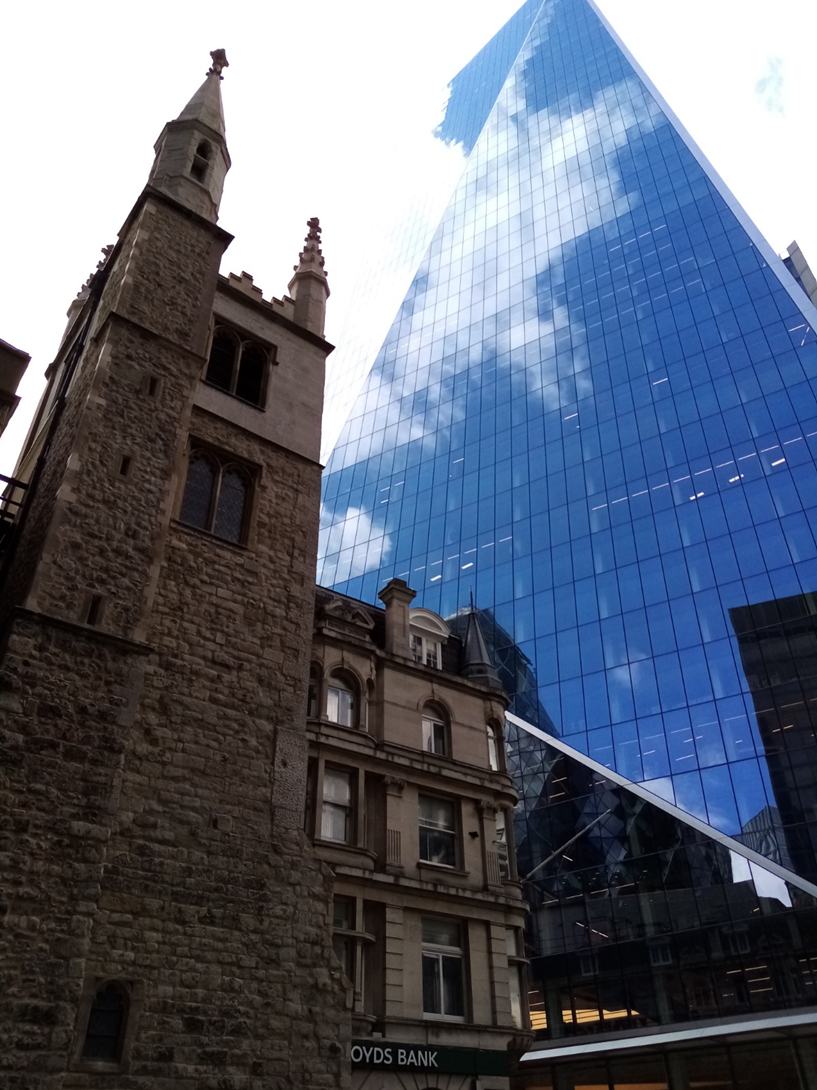
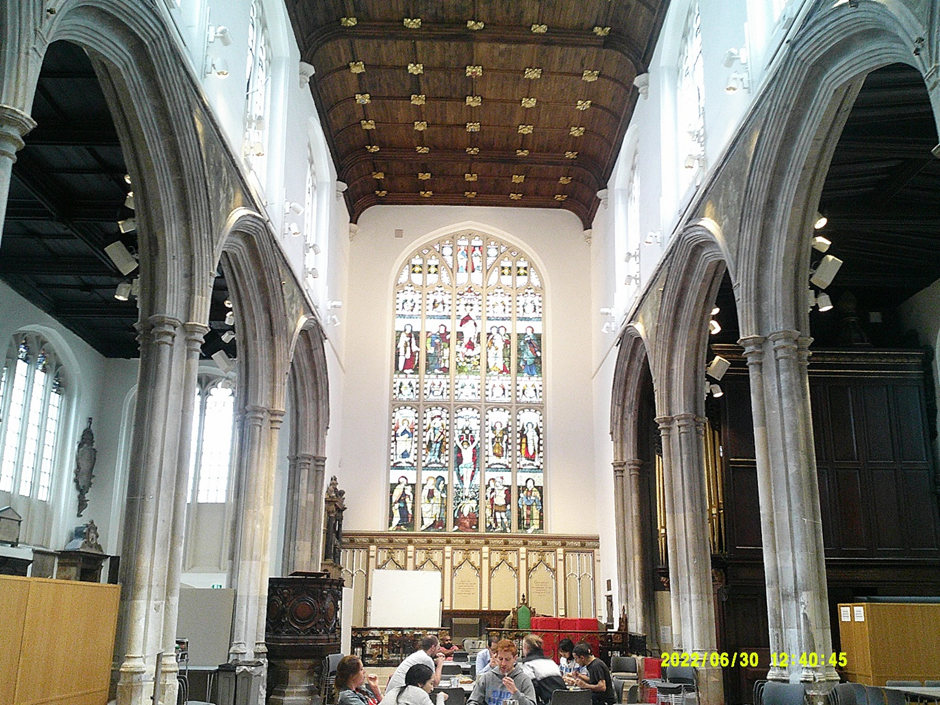
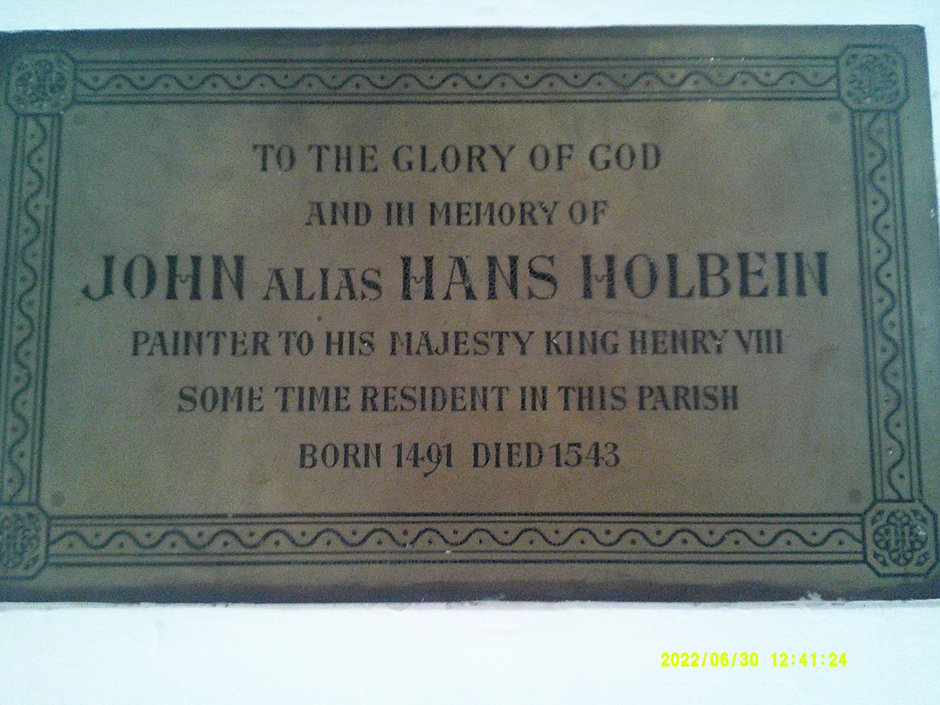
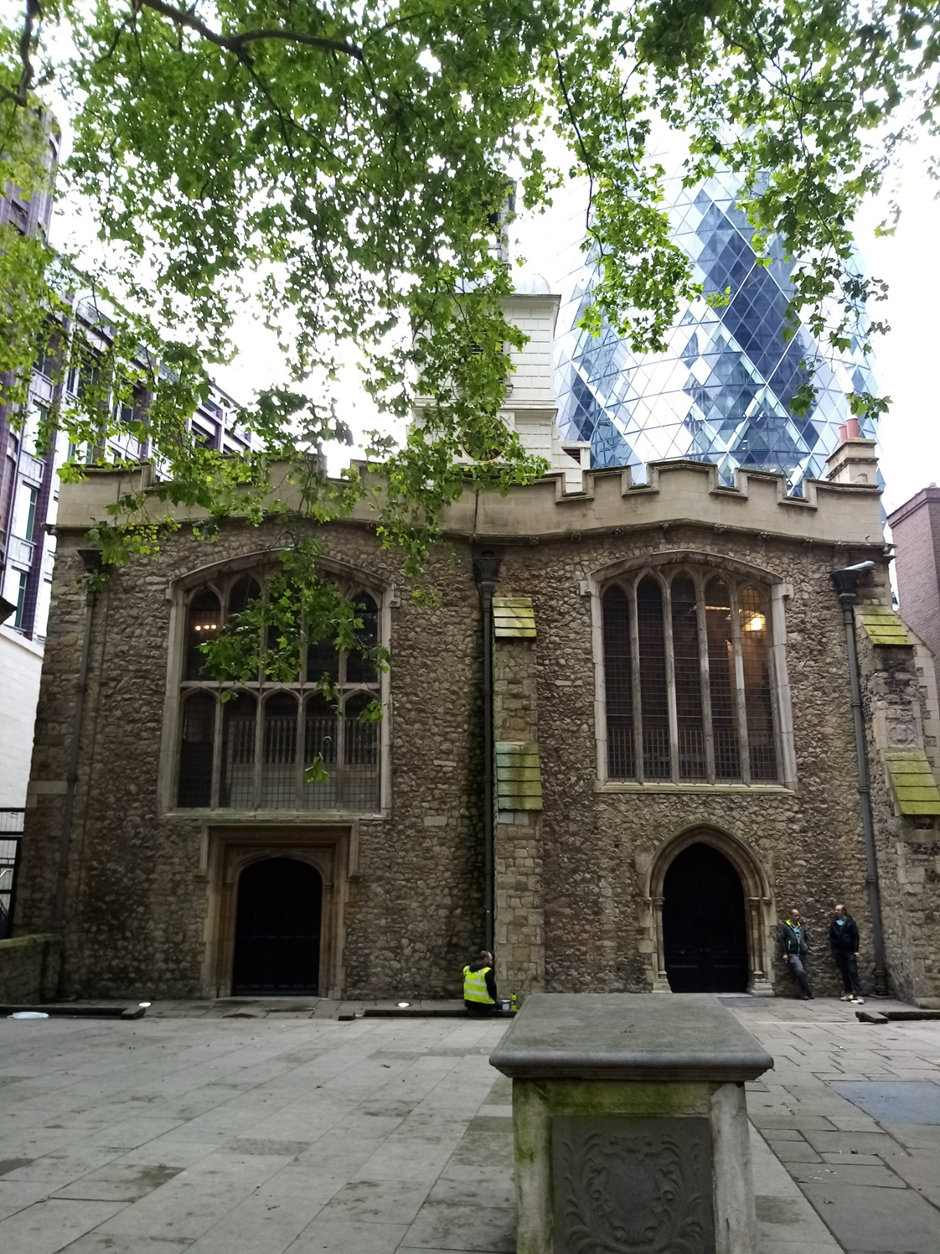
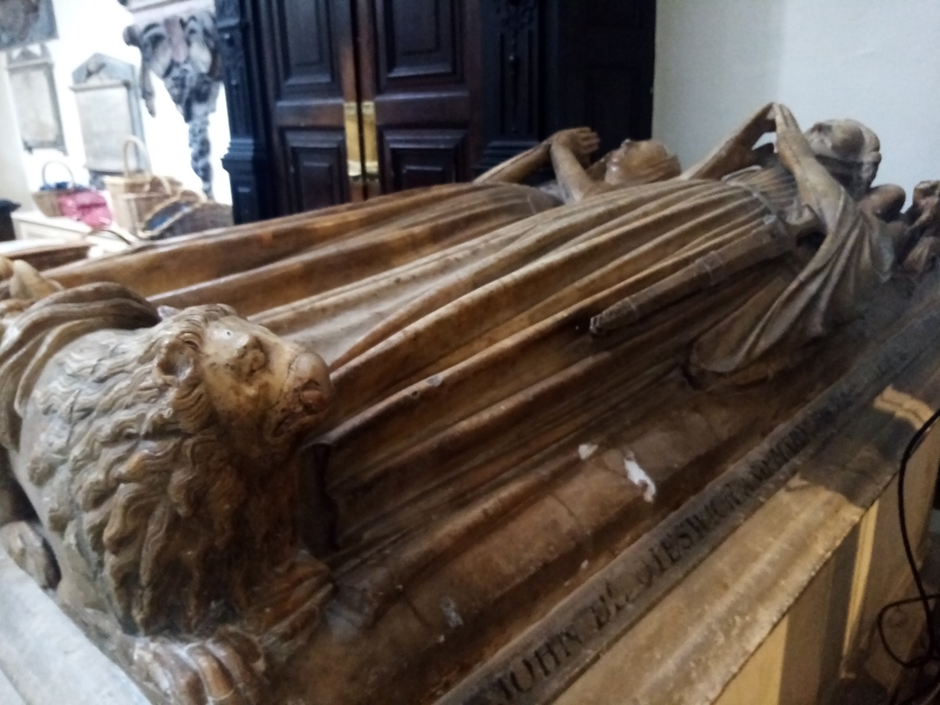
This is my favourite photo of St Andrew, with The Scalpel looming up into the sky, and The Gherkin reflected in its lower windows. Situated in St Mary Axe, you probably know St Andrew’s famous neighbour at Number 30, The Gherkin, built on the site of the Baltic Exchange, which was destroyed by an IRA bomb in 1992. St Andrew has survived the 1666 Great Fire, the 1940s Blitz bombings and the 1992 bombing; however, its large stained-glass window, apparently one of the finest in London, was destroyed. When I visited the church on a weekday I had to buzz an intercom to gain access, which I thought was unusual for a City church, whose doors are always open to visitors. The welcoming lady who let me in explained that the team of workers from three neighbouring churches were having their lunch break in the church:, but that I was welcome to look around. One of the team kindly offered to show me round, pointing out some items of interest: a monument to John Stow, an English historian, author of The Survey of London, published in the 1560s. The quill pen in his hand is renewed annually by, alternatively, the Lord Mayor of London and the Master of the Worshipful Company of Merchant Taylors. There’s also a plaque dedicated to Hans Holbein the Younger, portrait painter to Henry Vlll. Holbein is either buried here, or possibly at St Helen’s Bishopsgate, no one seems to know for certain!

Church workers eating lunch (permission granted to take the photo)
John Stow holding a startlingly white quill pen

St Helen’s Bishopsgate

The Tardis-like St Helen’s, much bigger on the inside!

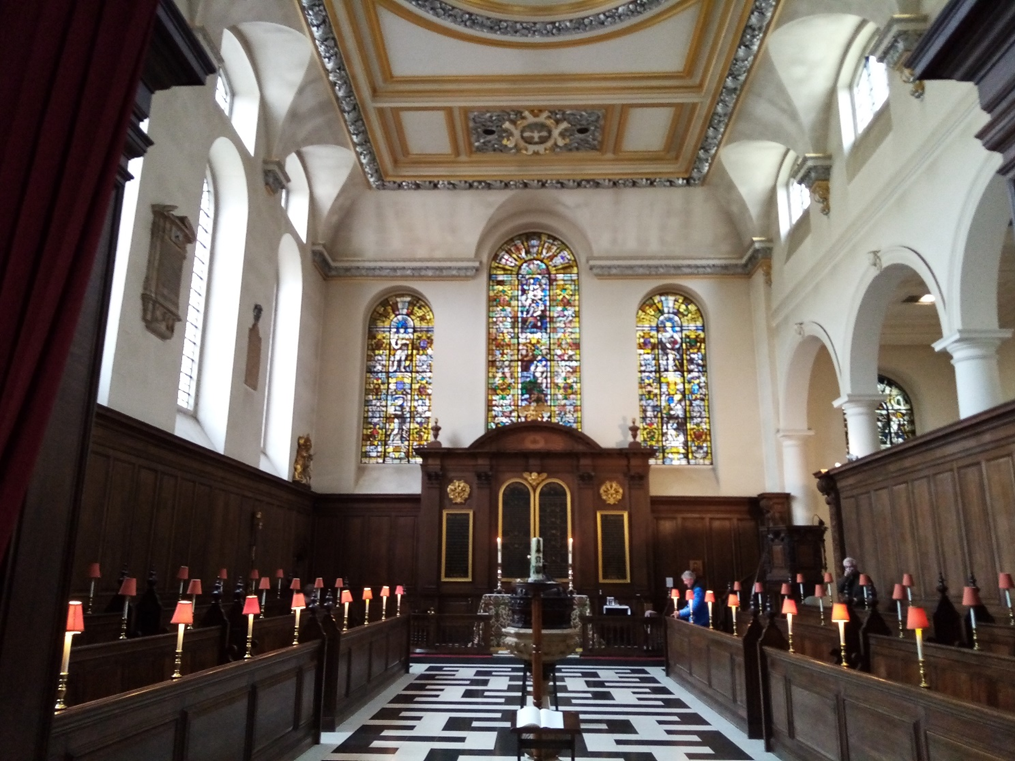
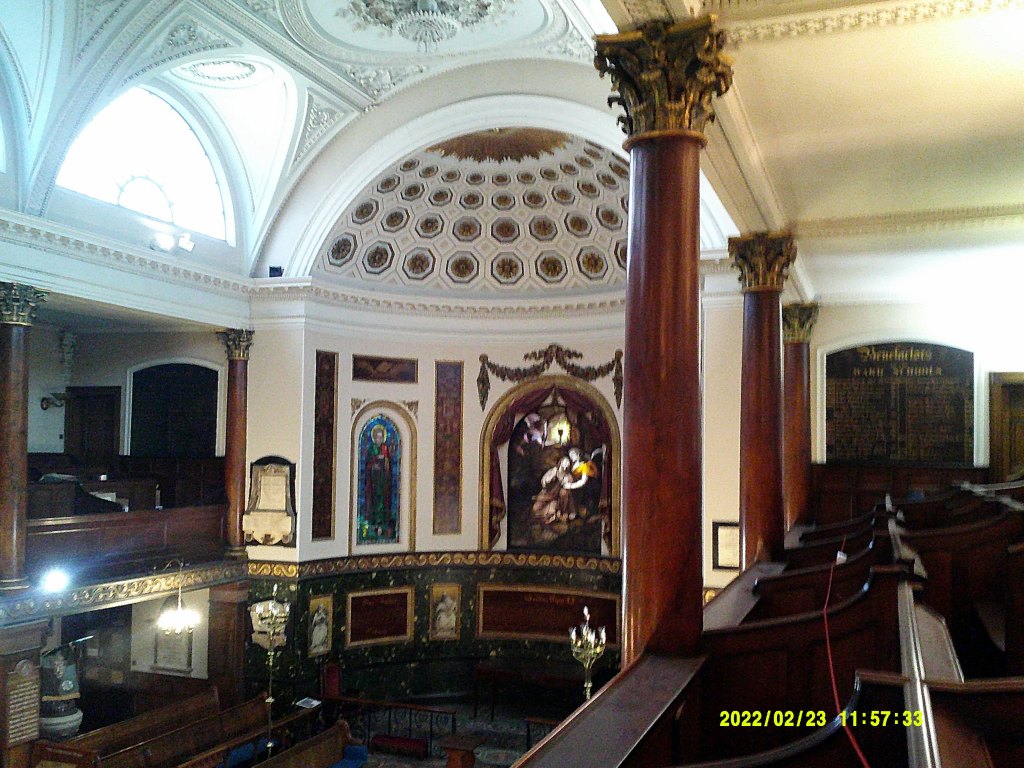
The largest surviving Parish church in the City of London, and containing the most monuments of any London church, St Helen’s is referred to as the ‘Westminster Abbey of the City’. The church was very badly damaged, but not destroyed, in the 1992 bombing of St Mary Axe, and architect Quinlan Terry, an enthusiast of Georgian architecture, was commissioned to carry out a full restoration. The interior space was redesigned to suit a large Evangelical congregation, with the addition of a baptistry and a new gallery, increasing the seating capacity to 1,000, with a clear view of the pulpit for everyone. What I like about this church is that the design suits a 21st century congregation, but some ancient monuments remain in situ, making it a fascinating place to explore. As long ago as the 1960s, forward-thinking Rector Dick Lucas grew the congregation from a few individuals to a church which served City workers all week round. This legacy has continued, with St Helen’s administrating St Andrew Undershaft and nearby St Peter upon Cornhill, between them offering an extensive range of meetings, courses and events: lunchtime talks, ‘Read, Mark, Learn’ groups which study the Gospels, and the Christianity Explored course. In addition, St Helen’s holds three English-speaking services each Sunday and also a Mandarin-speaking service.  There are also midweek and Sunday lunches and other social events.

Fusion of old and new in St Helen’s

June – Platinum Jubilee

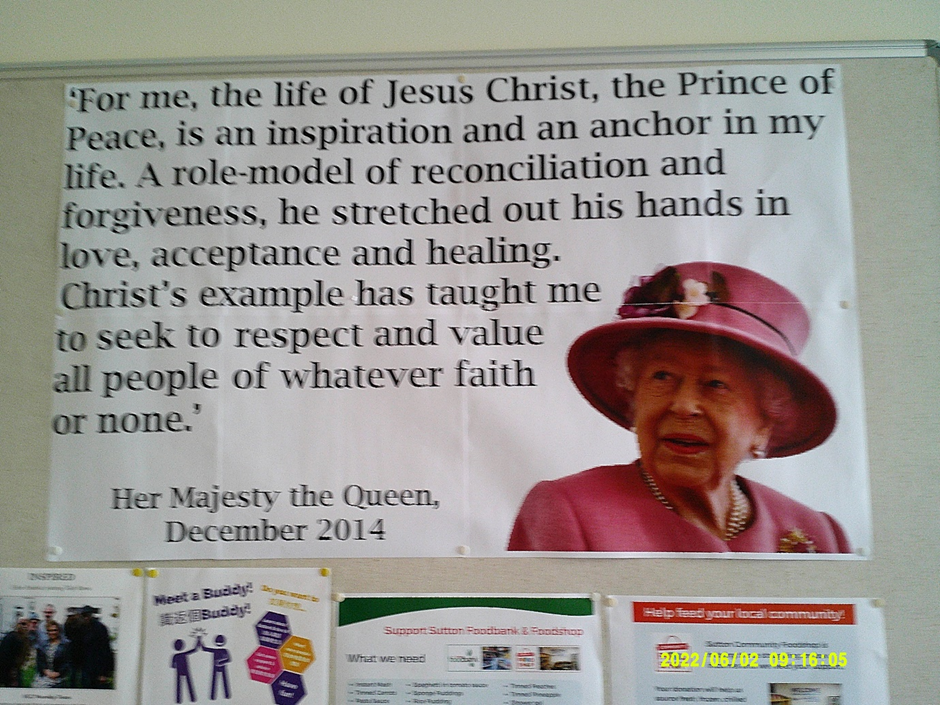
June was the month of the Platinum Jubilee, a celebration of the 70th years of the reign of Queen Elizabeth ll. Our Queen is well known for her Christian faith; in her first Christmas broadcast as Queen in 1952 she said ‘At my Coronation next June, I shall dedicate myself anew to your service….Pray that God may give me wisdom and strength to carry out the solemn promises I shall be making, and that I may faithfully serve him and you, all the days of my life.’* I think that prayer has been answered. So this month I’m featuring four churches, two of which celebrated the Jubilee in a particular way, and two which have interesting histories. All these churches are in the London Borough of Sutton, all of them I have a particular connection to. I’ll finish with a few photos to remind us how Sutton (like every other borough, city, town and village in the country) went Jubilee-crazy for a few days in June.

Carshalton Methodist Church

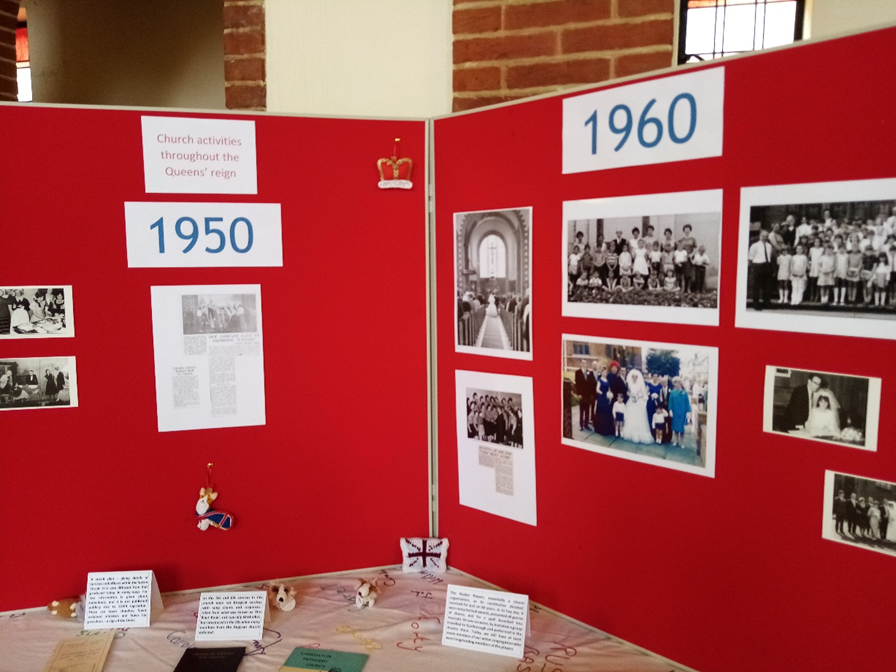
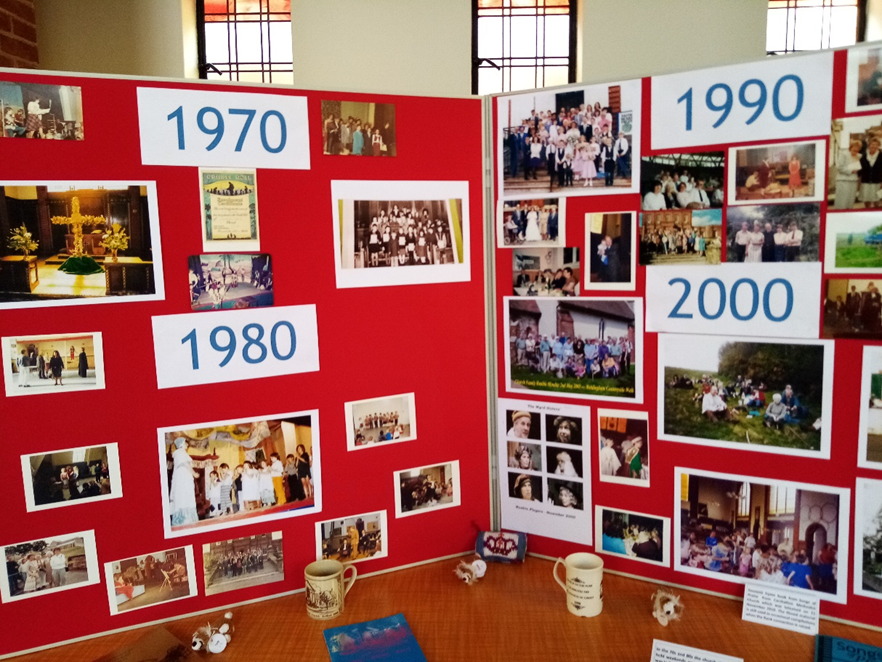
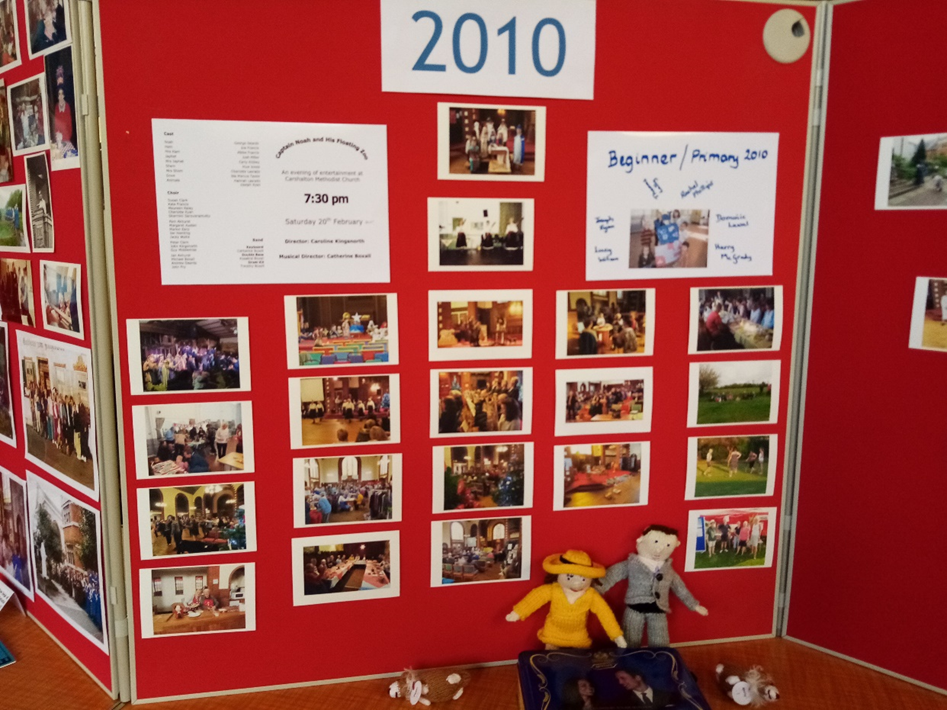
This friendly, community-centred church holds so many events throughout the year, I couldn’t imagine it not opening its doors to the public to celebrate the Jubilee! I’ve been to their monthly film nights, Craft Fairs, Flower Shows and annual Christmas Tree competition. Just before the Easter school holidays, the church hosts ‘Easter Experience’: a dramatic retelling of Holy Week which is performed to 100s of local school children during the week, finishing with a public performance on Sunday.  For the Jubilee, the church had three Open Days, inviting the community to see 70 years of the church’s history with photos, documents and objects on display. Lunch was available, including their legendary homemade cakes and biscuits, also a display of cut flowers and a Beatles Song Title Competition. A huge amount of work must have gone into this, well done to all involved, very enjoyable (especially the Malteser cake!)

Sutton Christian Centre

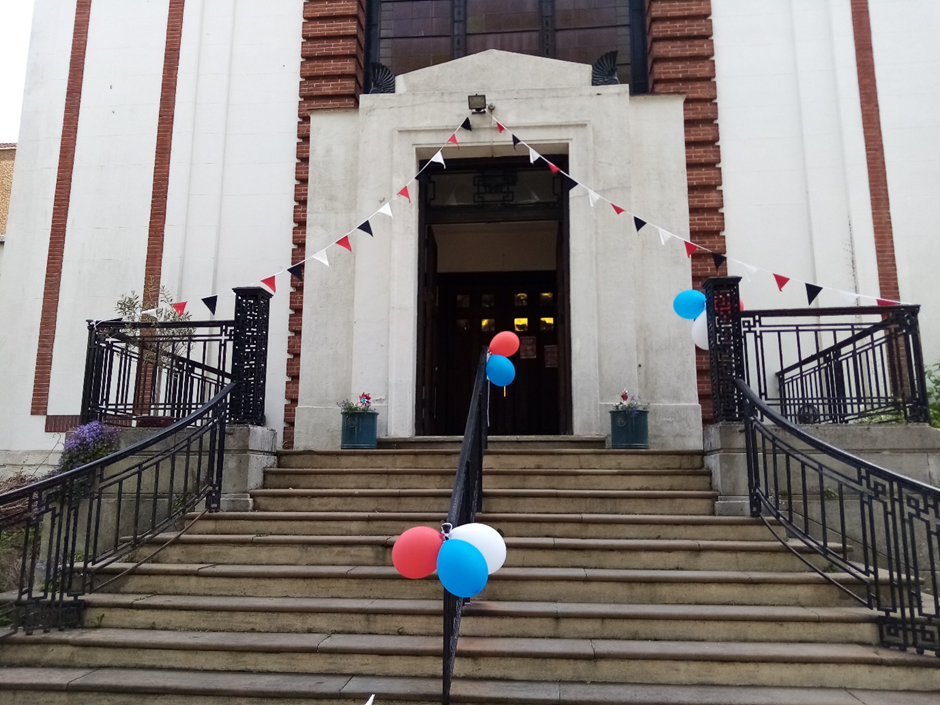
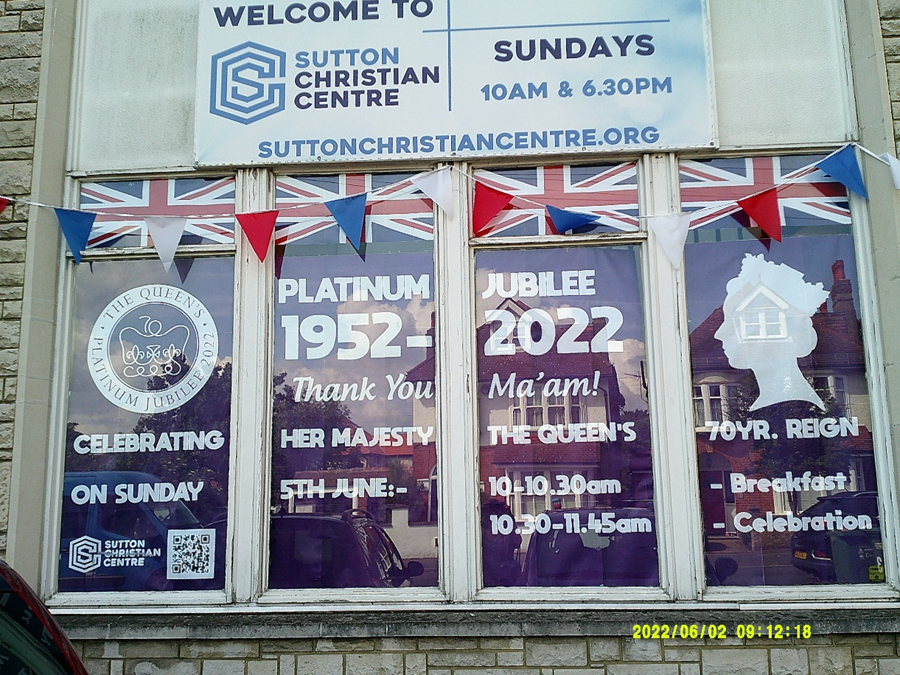
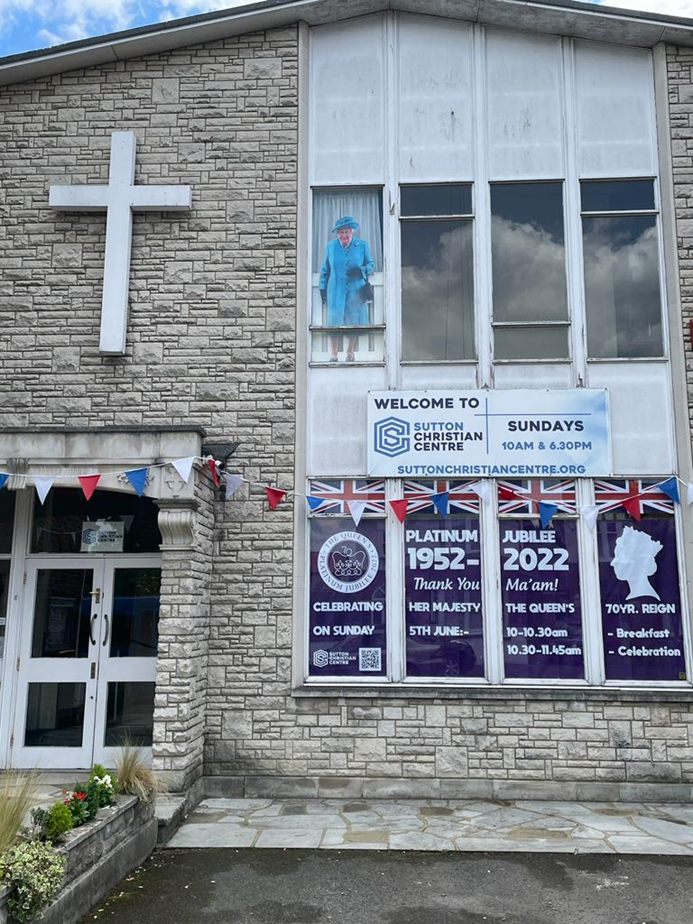
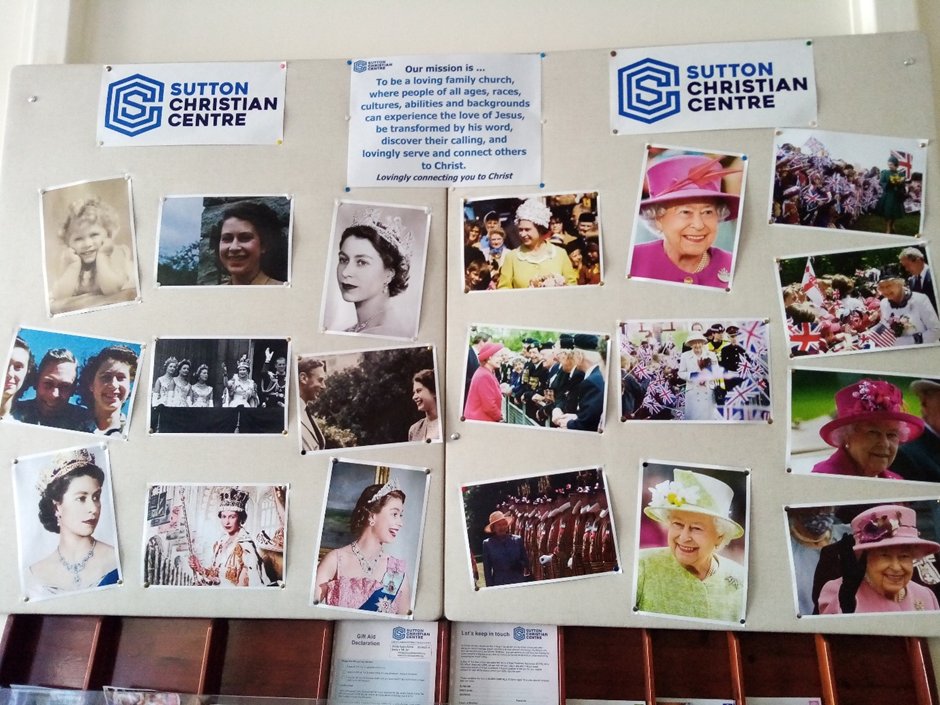
Well…this is my church, and the creative team that is Ric and Allison pulled out all the stops to decorate the inside and outside of the church, complete with a life-sized cardboard model of Her Majesty; quite scary to come across it unexpectedly! The display focused on 70 years of the Queen’s Christian faith. There was a special Sunday Service, starting with breakfast of bacon rolls and croissants in the car park, enjoyed by the Mayor of Sutton and some of the church’s neighbours. Then inside, there was a Jubilee-themed craft for the children and a talk about the Queen’s faith, reflecting the display. Everyone who attended was given a booklet: ‘Our Faithful Queen, 70 Years of Faith and Service’, detailing the Queen’s coronation ceremony, her duties and responsibilities, events in her public and private life, and how God has guided and sustained her in this role: ‘I have not chosen this office for myself, He has appointed me to it…. because he leads, I may follow in complete trust’.*

* Source: Our Faithful Queen, 70 Years of Faith and Service, Catherine Butcher, The International Bible Society

Her Majesty, looking out of an upstairs window!

Bishop Andrewes Church

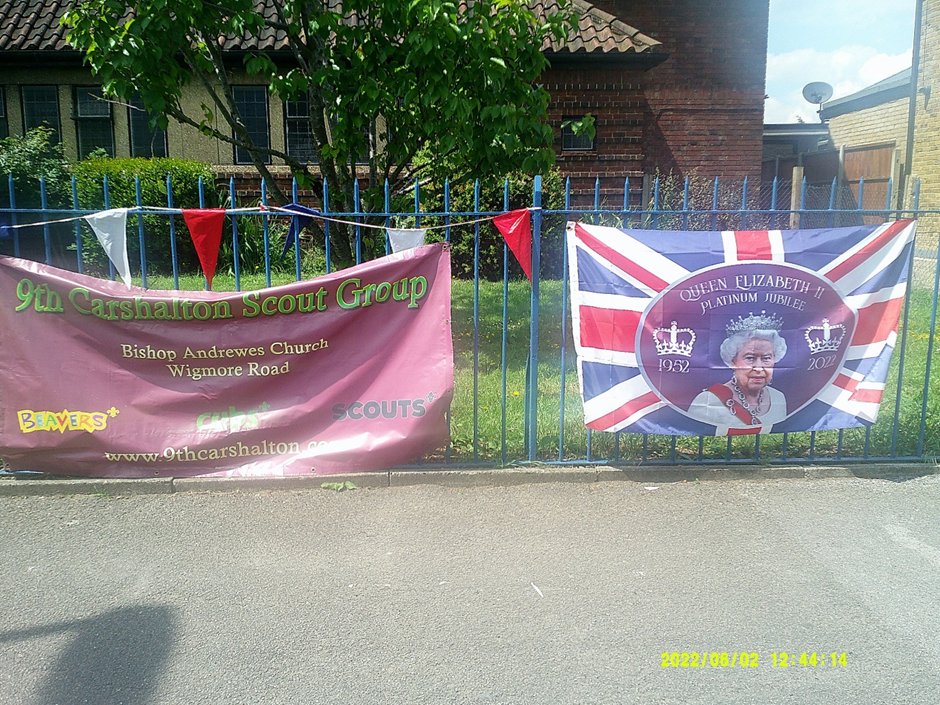
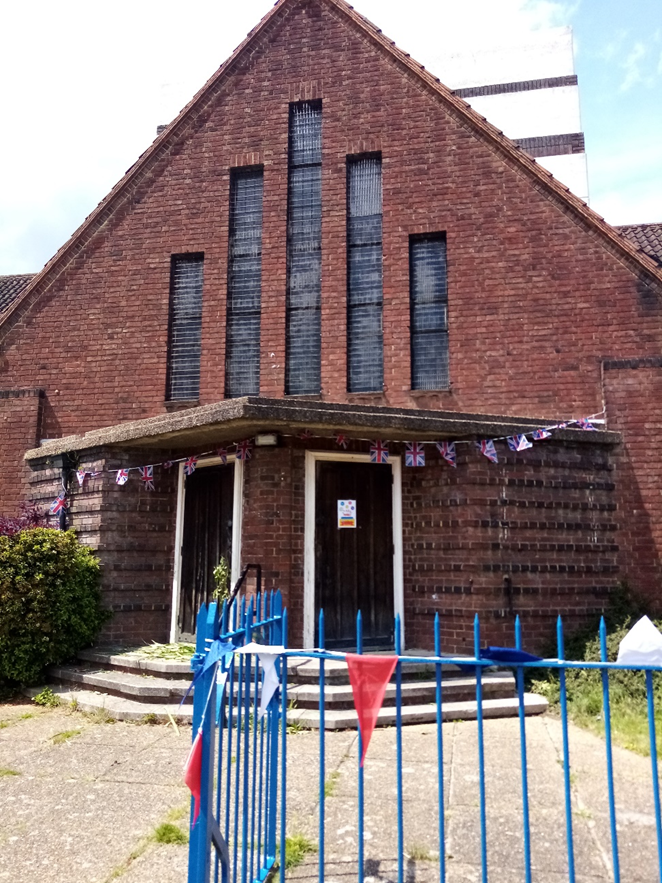
A small church tucked between houses, Bishop Andrewes was completed in 1933 at the same time that the St Helier Estate was being built. In partnership with the larger, more prominent St Peter’s Church, BA (as it’s known) has faithfully served the local community for 90 years. Activities at the church include a Foodbank session on Wednesday evenings (that’s my connection, I’m a Foodbank volunteer here), mid-week coffee morning and the 9th Carshalton Scout Group, which has been running continuously since at least the 1940s. There’s an interesting article about BA’s unique service to the community at a particular time in its history: Bishop Andrewes Church in the Second World War, by the then Curate, the Reverend Charles Richardson. Writing about the Blitz bombings of 1940, he says: ‘The main job for the clergy was ministering to the frightened, injured and dying. We were also able to help track down members of households and families. People were taken off to different hospitals and centres and there was much anguish until all were accounted for to each. Nothing mattered except people.’** What a wonderful sentiment!

** Source: St Helier Memories: a Community History of St Helier Estate, London (online)

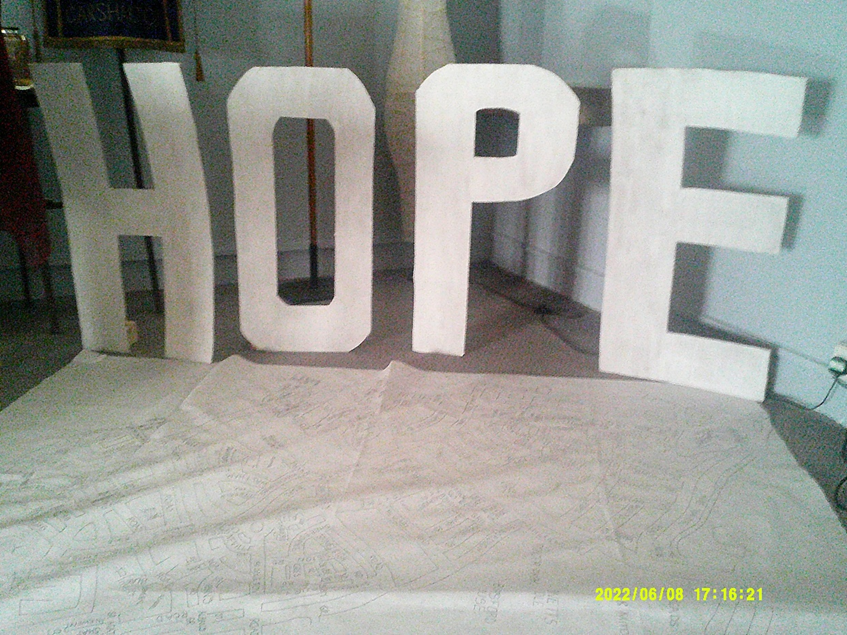
The word Hope overlooking a map of the local community

Holy Trinity Church, Wallington

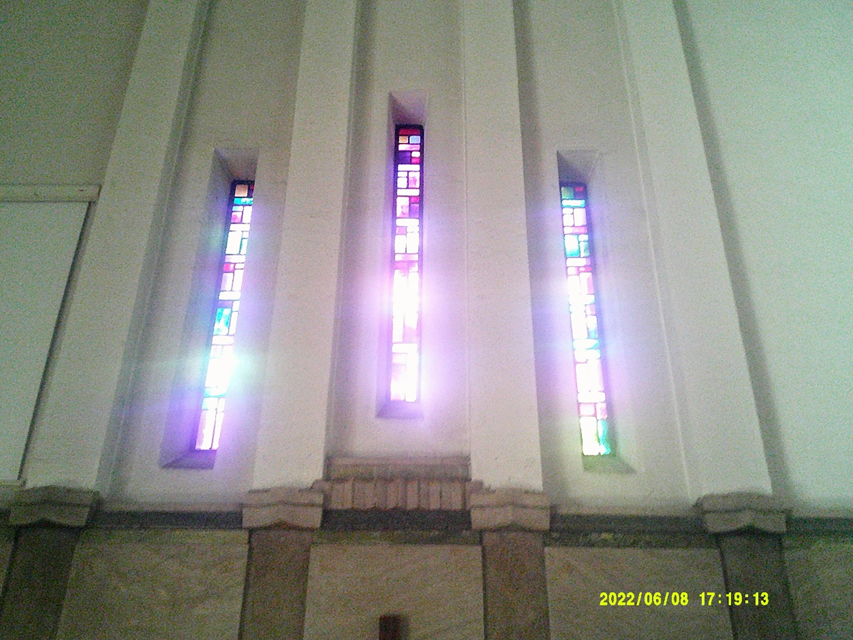
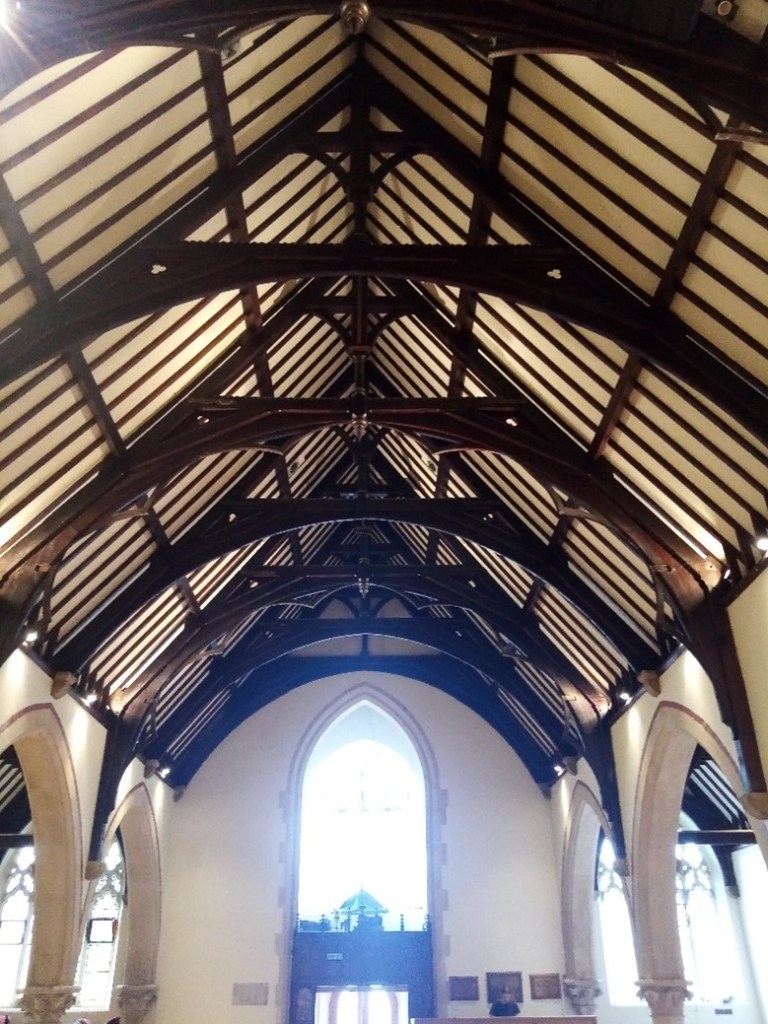
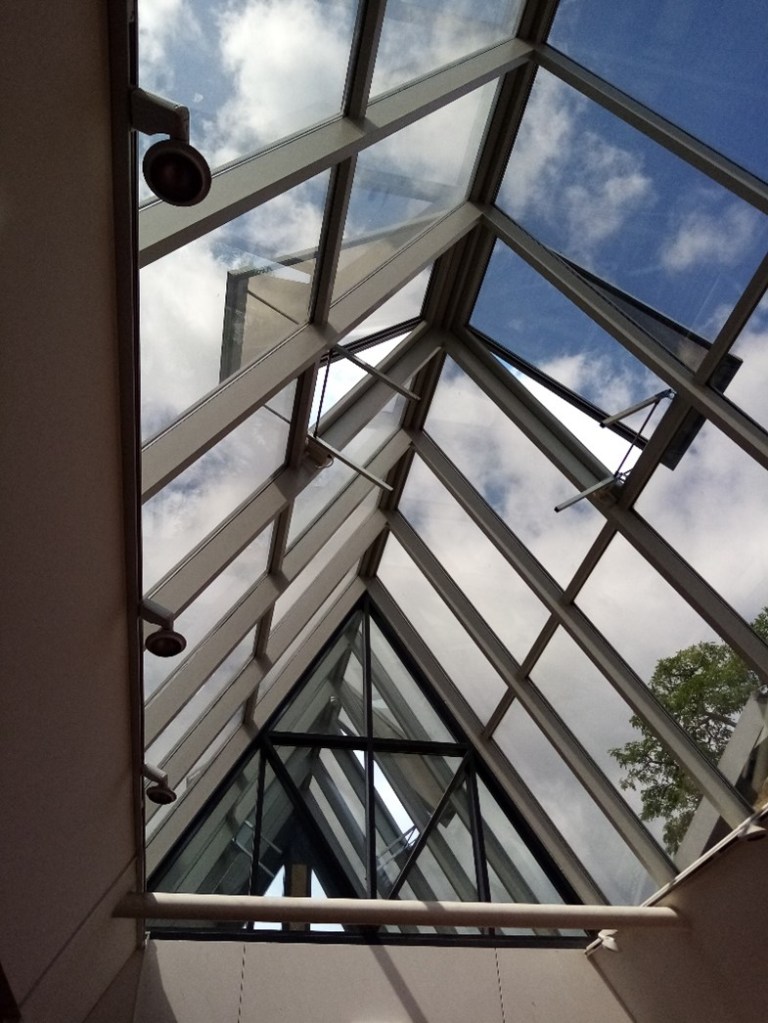
This beautiful church is where I was married, it’s the Parish Church of Wallington and was completed in 1870, Grade ll listed since 1974. It has an interesting history: in the late 14th century a chapel dedicated to Our Lady of the Moor was built just North of the present church’s location, on what is now the London Road. This would have existed then as a main transport route as it is today, which probably accounts for the chapel’s prominent position. Holy Trinity Church was built to resemble the description of the old chapel in the style of the 14th century, namely constructed in flint and Bath Stone. Consequently, it looks far older than its 150 years, often being mistaken for a Norman church. The church has been refurbished and modernised over the years but retains its hammer-beam roof. The most recent addition is that of the Holy Trinity Centre which replaced the old church hall. Mostly constructed of glass, it joins on to an outer wall of the church and offers a large, multi-functional space for church events and is also available for hire (my daughter and son in law held their wedding reception here.)

Source: Wikipedia

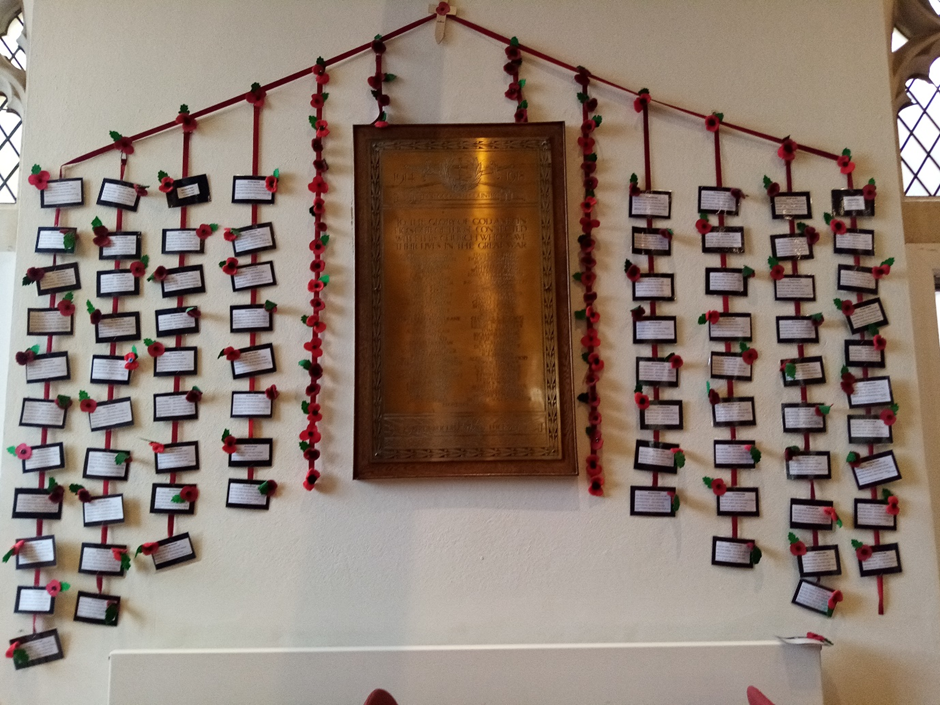
This Memorial has details on each card of every man of the Parish who died in World War l

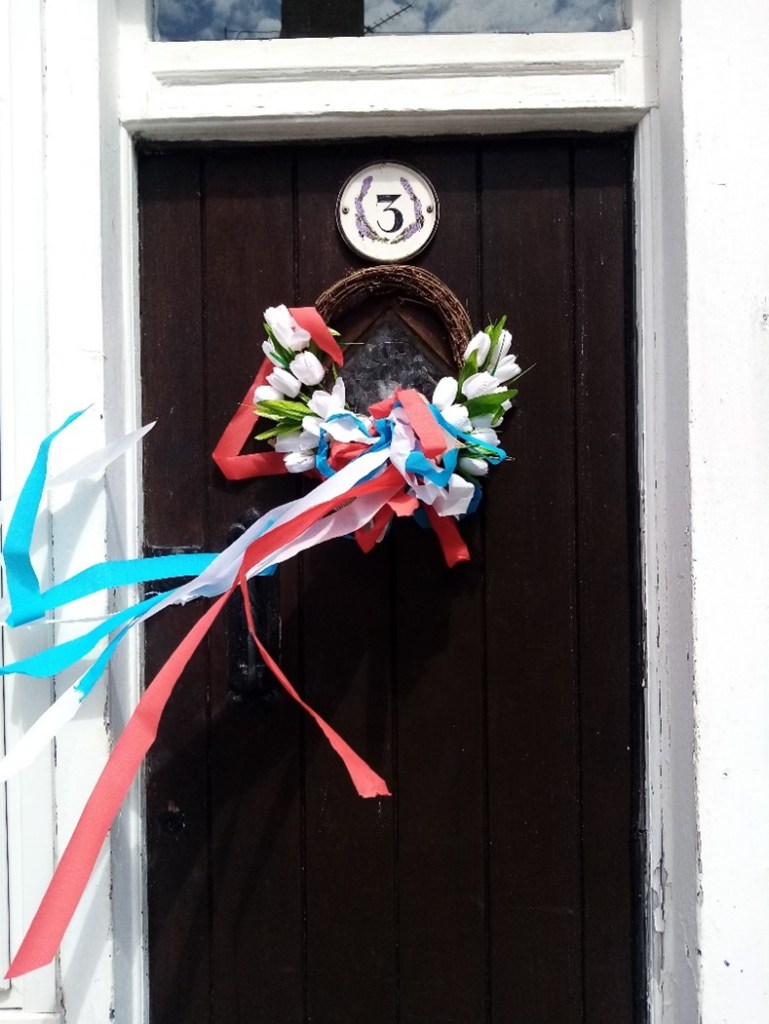
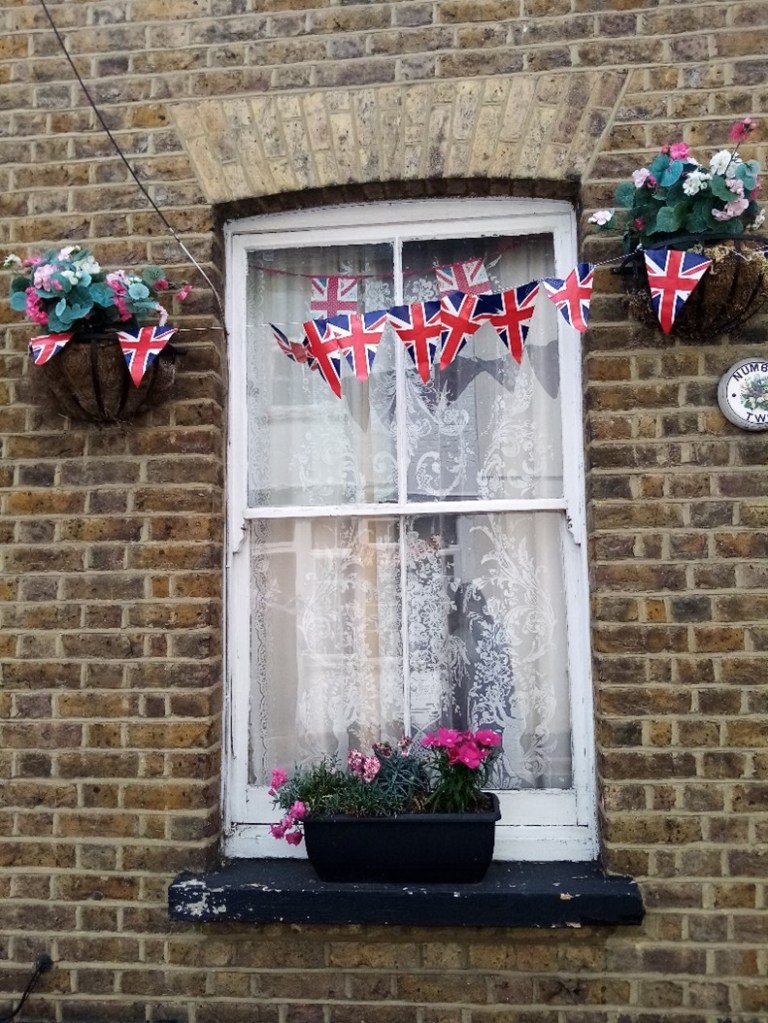
And now for some more June Platinum Jubilee fun!

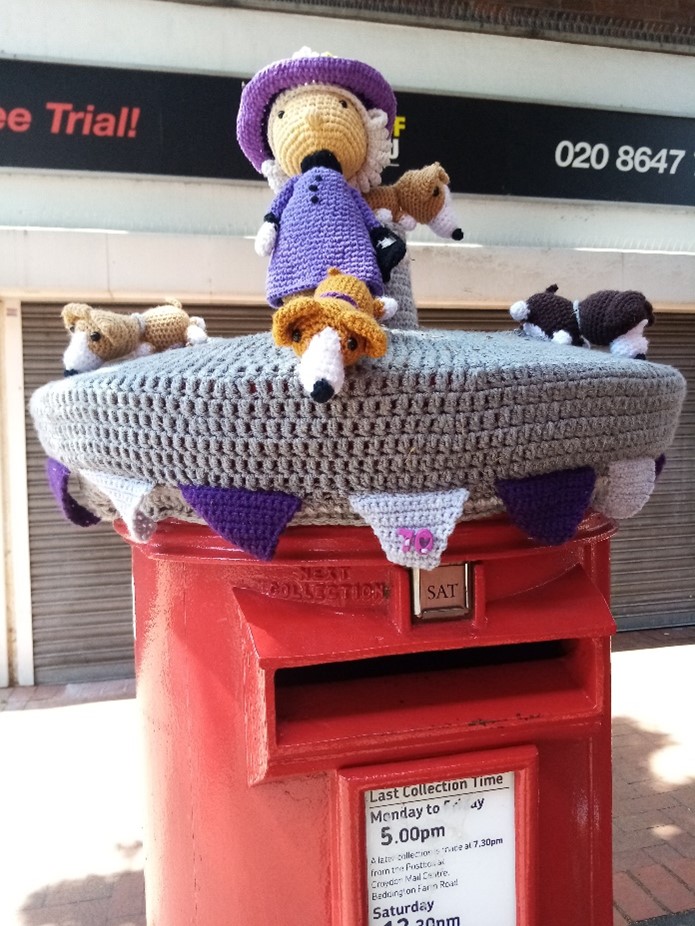
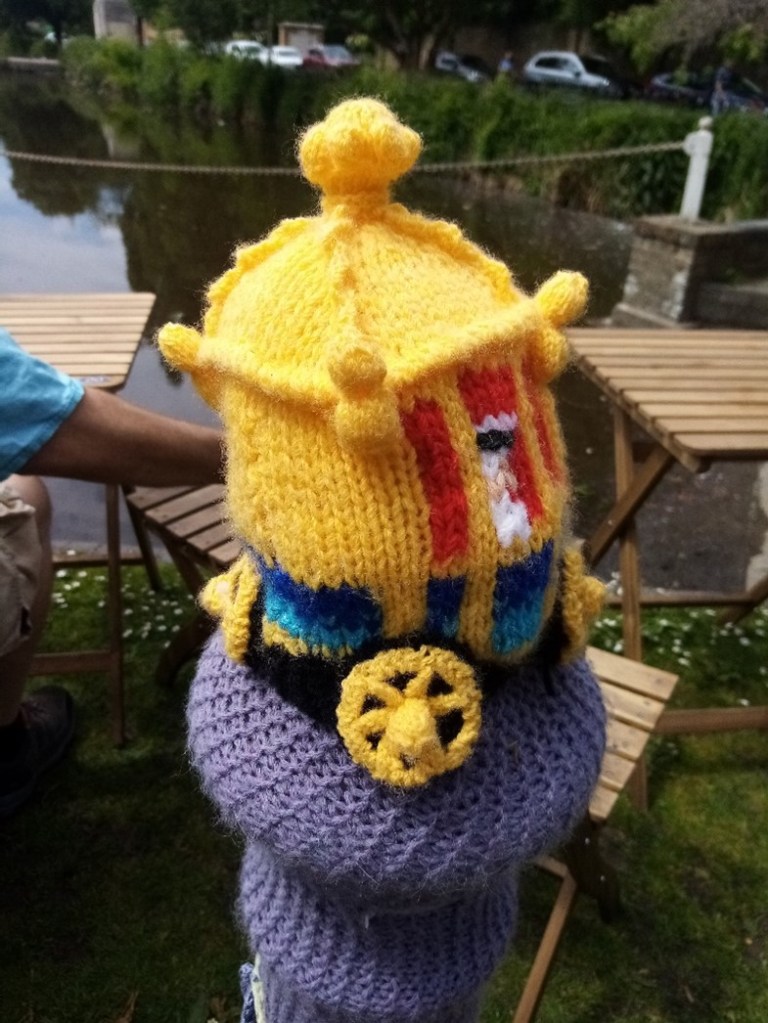
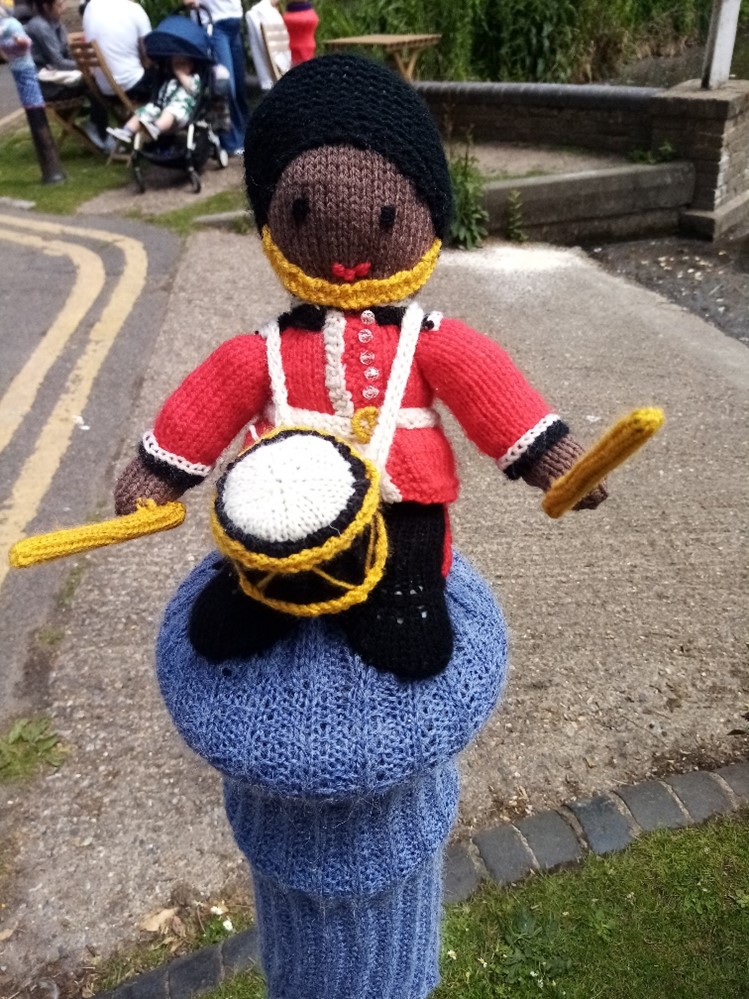
Postbox Toppers

Street Party
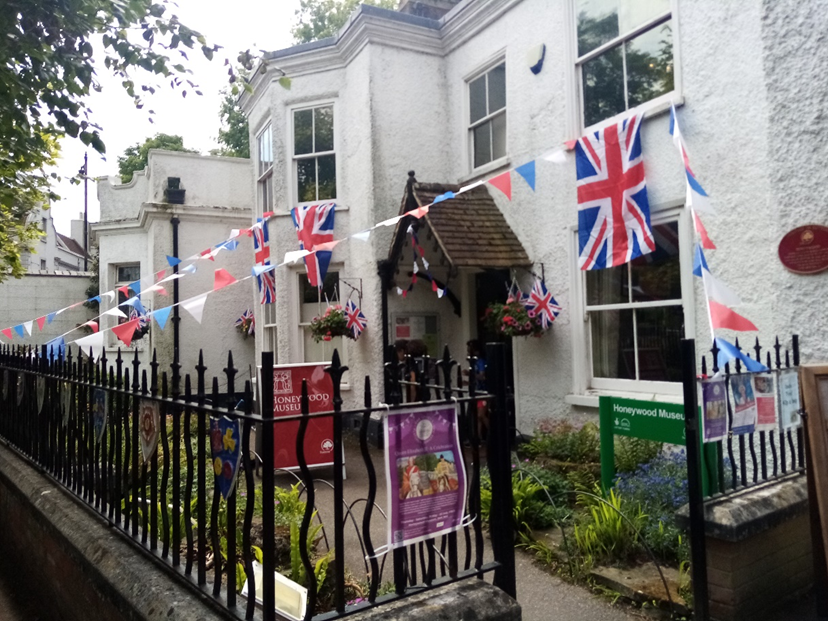
Museum and Heritage Centre

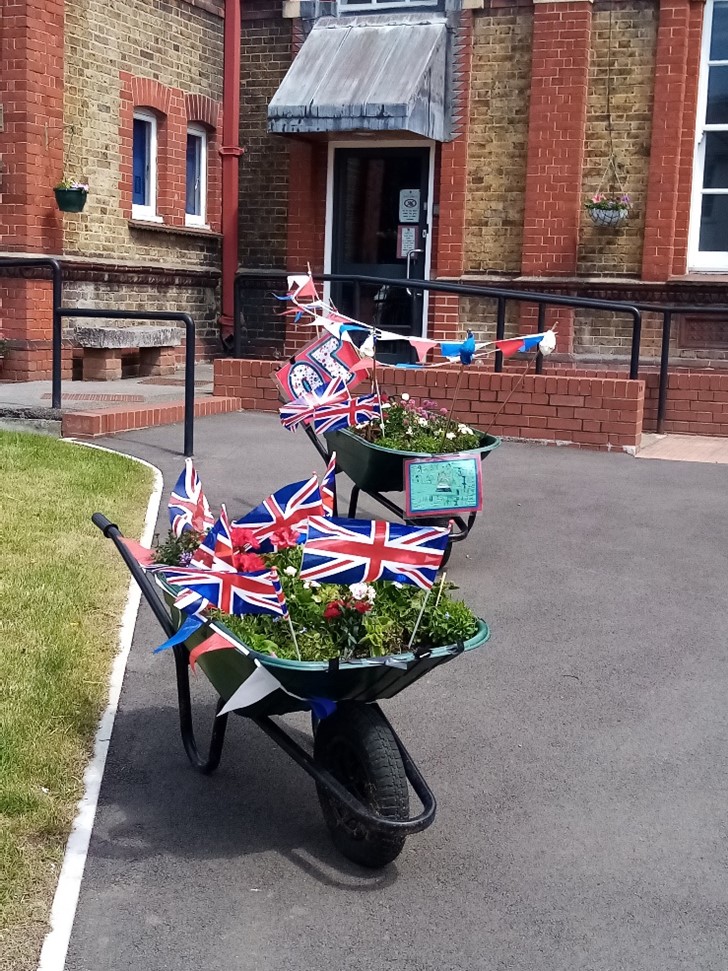
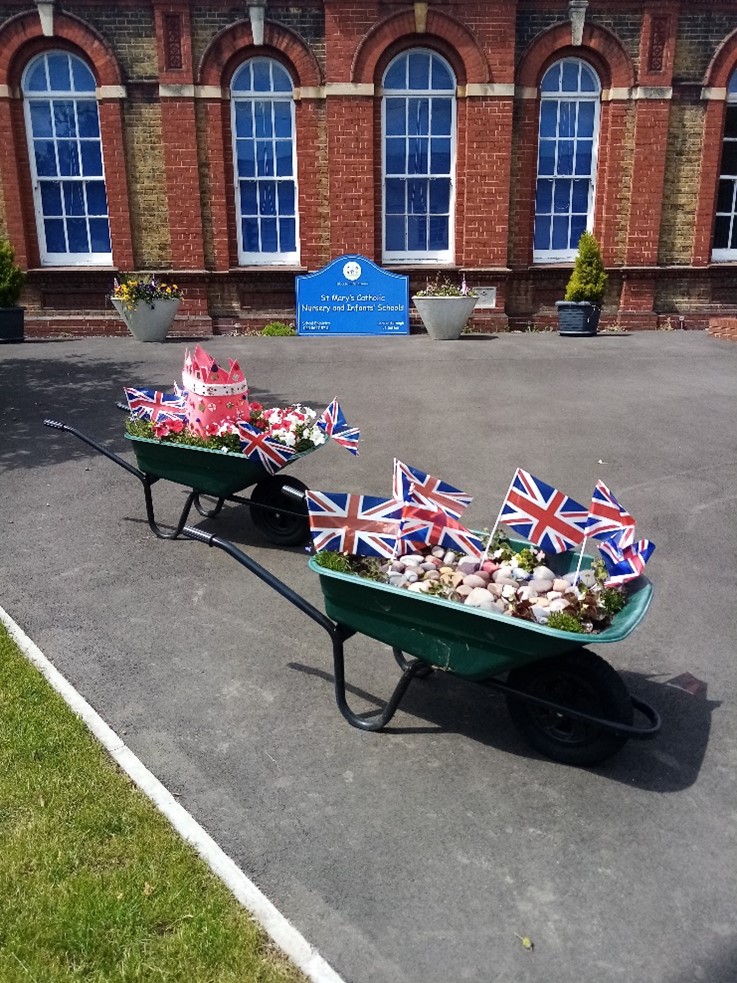
Primary School

Pub
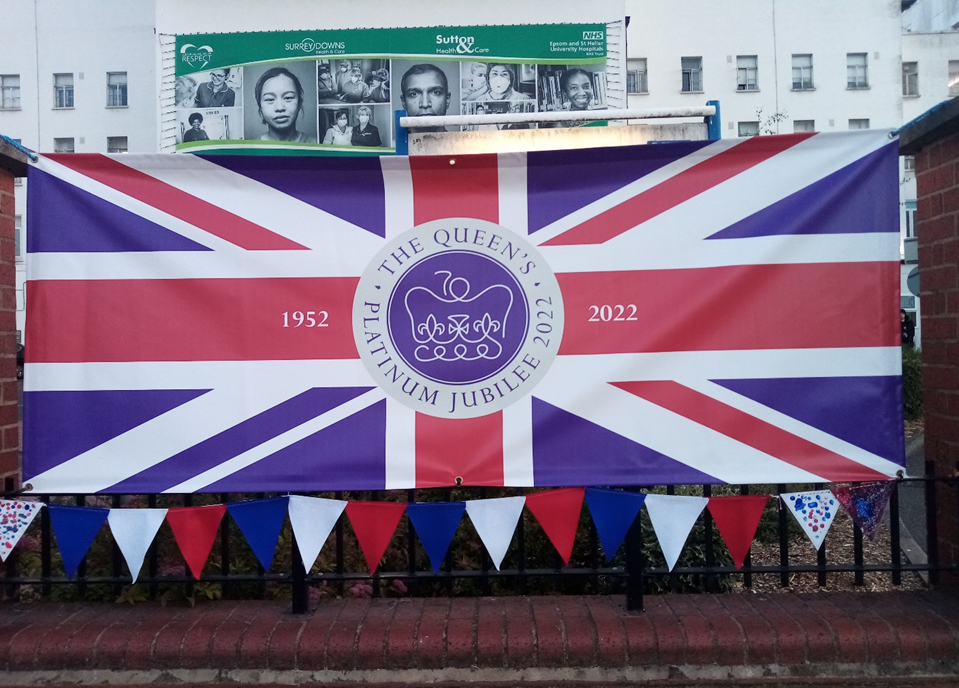
Hospital

May – Immigrant Christian London ll

Another month exploring some European (and beyond) churches in London, which all have a tradition of providing a home from home to immigrants and a welcome to visitors, and still do so today.

Ulrika Eleanora, the Swedish Church

This is a Swedish Lutheran Church, member of the Church of Sweden Abroad, which has been a spiritual home for 300 years for Swedish residents in London. It includes the Swedish Seamen’s Mission which, like the other Nordic churches in London, has for hundreds of years supported sailors and merchant seamen travelling to the Port of London. Today the church has a café (sadly not open when I visited) and activities for all ages. All services are in Swedish, except for Parish Communion, held twice a year and conducted in English. Music plays an important part in the life of the church, particularly singing; there are several choirs which perform for the local community. The Ulrika Eleanora is the main choir, but there is also a Children’s Choir, a Male Voice Choir and a Senior Choir. There’s also a choir formed specially for the Feast of St Lucia, the Patron Saint of Sweden, which performs throughout the month of December up until Christmas, Also in December a Christmas Shop opens, selling Swedish gifts and the delicious-looking Julbord, Christmas Food Box.

Sources: Churches Together in Westminster website; Church website

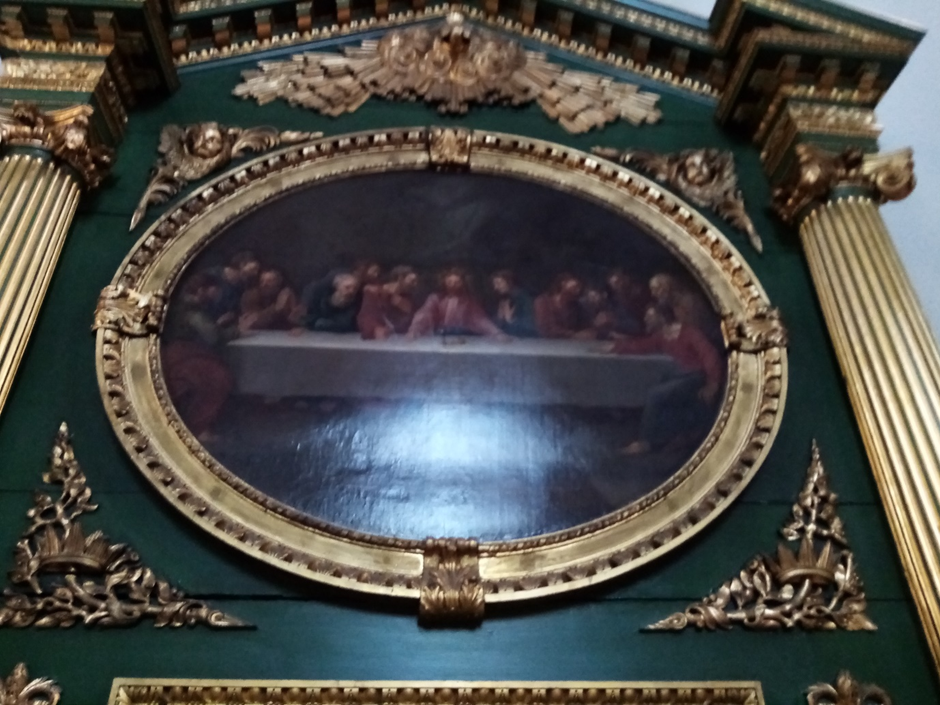
The best thing about the church is the artwork: a traditional picture of The Last Super above the altar….

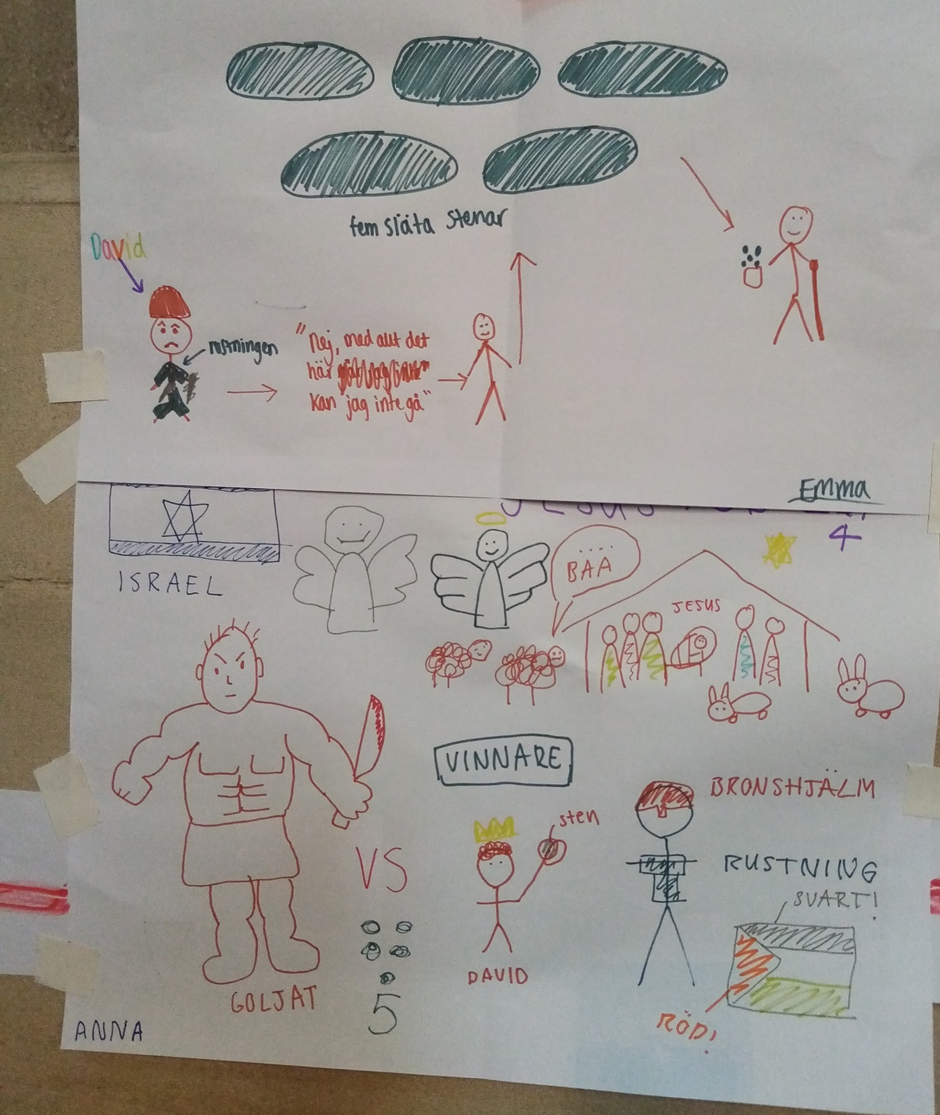
….and the children’s artwork, displayed around the church!

David and Goliath, among other things
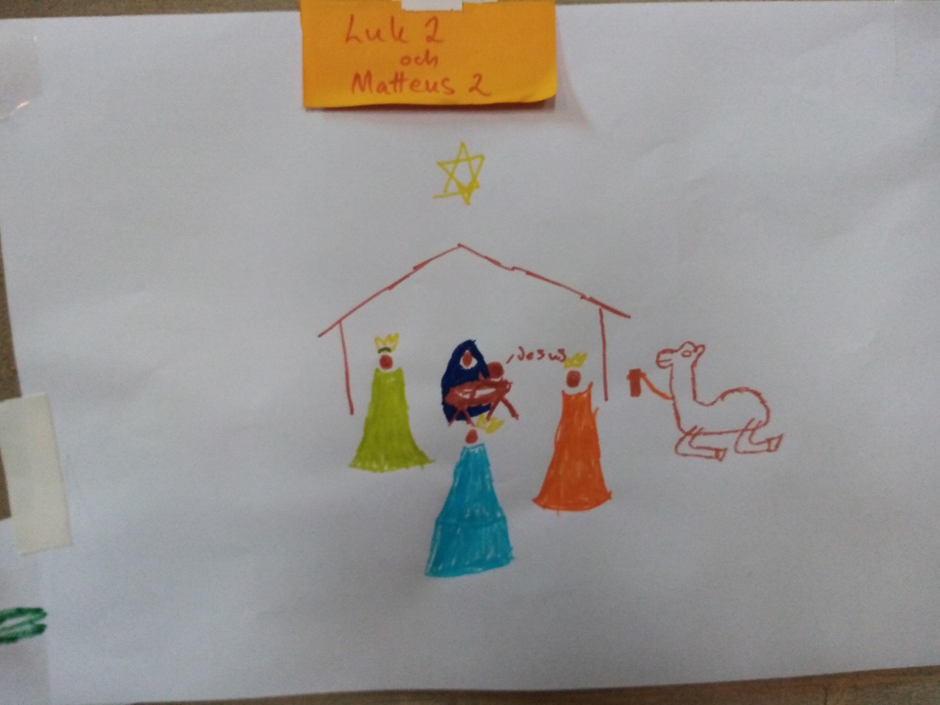
Birth of Jesus
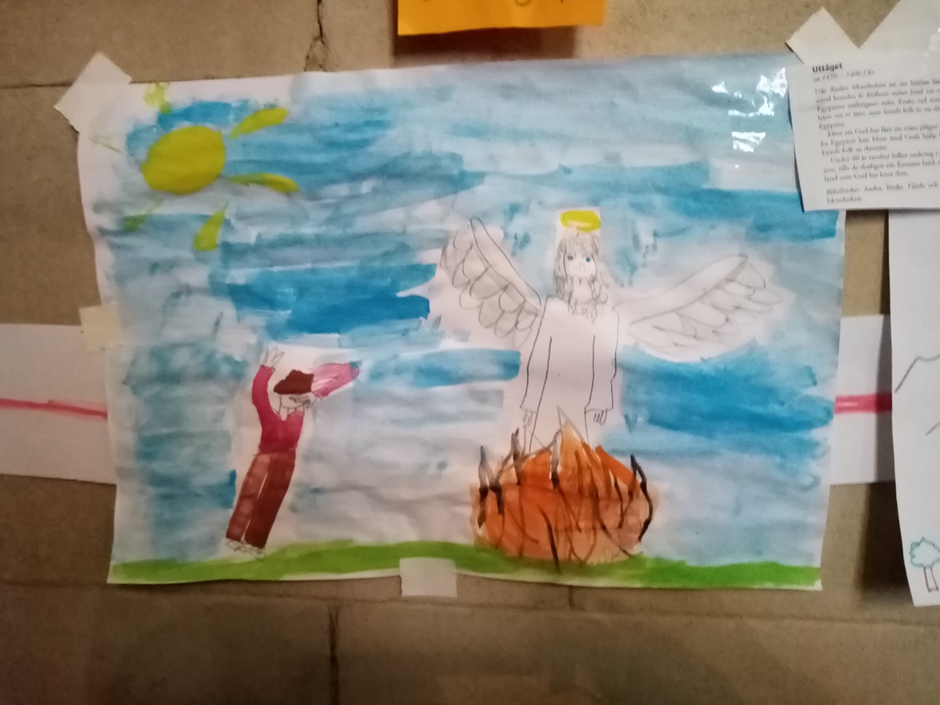
Moses and the Burning Bush (I like Moses’ hat)
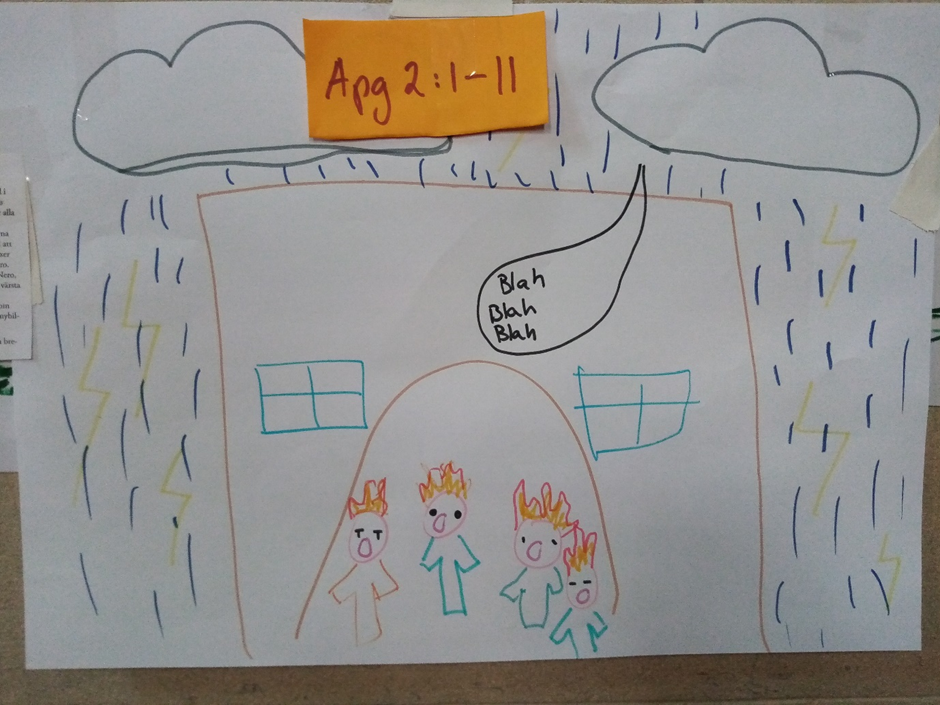
And my favourite, the disciples receiving the Baptism of the Holy Spirit!

St Katharine’s, The Danish Church

‘Since 1952, St Katharine’s Church, near Regent’s Park, has been a Danish church and cultural centre, offering a haven for Danes in London and an insight into the life and culture of Denmark’* The Danish Church in London is a branch of the Danish folkekirken, holding Sunday worship services and conducting christenings, confirmations, weddings and funerals. As a Danish cultural centre, the church hosts talks, exhibitions, concerts and a book club as well as a small shop and café. Most services and activities are in Danish but some are bi lingual. The church also has its own language school which provides opportunities for learning Danish at Saturday school and evening classes. The church has an enviable location, being a stone’s throw from Regent’s Park, and the building is the former Anglican chapel of St Katharine’s Hospital. There is a Danish Seaman’s Mission in Rotherhithe, close to the Finnish and Norwegian Churches, reflecting the tradition of support and fellowship provided for Nordic seafarers.

*from ‘Tired of London, Tired of Life’, Tom Jones, Virgin Books

Other sources: Wikipedia, Church website (English translation).

Reflecting the Church’s maritime tradition
The church has a distinctly Scandinavian look, I like it!

Roman Catholic Polish Church

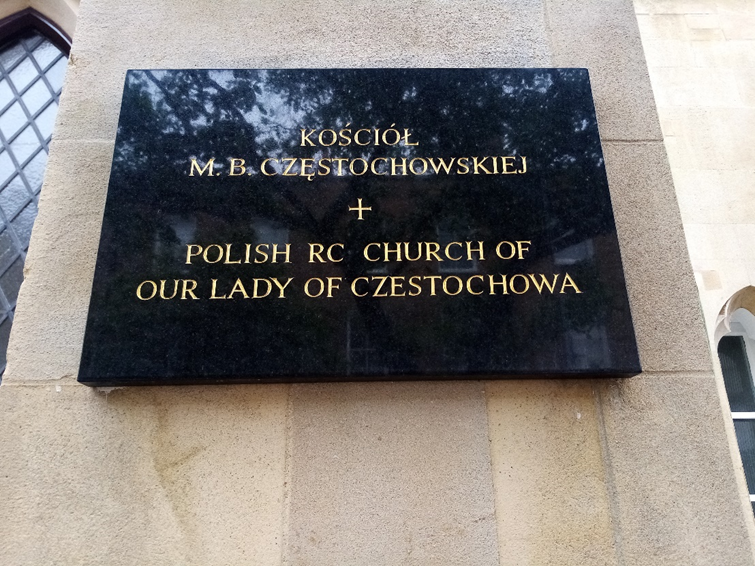
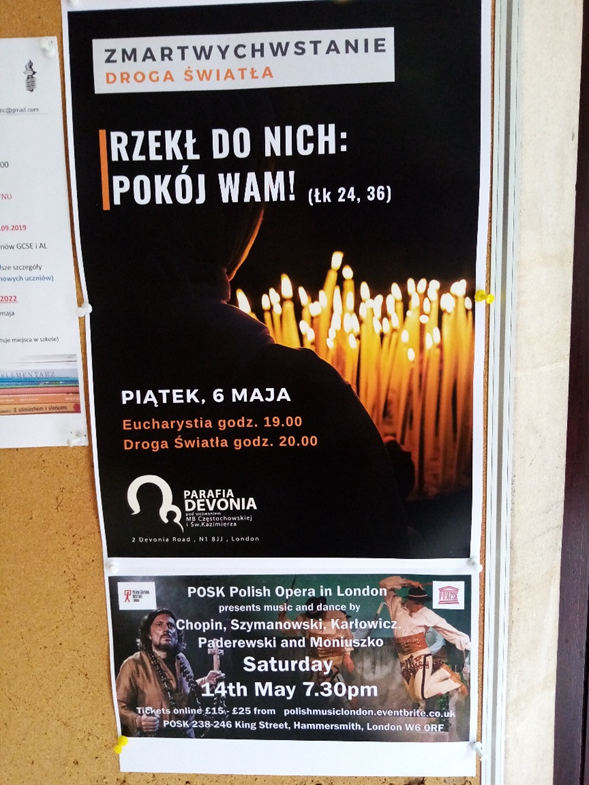
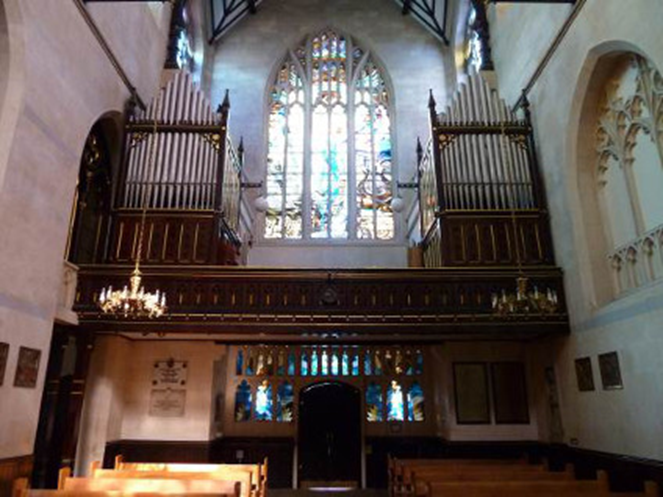
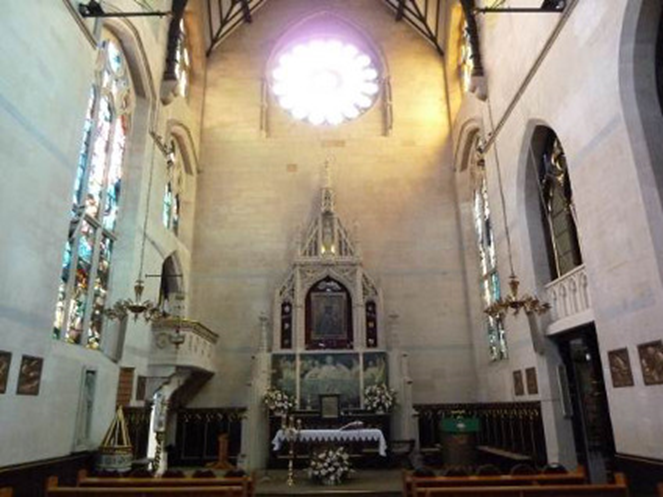
The Roman Catholic Church of Our Lady of Czestochowa and St Casimir is situated in a residential street in Islington, N1. This has been the church’s home since 1928 having previously been located in the East End of London. The ‘new’ premises had attached buildings so as well as regular worship, there was space for a mission centre and a Polish Saturday school. Following the Second World War, the Polish Church in England took on the pastoral task of caring for almost 200,000 displaced people, mainly soldiers, and the number of churches, chapels and Parish halls grew. In the 1980s, following martial law in Poland in 1981, there was another influx of Poles to England, and another following Poland’s accession to the EU in 2004. There are over 200 towns in England and Wales where services are conducted in the Polish language, including large congregations in Hammersmith and Balham. The Polish Catholic Mission in England and Wales reports: ‘Today, Polish churches are full on Sundays and new Polish pastoral centres continue to be established.’ I couldn’t find out very much about this particular church, as it was only open for Mass twice a day, but it appears it also holds cultural events (see poster.) The interior shots are images from ‘Taking Stock: Catholic Churches of England and Wales.’

Source: The Polish Catholic Mission in England and Wales

Polish Opera in London

The Ukrainian Cathedral, off Oxford Street, Mayfair

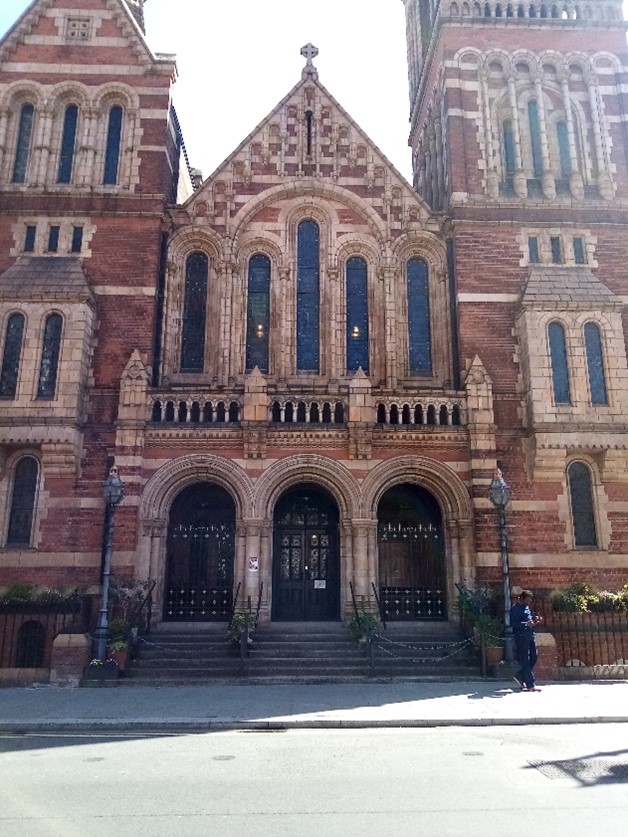
I last visited the Ukrainian Catholic Eparchy of the Holy Family of London in August 2021. I mentioned in August’s Blog post that the shoppers in Oxford Street probably aren’t aware that just around the corner is this dramatic building, designed by Alfred Waterhouse who was the architect of the Natural History Museum. I wonder if more people know about it now, in the light of the events of the past three months? Formerly the home of a Congregational Church, ‘The King’s Weigh House’, it was sold to Ukrainian Catholics in 1967 and became an Eparchy (bishopric) in 2013. The church has served London-based Ukrainians for 55 years but became ‘a rallying point for the British Ukrainian community during the 2022 Russian invasion of Ukraine’ (Wikipedia.) The invasion has caused Europe’s largest refugee crisis since the Second World War, with more than 6.4 Ukrainians fleeing their country. Most refugees (three million) have relocated to Poland and other neighbouring countries, but many have travelled to countries further West; at 22nd April, 27,100 refugees had entered the UK. I would like to think that this beautiful building and its community is a place of welcome and solace for newly-arrived Ukrainians to the London area.

Source: Wikipedia

Altar

Immigrant Christian London

London has been welcoming immigrants for hundreds of years due to the migration of people groups wanting better lives for their families or seeking refuge from persecution, war and natural disasters. This month I’m going to look at London churches which serve (or have served) European communities, and talk a little bit about their histories. I really enjoyed researching the churches this month! 

St Peter’s Italian Church, Clerkenwell

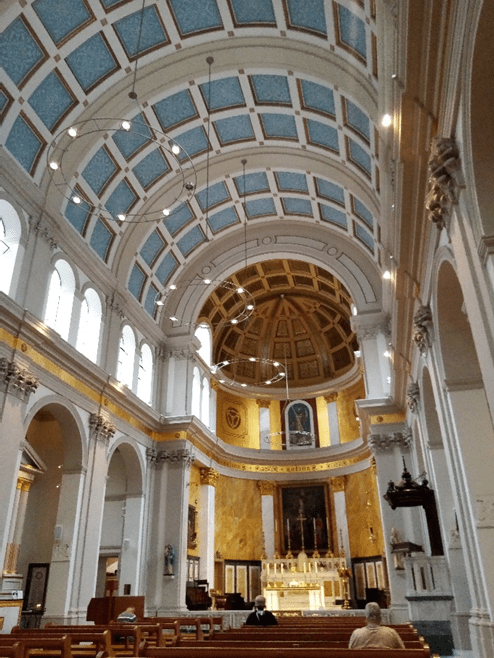
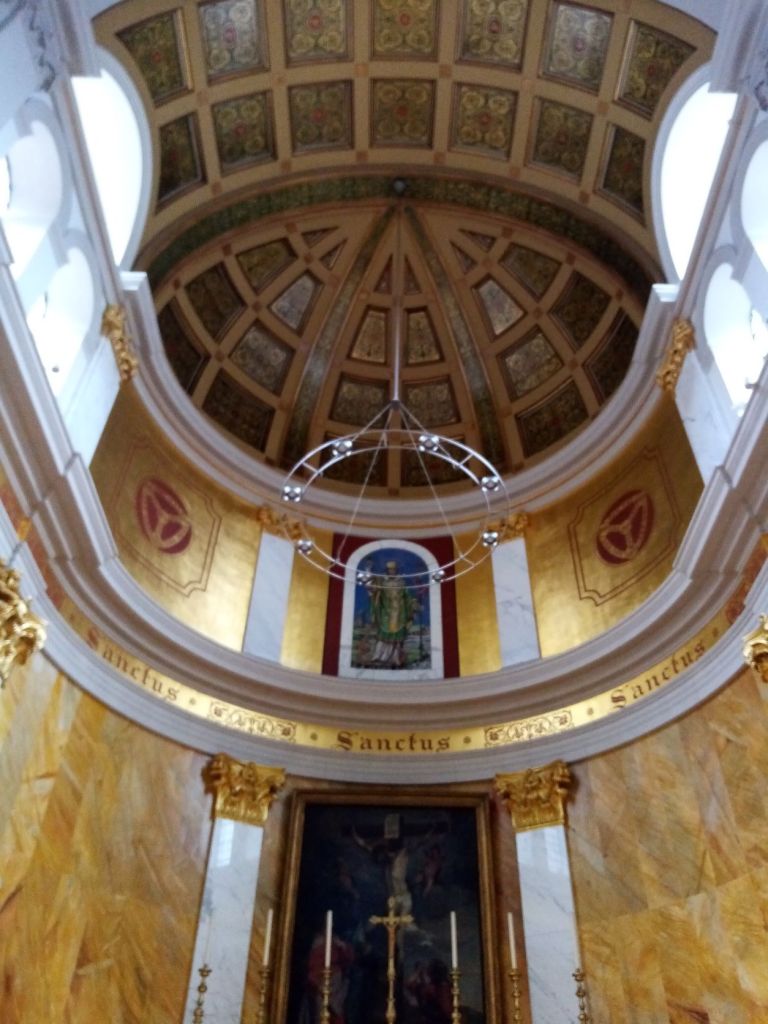
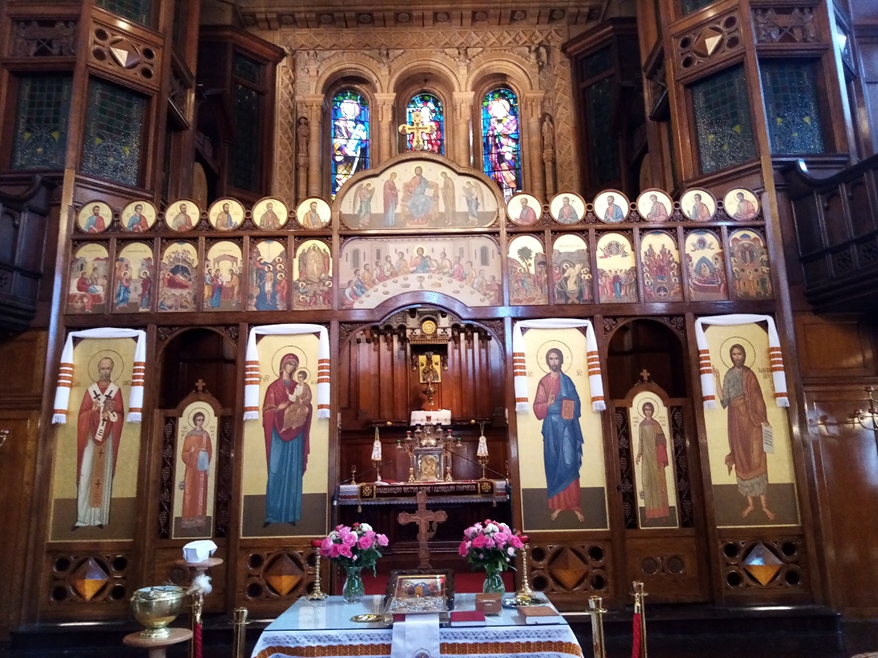
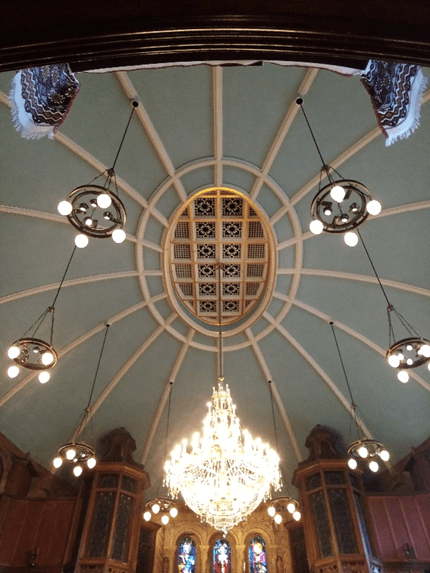
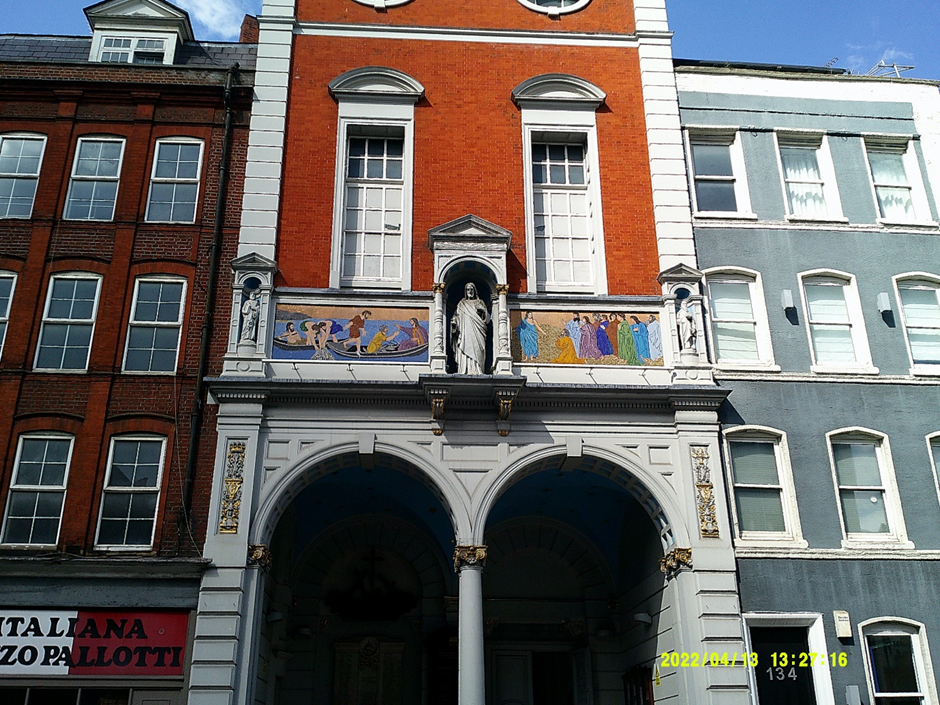
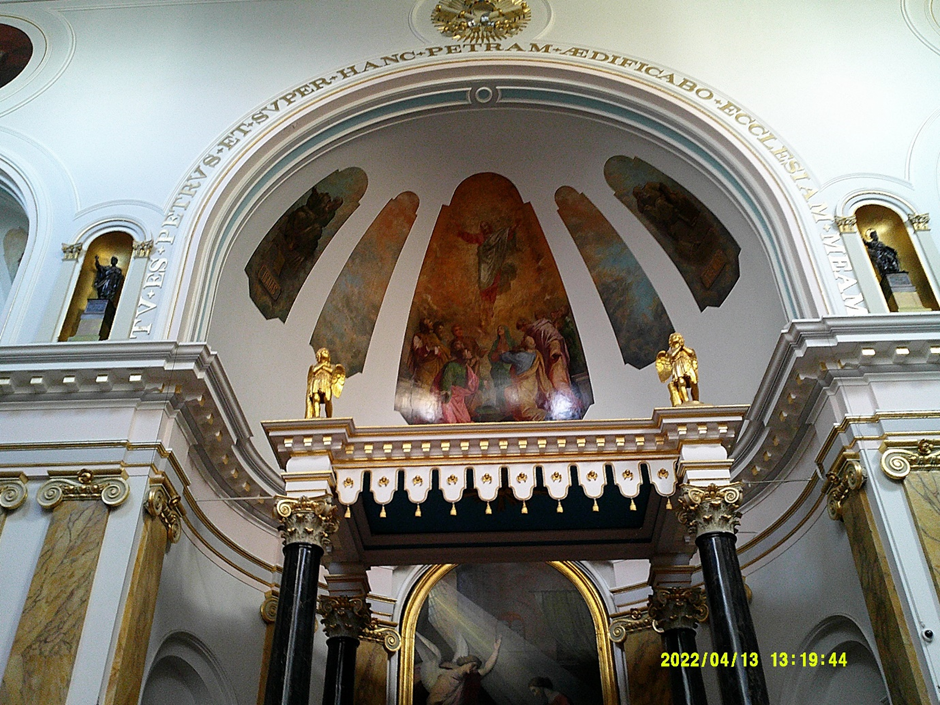
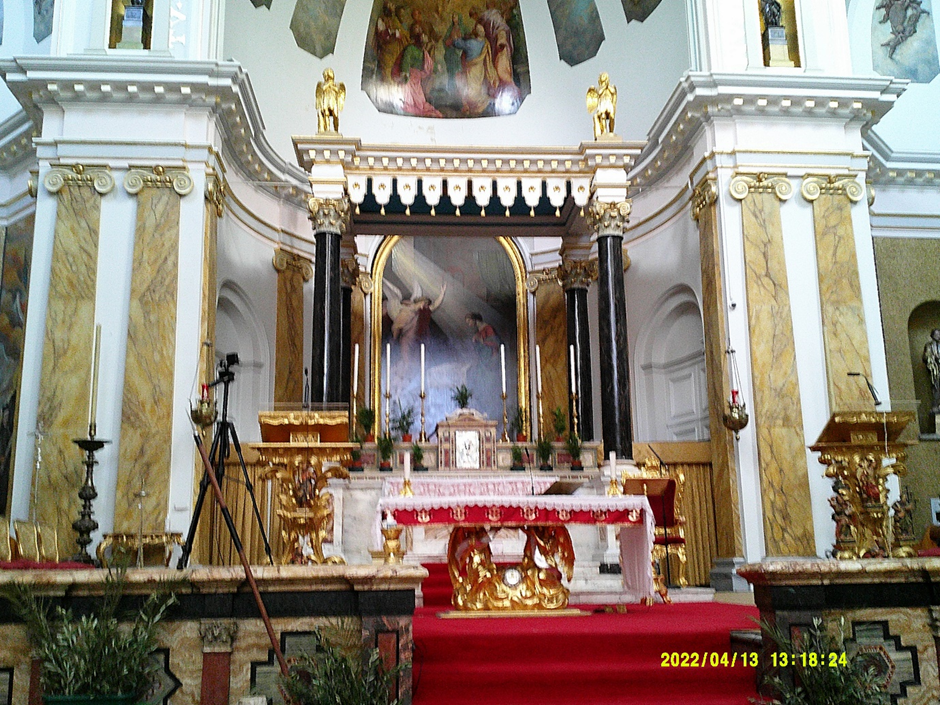
This gem of a church, sitting between shops and offices in Clerkenwell Road, was opened in April 1863 as ‘The Church of St Peter of all Nations.’ At the time it was the only church in Britain designed in the Roman Basilica style, and when I stepped inside, it felt like I was stepping into a church in Rome; breathtakingly beautiful decorations and artwork. St Peter’s was designed by Irish architect Sir John Miller-Bryson and modelled on the Basilica San Crisogono in Rome. The church was built to serve the growing number of Italian immigrants in the Clerkenwell area, known as ‘Little Italy.’ The church is under the control of the ‘Pallottines’, a Roman Catholic Society, founded in 1835 by Saint Vincent Pallotti, and it was he who commissioned the church. St Peter’s provides services throughout the week in Italian and English, and plays an important part in the life of the community, a focal point of the annual processione held in July. There are a number of Italian cafes, restaurants and barbers’ shops up and down Clerkenwell Road.

Source: Wikipedia

The frieze shows events in the life of Jesus.
All year-round Nativity Scene

The Dutch Church, Austin Friars

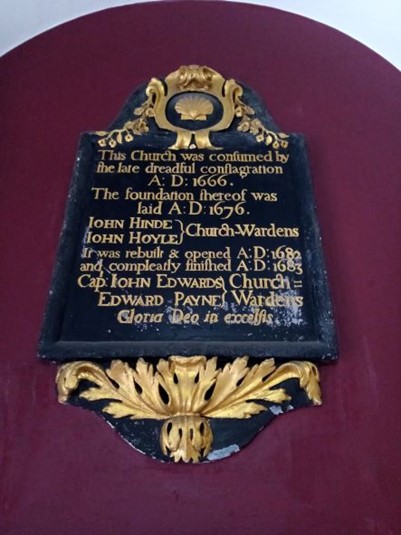
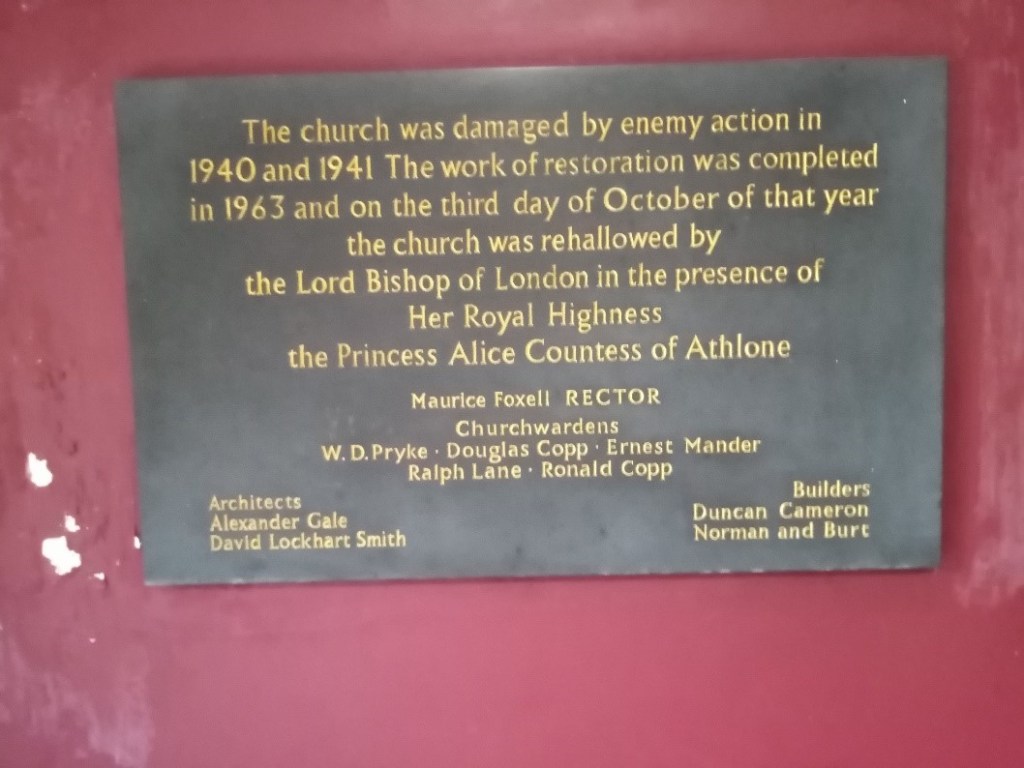
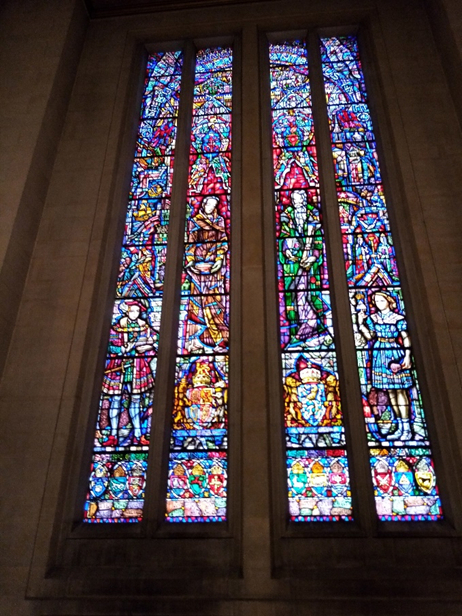
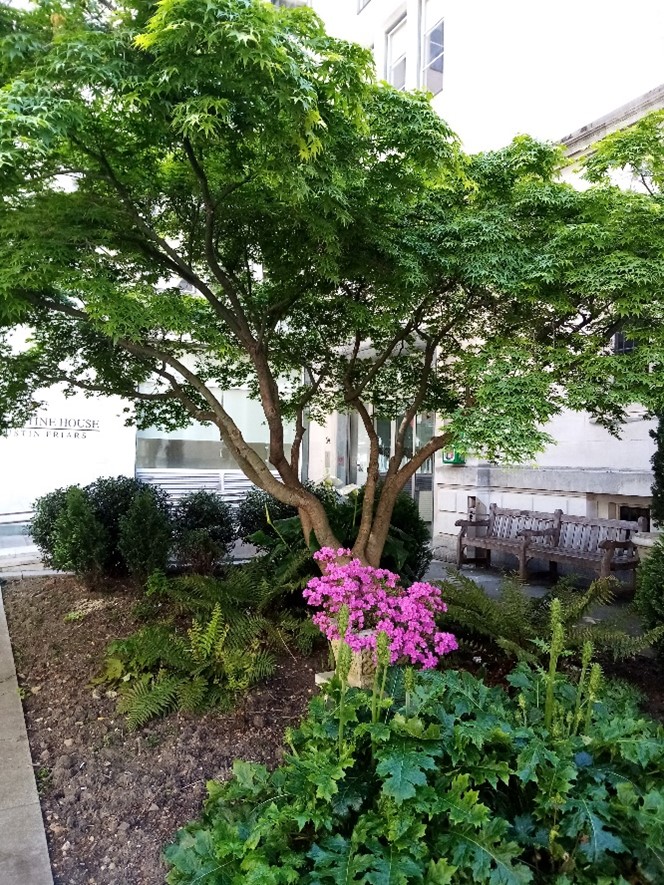
This church has an interesting history. On this site there was an Augustine Friary, established in the 1260s, consisting of a church, accommodation for 600 friars and a garden with an orchard, quite a substantial property. The friary played an important role as a centre for religious education, not just for English students but by foreigners living in London, mostly Italians and Germans. Following the dissolution of the monasteries by Henry VIII in 1538, Henry’s advisor, Thomas Cromwell bought up the friary land to build for himself one of the largest mansions in London. Cromwell’s meteoric rise in fortunes was followed by an equally meteoric fall from the King’s favour and he was executed in 1540, after which the mansion and lands were sold off. So what’s the Dutch connection? In July 1550, King Edward VI, son of Henry VIII, issued a Charter in which he granted European Protestants escaping persecution in Catholic Europe the freedom to hold their own church services.  He gave part of the (still standing) church at Austin Friars to Dutch and French refugees resident in London. The French Protestants relocated to another church (more on that in the next section) but the Dutch Church still holds the 1550 Charter. The original monastery church was destroyed in a World War 2 air raid in 1940; and on 23rd July 1950, ten-year-old Princess Irene of the Netherlands laid the foundation stone of the new church, commemorating 400 years since the 1550 Edward VI Charter. The new church was completed in 1954, built in the style of Protestant churches in the Netherlands.

Sources: Booklet in the Church; squaremilehealthwalks.wordpress.com

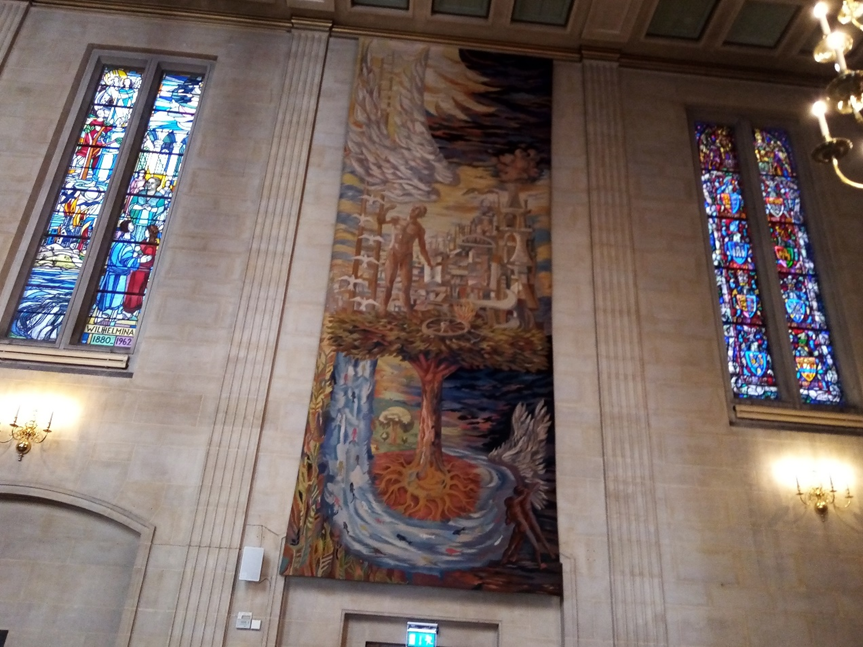
Spectacular Tapestry: ‘God, Man and Creration’

The French Protestant Church, Soho Square

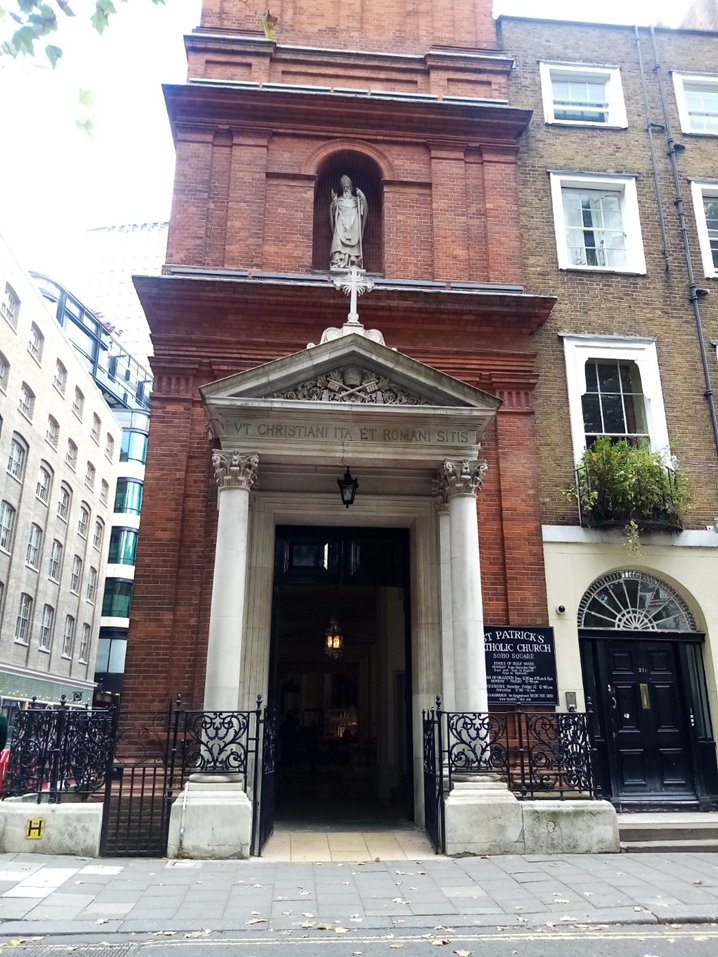
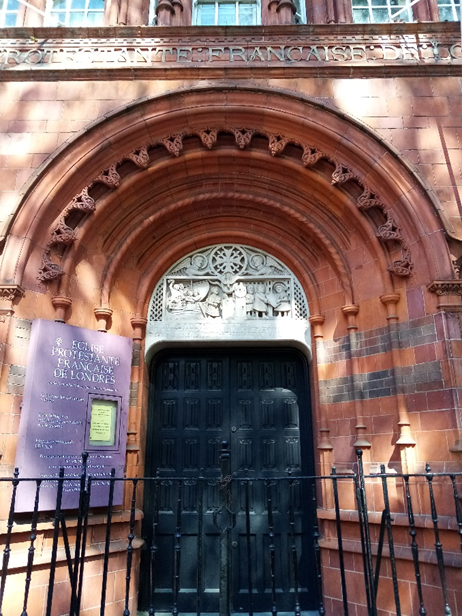
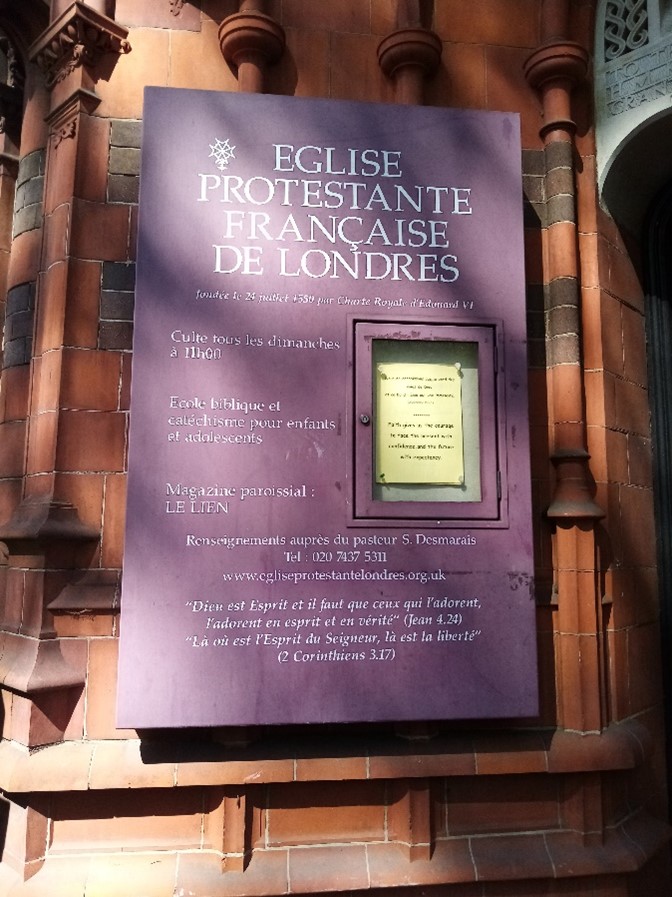
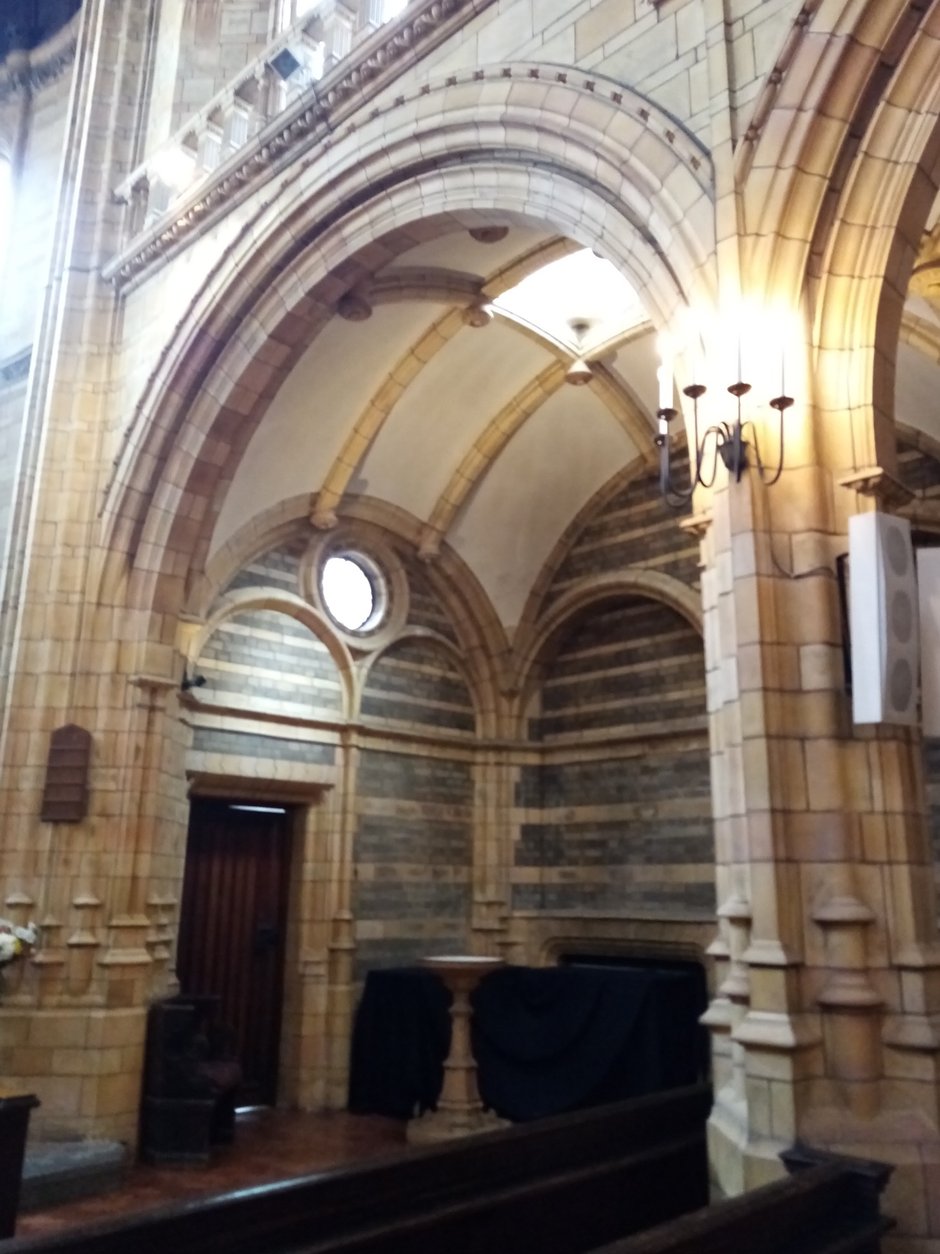
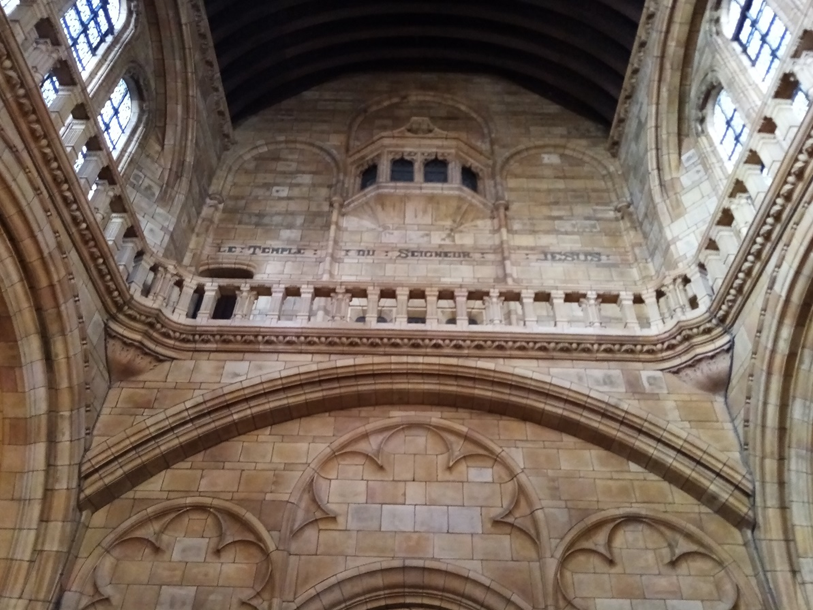
When I arrived outside this church it was clearly closed, and I dithered whether to cheekily press the buzzer marked ‘Church’ and request entry for a quick look inside. Suddenly a side door opened and a man came out, beckoning to another man waiting outside (who I hadn’t noticed) to come in. I asked him if I could possibly to come in to take a few photos, to which he agreed, saying that he was the Pastor! I thanked him profusely (in French) and scurried round as quick as I could! The French Protestant Church has served the French-speaking community in London since 1550, founded by the Edward VI Charter mentioned above. The Soho Square building was erected in 1891, replacing the first church under the Charter in Threadneedle Street, and it’s now the last remaining Huguenot church in England. The Huguenots were French Protestants who suffered persecution for over 200 years in France because of their Reformist and Calvinist beliefs. Many thousands fled to England following the English Reformation and in 1681 King Charles II formally offered them his royal protection. The Huguenots were mainly skilled craftsmen and professional people, famous for silk weaving and also highly skilled clock makers, metal workers and silversmiths. The largest settlement of Huguenots was in Spitalfields and Bethnal Green.
Sources: Wikipedia; thehistoryoflondon.co.uk

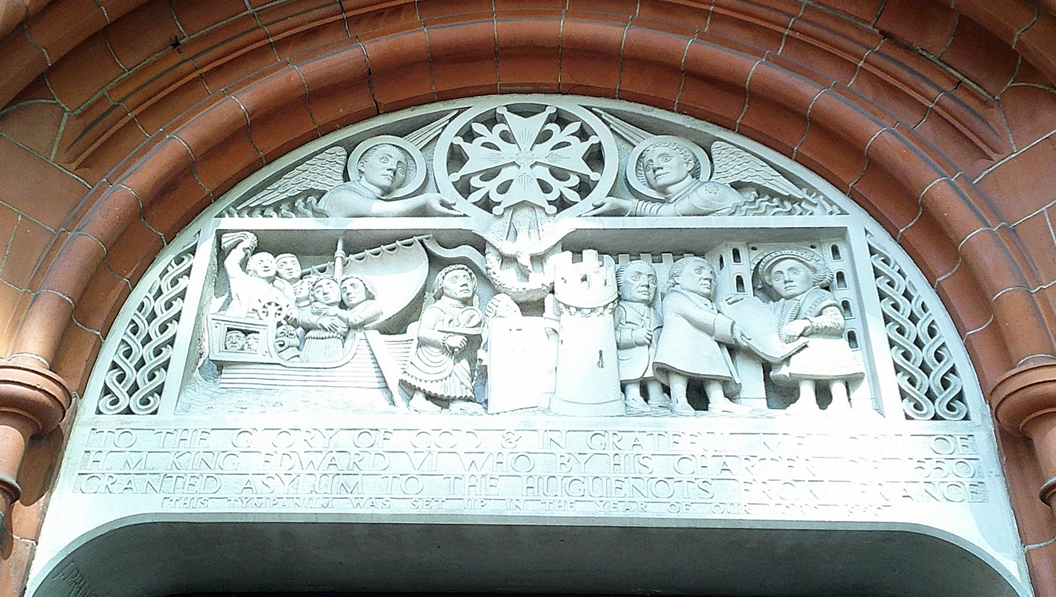
Beautiful stone tableau in an arch at the entrance to the church
The Pastor who let me in must have been Stephane Desmarais, so pleased I got the opportunity to see inside this beautiful church!

St George’s German Lutheran Church

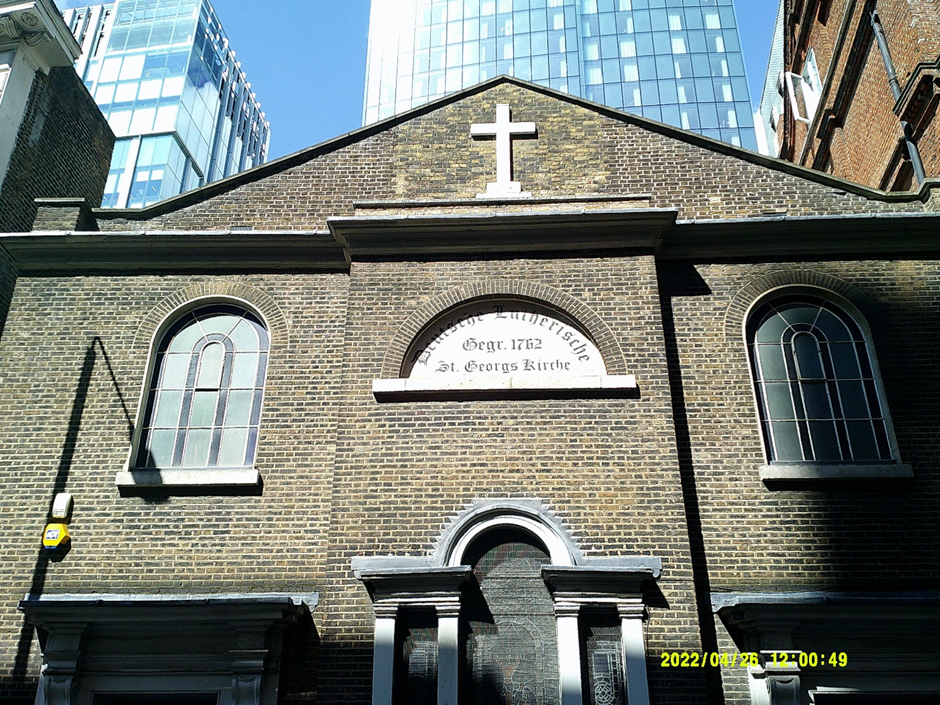
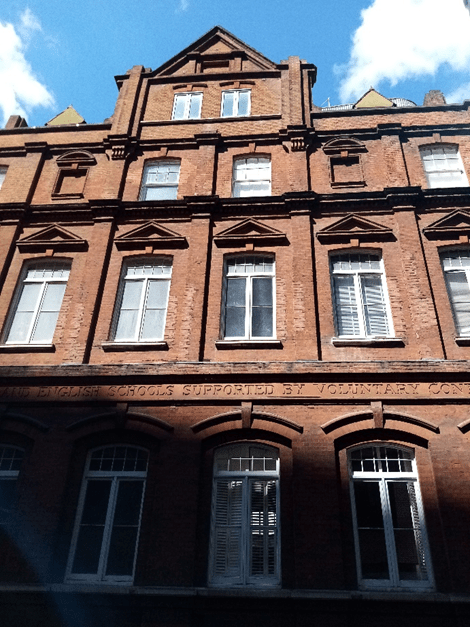
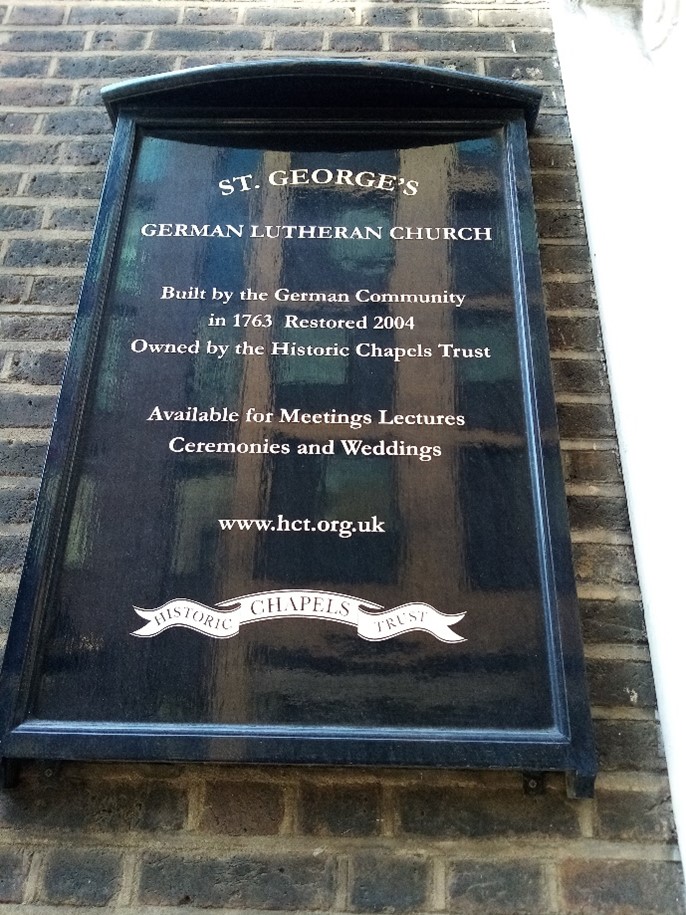
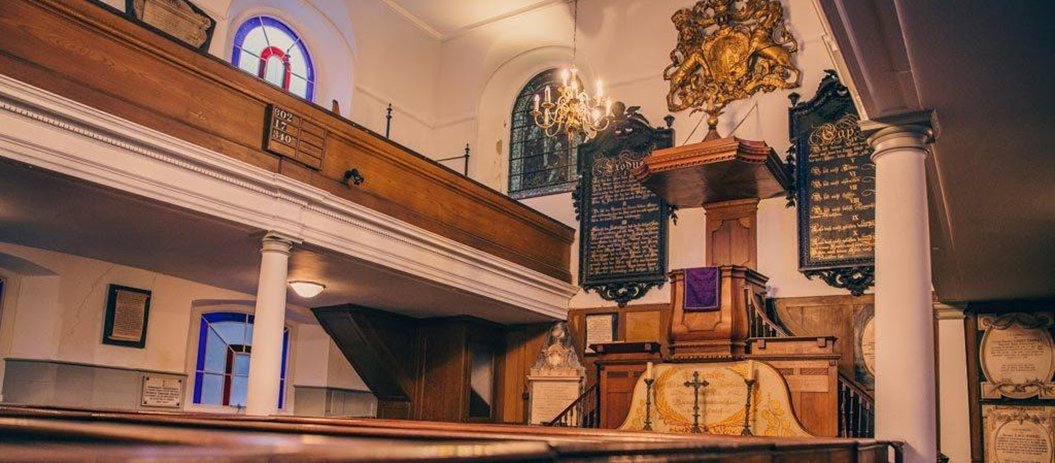
This church is now owned by the Historic Chapels Trust. It is the oldest surviving German church in Britain, however, it is now closed for regular Sunday worship except for occasional services by the German community. The main use of the building is for concerts, lectures and historical study. Next door to the church is ‘St George’s German and English schools supported by voluntary contributions.’ St George’s was established in 1763 as a Christian centre for German Lutheran immigrants who worked in the East End in various industries: sugar refining and the baking and meat trades. The First World War was a disruptive and unsettling time for the community; men of military age were interred and older men and women were expelled from the UK. The then Pastor and his wife were expelled in 1917, returning in 1920, but amazingly, church services continued throughout both World Wars and beyond, until 1996. During the Second World War, the pastor at that time, Julius Rieger, assisted Protestant Christians of Jewish descent to escape from Germany to the UK. The theologist and anti-Nazi activist Dietrich Bonhoeffer was associated with St George’s as pastor of nearby German Reformed St Paul’s Church between 1933 and 1835. This church was closed when I visited; the interior photo is from the church’s website.  St George’s is just outside the old City Walls, where the City ends and the East End begins at Whitechapel.

Source and Interior Photo: St George’s German Lutheran Church website

Churches in Springtime

Noticing how lovely my local churches are looking in the Spring sunshine, with the daffodils around them, I thought I’d visit some closer to home than usual. These are all in London boroughs, so they all count as London!

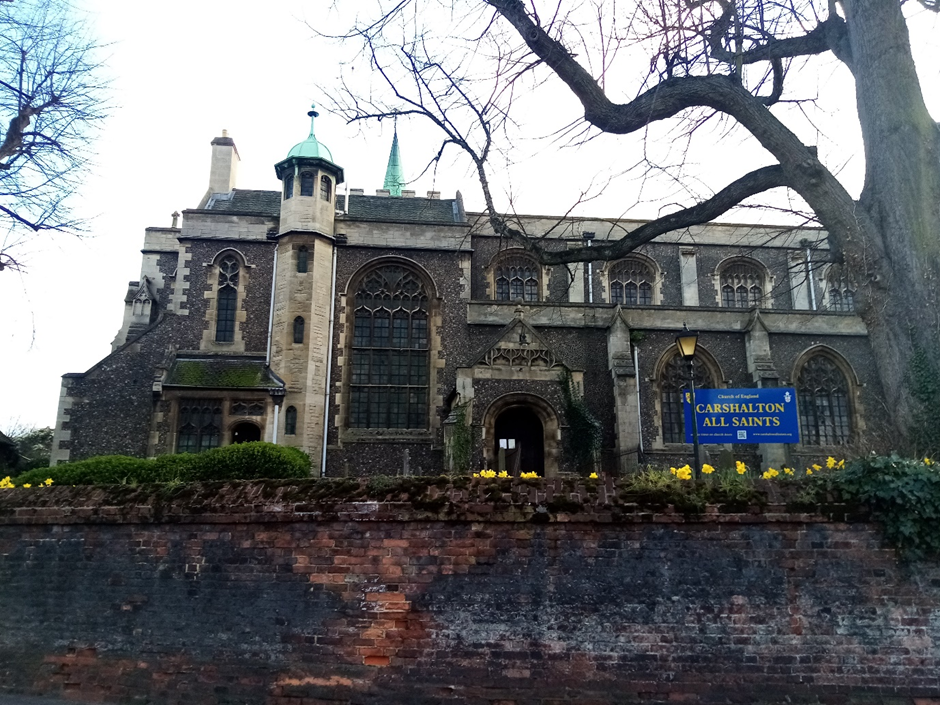
All Saints Carshalton

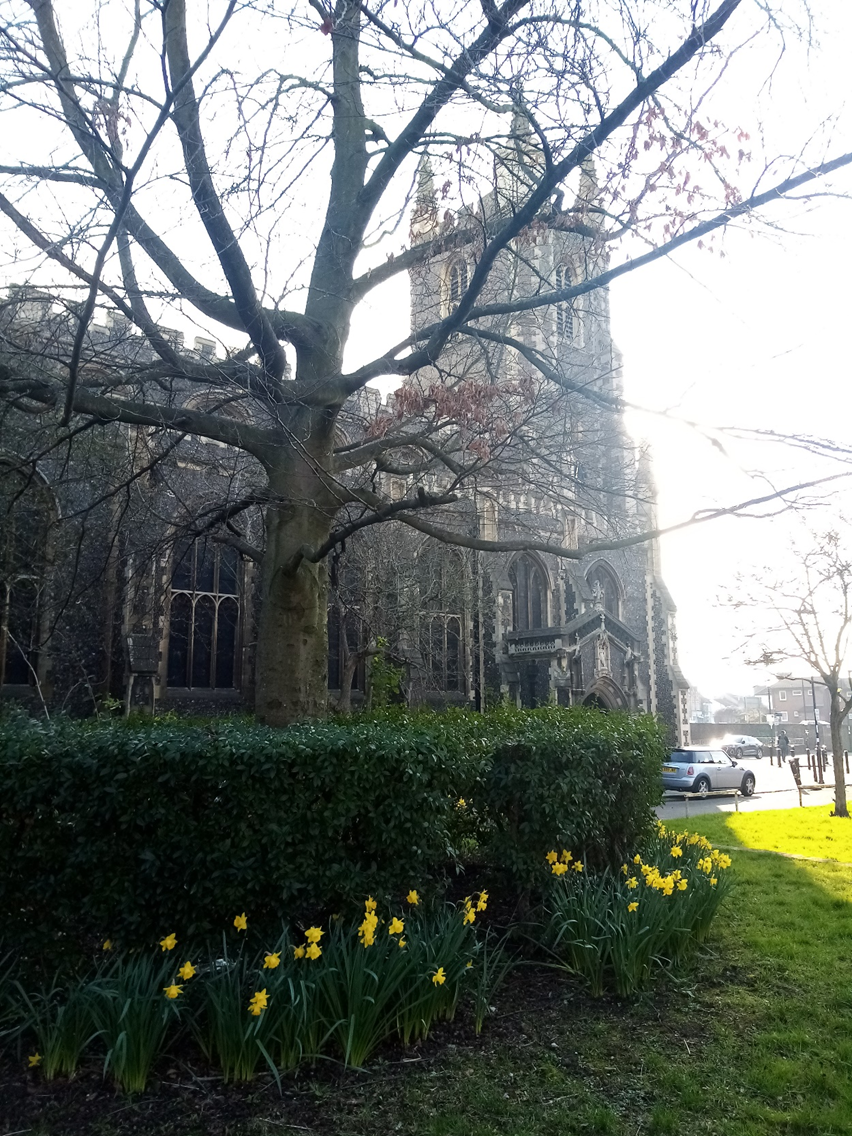
Photo taken from the middle of the High Street, not a good place to stand, but I wanted to get those daffs in!

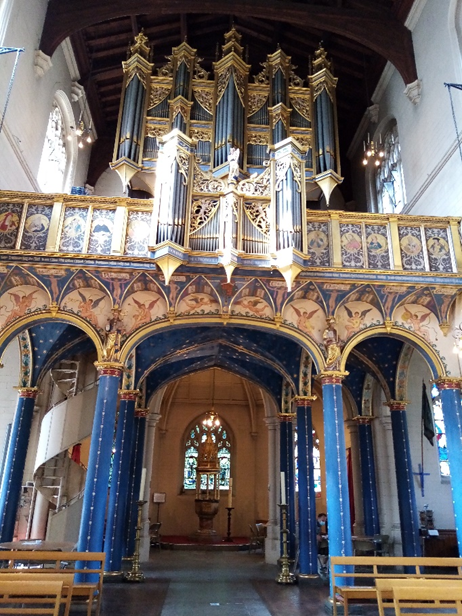
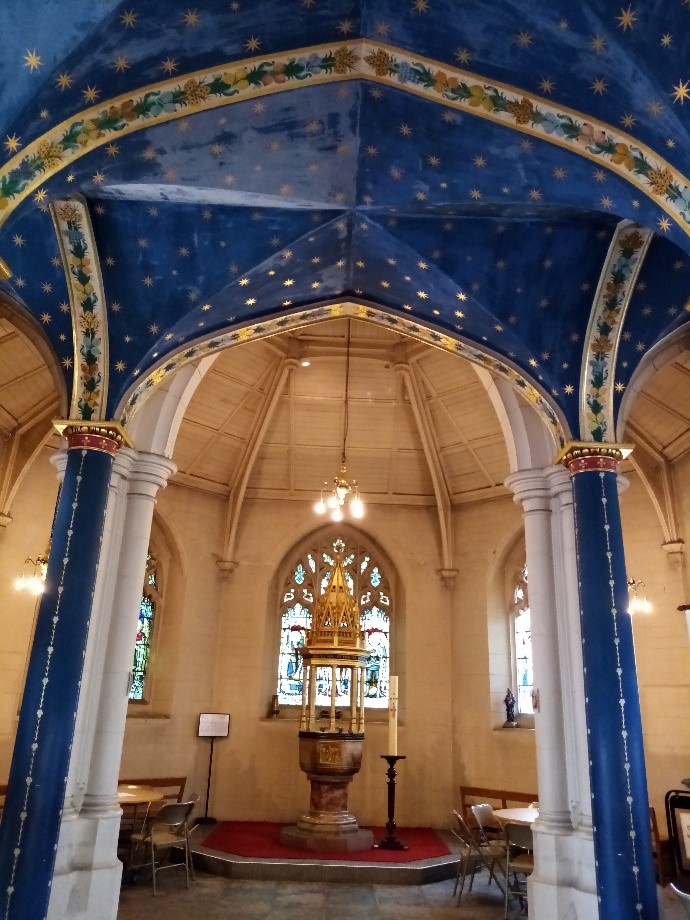
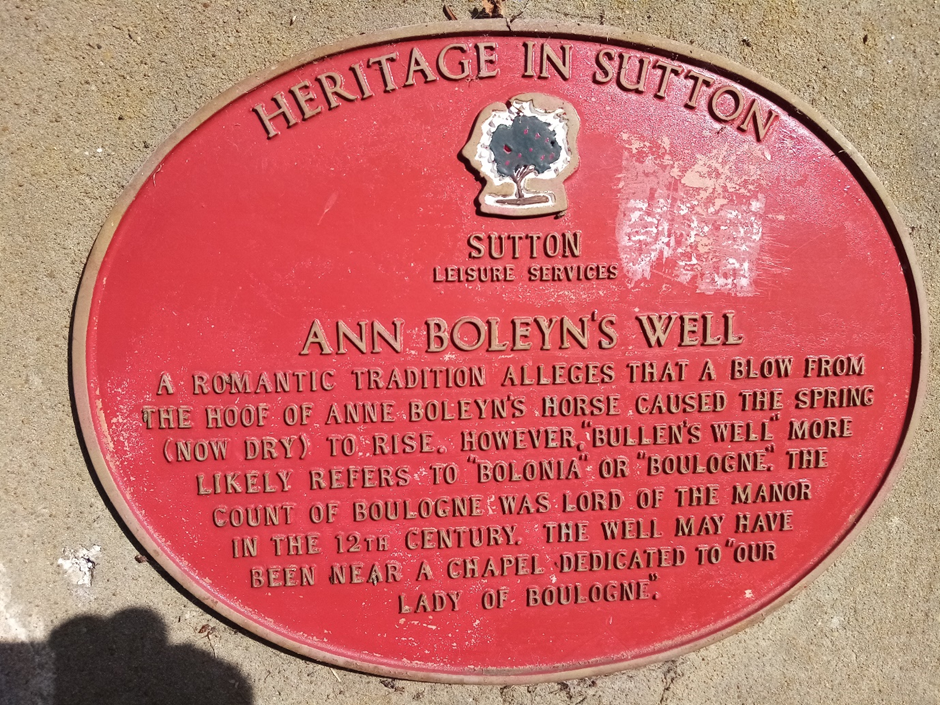
A church has stood on this site since Saxon times and was mentioned in the Domesday Book (1086.) At that time there was a spring rising nearby, one source of the River Wandle, which we now know as Carshalton Ponds. Parts of the original construction, notably the tower, remain but it has been added to over the next 800 years to the building we see today. The interior is spectacular, these works were installed between 1920 and 1941. The Revd. WR Corbould became Rector in 1919 and through his friendship with Sir Ninian Comper, a renowned church architect, began work on a series of ‘remarkable embellishments’; they certainly make it different from most parish churches. A red Sutton Heritage plaque on the outside wall lists people associated with the church, who all have the distinction of having Sutton/Carshalton streets named after them: Nicholas Gaynesford, Sherriff of Surrey and Sussex; Sir William Scawen, Governor of the Bank of England; Sir John Fellowes, sub-governor of the South Sea Company.

Source: Church website    

Centre Aisle
Another Sutton Heritage red plaque on the outside wall

Croydon Minster

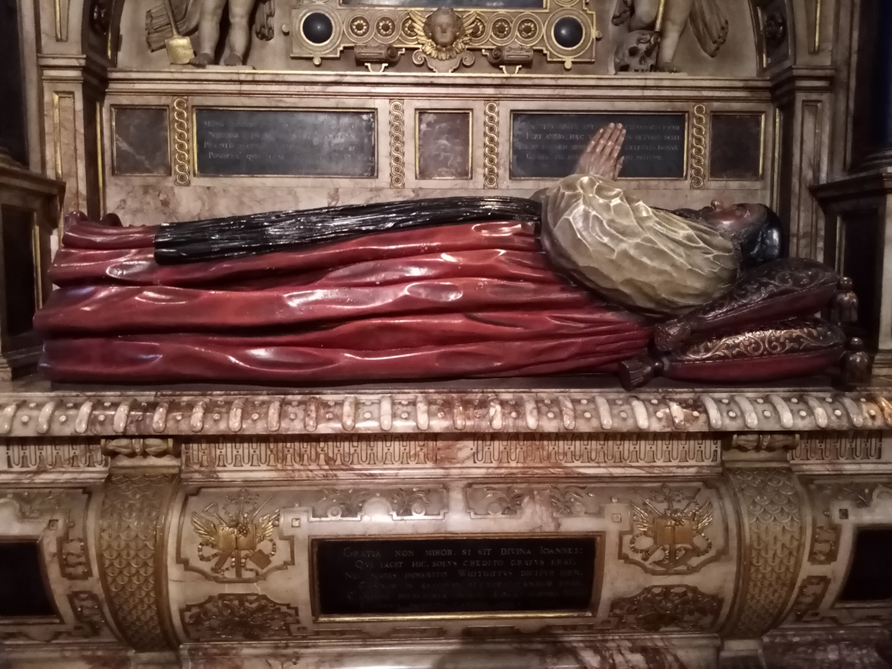
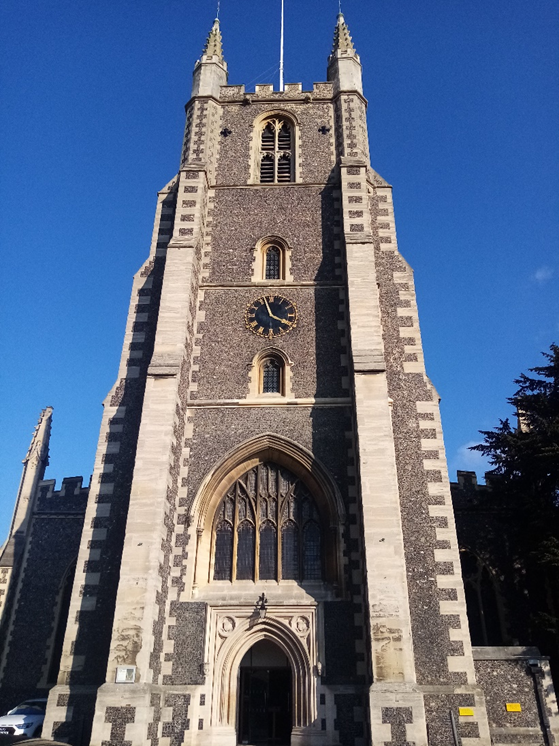
Like All Saints, the Parish Church of Croydon is believed to have been founded in Saxon times, there being a record of ‘a priest of Croydon’ in 960. There is mention of a church in the Domesday Book and there are historic links with the Archbishops of Canterbury, who had a Palace in Croydon, in use until the 18th Century. The building is now the Old Palace of John Whitgift School, a private Girls Senior School.  Six Archbishops of Canterbury are buried in the church, and until 1984, Croydon was actually an outpost of the Diocese of Canterbury, after which it joined the Diocese of Southwark. Kings Henry 7th and 8th and Queen Elizabeth 1st were regular visitors to the archbishops at Croydon and would have attended the church. Formerly a Parish Church, dedicated to St John the Baptist, in recognition of its historical connections and as the ‘Mother Church’ of Croydon, it was designated a Minster Church in May 2011. The church is actively involved in the life of the community of Croydon and regularly hosts civic events as well as ordinations and diocesan events. A cathedral by another name? Possibly Croydon isn’t entitled to a cathedral because it doesn’t have city status (yet.)

Source: Booklet in the church

Croydon Minster in all its Spring loveliness!
Tomb of Archbishop John Whitgift
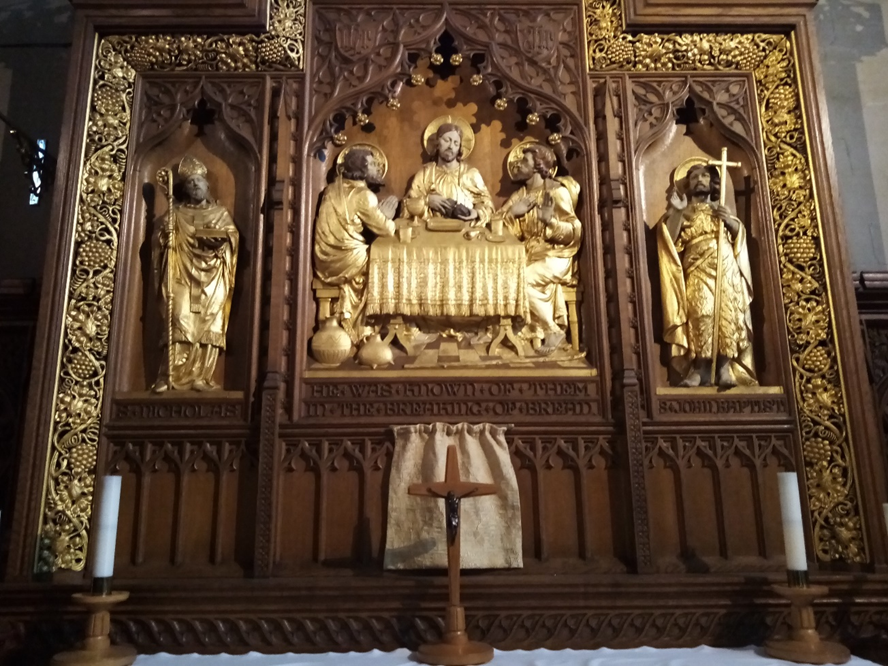
Depiction of the Supper at Emmaus in the St Nicholas Chapel
Bell tower, 125 feet tall, housing 14 bells, apparently such a large number is a rarity
 

St Mark’s Woodcote

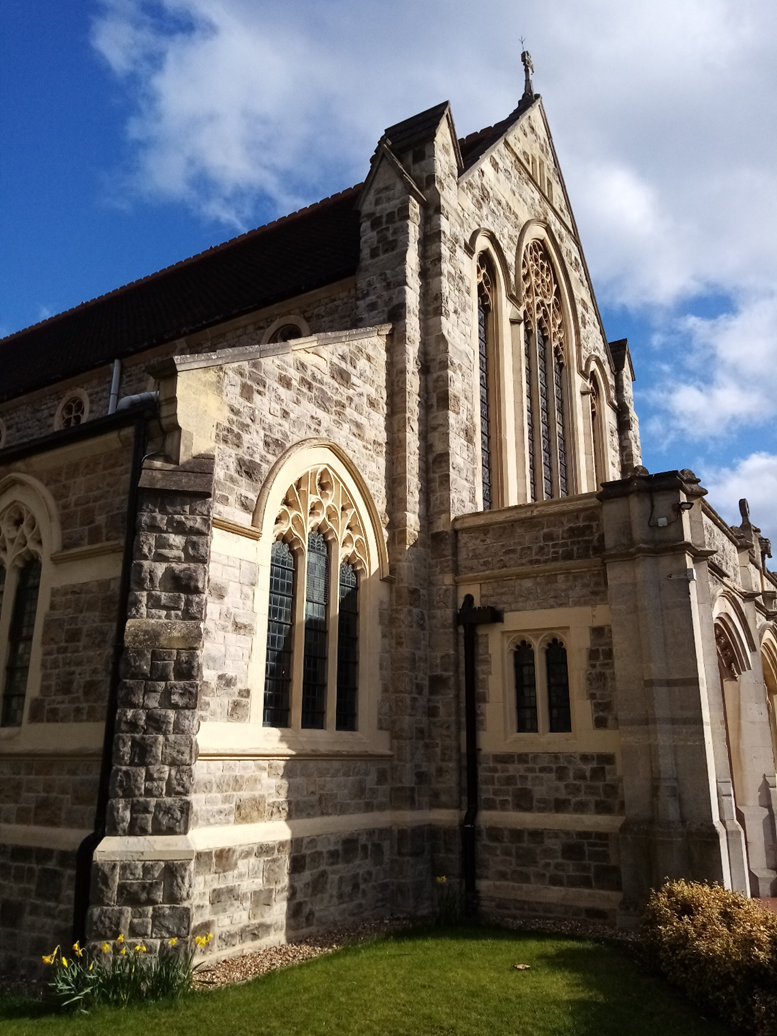
And now, a church built and consecrated 950 years after the first church in Croydon! St Mark’s was built in response to rapid urban growth in the mostly still rural area of South London, an answer to the need for the housing developments of Woodcote and Purley. The church was consecrated in 1910, replacing an earlier temporary building. As a new C of E church, not yet established in the community, it was decided that St Mark’s should be neither ‘High’ nor ‘Low’ church, but Evangelical in its services and outreach. Although St Mark’s was established to serve its upper- and middle-class community, the very first appointed minister arranged for regular church services to be held from a cart drawn to the poorer streets in the town of Purley so that the poorer townsfolk could hear the Gospel preached. Not too many poorer streets in Purley now! An unusual feature of the church is that it has what I call an ‘outside’ bell tower: the bell is in a little tower of its own on top of the church. The church website says, on the history of the building: ‘The plan had included a tower and steeple (with a ring of six bells) on the north side but that proved to be far costly than anticipated.’ So I assume this little tower with its single bell was built instead. The church has some nice stained-glass windows, including one dedicated to Edmund Harrison, who donated the land the church is built on.

Source: Church website

Tiny tower with its single bell on top of the church
 

St Peter and St Paul’s, Chaldon

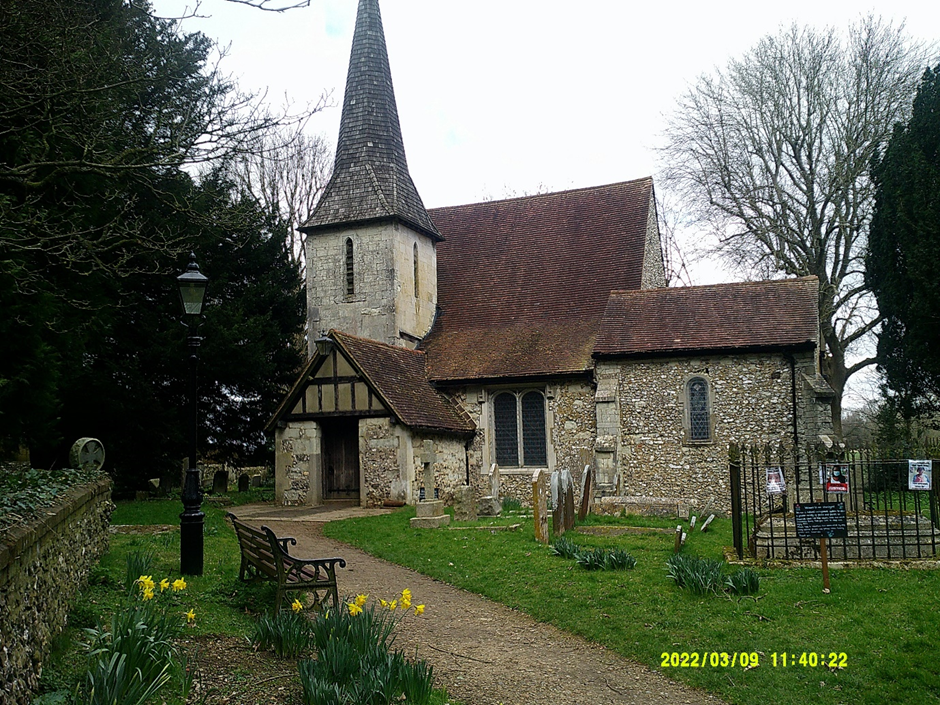
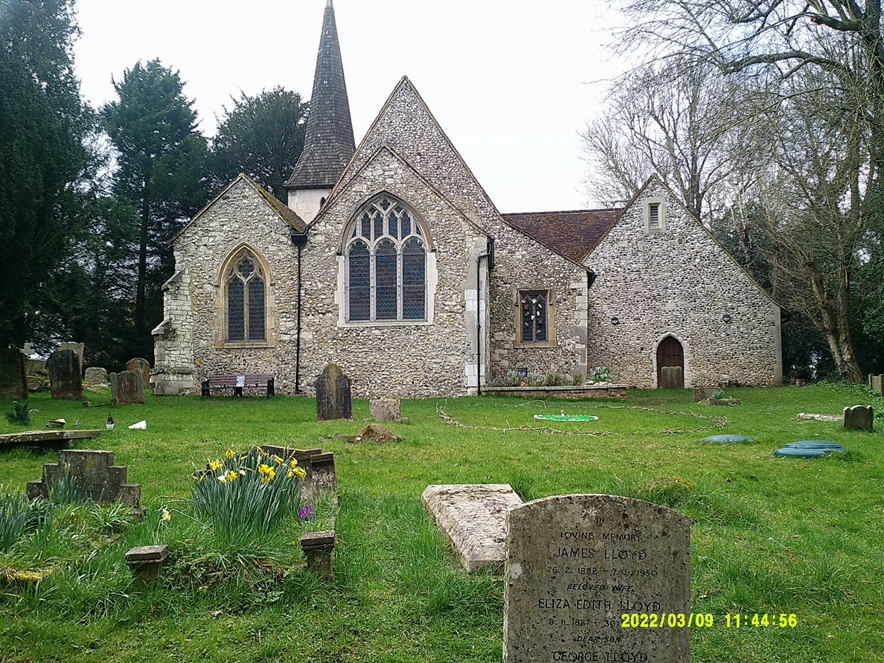
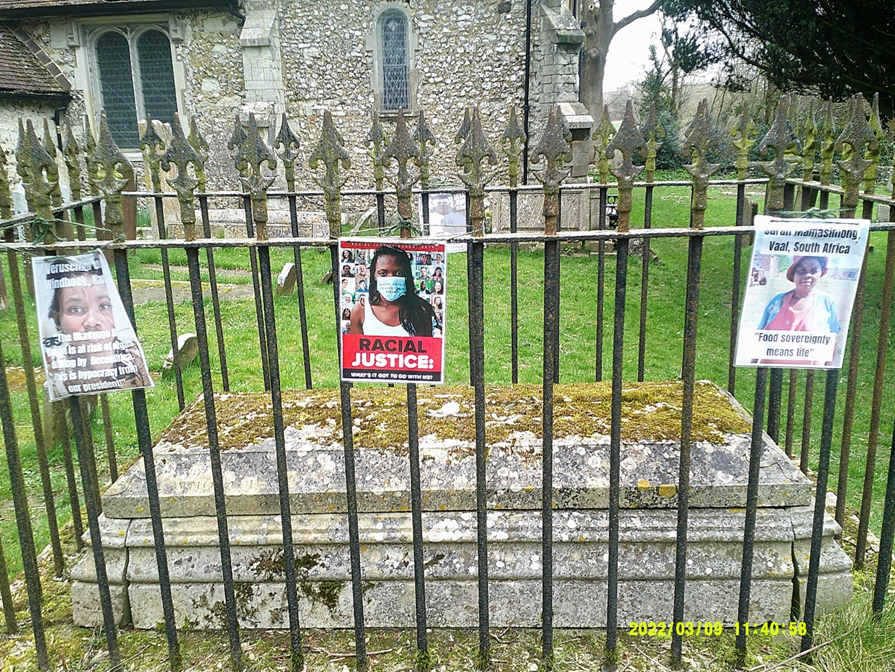
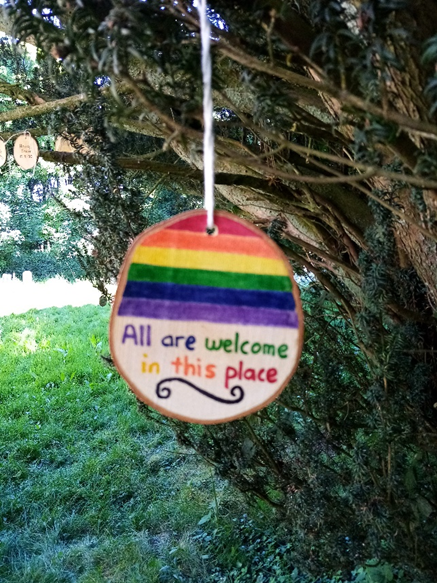
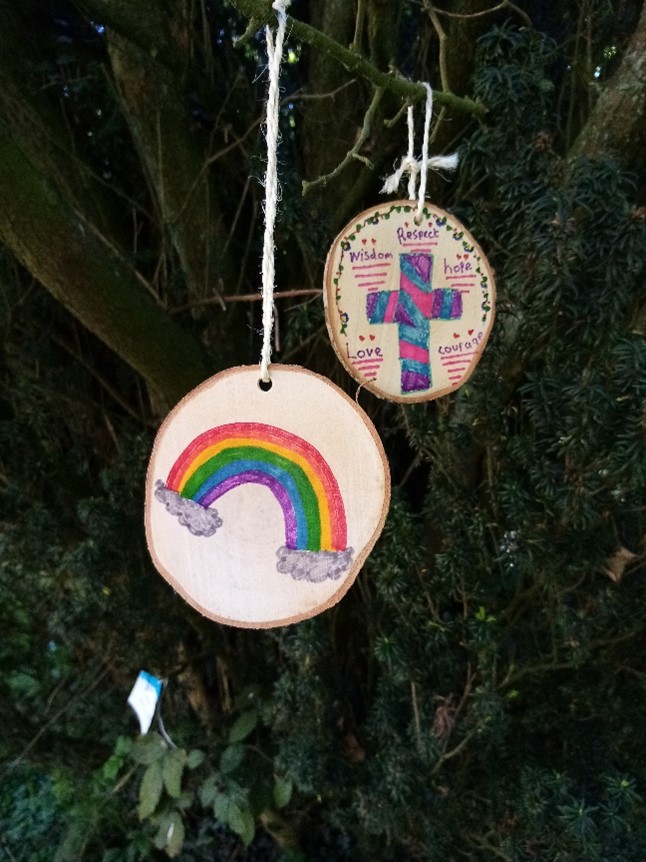
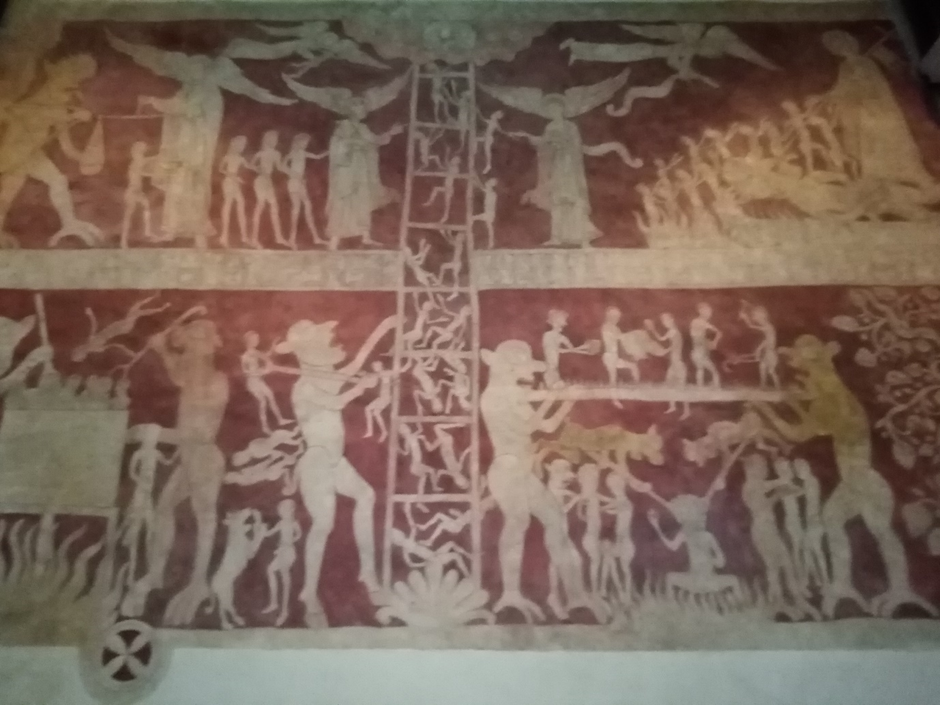
I have to admit, I’m rather obsessed with this church, having visited it in every season and I even have a jigsaw made of it! This little church sits on a hill surrounded by fields and country lanes and has a beautiful churchyard. A Chaldon Church of Saxon Foundation is recorded on the site in 727AD, and the present church was begun in the late 10th century, before the Norman Conquest, and a substantial part this building still stands. St Peter and St Paul’s is famous worldwide for its twelfth century ‘doom mural’ on the west wall, described as ‘perhaps the most interesting ancient wall painting in England.’ The mural depicts the Last Judgement and purgatory and consists of a background of red pigment mixed with egg yolk to make a permanent, fast-drying painting medium which can last for 2,000 years. The figures are in a cream colour which is unusual. The top half of the mural shows the judgement and salvation of souls, and the lower half has demons and souls which have descended into Hell. The ladder in the middle shows mortal souls climbing up to Heaven or falling off down into Hell. All very graphic and terrifying, presumably intended to frighten the congregation into obedience! The contrast with the identity of the church today couldn’t be more striking: there is a strong sense of mission for justice and equality and of love and care of others, evidenced by posters and tree-hangings around the church.  

Source: Church website

One of the prayer requests posted round the churchyard during Covid
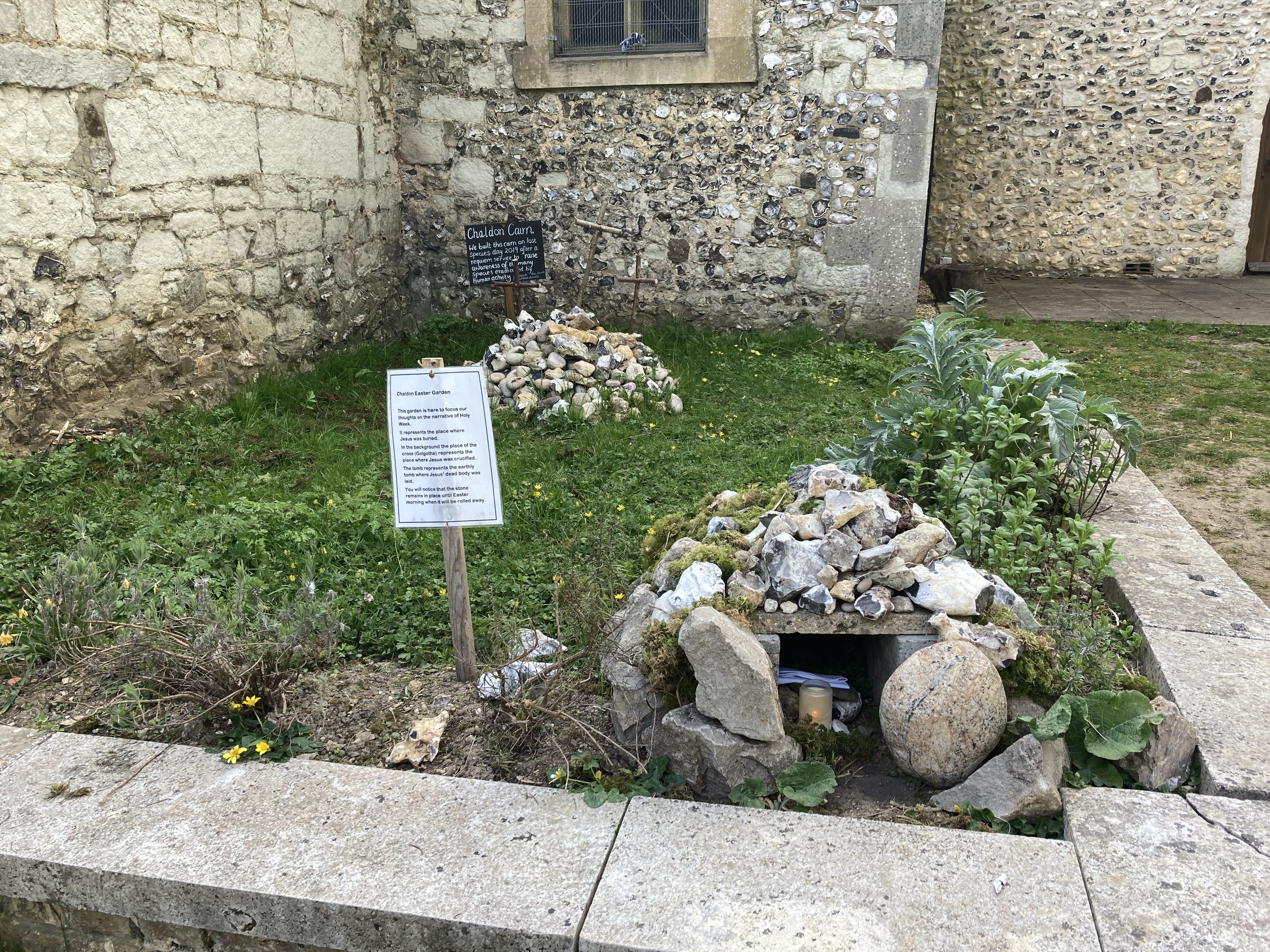
Easter Garden from April 21

Scary mural to finish!

February: Churches on the London Wall ll

I’m continuing my tour of churches built inside and outside the London Wall. The originals of these four churches (and the four that I documented in November) were built from the 11th Century onwards and were situated close to the gates into the City so that travellers leaving the City could pray for safe travels before they set off, and those entering could give thanks for a safe journey completed!

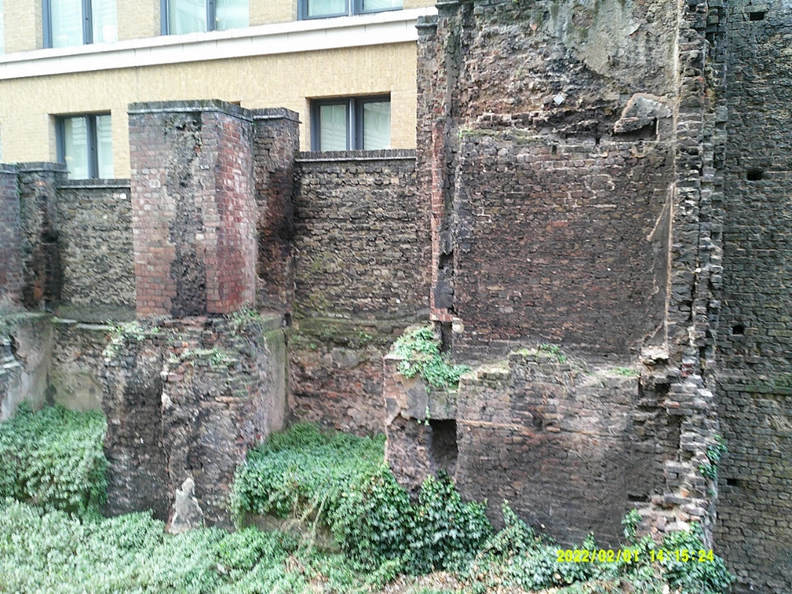
At the Barbican and the Museum of London, the route of the Wall turns South and sadly there is very little surviving, having been demolished over the centuries. However, crossing London Wall (the name of the road) just before the MOL into Noble Street, there is the remains of a Roman garrison which was built onto the Wall. Just on the ‘outside’ of the Wall is the church of

St Anne and St Agnes

I was not able to visit this church, it’s only open to the public on one day per week, due to having another function (more on that later.) Lots of historical interest around the area; as well as the large section of the Roman fort to see, there were several City Guild Livery Halls in this area: Coachmakers’ Hall, Goldsmiths’ Hall, Waxchandlers’ Hall (I don’t know what that is!) None of these buildings remain, having been swallowed up by the glass and steel of modern office buildings. The church itself was rebuilt by Wren after fire damage, but almost destroyed in the Blitz in 1940. It was rededicated in 1966, largely through donations by the worldwide Lutheran church for use by Estonian and Latvian immigrant communities, who worshipped here until 2013. Past parishioners include the English Dissenters poet John Milton, author John Bunyan and John Wesley, who preached here twice in 1736. The church is now the home of VOCES8 Foundation, an educational charity which ‘delivers world-class performances, education and community engagement to ensure Music Education For All.’ From their Website. Their music outreach programme goes into disadvantaged schools in Tower Hamlets, Hackney and Newham. I love this repurposing of a City church!

References: Church Website and VOCES8 Website

St Anne and St Agnes (The Roman Wall is to the right)
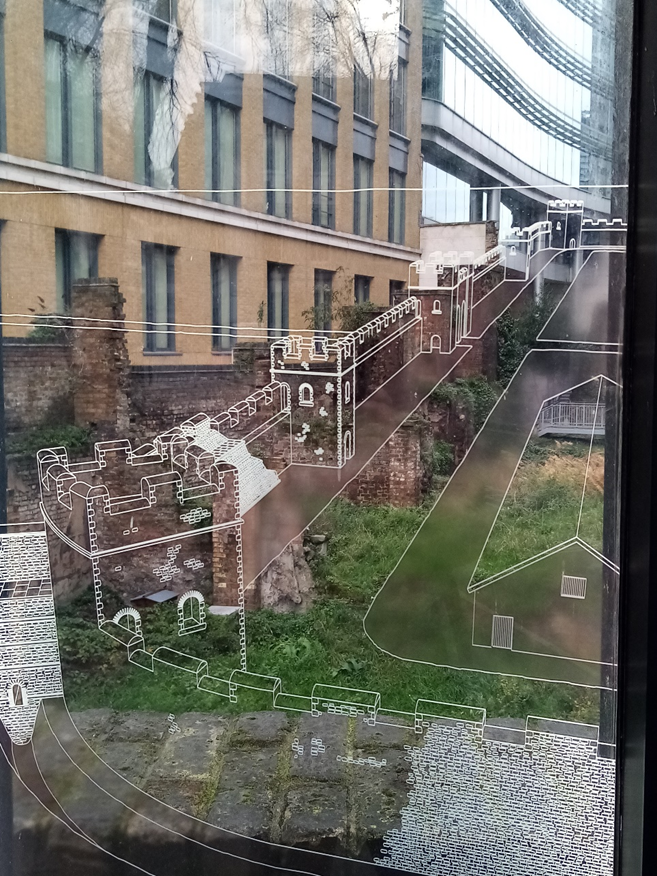
Remains of the 1st Century Roman Garrison and Wall
There are Perspex panels at each end of Noble Street which you can look through to see what the Roman Wall and Fort would have looked like back in the day.

St Botolph Without Aldersgate

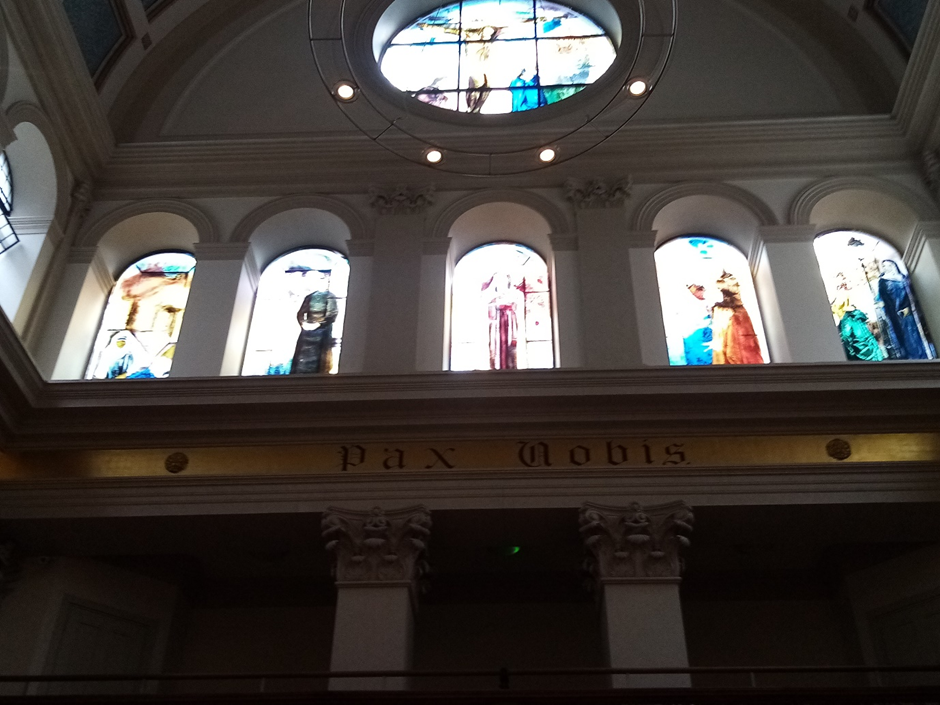
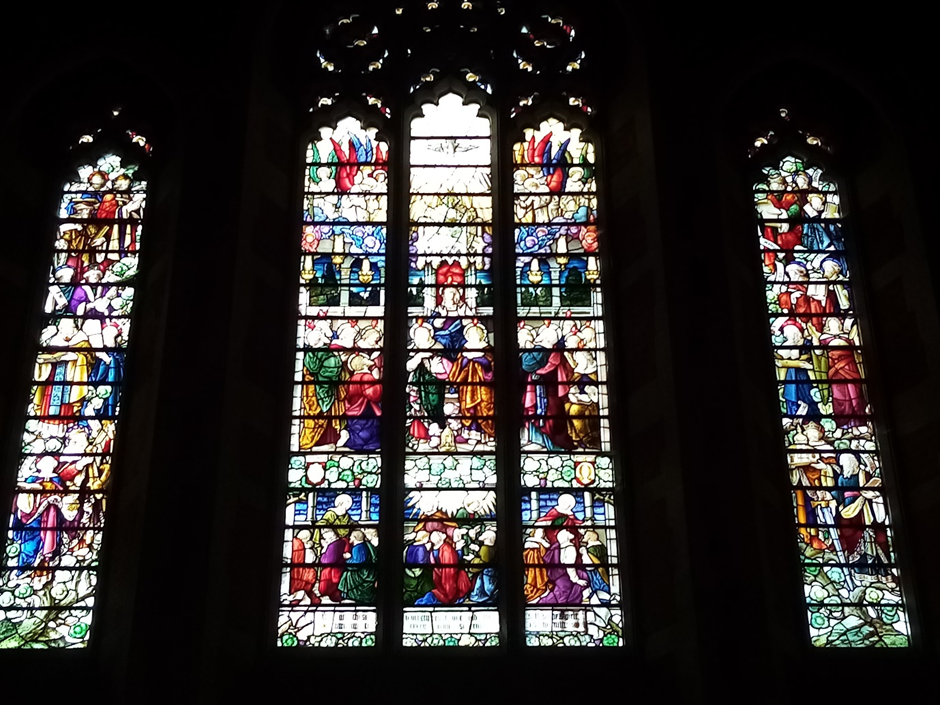
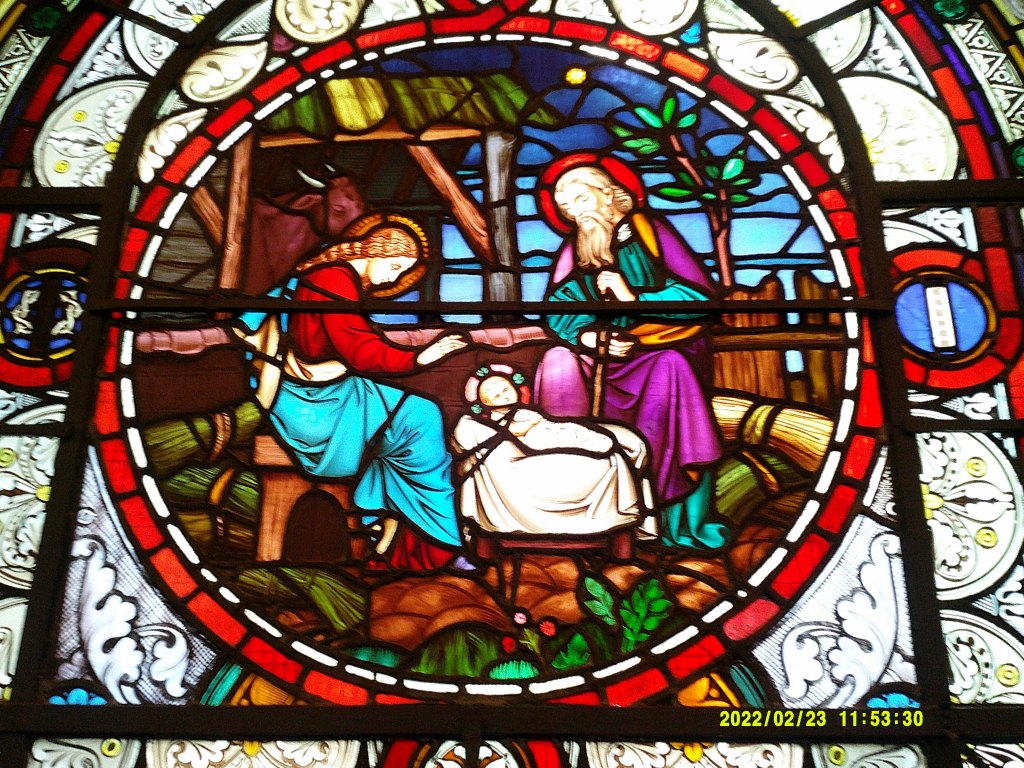
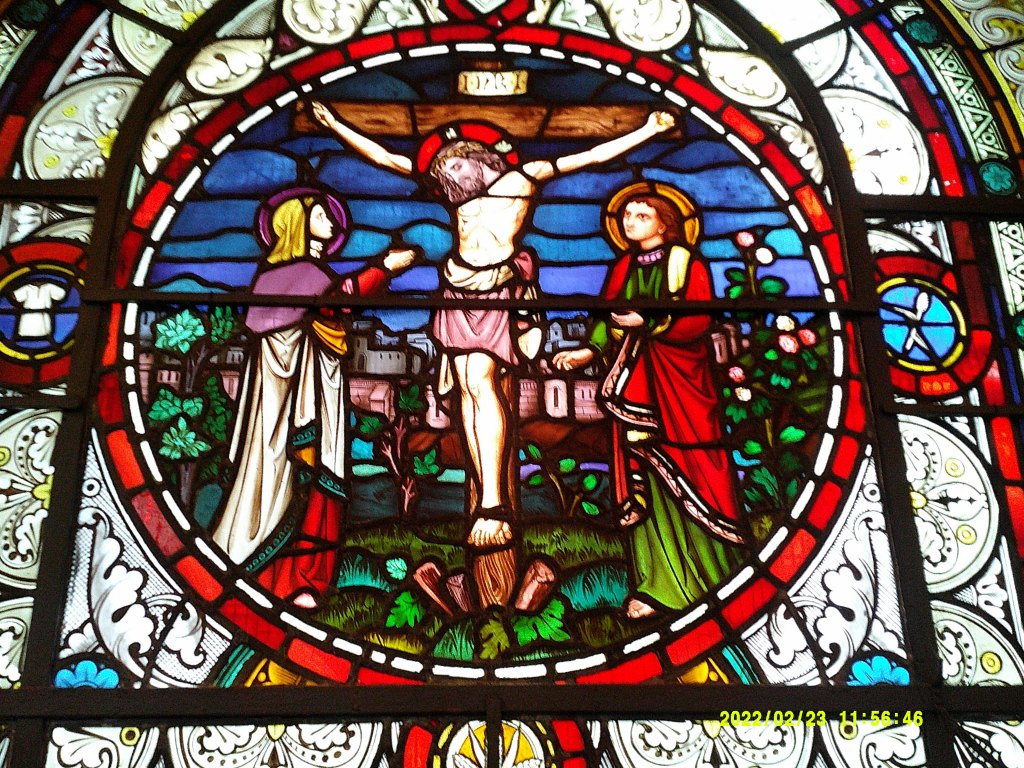
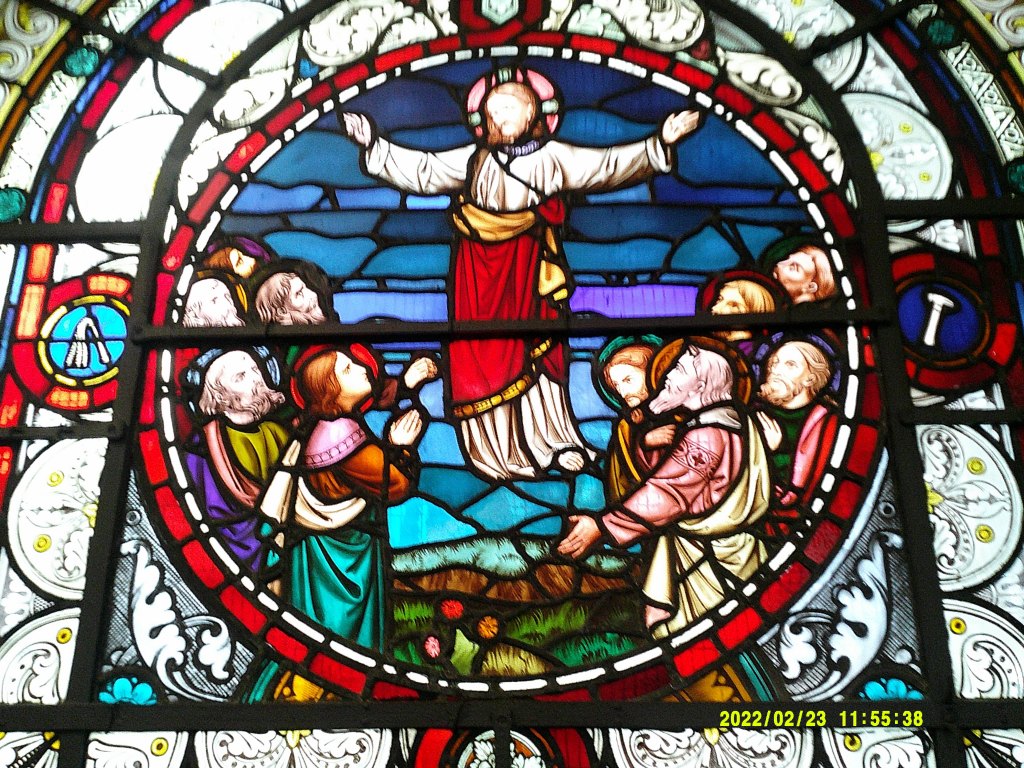
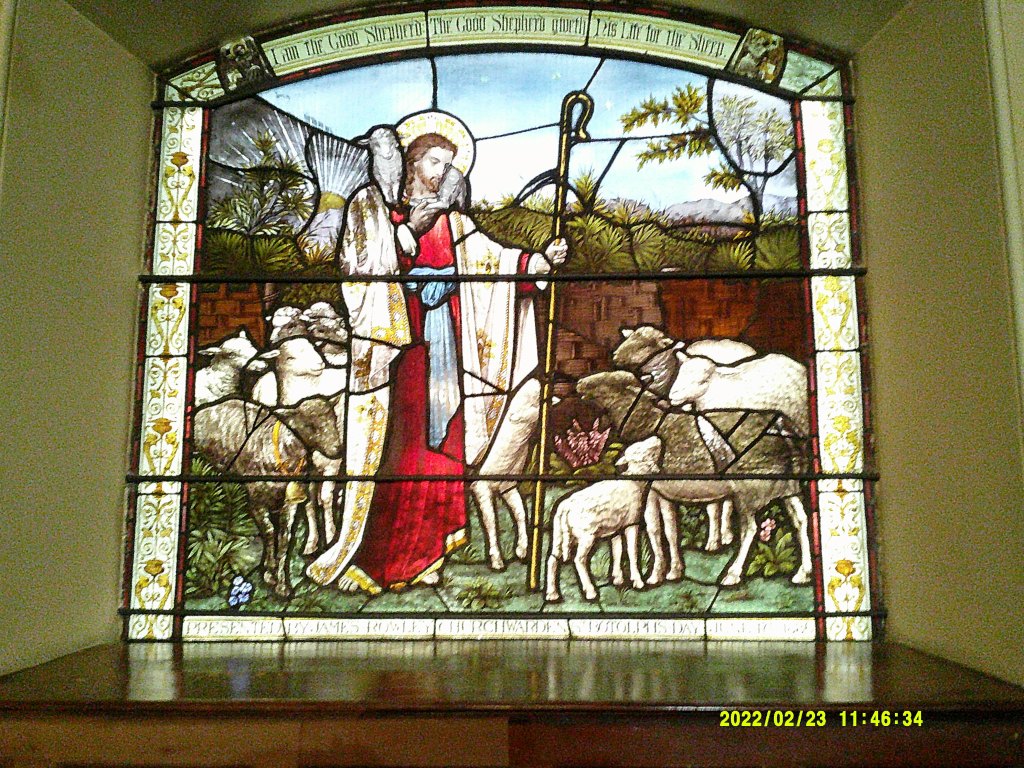
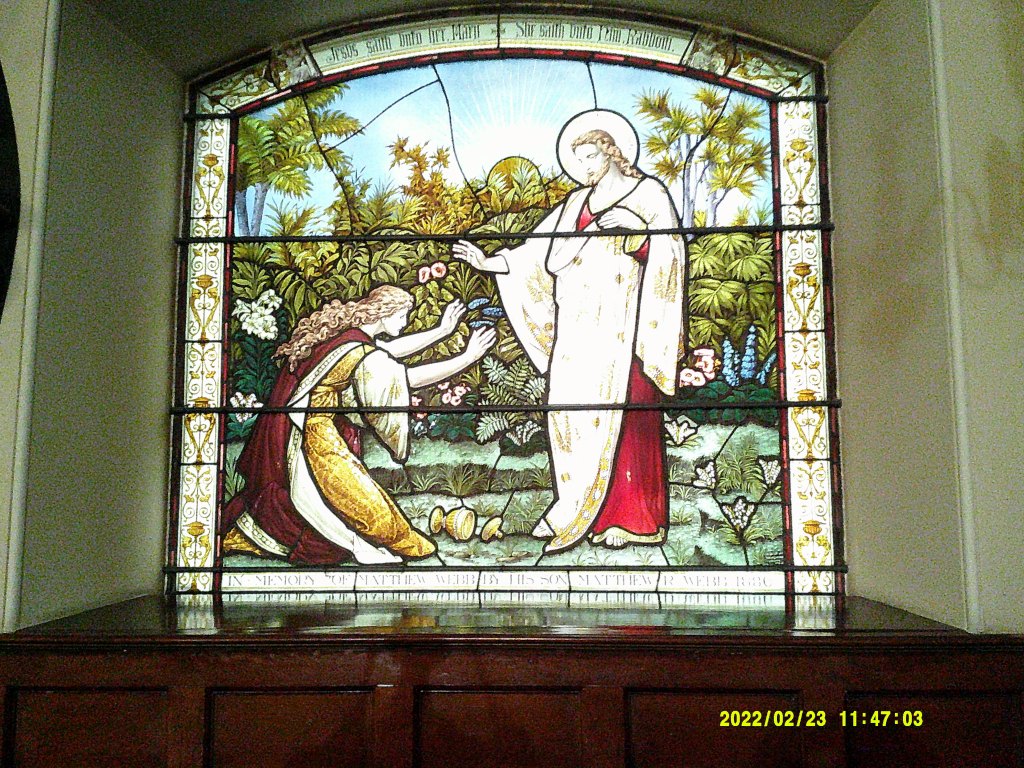
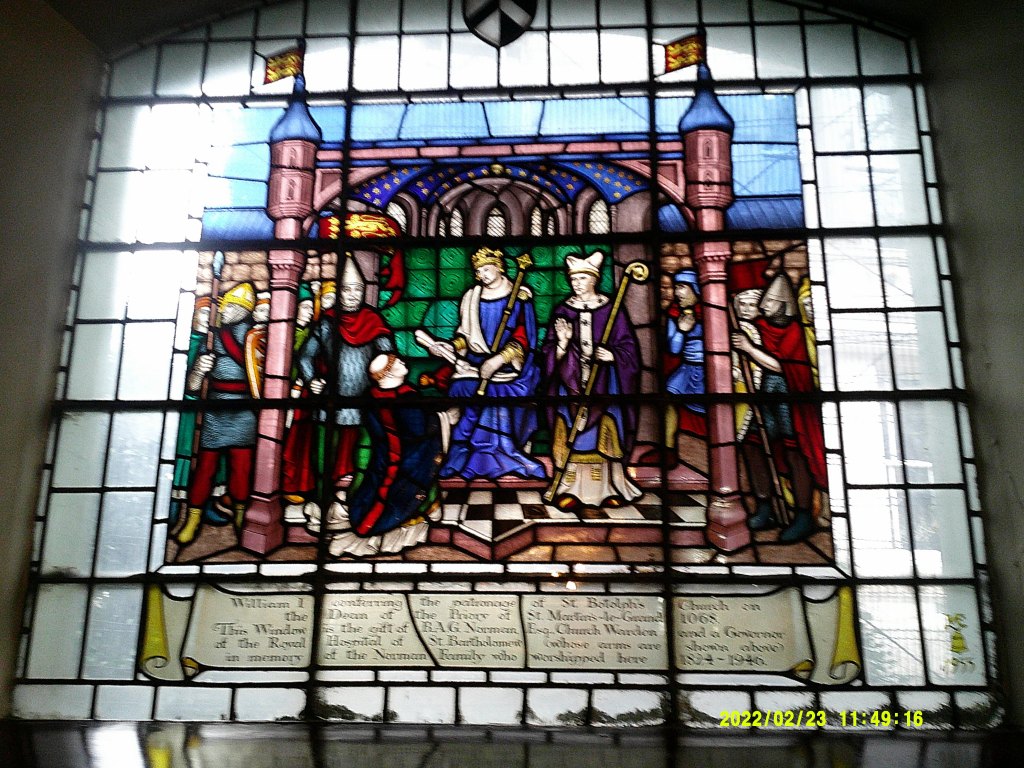
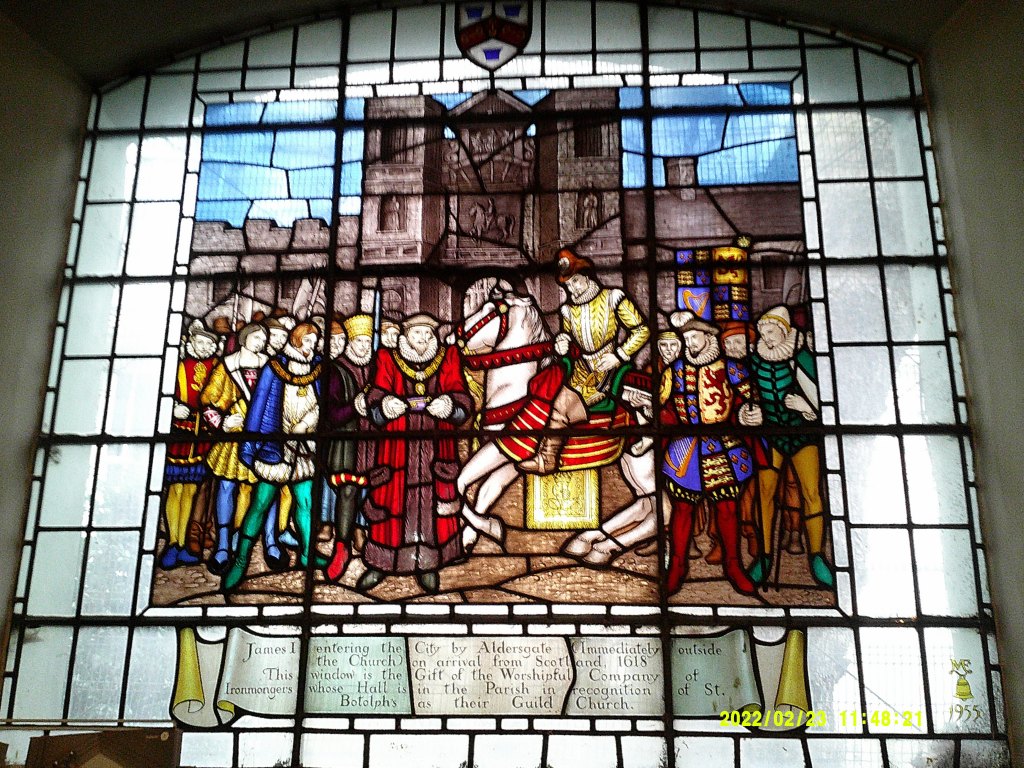
Not to be confused with St Botolph Without Aldgate situated at the Eastern end of the City, this church was another built just outside the Mediaeval Wall at the ‘Aldersgate’ on what is now St Martin’s-le-Grand. The church was founded in the 11th century in the reign of Edward the Confessor and was a priory with an attached hospital for the poor. Over 700 years later, the church survived the Great Fire but later fell into disrepair and was demolished and rebuilt in 1788 – 91. The plain exterior of the church hides its beautiful interior, particularly the spectacular stained-glass windows, which are not original but designed and fitted in the Victorian Era and the 1940s. St Botolph’s is a Guild Church, which means it does not hold its own Sunday services but it is used on Sundays by the London City Presbyterian Church. The main outreach work of the church takes place on Tuesday lunchtimes; a light lunch is followed by the ‘Aldersgate Talks’ which are ‘Christianity for sceptics, enquirers and believers’. Their leaflet says: ‘Our aim is to share the good news of Jesus Christ with those who work in the Aldersgate area, through explaining and applying the Bible.’ Back to those windows, here are three roundels illustrating events in the life of Jesus, and I’ve included some more at the end of the post.

References: Church Website and leaflets in the church

Holy Sepulchre (St Sepulchre-without-Newgate)

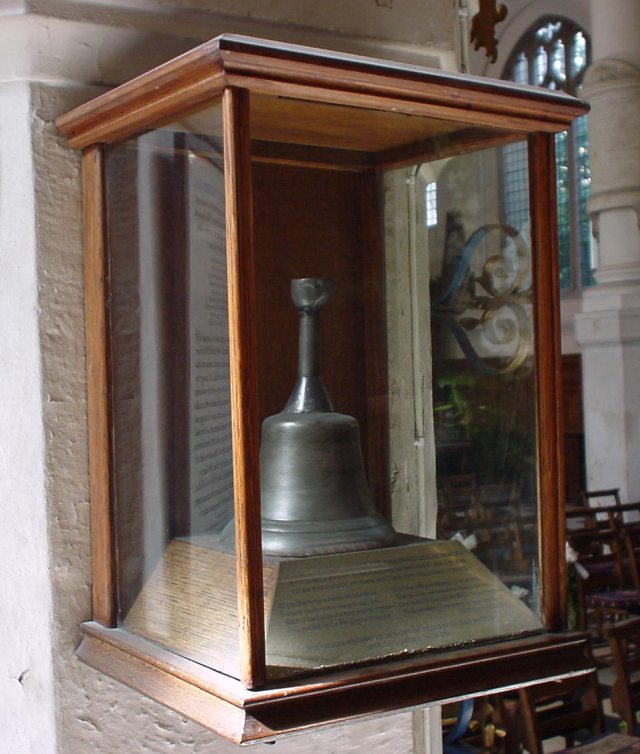
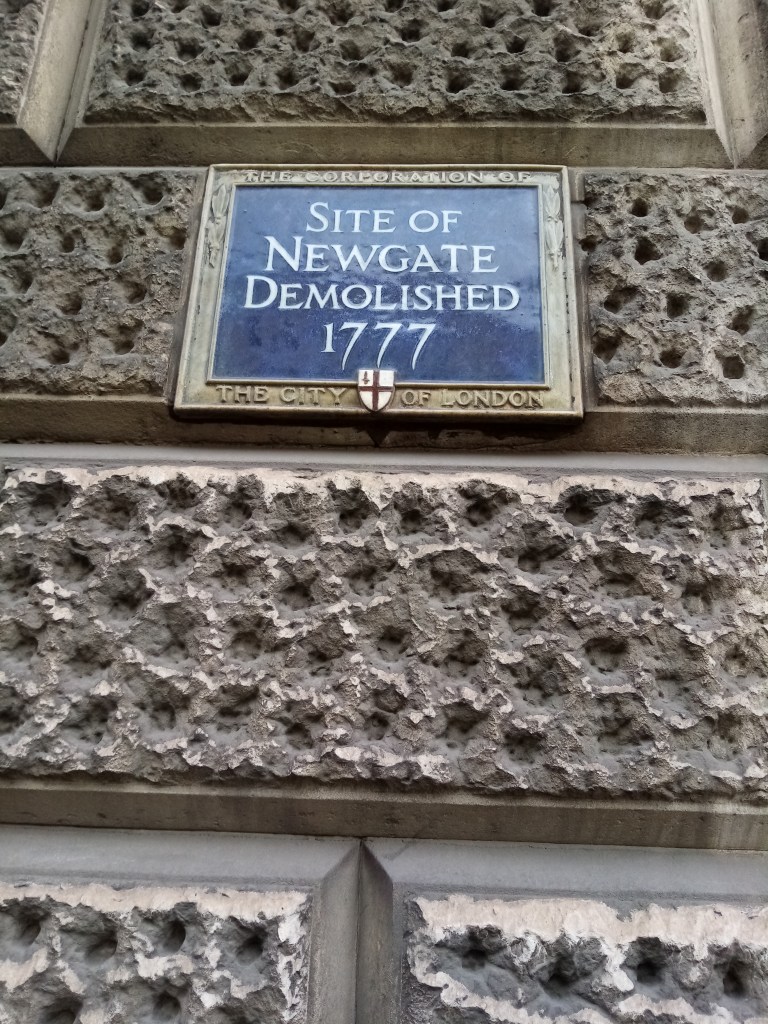
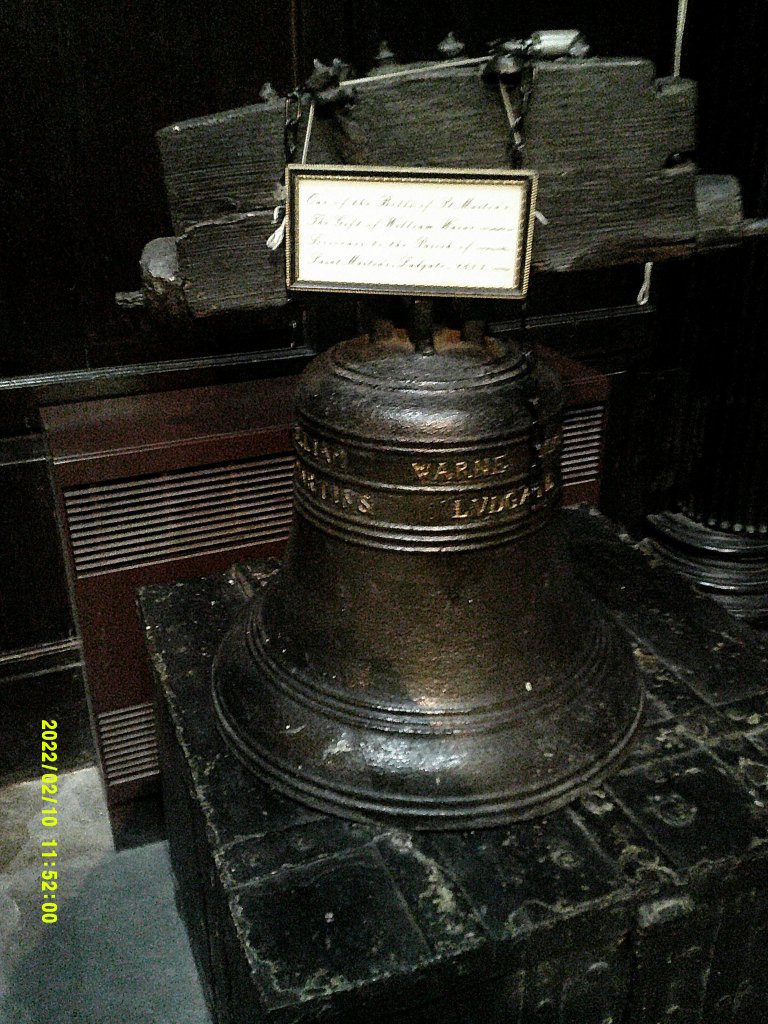
Continuing South along St Martin’s le Grand and then West into Newgate Street, the site of the original Newgate is recorded on a blue plaque. A huge church comes into view, as big as a cathedral, just outside where the Wall once stood, the largest parish church in the City. The original pre-Norman church was dedicated to St Edmund, King and Martyr. During the 12th Century crusades, the church was rededicated to St Edmund and the Holy Sepulchre because knights passed by on the way to the Church of the Holy Sepulchre in Jerusalem. Later still the name of the saint-king was dropped. This church has many interesting facts and features: In 1605 a handbell, the ‘Execution Bell’, was purchased to be rung outside the cells of condemned men the night before their execution at nearby Newgate Prison, exhorting them to repent of their crimes so that they could enter Heaven. The bell is displayed in a glass case in the church. Outside the church, built into a boundary wall, is the first public water fountain in London, ‘opened’ in April 1859. After not being in use for many years, it is due to be restored to full working order. Richard Reeve, a successful silk merchant, left his considerable estate to the church, decreeing that it should all be used for charitable purposes, and a Foundation in his name was set up in 1706. Three hundred years later his legacy continues: a Foodbank, the Square Mile Hygiene Bank, a Wellbeing Project, two Homeless Projects and several other initiatives are run from the church.

St Martin within Ludgate

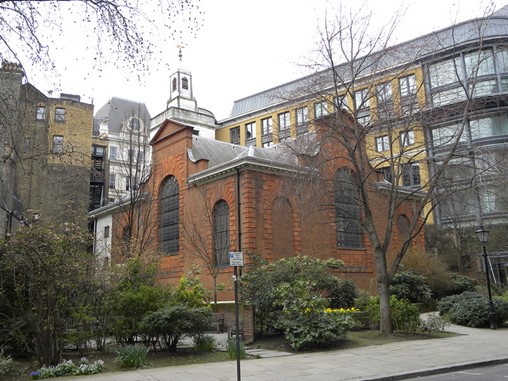
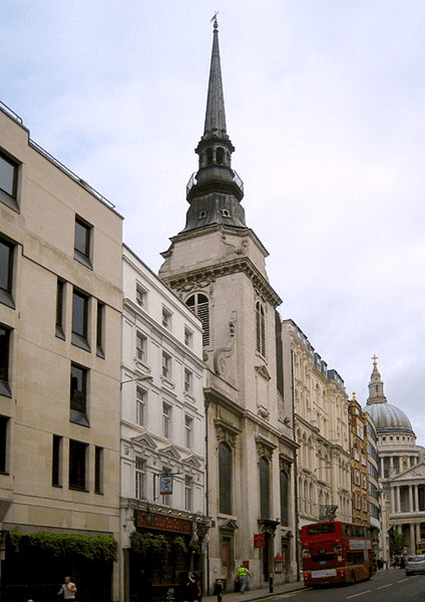
Crossing Newgate where it becomes Holborn Viaduct, you’re now in a street called Old Bailey, home of the famous Central Criminal Court. At the end of the street in Ludgate Hill, is St Martin within Ludgate. The foundations of the Roman City Wall lie under the church, and the West Gate into the City, the Lud Gate spanned the road outside. St Martin was a Roman soldier who converted to Christianity and like St Botolph he is a Patron Saint of travellers. The earliest record of a church on this site is from 1174, it was rebuilt in 1437 only to be destroyed in the Great Fire and rebuilt by Wren. The church steeple was apparently designed by Wren to be a contrast with the dome of St Pauls just up the hill; one tall and spikey, the other huge and round. St Martin’s escaped any damage from bombing or fires in the Blitz; an information board tells us: ‘In the Second World War, only a favourable wind gave St Martin’s a narrow escape from the fires in the air raids of December 1940. This was the least damaged of all the City churches, and it is still one of the best preserved of Wren’s creations.’ Famous people associated with the church include the Native American Princess Pocahontas who is believed to have visited the church when she lived on Ludgate Hill; another American, Benjamin Franklin regularly attended the church and then went next door for a coffee at the London Coffee House to discuss the issues of the day. And local diarist John Evelyn watched the destruction of the church, writing that he saw hot lead from St Paul’s roof ‘melting down the street in a stream.’ What a scary thing to witness!

References: Wikipedia and Information boards in the church

Some extra photos to finish…..

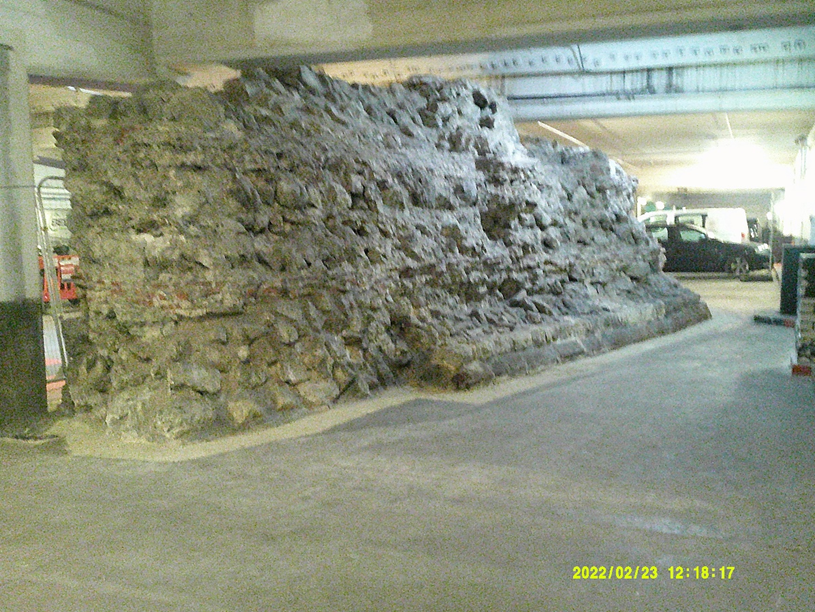
Piece of the London Wall in an underground car park near the Museum of London
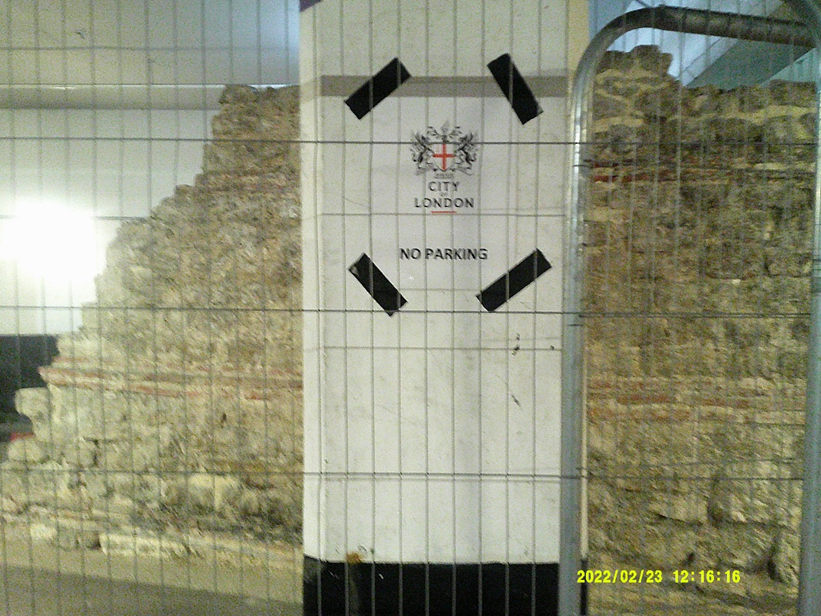
I like the City of London No Parking sign. The fragment of Wall takes up four bays!

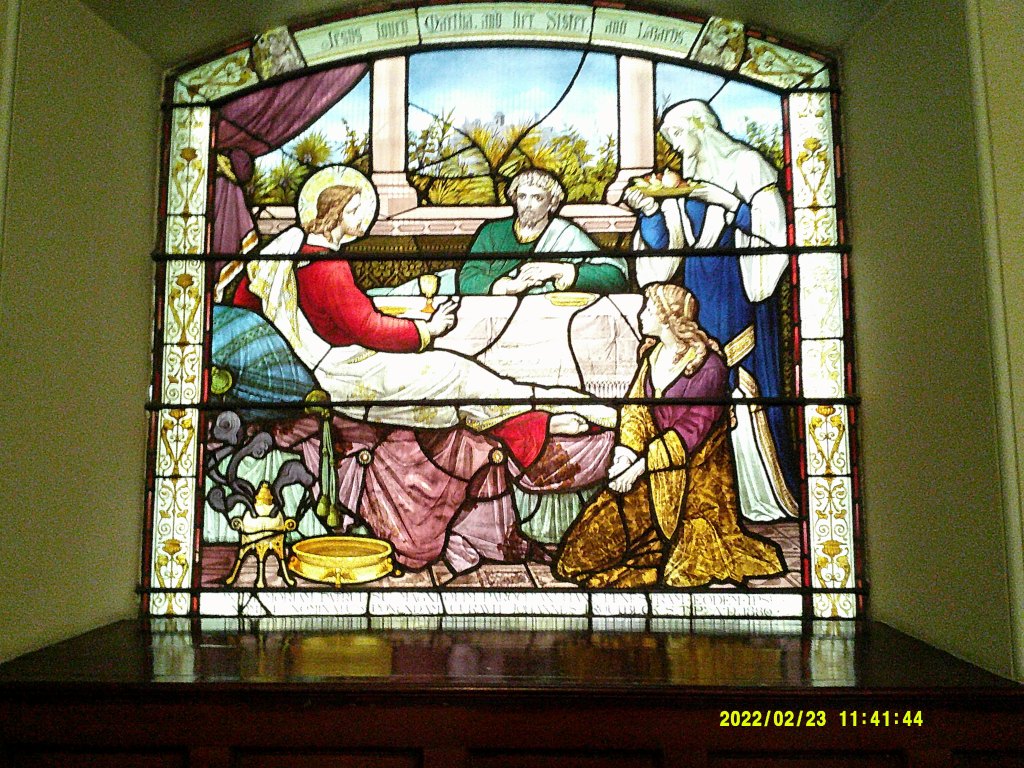
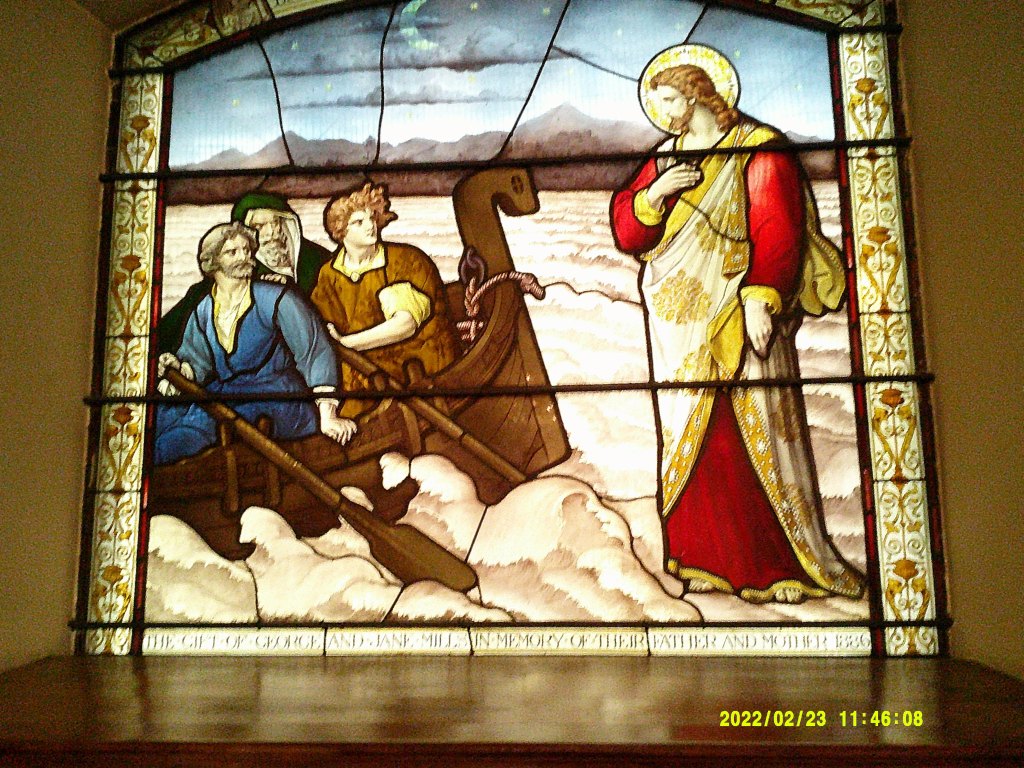
The first four pictures are events in the life of Jesus from the windows on the West side of the church.

The second four are events in the life of the church and surrounding area from the windows on the East side. There are several other stained glass windows in the church, and the overall effect is stunning.

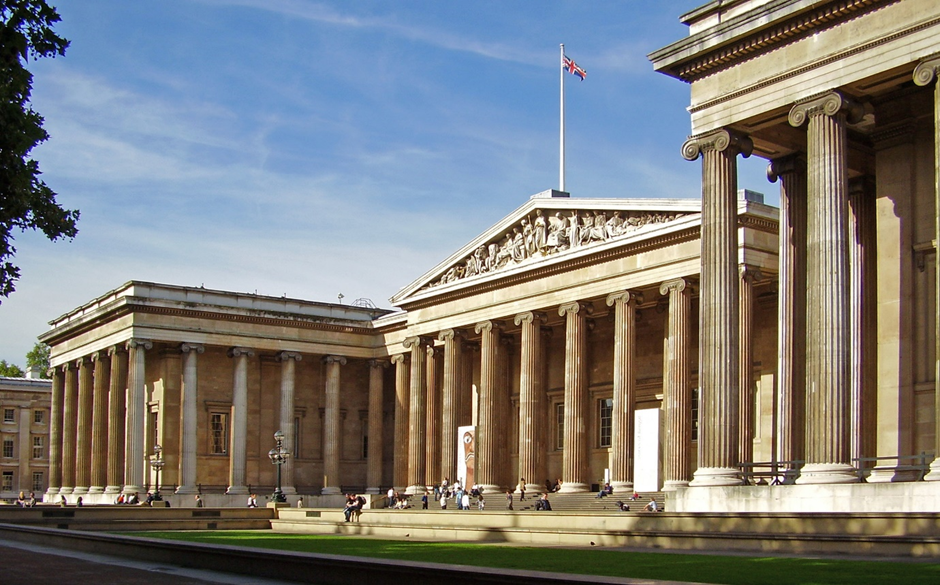
January – Christianity at the British Museum

Credit: Wikimedia Commons

I’ve recently become interested in archaeology, having done a couple of online courses, and while visiting Birdoswald Roman Fort on Hadrian’s Wall last summer, we actually got to see an archaeological dig in progress, which was very exciting. Particularly as this dig was featured this month on BBC 1’s ‘Digging for Britain’! There are lots of items in the British Museum which reference both the Old and New Testament; tablets of writing and illustrations, coins, household murals and ornaments and much more. With the help of ‘Through the British Museum with the Bible’, I’ve explored the galleries and identified some artefacts which reflect the time when Christianity first came to the British Isles. Some of the items in the book were no longer in situ in the Museum, or I simply couldn’t find them, so it wasn’t a successful visit as I would have hoped. However, it was fascinating to see artefacts made 1,700 years ago which would have been in peoples’ homes. Note: these artefacts were not found in London, but most were found in the Southeast of England, where Christianity was introduced to England by the Romans.  

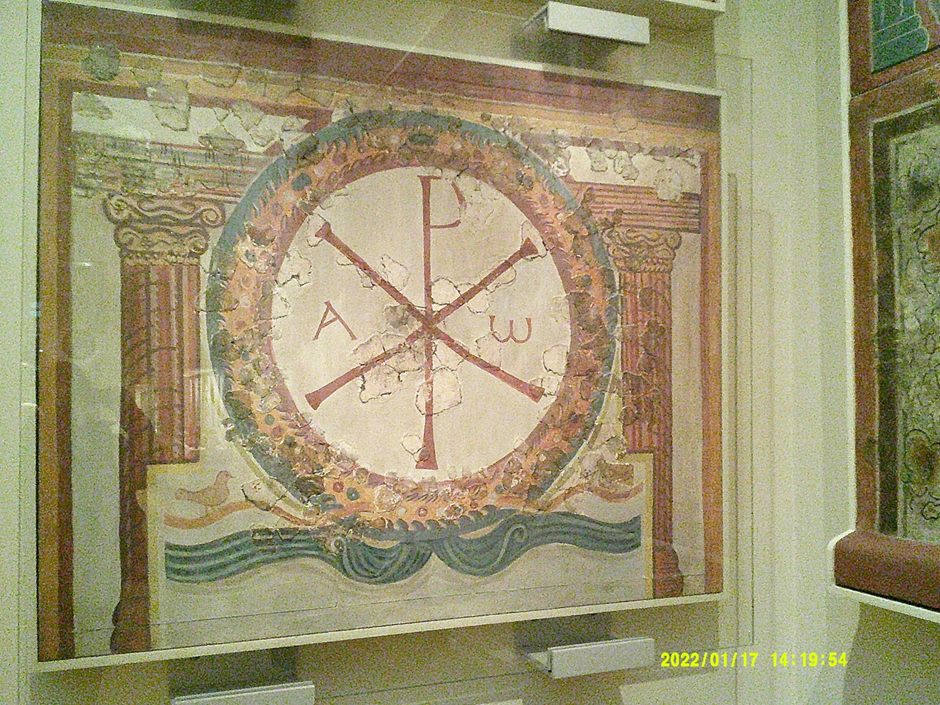
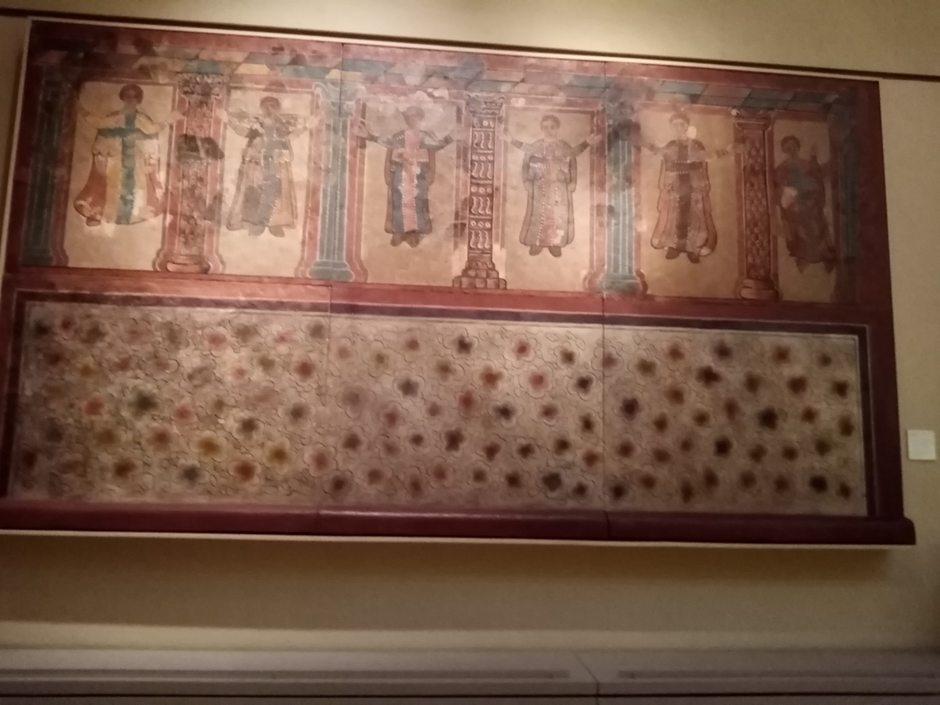
These two pictures are of murals discovered in Lullingstone Villa, an excavated Roman villa in Kent, they are 4th Century Roman wall decorations. The first is of the Christian symbol ‘chi-rho’ (the first two letters of Christ in Greek) and the symbols for Alpha and Omega; the second is a frieze of six figures with their hands raised in the ‘orans’ position of prayer. The room in which these were found was used for Christian worship; the villa was built late in the first century and there is evidence that the first owners practised pagan worship. By the 4th Century the owners had adopted Christianity and built a special room with an external entrance to allow public access – a house church!  The conversion of England to Christianity took place over several centuries, and the Gospel wasn’t brought only by Roman citizens who had converted under Emperor Constantine. The Roman Empire was huge and there were merchants and traders, soldiers and civil servants from many different lands who came to English shores, bringing goods and services, along with their faith.

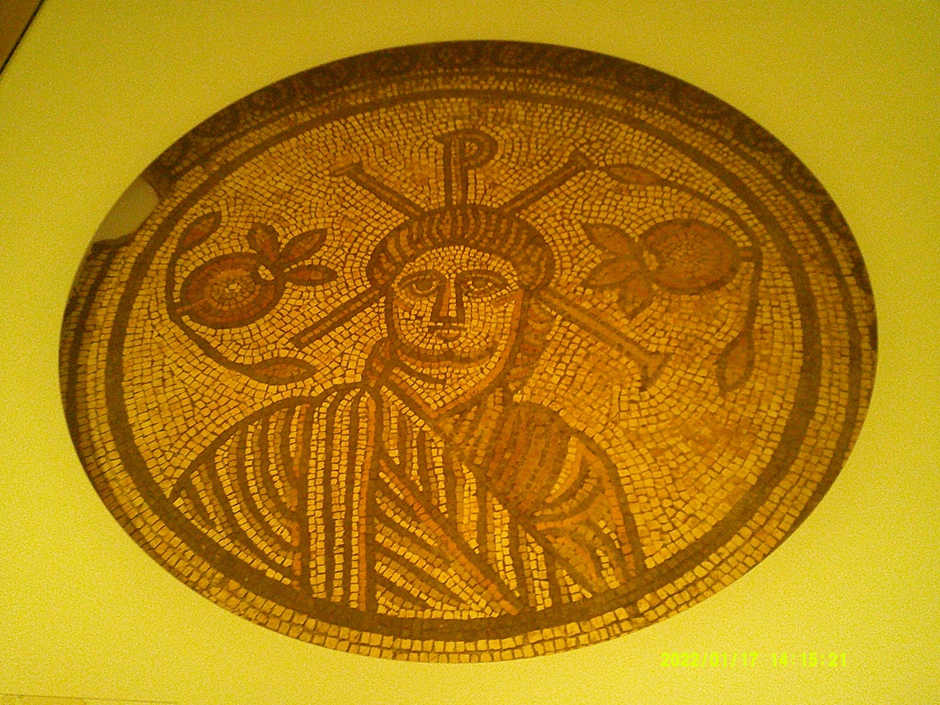
This mosaic is also 4th Century and was excavated from a Roman villa in Hinton St Mary in Dorset. The centre is a representation of Jesus wearing Roman clothing with a chi-rho behind his head and with two pomegranates which symbolise eternal life. This centrepiece is part of a larger mosaic; I’m not sure why the rest of it is covered up, maybe it’s too fragile for display, but the book says that this is a whole floor mosaic featuring the four evangelists in the corners and symbols said to represent victory and eternal life.   What’s important about this mosaic is that it’s one of the earliest known representations of Christ, and the only mosaic of Christ found in The British Isles, and indeed, in Roman Europe.

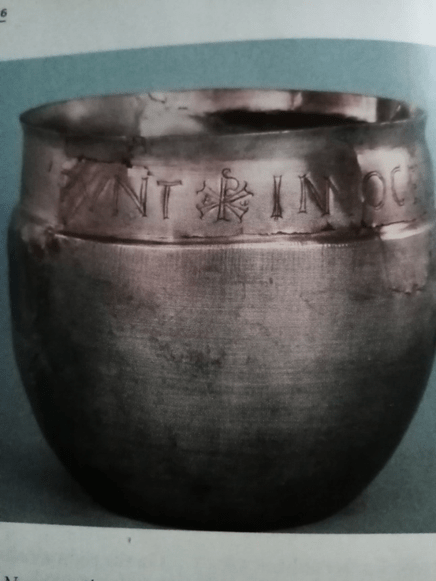
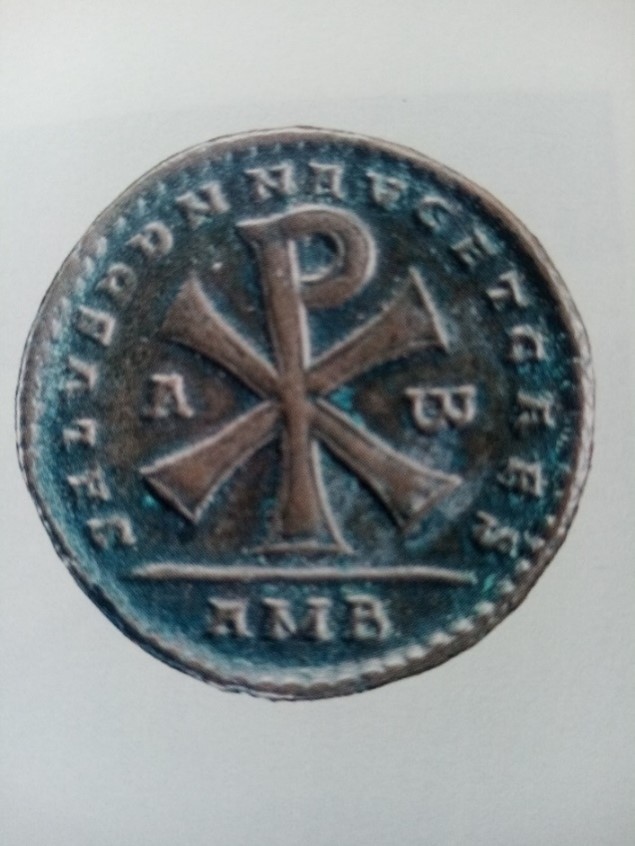
Here are four items featuring the Chi-rho. The top picture shows two plaster moulds for making lamps, these are 4th Century Roman. The Chi-rho monogram features on many household items, perhaps like having a Christian fish motif on items today. The second picture is the ‘Water Newton Treasure’, silverware from the 4th Century discovered at Water Newton near Peterborough. Other items found at the site were a pewter dish and a silver spoon, all inscribed with the Chi-rho and clearly intended for Christian ceremonies. They are the earliest Christian silverware from the Roman Empire. The picture of the coin I actually took from the guidebook, as the coins were too tiny to photograph! This coin is significant because it’s very possibly the earliest use of the Chi-rho officially stamped on a coin. There are other coins on display with Christian ‘messages’; one has the words salus mundi – salvation of the world, and a cross, another has the face of the Christian Emperor Constantine looking towards Heaven. There’s also a coin with the Chi-rho scratched on it. Coins of Constantine and his sons are still being discovered in Britain today.

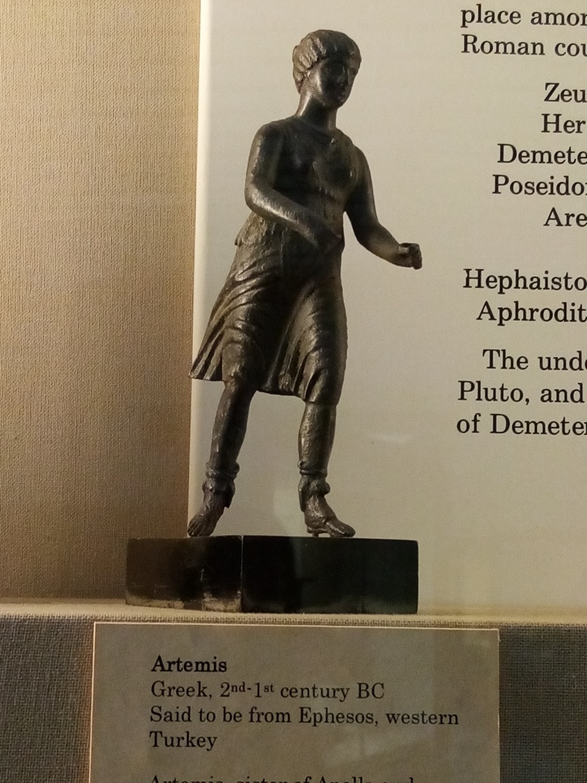
The goddess Artemis – she looks like a little girl!

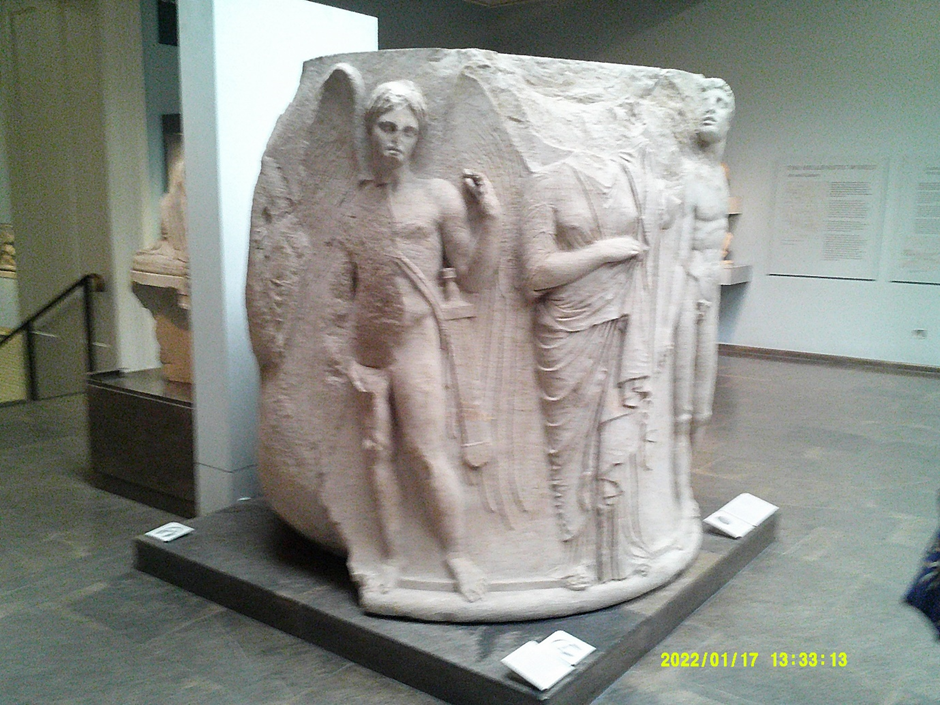
The top picture is the base of a column of the Temple of Diana in Greece, and underneath, a small statue of Diana, the goddess known in Greek mythology as Artemis. So why are these in a blog about Christian London? These are mentioned in the Book of Acts in the New Testament, and I’ll let The Message translation of the Bible explain the story, which happened in the (now) Turkish city of Ephesus: ‘A certain silversmith, Demetrius, conducted a brisk trade in the manufacture of shrines, employing a number of artisans in his business. He rounded up his workers and said “Men, you well know that we have a good thing going here – and you’ve seen how Paul has barged in and discredited what we’re doing by telling people that there’s no such thing as a god made with hands. A lot of people are going along with him, not just here in Ephesus but all through Asia province. Not only is our business in danger of falling apart, but the temple of our famous goddess Artemis will certainly end up a pile of rubble as her glorious reputation fades to nothing. And this is no mere local matter – the whole world worships our Artemis!” This set them off in a frenzy. They ran into the street yelling “Great Artemis of the Ephesians! Great Artemis of the Ephesians.”’  The narrative goes on to say that more people joined the mob and they kept up the chant for two hours, until the town clerk told them to go home quietly, and to take any complaints against Paul to court, reminding them ‘Rome, remember, does not look kindly on rioters.’

Credits: Through the British Museum – with the Bible; Brian Edwards and Clive Anderson, Day One Publications 2004

How Christianity came to Britain and Ireland; Michelle P. Bown, Lion Hudson plc 2006

The Message: The New Testament in Contemporary Language; Eugene H. Peterson, Navpress 1993

December: Nativity!

Another selection of beautiful and creative Nativity scenes to be found in and around the capital. My thanks to ‘friends’ in the Facebook group Londonist Urban Oddities for your suggestions, which took me further afield than I was expecting to go!

The Bayswater Collection (sounds posh)

Simple Nativity at Westbourne Grove Church W11
The window of Kenyon’s Funeral Directors, Westbourne Grove, W11
Nativity at St Mary of the Angels Catholic Church, Bayswater, displayed in the side aisle.

Central London Collection

Nativity in the crypt of St Martin in the Fields
St George’s RC Cathedral, Lambeth SE1 (note the absence of Mary and baby Jesus, they will arrive on Christmas eve.)

The Carshalton, Surrey, Collection

St Mary’s RC School
‘Knitivity’ in The Grove Park, Carshalton…..
….and in Costa Coffee, Carshalton High Street
Nativity at friends’ house, Carshalton Beeches

Wallington/Croydon/ Old Coulsdon Collection

St Elphege’s Infant School, Wallington (figures arranged by the children!)
Oasis Christian Bookshop, Wallington
And lastly, the Nativity at the beautiful, 900-year-old Chaldon Church (with a CR3 postcode, it counts as Croydon!) I like that the shepherds, Mary, Joseph, Jesus and some angels are assembled in the stable, while the Wise Men wait on a shelf until it’s their turn to arrive.

And to finish, a few words from two people with associations with London:

‘Pleased as Man, with man to dwell, Jesus, our Emanuel. Hark the Herald Angels sing, Glory to the new born King!’ – Charles Wesley, Hark the Herald Angels Sing

‘And as Tiny Tim observed, God bless us, Every One!’ – Charles Dickens, A Christmas Carol

Happy Christmas and a Hopeful, Peaceful New Year.

November – Churches on the London Wall

I got the idea for this month’s blog post from a book I started reading during the first lockdown: ‘London: A Travel Guide Through Time’ by historian Dr Matthew Green. The book brings different periods in London’s history vividly to life, drawing the reader into life on the streets. In the chapter on Medieval London, there’s an atmospheric description of the Traveller outside the restored Roman Wall at St Giles Church, Cripplegate: ‘Everything is black. A glacial wind chills you to the bone. You open your eyes to find yourself in a meadow under a moonless, star-speckled sky. Were it not for your flickering horn-sided lanthorn, you’d be able to see very little……Every so often you see a tiny pinprick of light flashing from a great height. You surmise that you are somewhere outside the city walls, and that a watchman is skulking behind the battlements. Perhaps if you go any nearer he will shoot an arrow at you…..In front of you, the medieval city broods, silent and black, rising sheer from a stinking ditch, girdled by its thick walls. Not for the love of God will you, an alien, or anyone, be allowed in. At eight o’clock each night a curfew is sounded……At that point everything grinds to a halt……and the city falls into a deep slumber.’* I have visited all the still standing parts of the Wall and decided I had to visit some of the churches which are situated where the city gates once stood. I’ve put the churches in the order they are situated along the wall going from the Tower of London.
*London: A Travel Guide Through Time, Dr Matthew Green, Michael Joseph/Penguin Books

This is what the city gate would have looked like in Medieval times

St Botolph without Aldgate

Several of the City gate churches are named for St Botolph, he’s the patron saint of wayfarers as travellers would have had to enter the City through one of its seven gates. ‘Without’ means the church stood just outside the wall. As with so many City churches, there has been a church on the site for over 1000 years; the present building was finished in 1744. St Botolph’s belongs to the Inclusive Church network and its website says ‘The tradition of St Botolph’s being an inclusive church is longer than we realised.’ In 1618 one Thomas Speller ‘a dumbe person’ was married at the church. He had brought to the church the Book of Common Prayer and his marriage licence in one hand, and his bride-to-be in the other and ‘made the best signes he could, to show that he was willing to be married’. It was agreed the marriage could take place. Bearing in mind 400 years ago a person who was dumb was usually considered to be also mentally deficient, this shows respect for disability ahead of its time! When I visited there was a delightful piano recital being performed, so I tiptoed in and out again, rather than exploring the church. There’s a fragment of Roman wall near the site, situated in an office block, so not easily accessible!

Ref: stbotolphs.org.uk

Piano recital in the church

St Botolph without Bishopsgate

Another St Botolph’s, again outside the wall, and yet another lunchtime concert in progress, the City churches are famous for these. It’s believed that the site of this church has been a place of Christian worship since Roman times. The original Saxon church is believed to date from 1212. There are a couple of interesting things in the church’s long history: following suppression of religious buildings by Henry Vlll it was converted to the Bethlehem Hospital for Lunatics, known as Bedlam. St Botolph’s survived the Great Fire with no damage, lost only one window in the Second World War, but on April 24th 1993, it was one of many buildings to be badly damaged by an IRA bomb. The roof was destroyed and most of the doors and windows, and extensive restoration was completed in 1997. This church was the first in the City to have its burial grounds converted to a public garden; as well as a green space for office workers to relax during their lunch hours, there’s a netball and tennis court for the more energetic.

Ref: The Parish and Ward Church of St Botolph-without-Bishopsgate: A Short History

The garden at St Botolph’s Bishopsgate
The church sits alongside the city’s tallest buildings,

All Hallows on the Wall   

The original All Hallows was actually built into a bastion, or fortification, of the wall in the early 12th century. Due to its position in the wall, it escaped destruction in the Great Fire but subsequently fell into dereliction. The present church was constructed by George Dance the Younger in 1767 when he was just 24 years old. English architects at that time often studied in Italy and brought back ideas for classical designs, and All Hallows has construction and decoration themes deriving from temples in Rome. Whilst visiting the church I got chatting with two of the Friends of the City Churches, who told me that usage of the church building is up 60% what it was in the 1970s! The church holds midweek services and has in the past been the headquarters of Christian Aid. It is associated with several other Christian initiatives: the arts festival Greenbelt, the Archbishop of Canterbury’s Millennium Youth event, The Time of our Lives, and in 2017 became the headquarters of the urban youth charity XLP. City Gates Church holds its Sunday morning service there, the first to do so since 1941! This group holds regular music events (like most of the other churches I’ve visited) and supports Christian Aid workers overseas.
Ref: Wikipedia.org/wiki/All Hallows-on-the-wall

Classical domed ceiling

St Giles without Cripplegate

Another site where the original Saxon church was built outside the city walls. There is no evidence that this city gate was one through which ‘cripples’ entered; the most likely explanation is that the word comes from the Anglo Saxon ‘cruplegate’, the covered way or tunnel which would have run from the Gate to the Barbican, a fortified watchtower on the Wall. The present church is one of the few remaining Medieval structures in the City; it survived the 1666 Fire but it did receive a direct hit during the Second World War and was almost destroyed apart from the walls, but was painstakingly restored both inside and out. However, so much of the surrounding area was devastated by bombing, with hardly any buildings left standing, that plans were made for a housing estate, arts centre and museum: the Barbican. Construction began in the early 1970s, and the museum is the wonderful Museum of London. While excavating the area, parts of the Roman Wall were discovered, these were carefully restored and sit beautifully (I think) alongside the modern buildings and the famous High Walks. When I visited the church there was…not a music recital, but a Book Fair! Always something going on in the City churches! (Needless to say, I bought a book.)

Ref: stgilesnewsite.co.uk/history

The remains of the ‘Barbican’ tower

To finish, some random London Wall pics. The red striped parts at the bottom are original Roman, the parts higher up are Medieval, when the walls were built taller as protection for the City.

Original Roman Wall – nearly 2,000 years old!
With Medieval Wall on top
This is a statue of the Roman Emperor Trajan at Tower Hill, in front of the wall currently under repair (just to maintain it as a safe structure, not to alter it in any way.) Note the workmen in their Hi Vis jackets and hard hats, not available in medieval times!