I had planned to visit churches locally and in Central London to photograph their Easter displays; their celebrations of the Good News that Jesus defeated death and is alive today. However, for obvious reasons this was not to be, so instead, I’ll be having a look at churches which claim to be the ‘oldest’ in some way or other. I’ve visited all these churches over the past couple of years; all photos are mine. As I mentioned previously, Christianity has been thriving in London for at least a thousand years, but there are very few structures remaining from that time. Many of the City churches have been completely rebuilt several times due to fire or war, or just wear and tear. St Paul’s Cathedral, for example, has been rebuilt four times, and there’s evidence of an original church on the site in AD604. The churches I’ve chosen all have part of the original building remaining.
All Hallows-by-the-Tower
I like to have the Walkie Talkie building peeping into the picture!
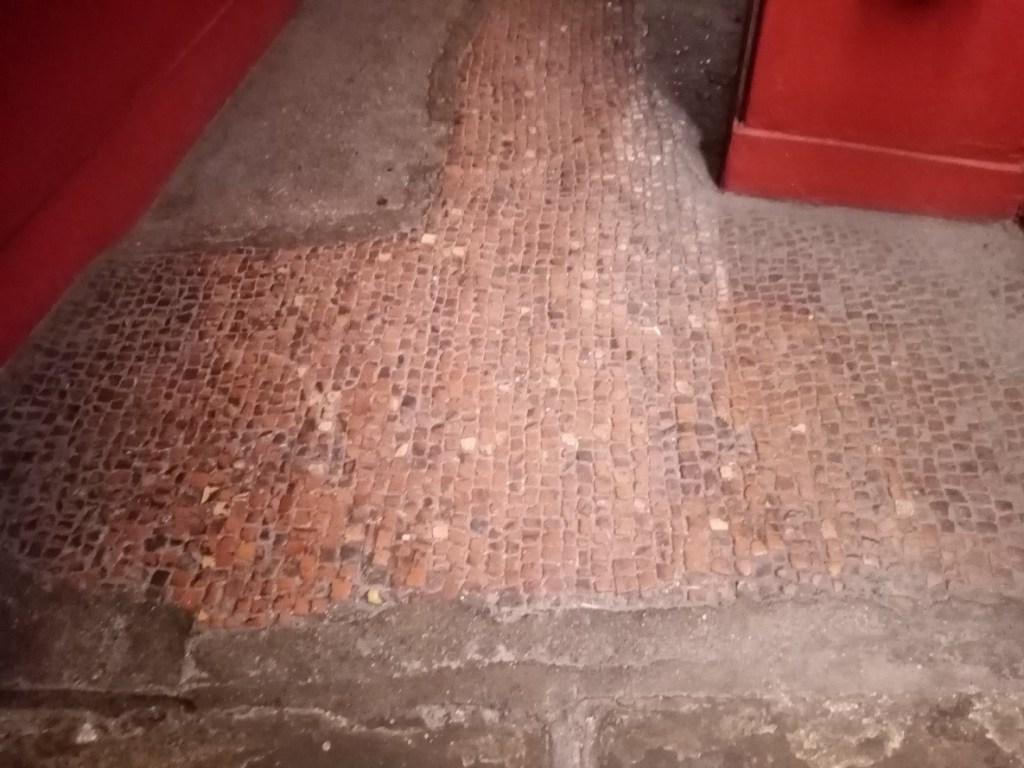
This is the oldest church inside the old Roman City walls. It was founded in 675, but only a single arch of the original church remains. However, underneath the church in the crypt there is part of a red tiled Roman floor. This was street level in Roman times.
Yes, this is an actual Roman Floor, a couple of thousand years old!
I also love the models of ships and the nautical themed stained glass windows, indicating the church’s long association with the River Thames.
The church has had a traumatic history: in 1650, gunpowder barrels stored in the churchyard exploded damaging a lot of the church and some nearby houses. It survived the Great Fire but was almost destroyed in the Blitz in 1940.
This is such a beautiful church, inside and out. St Bart’s the Great is London’s oldest continuous place of worship, founded in 1123 as a priory and a hospital: Bart’s, which I looked at last month. It was partially destroyed in 1539 in Henry Vlll’s dissolution of the monasteries, but some parts survived so it remains to this day a functioning parish church. The interior is amazing, beautiful and atmospheric, with history seeping through the walls. It’s been the setting for several films and TV dramas.
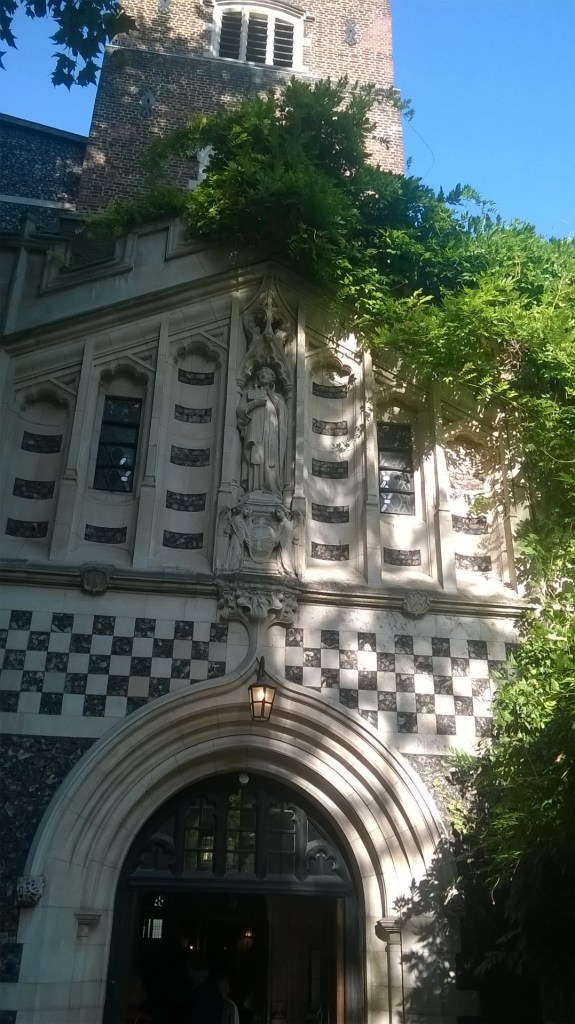
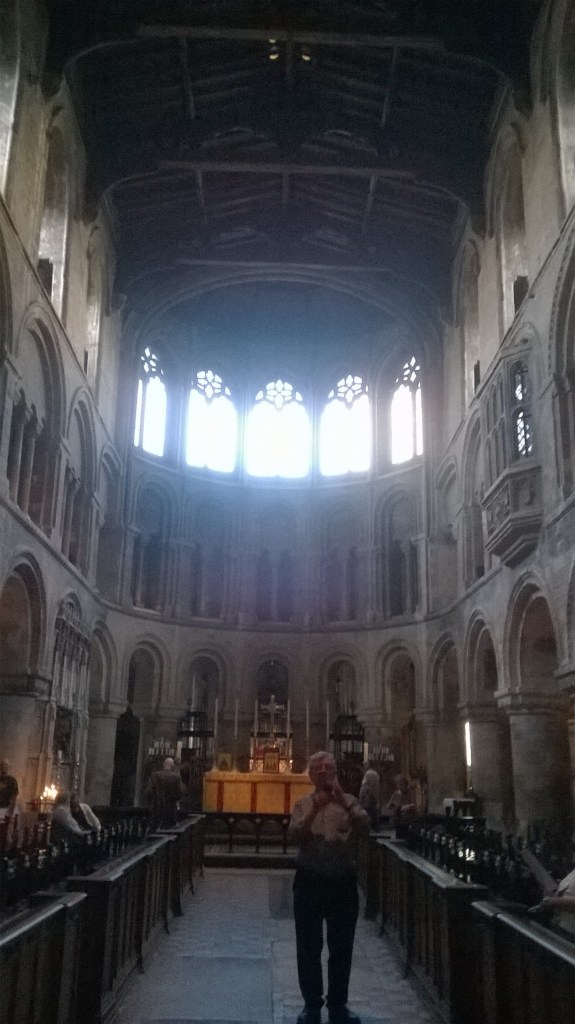
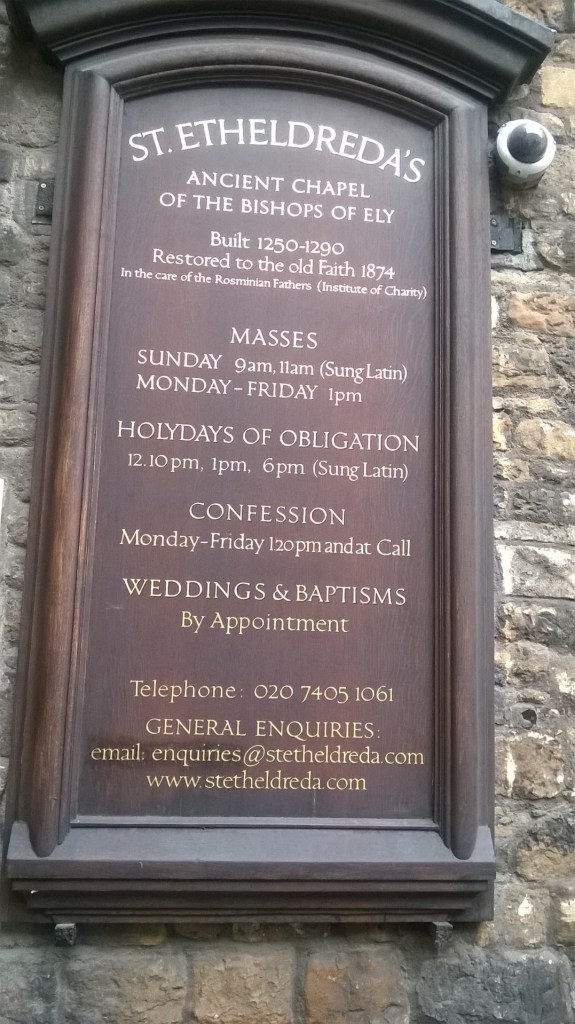
This is London’s oldest Catholic Church, established in 1290. Before the split with Rome, all churches were Catholic of course but St Etheldreda’s was one of the few that didn’t become Anglicized following Henry Vlll’s Act of Supremacy. The church actually ‘switched sides’ several times until 1874 when it was no longer illegal to hold mass on church premises. Again, there are many changes but parts of the original 1290 church remain. The most interesting thing about this church is that it’s in Ely Place, which is actually part of Cambridgeshire. Yes really! Ely Place and Ely Court are on land which once fell within the grounds of the Palace of the Bishops of Ely, so technically it’s in Cambridgeshire.
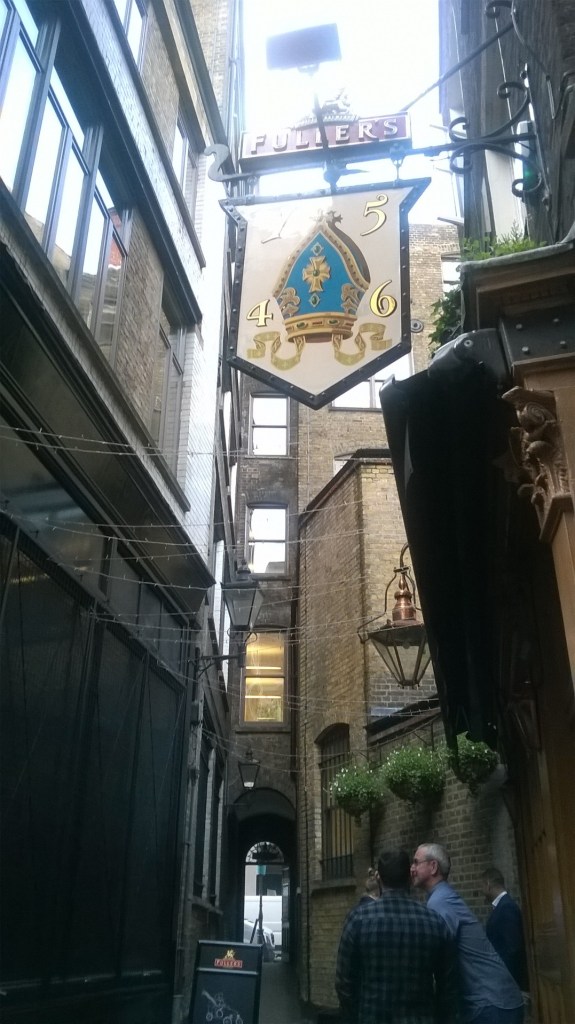
This is the Mitre Pub in Ely Court, also in Cambridgeshire. I love this narrow alleyway, maybe not dissimilar to how it looked in the thirteenth century? Apart from the totally different construction of the buildings!
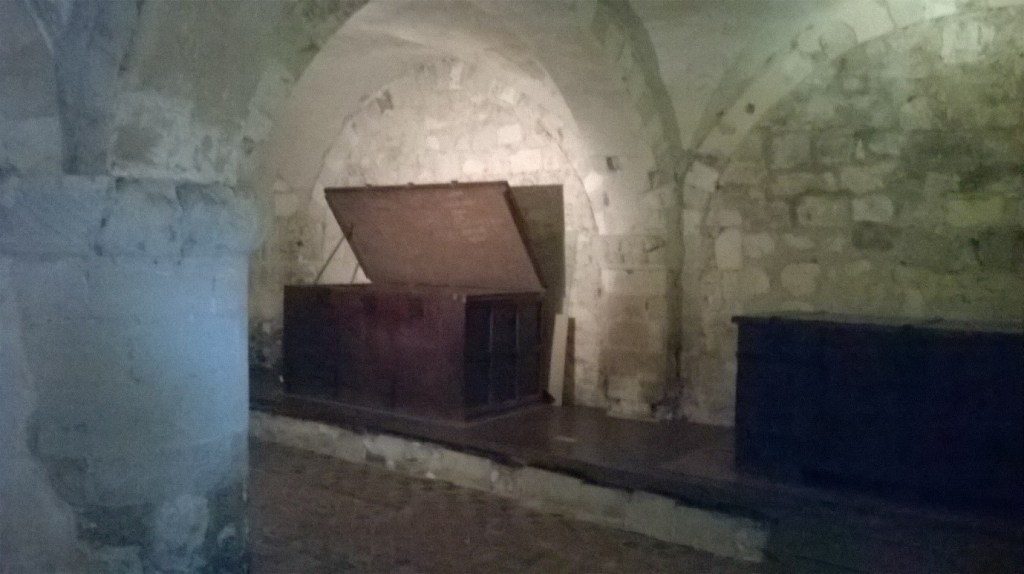
This is the oldest part of Westminster Abbey, adjacent to the Abbey and built in 1070. Not actually a church, but I love it because it’s so old! The building was originally a Benedictine Monastery and the part that remains unchanged is below ground and was the monks’ dormitories. This space is not used as a film setting but should be in my opinion.
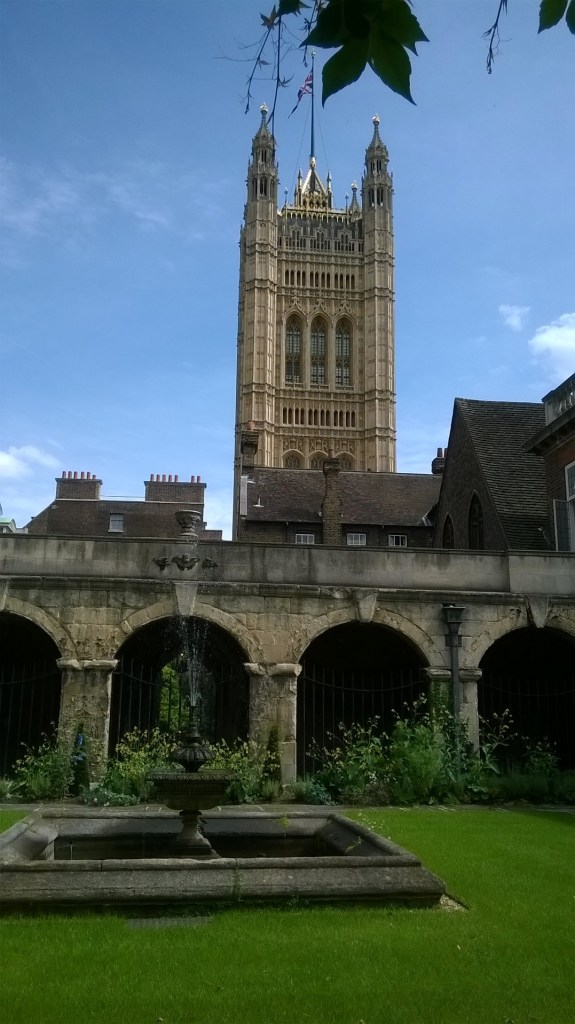
These are the monastery gardens and cloisters with the Abbey behind.
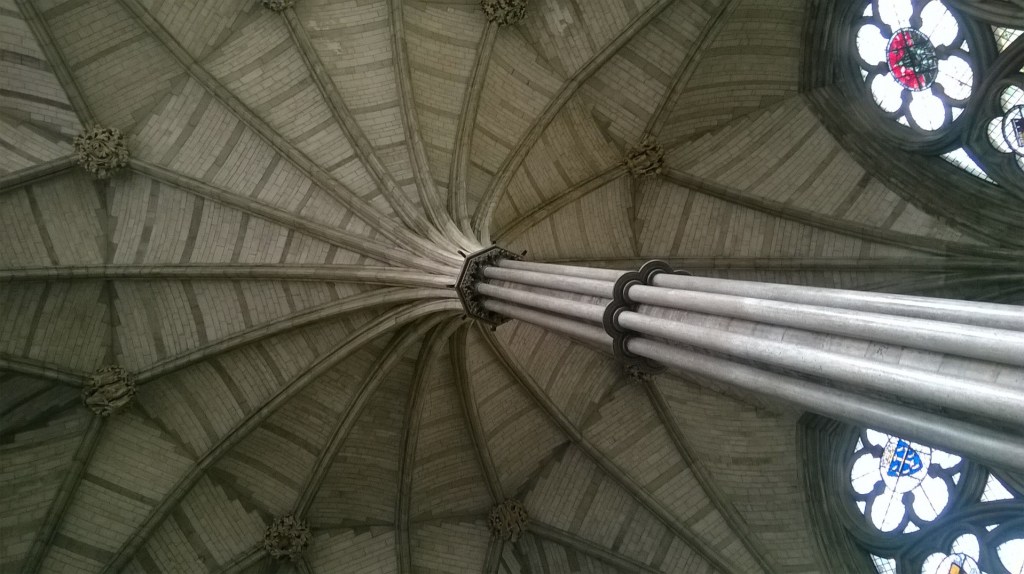
Above the Pyx Chamber is the Chapter House, a lovely octagonal building built in 1250. This was formally the meeting place of the King’s Great Council and the Commons, predecessors of today’s Parliament. When I visited there was an exhibition about the Magna Carta, including, in a glass case, one of only four copies of the actual document, on loan from the British Library, so that was worth a visit, wasn’t it? No photo, we weren’t allowed to! As usual, I loved the stained-glass windows.
The world has changed since I started writing this post. You won’t be able to visit these museums for a long time, and that’s a shame, because they are all well worth a visit, not least because each one shows the impact of Christianity on London and its people in different ways for nearly 1000 years. I’ve included their websites so you can learn more about them if you want.
I’ve chosen five London museums which have a Christian connection. Three of these tell the story of people simply obeying what they believe God has told them to do, resulting in worldwide recognition and huge changes in social and health care. Two had less of a global impact, but both gave rise to movements which changed the social and spiritual thinking of their day. I’m putting them in date order, from 1080 to 1867!
Museum of the Order of St John
Everyone’s heard of St John’s Ambulance Service, but did you know that it has its roots in an ancient order of monks and knights, nearly 1,000 years ago?
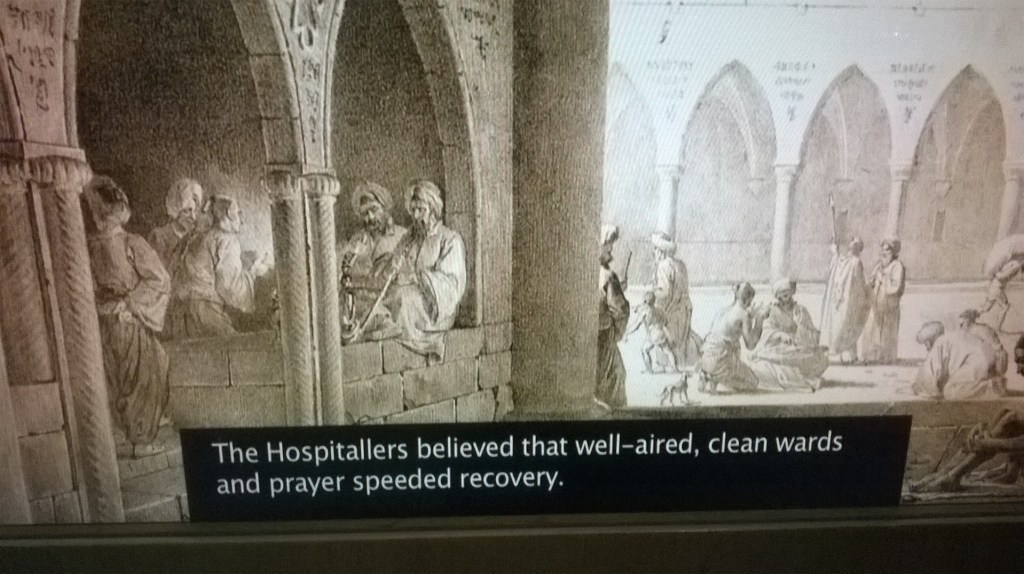
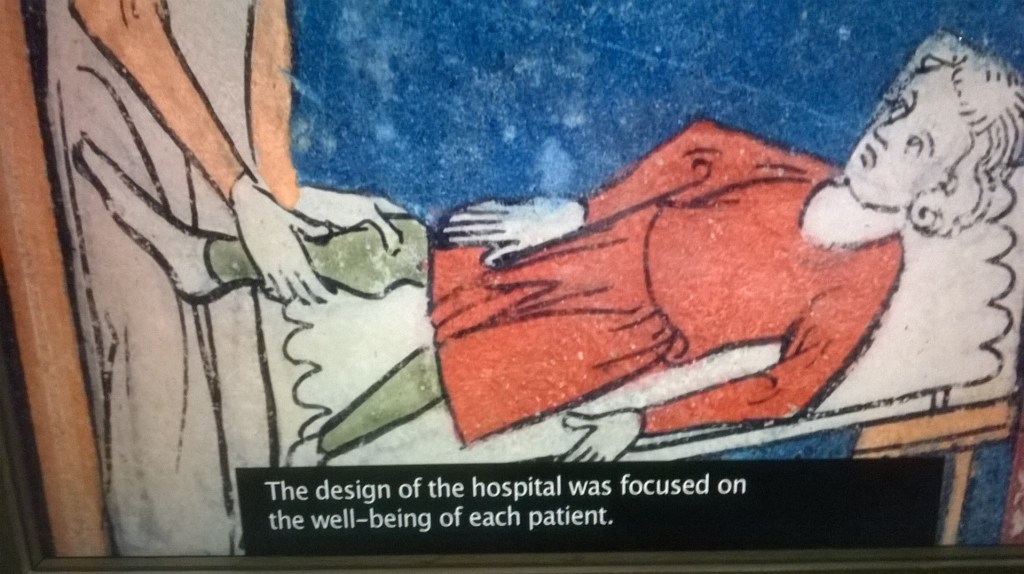
A group of monks founded a hospital in Jerusalem around 1080, to care for pilgrims who had become sick while travelling on pilgrimage to the Holy Land. They were known as the Hospitallers and they claimed they had been told by God that 1. They should care for all people, regardless of race or faith, and 2. They should care for individuals as if they were caring for Christ Himself. They became a military order during the Crusades (not engaged in combat but doing admin and medical duties), when they became the Knights of the Order of St John. The Order moved to Cyprus, then Rhodes, then settled on Malta. You can go and explore for yourself the following 800 years of St John’s history! The interesting thing to note is that because the Hospitallers believed ‘each patient represented Christ Himself’, they focused on provided the best care that they could, pioneering some very advanced practices: quarantine for people with infections, well-aired clean rooms, each patient to have his own bed and the dignity of hospice care for the dying. Cutting edge stuff for nearly 1,000 years ago!
‘Bart’s is the oldest hospital in Britain still providing medical services which occupies the site it was originally built on’ (Wikipedia). It was founded in 1123 by a courtier of Henry I, named Rahere, who was also a priest. On pilgrimage to Rome he fell ill and is said to have had a vision of St Bartholomew, who told him to establish a priory and hospital in London, specifically, at Smithfield, just outside the city walls. On his return to England, Rahere did just that, telling his master the King about his vision and his divine calling to build a hospital and priory on the site of the King’s Market at Smithfield. The King graciously agreed and Rahere built and subsequently became the leader of the priory of St Bartholomew. And then chroniclers of the time began recording miracles occurring in the priory: a lame man was healed at the altar, a woman had her ‘feeble’ limbs cured, a man who was mute began to speak again. Yet more healings took place in the adjacent small hospital, which grew in size, as people heard about the miracles, and the hospital gained a reputation for excellence in more conventional medicine! I like the way God doesn’t only do the miraculous but works with servant-hearted and willing people. A few hundred years later, King Henry VII, who was busy dissolving monasteries all over the country, granted ‘to the Mayor and Commonalty of London and their successors for ever the Hospital of St Bartholomew, its church and other properties.’ So that’s why the hospital (rebuilt several times) still stands in the same place after nearly 900 years. It became one of the first medical schools in the country, a training facility for surgeons. The museum is very small but charts 900 years of history. (Incidentally, the ‘King’s Market’ nearby became the famous Smithfield Meat Market!)
Address: Museum & Archives, St Bartholomew’s Hospital, West Smithfield EC1A 7BE
A brief history: John Wesley was born in 1703 and his father Samuel was a nonconformist minister, whose two sons followed him into the priesthood. John and Charles became known as ‘Methodists’ because of their methodical way of studying the Bible. Interestingly, this was a derogatory term used by others, but the Wesley boys liked it, so it stuck. The actual name of their study group was ‘The Holy Club’, hmm, I can see why they preferred ‘Methodists.’ The group also placed importance on social action, working among the poor, especially the homeless and children, and prisoners, who at the time had to rely on people on the outside for food, etc. The Wesley brothers definitely had compassion for others, and an interest in the Bible but didn’t seem to apply the message of the Gospel to themselves. Then in May 1738 John had a ‘conversion experience’, during a church meeting: ‘I felt my heart strangely warmed. I felt that I did trust in Christ….and an assurance was given me that he had taken away my sins, even mine, and saved me from the law of sin and death’. Charles also experienced God’s love for himself and became a great hymn writer. John embarked on what today we would call a preaching tour, travelling across the country on horseback, stopping at villages and towns and speaking to people about God’s love for them in the open-air (unheard of at the time.) Amazingly, he travelled 4,000 miles per year and preached 40,000 sermons in his lifetime. He famously said, ‘The world is my parish’. The Museum of Methodism has a brilliant introduction video narrated by Huw Edwards from the BBC, which really brings Wesley’s story to life. You can also visit the Methodist Chapel and Wesley’s beautiful Georgian house, all on the same site. Again, I won’t say any more, you have to see for yourself!
Address: Museum of Methodism, 49 City Road, London EC1Y 1AU
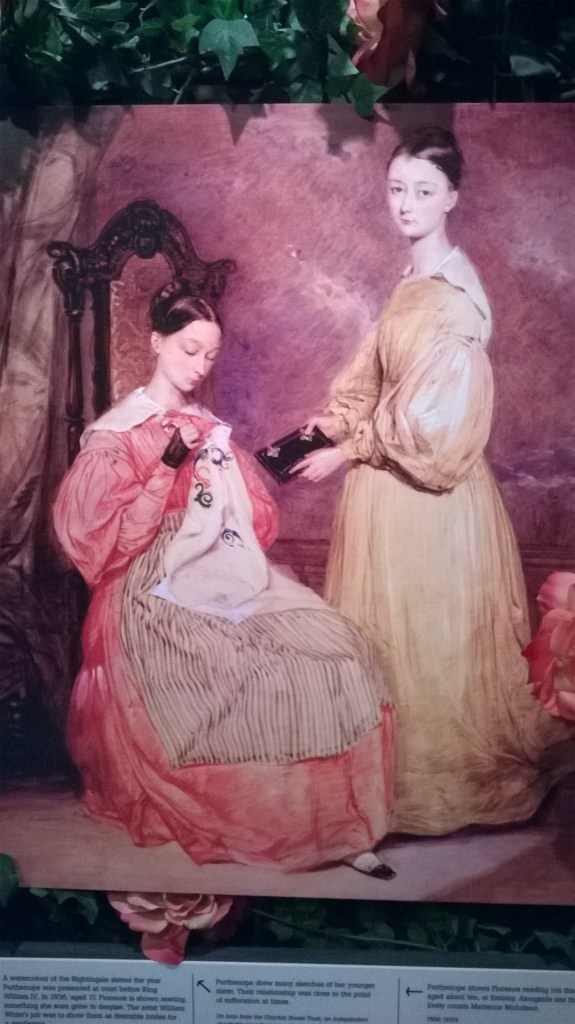
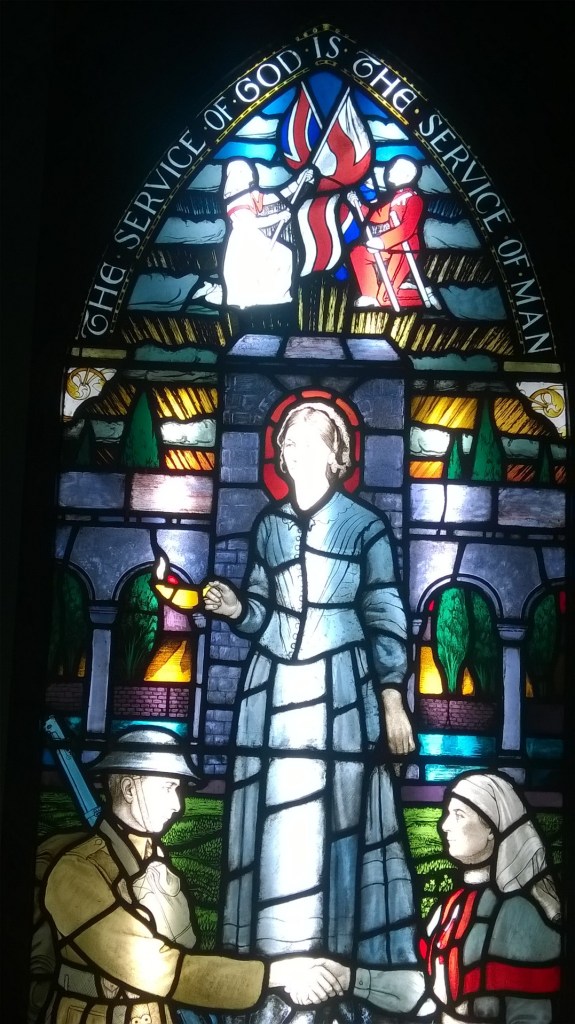
Florence was born into a wealthy family in 1820; she and her sister were bought up to be fashionable and educated young ladies. Educating Florence meant she grew up with an enquiring mind, discussing philosophy with her father and excelling in Maths. That wasn’t what her parents intended, in those days young ladies were not supposed to use their accomplishments for a future career. Florence became interested in nursing, and at 16, she clearly felt God’s call to serve him. When she told her parents that she wanted to become a nurse, they were horrified, because ‘the stereotype of nurses at the time was of drunken women with loose morals who nursed the sick because they weren’t fit to do anything else. The only other kind of nurses were nuns.’ (Premier Christianity). A world away from the graduate profession of today! But, through her parents, Florence came into contact with independent, career-minded women; also because of the fashion of the idle rich for continental travel, she had had the opportunity to visit well-run German hospitals, with trained, competent nursing staff. So you could say Florence’s parents were responsible for her wanting to become a nurse, and eventually they agreed she could train.
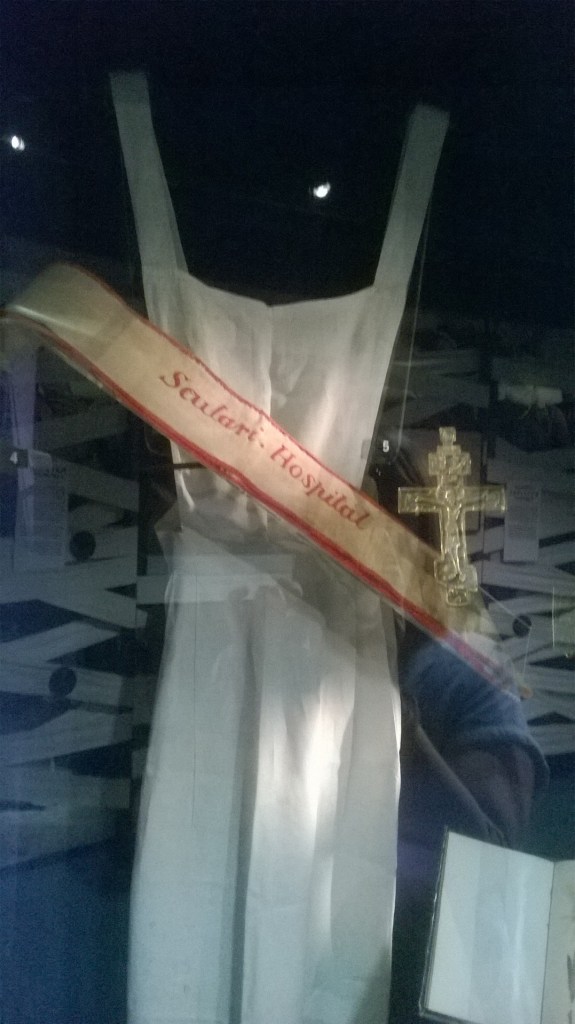
After training, Florence was appointed as Matron-in-Charge of ‘The Institution for the Care of Sick Gentlewomen’ in London, but in 1854 she accepted an invitation to lead a team of nurses to Scutari, Turkey, where Britain had just entered the Crimean War. The conditions in the military hospitals were atrocious, with more soldiers dying in hospital than on the battle field. This wasn’t just due to appalling sanitary practices, but also appalling admin! Florence, with her talent for administration as well as being a highly competent nurse, set about organising hygienic nursing practices, recording information and organising supplies. She took an interest in the soldiers’ mental and spiritual health, and even paid for more nutritious food for them from her own pocket; basically, she cared. Florence Nightingale’s desire to serve God, her compassion for the sick and her exceptional administration skills, radically changed how hospitals were run. The exhibits and displays in the Museum trace Florence’s life story and show how nursing has developed in the last 200 years. I love that the new NHS hospital to be housed in the Excel Centre in Docklands, is being named The Nightingale.
Address: Florence Nightingale Museum, St Thomas Hospital, Lambeth Palace Road SE1 7EW
The Ragged Schools were established by Dr Thomas Barnardo in 1860. He was born in Dublin in 1845 and said of himself that as a child he was ‘selfish and thought that everything that was not his should belong to him’. (Wikipedia). As he grew older, he changed dramatically and as a young man, he wanted to make up for his selfish attitude. He went to London to train as a doctor with the intention of going to China to become a missionary doctor. The hospital where Thomas trained was The London, in Whitechapel in the East End, one of the poorest areas of the country. Thomas saw disease and poverty every day, sick and malnourished adults, and children as young as three playing in the dirty streets. He walked among the people, reading to them from the Bible to try to give them hope, but he realised he could and should do more. He abandoned his plans to go to China and never completed his medical training, instead setting up his Ragged School. In Victorian times, there were no free schools, even at an elementary level, and Thomas realised that a child would never be able to change their circumstances without access to education, and the cycle of deprivation would continue. Any child who wanted to, could attend his school, they received a hot meal in addition to what we would call today basic literacy and numeracy. Thomas struggled to get the children to listen and even to sit still, but he persevered and gained their trust and respect. Then one day by chance, Thomas found out that almost all the children at the school were homeless and was shown a group of boys sleeping on the rooftop of a building, huddled together for warmth. Thomas was horrified and set about raising funds for a Boys Home, a place of shelter and safety, food and warmth. His first Home had 25 places and was quickly filled to capacity. Then came another turning point in his life: one winter’s night he had to turn a boy away from the Home. The next morning, in the lane beside the house, he saw two men carrying the body of a boy, the one he had turned away. He had frozen to death in the night; Thomas was heartbroken. He vowed never again to turn anyone away and had a large sign put up above the door: No destitute childever refused admission. Eventually there were 96 Children’s Homes, caring for over 8,000 children. The work of Dr Barnardo’s Homes continues today, simply known as Barnardo’s. Their work has changed from providing residential care to adoption and fostering services and social care. The Museum is delightful, housed in the original school with the classroom, kitchen and laundry furnished as they would have been in the 1860s, and also an exhibition of local history.
Address: Ragged School Museum, 46 – 50 Copperfield Road, Mile End E3 4RR
There are some beautiful ruins right in the middle of London, you just need to know where to look. The best thing about them is that they’ve been left in their romantic ruinous state and nature has been allowed to take its course, surrounded by the concrete, glass and steel of 21st Century London. I think the contrast between ancient and ultra-modern adds to their charm. Sometimes you can even climb on their walls! All these sites are free to visit. I’ve included their addresses and nearest tube, in case you fancy a visit.
St Dunstan’s in the East
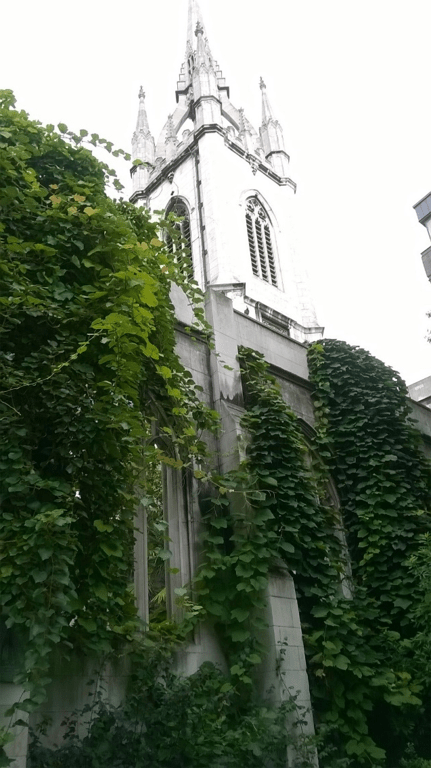
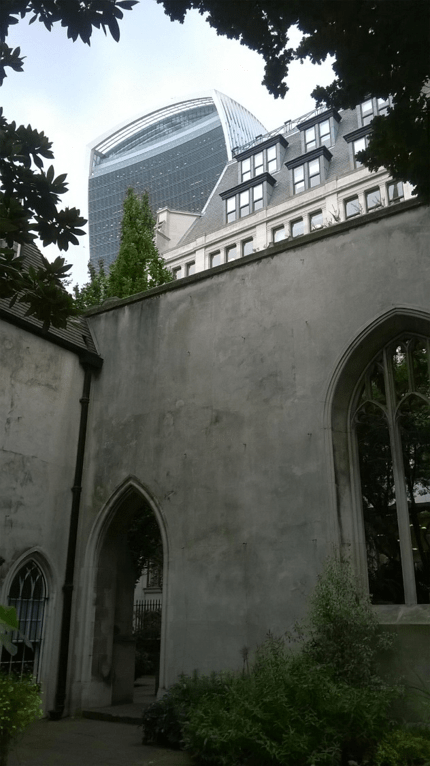
The surviving church tower
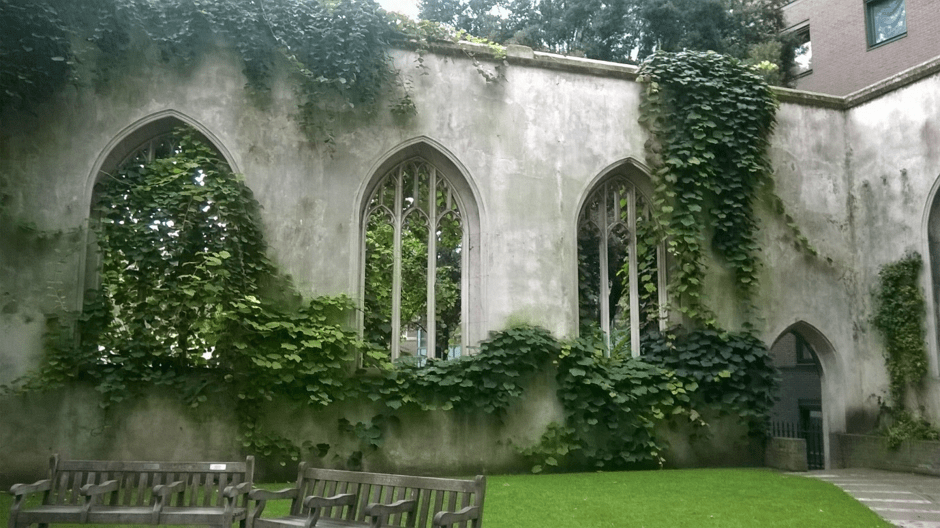
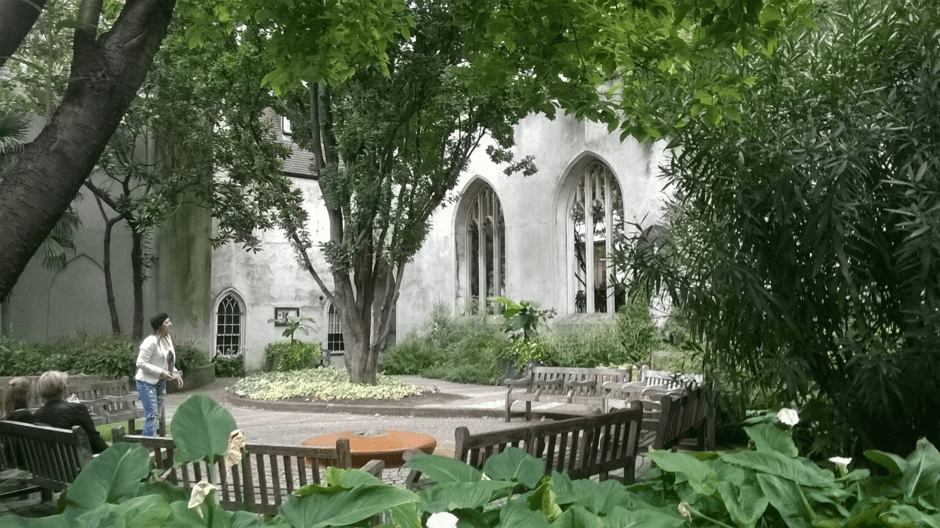
This is St Dunstan’s-in-the-East, now a public garden, one of Time Out’s top Romantic Venues in London. The church has had an unlucky history: severely damaged in the Great Fire, rebuilt twice and finally bomb damaged in the Second World War. In 1967 the decision was taken not to rebuild it but to create ‘one of the most beautiful gardens in the City of London’. The lovely fairy-tale tower escaped bombing, and I also love the arched windows, it’s a wonderful space to sit and relax. Outdoor church services are held here, and it’s also used as a setting for plays when that gothic look is required. The Walkie Talkie building peeping over the wall provides a 21st Century touch!
Address: St Dunstan’s Hill, London EC3R 5DD
Nearest Tube: Monument/Tower Hill
Christchurch Greyfriars
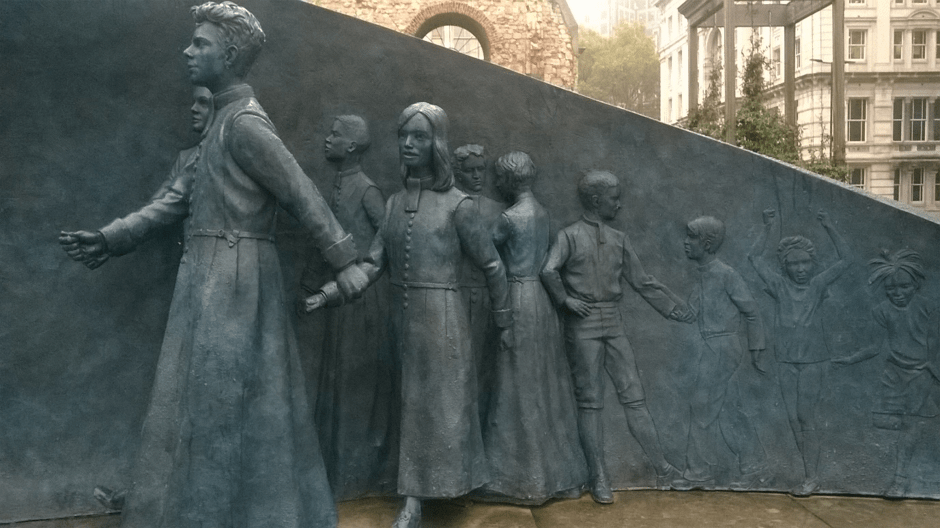
Pupils of Greyfriars Hospital
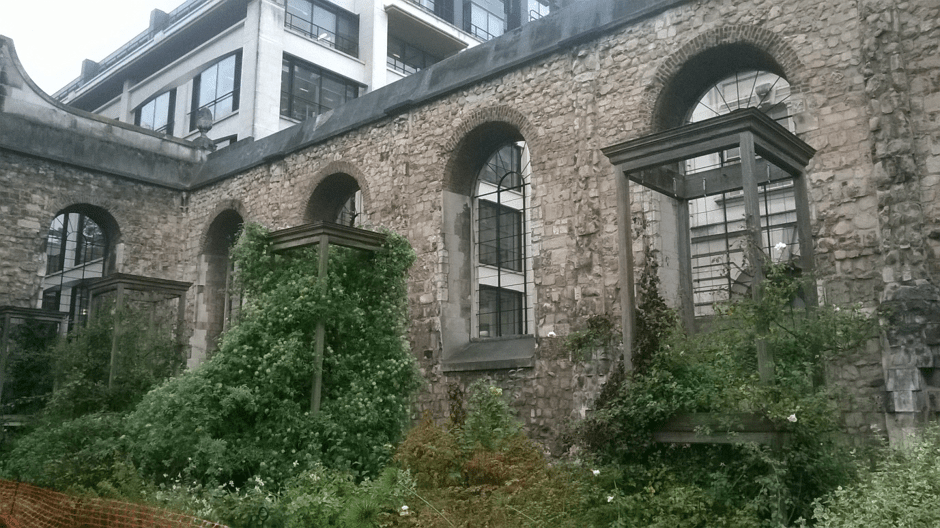
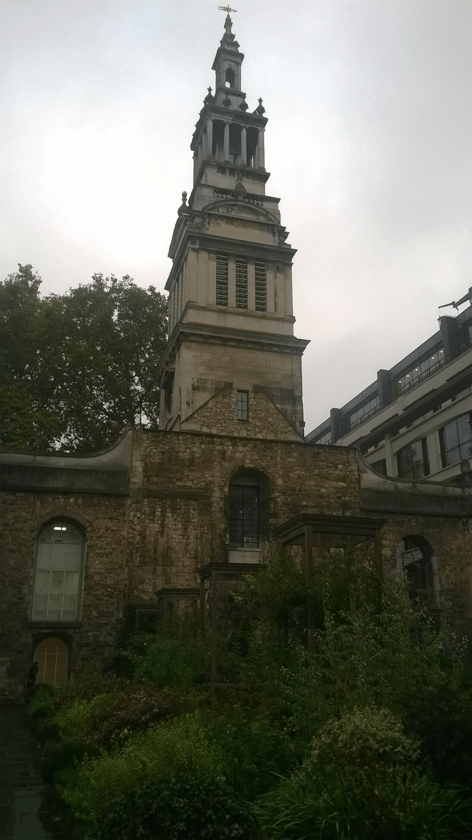
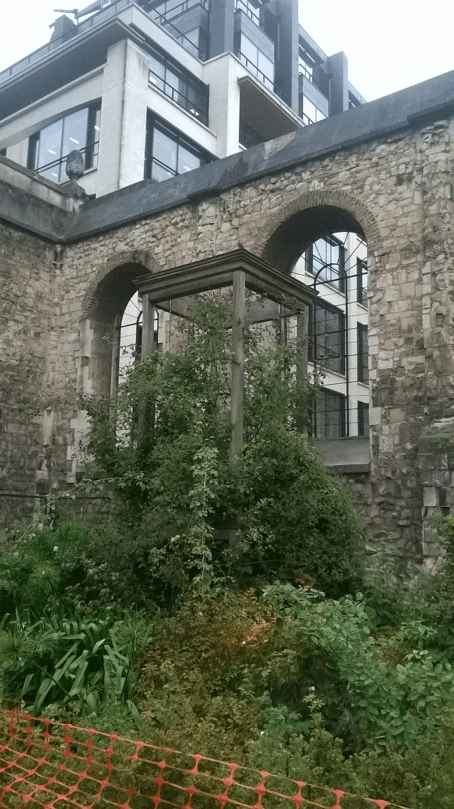
Turn left out of St Paul’s Station and you’ll come across another of the City Gardens, Christchurch Greyfriars. The original site of the Franciscan church of Greyfriars was established in 1225 and was destroyed by the Great Fire in 1666. A new church, designed by Wren, was completed in 1704, but this was destroyed by incendiary bombs in 1940; the fate of so many City churches. As with St Dunstan’s, the Tower of the rebuilt church escaped bombing and has remained pretty much intact, which I think adds to its charm. The square wooden frames with the climbing plants are situated where the original stone pillars were. Near the church is the site of Christ’s Hospital, founded by Edward VI in 1552. Not actually a hospital but a school built to house, feed and educate needy children. The school still exists in Horsham. Interesting fact: In previous centuries, hospital meant school and hospice meant a place of refuge, very different from today’s meanings.
Address: King Edward Street, London EC1A 7BA
Nearest Tube: St Pauls
St Alphage London Wall
Roman London Wall
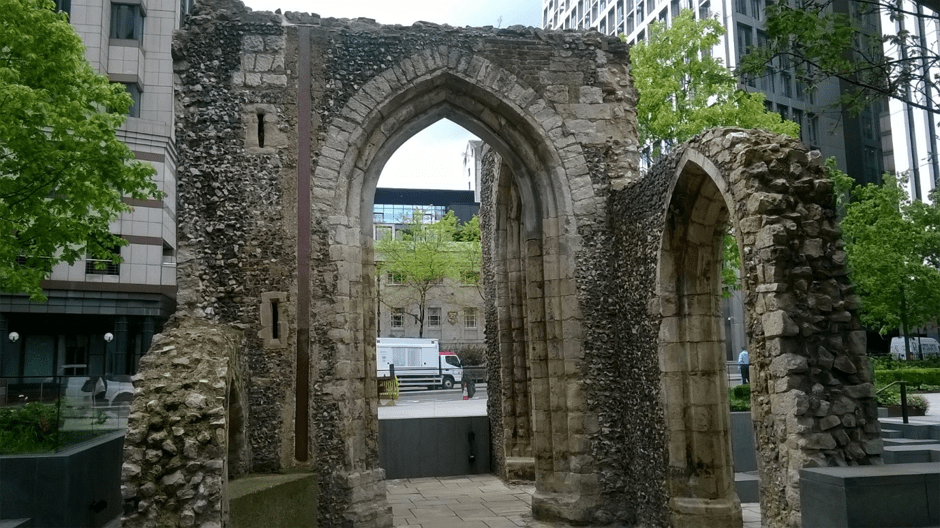
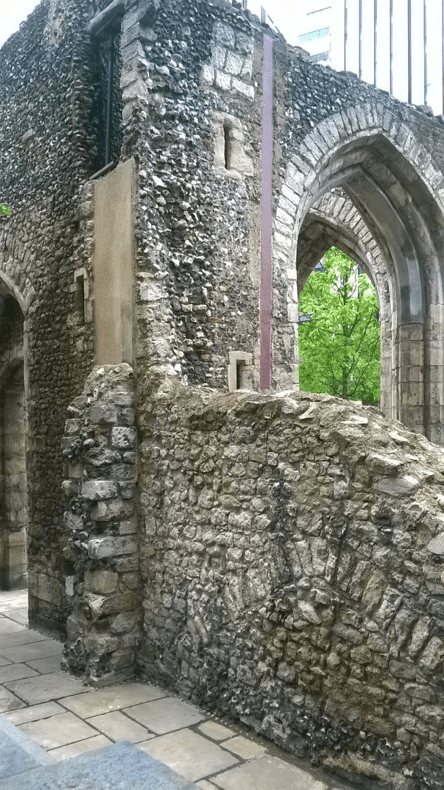
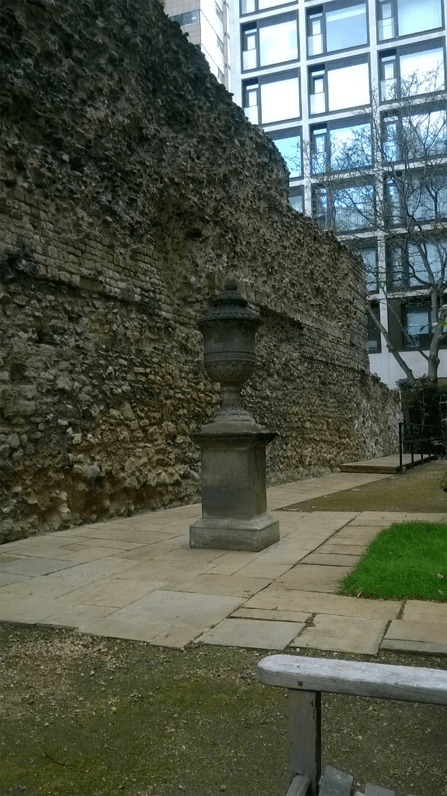
This is the one you can climb on: St Alphage. I think this is my favourite because it’s right next to the Roman London Wall, parts of which are nearly 2,000 years old. The walls of the church we see today are the remains of the tower, dating from the 14th Century, all other parts of the church were destroyed in the two World Wars. However, bombing uncovered the remains of the Roman Wall behind the church, previously hidden by more recent buildings, how amazing is that? I love the location of this church, an oasis of ancient in the modern City buildings. I would love to travel back in time 1,000 years just for a glimpse of London as it was then. The adjoining churchyard was built over, thank goodness they left the church alone!
Address: St Alphage Gardens, London Wall Place EC2Y 5EL
Nearest Tube: Moorgate
Palace of Westminster
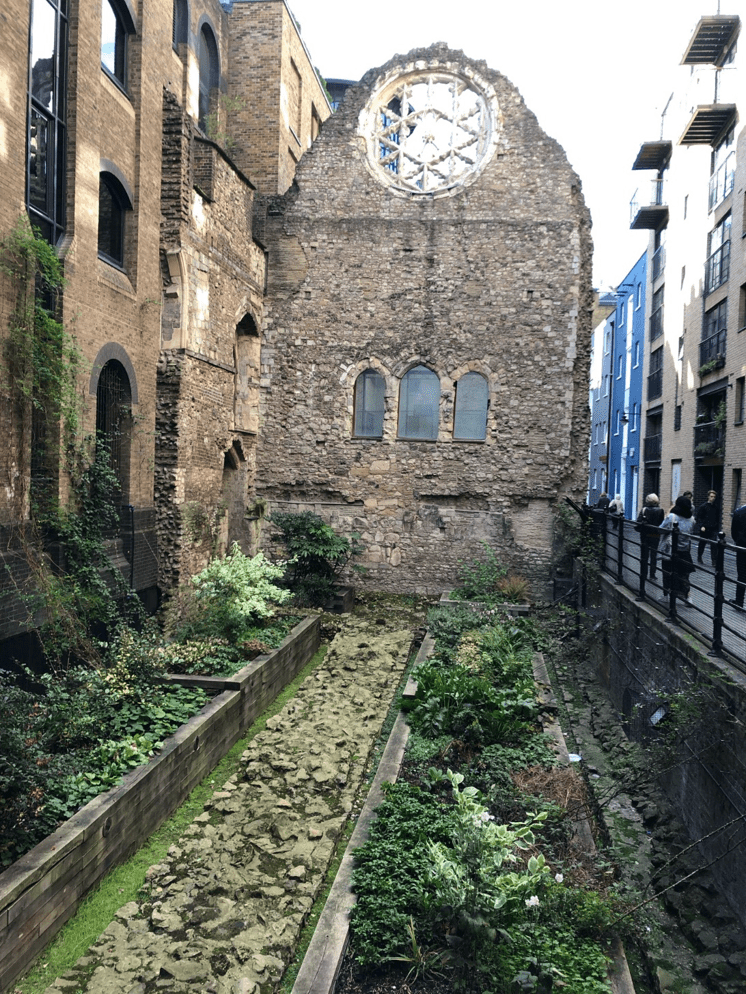
The Palace of the Bishops of Westminster, now with gardens laid out in the grounds
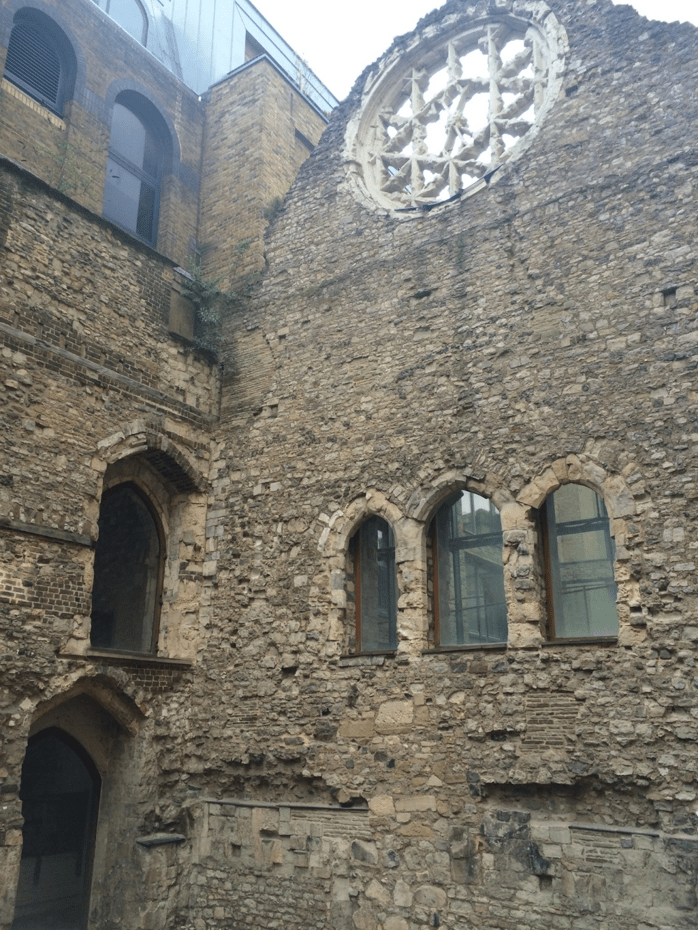
This is all that remains of the palace of the powerful bishops of Winchester, one of the largest and most important buildings in Medieval London. ‘Founded in the 12th Century by Bishop Henry de Blois, it was built to house the bishops in comfort when staying in London on royal or administrative business.’ So says the sign at this site. This is another of the historic buildings that could have easily been completely demolished in subsequent centuries but was revealed when the Southbank area was redeveloped in the 1980s. This area is packed with historic interest: nearby is the Anchor pub on Bankside where Pepys watched the Great Fire burn in 1666; there’s a replica of the Golden Hinde; the Clink Prison Museum; and the replica of Shakespeare’s Globe Theatre.
I love London, I love history, and I’m a Christian, so I decided to do a Blog about Christian London, past and present. Equipped with my 60+ Oyster Card (thanks, Mayor of London), I’ve spent a lot of time wandering the capital and have found that Christianity is alive and well and living in London! Yes, God is here and always has been: in churches, charities, in people and ordinary places. There’s over 1,000 years of Christian heritage in the City, which spread outside its ancient walls as London grew.
So…this is how it’s going to work. Each month I’m going to take a different theme: e.g. buildings/people/churches/places/museums, with a current or historic Christian connection, which I have personally visited, and give my own, sometimes quirky perspective on. There will be 4 or 5 each month, depending on the number of Sundays in the month, totalling 52 by this time next year. That’s the plan, anyway.
First, some acknowledgements.
Tired of London, Tired of Life: One thing a day to do in London; and London: The Weekends start here: 52 Weekends of things to see and do (Virgin Books) are two wonderful books by Tom Jones (not the singer!) about anything and everything that can be visited in London, much of it free. Other ‘What to do in London’ books are available!
Open House London weekend: held on the third weekend in September; all types of buildings in the 33 London boroughs open their doors for free visits, including churches and synagogues. If you’ve never visited, I recommend you go this year!
http://www.london-city-churches.org.uk There are at least 50 church sites in the Square Mile, these are mostly open to the public and each has its unique story and characteristics. It’s encouraging to see how much these churches have done and continue doing to serve their communities. Some have been involved in social action for 1000 years!
So here goes, hope you enjoy my exploration of Christian London……
January – A Parish Church, a Palace, a Park and…some Plants
Walking down from Waterloo Station towards the River, past the London Eye, the London Dungeon, the Shrek Experience, a variety of eateries, and the other tourist draws, you go under Westminster Bridge and it feels like a different part of London. With St Thomas’ Hospital and Evelina’s Children’s Hospital on the left and the Houses of Parliament across the River on the right, there’s a sense of heritage and history, goodwill and peace. A 15-minute stroll brings you to Lambeth Pier, not included in my ‘things beginning with P’ heading, but which I do have something to say about later. Cross the road and you reach….
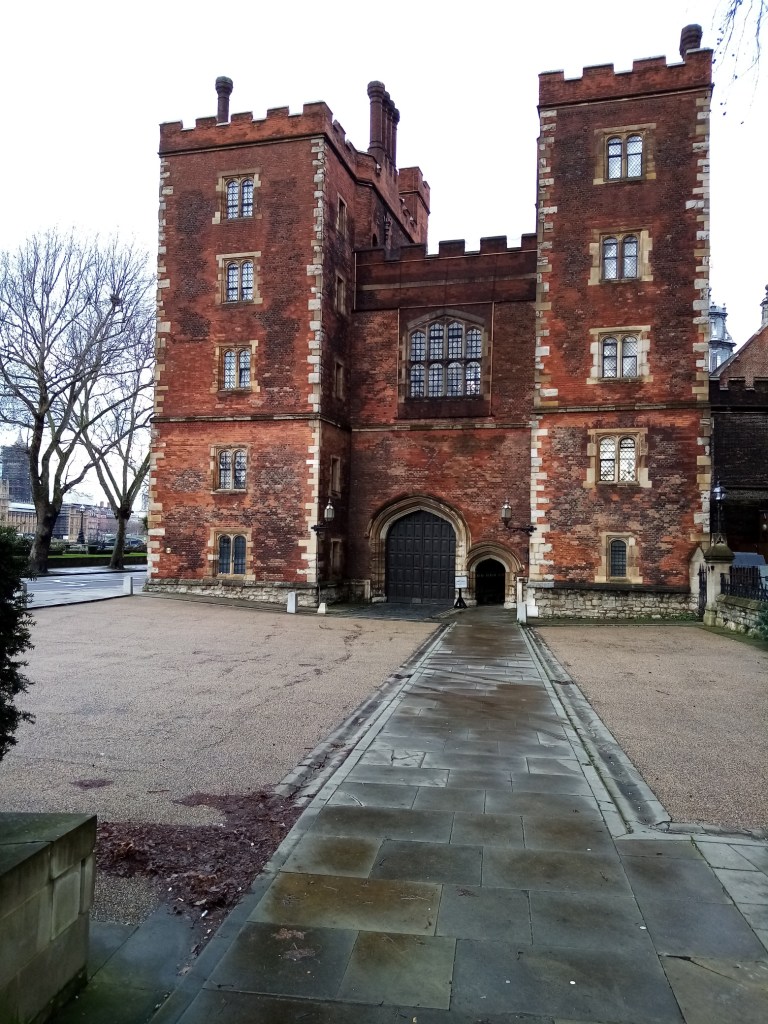
A Palace – Lambeth Palace has been the London residence of the Archbishop of Canterbury for 800 years. (I thought Justin Welby was looking old….) The oldest remaining part of the palace is the Lollard’s Tower (1435) which was used as a prison in the 17th Century. And there’s this Tudor gatehouse which gives the palace its imposing frontage.
Front of Lambeth Palace
When I walked down Lambeth Palace Road to look at other parts of the Palace, I found it was covered with hoardings as the palace’s library is being refurbished. I was a little disappointed until I noticed what’s written on the hoardings:
Our flight to Nelson, on the South Island, is at 1pm, so we can have a leisurely breakfast before setting off. We say goodbye to Pete, drive 100 yards down the road – and a young guy standing by his car waves us down, he has a flat battery and asks if we’ve got any jump leads? We explain that we are on our way to the airport, but Di takes pity on him and kindly drives back and gets Pete (who obviously thinks we’ve forgotten something). He gets his car and the jump leads, while we restart our journey. I ask Di if this sort of thing happens a lot, she says no, it’s never happened to her before!
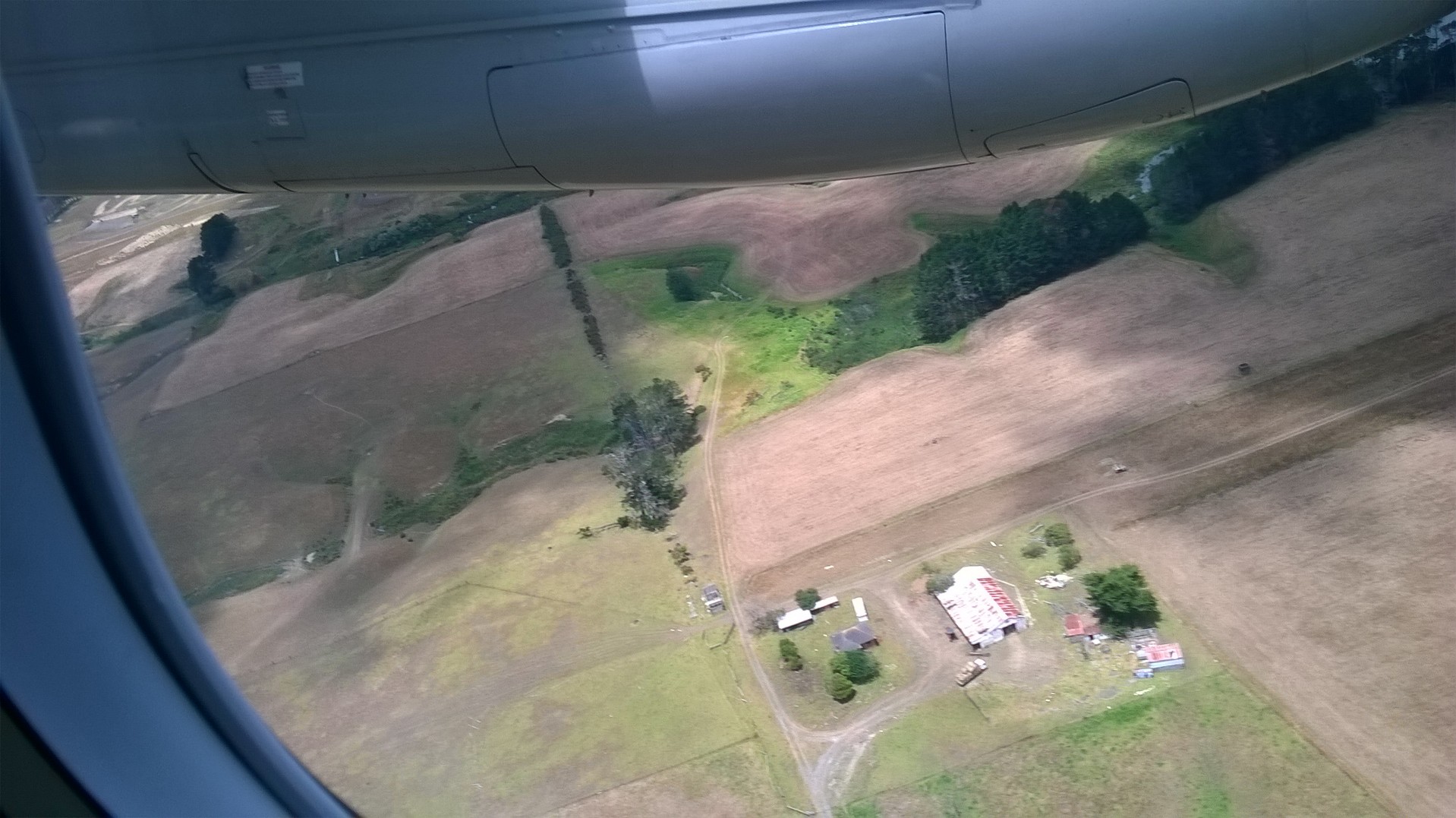
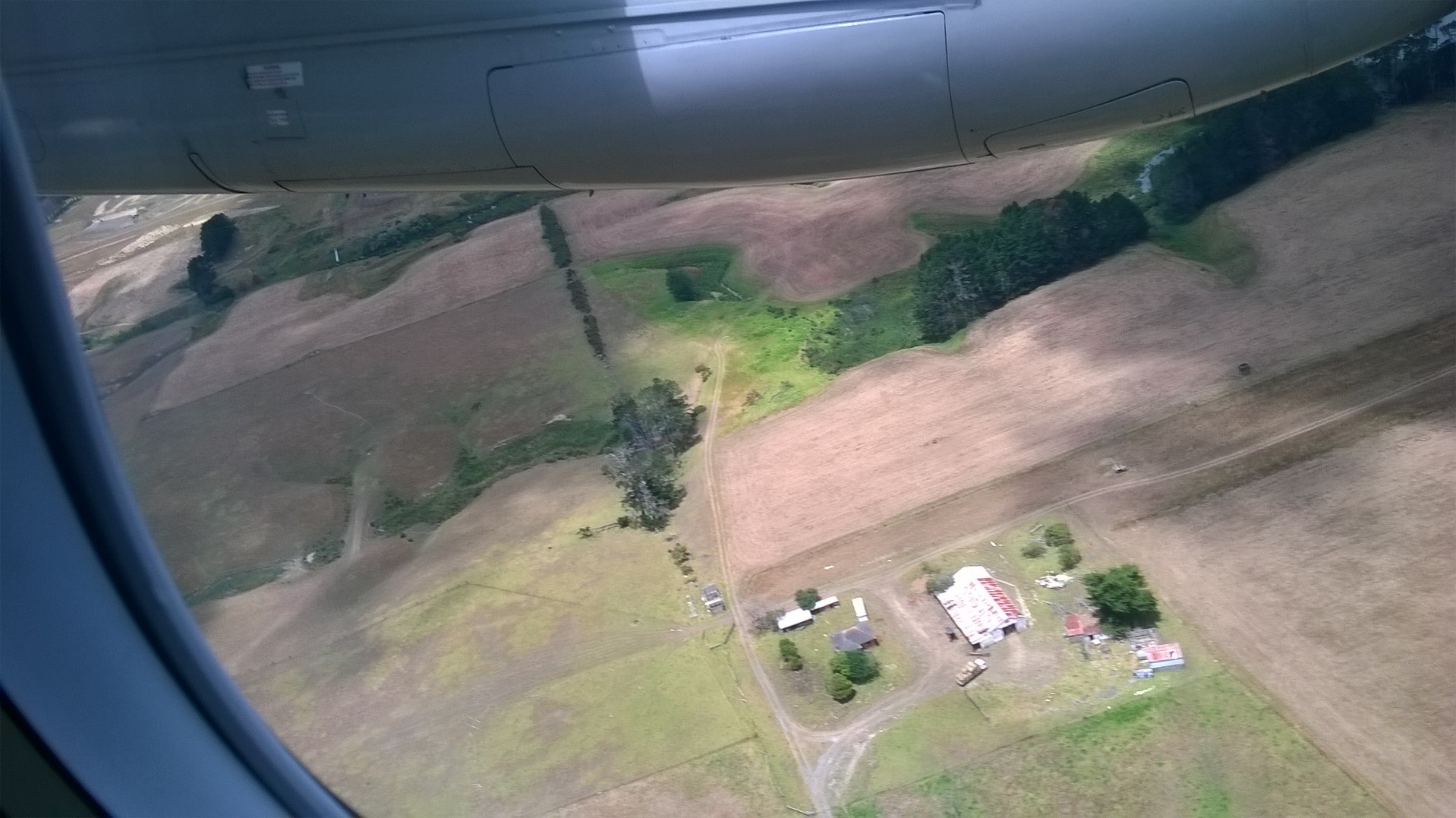
Our drive Auckland airport is in thick fog, but it’s still very warm and humid, and takes around 2 hours. We arrive half an hour before our flight, I’m starting to worry because we have our cases to load. We say Goodbye and Thanks for Everything and join a massive queue for bag drop. 10 minutes later our flight is called and we and our fellow passengers have to push past everyone to get to the desk. Further panic when we discover that Gate 61 is not in the Terminal building, where is it then? Turns out it’s just outside in a cabin next door. We actually have plenty of time, there’s no security to go through, no bag X-ray, just show your tickets. The small plane flies low enough to see the land and sea that we pass over, and the weather seems to be improving as we head south. The flight takes an hour and a half, and soon we are picking up our hire car and driving into downtown Nelson. Our first motel, Mid City Motorhome, is a bit basic but clean and comfortable and is literally in the middle of the main street of the town. However, Nelson can’t really be described as a city, being about the size of Sutton. Later, I overhear someone on their phone say, ‘Hello, I’m in the city’. So that’s what the locals think, anyway!
Around 6pm we go to check out what the city of Nelson has to offer. Just down the main street is the delightful River Cottage, where tonight is Jazz Night. Soon we’re sitting on the river bank on huge squashy cushions, drinking ice cold beer and eating large slices of bacon and egg pie (a real 2 inch thick piece, not a namby pamby quiche) listening to music for the soul, all in 26 degree sunshine. We could stay all evening….however, at 7.30 the band suddenly stops playing, everyone gets up to leave, and the café closes! Could it be that Nelson shuts down this early? Fortunately not, we walk up to the other end of town and discover more bars, restaurants and live music, we buy another couple of drinks and then wander round for an hour or so. We’ve arrived!
Three Best Things: 1. Weather just got better! 2. Lovely flight from North to South Island. 3. River Cottage: the music, ambience, food and drink!
Three Worst Things: 1. Panic at Auckland Airport! 2. Car park some distance from motel. 3. No air con in room, very hot at night.
Flight to South Island
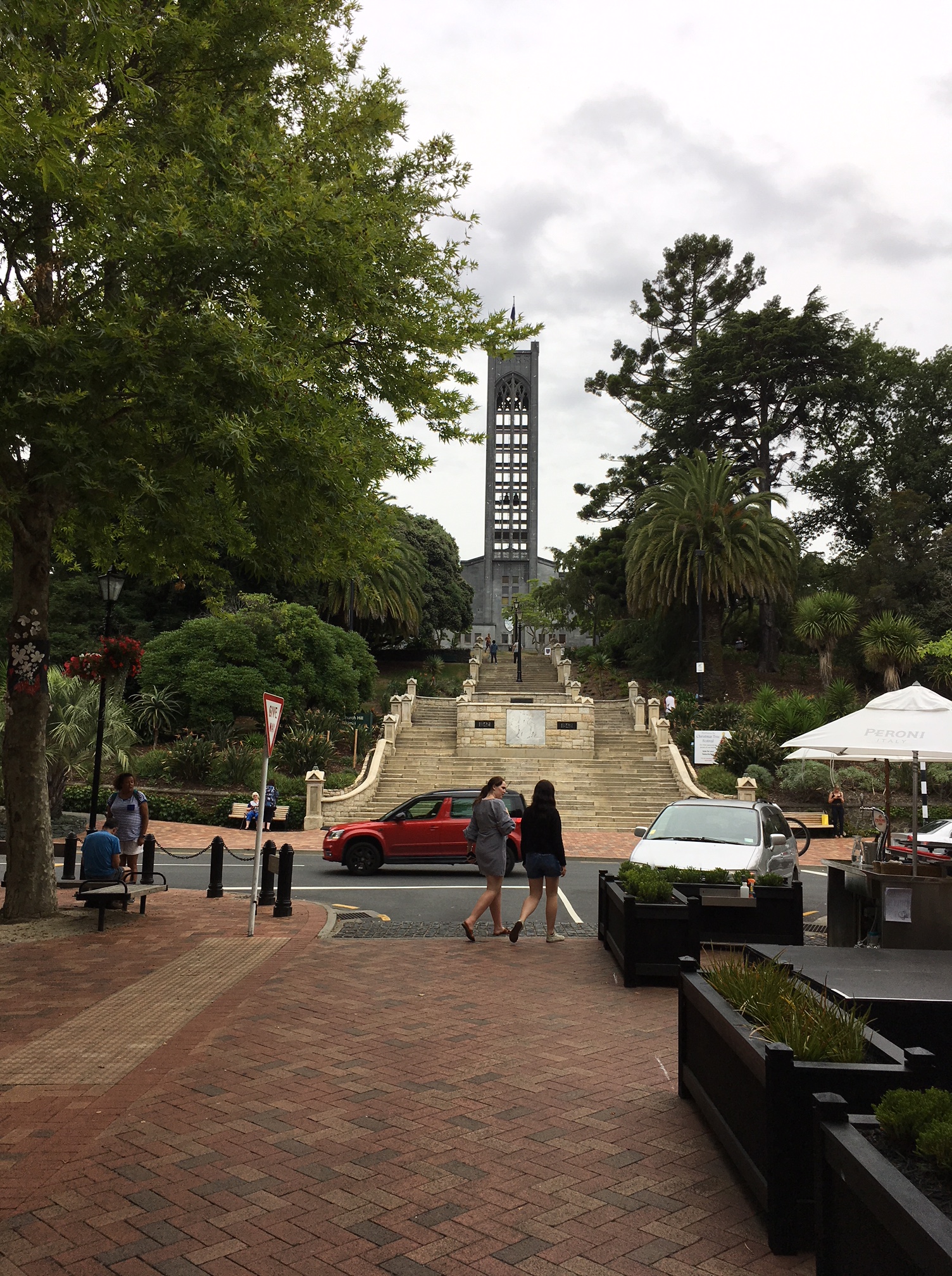
Nelson Cathedral – more about this tomorrow
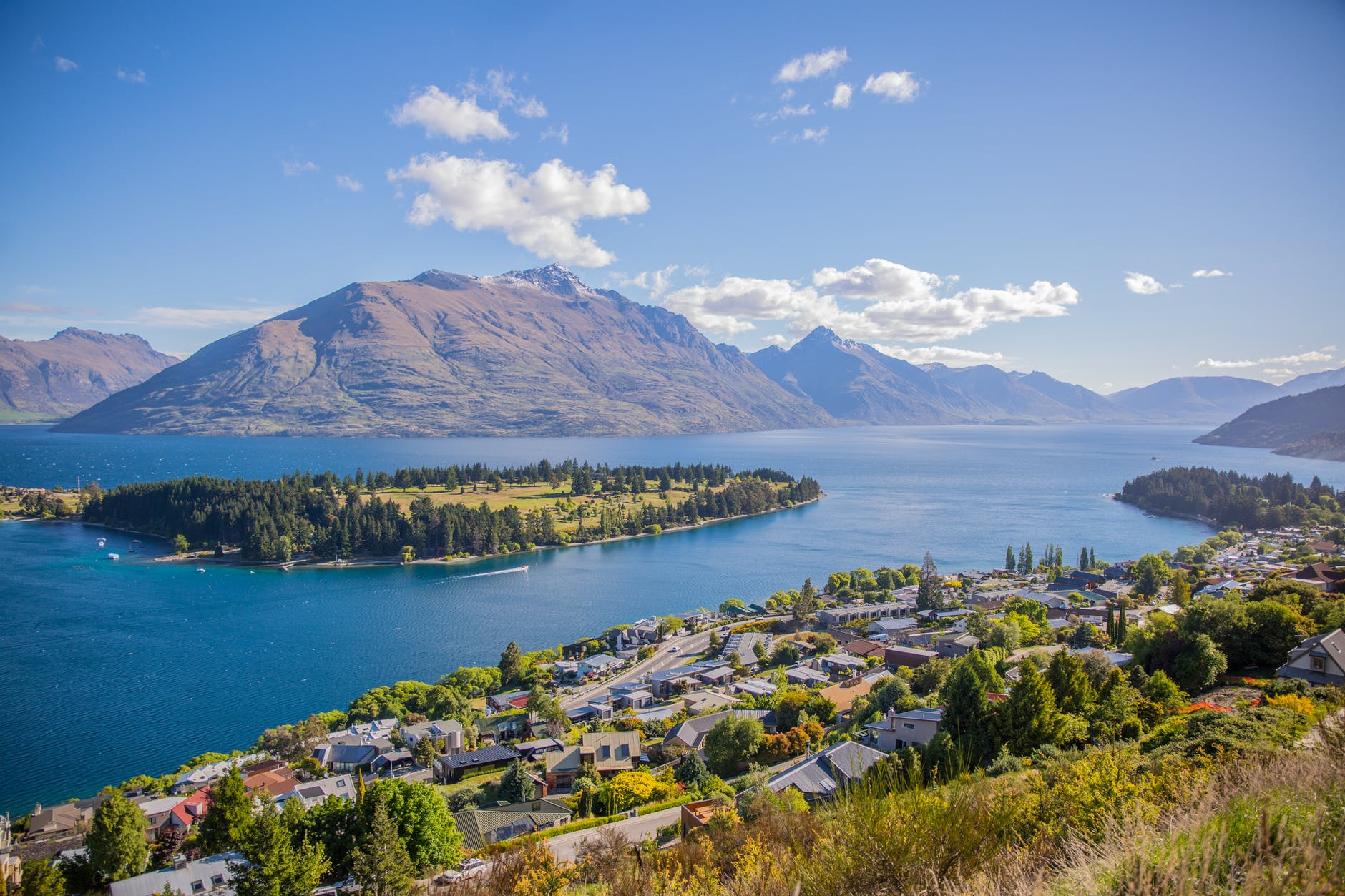
First sight of the South Island
4th January: Cathedral Christmas Trees
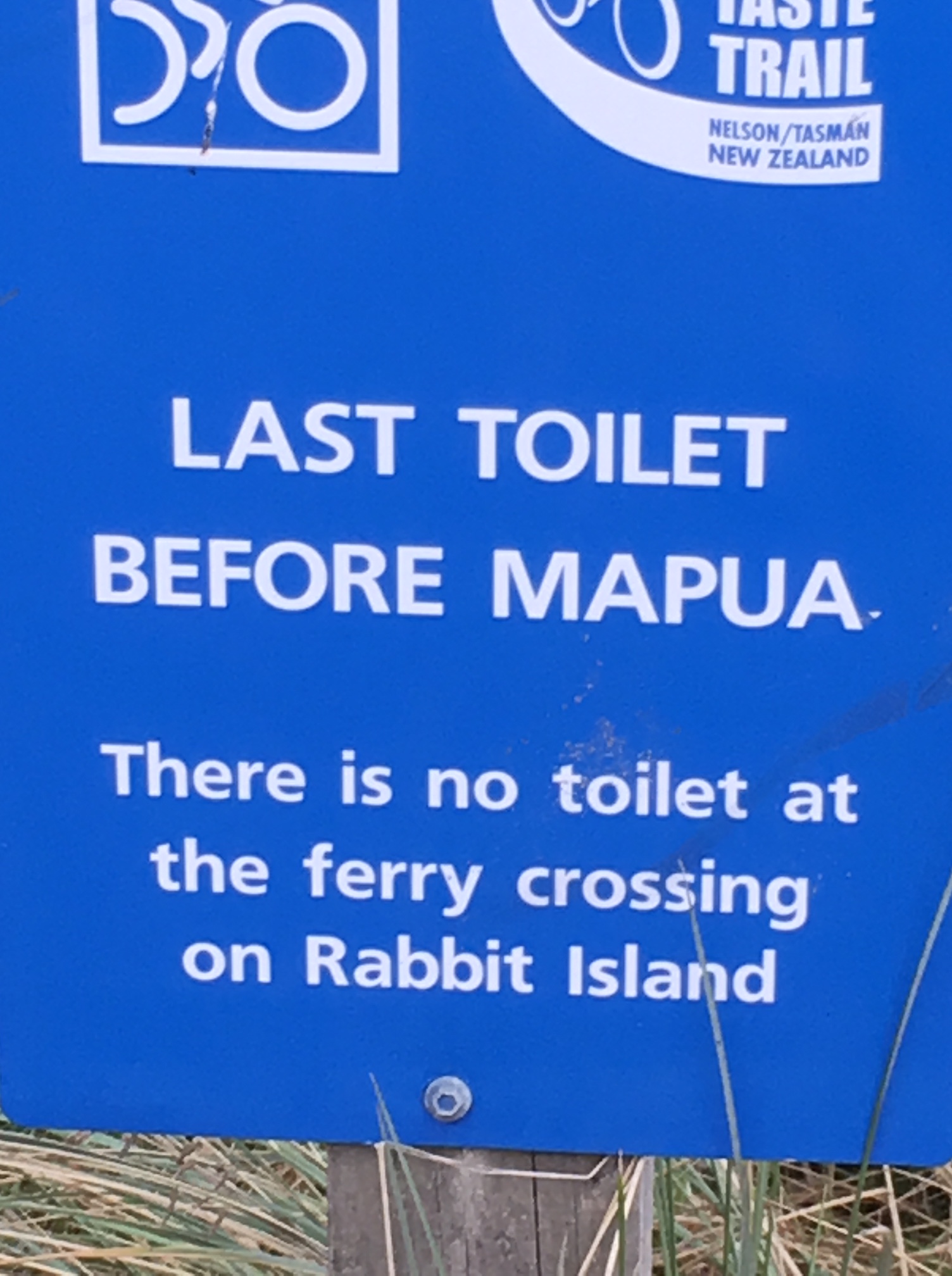
Middle day in Nelson, and it’s a cloudy but very warm day, so we decide to look at reviews for the best beaches in the Nelson area. Rabbit Island boasts golden sands, safe swimming and easy access to the beach and is about an hour’s drive from the town centre. It’s not really an island, you drive across a causeway over a narrow river and we drive for quite a while on a very straight road through pine forests. The Island is completely rural, there are no shops, cafes or bars, just toilets and showers. But it does tick all three boxes for the description in the review, so we spend a delightful morning swimming in the beautiful warm sea. Having worked up an appetite, we THEN realise that the Island has no other facilities, and notice that everyone else has a picnic with them…
Driving back towards Nelson is our only option and we keep expecting to see a café, or at least a shop, by the roadside, but there’s nothing until we get to an out of town industrial and retail park. The only eating places are a Chinese restaurant (closed) and, you’ve guessed it, a McDonalds. I’ve had more McD meals in the last week than in the last year, but it’s fast, cheap and filling! Reluctantly we leave the air con behind and decide that the only thing we can do to keep cool is to head back to Rabbit Island for another lazy afternoon swim.
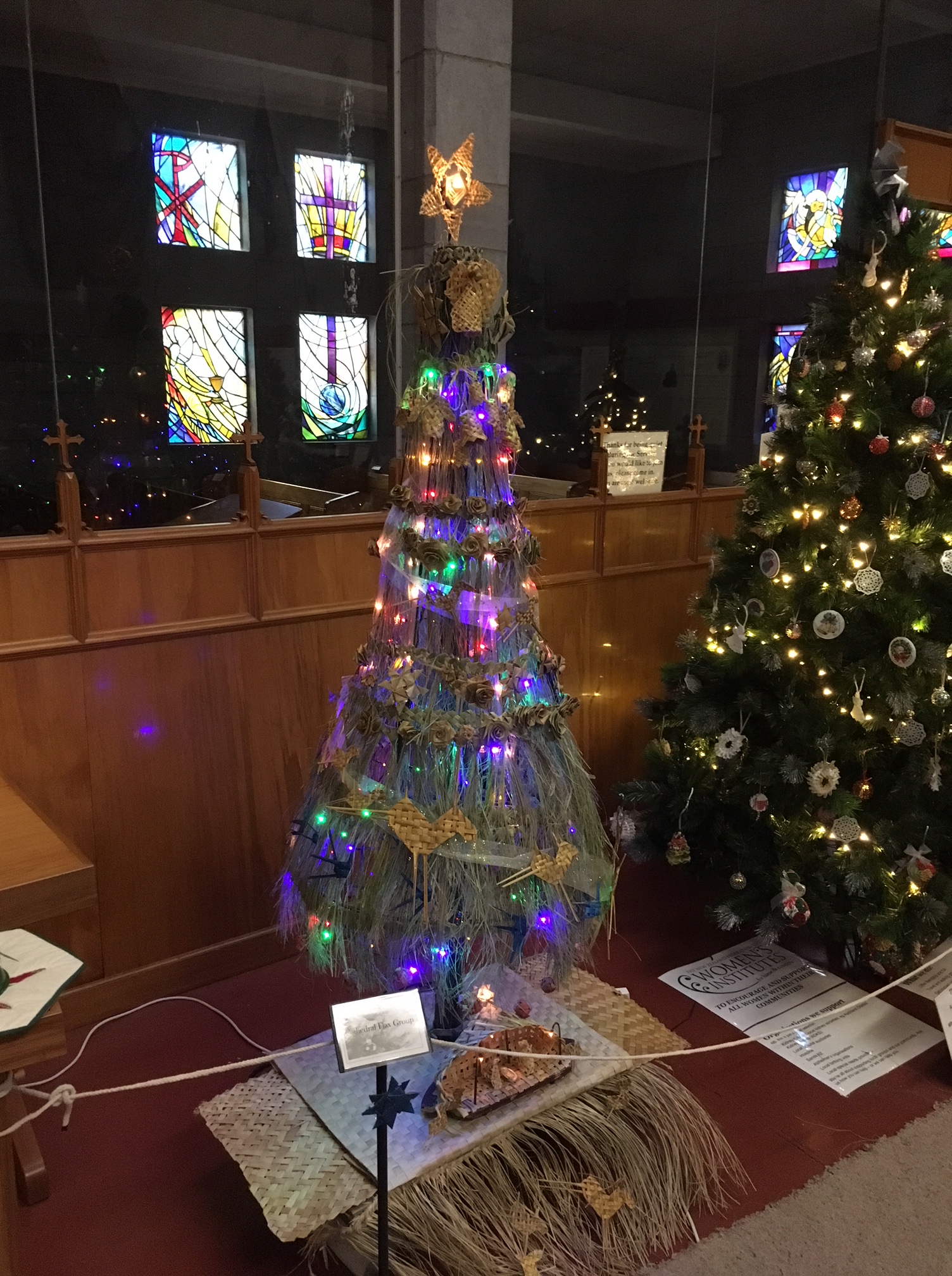
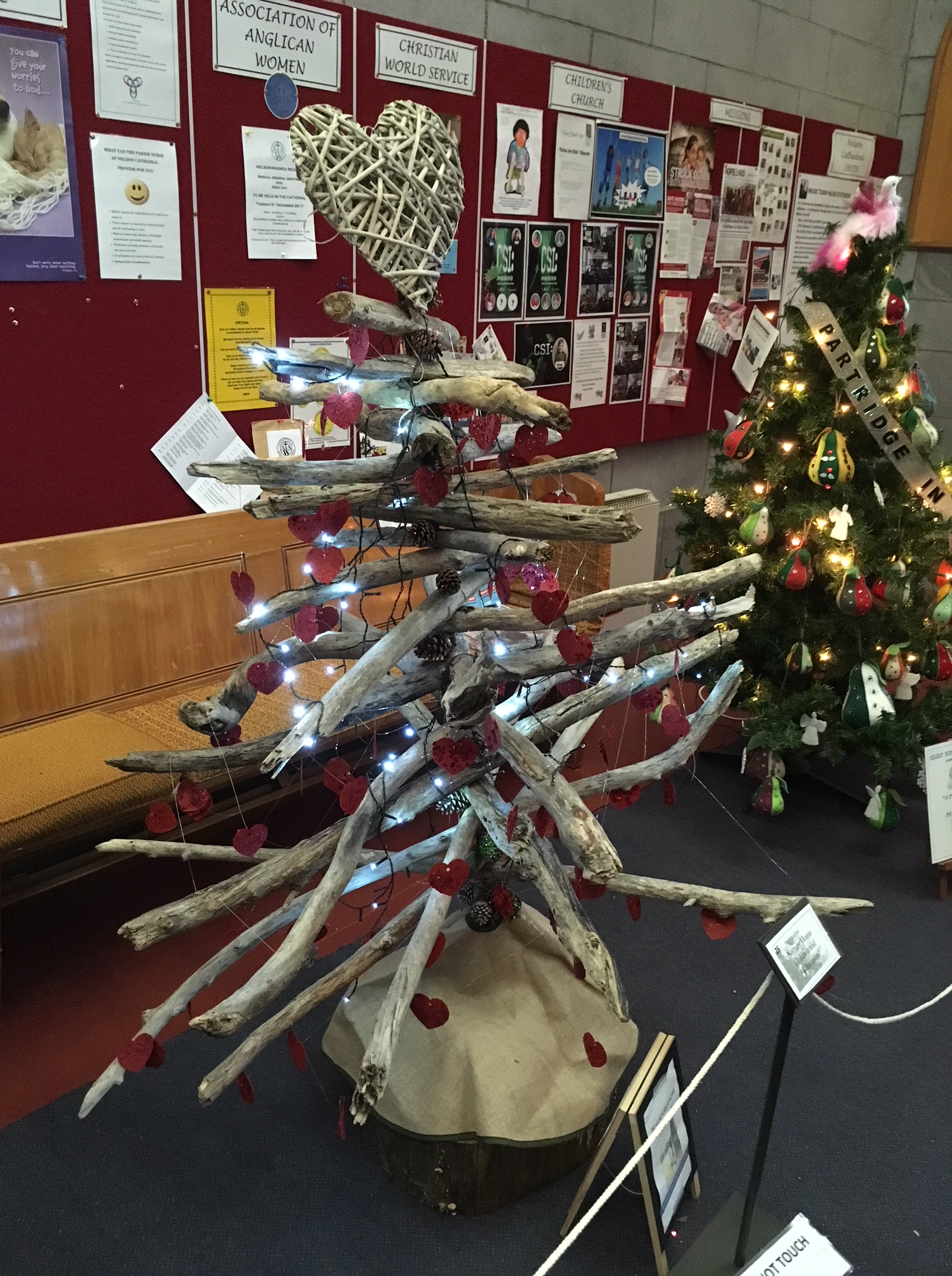
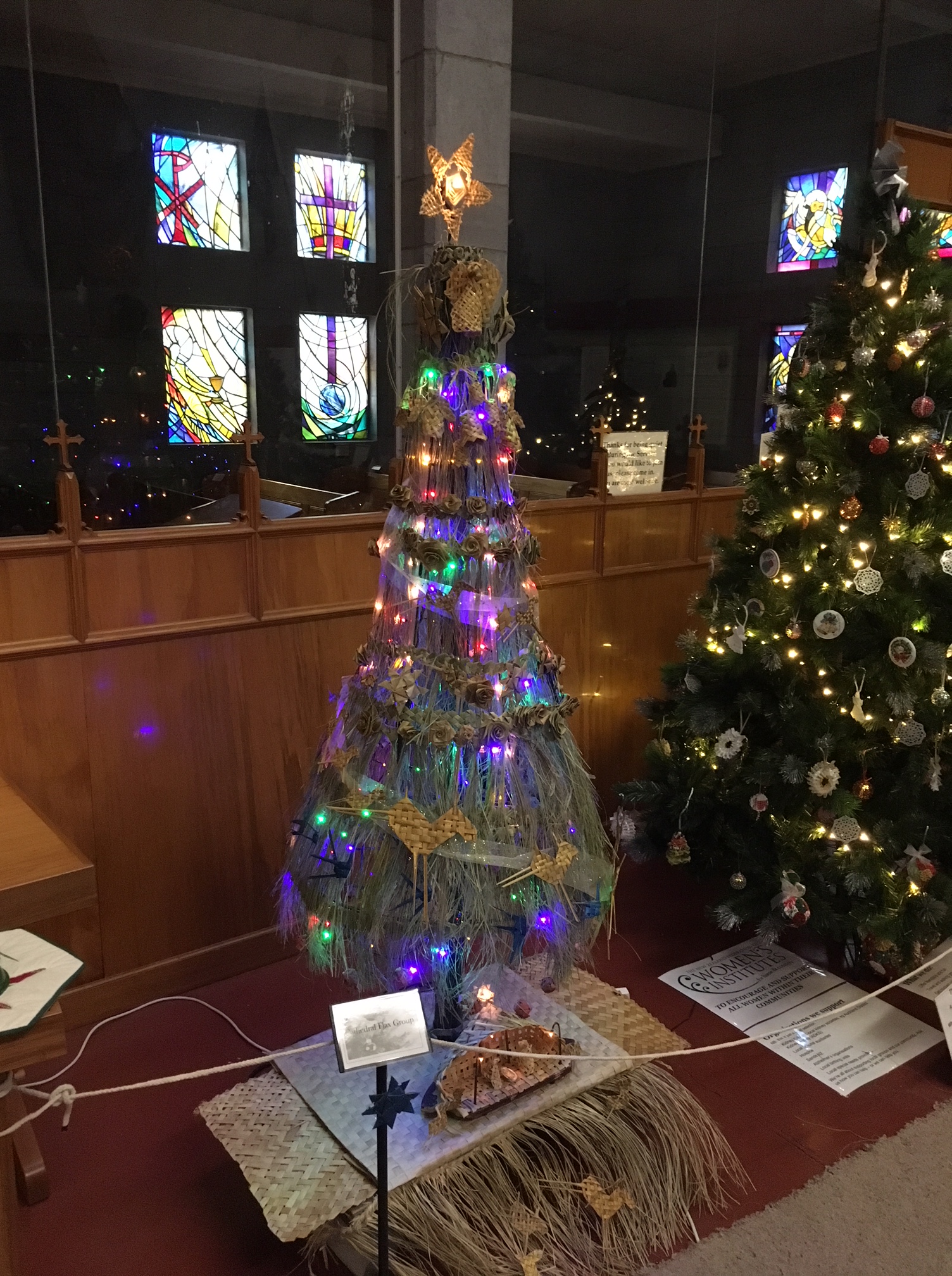
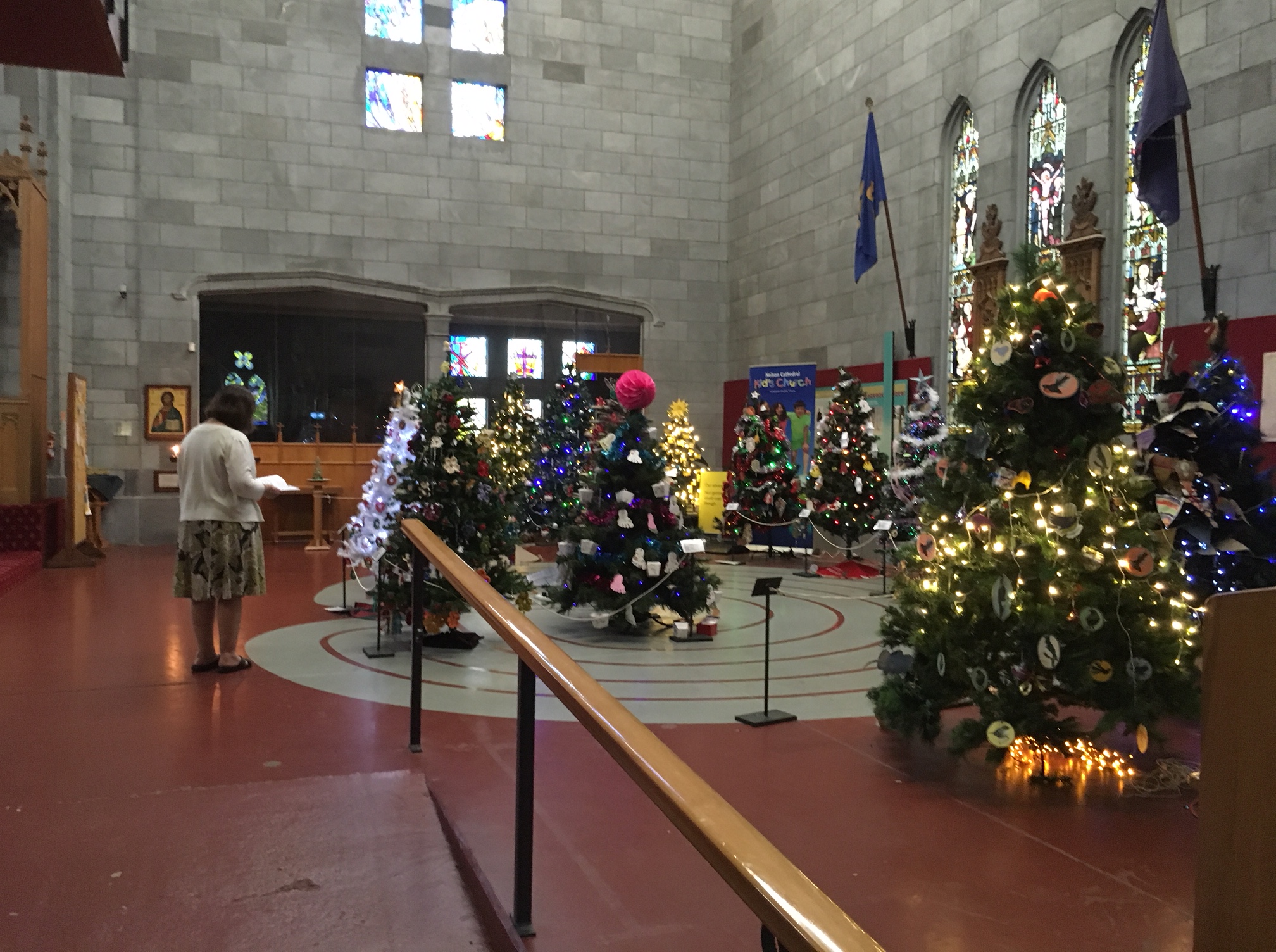
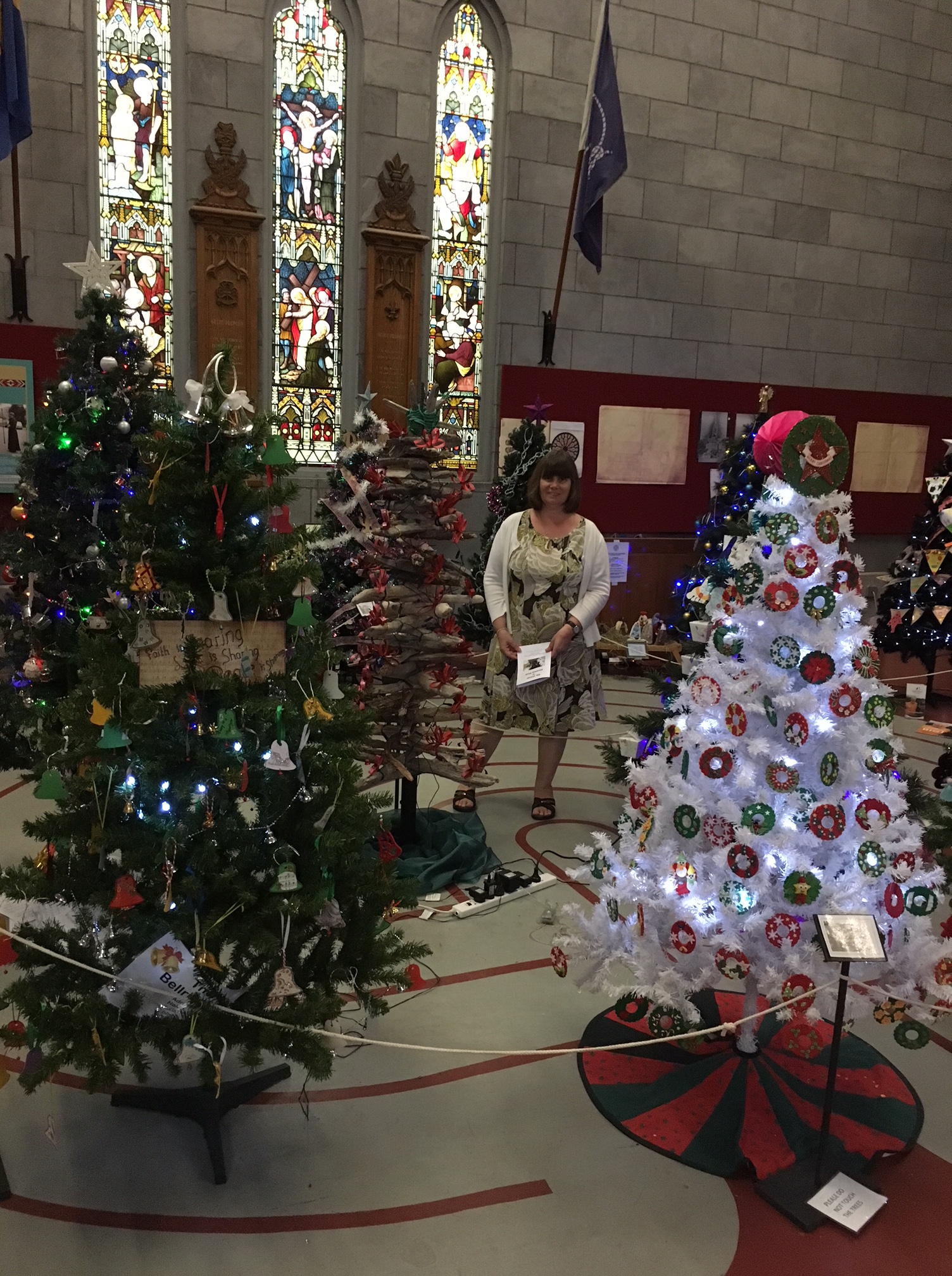
Back in Nelson, the sky threatens rain, so we walk up to the ‘modern gothic’ cathedral which is on a hill literally at the end of the main street. Inside there is an enchanting Christmas Tree display, there are dozens of them and it’s actually a Christmas Tree competition. The trees are decorated (or in some cases constructed) by local groups: businesses, charities, churches, the City Council, and young people’s groups: Sea Scouts, Guides, Youth Clubs and Schools. They are all amazing, so creative and all different. There are voting slips to vote for your three favourite trees, which we do, sadly we’ll never know which was the winning tree!
Raining on and off now, so we head down the hill to the restaurant/bar area for dinner. Most of the restaurants are full because there’s limited seating inside where everyone wants to sit. Loads of seating outside in the rain of course! We manage to find a table for two under an awning JUST out of the rain, where we enjoy a more gourmet meal than of late (see Best Things below). We hurry back to our motel in a downpour and it rains heavily all night, finally stopping at around 8.30 am.
Three Best Things: 1. Swimming in the Tasman Sea. 2. Christmas Tree Competition. 3. Seared tuna, fresh vegetables and sweet potato fries, plus a glass of local cider.
Three Worst Things: No café on Rabbit Island. 2. Sunburn (deceptively hot sun through the cloud.) 3. Rained noisily all night!
This Blog is a sort of diary/journal about our trip to Hong Kong and New Zealand. It’s not a Travel Guide, just our experiences of these places: things we saw and heard and did and how we felt about them. We travelled to Hong Kong on 27th December, stayed for two nights, and then went on to NZ for a further 14 days. We loved every moment, and our only regret is that we couldn’t stay longer. Each entry describes our day, finishing with my three best/worst things about that day. I sometimes struggle to think of three worst things, that’s how good it was!
First, a little information about New Zealand: it’s in the Southern Hemisphere so its Summer is November to March-ish. There are two Islands, the North Island is sub tropical, the top of which is approx. 35 degrees off the Equator, while the South Island is mountainous so it’s cooler, rainy in Summer and snowy in Winter. The Maori name of NZ is Aotearoa which is translated as ‘Land of the Long White Cloud’. We experienced quite a lot of the Long White Cloud…..
History: the Maoris first colonised the Islands in the 1100s and Europeans in the 1700s. The two people groups signed the Treaty of Waitangi in 1840 recognising British sovereignty, and New Zealand gained independence from the UK in 1947; the Queen is the Head of State. The population is approx. 4.7 million, about 75% are European descent, 14% Maori. (This is mostly from Wikipedia, by the way). The fusion of cultures is fascinating and beautiful, I wish we could have spent more time exploring it. As I keep saying to myself, next time……
Day 1, 27th December: Weird, but in a good way
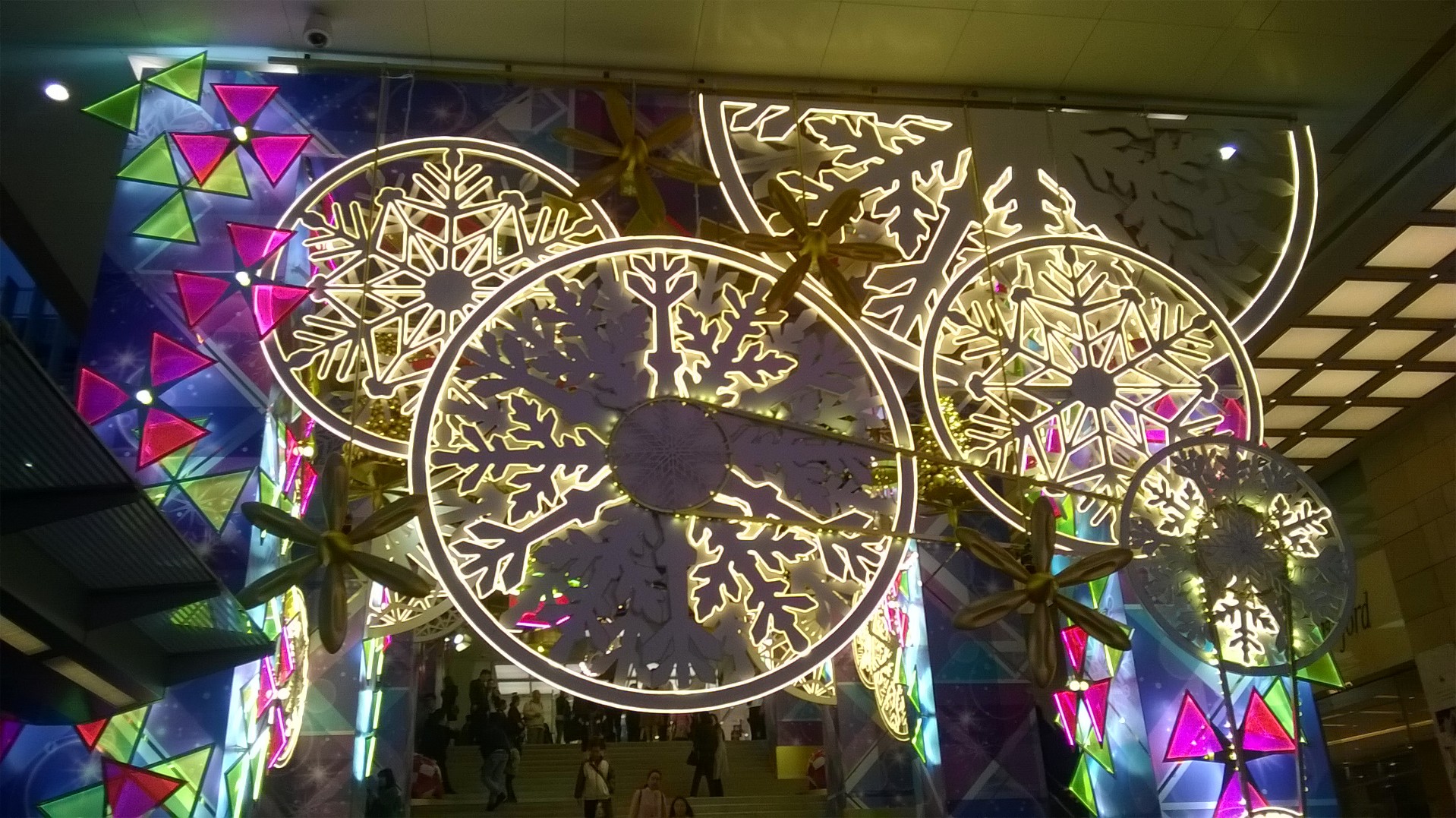
What’s weird is doing a long haul flight 2 days after Christmas. While everyone else is enjoying that indulgent post Christmas slump, we leave the house at 8am and are driven through a snow storm to Gatwick International Airport to start our adventure. C and K have kindly chauffeured us, so after bag drop, we treat them to breakfast (our first of three brekkies in less than 24 hours). Gatwick looks Christmassy in a business-like ‘we are an international airport operating 24 hours a day, 365 days a year’ way. We say our goodbyes to C and K…..fast forward to finding our seats (in Economy, this trip is costing a lot of money) and prepare ourselves for an 11 hour flight, all ready to leave…..and then the Captain announces that we can’t take off because the plane has to be sprayed with de-icer. The whole plane, not just the windscreen. This is supposed to take 20min and we watch with interest via the outside camera, as orange liquid is sprayed on the wings and the whole fuselage, which takes ages (well, actually 45 minutes.) And we’re off…..not much to say about a long haul flight except for the great in-flight entertainment and the yummy food. And the best thing ever, noise blocking headphones! I got a set for Christmas and they really do cut out most of the noise and have better sound quality than the airline ones for movies and music. So 2 and a half films, some music, a little sleep, 2 meals (including another breakfast) and 11 hours later…..we’re in Hong Kong!
3 Worst things: 1. Delay in taking off. 2. Not enough sleep. 3. Arriving at 7 am, but for us, it’s 11pm.
Day 2, 28th December, Part 1: Sleepless in Kowloon
Cost of train from Hong Kong International Airport to Kowloon Train Station: £7.50 each. Cost of Shuttle from Kowloon Train Station to Hotel: Absolutely nothing! Arriving at the station, we just have to find our Hotel (Metro Park Kowloon) from a displayed list and go to the pick up point for that hotel (K5) where an electronic display tells you when the next bus is due. The K5 bus reminded me of the Kingston bus numbers, no other similarities between Kowloon and Kingston noted! We travel through the unfamiliar streets, enjoying the culture shock, but being a bit too tired to really appreciate the jumble of sights and sounds. Arrive at Metro Park, posh looking hotel in an ordinary street of cafes, mini supermarkets and shoe shops – a bit like having a hotel in Penge High Street. By now it’s about 10am and not surprisingly, our room is not yet ready. We can have a Superior room, ready now, but it will cost us…..we decide to go and explore for a couple of hours, even though it’s really 2am for us. We leave our cases and coats and go out into the street, where the temperature is a pleasant 24 degrees C.
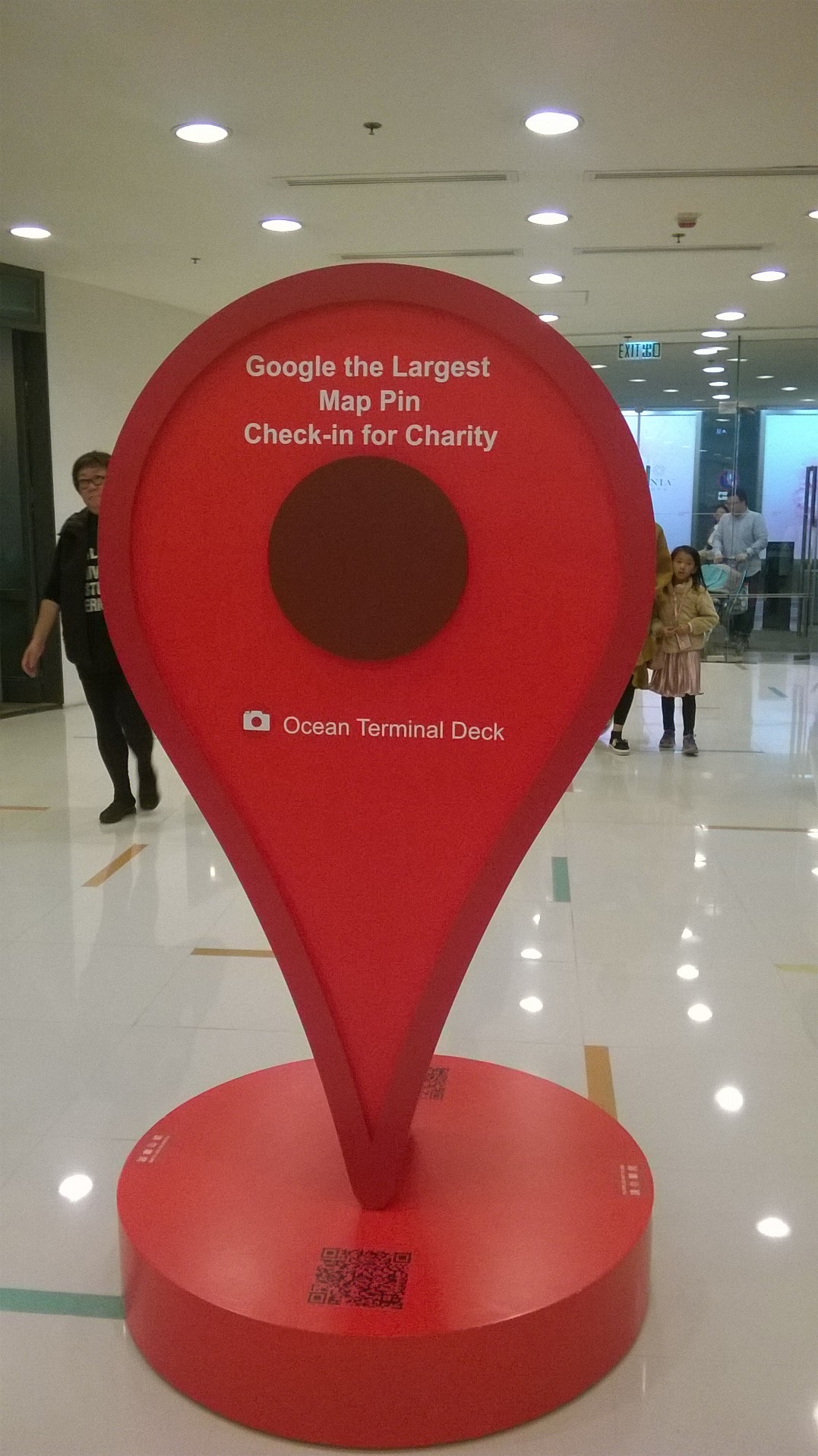
Kowloon is on the mainland and is less touristy than Hong Kong Island. It’s more the industry and manufacturing side, while HKI is the financial and tourist district. We find ourselves in the middle of a steel manufacturing area, there are people welding and hammering, which does look a bit out of place in a narrow and busy shopping street. It’s also the Garment District, where clothes are made and then sold at the nearby Ladies Market. We also notice a huge YMCA building which apparently is also a budget hotel, favoured by families. We’re now starting to get hungry again…..and along the main street what do we see but that shining example of globalisation, MacDonald’s. Time for our 3rd breakfast, and I’m falling sleep over my Egg MacMuffin and coffee. Then it’s back to the Hotel, where after a few more minutes, thank goodness, we are allowed access to our room. And joy of joys, a proper flat bed, don’t bother unpacking, just kick shoes off and zzzzzzz. And I’m going to leave it there, this is night time for us! Part 2 of 28th December next time.
Metro Park Hotel’s Festive Lobby
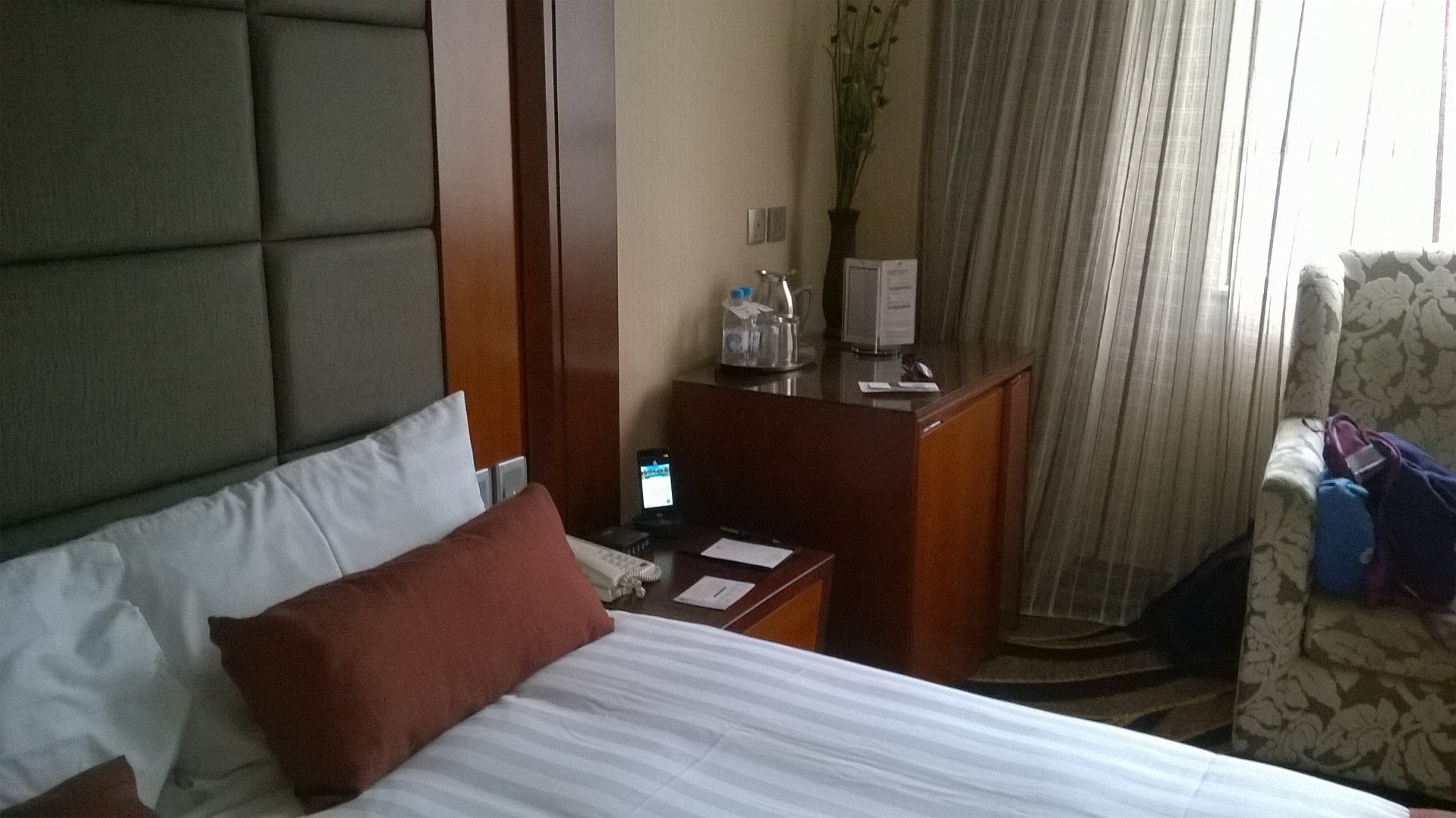
Our Room – A welcome sight zzzzz
Day 2, 28th December, Part 2: Lights and Lasers, Sound and Symphony
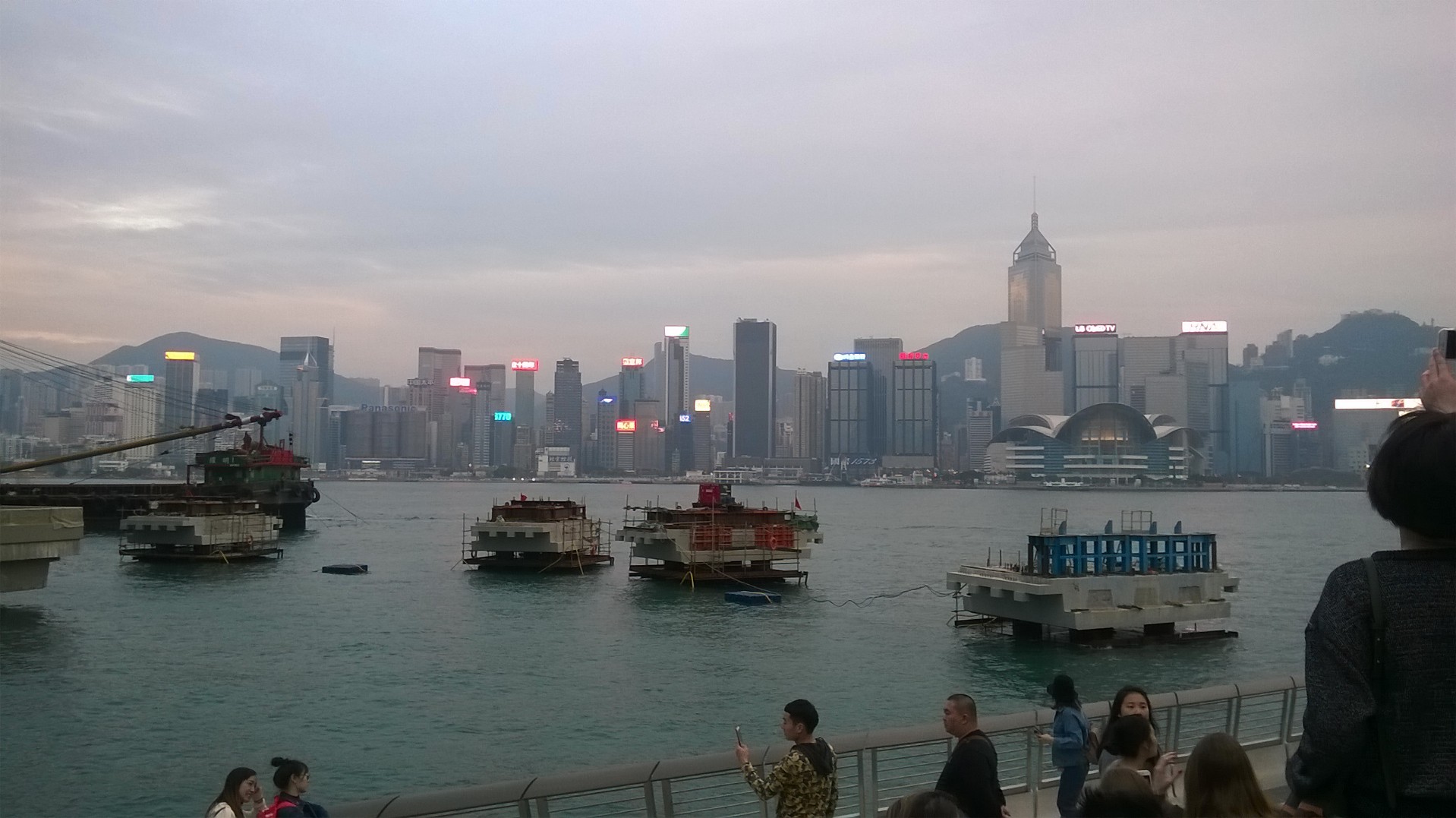
Crashed out for about 4 and a half hours, wake up and it’s still only 4.30, how long is this day going on? Feeling refreshed, we head out to the Tsuen Wan MTR Underground train line and for 45p each we travel three stops to the Harbour area, which is arty, touristy, fun and……crowded. The 1911 Census recorded a population of 7,300. It’s now 2.1 million, making Kowloon one of the most populated places on the planet. All 2.1 million seem to be down by the Harbour this afternoon! We get our first sight of Hong Kong Island with its huge skyscrapers, just starting to show off its neon lights in the smog and fading light of late afternoon.
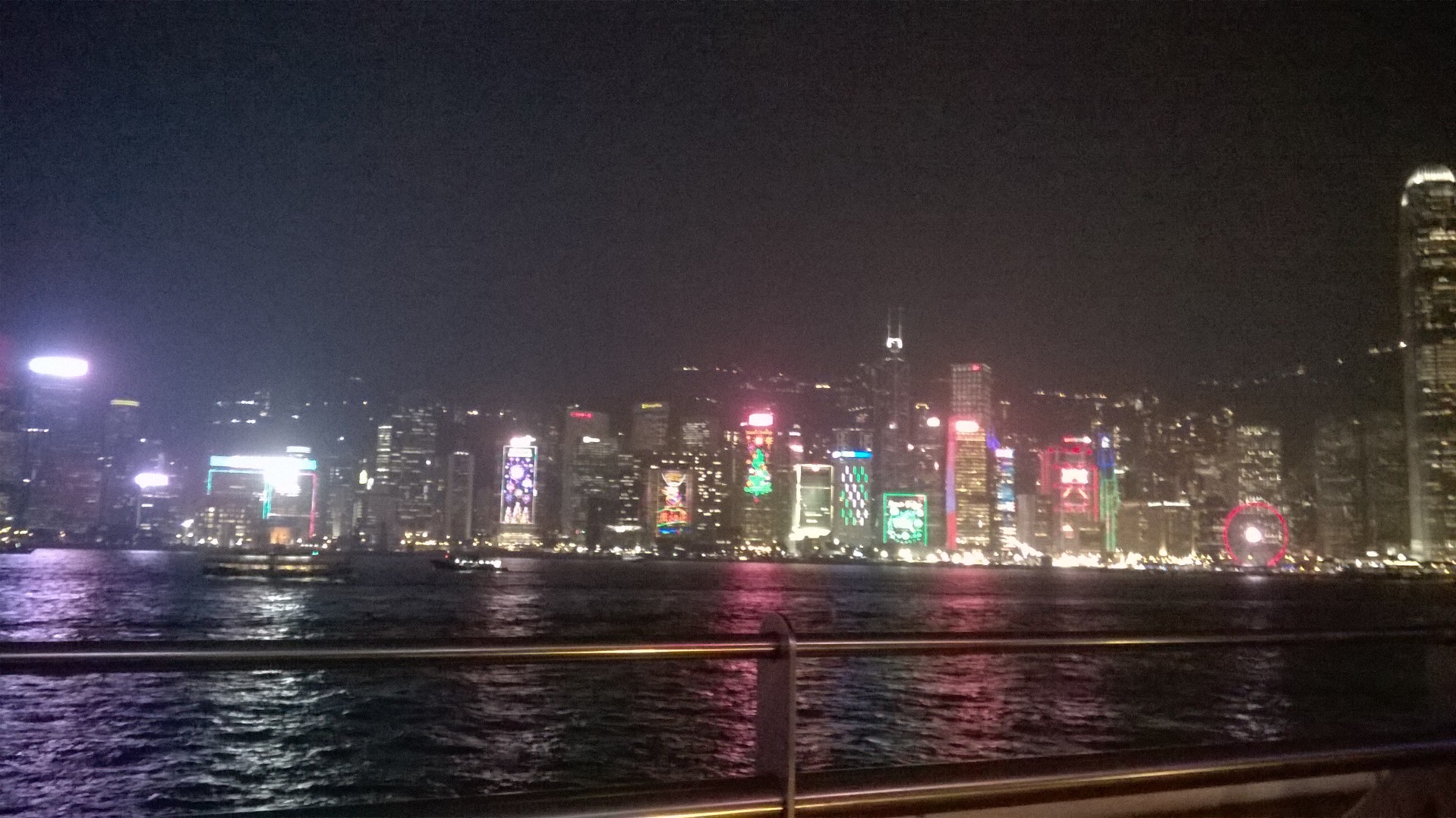
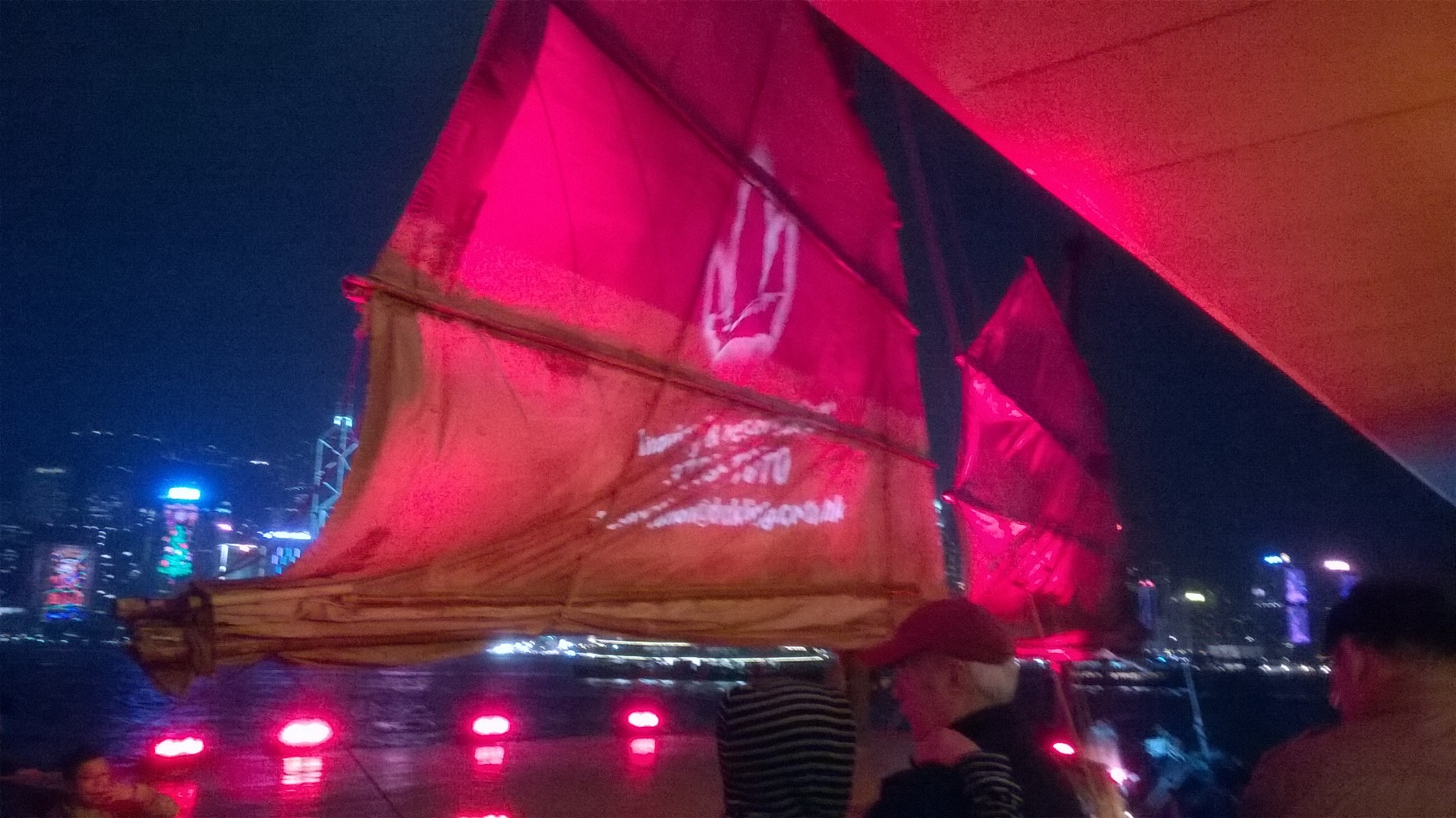
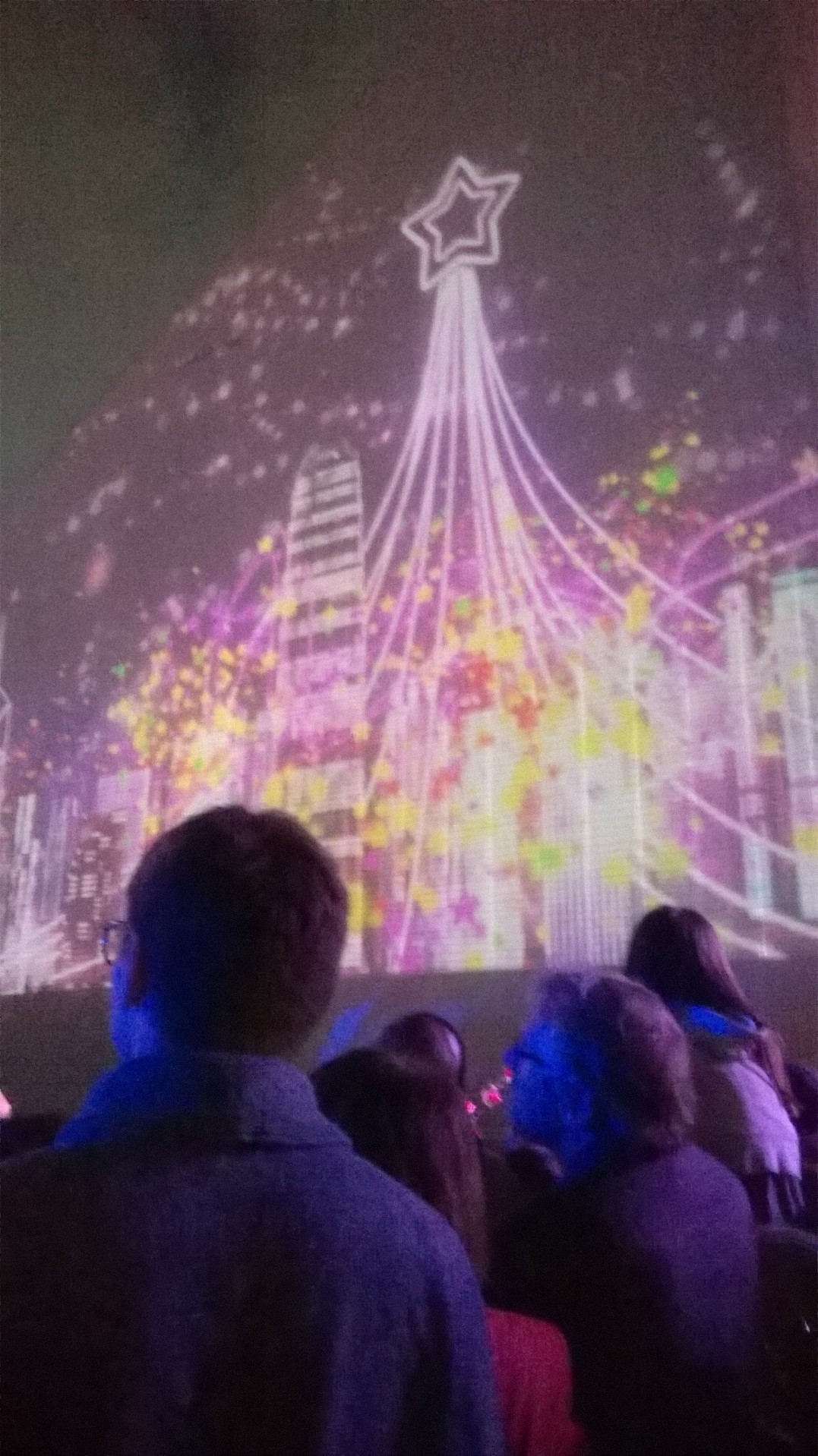
We explore the waterfront for a while and then pop into the Tourist Information to find out how to go about buying tickets for the Star Ferry to the Island tomorrow. While we’re there, we make an exciting discovery: at 8 o’clock that evening there will be the last performance of 2017 of ‘A Symphony of Lights.’ This is a light and music show, with lasers shone from the tallest buildings on the Hong Kong side and projections onto a large curved wall on the Kowloon side. All accompanied by music from the Hong Kong Philharmonic Orchestra. We have about 2 hours to wait, so we visit the ferry terminal, a shopping mall and the Cultural Centre, which consists of an Art Gallery and Concert Hall. A couple of shows I’d like to see, but it’s not possible this time round. Then time for something to eat, and we find a cheap and popular fast food restaurant. You choose your dish from pictures and a description and queue up to give its number and letter (luckily, in English) to the cashier, pay, and then queue up again with your receipt to pick up your meal. The only problem was, we had to collect our meals from two different counters, our drinks from another counter, and it all got very confusing, being shouted at in Cantonese and trying to understand what we were supposed to do. Sat down with our meals, but I’m pretty sure we ate what each other had ordered……Back to the waterfront, and we manage to get a spot with a fantastic view of the light show and projections. The buildings across the water look amazing, lit up with huge Christmas decorations and powerful green lasers reaching over to our side. And the projections are of a dragon flying through mythical islands and skyscrapers, fireworks and fields of flowers. With the dramatic music, it’s beautiful and oriental, and in the warm evening air, at last we’re feeling we’ve arrived on a different part of the planet. The show finishes, the crowd applauds rapturously and we make our way to the taxi rank, too tired to take the train. We show the name of the hotel to our driver and speed off through the night. Now, we’re not sure what the route looks like above ground, but it does seem to be taking quite a while. We stop at an unfamiliar building which the driver insists is Metro Park, maybe it’s a different entrance? We get out of the taxi uncertainly, and look up at the sign, yes, this is the Metro Park Hotel, but not the Kowloon one! Our driver has gone, so we hail another taxi and finally get ‘home’, having shelled out more than we intended on taxi fares! It’s 10pm, at last the night’s in the right place!
3 Best things: 1. Easy, cheap transfer to Kowloon Station and the Hotel. 2. Cultural and Waterfront area. 3. Symphony of Lights Show
3 Worst things: 1. Jet lag – so tired! 2. Our room wasn’t ready (that’s not a complaint). 3. Being taken to the wrong Metro Park Hotel (that is a complaint).
Day 3, 29th December: The Peak, I ‘heart’ you!
After a proper night’s sleep, time for a yummy breakfast, a truly international meal. Chinese (of course), Japanese, Full English, Continental breakfast, Danish pastries and more. Then it’s off to Hong Kong Island via the Star Ferry for the princely sum of 32p each! The crossing takes about 10 minutes and halfway across you can see the tall skyscrapers looming up on both sides.
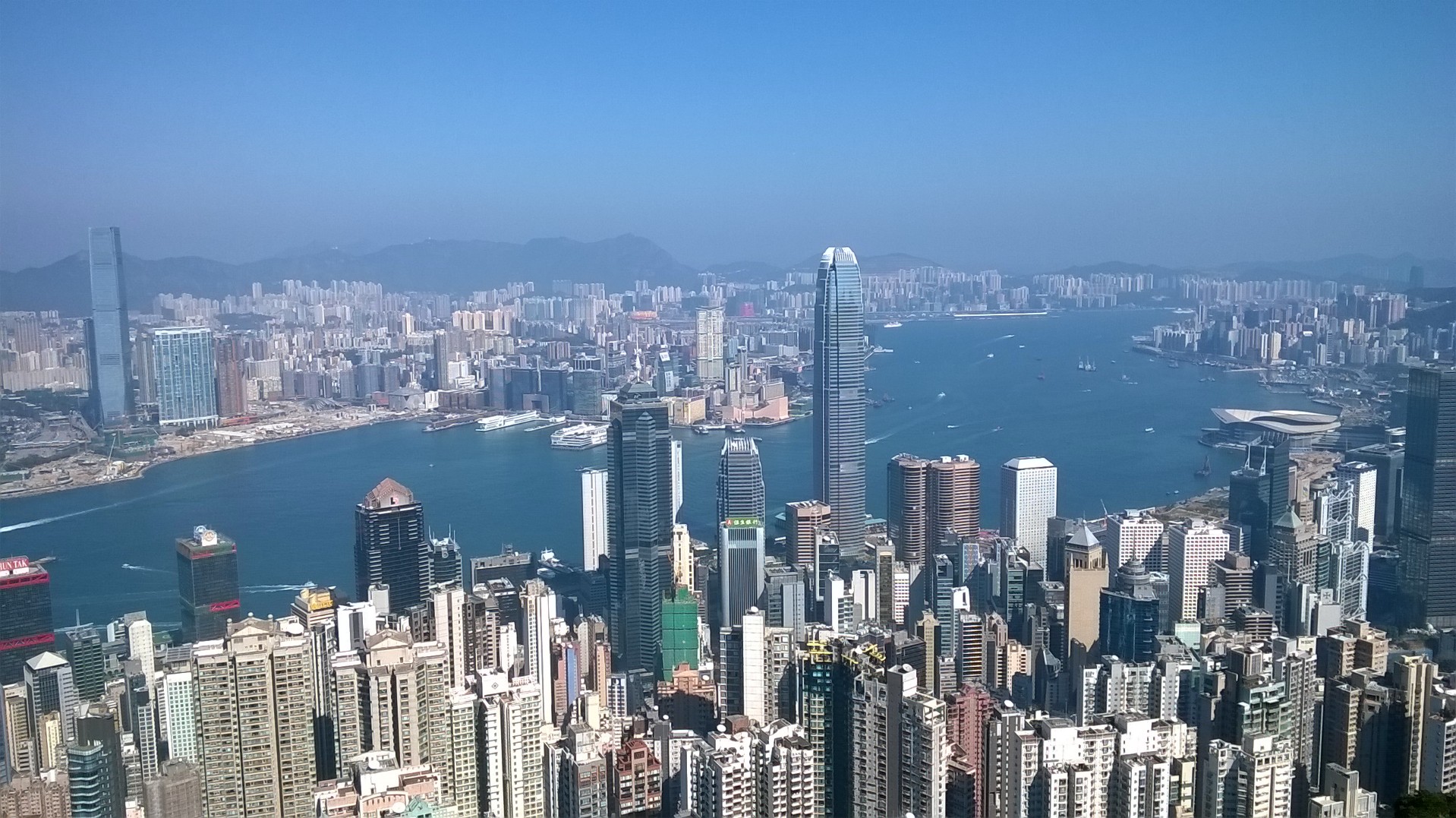
First impressions of HKI are of a larger version of Canary Wharf, all glass and steel and shiny marble walls and pavements. We walk along a high level glass corridor which ends at a HUGE shopping mall, lovely if you like shopping, I don’t! Eventually we decipher the signs to the bus station and catch the No 15 to Victoria Peak, known locally as just The Peak. This is a mountain which overlooks the waterfront of HKI, a ‘must see’ tourist spot. The bus negotiates scary hairpin bends up the mountainside and we see huge skyscrapers in the valley below with their tops on a level with us, halfway up the mountain. We pass some prime real estate in a private gated development, super posh and they have their own bus stop! The only slightly annoying thing about the bus ride is the extreme air conditioning, everyone else has come prepared with coats on – and it’s 27 degrees outside!
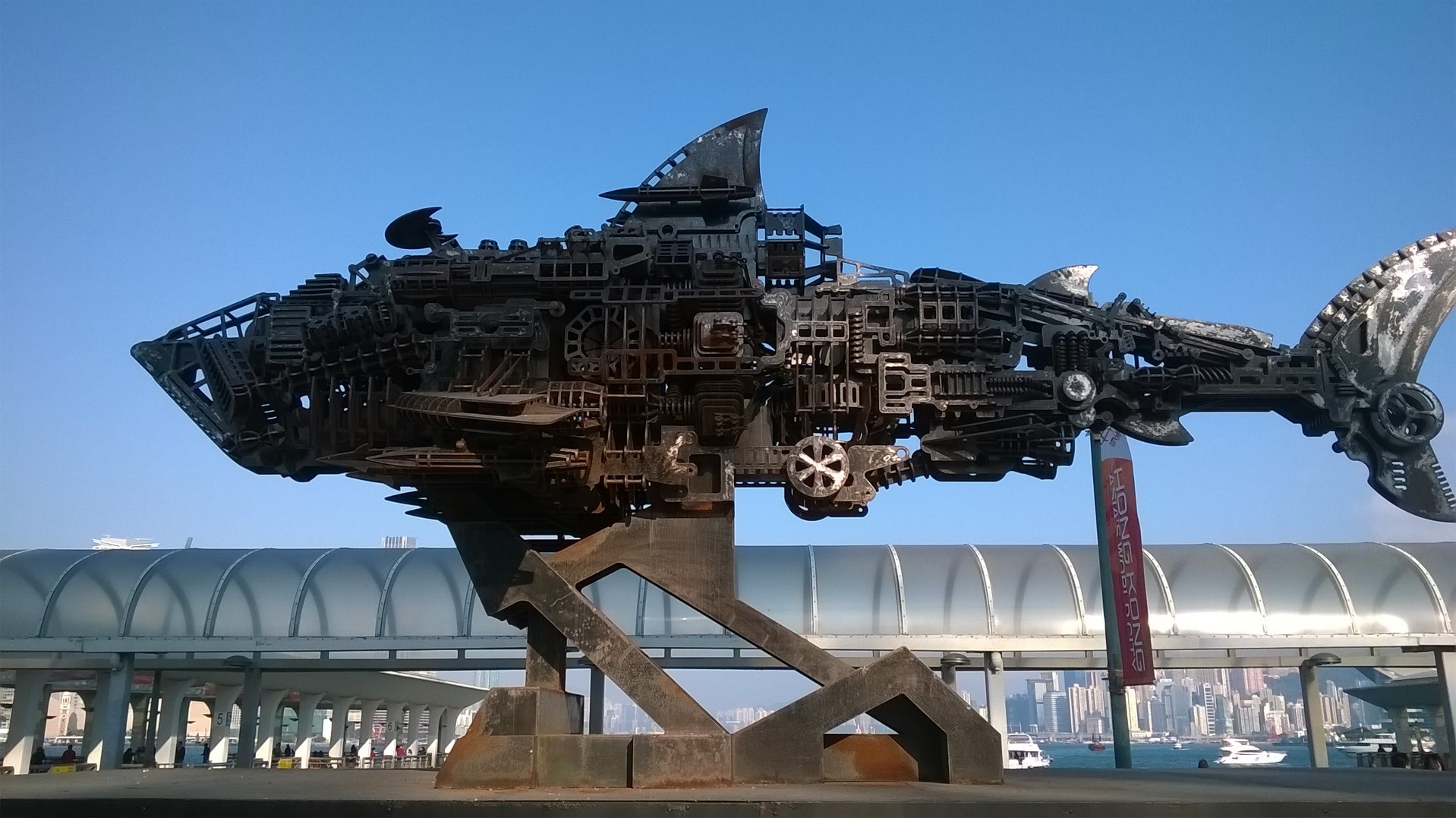
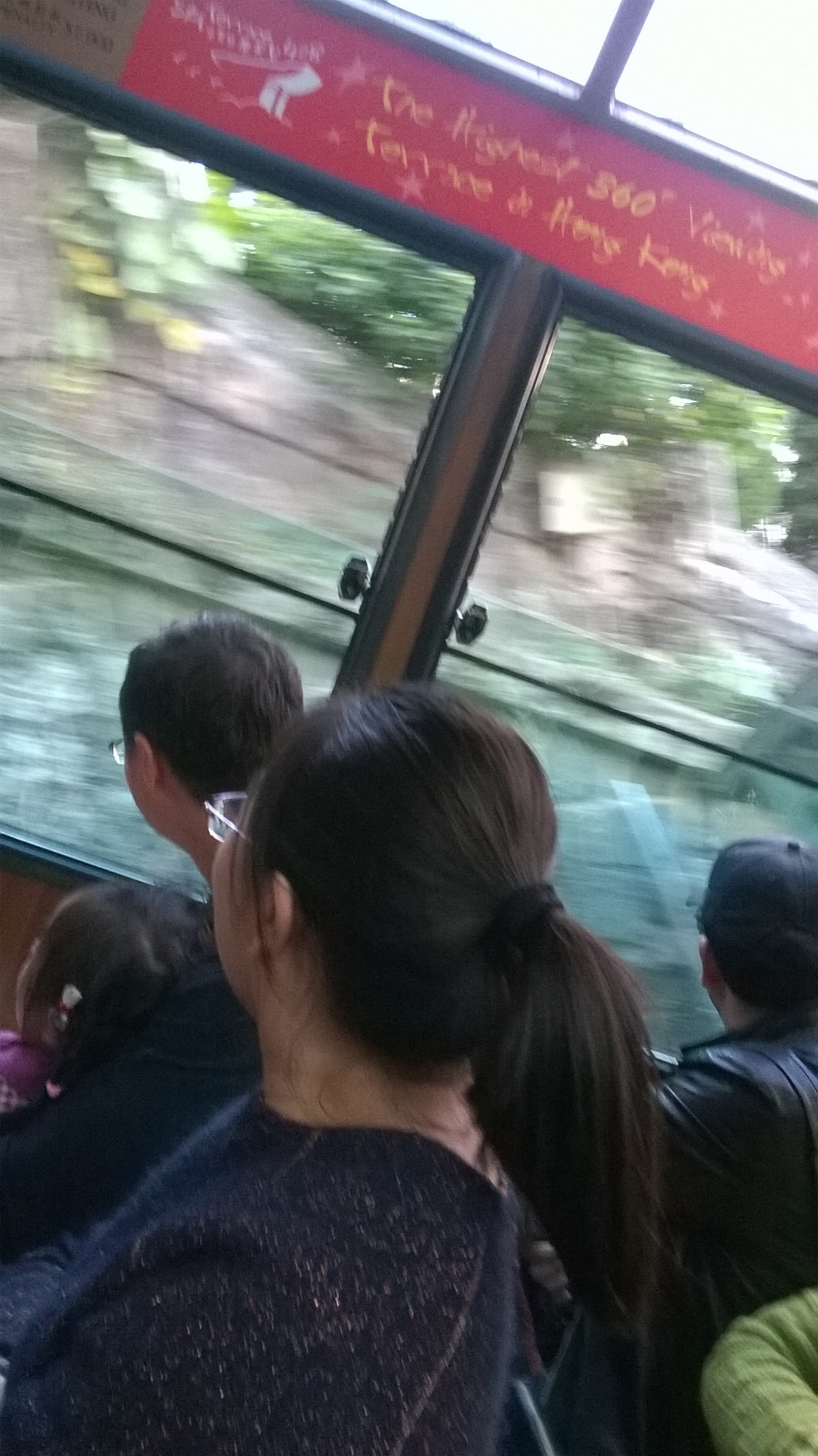
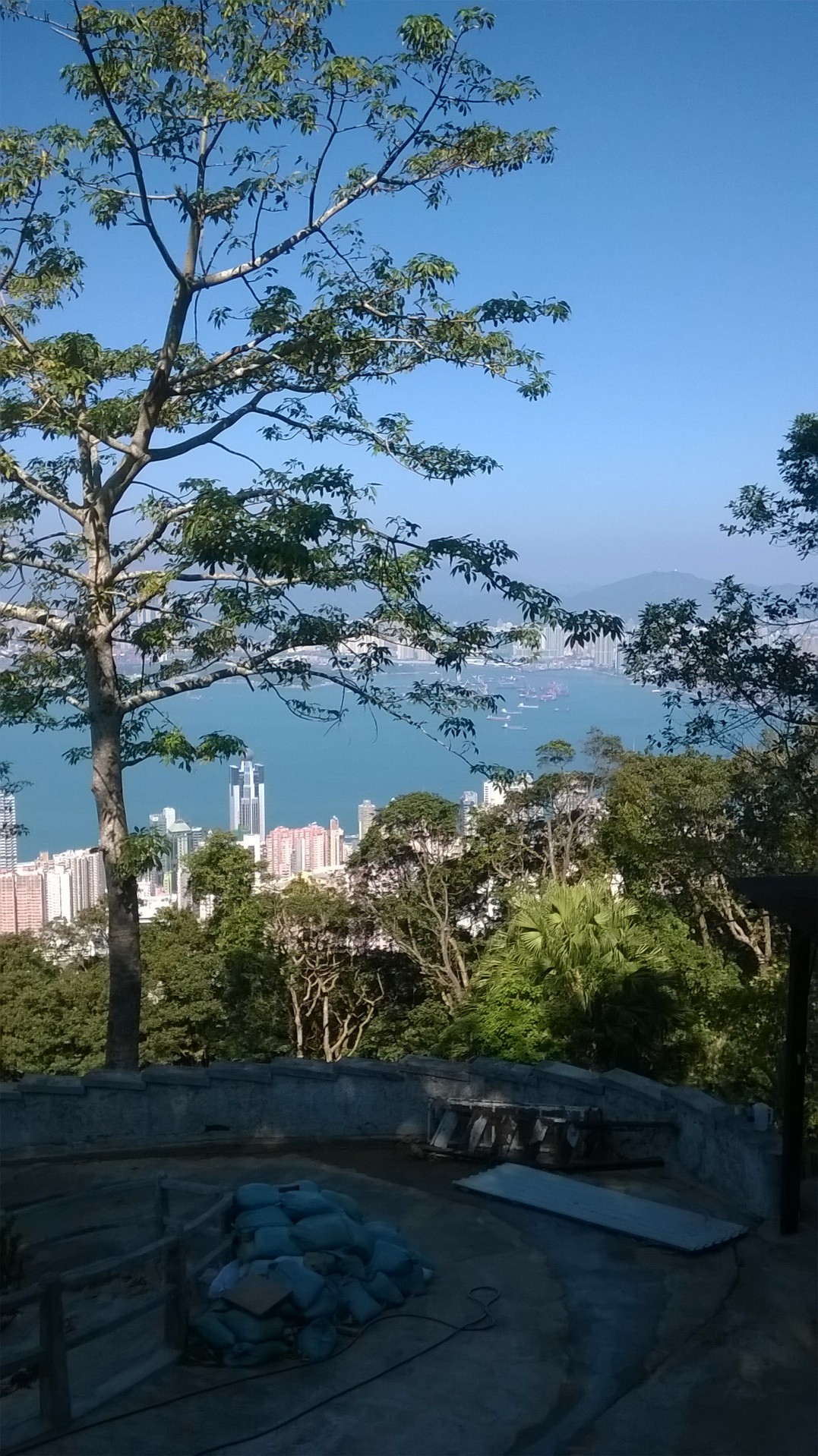
Once at the top, the views are breath taking. There’s a circular walk right round the top so there are brilliant views on all sides. Hong Kong has the highest percentage of people living and working above the 14th floor. It must be strange to spend your day living in the sky. After a leisurely stroll taking lots of photos we visit The Sky Terrace (very crowded) for an expensive light lunch, we then join the queue for another ‘must do’ experience: the cable railway (or tram, as it’s known) which goes straight down the mountainside at a 45 degree angle. Our tickets say ‘The Peak, I ‘heart’ you!’, which is very cute. A scary few minutes, going very fast backwards, pinned to our seats and we find at the bottom that the tram stop is also the bus stop, so we get the No 15 back to the waterfront where we wander round an installation of giant fish constructed from scrap metal, and then find a Starbucks at the base of one of the skyscrapers and chill for a while…..we decide to head back and instead of the ferry, we take the Underground to the stop nearest our hotel, because it’s much quicker. Once we get back to the Metro Park, we feel a little weary after a day in the sun, so we get some snacks, including custard tarts, not something you would associate with Hong Kong, but they come highly recommended as a local delicacy. Night, night, flying to Auckland tomorrow!
3 Best things: 1. Trip on the Star Ferry. 2. Views from Victoria Peak. 3. Tram ride down the Peak.
3 Worst things: 1. Uber cold air con on the bus. 2. Over-priced lunch. 3.That we don’t have longer in Hong Kong..
Middle Skyscraper is 100 storeys high!
Scrap metal fish with glass corridor behind
Crazy Tram ride
Shark and Escalator
Victoria Peak
Day 4, 30th December: Tai Chi and Pop Up McD
Another delicious breakfast which will hopefully keep us going most of the day. The last day of our Hong Kong Stopover, I’m so glad we did this! Our flight to Auckland is at 6pm, so we have almost another full day here. We catch the K5 back to Kowloon Station after breakfast, why, I hear you ask, when our flight isn’t til 6pm? Because we can check our cases in at the station and they will be transferred to the airport and, at the correct time, loaded onto the correct plane! I was at first a little unsure of leaving the cases on a big pile somewhere in the station and trusting that they would be put on the correct flight. Of course, it’s much more sophisticated than that! There’s a check in desk, you present your e-ticket and passport, put your case on the scale, the clerk prints the label and your case gets sent on its way on the conveyor system behind the desks. So, exactly like the airport.
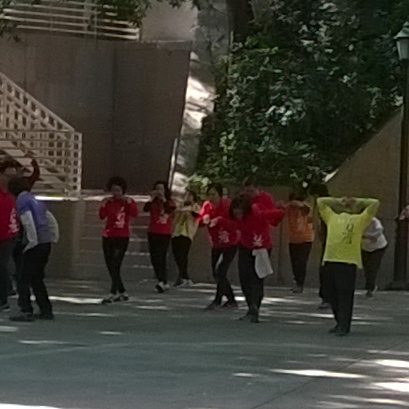
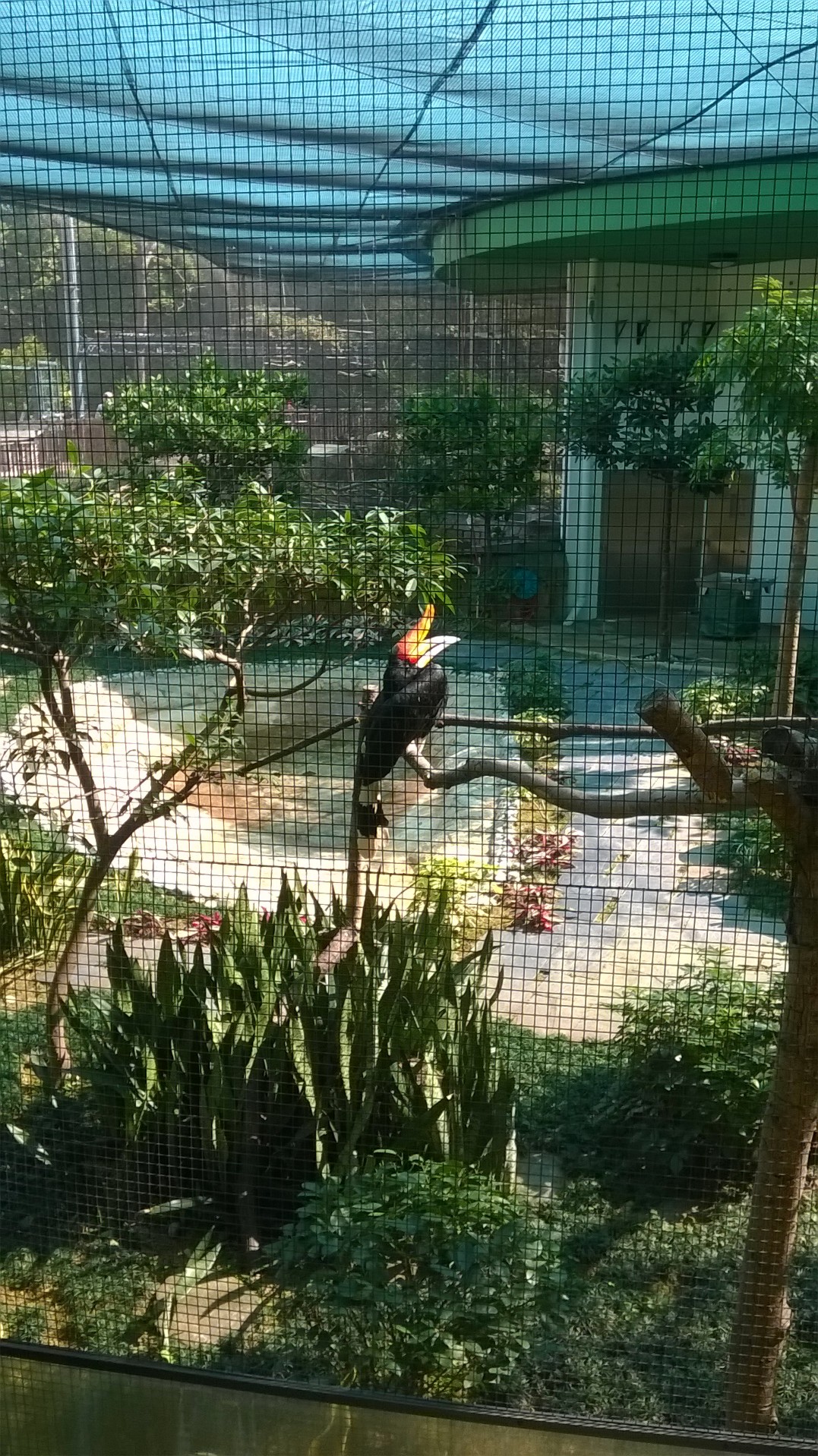
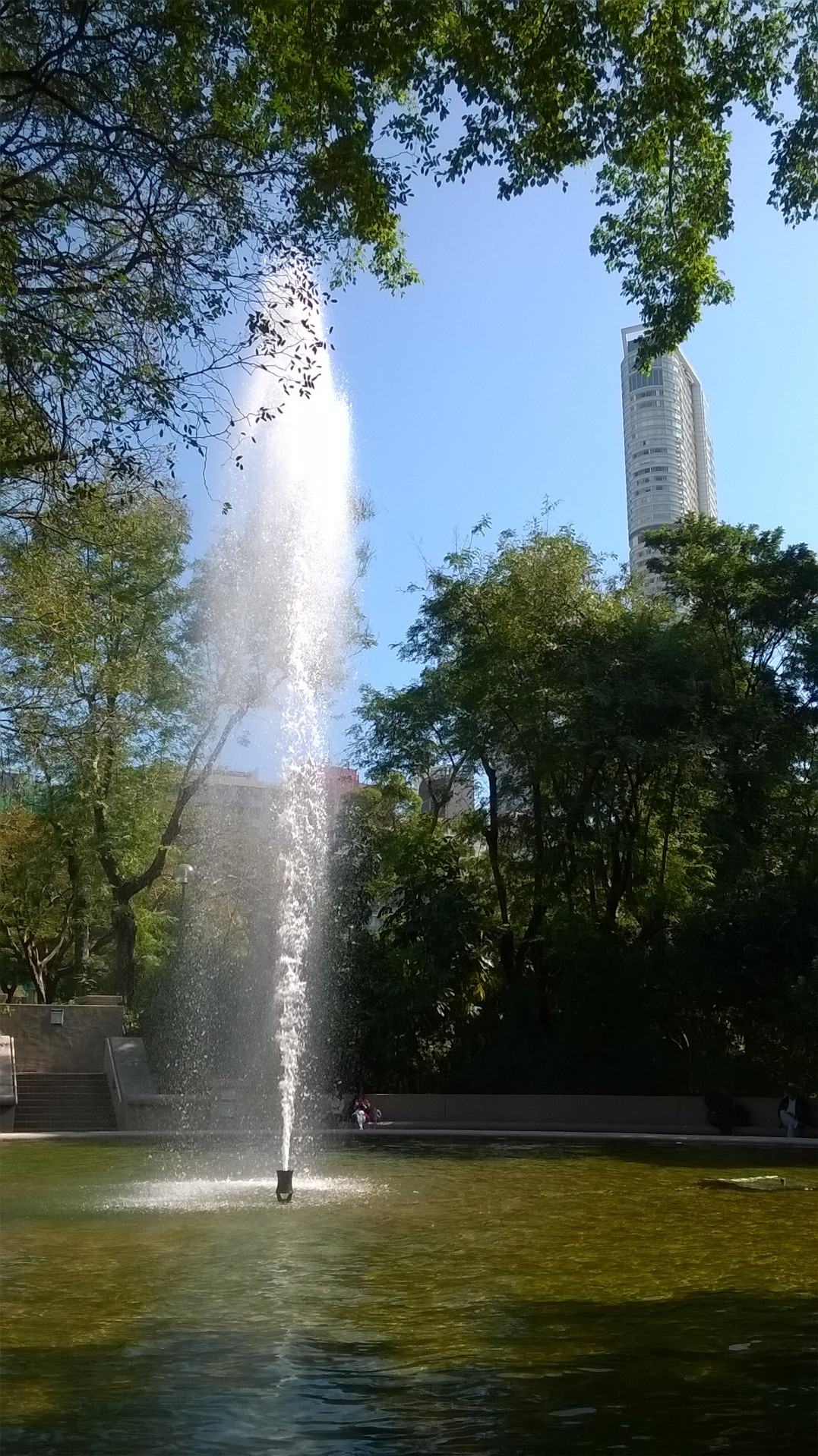
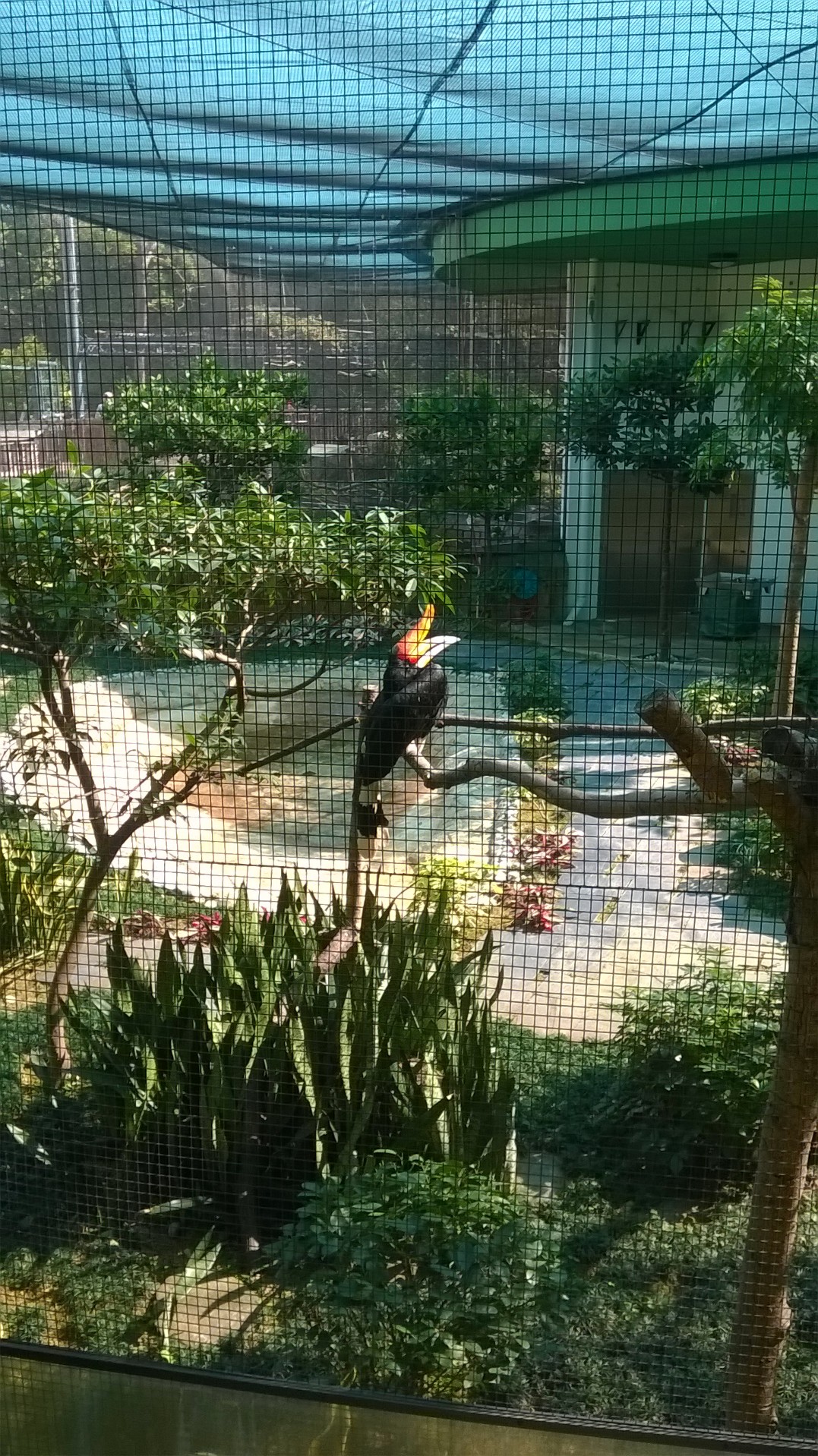
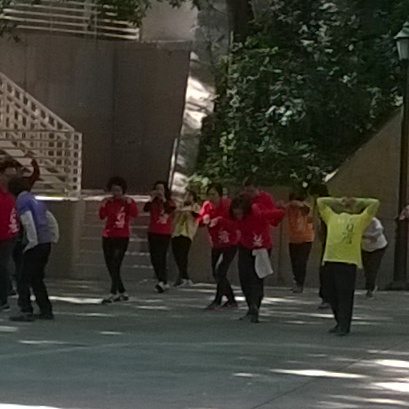
We can get back to downtown Kowloon on foot so we follow a walkway from inside the station through a maze of a permanent construction site until we reach the beautiful Kowloon Park. This is a large green space, surrounded by the ever present huge skyscrapers, with tropical plants, fountains and ornamental lakes, complete with flamingos. There is also an aviary, play parks, exercise areas and an empty swimming pool. I don’t know why it’s empty, the air temp is 26 degrees, perfect for a dip and interestingly, there are a few Westerners sun bathing round the side! We are starting to feel the heat so we sit down at some picnic tables next to a sort of McDonalds hut, which sells only drinks and ice creams. Refreshed with a cone and a drink, we sit and watch the world go by, which in this case, is a troop of boy and girl scouts of all ages, who seem to be doing some sort of treasure hunt. They run past in small groups, suddenly getting very excited at the sight of a flag attached to a lamp post, writing in their notebooks and running on. There seem to be hundreds of them, a constant trail of chattering kids, shouting with joy when they spot the flag. I would love to know what the message is on the flag, but unfortunately it’s meaningless to me! Moving on, we find a group of ladies doing tai chi, they are quite far away and I feel it’s a bit intrusive to get closer for a photo. It’s fascinating to watch so I sneak a pic anyway (from a distance.) Lastly we visit the Cultural Centre, a museum with a fascinating history of the Hong Kong region, including pre- and post-colonisation by the UK. The most interesting part is the photos of the changes in the waterfront area over the last 200 or so years, unrecognisable now.
Time to go back to the station after a lovely day. We walk back via the enclosed walkway, which seems to have got longer and more twisty and turny. We feel rather disorientated because we thought we were on an elevated walkway when suddenly a lorry turns into a gap in the huge fence in front of us, we are actually at ground level. It’s hot, dusty and noisy and we’re glad to reach the air conditioned shopping mall/station complex. We pass an ice rink where families are enjoying a Saturday afternoon skating session. Take the fast train to Hong Kong International Airport where we count our remaining cash and find we have HK$28 left, roughly £2.80. Our last purchase in Hong Kong is a large cappuccino to share (from McDonalds, which seems to have featured a lot in the last 56 hours.) An hour later our flight is called, goodbye Hong Kong, it was great! Hope to see you again one day!
Three Best Things: 1. Checking luggage in early at the station. 2. Exploring Kowloon Park. 3. 56 hours in Hong Kong on HK$1,000 (£100) – they said it couldn’t be done!
Three Worst Things: 1. Hot, noisy, dusty walk through construction site. 2. Bumpy onward flight. 3. That’s it!
My Wandle Guide book says there is a roughly surfaced path but it’s now a ‘proper’ path. What can we spot? Firstly, in a tiny field on our left is a horse, looking a bit lonely. And there’s a huge electricity pylon with wires going across the River to a massive electricity substation. A little later there are some 1930s factory buildings with ‘saw-tooth’ roofs. These are zigzag shaped roofs with glass panels facing north so that factory workers would get enough natural light in winter, but not direct sunlight in summer. On the left, if you look up you can just see a huge stack of those metal barriers used at events such as Royal Weddings, Marathons, etc. If you’ve ever wondered where they come from, now you know – Wimbledon. Towards the end of this part there is a narrow strip of land with allotments on it, can you spot the shed that’s tumbling into the Wandle?
As you might have guessed, there were once several mills on this stretch of river. The most famous was Garrett Copper Mill, hence Garrett Lane, which manufactured brass items and copper utensils. Apparently the mill here was ‘a monster, allegedly Europe’s second largest at one time.’ I’d LOVE to see that! There was also a chamois leather mill and a silk weaving works. There was also Garrett Print Works, but apparently that’s a different Garrett (bit of a coincidence if you ask me.) Modern industries have sprung up here: Car showrooms, light industry, DIY retailers, etc.
Next we come to Trewint Street which is in Borough of Wandsworth, the Garrett linseed oil mills stood here. The Wandle Guide Book says: ‘There is a proposal to open a new section of riverside path northwards from Trewint Street Bridge – this would save a long and unattractive diversion along the main road.’ It can’t come too soon! On the Bridge there’s a sign about the proposals, which points out that a sign saying ‘No’ isn’t very welcoming! Now we have to turn left to reach Garratt Lane; this is the second worst part of the Trail, I think. Follow this busy road under the railway bridge, then left into Penwith Road, which has a pub called The Wandle on the corner to remind us where we are. Here we cross the River and turn left into Strathville Road. Straight ahead we can see the River from Duntshill Road; several Wandle history books show this view at different times. This is of course an area bursting with mills in the 19th and early 20th centuries: parchment making, cloth printing, and ‘flock’ making; this is the manufacture of old rags and textiles into paper. There’s a road called Flock Mill Place nearby.
Now, instead of following the Trail along this road to King George’s Park, we can turn right into a brand new development of flats and then right again into Riverdale Drive, and we’re back on the River! Here we can see a former mill building, now tastefully converted into apartments, a lovely weeping willow and a vibrant green bridge! The path leads to the Park which is yet another lovely big green space in the heart of south London. With the Wandle on our right, it’s a pleasant walk up to Kimber Road, passing a Fitness Centre and a skate park. Crossing into the upper part of King George’s Park, after a few hundred yards we can turn right onto a brick footpath over the River, which was the site of Henckell’s Iron Mill. The Wandle Guide says: ‘There were water powered mechanical hammers and giant shears which could cut through iron bars two inches thick.’ We are back in Garrett Lane, but not for long, turning left into Mapleton Road, back to the left bank and heading back to the Park. This now becomes a recreational area: tennis courts, children’s playground, lake with a fountain. Exiting the park into Buckhold Road, we turn left with the huge Southside (formerly Arndale) Shopping Centre on the right, and Wandsworth High Street (A3) ahead, the VERY WORST part of the Trail. The noise and fumes of four lanes of traffic are such a contrast to our leisurely riverside stroll, but now we cross the road and turn right into Wandsworth Plain with its terrace of houses dated 1723, one of which has a sundial. The time is only correct when it’s GMT, not British Summer Time! We can’t get anywhere near the River at this point, but under construction on the site of Young’s ‘Ram’ Brewery is a retail/housing/leisure area, these always look more attractive in the advertising poster, don’t they?
At the end of Wandsworth Plain we cross Armoury Way (confusingly the A3 again) and turn into The Causeway, where we can walk beside the now wide, fast flowing Wandle and a deep noisy weir. Very different from the gently tinkling sound of the infant Wandle. As well as the highly successful Young’s Brewery (this has been a beer brewing site since 1576) there was once a flour mill and a ‘Brazil’ mill, nothing to do with nuts but for grinding Brazil wood to make a powder for dyeing cloth. Following the path until it crosses Bell Lane Creek we reach The Spit with its Blue pointy triangle sculpture. We can now see the Wandle mouth, a few more yards and we’ve made it! Yes, we’ve followed this beautiful River through four London Boroughs, some lovely parks, peaceful nature reserves and fascinating heritage sites. I’ve enjoyed researching, walking and writing about it, hope you’ve enjoyed reading this Blog.
The River Companion and Wandle Trail Guide says: ‘the new Wandle Trail stitches together a ribbon of parks and nature reserves’ and there certainly does seem to be much more green space than boring ‘road walking’. Hats off to the Wandle Group and the Wandle Industrial Museum who have made the River accessible, beautiful and interesting. This is especially so in Morden Hall Park. There is riverbank planting to ‘improve habitat and biodiversity’, there’s me thinking the plants just grew naturally! Last time I visited was late summer and some beds of Autumn flowers had replaced the rose garden beds. There is a wetlands area to explore and the National Trust Snuff Mill where we can see the two watermills which used to power the snuff mill and some millstones. Imagine having one of those round your neck! An exhibition explains how and why people used to take snuff, too weird, but seems it was big business in the 1800’s. A wealthy tobacco and snuff manufacturer, Gilliat Hatfeild (yes I know, strange first name and incorrectly-spelt surname) brought the mills and Morden Hall in 1870. As the Squire of Morden he acquired the surrounding land which he made into a deer park and we have Gilliat Junior (his son) to thank for leaving the House and Park to the National Trust. Incidentally, Gilliat Junior was unmarried and preferred to live in the modest Morden Cottage, just next to the Snuff Mill, rather than at the much grander Hall.
And now, weary of beauty and history and all things watery, it’s time to stop for lunch at the welcoming National Trust Cafe. (The NT are getting a lot of mentions, perhaps they should give me a free lunch….or at least a cup of tea!) Suitably refreshed, we are ready to follow the Trail over the pretty stone bridges, past the wetlands and onto the surprisingly unobtrusive tramline. It’s not dangerous to cross as the trams are VERY loud as they approach. Look up and we see the Trinitarian Bible Society Building, which really does look out of place. Next is Deen City Farm, well worth a visit if you have children; it’s free to visit but please make a donation. As we approach, can you spot the fake black and white cow? This next stretch of river has a manmade sluice coming off it called the Pickle Ditch, which sounds really cute but probably derives from ‘pike and eel’. This once served Merton Abbey.
Next we arrive at Merton Abbey Mills, ‘London’s alternative market.’ Worth a visit to the craft shops and cafe and the still working Wheelhouse, on the site of the Merton Abbey print works. In 1724 there was a calico printing works which was taken over by Liberty and Co. of Regents Street in 1904, only ceasing production in 1972. Incredible to think that the original mills on this site were in the precinct of a church the size of Westminster Abbey, hence, Abbey Mills. The site has been nominated as a UNESCO World Heritage Site. Crossing Merantum Way you can see bits of the original priory wall. The arch is not original, it’s been rebuilt, but it looks nice and fits in with the wall. Not so nice are the flats which occupy the site of William Morris’s Merton Abbey Print Works.
Now a walk through Priory Retail Park where several people are fishing, which gives a strangely rural look next to the huge Sainsbury/M & S building. Crossing Merton High Street we come to the second Wandle Park. Several streams to follow here over pretty bridges, and in the children’s play park, a random large white wooden jug. If we choose to follow the main river here, along Wandle Bank, Merton Flour Mill still exists, converted into flats. The next bit is called Wandle Meadow Nature Park but when I was there it had a look of Death Valley (without the buffalo skulls), being parched and scrubby looking. It used to be a sewage works. Through an arch under the railway and we follow a wide path, avoiding cyclists, where there are several of these numbered markers, I should really find out what these mean! Now we are at Plough Lane, Wimbledon, sounds a long way from Croydon doesn’t it? Crossing the road at the pelican crossing, we begin the final stretch. There are approximately 3 miles to the Thames!











 3rd January: North to South
![IMG_1598[2982].JPG](https://claresimons1.blog/wp-content/uploads/2018/04/img_15982982.jpg?w=2016)
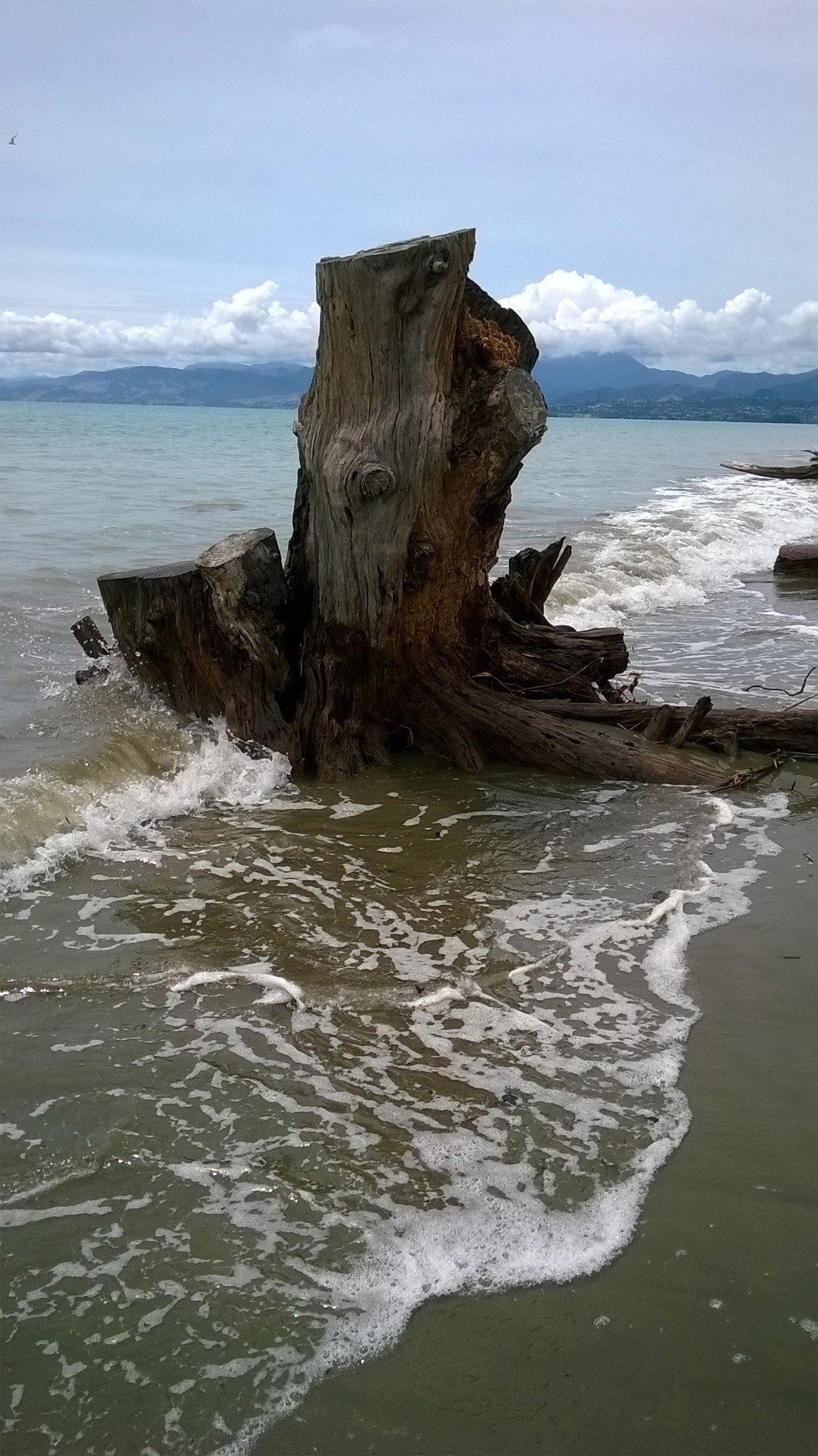 Trees growing in the sea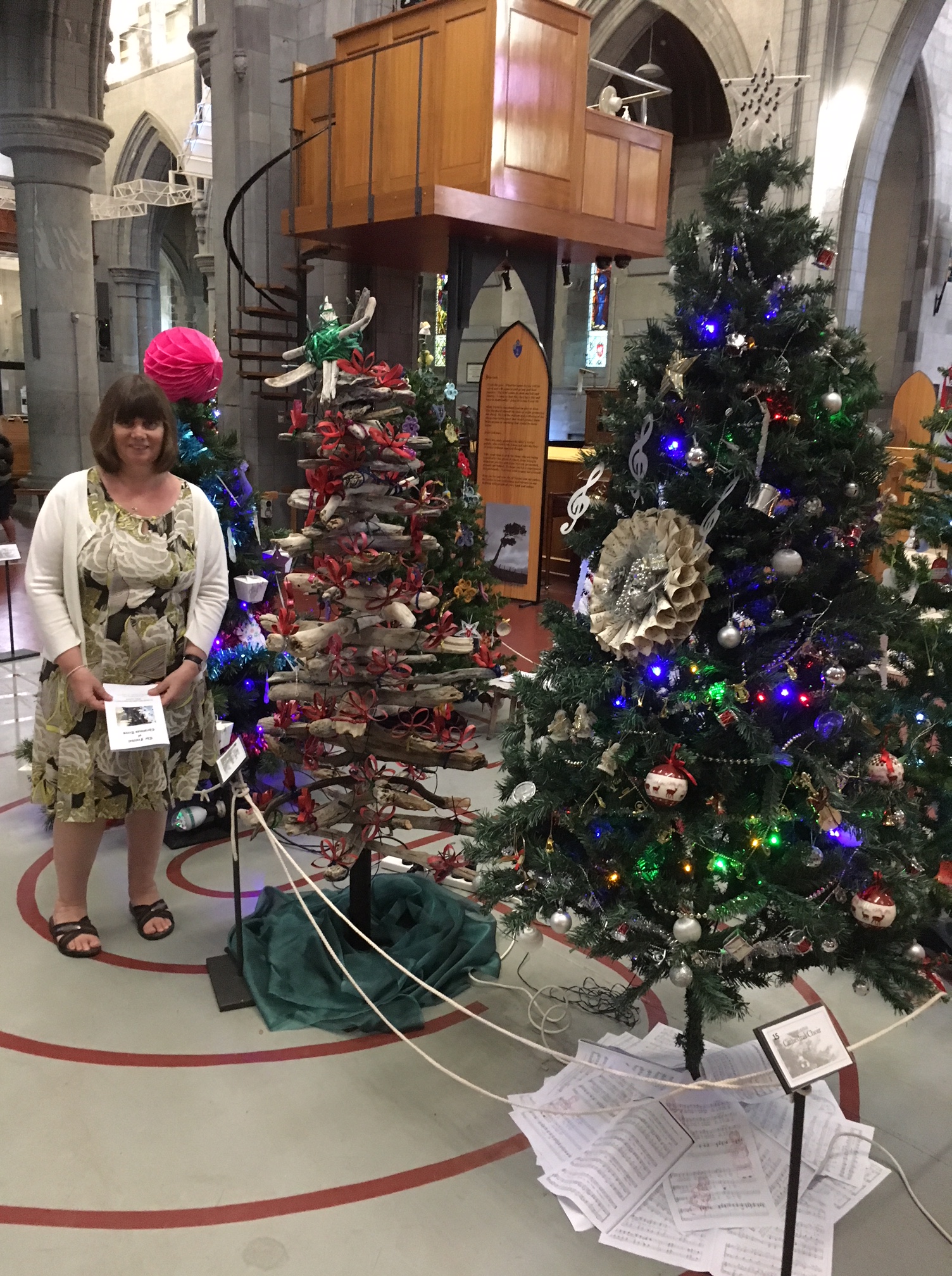
 NZ…… and HK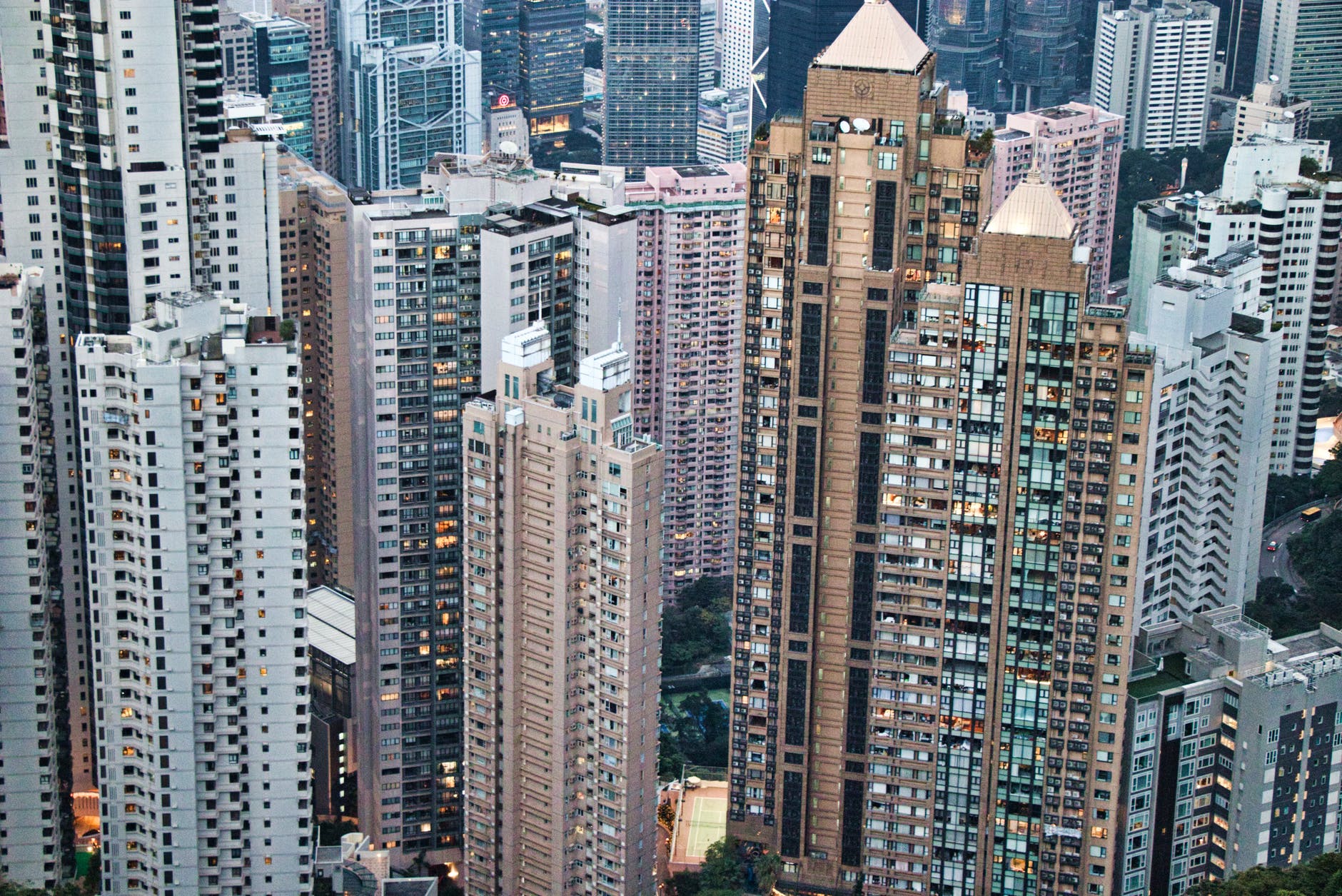




 claresimons1