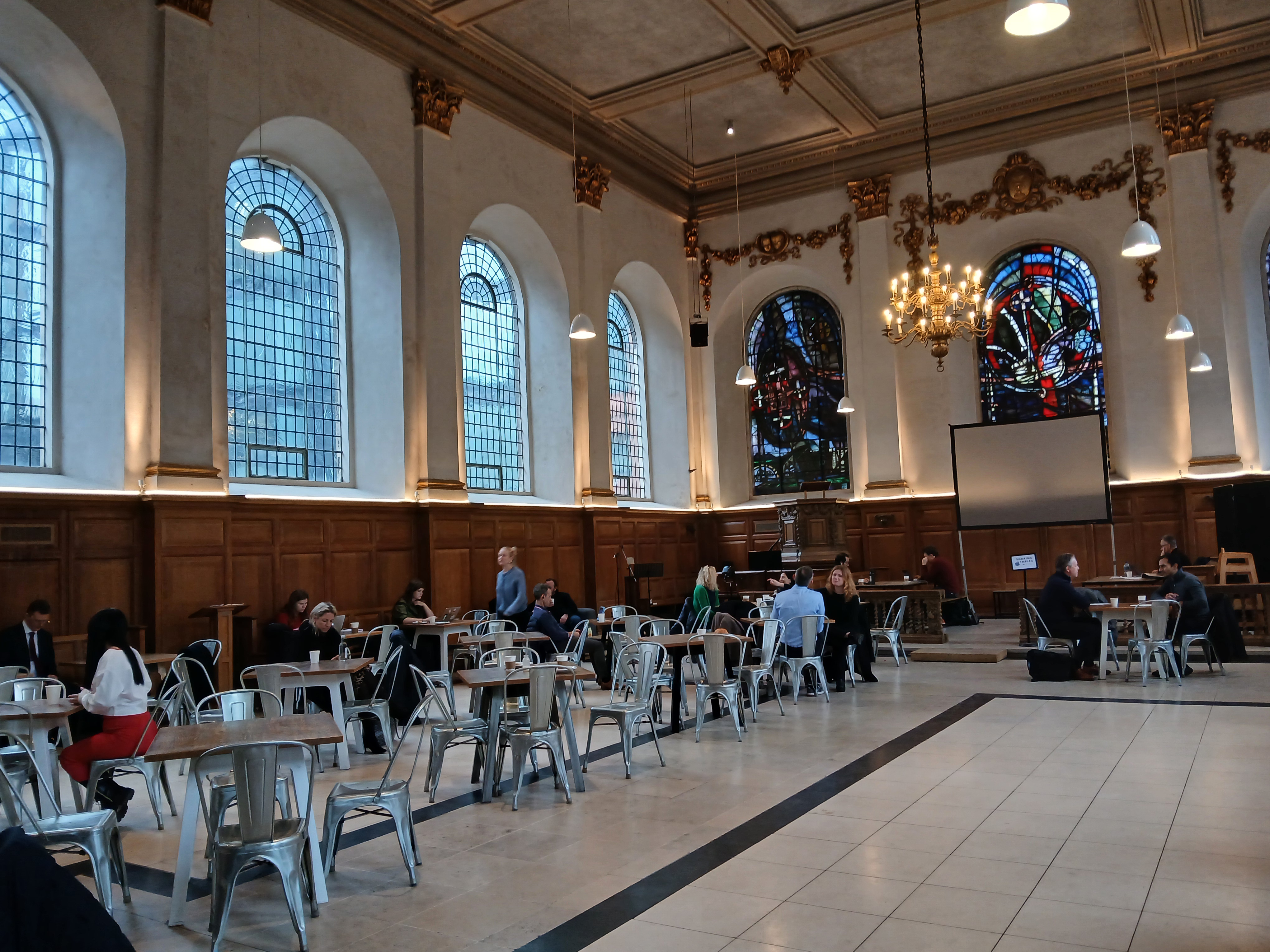
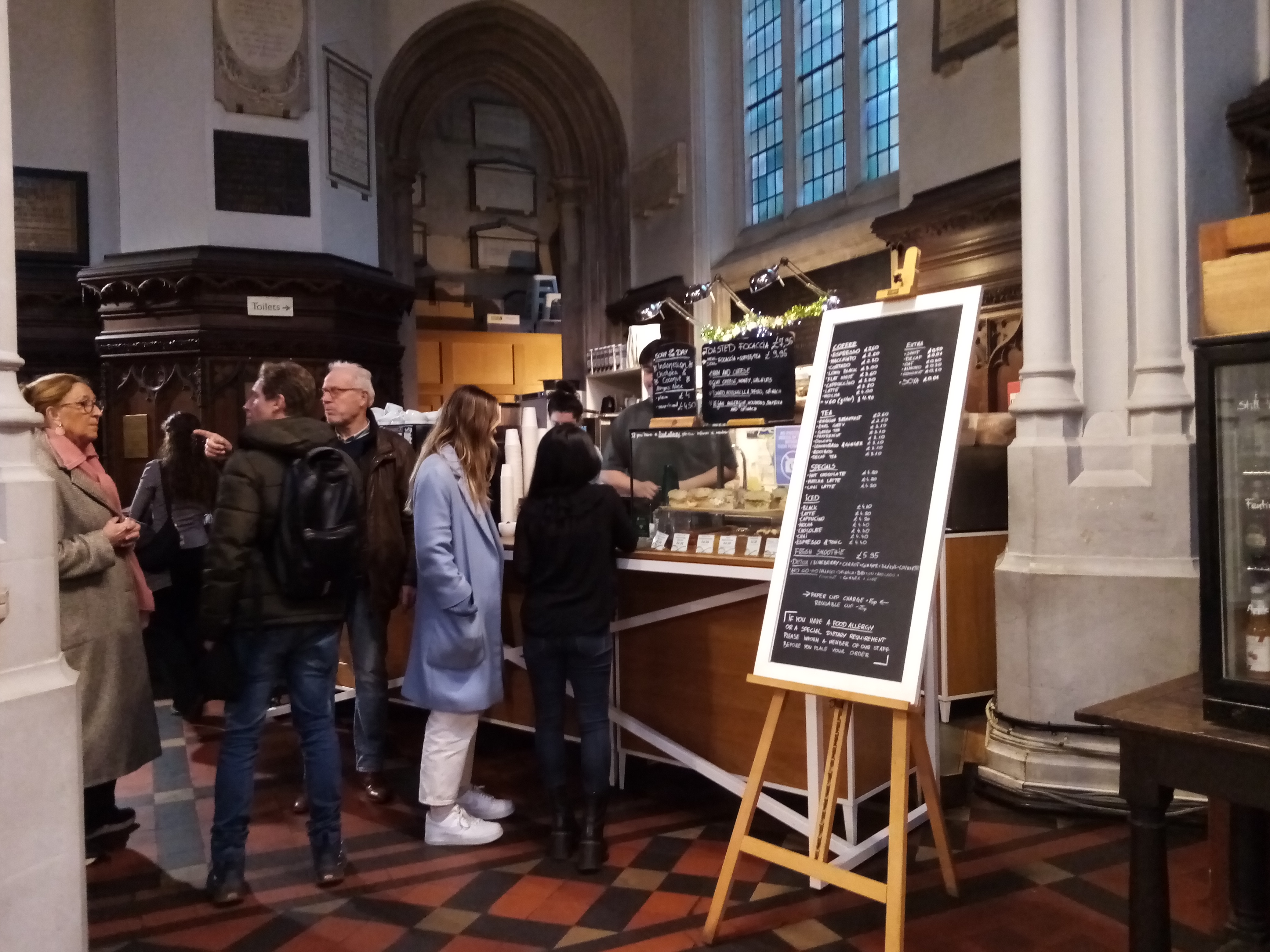
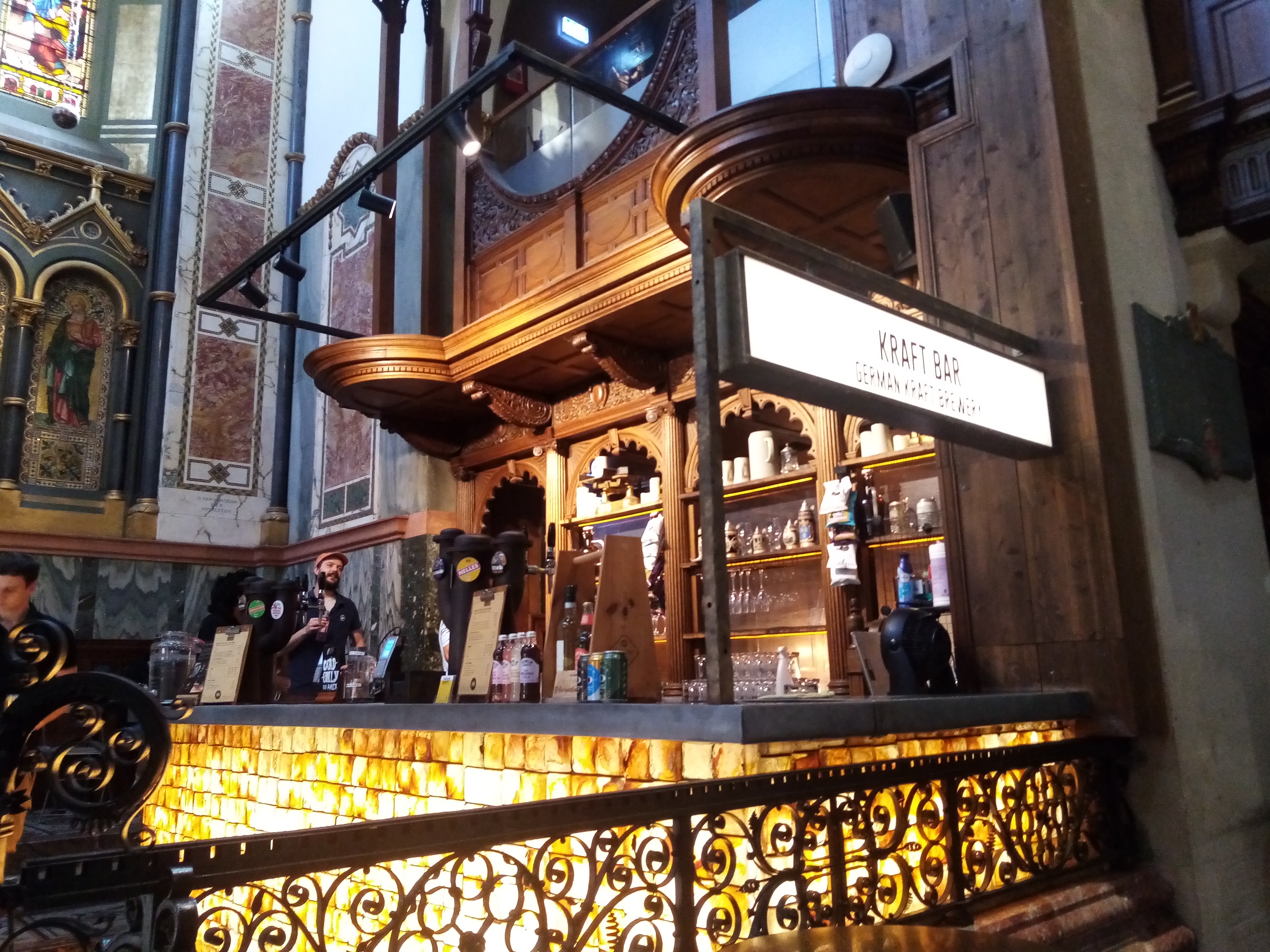
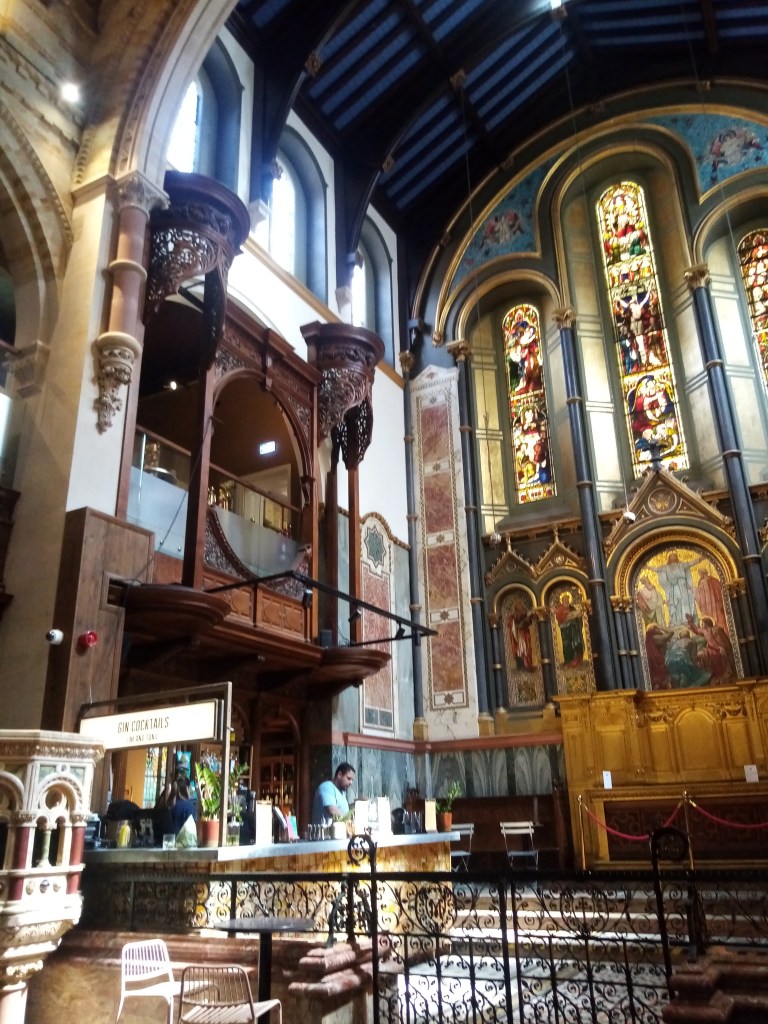
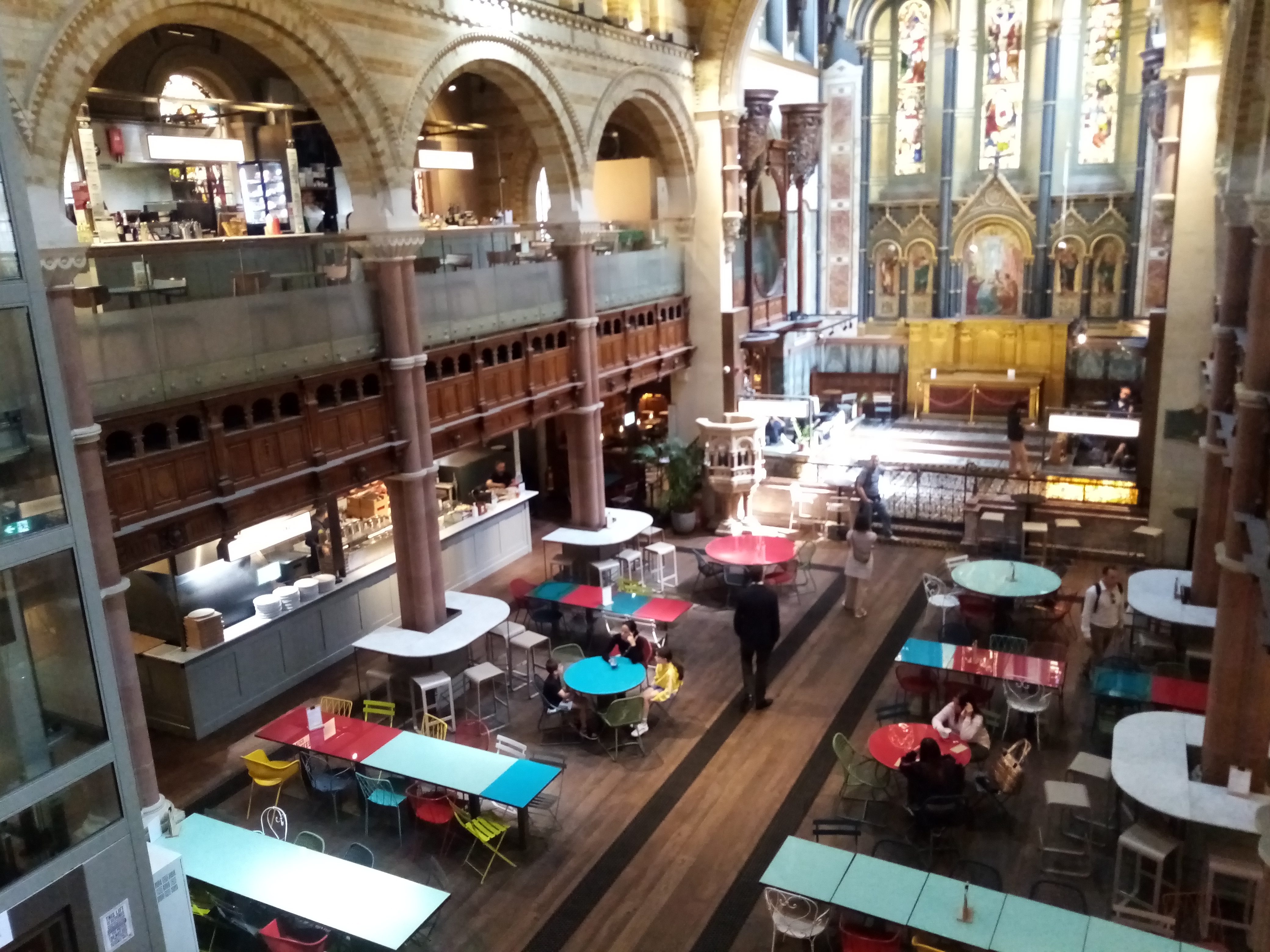
Walking round the Square Mile of the City of London, there seem to be hundreds of coffee shops and cafes, all serving the thousands of City workers and tourists. There are the usual chains and also lots of independent businesses, including these four located in churches. Just the place to pop into for a warming brew when it’s cold outside. I decided to go on a ‘coffee crawl’ of these churches, including breakfast and lunch and a couple of loo stops!
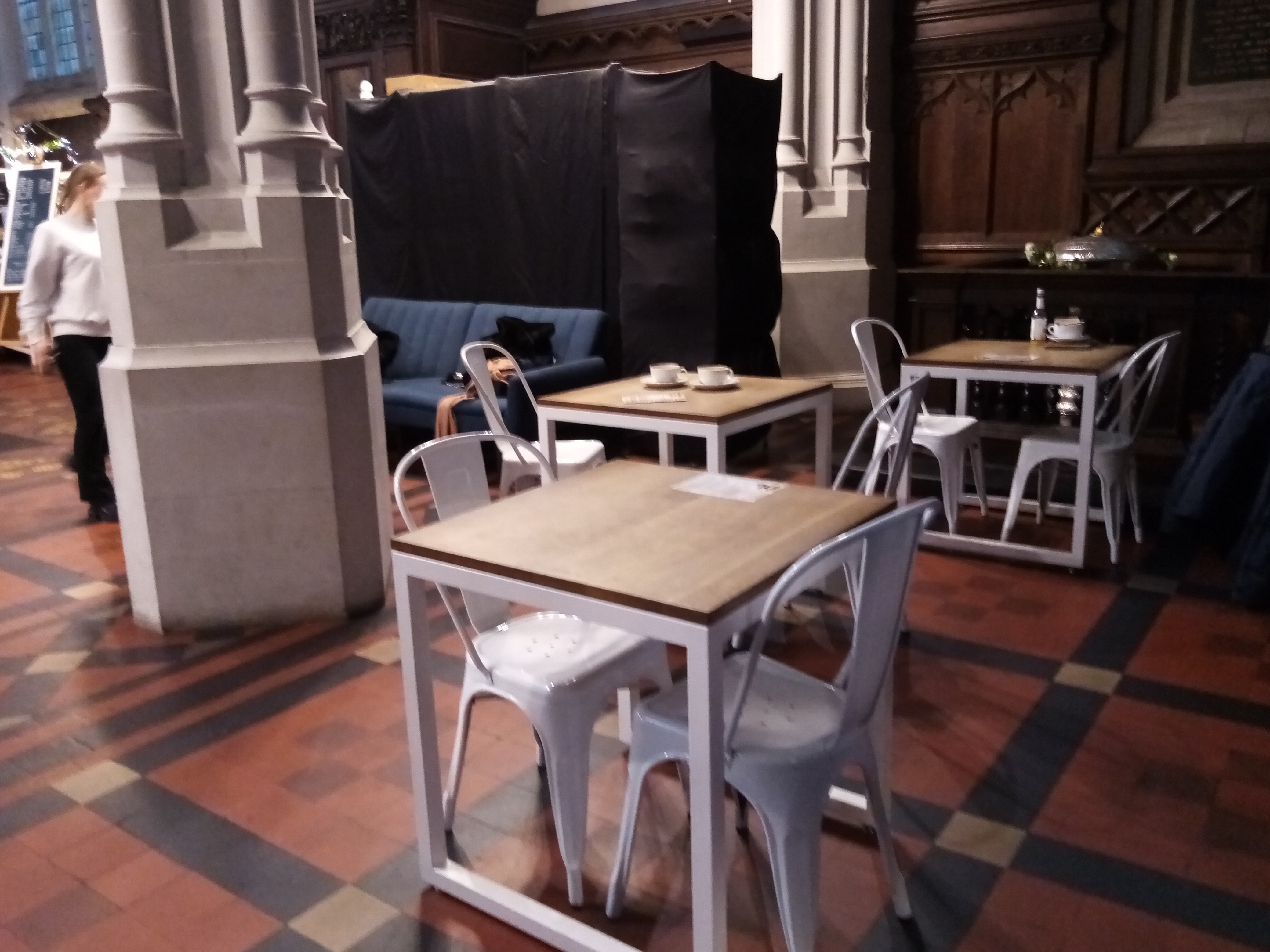
St Nicholas Cole Abbey – ‘The Wren Coffee’
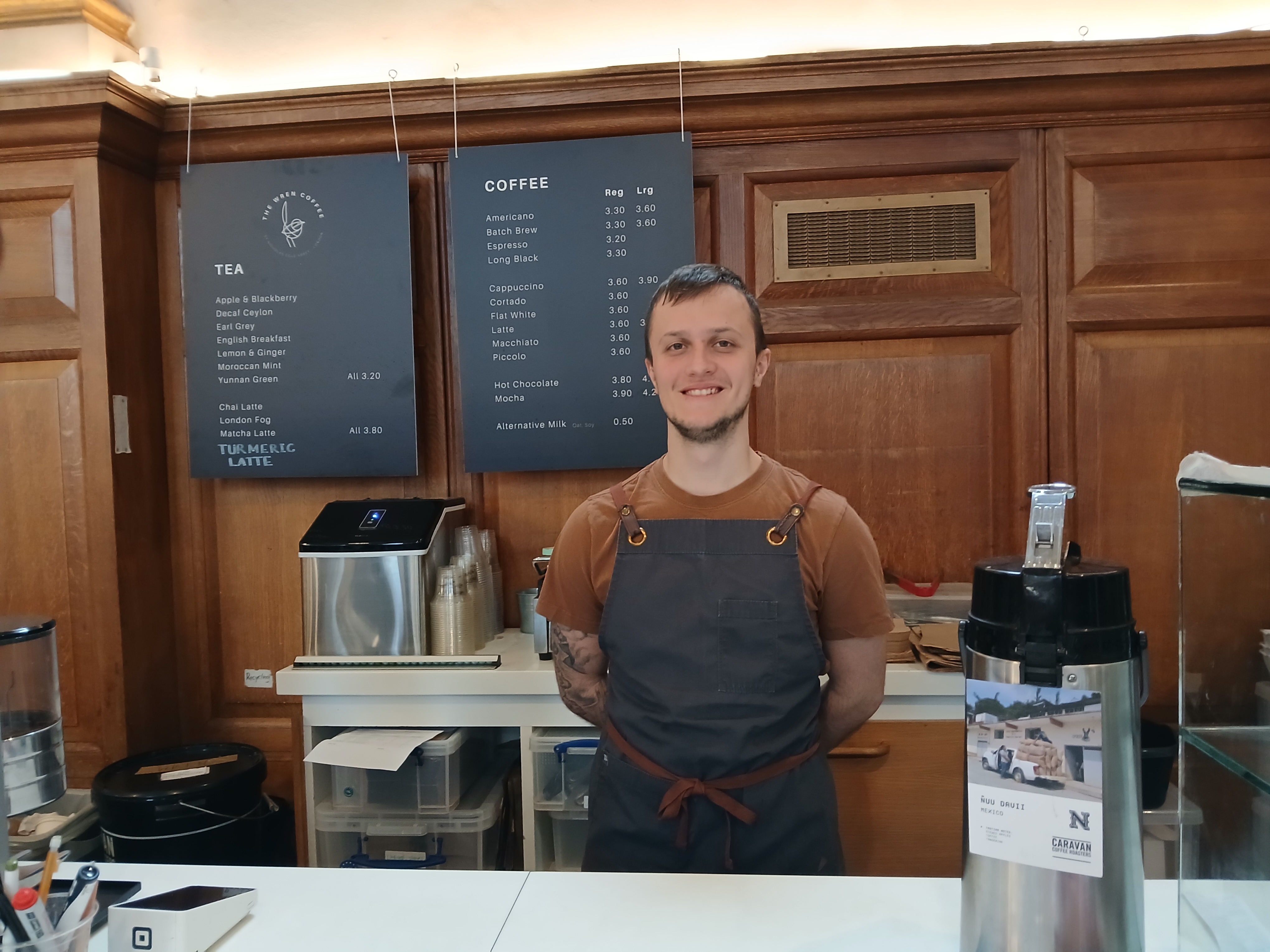
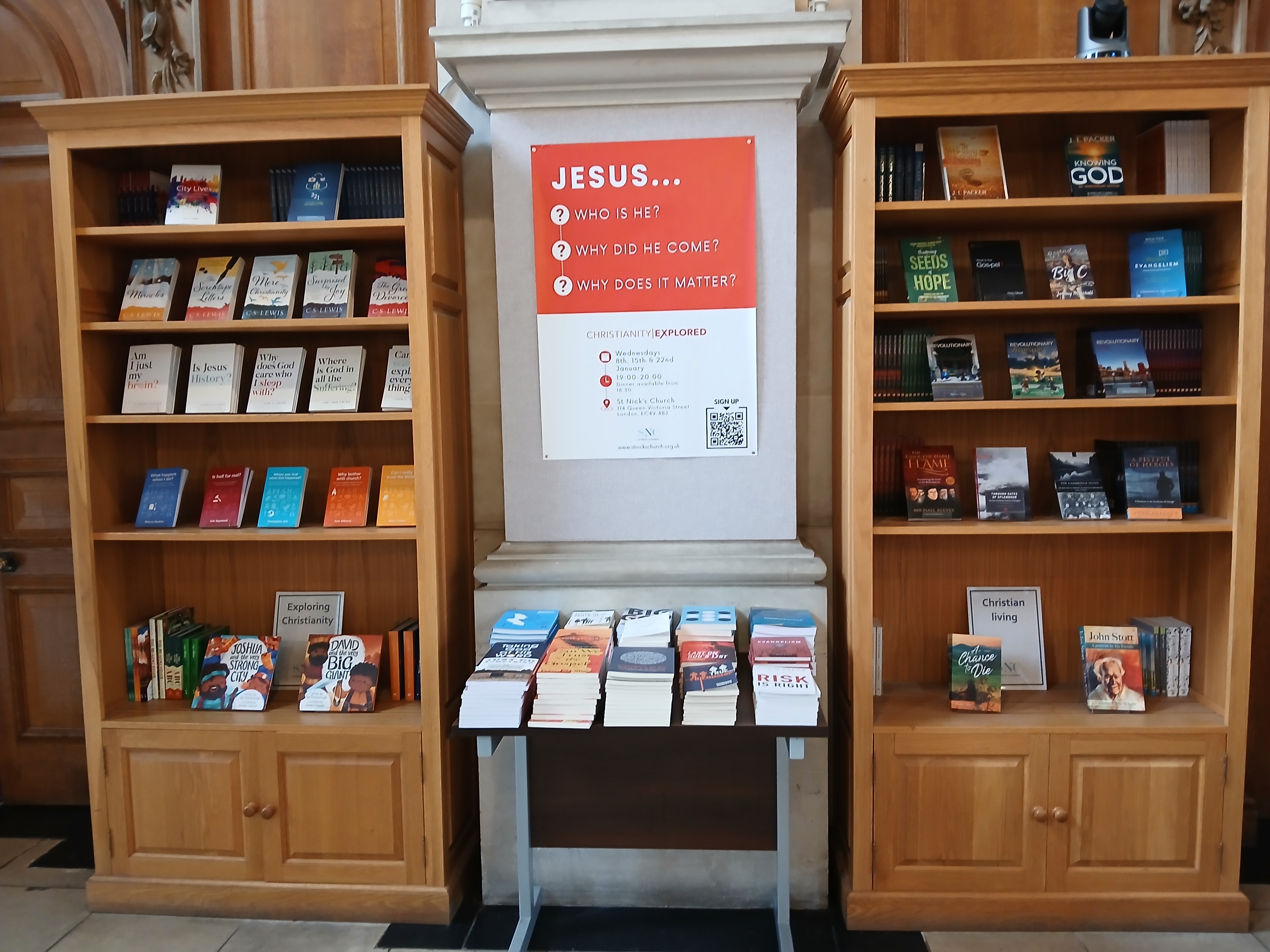
The Wren is named after the church’s architect Sir Christopher Wren. The whole church building is the café from Monday to Friday, 7am to 4.30 pm. It closes from 12.45 to 2pm on Thursdays for lunchtime Bible talks: St Nick’s Talks. The Barista who served me my breakfast croissant and flat white coffee was Josiah, who told me that the café is a convenient venue for the business meetings of the Financial Times, whose offices are nearby. He said that many customers are well known to the church staff and they come in for the Bible Talks as well as the coffee. When I visited there were lots of customers poring over their laptops whilst sipping their flat whites and lattes. The café becomes a church on Sunday mornings with a ‘regular’ church service plus the added bonus of excellent Fairtrade coffee and cakes!
Sources: Leaflet in the church and Josiah
Breakfast
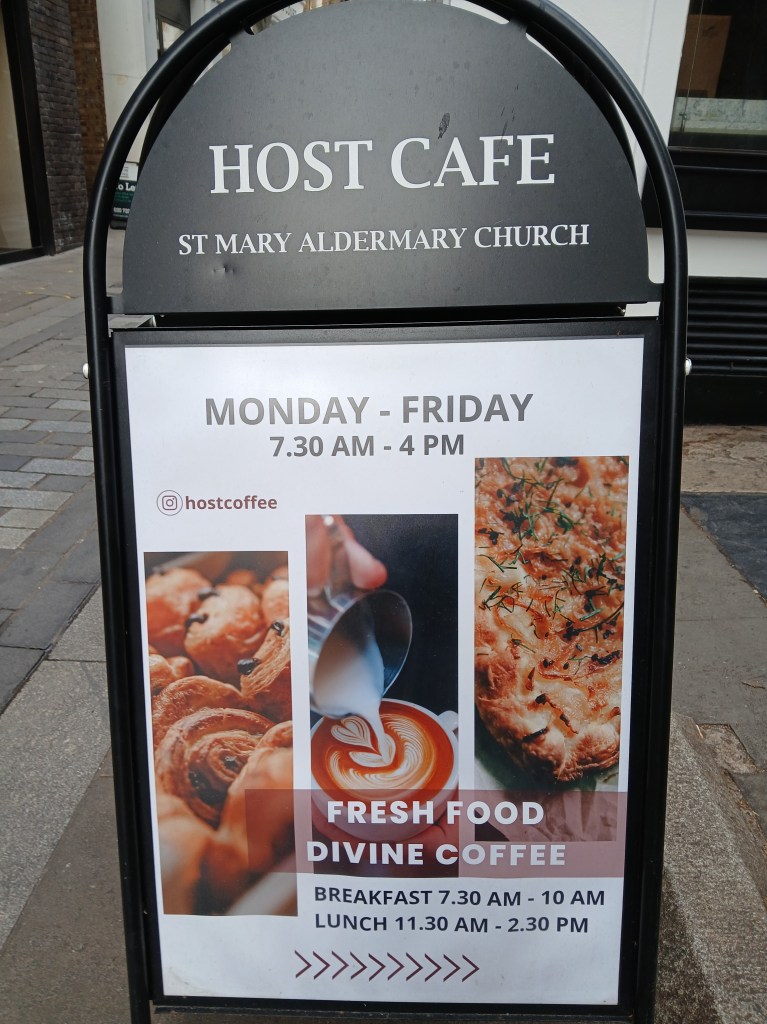
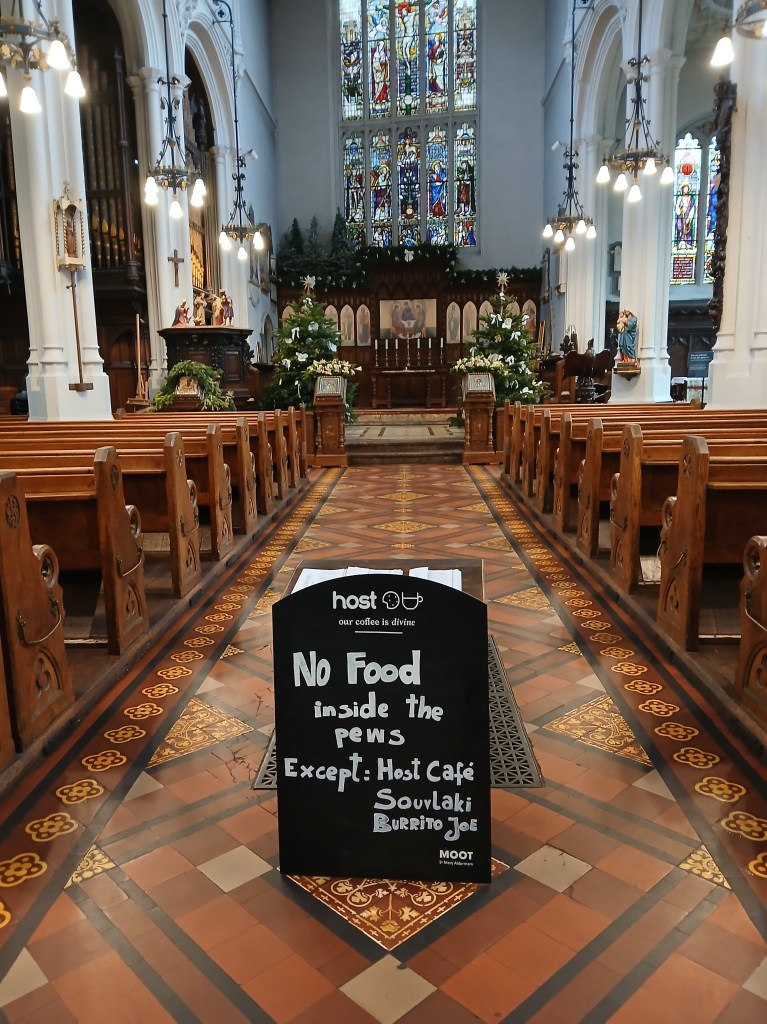
St Mary Aldermary – The Host
The strange name of this church means ‘older Mary’, implying that this church is possibly the oldest dedicated to Mary in the City. The church website says ‘Host Café is seeking to restore the traditionally solitary space of our church building to its true vocation as a welcoming hub for the local community.’ All the drinks at The Host are ethically sourced and the baked goods are supplied by local bakers. Customers can choose to sit in a pew to drink their tea or coffee, or you can sit at a table if you’re having a meal. Food purchased from the Street Food stall outside the church can also be eaten inside the church. Each table has a charger for your laptop, and for a small fee, you can hire tables for a working lunch. I didn’t stop for a hot beverage this time, but I have done so previously, and the staff are very friendly!
Source: Church website
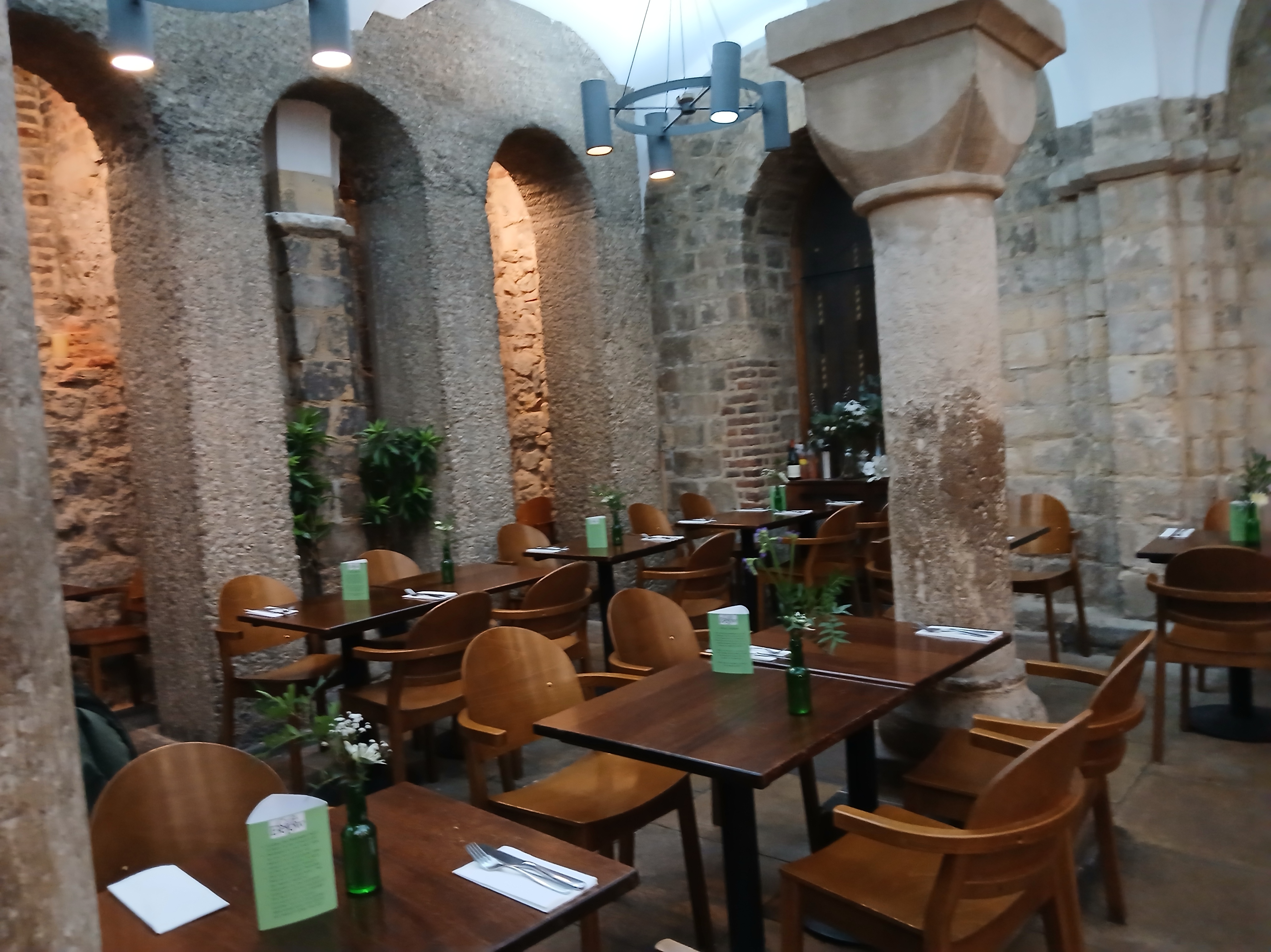
St Mary-le-Bow – The Café Below
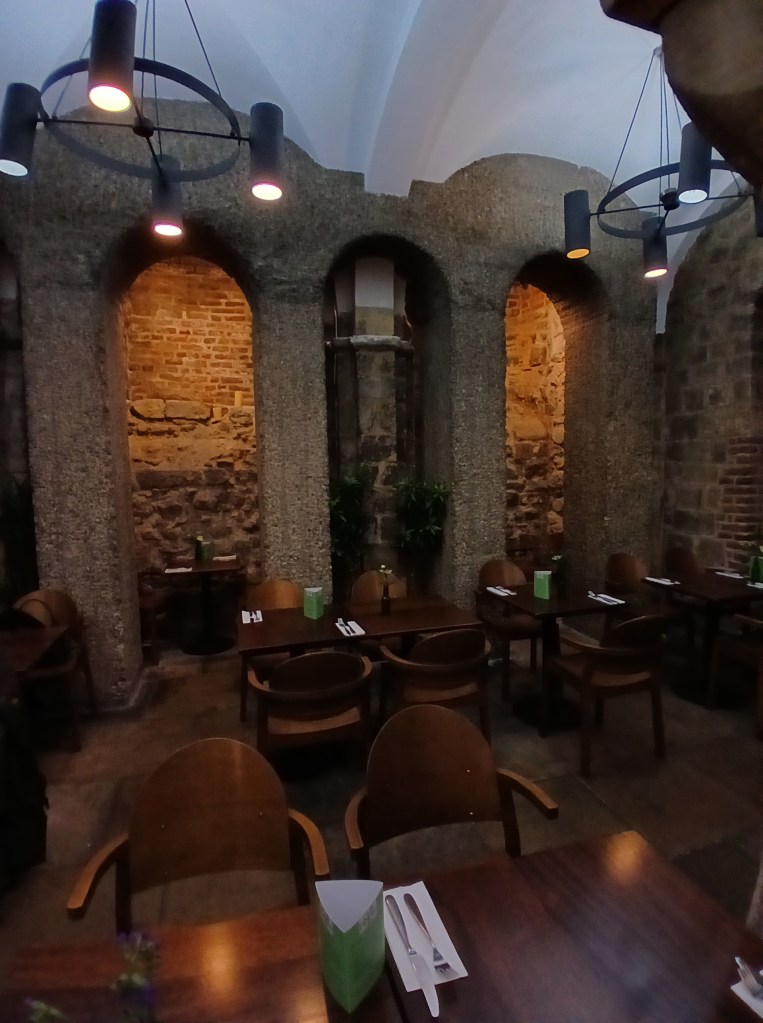
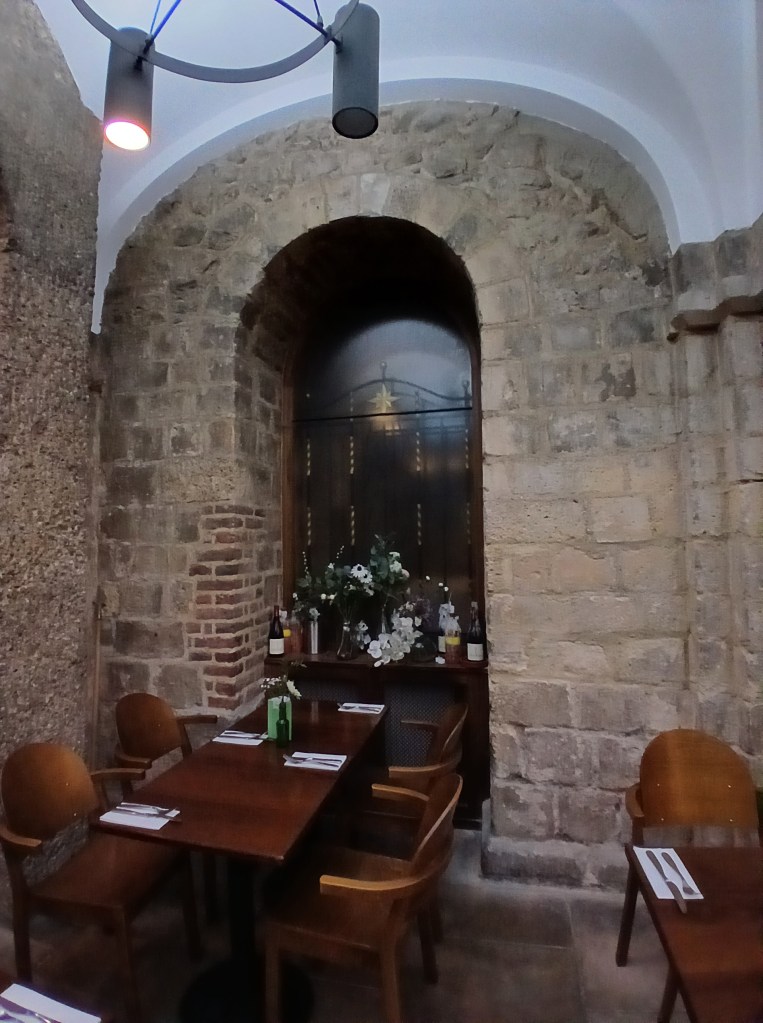
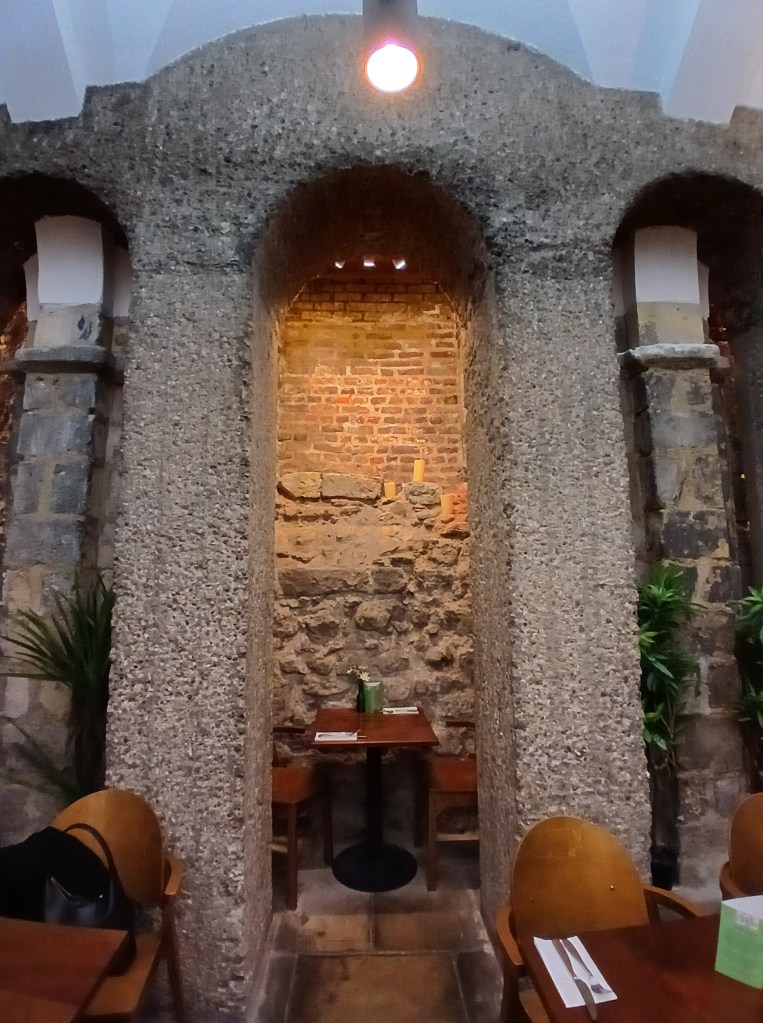
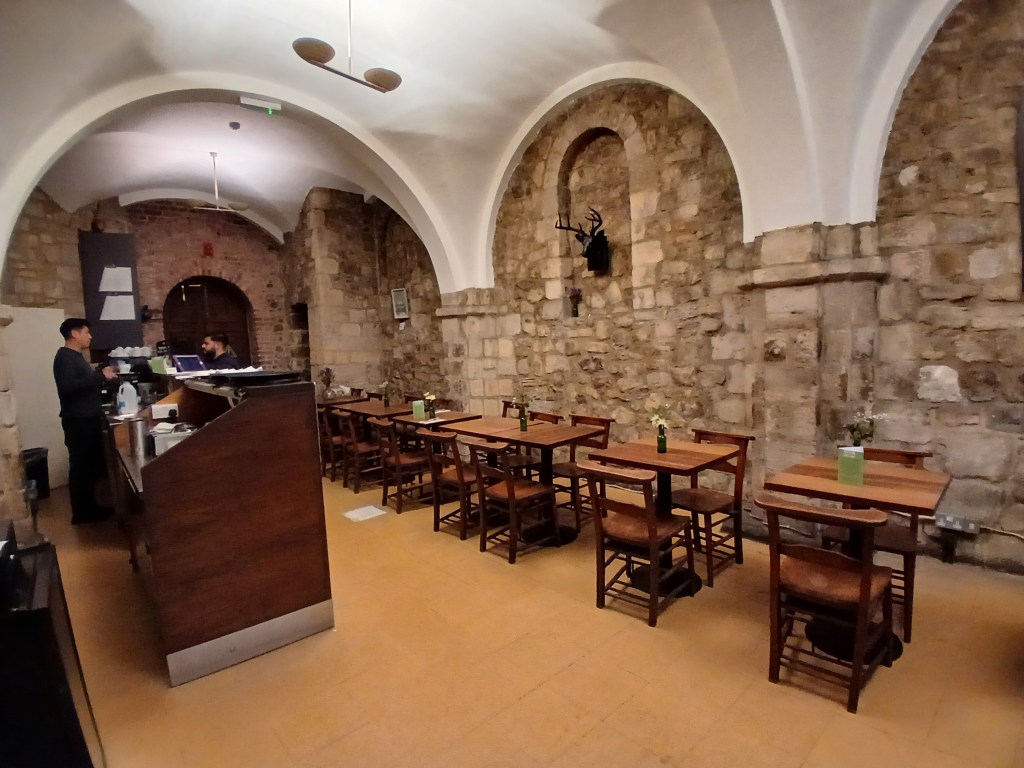
The café at St Mary-le-Bow is located in the crypt as its name suggests. This is more of a restaurant than a café but the staff were happy to serve me a coffee (it wasn’t quite lunch time.) It was nice to be shown to a table and asked for my order. The café has nothing to do with the church above, they just rent the premises, offering slightly posher breakfasts, lunches and also licensed to serve alcohol. The crypt has been beautifully refurbished and decorated to provide an atmospheric dining experience, including private booths among the pillars. On each table is a card with information about the church, particularly the crypt which was formally a burial chamber. The graves were removed when the church was rebuilt after the Second World War, which I’m sure the diners are relieved to read!
St Mary Woolnoth – Newton’s Coffee
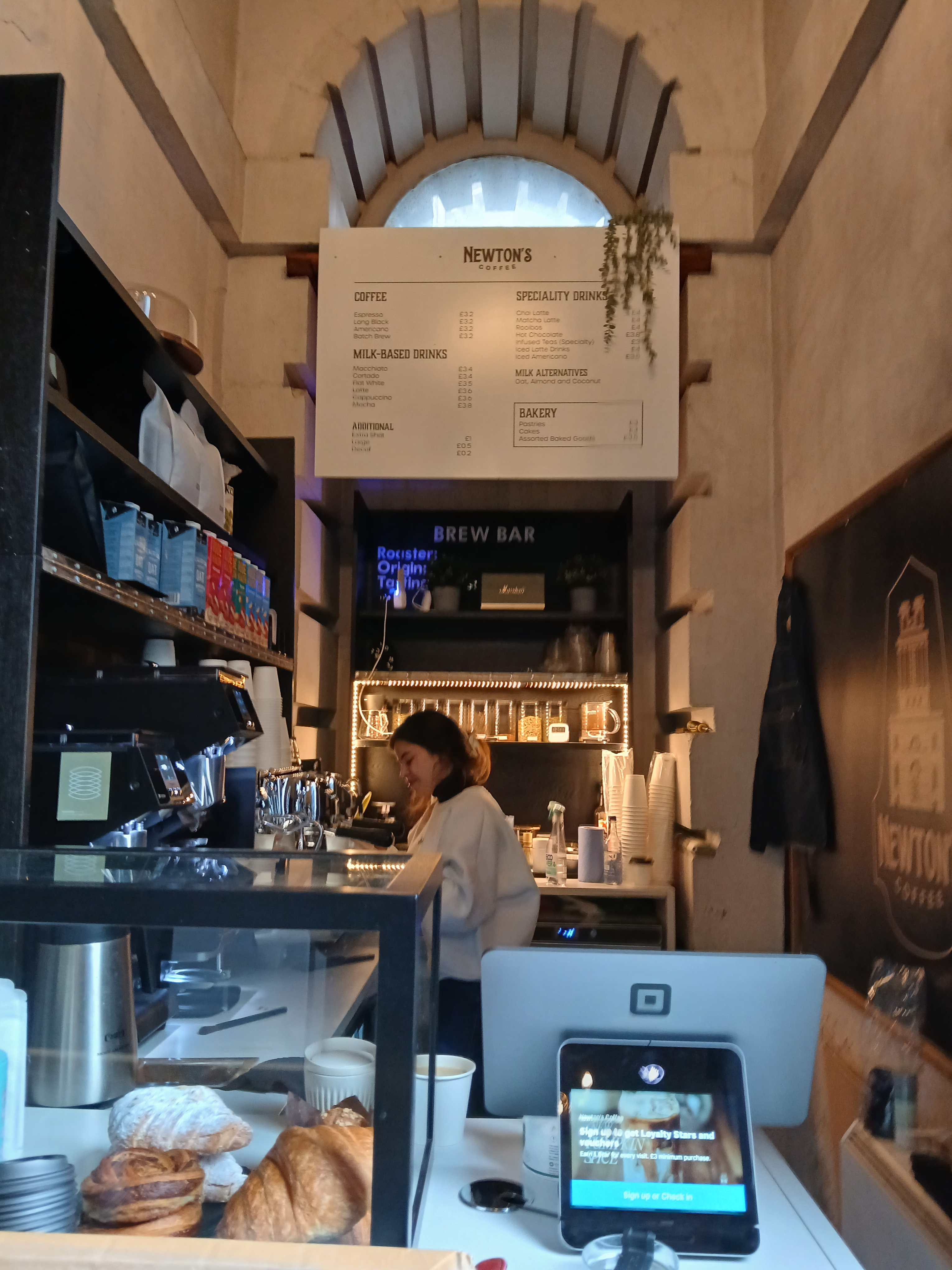
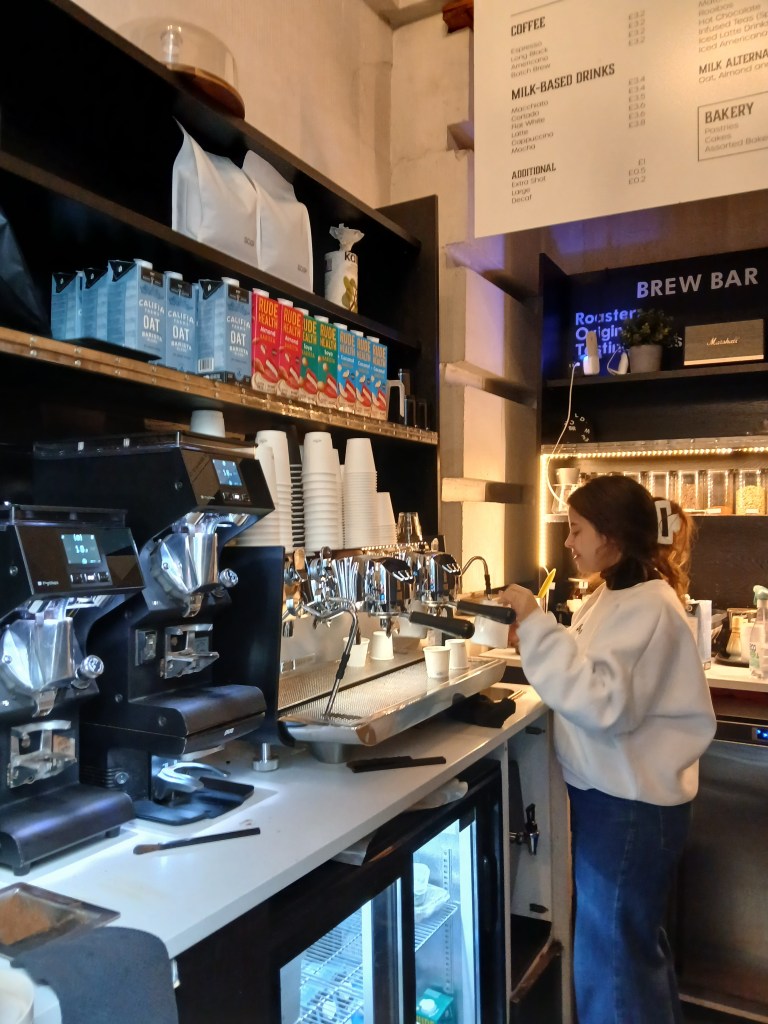
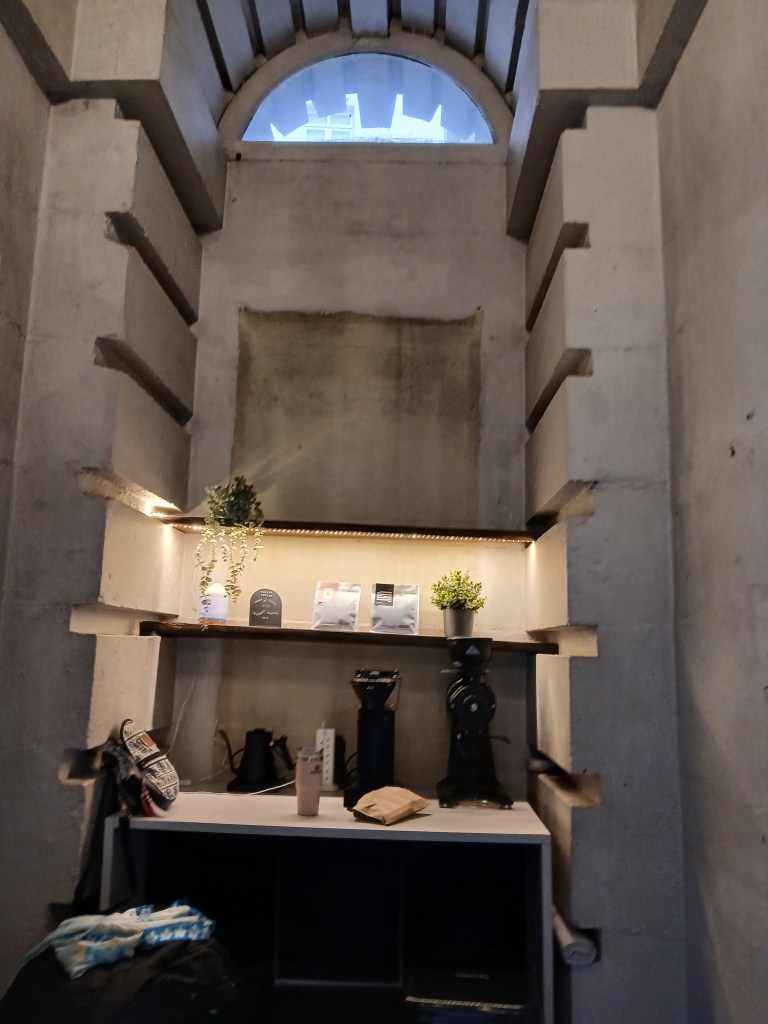
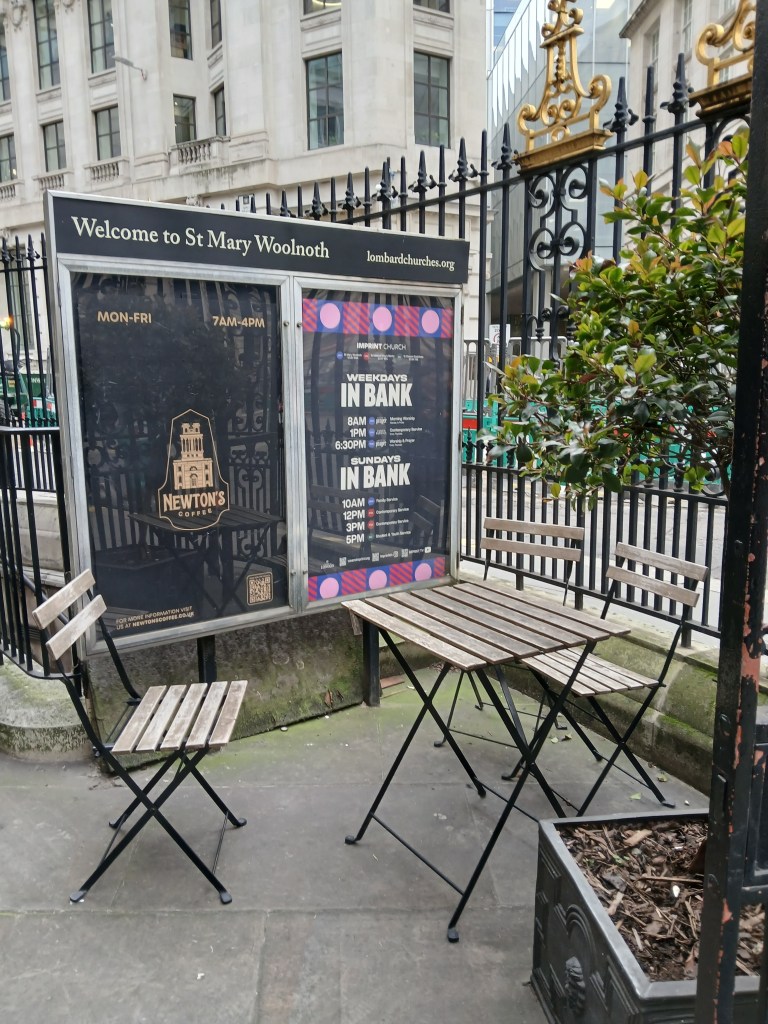
This cosy coffee is the smallest enclosed café I’ve ever visited, being situated in the porch of St Mary Woolnoth. The counter runs the width of the porch and there are three seats at the other end. There are also some tables and chairs outside in the tiny churchyard for sitting out in warmer weather. Mainly offering a takeaway service, there are hot drinks, baked goods and chocolates for sale. Newton’s Coffee is a social enterprise inspired by the life of John Newton, former slave trader who, following his dramatic Christian conversion, became Rector of St Mary Woolnoth and played a major role in the abolition of slavery. Profits from sales are donated to anti-trafficking organisations such as International Justice Mission. I was served by Desiree, wo kindly gave me a free pastry when I asked her for information about the coffee shop and told her what I was doing. Lunch sorted!
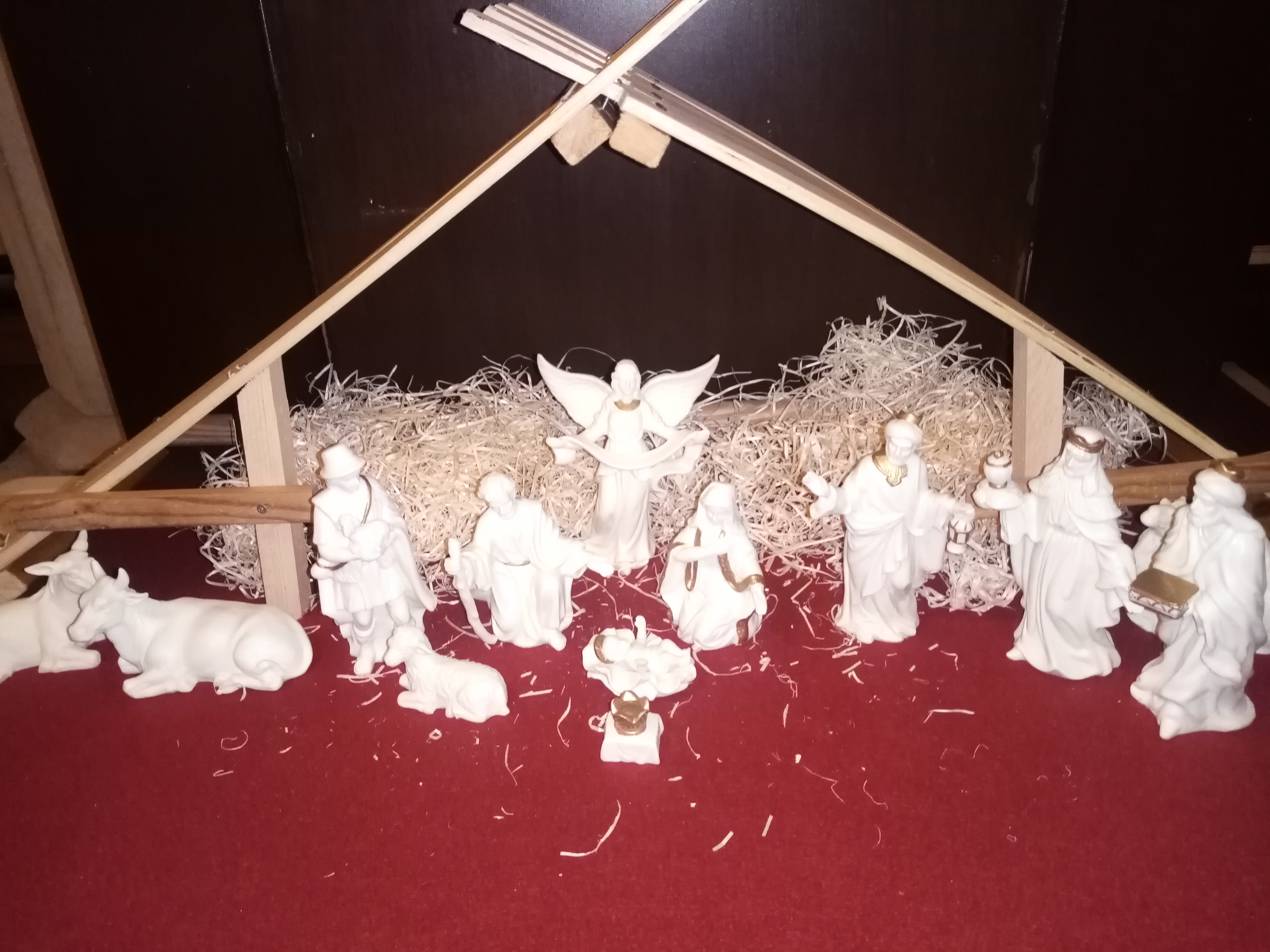
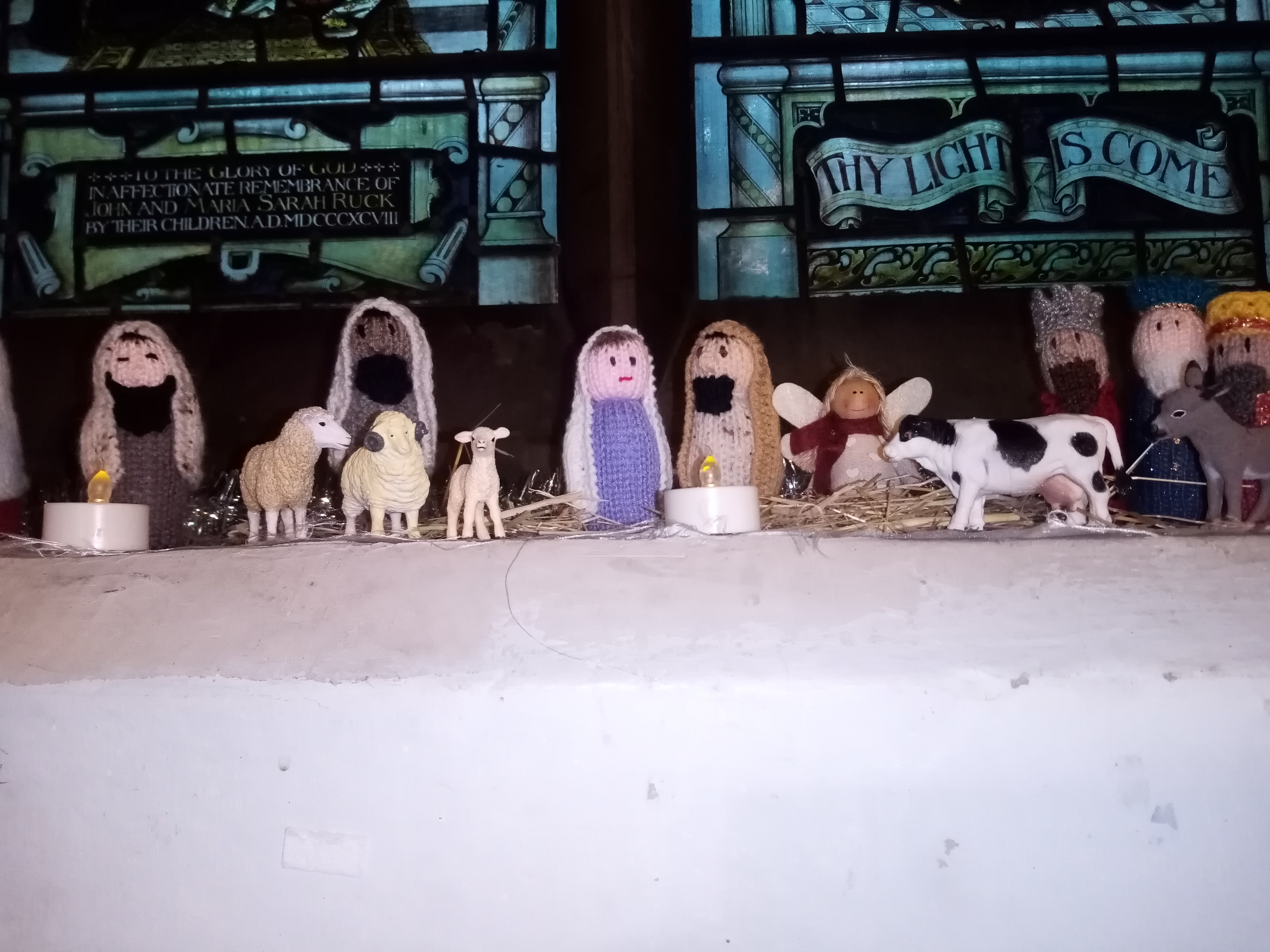
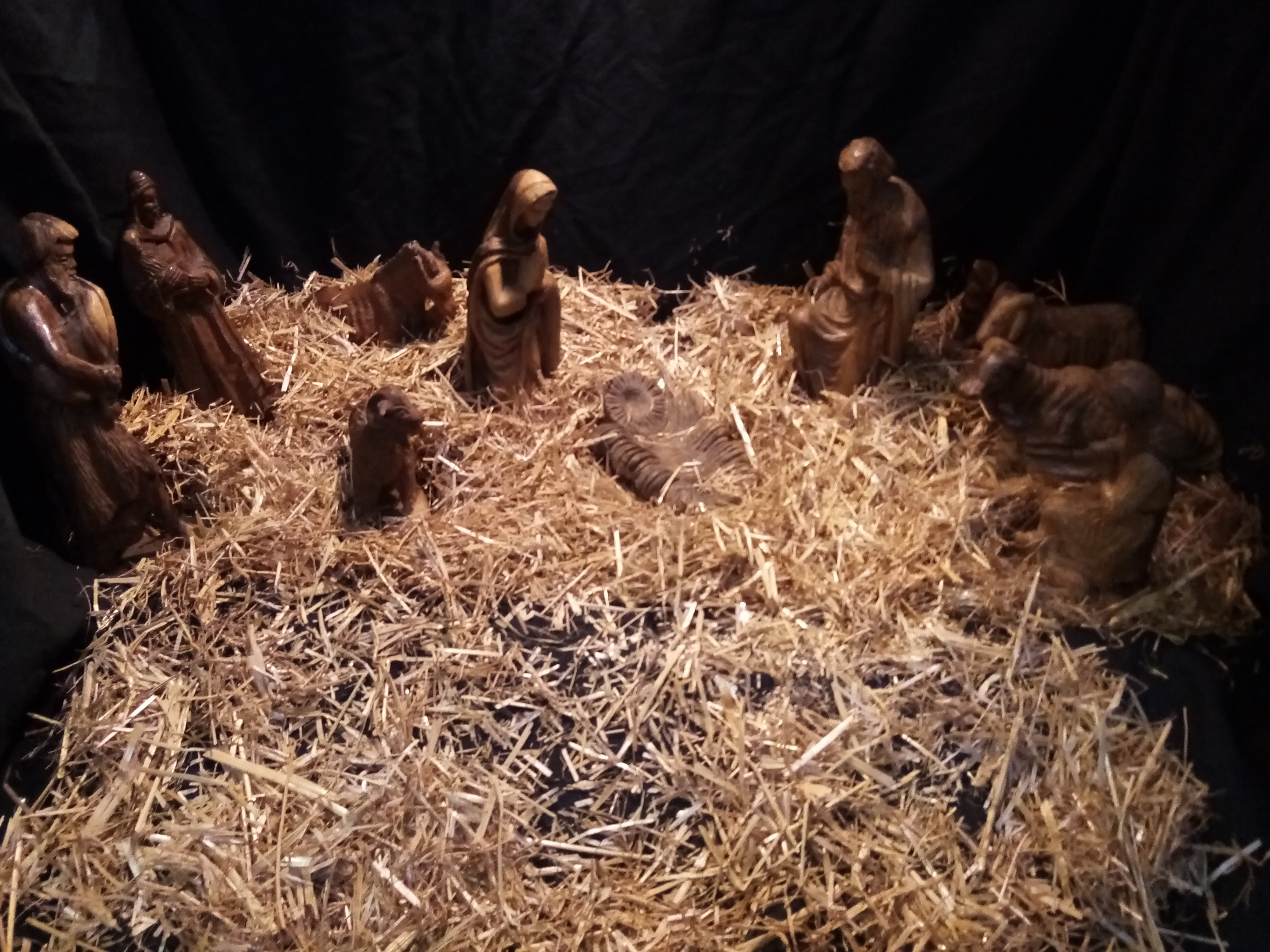
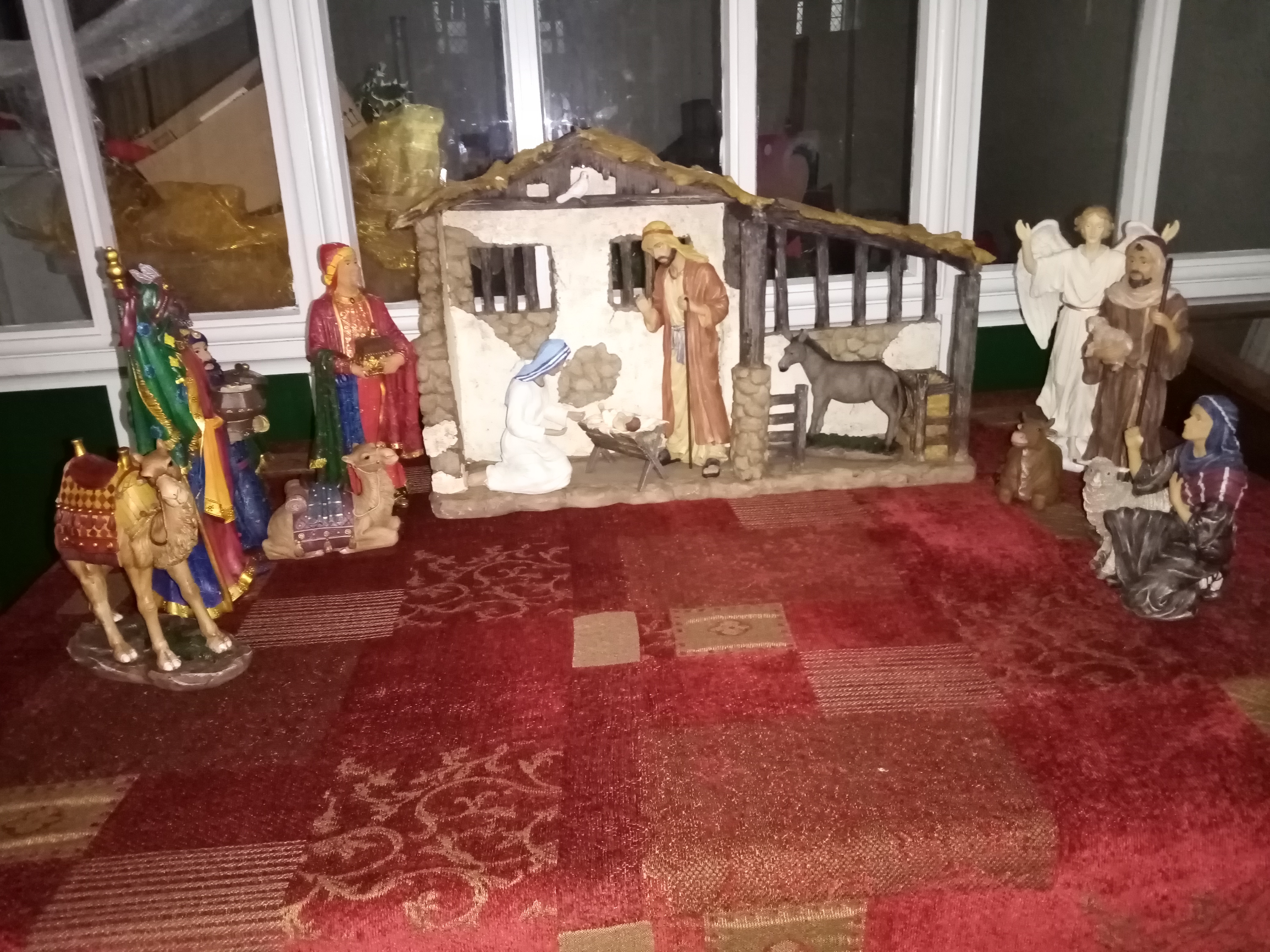
Usual round up of Nativity scenes, this year I’ve focused on small displays spotted in and around the London area, plus some interesting information about the history of the Christmas Wreath, which I always thought was a pagan tradition….
A stylish white Nativity at St Nicholas Church Sutton….
And a tiny one up high on a windowsill
Atmospheric Nativity at St Botolph, Bishopsgate
Nativity complete with Camels and Donkey
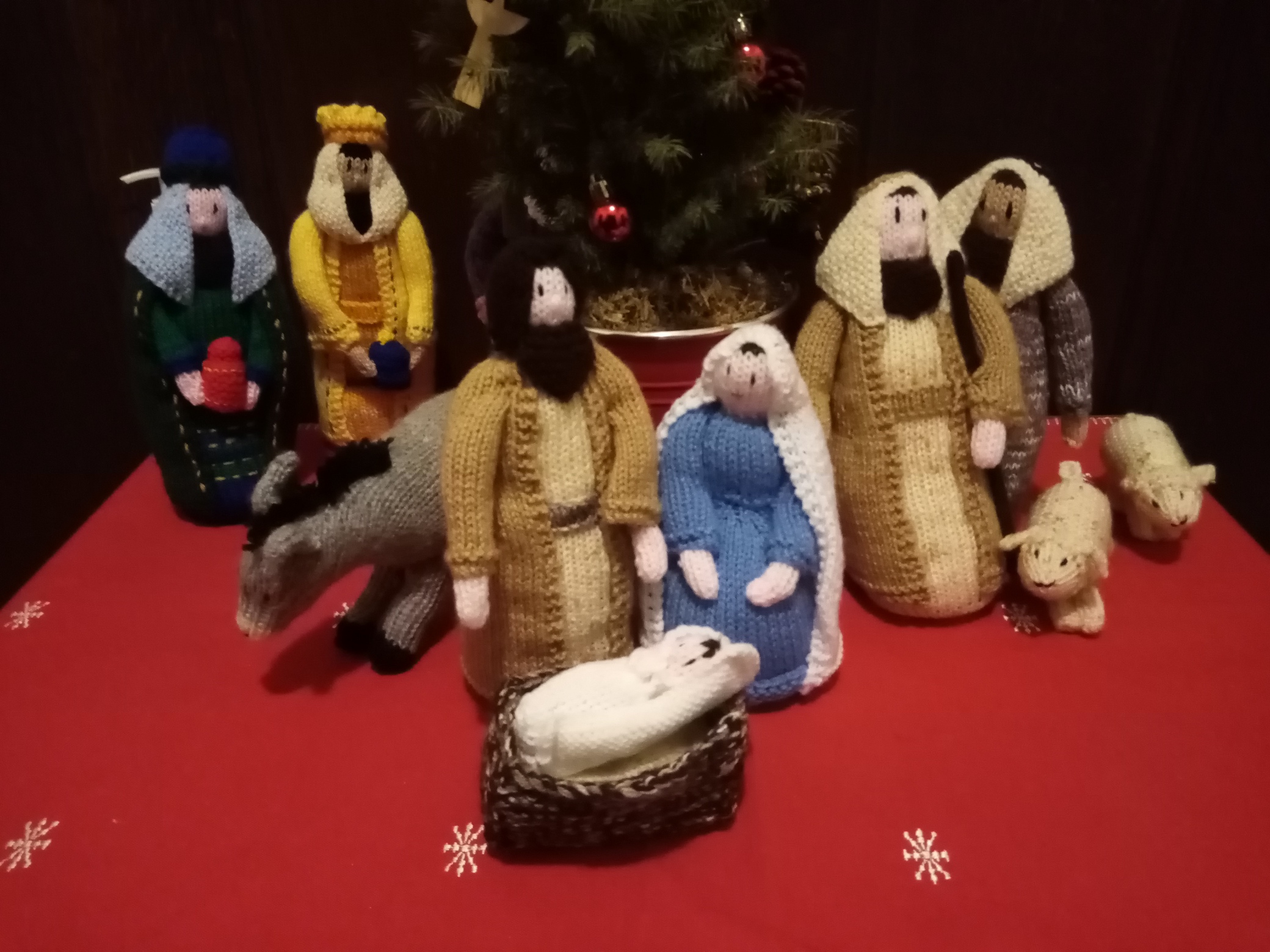
Knitted Nativity at Carshalton Methodist Church
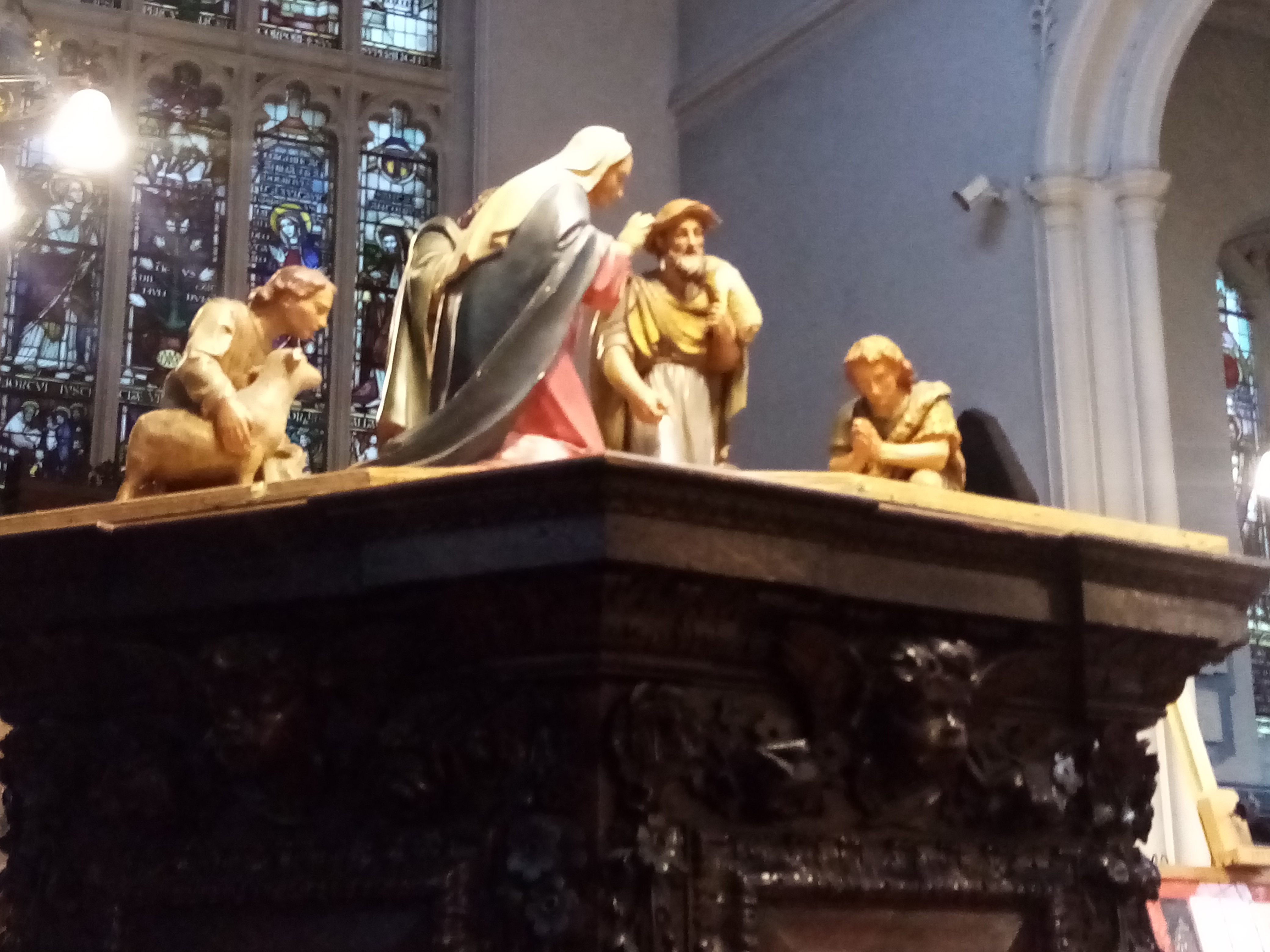
Nativity on top of a pillar, St Mary Aldermary
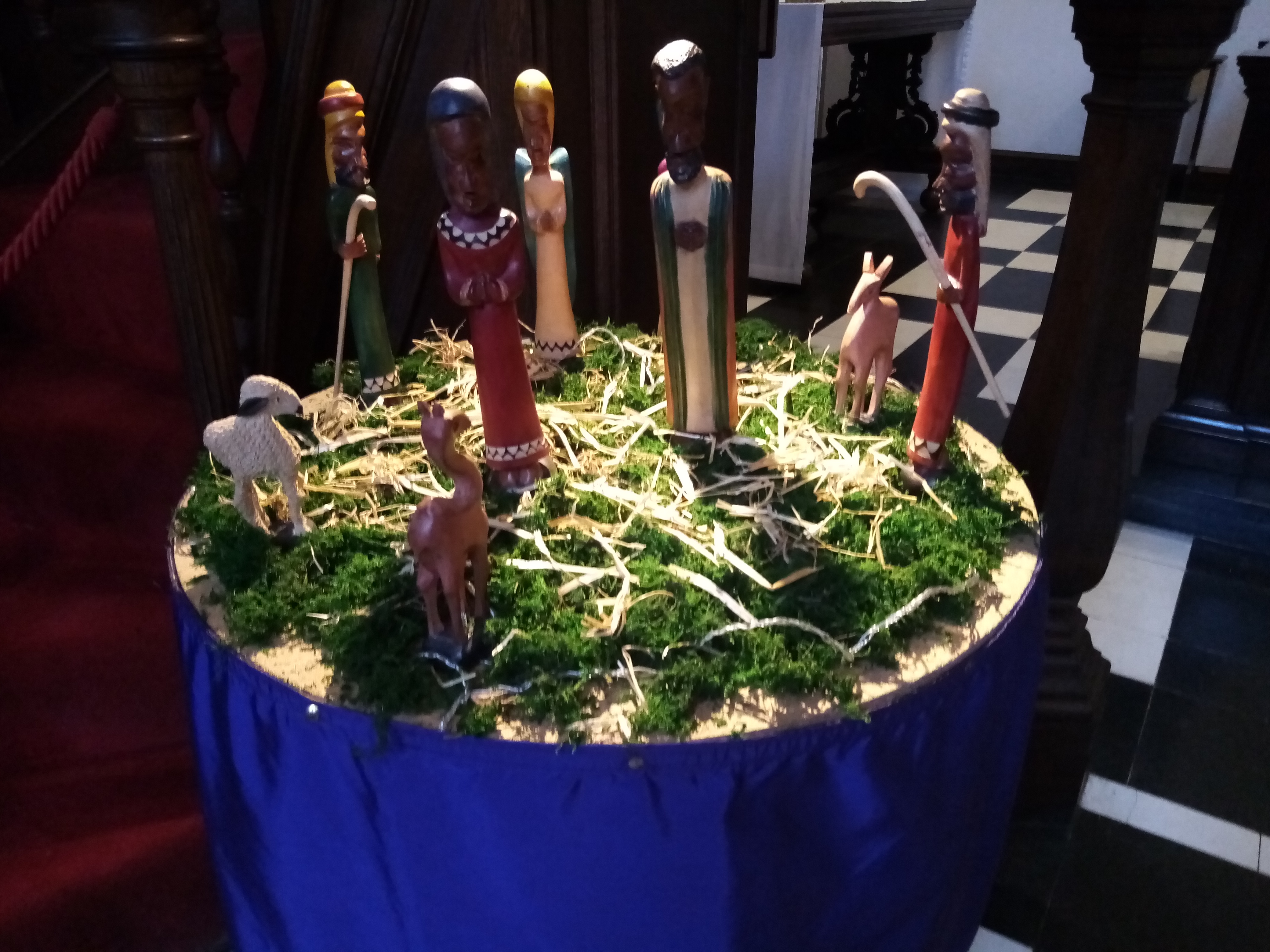
Lovely woodenNativity Scene at St Vedast Foster
Illuminated Nativity at Sutton Christian Centre
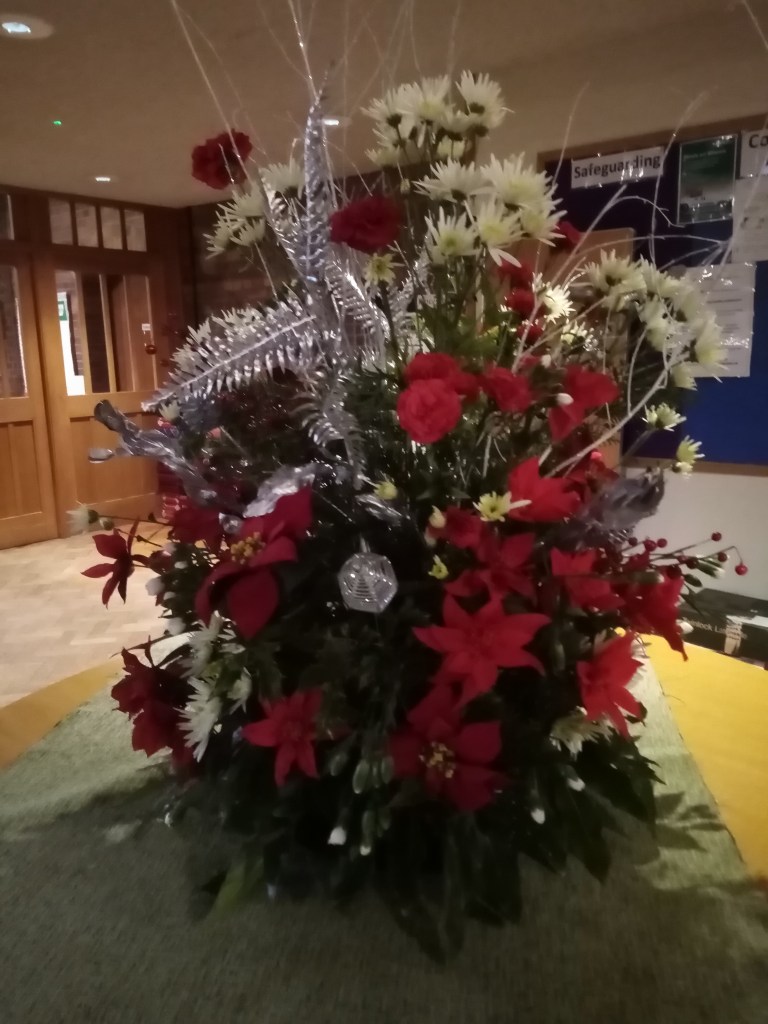
Another spectacular seasonal display at St John’s Belmont. The tradition of bringing evergreen plants: holly, ivy, evergreen trees and branches, into the home at the Winter Solstice goes back to pre Roman times in Northern Europe. The weaving of greenery and holly berries into a wreath symbolises the continuing of life and the seasons when the sun seems to have disappeared from the sky for ever. HOWEVER, the origin of the Christmas Wreath is as an Advent Wreath. It was created by German theologian Johann Wichern in 1839 with 28 candles (one for each day of Advent) out of a wagon wheel. The circular wreath, with no beginning or end, symbolises the eternal nature of God and eternal life through Christ. Prickly holly leaves and red berries were thought to represent Jesus’ crown of thorns and drops of his blood at the crucifixion. So although the wreath has its roots in pagan custom and tradition, you could say that theologian Wichern reinvented the wheel when he created his Christmas Wreath. (Sorry, couldn’t resist!)
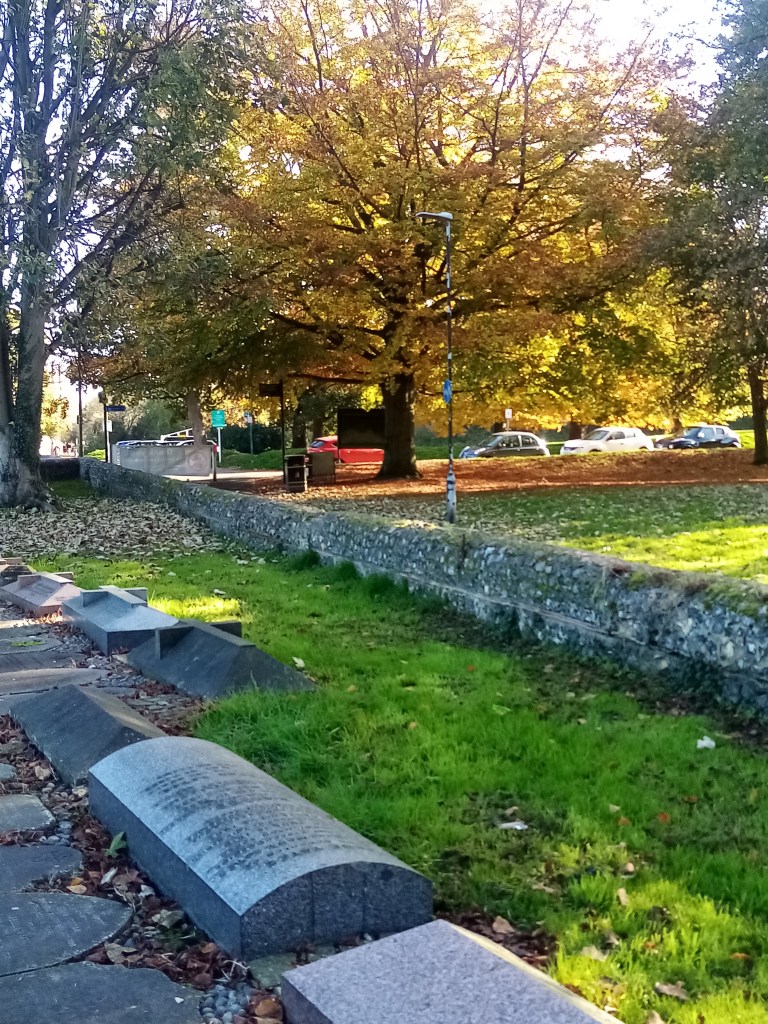
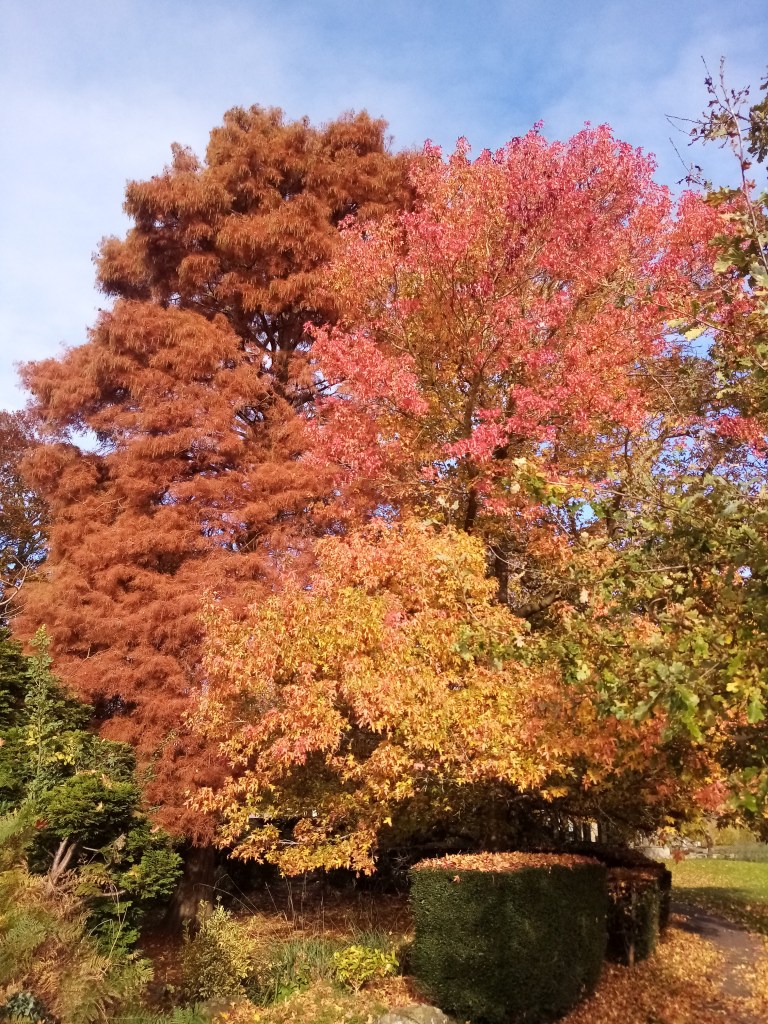
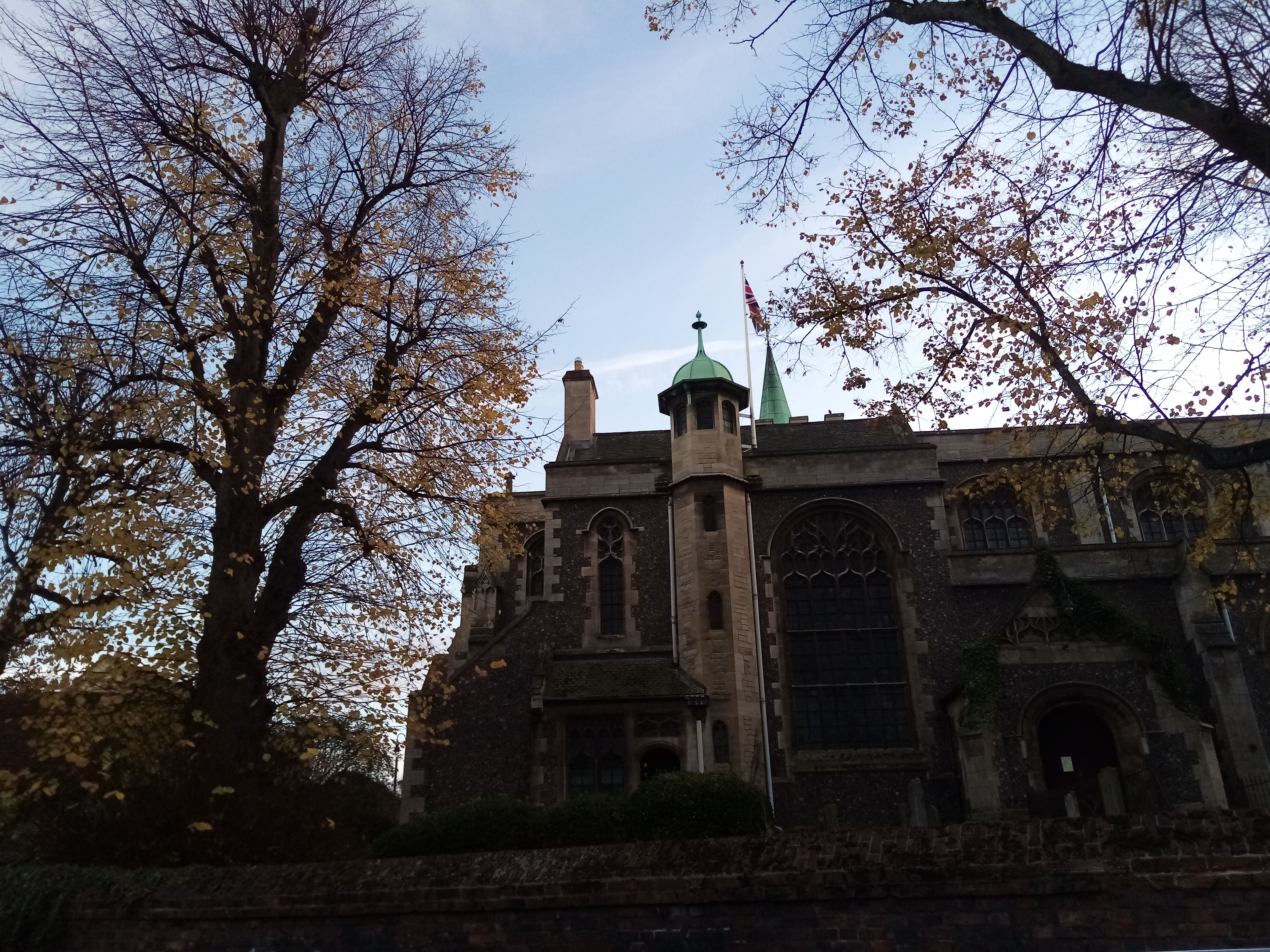
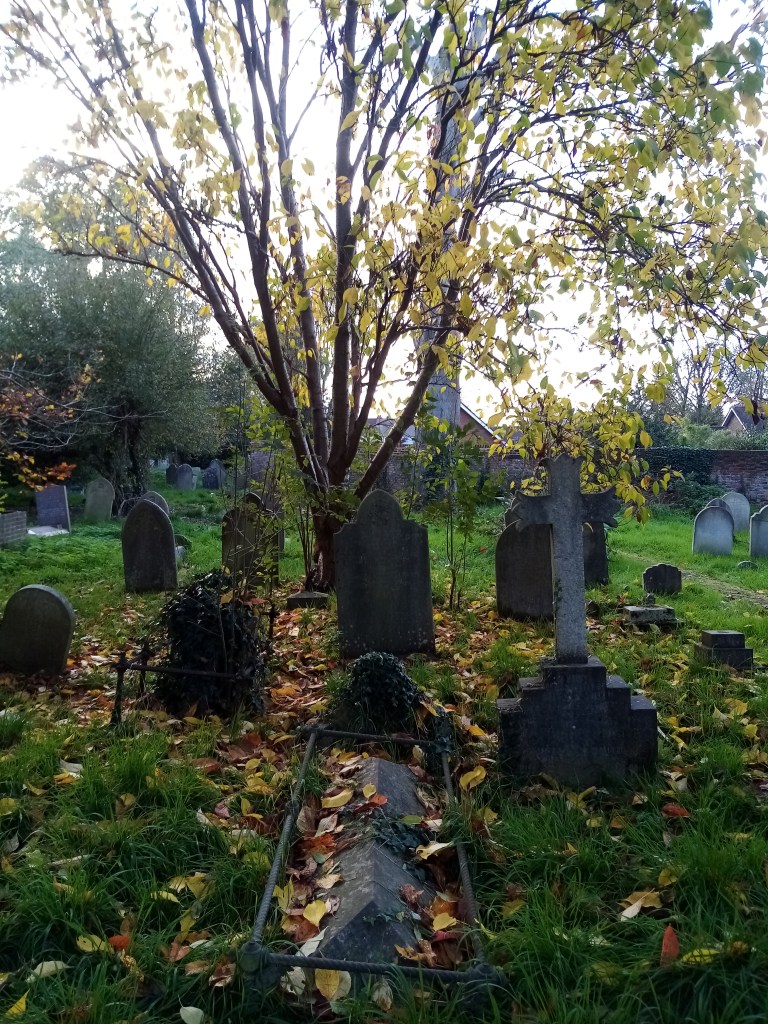
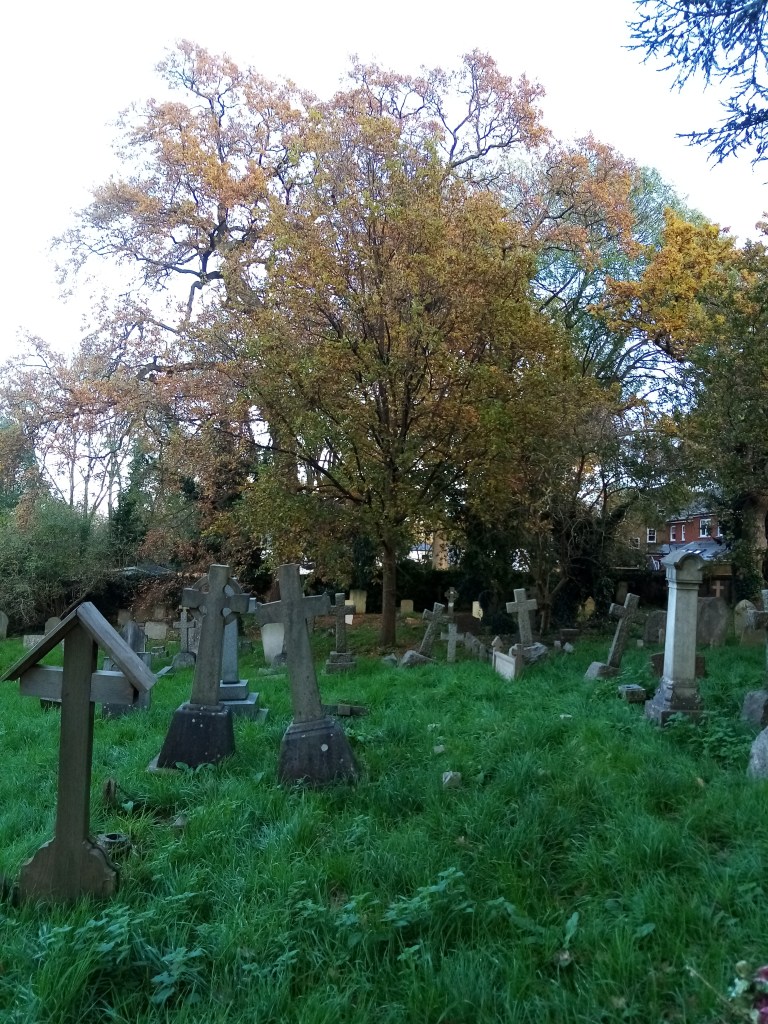
A second attempt at photographing local churches in picturesque Autumn settings. Again, I didn’t capture the azure skies and contrasting bright leaves I’d hoped for, but it was lovely to wander through crisp, colourful fallen leaves in churchyards on some mild Autumn days.
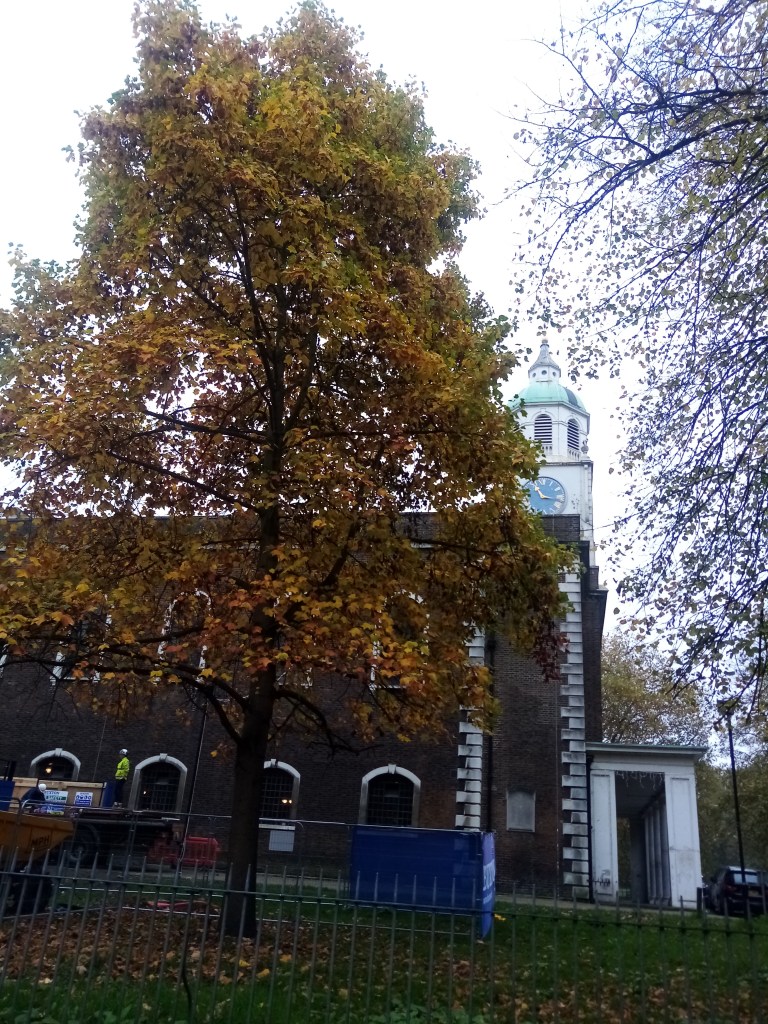
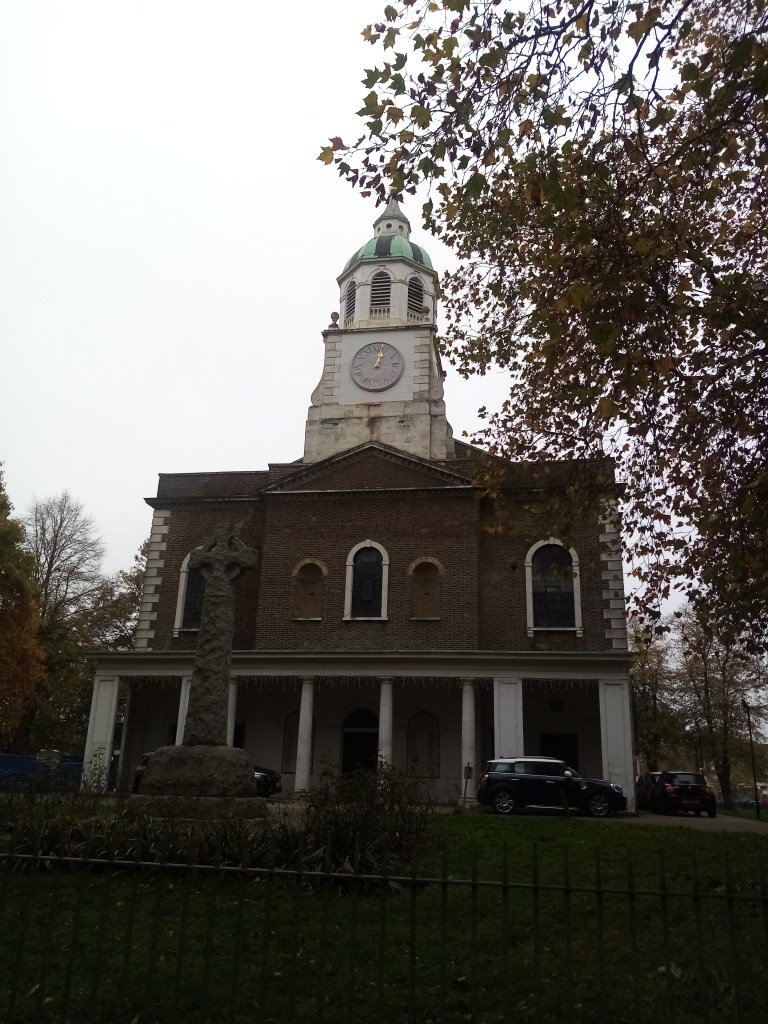
Holy Trinity, Clapham Common
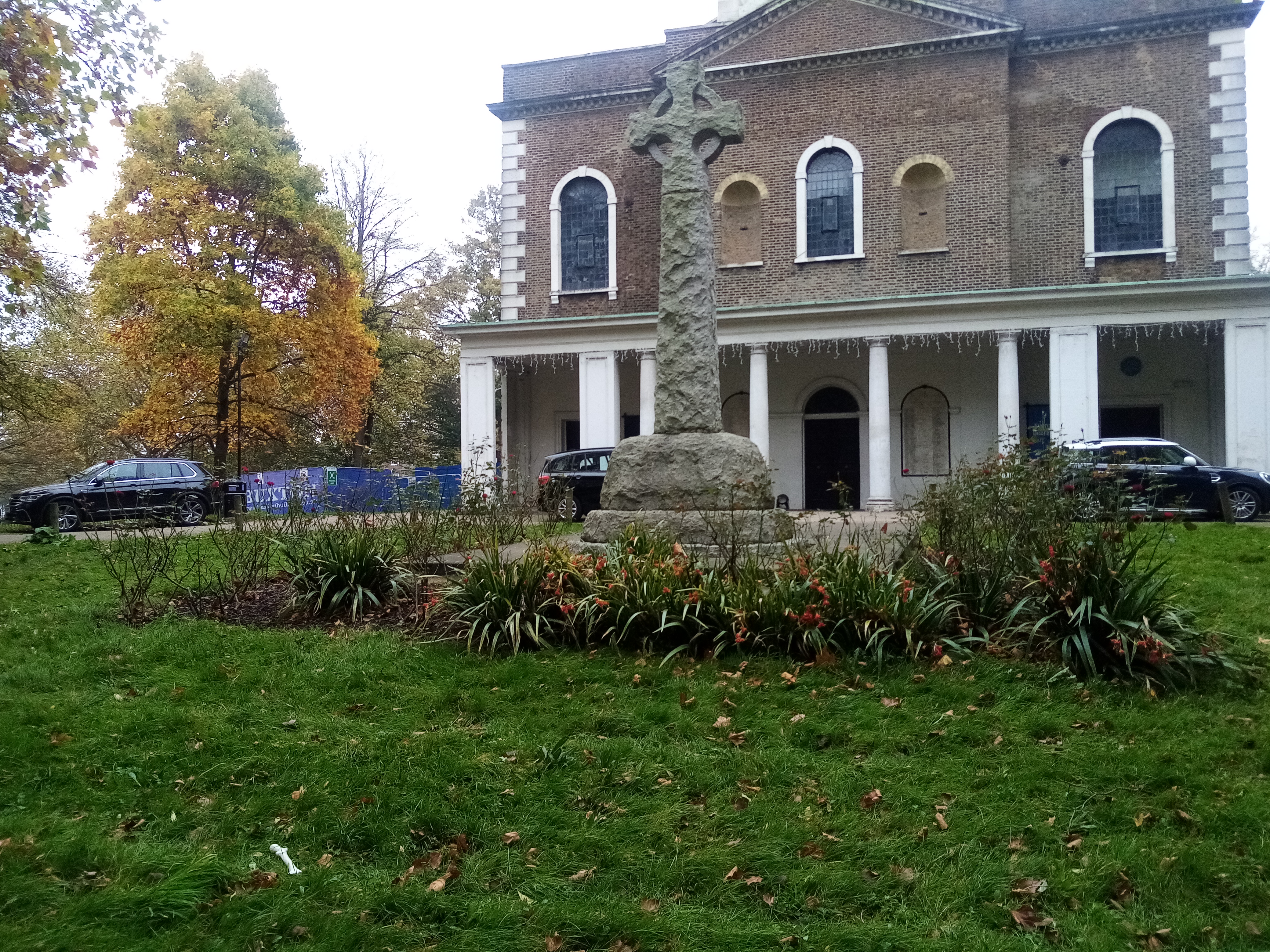
Side view of Holy Trinity, Clapham Common
I chose this lovely 18th century church because it is literally on Clapham Common, in the North East corner. Holy Trinity was the base for the Clapham Sect, a group of abolitionists with William Wilberforce being a founding member of the group. The present 1753 building replaced a Mediaeval church in Clapham which was in poor condition and deemed too small for the growing suburban population. The location for a new church on the Common was chosen because it was convenient for the congregation of well-to-do merchants and bankers who had purchased the large villas surrounding the Common. To build here required an Act of Parliament and following approval, the church was designed and built by architect Kenton Couse at a cost of £5,000!
Source: Wikipedia
St Mary the Virgin, Beddington Park
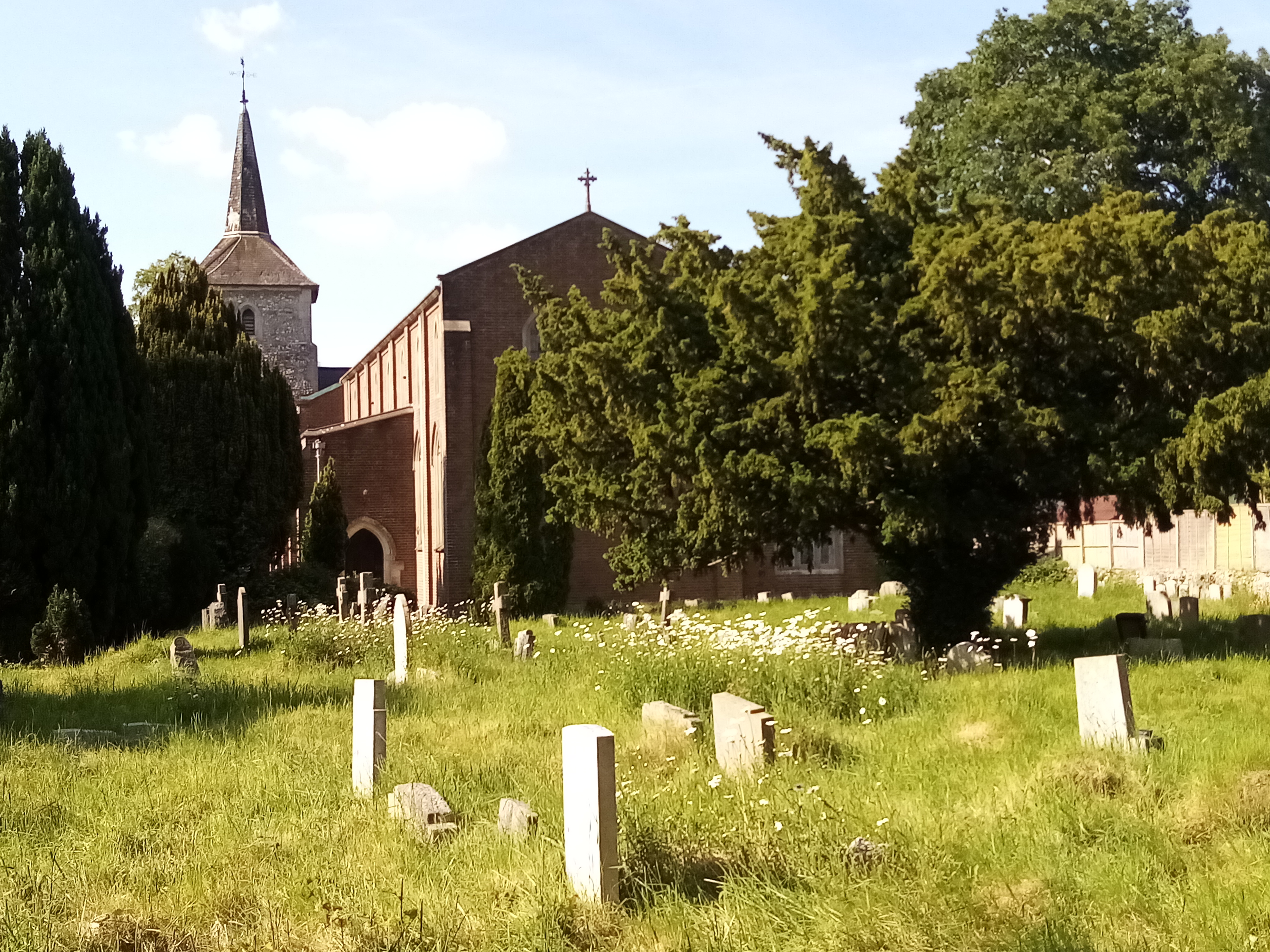
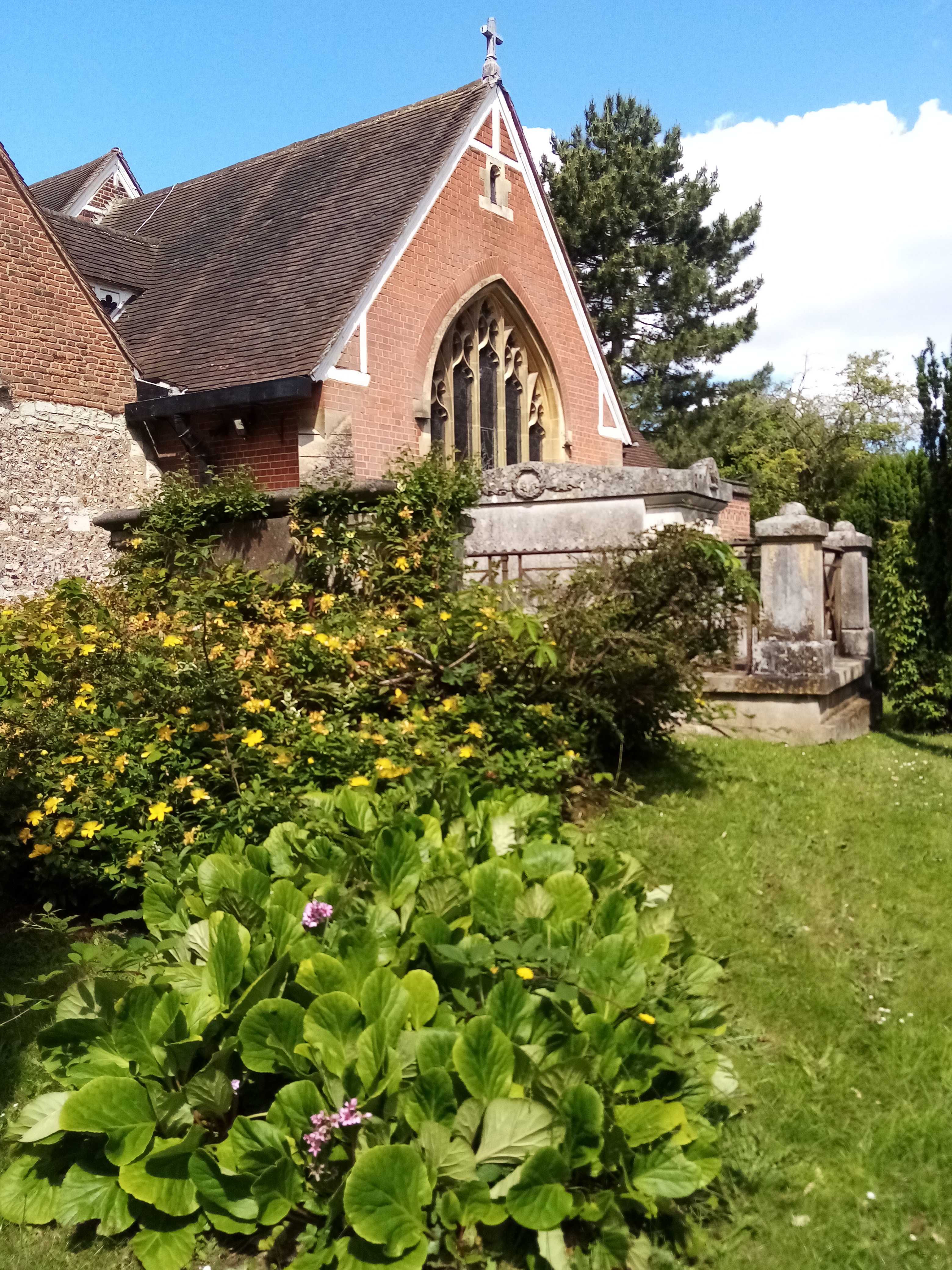
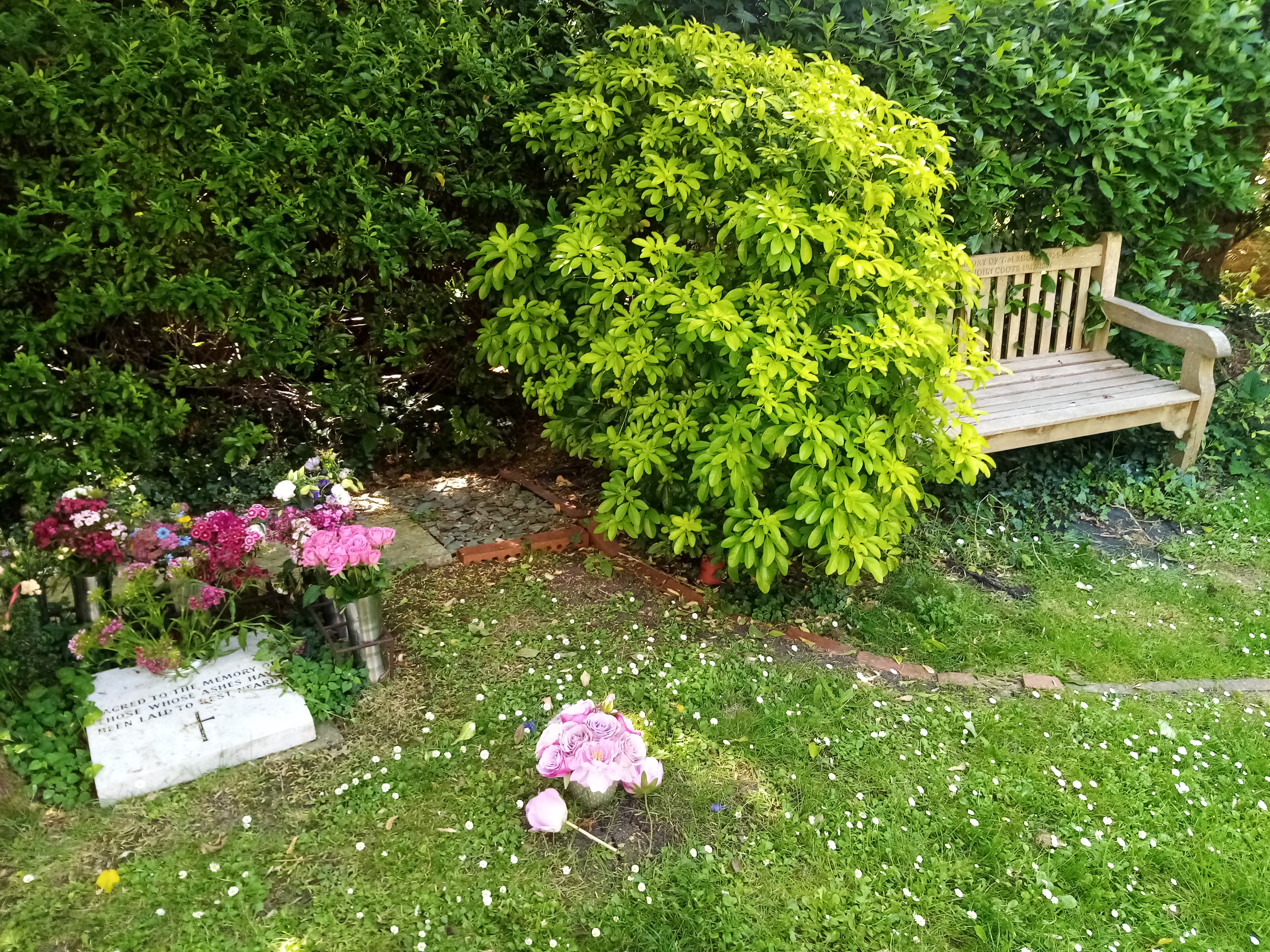
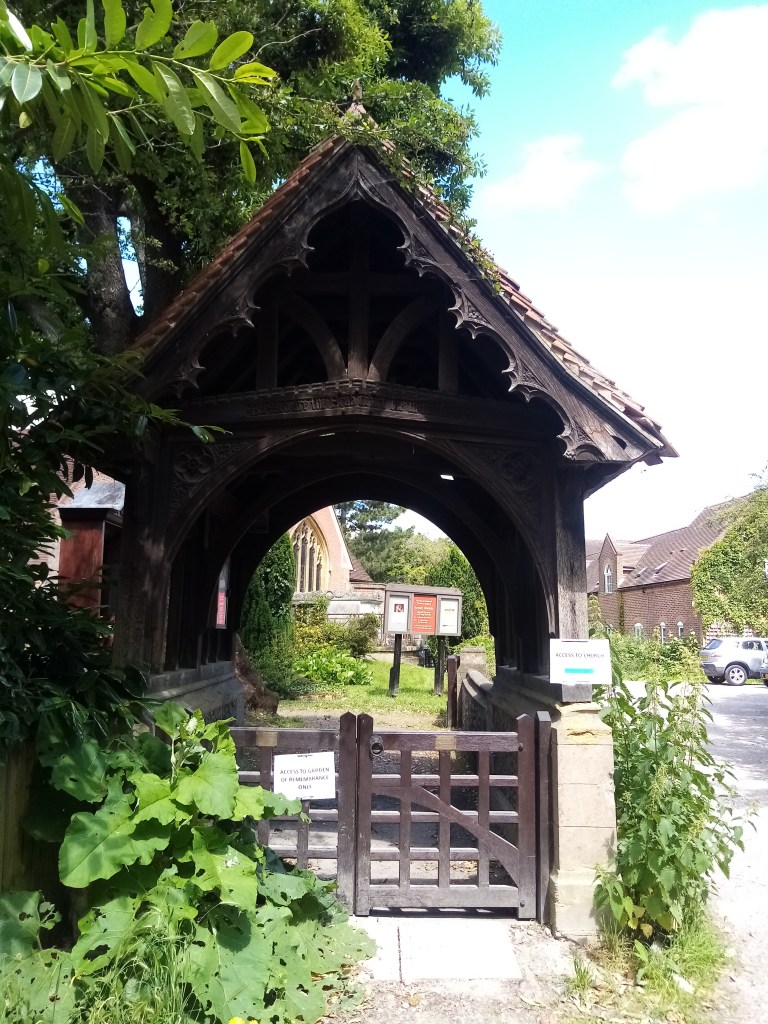
Another beautiful setting in open parkland, I featured St Mary’s in Springtime surrounded by daffodils. This Mediaeval, flint-clad church was constructed in the 14th century, heavily restored and extended in subsequent centuries and finally refurbished in 1867-69, giving us the Victorian church we see today. There is evidence of a church structure on this site in 1085 when William the Conqueror’s Domesday Survey began, and the later Mediaeval church formed part of the lands of the Carew family, owners of the estate since 1381. The estate comprised a large deer hunting ground (now Beddington Park) and a large country manor house (now Carew Manor School.) And of course, the church right next door, where generations of the Carew family would have worshipped. I think St Mary’s is the perfect ‘country’ church with a graveyard, a lych-gate leading to a memorial garden and beautiful views of the Park.
Source: wandlevalleypark.co.uk; Wikipedia
All Saints Church, Carshalton
There has been a site of Christian worship here for over 1,200 years, but nothing remains of the Saxon church which once stood in the village of Aultone* next to a pond and water mill. The oldest visible parts of the church date from the mid-12th century; the tower is the oldest part of the current building, dating back to before the Norman Conquest. In the late 12th century, the church was given to the monks of Merton Priory, who extended it considerably. The church has a large, secluded graveyard behind it, a haven for wildlife and a quiet place to wander through its footpaths to look at the ancient gravestones. The picturesque setting of Carshalton Ponds completes the scene. *Carshalton was known for its natural springs which gave the settlement its name, a later spelling is Cres-aul-ton, aul meaning well or spring, ton, an enclosed farm, and cres, probably a reference to the watercress grown in the area.
Source: nationalchurchestrust.org; Wikipedia
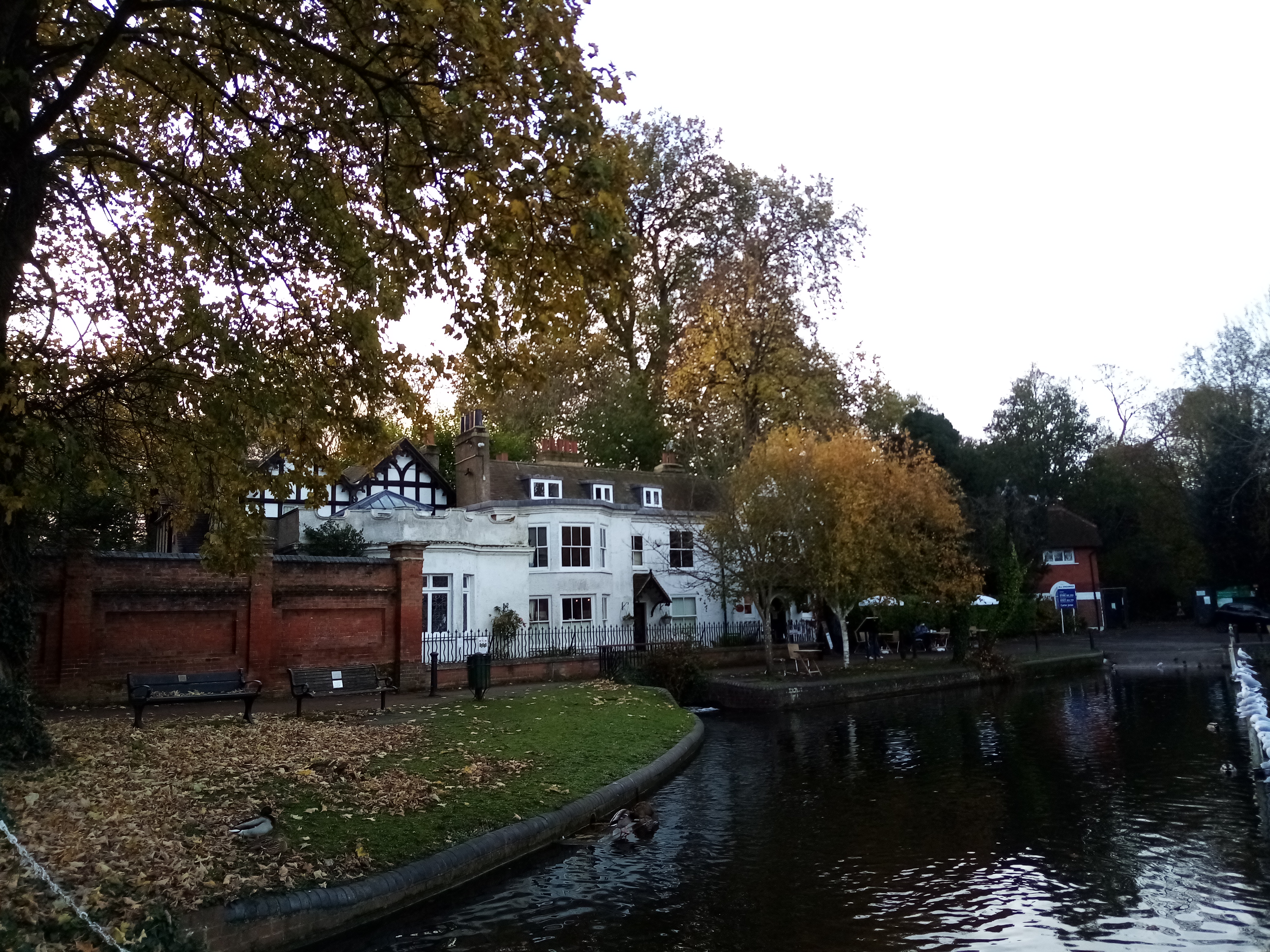
Honeywood Lodge on Carshalton Ponds
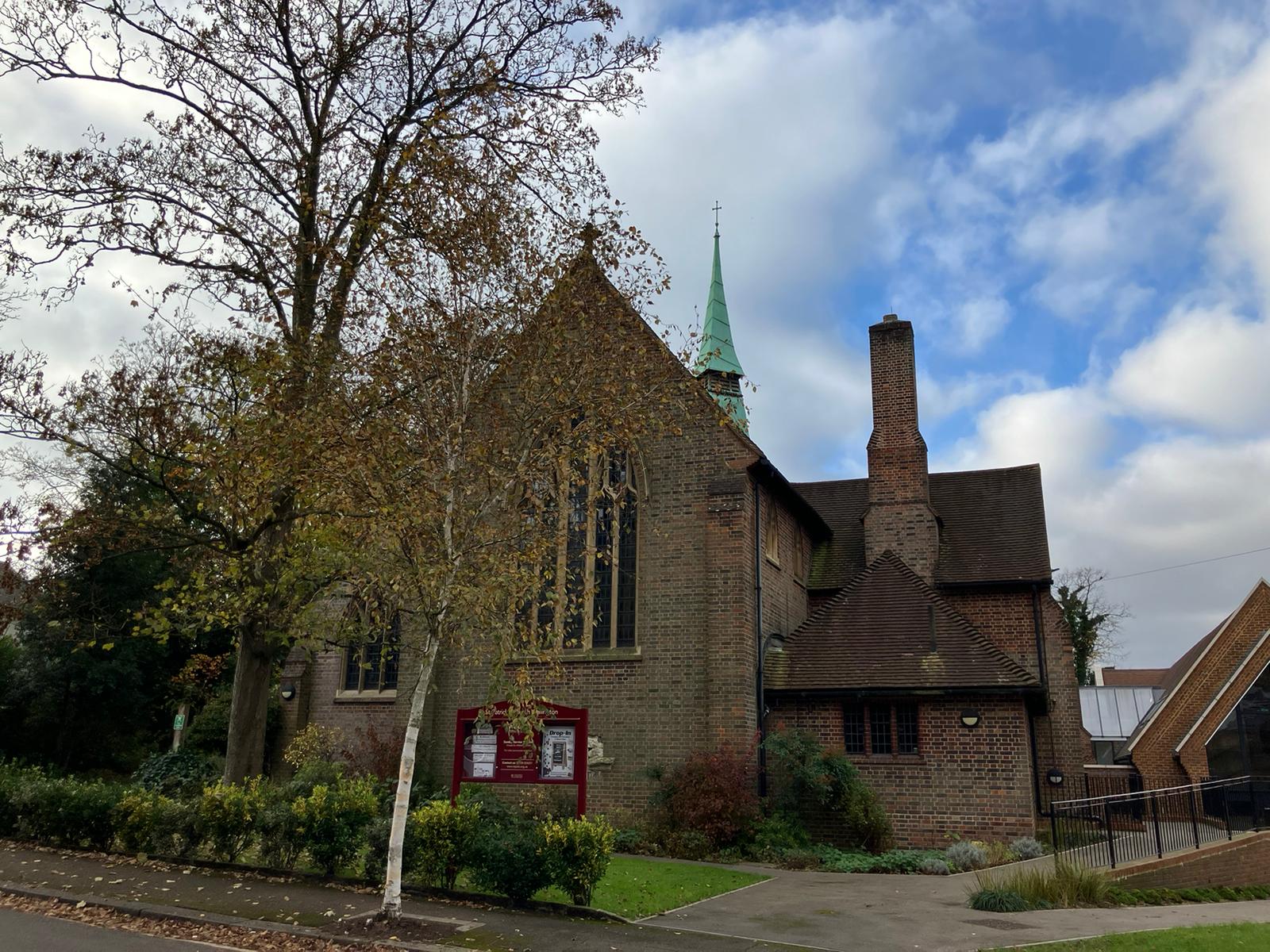
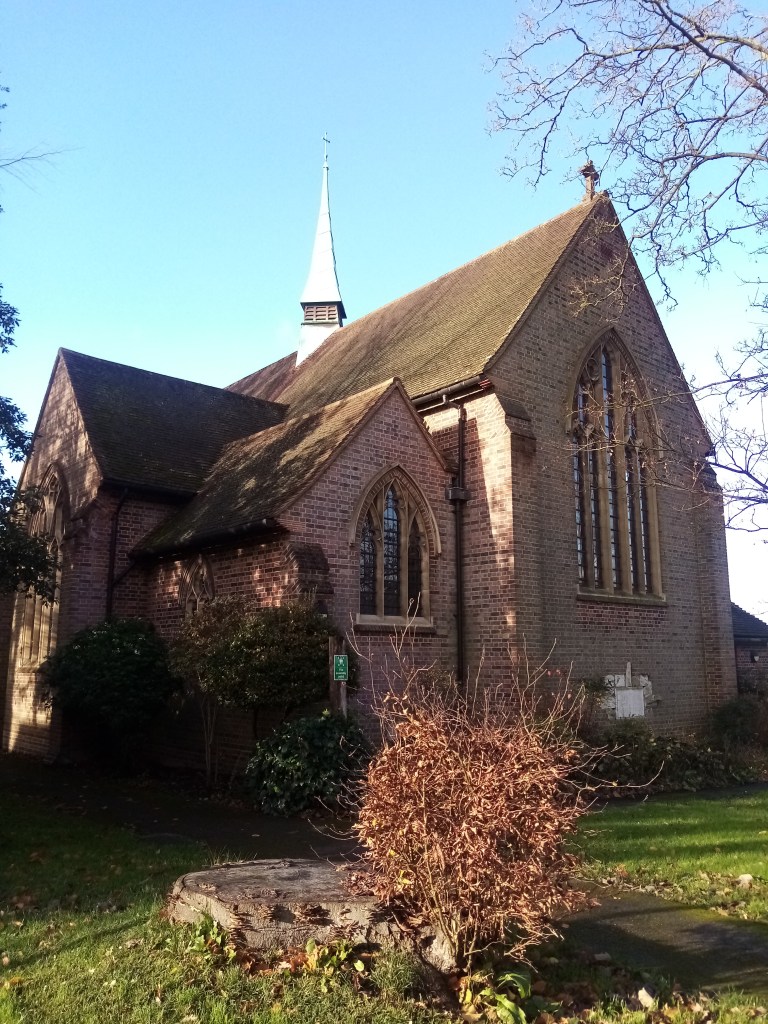
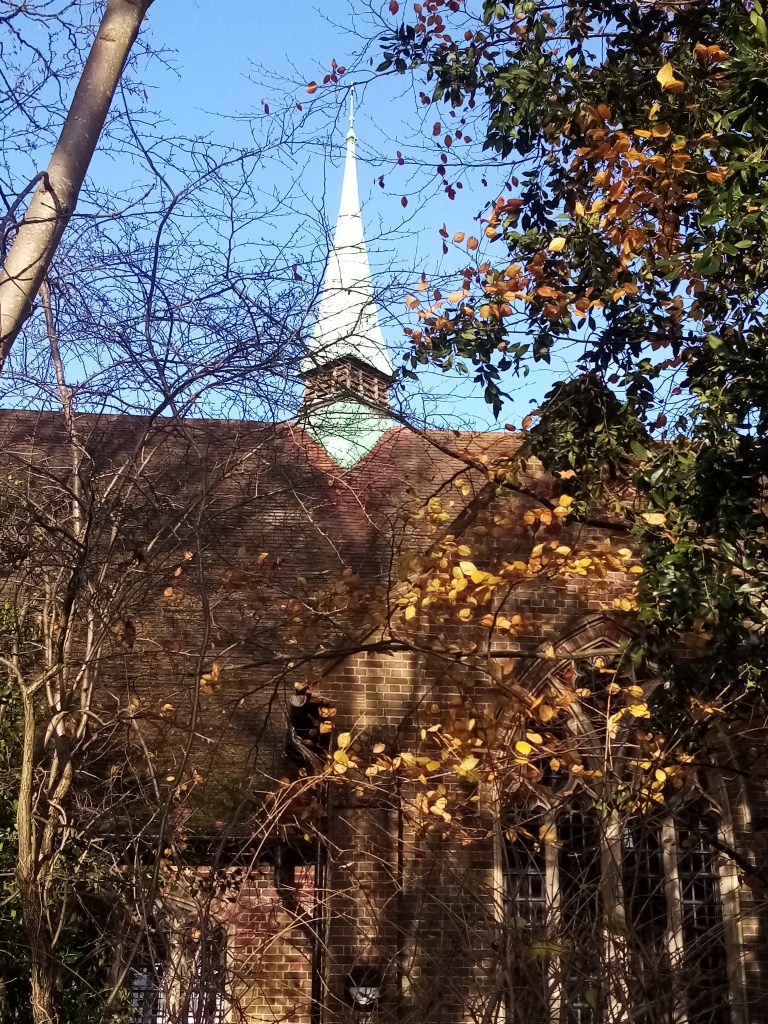
St Patrick’s Church, Wallington
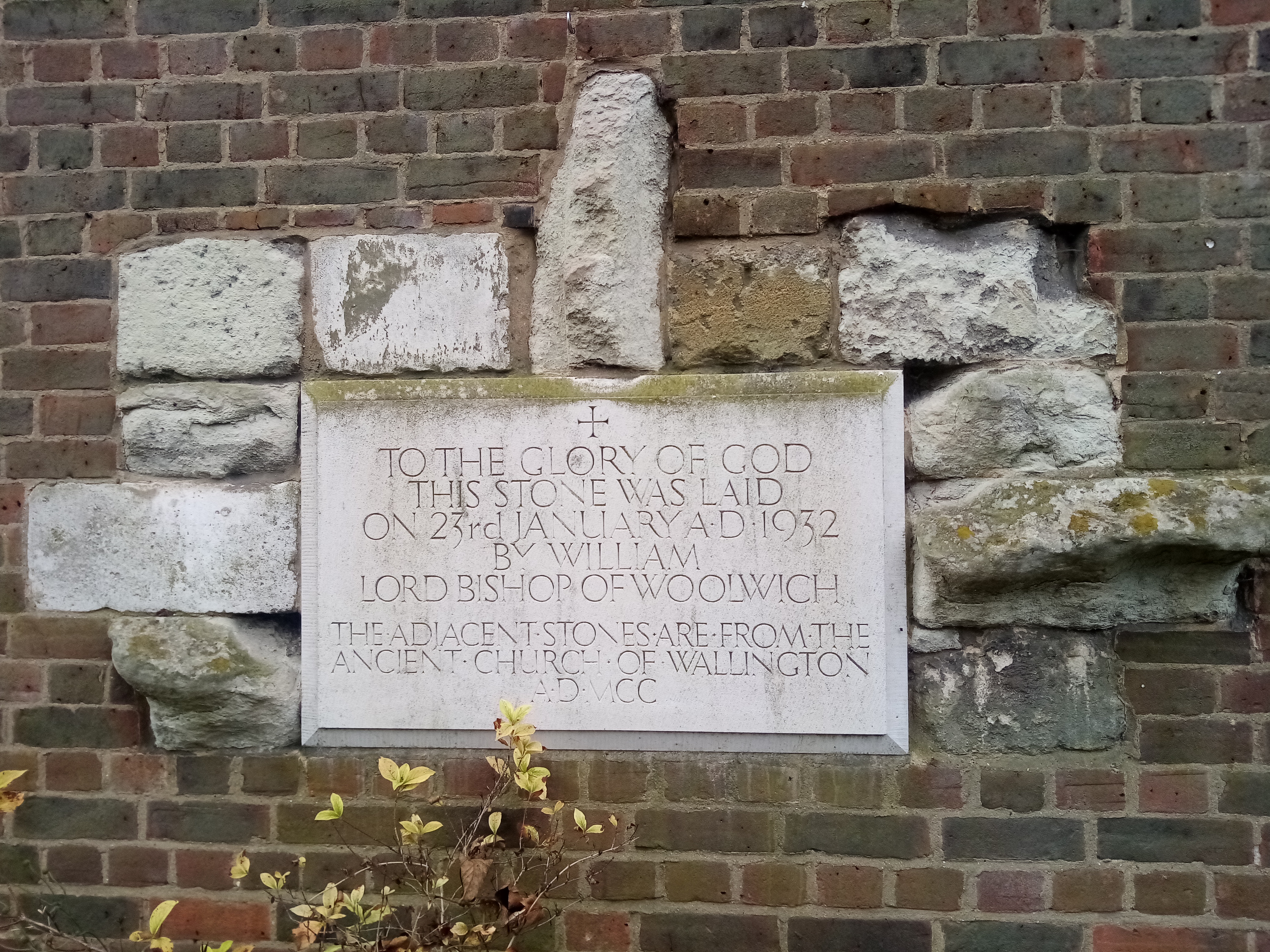
In 1896 South Wallington was mostly fields and parkland, with Woodcote, a manor house, occupying the site where the church now stands. Over the next decade, the surrounding land was gradually sold off for housing as Wallington grew and extended south ‘up the hill’. The Parish Church of Holy Trinity had been built in 1867, and the Reverend GF Irwin decided that a new church plant should be established in the south of the parish. A committee met on 17th March 1910, the Woodcote Hall site was chosen (the Hall had been demolished), and the name of the new church was chosen because 17th March is St Patrick’s Day! A temporary building was completed in April 1911, and the first curate, the Reverend Day ensured that the new church flourished and attracted a growing congregation. Plans for a permanent building were put aside due to the outbreak of the First World War and the present church was begun in the early 1930s and dedicated by the Bishop of Southwark in November 1932.
I’d been hoping for some bright blue skies to contrast the reds and yellows of the trees in Autumn, as a background to some ‘traditional’ English churches. However, I haven’t been able to capture this in my photos, as what started as bright, sunny mornings quickly turned cloudy, dull and even rainy. But I was able to go inside some of the churches to see their lovely harvest/Autumn displays. These four churches are all in leafy Sutton and Surrey.
St Dunstan’s Cheam
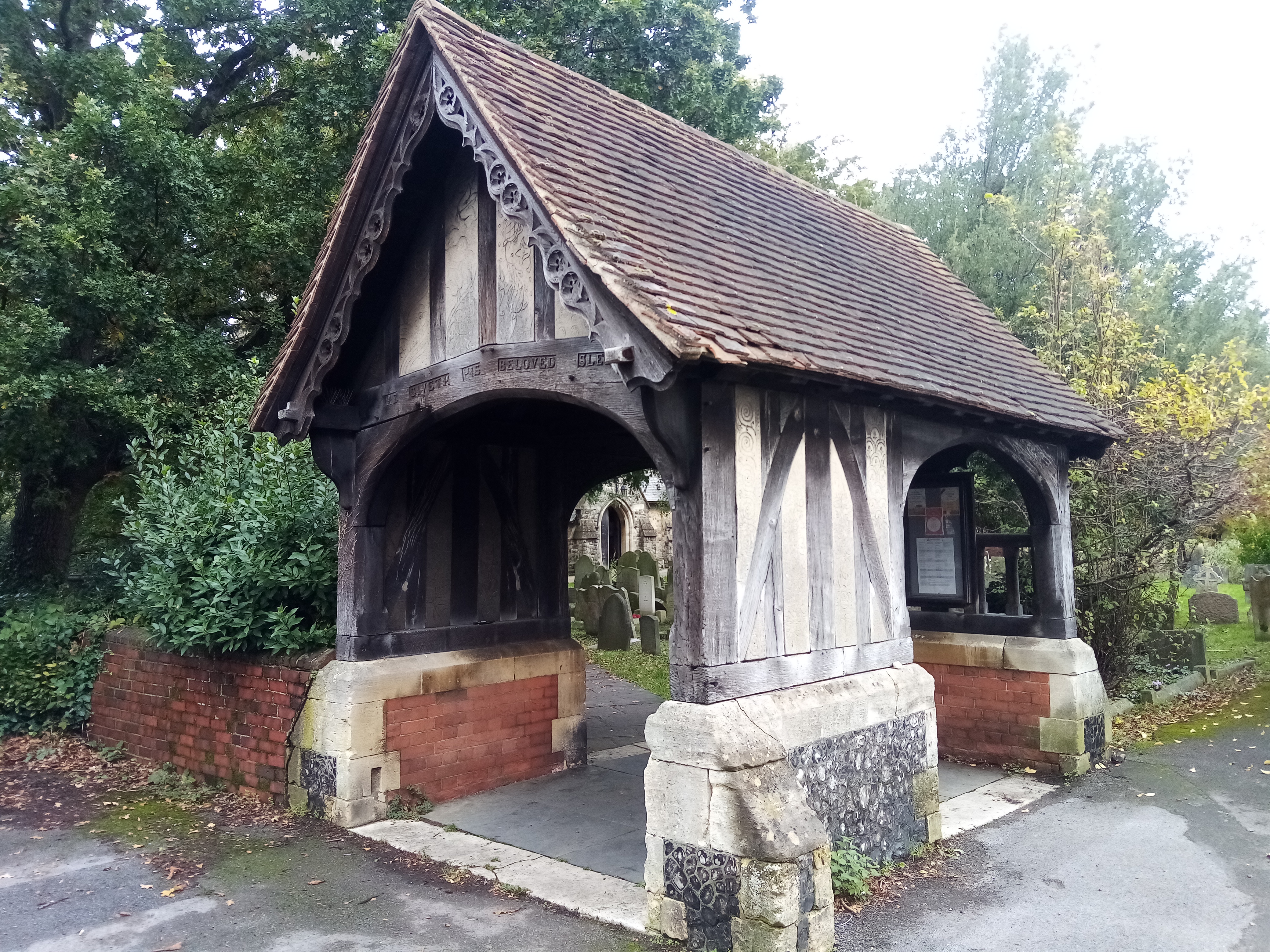
Lych-gate at St Dunstan’s, Cheam
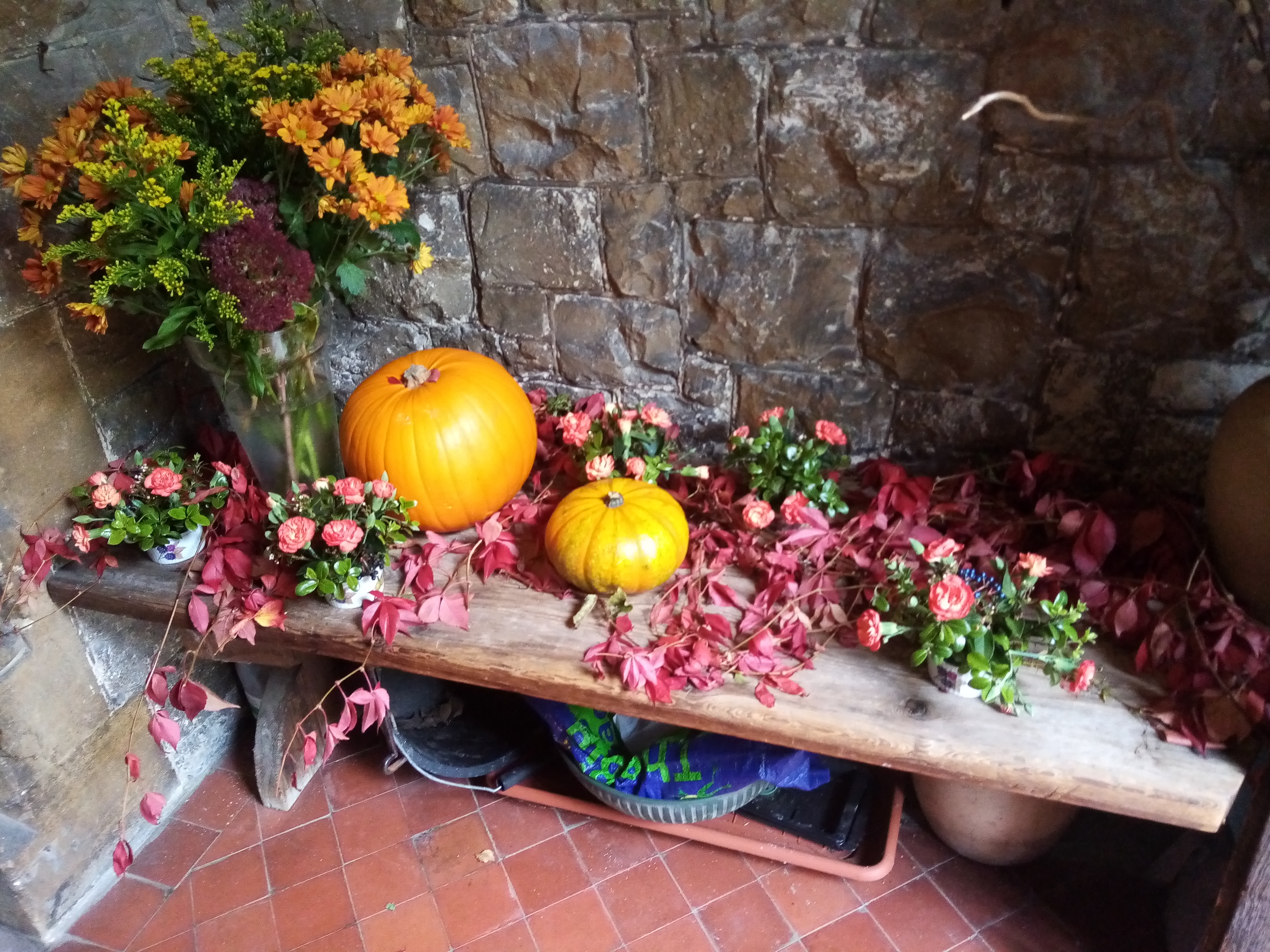
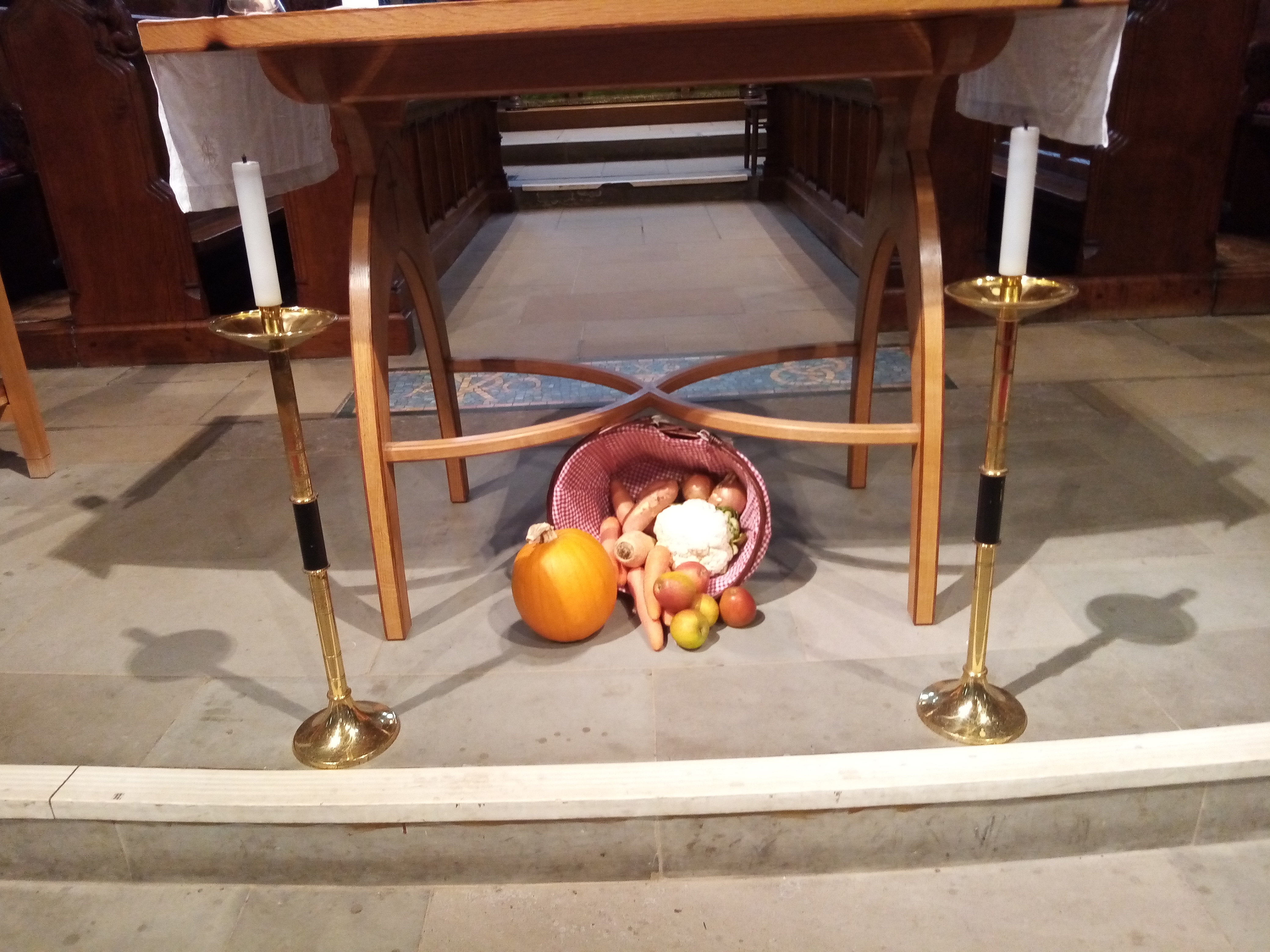
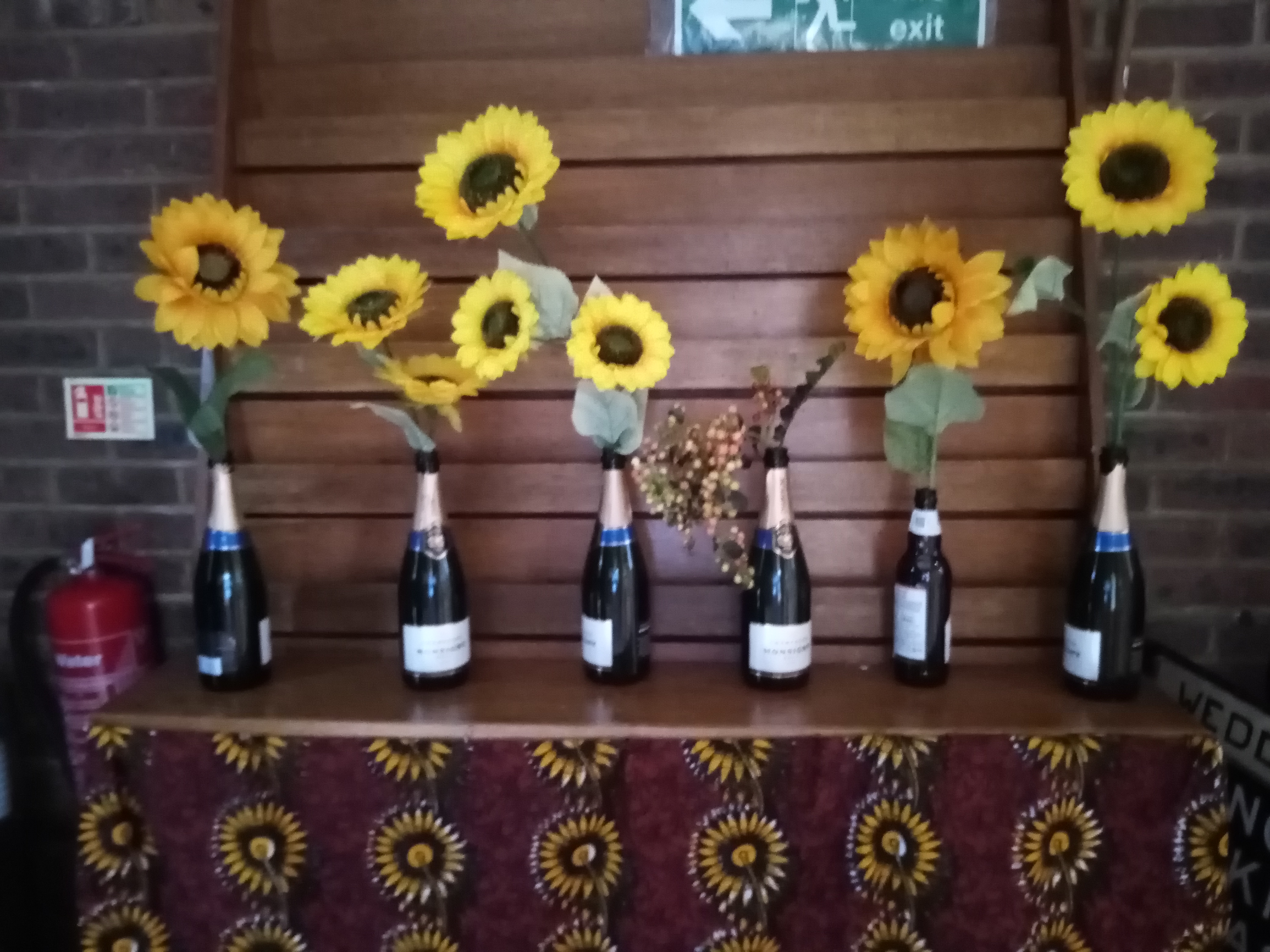
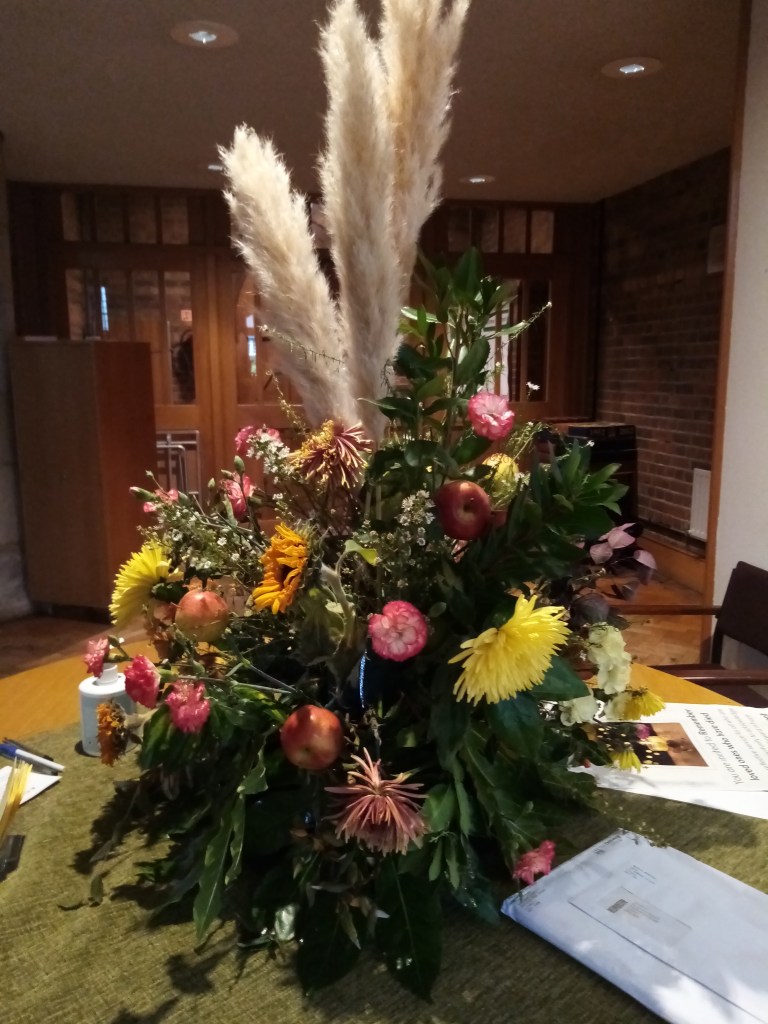
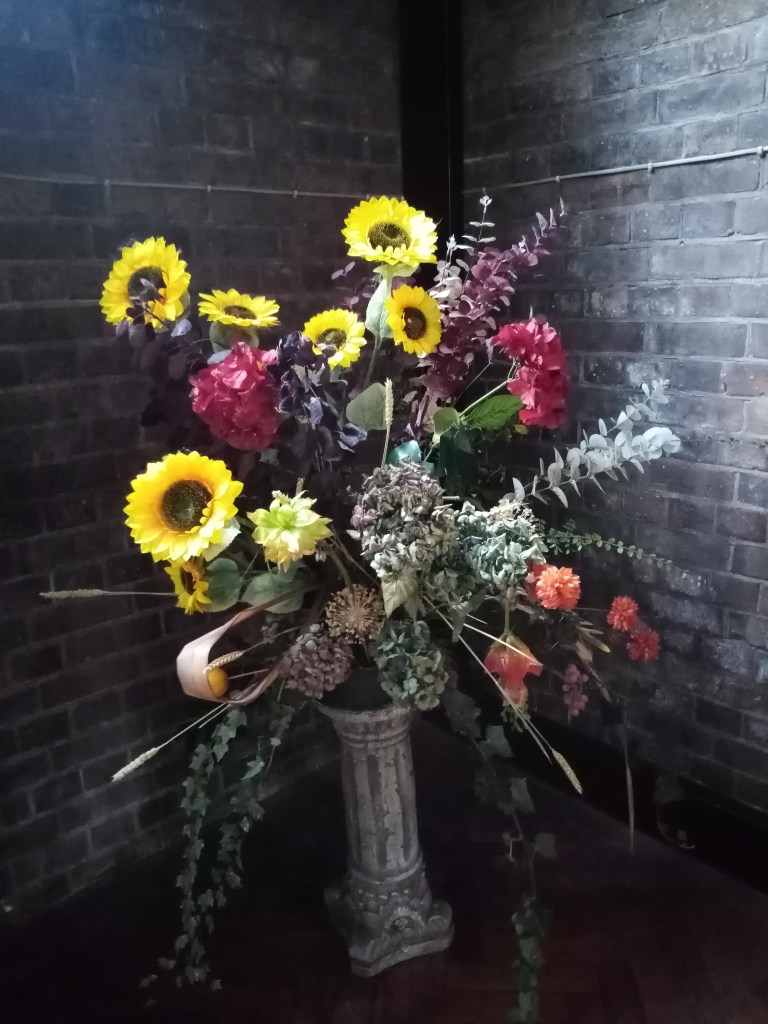
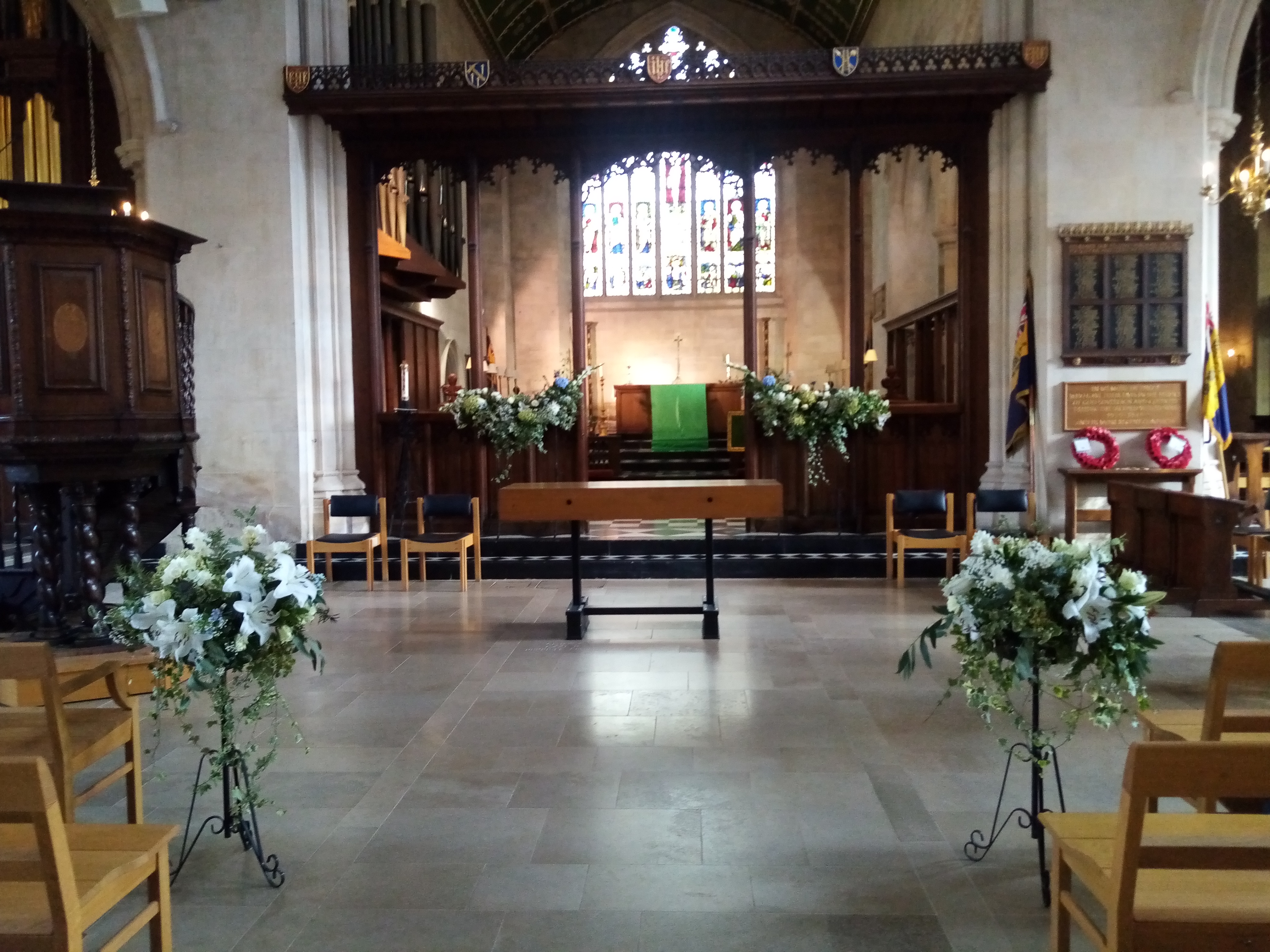
This is the Parish Church of Cheam, occupying a site of Christian worship which goes back to Saxon times. The current building, built in 1864, replaced a mediaeval church, and when this was demolished, the East end of the chancel was retained to contain the monuments and brasses. This remnant of the mediaeval church is now known as the Lumley Chapel, which I featured on the blog last March. The current church is constructed and designed in the French Gothic style of the late 13th century. There is a charming lych-gate at the entrance to the churchyard dated 1891. The most famous of St Dunstan’s one-time rectors was Lancelot Andrewes, leader of the team who translated and compiled the Authorised, or King James Version of the Bible, published in 1611. Lancelot went on to great things, becoming Bishop of Chichester, Ely and Winchester. When I visited, St Dunstan’s was open and beautifully decorated for Harvest.
Source: Information Leaflet in the Church
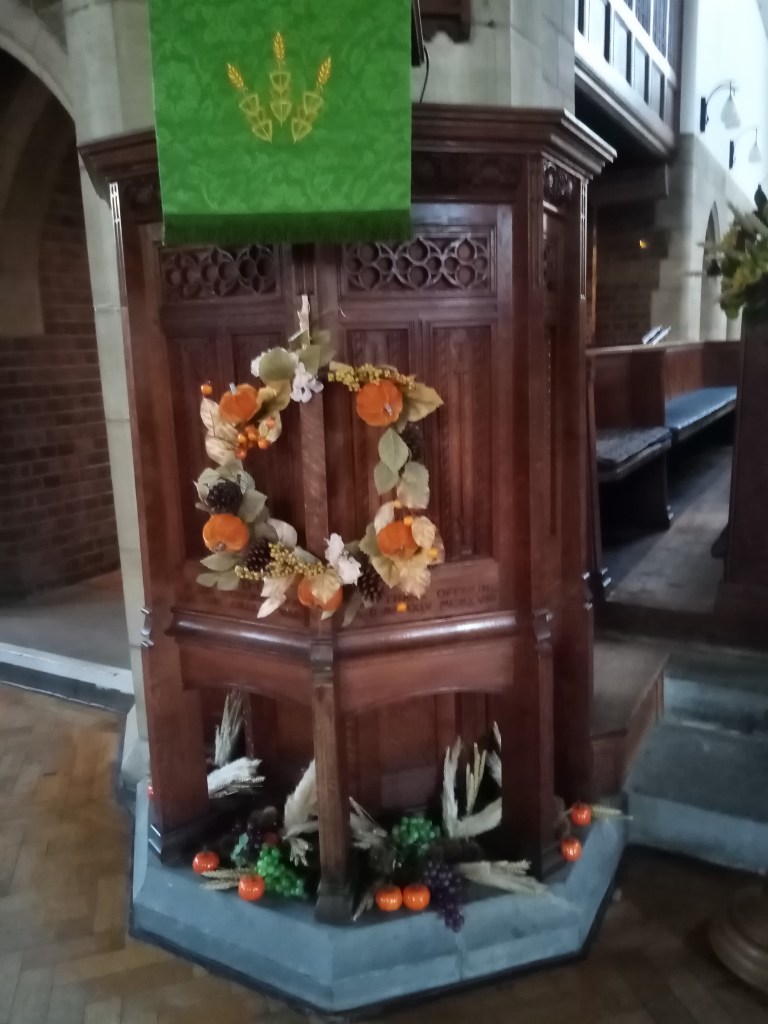
Pumpkins in the Porch!
St John’s, Belmont
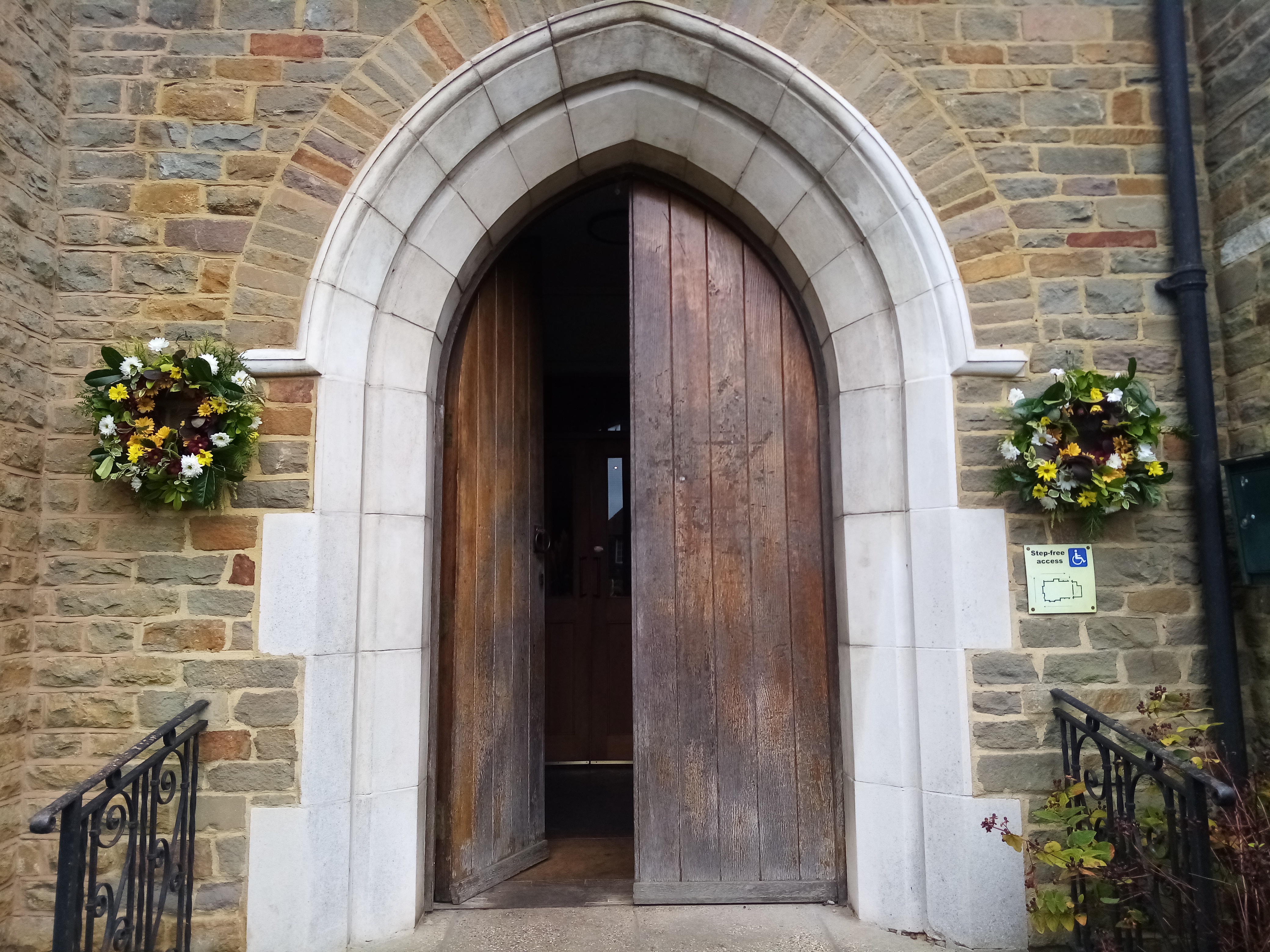
Pretty Autumn Wreathseither side of the door
It was lovely to pop inside St John’s and see another creative and beautiful Autumn/Harvest display. The church was built between 1914 and 1917 for the ever-expanding population of Greater London; a Church of England Parish church. It was designed by ‘major architectural duo’ Greenaway and Newbury in the neo-Gothic style. The church retains all its original fittings, and almost all of them were designed by the architects themselves. The font in the church dates from 1706 and originally came from a church in Oxford, and the East window was from a Victorian church being demolished. The building was extended in the 1970s and the nearby Methodist congregation moved in to share the building in the 1980s, sharing worship and administration since the mid-1990s. St Johns has become very active in the local community since then, and a community hall was built next to the church in 2002 to cater for a variety of activities.
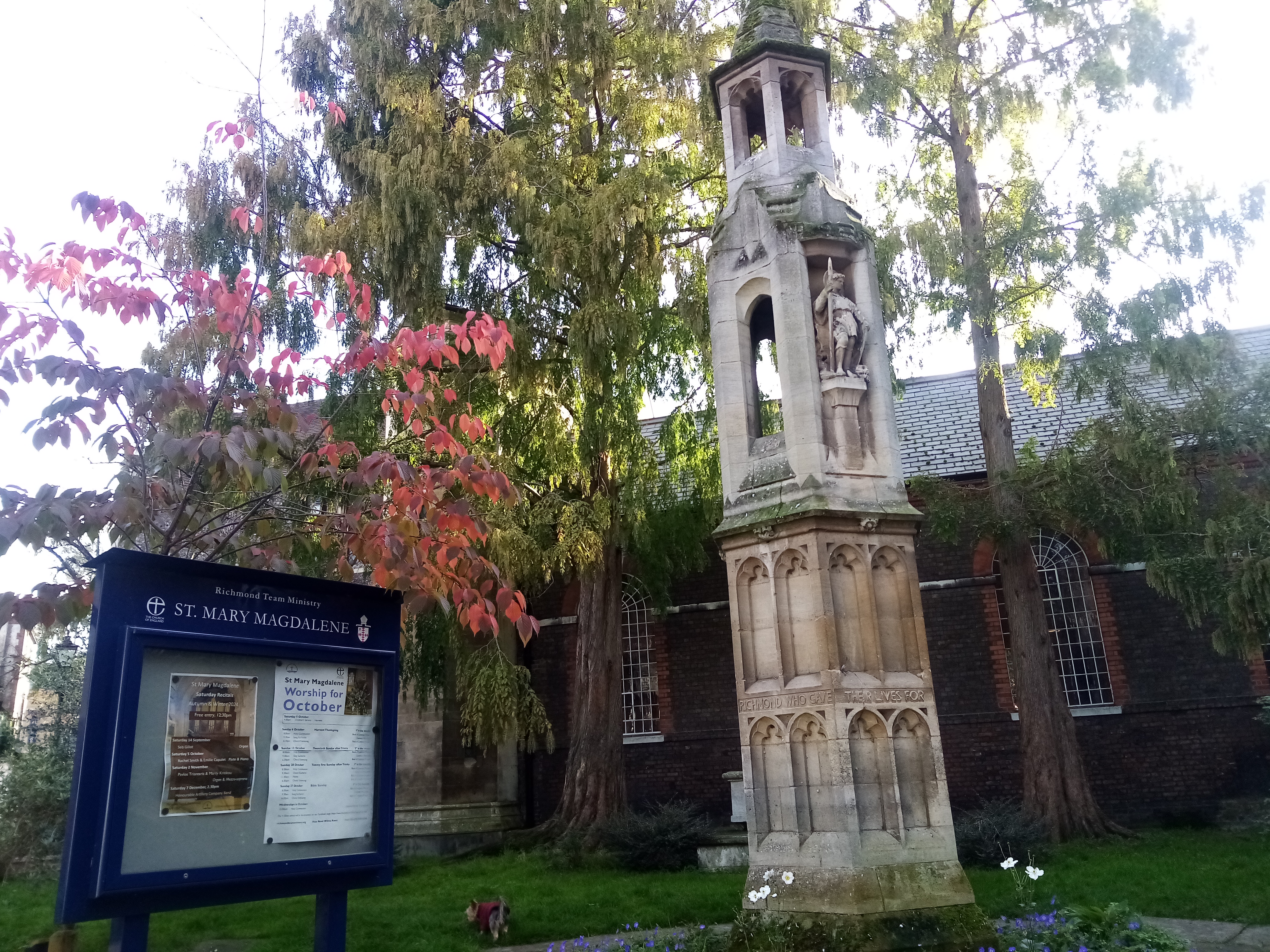
This is a Parish church built in the 16th century with additions up until the early 20th century. The original chapel was built in around 1220; Wikipedia lists ‘Years built’ as 1220 to 1904, so some sort of construction work has taken place for nearly 700 years! The church was entirely reconstructed during the reign of Henry Vll, who had been Earl of Richmond, Yorkshire, before becoming King of England. He rebuilt the Manor of Shene as a Royal Palace, which he named the Palace of Richmond. The small rural town of Shene subsequently took on the name Richmond too. There is a memorial stone in the church to three members of Lord Richard Attenborough’s family, who tragically lost their lives in the Asian Tsunami of December 2004. Lord and Lady Attenborough asked if the ashes of their daughter, granddaughter and their daughter’s mother in law could be placed in the church. It is uncommon for permission to be granted for church burial of ashes, but the diocese agreed to grant a faculty because of the family’s strong connection to the parish church; Lord and Lady Attenborough lived close by at Richmond Green.
Sources: Leaflet in the church; Notice board outside the church
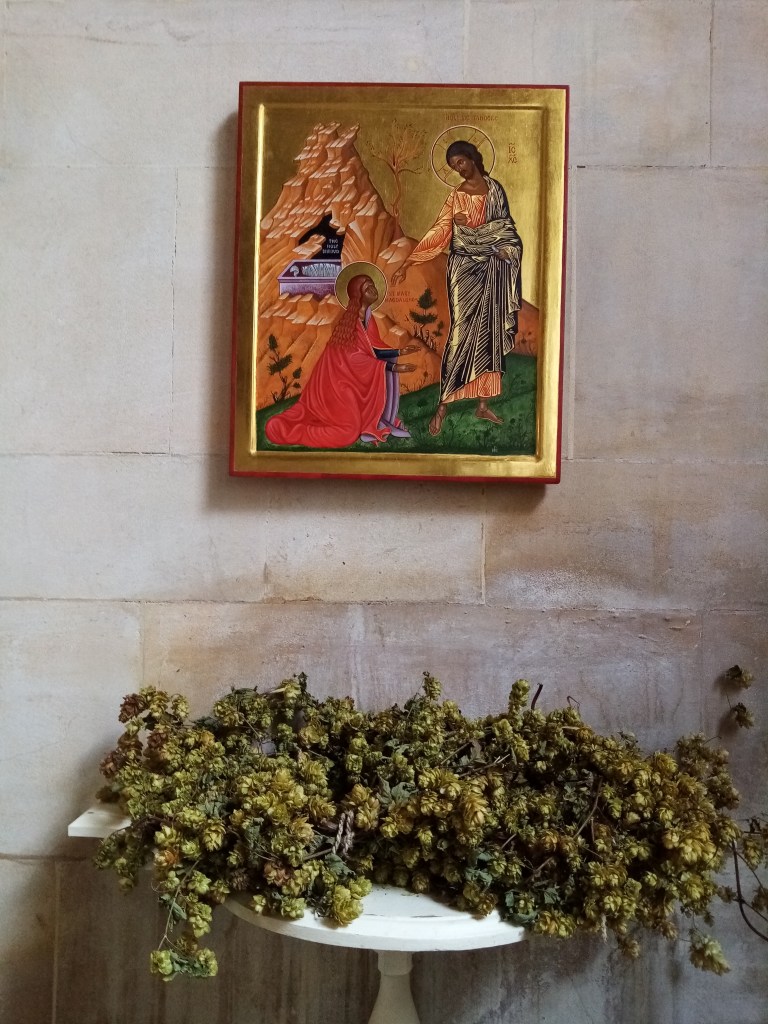
Picture of Jesus with Mary Magdalene
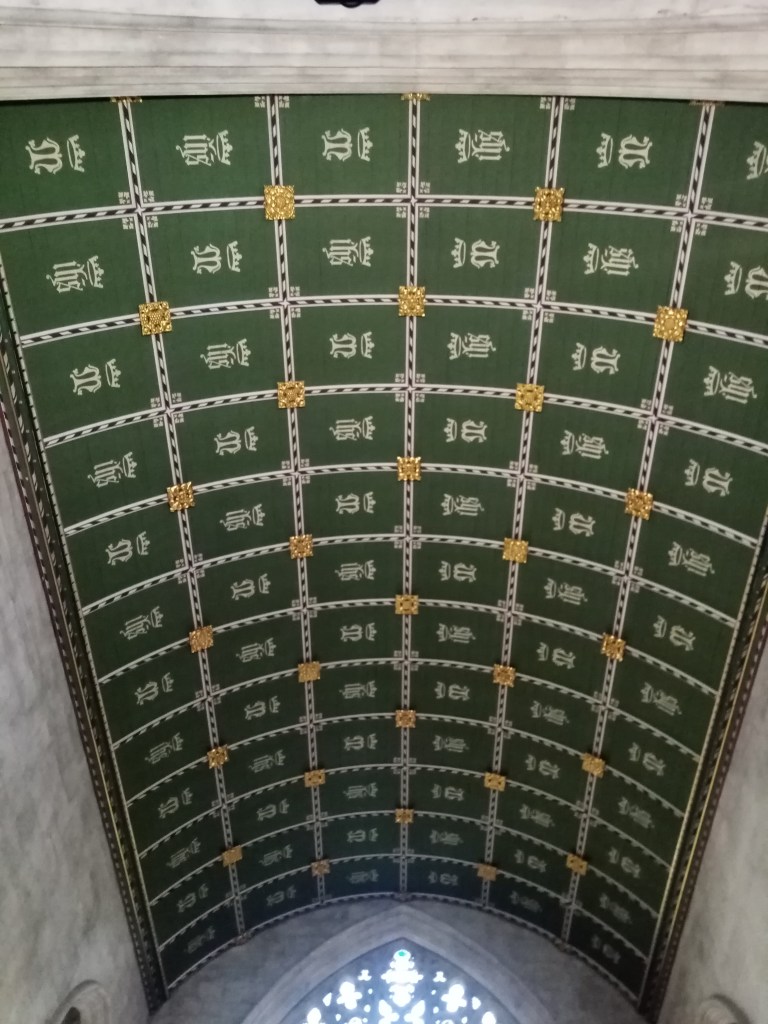
Ceiling in St Mary Magdalene
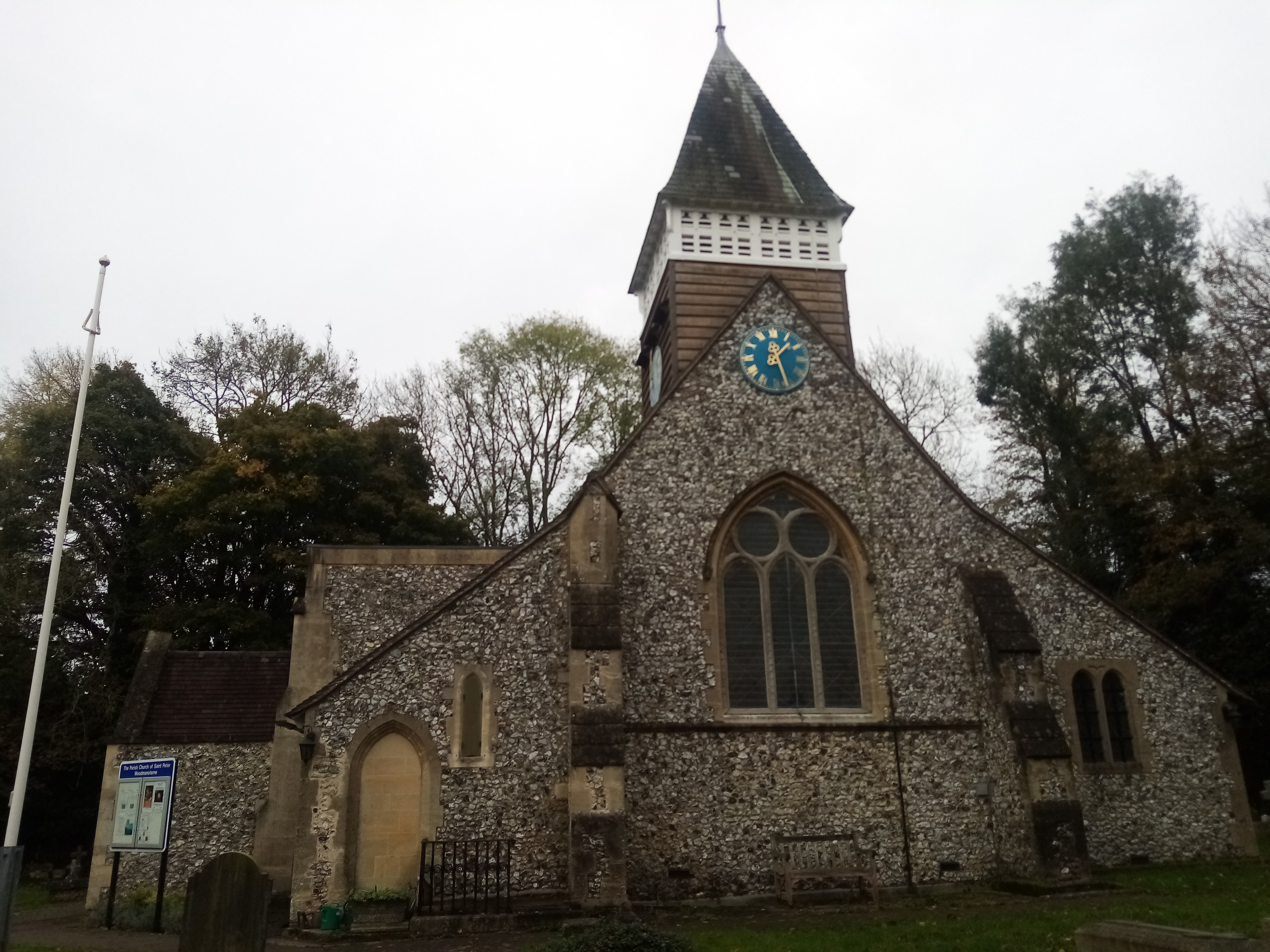
St Peter’s Woodmansterne
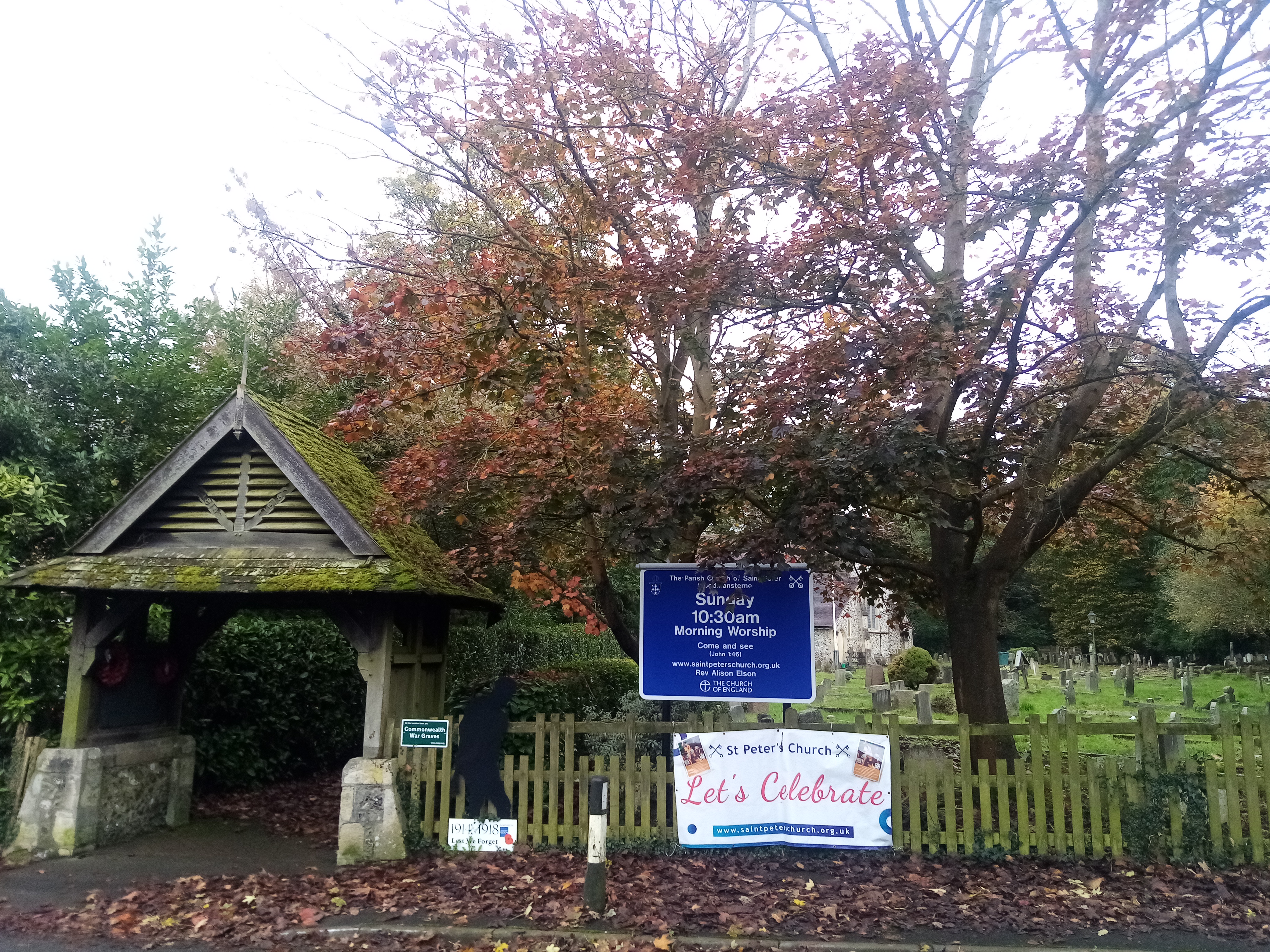
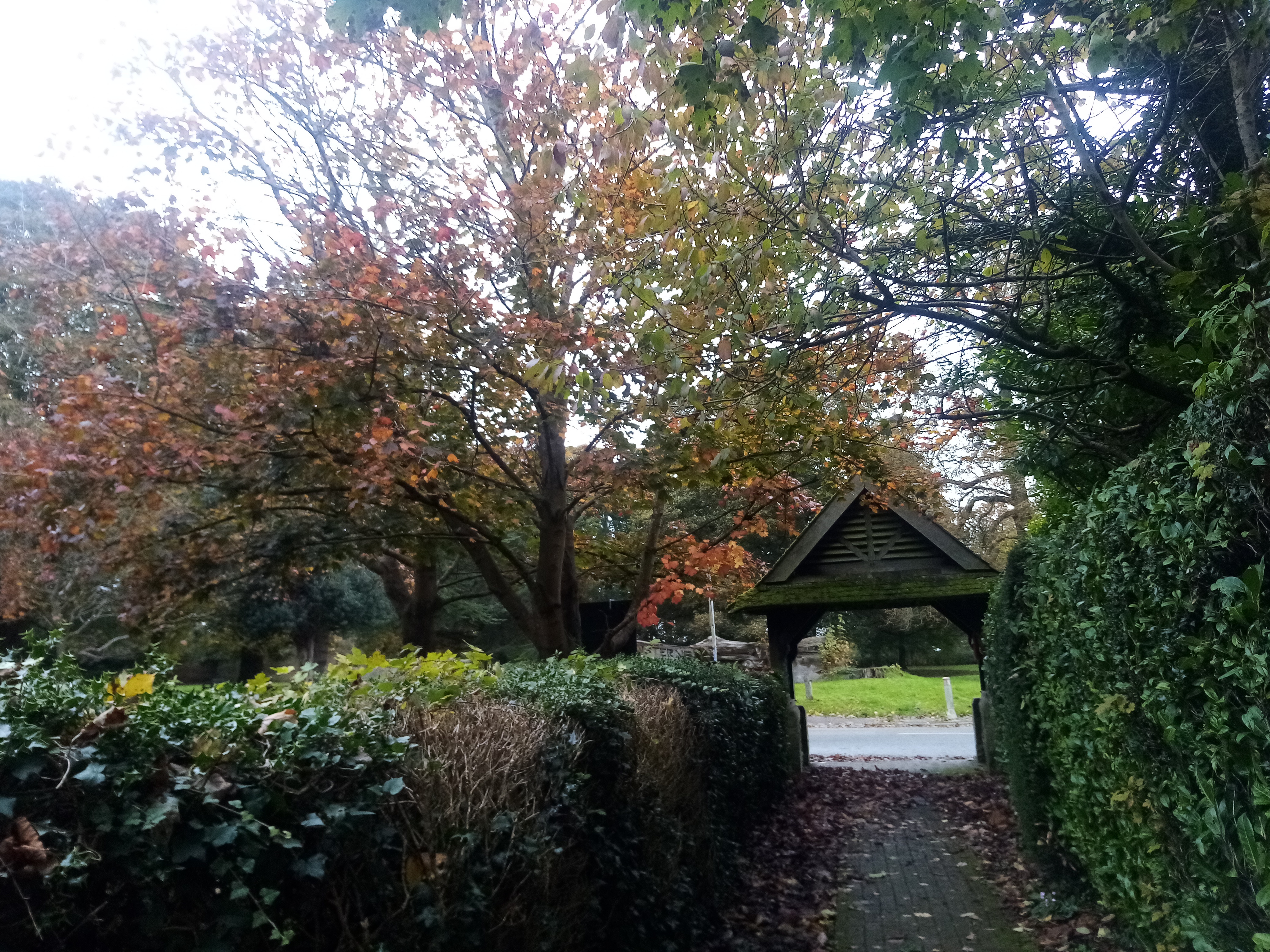
Lych-gate of St Peter’s
On the edge of the Borough of Sutton, St Peter’s was built between 1876 and 77 in what would have been a very rural setting. There has been a church on this site since the 9th century, a small Saxon church in a sheep-farming village. Woodmansterne is mentioned in the Domesday Book as ‘Odemerestor’ which derives from Anglo-Saxon ‘Ode’ – Wood, ‘mere’ – pond and ‘tor’ – high ground. The name went through many variations until the name Woodmansterne became the standard description in the 15th century. The previous mediaeval church was demolished and entirely reconstructed in 1876 using some materials from the old building. Like St Dunstan’s, the church has a pretty lych-gate which was erected as a memorial to the men of the village who lost their lives in the 1914 to 18 War, with further names added in memory of victims of the Second World War. Today St Peter’s has an extensive calendar of events and activities: in October there was the Bus Stop Café, a Light Party, a local walk, a Quiz Night, a Film Club, fitness classes and uniformed children’s groups.
In most of the City of London churches you can pick up little packets of collectable cards for a donation of £2. Each card has an illustration of one of the 110 churches which existed in the Square Mile of the City in 1660. Many of these were lost in London’s Great Fire of 1666, some fell into disrepair and were demolished, being combined with other parishes. Still more were bombed to their foundations in the London Blitz of the 1940s, leaving just 40 City churches remaining today. The Lost London Churches Project was set up to promote interest in both the ‘lost’ churches and those still standing. Previous blog posts have featured ‘pocket parks’: tiny City gardens where a church once stood. Here are four more lost churches, three of which were destroyed in the Great Fire and never rebuilt, the last survived the Fire but ironically was destroyed by another fire two centuries later. All source information this month is from the Lost London Churches Project website, which says ‘ Whenever you come across a small empty space or a pocket garden in the City of London, you can be fairly sure that it is the site of an old church or churchyard. Why else would such valuable real estate not be built upon?’
St Peter, Westcheap
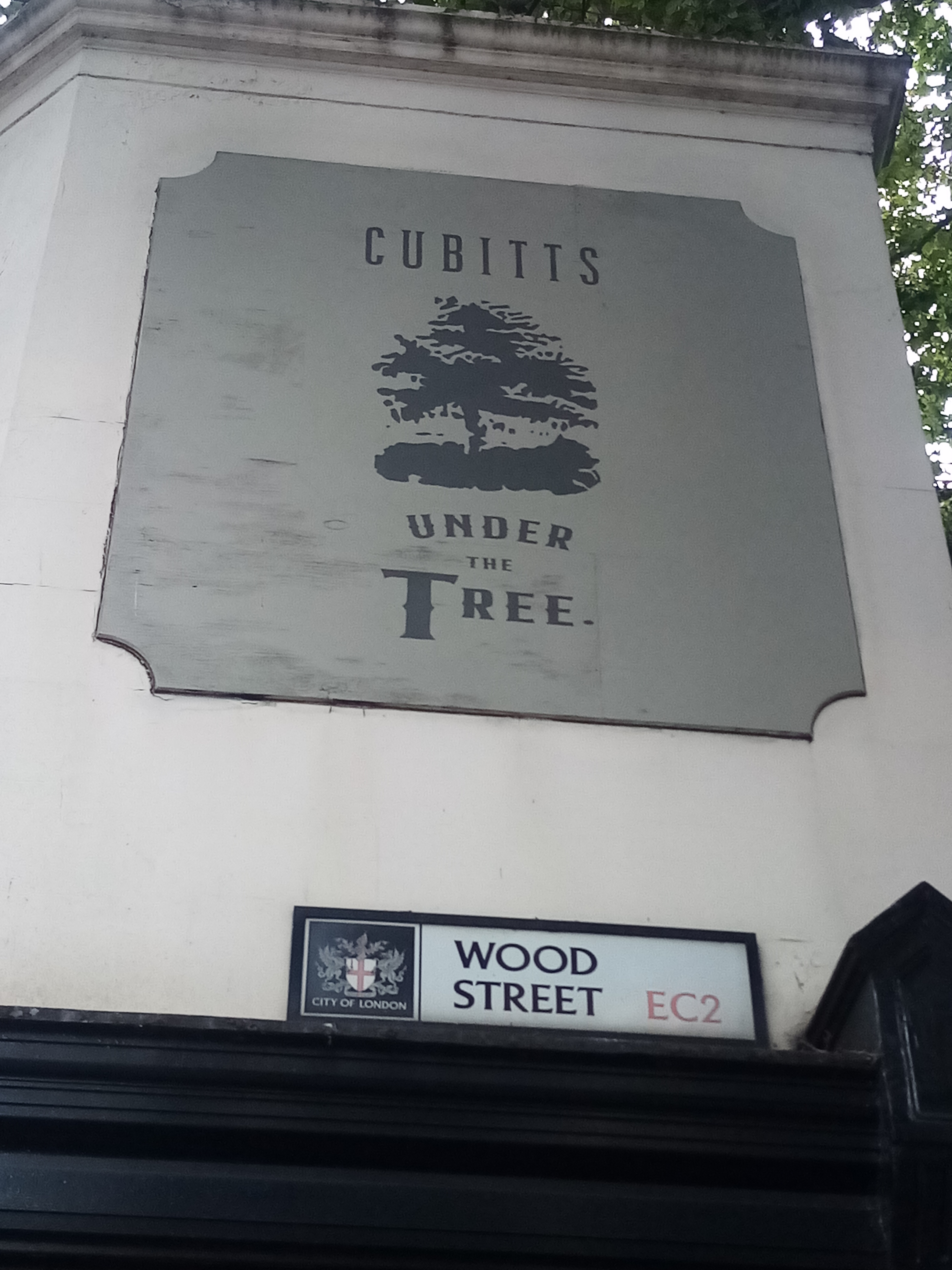
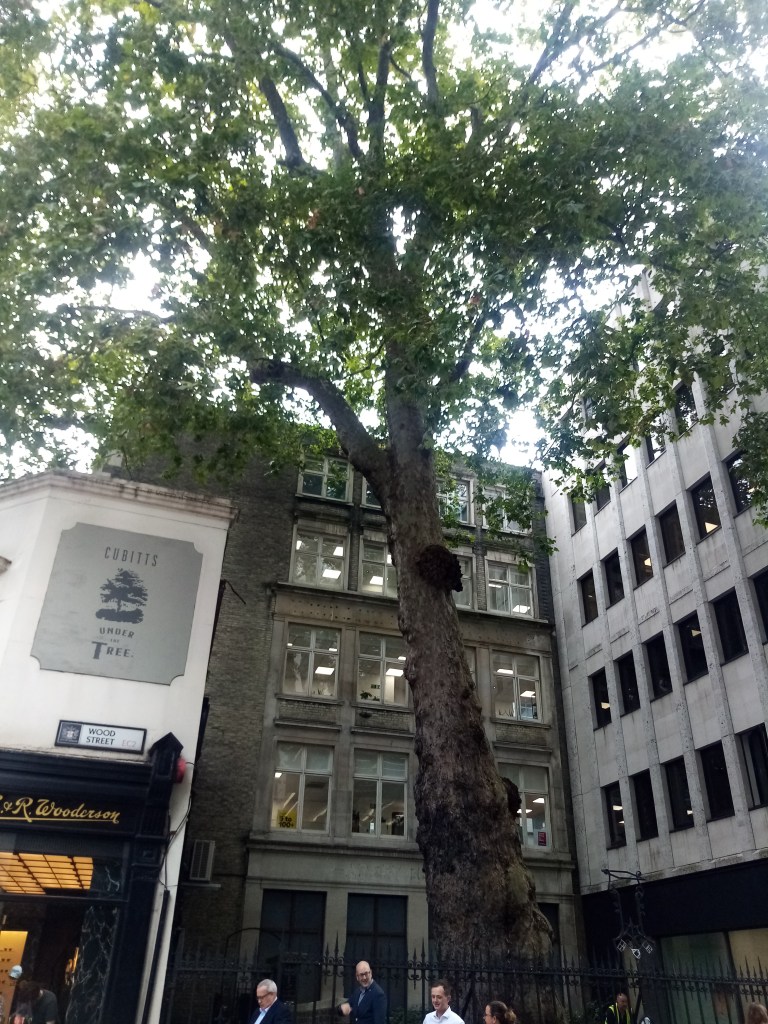
The shop next to St Peter Westcheap churchyard
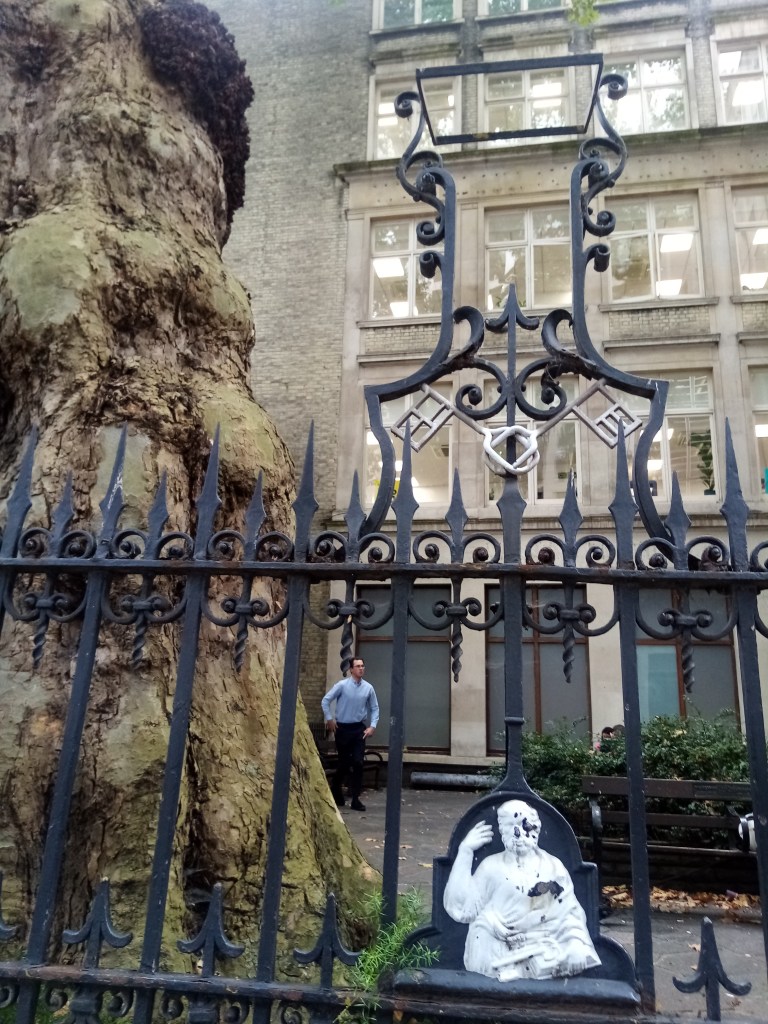
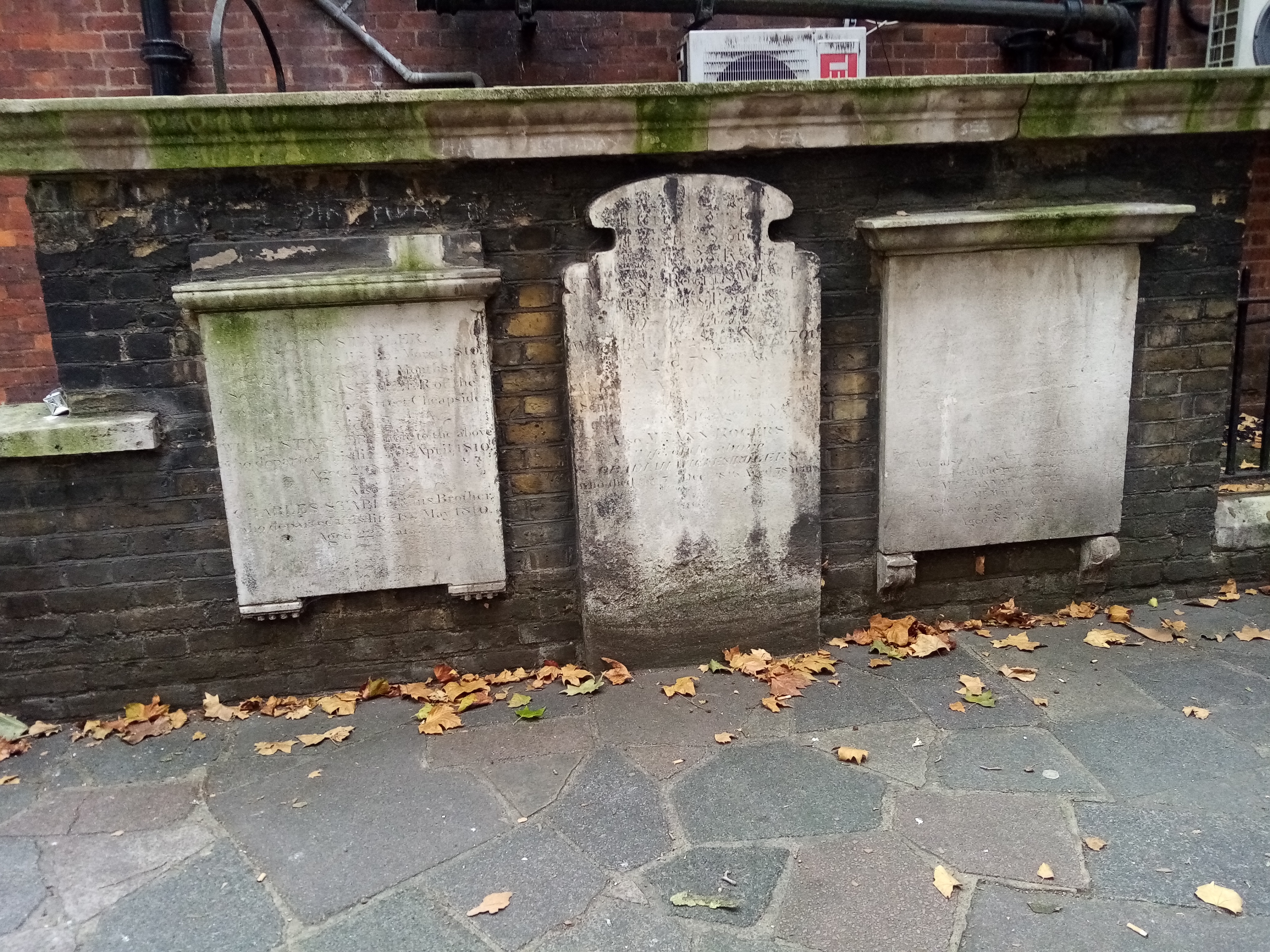
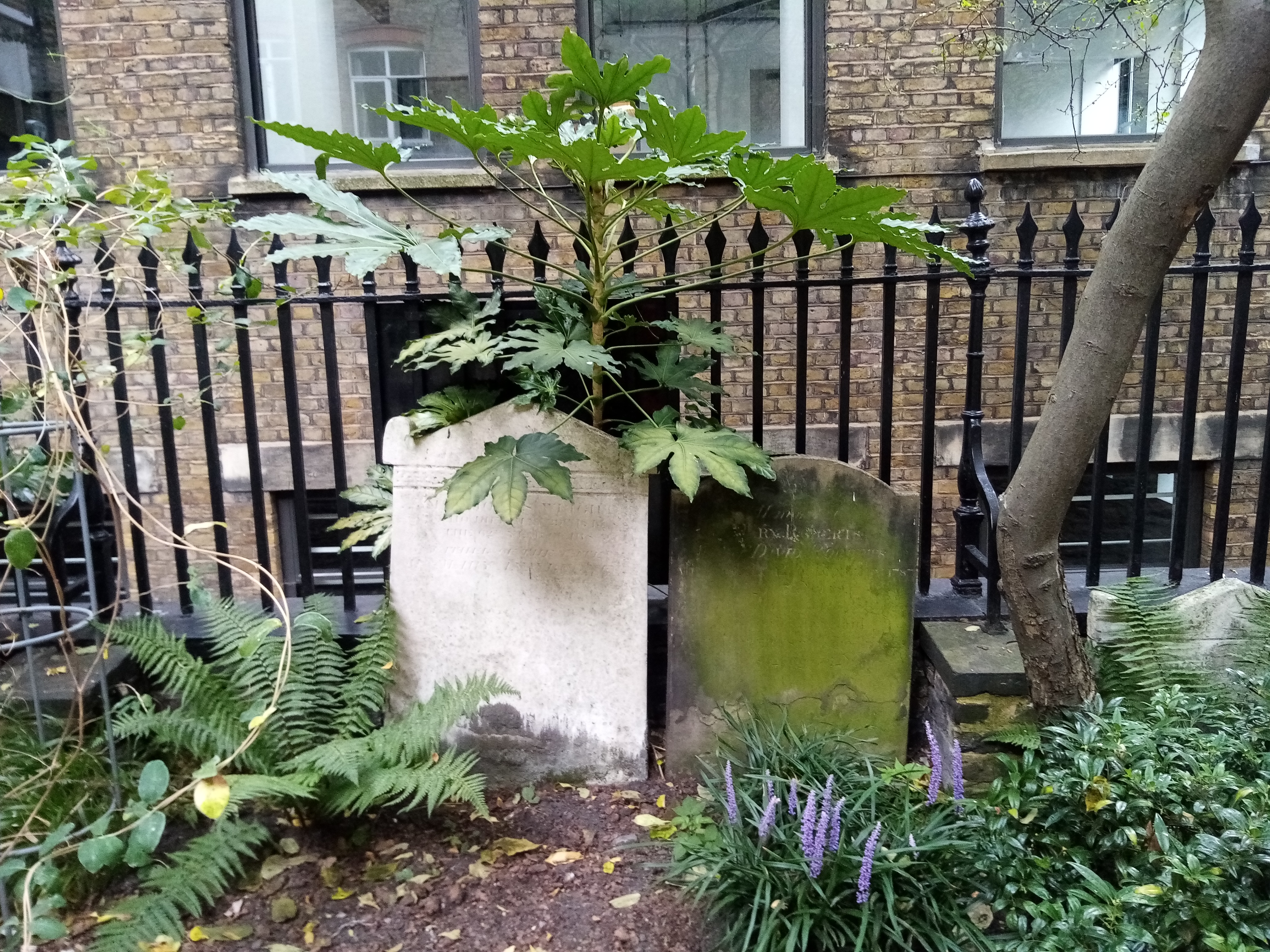
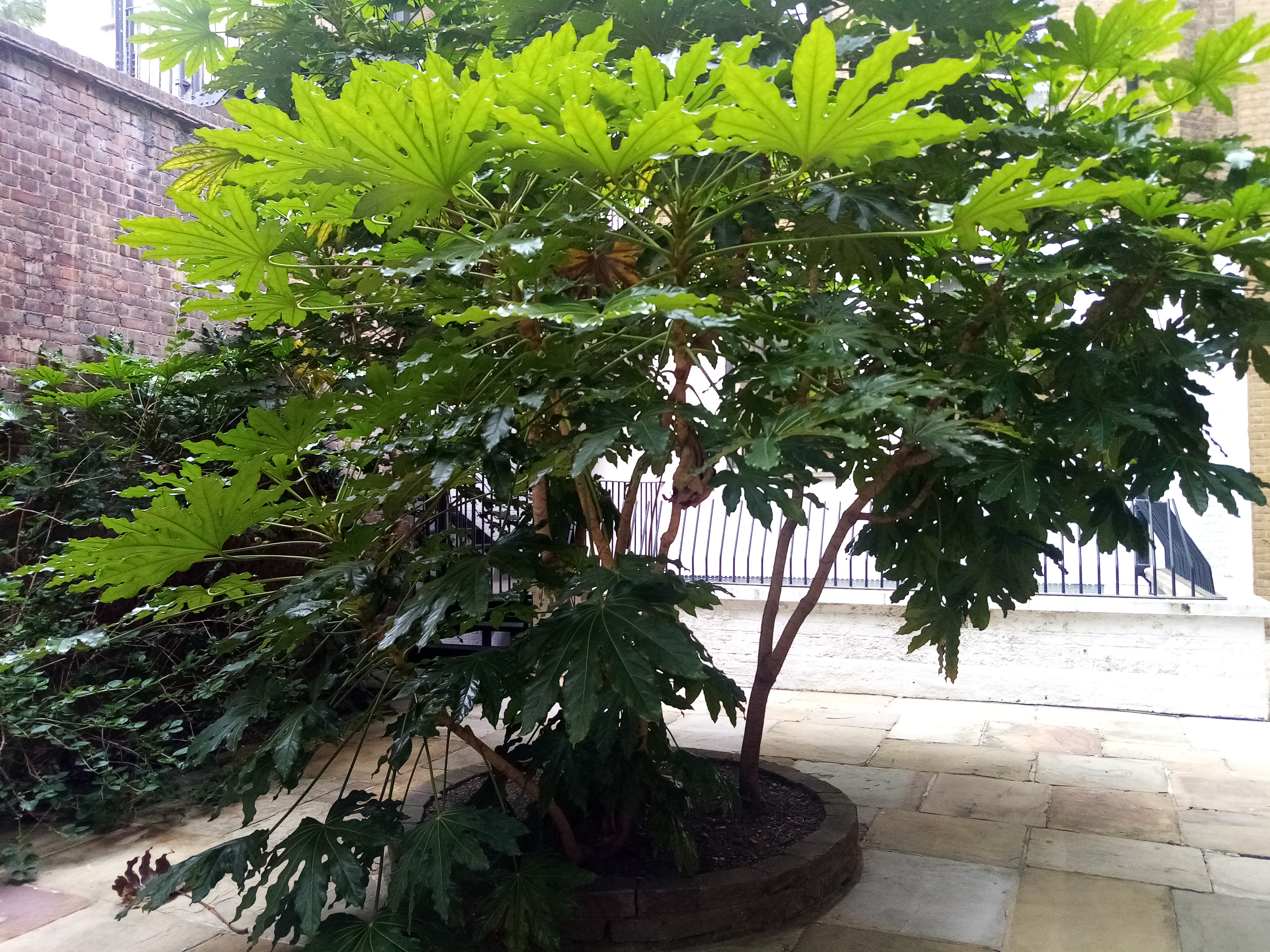
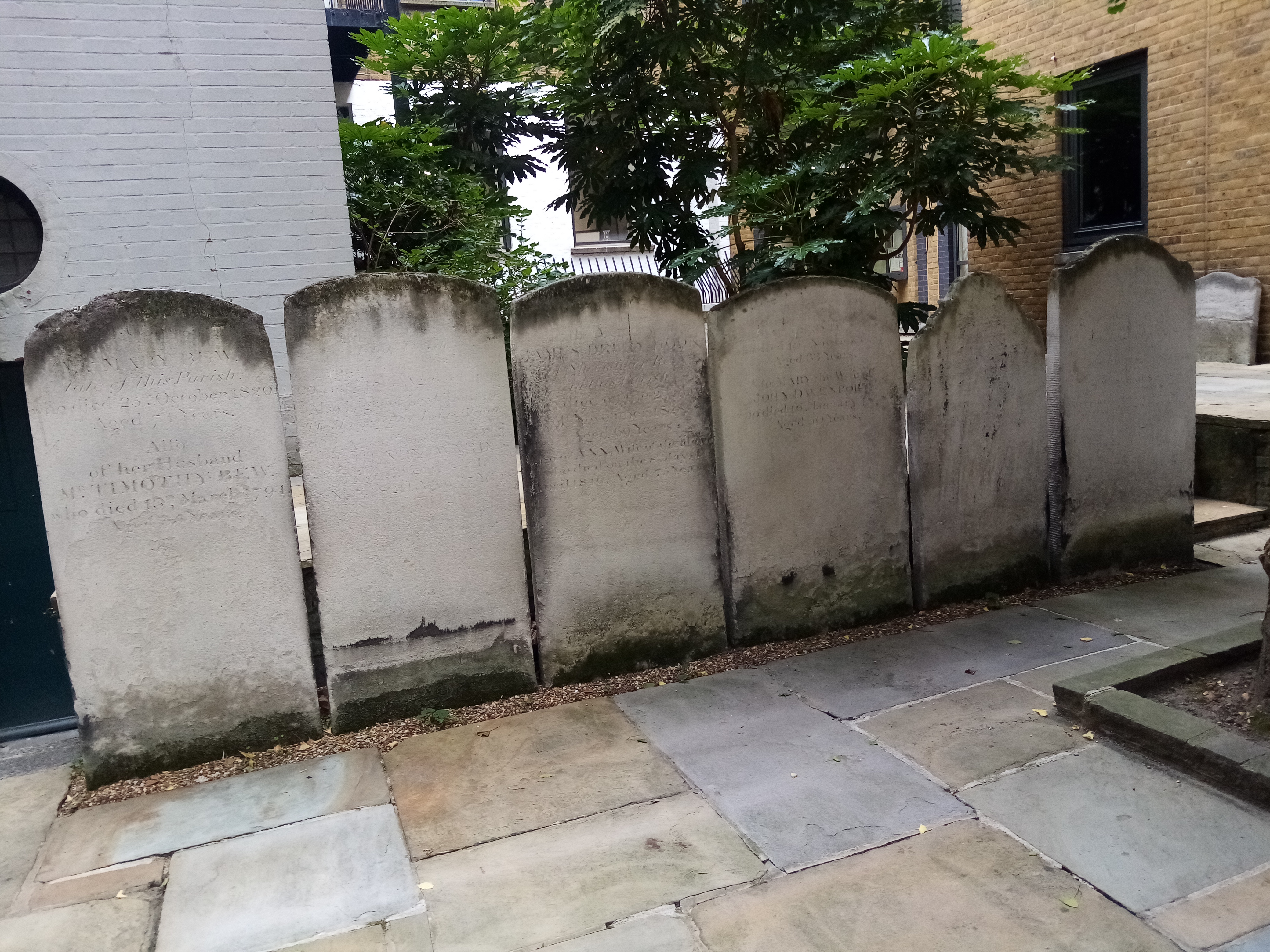
Cheapside, known as Westcheap in Mediaeval times, is the same bustling market street it was then, although the shops are now distinctly upmarket, including an abundance of coffee shops. Just off Cheapside in Wood Street is a tiny garden with a huge London plane tree, which has been a famous landmark for nearly two centuries. A bookseller in 1853 advertised his business address as ‘Under the tree, Cheapside’, and in 1919 L and R Wooderson gave their address as ‘124 Cheapside (under the tree.)’ This practice continues to this day, as the above photo shows. The tree is twice the size of the other trees in Cheapside, partly because it has been there the longest, but also because it’s very well nourished being situated on top of a graveyard! On the iron railings enclosing the garden is a little white image of St Peter and his crossed keys – the keys to the gates of Heaven. A few gravestones remain standing against a wall in the garden.
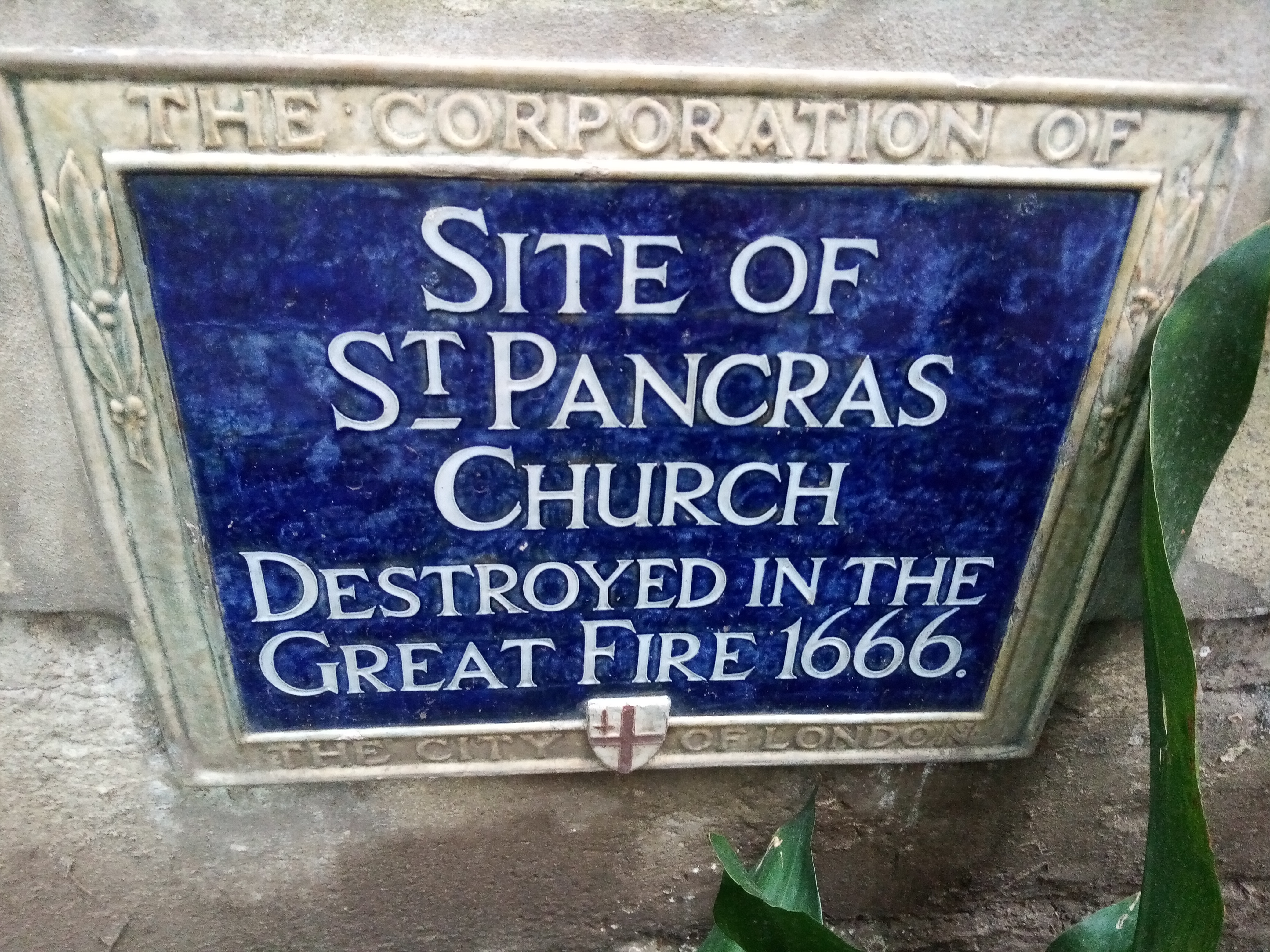
St Pancras, Soper Lane
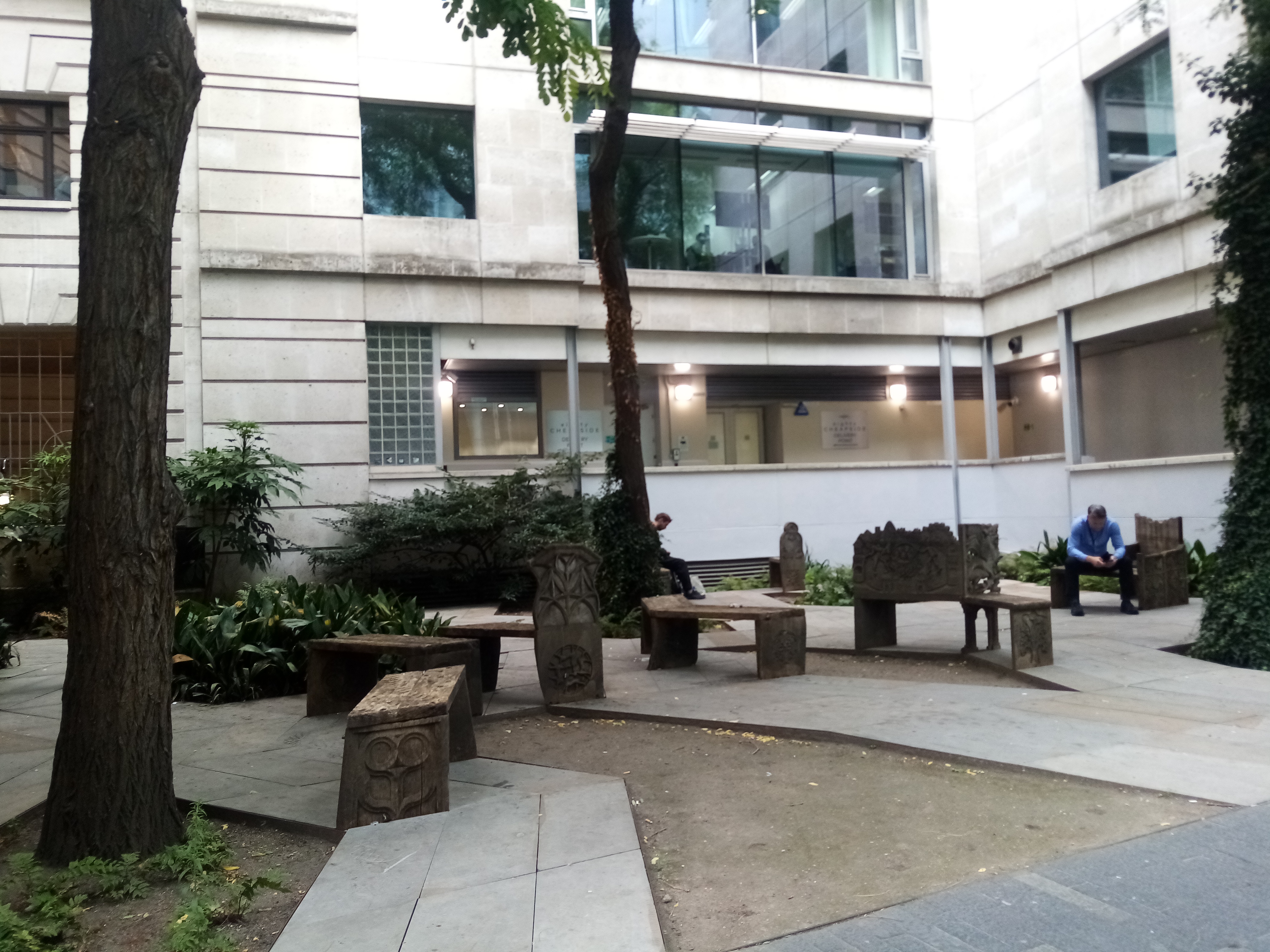
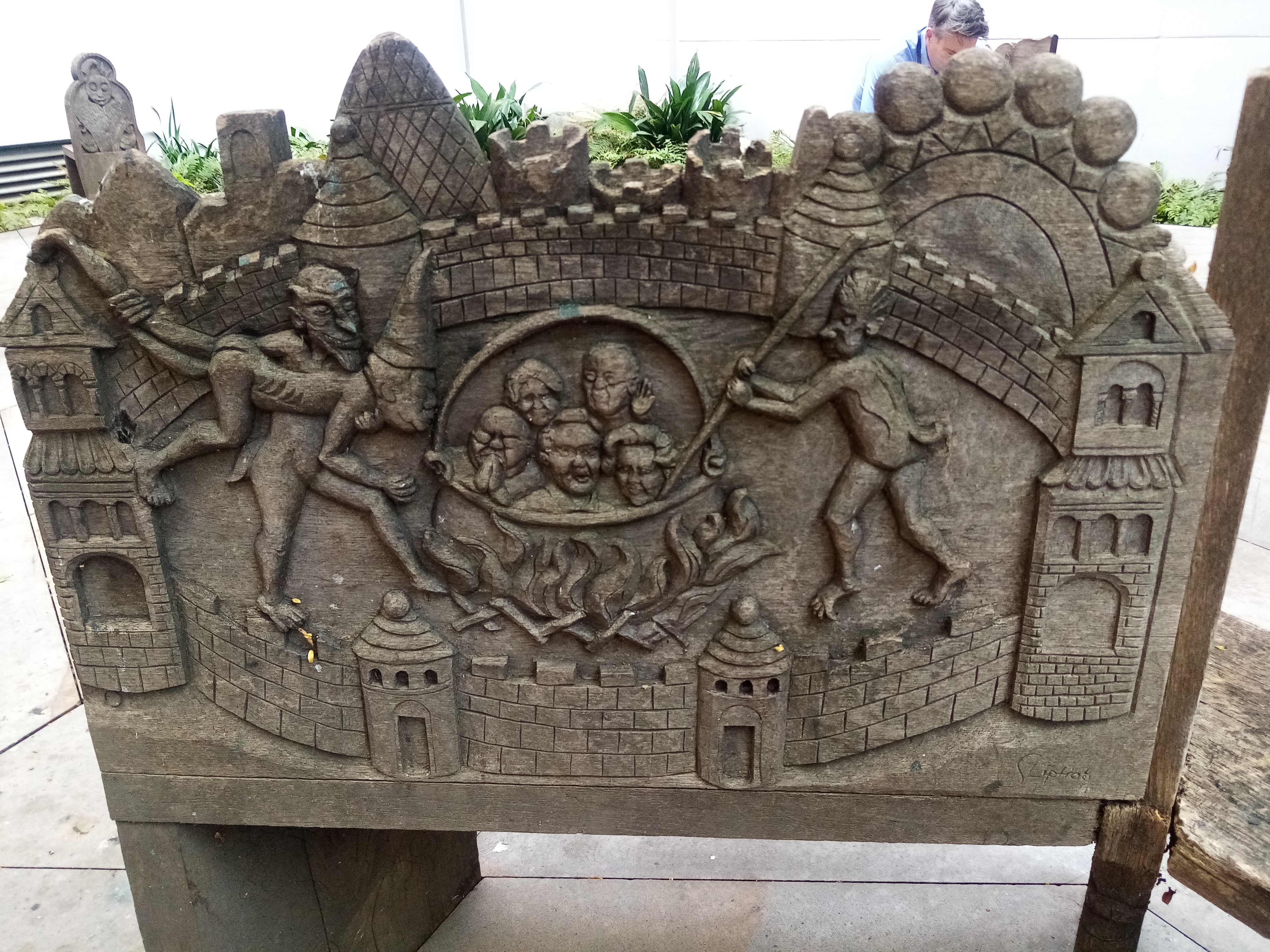
Situated in Pancras Lane is another pocket park, surrounded by tall office blocks. It’s a paved area with some carved wooden benches, a couple of trees and some flower beds. Like the other pocket parks, there are always several people standing around talking on their phones or sitting eating their lunch, so it’s sometimes quite hard to get a ‘people-free’ photo! On this site, not only was the 1098 church destroyed in the Great Fire, but Soper Lane itself. The church was originally a small single nave building with a tower, which was enlarged in 1624, but because of its destruction in the Fire, was only used for another 42 years. The decision was made not to rebuild it, but to unite the parish with next door church St Mary-le-Bow, which survives today as an active City church. I couldn’t find out anything about the benches, the LLCP website says they feature ‘ecclesiastical themes’ but they look recently made. I was only able to get one picture, as the others were being sat on!
The back of one of the benches
St Ann, Blackfriars
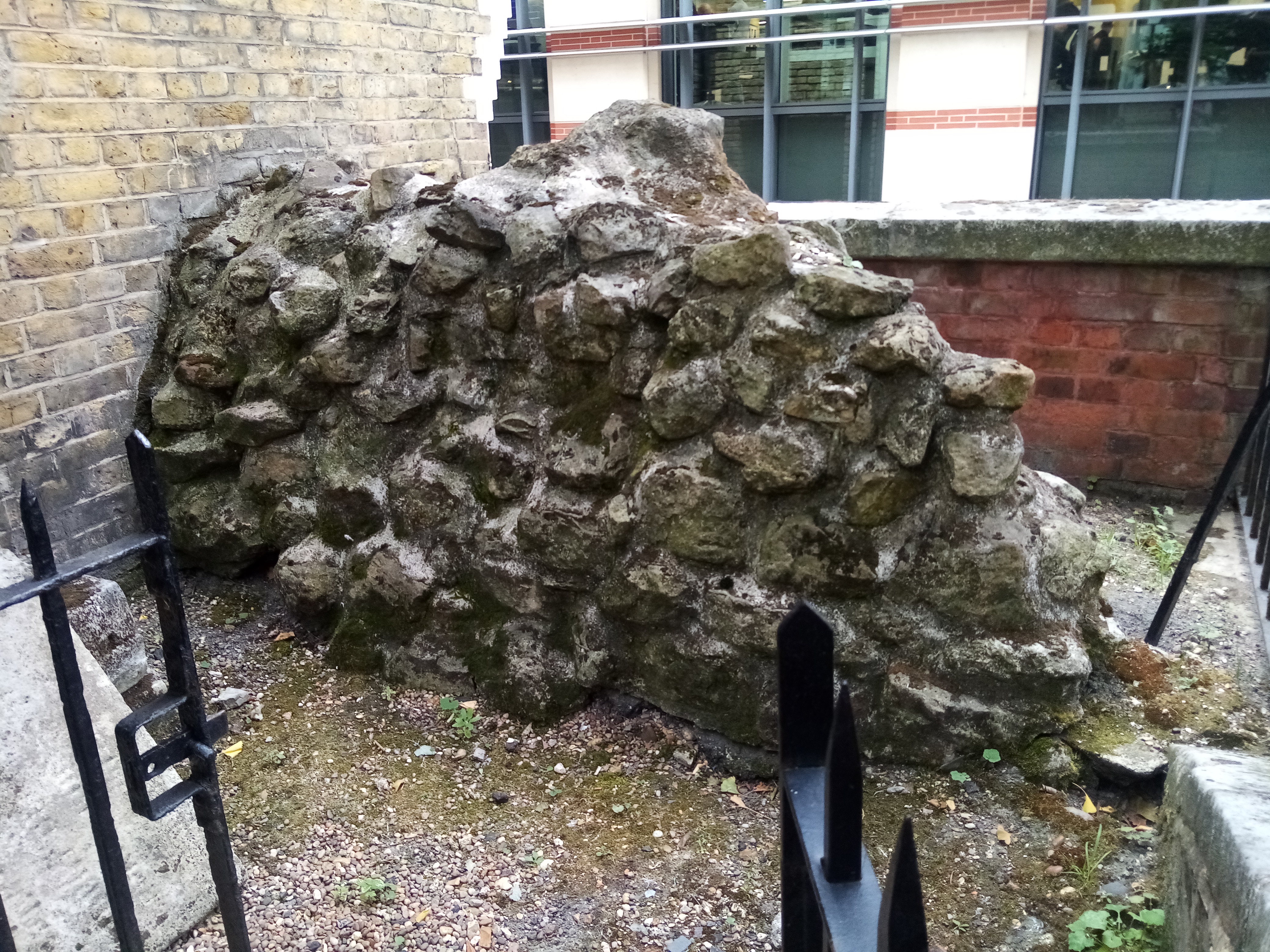
One of the most attractive of the Pocket Parks, St Ann has been planted out with the types of shrubs and small trees which will survive in an area almost devoid of sunlight. St Ann was originally a parish chapel in the Priory of Blackfriars situated on the River Fleet. Most of the buildings on the site were demolished in 1550 when the Priory was dissolved by Henry VII, but local residents needed a parish church so a new one was established in 1597 with the full name: ‘the Church or Chapel of St Ann, within the precinct of Blackfriars.’ The church is believed to have been adapted from the Chapter House of the mediaeval priory, so it looks as if there was always the intention to provide a place of worship here. However, the new church survived less than 70 years before succumbing to the Great Fire, and the parish was combined with nearby St Andrew by the Wardrobe, which stands today. The churchyard remained open for burials and there are some gravestones in the garden. Unusually, a remnant of the original church wall also remains.
Remnant of St Ann Blackfriars wall
St Mary Magdalene, Old Fish Street
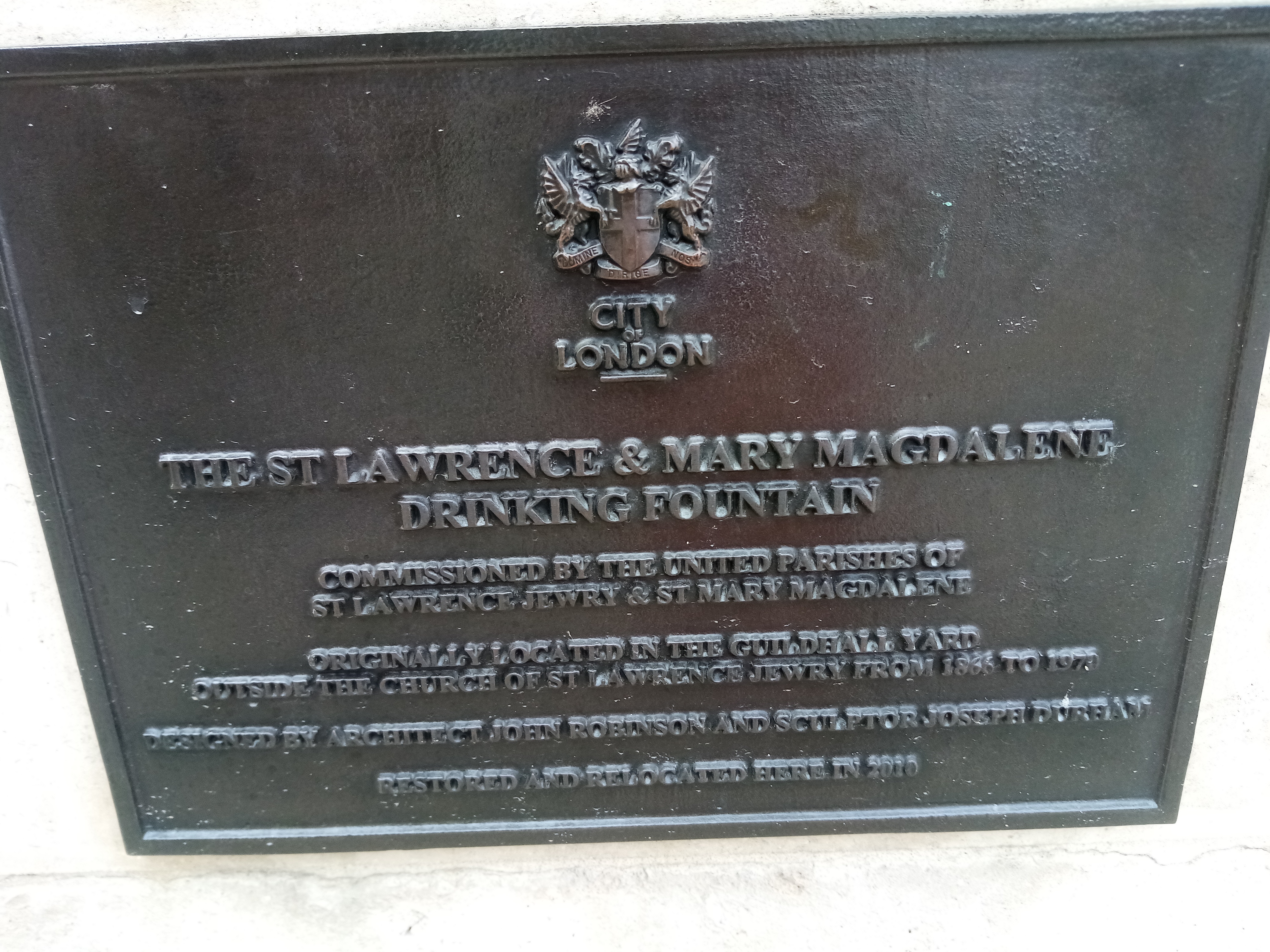
Plaque on the memorial drinking fountain
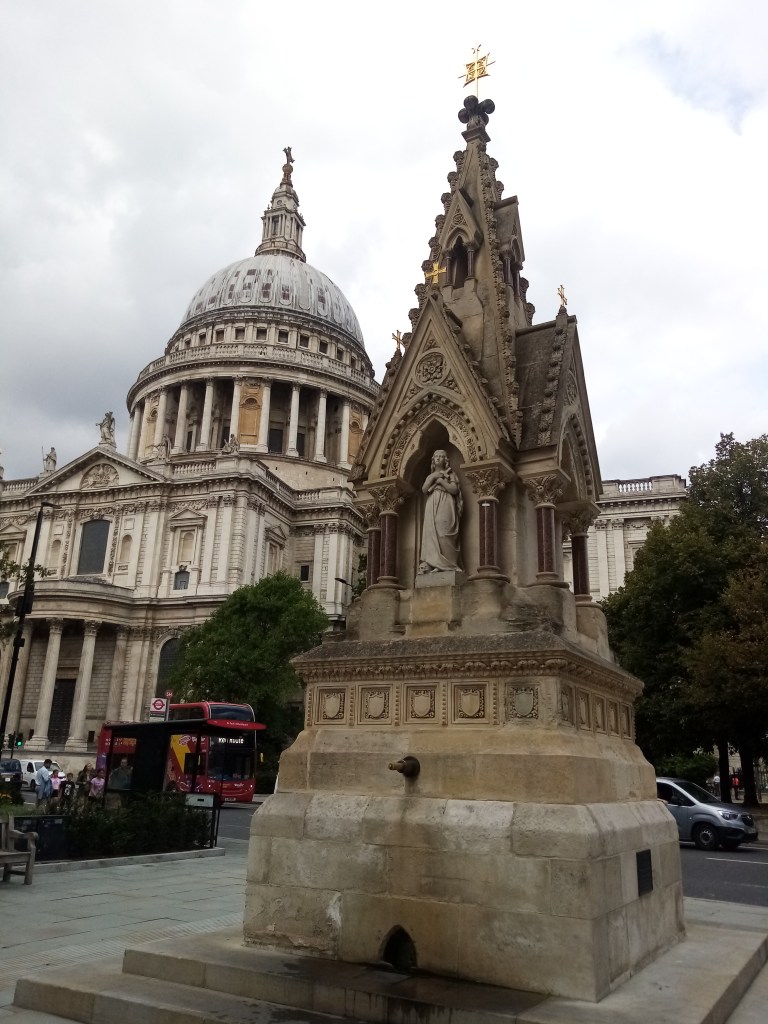
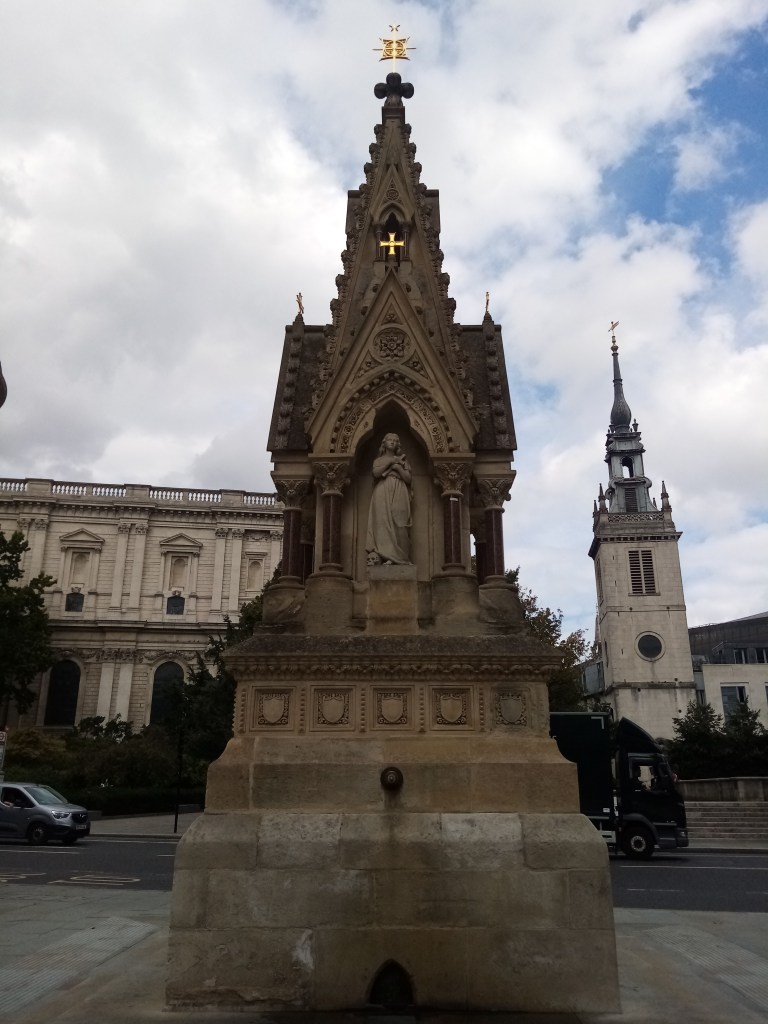
The first mention of this church is in 1181, being situated in the fish market near St Pauls Cathedral. A copperplate map of 1555 shows 12 churches in the immediate vicinity of St Pauls with St Mary Magdalene being the nearest, as can be seen from my photos. Like the other churches, this one was destroyed in the Great Fire, but unlike the others it was rebuilt by Sir Christopher Wren in 1687 when the parish combined with another destroyed church, St Gregory by St Pauls. However, less than 200 years later disaster struck when a nearby warehouse caught fire and severely damaged the St Mary’s. It couldn’t be repaired so it was pulled down and the parish combined with St Martin on Ludgate Hill. There are no visible remains of the church but a drinking fountain has been erected where the church once stood. The plaque says that the fountain was commissioned by the combined parishes of St Mary Magdalene and St Lawrence Jewry in Guildhall Yard, and the fountain was originally located there, but it was re-sited here in 2010. St Lawrence still stands, so I’m glad the fountain was moved as it now commemorates the site of a ‘lost church’.
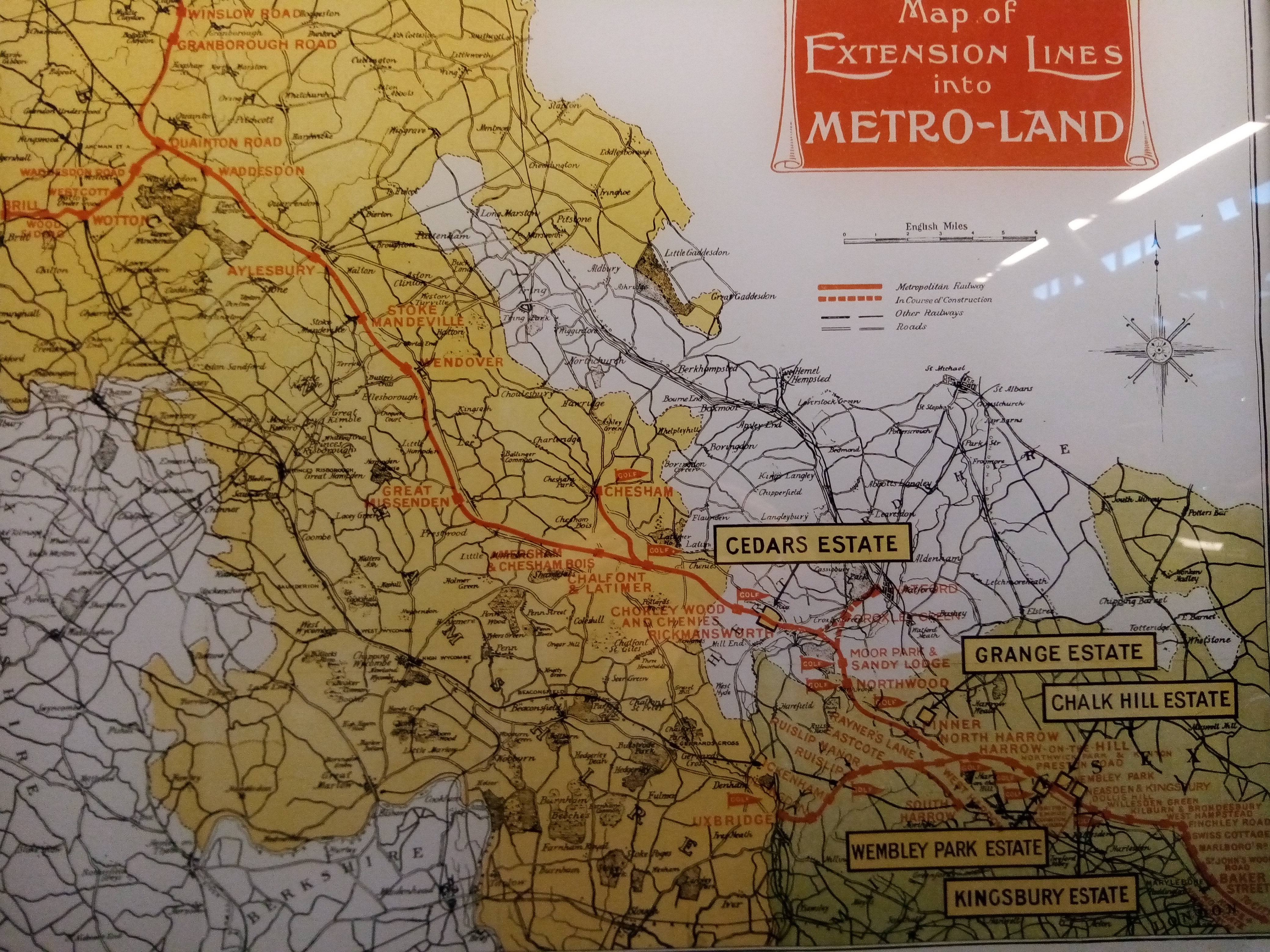
In 1915 the Metropolitan Railways Marketing Department came up with the phrase ‘Metro-land’ to help sell surplus land that the Met had acquired in extending its railway network beyond the London suburbs into the counties of Middlesex, Buckinghamshire and Hertfordshire. The Metropolitan Railway County Estates (MRCE) began creating Garden Villages and Garden suburbs in 1920 along the extended lines: modern homes in an idyllic rural setting. The ‘Metro-land Guide’ promised a fast journey time for commuters in and out of the City with delightful views from your carriage window of pretty, newly created villages with fields and woodland between them. The architecture was mostly in the popular Arts and Crafts style: a nostalgic mix of mock Tudor and Elizabethan – ‘Tudorbethan’, a word coined by poet laureate John Betjamin, who wrote extensively about Metro-land, and in 1973 made a whimsical documentary about it. By the early 1930s a new style of architectural design, Modernism, was starting to break out among the traditional suburban villas, and these are the subject of ‘A Guide to Modernism in Metro-land’ by Joshua Abbott, Unbound, 2020. Among the designs for underground stations, libraries, town halls, factories and housing, there are the Modernist churches; here are four of the best.
Source: Joshua Abbott, A Guide to Modernism in Metro-land.
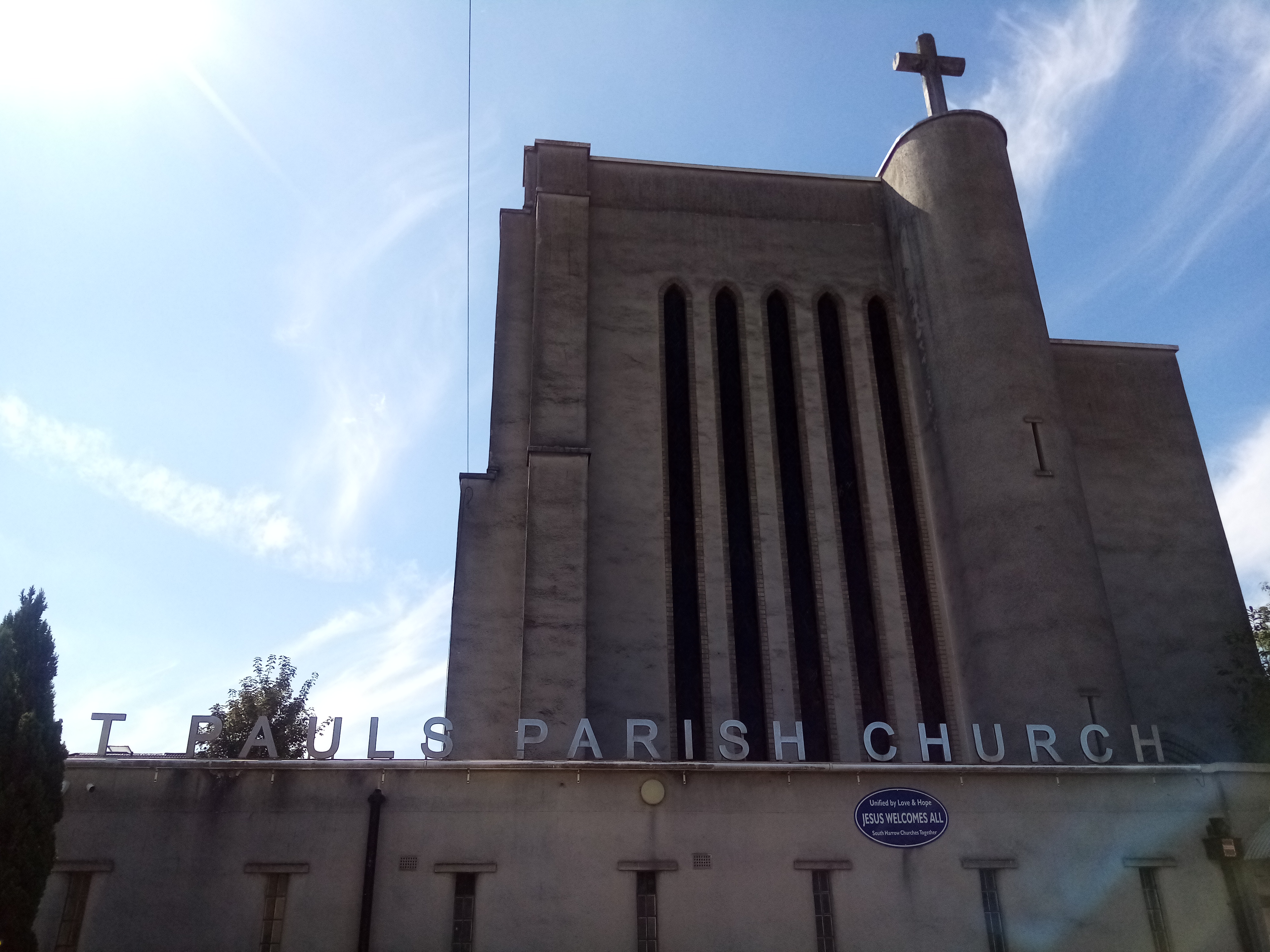
St Paul’s Parish Church, South Harrow
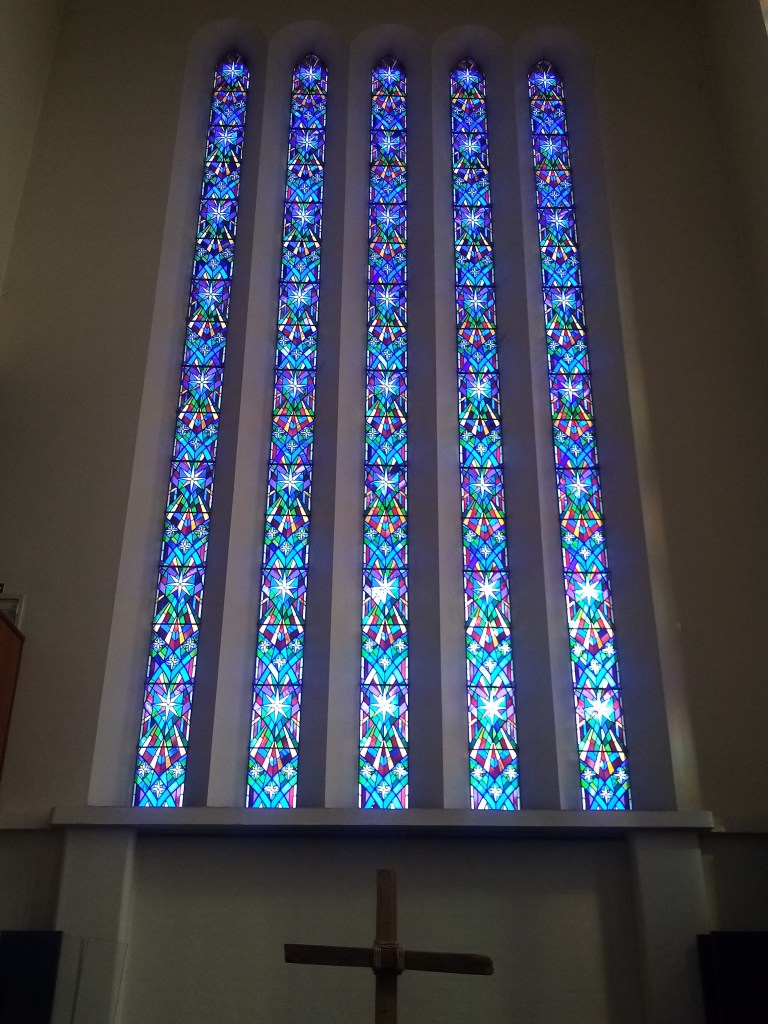
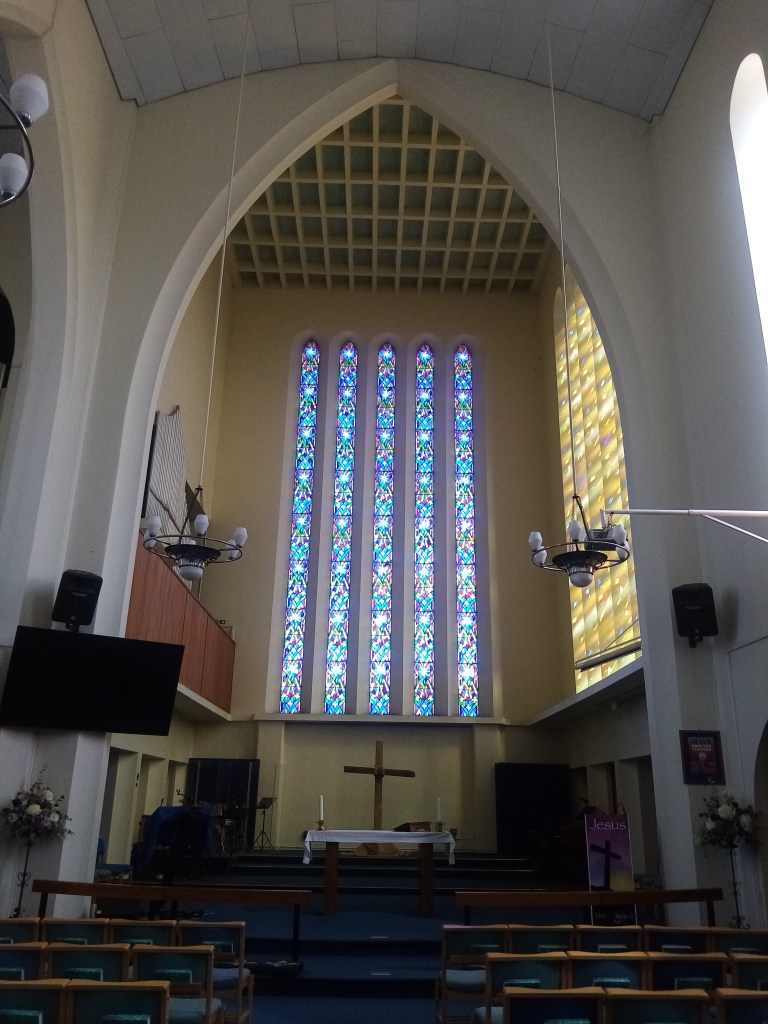
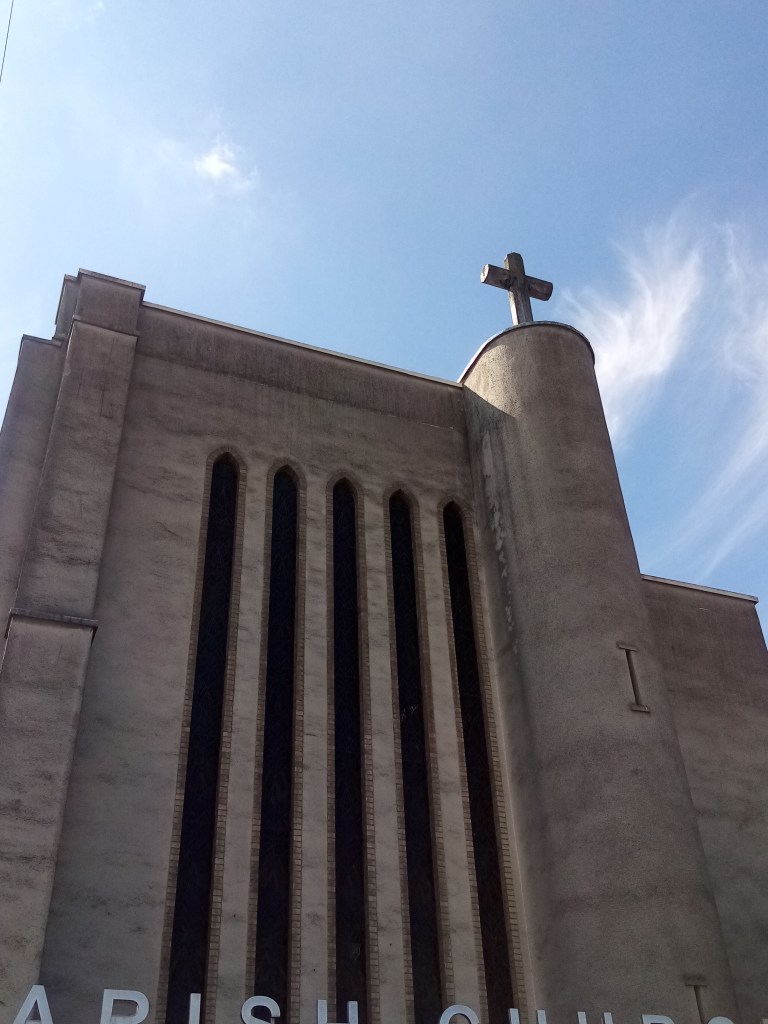
Joshua Abbott refers to St Paul’s as ‘a quietly radical church design’, and it certainly stands out in an ordinary residential street. It was designed by architect NF Cachemaille-Day, who was a leading exponent of Expressionist Architecture. From the 1930s he became known for his church designs, one of which was described as ‘a milestone in the history of church architecture in England’. The foundation stone of St Paul’s was laid in 1937, and the church is built in brick ‘but rendered on the outside to resemble an austere factory building’ – why? It wasn’t one of my favourites, the only thing I liked about the exterior was the name of the church in white concrete lettering on the front of the building, which I’ve never seen before. Fortunately a lady from the office, Jill, let me into the church and allowed me to look around and take photos. The interior is quite plain also, apart from the beautiful stained glass windows, which, Jill told me, catch the light shining through them in the mornings and spread colour around the church on a sunny day.
Sources: Joshua Abbott; Wikipedia
St Gregory the Great, South Ruislip
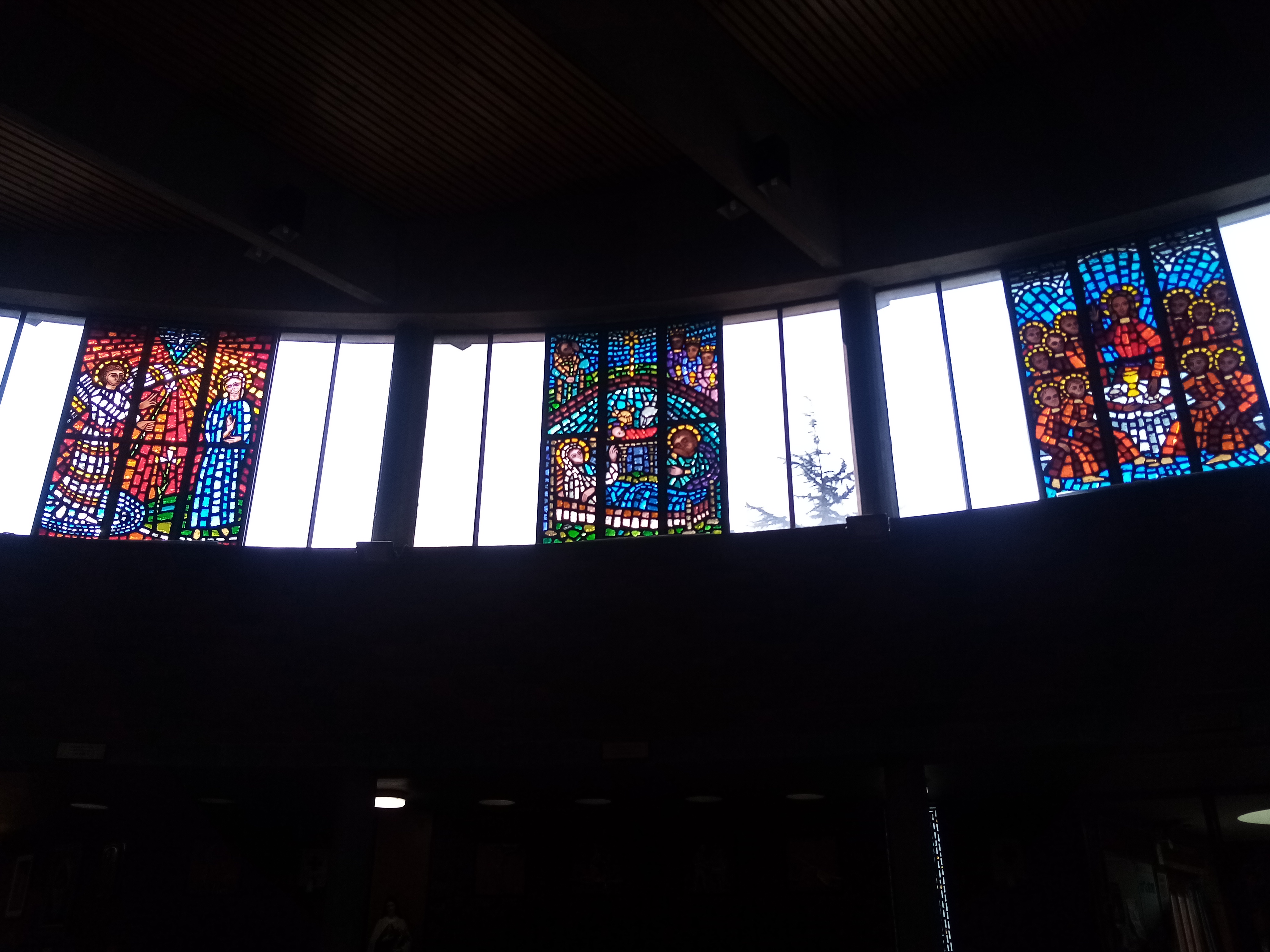
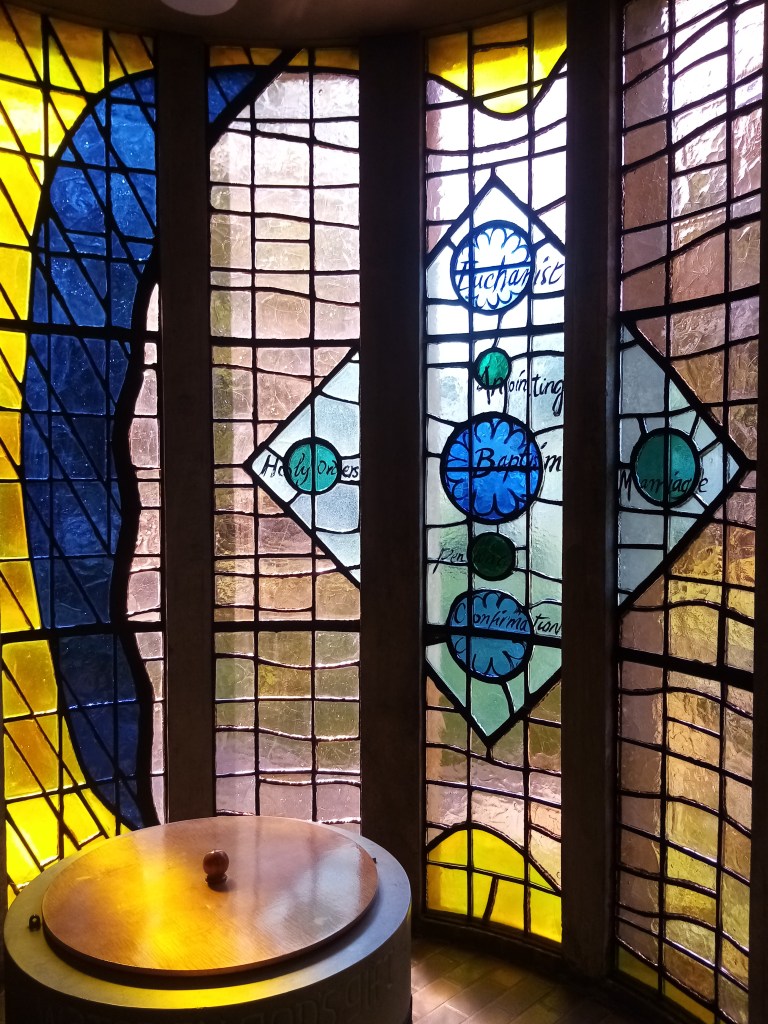
This church was designed by Gerald Goalen and built comparatively recently in 1967. It is constructed in dark brick in an oval shape, with beautiful stained-glass windows around the whole church at ceiling height. The oval or round church design became popular in the 1960s after the Second Vatican Council, which allowed congregations to be much closer to the altar. St Gregory’s was the first church in the Westminster Diocese to have been planned and built for Mass with the priest facing the people. I was fortunate that the church was open, as it was a sheer joy to see the interior. I loved the design and fittings of St Gregory’s, particularly a side chapel which contained the font and had a floor to ceiling stained-glass window with words connected with baptism on it. Outside the church is a small, pretty Garden of Remembrance. This is my favourite of all the churches I visited.
Sources: Joshua Abbott; Wikipedia
Interesting relief brick pattern inside the church
Beautiful stained glass window panels going right round the top of the church
Font room
Garden of Rememberance
The Catholic Church of St Aiden of Lindisfarne, East Acton
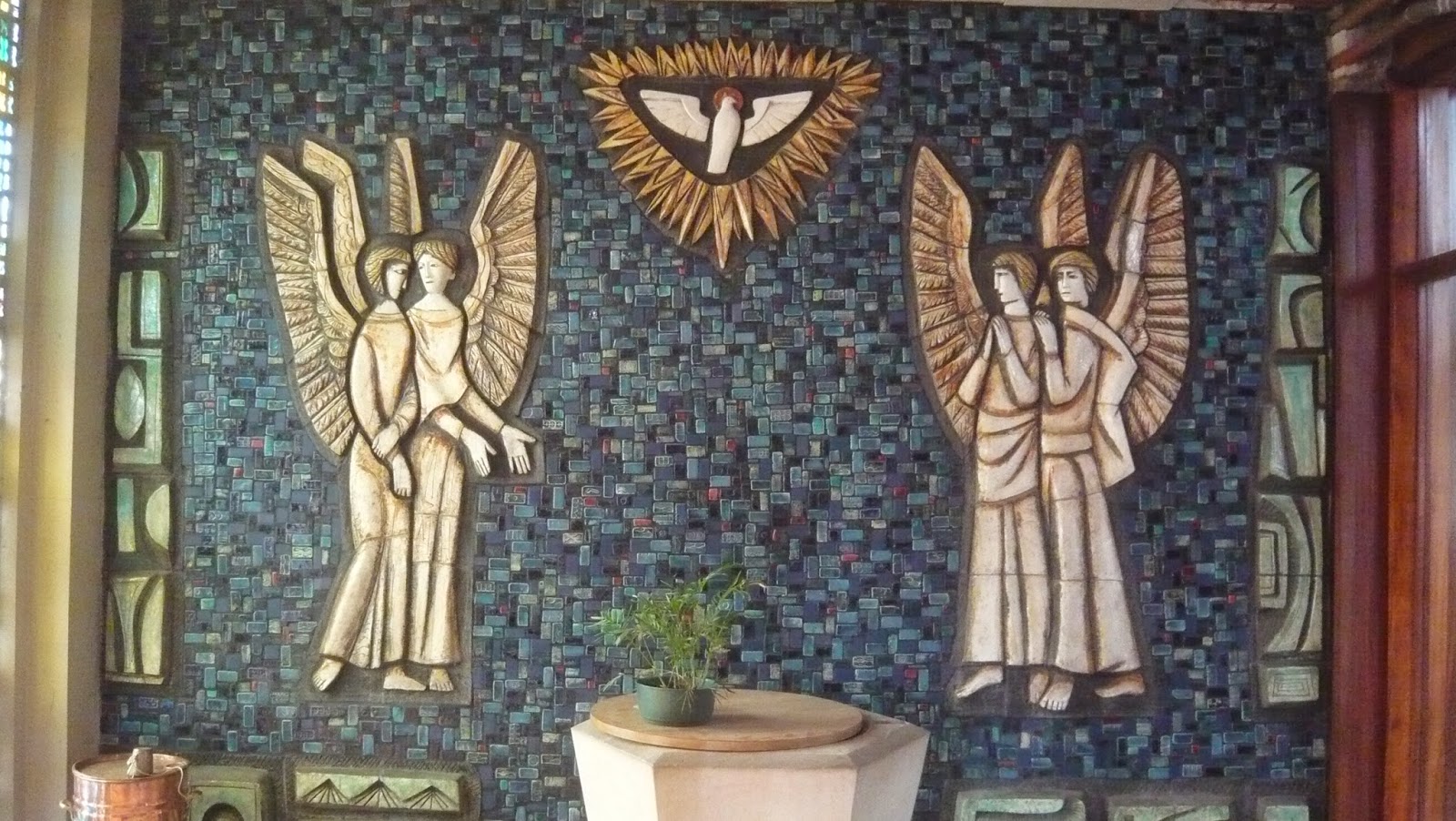
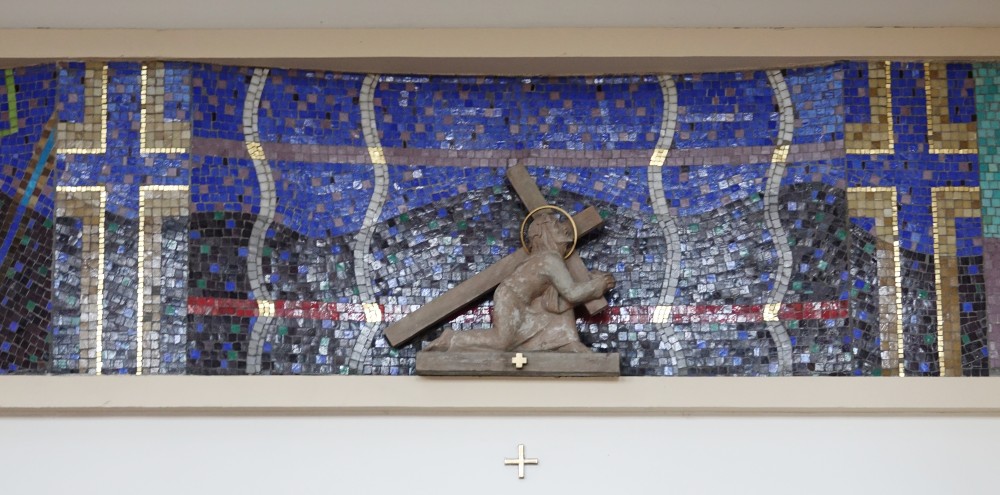
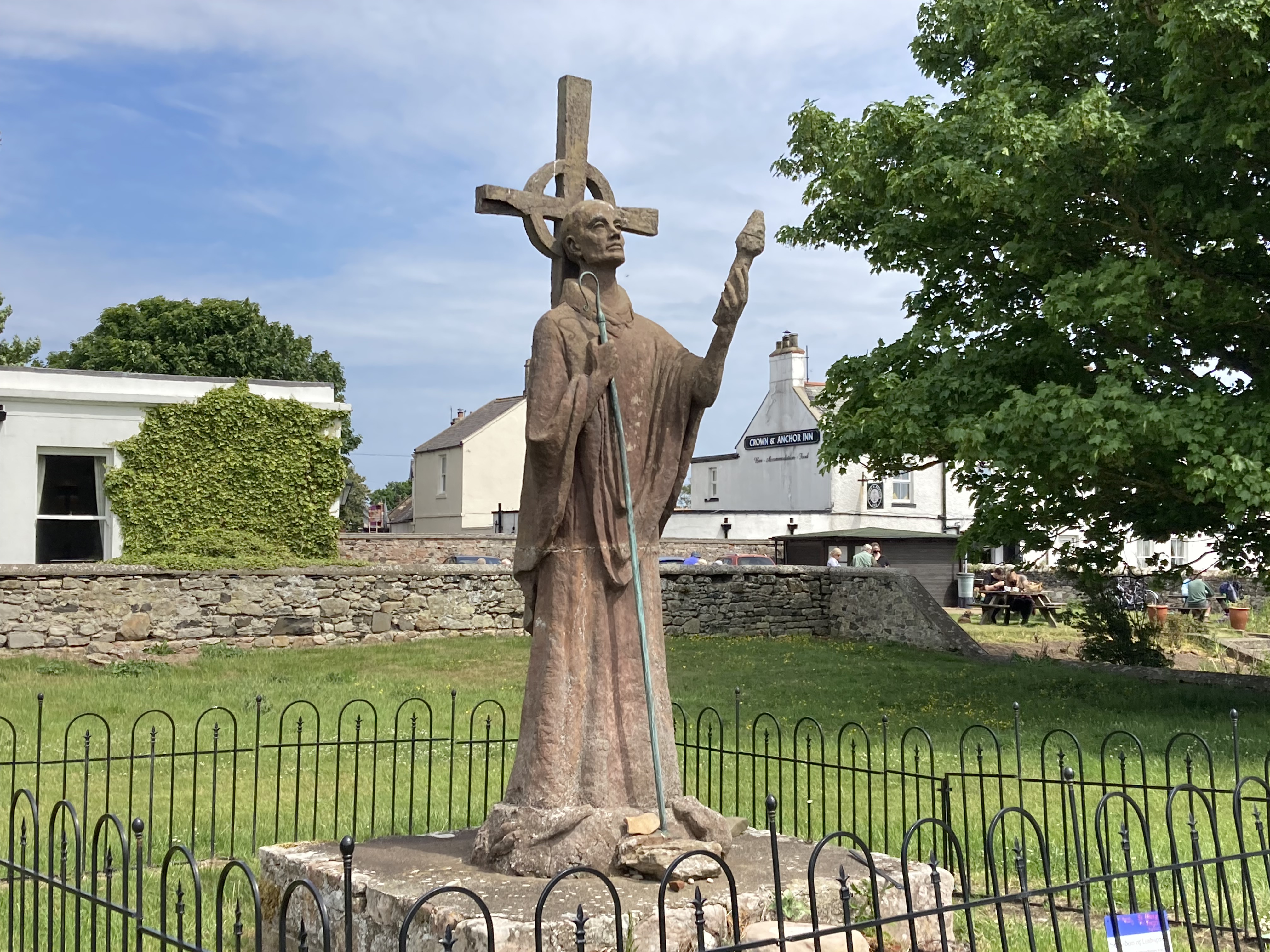
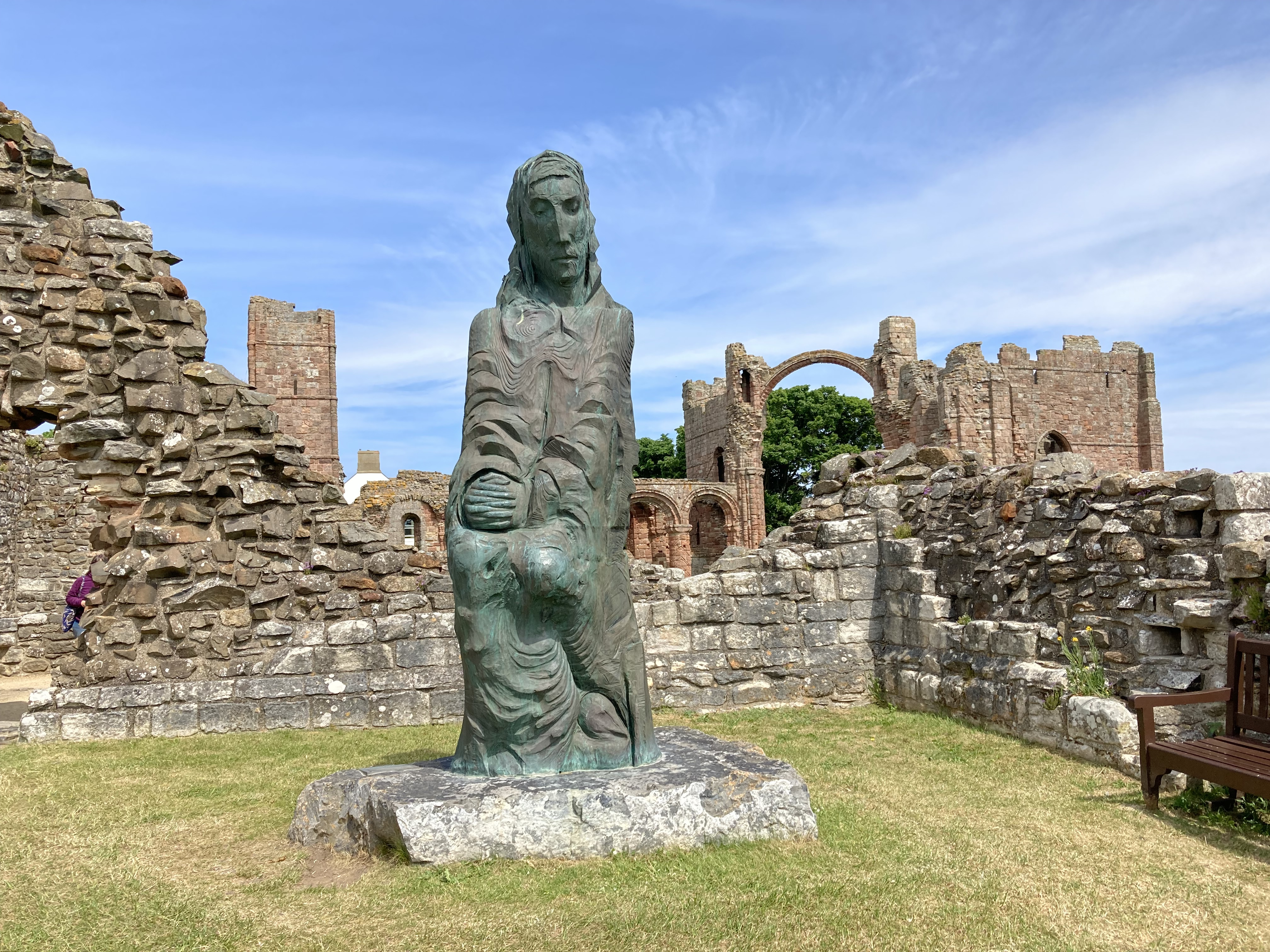
Joshua Abbott describes the church as having ‘a plain exterior but a wealth of artworks inside.’ I wish the church had been open so I could have seen them! No more information on the church website, so I Googled ‘St Aiden’s East Acton and was directed to Artway.eu, a website about church artwork. This church has been described as a small echo of Coventry Cathedral – ‘a plain jewel casket with many jewels.’ The building was designed and built in 1961 by architect John Newton in brick and concrete with an open bell tower (and helpful clock!) The ‘jewels in the casket’ include a decorated ceramic wall in the baptistry and stained-glass windows in the dalle de verre style: small, thick pieces of coloured glass set in concrete. The church website does, however, mention St Aiden, the first Bishop of Lindisfarne, an Irish monk and missionary who came to teach Christianity to the wild, fierce Anglo-Saxons of Northumbria. I have included my own photos of two modern statues of St Aiden at the beautiful ruined Lindisfarne Abbey on Holy Island.
Sources: Joshua Abbott; Artway.eu; church website
Photo Credit:Between: Sabbatical art pilgrimage: St Aiden of Lindisfarne East Acton
Photo Credit: east_acton_st_aiden 130618-32 London churches in photographs
St Mary’s, South Ruislip
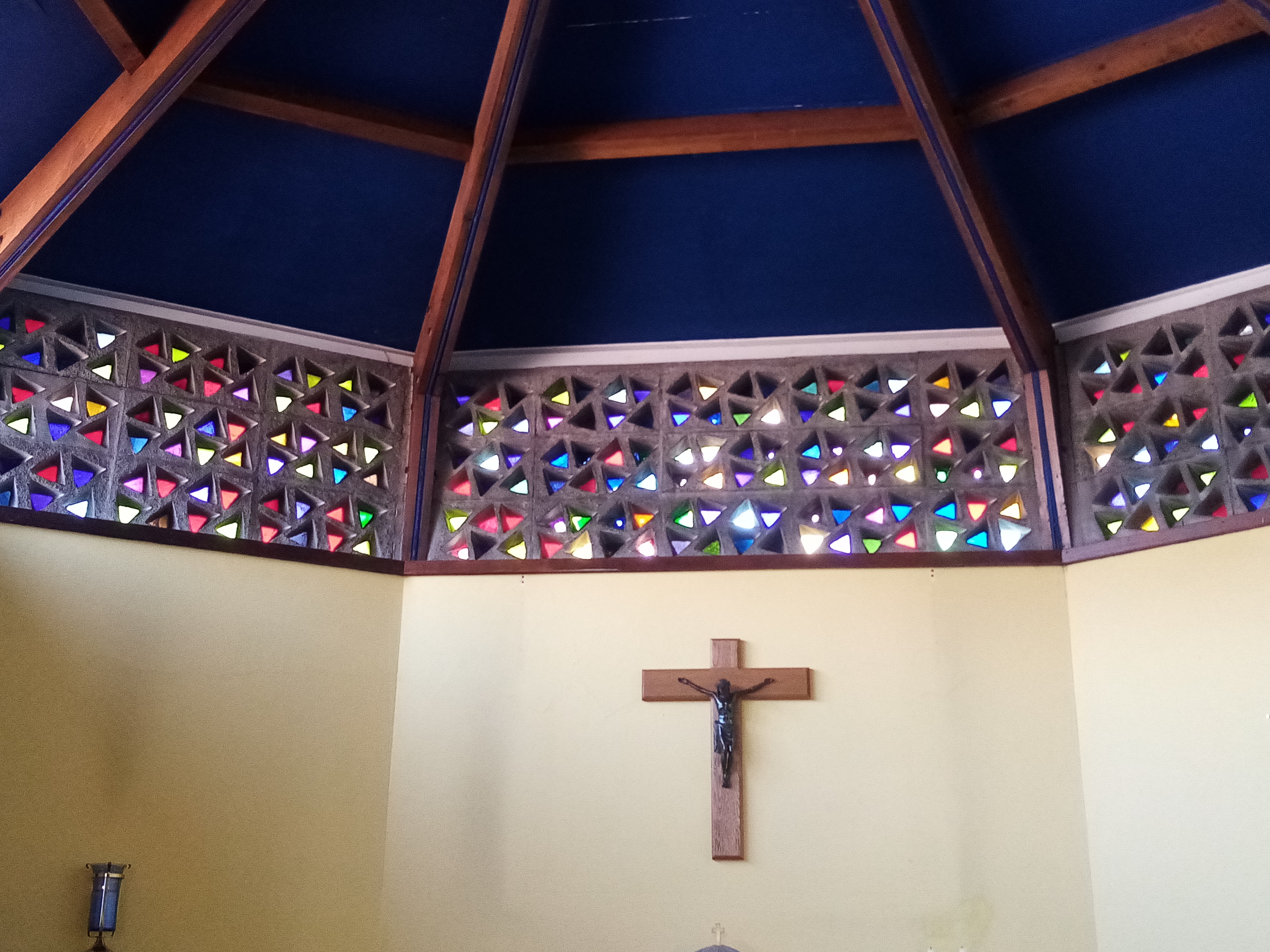
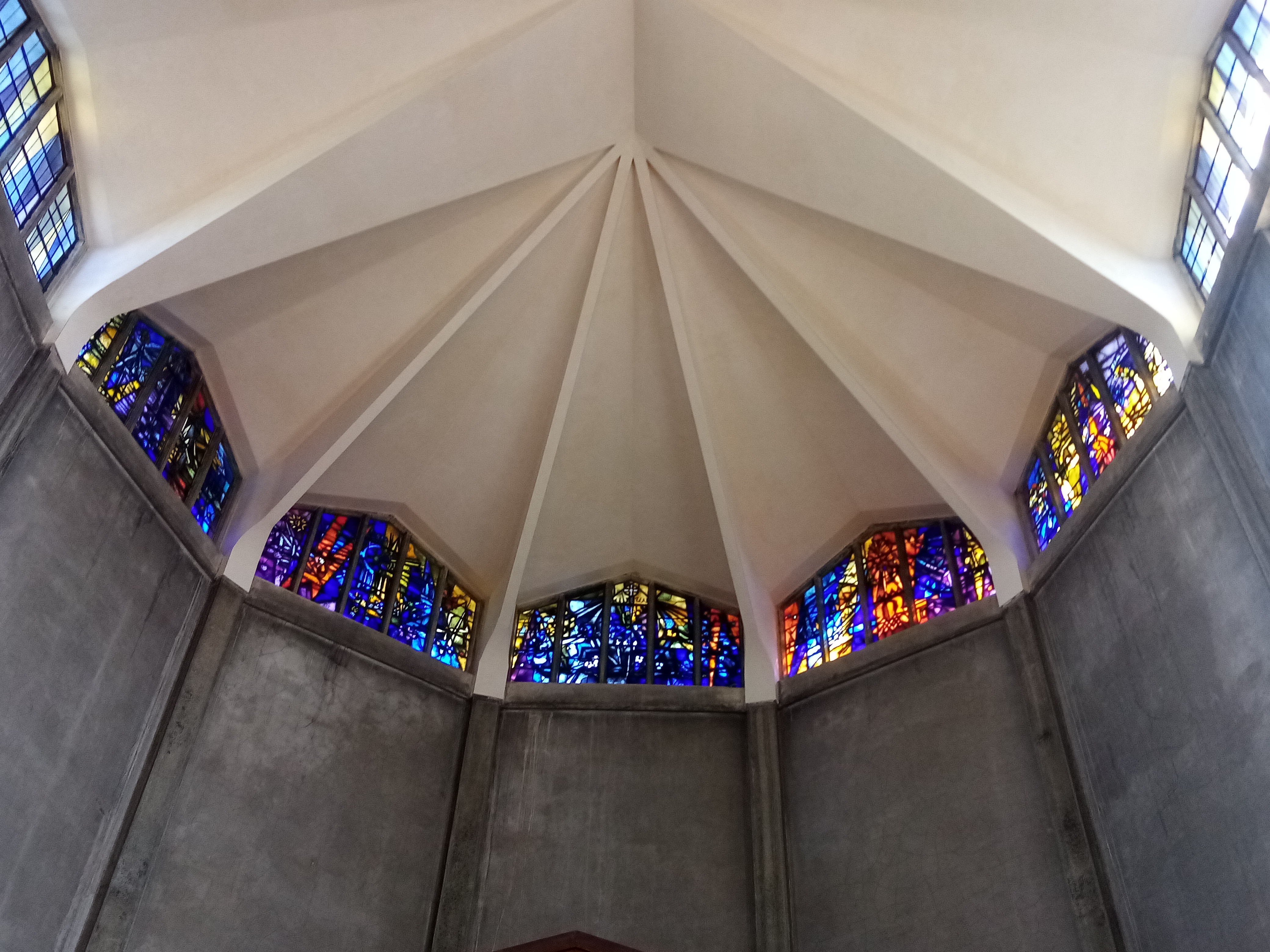
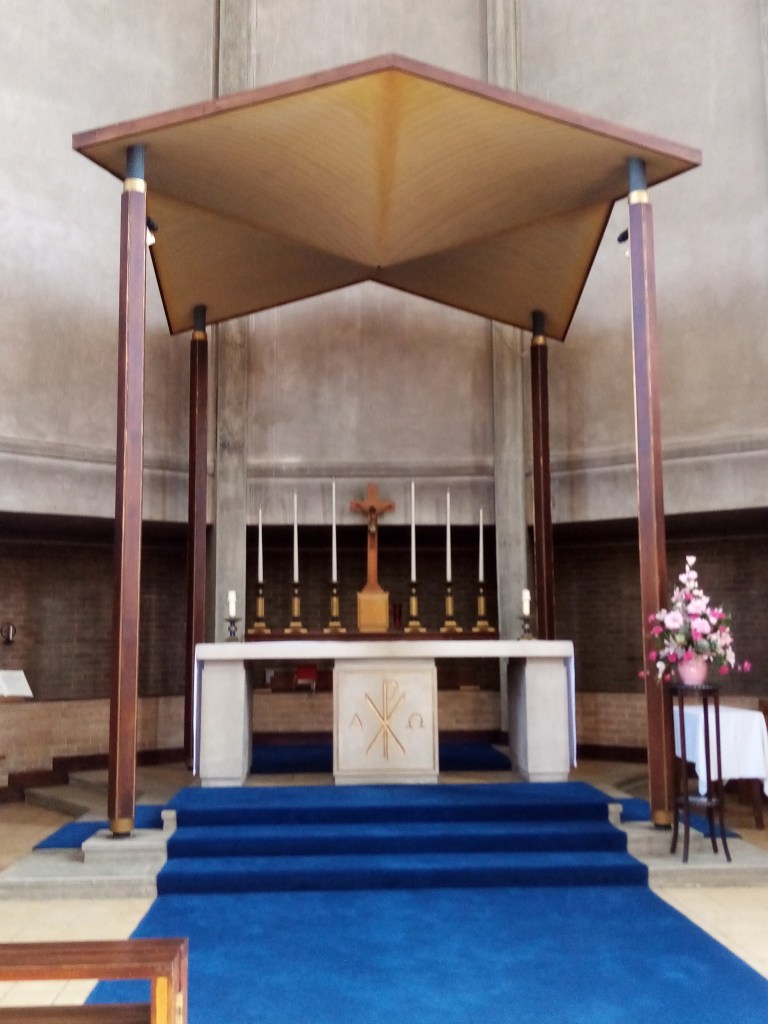
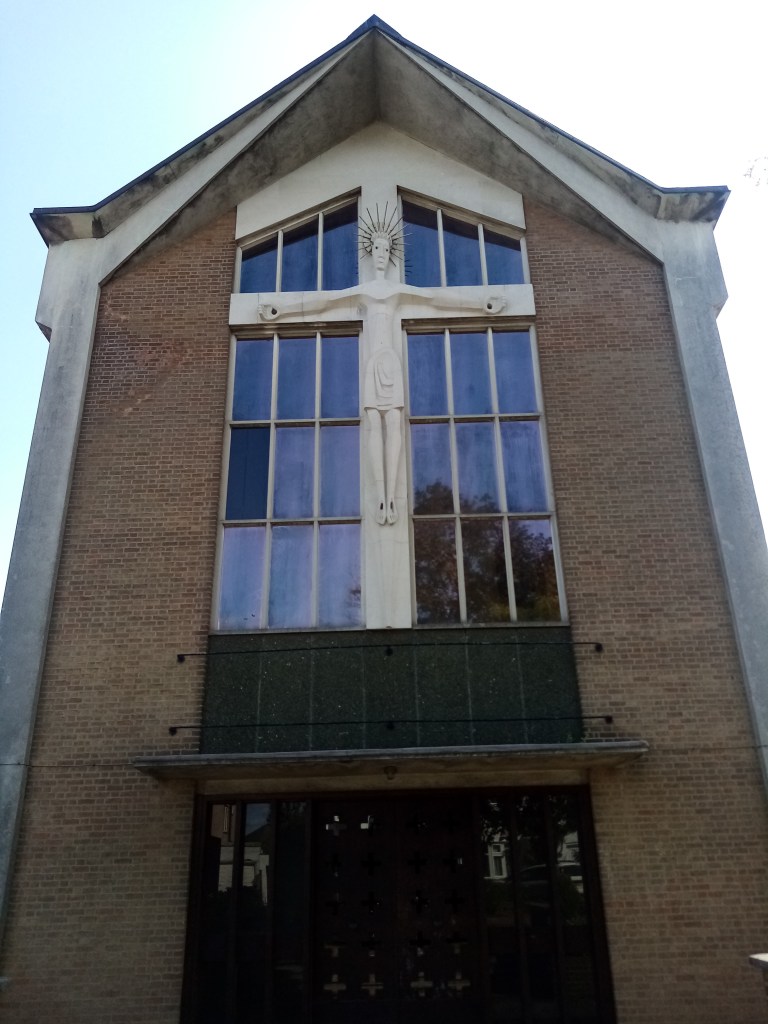
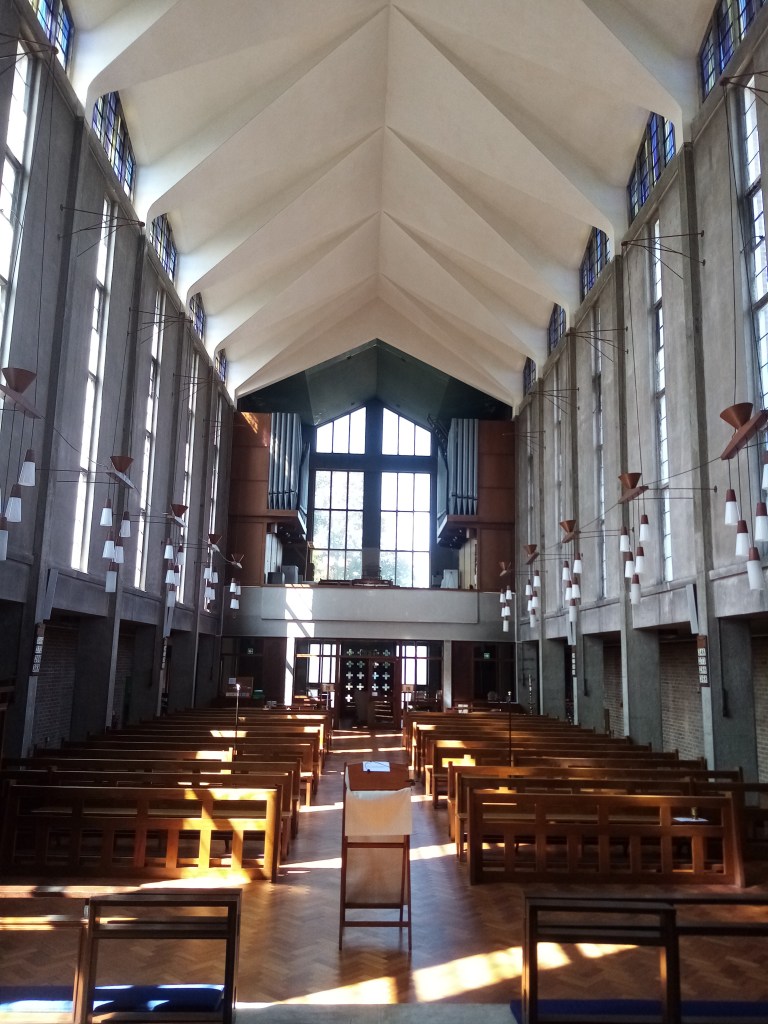
Just round the corner from St Gregory’s is The Assumption of the Blessed Virgin Mary. Known locally as St Mary’s, the church was built in 1959 and designed in the ‘Festival’ style, influenced by Scandinavian Modernism. This is evident in the ‘folded concrete slab roof covered in copper.’ The large striking crucifix statue was designed by Brian Asquith. Inside the altar has a canopy over it representing a veil over the Holy Place. There are two types of stained-glass windows: those over the altar at the East end are of an abstract design and the ones in the side chapel are triangles of coloured glass set in concrete, dalle de verre design as mentioned above. The long windows on each side of the church are plain glass, allowing sunlight to come flooding in. I also liked the modern design of the font.
I particularly love the use of modern stained glass windows in all the churches I visited this month. They have all been designed and constructed with such care and creativity, wonderful expressions of love and worship to God.
I said last month that my plan was to explore four more churches on the edges of the London boroughs: rural parish churches looking their best in the middle of an English summer. However, the first part of July was seasonably dull and rainy so I abandoned that idea to focus on churches in elegant, exclusive and expensive Mayfair, W!, where dull skies wouldn’t matter so much. My first research visit was on one of the hottest, cloudless days of the year….of course. History of Mayfair: The Grosvenor family acquired a piece of land on which an annual May Fair was held from 1686 to 1764. The Fair fell into disrepute and was considered a public nuisance so the Grosvenors embarked on ambitious plan to develop the area into high-value housing for the upper-classes. The design included a series of leafy squares: Hanover, Berkley and Grosvenor, which were once for the exclusive use of the wealthy residents of the surrounding large houses. The area is now more commercial than residential, with many of the houses converted to hotels, embassies and offices. And of course there are the high-end shops in New Bond Street, each with a doorman ready to open the door for wealthy customers who apparently can’t do so themselves. Mayfair is the most expensive square on the London Monopoly board. Development of the area continues by the Grosvenor Estates group. Now, on with the churches….
Source: Wikipedia
St Mark’s Mayfair, North Audley Street
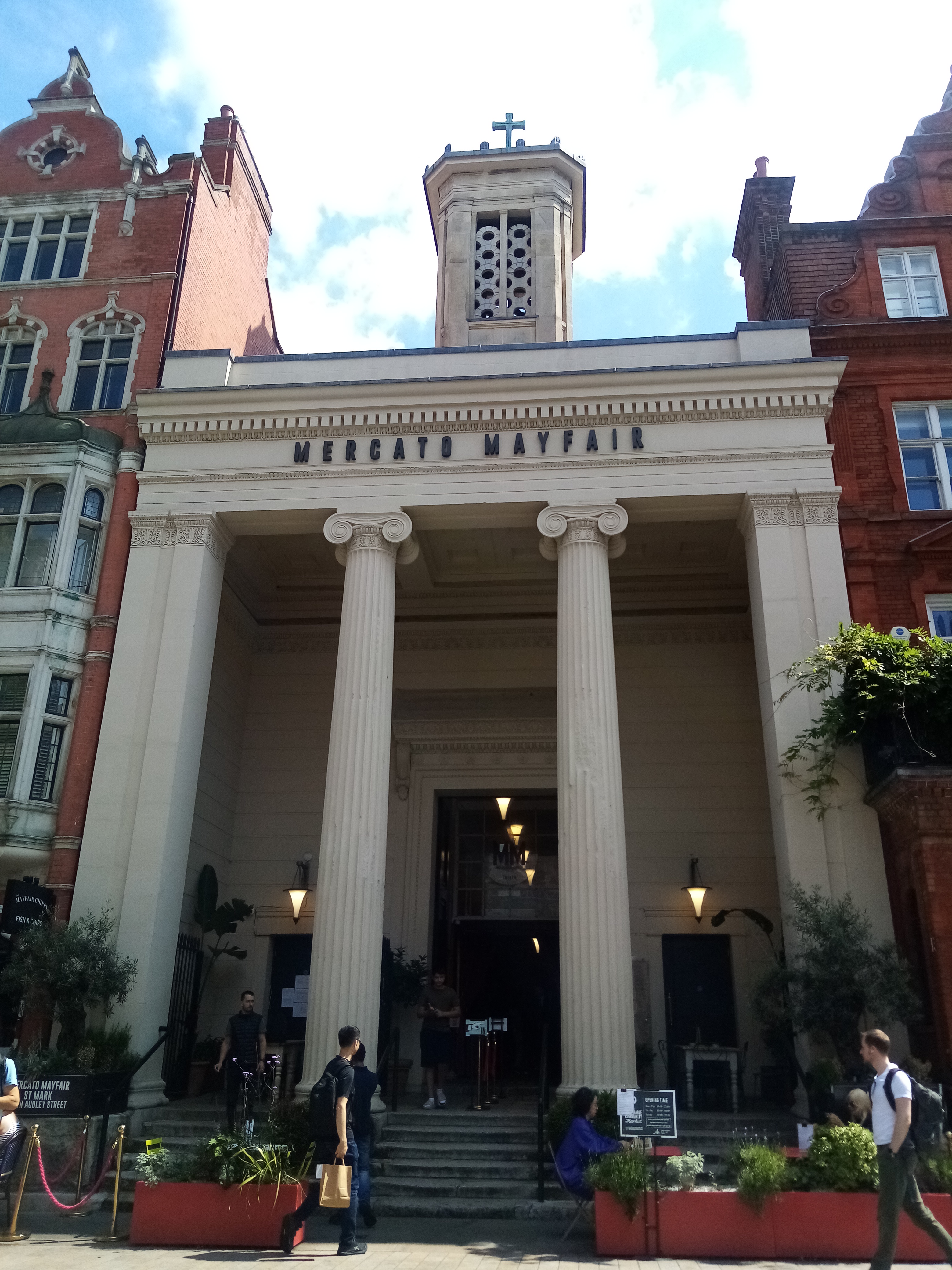
Imposing frontage of former St Mark’s
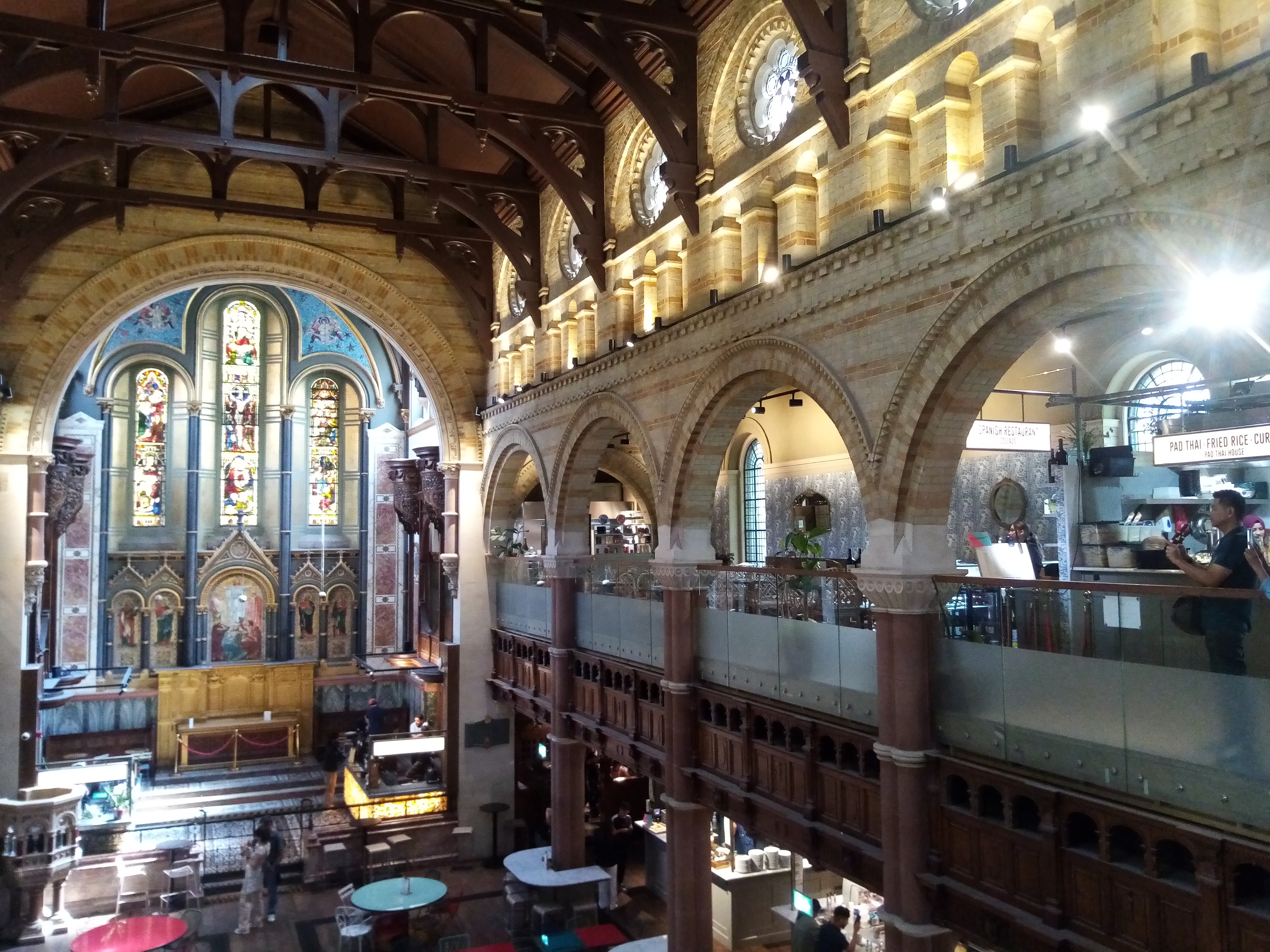
St Mark’s Mayfair, is no longer a place of worship, having been converted to a high-end food hall: a venue for cafes, restaurants and bars and a flower shop in the entrance, all within a faithfully restored interior. This gives the inside space a real ‘Wow factor’, and after the initial shock (to someone who loves church buildings), it’s actually quite stunning. So what brought about this radical change of use? St Mark’s was built between 1825 and 1828 to accommodate the increase in the population as the upper classes moved from the countryside into the aforementioned high-class housing. It was constructed in the Greek Revival style with a Romanesque open roof structure added in 1878, now a rooftop bar! St Mark’s was informally known as the American Church because of its proximity to the American Embassy, not the only church to have an American connection, as we’ll see. Two famous American worshippers at the church were President Dwight Eisenhower and President’s wife and activist Eleanor Roosevelt. The congregation began to decrease in the 1950s and the church was deconsecrated in 1974. Empty for 20 years, it was placed on English Heritage’s ‘Buildings at Risk’ register. From 1994 to 2014 (another 20 years) the building has served as a base for a Christian social action group, a music venue and a venue for high profile events such as London Fashion Week. Finally it was acquired by Grosvenor Estates in 2014, and a £5 million renovation and refurbishment project resulted in the building we see today: Mercato, Mayfair.
Source: Wikipedia
One of the bars at the altar end of the building
The only thing I don’t like is the tables, too modern!
Grosvenor Chapel, South Audley Street
The design of the Chapel has been used for churches in parts of the USA
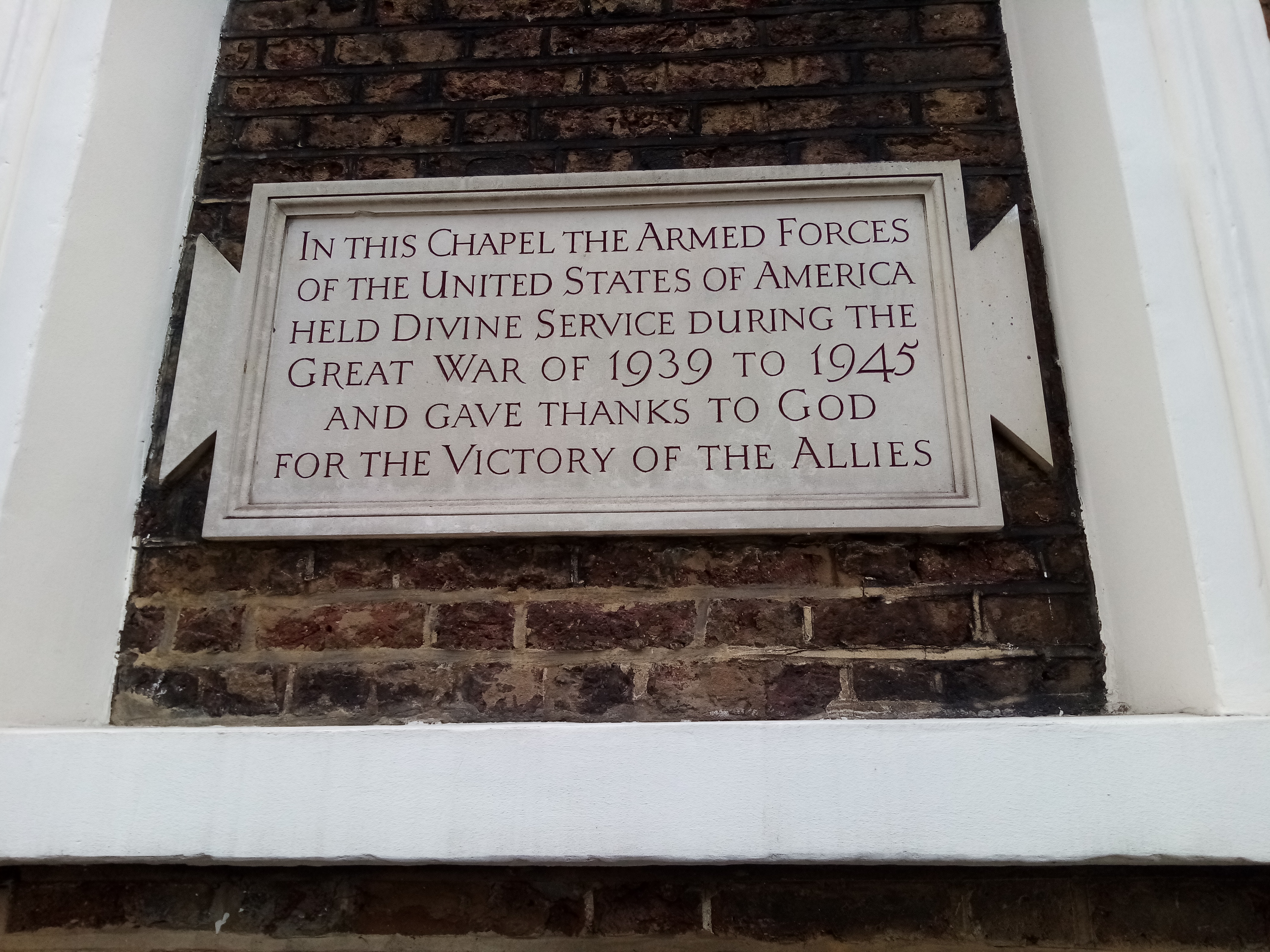
Walking from North to South Audley Street should have been straightforward, but my progress was somewhat hampered by ongoing Grosvenor Estates developments. A little more history about the Grosvenor family: between 1720 and 1740 a network of new streets was laid out between Regent Street and Park Lane, with Oxford Street to the North and Piccadilly to the South. The development of houses was specifically for the aristocracy and upper classes and the land belonged to Sir Thomas Grosvenor, who had acquired it on his marriage to heiress Mary Davies in 1677. I think Sir Thomas did quite well out of his decision to build this type of housing! A number of small proprietary chapels were erected by private enterprise to attract the affluent, fashionable residents, small being exclusive, perhaps? The foundation stone of the Grosvenor Chapel was laid on 7th April 1730 by Sir Richard Grosvenor who had leased the site for 99 years at a peppercorn rent. When the lease expired in 1829 the Chapel became a ‘chapel of ease’ to St George’s, Hanover Square (featured later.) During the Second World War, men and women of the American armed forces worshipped at Grosvenor Chapel, perhaps preferring a smaller church. The chapel has never become a parish church, so it relies on donations from the regular congregation and visitors. Today it is very active in the community, providing weekly lunches to asylum seekers, hosting a local cultural festival and is a concert venue, and was used in the 1994 film Love Actually.
Source: Leaflet in the Chapel
Plaque on the outside wall
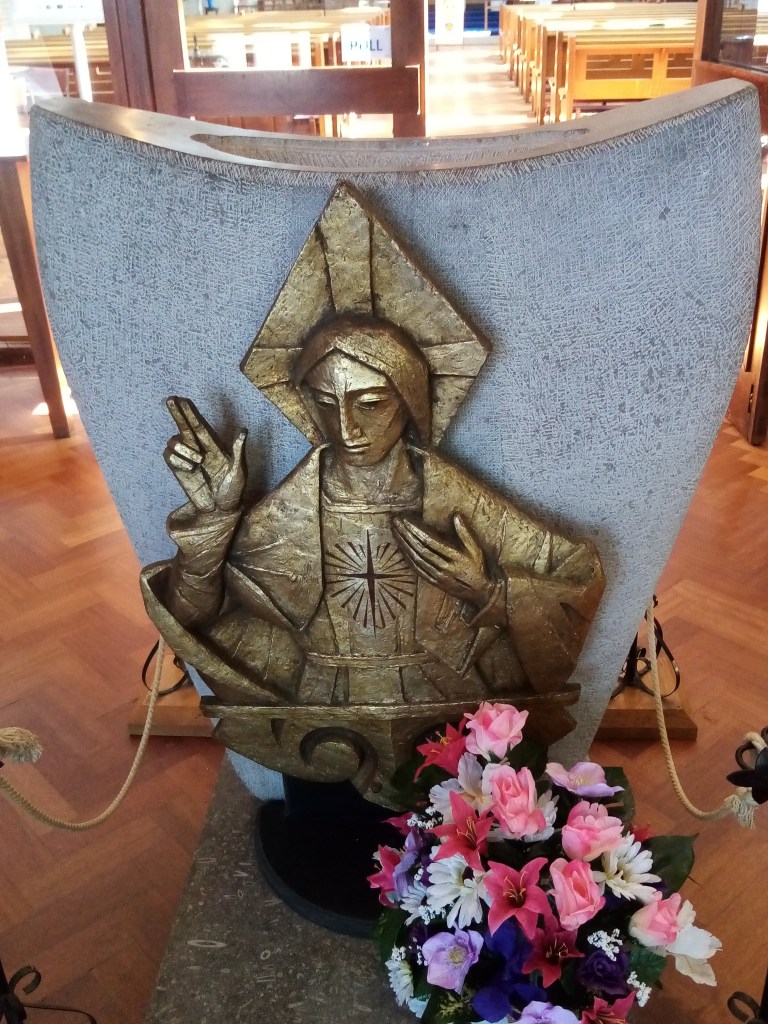
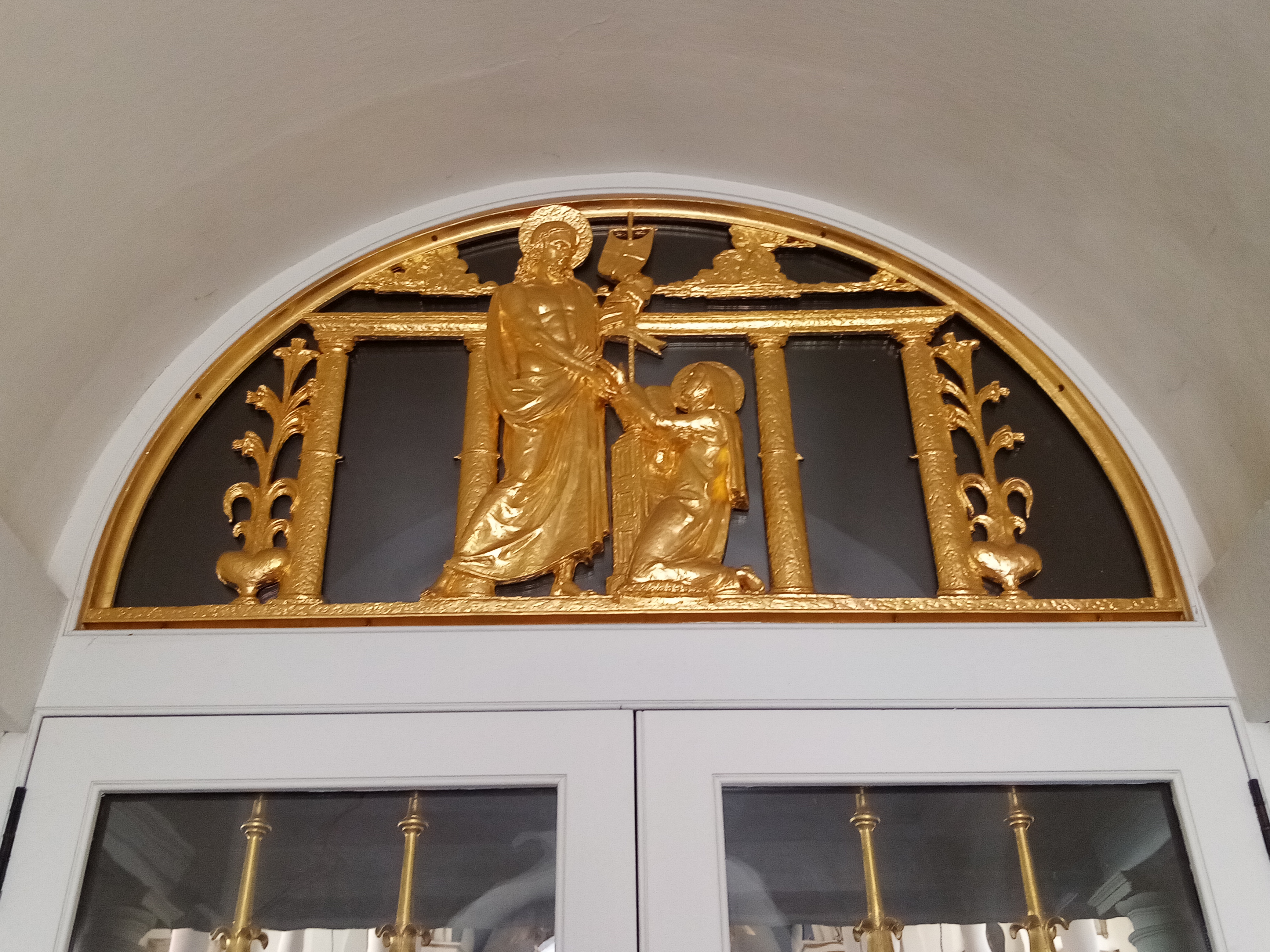
The gold relief at the entrance shows Jesus reaching down to His mother, indicating that here is a place of meeting with the Divine
Jesuit Church of the Immaculate Conception(Farm Street Church)
Front entrance in Farm Street
St George’s Gardens Entrance
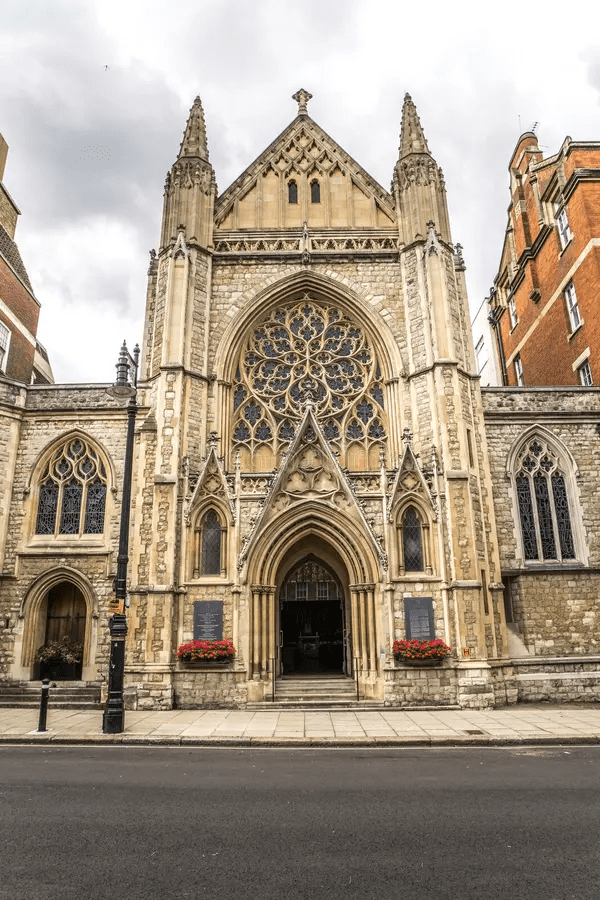
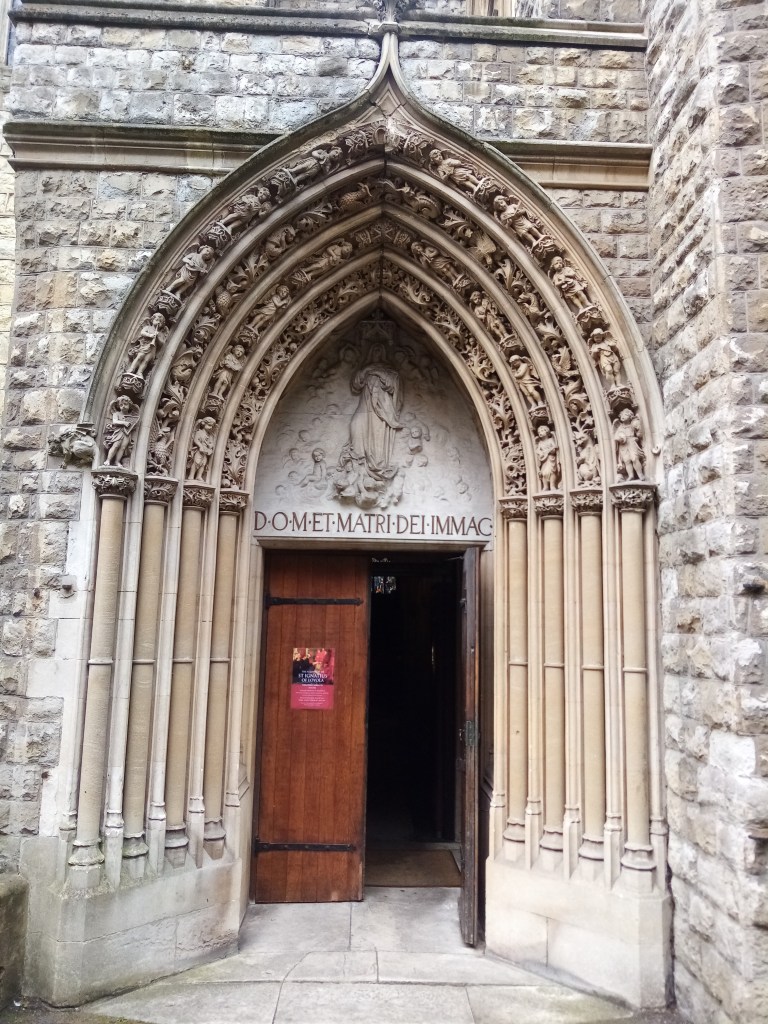
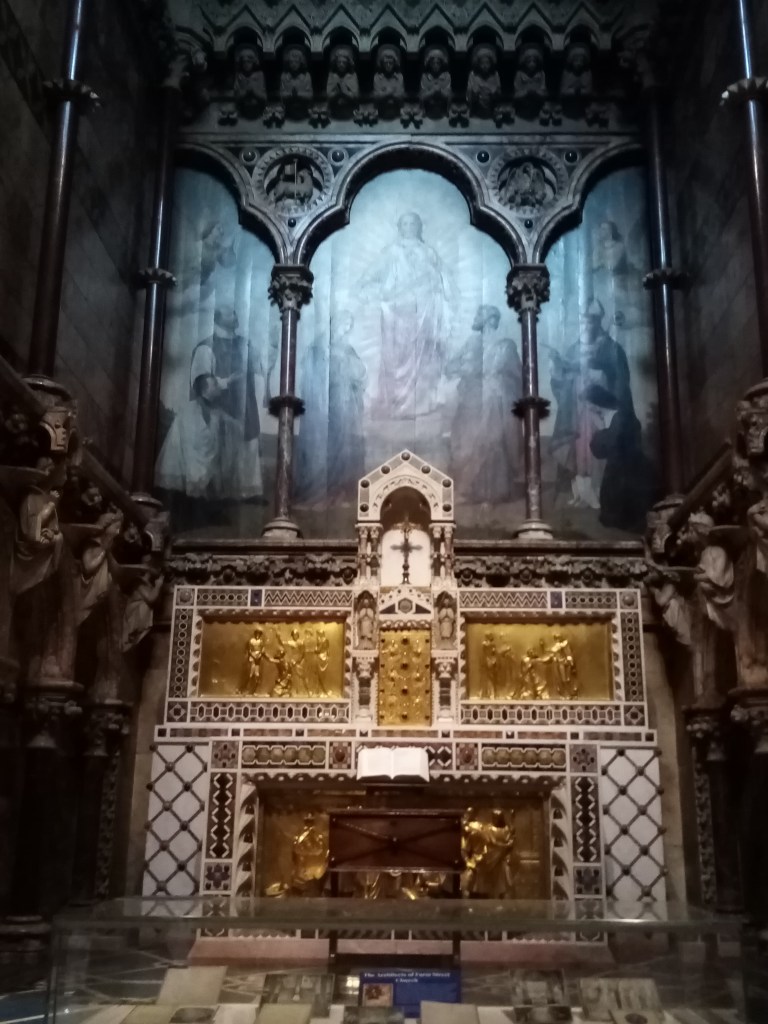
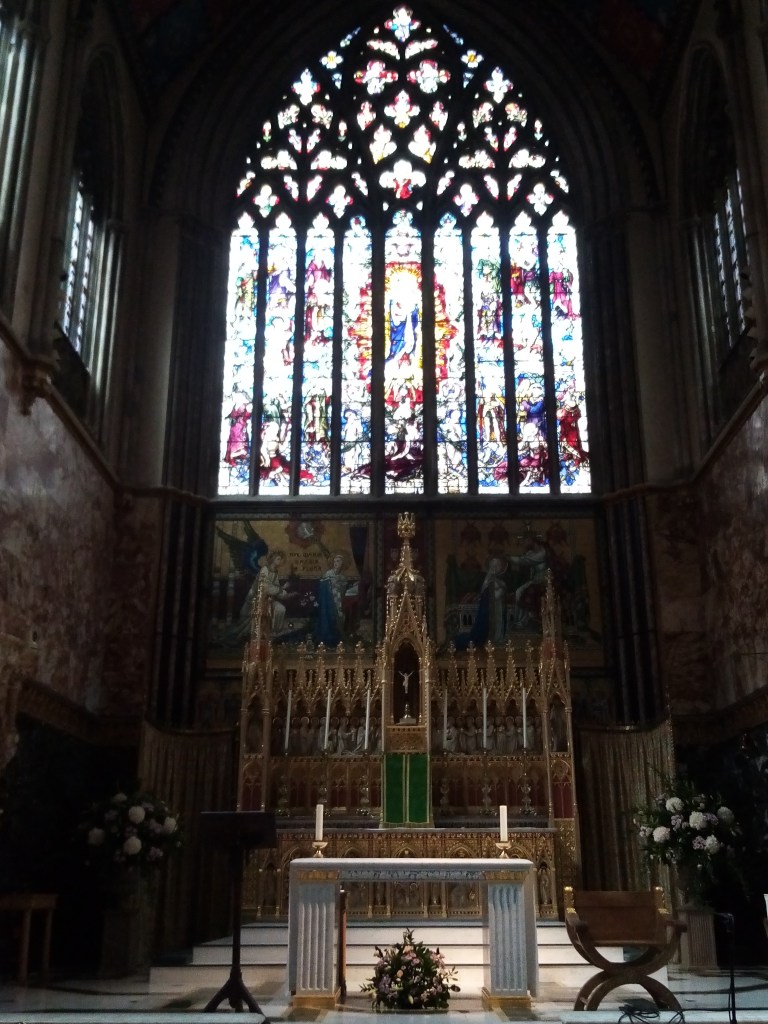
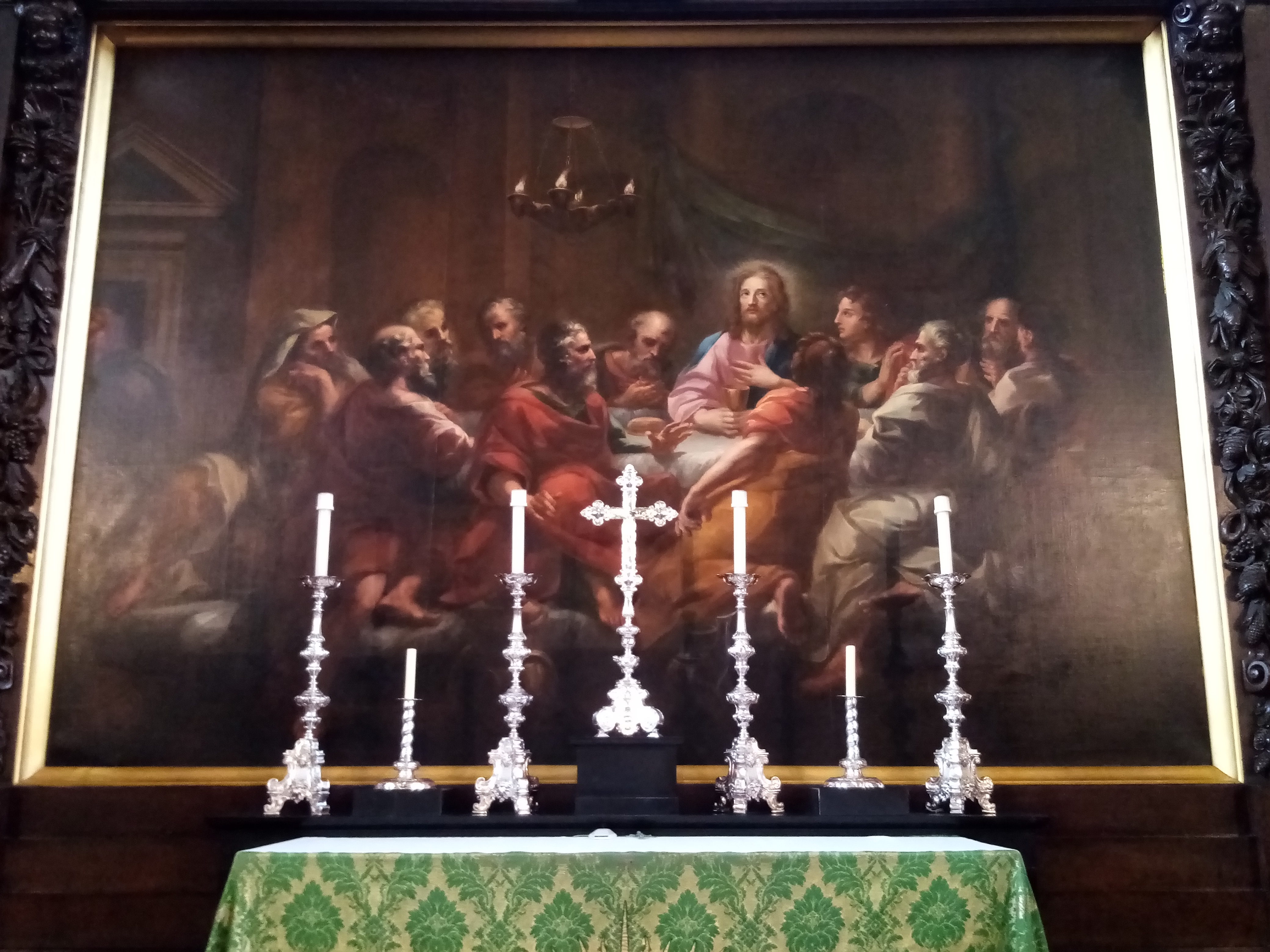
Right next to Grosvenor Chapel is a short street leading to the pretty St Georges Gardens. Here there is an entrance to the Jesuit Church of the Immaculate Conception, a large and ornate Catholic Church known as Farm Street Church. This is the newest of the four churches, being established in the 1840s when the Jesuits sought a location for their London church. The street was originally a mews, part of a farm which still existed more than 100 years after the development of the area. The spectacular façade in Farm Street is an imitation of Beauvais Cathedral and the interior of the church is no less dramatic, being designed in the Gothic Revival style. In his 1999 guidebook, Thousand Best Churches, Sir Simon Jenkins writes: ‘Not an inch of wall surface is without decoration, and this in the austere 1840s, not the colourful late Victorian era.’ A striking contrast to the ‘flamboyant Gothic’ style is a modern painting, oil on canvas, by Andrew White (2013). The painting was installed in the church in 2018 and depicts Jesus and His disciples at The Last Supper. The commentary reads: ‘This point was surely one of the most poignant and sacred moments of Christ’s ministry on earth.’ The painting really captures this; the expressions on the faces of Jesus and the disciples are grave and thoughtful. Unfortunately it was very difficult to take a good photo as the side chapel was in darkness, I tried with flash and without. I hope you can get some sense of the atmosphere and mood of the painting.
Source: Leaflet in church; Wikipedia
The Last Supper by Andrew White (2013)
St George’s, Hanover Square
Portico of St George’s, Hanover Square
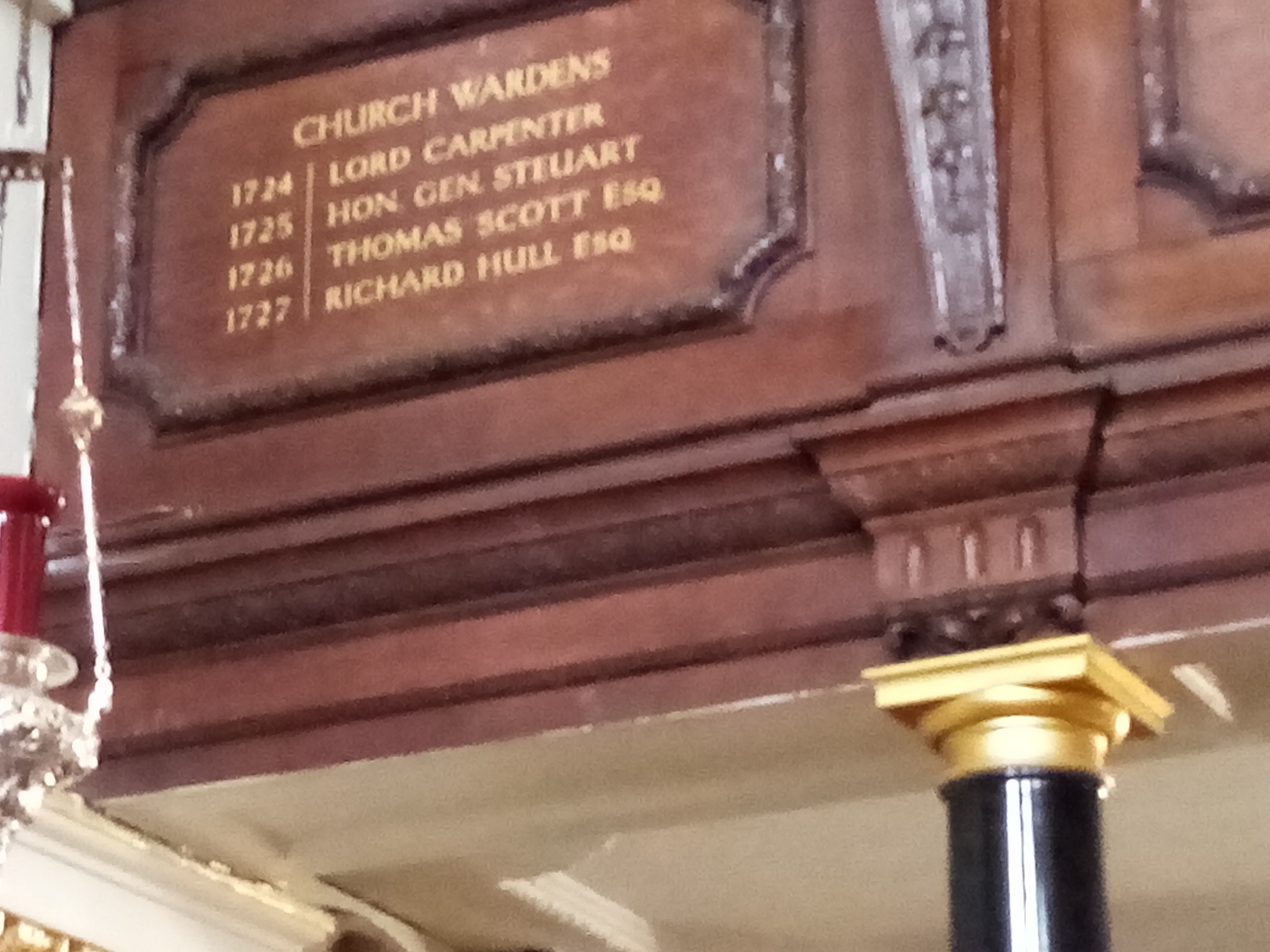
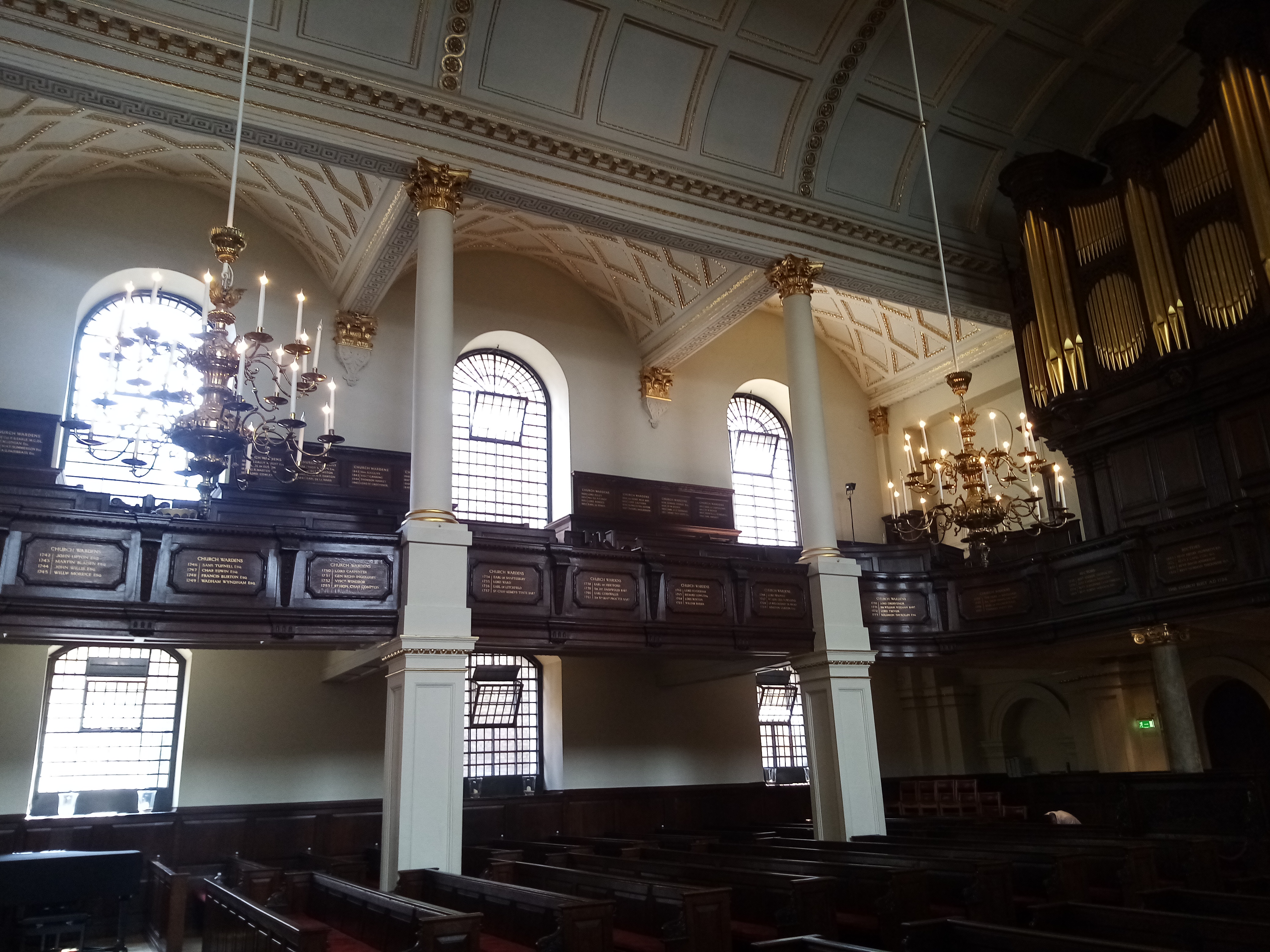
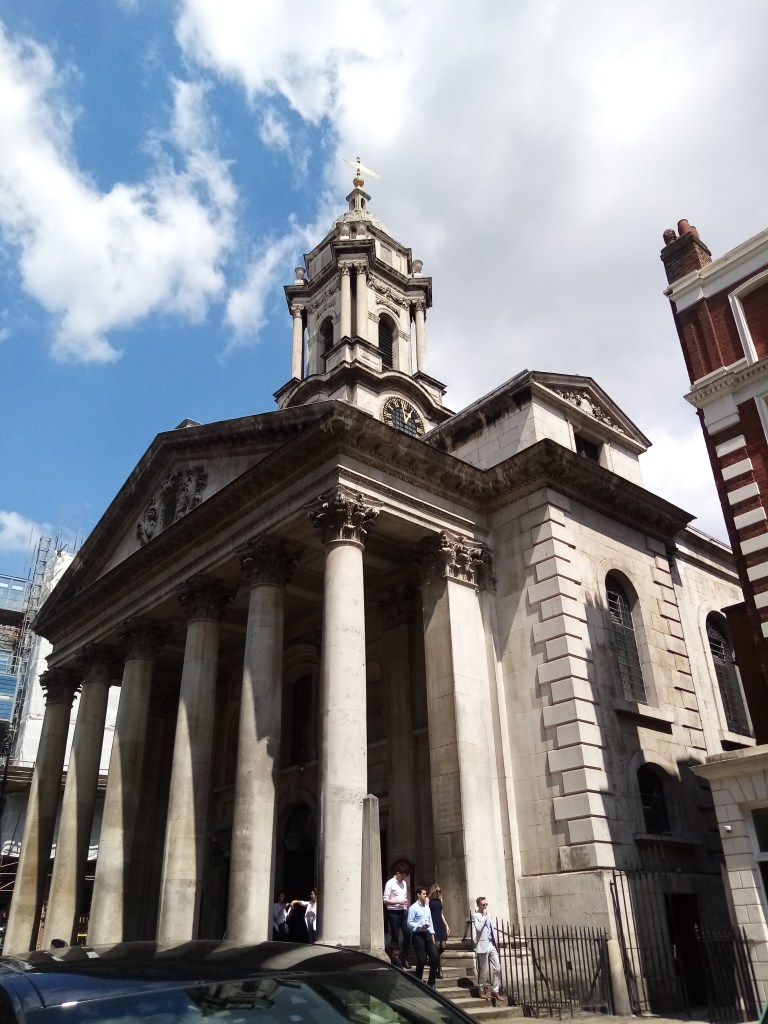
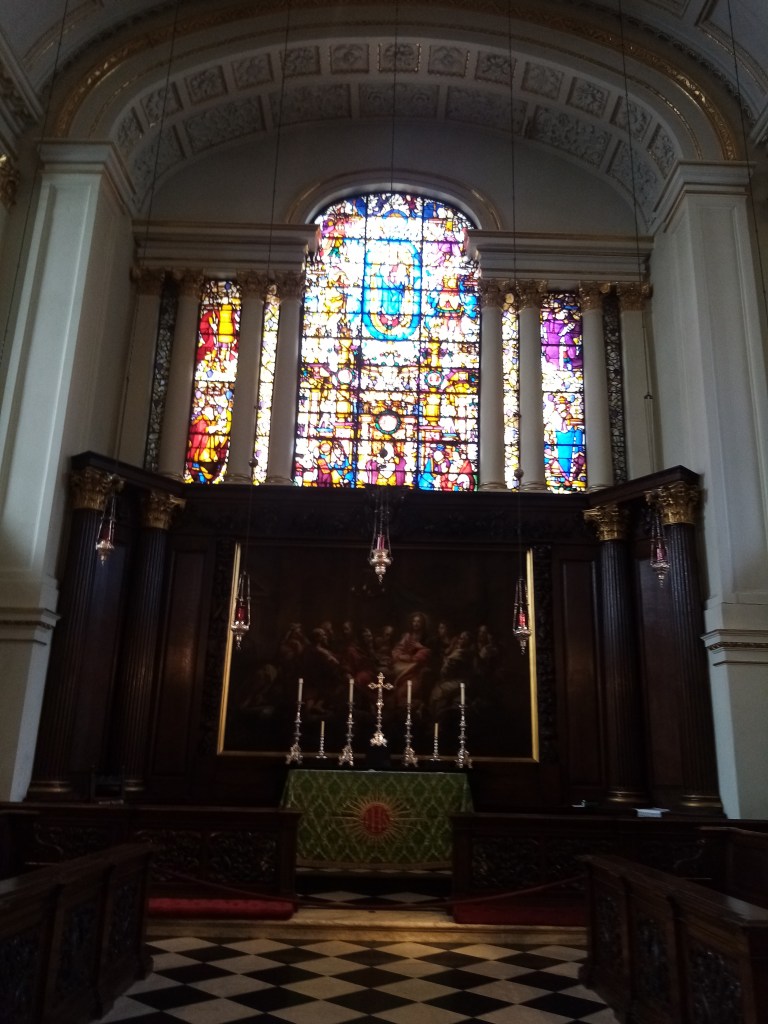
This last church is in St George Street between fashionable New Bond Street and Regent Street. This is the Parish Church of Mayfair, built between 1721 and 1724 as part of a project to build fifty new churches in the ever-expanding capital: the Queen Anne Churches. The church was designed by architect and surveyor John James, who with the more famous Nicholas Hawksmoor, designed and remodelled several other churches and prominent buildings in London. The grand portico of the church, supported by Corinthian columns, projects over the pavement which must have looked very dramatic when the church was first built. The church has been a popular venue for society weddings since it was built, the most famous marriage was between Theodore Roosevelt, soon to be 26th President of the US and fellow-American Edith Carow, in December 1886. The third of our churches with a connection to the US, St George’s is less than half a mile from Grosvenor Square, site of the American Embassy until 2017, so was used as a place of worship for American servicemen and women during the Second World War. Inside the church are wooden plaques all around the balcony listing the names of all the church wardens since the church opened until the present day. In contrast to the modern painting of The Last Supper in Farm Street Church, William Kent’s ‘Last Supper’, painted in 1724, was installed in St George’s church on its completion. Nearly 290 years between these two paintings!
Early summer is so beautiful, all the trees are in full leaf and the flowers are at their colourful best. There are some lovely churches on the edges of the outer London boroughs which have a real country feel, especially when surrounded by greenery. These four are all within half an hour’s drive of my home, but I think I’ll continue this theme next month, exploring churches in other outer London boroughs.
St John the Evangelist, Old Coulsdon
A lovely ancient church on Old Coulsdon Village Green, you can imagine it in years gone by being the centre of village life and there is a row of charming little flint cottages leading to the churchyard to complete the rural picture. The original church dates from the late 13th century, and the tower, chancel and nave were added in the 15th century. As with many of the churches in the London suburbs, St John’s had to be adapted from a small medieval building to one that could cater for a rapidly growing population, as the middle and upper classes moved to the ‘countryside’ (as it was in the early 20th century.) In 1958 the church was extended and modernised, which can be clearly seen in the bottom picture. The south aisle was demolished and much larger aisles, nave and chancel were added at right-angles with the original church. A more recent extension added a kitchen, parish office and all-important toilets!
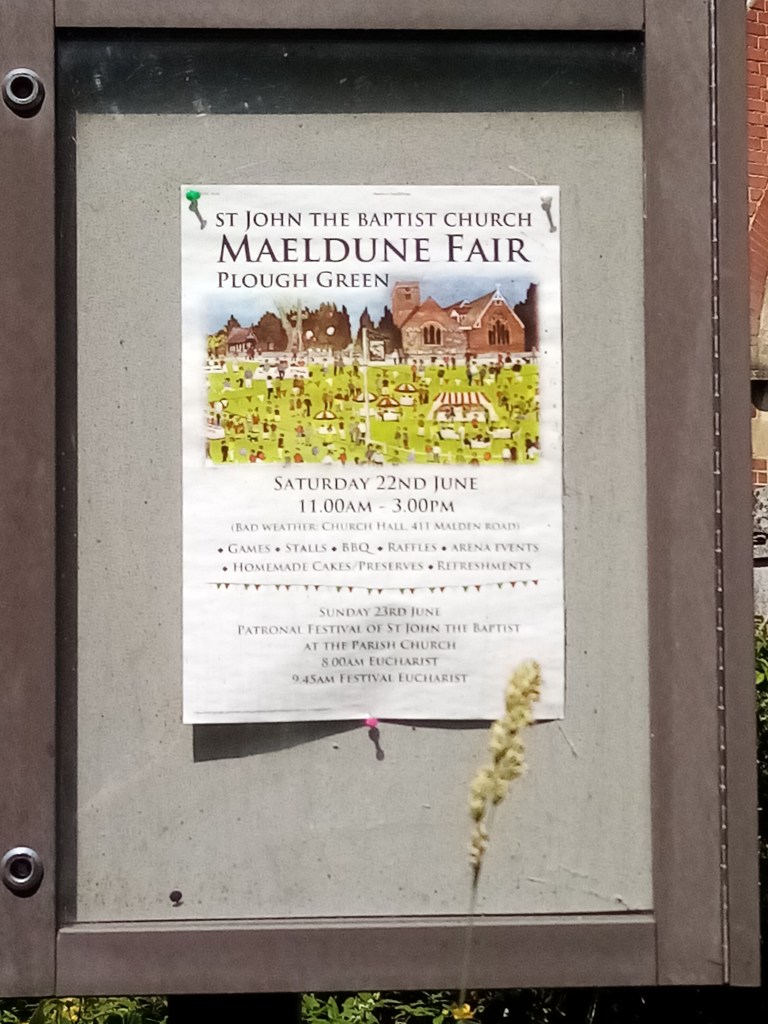
A Saxon church at ‘Maeldune’ was recorded in the Domesday Book of 1086, and incredibly, there are some remains of this church: an old flint and stone chancel wall were retained when the church was rebuilt in 1611. In 1596 the villagers of Malden petitioned Queen Elizabeth l asking for help to repair the church which had fallen into decay and was actually in ruins – but no help was forthcoming. However, in 1609 another appeal was made which was successful and the rebuilding of St John’s was scheduled, comprising a new red brick nave and tower and a new roof. In 1742 all the windows of the church were shattered when a gunpowder mill on the nearby Hogsmill River exploded! I liked the pretty memorial garden in the churchyard, and I discovered that the annual ‘Maeldune Fair’ was to be held on Saturday 22nd June on Plough Green with a special service to be held in the church on the Sunday – a quintessentially English summer’s day!
Source: stjohnsoldmalden.org.uk
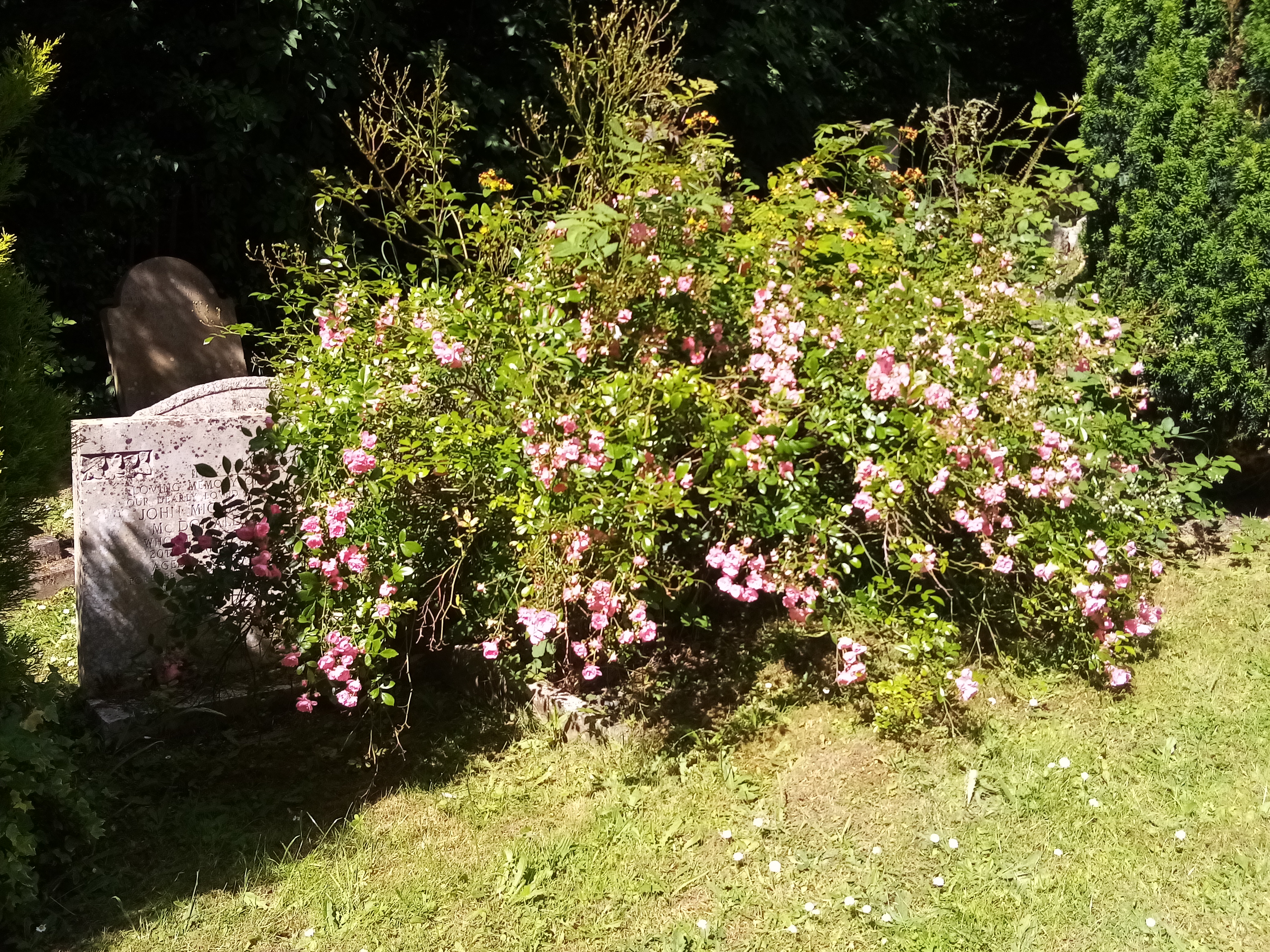
Memorial Garden
I love the way this rose bush has taken over the headstone and plot!
All Saints’ Church, Kenley
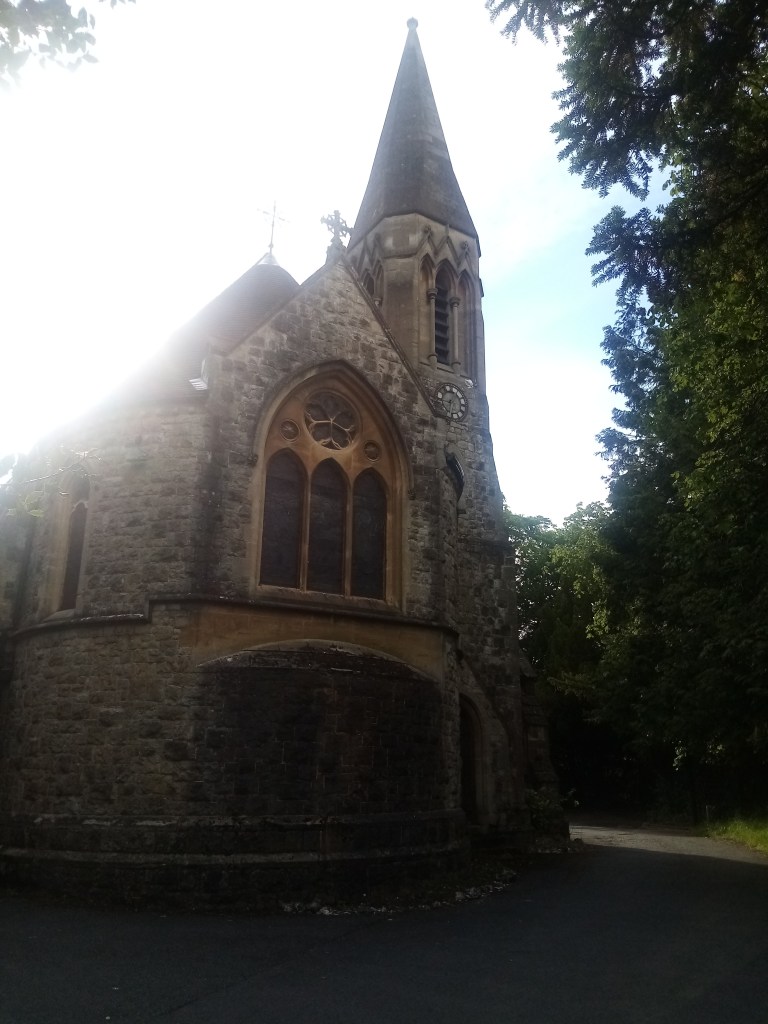
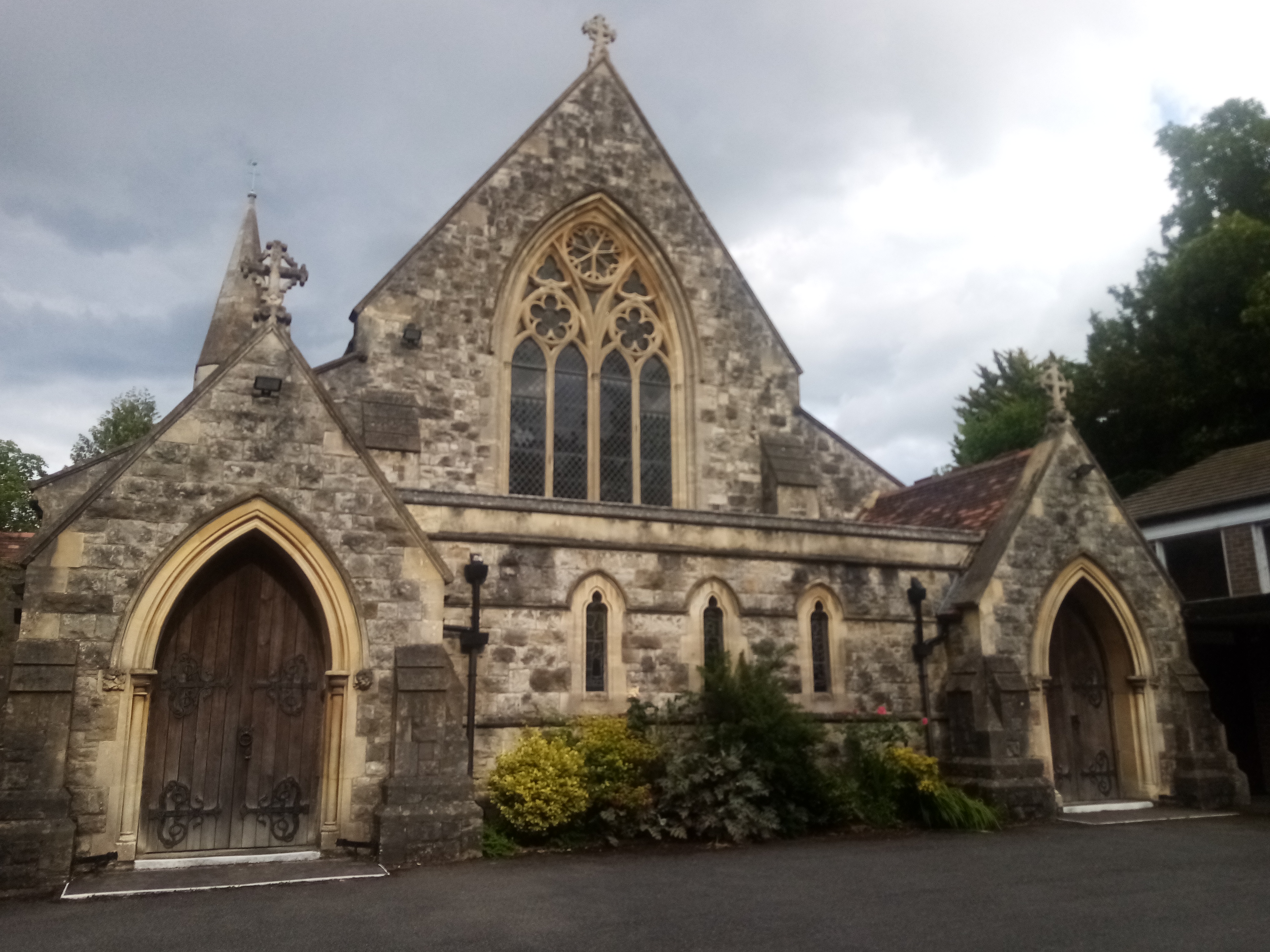
Much more recently built than the previous two churches, All Saints was completed in 1871. In the mid 19th century, the good folk of Kenley village would have had to travel several miles and across a valley to worship on a Sunday morning, to our first village church, St John’s in Old Coulsdon, which was their closest parish church. On horseback or by carriage, this journey would have taken about an hour. As the population inevitably increased, plans were made to build a church for Kenley Village. Four prominent local residents each contributed £535 towards the construction of the building and one of them donated the plot of land on Kenley Hill Field. The foundation stone was laid in November 1870 and the church was opened a year later. The designs were for a church congregation of 200; it was extended in 1901 to double seating capacity to 400. The extensions are in a different style to the original design of the building, which can be clearly seen as you wander round the building.
Source: allsaintsandstbarnabas.co.uk
Round chancel of original building
Church tower
Back addition to the church
Side of church with new entrance porch
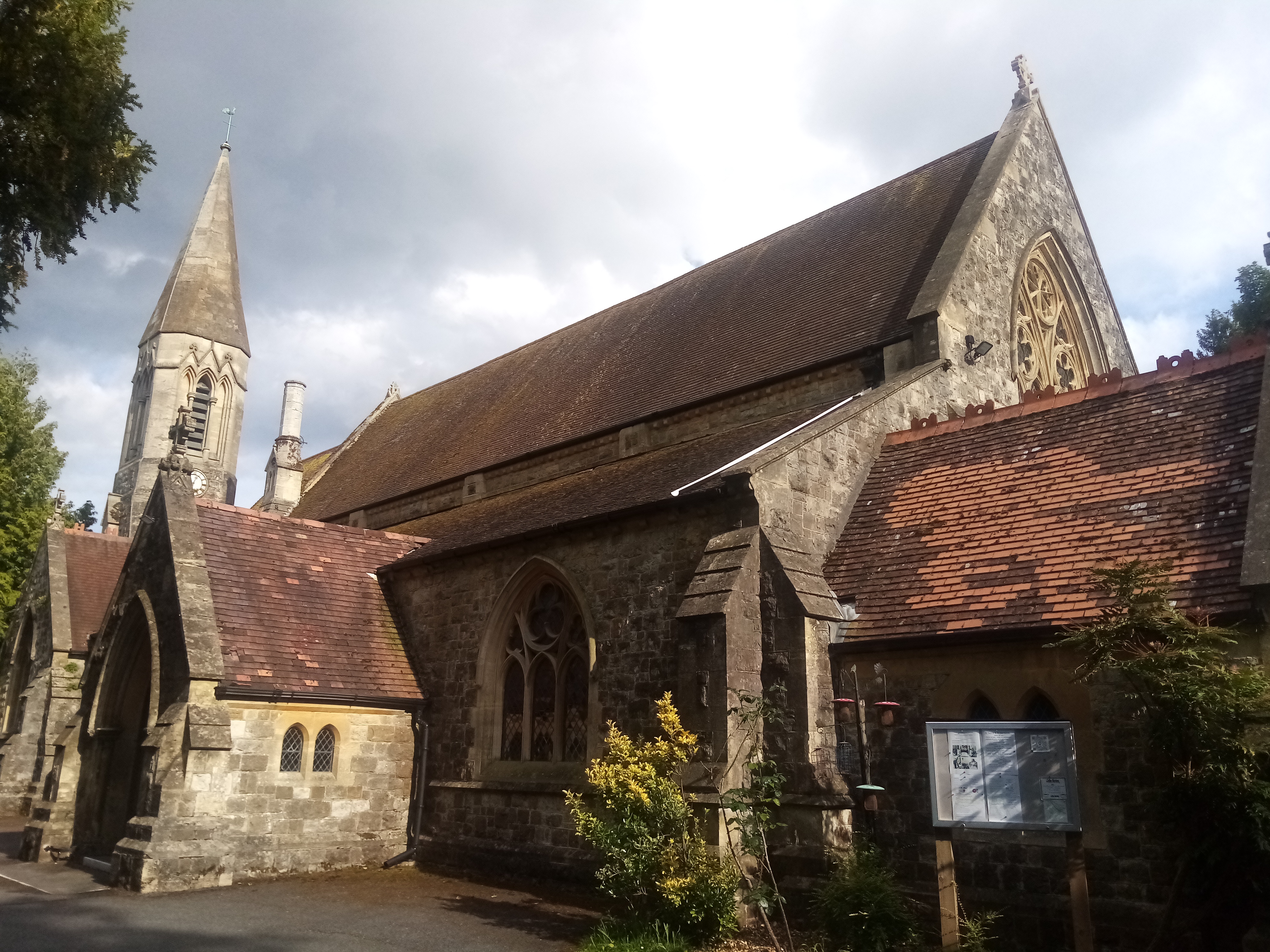
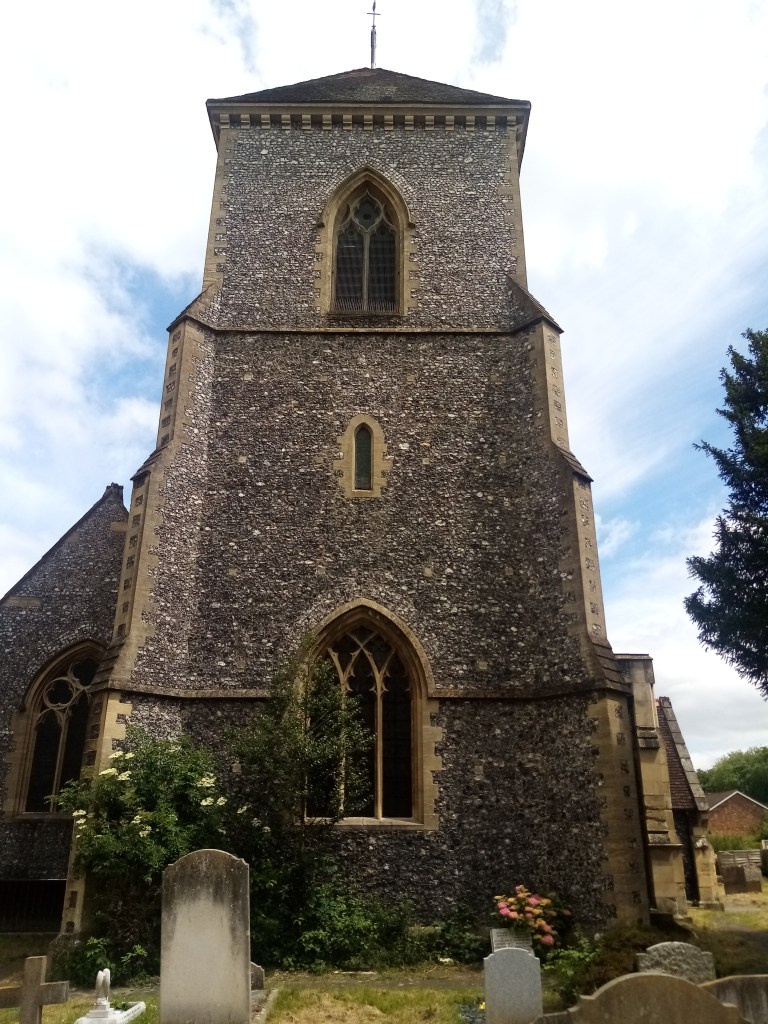
St Mary the Virgin, Addington Village
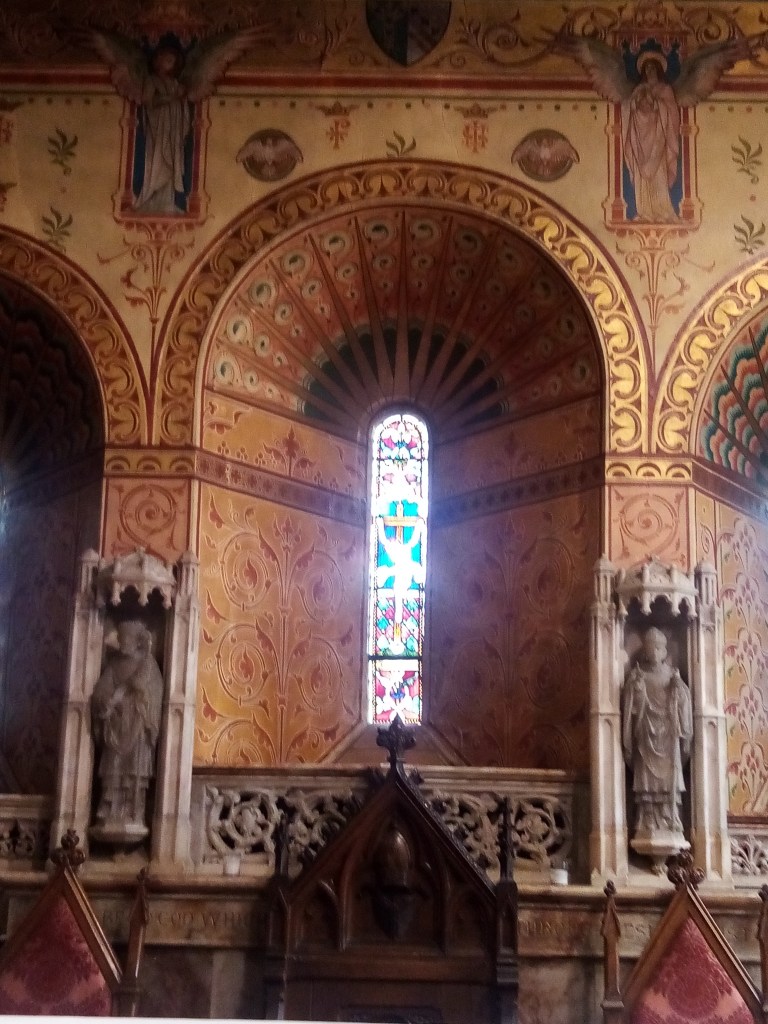
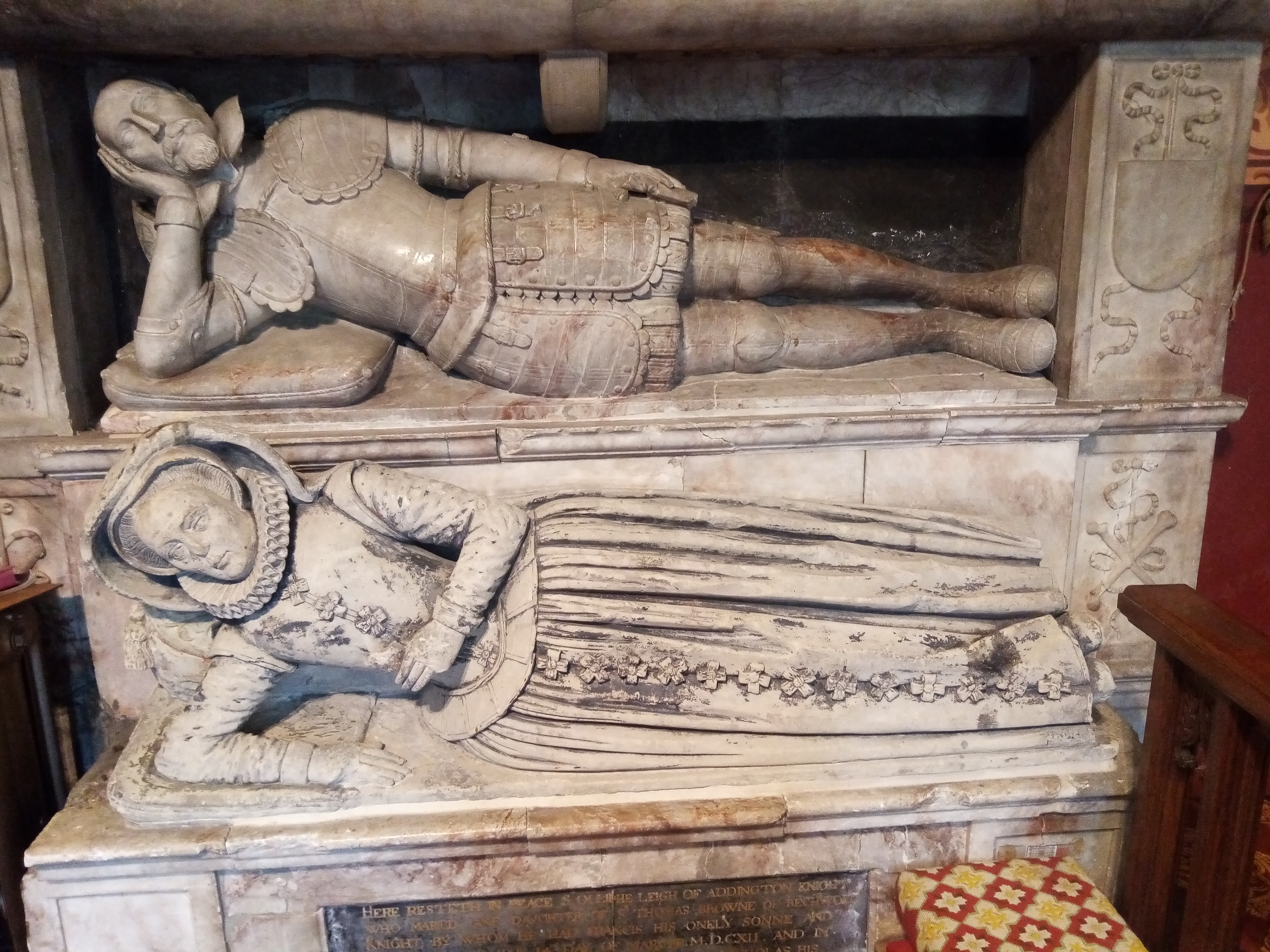
St Mary’s Addington was the place of worship for six Archbishops of Canterbury of the 19th century, whose summer residence was nearby Addington Palace. There is evidence for a church on this site since 1080 and the church is the oldest public building still in use in the Borough of Croydon. The chancel (altar area) and windows are 11th century and the south aisle, built in the 13th century, originally had a thatched roof, very unusual for a church. The church is open on weekdays so I had a chance to go inside and see the richly-decorated chancel, which looks quite spectacular in a small village church. These decorations aren’t original, they were painted in 1898 in memory of Archbishop Edward White Benson, the last of the six Archbishops to worship at St Mary’s; the other five Archbishops are buried in the crypt or churchyard. In the church are memorials to the Leigh family who were lords of the Manor of Addington for 300 years from the 15th century, and distantly related to the Carews of Beddington.
Sources: Wikipedia; addington.org.uk
Entrance to the church
Church tower
Beautifully decorated chancel
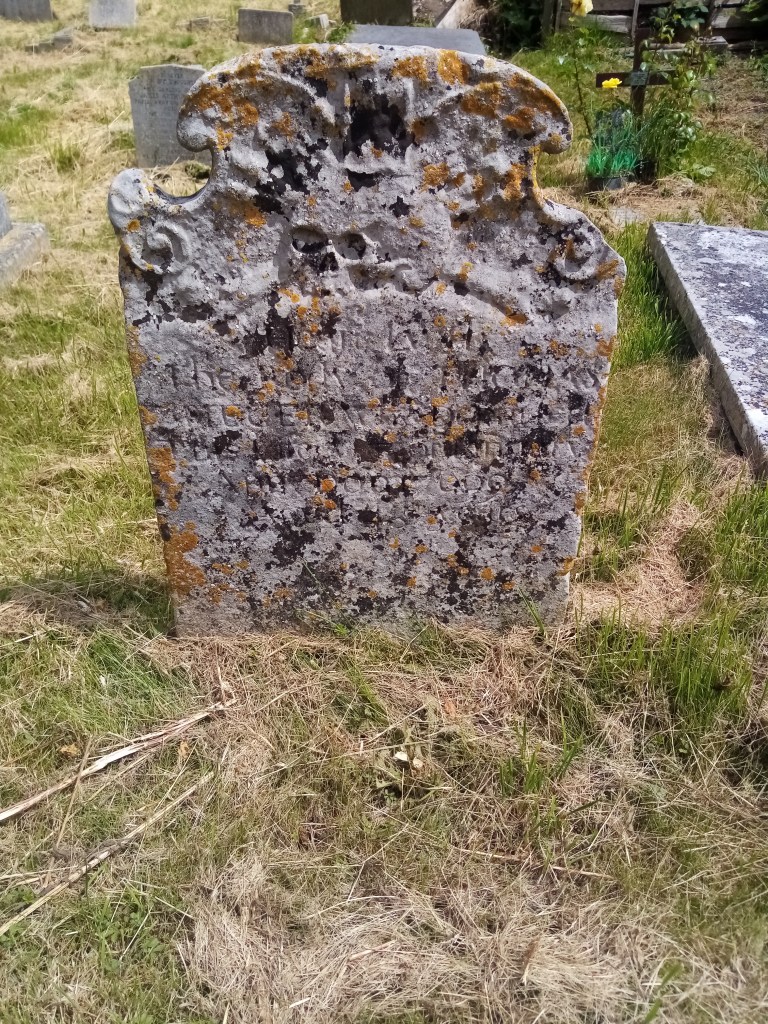
16th century headstone with skull and crossbones!
Lastly, a casual looking recumbent Lord and Lady from the Leigh family
This month I visited four London church spires. I love London’s skyline with its huge modern tower blocks interspersed with contrasting ancient slender church spires (I know some people won’t agree with me!) So these four: the tallest of London’s church spires, the second tallest, one of my favourite spires, and lastly, a spire without a church!
St Mary Abbot
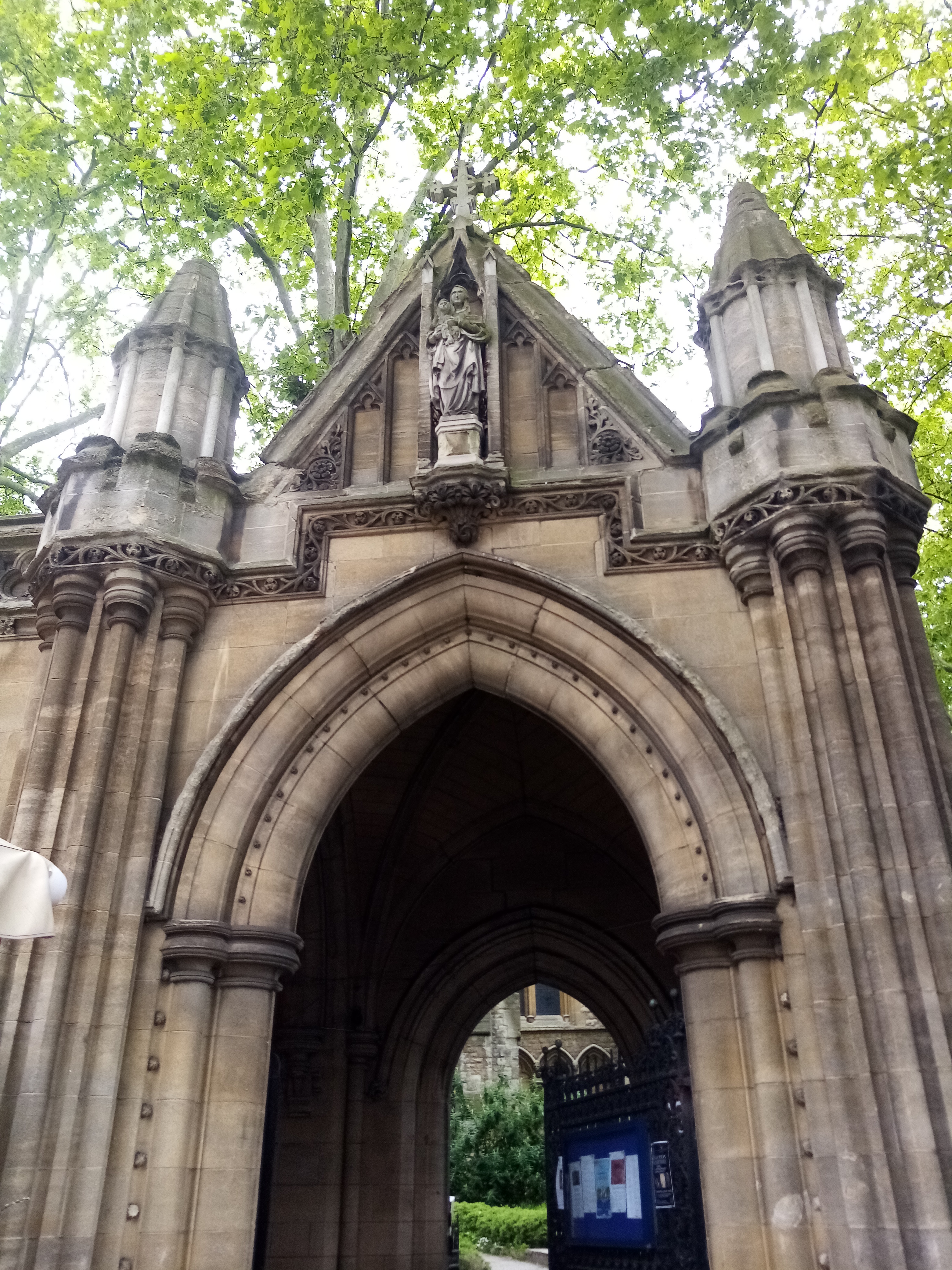
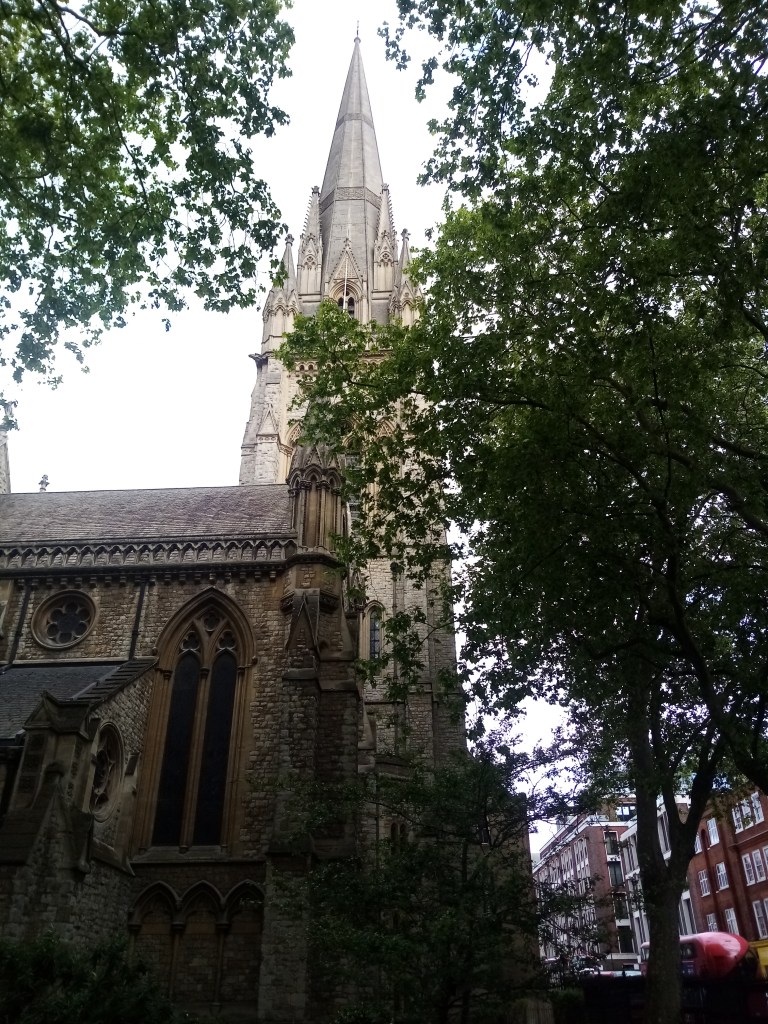
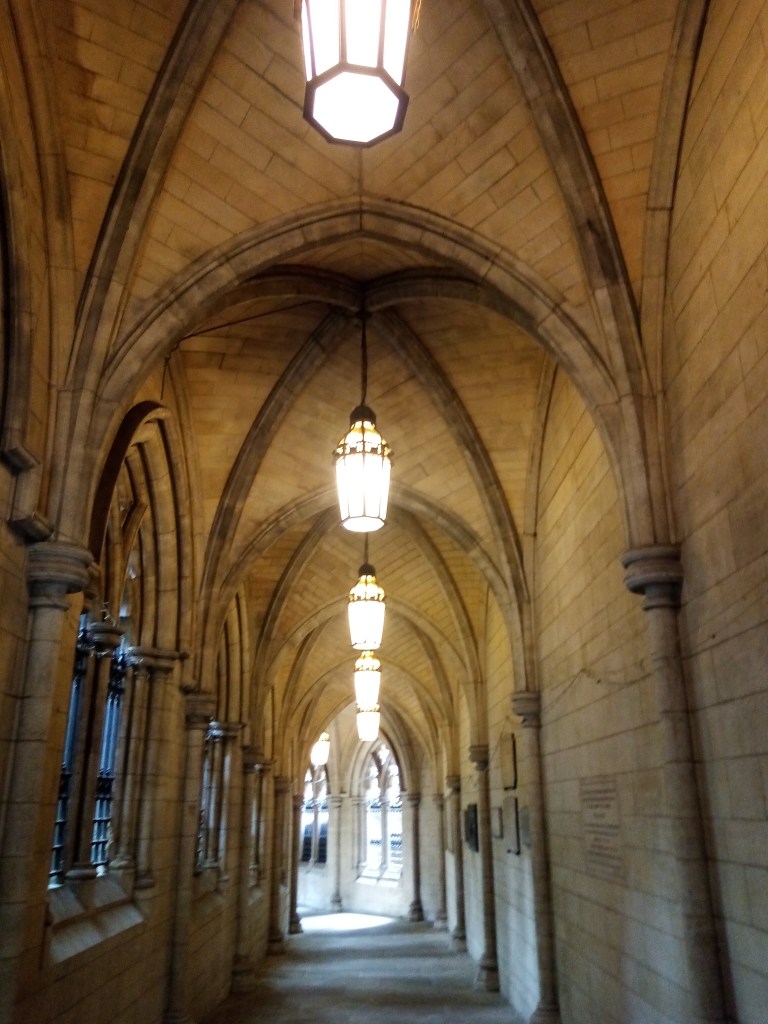
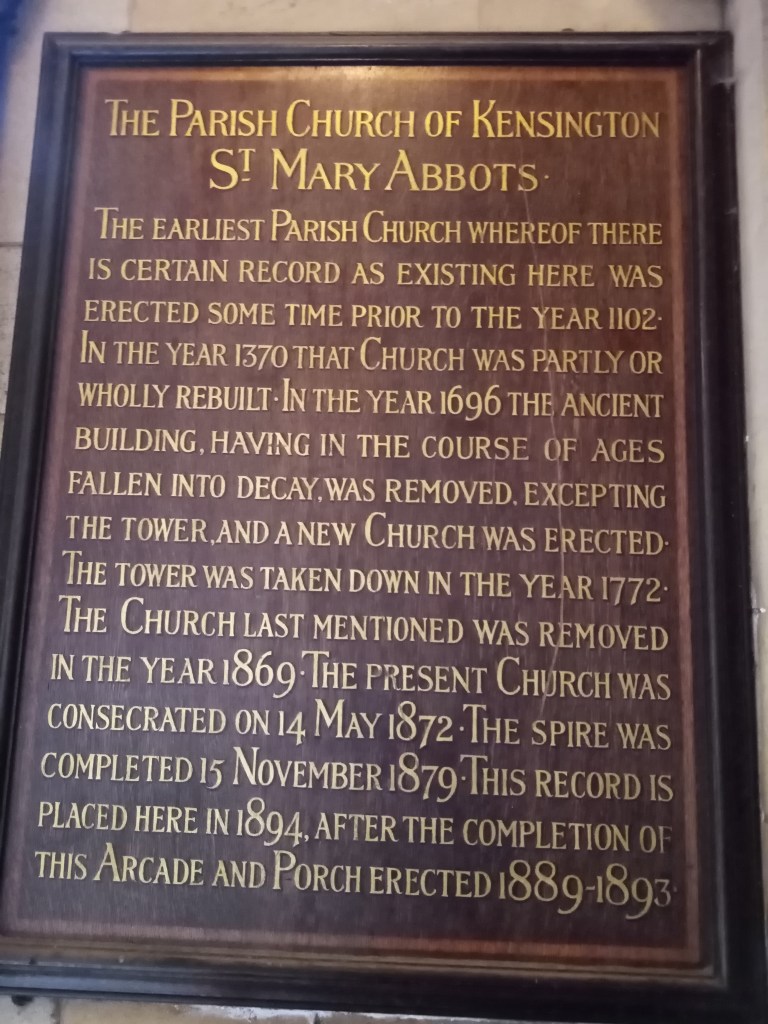
The Gothic spire of St Mary Abbot rises gracefully above Kensington in West London. The first church on this site was established in 1262 in medieval ‘Chenesitun’. Gothic-revival architect George Gilbert Scott was commissioned to design a new church building for fashionable Kensington and work began in 1869, completed in 1872, with the spire, London’s tallest at 278 feet (84.73 metres), being added in 1879. The church has an unusual and beautiful entrance in Kensington High Street: an archway leading to a vaulted cloister-like passage to the main door of the church.
Dramatic entrance to St Mary Abbot
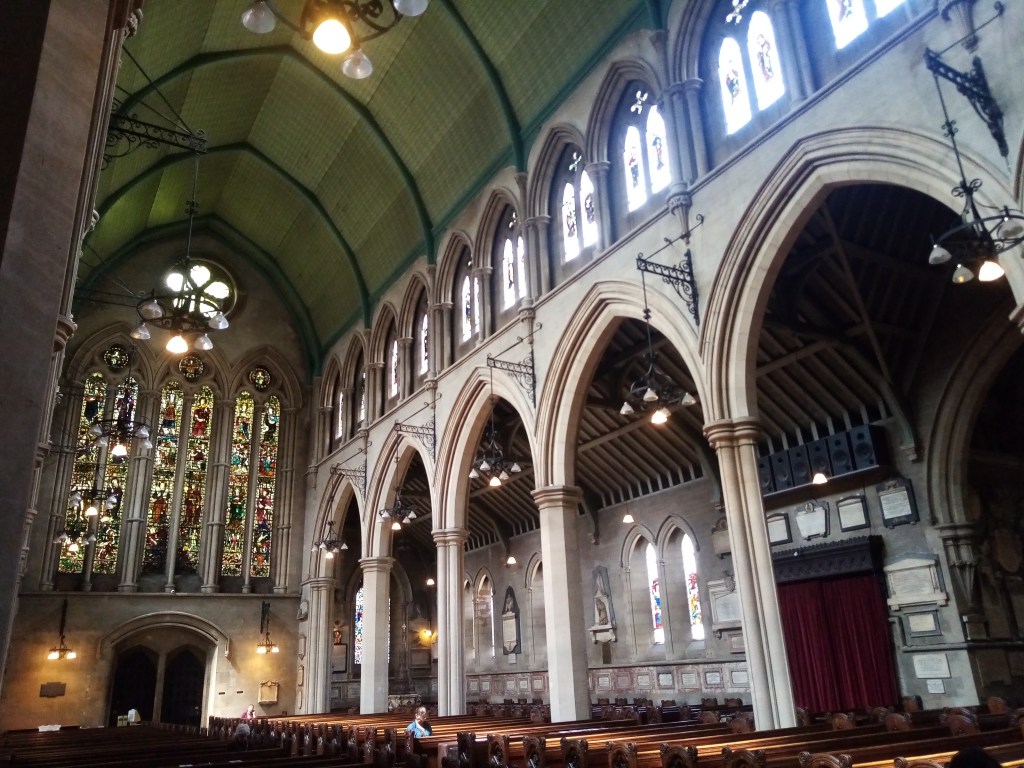
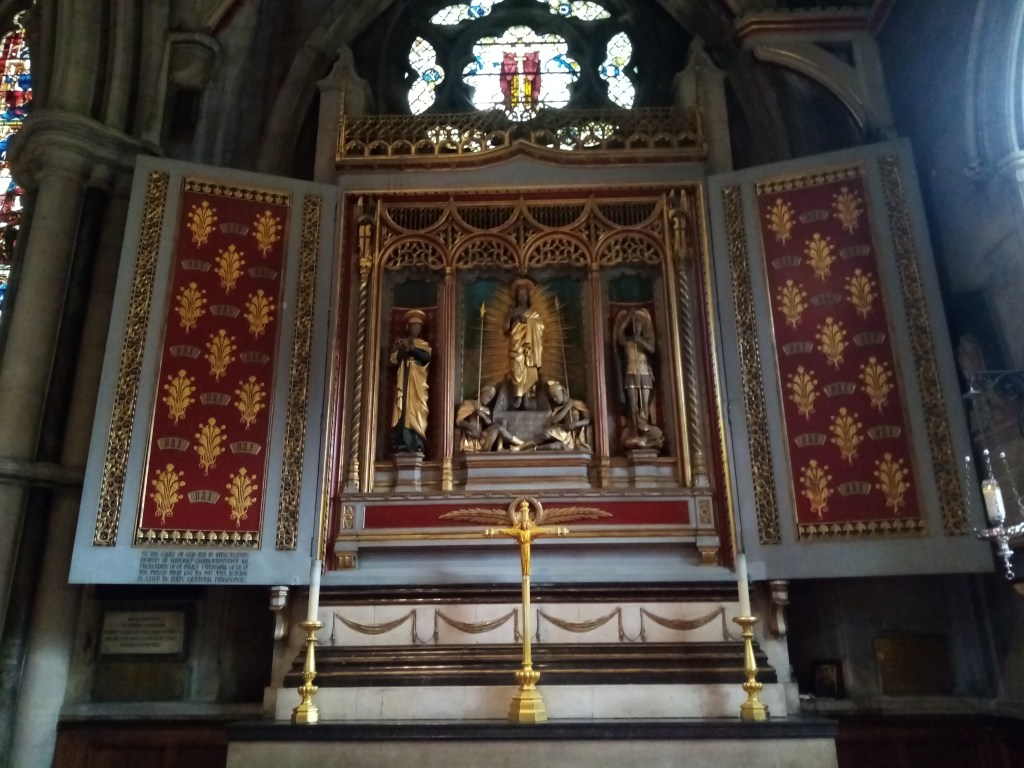
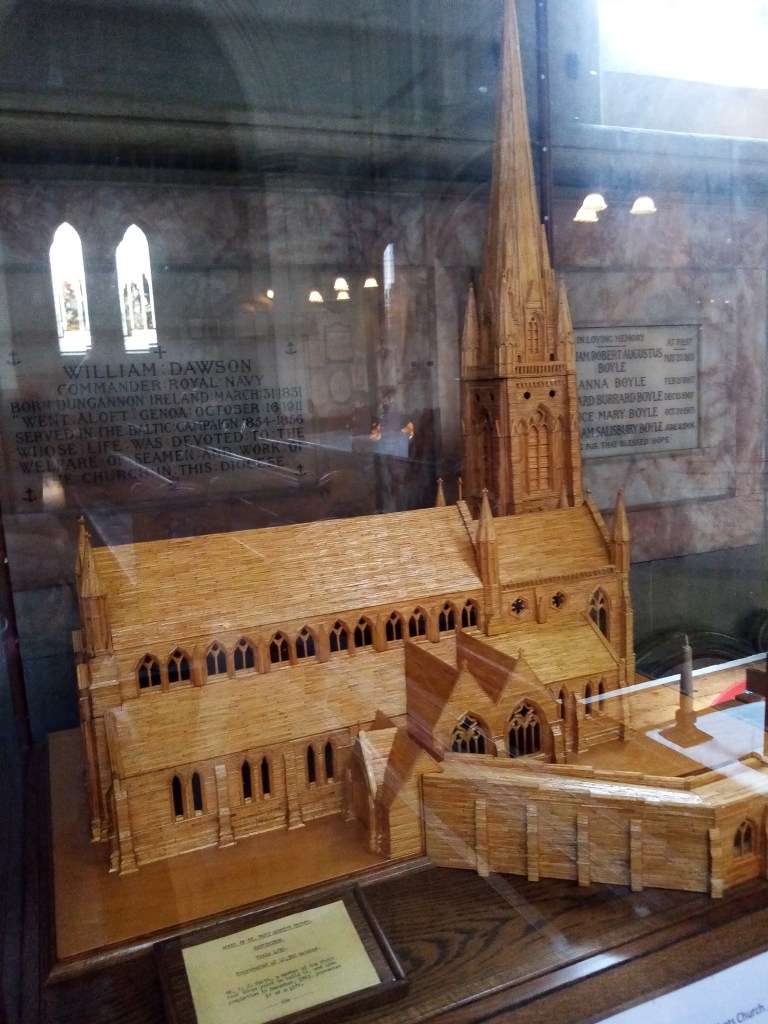
The interior of the church is equally spectacular: the unusual green ceiling which was reconstructed after World War ll following heavy incendiary bomb damage to the roof. Then there are the towering arches and pillars, the beautiful ornamental screens, and an intricate scale model of the church made entirely from 41,300 matchsticks. The model took parishioner Mr R Smith three years to complete and was presented to the church in 1963. The church hosts regular events: concerts by the Royal College of Music, free weekly piano recitals, a Summer garden party as well as Sunday services.
Source: Livinglondonhistory.org
Vaulted passage to the entrance
Matchstick Model
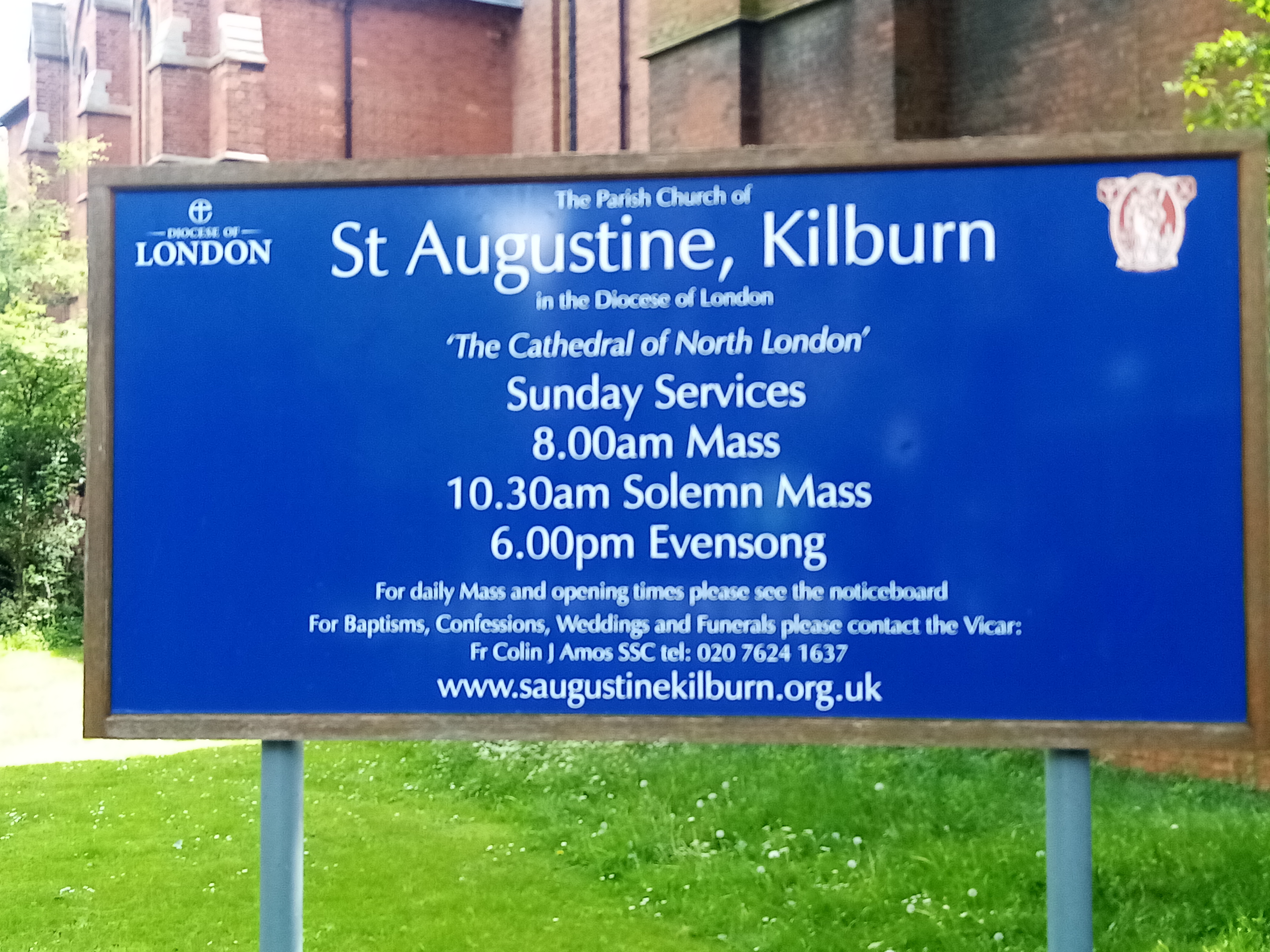
St Augustine’s Church, Kilburn
This church has London’s second tallest spire at 253 feet (77 metres) tall and towers over all the nearby buildings. Because of its large size and ornate architecture it is known as the ‘Cathedral of North London’ although it is not designated a cathedral. Constructed between 1871 and 1897, this is another Gothic- revival church designed by architect John Loughborough Pearson, renowned for his design of churches and cathedrals and best known for Truro Cathedral. The tall tower and spire were constructed in 1897 and were unusual for the Victorian era, Unfortunately I wasn’t able to go inside the church, definitely a visit for another time when it’s open, so I thought I’d tell you a little about the saint who the church is dedicated to. Augustine of Hippo was born in AD354 in a province of the Roman Empire in what is now Algeria in North Africa. He converted to Christianity and was baptised in AD386, after which he developed his own original approach to philosophy and theology. When the Western Roman Empire began to disintegrate, Augustine imagined the Christian church as a spiritual City of God on earth, as distinct from earthly cities. He is recognised as a saint in the Catholic Church, the Anglican Community, the Eastern Orthodox Church and Lutheran Church.
Source: Wikipedia
Spire of St Augustine
Rose Window
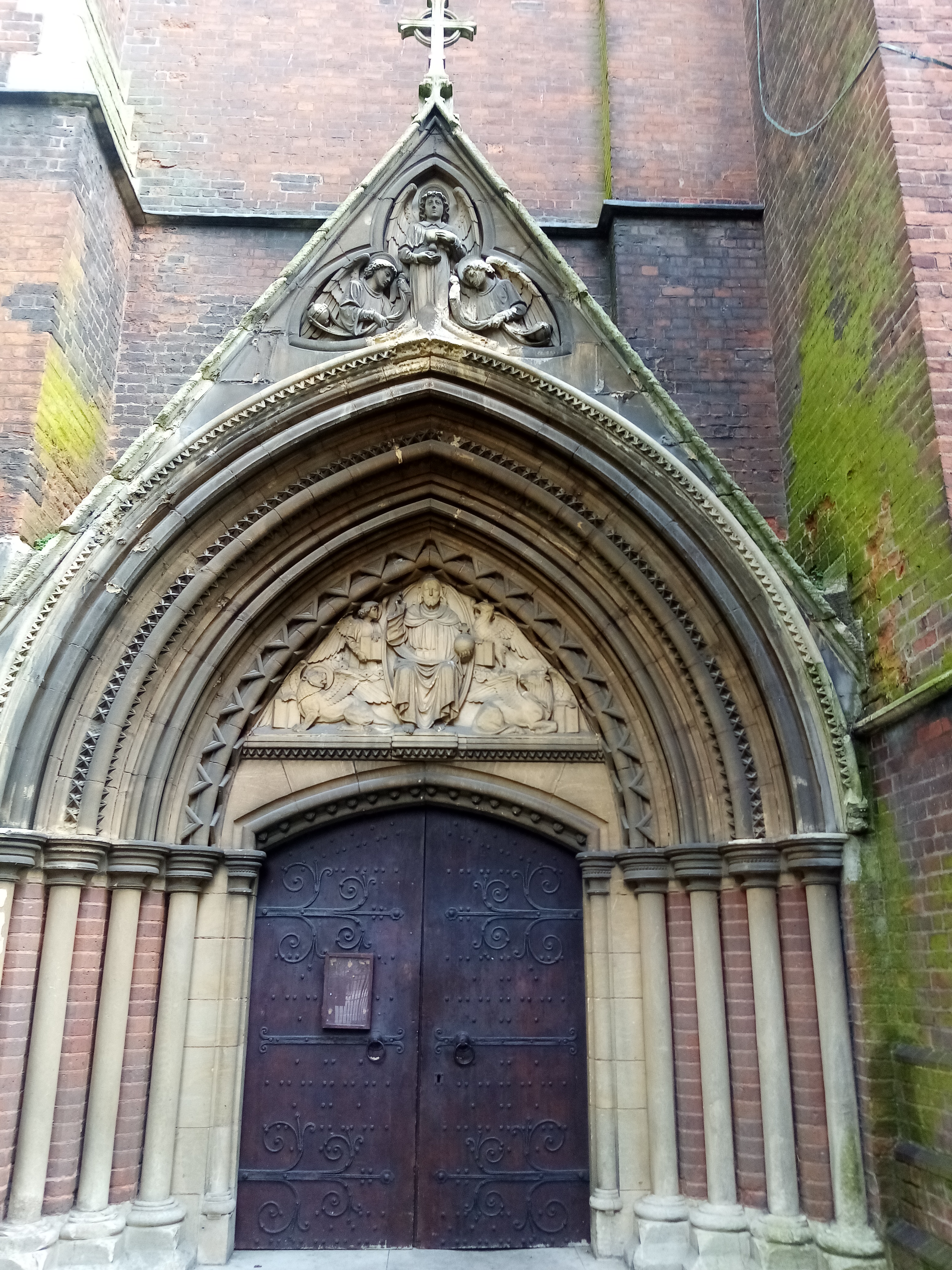
Doorway at the side of the church, featuring St Augustine
Christchurch, Spitalfields
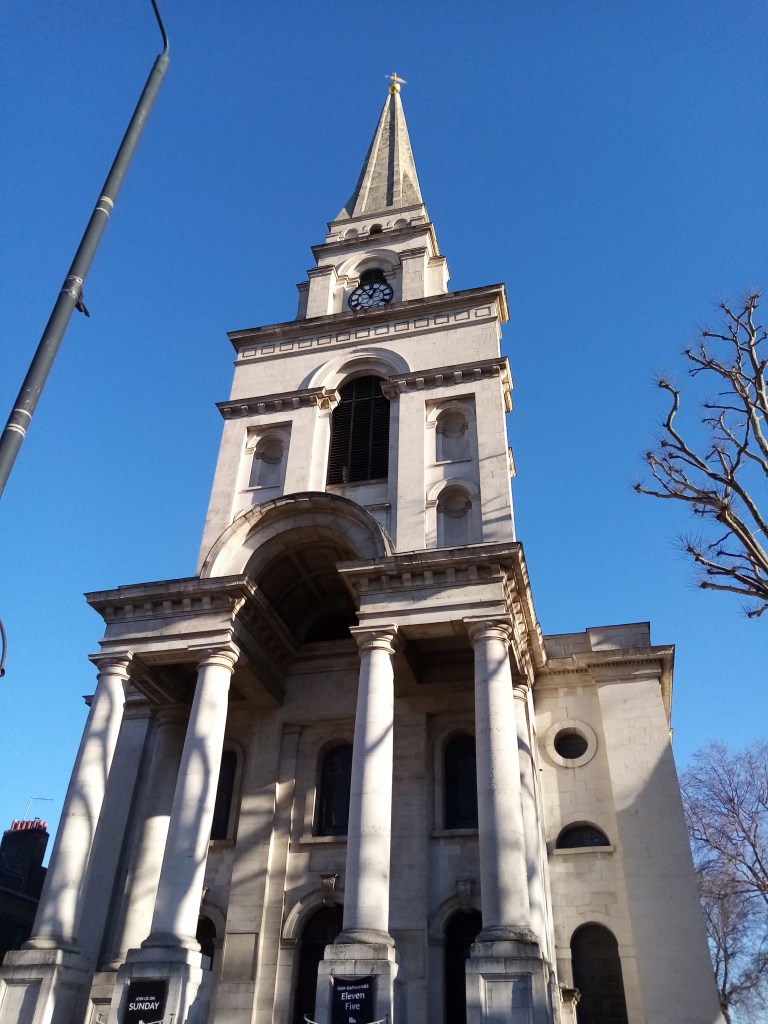
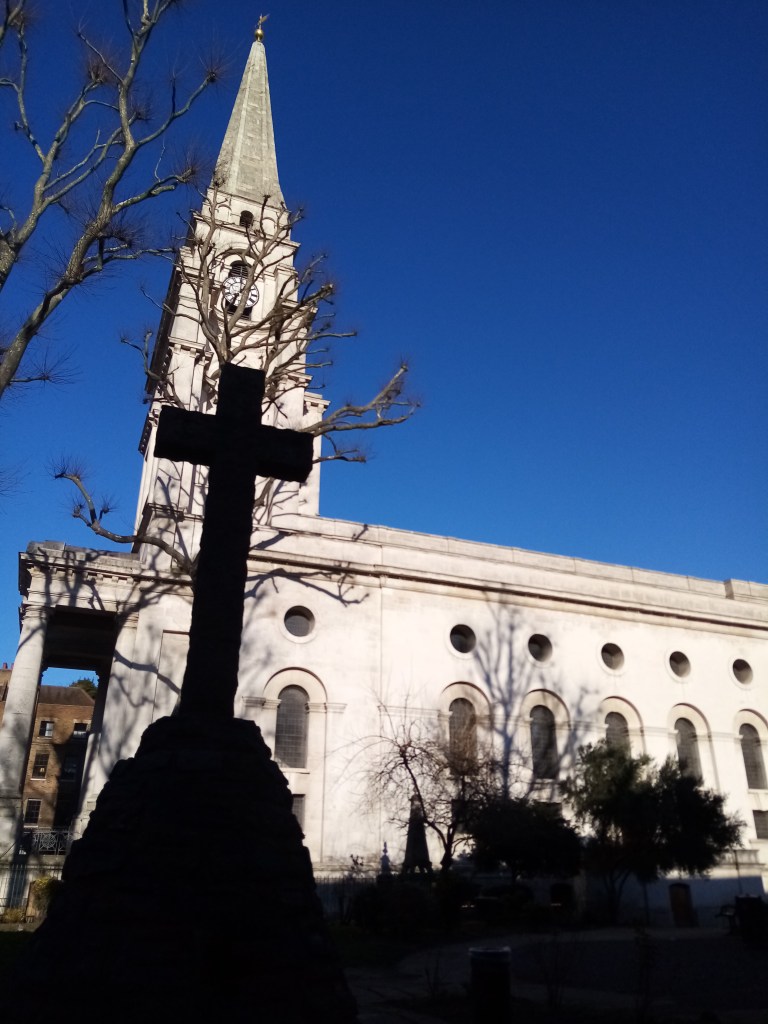
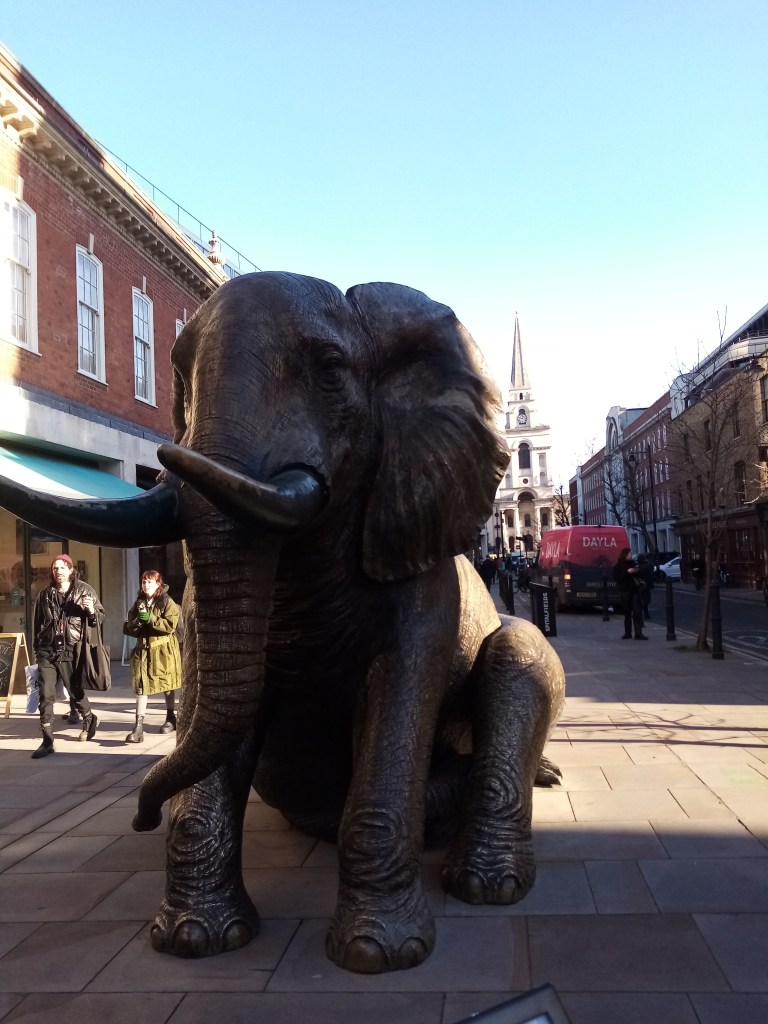
With a spire a mere 202 feet (62 metres) tall, Christchurch in Spitalfields, Tower Hamlets isn’t the tallest, but it looks extremely tall because of the absence of any other buildings nearby. It was completed in 1729 to a design by Nicholas Hawksmoor in the English Baroque style and must have looked colossal, dominating the City and East End skyline at the time. The church was one of the first ‘Commissioners’ Churches’, a commission for building 50 new churches in 1711 following the destruction of so many churches in the Great Fire of 1666. The parish of the church was home to French Huguenots, dissenters who had fled France because of persecution. They used the church for baptisms, marriages and burials but preferred their own, much plainer chapels for Sunday worship. Hard to imagine now, but in the 1960s the church had fallen into such a state of disrepair that it was almost derelict. In 1976 the Friends of Christchurch Spitalfields was formed to raise money to restore the Grade 1 Listed building to its former glory. Work was finally completed in 2004 and today the church is part of the HTB network.
Source: Wikipedia
Spectacular Christchurch!
Photo taken from across the road
Street art elephant with Christchurch in the background!
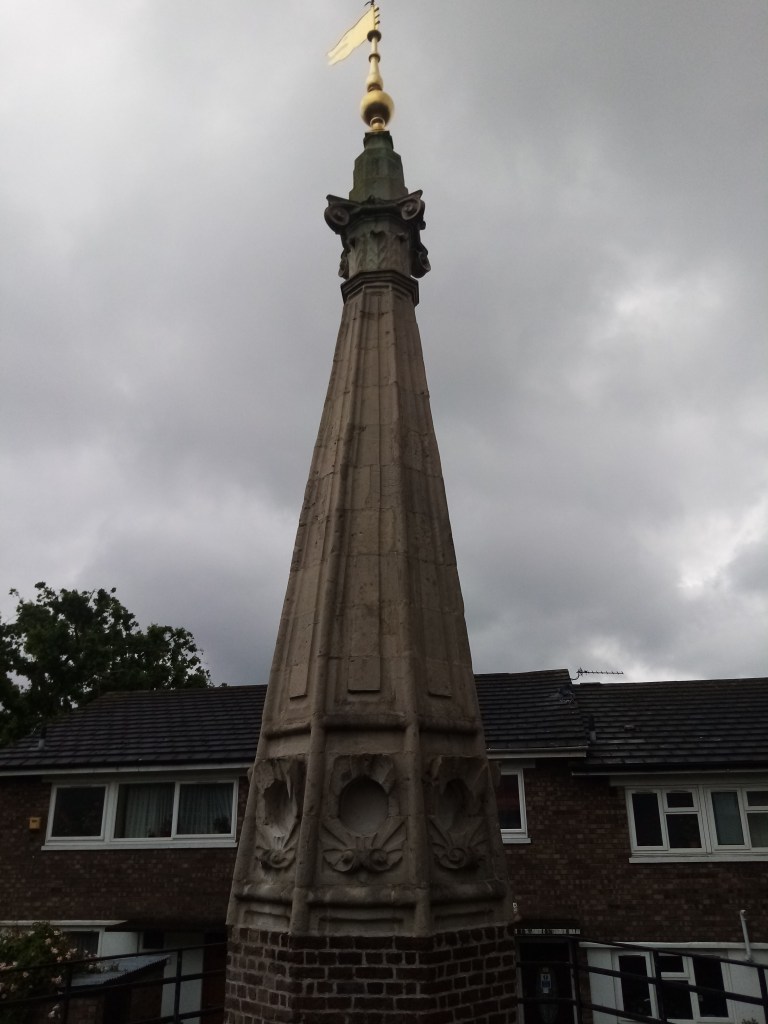
St Antholin’s Spire, Forest Hill
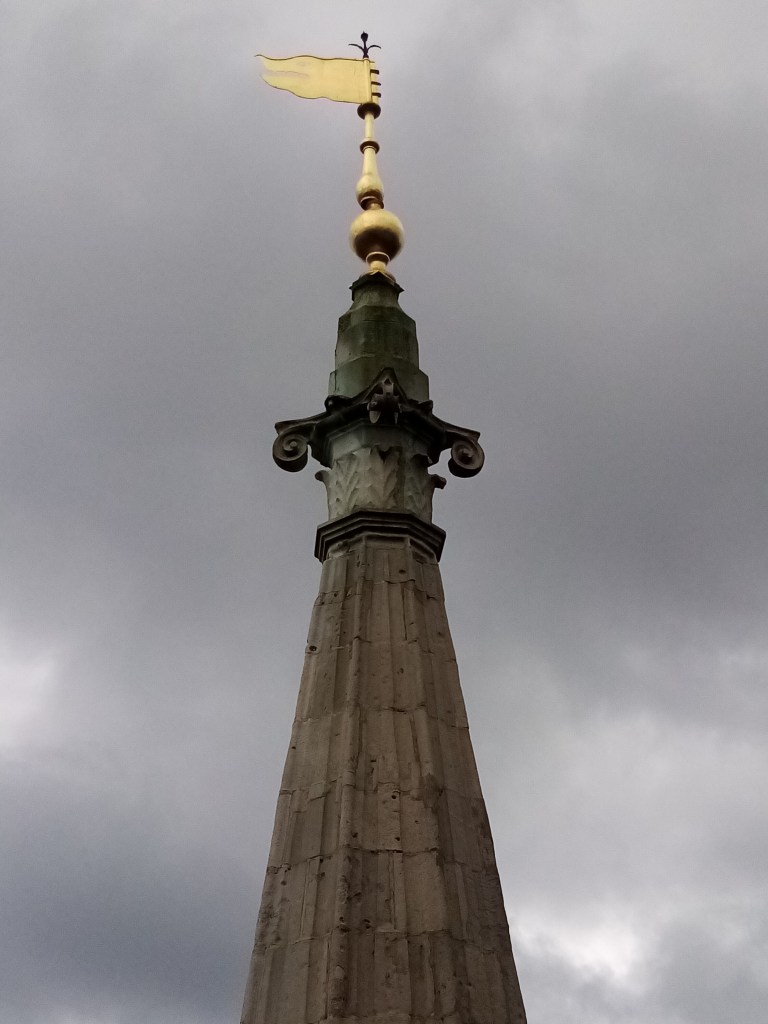
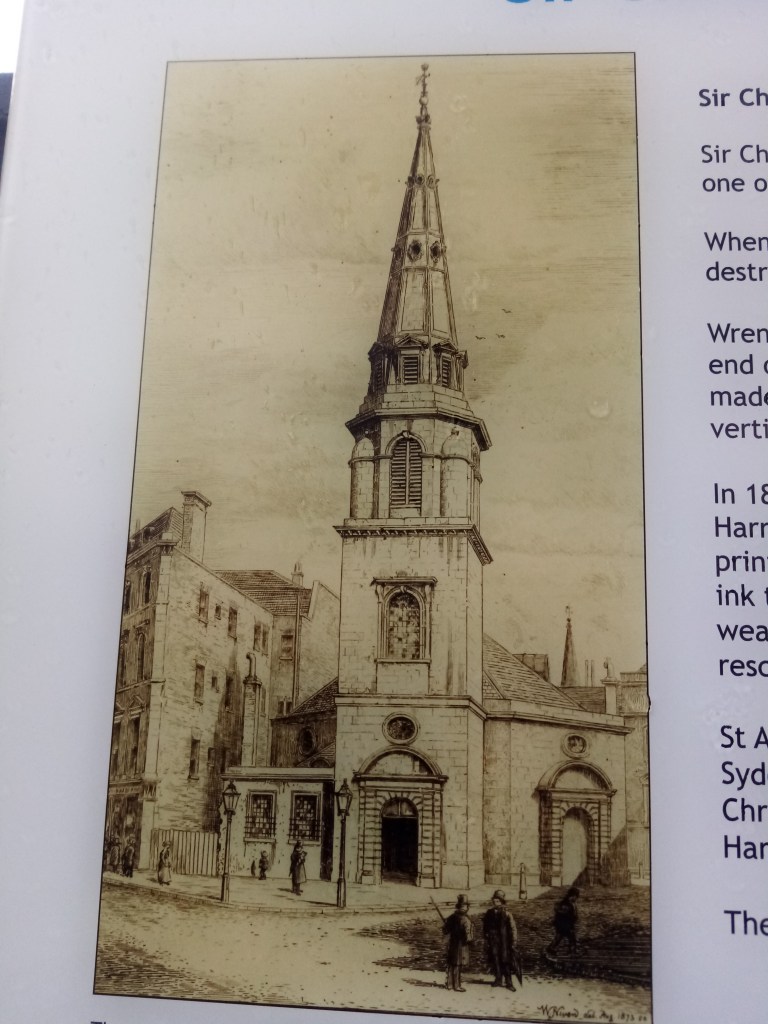
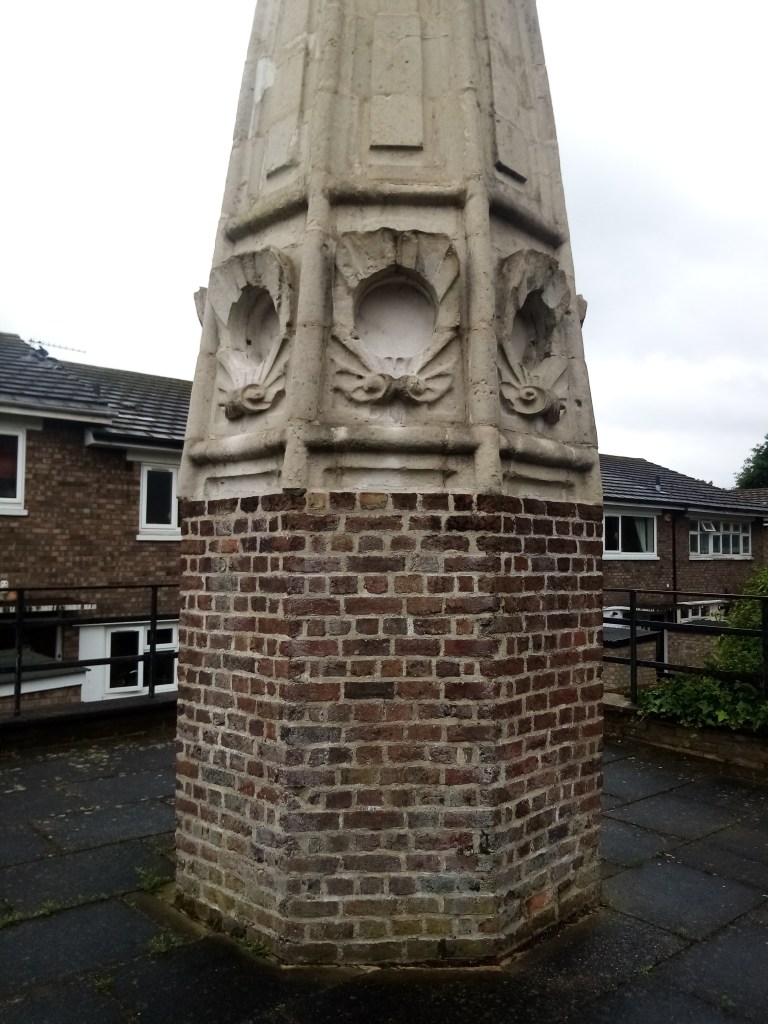
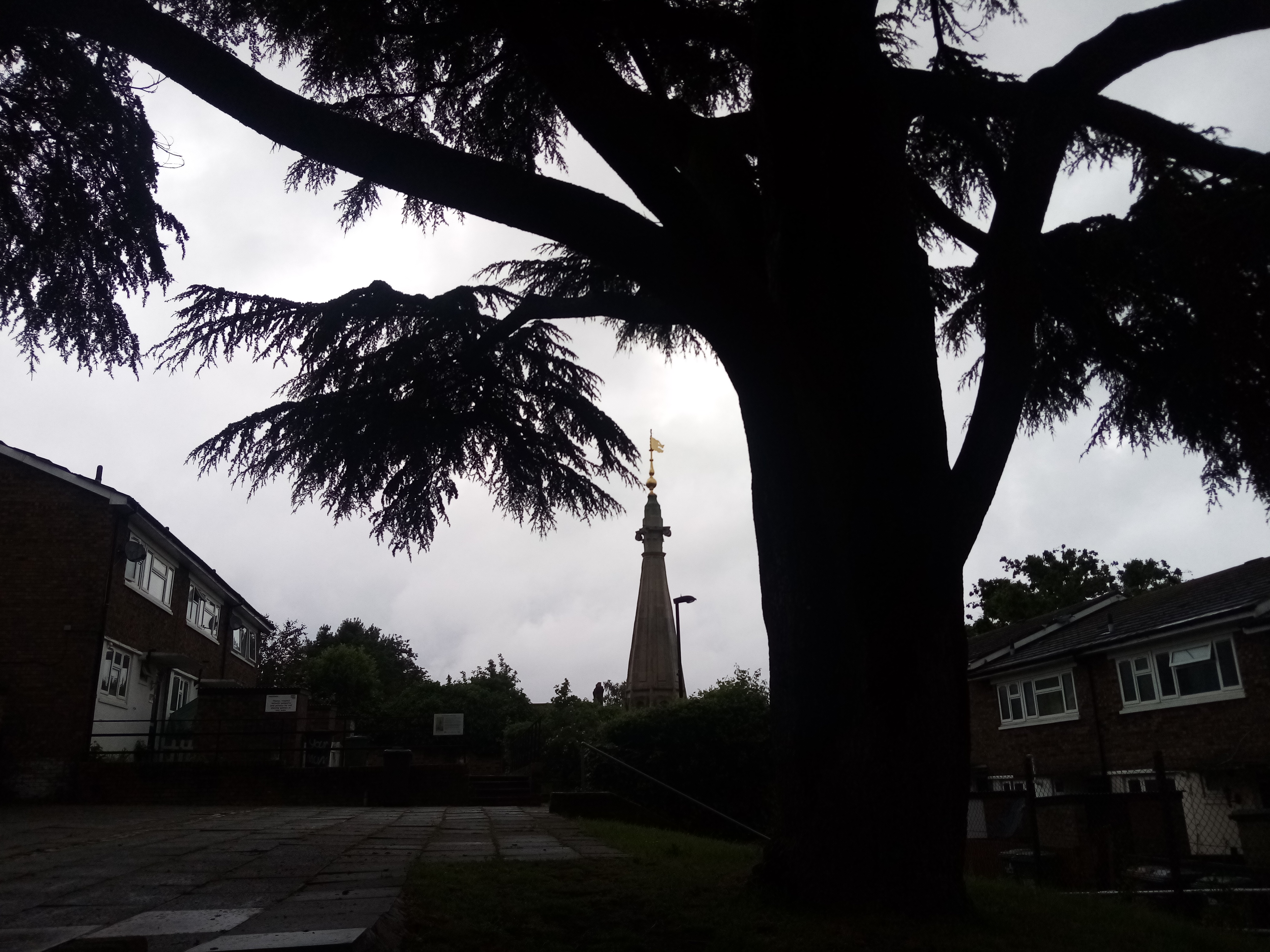
And lastly, a spire without a church. This spire sits incongruously in the middle of a 1960s South London housing estate. It once topped St Antholin’s church in the City of London, a Wren church which replaced the original medieval one which was destroyed in the Great Fire. So how did the spire end up in Forest Hill? Unusually, the spire is constructed entirely from Portland stone, rather than timber and stone, so consequently it is very heavy. When the church was damaged in a storm in 1829, the spire was removed and replaced with a more conventionally constructed one. It was destined to be demolished, until one of the churchwardens, Robert Harrild, bought it for the sum of £5. Mr Harrild was a pioneer in the printing industry and his invention of a revolutionary new way of printing had afforded him the means to purchase a large manor house in Forest Hill, Round Hill House. Apparently, he could see the church spire from his office window in the city and admired it, so he saved it and had it transported to the garden of Round House as a garden ornament. The house was demolished in the 1960s and the new housing estate was constructed around it. There is also a large cedar tree near the spire which was also part of the garden. The spire is Grade ll listed, so presumably it will stay in situ for ever.
April’s blog is based on a guided walk of Sutton town centre which I recently led as part of my church’s 125th anniversary celebrations. While preparing for the Walk, I learned so much about Sutton’s history; humble beginnings as a hamlet of 200 hundred inhabitants and 30 dwellings recorded in the 1068 Domesday Book, through the 1700s as a major staging post, with coaching inns on either side of the London to Brighton Road, to a thriving suburban town with the coming of the railway in 1846. And of course, there are the churches; we looked at three close to the town centre and the fourth, slightly further out, my own church which has its own intriguing history.
St Nicholas
St Nicholas Tower
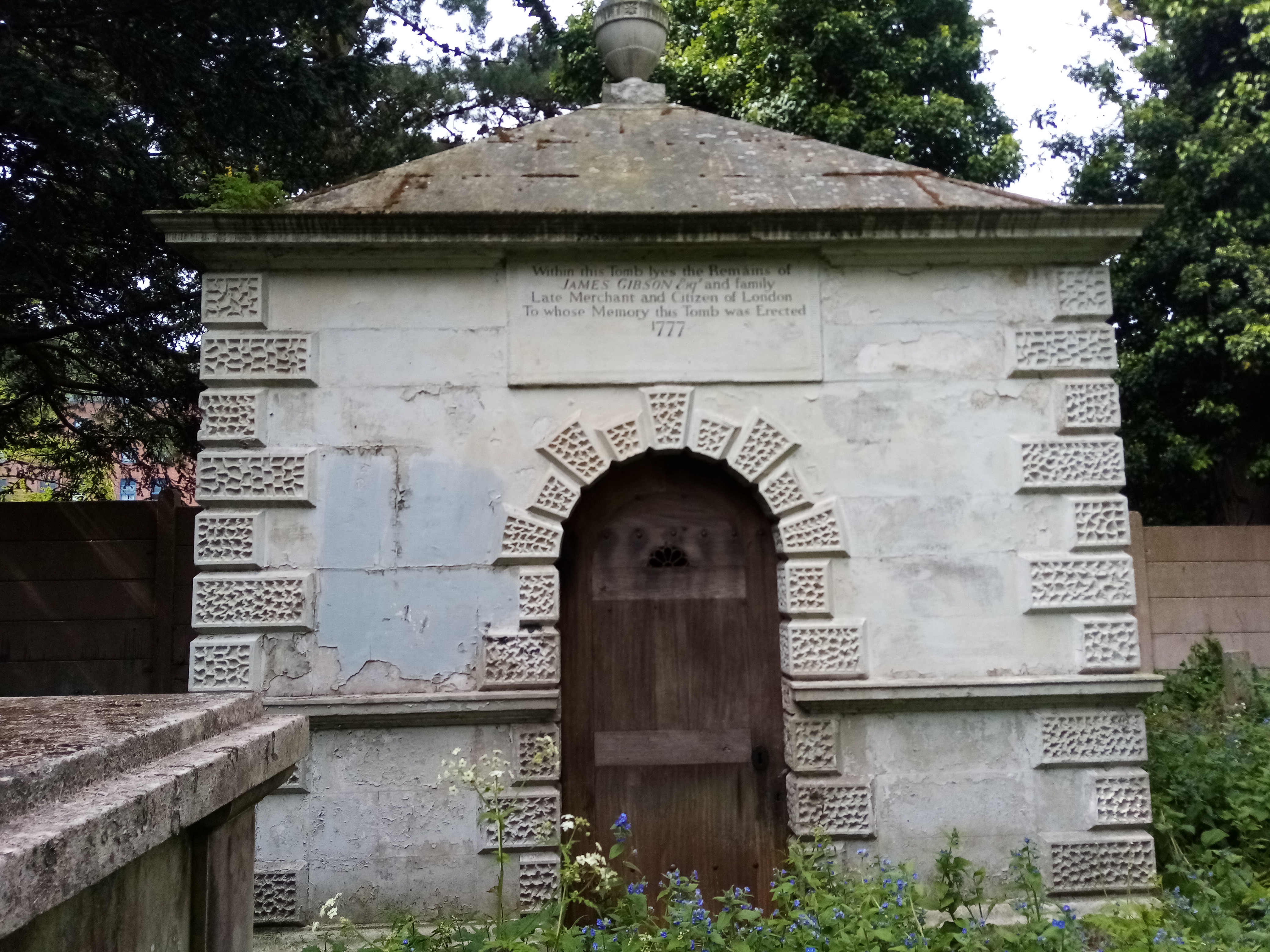
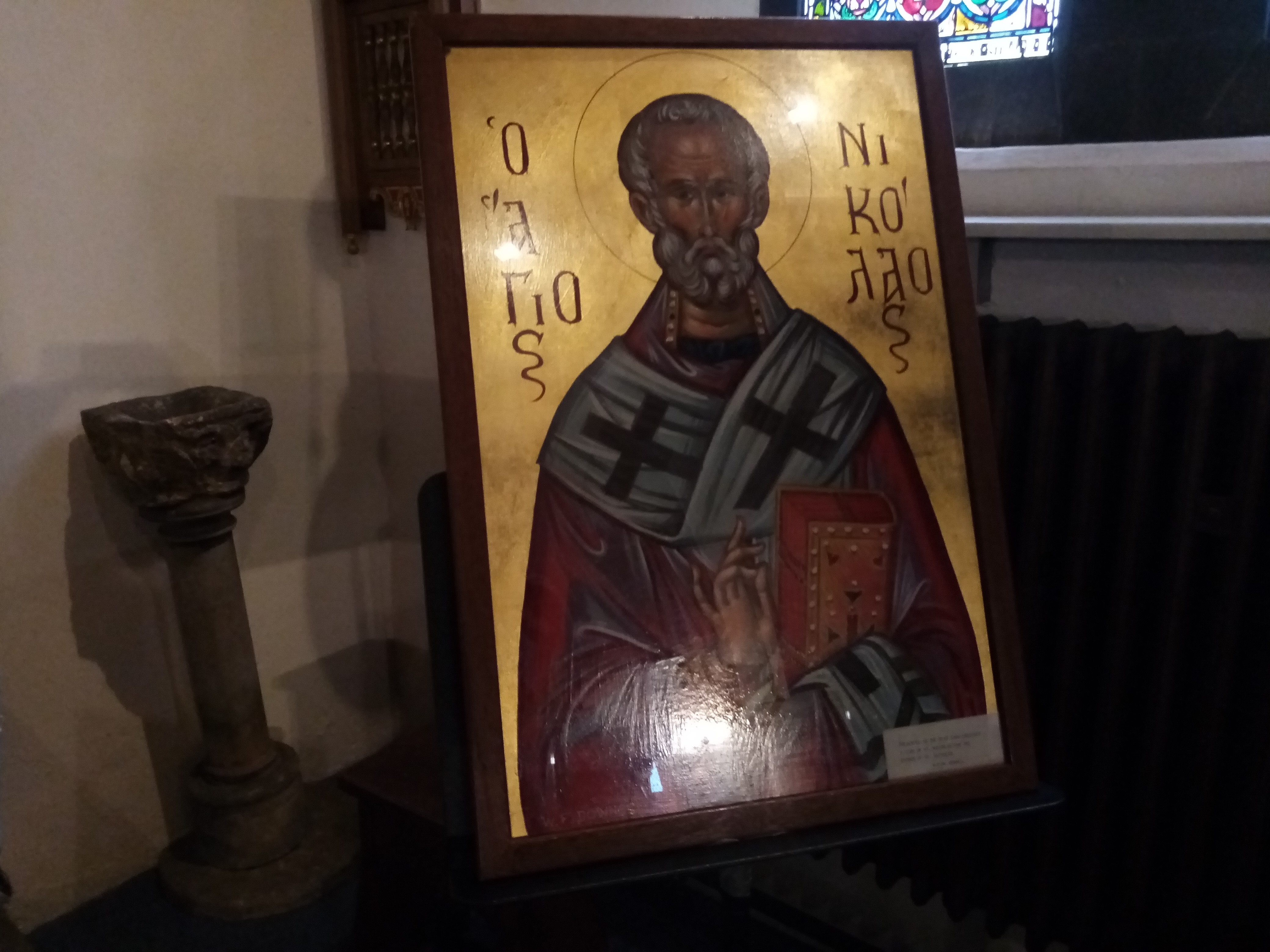
Still surrounded by its ancient churchyard, the present church was built in 1864 at a cost of £7,600, to accommodate the increase in population; the original mediaeval church was mentioned in the Domesday Book. The Revd Herbert Turner became the incumbent in 1866, two years after the building of the new church, and he was well known locally for his charitable work. He set up a committee of local tradesmen to provide dinners for 2,500 poor children during the winter months, and a ‘Clothing, Blanket and Boots’ club for the poor. The church continues its work in the community by being the HQ of the Sutton Street Pastors who go out from here on Fridays and Saturdays to engage with the people of Sutton. They have developed a good relationship with rough sleepers, some of whom ‘live’ in the churchyard. On the North side of the church the windows are plain glass instead of stained-glass as a reminder of the bomb which landed and exploded in the churchyard on the night of 24th September 1940. All the windows on this side were blown out, but this was the only significant damage to the church. In the churchyard stands the Gibson Mausoleum which was built in 1777, containing the remains of James Gibson, a London wine merchant and his family, paid for by his eldest daughter Mary. Both her parents died in 1776 and Mary used some of her inheritance to pay for them to be interred here instead of in the churchyard. Inside are 2 hexagonal sarcophagi and 5 hexagonal wooden coffins, all extended family of James Gibson. The tomb opens for annual inspection on August 12th and last year a distant relative from America attended the ceremony. One of the church’s treasures is the original small mediaeval font, rescued from the original church.
The Gibson Mausoleum
Tiny mediaeval font and image of St Nicholas
Delightful Easter tableau in the church
Trinity Church
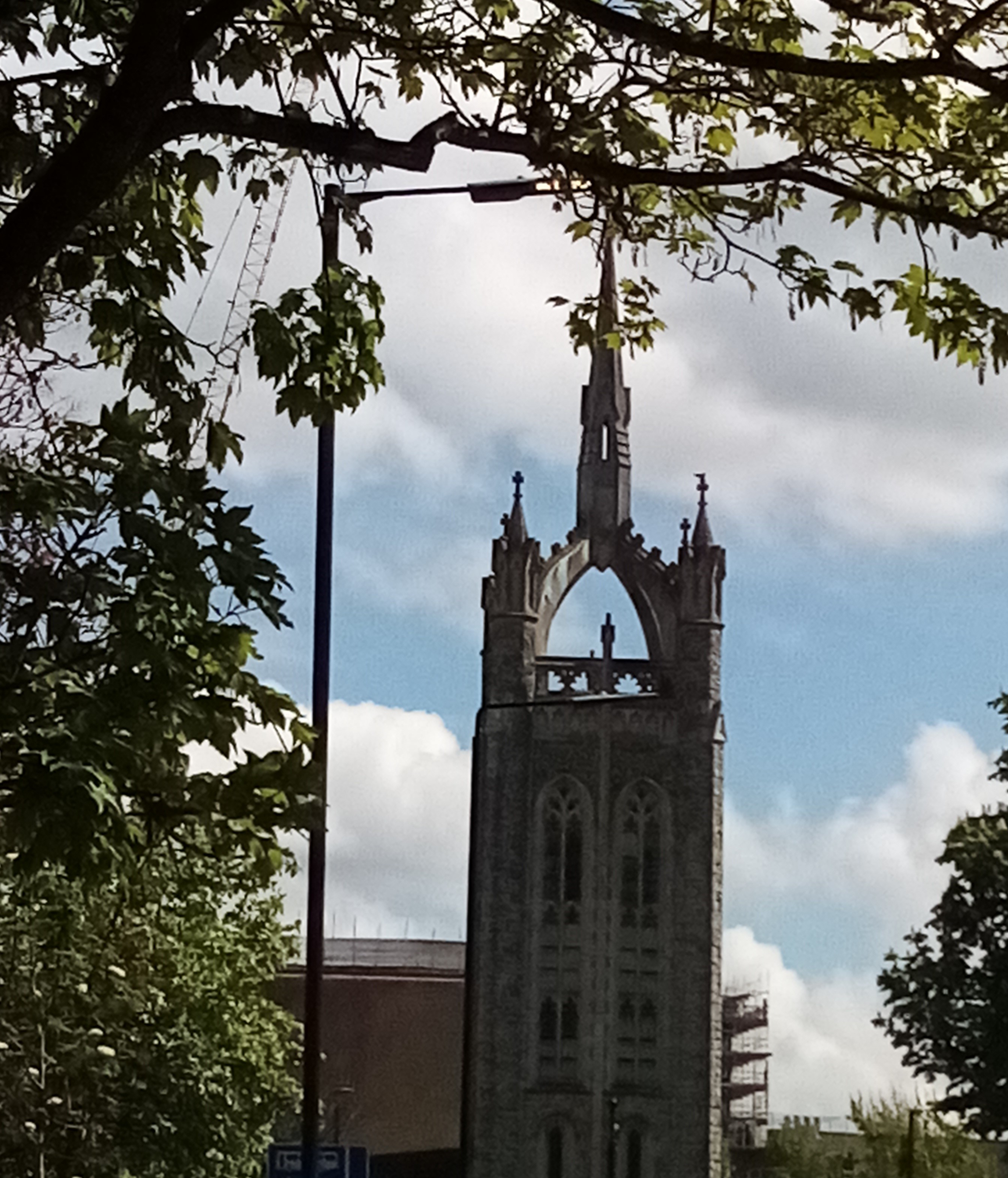
Spire of Trinity Church
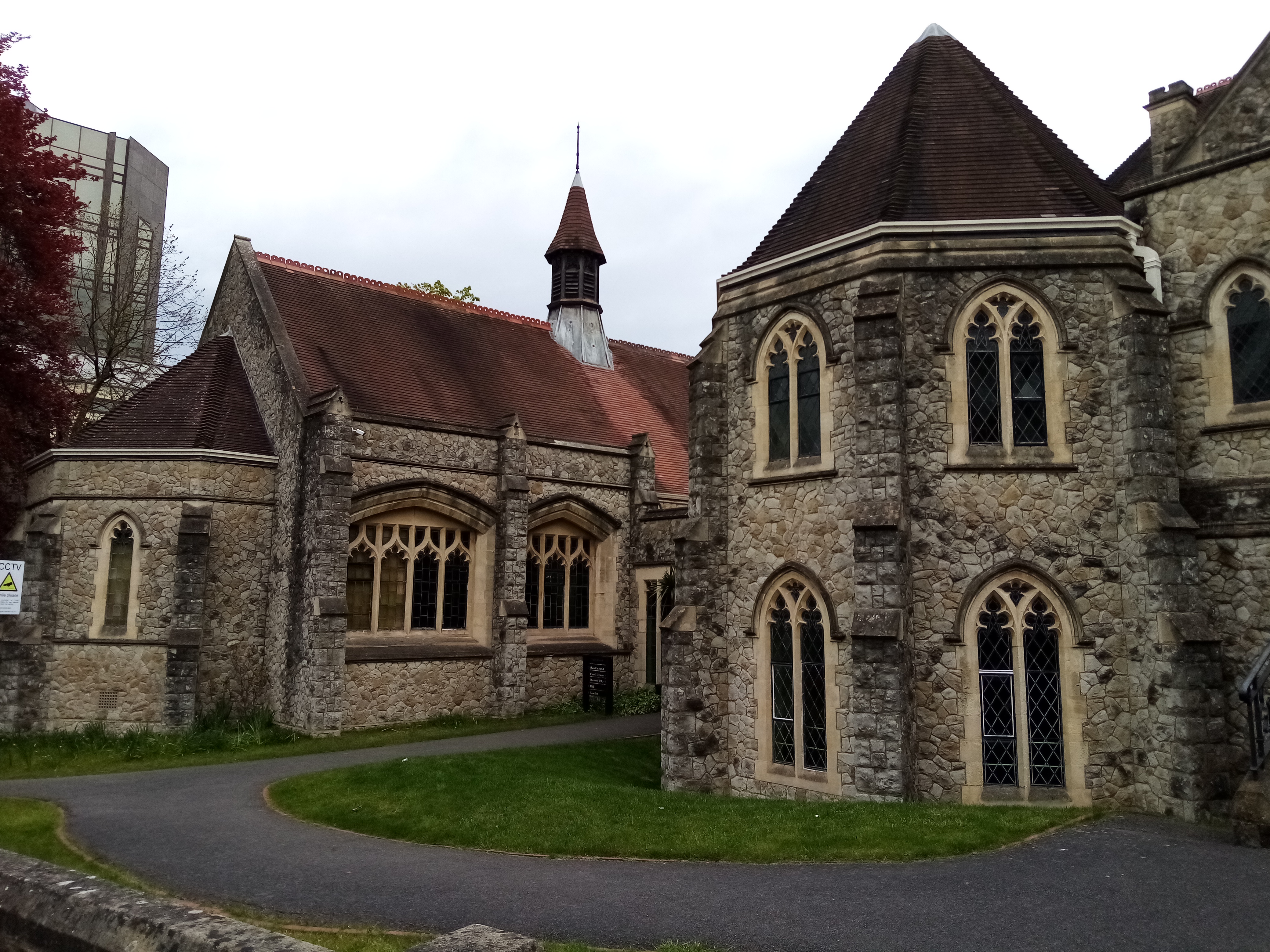
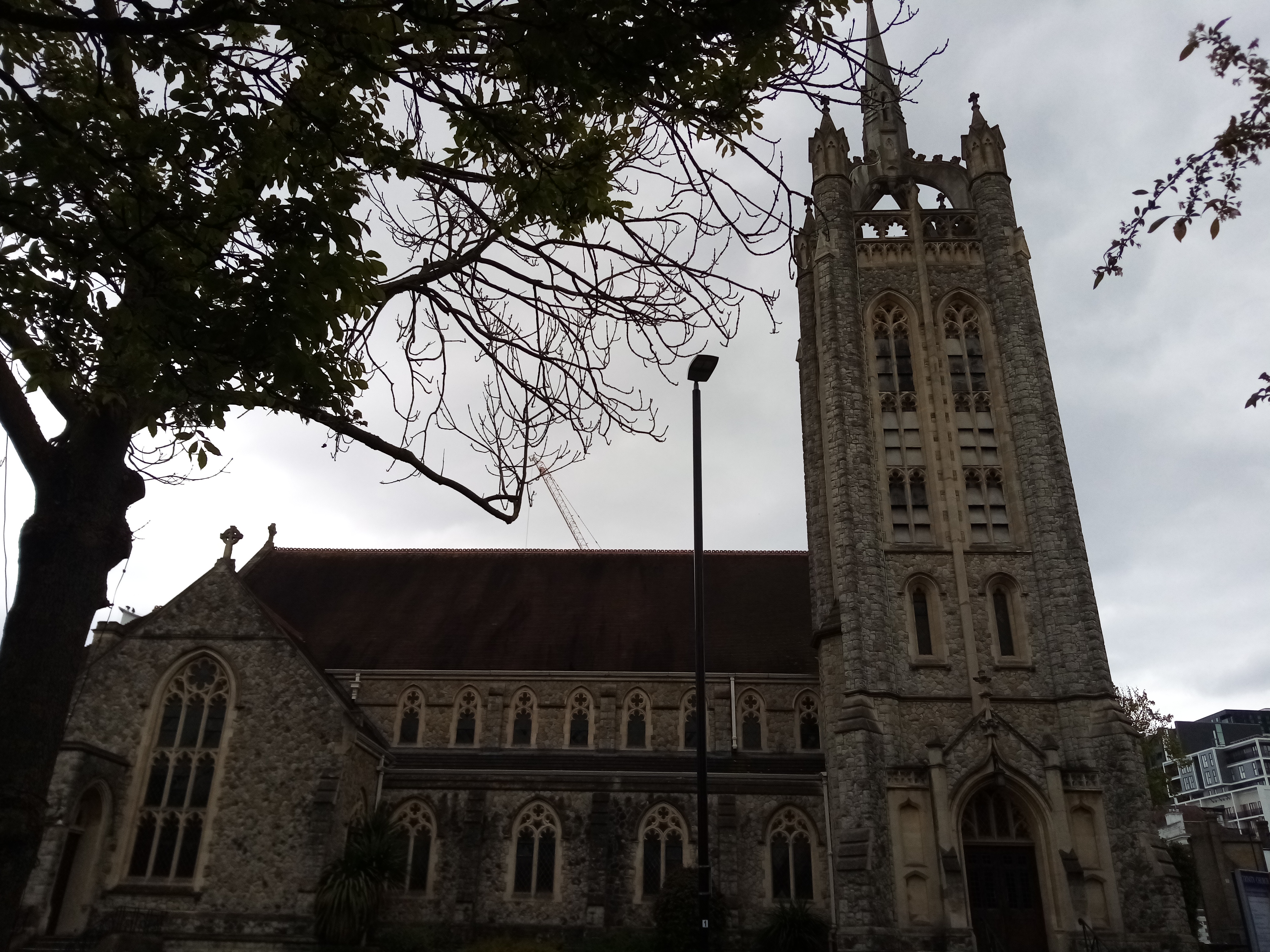
Trinity Church, built in 1907 in the Gothic style, is a lovely landmark in the town with its tall tower and unusual ‘crown and lantern’ spire, which it shares with Newcastle Cathedral and St Giles Cathedral in Edinburgh. So an ordinary church in what was a small suburban town has the same spire as two cathedrals! The church opened in 1907 as Sutton Wesleyan Church, replacing a smaller building further out of town. In 1973 the Methodist Church joined with the United Reformed Church (formerly Congregational Church) to form one congregation, and the church changed its name to Trinity. And two years before this, in 1971, the four central Sutton churches: St Nicholas Parish Church, Sutton Baptist, Methodist and Sutton Congregational Church, signed a covenant to work together for their congregations and for the wider community. Today, the regular congregation shares their building with Sutton’s Hong Kong Fellowship and the two congregations join together for social events and Carol Services .Trinity Church has several additional buildings, most added later but all in the same Gothic style. I think it’s a very beautiful and bold attraction in our town.
Attractive former Congregational Church (now demolished)*
Additional buildings of Trinity Church
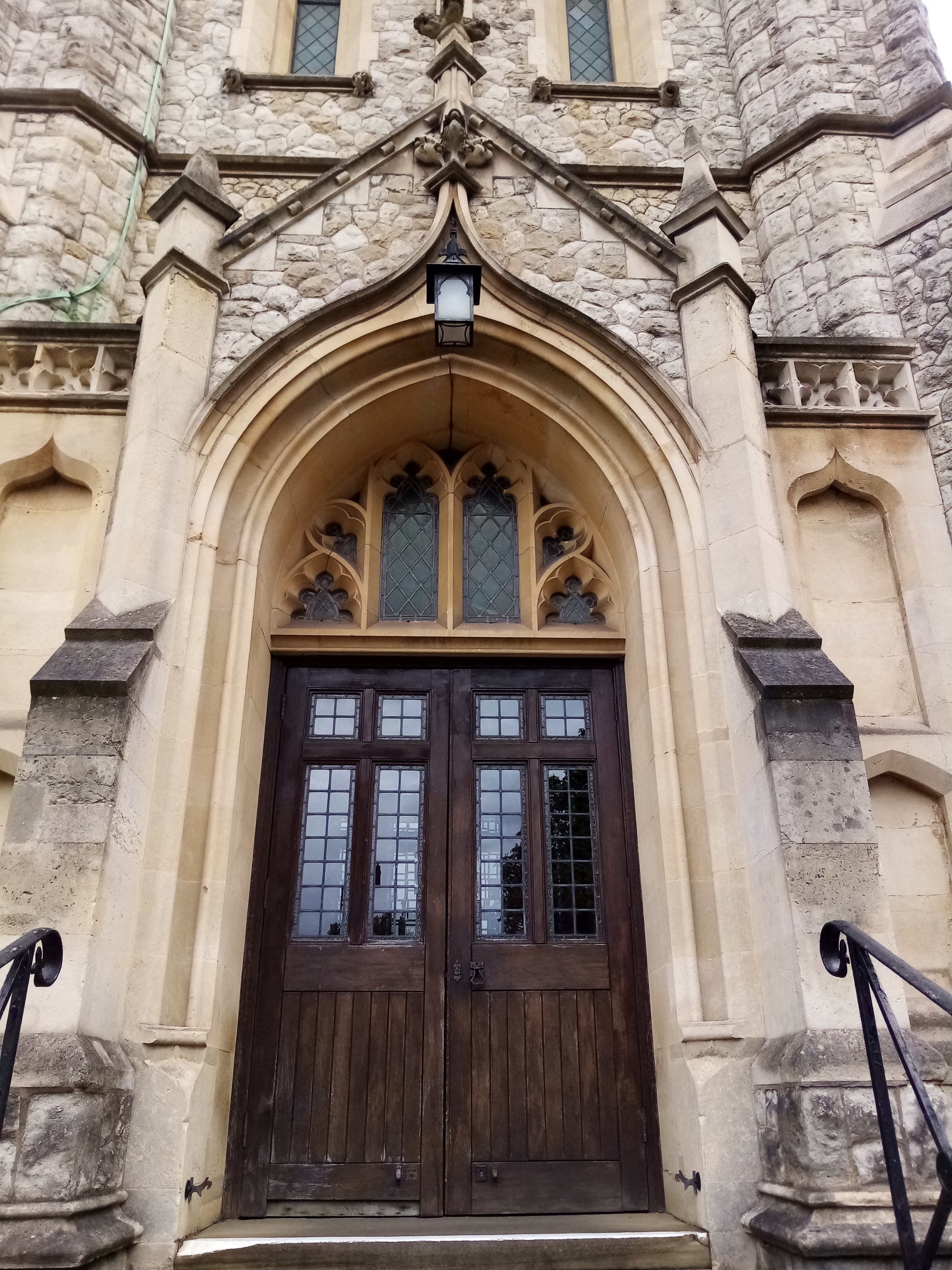
Doorway of Trinity Church
Sutton Baptist Church
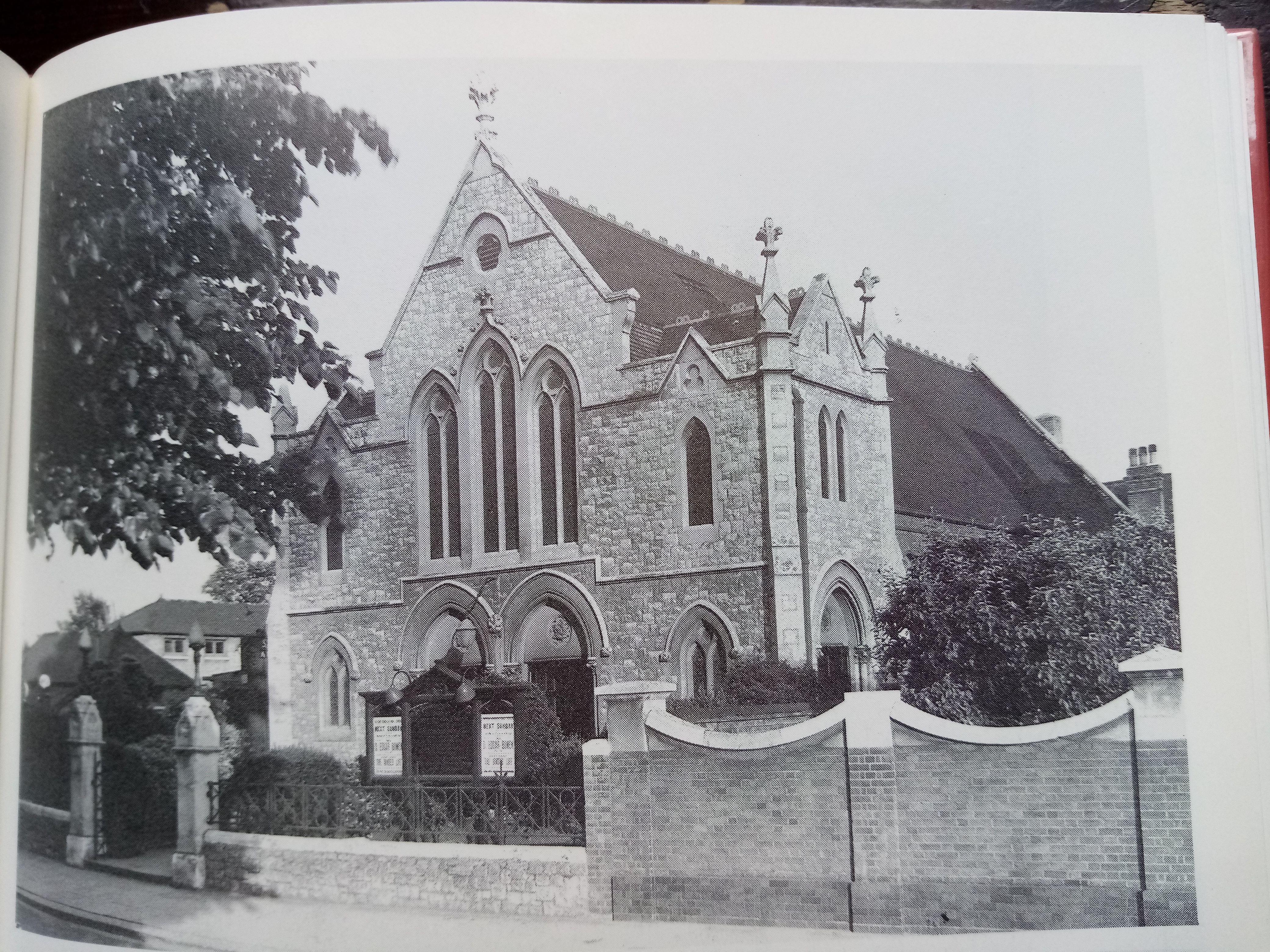
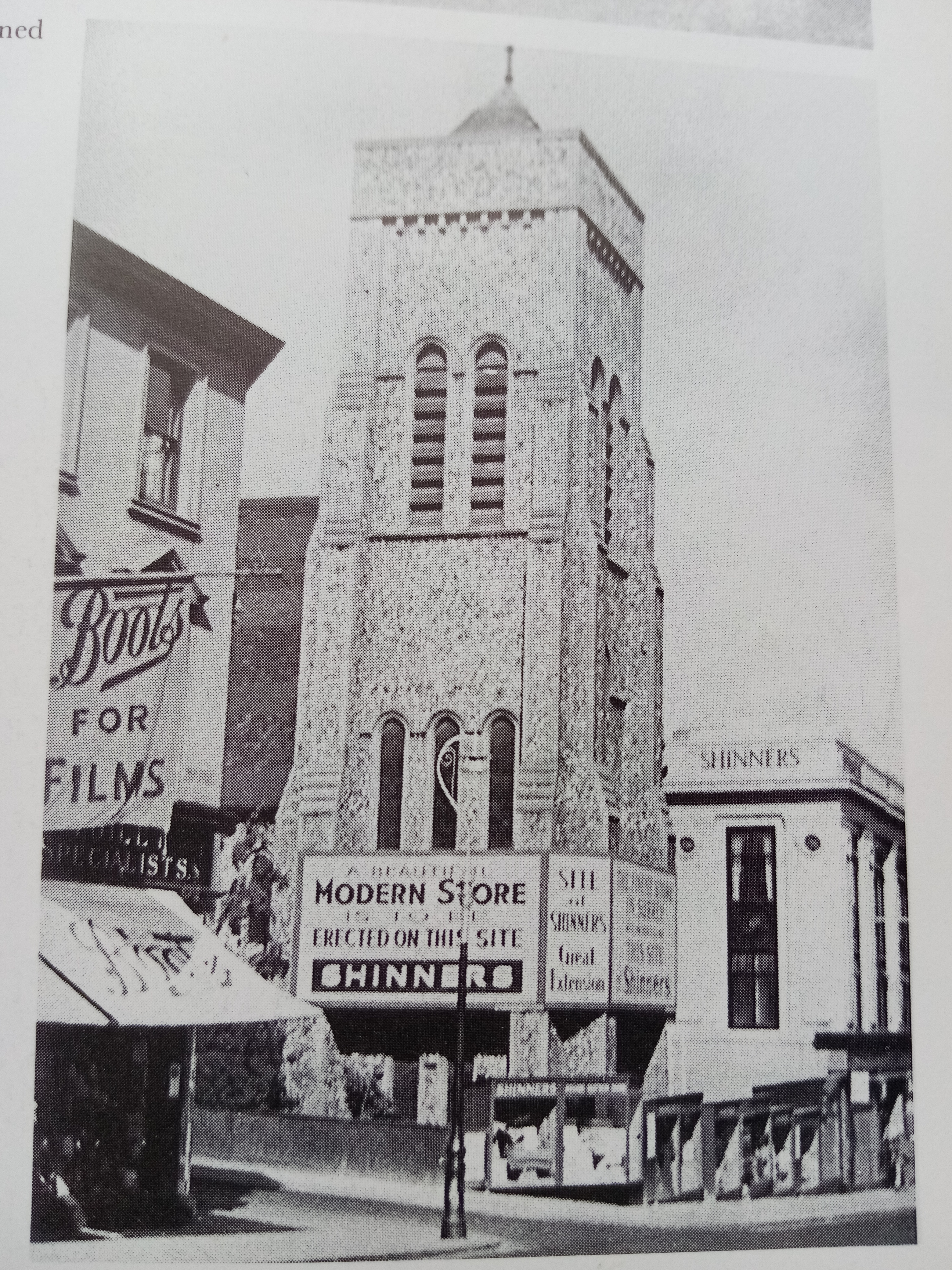
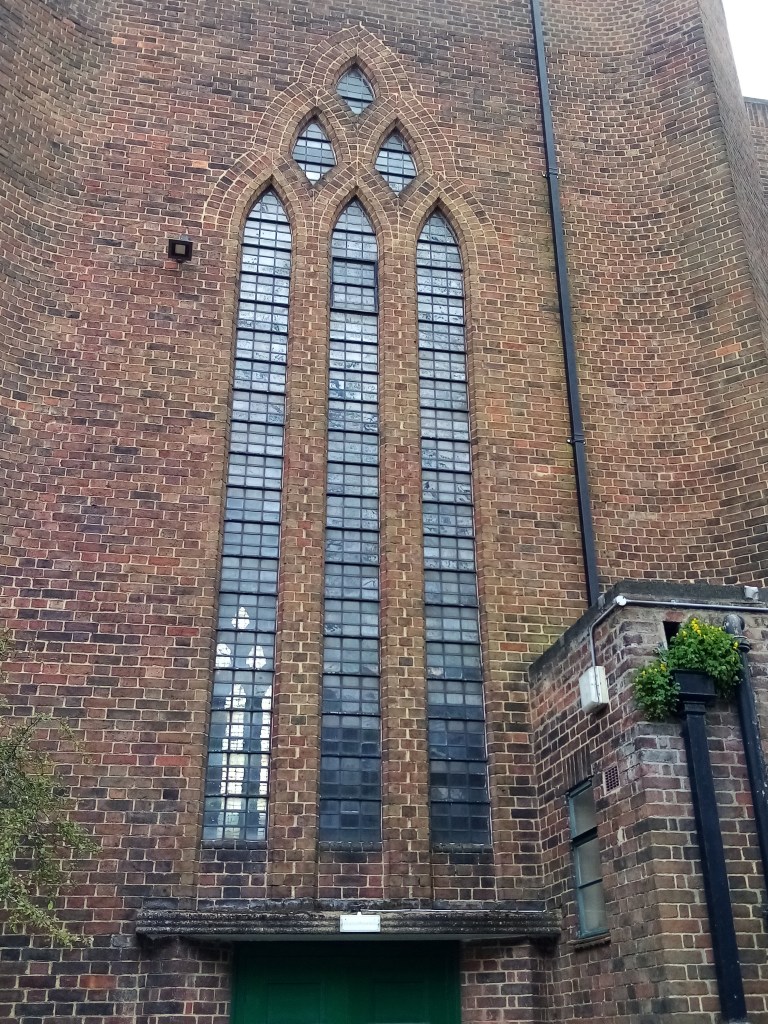
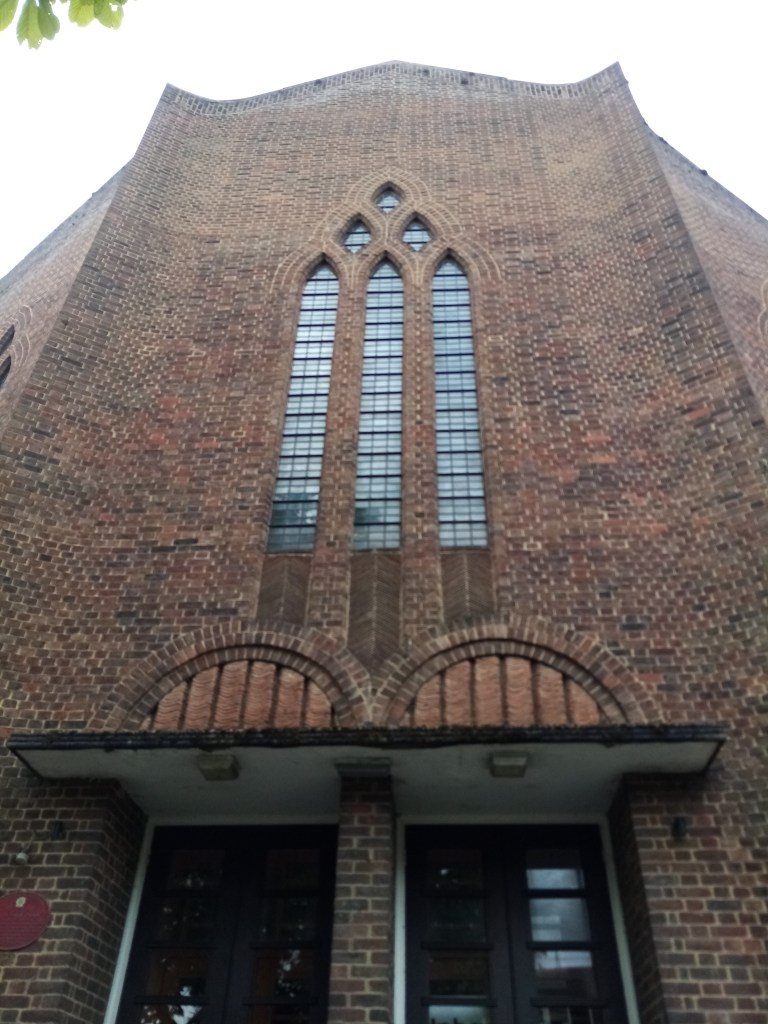
On the other side of Cheam Road, just outside the town centre, is the Baptist Church, built in 1934 in the ‘Arts and Crafts’ style. I thought that this late 19th/early 20th century movement referred to furnishings, room design and wallpaper, I didn’t realise it could apply to buildings. Trinity and the Baptist Church were built less than 30 years apart, but they couldn’t be more different. This building replaced a more ‘traditional’ style of church a little way down the High Street, which was bought by Mr Shinner who wanted to expand his shopping empire to create a department store. I think the picture below is rather sad: a big banner across the church building basically declaring that the church will have to ‘make way’ for progress and commerce. However, I do really like the ‘new’ building, built in red brick in the ‘Modern Gothic’ style. I love the detail over the doorway and the high windows in the main church, wish I could take a look inside! The church is a noted in the Heritage Department of the Borough for its cotemporary brick design, lots of sharp angles and varying surfaces. In its way, just as impressive as Trinity Church.
Former Sutton Baptist Church (now demolished)*
Mock Gothic Window
Front of the church
The side of Sutton Baptist Church (The parked cars give it scale)
Sutton Christian Centre
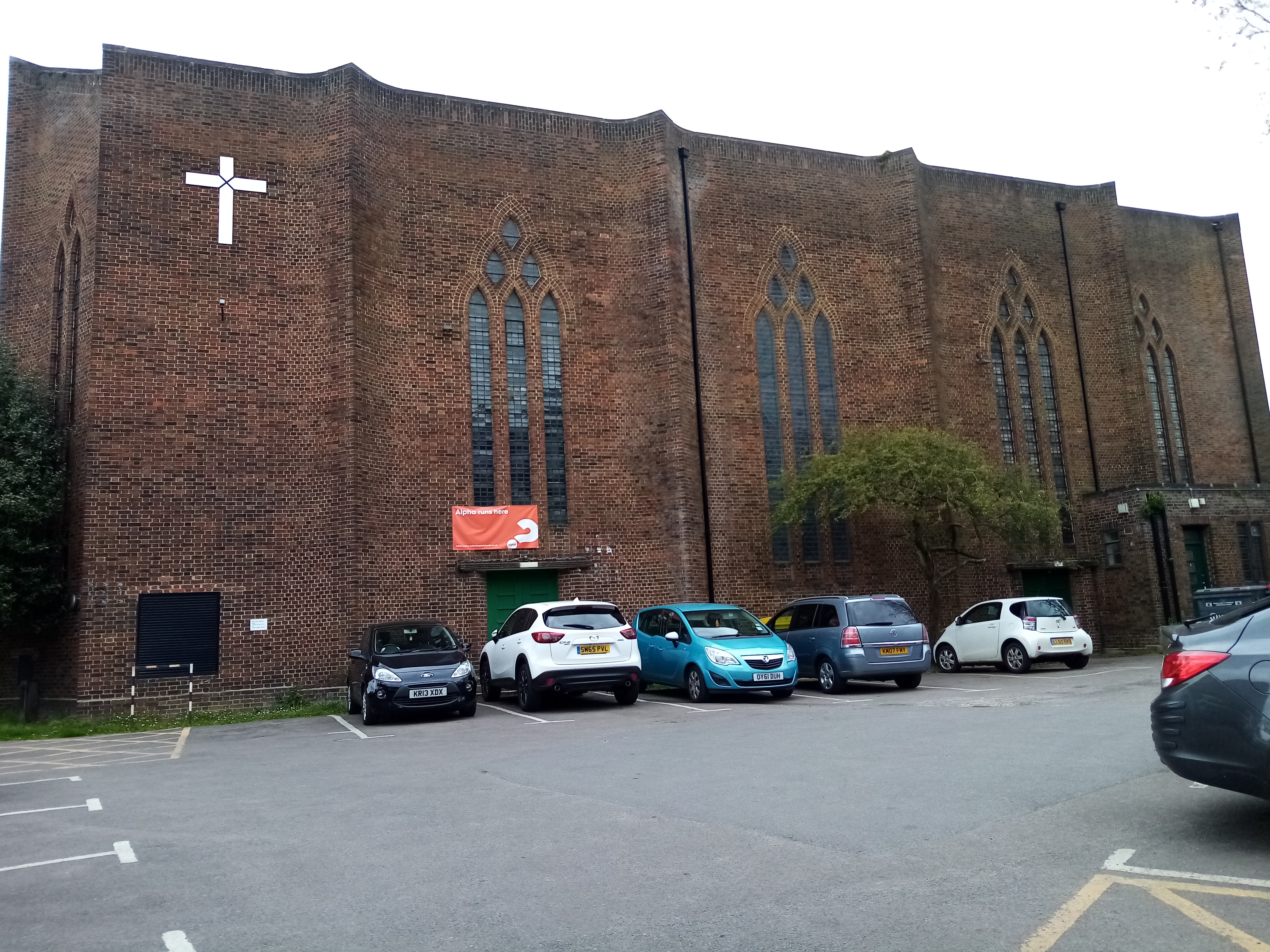
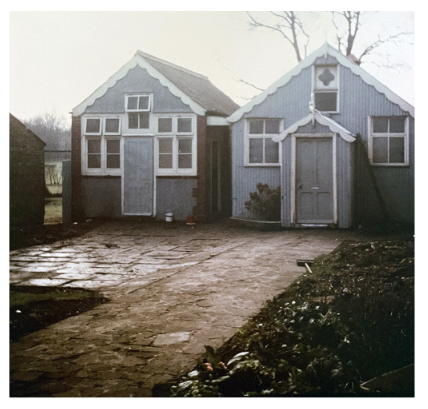
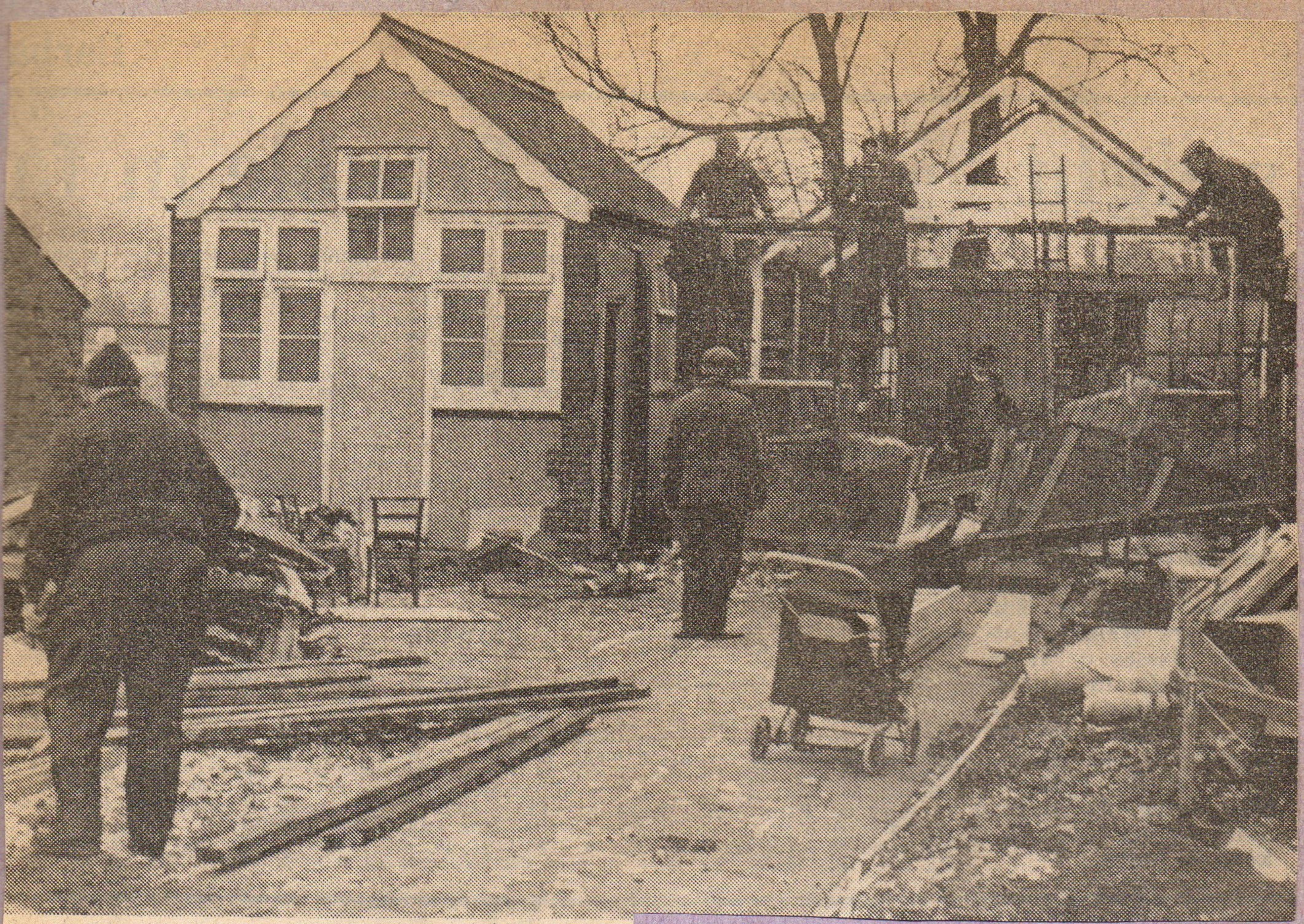
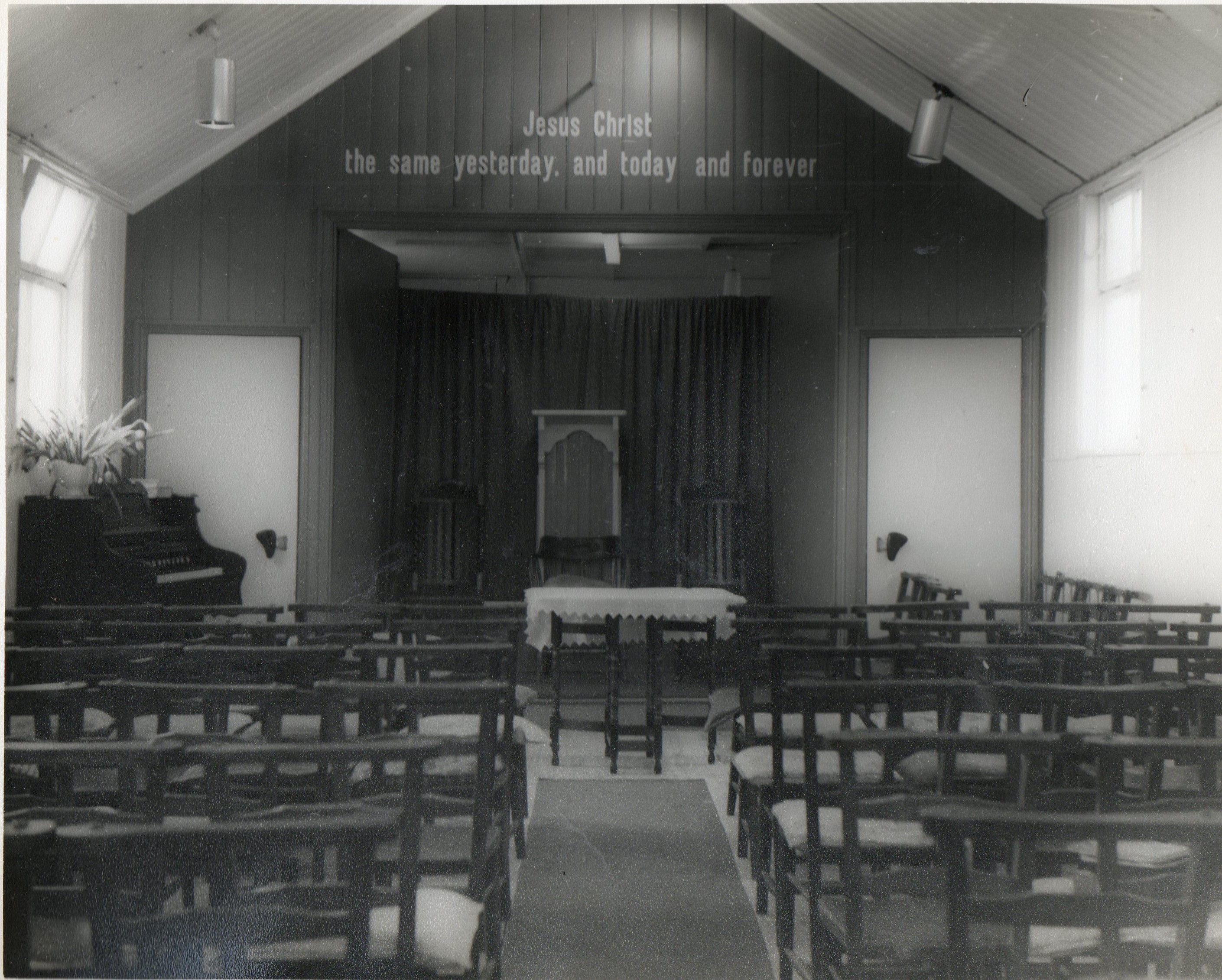
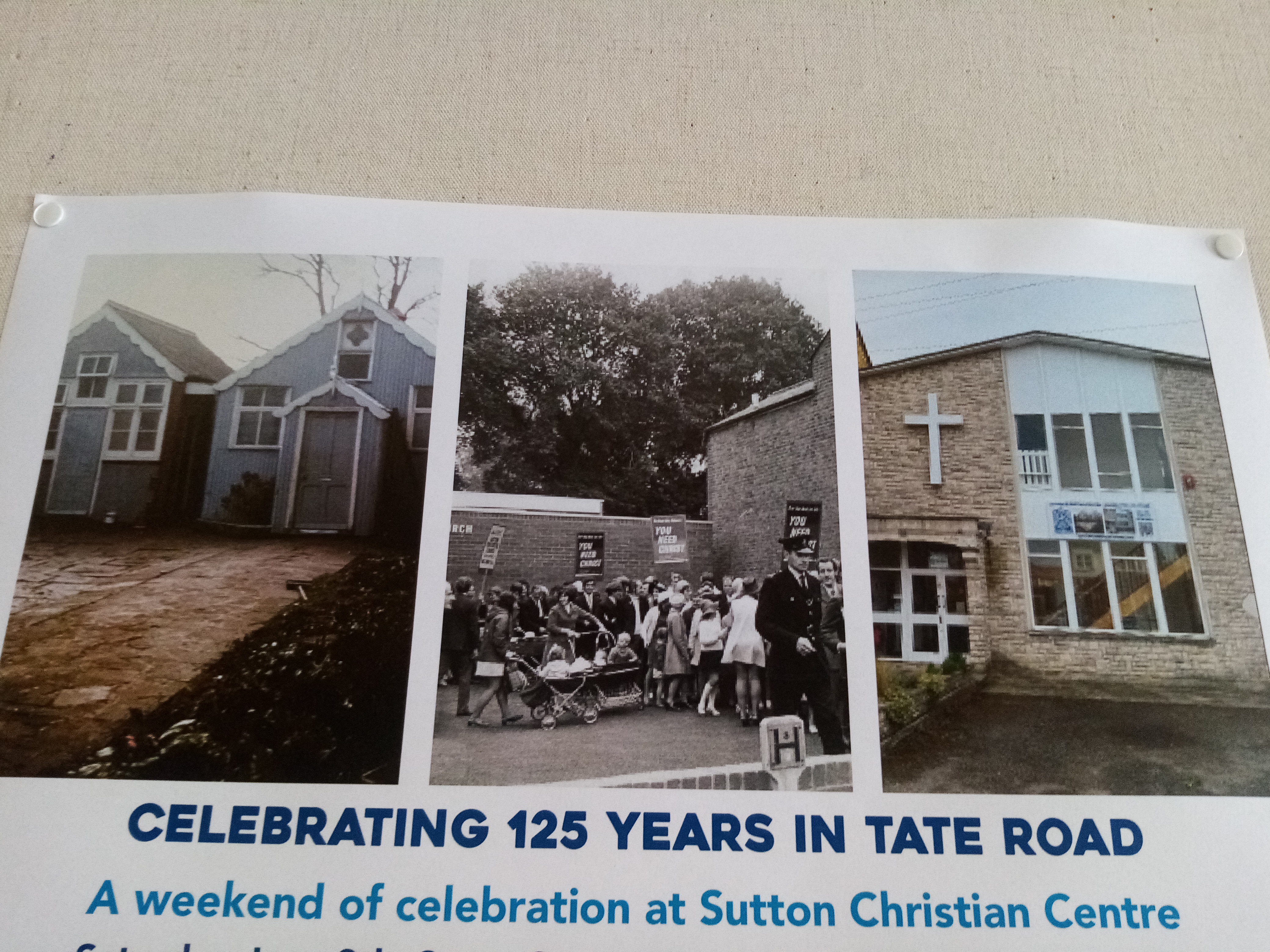
Finally just to the West of the town centre is Sutton Christian Centre. In November 1896 Elizabeth Ockenden purchased most of the land on the south side side of Tate road. The plot was divided into smaller plots on which were built a row of terraced houses and two pairs of semi detached houses. In between these sets of houses, one plot was left for the construction of the church. A map of 1913 shows houses on both sides of the road, a ‘Baptist Chapel’ (the church), allotment gardens and some woodland. A pair of Tin Huts were built and the Chapel had its official opening day on 1st January 1899 as East Cheam Baptist Chapel. Fast forward to 1970 and the tin hut and adjacent hall were demolished and a new permanent brick building with a flat roof was constructed. In 1981 this building was extended and improved, and the church became known as Sutton Pentecostal Church. Since then other improvements have been made, the church trustees purchased the semi next door and knocked a wall through so that the church and house were now connected. Originally the house was the home of the incumbent Pastor but later it became offices and space for meetings, etc. The Church changed its name to Sutton Christian Centre in the 1990s.
Brand new ‘Tin Huts’ in 1898*
Huts being demolished, notice the lack of ‘Health and Safety’ including a child’s pushchair on the site!*
Interior of the original church*
Celebrating 125 years
* Photos from Sutton: A Pictorial History, Frank Burgess, 1993, Phillimore Press. Photos of the Tate Road site from Sutton Christian Centre’s collection