Churches in Springtime

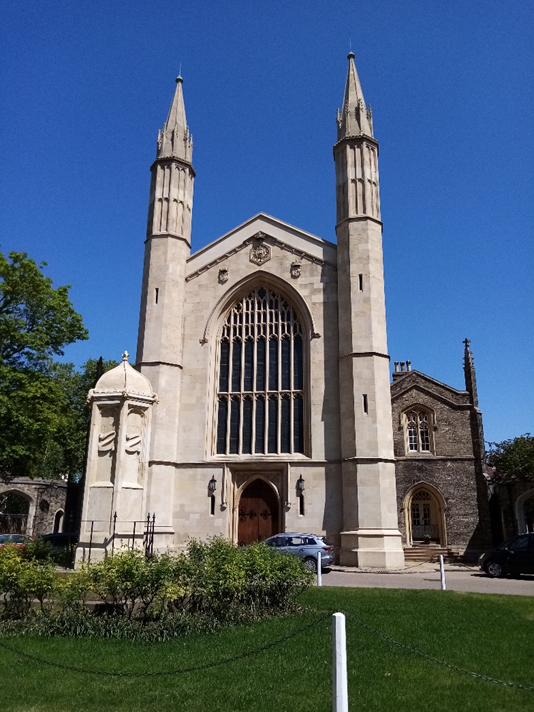
Noticing how lovely my local churches are looking in the Spring sunshine, with the daffodils around them, I thought I’d visit some closer to home than usual. These are all in London boroughs, so they all count as London!

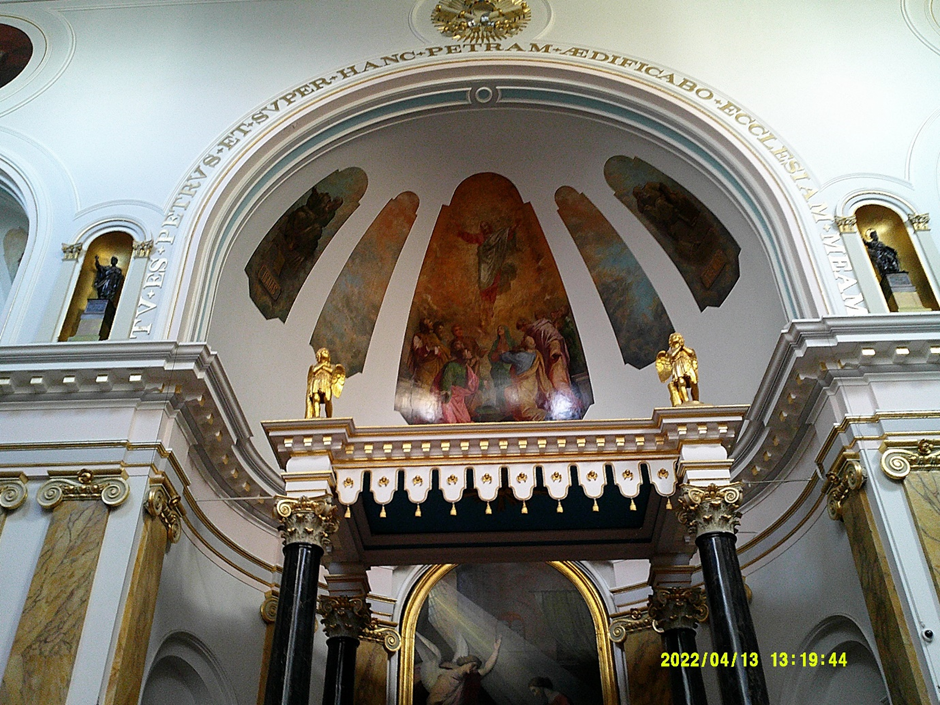
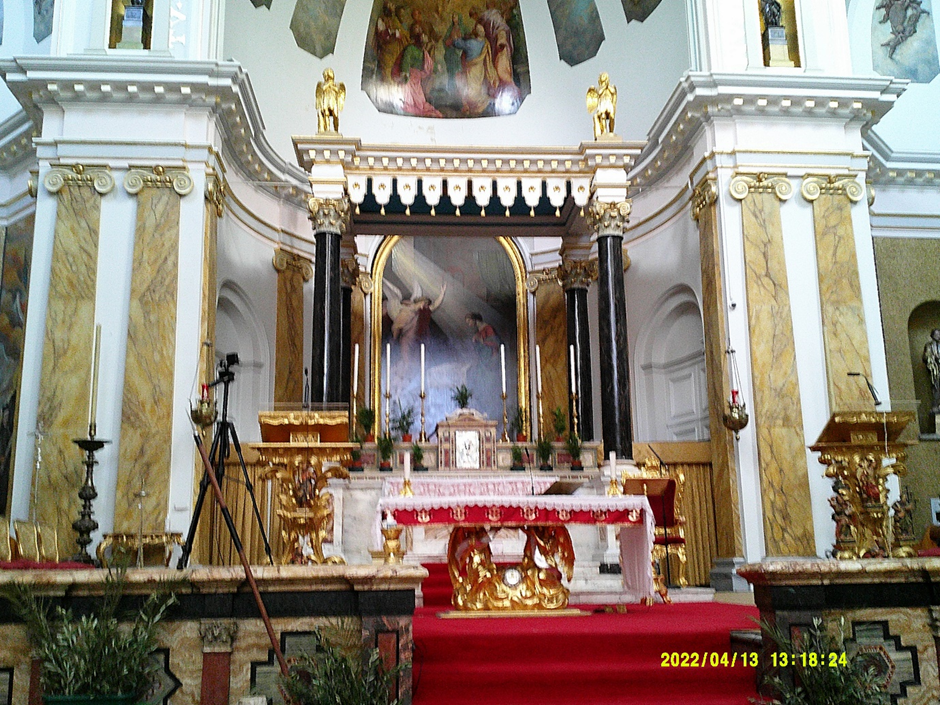
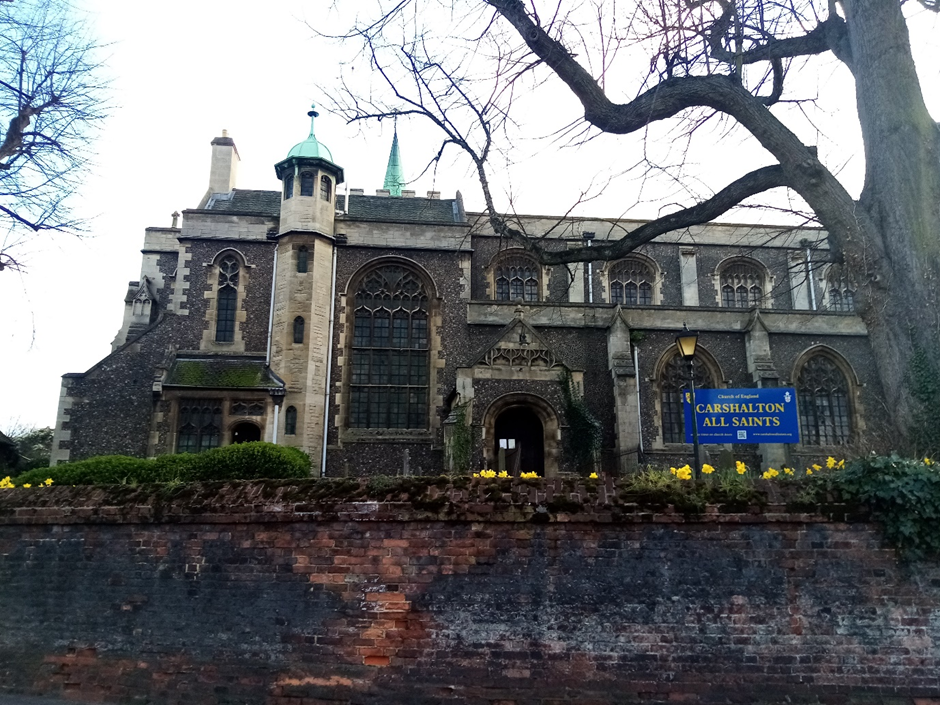
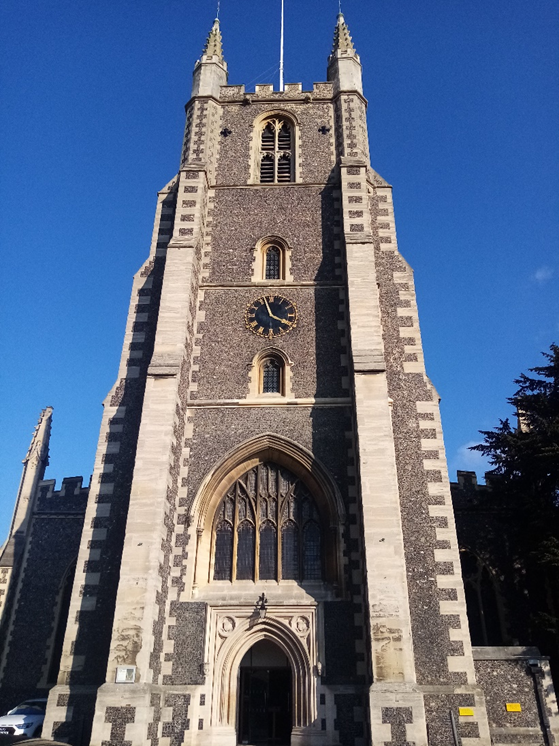
All Saints Carshalton

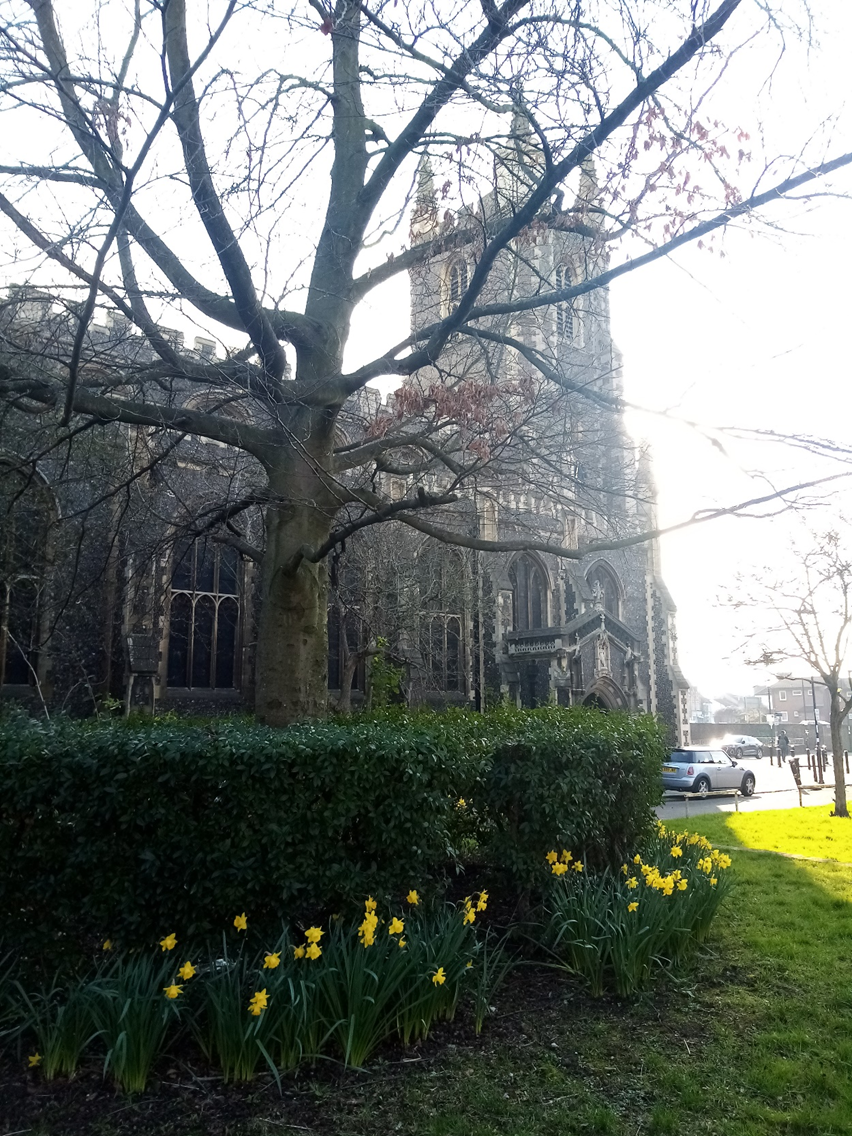
Photo taken from the middle of the High Street, not a good place to stand, but I wanted to get those daffs in!

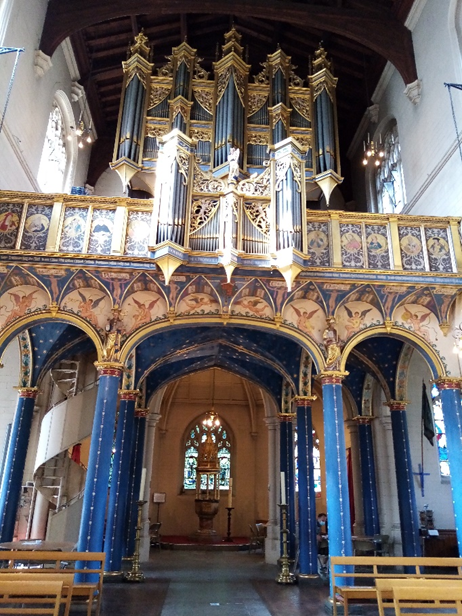
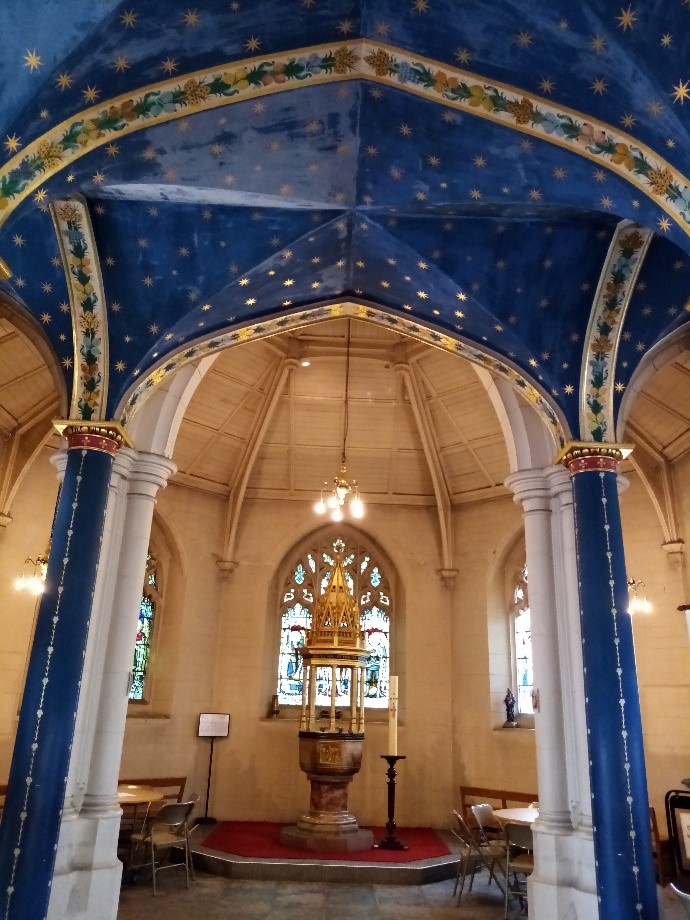
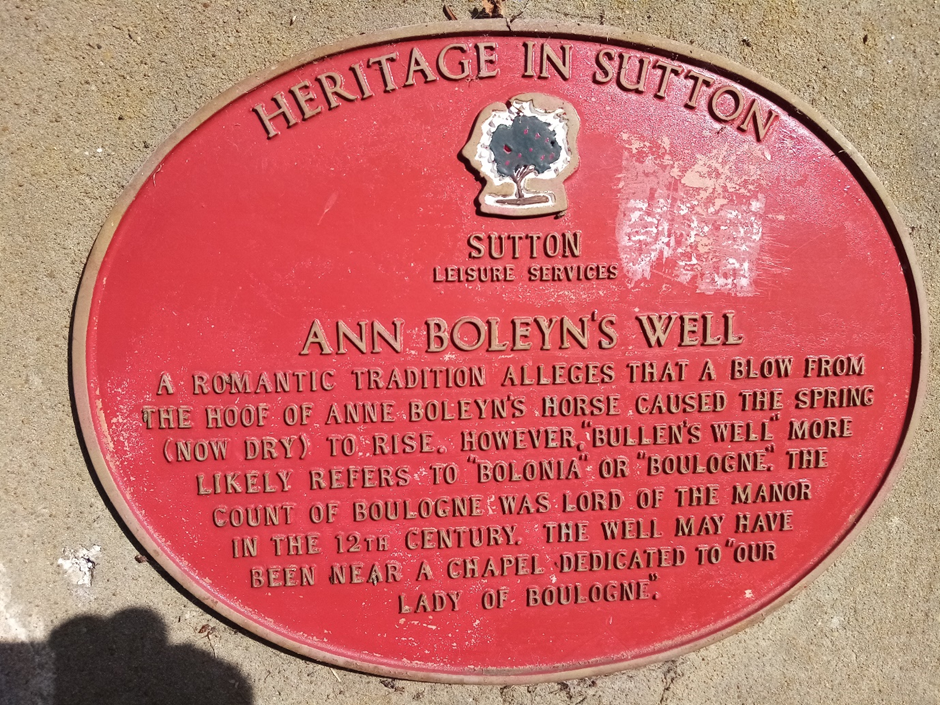
A church has stood on this site since Saxon times and was mentioned in the Domesday Book (1086.) At that time there was a spring rising nearby, one source of the River Wandle, which we now know as Carshalton Ponds. Parts of the original construction, notably the tower, remain but it has been added to over the next 800 years to the building we see today. The interior is spectacular, these works were installed between 1920 and 1941. The Revd. WR Corbould became Rector in 1919 and through his friendship with Sir Ninian Comper, a renowned church architect, began work on a series of ‘remarkable embellishments’; they certainly make it different from most parish churches. A red Sutton Heritage plaque on the outside wall lists people associated with the church, who all have the distinction of having Sutton/Carshalton streets named after them: Nicholas Gaynesford, Sherriff of Surrey and Sussex; Sir William Scawen, Governor of the Bank of England; Sir John Fellowes, sub-governor of the South Sea Company.

Source: Church website    

Centre Aisle
Another Sutton Heritage red plaque on the outside wall

Croydon Minster

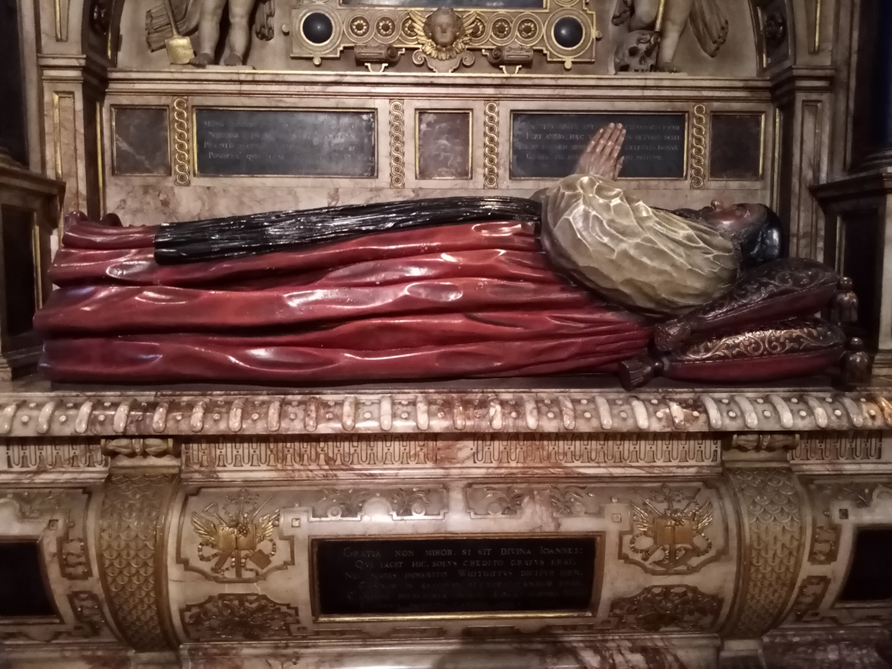
Like All Saints, the Parish Church of Croydon is believed to have been founded in Saxon times, there being a record of ‘a priest of Croydon’ in 960. There is mention of a church in the Domesday Book and there are historic links with the Archbishops of Canterbury, who had a Palace in Croydon, in use until the 18th Century. The building is now the Old Palace of John Whitgift School, a private Girls Senior School.  Six Archbishops of Canterbury are buried in the church, and until 1984, Croydon was actually an outpost of the Diocese of Canterbury, after which it joined the Diocese of Southwark. Kings Henry 7th and 8th and Queen Elizabeth 1st were regular visitors to the archbishops at Croydon and would have attended the church. Formerly a Parish Church, dedicated to St John the Baptist, in recognition of its historical connections and as the ‘Mother Church’ of Croydon, it was designated a Minster Church in May 2011. The church is actively involved in the life of the community of Croydon and regularly hosts civic events as well as ordinations and diocesan events. A cathedral by another name? Possibly Croydon isn’t entitled to a cathedral because it doesn’t have city status (yet.)

Source: Booklet in the church

Croydon Minster in all its Spring loveliness!
Tomb of Archbishop John Whitgift
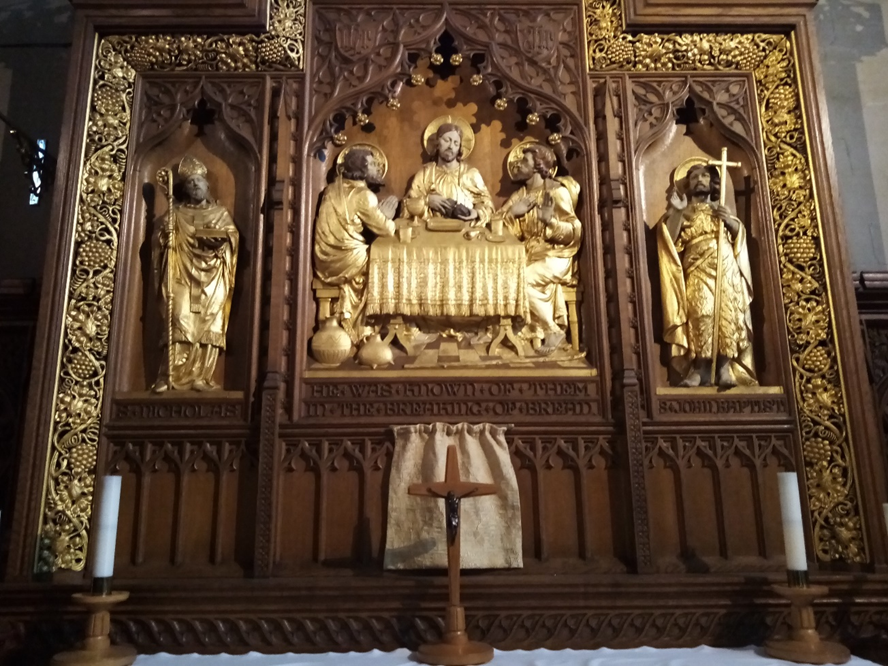
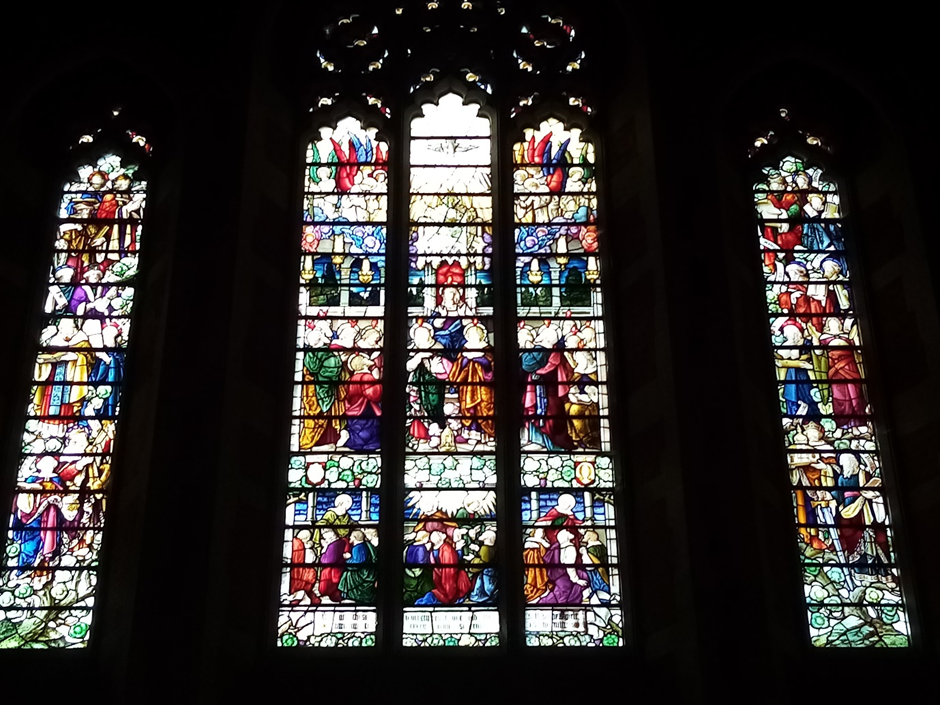
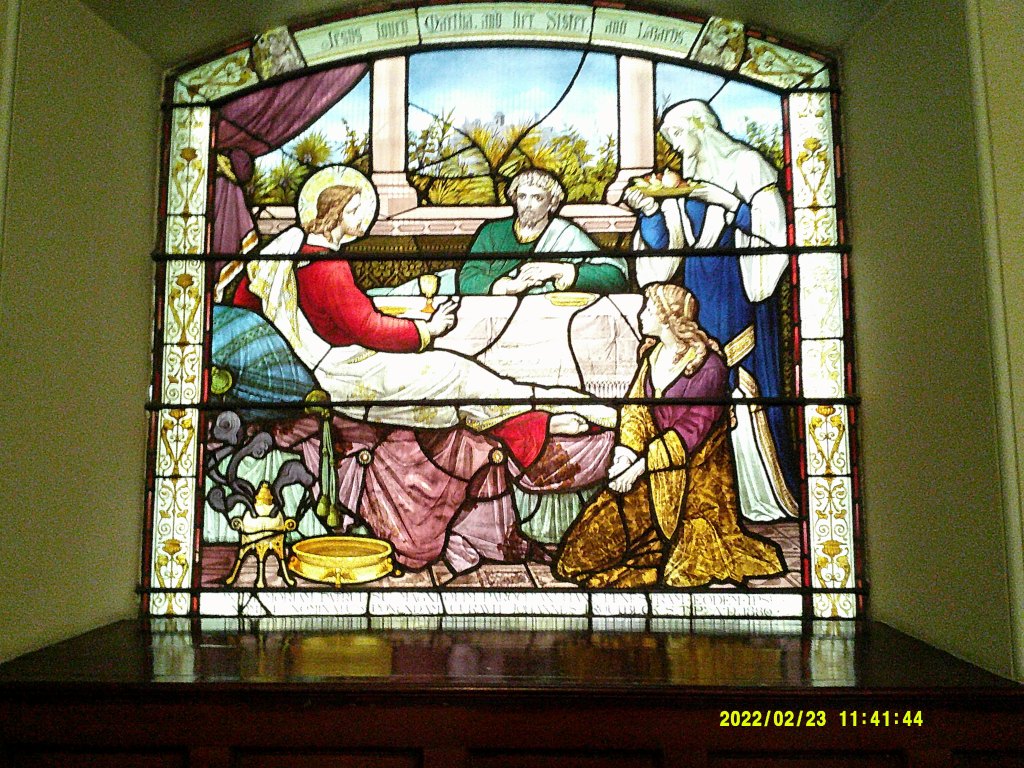
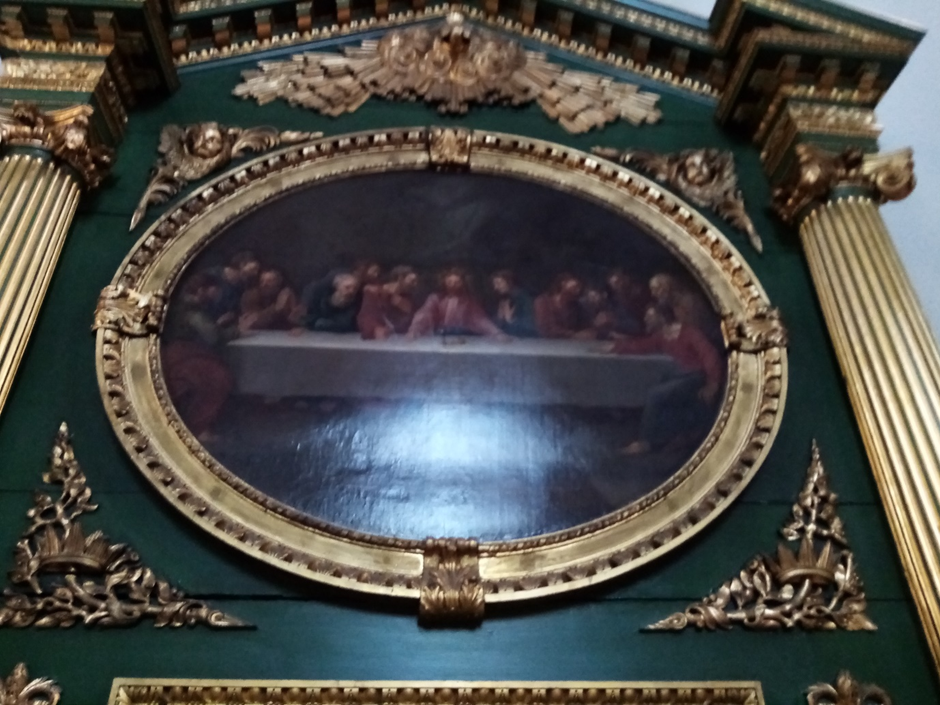
Depiction of the Supper at Emmaus in the St Nicholas Chapel
Bell tower, 125 feet tall, housing 14 bells, apparently such a large number is a rarity
 

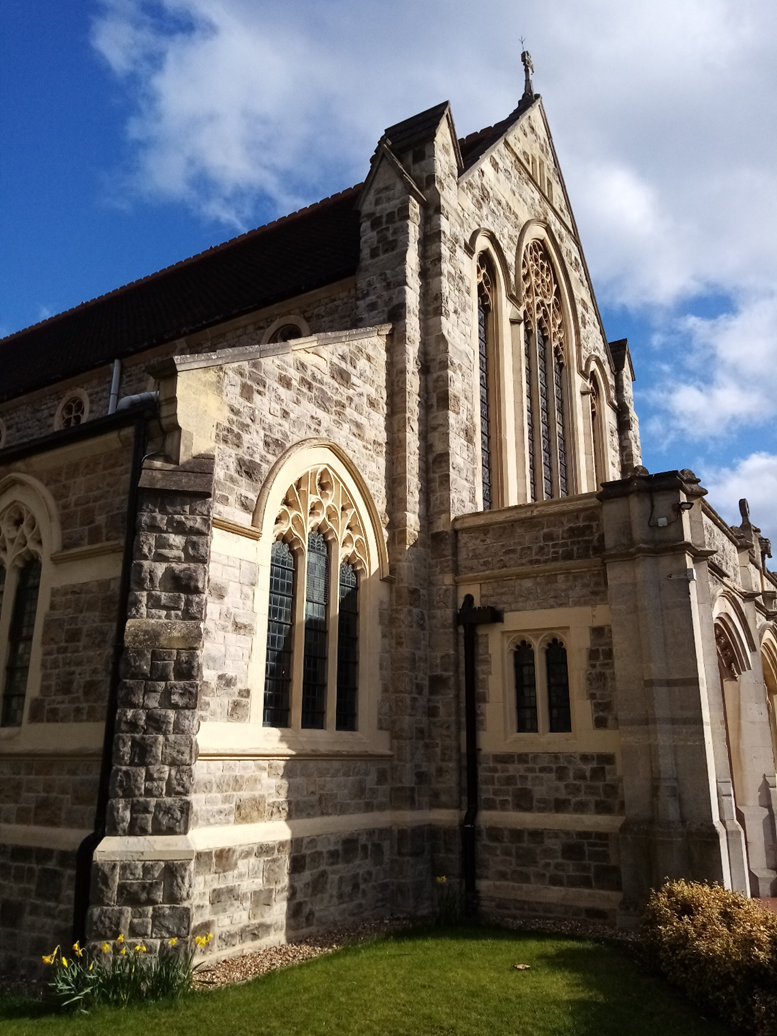
St Mark’s Woodcote

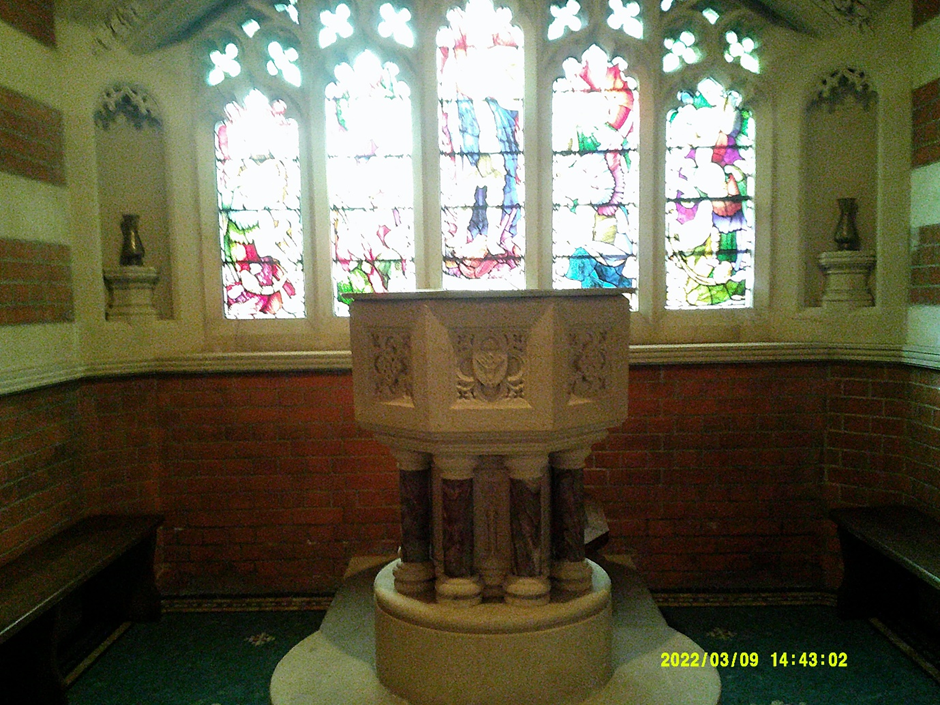
And now, a church built and consecrated 950 years after the first church in Croydon! St Mark’s was built in response to rapid urban growth in the mostly still rural area of South London, an answer to the need for the housing developments of Woodcote and Purley. The church was consecrated in 1910, replacing an earlier temporary building. As a new C of E church, not yet established in the community, it was decided that St Mark’s should be neither ‘High’ nor ‘Low’ church, but Evangelical in its services and outreach. Although St Mark’s was established to serve its upper- and middle-class community, the very first appointed minister arranged for regular church services to be held from a cart drawn to the poorer streets in the town of Purley so that the poorer townsfolk could hear the Gospel preached. Not too many poorer streets in Purley now! An unusual feature of the church is that it has what I call an ‘outside’ bell tower: the bell is in a little tower of its own on top of the church. The church website says, on the history of the building: ‘The plan had included a tower and steeple (with a ring of six bells) on the north side but that proved to be far costly than anticipated.’ So I assume this little tower with its single bell was built instead. The church has some nice stained-glass windows, including one dedicated to Edmund Harrison, who donated the land the church is built on.

Source: Church website

Tiny tower with its single bell on top of the church
 

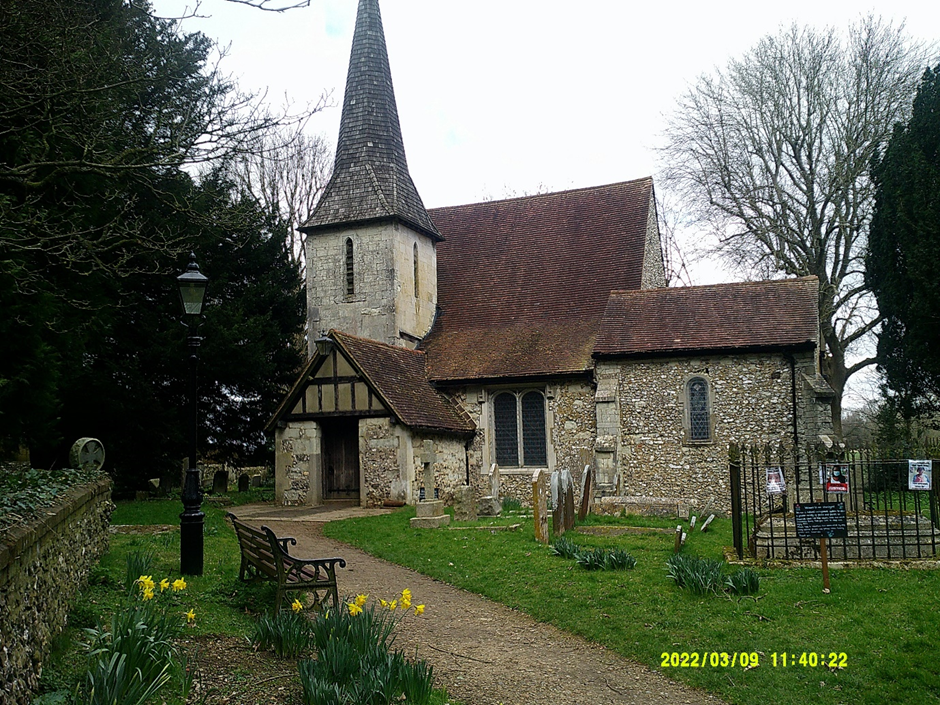
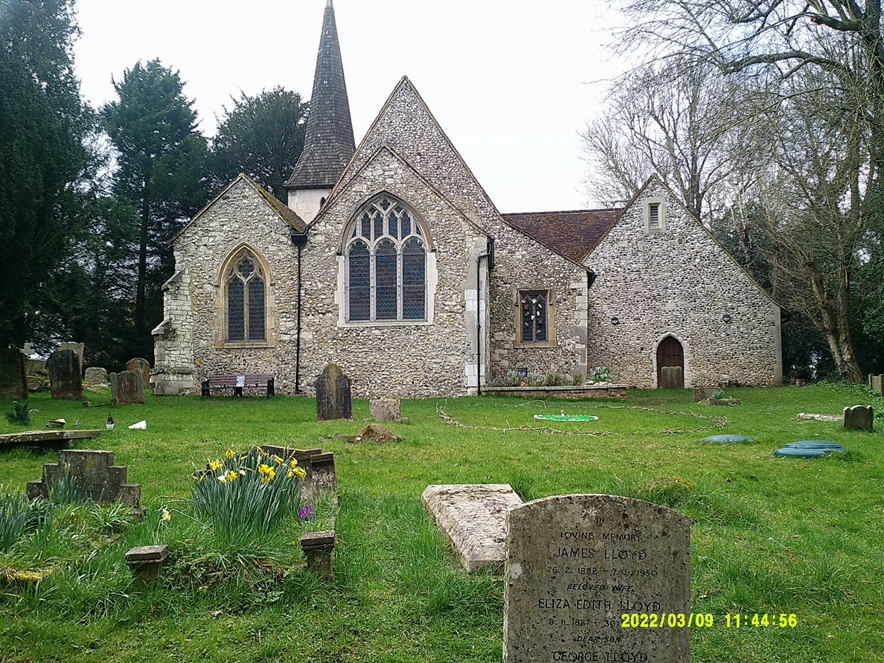
St Peter and St Paul’s, Chaldon

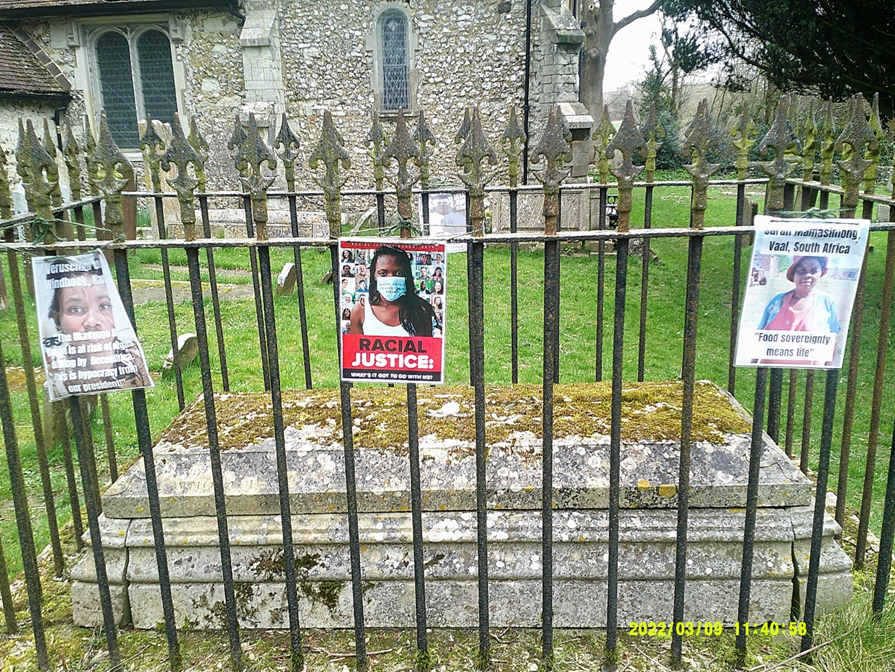
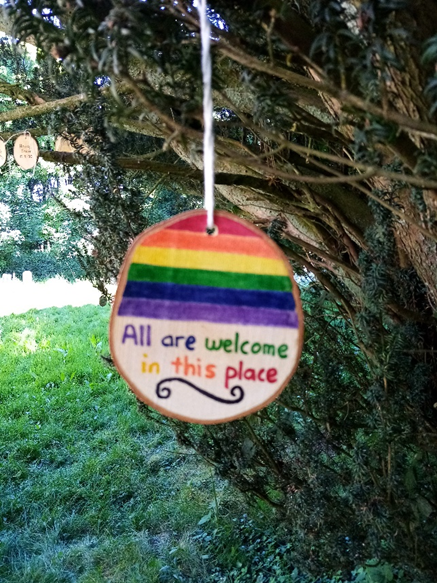
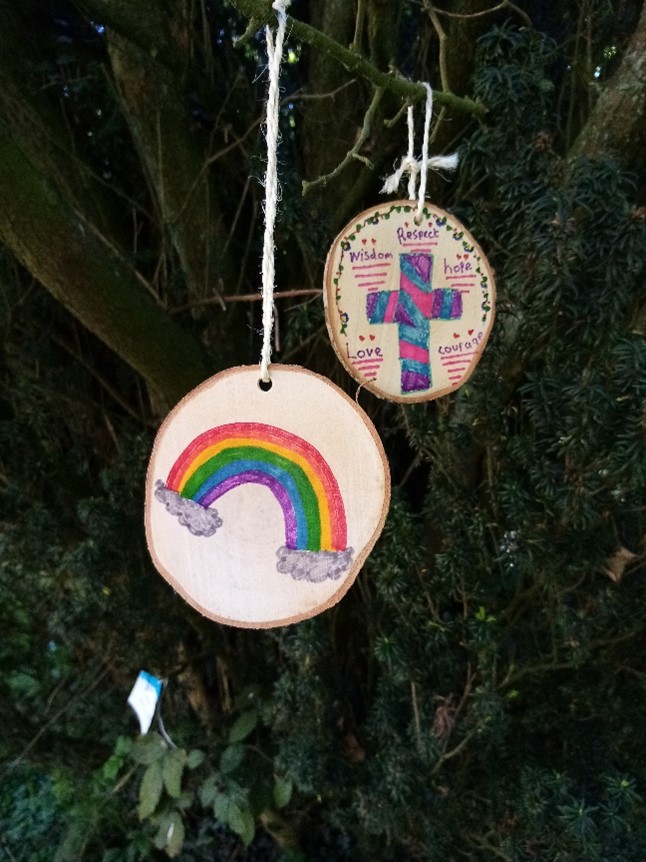
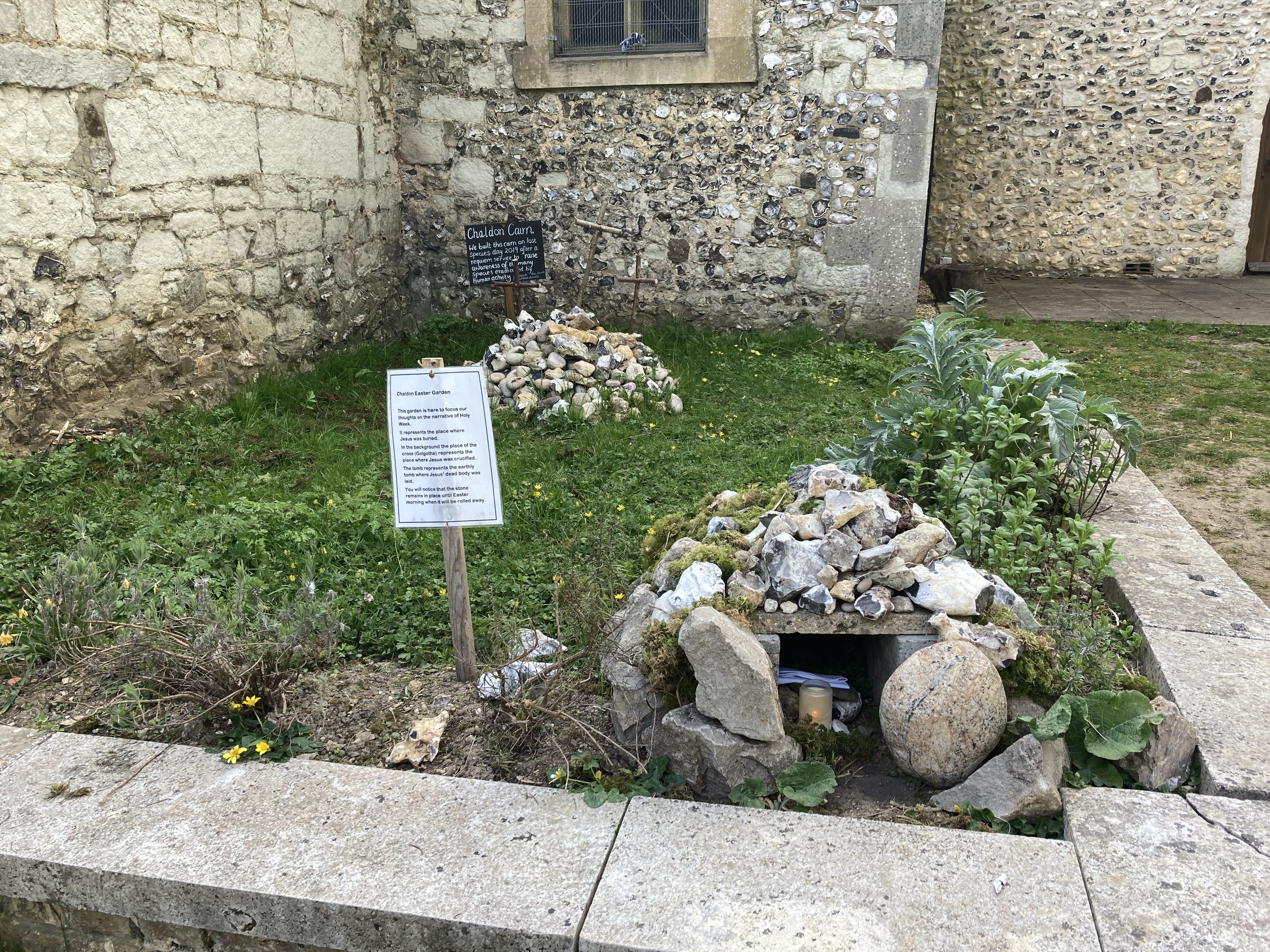
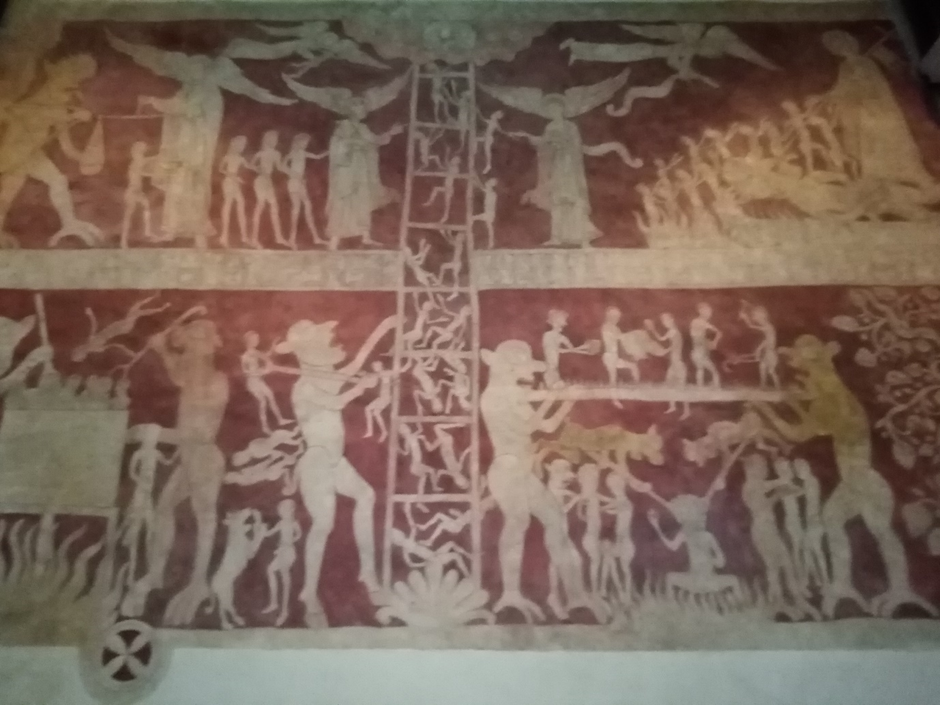
I have to admit, I’m rather obsessed with this church, having visited it in every season and I even have a jigsaw made of it! This little church sits on a hill surrounded by fields and country lanes and has a beautiful churchyard. A Chaldon Church of Saxon Foundation is recorded on the site in 727AD, and the present church was begun in the late 10th century, before the Norman Conquest, and a substantial part this building still stands. St Peter and St Paul’s is famous worldwide for its twelfth century ‘doom mural’ on the west wall, described as ‘perhaps the most interesting ancient wall painting in England.’ The mural depicts the Last Judgement and purgatory and consists of a background of red pigment mixed with egg yolk to make a permanent, fast-drying painting medium which can last for 2,000 years. The figures are in a cream colour which is unusual. The top half of the mural shows the judgement and salvation of souls, and the lower half has demons and souls which have descended into Hell. The ladder in the middle shows mortal souls climbing up to Heaven or falling off down into Hell. All very graphic and terrifying, presumably intended to frighten the congregation into obedience! The contrast with the identity of the church today couldn’t be more striking: there is a strong sense of mission for justice and equality and of love and care of others, evidenced by posters and tree-hangings around the church.  

Source: Church website

One of the prayer requests posted round the churchyard during Covid
Easter Garden from April 21

Scary mural to finish!

February: Churches on the London Wall ll

I’m continuing my tour of churches built inside and outside the London Wall. The originals of these four churches (and the four that I documented in November) were built from the 11th Century onwards and were situated close to the gates into the City so that travellers leaving the City could pray for safe travels before they set off, and those entering could give thanks for a safe journey completed!

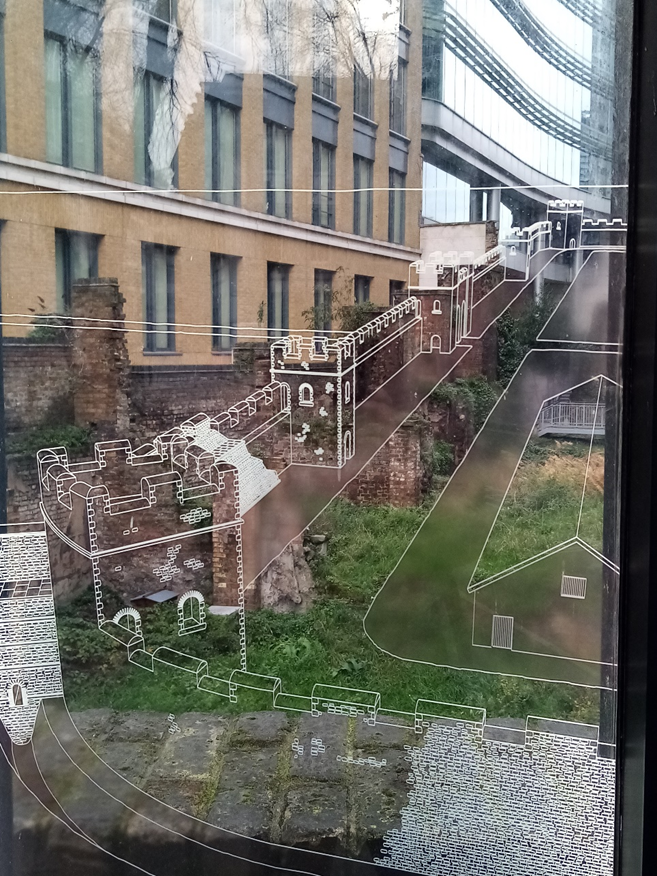
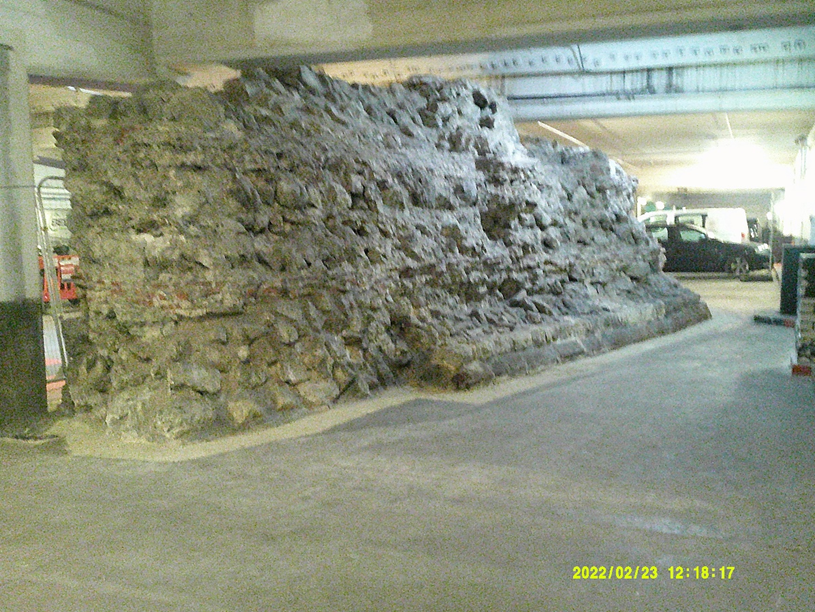
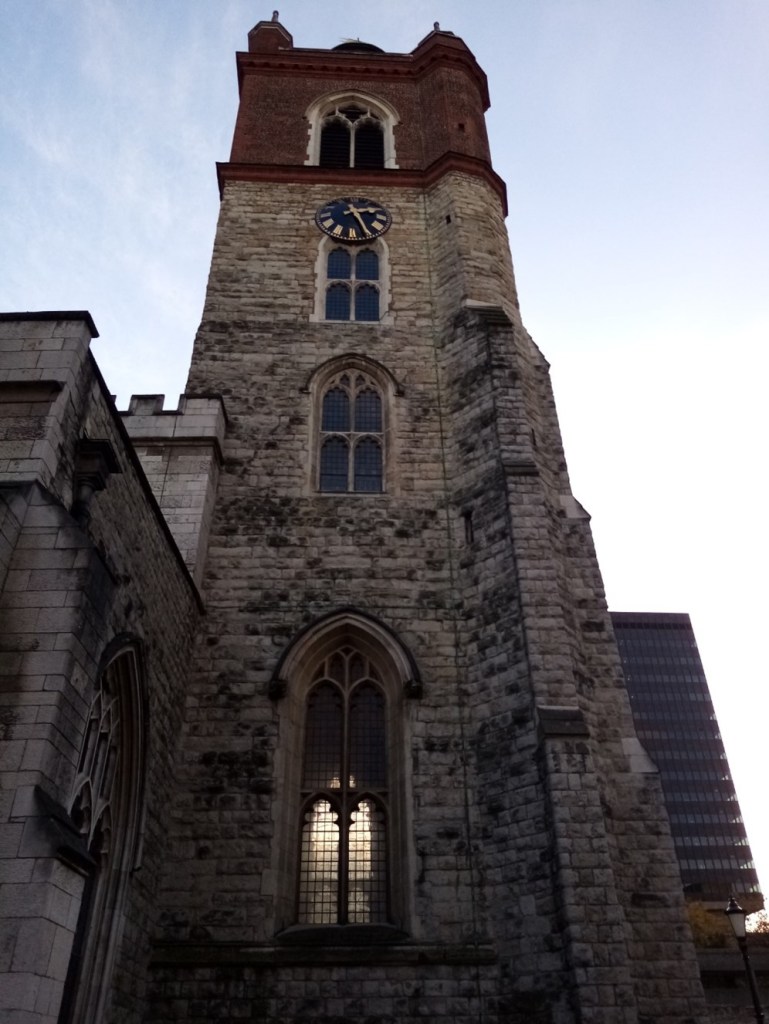
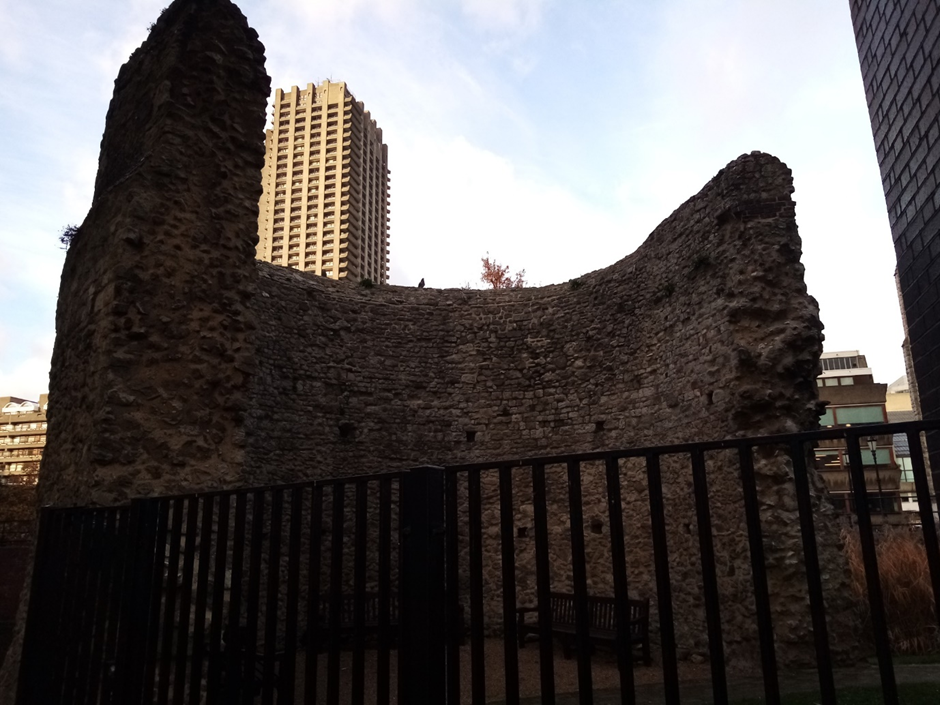
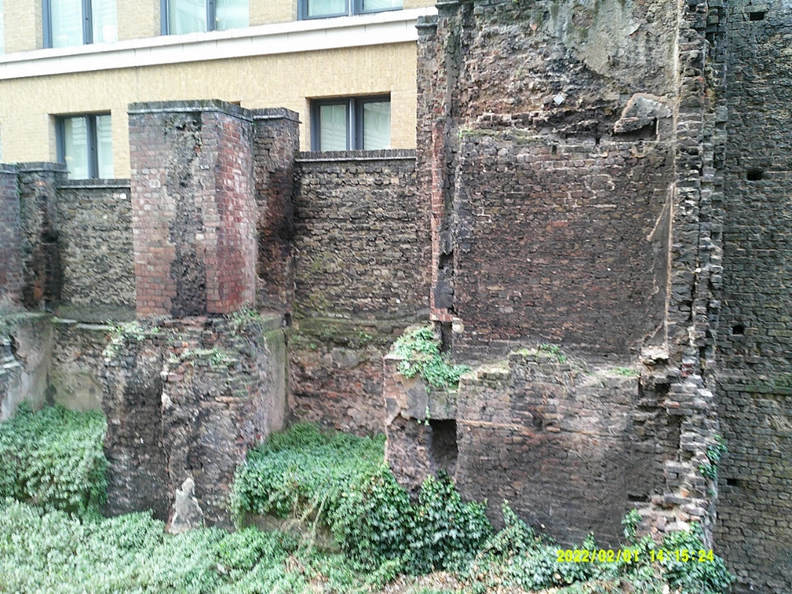
At the Barbican and the Museum of London, the route of the Wall turns South and sadly there is very little surviving, having been demolished over the centuries. However, crossing London Wall (the name of the road) just before the MOL into Noble Street, there is the remains of a Roman garrison which was built onto the Wall. Just on the ‘outside’ of the Wall is the church of

St Anne and St Agnes

I was not able to visit this church, it’s only open to the public on one day per week, due to having another function (more on that later.) Lots of historical interest around the area; as well as the large section of the Roman fort to see, there were several City Guild Livery Halls in this area: Coachmakers’ Hall, Goldsmiths’ Hall, Waxchandlers’ Hall (I don’t know what that is!) None of these buildings remain, having been swallowed up by the glass and steel of modern office buildings. The church itself was rebuilt by Wren after fire damage, but almost destroyed in the Blitz in 1940. It was rededicated in 1966, largely through donations by the worldwide Lutheran church for use by Estonian and Latvian immigrant communities, who worshipped here until 2013. Past parishioners include the English Dissenters poet John Milton, author John Bunyan and John Wesley, who preached here twice in 1736. The church is now the home of VOCES8 Foundation, an educational charity which ‘delivers world-class performances, education and community engagement to ensure Music Education For All.’ From their Website. Their music outreach programme goes into disadvantaged schools in Tower Hamlets, Hackney and Newham. I love this repurposing of a City church!

References: Church Website and VOCES8 Website

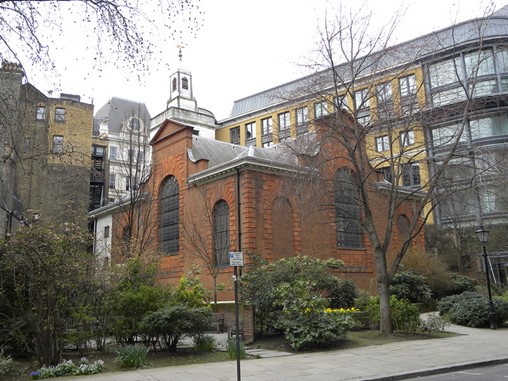
St Anne and St Agnes (The Roman Wall is to the right)
Remains of the 1st Century Roman Garrison and Wall
There are Perspex panels at each end of Noble Street which you can look through to see what the Roman Wall and Fort would have looked like back in the day.

St Botolph Without Aldersgate

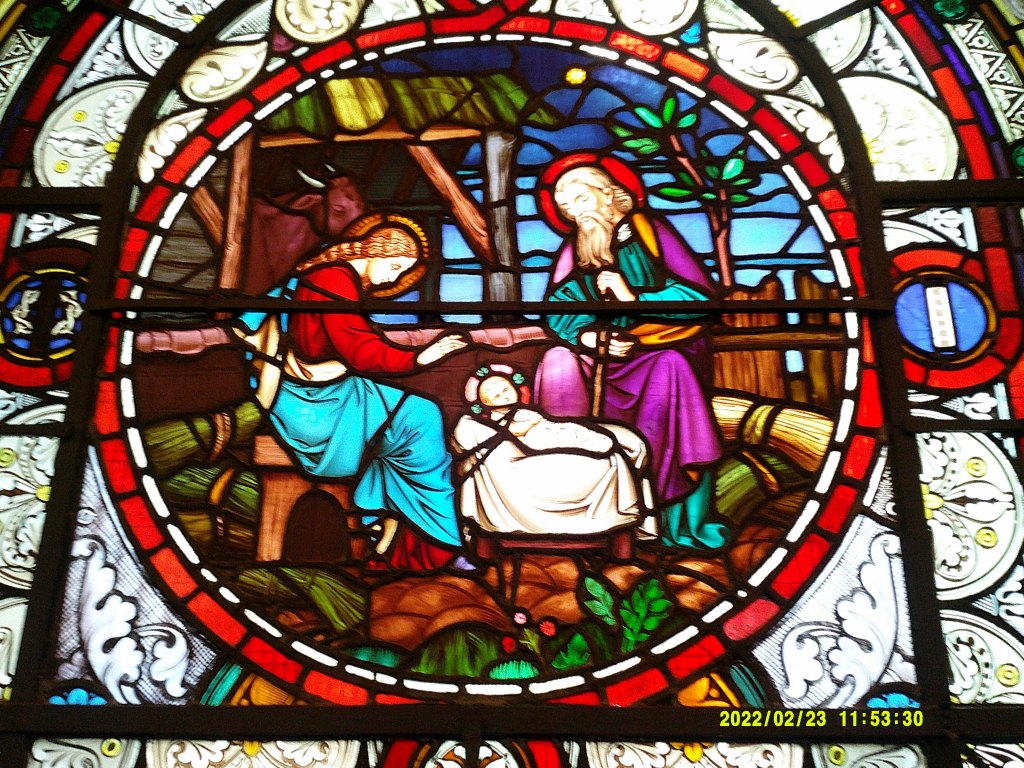
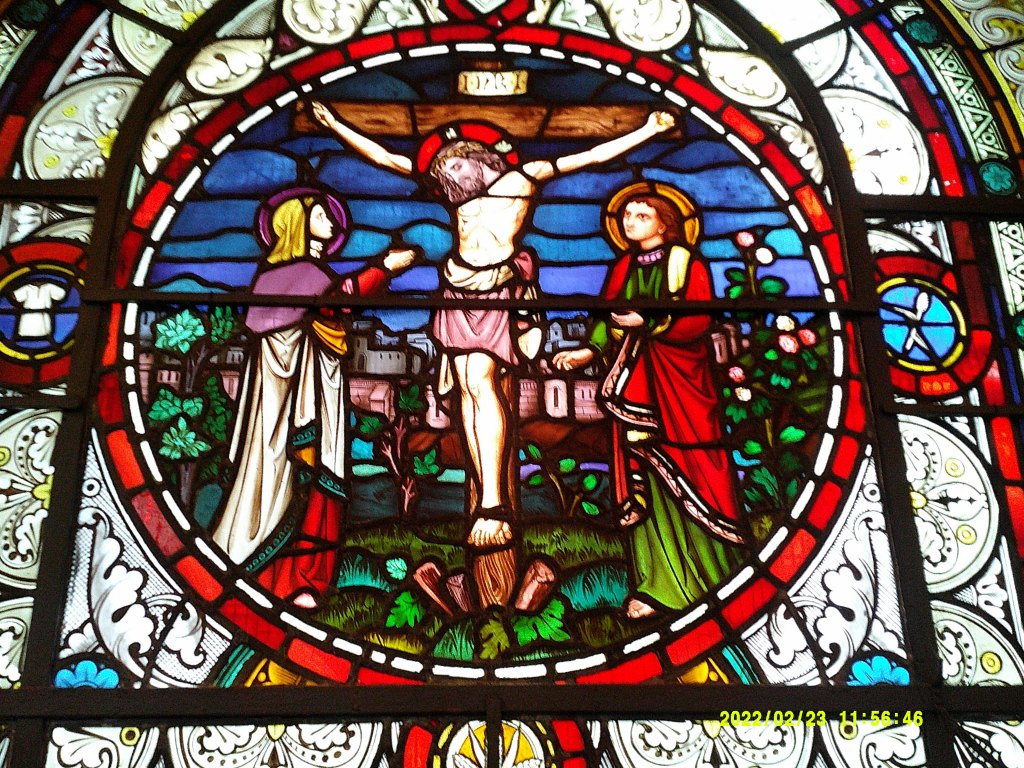
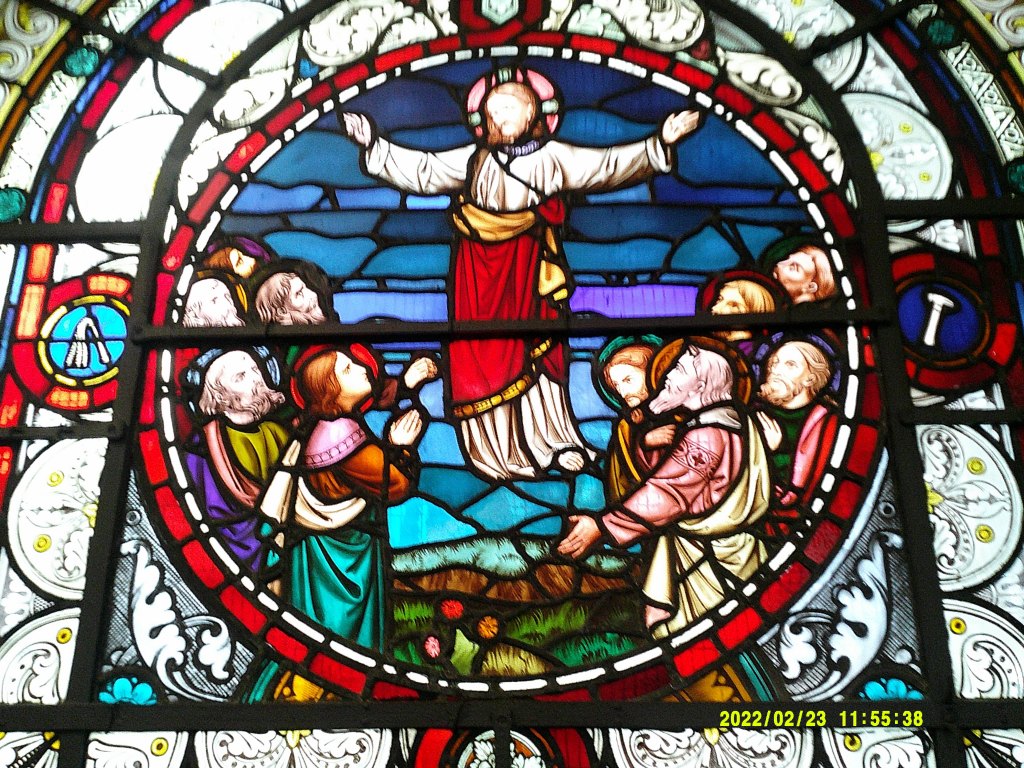
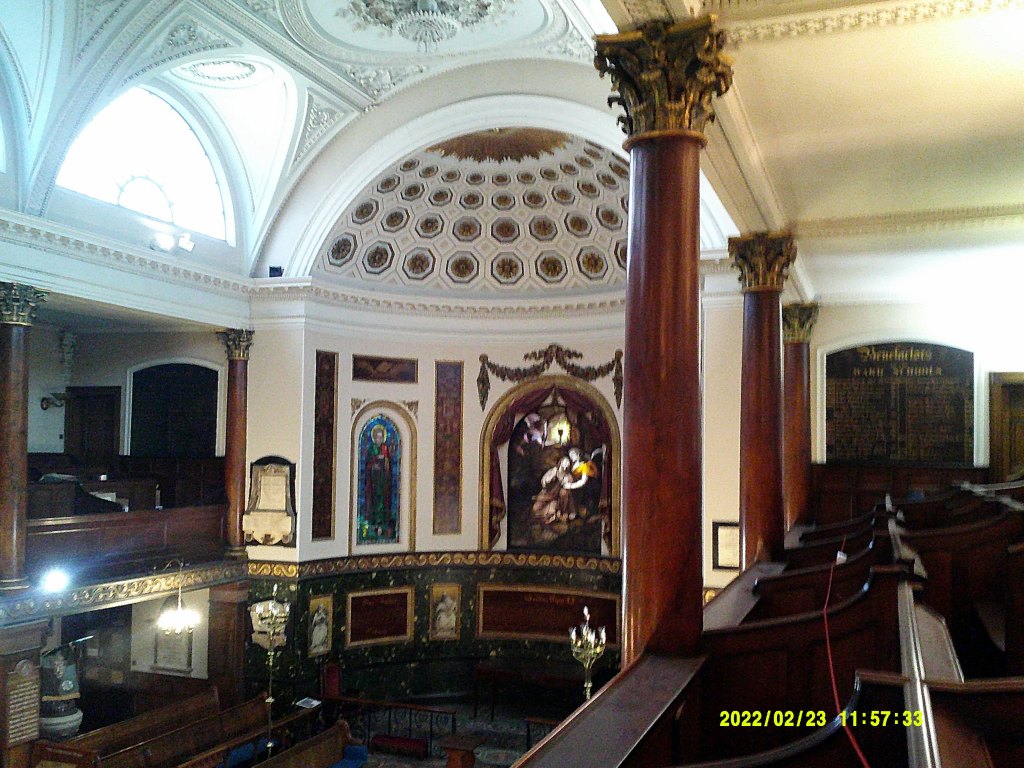
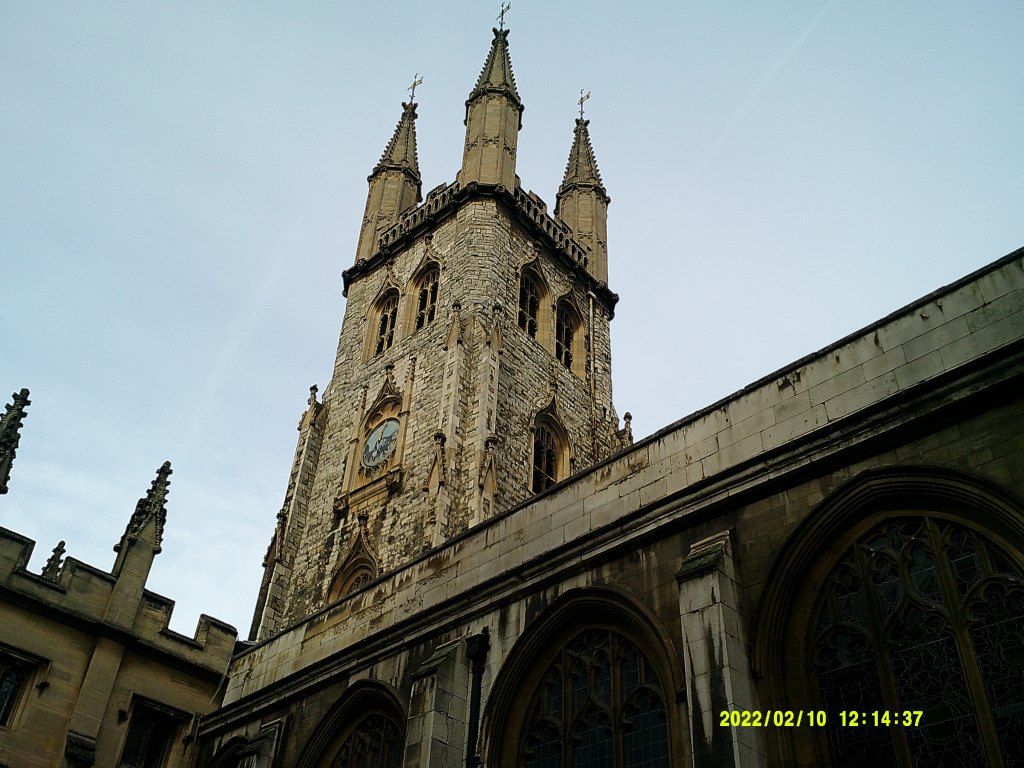
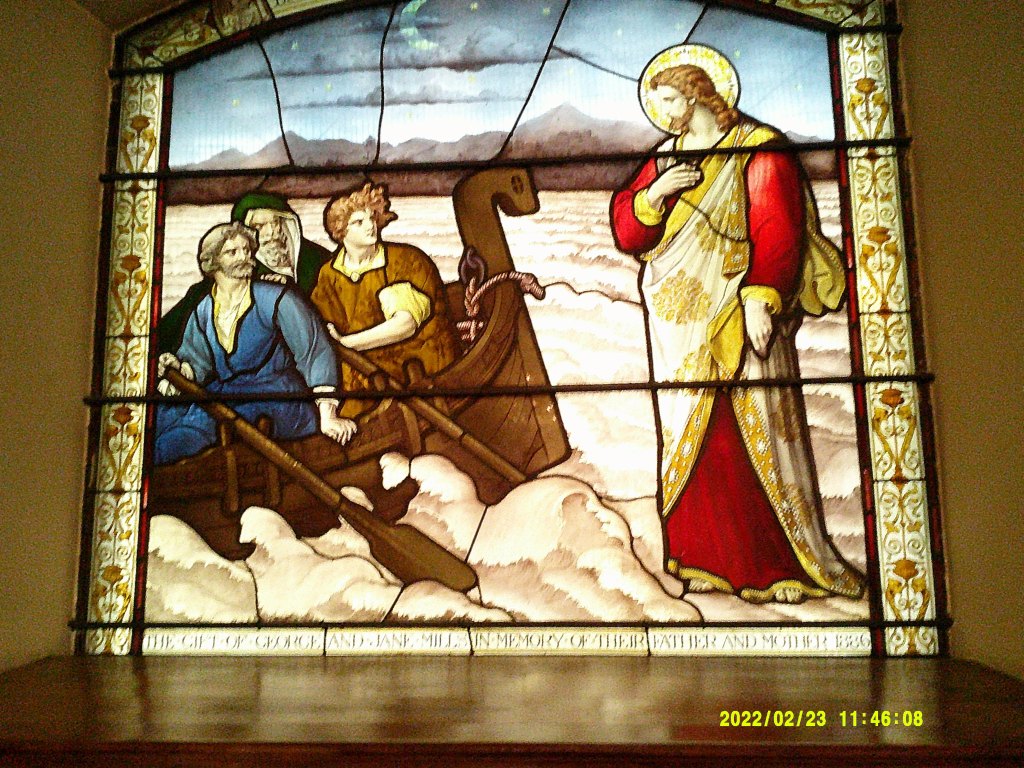
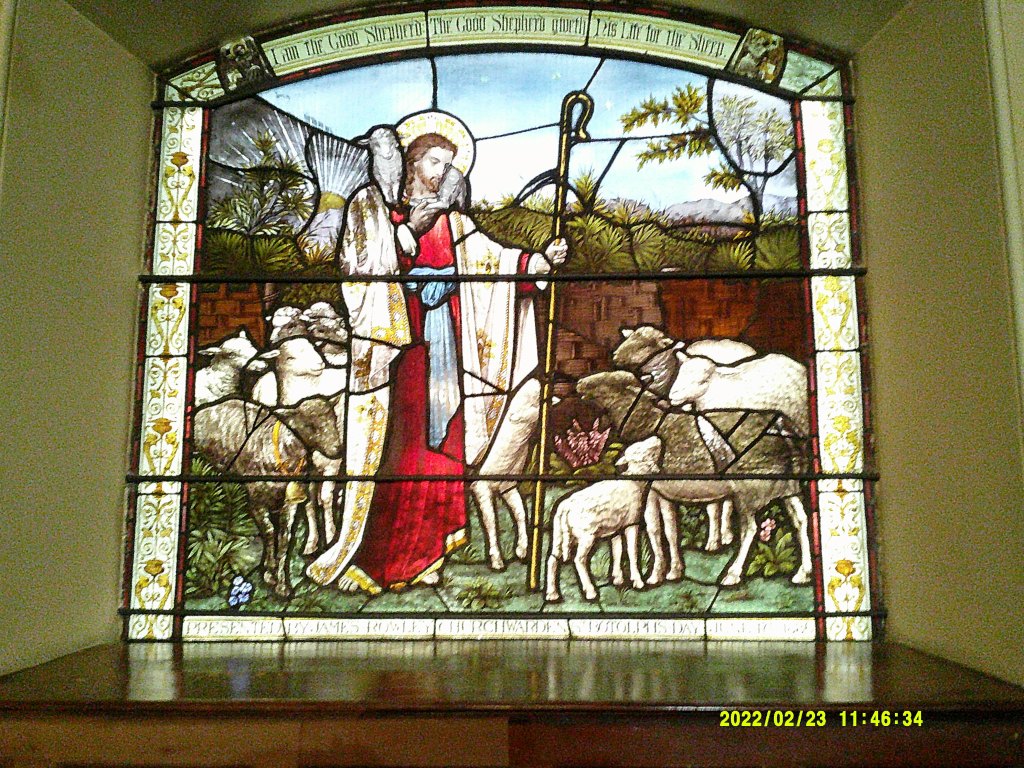
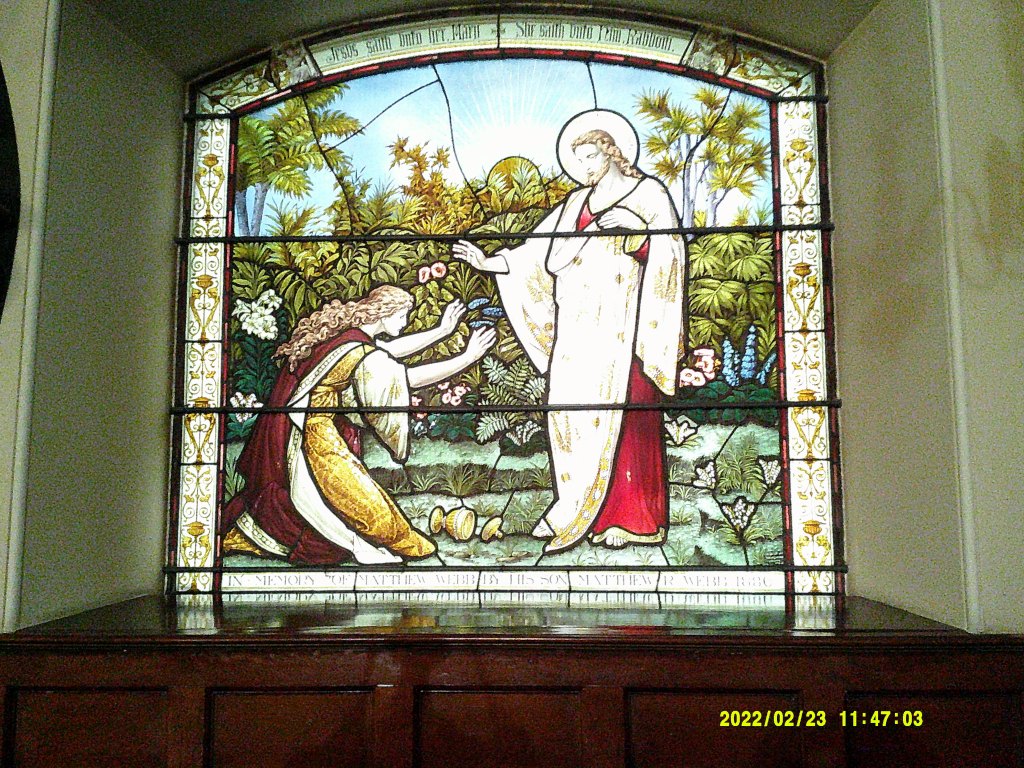
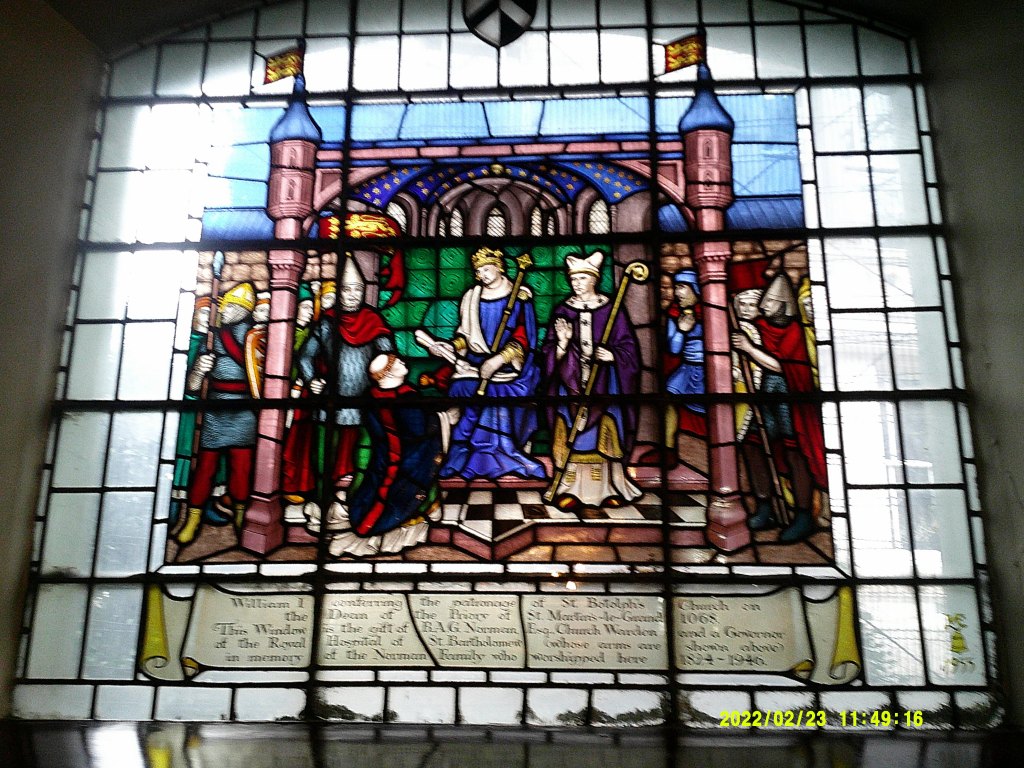
Not to be confused with St Botolph Without Aldgate situated at the Eastern end of the City, this church was another built just outside the Mediaeval Wall at the ‘Aldersgate’ on what is now St Martin’s-le-Grand. The church was founded in the 11th century in the reign of Edward the Confessor and was a priory with an attached hospital for the poor. Over 700 years later, the church survived the Great Fire but later fell into disrepair and was demolished and rebuilt in 1788 – 91. The plain exterior of the church hides its beautiful interior, particularly the spectacular stained-glass windows, which are not original but designed and fitted in the Victorian Era and the 1940s. St Botolph’s is a Guild Church, which means it does not hold its own Sunday services but it is used on Sundays by the London City Presbyterian Church. The main outreach work of the church takes place on Tuesday lunchtimes; a light lunch is followed by the ‘Aldersgate Talks’ which are ‘Christianity for sceptics, enquirers and believers’. Their leaflet says: ‘Our aim is to share the good news of Jesus Christ with those who work in the Aldersgate area, through explaining and applying the Bible.’ Back to those windows, here are three roundels illustrating events in the life of Jesus, and I’ve included some more at the end of the post.

References: Church Website and leaflets in the church

Holy Sepulchre (St Sepulchre-without-Newgate)

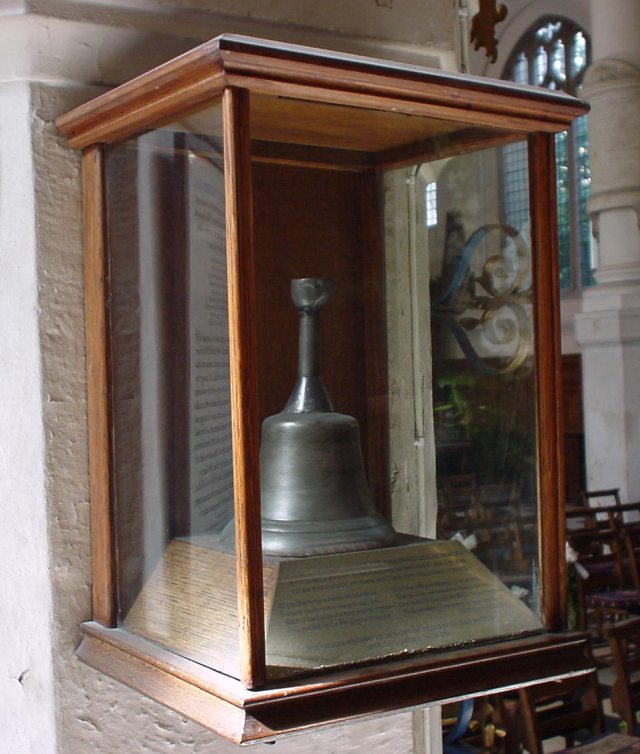
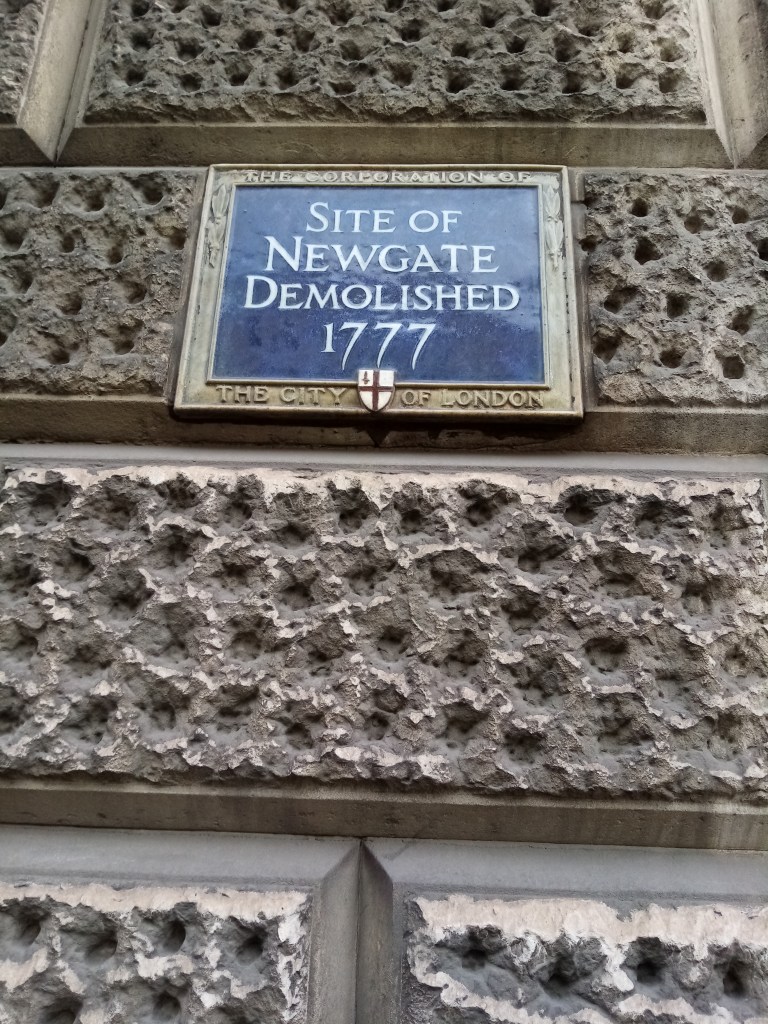
Continuing South along St Martin’s le Grand and then West into Newgate Street, the site of the original Newgate is recorded on a blue plaque. A huge church comes into view, as big as a cathedral, just outside where the Wall once stood, the largest parish church in the City. The original pre-Norman church was dedicated to St Edmund, King and Martyr. During the 12th Century crusades, the church was rededicated to St Edmund and the Holy Sepulchre because knights passed by on the way to the Church of the Holy Sepulchre in Jerusalem. Later still the name of the saint-king was dropped. This church has many interesting facts and features: In 1605 a handbell, the ‘Execution Bell’, was purchased to be rung outside the cells of condemned men the night before their execution at nearby Newgate Prison, exhorting them to repent of their crimes so that they could enter Heaven. The bell is displayed in a glass case in the church. Outside the church, built into a boundary wall, is the first public water fountain in London, ‘opened’ in April 1859. After not being in use for many years, it is due to be restored to full working order. Richard Reeve, a successful silk merchant, left his considerable estate to the church, decreeing that it should all be used for charitable purposes, and a Foundation in his name was set up in 1706. Three hundred years later his legacy continues: a Foodbank, the Square Mile Hygiene Bank, a Wellbeing Project, two Homeless Projects and several other initiatives are run from the church.

St Martin within Ludgate

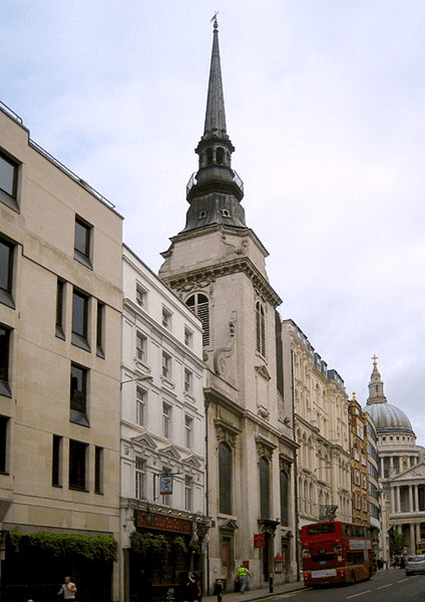
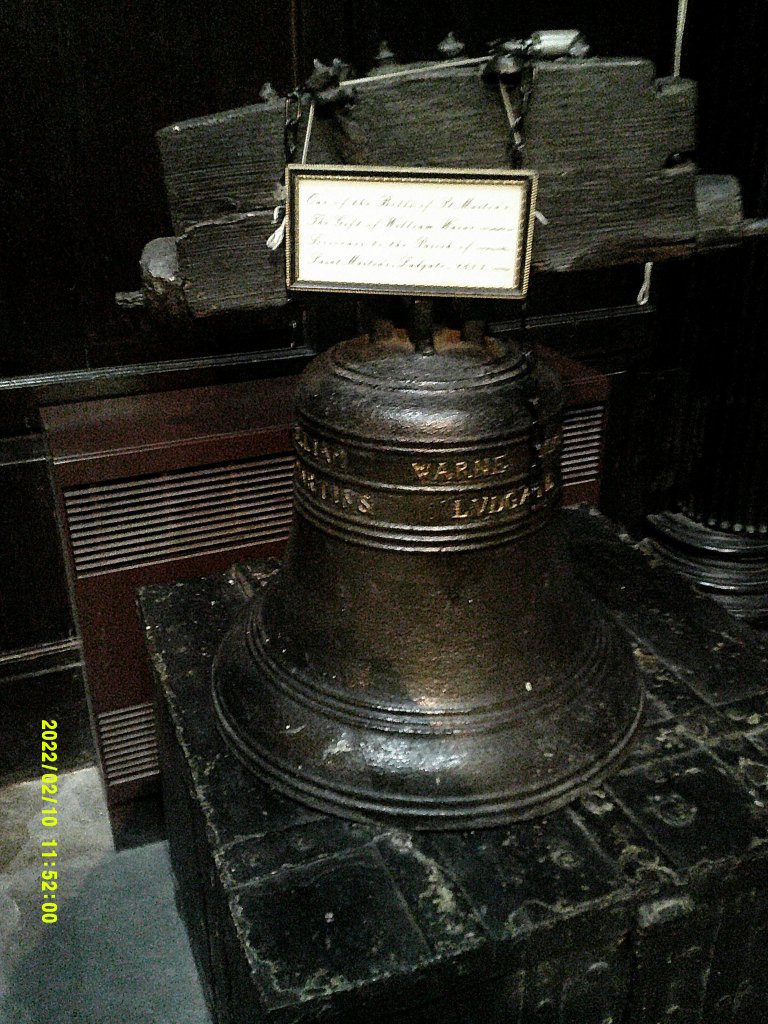
Crossing Newgate where it becomes Holborn Viaduct, you’re now in a street called Old Bailey, home of the famous Central Criminal Court. At the end of the street in Ludgate Hill, is St Martin within Ludgate. The foundations of the Roman City Wall lie under the church, and the West Gate into the City, the Lud Gate spanned the road outside. St Martin was a Roman soldier who converted to Christianity and like St Botolph he is a Patron Saint of travellers. The earliest record of a church on this site is from 1174, it was rebuilt in 1437 only to be destroyed in the Great Fire and rebuilt by Wren. The church steeple was apparently designed by Wren to be a contrast with the dome of St Pauls just up the hill; one tall and spikey, the other huge and round. St Martin’s escaped any damage from bombing or fires in the Blitz; an information board tells us: ‘In the Second World War, only a favourable wind gave St Martin’s a narrow escape from the fires in the air raids of December 1940. This was the least damaged of all the City churches, and it is still one of the best preserved of Wren’s creations.’ Famous people associated with the church include the Native American Princess Pocahontas who is believed to have visited the church when she lived on Ludgate Hill; another American, Benjamin Franklin regularly attended the church and then went next door for a coffee at the London Coffee House to discuss the issues of the day. And local diarist John Evelyn watched the destruction of the church, writing that he saw hot lead from St Paul’s roof ‘melting down the street in a stream.’ What a scary thing to witness!

References: Wikipedia and Information boards in the church

Some extra photos to finish…..

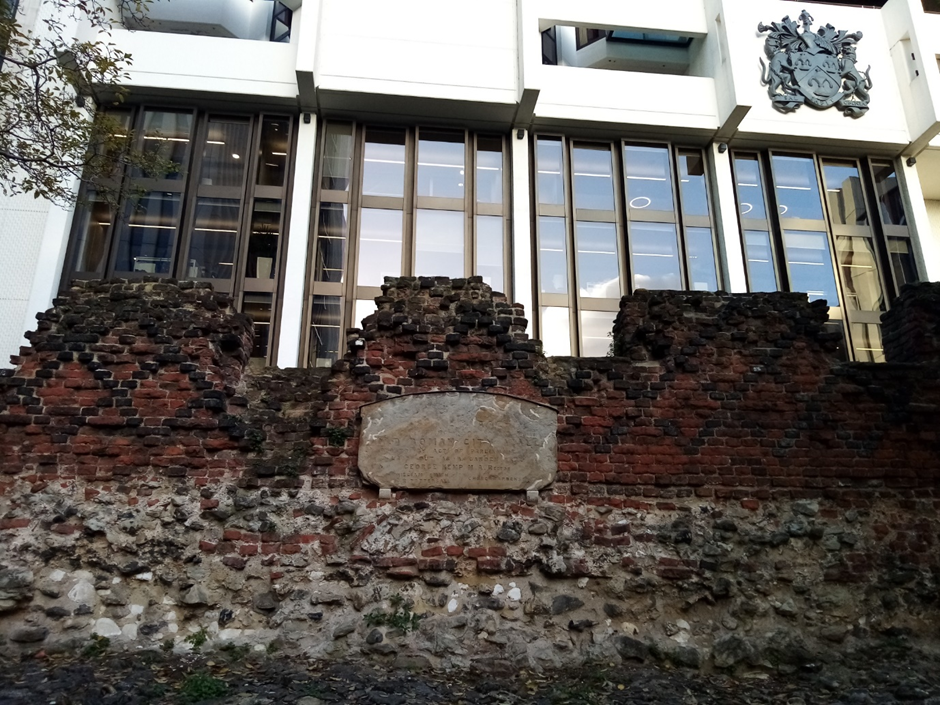
Piece of the London Wall in an underground car park near the Museum of London
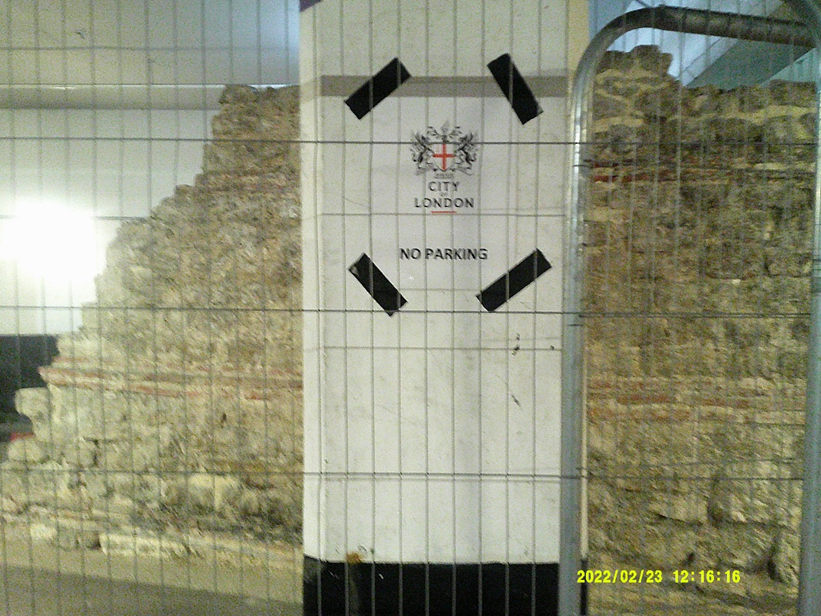
I like the City of London No Parking sign. The fragment of Wall takes up four bays!

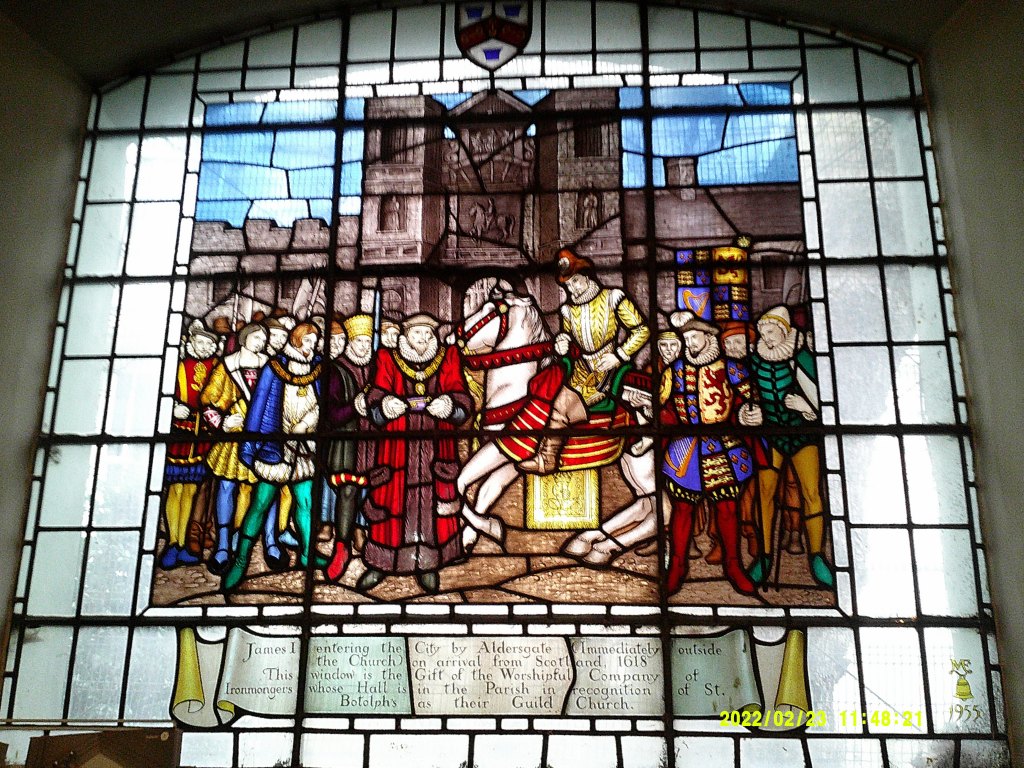
The first four pictures are events in the life of Jesus from the windows on the West side of the church.

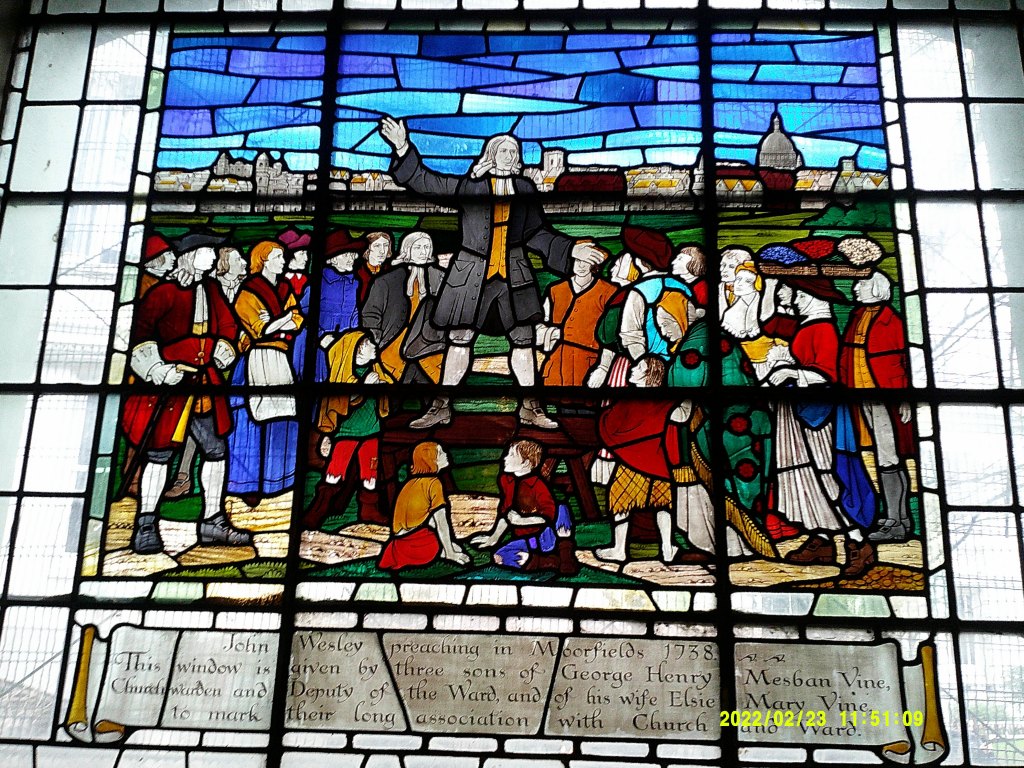
The second four are events in the life of the church and surrounding area from the windows on the East side. There are several other stained glass windows in the church, and the overall effect is stunning.

January – Christianity at the British Museum

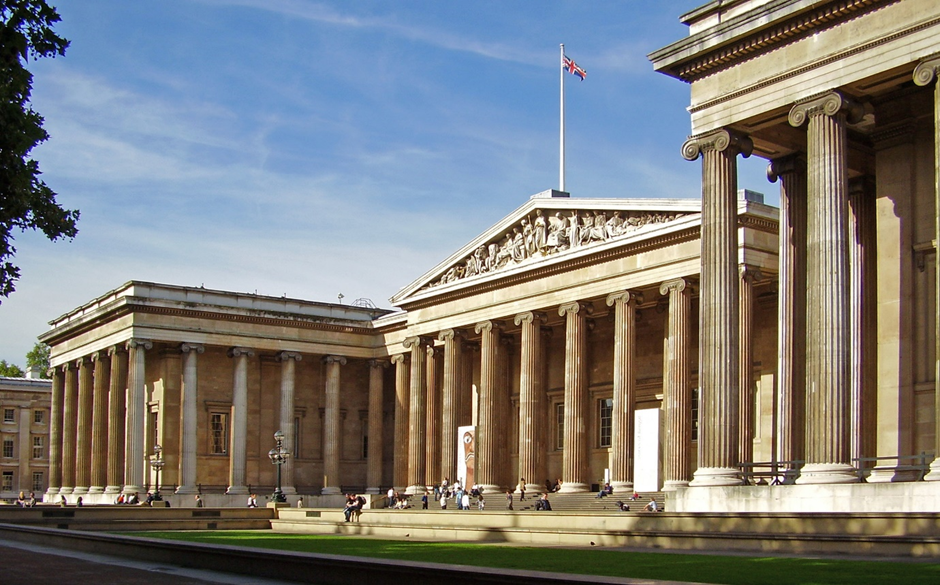
Credit: Wikimedia Commons

I’ve recently become interested in archaeology, having done a couple of online courses, and while visiting Birdoswald Roman Fort on Hadrian’s Wall last summer, we actually got to see an archaeological dig in progress, which was very exciting. Particularly as this dig was featured this month on BBC 1’s ‘Digging for Britain’! There are lots of items in the British Museum which reference both the Old and New Testament; tablets of writing and illustrations, coins, household murals and ornaments and much more. With the help of ‘Through the British Museum with the Bible’, I’ve explored the galleries and identified some artefacts which reflect the time when Christianity first came to the British Isles. Some of the items in the book were no longer in situ in the Museum, or I simply couldn’t find them, so it wasn’t a successful visit as I would have hoped. However, it was fascinating to see artefacts made 1,700 years ago which would have been in peoples’ homes. Note: these artefacts were not found in London, but most were found in the Southeast of England, where Christianity was introduced to England by the Romans.  

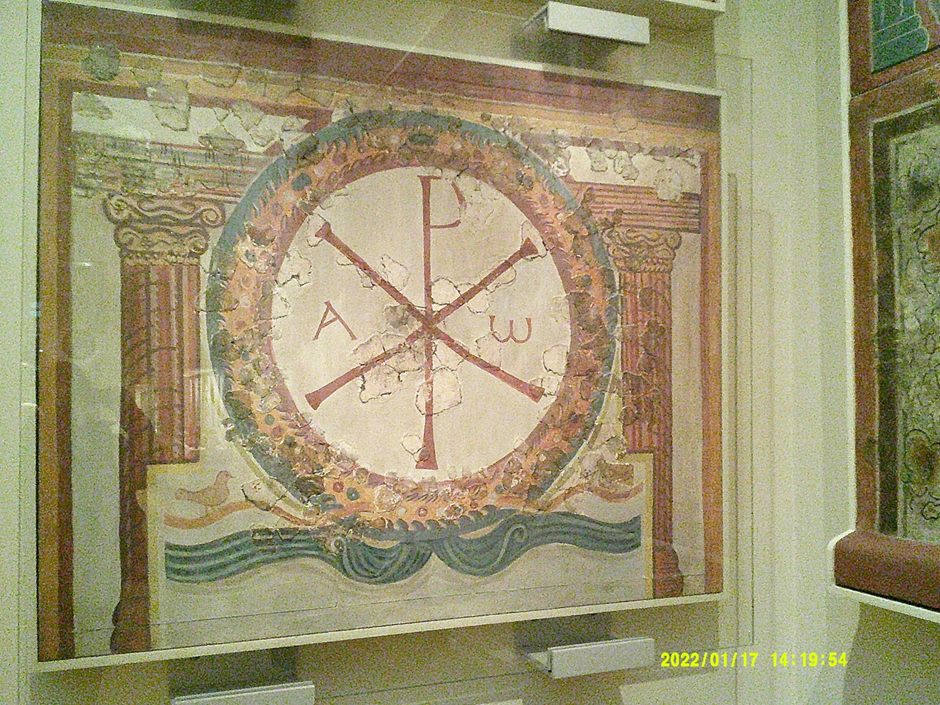
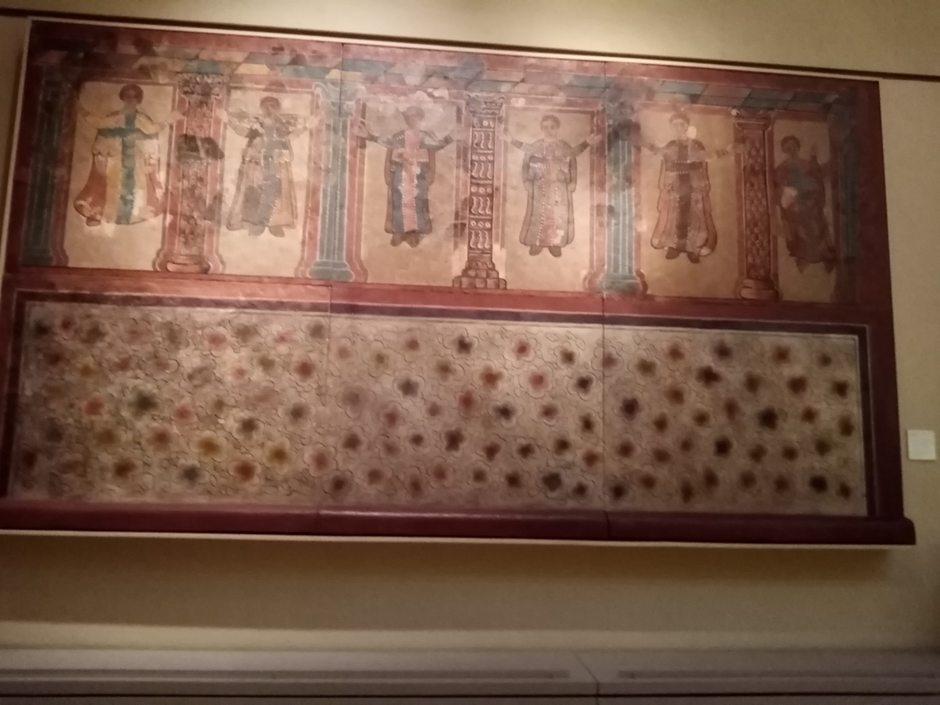
These two pictures are of murals discovered in Lullingstone Villa, an excavated Roman villa in Kent, they are 4th Century Roman wall decorations. The first is of the Christian symbol ‘chi-rho’ (the first two letters of Christ in Greek) and the symbols for Alpha and Omega; the second is a frieze of six figures with their hands raised in the ‘orans’ position of prayer. The room in which these were found was used for Christian worship; the villa was built late in the first century and there is evidence that the first owners practised pagan worship. By the 4th Century the owners had adopted Christianity and built a special room with an external entrance to allow public access – a house church!  The conversion of England to Christianity took place over several centuries, and the Gospel wasn’t brought only by Roman citizens who had converted under Emperor Constantine. The Roman Empire was huge and there were merchants and traders, soldiers and civil servants from many different lands who came to English shores, bringing goods and services, along with their faith.

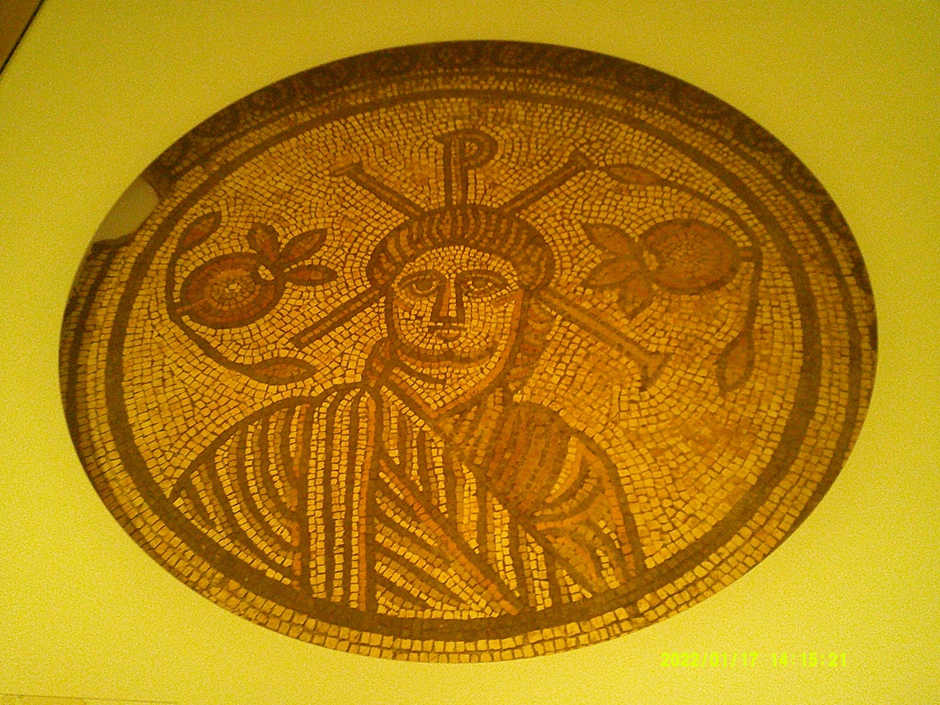
This mosaic is also 4th Century and was excavated from a Roman villa in Hinton St Mary in Dorset. The centre is a representation of Jesus wearing Roman clothing with a chi-rho behind his head and with two pomegranates which symbolise eternal life. This centrepiece is part of a larger mosaic; I’m not sure why the rest of it is covered up, maybe it’s too fragile for display, but the book says that this is a whole floor mosaic featuring the four evangelists in the corners and symbols said to represent victory and eternal life.   What’s important about this mosaic is that it’s one of the earliest known representations of Christ, and the only mosaic of Christ found in The British Isles, and indeed, in Roman Europe.

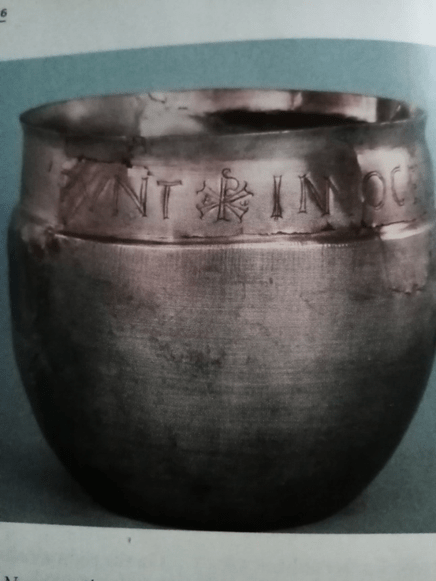
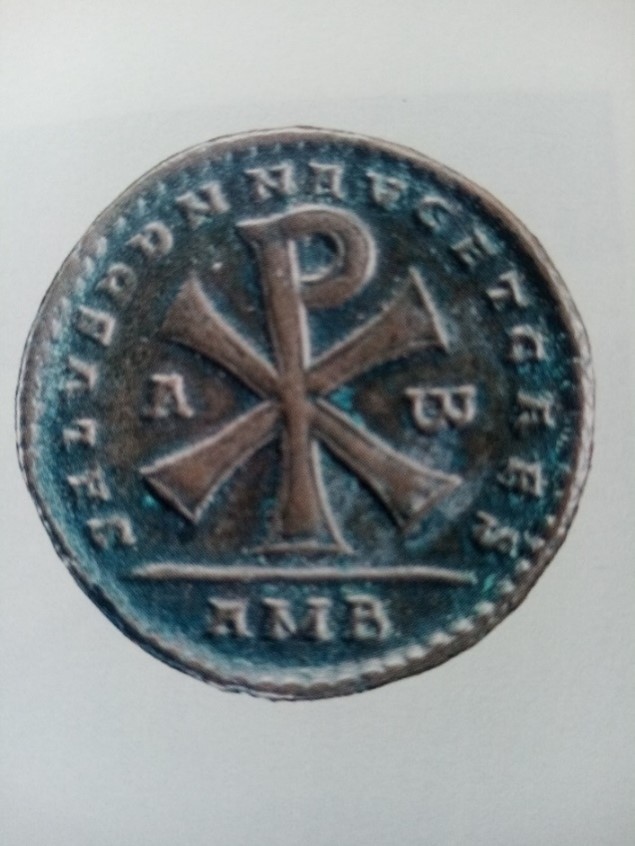
Here are four items featuring the Chi-rho. The top picture shows two plaster moulds for making lamps, these are 4th Century Roman. The Chi-rho monogram features on many household items, perhaps like having a Christian fish motif on items today. The second picture is the ‘Water Newton Treasure’, silverware from the 4th Century discovered at Water Newton near Peterborough. Other items found at the site were a pewter dish and a silver spoon, all inscribed with the Chi-rho and clearly intended for Christian ceremonies. They are the earliest Christian silverware from the Roman Empire. The picture of the coin I actually took from the guidebook, as the coins were too tiny to photograph! This coin is significant because it’s very possibly the earliest use of the Chi-rho officially stamped on a coin. There are other coins on display with Christian ‘messages’; one has the words salus mundi – salvation of the world, and a cross, another has the face of the Christian Emperor Constantine looking towards Heaven. There’s also a coin with the Chi-rho scratched on it. Coins of Constantine and his sons are still being discovered in Britain today.

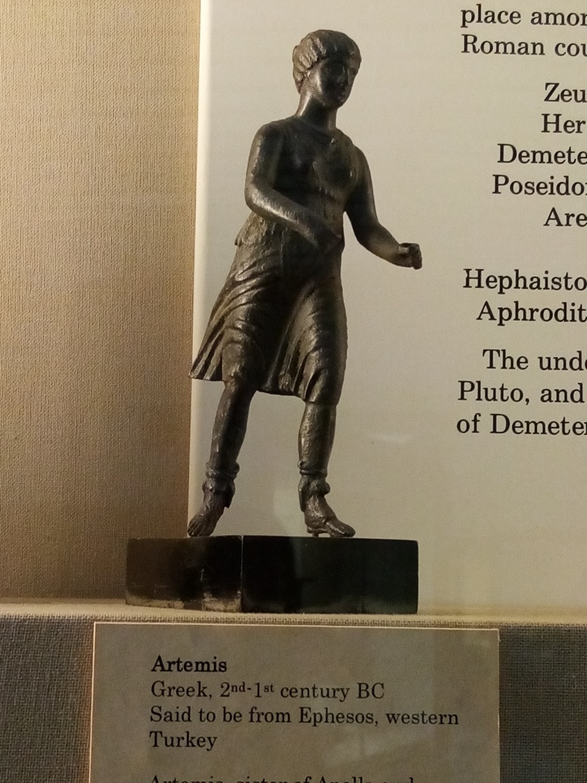
The goddess Artemis – she looks like a little girl!

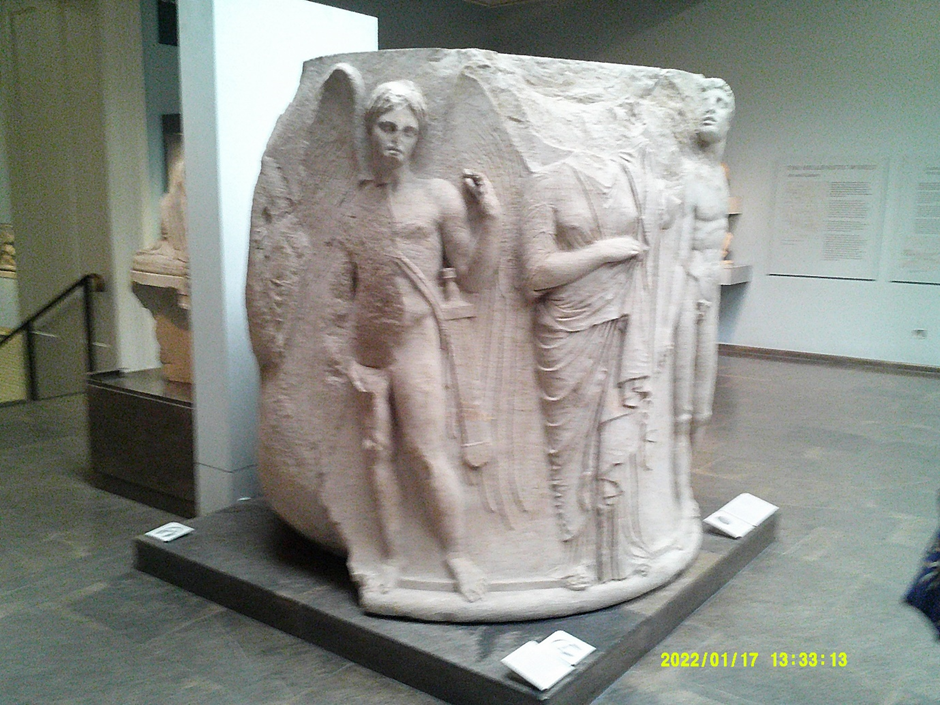
The top picture is the base of a column of the Temple of Diana in Greece, and underneath, a small statue of Diana, the goddess known in Greek mythology as Artemis. So why are these in a blog about Christian London? These are mentioned in the Book of Acts in the New Testament, and I’ll let The Message translation of the Bible explain the story, which happened in the (now) Turkish city of Ephesus: ‘A certain silversmith, Demetrius, conducted a brisk trade in the manufacture of shrines, employing a number of artisans in his business. He rounded up his workers and said “Men, you well know that we have a good thing going here – and you’ve seen how Paul has barged in and discredited what we’re doing by telling people that there’s no such thing as a god made with hands. A lot of people are going along with him, not just here in Ephesus but all through Asia province. Not only is our business in danger of falling apart, but the temple of our famous goddess Artemis will certainly end up a pile of rubble as her glorious reputation fades to nothing. And this is no mere local matter – the whole world worships our Artemis!” This set them off in a frenzy. They ran into the street yelling “Great Artemis of the Ephesians! Great Artemis of the Ephesians.”’  The narrative goes on to say that more people joined the mob and they kept up the chant for two hours, until the town clerk told them to go home quietly, and to take any complaints against Paul to court, reminding them ‘Rome, remember, does not look kindly on rioters.’

Credits: Through the British Museum – with the Bible; Brian Edwards and Clive Anderson, Day One Publications 2004

How Christianity came to Britain and Ireland; Michelle P. Bown, Lion Hudson plc 2006

The Message: The New Testament in Contemporary Language; Eugene H. Peterson, Navpress 1993

December: Nativity!

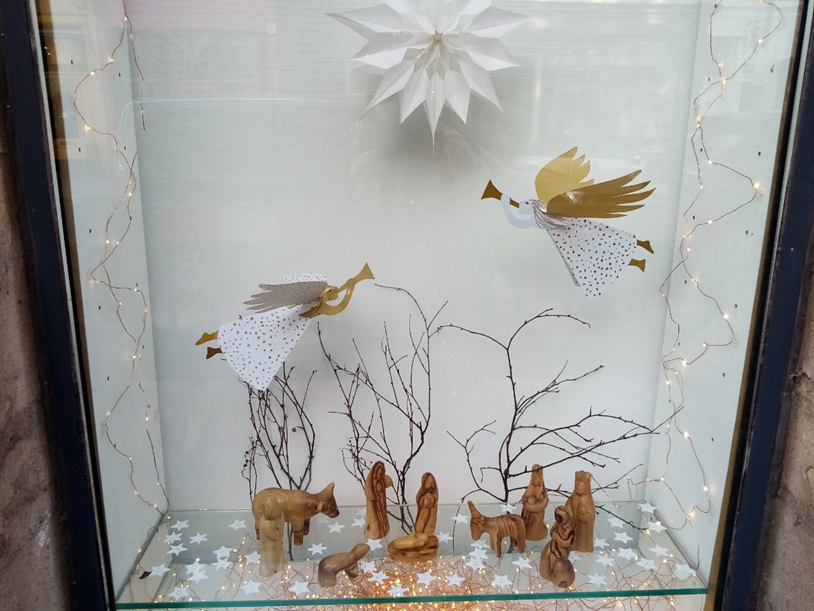
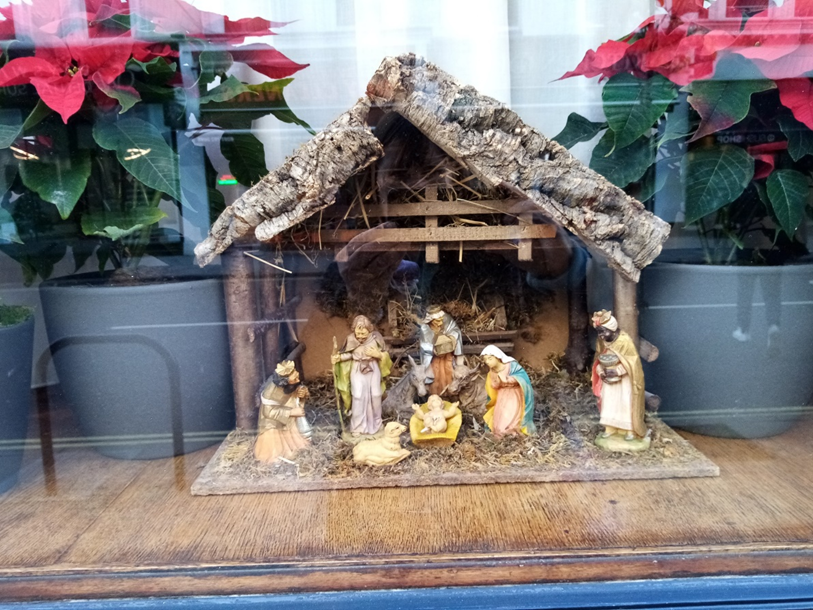
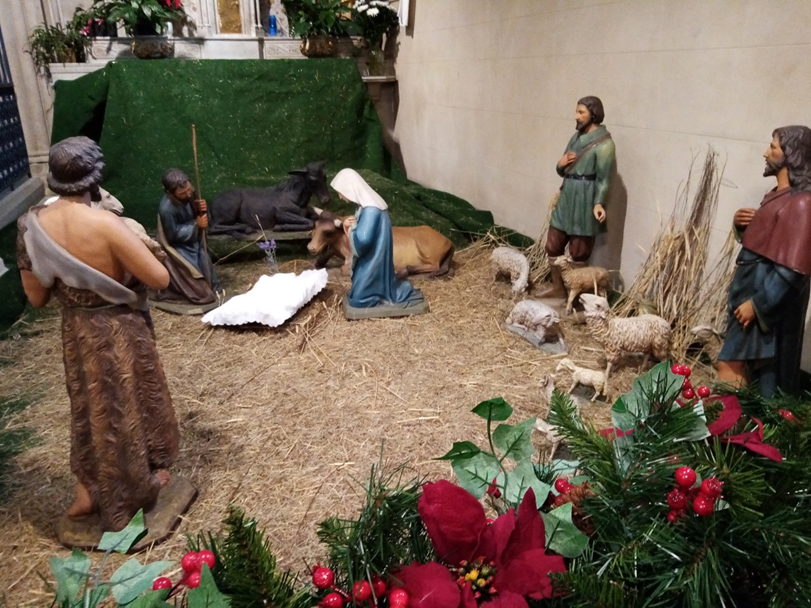
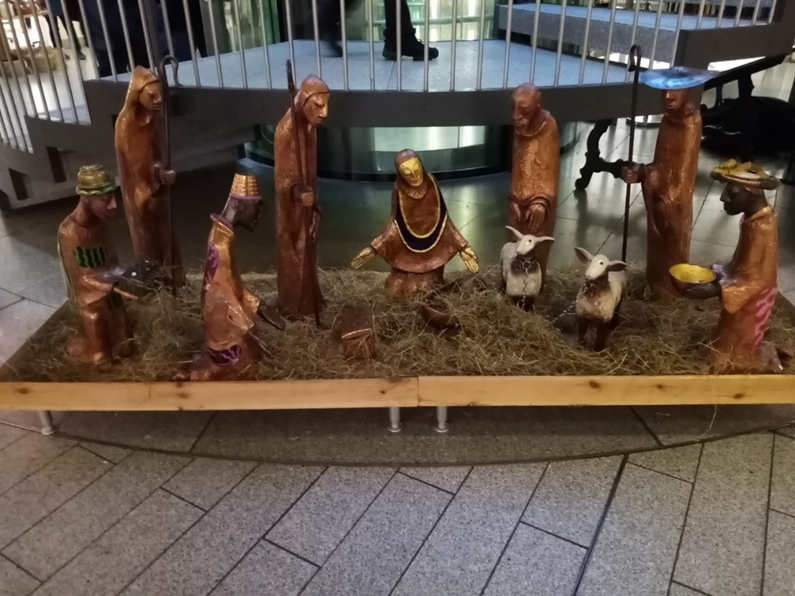
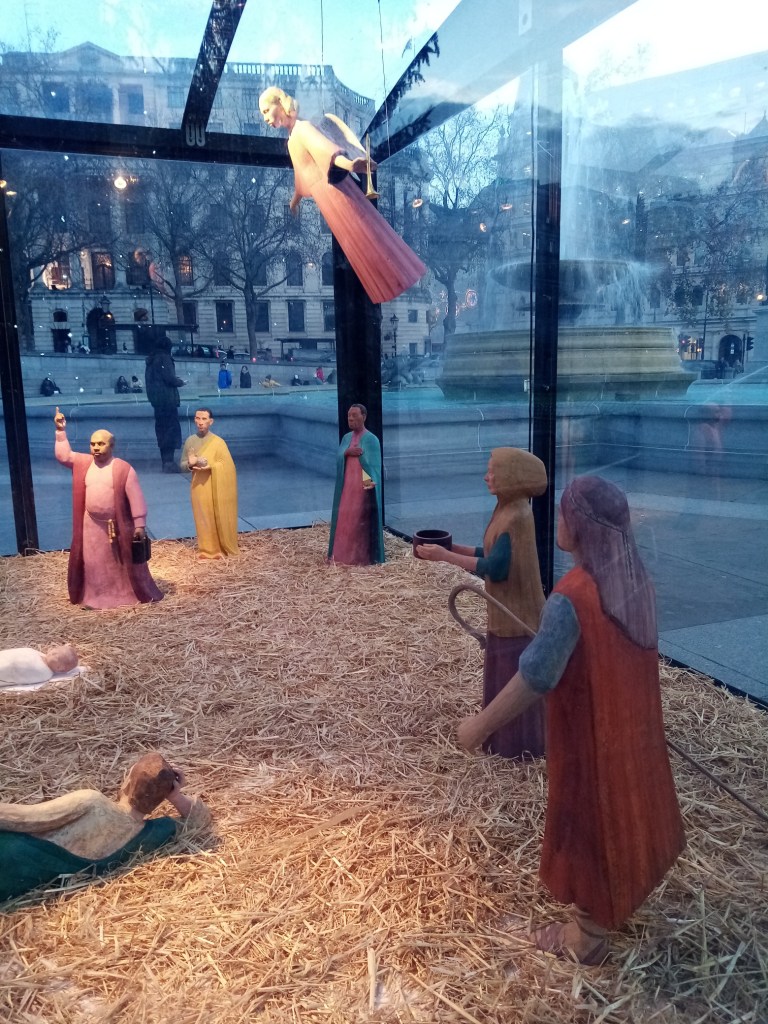
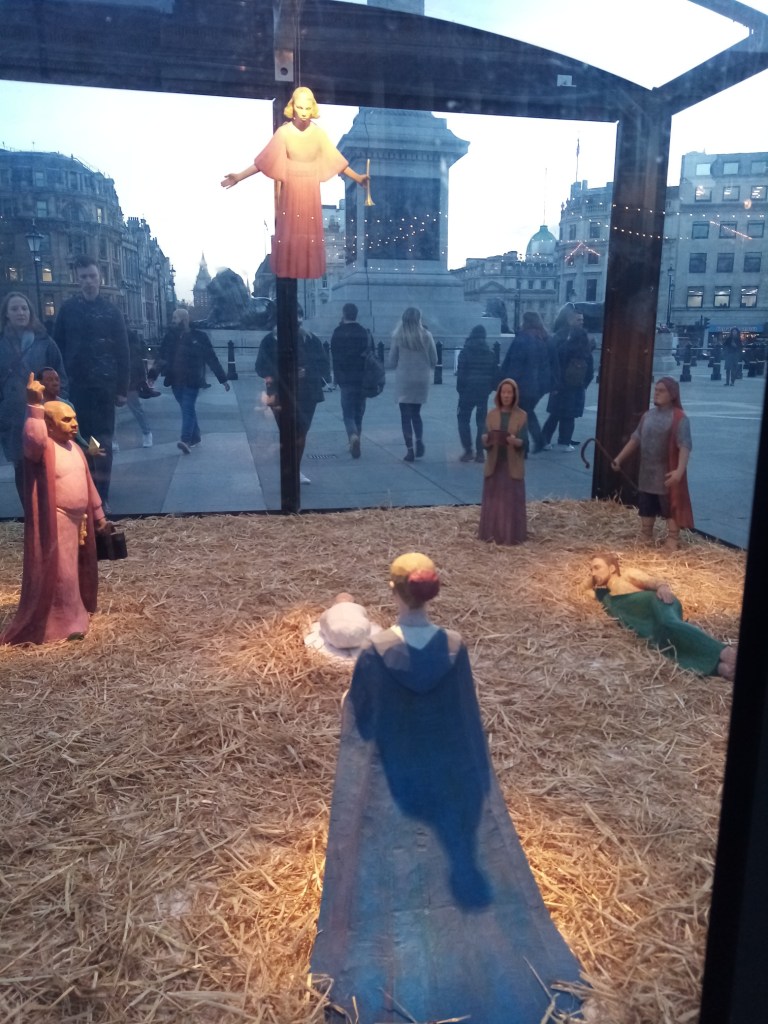
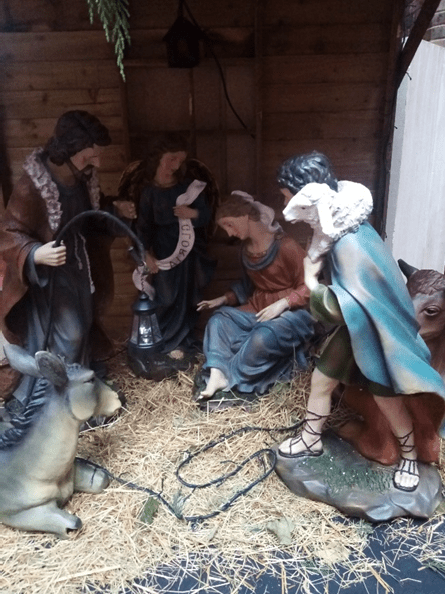
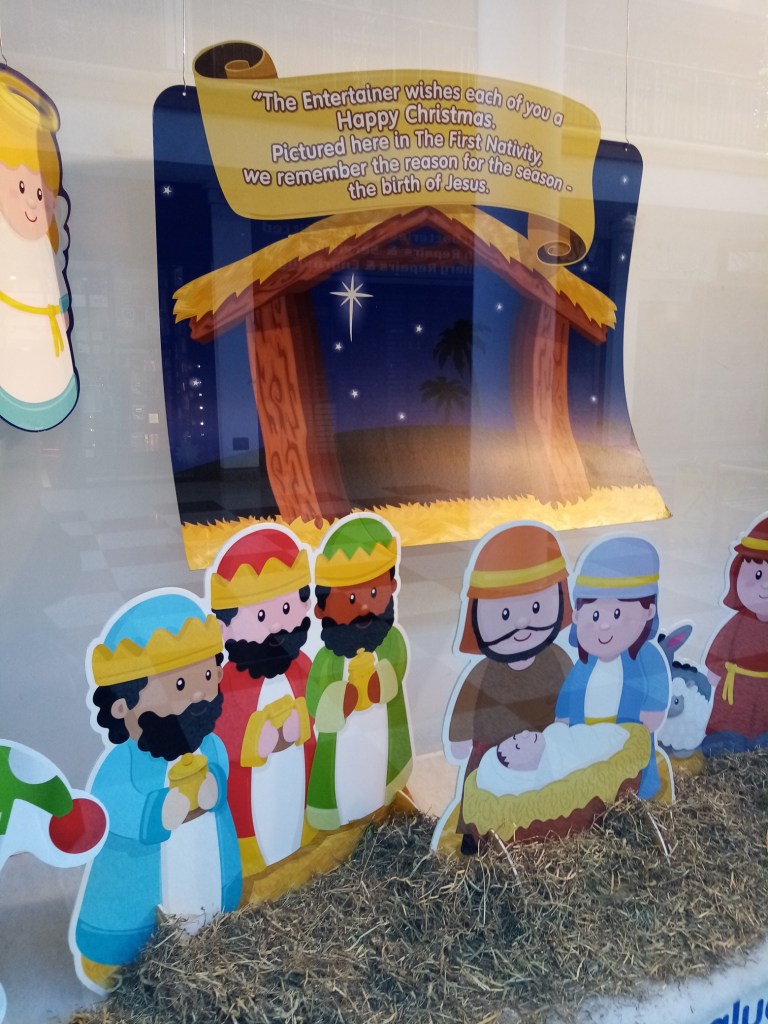
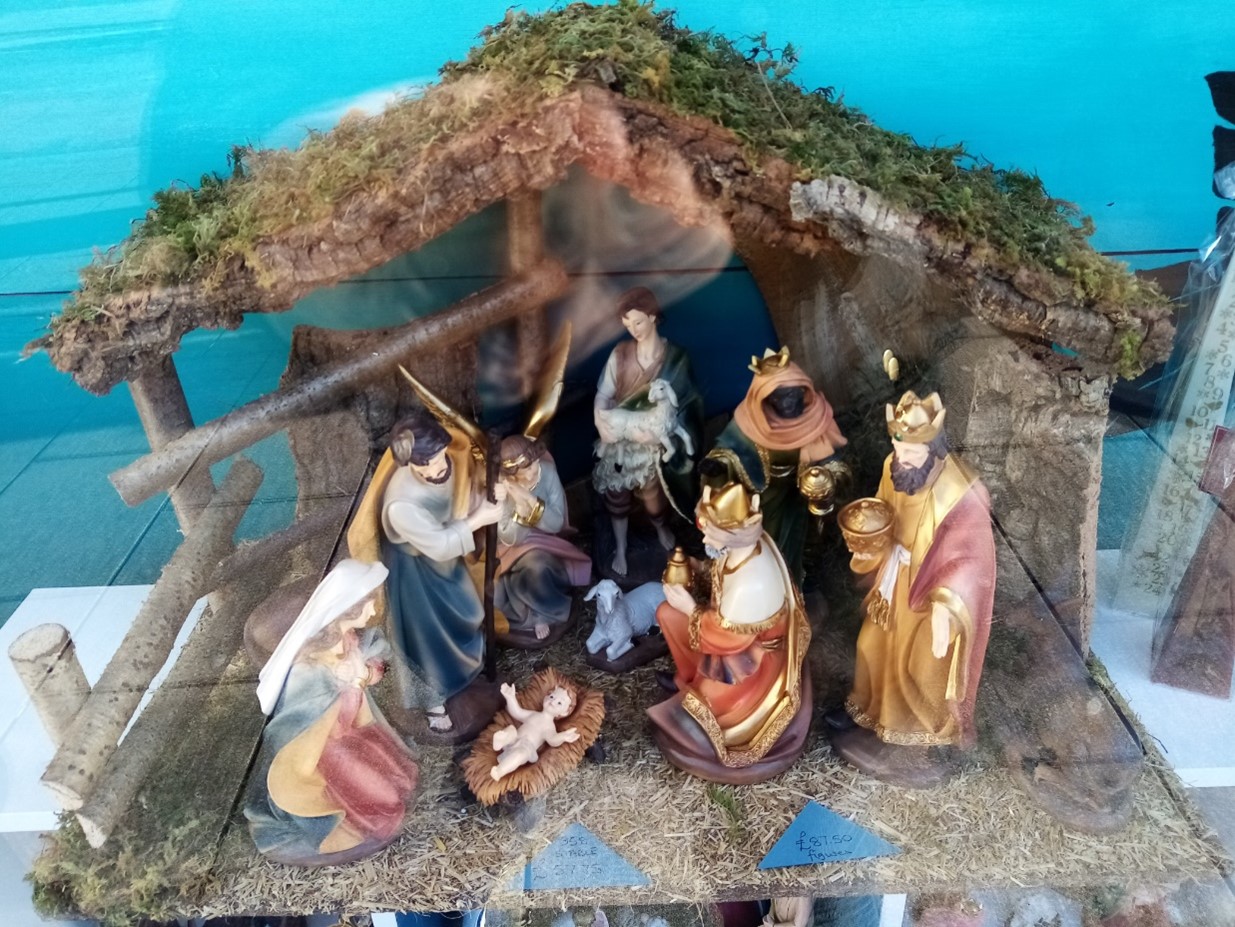
Another selection of beautiful and creative Nativity scenes to be found in and around the capital. My thanks to ‘friends’ in the Facebook group Londonist Urban Oddities for your suggestions, which took me further afield than I was expecting to go!

The Bayswater Collection (sounds posh)

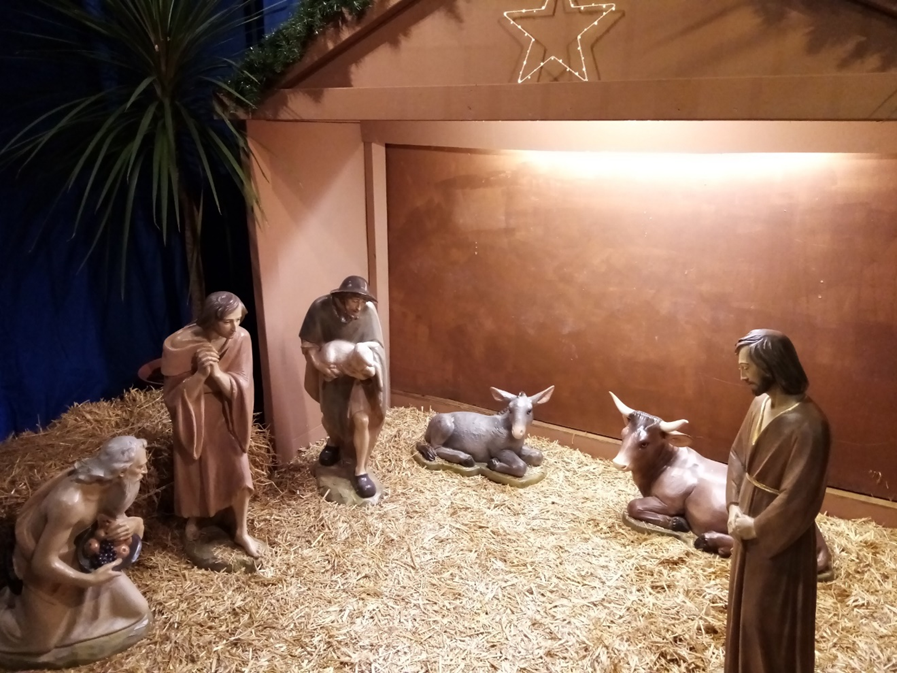
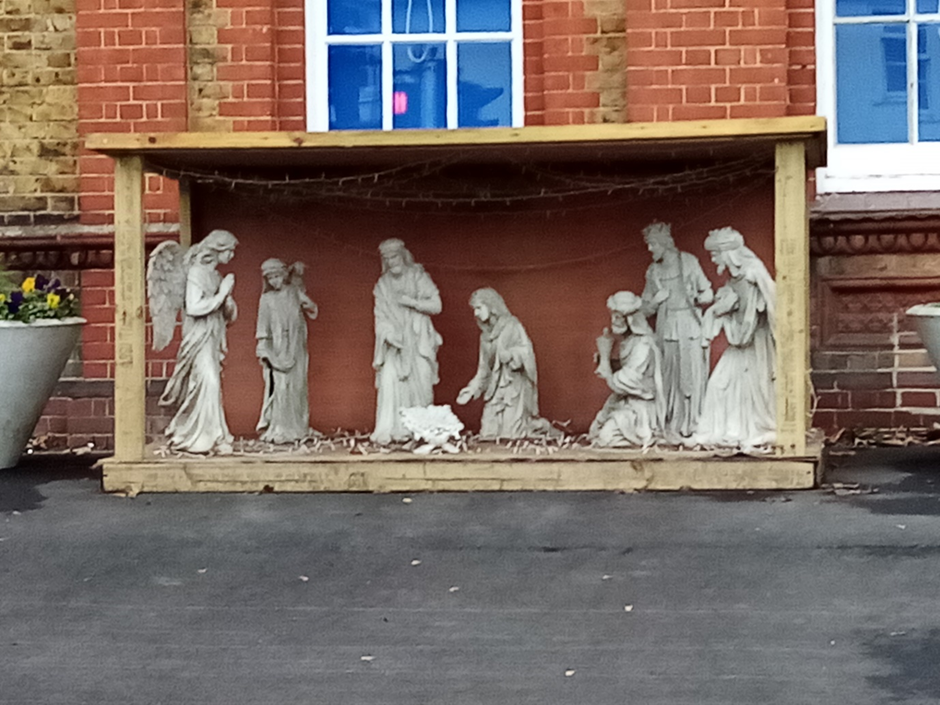
Simple Nativity at Westbourne Grove Church W11
The window of Kenyon’s Funeral Directors, Westbourne Grove, W11
Nativity at St Mary of the Angels Catholic Church, Bayswater, displayed in the side aisle.

Central London Collection

Nativity in the crypt of St Martin in the Fields
St George’s RC Cathedral, Lambeth SE1 (note the absence of Mary and baby Jesus, they will arrive on Christmas eve.)

The Carshalton, Surrey, Collection

St Mary’s RC School
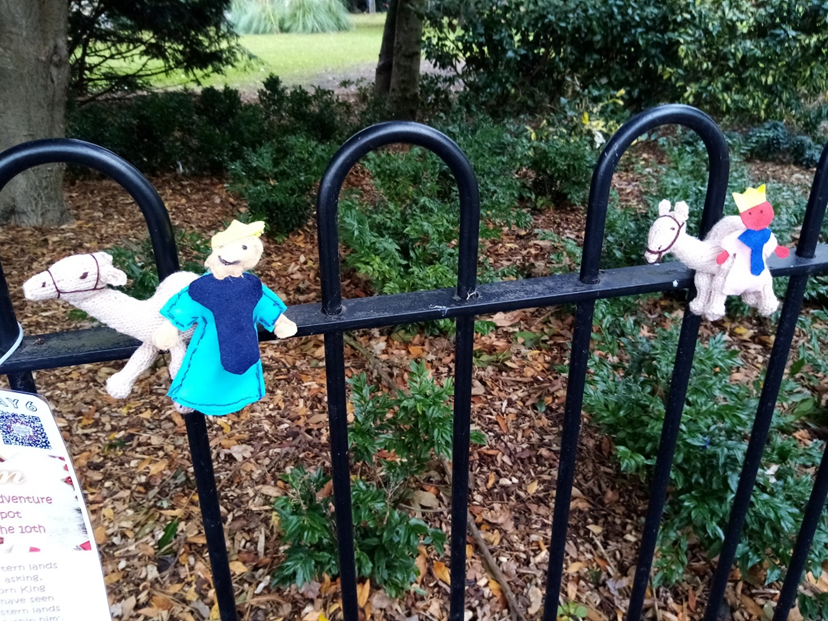
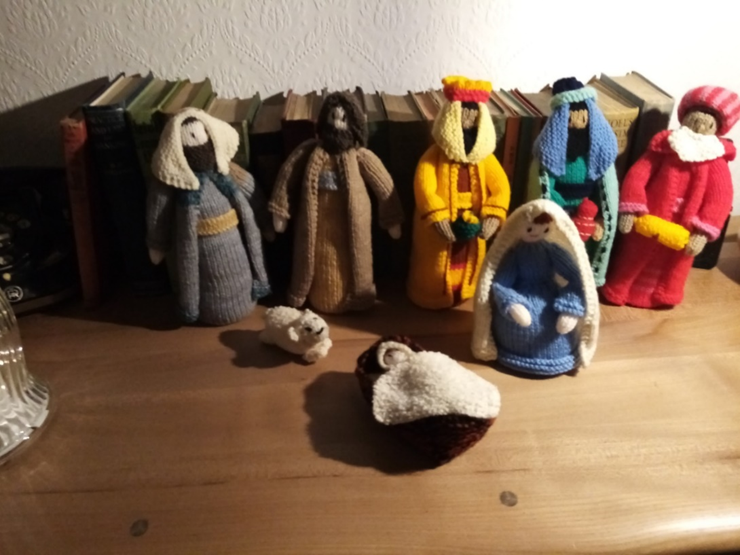
‘Knitivity’ in The Grove Park, Carshalton…..
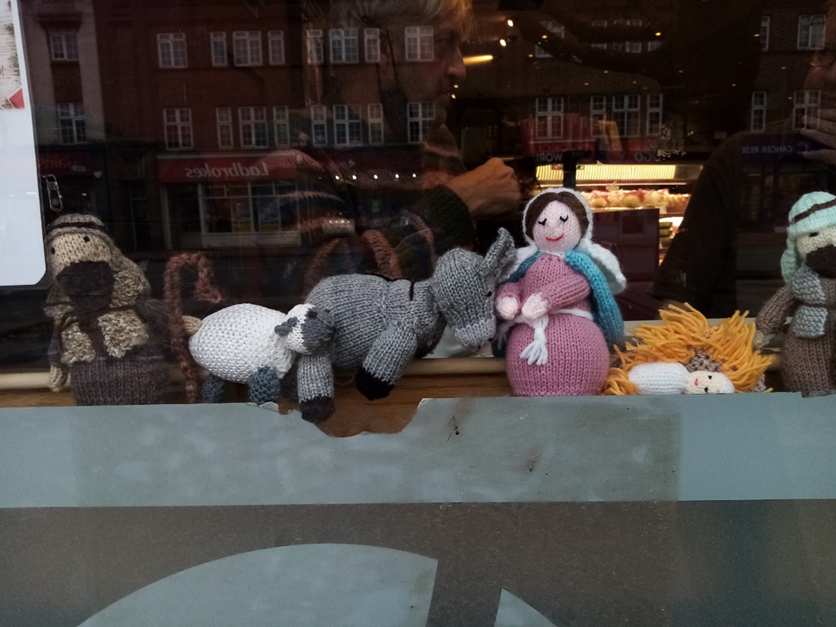
….and in Costa Coffee, Carshalton High Street
Nativity at friends’ house, Carshalton Beeches

Wallington/Croydon/ Old Coulsdon Collection

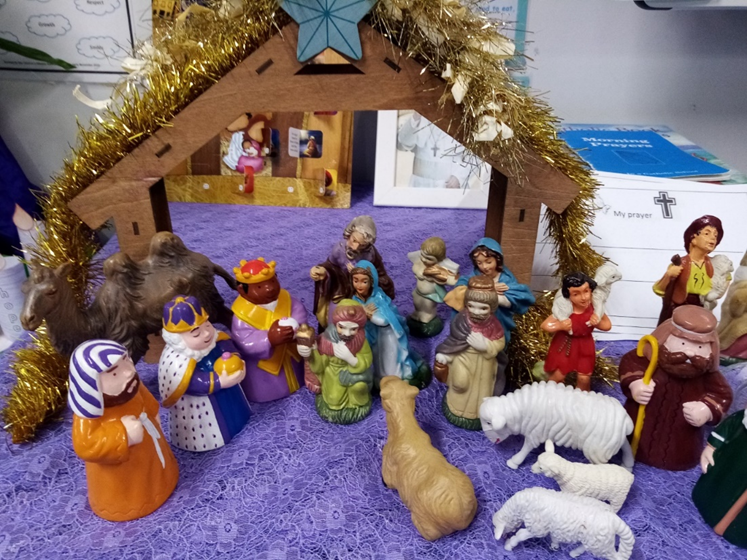
St Elphege’s Infant School, Wallington (figures arranged by the children!)
Oasis Christian Bookshop, Wallington
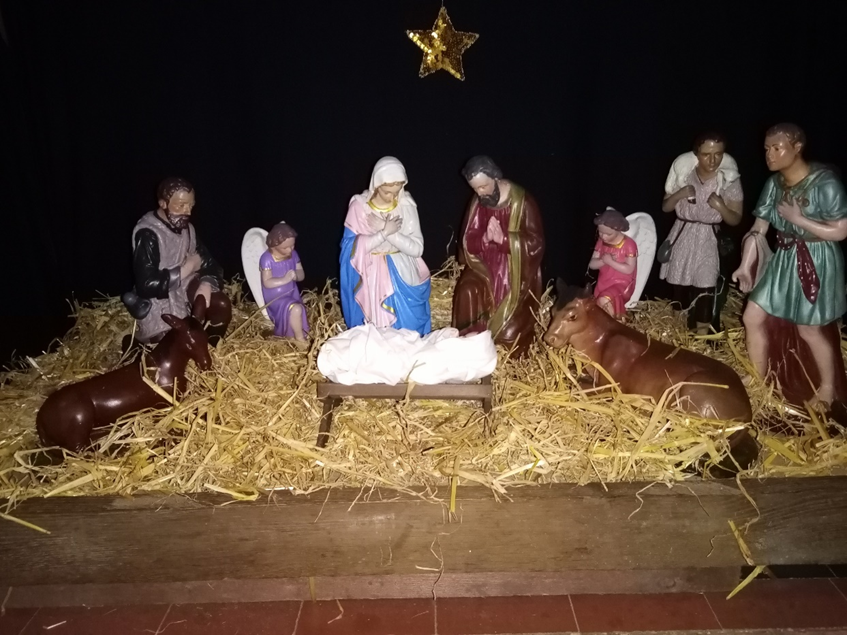
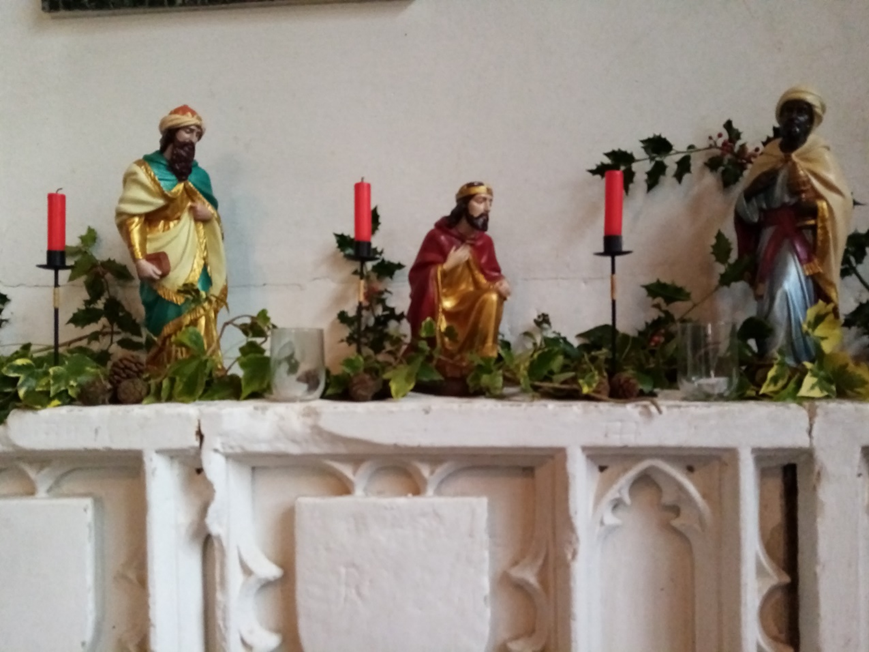
And lastly, the Nativity at the beautiful, 900-year-old Chaldon Church (with a CR3 postcode, it counts as Croydon!) I like that the shepherds, Mary, Joseph, Jesus and some angels are assembled in the stable, while the Wise Men wait on a shelf until it’s their turn to arrive.

And to finish, a few words from two people with associations with London:

‘Pleased as Man, with man to dwell, Jesus, our Emanuel. Hark the Herald Angels sing, Glory to the new born King!’ – Charles Wesley, Hark the Herald Angels Sing

‘And as Tiny Tim observed, God bless us, Every One!’ – Charles Dickens, A Christmas Carol

Happy Christmas and a Hopeful, Peaceful New Year.

November – Churches on the London Wall

I got the idea for this month’s blog post from a book I started reading during the first lockdown: ‘London: A Travel Guide Through Time’ by historian Dr Matthew Green. The book brings different periods in London’s history vividly to life, drawing the reader into life on the streets. In the chapter on Medieval London, there’s an atmospheric description of the Traveller outside the restored Roman Wall at St Giles Church, Cripplegate: ‘Everything is black. A glacial wind chills you to the bone. You open your eyes to find yourself in a meadow under a moonless, star-speckled sky. Were it not for your flickering horn-sided lanthorn, you’d be able to see very little……Every so often you see a tiny pinprick of light flashing from a great height. You surmise that you are somewhere outside the city walls, and that a watchman is skulking behind the battlements. Perhaps if you go any nearer he will shoot an arrow at you…..In front of you, the medieval city broods, silent and black, rising sheer from a stinking ditch, girdled by its thick walls. Not for the love of God will you, an alien, or anyone, be allowed in. At eight o’clock each night a curfew is sounded……At that point everything grinds to a halt……and the city falls into a deep slumber.’* I have visited all the still standing parts of the Wall and decided I had to visit some of the churches which are situated where the city gates once stood. I’ve put the churches in the order they are situated along the wall going from the Tower of London.
*London: A Travel Guide Through Time, Dr Matthew Green, Michael Joseph/Penguin Books

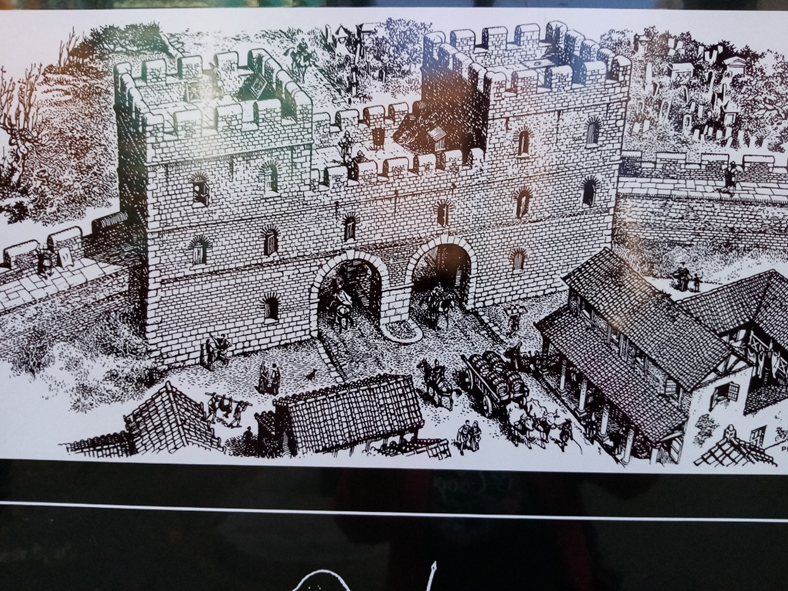
This is what the city gate would have looked like in Medieval times

St Botolph without Aldgate

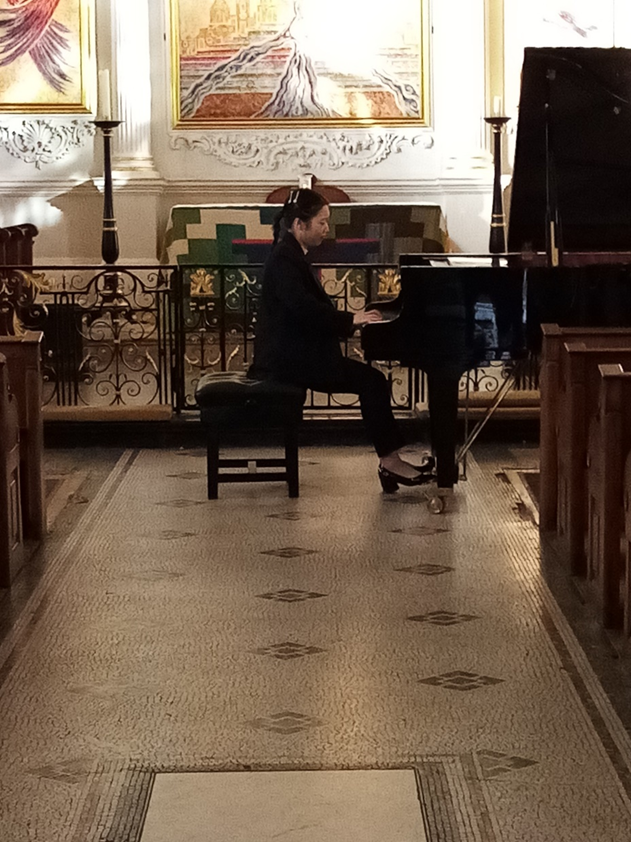
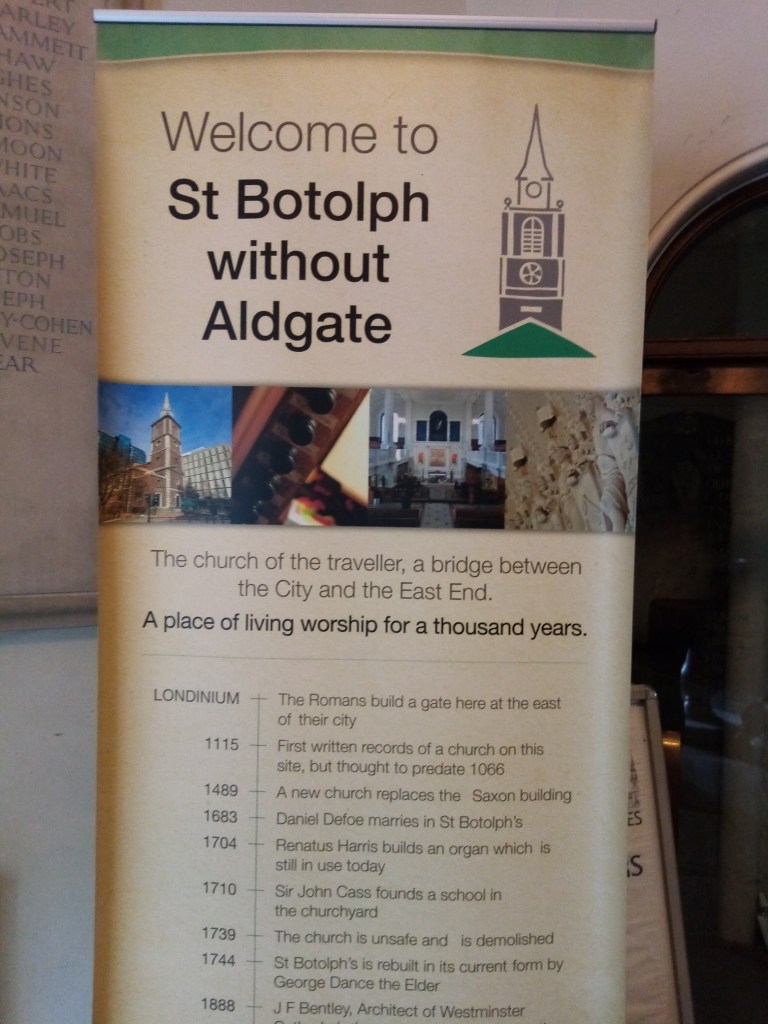
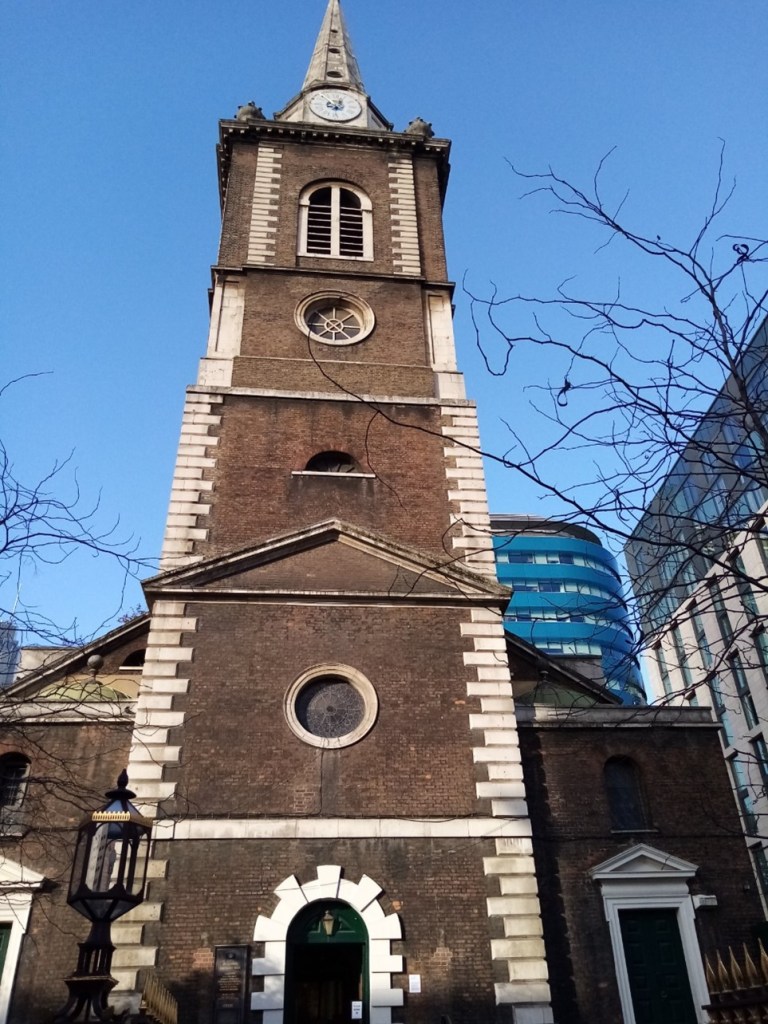
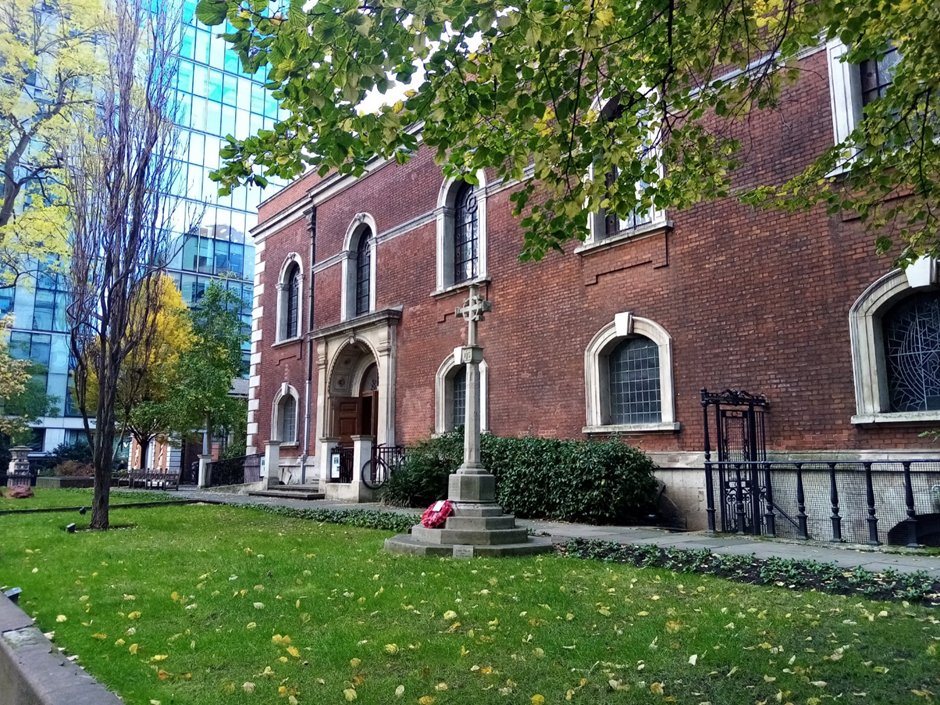
Several of the City gate churches are named for St Botolph, he’s the patron saint of wayfarers as travellers would have had to enter the City through one of its seven gates. ‘Without’ means the church stood just outside the wall. As with so many City churches, there has been a church on the site for over 1000 years; the present building was finished in 1744. St Botolph’s belongs to the Inclusive Church network and its website says ‘The tradition of St Botolph’s being an inclusive church is longer than we realised.’ In 1618 one Thomas Speller ‘a dumbe person’ was married at the church. He had brought to the church the Book of Common Prayer and his marriage licence in one hand, and his bride-to-be in the other and ‘made the best signes he could, to show that he was willing to be married’. It was agreed the marriage could take place. Bearing in mind 400 years ago a person who was dumb was usually considered to be also mentally deficient, this shows respect for disability ahead of its time! When I visited there was a delightful piano recital being performed, so I tiptoed in and out again, rather than exploring the church. There’s a fragment of Roman wall near the site, situated in an office block, so not easily accessible!

Ref: stbotolphs.org.uk

Piano recital in the church

St Botolph without Bishopsgate

Another St Botolph’s, again outside the wall, and yet another lunchtime concert in progress, the City churches are famous for these. It’s believed that the site of this church has been a place of Christian worship since Roman times. The original Saxon church is believed to date from 1212. There are a couple of interesting things in the church’s long history: following suppression of religious buildings by Henry Vlll it was converted to the Bethlehem Hospital for Lunatics, known as Bedlam. St Botolph’s survived the Great Fire with no damage, lost only one window in the Second World War, but on April 24th 1993, it was one of many buildings to be badly damaged by an IRA bomb. The roof was destroyed and most of the doors and windows, and extensive restoration was completed in 1997. This church was the first in the City to have its burial grounds converted to a public garden; as well as a green space for office workers to relax during their lunch hours, there’s a netball and tennis court for the more energetic.

Ref: The Parish and Ward Church of St Botolph-without-Bishopsgate: A Short History

The garden at St Botolph’s Bishopsgate
The church sits alongside the city’s tallest buildings,

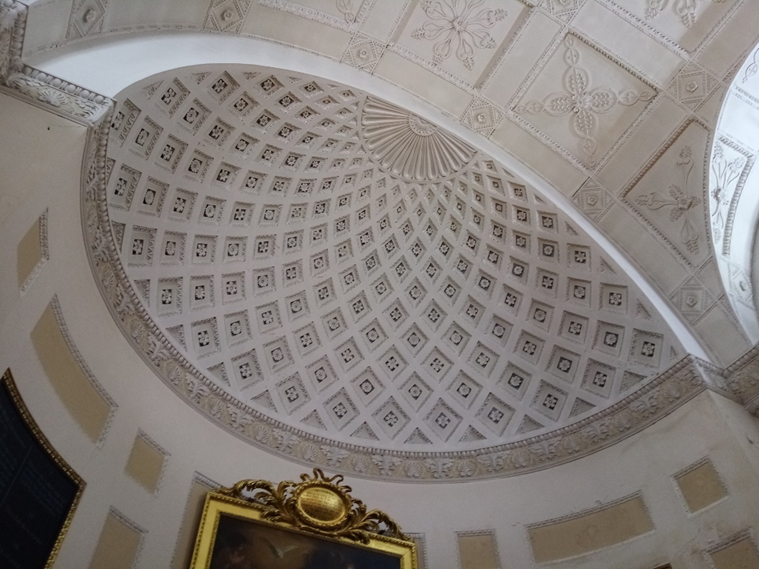
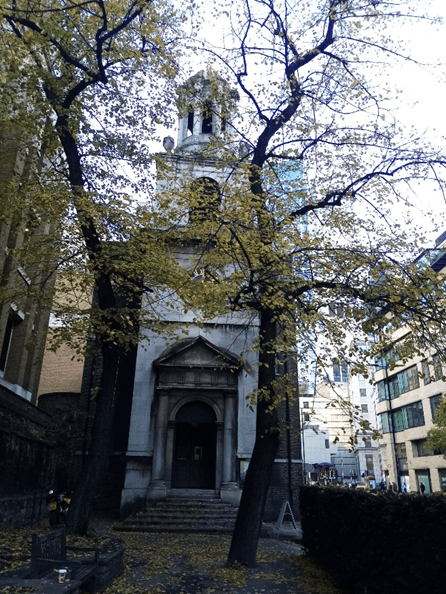
All Hallows on the Wall   

The original All Hallows was actually built into a bastion, or fortification, of the wall in the early 12th century. Due to its position in the wall, it escaped destruction in the Great Fire but subsequently fell into dereliction. The present church was constructed by George Dance the Younger in 1767 when he was just 24 years old. English architects at that time often studied in Italy and brought back ideas for classical designs, and All Hallows has construction and decoration themes deriving from temples in Rome. Whilst visiting the church I got chatting with two of the Friends of the City Churches, who told me that usage of the church building is up 60% what it was in the 1970s! The church holds midweek services and has in the past been the headquarters of Christian Aid. It is associated with several other Christian initiatives: the arts festival Greenbelt, the Archbishop of Canterbury’s Millennium Youth event, The Time of our Lives, and in 2017 became the headquarters of the urban youth charity XLP. City Gates Church holds its Sunday morning service there, the first to do so since 1941! This group holds regular music events (like most of the other churches I’ve visited) and supports Christian Aid workers overseas.

Ref: Wikipedia.org/wiki/All Hallows-on-the-wall

Classical domed ceiling

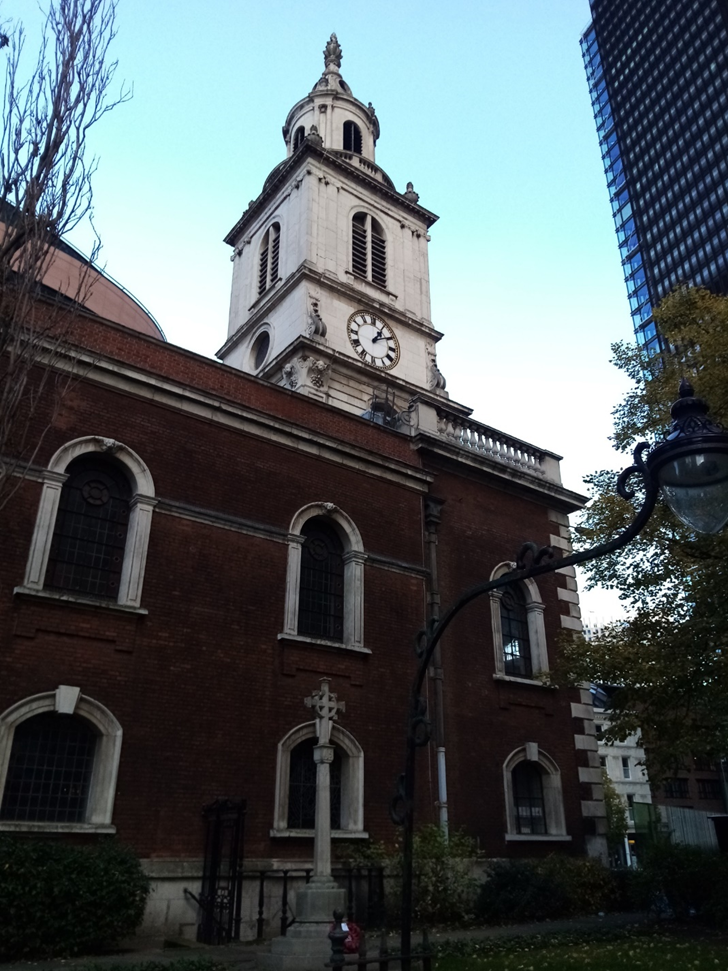
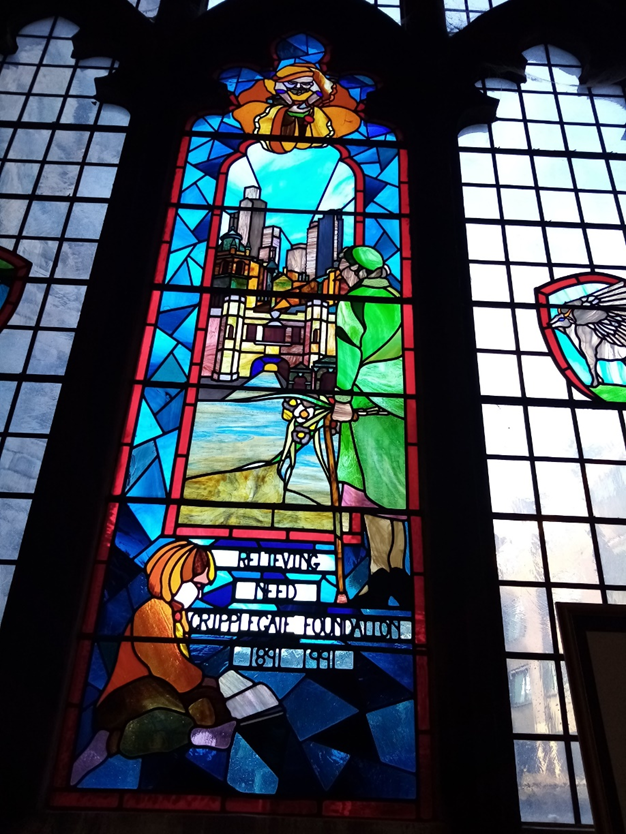
St Giles without Cripplegate

Another site where the original Saxon church was built outside the city walls. There is no evidence that this city gate was one through which ‘cripples’ entered; the most likely explanation is that the word comes from the Anglo Saxon ‘cruplegate’, the covered way or tunnel which would have run from the Gate to the Barbican, a fortified watchtower on the Wall. The present church is one of the few remaining Medieval structures in the City; it survived the 1666 Fire but it did receive a direct hit during the Second World War and was almost destroyed apart from the walls, but was painstakingly restored both inside and out. However, so much of the surrounding area was devastated by bombing, with hardly any buildings left standing, that plans were made for a housing estate, arts centre and museum: the Barbican. Construction began in the early 1970s, and the museum is the wonderful Museum of London. While excavating the area, parts of the Roman Wall were discovered, these were carefully restored and sit beautifully (I think) alongside the modern buildings and the famous High Walks. When I visited the church there was…not a music recital, but a Book Fair! Always something going on in the City churches! (Needless to say, I bought a book.)

Ref: stgilesnewsite.co.uk/history

The remains of the ‘Barbican’ tower

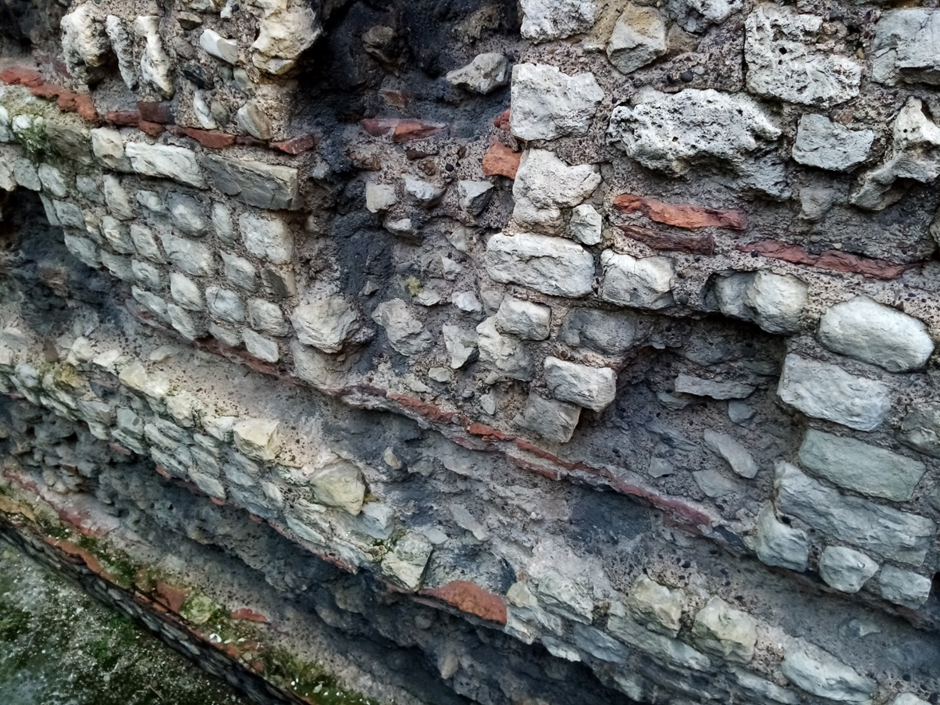
To finish, some random London Wall pics. The red striped parts at the bottom are original Roman, the parts higher up are Medieval, when the walls were built taller as protection for the City.

Original Roman Wall – nearly 2,000 years old!
With Medieval Wall on top
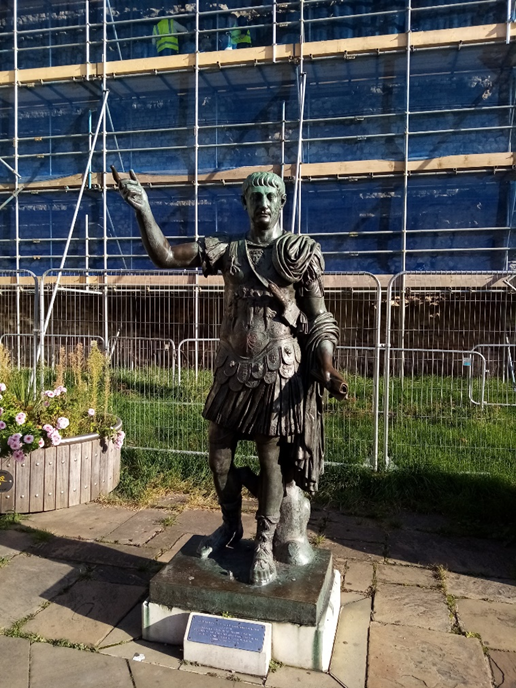
This is a statue of the Roman Emperor Trajan at Tower Hill, in front of the wall currently under repair (just to maintain it as a safe structure, not to alter it in any way.) Note the workmen in their Hi Vis jackets and hard hats, not available in medieval times!

October – Unusual Things found in London Churches

These are some rather unusual and interesting things I’ve found on my travels around the capital. One is a temporary installation, but I’ve included it because its spectacular! I’ll save that till last, meanwhile, here’s

A Sauna in a Church

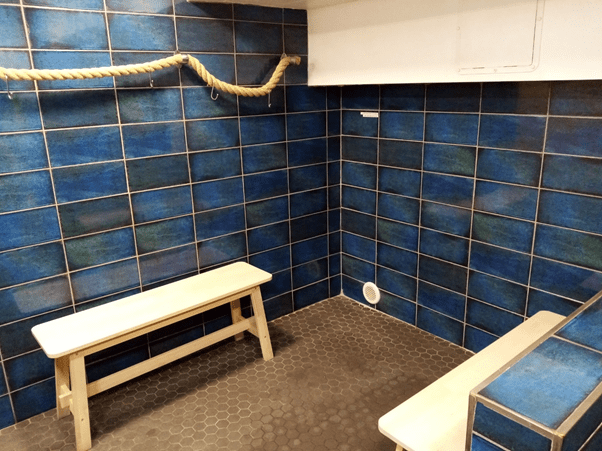
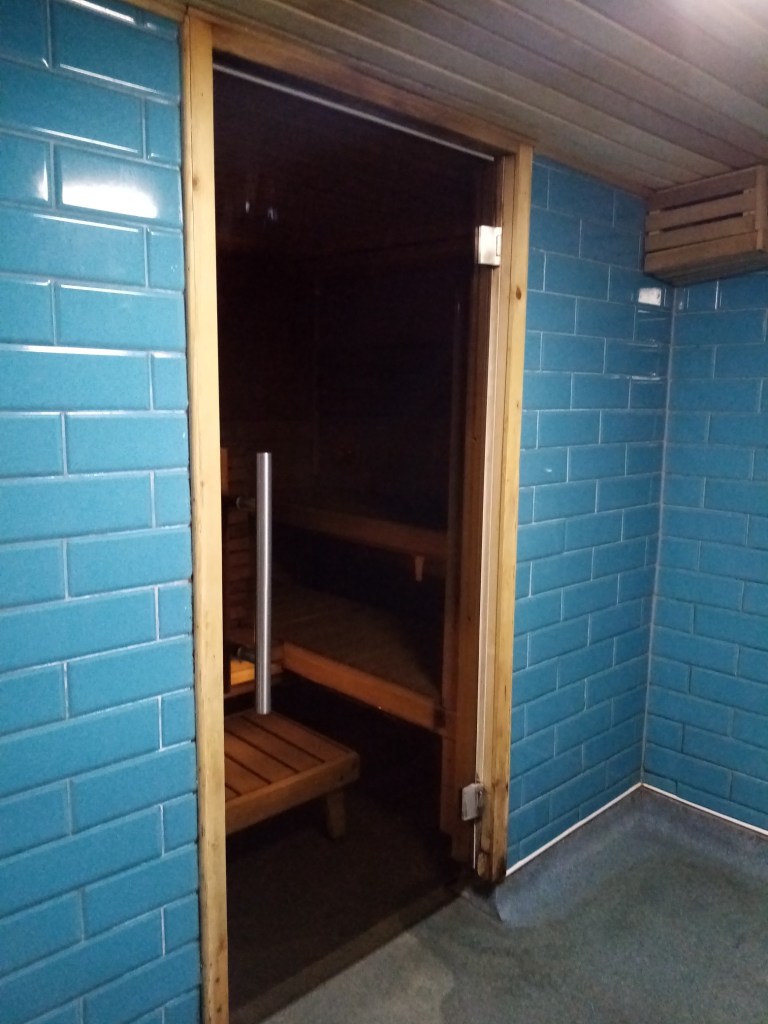
Yes, really! The Finnish Church in Rotherhithe, South London is ‘a welcoming church and community for all the Finns who live in Great Britain and Ireland (either permanently or temporarily), as well as their friends and family – and all friends of Finland!’ As well as a sauna in the basement, there’s also a café and a shop selling Finnish delicacies and a hostel offering accommodation to tourists and backpackers. The church has a long history of pastoral care, having been established as the UK branch of the Finnish Seamen’s Mission in 1882 and continuing today as a community hub. All info from the church website: lontoo.merimieskirkko.fi, which I think translates as: Londonseamanschurch.fi!

St Magnus the Martyr

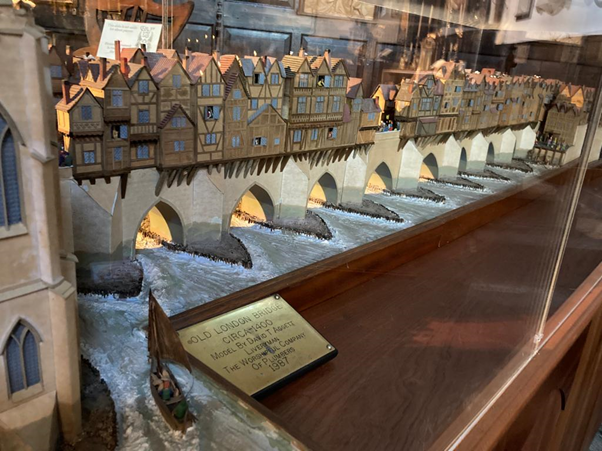
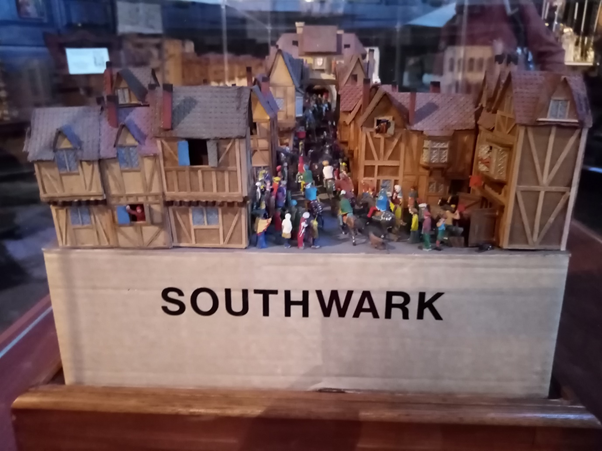
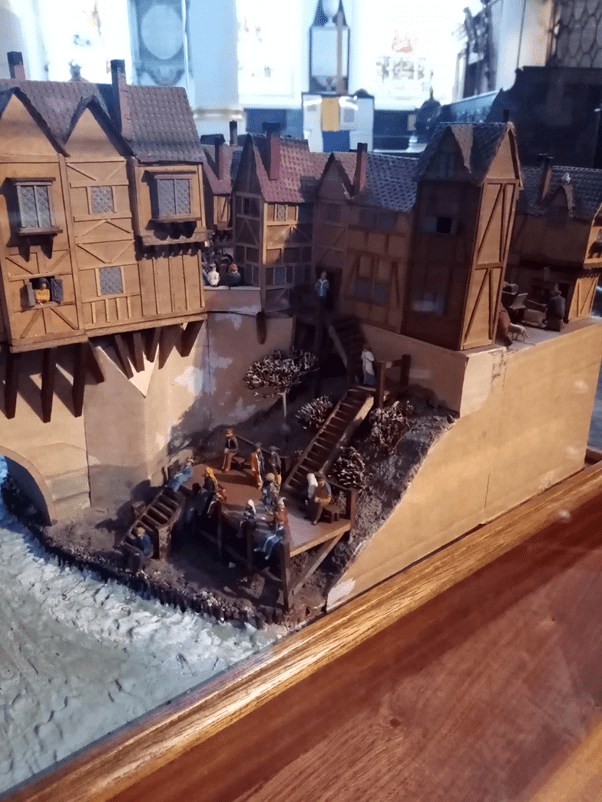
This church, now on Lower Thames Street, used to be right on the North bank of the River Thames and was the gateway to the bridge that spanned the River there from 1176 to 1831, old London Bridge. People had to pass through the churchyard to set foot on the bridge, consequently, it got very crowded, as this was London’s only bridge. When a new bridge was commissioned in the 1830s it was built further upriver from where a succession of bridges had spanned the Thames since Roman times. In 1987 a liveryman from the Worshipful Company of Plumbers decided to make a scale model of the old London Bridge to display in the church, a must-see if you’re in the area. David Aggett’s wonderful model has over 900 tiny people crammed onto the bridge and dozens of buildings including shops, houses and a chapel in the middle. The model also captures the 20 arches that would have held its weight, and which created the narrow channels of swirling water, where brave boatmen would try to ‘shoot the rapids’, and some lost their lives. You can see a boat just coming up to the first arch.

Information from http://www.london-walking-tours.co.uk/old-london-bridge

St Margaret Pattens

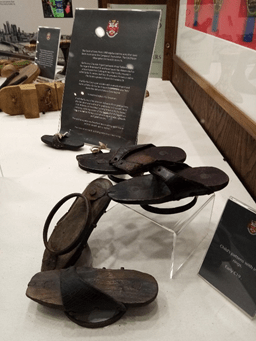
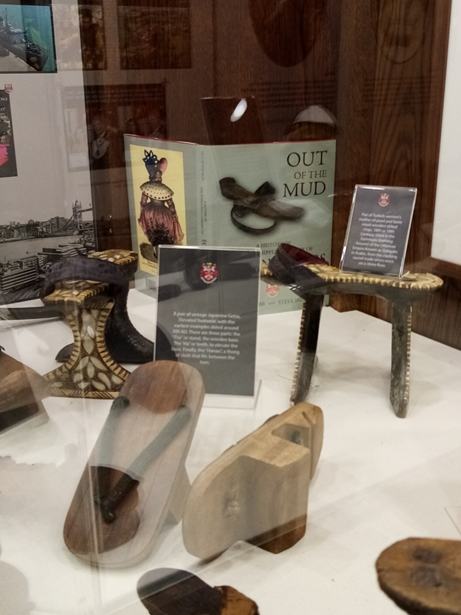
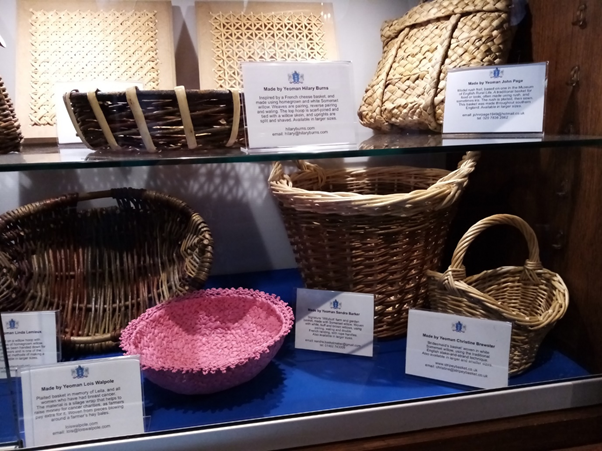
This church on Cheapside is dwarfed by its near neighbours, including the giant Walkie Talkie building. It changed from a parish church to a Guild Church in 1954, due to falling church attendances in City churches (because fewer people lived in the City). Guild churches hold midweek lunchtime services serving a regular congregation of office and shop workers in the area. The Interesting Thing about St Margaret is its association with The Worshipful Company of Pattenmakers since the 15th Century. Pattens are raised wooden soles which fit onto shoes to keep the wearer’s shoes and skirts out of the mud of the unpaved streets. The trade and manufacture of pattens was carried out in and around Rood Lane, where the church now stands, and St Margaret’s adopted ‘Pattens’ as there were several churches dedicated to the saint at the time. The practice of wearing pattens went out of fashion in the 19th Century as streets gradually became paved. The WC of Basketmakers is also associated with the church, because, you guessed it, their trade was carried out in the vicinity. Must have been a very different street scene, now it’s just endless coffee shops (I spotted Greggs, Pret, Starbucks and Black Sheep Coffee.) These are the display cabinets of pattens and baskets. My favourites are the pair on stilts! Information from Church leaflet and display boards

Can you spot the stilt pattens?

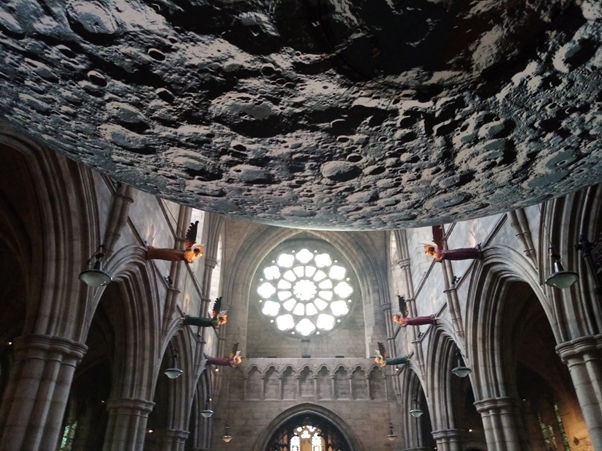
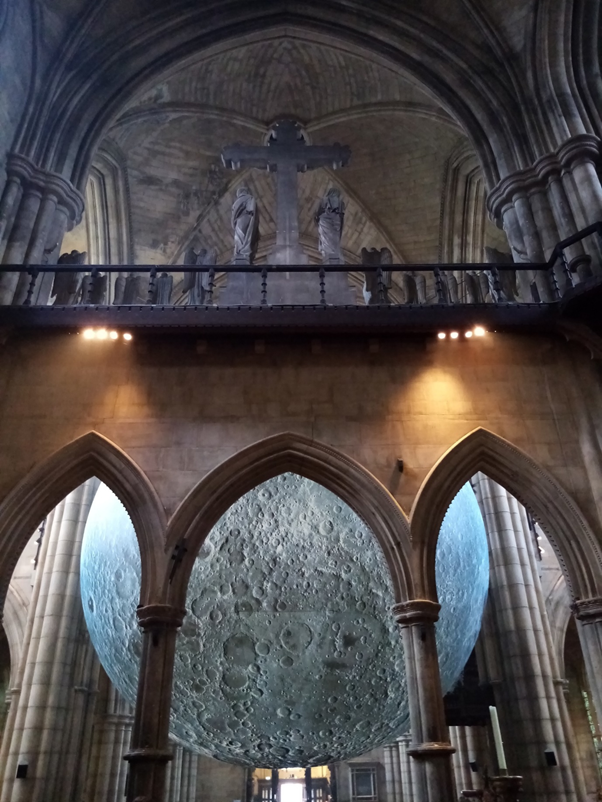
St John the Baptist, Shepherd’s Bush

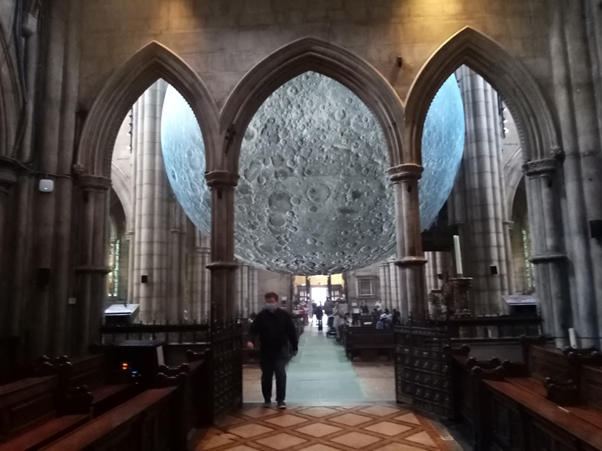
This church hosted the Museum of the Moon in August, I was so pleased to be able to visit, it’s just so beautiful. ‘Measuring 7 metres in diameter, the moon features detailed NASA imagery of the lunar surface. At an approximate scale of 1:500,000, each centimetre of the internally lit spherical sculpture represents 5km of the moon’s surface.’ The moon sounds like a rock star; its website (my-moon.org) gives its Tour Dates! These include Durham, Chichester and Wells Cathedrals and Bath Abbey and it also appears in USA, Canada and Europe The website says ‘there are several moons touring simultaneously’, which I found very funny for some reason. This church is an excellent showcase for the moon, being in the Gothic style and very atmospheric. It’s a Victorian, Grade 1 Listed building, which means it can’t be altered in any way, inside or out. Mesmerising!

September – Churches where famous people were married

I got married in the month of September on a beautiful late summer’s day, so this month I thought I’d look at some London churches where famous people got married. Royal weddings take place in Westminster Abbey and St Paul’s Cathedral, but there are other beautiful and interesting churches where lesser mortals have tied the knot.  Believe it or not, two US presidents were married in London: John Quincy Adams at All Hallows by the Tower, and Theodore Roosevelt at St Georges, Hanover Square.

All Hallows – John Quincy Adams

The 6th president of the United States from 1825 to 1829, John Quincy Adams married London-born Louisa Johnson in July 1797. Louisa’s father had been appointed US Consul General, and Adams (serving as a US diplomat at the time) visited him and his family in 1795 at their house in Cooper’s Row, Tower Hill, where he took a shine to the youngest daughter.  Louisa was the first ‘First Lady’ born outside the US, ‘a distinction that would not be shared until 192 years later by Melania Trump’ (Wiki). All Hallows has another American connection: William Penn, the founder of Pennsylvania, was baptised at the church. And his father, Admiral William Penn, Commissioner of the Navy Office, actually saved All Hallows from the Great Fire in 1666 by ordering several buildings nearby to be blown up with gunpowder, thus creating a fire break. With a history stretching back to AD675, All Hallows is one of the most interesting City churches, well worth a visit.

John and Louisa’s Marriage Certificate

John Quincy Adams                                                        Louisa Johnson

By John Singleton Copley – Derived from Museum of Fine Arts, Boston, Public Domain, https://commons.wikimedia.org/w/index.php?curid=58348536

By Gilbert Stuart – The White House Historical Association, Public Domain, https://commons.wikimedia.org/w/index.php?curid=9406679

Altar of All Hallows by the Tower

St George’s, Hanover Square – Theodore Roosevelt

Often referred to as Teddy, Theodore Roosevelt, soon to be the 26th President of the US, married fellow-American, Edith Carow in December 1886. He became President in 1901, having previously been Vice-president. His first marriage to Alice had tragically ended with her death days after giving birth to their first child in 1884, and although he was still grieving, he married childhood friend Edith two and a half years later. Roosevelt’s two sisters were surprised and initially against the marriage, but it proved to be a happy relationship and the couple went on to have five children and also raised Roosevelt’s daughter from his first marriage. St George’s is less than half a mile from Grosvenor Square, site of the American Embassy until 2017, and many US servicemen worshipped here during the Second World War. Roosevelt’s wedding inspired other Americans to be married at St George’s and it is also the setting for several fictional weddings: in the musical My Fair Lady, the church in the song Get me to the Church on Time, is St George’s!  The church also features in the film The Lady Vanishes and in the Sherlock Holmes story The Adventures of the Noble Bachelor, and has been a popular venue for society weddings since the 17th century.

Imposing frontage of St George’s (sorry about the lamppost!)

Theodore Roosevelt                                                                        Official portrait of Edith Carow

Public Domain, https://commons.wikimedia.org/w/index.php?curid=104163429

By Théobald Chartran – http://www.whitehouseresearch.org/assetbank-whha/action/viewHome, Public Domain, https://commons.wikimedia.org/w/index.php?curid=20180330

Interior of St George’s

St Luke’s Chelsea – Charles Dickens

I featured the churchyard of St Luke’s last month, now let’s look inside the church where one of London’s famous authors was married. Charles Dickens and Catherine Hogarth were married here on 2nd April 1836, two days after the publication of Pickwick Papers, Dickens’ first full length novel. The marriage certificate (on display in the crypt of the church) shows that Catherine was underage, married by special licence with the consent of her ‘natural and lawful father’, George Hogarth. The couple had been engaged for less than a year and had not intended to marry quite so soon, but the success of the publication of his first novel and its promised financial rewards, caused Charles to aspire to the status of ‘respectable married man’, very important in Victorian times. I picked up the church’s Summer Newsletter which contained photos of the couples married this Summer, and I wondered if any of them thought about the marriage that had taken place there 185 years earlier! St Luke’s is an imposing building inside and out; there’s a majestic high vaulted ceiling and a huge stained-glass window, more reminiscent of a cathedral. A relatively new church, being built in 1824 not long before the Dickens’ marriage.

Charles and Catherine’s Marriage Certificate
From the Exhibition in the Crypt

St Margaret’s Westminster – Samuel Pepys and Others

I must have walked past St Margaret’s so many times and simply not registered it! Known as ‘The Church on Parliament Square’ it’s absolutely dwarfed by Westminster Abbey. Sadly, the church isn’t yet open following Covid 19 closures, so I couldn’t see inside. Like its larger neighbour, St Margaret’s was founded in the 12th Century by Benedictine Monks; this is the third church on the site. In 1614 St Margaret’s became the Parish Church of Westminster when the Puritans chose to hold their Parliamentary Services there, preferring the simpler style of both the building and the worship to that of the Abbey. To this day the church is also known as ‘The Parish Church of the House of Commons’; Members of Parliament and Officers of the Houses of Lords and Commons can choose to be married here. Samuel Pepys married Elisabeth de St Michel here in December 1655; she was only 15 years old. They had a somewhat turbulent married life, Pepys had several affairs which he made no secret of, but he claimed he loved his wife first and foremost! Elisabeth died aged 29 of typhoid fever and Pepys never remarried.

Also married here, among others:  Poet John Milton and Katherine Woodcock in November 1656; Winston Churchill and Clementine Hozier in September 1908; Lord Louis Mountbatten and Edwina Ashley in July 1922; Prime Minister Harold MacMillan and Lady Dorothy Cavendish in April 1920.

St Margaret’s with Westminster Abbey right next door

wikimedia.org/wikipedia/commons/2/21/Samuel_Pepys.jpg

commons.wikimedia.org/wiki/File:Elizabeth Pepys.jpg

I really like this picture of Winston and Clementine just before their wedding, an Edwardian socialite couple!

wikipedia.org/wiki/Clementine_Churchill#/media/File:Winston_Churchill_(1874-1965)_with_fiancée_Clementine_Hozier_(1885-1977)_shortly_before_their_marriage_in_1908.jpg

Credits: Wikipedia and Wikipedia Commons for the pictures; Information boards at All Hallows; Newsletter of St Luke’s

August – Garden Churches lll

I make no apology for posting yet another selection of delightful London churchyards, each with its own unique charm. These four all belong to churches outside the City, and all coincidentally, are named after male saints. August is a lovely month to wander through London’s green spaces; churchyards are tiny oases of calm and peace surrounded by the busy streets.
St John’s, Waterloo

Located just off the Imax roundabout opposite Waterloo Station, St John’s is a large church which has connections with the Southbank Centre.  The churchyard was converted into a garden in the 1870s by a forward-thinking Parochial Church Council, as a response to the social needs of the area (at that time, a run-down, overcrowded district.) Octavia Hill, one of the founders of the National Trust, was involved in creating the garden, and described it as ‘More like a country garden….than any other I have seen.’ I’m assuming she was referring to gardens in London, not those in the countryside! The garden is managed by volunteers and a professional community gardener and contains hedges that reduce air pollution and a wildlife garden. But what’s special about the garden is its mosaics, created by Southbank Mosaics in a community project with St Mungo’s Homeless Charity. All this information I got from the notice board in the picture. Unfortunately, some of the mosaics near the church were behind hoardings as work is being carried out on the building, but here are a few:

St James’, Piccadilly

Stroll along Piccadilly from Green Park tube station, past the Ritz and the elegant 19th Century Arcades, and you reach St James’ Church.  The churchyard was the home of Piccadilly Market from the 1980s until December 2020, when it was forced to close because of Coronavirus.  The paved part of the churchyard now hosts art installations, currently there are four lions, part of a ‘pride’ of 27 in various locations around London. (A map showing the location of all the Lions is available from tuskliontrail.com). The Tusk Lion Trail features lion sculptures decorated by artists, musicians and comedians to raise awareness of the importance of conservation of African wildlife. The area at the side of the church was used as a burial ground for 200 years until just after the Second World War when philanthropist Viscount Southwood paid for a garden to be laid. It’s a lovely relaxing space just metres away from the hustle and bustle of Piccadilly.  There’s a statue of ‘Peace’ and a stone memorial to Viscount and Lady Southwood decorated with bronze dolphins and cherubs. Again, all info is from a helpful notice board.
Two of the four lions in the churchyard

St Paul’s, Covent Garden

This church has been featured previously as the Actors’ Church (October 2020) but now I’m focusing on the churchyard.  Just off one of the piazzas of Covent Garden, one minute you’re in a crowd watching a street performer, then suddenly the loud voices and the applause of the crowd fades as you step into this peaceful, compact garden. There’s a paved area surrounding the church displaying some interesting art and a garden with flowerbeds and lawns at the front of the church. The churchyard’s connection with Covent Garden as a space for open-air performance began in May 1662 when the diarist Samuel Pepys noted that the first ‘Italian Puppet Play’ took place under the portico of the church; the church has continued to host an international Punch and Judy show every year in May. Today the churchyard can be hired for all kinds of open-air events: music festivals, youth and schools events, theatre and opera concerts. Information from Wiki and from actorschurch.org.

Conversion of Saul. The inscription reads: I saw a bright light from heaven, brighter than the sun, blazing about me and my companions. We fell to the ground and I heard a voice saying to me, ‘Saul, Saul, why are you persecuting me?’ Then I asked, ‘Who are you Lord?’ and he said, ‘I am Jesus whom you persecute.’ Acts 26 v12-15
This giant 1953 (old) penny is the centrepiece of a maze laid in the churchyard to celebrate the Queen’s Diamond Jubilee. The accompanying plaque reads: The wording reminds us that Elizabeth is Queen by the Grace of God and Defender of the Faith. The Queen holds a special position as Supreme Governor of the Church of England.
St Luke’s, Chelsea

Opposite the Brompton Hospital is the magnificent St Luke’s church and its English Heritage Grade ll listed garden. St Luke’s Gardens is on the Register of ‘Parks and Gardens of Special Historic Interest in England.’ Formerly the graveyard of the church, it ceased to be a burial ground around 1857 and was converted to a public garden in 1881. The gravestones were moved to form a boundary wall of the garden and hundreds of them still remain in place. The garden was created with a grant from the London County Council and continues to be managed and maintained by the Royal Borough of Kensington and Chelsea. It’s more like a park than a churchyard, when I visited there were families having picnics, people exercising and walking dogs, and office workers buying lunch in the church’s café and eating in the garden. It’s also a quiet, contemplative place for people to come after visiting relatives in the Brompton across the road. Information from the noticeboard and from rbkc.gov.uk.

Rose Garden with headstones placed along the railings
The beautiful neo-Gothic church of St Luke, from St Luke’s Gardens

July – London Cemeteries ll

Here are four more delightful London cemeteries, now closed for burials and carefully maintained by devoted ‘friends’ as wildlife havens and/or green spaces for the public to enjoy.

Tower Hamlets Cemetery Park

Created as one of the so-called ‘Magnificent Seven’ Victorian London cemeteries, Tower Hamlets Cemetery was closed to burials in 1966 and the site was designated a park by an Act of Parliament. The Friends of Tower Hamlets Cemetery Park is an independent charity which manages the site and ‘offers everyone a breathing space in the heart of East London’. There’s certainly a lot going on: Summer fairs, local history talks, concerts, guided walks, forest schools, a wildlife club and the intriguing sounding foraging courses! Above all, this is a beautiful place to stroll around, listening to birds singing and examining the interesting gravestones.

Reference: Friends of Tower Hamlets Cemetery Park

Bunhill Fields, City Road

Situated opposite John Wesley’s home and the Museum of Methodism (featured in March 2020), this is a non-conformist former burial ground; if you remember, non-conformists were Christians who didn’t ‘conform’ to the practices of the mainstream church. Only about 4 acres is left of a once much larger site, and it was used as a burial site from 1665 to 1854. The name ‘Bunhill’ (originally ‘Bone Hill’) has two possible derivations; firstly, that it has been used as a ritual burial site since Saxon times, but more likely is reference to its use as a mass deposit of human bones in 1549. The macabre story is that 1,000 cartloads of bones were brought from St Paul’s charnel house when it was demolished, and the dried bones were covered with soil, forming a Hill of Bones! Let’s move away from that image and move onto the famous people buried there: authors John Bunyan (Pilgrim’s Progress) and Daniel Defoe (Robinson Crusoe) and poet William Blake (Songs of Innocence and Experience.)

Reference: Wikipedia

Barnes Old Cemetery

If you’re walking along the Beverley Brook path to the River Thames or wandering around Barnes Common, you may come across this cemetery, which is unique in that there are no boundary walls or railings, suddenly the gravestones appear! The cemetery began as a plot of land  to provide an additional burial ground for St Mary’s Church, Barnes. It was landscaped and laid out with paths; a chapel and lodge were built and it was used until the mid 1950s. After it closed to burials it was taken over by Richmond Council in 1966, who removed the railings and demolished the chapel and lodge, with the intention of transforming it into a ‘lawn’ cemetery, i.e., monuments removed and replaced with flat gravestones. The Council abandoned these plans and the cemetery was neglected and subject to considerable vandalism to its monuments over the next 30 years.  However, in the last decade or so, the site has gradually been reclaimed by Richmond Council and is now carefully managed to maintain its ‘neglected Gothic charm’. Selected thinning of vegetation has provided meandering paths and atmospheric light levels, and keeping the area mostly overgrown provides a secluded haven for wildlife. The sounds of the birds singing, the shafts of light coming through the trees and coming across half hidden, ivy-clad gravestones is a magical experience.

Reference: Wikipedia

Old St Pancras Churchyard

Not a cemetery as such but this old North London Churchyard has a fascinating history. The site of St Pancras Old Church is believed to be one of Europe’s oldest sites of Christian worship dating back to the 4th Century. The present church is picturesque and worth a visit, but it’s the churchyard and its interesting monuments that I’ll be talking about. Here’s three of the most interesting:

The Hardy Tree: In the 1860s, railway tracks cutting through the churchyard meant that the graves and their human remains in that part had to be exhumed and reburied, and the headstones removed.  The task of relocating the headstones was given to the as yet unknown author, Thomas Hardy (Tess of the D’Urbervilles, Jude the Obscure, etc) who had associations with the church and was a trained land surveyor. The story goes that he, or an underling, stacked them around the base of this tree, now known as the Hardy Tree! Note: much better photos are available, a wire fence has been put up 3 metres from the Tree, so this is best angle, and as near, as I could get!

Secondly, there is a monument to Mary Wollstonecraft, a famous advocate of women’s rights and author of ‘A Vindication of the Rights of Women.’ Her more famous daughter, Mary Shelley, was the author of ‘Frankenstein.’ Mary Junior had her mother’s remains removed to Bournemouth when the new railway tracks disrupted the churchyard, but the monument remained.  The fresh flowers placed on top of the gravestone show that 200 years after her death, she is still remembered with respect.

Lastly, this is the elaborate and ornate monument to the architect Sir John Soane, most famous for designing the Bank of England building. Interesting fact: this monument was one of the inspirations Sir Giles Scott took for his Telephone Box design, despite 100 years’ difference between them! Gilbert Scott was a trustee of the Soane Museum so he probably would have seen sketches of the monument in the Museum’s collection. I can definitely see it, can you?

Reference: lookup.london/old-st-pancras-churchyard

‘Mary’ Churches for June

A little late with the blog post this month as I’ve spent the last three weeks travelling around England exploring its wonderful history further afield. Here are a few more Mary churches, two of them are among the 14 City churches named for the Virgin Mary, one is in the City of Westminster and the fourth is my ‘local’, St Mary’s Beddington.

St Mary Woolnoth

The site of this church has been used for worship for at least 2,000 years: Roman and Pagan religious buildings were discovered under the current church’s foundations, and an Anglo-Saxon church structure was recorded in 1191 on the site. The name of the church probably refers to Wulfnoth Cild, a Saxon nobleman, possibly a beneficiary. The current building was designed by Nicholas Hawksmoor, another giant of architecture commissioned to build replacement churches for those destroyed in the 1666 Great Fire. The church was completed in 1727 in the Baroque style, and is located on Lombard Street, close to the Bank of England and Bank Underground Station.  I’ve only got an outside shot of the church; the website says it is open but the gates have been locked when I’ve visited. Inside there’s a plaque commemorating John Newton and his wife, Mary.  Newton was a former slave owner who, following his dramatic conversion to Christianity, became an ardent abolitionist and famously wrote the hymn Amazing Grace about his salvation through belief in JesusChrist: ‘Amazing grace, how sweet the sound, that saved a wretch like me; I once was lost but now am found, was blind but now I see’.

Personally, I don’t think Hawksmoor’s design looks like a church
Credit: St Mary Woolnoth – Wikipedia
The inscription reads: …. preserved, restored, pardoned, and appointed to preach the faith he had long laboured to destroy. Credit: File: JohnNewtonStMaryWoolnoth.jpg. Wikimedia commons

St Mary Somerset

Situated in Lower Thames Street, this one is interesting because all that’s left of the church is the tower, in common with several other City churches. The name has nothing to do with the county of Somerset; it has links to Ralph de Somery, who is mentioned in contemporary records, or after Summer’s Hithe, a small haven on the Thames (the banks of the River were closer when the church was built in the 12th century).  The original church was destroyed in the Great Fire and the new church was one of the 51 rebuilt by Sir Christopher Wren. However, in the late 1800s there was a movement of the City’s population to the new outer London suburbs leaving the City churches almost empty. St Mary Somerset was one of the churches selected for demolition as it had a congregation of about 70. The church tower was preserved as a building of interest and before the Second World War it was used as a ladies’ restroom and later a small public garden was added. It is currently being refurbished and extended into a private family home, I hope a lift is being installed! One unique feature of the church is the eight Baroque pinnacles on the top, probably designed by Nicholas Hawksmoor. That famous double-act, Wren and Hawksmoor!

The Tower of St Mary Somerset with added garden, soon to be someone’s home.
Credit: Commons.wikimedia.org
Almost unrecognisable, the original church in the 18th century
Credit: Magnoliabox.com Church of St Mary Somerset, William Pearson

St Marylebone Parish Church

The area of Marylebone (pronounced ‘Marly-bon’) in NW1 takes its name from the Church. This is another church dedicated to the Virgin Mary and it’s been suggested that the name derives from the French ‘Marie le Bonne’; ‘Mary the Good’, but this is not correct. The original church was situated on the bank of a stream, or bourne, the Tyburn, near present-day Oxford Street, so the church became known as ‘Marybourne’. In the 17th century it became fashionable to add the French ‘le’ to place names, hence, Marylebone.  The parish church of Marylebone has been in existence since at least the 12th Century and surprisingly, has been rebuilt several times in different locations. The present building was built in 1813 to the designs of Thomas Hardwick. There are several famous people connected with the church: Charles Dickens lived along the road at the corner of Devonshire Terrace; Robert Browning and Elizabeth Browning were married here in 1846; and Charles and Sarah Wesley are buried here. The area was once famous for its pleasure gardens and music halls along Marylebone Road, now it’s the home of the famous Madame Tussauds, and the Royal College of Music Museum is right opposite the church (interesting history of music and free if you want to visit.) The beautiful Regent’s Park is a short stroll away.

It was difficult to get a good shot, I guess I could have stood in the middle of the yellow box!
There are several of these angels at the pew-ends all playing a different instrument.
I love this Exit sign: Jesus carrying the Cross

St Mary’s Beddington

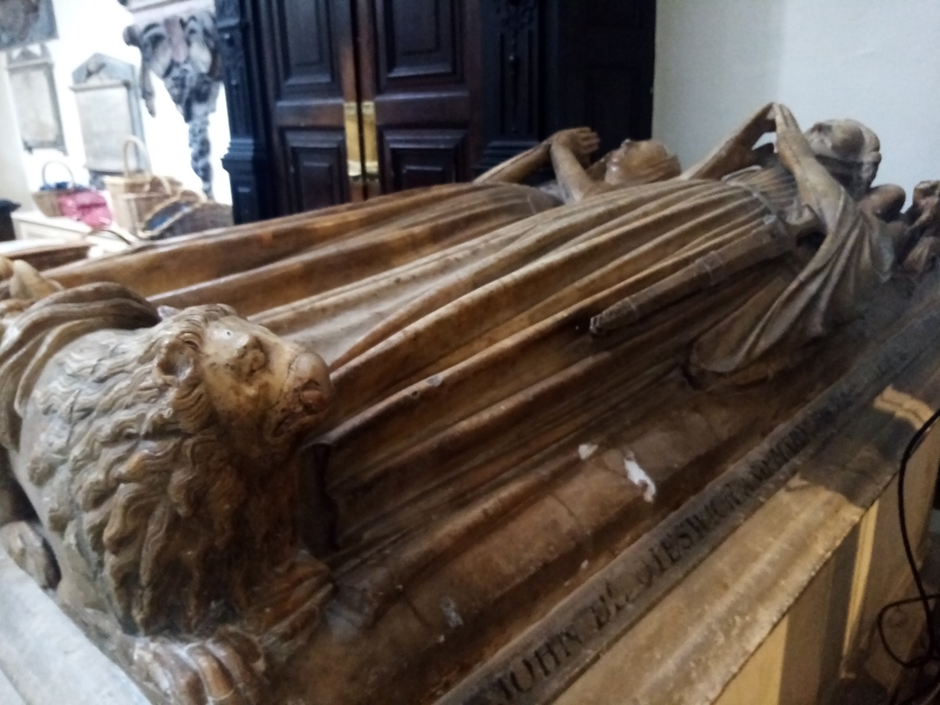
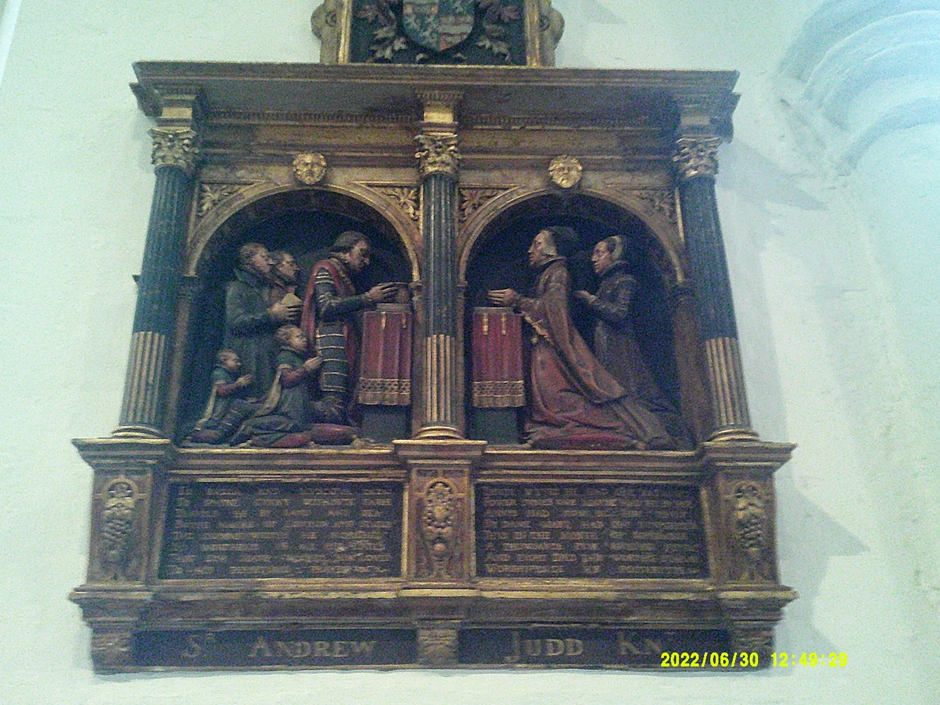
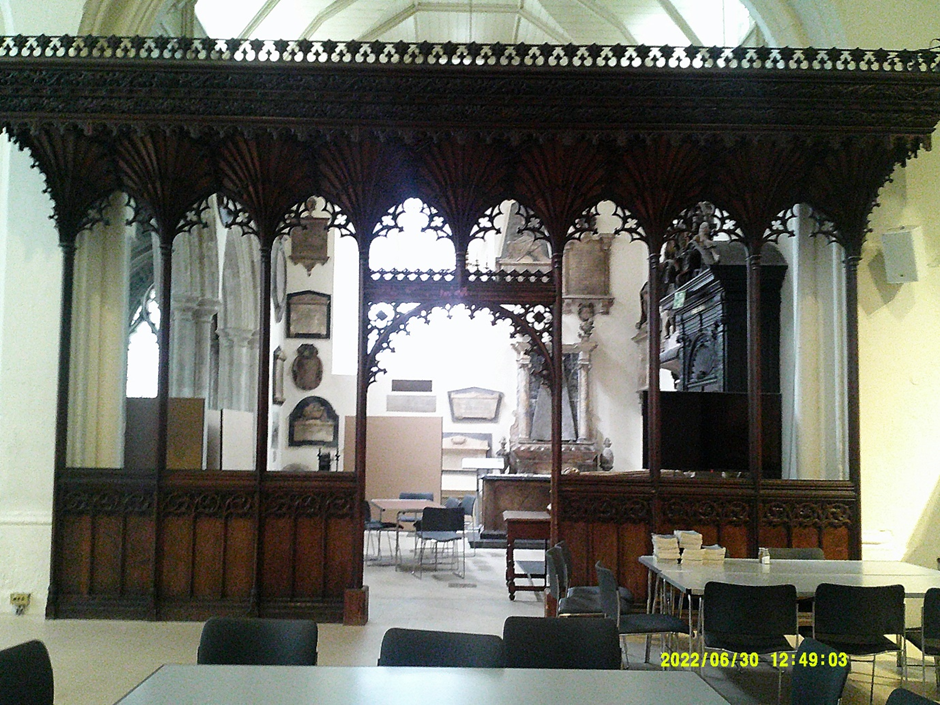
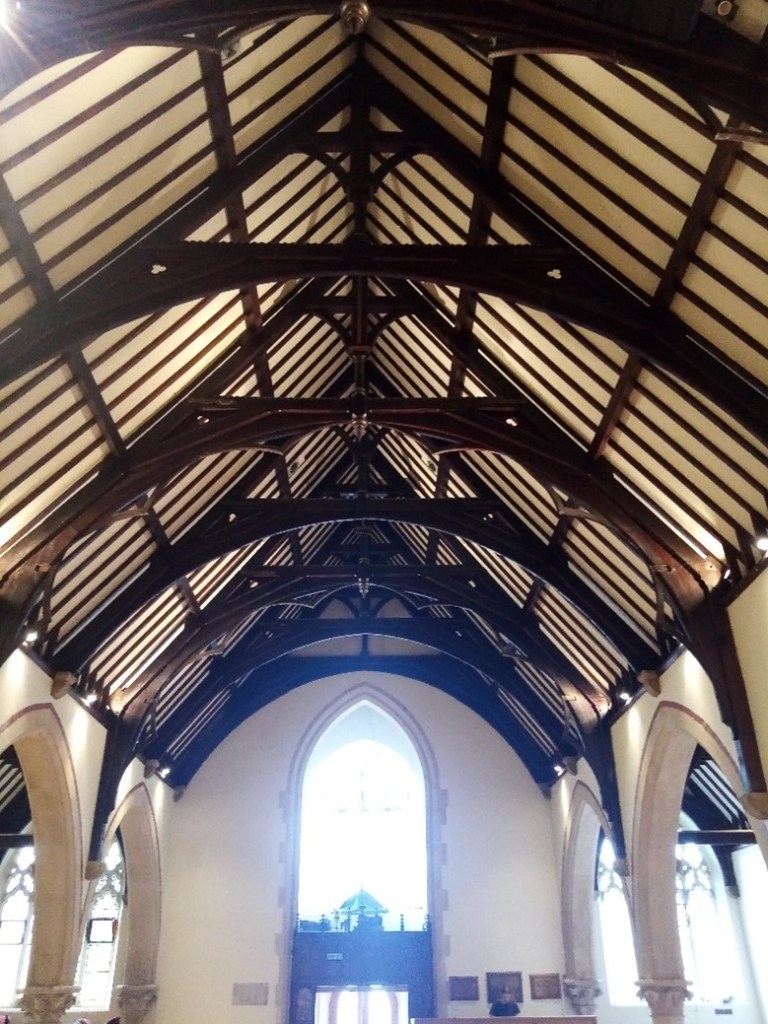
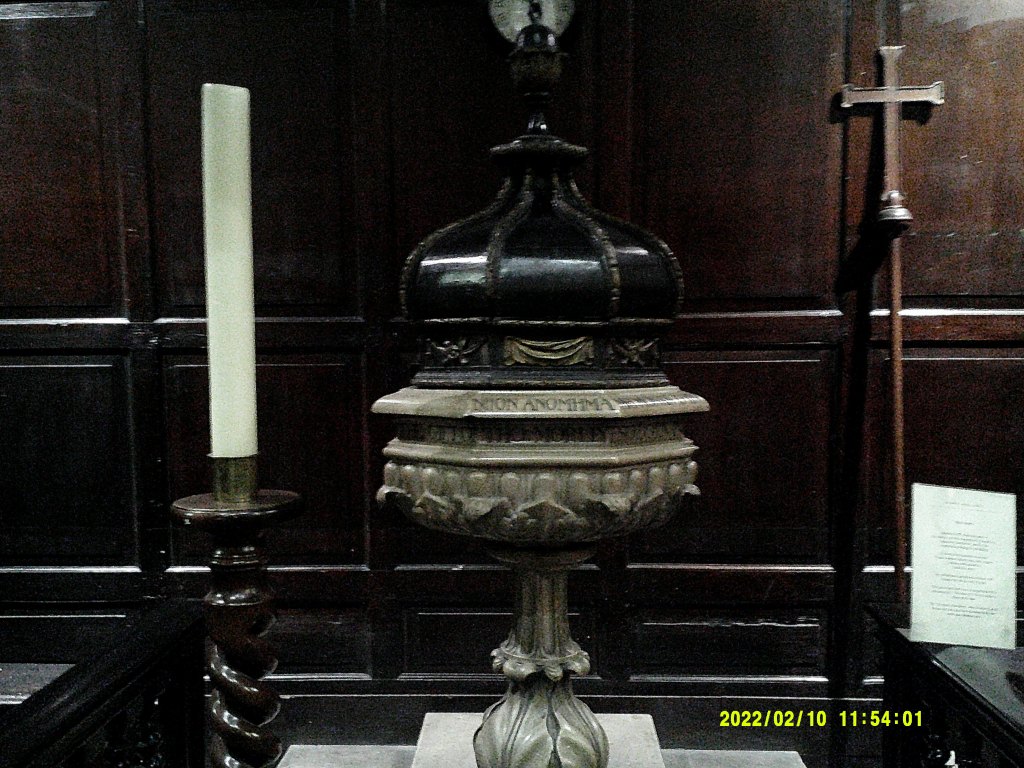
I’m really pleased that I’ve been able to include my ‘local’, the Parish Church of Beddington. The present church was built in the late 14th century and there’s evidence of a church structure on the site in 1085 when the Domesday Survey was taken. The church is situated in Beddington Park which in Tudor times was part of a deer park attached to Carew Manor (now a school) which was a major country house, home of the Carew family. Inside the church there is a striking hammer-beam roof and painted murals on the walls and ceilings. The organ screen was designed by William Morris and the church tower houses a ‘peal’ (yes, that’s the collective noun) of ten bells. There’s also a font made of Purbeck marble in the 12th century. Lovely to think of the font being used down the centuries; the church building changed but the font was preserved for future generations. The Carew chapel commemorates many of the family; there are also some brasses in the floor which are not visible, being covered over in the early 20th century for protection. The oldest commemorates Philippa Carew (1520) who died as a teenager, and 13 of her brothers and sisters who died in infancy; what a sad story. I’ll finish by modestly mentioning that I took part in an amateur production of Macbeth in the church in 2018, and watched the same company preform Hamlet there the following year. The perfect atmospheric venue for Shakespearian tragedies!

Pic Fest coming up…..

Beautiful photo if I do say so myself….