Yet again, the lockdown has caused me to be creative about the boundaries of our capital. This month I’m looking at four of the abbeys and priories around Surrey, and one beyond. It’s amazing to think that these huge structures once dominated the English landscape, before their demolition in the 1530s and 40s, as part of the dissolution of the monasteries by Henry III. This happened when Henry created the new Church of England (of which he was head, of course) and confiscated land, property and money belonging to the Catholic monastic orders, of which there were hundreds. In the 1100s, 1 in 50 men and women took holy orders and lived a simple, secluded life in one of these establishments, so when they were seized by Henry and demolished, the upheaval must have impacted many people. Although the abbeys were extraordinarily rich establishments, owning vast amounts of land and valuables, their lowly inhabitants wouldn’t have benefited from this wealth. However, these buildings were safe havens for the poor, sick, destitute and persecuted; an early version of the Welfare State perhaps?
The abbeys and priories that remain fall into 3 categories (in my opinion): Completely intact – smaller priories that were not demolished but were saved and converted to parish churches, mansion houses or places of learning. Partially intact – usually with the valuable lead roof removed, but some of the walls standing, including my favourite, Rievaulx Abbey in Yorkshire (pictured). Yes, I do realise that North Yorkshire is stretching it a bit for London!

And thirdly, there are several, like Merton Priory below, which are basically just a footprint!
Merton Priory
When plans were made to build the Savacentre (now Sainsburys) in Merton, the extensive foundations of Merton Priory were discovered. The rooms of the Chapter House are now permanently preserved in the pedestrian tunnel under Merantun Way in a small museum. In normal times you can view the protected foundations, but because of Coronavirus, it’s closed to the public at the moment. Founded in 1117, Merton Priory was one of the greatest monastic houses of the Middle Ages. It was demolished in 1538 and its materials were taken away to build Nonsuch Palace in Cheam (ironically, also demolished.) The foundations became buried and forgotten, until 1986, when they were uncovered. I like the fact that the Priory was founded in 1117, demolished in 1538, 421 years later, then rediscovered in 1986, 448 years after that. I think there’s some sort of poetic justice there.

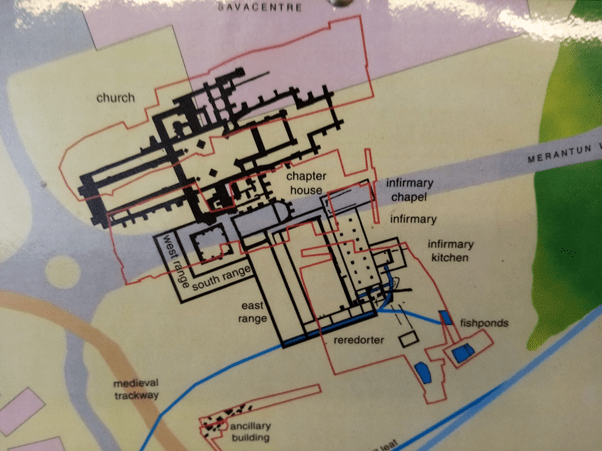
If you know this area, you can see from the footprint how big the whole complex would have been. Amazing, and somehow sad to think that the rest of it is buried under a Sainsburys superstore, a KFC, a Pizza Hut and a carpark; and Merton Abbey Mills by the Wandle.
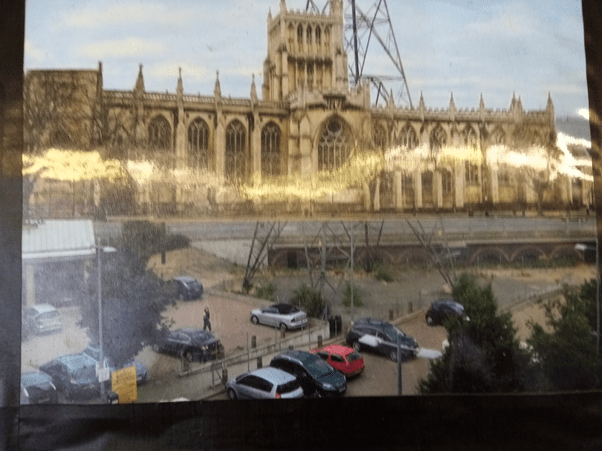
Waverley Abbey
This abbey is a property of English Heritage and the website says that this is the first abbey of the Cistercian monks (from France) to be built in Britain. It was founded in 1128 and rebuilt in the 13th Century, following flood damage from the nearby River Wey. This was another large complex of buildings and included fishponds and farmlands; the monks were self-sufficient and also sold their produce. Following dissolution in 1536, it was granted to Sir William Fitzherbert, the treasurer of the King’s household. It was dismantled and the stone used for local building works including nearby Waverley House, which is now a Christian conference centre and head office of CWR.
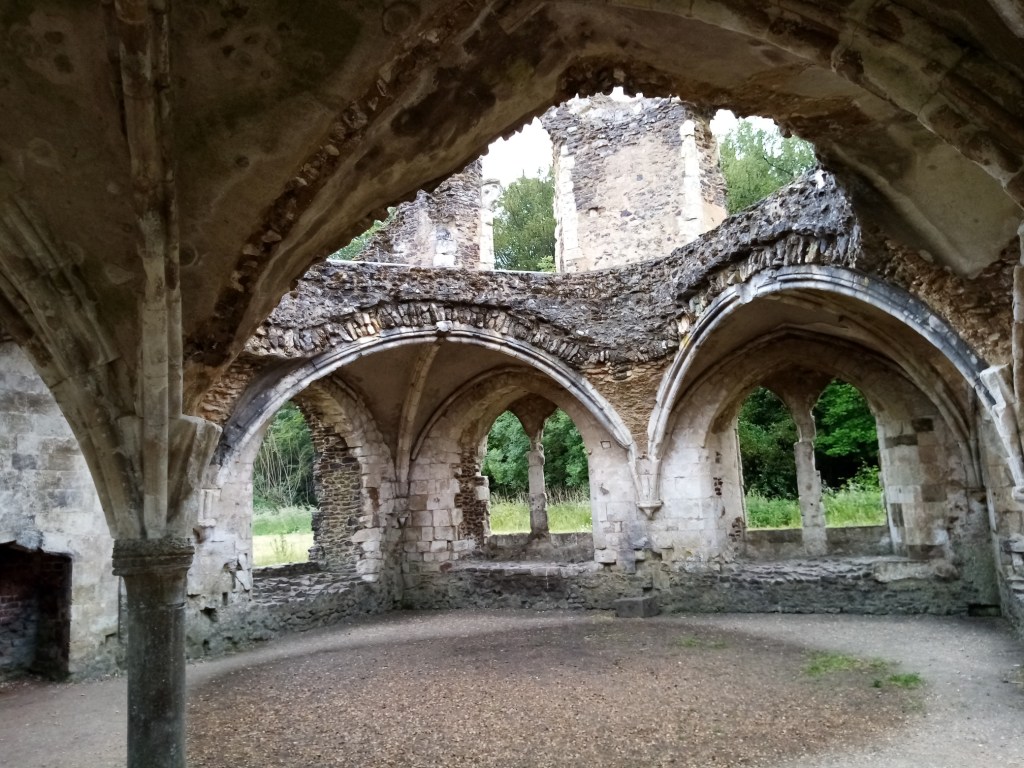
This is the vaulted refectory (dining hall) which has an atmospheric, gothic feel. It’s been used as a setting for several films: Elizabeth: The Golden Age; Hot Fuzz; Into the Woods; The Huntsman: Winter’s Tale, and loads more, plus some TV productions.
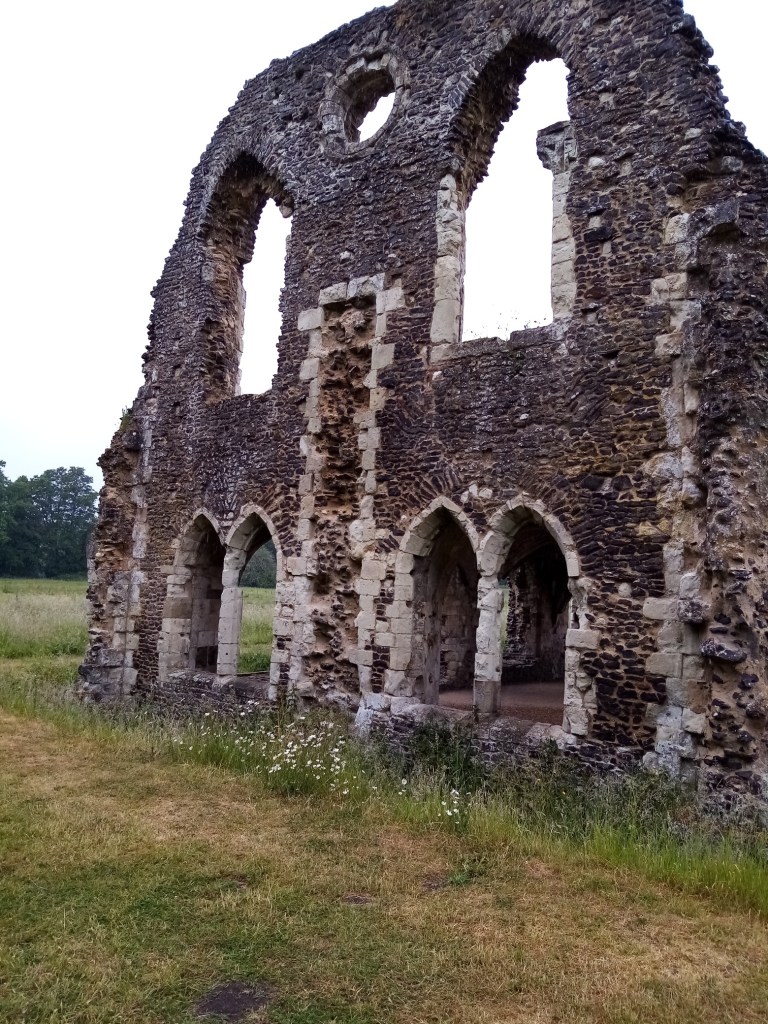
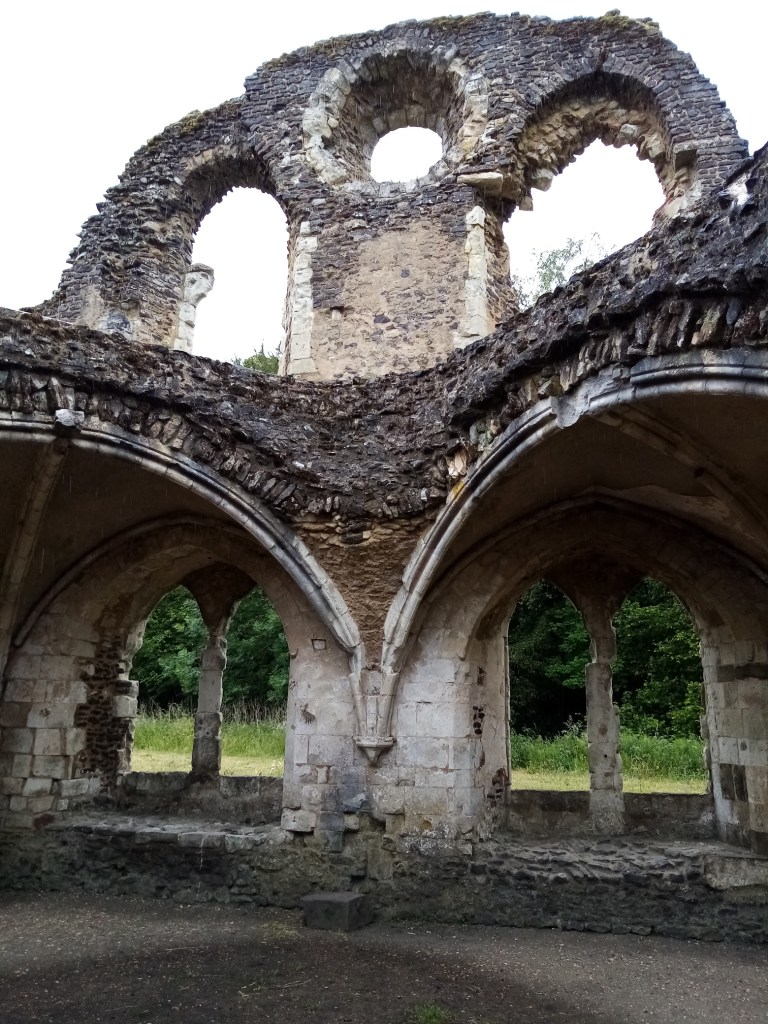
Dormitory………………………………………and Dining Hall
Newark Priory
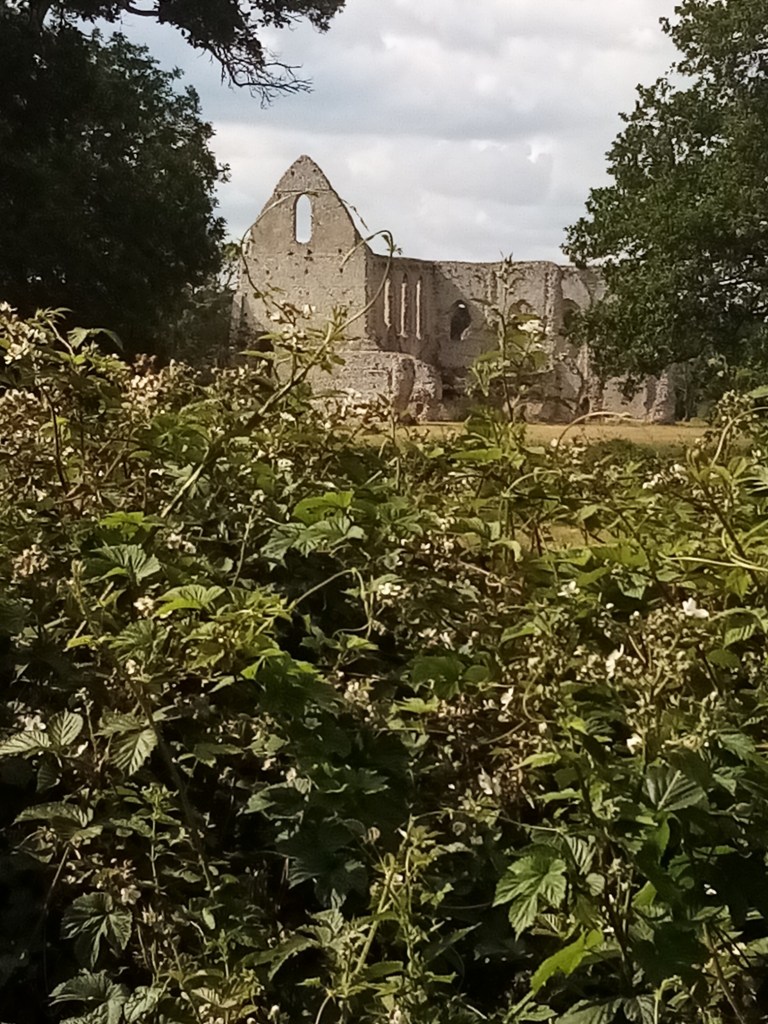
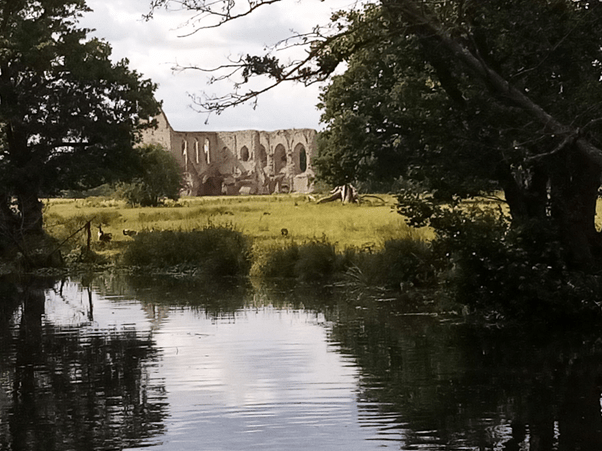
This one, an Augustine Priory, has a beautiful setting, again in the middle of floodplain of another part of the River Wey, which still floods regularly today. You might question why they were built in such a vulnerable place, but they needed to be near a supply of flowing water, and there is evidence that the monks undertook water management and altered the river channels for fishing. Unfortunately, it’s situated on private land, so it can only be seen as glimpses through the trees from the Wey path. It was established in 1189 and disestablished in 1538. The Prior was pensioned off, a good outcome for him for often they were ‘let go’ as we might say today, with nothing. The valuables were sent to the Tower of London and the building fell into ruin with some of the stone being taken away to repair local roads. It’s now listed as a Grade 1 Ancient Monument, which means it can’t be altered in any way, ever. A dawn service is held in the ruins on Easter Sunday at 6am, run by local churches.
Lesnes Abbey
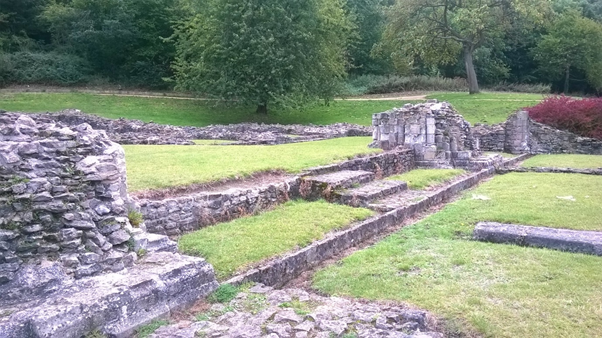
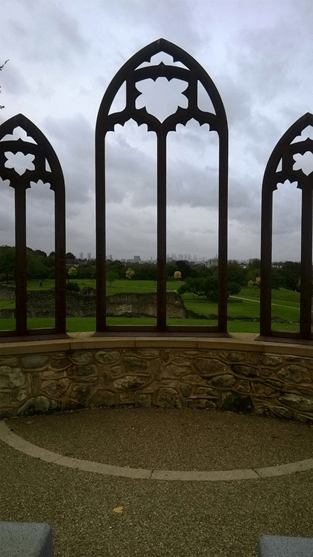
A bit further East and closer to London, in the London Borough of Bexley, lie the ruins of Lesnes Abbey. Founded in 1178 by Richard de Luci, the Lord Chief Justiciar, which was similar to a modern Prime Minister. It is said he established it as a penance for the murder of Thomas Becket, in which he was involved. This was an Augustine Abbey and the duties of the monks were to ‘baptise, preach, give penance and bury the dead.’ It’s situated in the ancient Lesnes Abbey Woods and its walls have been partially restored so the visitor gets a good idea of its size and purpose. Although it was clearly a very large complex of buildings, it never became a large community and was one of the first to be disestablished in 1534. As with the others, the stone was used for local buildings. It’s now a free to visit public park and is on the wonderful South East London Green Chain Walk.

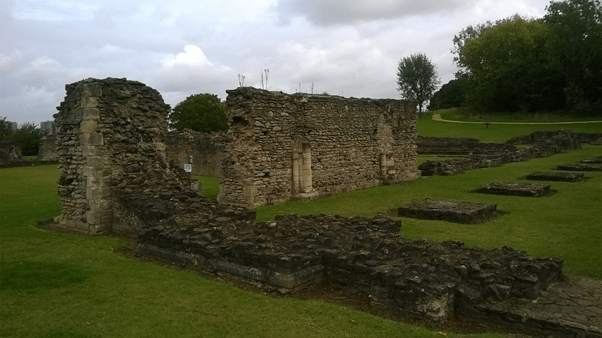
That’s the end of the pictures, but I want to say a couple of other things about the abbeys/priories and their inhabitants. It’s tempting to think that people were much more ‘Christian’ 900 years ago; they were certainly more ‘religious’. You have to remember firstly, that the church had a lot of power and wealth, and therefore control over others; and secondly that people were very superstitious in their beliefs. Young men and women were encouraged to enter holy orders, believing that their reward for a life of poverty, chastity and obedience would be in the next world, not this one. That said, most monks and nuns lived productive, rewarding lives: caring for the sick and offering hospitality; growing produce and rearing livestock for themselves and to sell; managing their own lands and financial affairs. Also, abbeys provided a safe haven; monks were not expected to fight in battle (these were violent times!) And lastly, although they ate a meagre, spartan diet, they would not starve if famine came to the area, as many farmers and labourers would. At a time when all life was precarious, except for the very rich, the monastic life might have seemed the best option!
 claresimons1