April’s blog is based on a guided walk of Sutton town centre which I recently led as part of my church’s 125th anniversary celebrations. While preparing for the Walk, I learned so much about Sutton’s history; humble beginnings as a hamlet of 200 hundred inhabitants and 30 dwellings recorded in the 1068 Domesday Book, through the 1700s as a major staging post, with coaching inns on either side of the London to Brighton Road, to a thriving suburban town with the coming of the railway in 1846. And of course, there are the churches; we looked at three close to the town centre and the fourth, slightly further out, my own church which has its own intriguing history.
St Nicholas

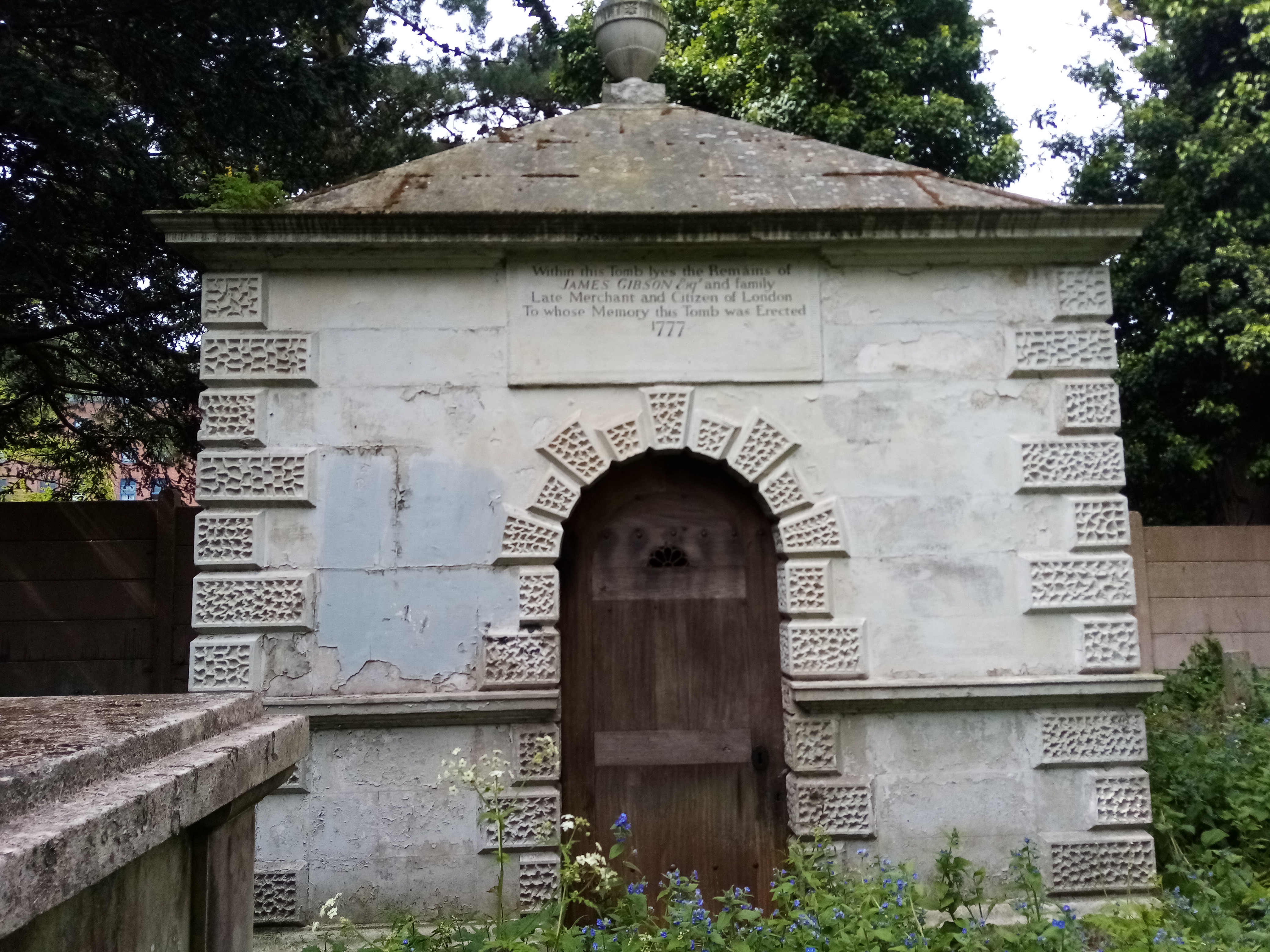
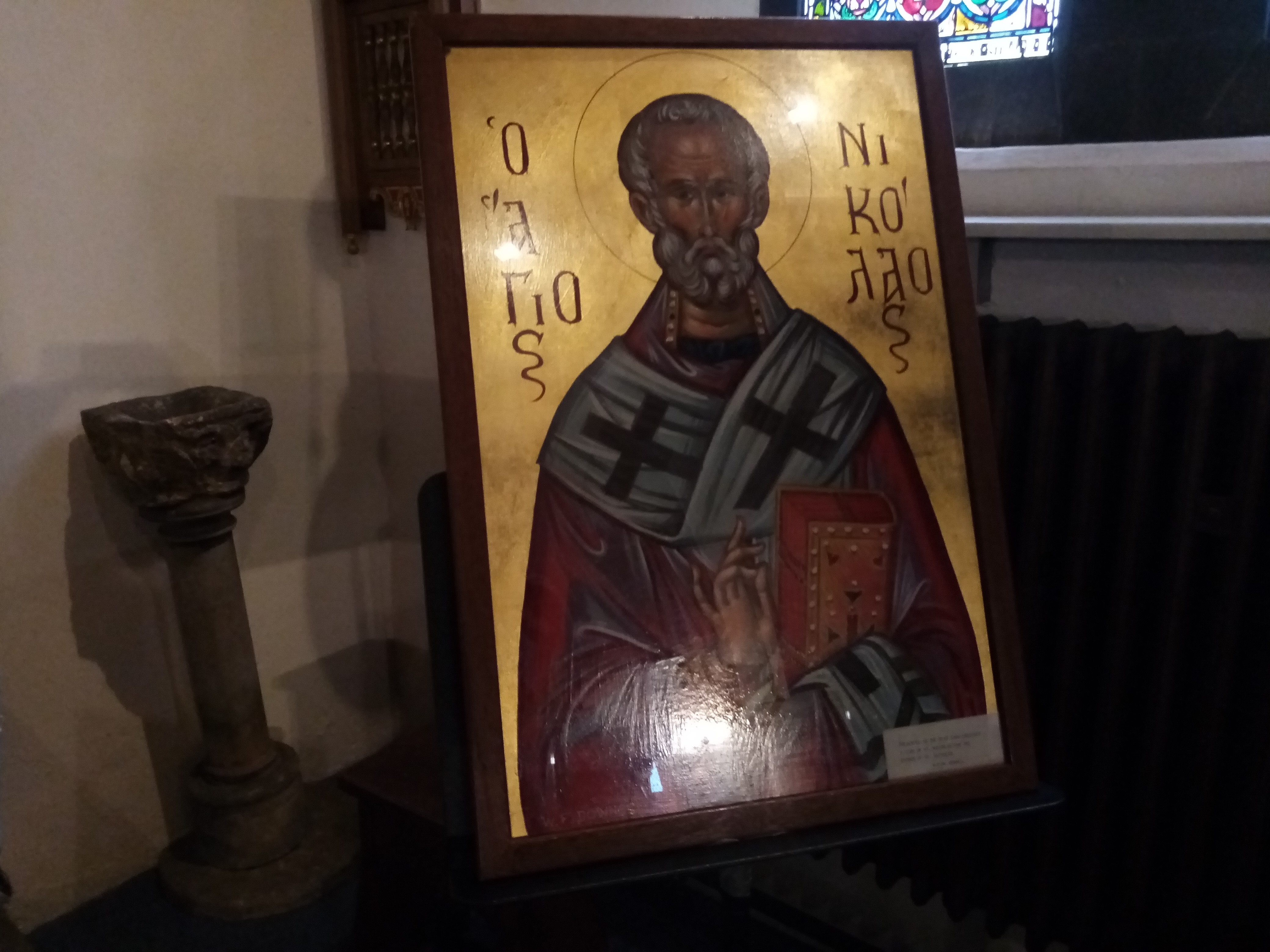
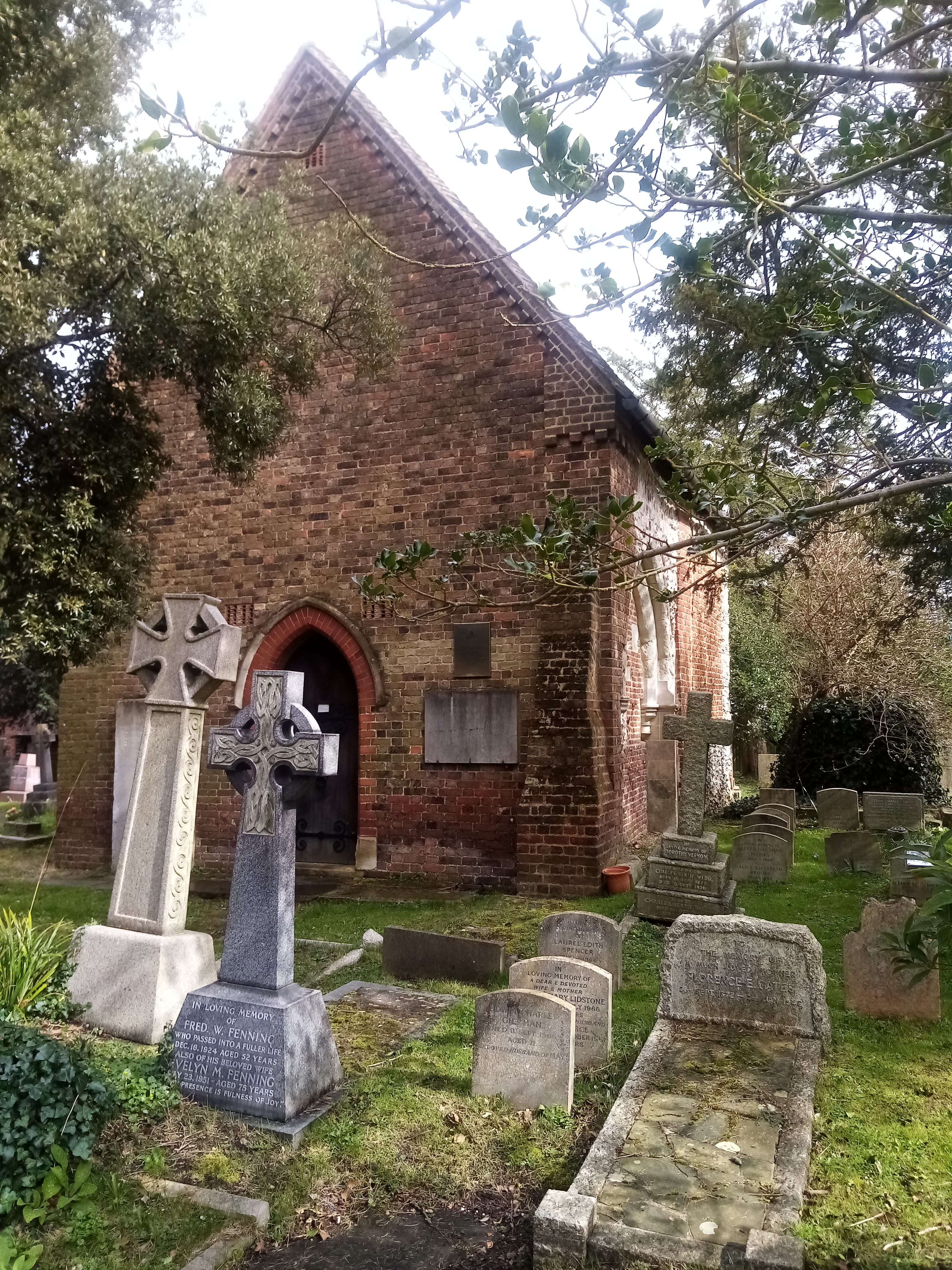
Still surrounded by its ancient churchyard, the present church was built in 1864 at a cost of £7,600, to accommodate the increase in population; the original mediaeval church was mentioned in the Domesday Book. The Revd Herbert Turner became the incumbent in 1866, two years after the building of the new church, and he was well known locally for his charitable work. He set up a committee of local tradesmen to provide dinners for 2,500 poor children during the winter months, and a ‘Clothing, Blanket and Boots’ club for the poor. The church continues its work in the community by being the HQ of the Sutton Street Pastors who go out from here on Fridays and Saturdays to engage with the people of Sutton. They have developed a good relationship with rough sleepers, some of whom ‘live’ in the churchyard. On the North side of the church the windows are plain glass instead of stained-glass as a reminder of the bomb which landed and exploded in the churchyard on the night of 24th September 1940. All the windows on this side were blown out, but this was the only significant damage to the church. In the churchyard stands the Gibson Mausoleum which was built in 1777, containing the remains of James Gibson, a London wine merchant and his family, paid for by his eldest daughter Mary. Both her parents died in 1776 and Mary used some of her inheritance to pay for them to be interred here instead of in the churchyard. Inside are 2 hexagonal sarcophagi and 5 hexagonal wooden coffins, all extended family of James Gibson. The tomb opens for annual inspection on August 12th and last year a distant relative from America attended the ceremony. One of the church’s treasures is the original small mediaeval font, rescued from the original church.

Trinity Church
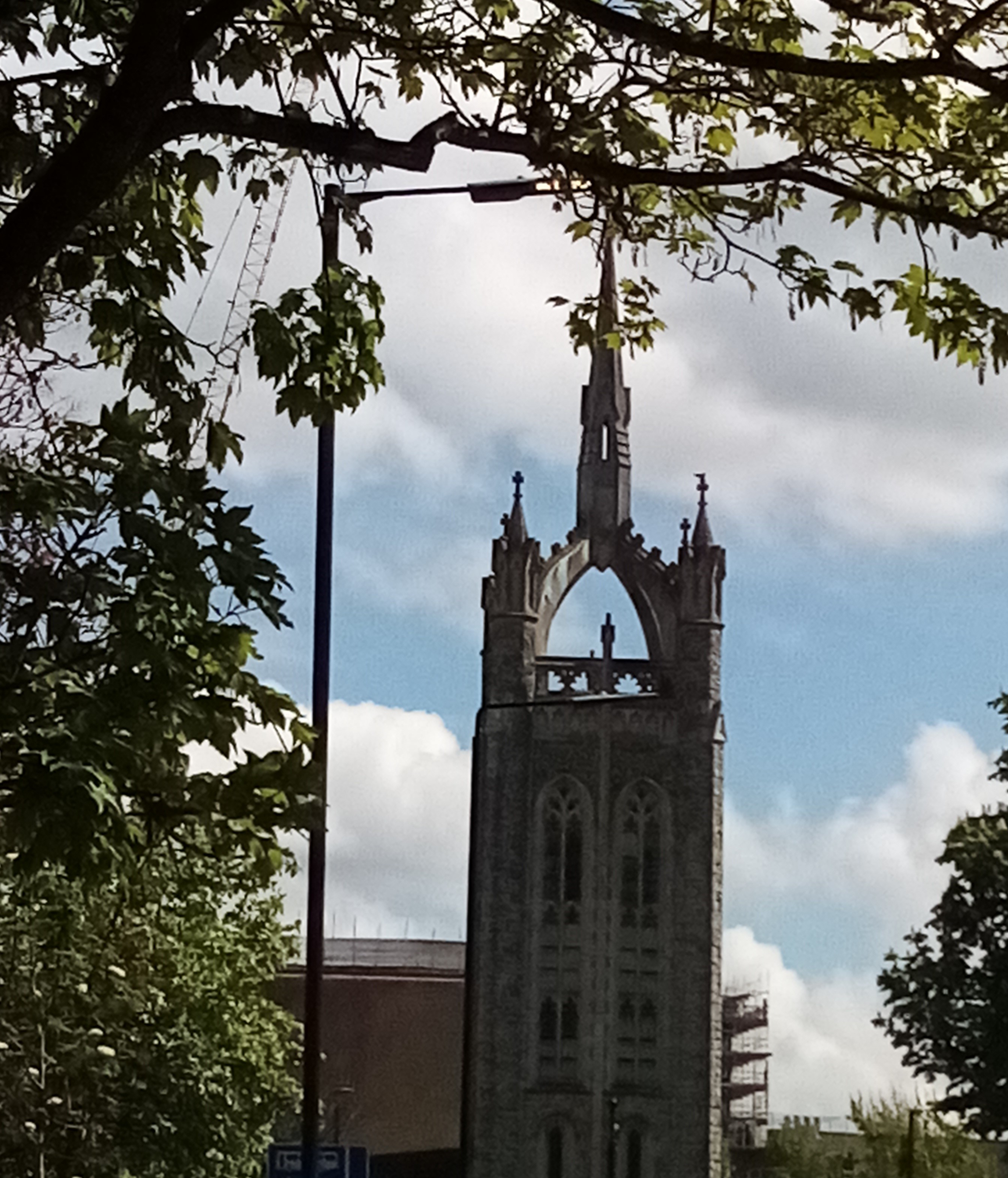
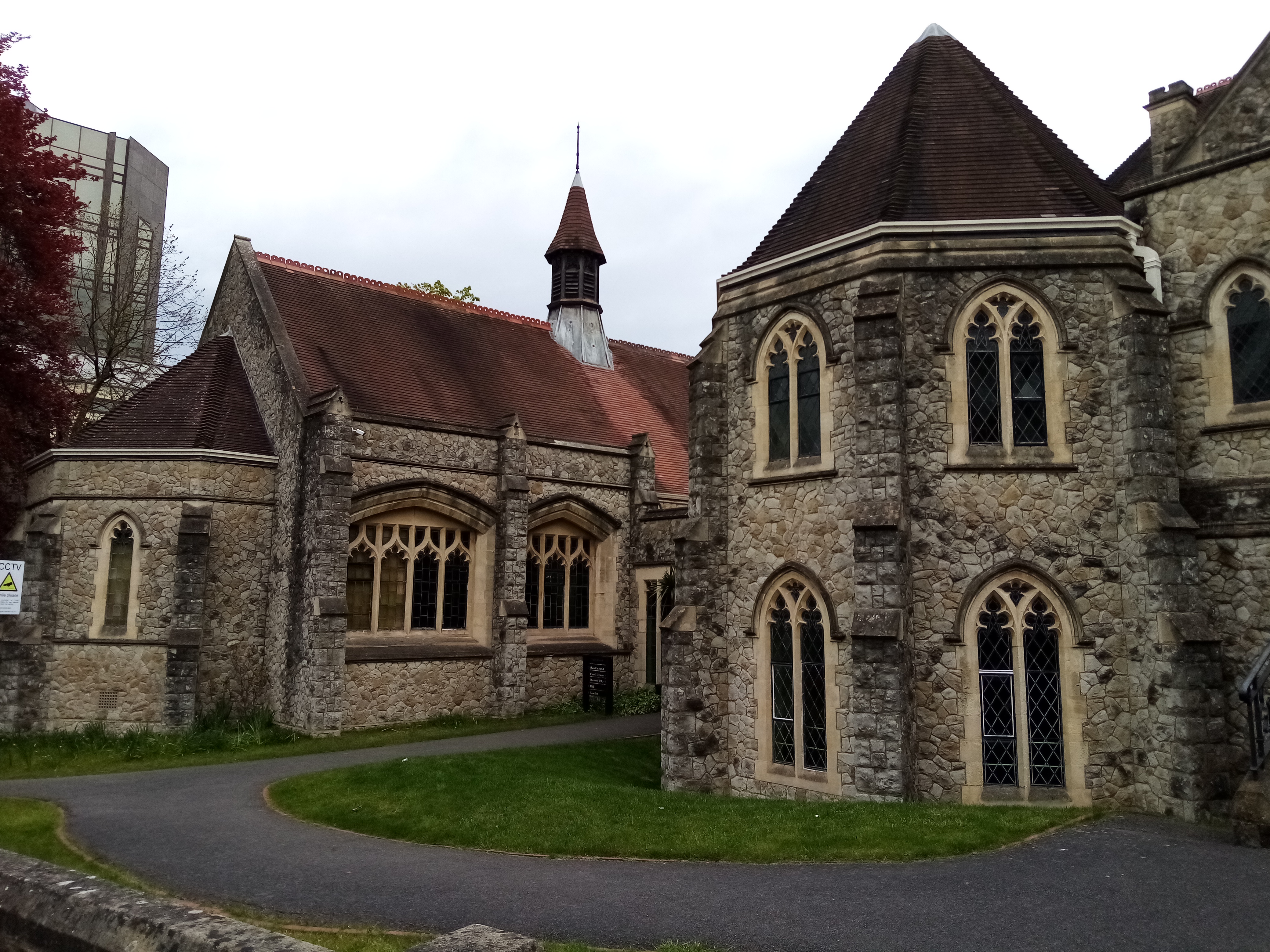
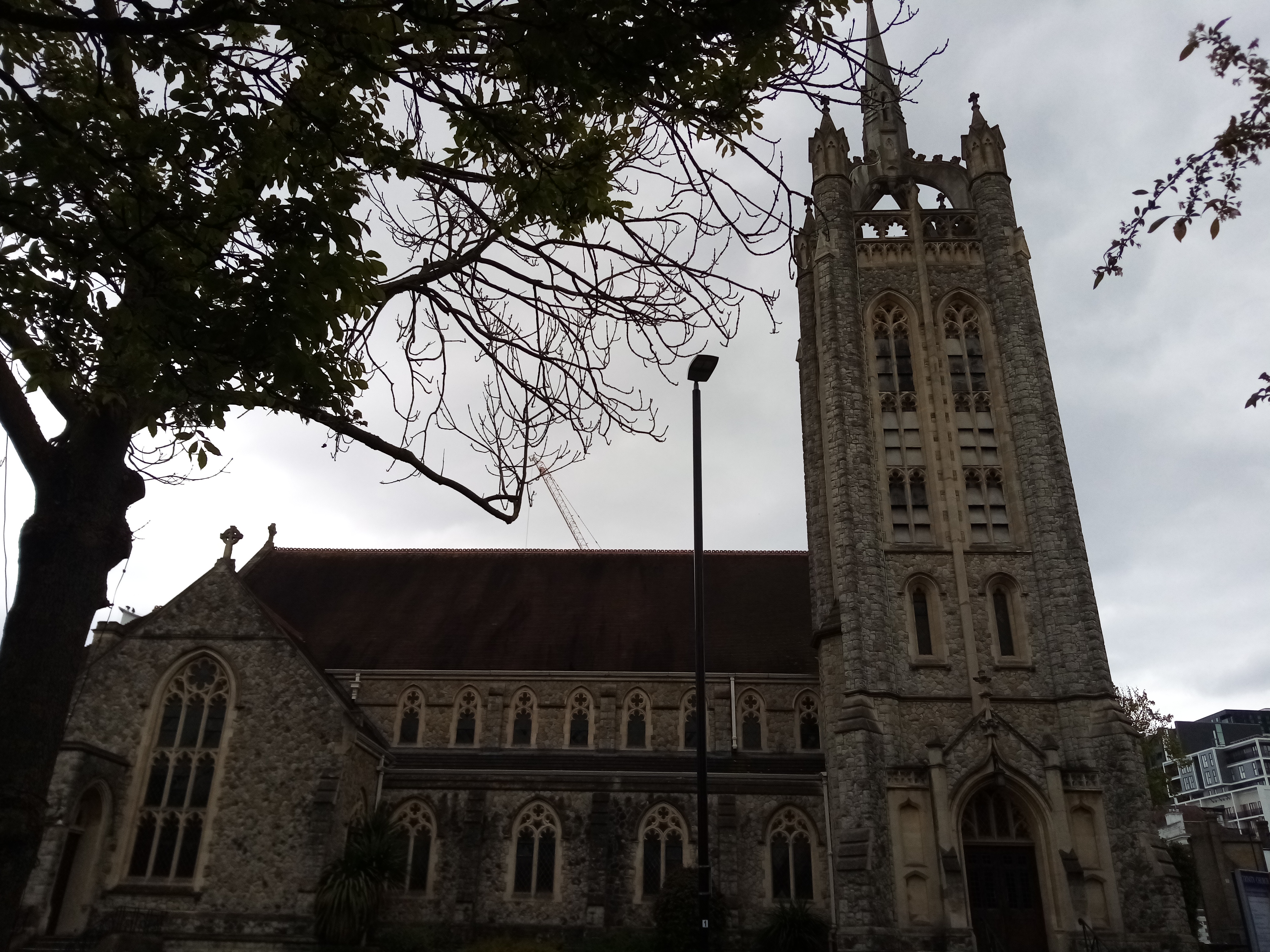
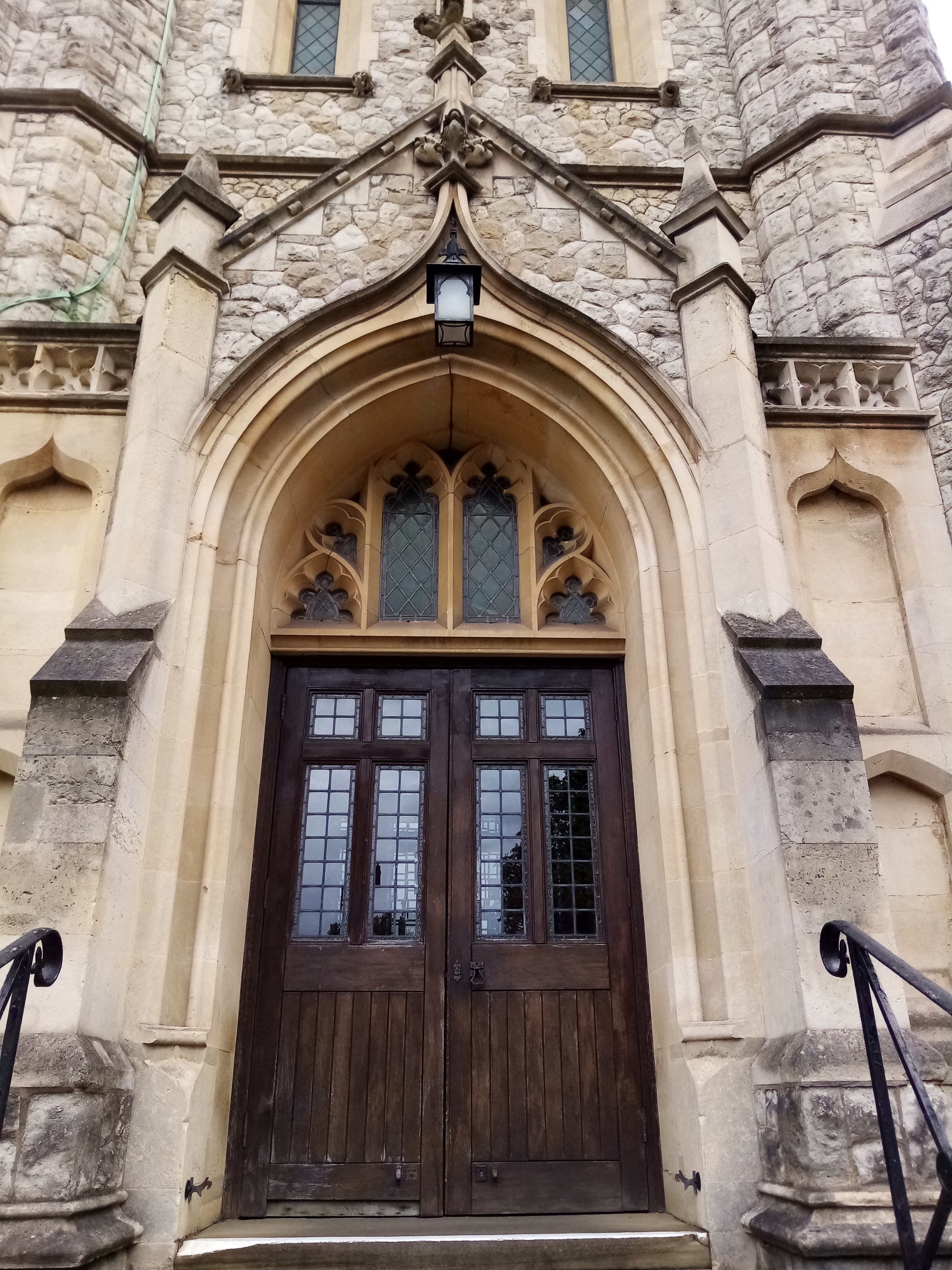
Trinity Church, built in 1907 in the Gothic style, is a lovely landmark in the town with its tall tower and unusual ‘crown and lantern’ spire, which it shares with Newcastle Cathedral and St Giles Cathedral in Edinburgh. So an ordinary church in what was a small suburban town has the same spire as two cathedrals! The church opened in 1907 as Sutton Wesleyan Church, replacing a smaller building further out of town. In 1973 the Methodist Church joined with the United Reformed Church (formerly Congregational Church) to form one congregation, and the church changed its name to Trinity. And two years before this, in 1971, the four central Sutton churches: St Nicholas Parish Church, Sutton Baptist, Methodist and Sutton Congregational Church, signed a covenant to work together for their congregations and for the wider community. Today, the regular congregation shares their building with Sutton’s Hong Kong Fellowship and the two congregations join together for social events and Carol Services .Trinity Church has several additional buildings, most added later but all in the same Gothic style. I think it’s a very beautiful and bold attraction in our town.
Sutton Baptist Church
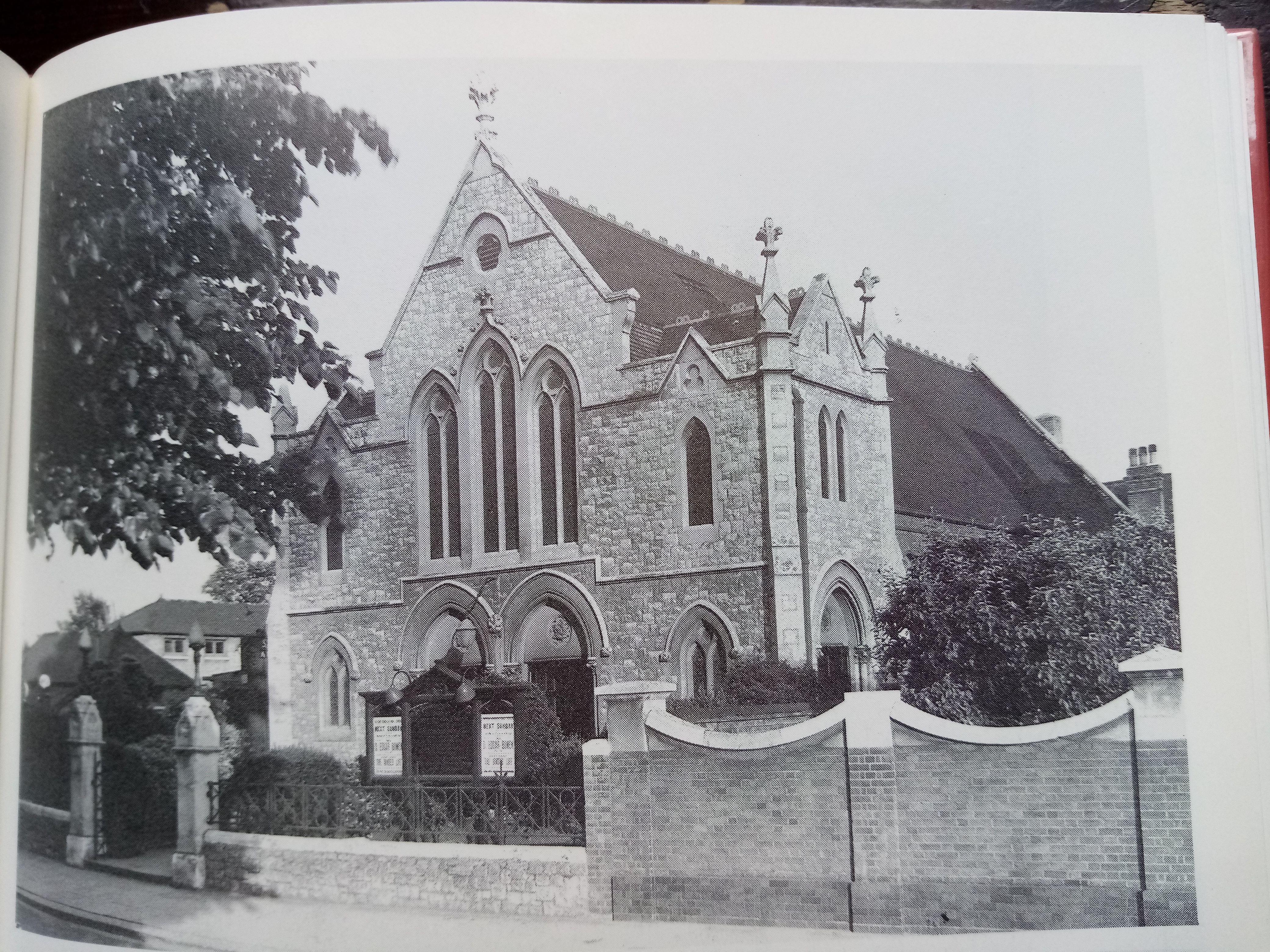
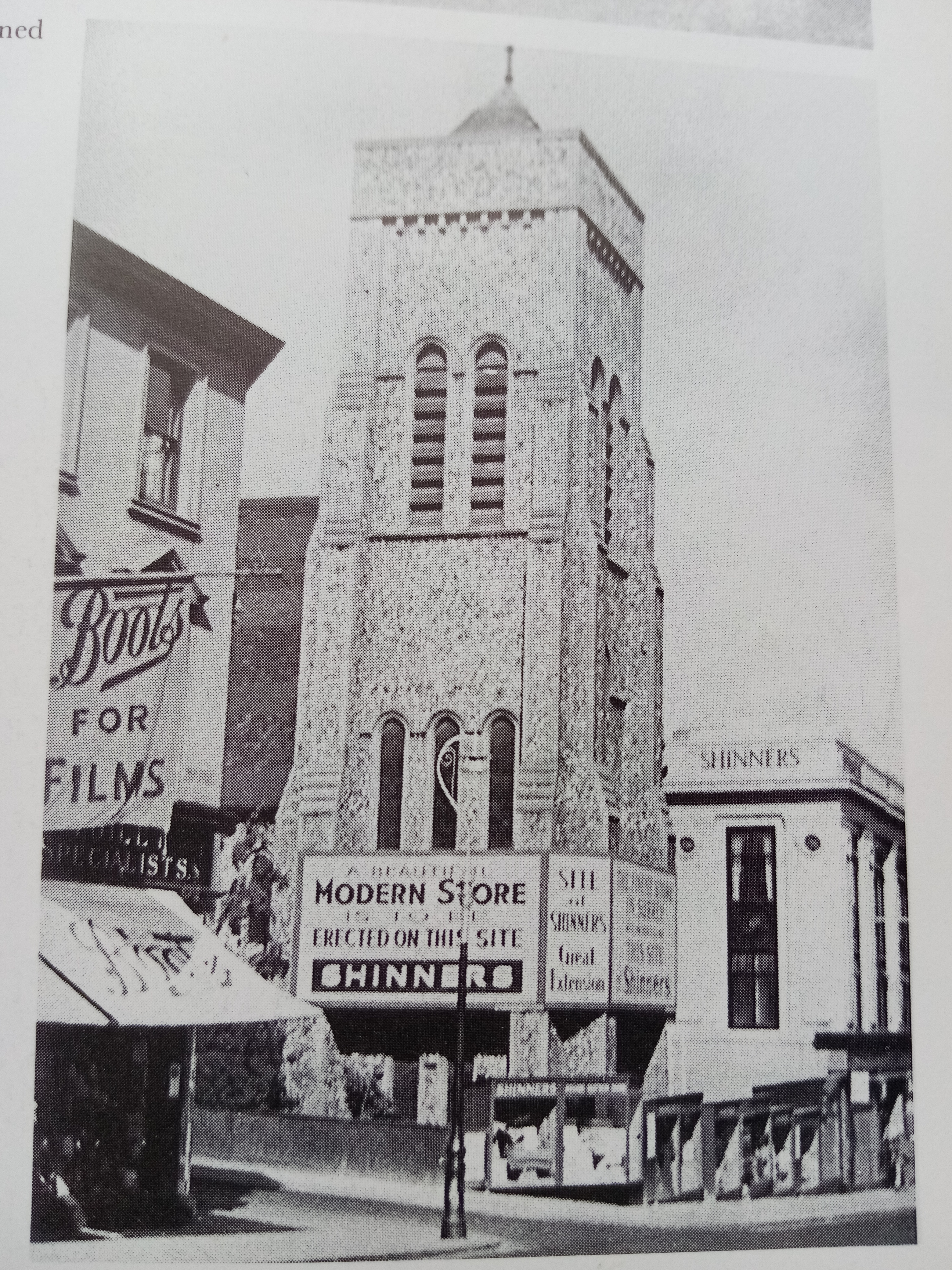
On the other side of Cheam Road, just outside the town centre, is the Baptist Church, built in 1934 in the ‘Arts and Crafts’ style. I thought that this late 19th/early 20th century movement referred to furnishings, room design and wallpaper, I didn’t realise it could apply to buildings. Trinity and the Baptist Church were built less than 30 years apart, but they couldn’t be more different. This building replaced a more ‘traditional’ style of church a little way down the High Street, which was bought by Mr Shinner who wanted to expand his shopping empire to create a department store. I think the picture below is rather sad: a big banner across the church building basically declaring that the church will have to ‘make way’ for progress and commerce. However, I do really like the ‘new’ building, built in red brick in the ‘Modern Gothic’ style. I love the detail over the doorway and the high windows in the main church, wish I could take a look inside! The church is a noted in the Heritage Department of the Borough for its cotemporary brick design, lots of sharp angles and varying surfaces. In its way, just as impressive as Trinity Church.
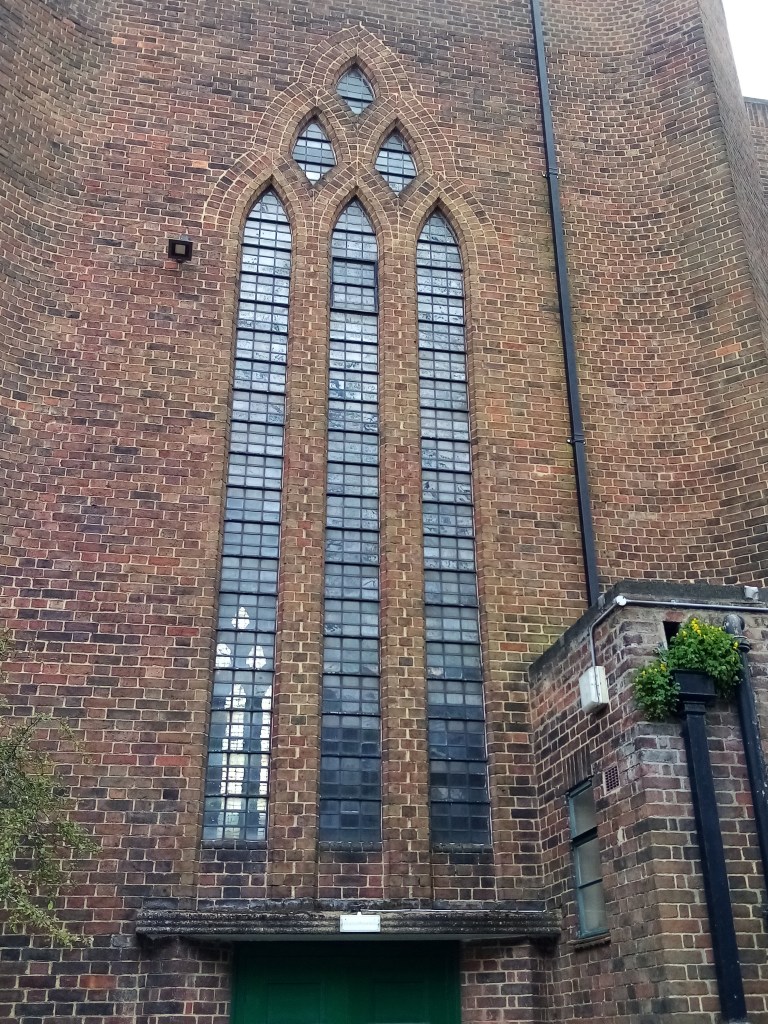
Mock Gothic Window 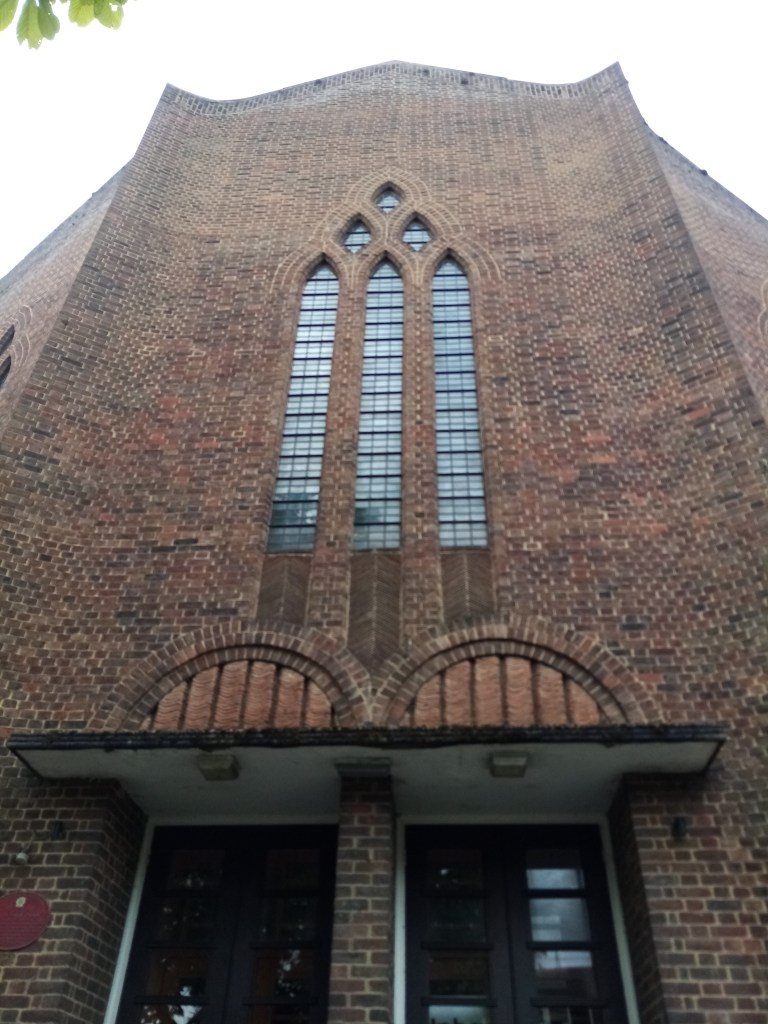
Front of the church
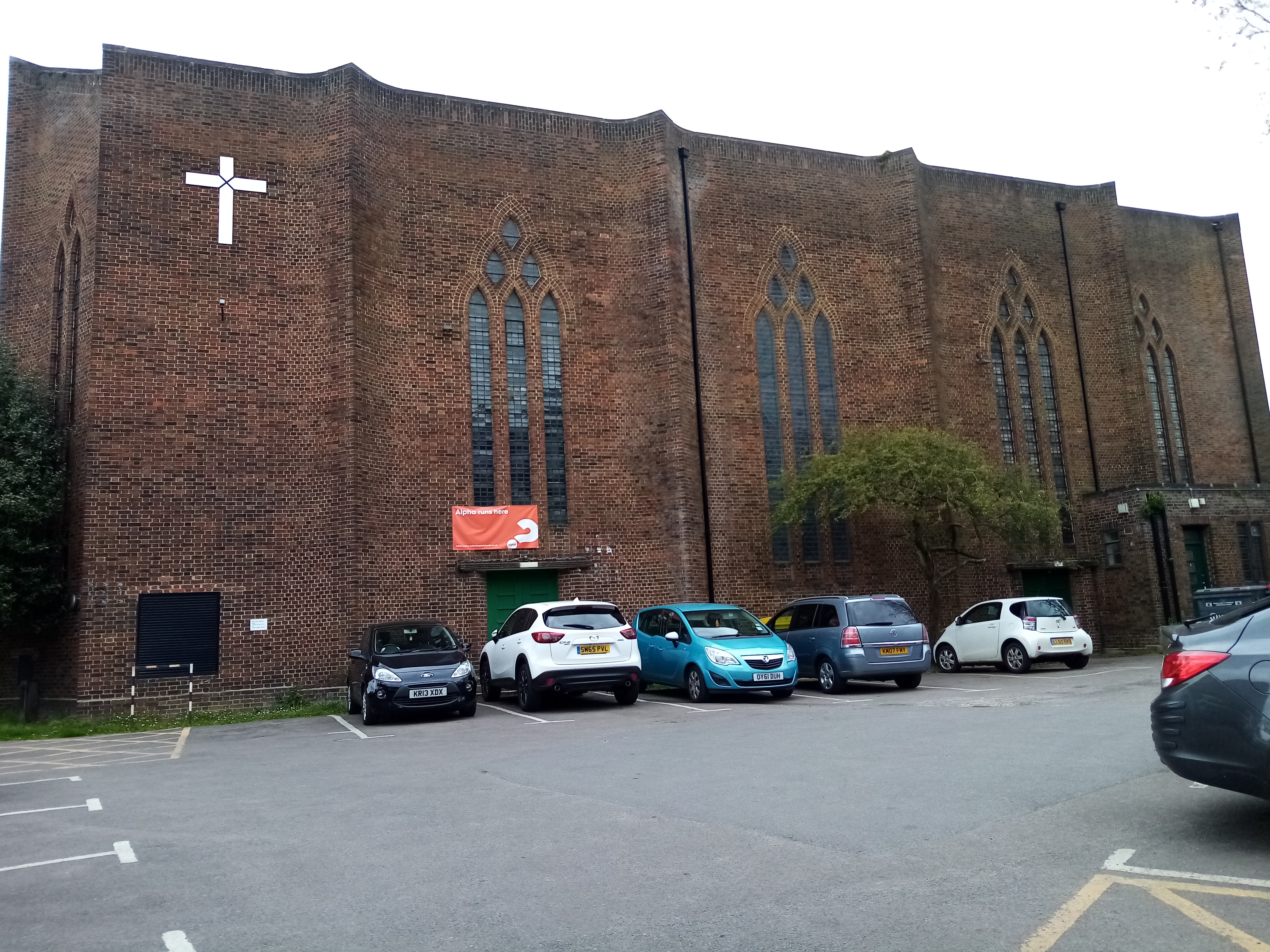
Sutton Christian Centre
Finally just to the West of the town centre is Sutton Christian Centre. In November 1896 Elizabeth Ockenden purchased most of the land on the south side side of Tate road. The plot was divided into smaller plots on which were built a row of terraced houses and two pairs of semi detached houses. In between these sets of houses, one plot was left for the construction of the church. A map of 1913 shows houses on both sides of the road, a ‘Baptist Chapel’ (the church), allotment gardens and some woodland. A pair of Tin Huts were built and the Chapel had its official opening day on 1st January 1899 as East Cheam Baptist Chapel. Fast forward to 1970 and the tin hut and adjacent hall were demolished and a new permanent brick building with a flat roof was constructed. In 1981 this building was extended and improved, and the church became known as Sutton Pentecostal Church. Since then other improvements have been made, the church trustees purchased the semi next door and knocked a wall through so that the church and house were now connected. Originally the house was the home of the incumbent Pastor but later it became offices and space for meetings, etc. The Church changed its name to Sutton Christian Centre in the 1990s.
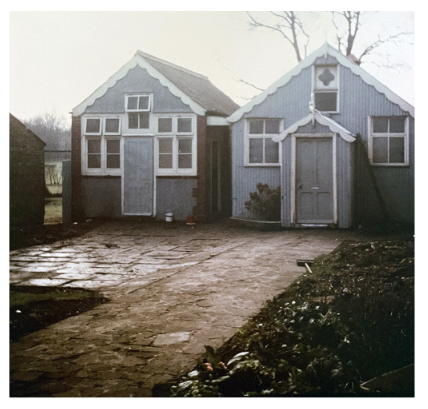
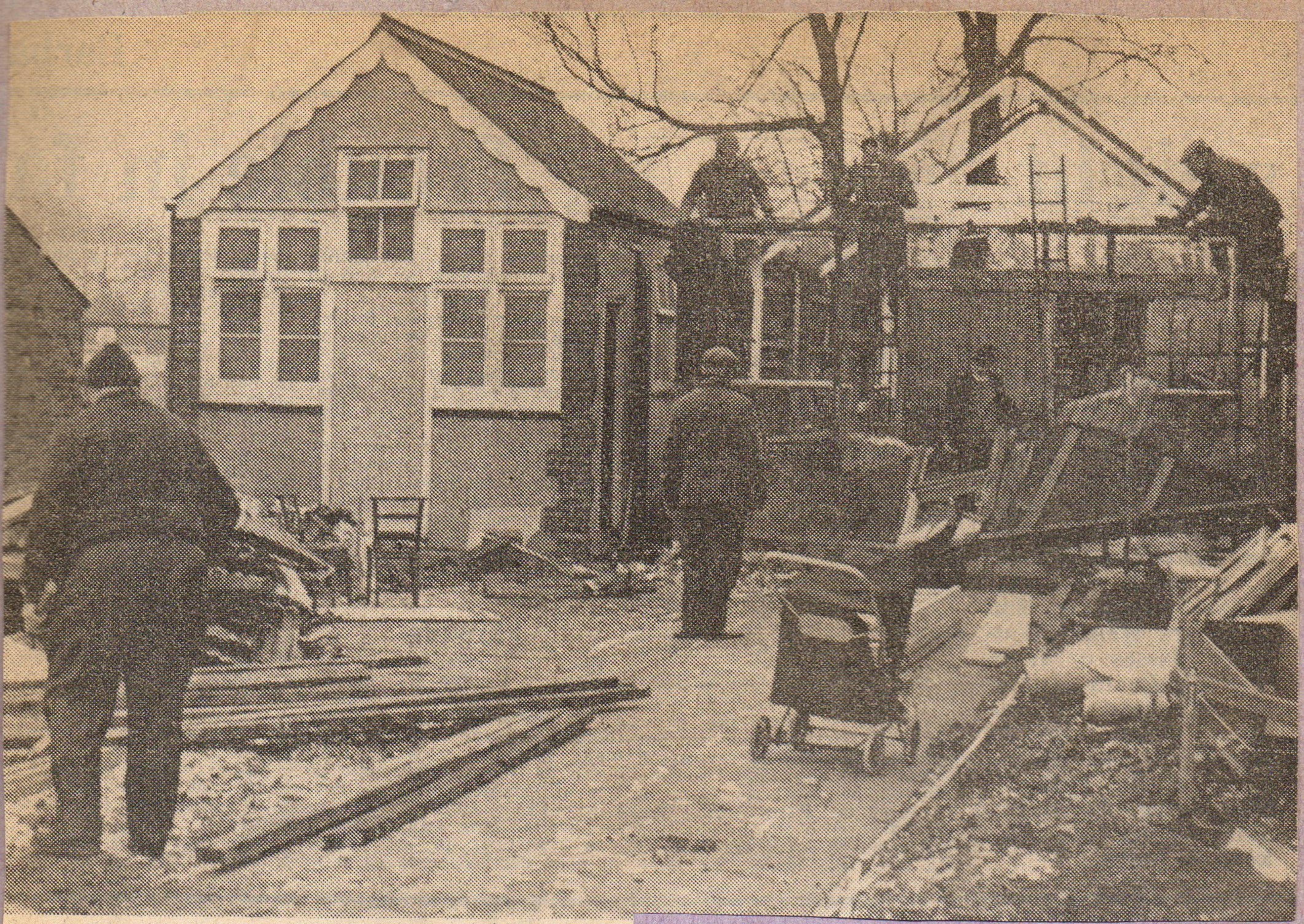
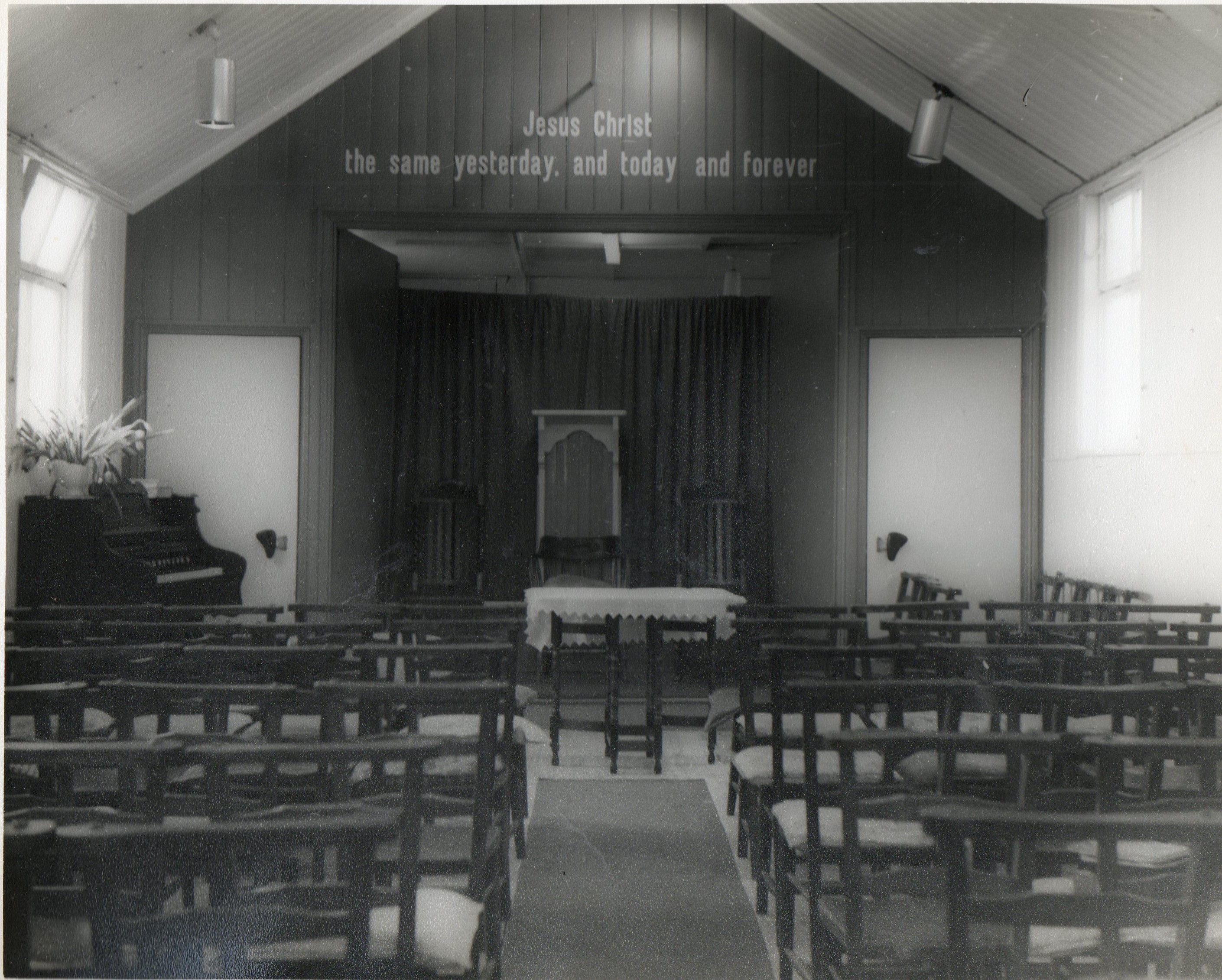
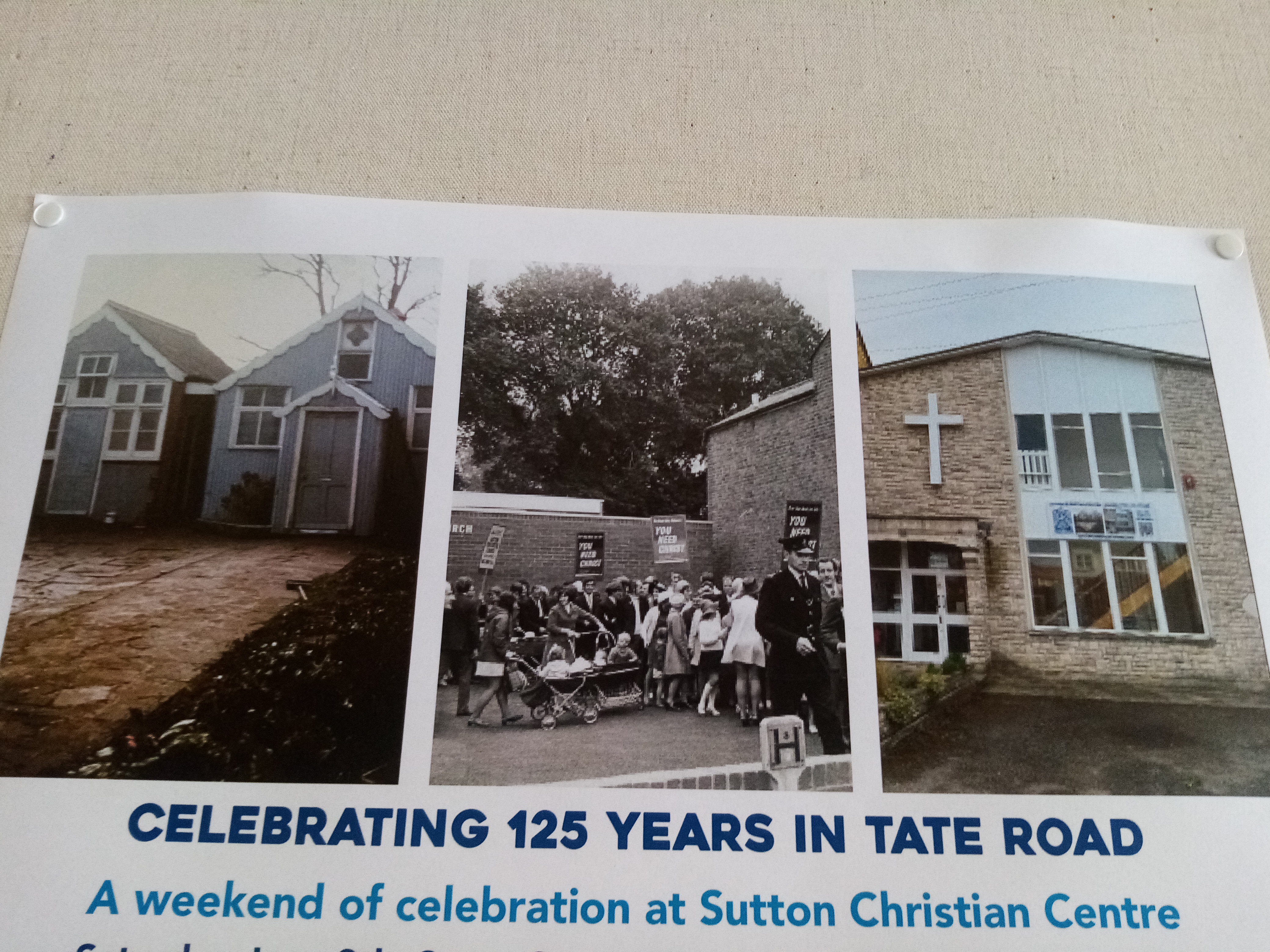
* Photos from Sutton: A Pictorial History, Frank Burgess, 1993, Phillimore Press. Photos of the Tate Road site from Sutton Christian Centre’s collection
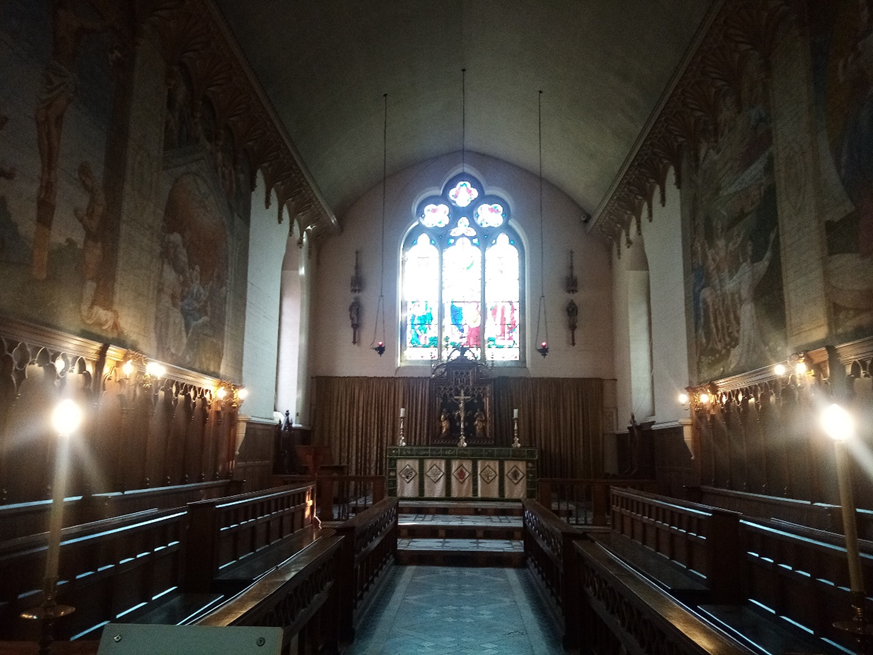

 claresimons1