I’m continuing my tour of churches built inside and outside the London Wall. The originals of these four churches (and the four that I documented in November) were built from the 11th Century onwards and were situated close to the gates into the City so that travellers leaving the City could pray for safe travels before they set off, and those entering could give thanks for a safe journey completed!
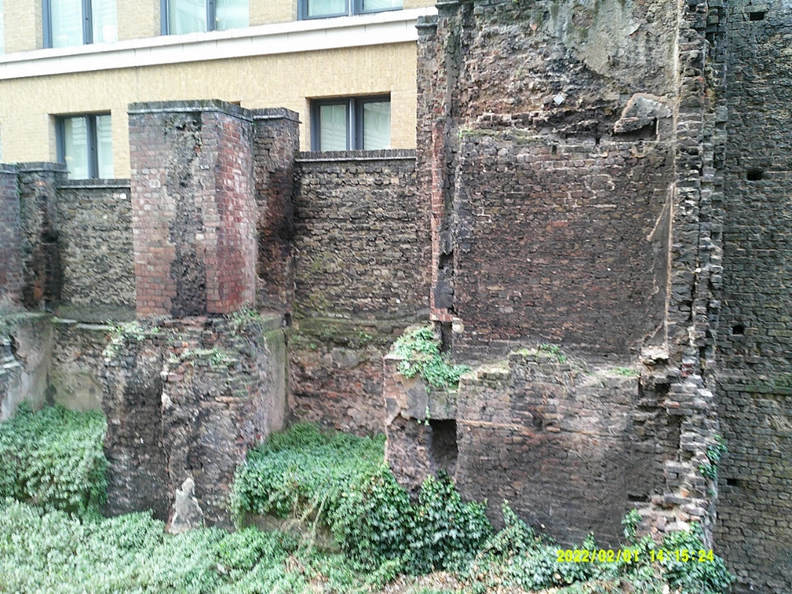
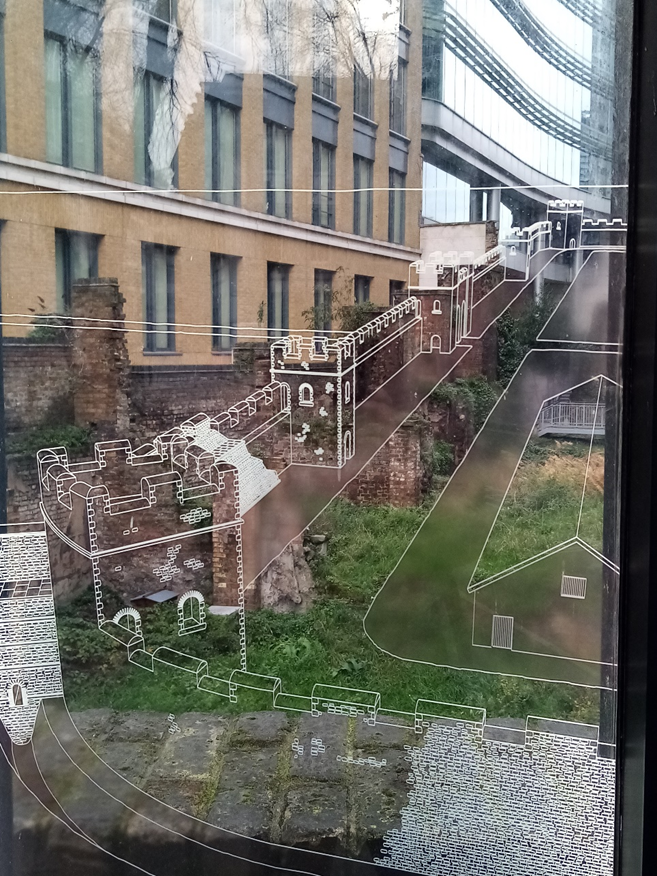
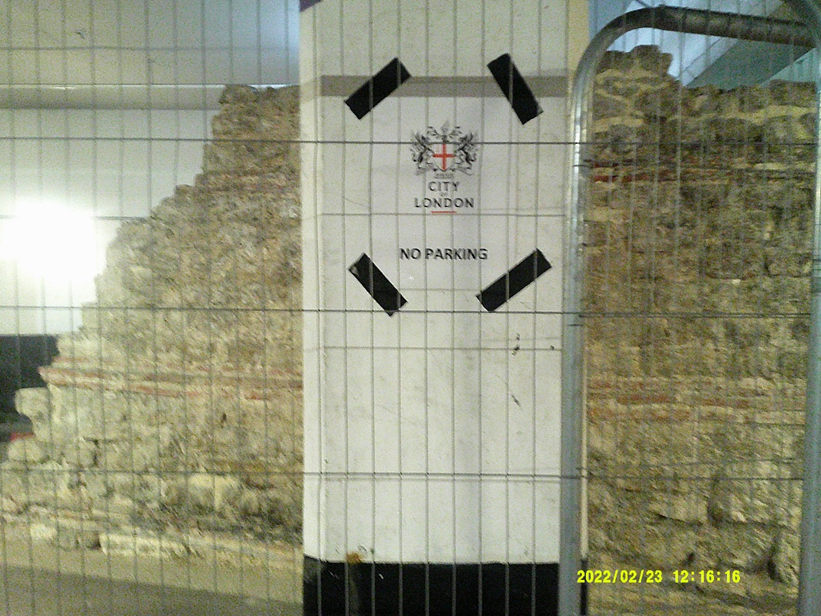
At the Barbican and the Museum of London, the route of the Wall turns South and sadly there is very little surviving, having been demolished over the centuries. However, crossing London Wall (the name of the road) just before the MOL into Noble Street, there is the remains of a Roman garrison which was built onto the Wall. Just on the ‘outside’ of the Wall is the church of
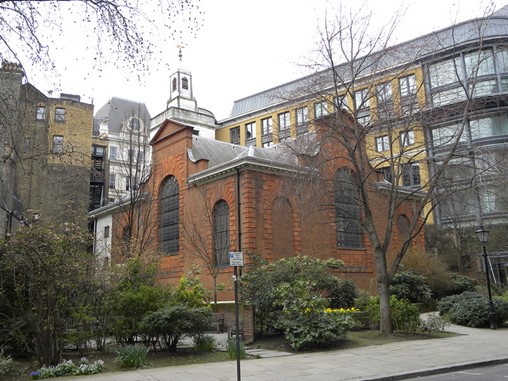
St Anne and St Agnes
I was not able to visit this church, it’s only open to the public on one day per week, due to having another function (more on that later.) Lots of historical interest around the area; as well as the large section of the Roman fort to see, there were several City Guild Livery Halls in this area: Coachmakers’ Hall, Goldsmiths’ Hall, Waxchandlers’ Hall (I don’t know what that is!) None of these buildings remain, having been swallowed up by the glass and steel of modern office buildings. The church itself was rebuilt by Wren after fire damage, but almost destroyed in the Blitz in 1940. It was rededicated in 1966, largely through donations by the worldwide Lutheran church for use by Estonian and Latvian immigrant communities, who worshipped here until 2013. Past parishioners include the English Dissenters poet John Milton, author John Bunyan and John Wesley, who preached here twice in 1736. The church is now the home of VOCES8 Foundation, an educational charity which ‘delivers world-class performances, education and community engagement to ensure Music Education For All.’ From their Website. Their music outreach programme goes into disadvantaged schools in Tower Hamlets, Hackney and Newham. I love this repurposing of a City church!
References: Church Website and VOCES8 Website
St Botolph Without Aldersgate
Not to be confused with St Botolph Without Aldgate situated at the Eastern end of the City, this church was another built just outside the Mediaeval Wall at the ‘Aldersgate’ on what is now St Martin’s-le-Grand. The church was founded in the 11th century in the reign of Edward the Confessor and was a priory with an attached hospital for the poor. Over 700 years later, the church survived the Great Fire but later fell into disrepair and was demolished and rebuilt in 1788 – 91. The plain exterior of the church hides its beautiful interior, particularly the spectacular stained-glass windows, which are not original but designed and fitted in the Victorian Era and the 1940s. St Botolph’s is a Guild Church, which means it does not hold its own Sunday services but it is used on Sundays by the London City Presbyterian Church. The main outreach work of the church takes place on Tuesday lunchtimes; a light lunch is followed by the ‘Aldersgate Talks’ which are ‘Christianity for sceptics, enquirers and believers’. Their leaflet says: ‘Our aim is to share the good news of Jesus Christ with those who work in the Aldersgate area, through explaining and applying the Bible.’ Back to those windows, here are three roundels illustrating events in the life of Jesus, and I’ve included some more at the end of the post.
References: Church Website and leaflets in the church
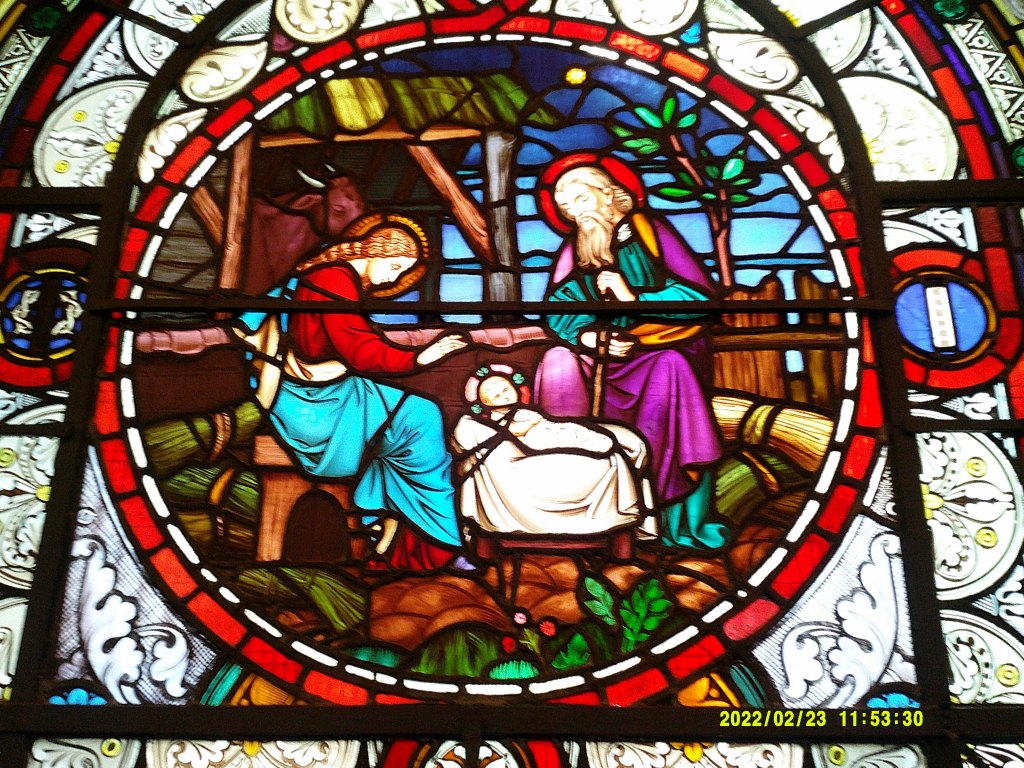
Jesus’ birth…. 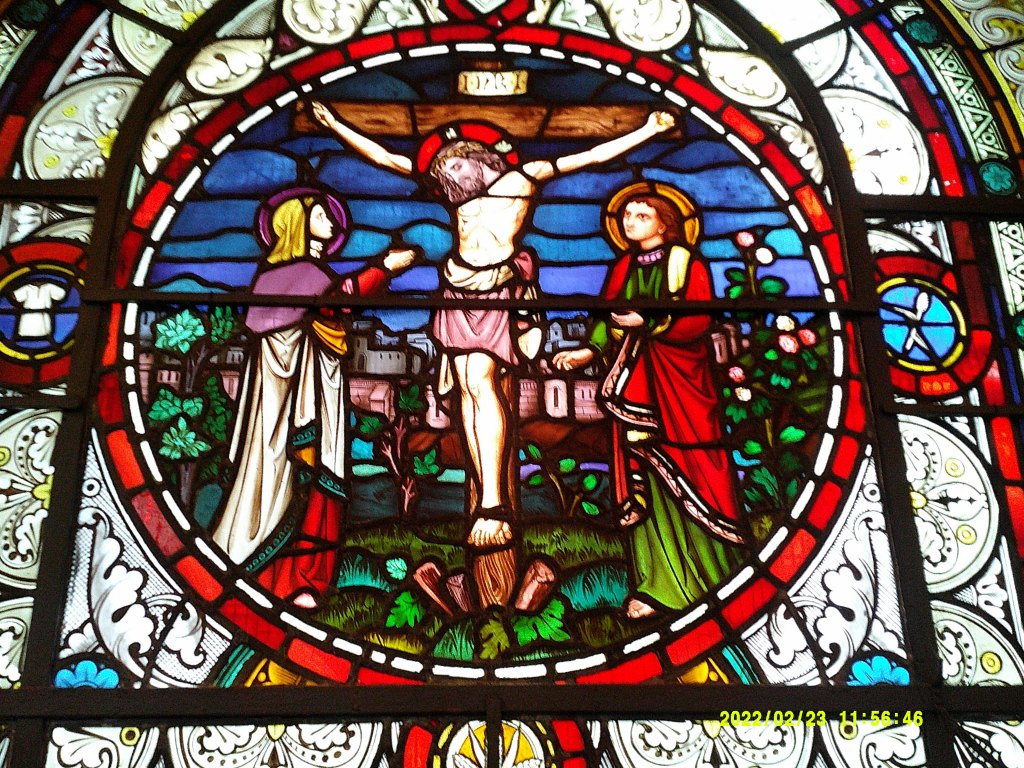
death… 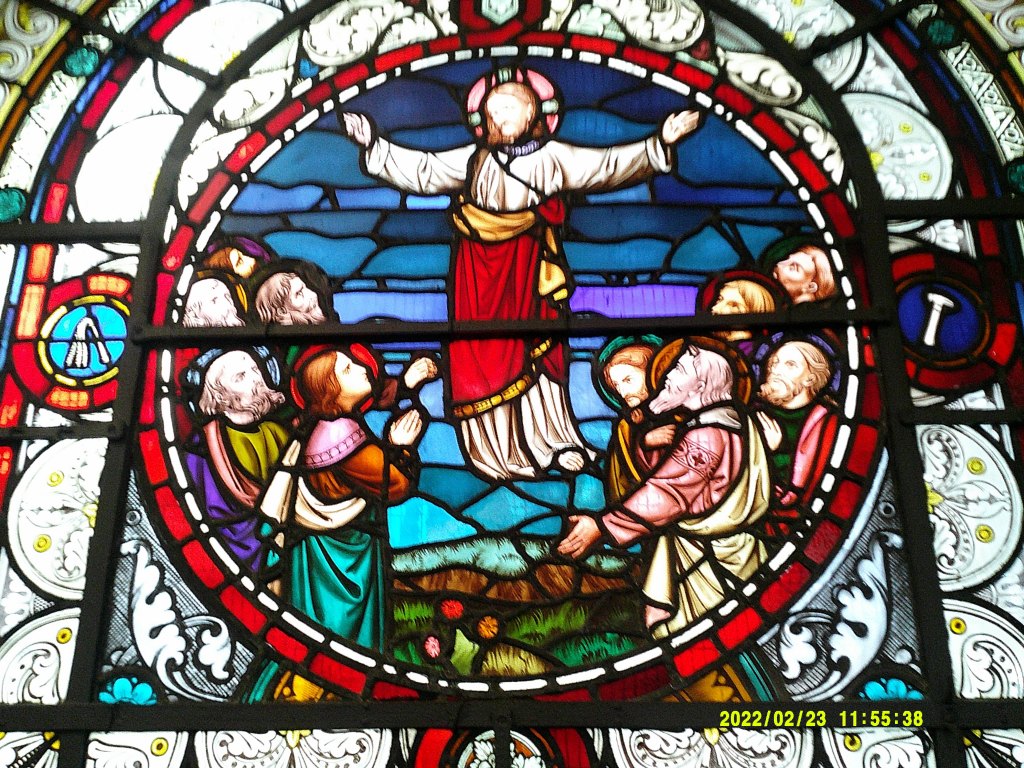
and resurrection 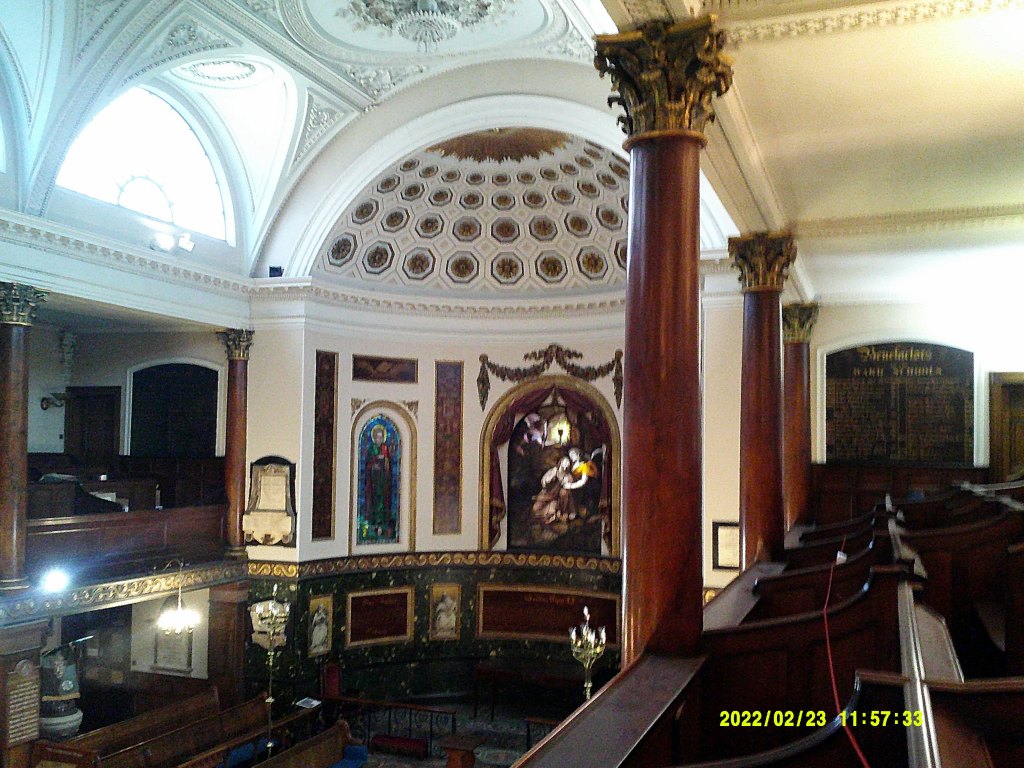
Interior of St Botolph Aldersgate
Holy Sepulchre (St Sepulchre-without-Newgate)
Continuing South along St Martin’s le Grand and then West into Newgate Street, the site of the original Newgate is recorded on a blue plaque. A huge church comes into view, as big as a cathedral, just outside where the Wall once stood, the largest parish church in the City. The original pre-Norman church was dedicated to St Edmund, King and Martyr. During the 12th Century crusades, the church was rededicated to St Edmund and the Holy Sepulchre because knights passed by on the way to the Church of the Holy Sepulchre in Jerusalem. Later still the name of the saint-king was dropped. This church has many interesting facts and features: In 1605 a handbell, the ‘Execution Bell’, was purchased to be rung outside the cells of condemned men the night before their execution at nearby Newgate Prison, exhorting them to repent of their crimes so that they could enter Heaven. The bell is displayed in a glass case in the church. Outside the church, built into a boundary wall, is the first public water fountain in London, ‘opened’ in April 1859. After not being in use for many years, it is due to be restored to full working order. Richard Reeve, a successful silk merchant, left his considerable estate to the church, decreeing that it should all be used for charitable purposes, and a Foundation in his name was set up in 1706. Three hundred years later his legacy continues: a Foodbank, the Square Mile Hygiene Bank, a Wellbeing Project, two Homeless Projects and several other initiatives are run from the church.

St Sepulchre without Newgate 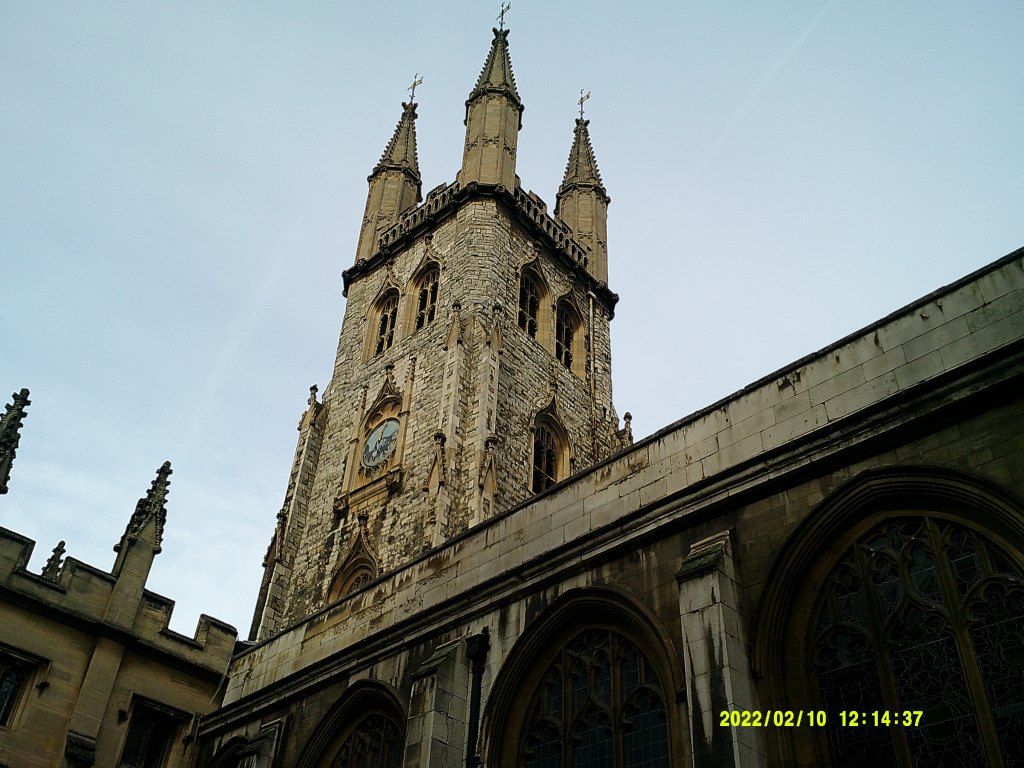
Tower 
London’s First Drinking Fountain 
Sir Henry Wood, cofounder of The Proms 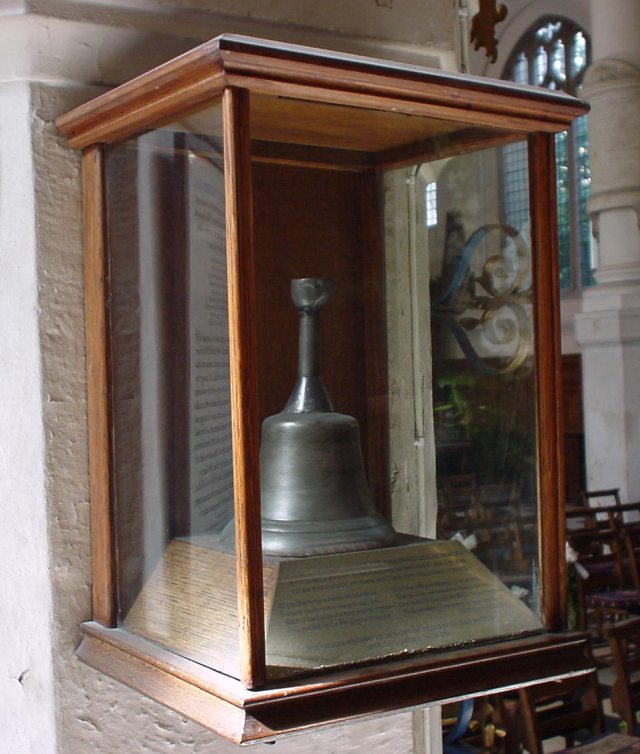
Execution Bell 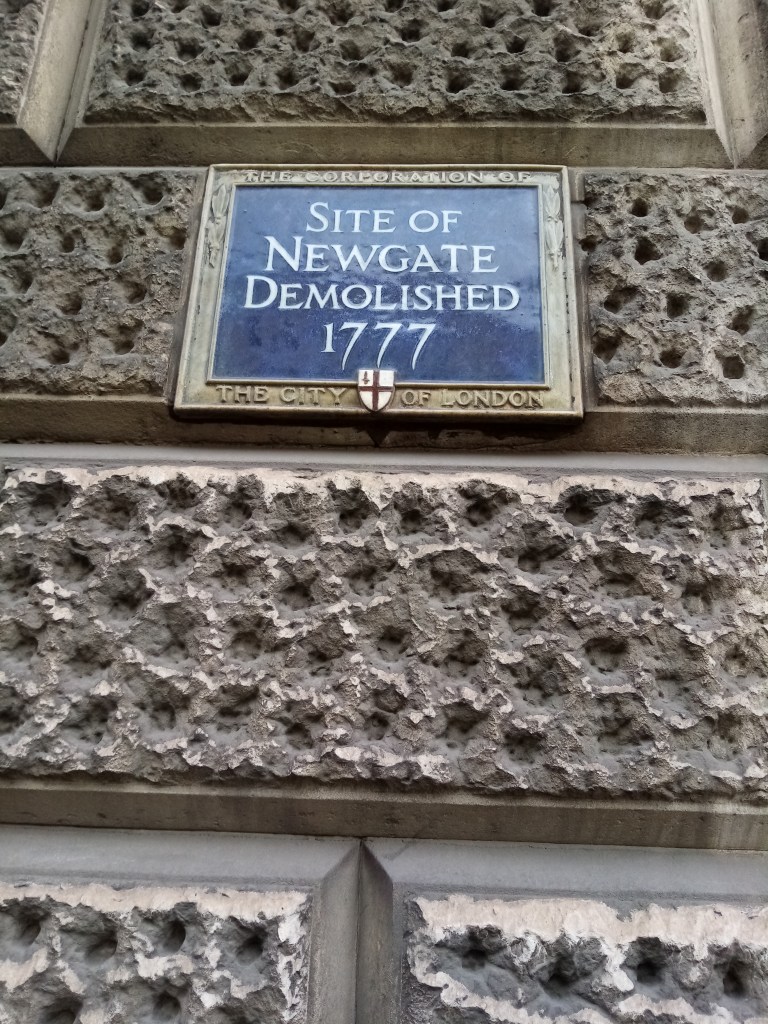
On Newgate Street
St Martin within Ludgate
Crossing Newgate where it becomes Holborn Viaduct, you’re now in a street called Old Bailey, home of the famous Central Criminal Court. At the end of the street in Ludgate Hill, is St Martin within Ludgate. The foundations of the Roman City Wall lie under the church, and the West Gate into the City, the Lud Gate spanned the road outside. St Martin was a Roman soldier who converted to Christianity and like St Botolph he is a Patron Saint of travellers. The earliest record of a church on this site is from 1174, it was rebuilt in 1437 only to be destroyed in the Great Fire and rebuilt by Wren. The church steeple was apparently designed by Wren to be a contrast with the dome of St Pauls just up the hill; one tall and spikey, the other huge and round. St Martin’s escaped any damage from bombing or fires in the Blitz; an information board tells us: ‘In the Second World War, only a favourable wind gave St Martin’s a narrow escape from the fires in the air raids of December 1940. This was the least damaged of all the City churches, and it is still one of the best preserved of Wren’s creations.’ Famous people associated with the church include the Native American Princess Pocahontas who is believed to have visited the church when she lived on Ludgate Hill; another American, Benjamin Franklin regularly attended the church and then went next door for a coffee at the London Coffee House to discuss the issues of the day. And local diarist John Evelyn watched the destruction of the church, writing that he saw hot lead from St Paul’s roof ‘melting down the street in a stream.’ What a scary thing to witness!
References: Wikipedia and Information boards in the church
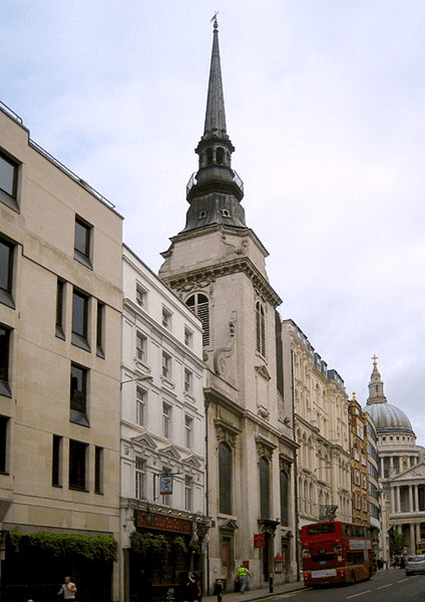
Photo curtousy of Wikimedia Commons 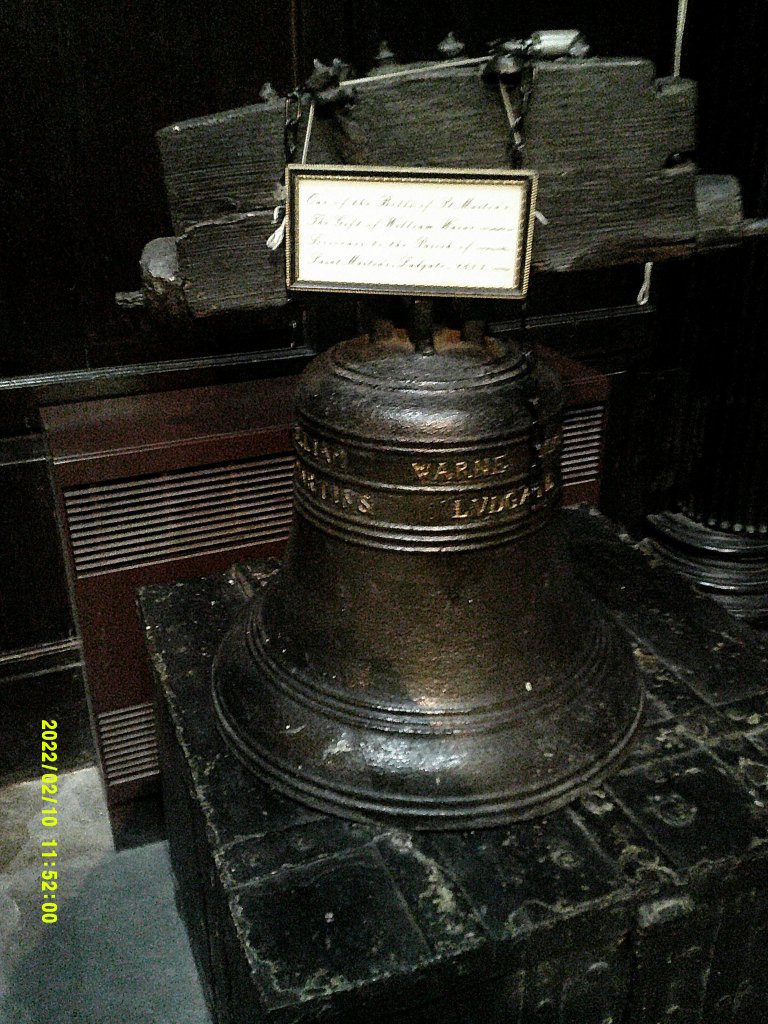
Bell of St Martins from the rhyme ‘Oranges and Lemons’ 
Altar at St Martin Ludgate 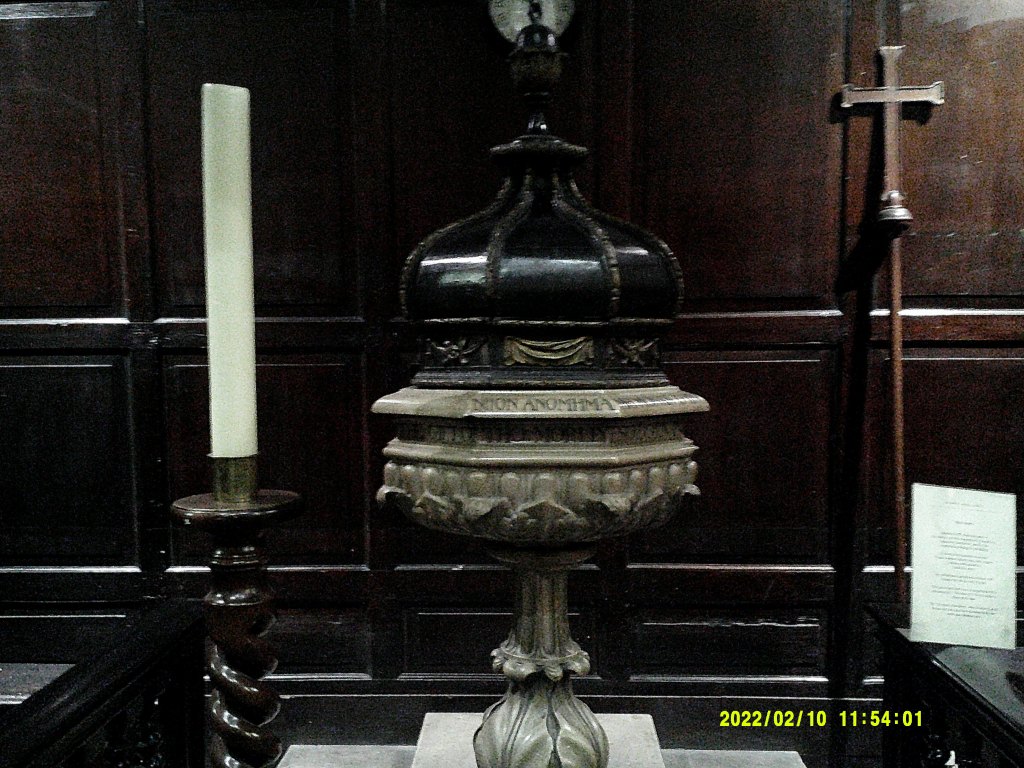
Original Font
Some extra photos to finish…..

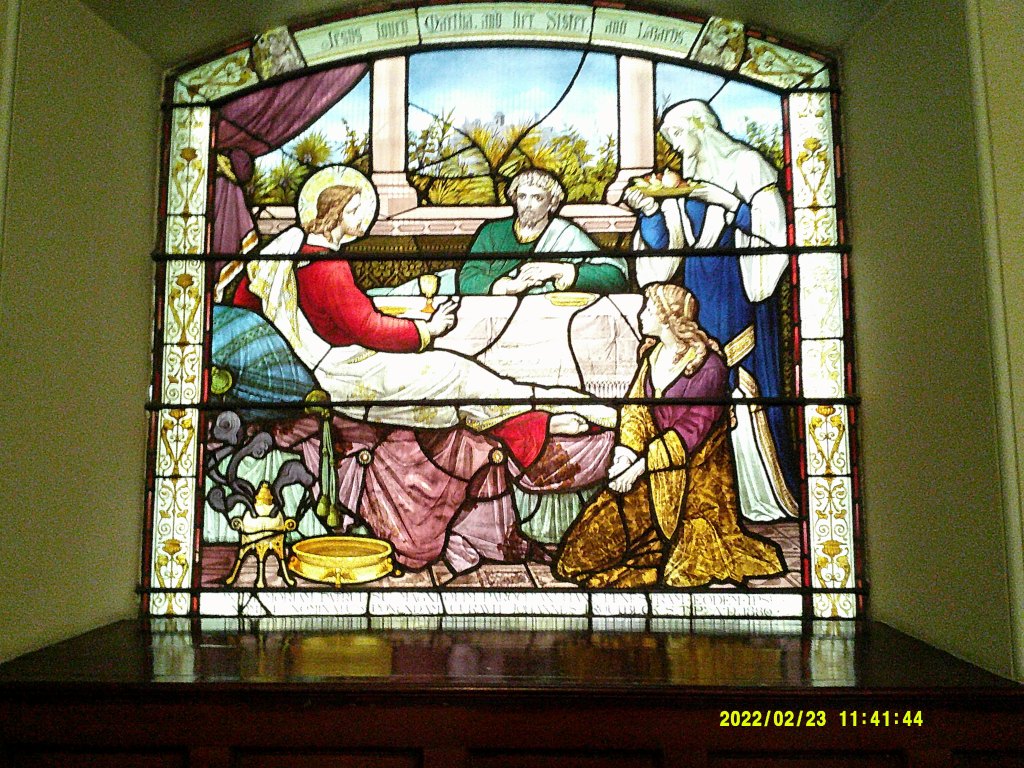
Jesus with Mary, Martha and Lazarus 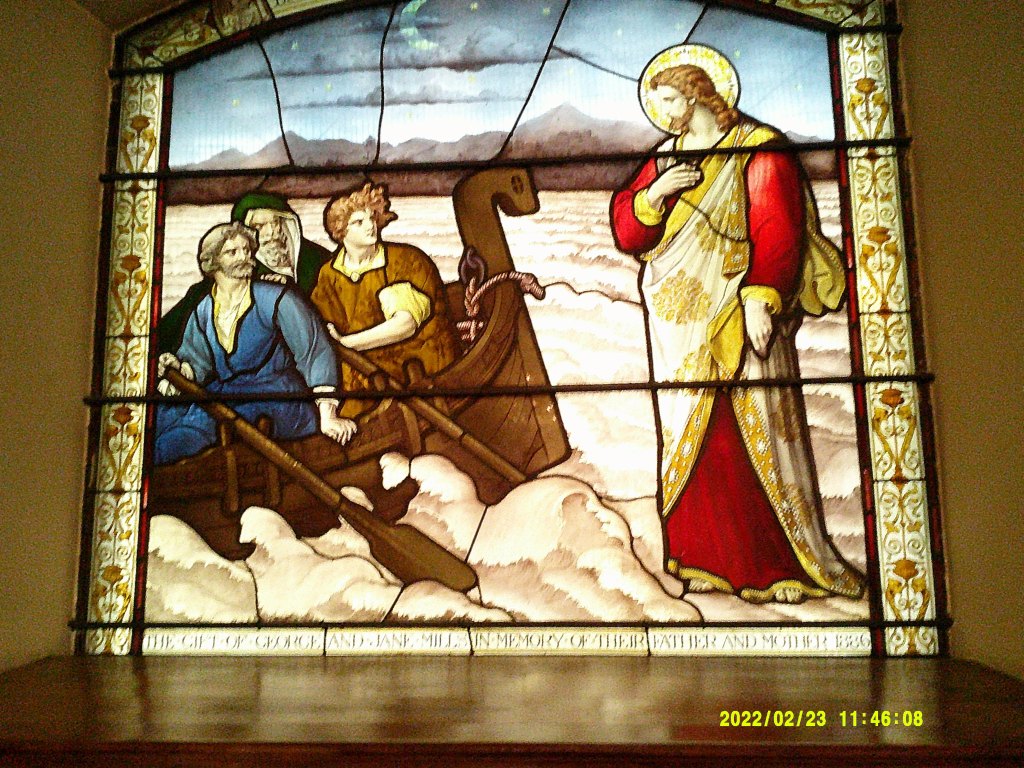
Jesus walking on the water 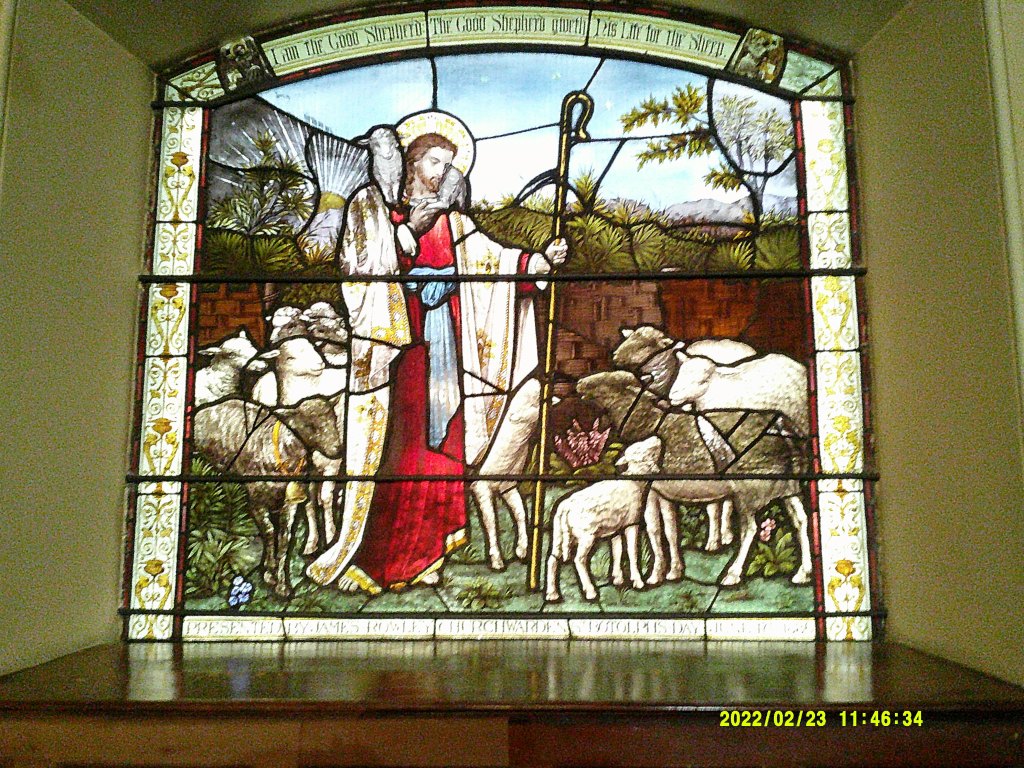
The Good Shepherd 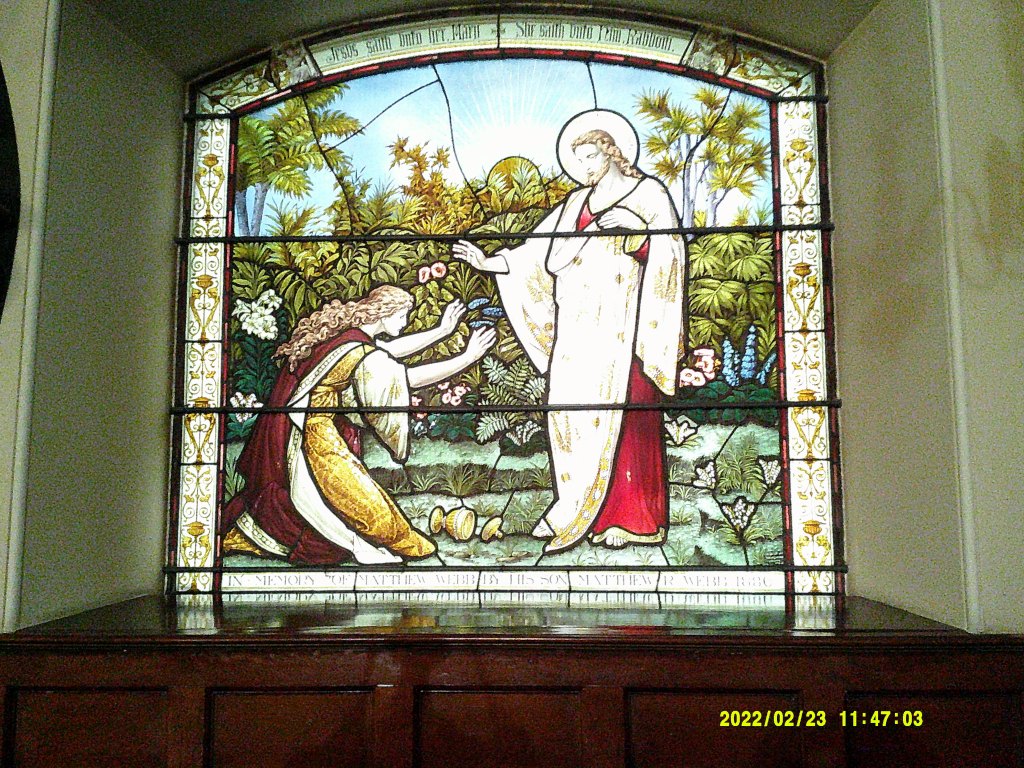
Jesus speaking to Mary in the Garden 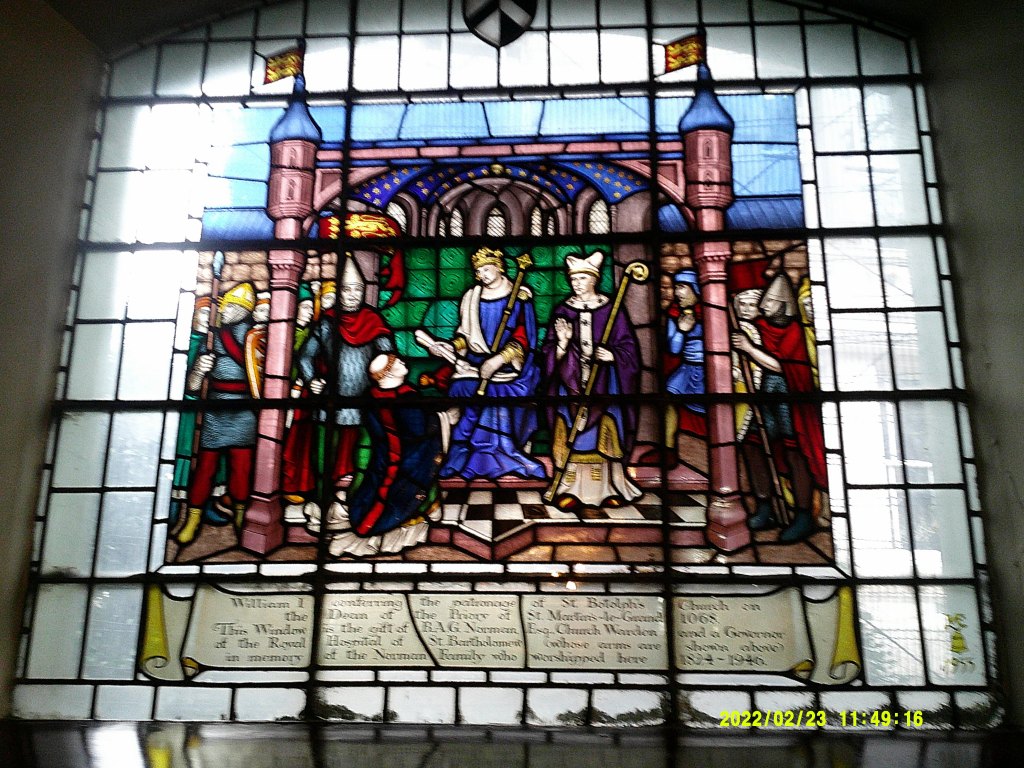
William 1st at the Priory of St Martins-le-Grand 1068 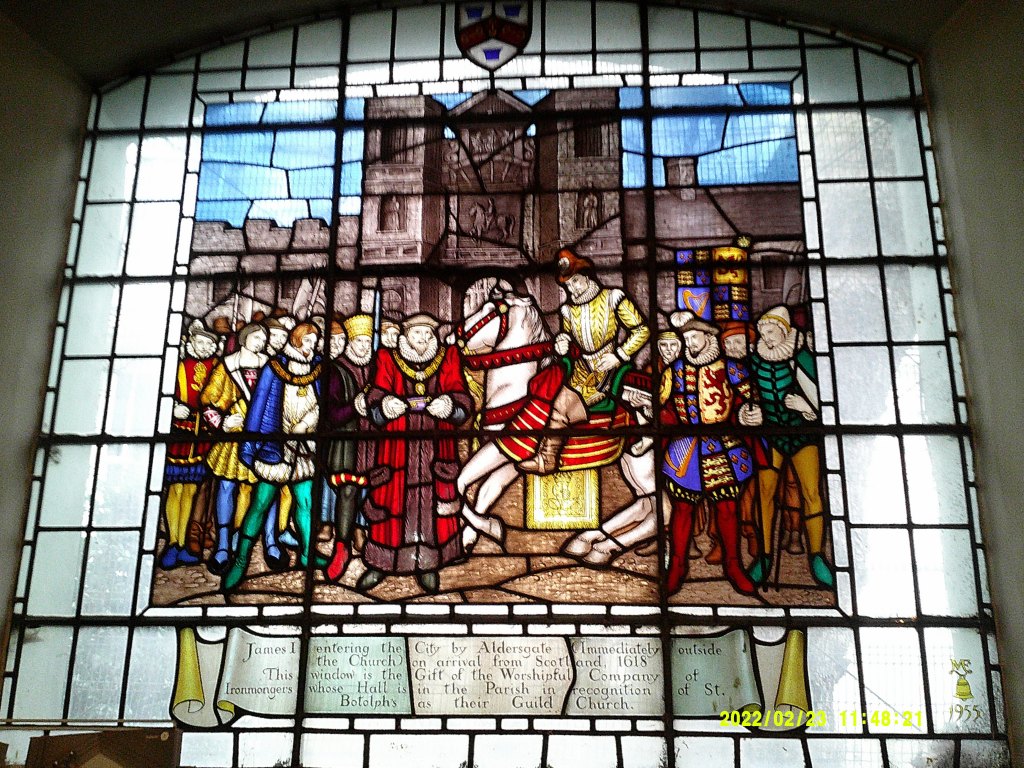
James 1st entering the City by Aldersgate 1618 
Bishop of London’s residence, near Aldersgate 1688 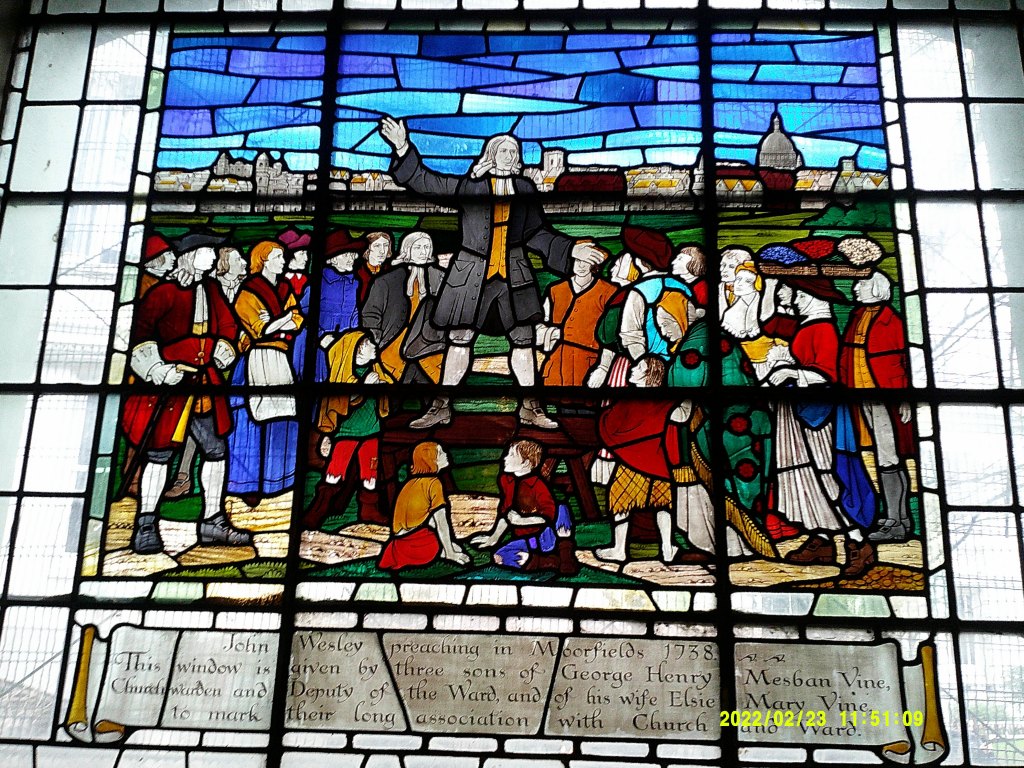
John Wesley preaching at Moorfields 1738
The first four pictures are events in the life of Jesus from the windows on the West side of the church.
The second four are events in the life of the church and surrounding area from the windows on the East side. There are several other stained glass windows in the church, and the overall effect is stunning.
 claresimons1