In most of the City of London churches you can pick up little packets of collectable cards for a donation of £2. Each card has an illustration of one of the 110 churches which existed in the Square Mile of the City in 1660. Many of these were lost in London’s Great Fire of 1666, some fell into disrepair and were demolished, being combined with other parishes. Still more were bombed to their foundations in the London Blitz of the 1940s, leaving just 40 City churches remaining today. The Lost London Churches Project was set up to promote interest in both the ‘lost’ churches and those still standing. Previous blog posts have featured ‘pocket parks’: tiny City gardens where a church once stood. Here are four more lost churches, three of which were destroyed in the Great Fire and never rebuilt, the last survived the Fire but ironically was destroyed by another fire two centuries later. All source information this month is from the Lost London Churches Project website, which says ‘ Whenever you come across a small empty space or a pocket garden in the City of London, you can be fairly sure that it is the site of an old church or churchyard. Why else would such valuable real estate not be built upon?’
St Peter, Westcheap
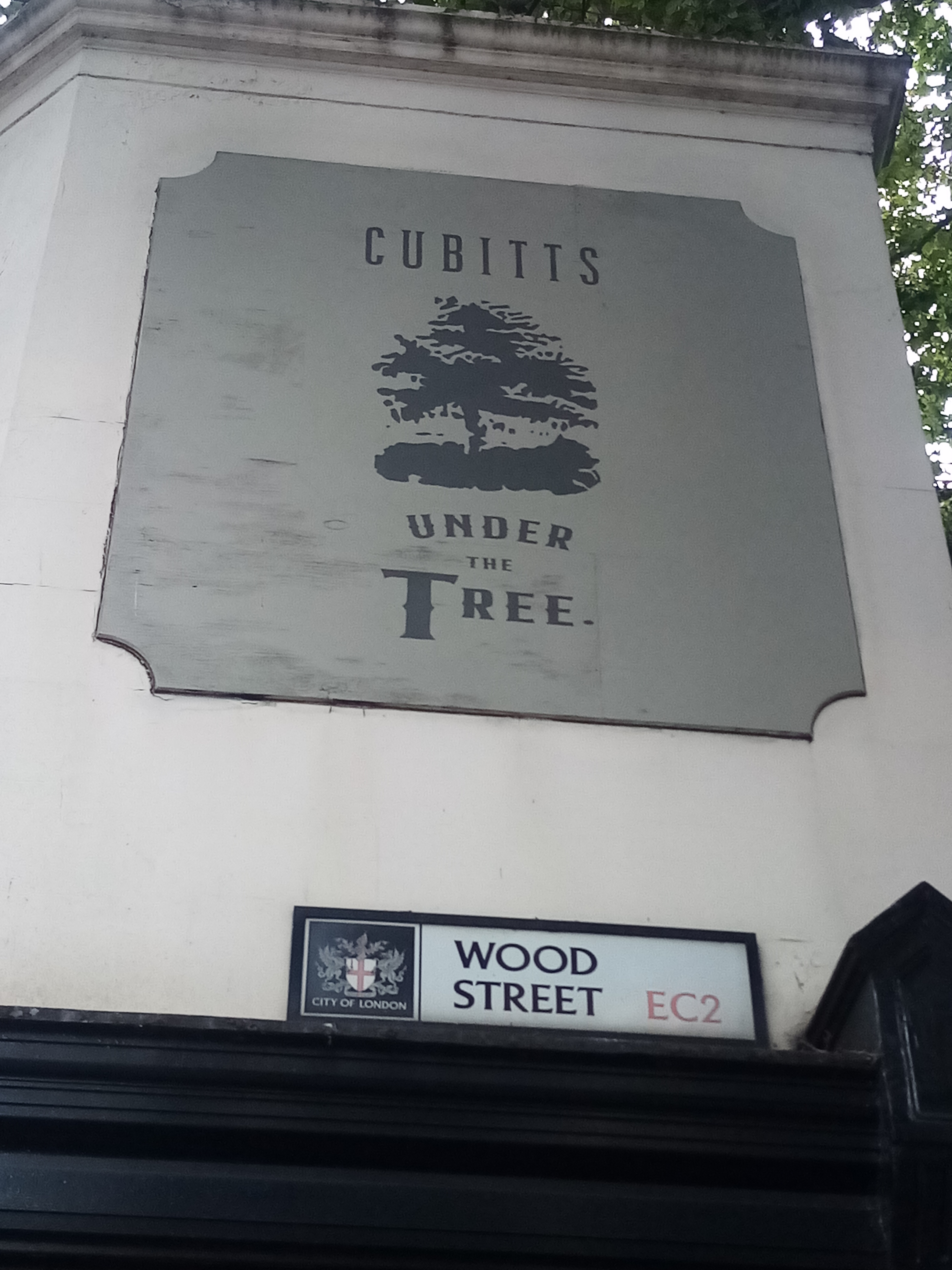
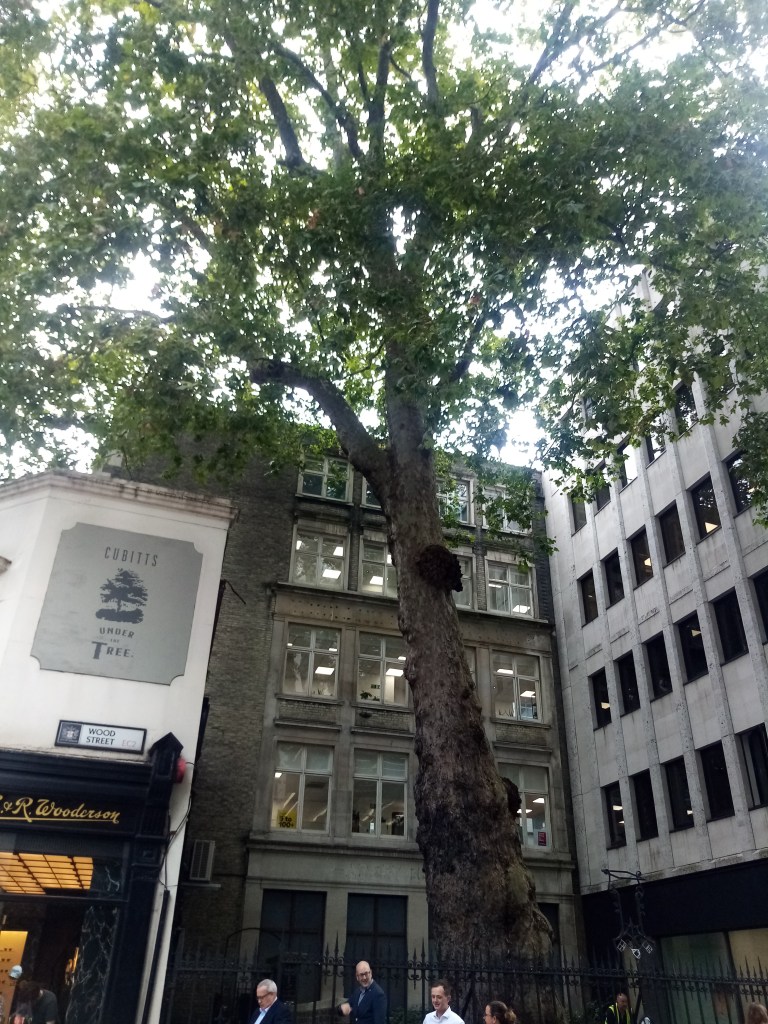
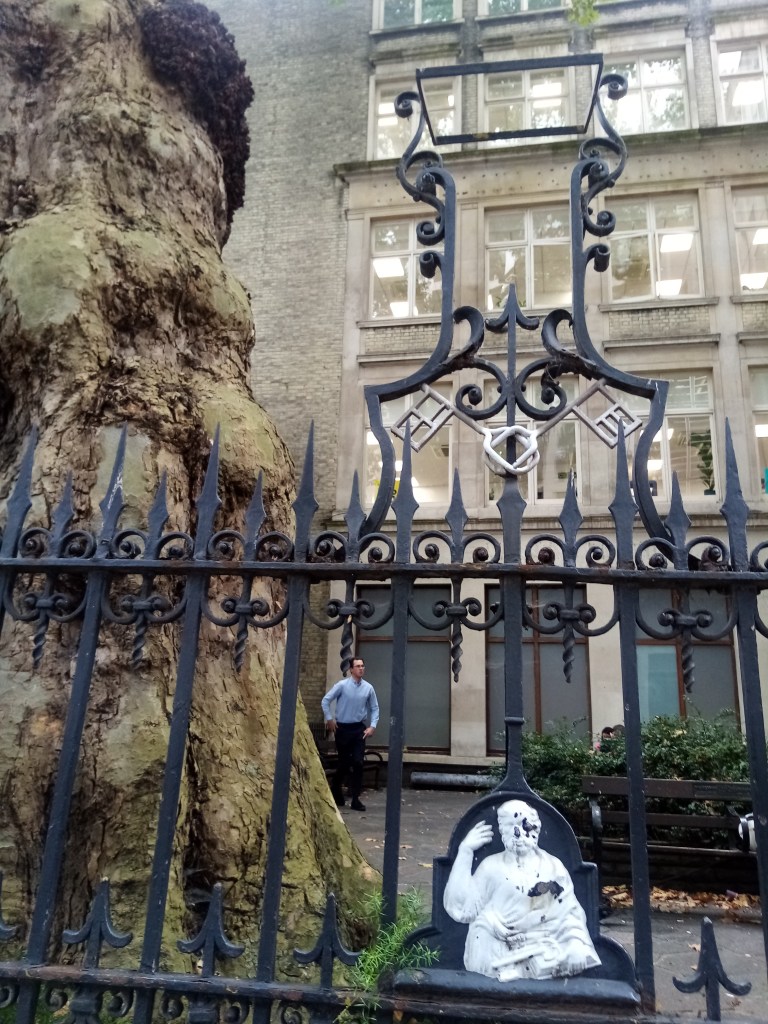
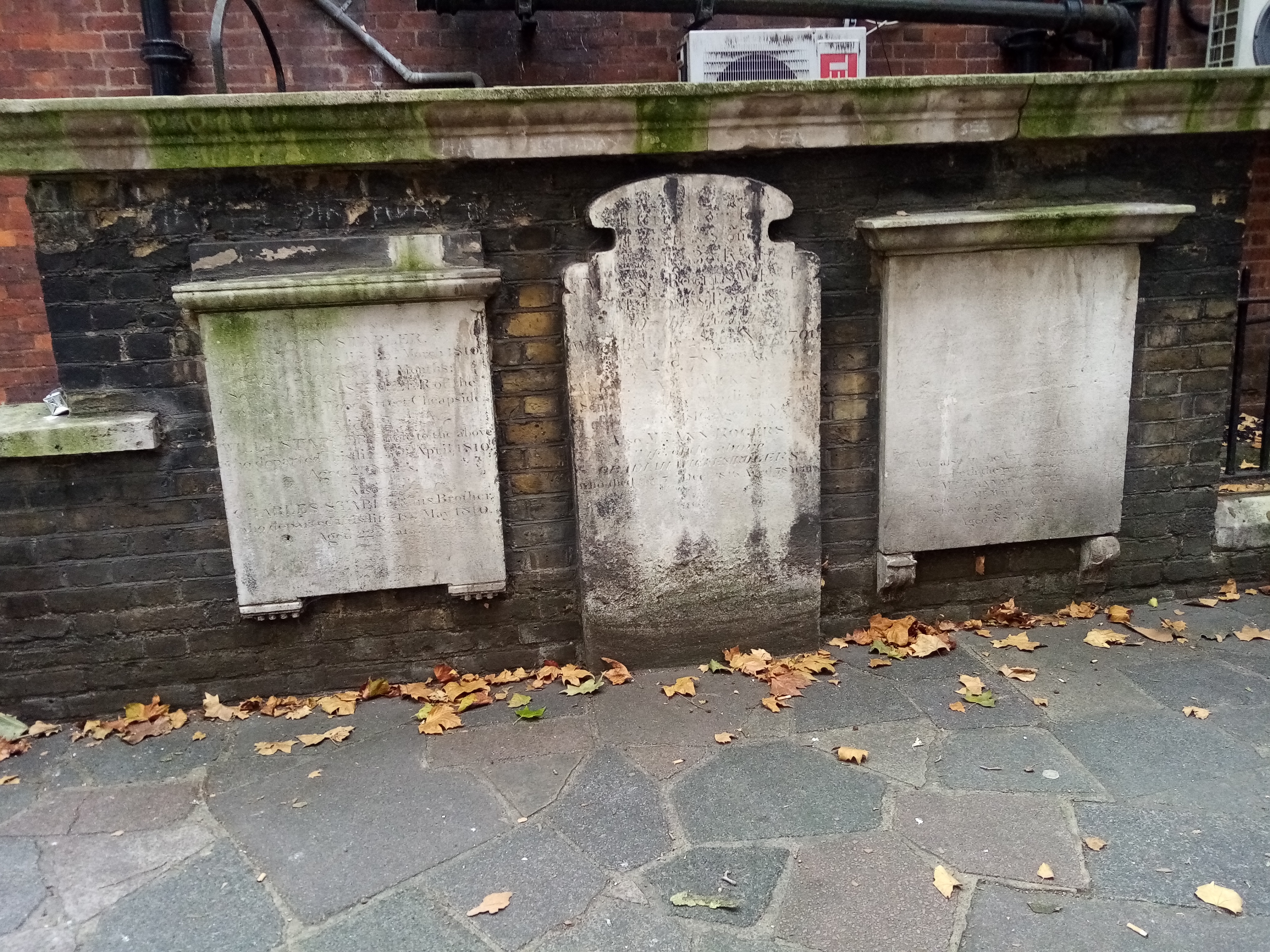
Cheapside, known as Westcheap in Mediaeval times, is the same bustling market street it was then, although the shops are now distinctly upmarket, including an abundance of coffee shops. Just off Cheapside in Wood Street is a tiny garden with a huge London plane tree, which has been a famous landmark for nearly two centuries. A bookseller in 1853 advertised his business address as ‘Under the tree, Cheapside’, and in 1919 L and R Wooderson gave their address as ‘124 Cheapside (under the tree.)’ This practice continues to this day, as the above photo shows. The tree is twice the size of the other trees in Cheapside, partly because it has been there the longest, but also because it’s very well nourished being situated on top of a graveyard! On the iron railings enclosing the garden is a little white image of St Peter and his crossed keys – the keys to the gates of Heaven. A few gravestones remain standing against a wall in the garden.
St Pancras, Soper Lane
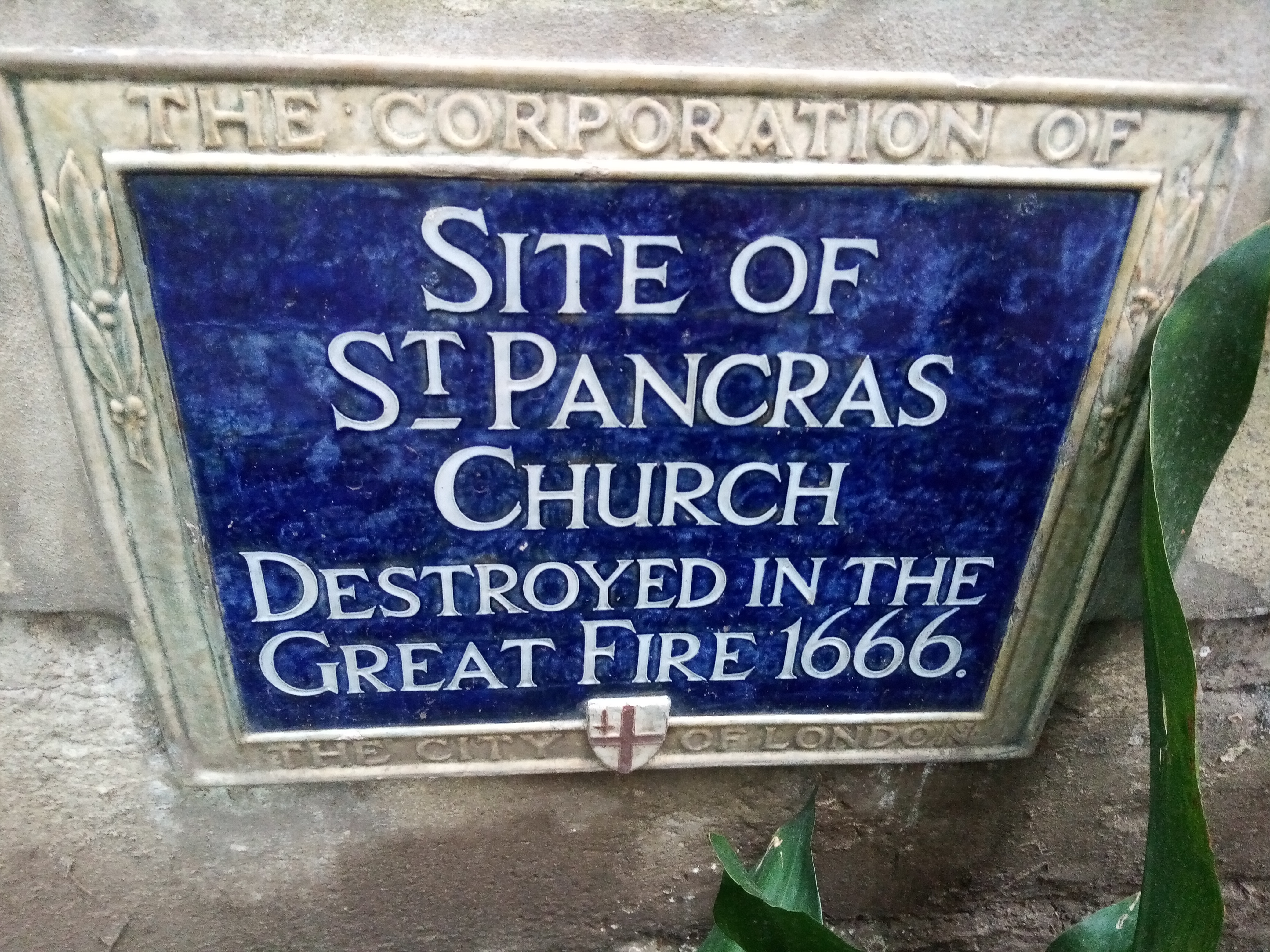
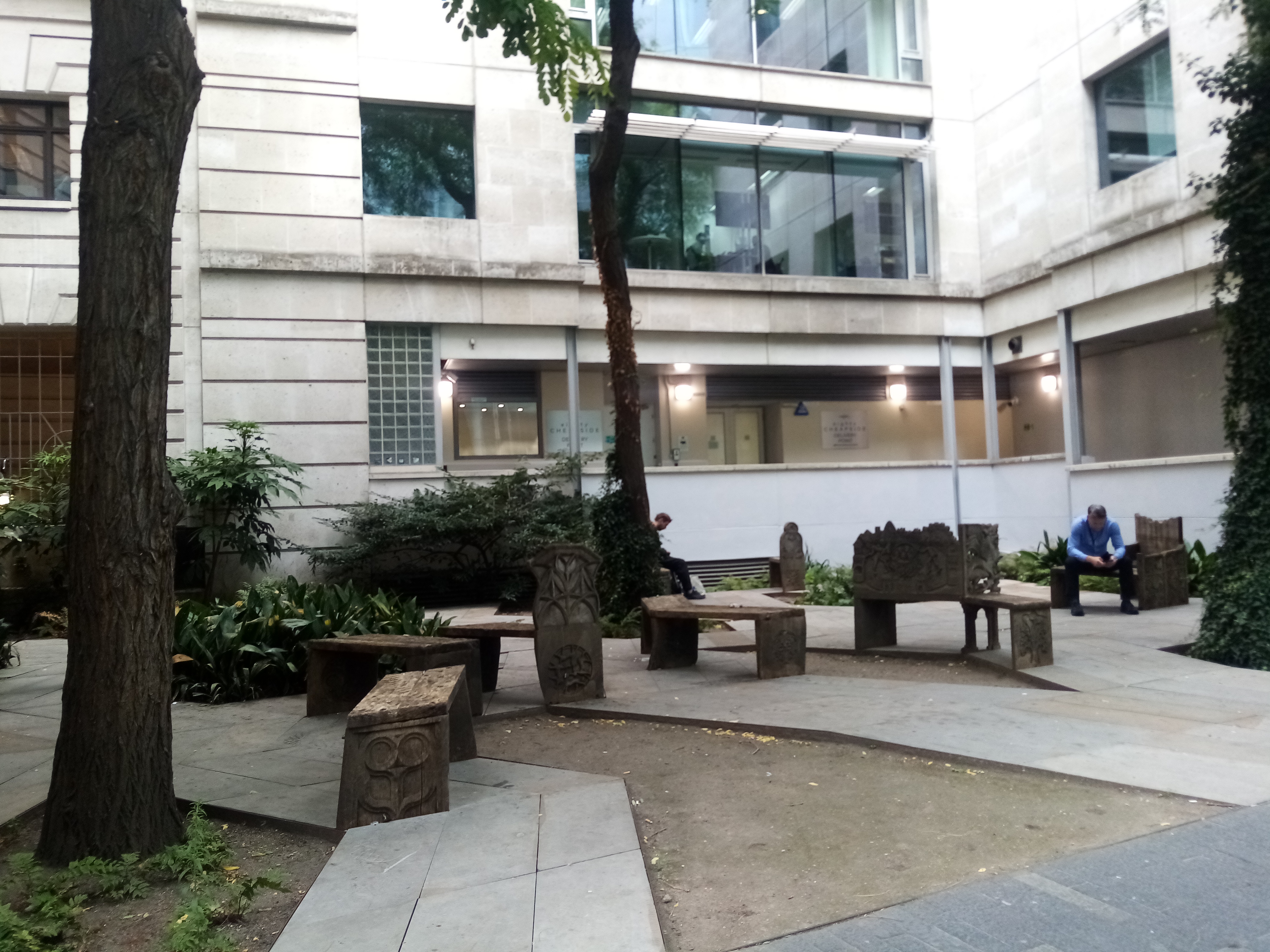
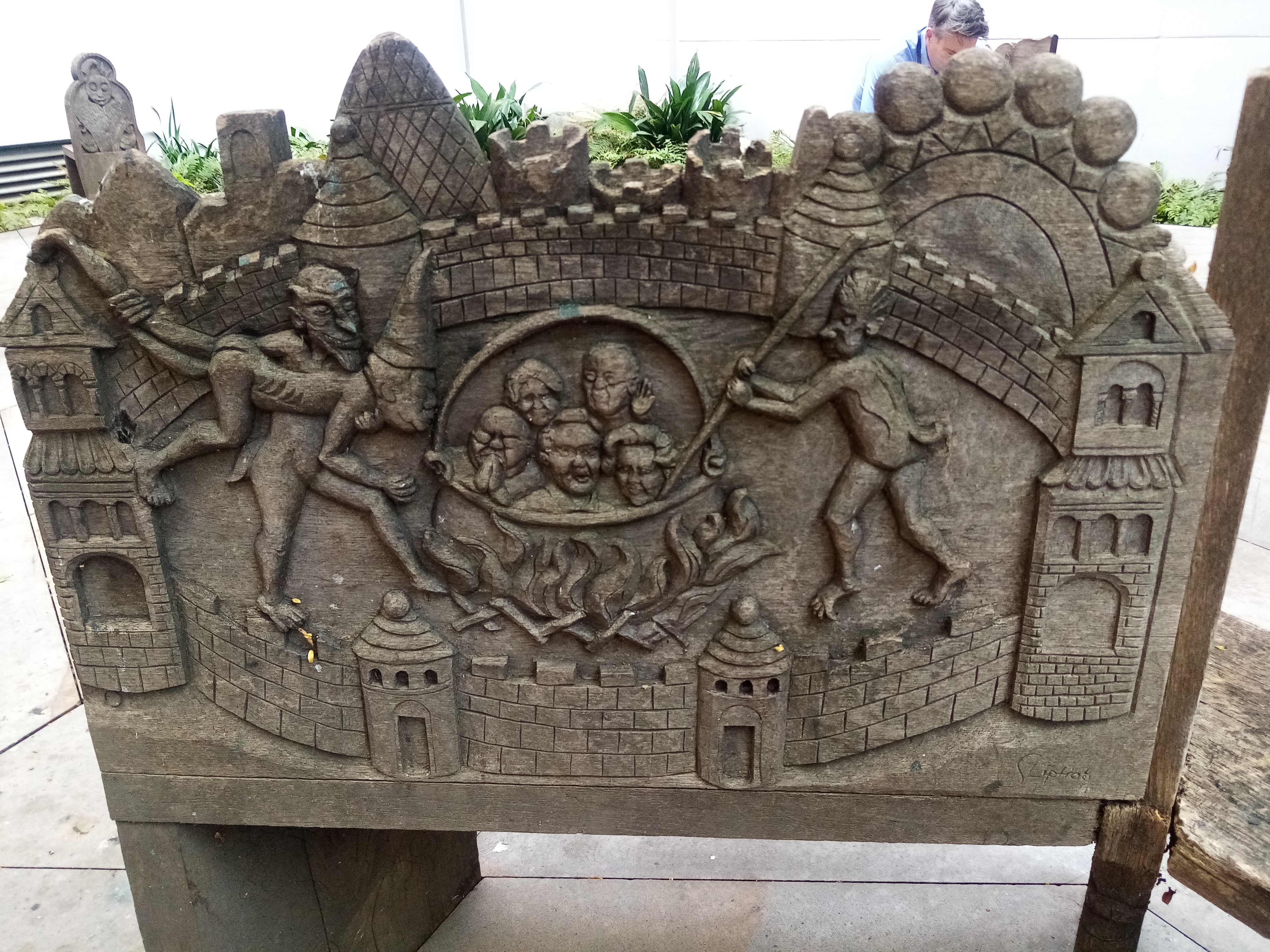
Situated in Pancras Lane is another pocket park, surrounded by tall office blocks. It’s a paved area with some carved wooden benches, a couple of trees and some flower beds. Like the other pocket parks, there are always several people standing around talking on their phones or sitting eating their lunch, so it’s sometimes quite hard to get a ‘people-free’ photo! On this site, not only was the 1098 church destroyed in the Great Fire, but Soper Lane itself. The church was originally a small single nave building with a tower, which was enlarged in 1624, but because of its destruction in the Fire, was only used for another 42 years. The decision was made not to rebuild it, but to unite the parish with next door church St Mary-le-Bow, which survives today as an active City church. I couldn’t find out anything about the benches, the LLCP website says they feature ‘ecclesiastical themes’ but they look recently made. I was only able to get one picture, as the others were being sat on!
St Ann, Blackfriars
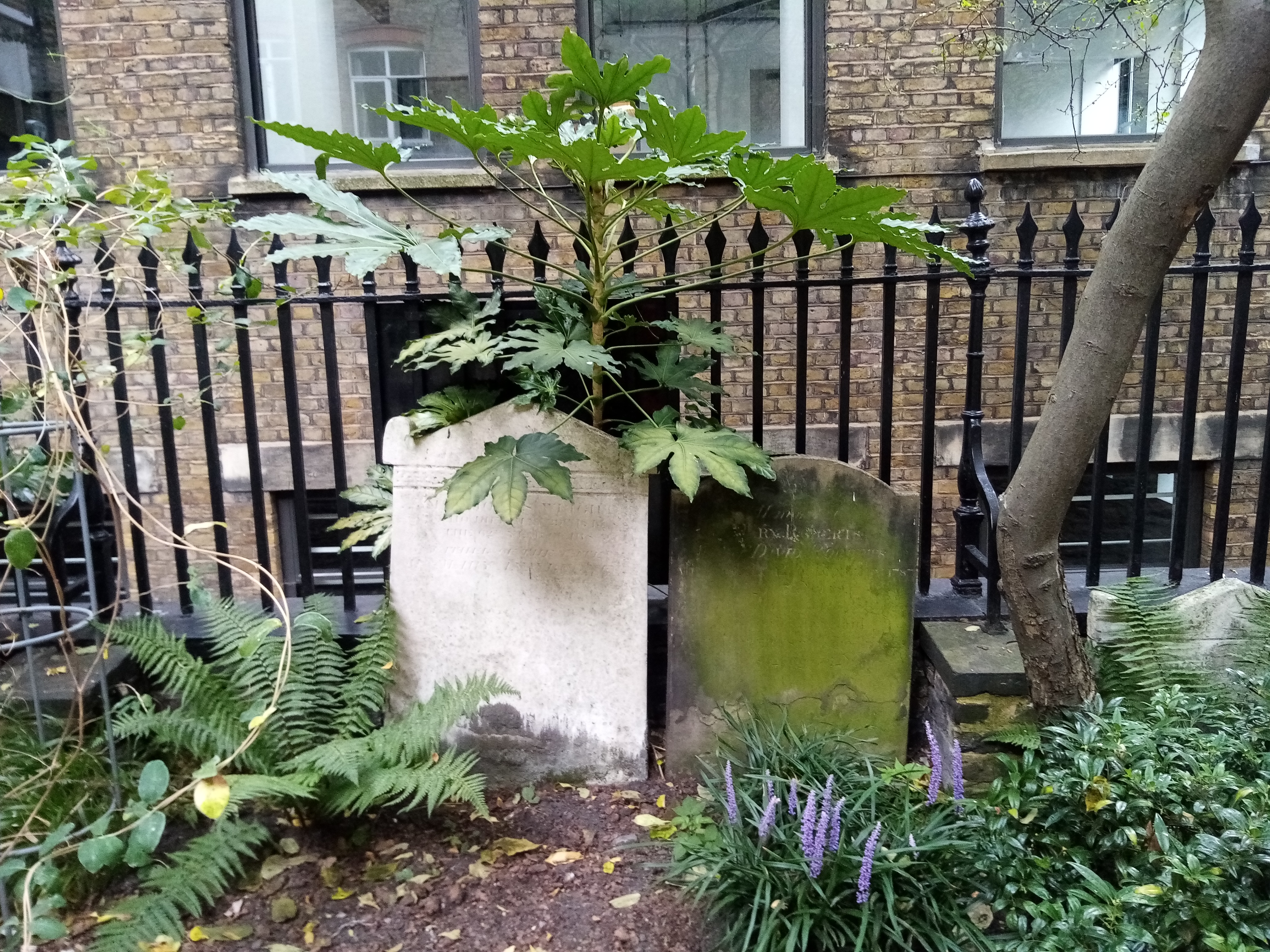
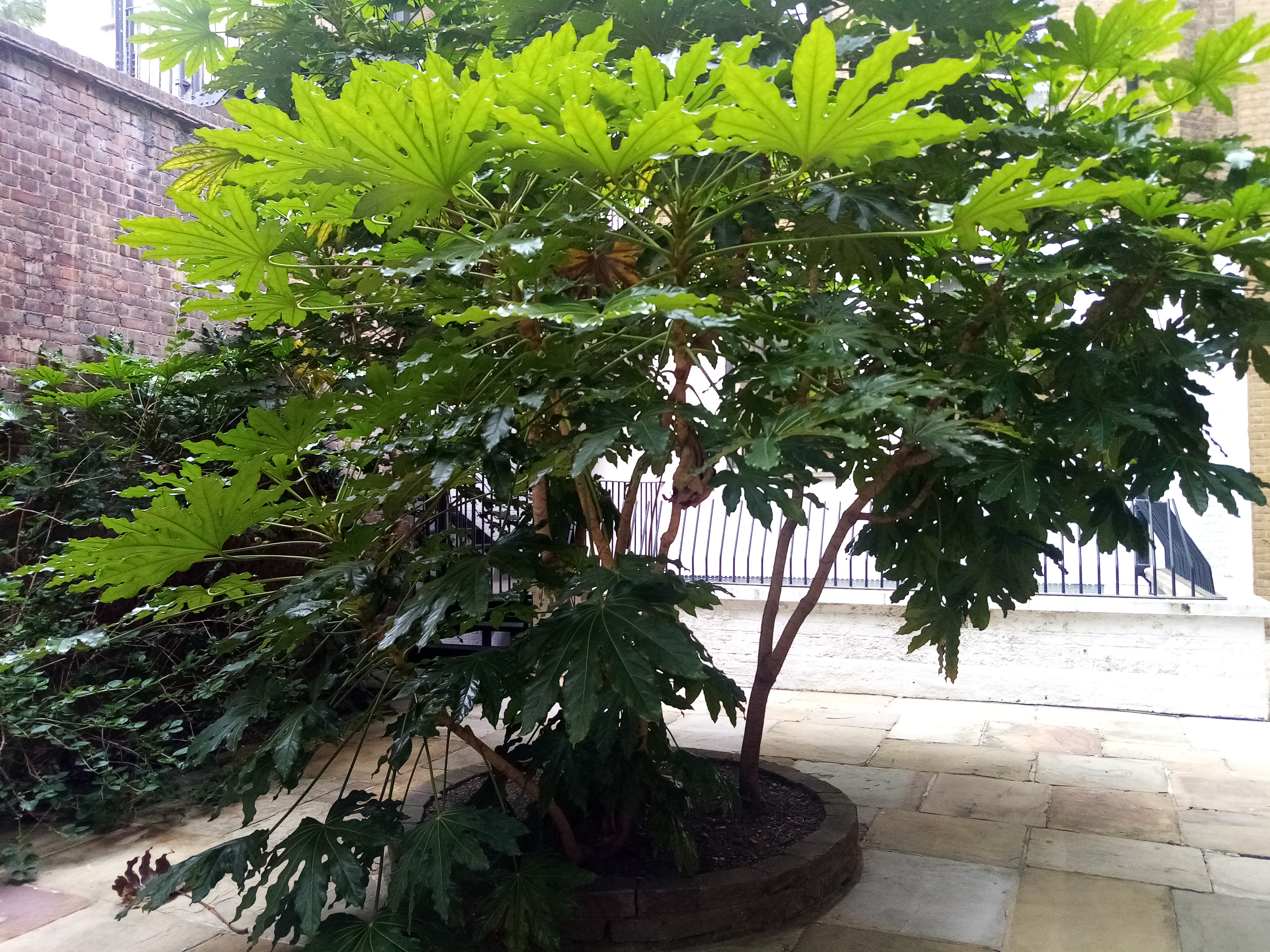
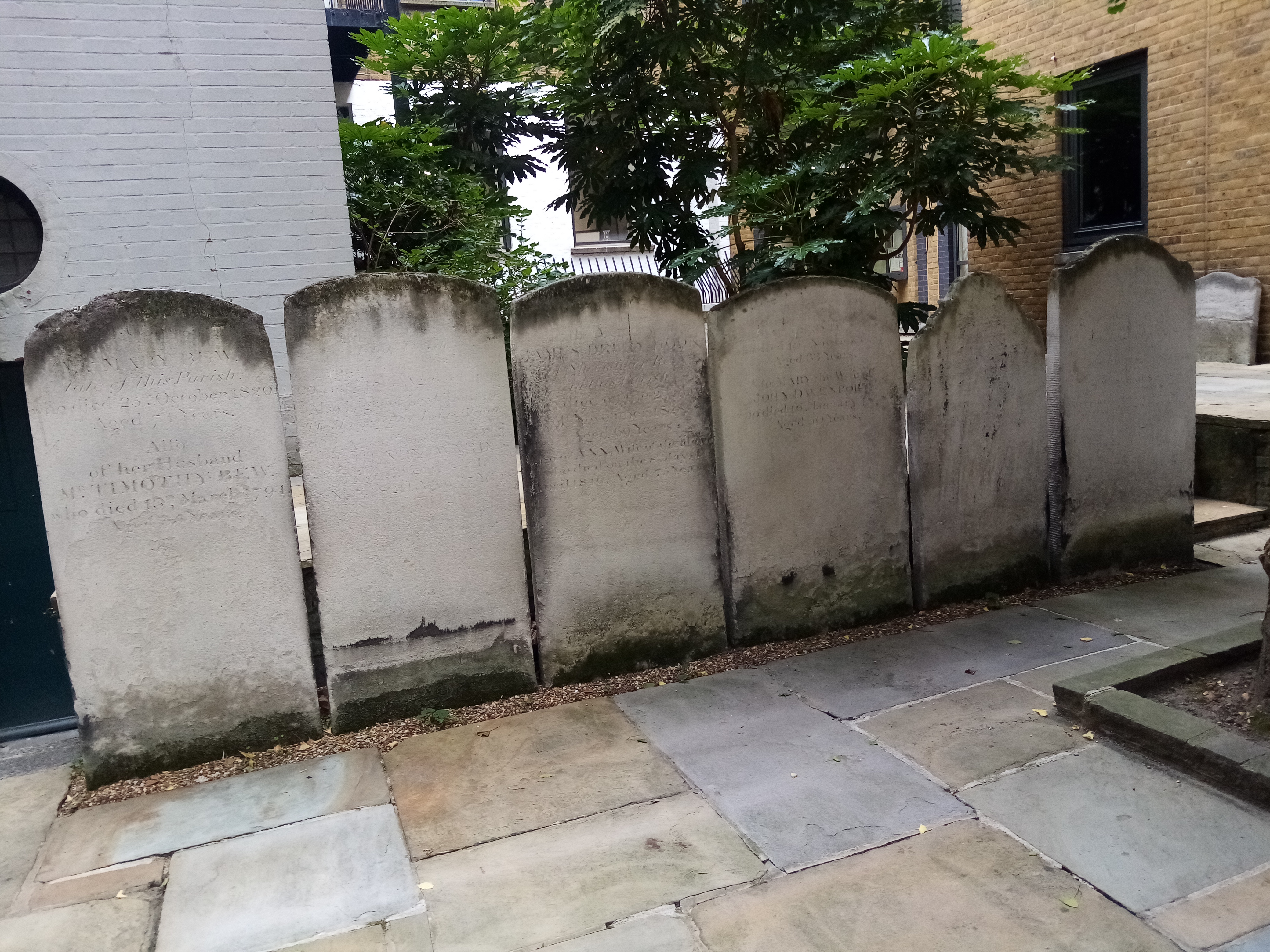
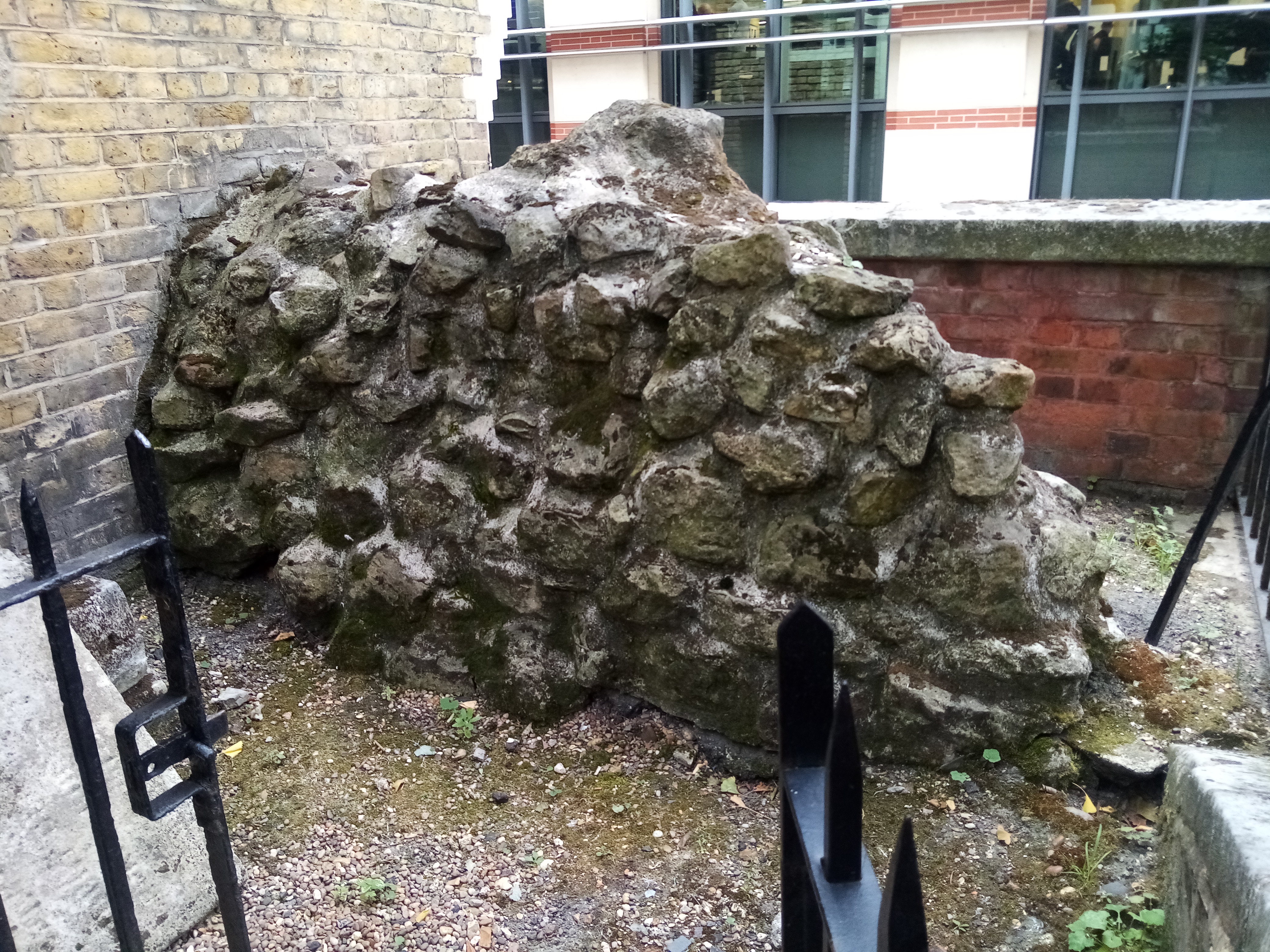
One of the most attractive of the Pocket Parks, St Ann has been planted out with the types of shrubs and small trees which will survive in an area almost devoid of sunlight. St Ann was originally a parish chapel in the Priory of Blackfriars situated on the River Fleet. Most of the buildings on the site were demolished in 1550 when the Priory was dissolved by Henry VII, but local residents needed a parish church so a new one was established in 1597 with the full name: ‘the Church or Chapel of St Ann, within the precinct of Blackfriars.’ The church is believed to have been adapted from the Chapter House of the mediaeval priory, so it looks as if there was always the intention to provide a place of worship here. However, the new church survived less than 70 years before succumbing to the Great Fire, and the parish was combined with nearby St Andrew by the Wardrobe, which stands today. The churchyard remained open for burials and there are some gravestones in the garden. Unusually, a remnant of the original church wall also remains.
St Mary Magdalene, Old Fish Street
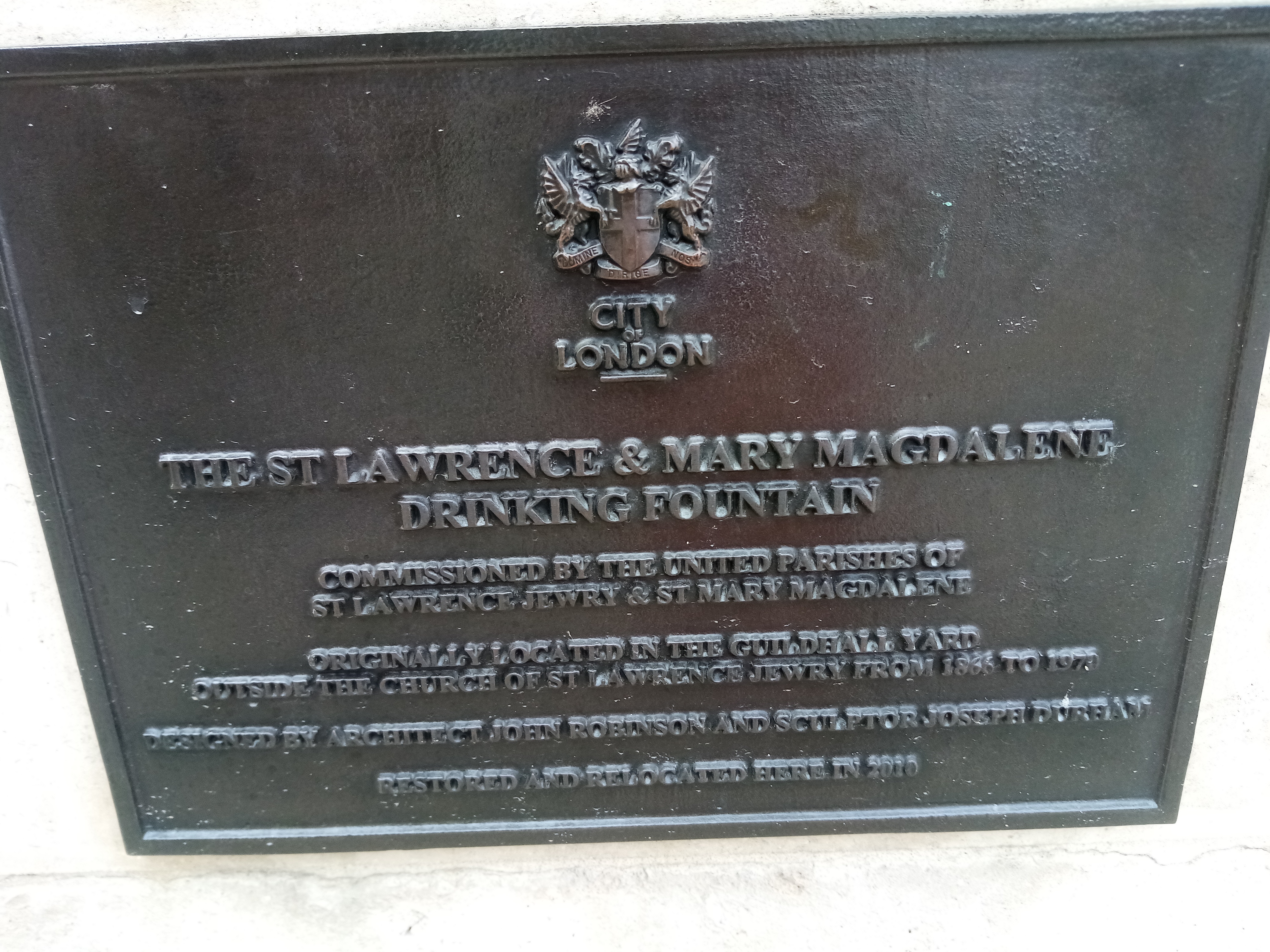
The first mention of this church is in 1181, being situated in the fish market near St Pauls Cathedral. A copperplate map of 1555 shows 12 churches in the immediate vicinity of St Pauls with St Mary Magdalene being the nearest, as can be seen from my photos. Like the other churches, this one was destroyed in the Great Fire, but unlike the others it was rebuilt by Sir Christopher Wren in 1687 when the parish combined with another destroyed church, St Gregory by St Pauls. However, less than 200 years later disaster struck when a nearby warehouse caught fire and severely damaged the St Mary’s. It couldn’t be repaired so it was pulled down and the parish combined with St Martin on Ludgate Hill. There are no visible remains of the church but a drinking fountain has been erected where the church once stood. The plaque says that the fountain was commissioned by the combined parishes of St Mary Magdalene and St Lawrence Jewry in Guildhall Yard, and the fountain was originally located there, but it was re-sited here in 2010. St Lawrence still stands, so I’m glad the fountain was moved as it now commemorates the site of a ‘lost church’.
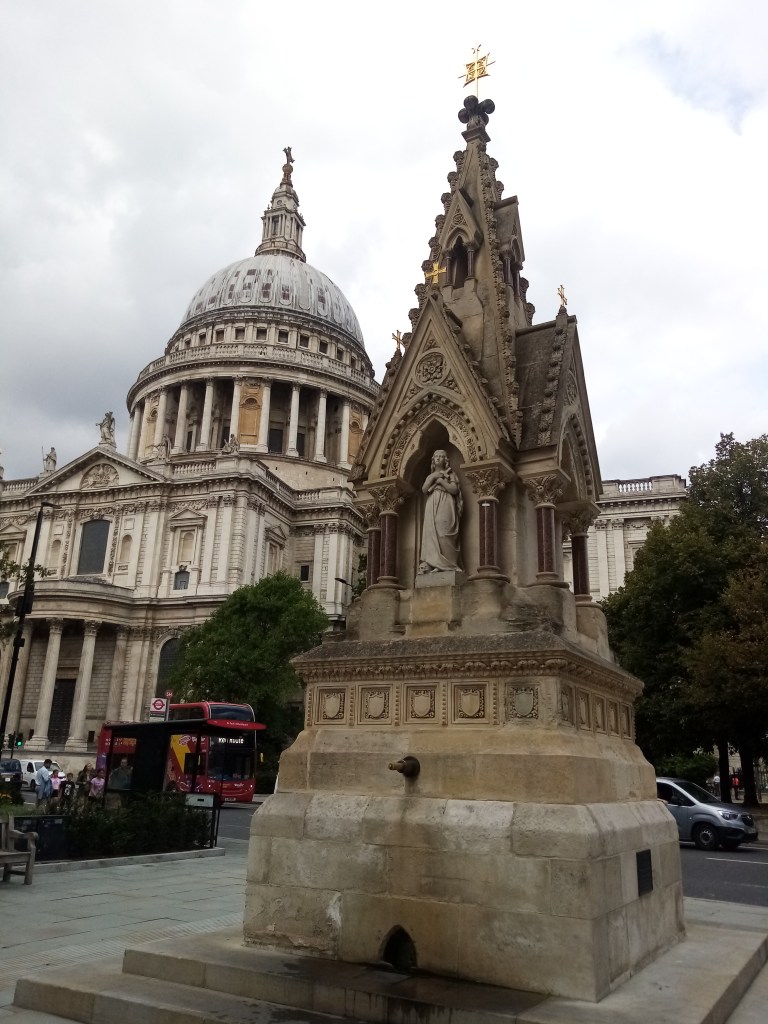
Fountain with St Pauls Cathedral behind 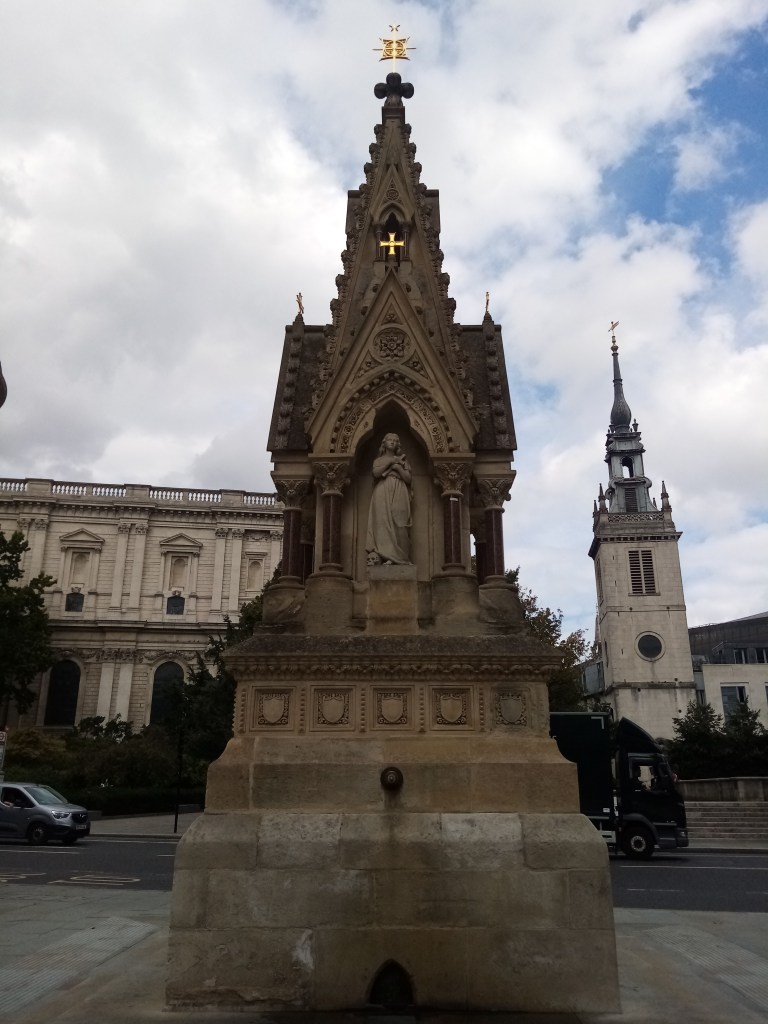
Source: lostlcp.com
 claresimons1