At the start of a new year I’m going to look at the origins of Christianity in London. The earliest site of Christian worship in the capital is actually highly debatable; there are several contenders but these four are some of the oldest, all having been founded before 1,000AD. And that’s pretty ancient! It’s been interesting to explore the earliest foundation of London as a city, first by the Romans (Londinium) followed by the Saxons (Lundenwic), and discover that Christians have been around in London since those earliest times. So I’m going to kick off with possibly the earliest known Christian site…..
St Pancras Old Church

It is believed that the site of the present Victorian church (above) has been a place of Christian worship since 314AD. The church is dedicated to St Pancras, a Roman convert to Christianity, who died when he was just 14 years old. Called before the Emperor Diocletian and commanded to worship Roman gods, Pancras refused to recant his Christian faith and was consequently executed. Pancras never visited this place, as he died in 304, but it is believed that a shrine was established on this little hillock overlooking the River Fleet, and subsequently a church was founded here. We know for certain that there was a church here in 1086 as it was recorded in the Domesday Book. By the 13th century, the church had fallen into disrepair, and being in a very small, rural community outside the boundaries of London, it was primarily used as a burial ground, with no regular church services being held. In 1822, St Pancras New Church was opened and by the 1840s, the Old Church was in ruins. However, with the expansion of London’s population, the church now sat in a fully populated area and in 1847 the church underwent a complete restoration, and further refurbishment in 1888 gives us the church we see today. The picture above, with the River Fleet flowing above ground, is dated 1827.
Sources: Information boards in the church; Wikipedia
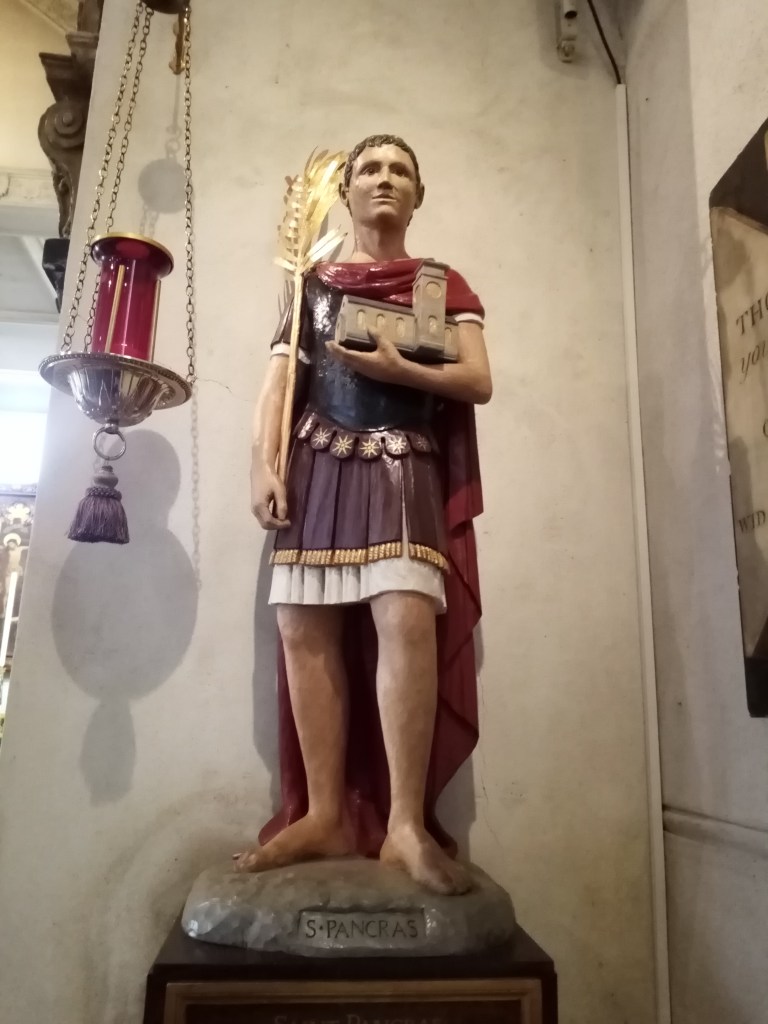
St Pancras 
Interior of Old St Pancras

St Paul’s Cathedral
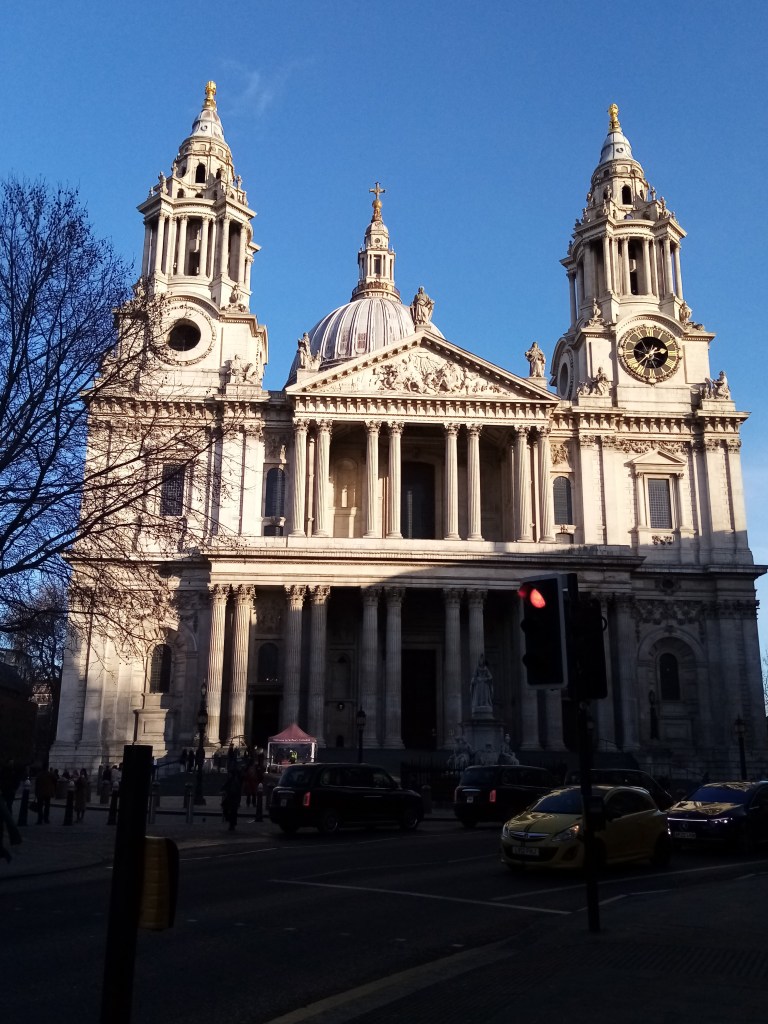
St Paul’s in the Winter sunshine 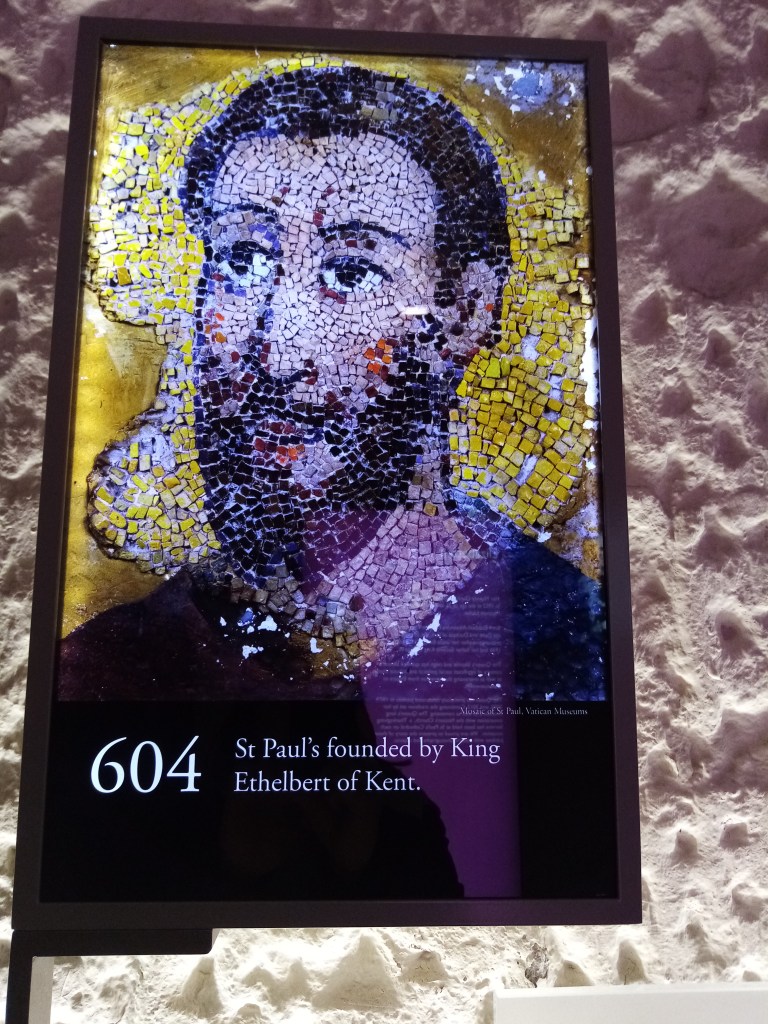
Ethelbert of Kent
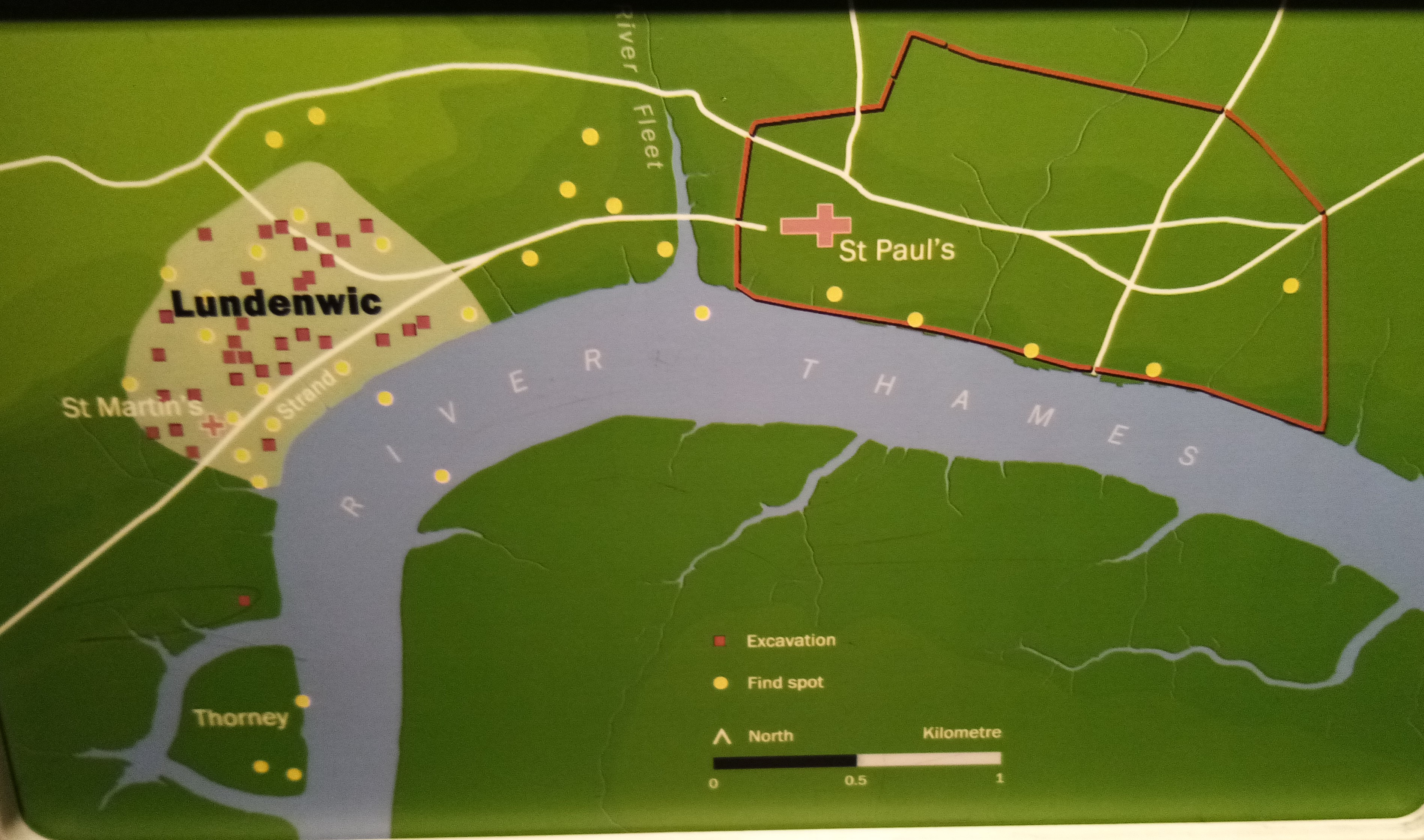
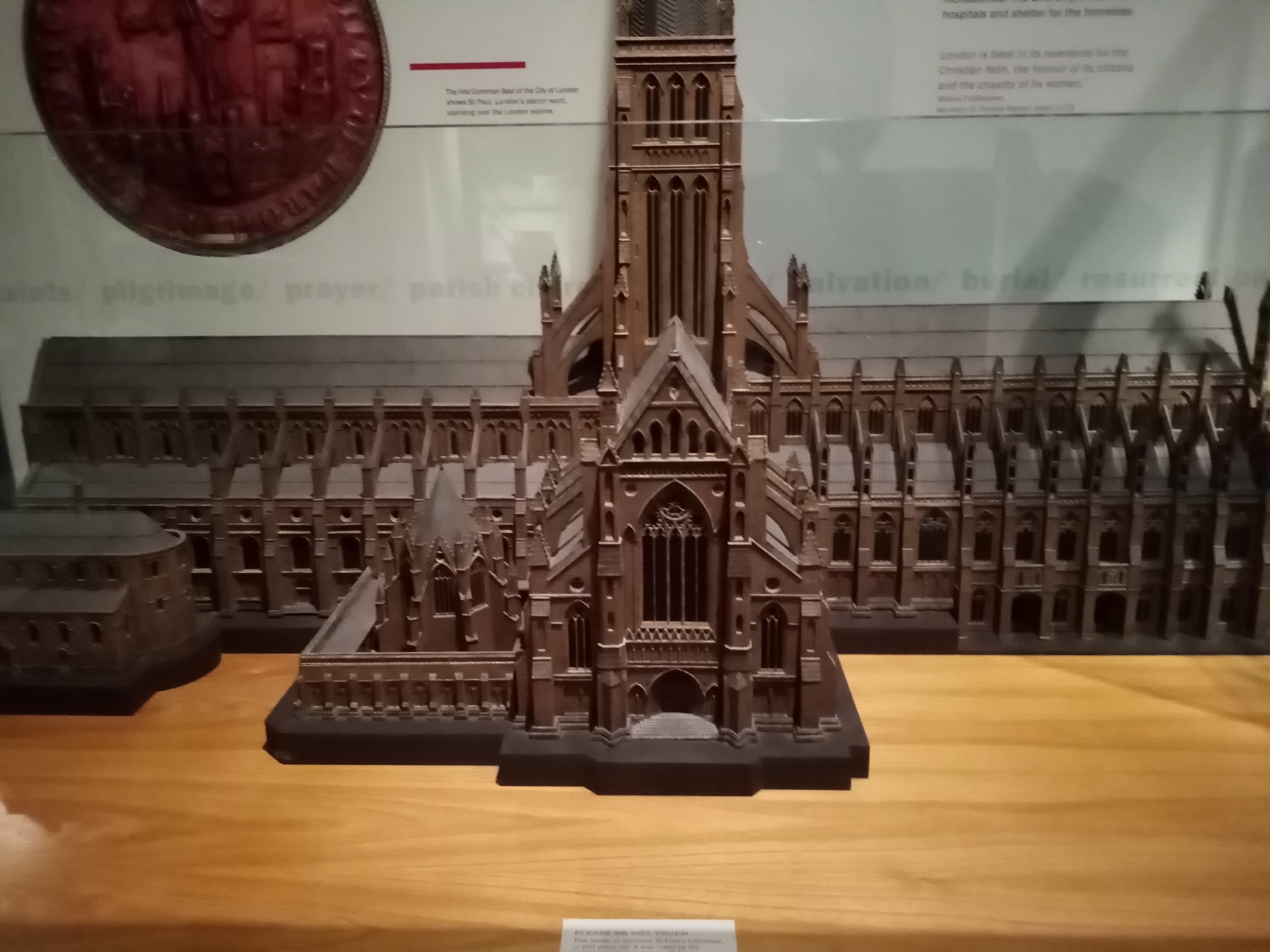
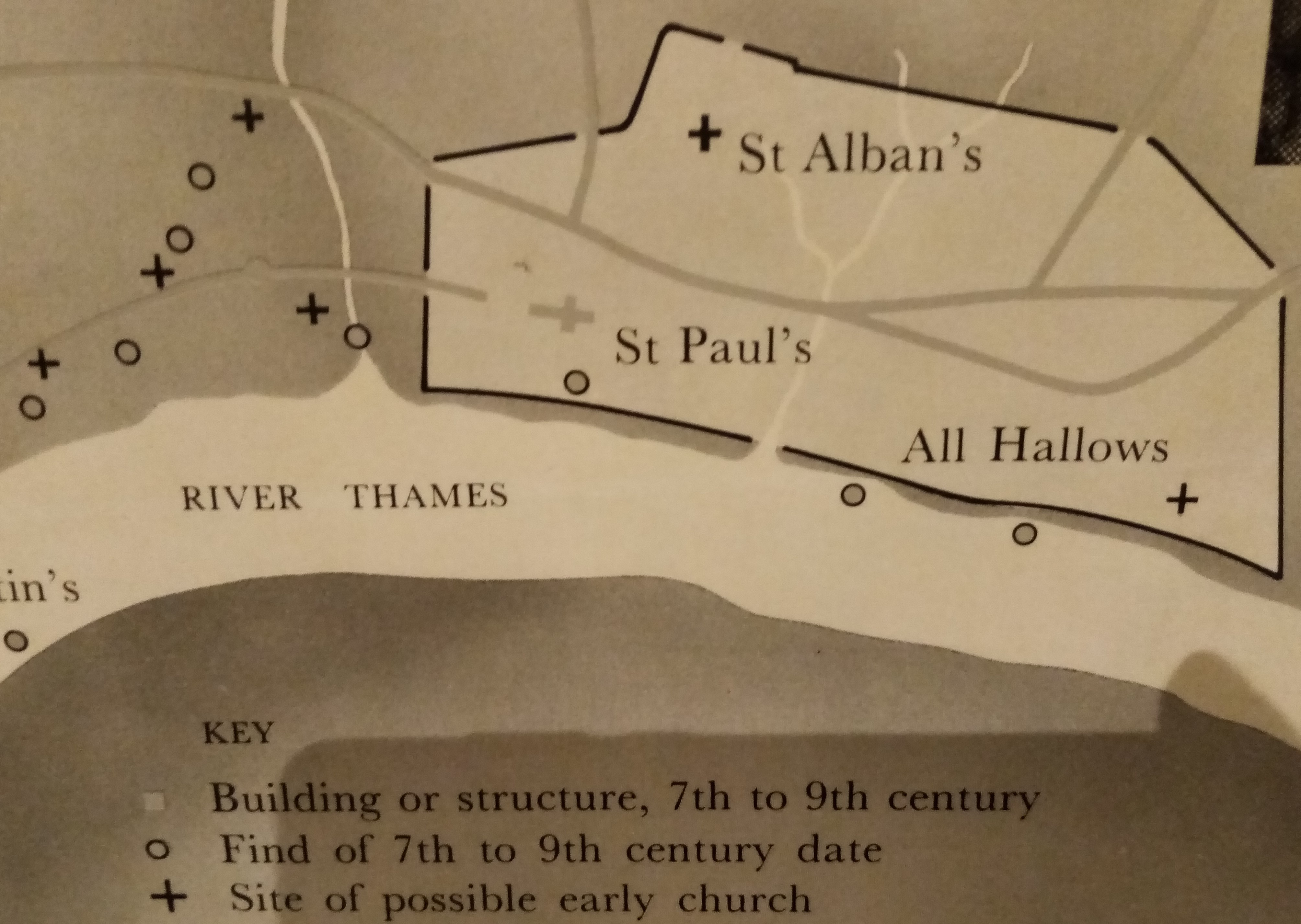
There has been a church on this site since 604AD. The chosen location for the first church was among the ruins of the Roman city, Londinium, at its highest point overlooking the Fleet valley. The Anglo-Saxons built their new city, Lundenwic, to the West of the abandoned Roman settlement, but chose this hill because of its prominent position. In the 7th century, England was divided into a number of Saxon kingdoms and St Paul’s was founded by King Ethelbert of Kent and was the seat of the first Bishop of London, Mellitus. The short-lived first wooden building burnt down in 675, and the second was destroyed by invading Danes in 962. The third building, built of stone and consecrated as a cathedral, was destroyed by fire in 1087. There followed a period of over 150 years when a new building was begun; construction was halted due to financial difficulties, begun again with a change in architectural style from Norman to Gothic, and finally completed in 1240. This building would have dominated the mediaeval London skyline, it was actually larger and longer than the present cathedral. It was altered and enlarged over the next four centuries….and completely destroyed in the Great Fire of 1666. Rising from the ashes for the fifth time was Sir Christopher Wren’s masterpiece, consecrated in 1697, and to me and many others, a work of genius and beauty.
Sources: Official Souvenir Guide; Wikipedia
St Bride’s Fleet Street
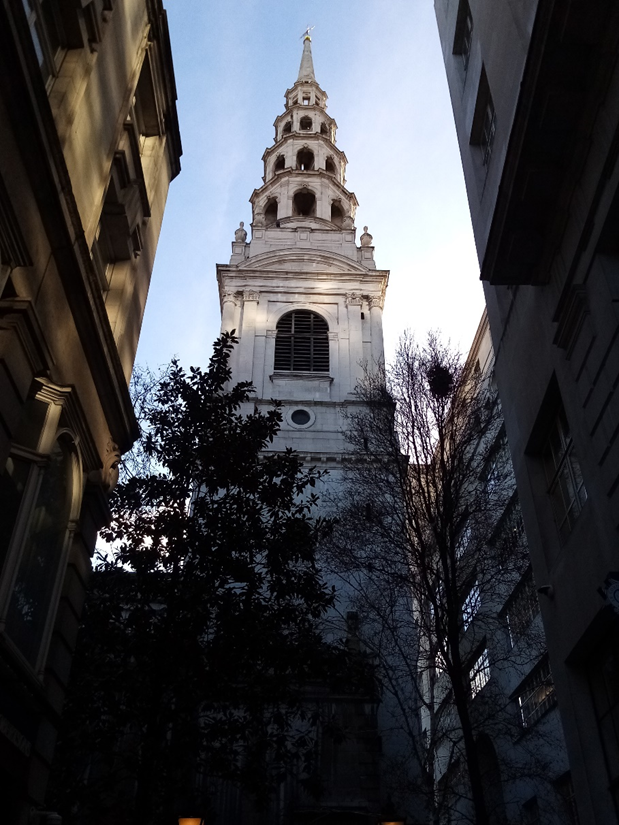
This beautiful church with its ‘wedding cake’ spire was named for St Bridget of Kildare, Ireland, and it is believed that a Celtic Christian community was established here in Roman time; part of a Roman tiled pavement has been discovered in the crypt. While this can’t be definitely confirmed, what’s known for sure is that there was a church on this site in the 7th century serving a community of Saxons who had converted from Paganism to Christianity. It was one of several churches, now long gone, along what is now Fleet Street in the Saxon town of Lundenwic. The church was also the site of a sacred well, long since dried up, which became known as the Bridewell. There have been at least seven churches on the site, and as with St Paul’s, the mediaeval St Bride’s was destroyed by fire in 1666 and rebuilt by Wren, who decided to make it really stand out by erecting its iconic spire. On my visit, I popped down to the crypt with its tiny museum displaying Saxon coins, pottery, gravestones, all found under or near the church. There are also some remaining Saxon walls standing, and I’m the sort of person who can get excited by the sight of a 13 hundred year old wall! St Bride’s other claim to fame is as ‘The Journalists’ Church’; how this came about, I’ve written about in my post from October 2020: Artistic Christian London.
Sources: Information Boards in the Museum; Church website

Saxon pottery 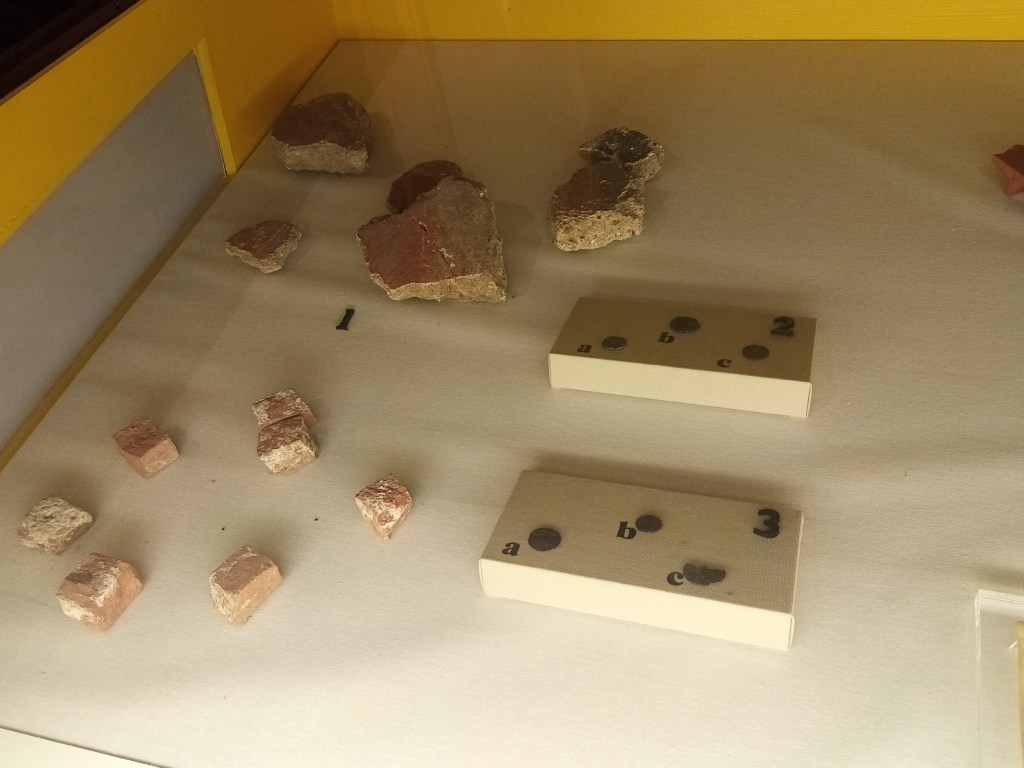
Saxon coins

And a chunk of Saxon wall!
All Hallows by the Tower (aka All Hallows Barking)

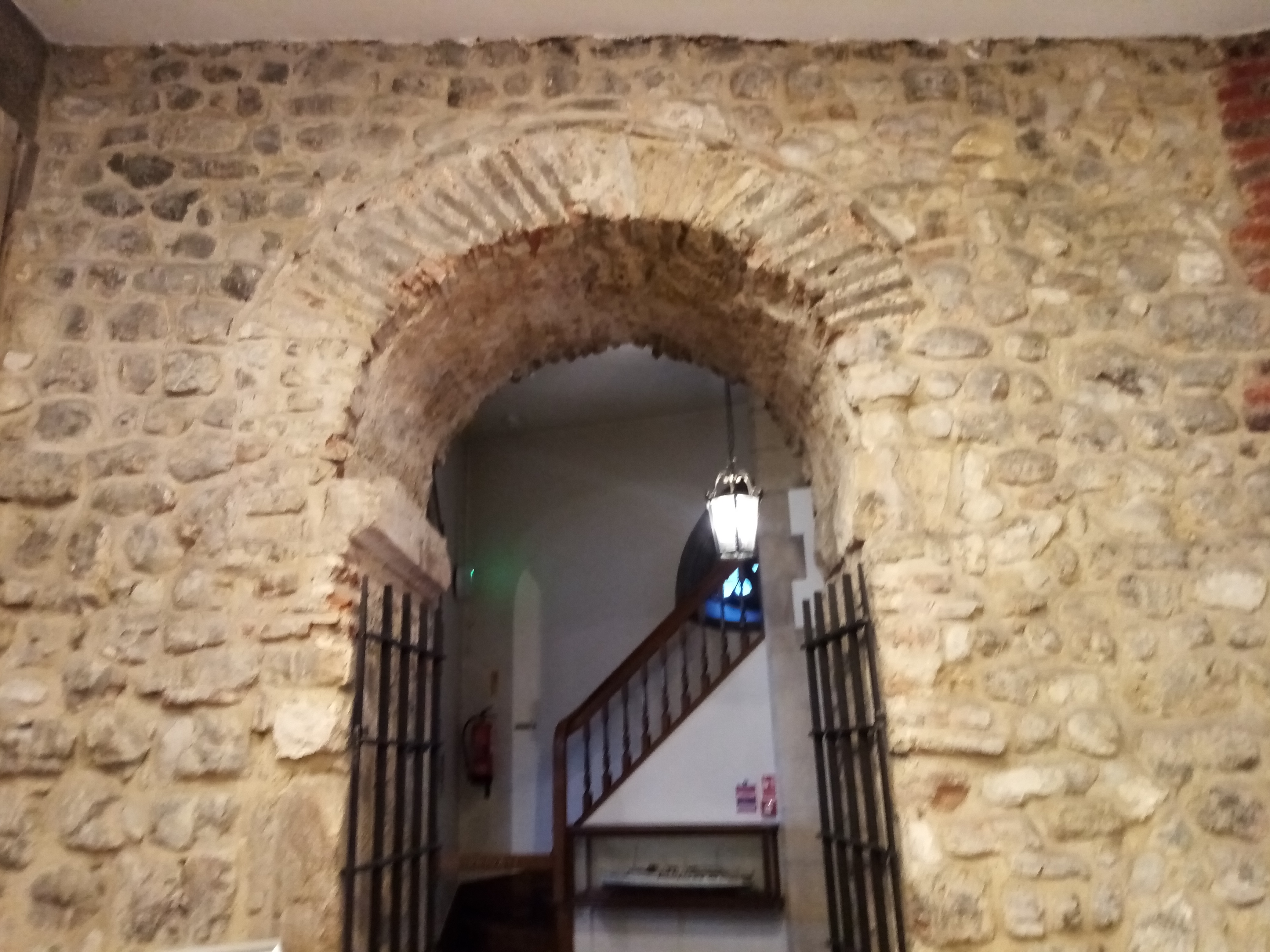
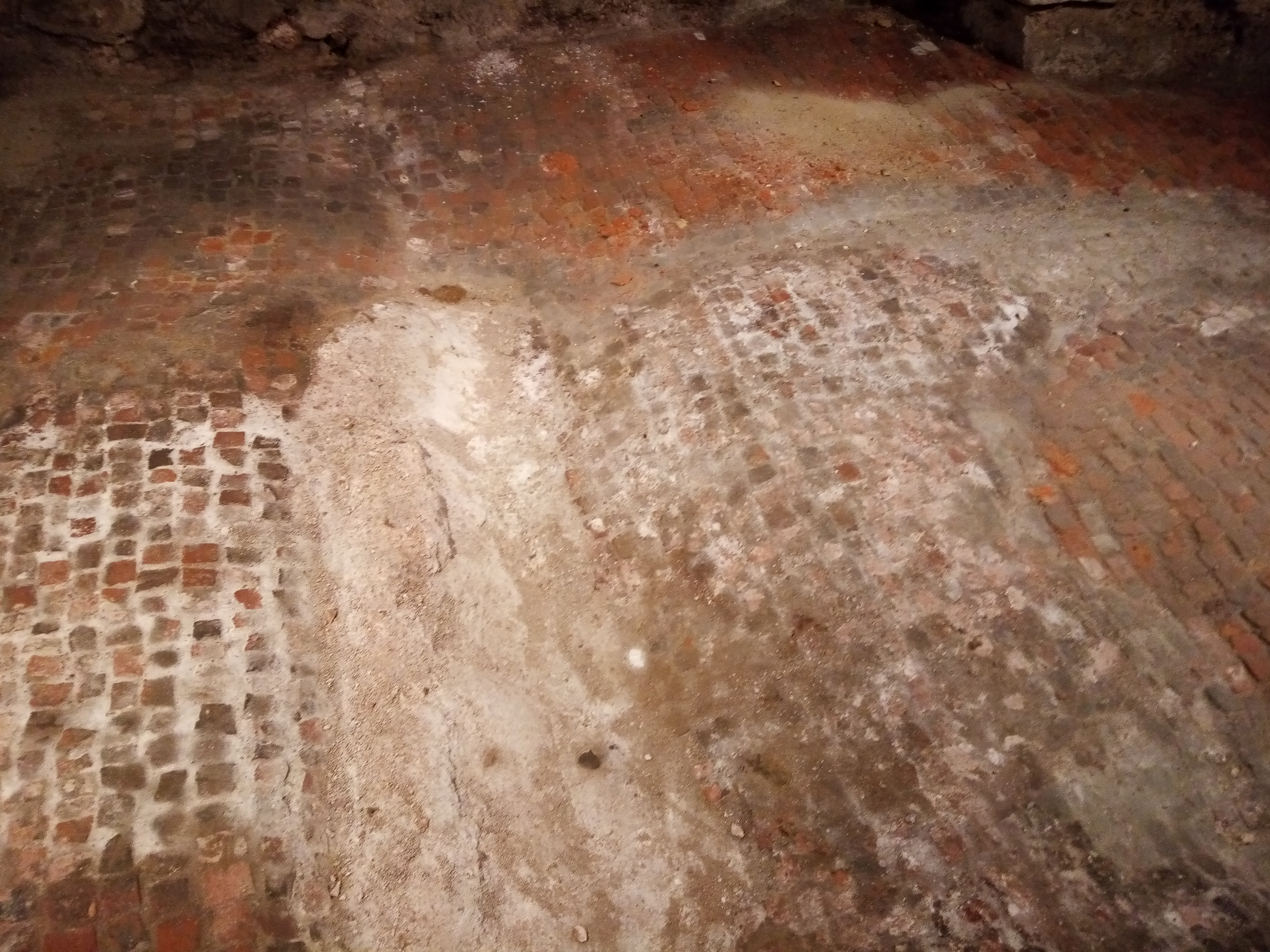
Another church with Roman origins, All Hallows also has Roman pavement tiles in the crypt in what would have been street level in 200AD. The first use of the site as a place of worship is in 675 when Erkenwald was made Bishop of London and founded a chapel of Barking Abbey here. A charter dated to 687 listing properties belonging to the Abbey includes two pieces of land in or near London, but Wikipedia tells me that neither of these accurately describes the location of All Hallows, which is inside the Roman walls. However, part of a Saxon archway (below), built from reused Roman tiles and brickwork, was uncovered in 1940 following bomb damage to the church. The reuse of Roman building materials and the design of the arch suggested that the church probably dated from the 7th century, and the connection with Barking Abbey is that Bishop Erkenwald’s sister was the Abbess. This confirmed the belief that All Hallows was founded as a daughter church of Barking Abbey. The stone arch was part of a church which replaced an even older, wooden building, tentatively suggesting that there was a church here in Roman times, but as with St Bride’s, this is unproven. Also in the crypt are a lovely Wheel Head Cross, a Saxon pillar and some Roman gravestones, all discovered under the present building during extensive bomb damage repair work.
Sources: Information boards in the church; Wikipedia
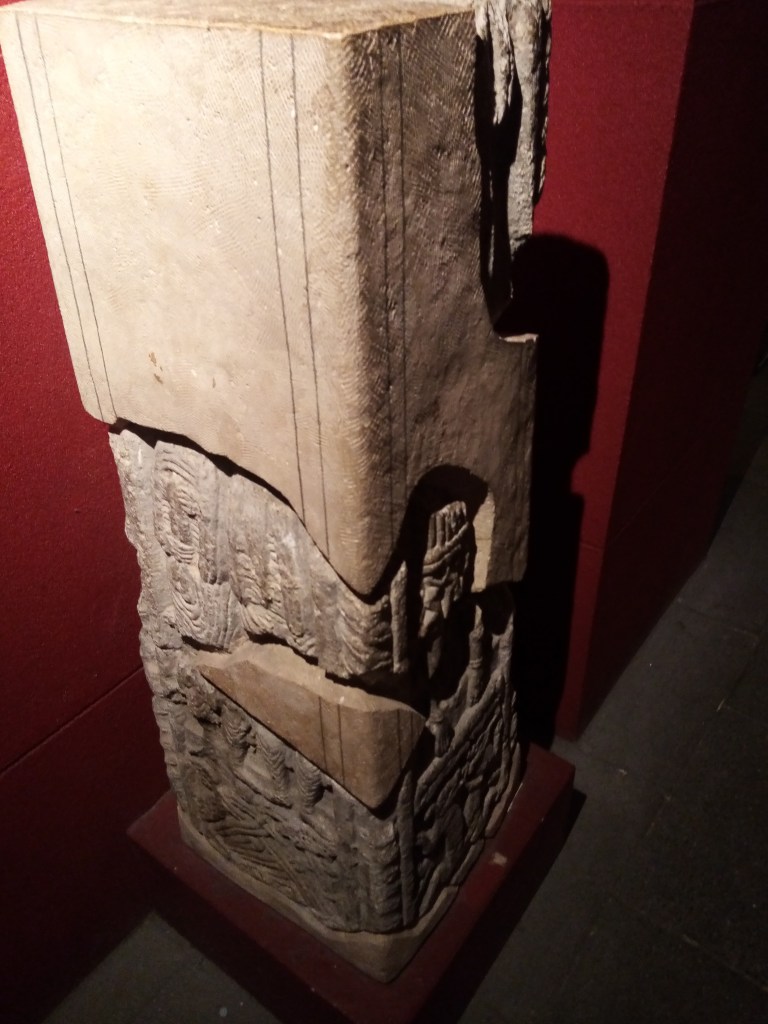
Saxon Pillar 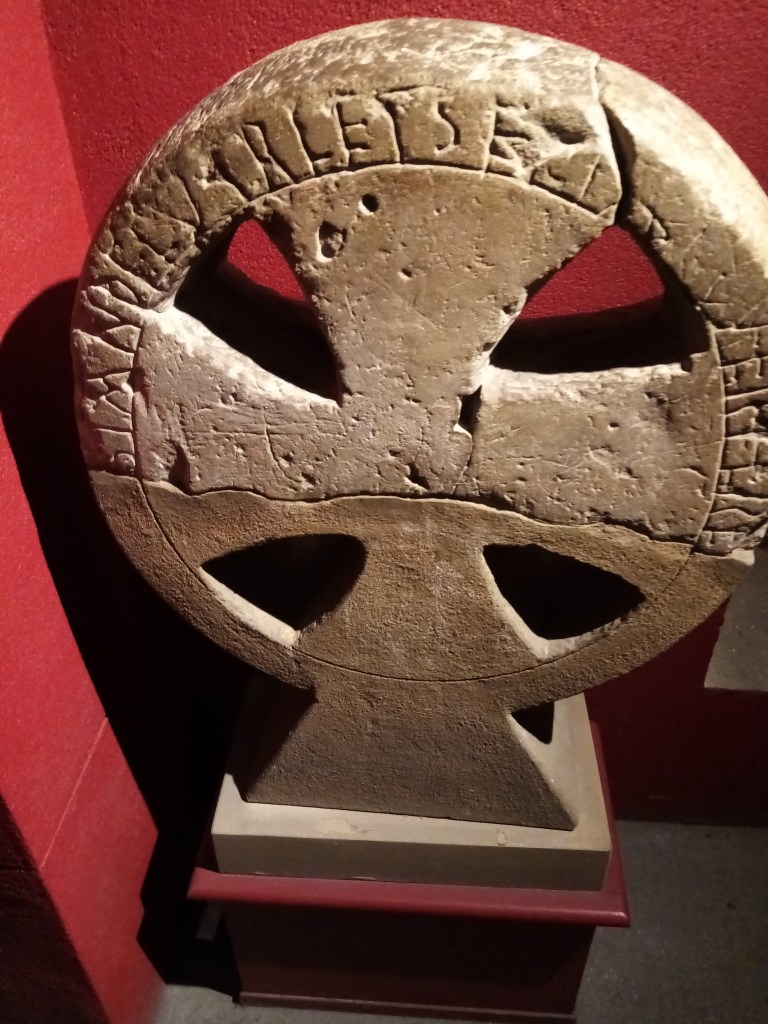
Wheel Head Cross
While researching this month’s theme, I discovered some other first-century sites of Christian worship in London, including a famous one. So this will be February’s subject too.
 claresimons1