This month I’ll be looking at London Churches which are traditionally connected with the Arts in one way or another. I’ve visited some beautiful buildings and discovered things about their histories, as well as what they’ve got going on today. Just as well I completed all this before Tier 2 came into force!
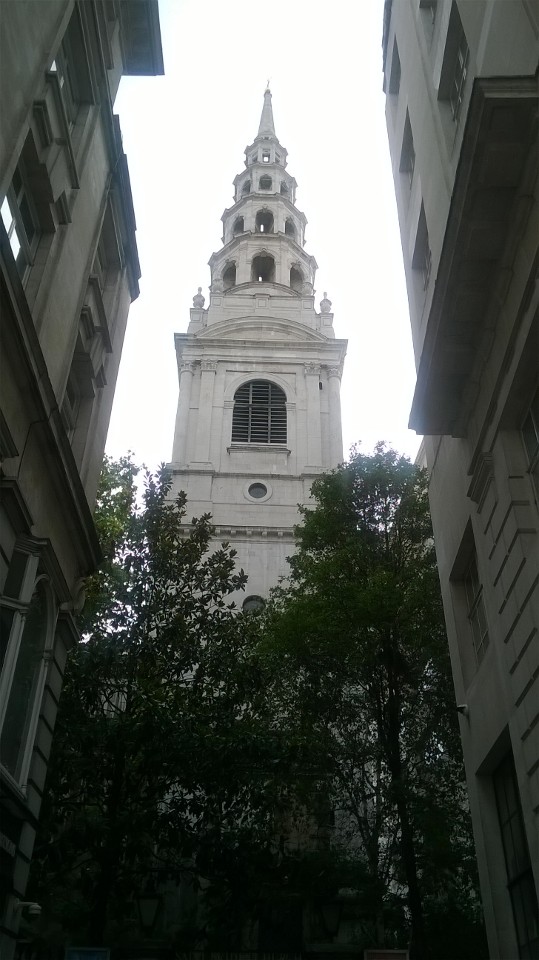
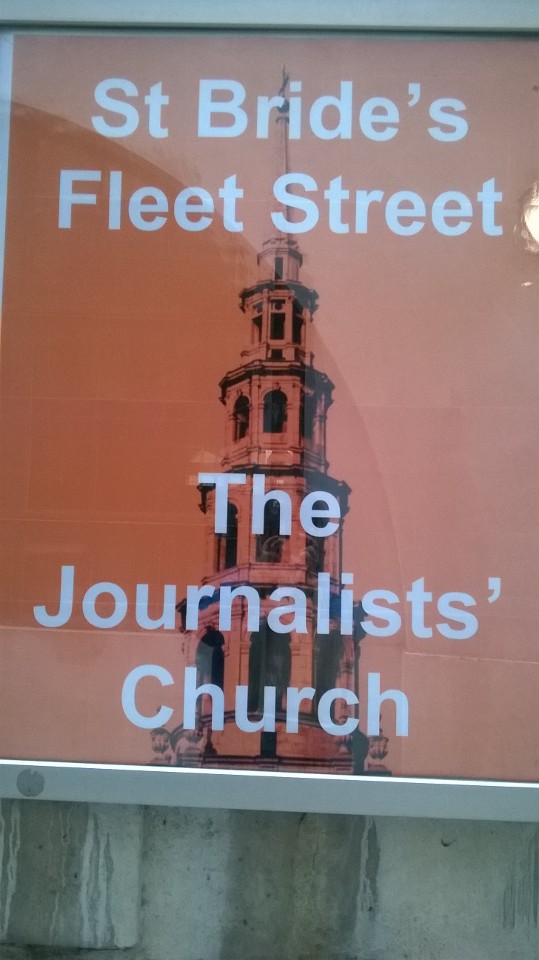
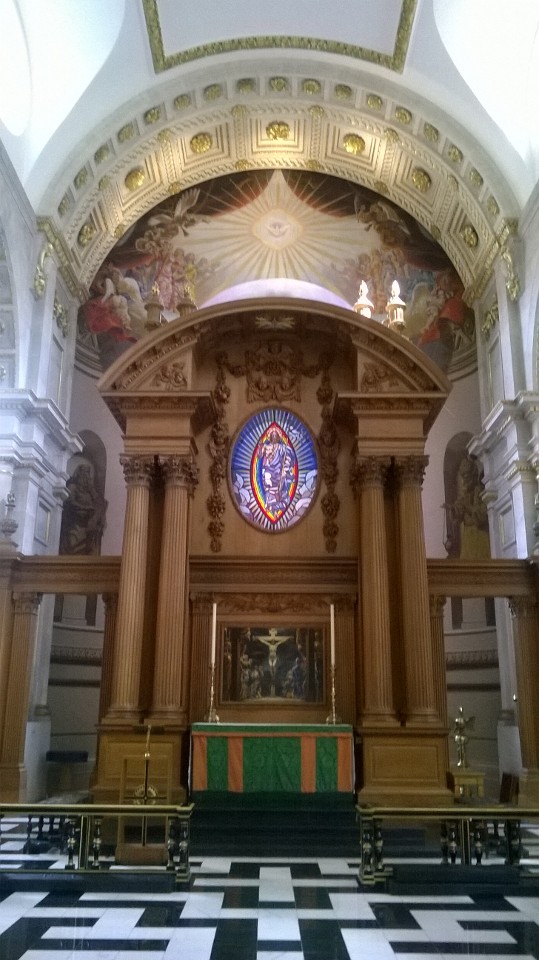
The Journalists’ Church. Situated in Fleet Street, the home of the newspaper and other publications, is St Bride’s Fleet Street. A plaque on the church wall tells us that the brilliantly named Wynkyn de Worde was the first printer on Fleet Street (apparently this was a pseudonym, but it’s pretty good, isn’t it?) Two more interesting things about this church: the present steeple was based on designs of Sir Christopher Wren and constructed in 1703. It’s said to have inspired designs for wedding cakes and is known as the ‘Wedding Cake’ Spire. Thirdly, the current church was built over previous buildings and has passages underneath it going back to the 6th Century. Following an outbreak of cholera in 1854, the tombs in the crypt beneath were sealed up, and when they were reopened after World War 2, a Roman pavement and tombs dating back to Saxon times were discovered. I haven’t done the tour of the crypt, another one for post lockdown!

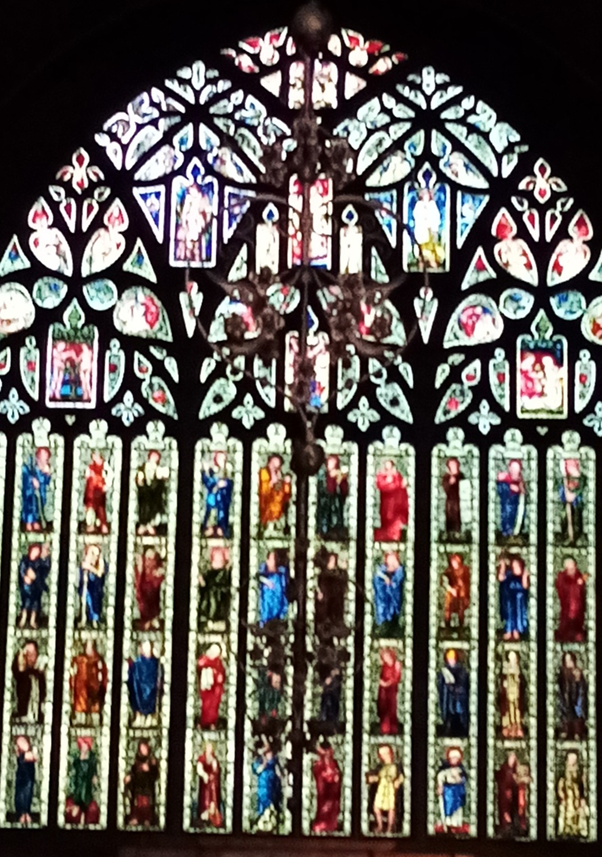
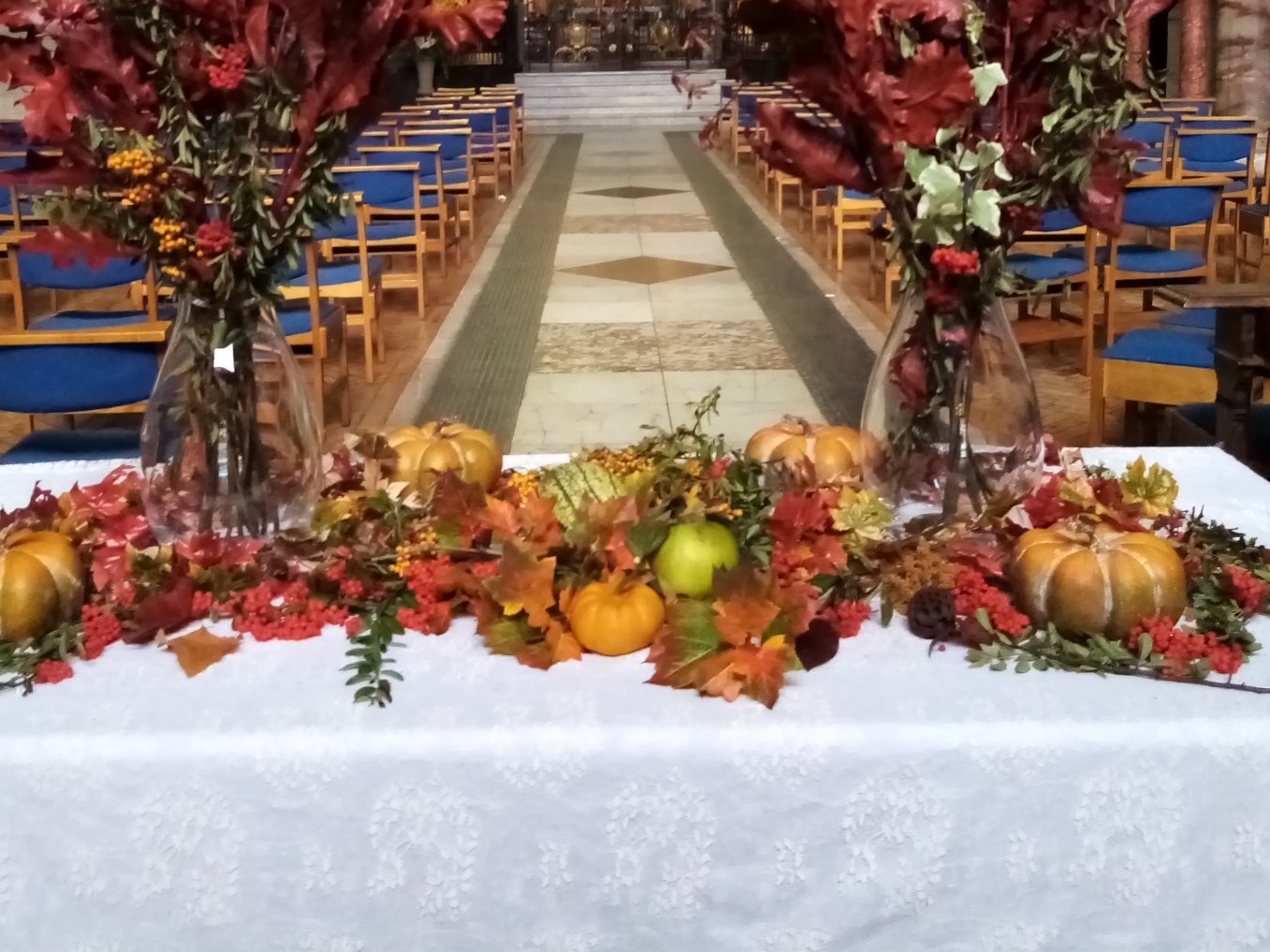
The Arts and Crafts Church – Holy Trinity Sloane Street is so called because of its association with the Arts and Crafts movement of the 1800s. The church was built between 1888 and 1890 in the ‘Arts and Crafts Gothic’ style and has a spectacular stained-glass window designed by William Morris and Edward Burne-Jones, who were creative types: you’ve probably heard of Mr Morris, who was a textile designer, poet, novelist and social activist. Mr Burne-Jones was an artist and designer who designed stained-glass windows in several other cathedrals and churches in England. The window at Holy Trinity is spectacular, comprising Bible characters, Saints, and Bible ‘events’. But my favourites are the panels representing Matthew 25: Visiting the sick, feeding the hungry, giving drink to the thirsty, clothing the naked, visiting the prisoners. Unfortunately, I wasn’t able to get a good photo because visitors to the church were not allowed into the aisles, so I couldn’t get close to the window which was right at the end of the building. But I did get a nice photo of their Harvest display!
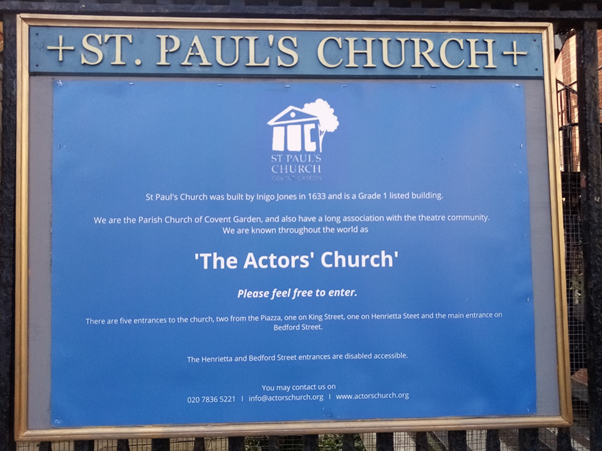
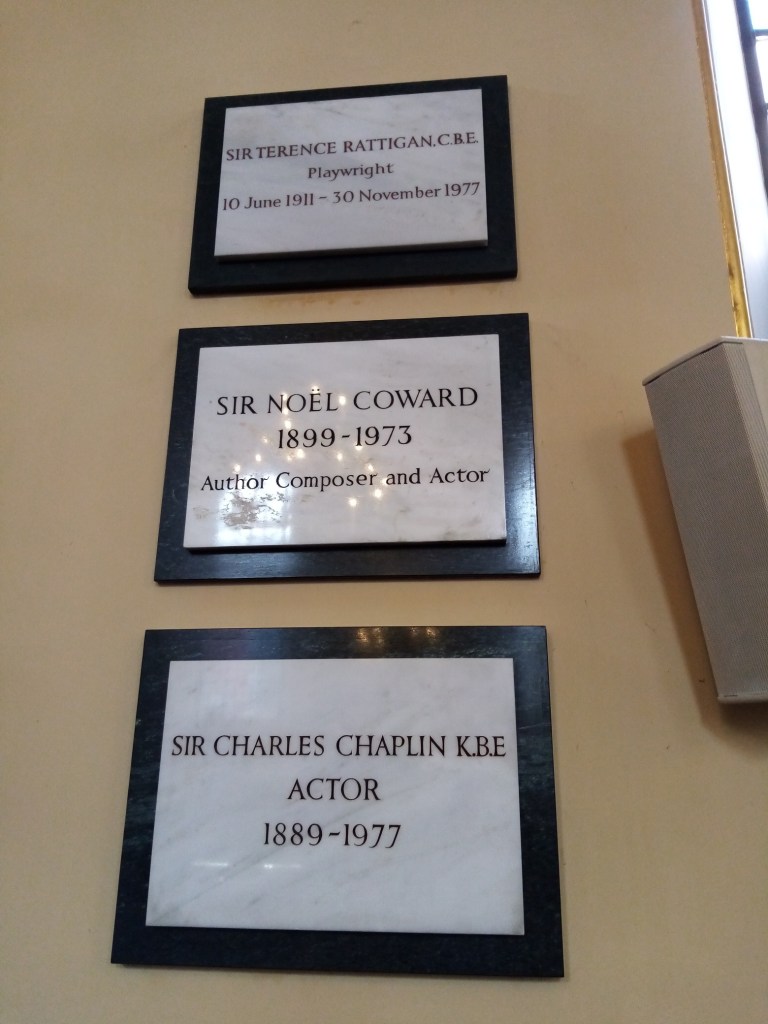
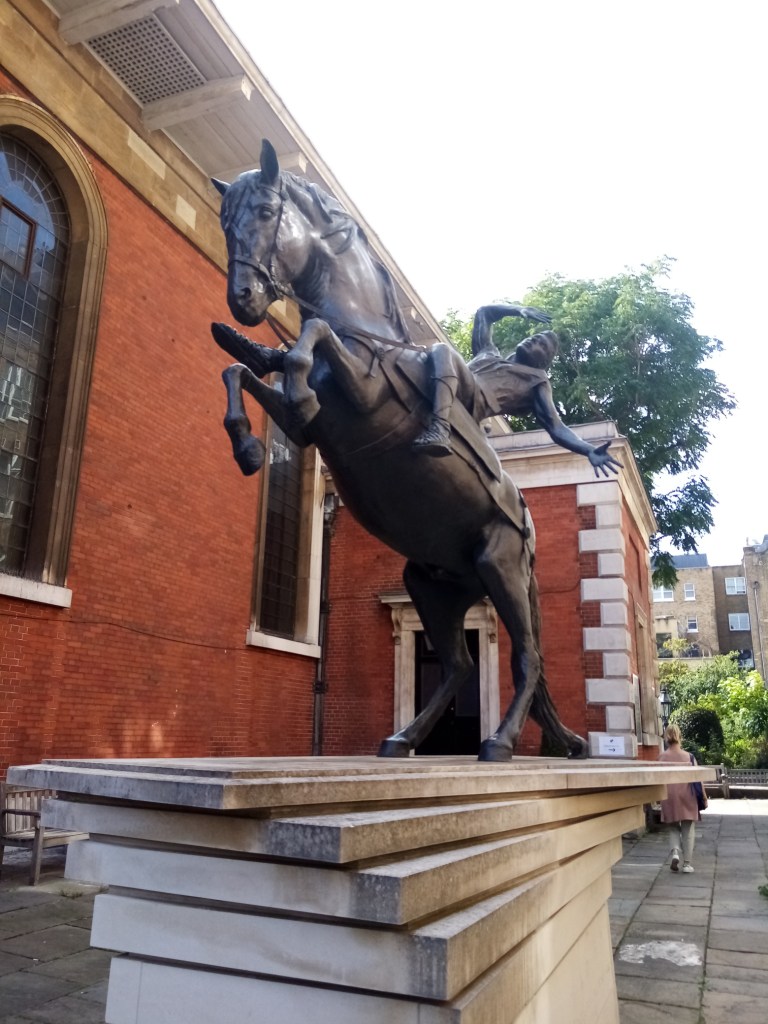
The Actors’ Church. In bustling Covent Garden, home of market stalls, street theatre and outdoor eateries is peaceful St Paul’s churchyard. St Paul’s Covent Garden was designed and built by Inigo Jones, as was the rest of the Covent Garden Piazza, and completed in 1633. It is known as the Actors’ Church because of its long association with the theatrical community. Before you even set foot inside the church, there’s a striking statue of St Paul falling off his horse, having been struck blind by God on his journey to Damascus. The churchyard is beautifully laid out with flowerbeds and trees and is a peaceful place for a lunch break. In pre-Covid times the church runs up to 400 events a year – classical concerts, musical theatre showcases and an outdoor theatre programme in the summer season. Alas, not this year! Inside the church there are dozens of plaques celebrating actors, musicians and other performers, dating back to Marie Lloyd ‘from 1884 the beloved Queen of the British Music Halls.’
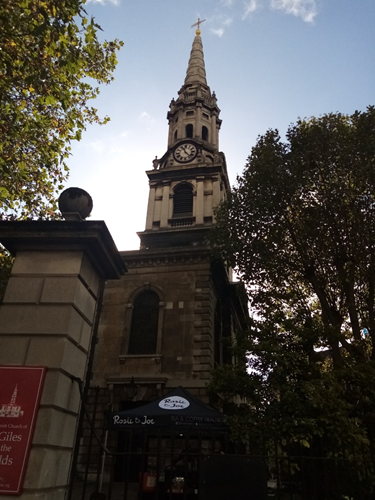
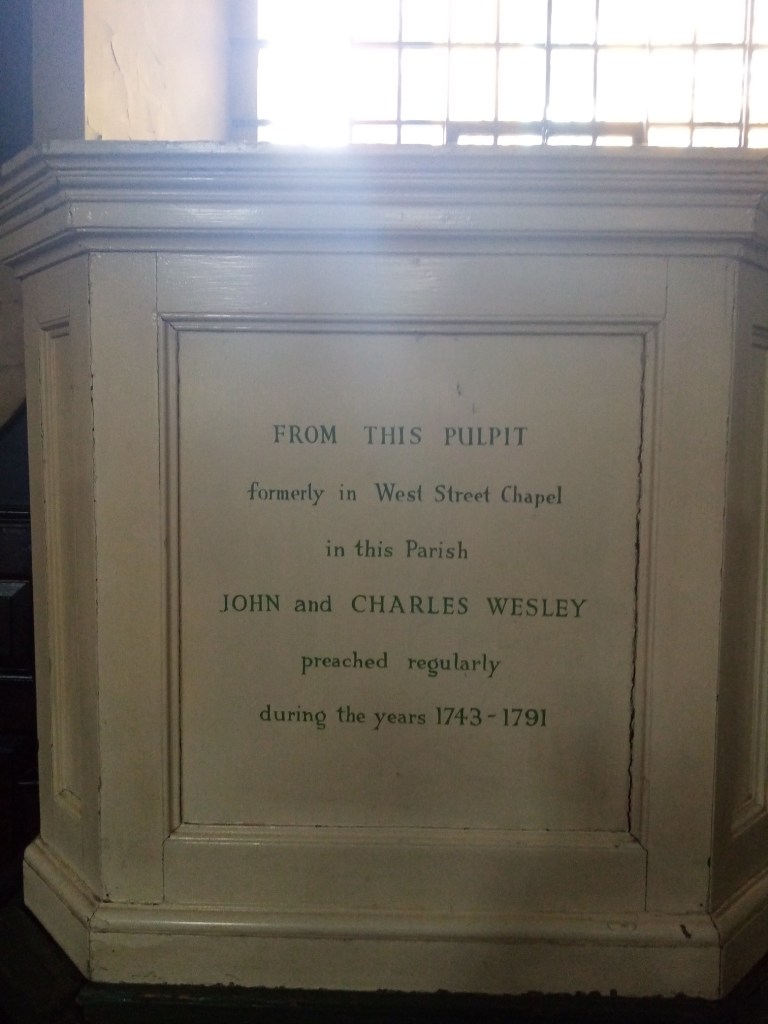
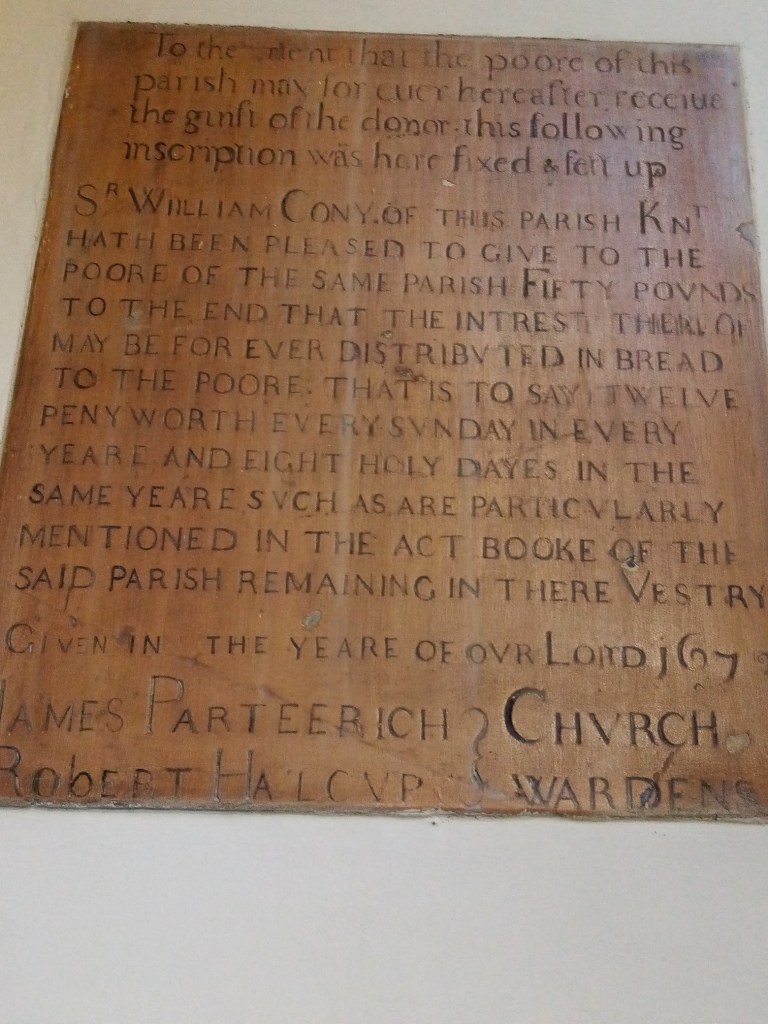
The Poet’s Church, St Giles-in-the-Fields at Tottenham Court Road, is so called because of its poetic links: the wedding of Victorian poets Elizabeth Barrett and Robert Browning, the baptism of John Milton’s daughter Mary, and the joint baptism of the children of Byron and Shelley. There’s also a monument to Metaphysical poet Andrew Marvell, who is buried in the churchyard. (I did the Met poets for A Level English Lit, never really understood them!) And a pulpit used by John and Charles, the Wesley brothers, said to have been rescued from nearby West Street Chapel. The church has a tragic history: the first victims of the 1665 Great Plague are buried here. By the end of the year there were 3,216 listed plague deaths in the church’s parish, out of fewer than 2,000 households. Every home must have had at least one family member who had died. Devastating. The church has a tradition of giving ‘to the poor of this parish’ and this continues to this day, with several projects for homeless people (including a facility for them to store their possessions – what a good idea!), grants for people experiencing hardship and educational grants. Their mission statement says ‘Worship is inseparable from compassion, and prayer, from involvement in the lives of others.’
Incidentally, I found out about the Actors’ Church and the Poet’s Church from Tom Jones’ (not the singer!) book London: the Weekends start here.
 claresimons1
I love this. I will be making plans to visit when they re-open. St James Piccadilly had Art installations during a recent Lumier festival.
LikeLike