Many of London’s churches are 1,000 years or even older, and as England was a Catholic country until Henry Vlll broke with the Church of Rome, it’s not surprising that so many of them are dedicated to St Mary, the mother of Jesus. Here are four from the City of London:
St Mary-le-Bow
Situated in Bow Lane, off Cheapside, the original church was built in 1080 by William the Conqueror’s Archbishop of Canterbury, Lanfranc. However, this Norman church may have replaced a Saxon one, so it’s possible that there’s been a church on this site for well over 1,000 years! The church tower was badly damaged in 1271 after it collapsed into the street, must have been terrifying for the people that would have been there; ‘Cheap’ actually means Market, so there would have been crowds of people buying and selling. Further damage in the Great Fire gave Christopher Wren the opportunity to achieve his ambition to make it his second tallest structure, after St Paul’s. He originally constructed a viewing balcony on the building attached to the tower, as a nod to when Cheapside held jousting tournaments and posh people looked down on the street from the original tower. Sadly, this adjacent building was destroyed by WW2 bombing and has been replaced by an ugly office block. St Mary-le-Bow had the principal Curfew Bell, rung at 9pm each day since 1363, and it’s said that if you were born within the sound of Bow Bells, you are a true cockney. Not to be confused with the area of East London called Bow!
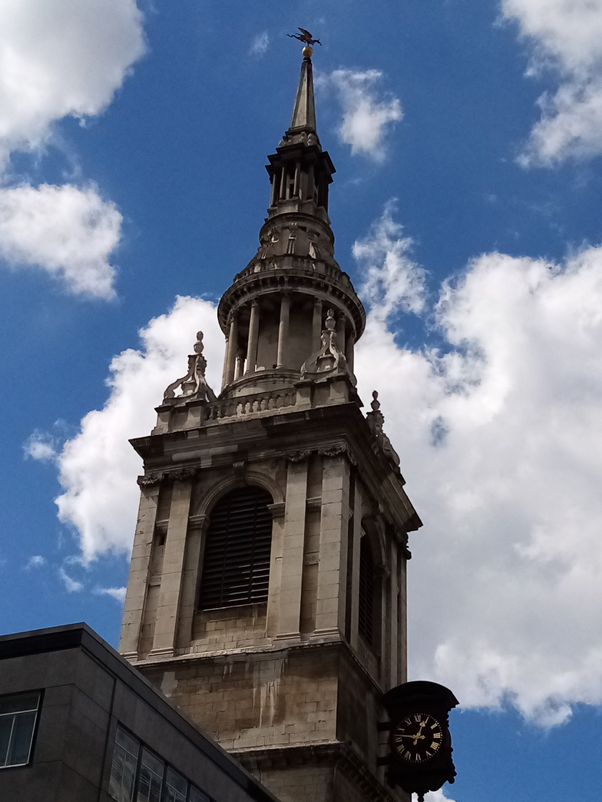
The beautiful Wren-designed Tower, with just a glimpse of the modern office block attached.
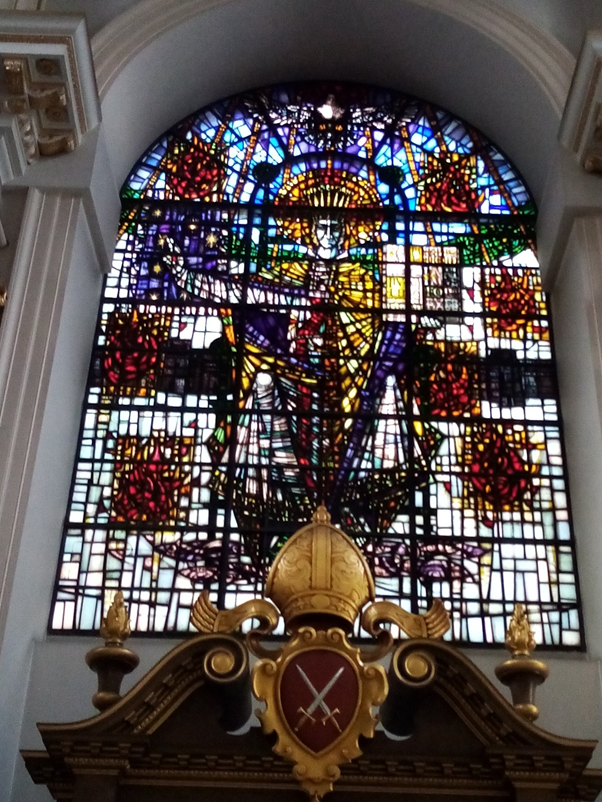
This window is a representation of Jesus and the seven Gifts of the Holy Spirit, they look like fiery red blobs to me! But a beautiful window, I think.
St Mary-at-Hill
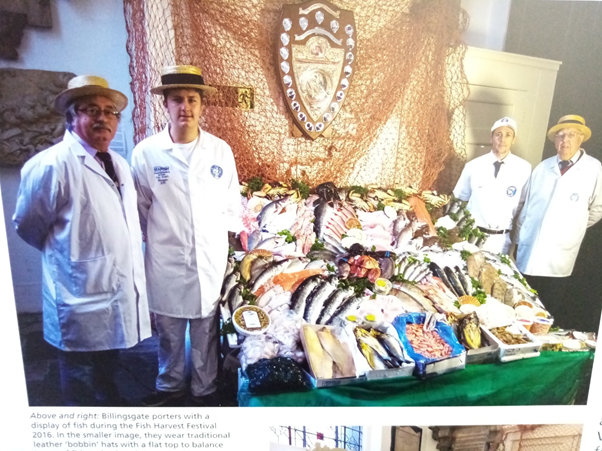
This small church, tucked away down a narrow ally, is historically linked with Billingsgate Fish Market, which was formerly situated on the banks of the Thames. The market was established in the 1500s and 300 years later it was the largest fish market in the world. The church has an annual Fish Harvest Festival, a unique slant on the traditional Harvest Festival. Despite the relocation of the Market to Poplar, East London, the Billingsgate fishmongers still donate all the fish, and a thanksgiving service is held for the Harvest of the Sea. After the service, the congregation has the opportunity to buy the fish, and a substantial amount is also donated to the Queen Victoria’s Seamans Rest for the residents to enjoy. I hope the fish aren’t displayed in the church for too long, it could get rather smelly! St Mary-at-Hill is another church redesigned by Sir Christopher Wren following the Great Fire in 1666; he became known as the ‘architect who redesigned London’. All his church designs appear to be different, clearly he was a very creative man.

St Mary Aldermary
Situated in the Roman road, Watling Street, the name of this church means ‘Older Mary’, which implies that this is the first local church dedicated to Mary, probably having Saxon roots. The earliest record of a church on this site is 11th Century. The church was yet another casualty of the Great Fire, but unusually, not rebuilt by Wren. It was actually rebuilt in the Gothic style, which went against the City authority’s plans, but a wealthy businessman, Henry Rogers, stumped up the cash (£5,000) for the ‘rebuilding of a church in London where there was most need.’ I don’t know why this particular church was chosen, in this area you can’t move for churches, but anyway, the parishioners wanted it rebuilt in the ‘old style’, hence, these beautiful ceilings, arches and all-round gothicness. The Brief History and Guide states: ‘St Mary Aldermary may be the most important 17th Century Gothic church in England.’ The church is the home of Moot ‘a welcoming contemplative community who explore our relationship with God, with the world around us and with one another by seeking their inspiration from monastic wisdom’. The Host Café at the rear of the church offers tea, coffee, cakes and sandwiches for hungry City workers.
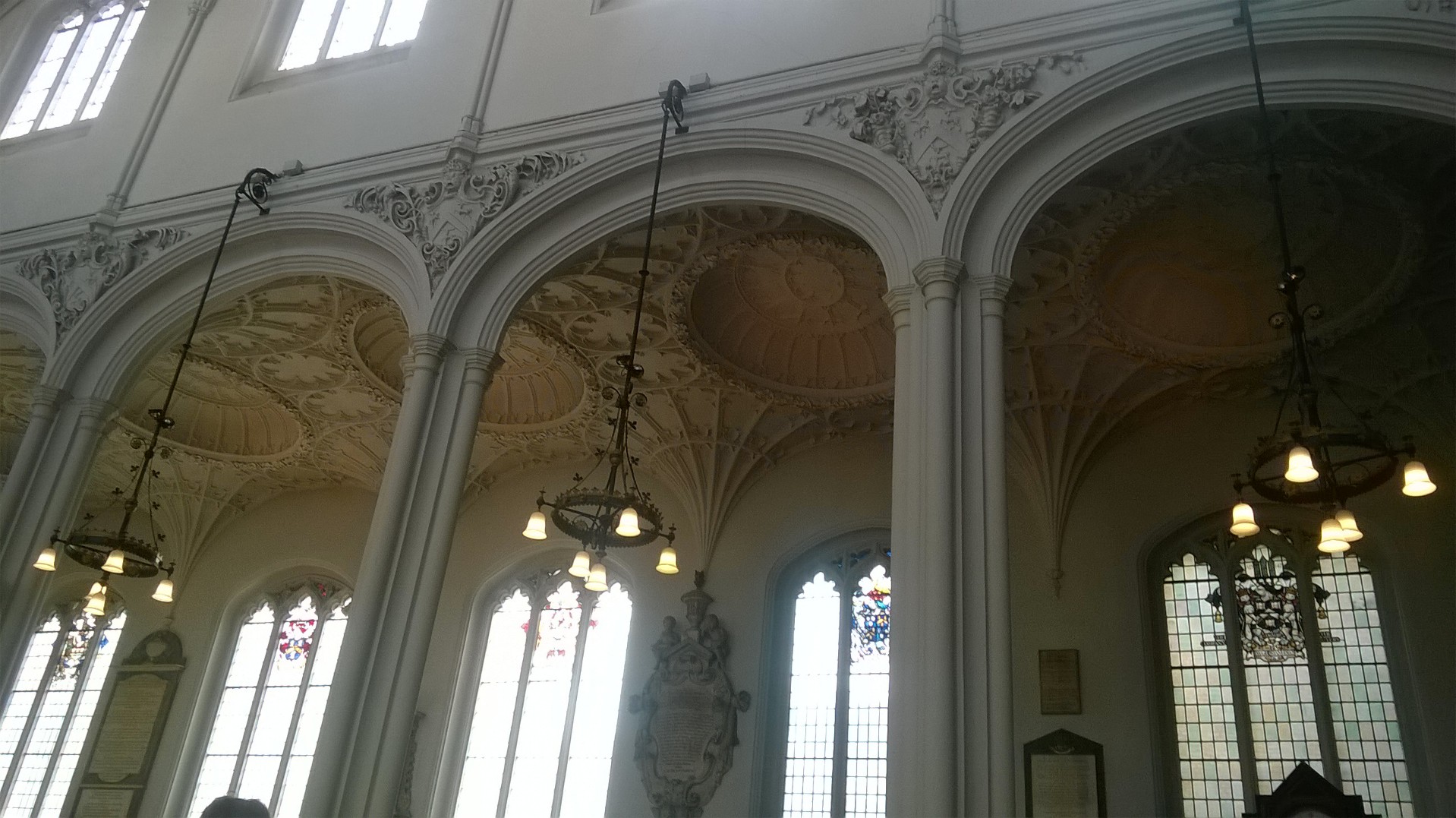
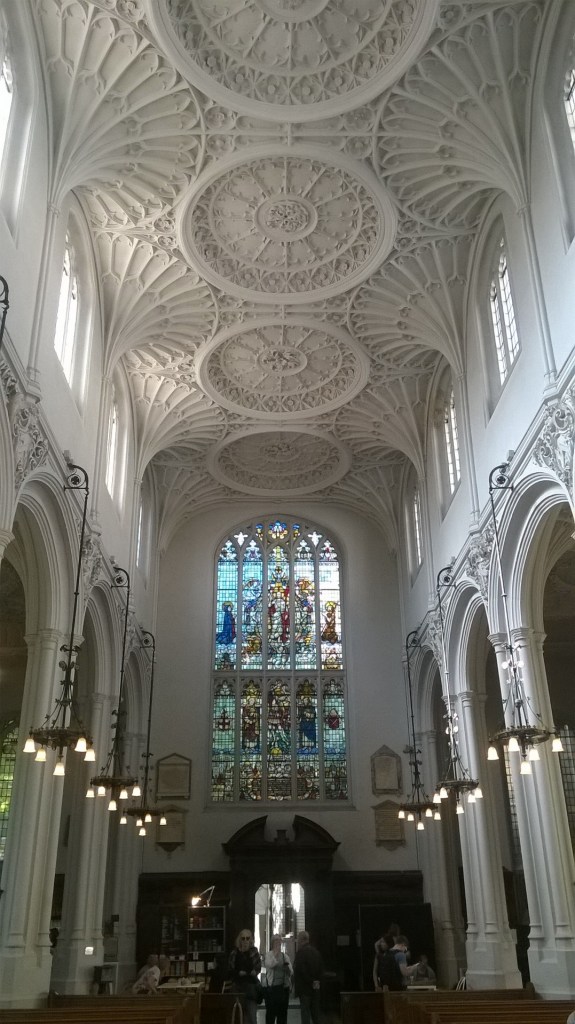
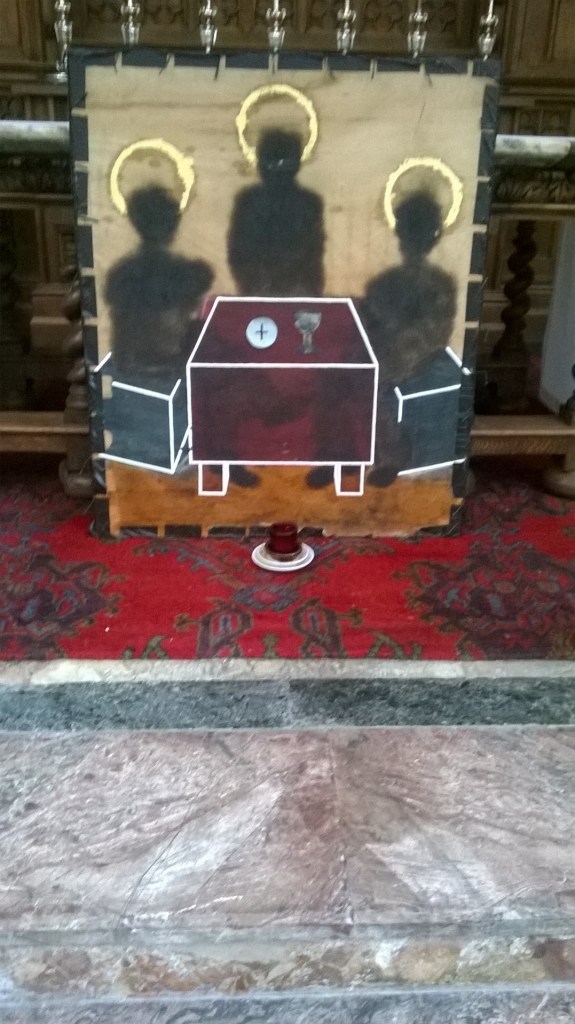
Centre Aisle …………………………………………………………And I’m sure who these figures are
St Mary Abchurch
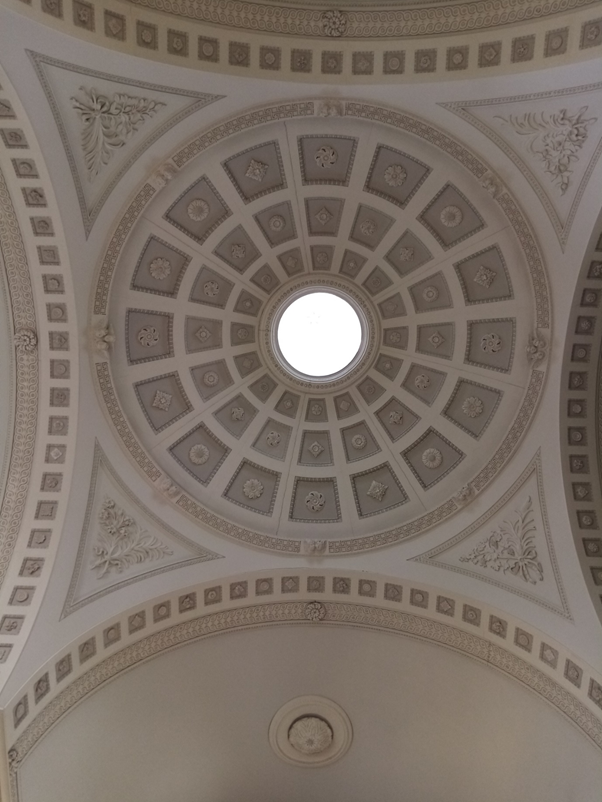
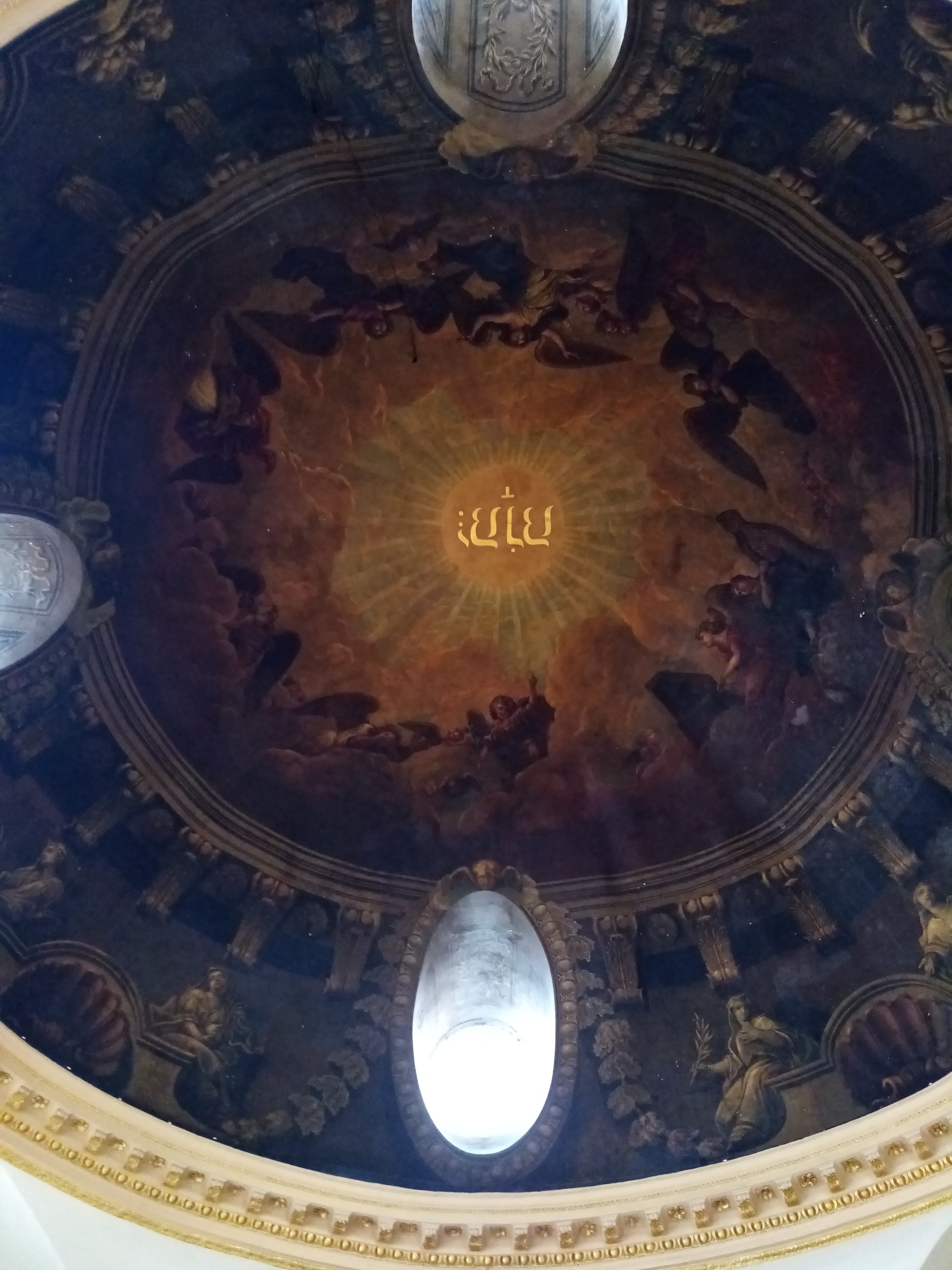
Another City church squeezed into an impossibly small space down Abchurch Lane, with tall office blocks on one side and hoardings hiding work being done on Bank Station on the other. Actually, the hoardings are a useful source of information about the Church and the surrounding area. For instance, I learned that ‘Abchurch’ means ‘Upchurch’ and the church may have originally been a Priory and Convent founded ‘up the hill across the river’ in the 12th century. The original mediaeval church was totally destroyed in the 1666 Fire, and in 1681, work was begun on the present building, designed by our old friend Sir Christopher Wren. The church has an amazing dome ceiling painting which was added in 1708. It was painted by a parishioner, William Snow, Citizen and Painter Stainer, who received £170 for his work. ‘It depicts the worship of Heaven; in the centre is the Devine Name in Hebrew characters surrounded by rays of glory with worshipping figures of angels and cherubs beneath.’* My photo doesn’t do it justice; the light wasn’t good and I can never take a good photo looking straight up! I liked that the gravestones in the centre aisle give the person’s occupation as well as their name and also the word Citizen (of London I suppose). E.g., Citizen and Mercer, Citizen and Draper. Also liked the Lion and the Unicorn on the two front pews.
*From the leaflet about St Mary Abchurch, published by The Friends of the City Churches.


I love reading these articles Clare. Always interesting without being to long.
LikeLike