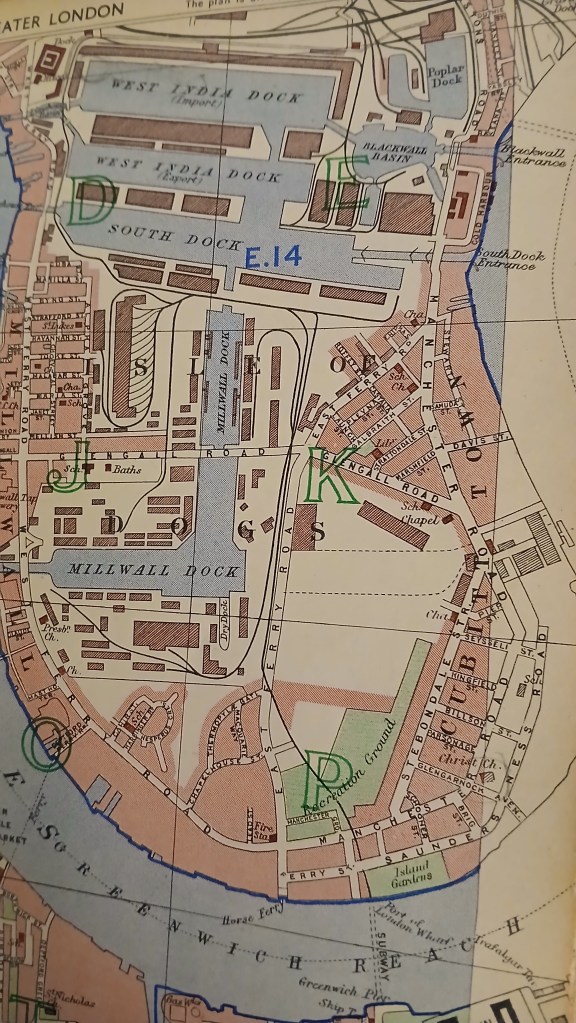
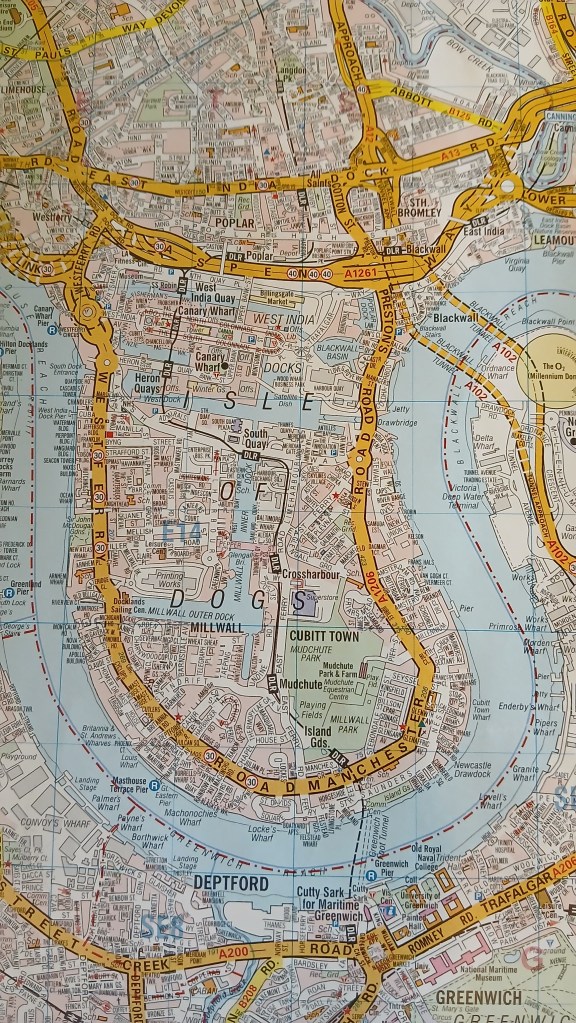
Another of my favourite parts of London is the historic Docklands. The instantly recognisable Isle of Dogs peninsula is shown above in a map from 1949 and a present day map. Once the world’s largest port, the Port of London was heavily bombed in World War Two; the docks and warehouses were damaged or destroyed along with much of the area’s housing. Plans to rebuild and redevelop the docks in the 1950s were abandoned due to the introduction of container ships worldwide; the River Thames and the docks themselves could not accommodate these much larger vessels. The docks closed and the area became derelict and poverty-ridden. Ambitious plans to regenerate the former docks were proposed in the early 1970s, when the name ‘London Docklands’ was first used in a Government report. The London Docklands Development Corporation managed the conversion of the area into residential, commercial and light industrial space in the 1980s and 90s and the Canary Wharf Project established a second business and financial district of London. Not without controversy, the LDDC was criticised at the time for favouring the construction of high-end luxury apartments rather than affordable housing for local people. Today, it’s also a tourist must-visit; there are the usual range of bars, eateries and shopping malls, plus the wonderful Museum of London Docklands, housed in a former warehouse. Two of the churches I visited are located somewhat to the west of Docklands but both have strong associations with the River and the docks.
Source: Wikipedia
St Mary’s, Rotherhithe
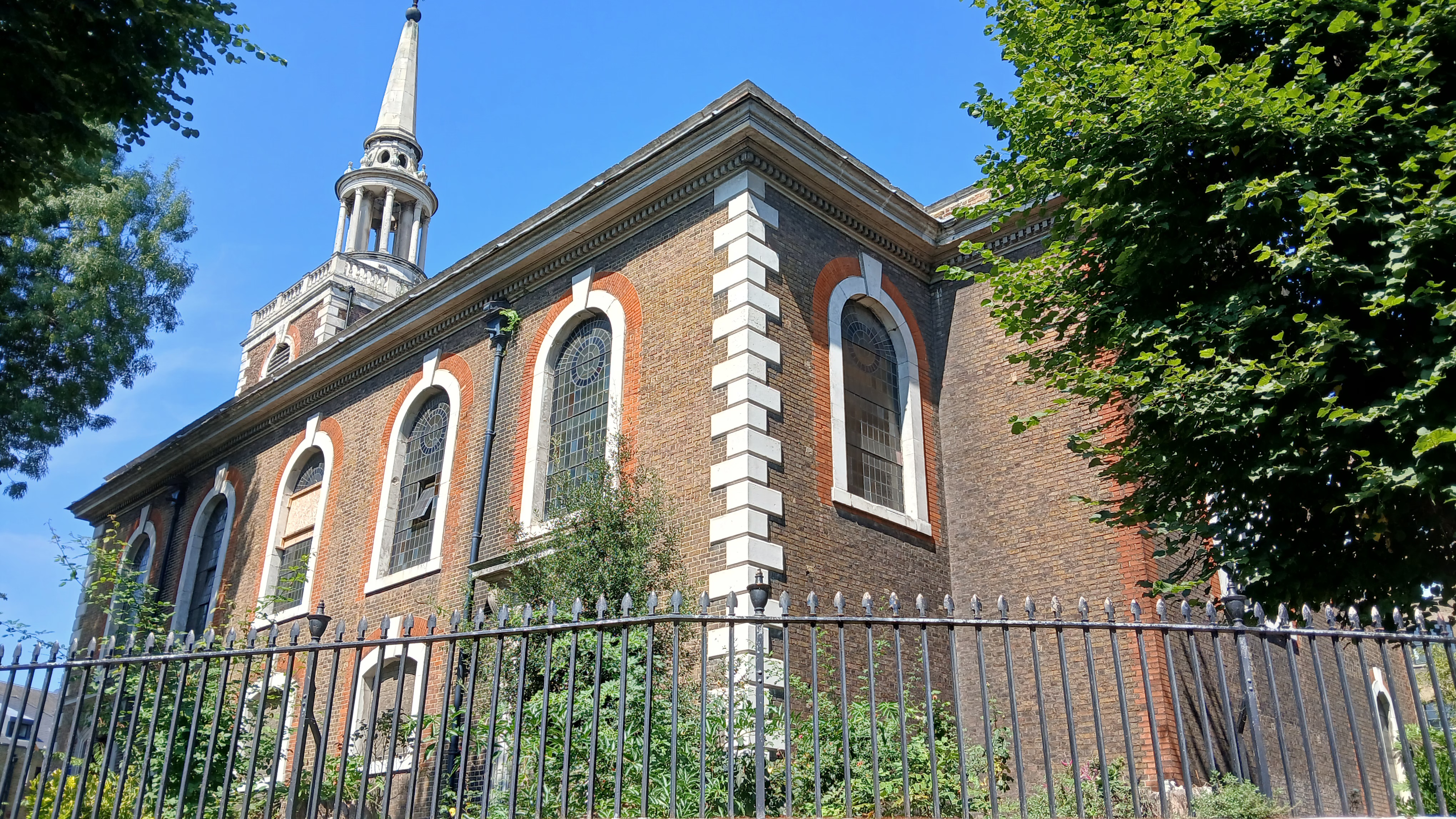
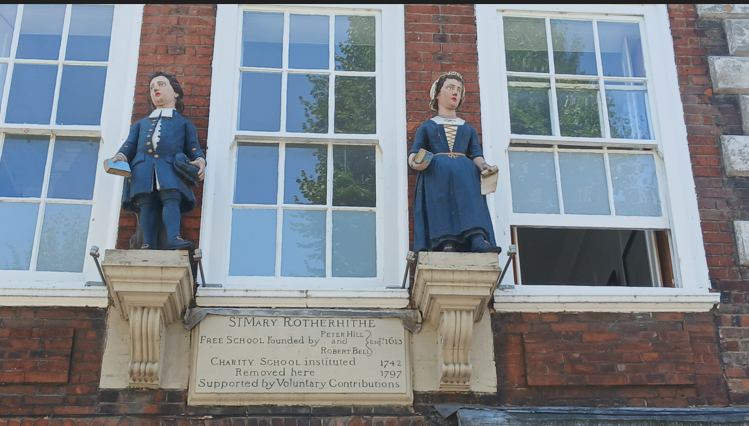
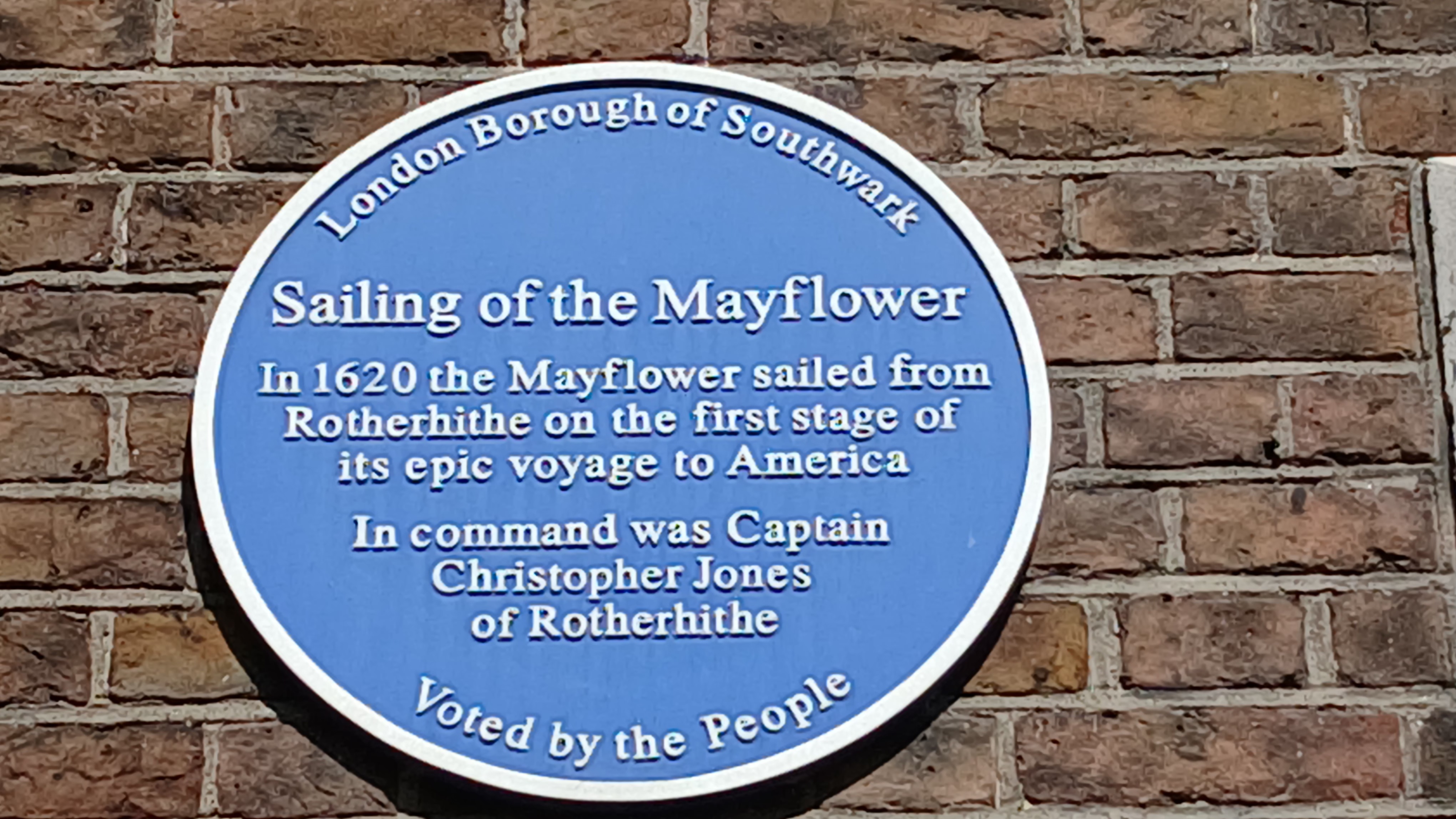
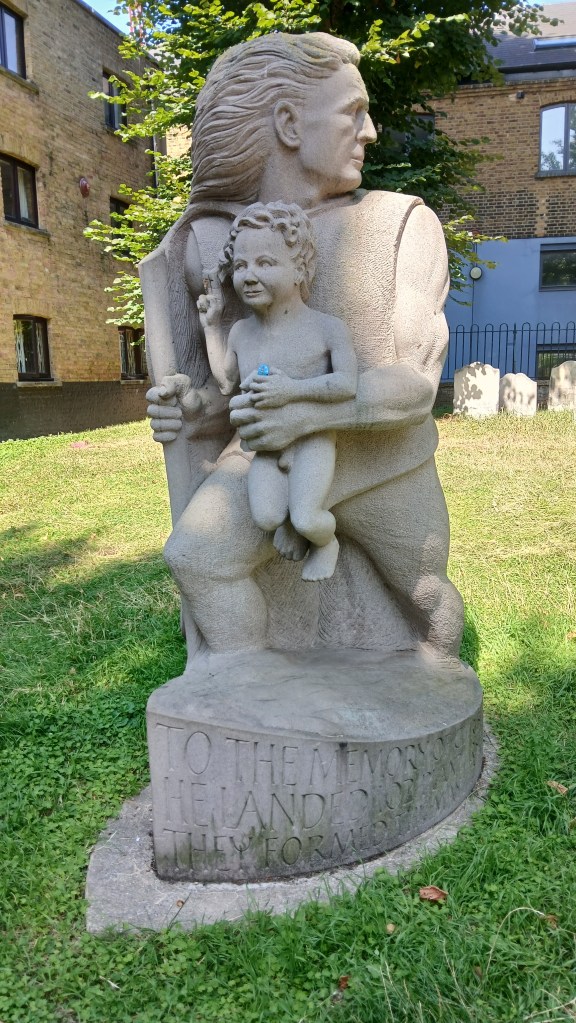
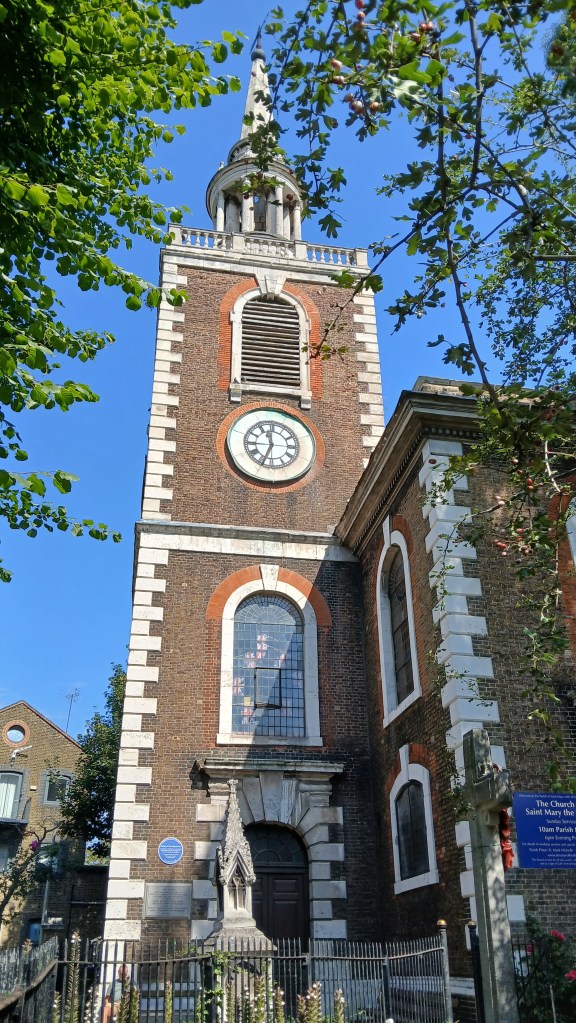
Situated on the south bank of the Thames, this church is close to the former Surrey Commercial Docks and the area is steeped in history: the nearby Brunel Museum charts the history of the Thames Tunnel, a Victorian feat of engineering constructed by Sir Marc Isambard Brunel. St Mary Rotherhithe Free School, founded in 1613 by mariners Robert Bell and Peter Hill for the education of the sons of seafarers, is located across the road from the church, which it predates. Although now located elsewhere, it is thought to be the oldest elementary school in London. On the wall of the church is a Blue Plaque commemorating the sailing of the Mayflower from Rotherhithe in 1620, and in the adjacent graveyard is a statue of the ship’s captain, Christopher Jones of Rotherhithe. The inscription on the statue reads: ‘To the memory of Christopher Jones, 1570 to 1622, Master of the Mayflower. He landed 102 planters and adventurers at Plymouth, Massachusetts 21st December 1620. They formed the Mayflower Company and the first permanent colony in New England.’ Interesting that they are referred to as Adventurers, not Pilgrims! The current church was constructed between 1714 and 1747, replacing a mediaeval building, but sadly I was not able to go inside.
Source: londonremembers.com
St Peter’s Wapping
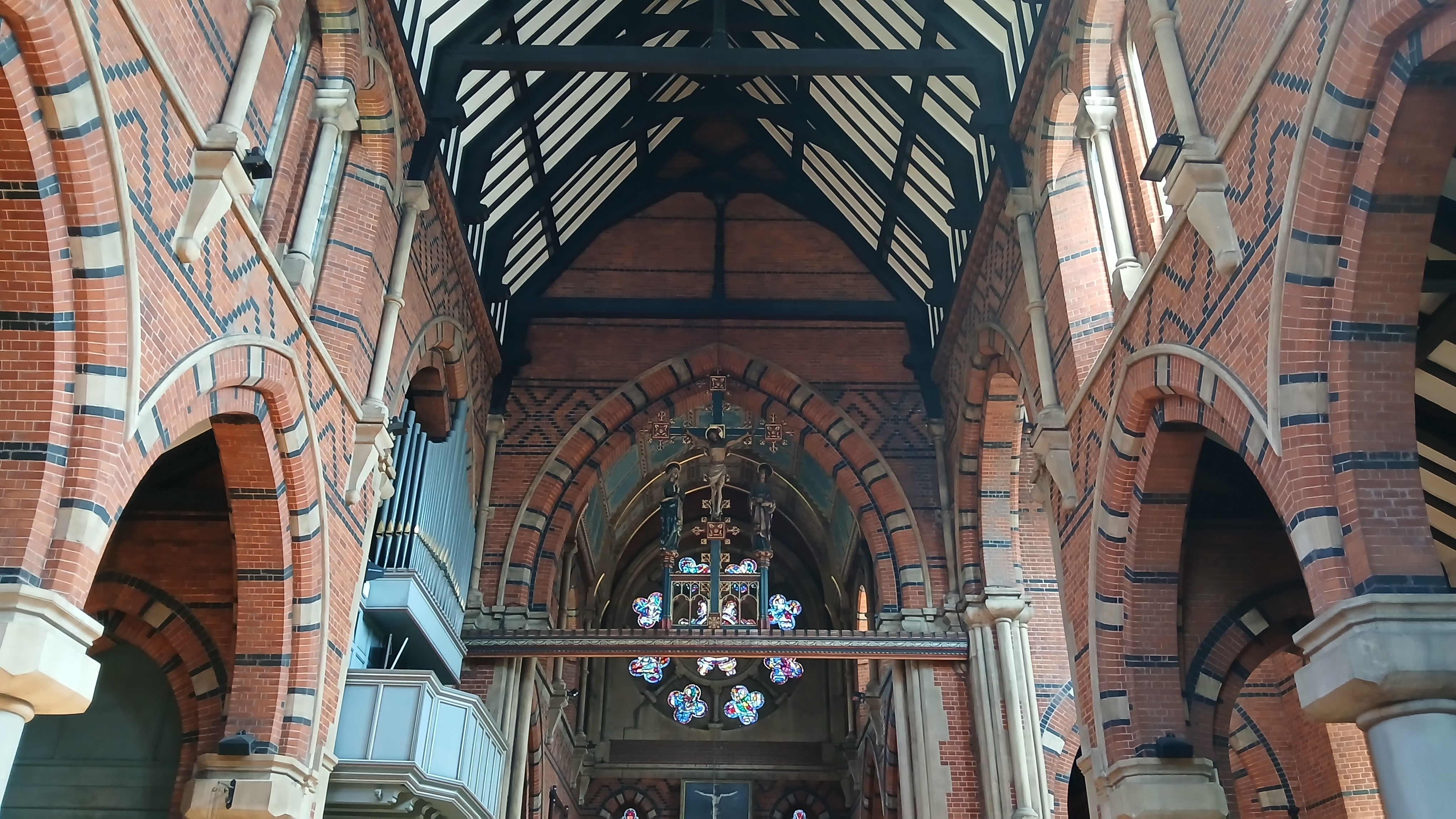
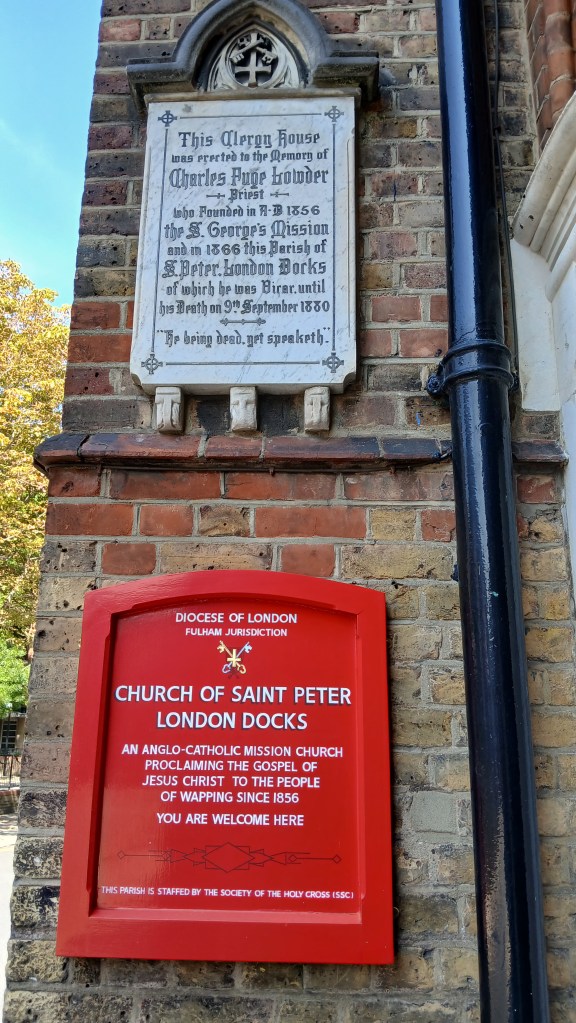
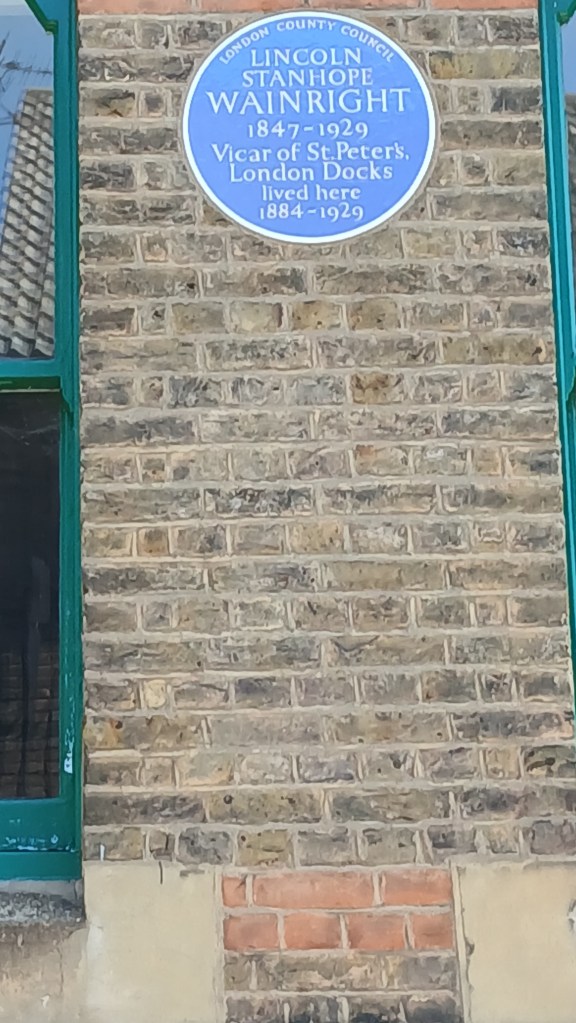
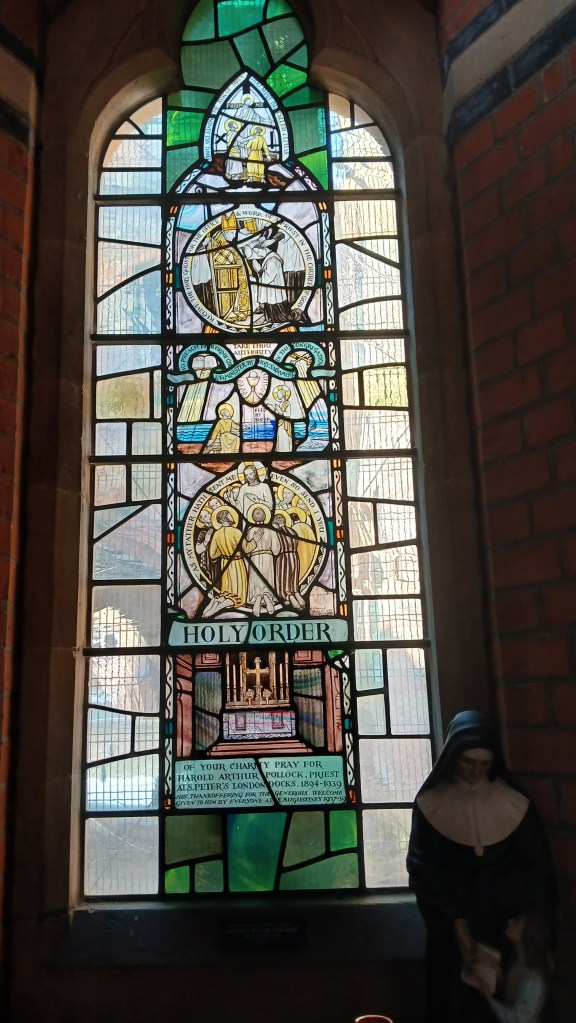
If only that Tunnel had still been in use, it would have been an exciting route from St Mary’s to St Peter’s just across the River. As it was, I travelled one stop on the Windrush Line. This church has a legacy of caring for the poorest people of the dockland area, with the first Anglican mission to the poor of London being founded here by members of the Society of the Holy Cross. Wapping was one of the poorest districts, inhabited by criminals, prostitutes and unskilled dock workers. Work began on the building of the church in 1856 by the Reverend Charles Lowder, and the church was consecrated in 1866. Soon afterwards the East End was struck by cholera and Rev. Lowder, the other clergy and the Sisters of Mercy worked tirelessly caring for the sick at great personal risk. Thereafter Rev. Lowder was called ‘the Father’ by local people as he seemed like the father of the community. The work among the poor continued with the setting up of schools and clubs for children, canteens offering affordable food, and spiritual support. In 1873 Lincoln Stanhope Wainwright became Rector of St Peter’s under Rev. Lowder and continued the parish work, even giving away his own food and clothing to the destitute. Another priest beloved by the community, when he died in 1929, one of his parishioners wrote ‘Docklands was washed with tears because this tiny but indomitable figure, shabby, untiring, spendthrift of love, would not serve them on Earth any more.’ I loved St Peter’s bright, colourful interior.
Sources: stchrysostoms.wordpress.com; londonremembers.com

Christ Church and St John’s, Isle of Dogs
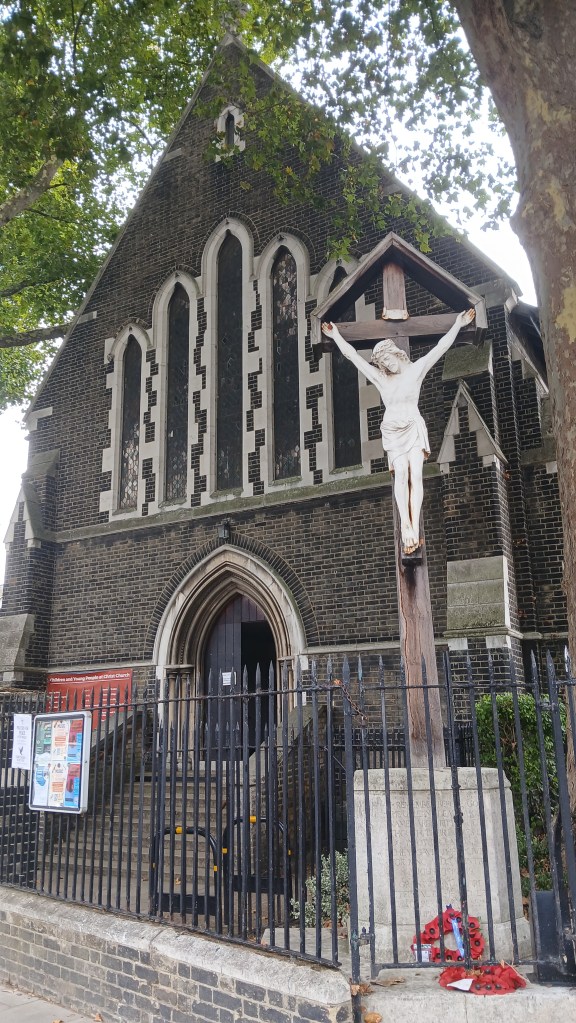
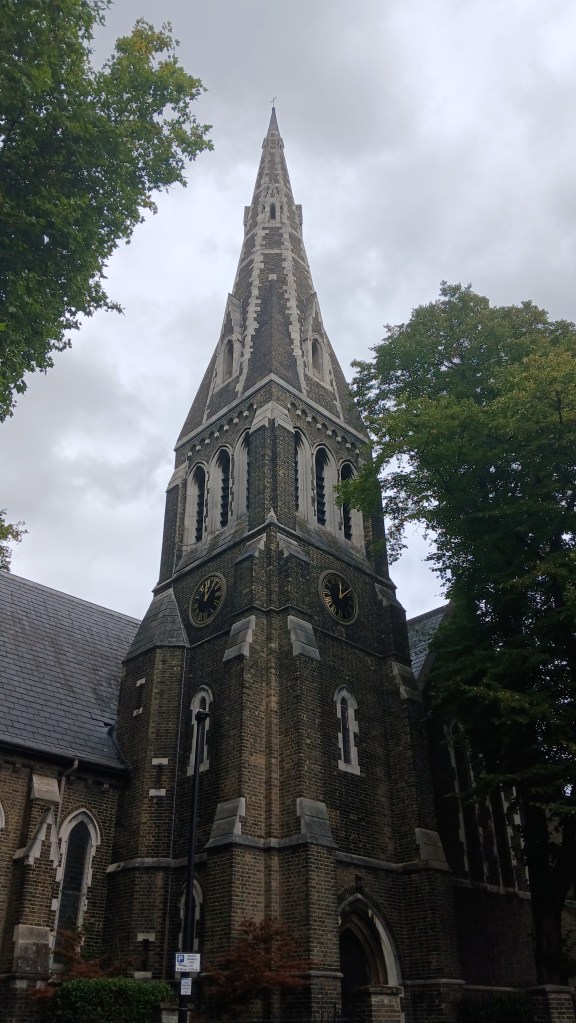
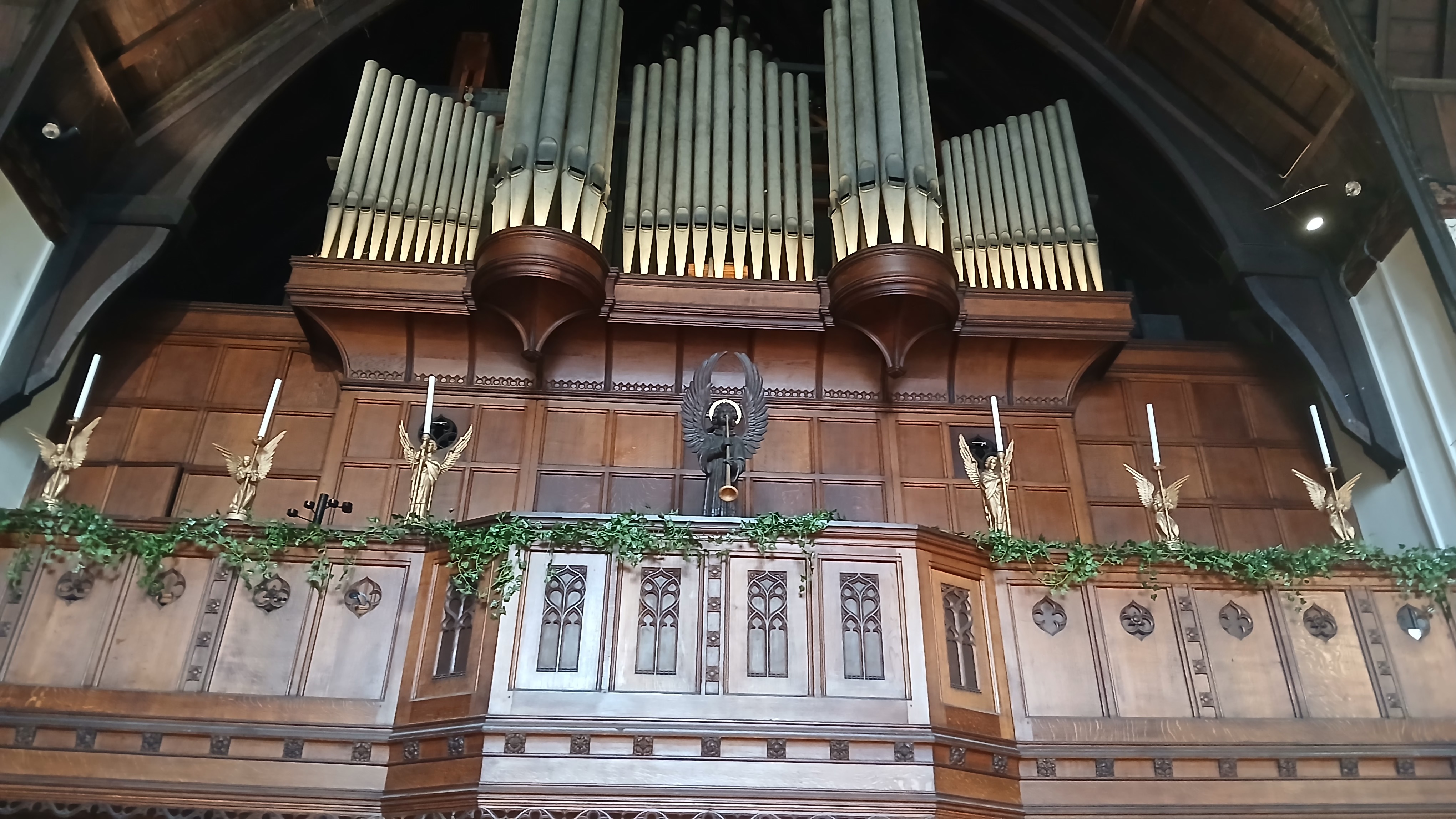
Travelling on the elevated Docklands Light Railway (DLR) is always fun and my journey to Island Gardens took me past Mudchute and Millwall Parks. This church is situated on Manchester Road at the tip of the Isle of Dogs peninsula, and the first thing I noticed when I arrived was that the church, the vicarage and a pub (the Waterman’s Arms) were the only buildings over 30 years old. The streets here have changed almost beyond recognition since the days of the docks. Building work on Christ Church began in 1852 by William Cubitt at his own expense on land donated by the Countess of Glengall and the church was consecrated in 1857. The church has some interesting features: the painted mural over the chancel arch was completed in 1914 and the wonderful organ with its decoration of angels was installed in 1911. A newsletter in the church informed me that the Vicar, Father Tom Pyke decided to celebrate Pentecost this year by having Scripture readings read by church members who speak languages other than English, literally ‘speaking in other tongues’ as the followers of Jesus did on the Day of Pentecost. The languages spoken by the multi-lingual congregation are: Welsh (Father Tom), French, Polish, Vietnamese, German, Hindi, Indonesian, Nepali, Zulu, Shona, Czech, Spanish, Urdu, Yoruba, Luganda, Farsi – and English. I wish I’d been at that service!
Source: Christ Church Isle of Dogs website: newsletter in church
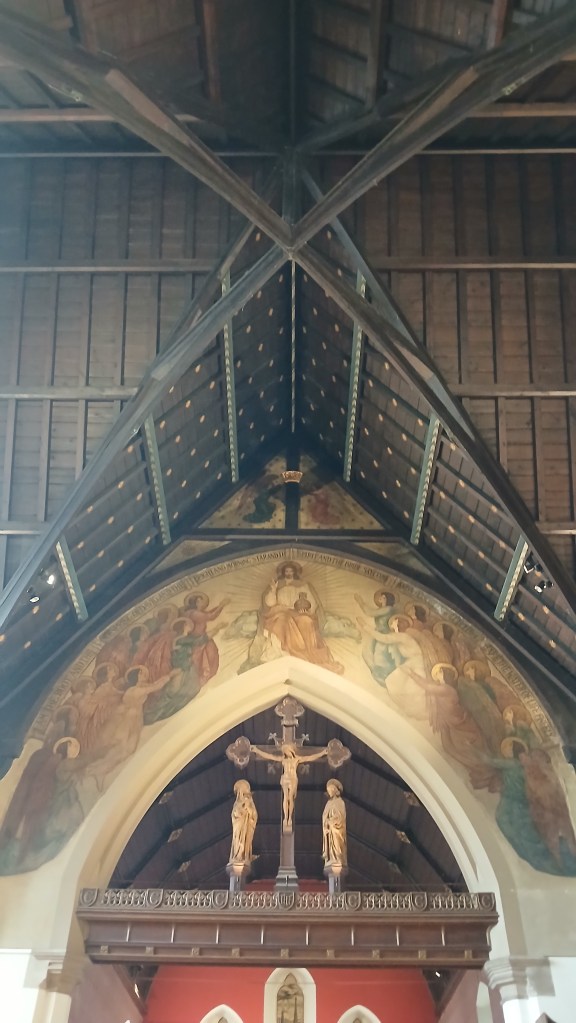
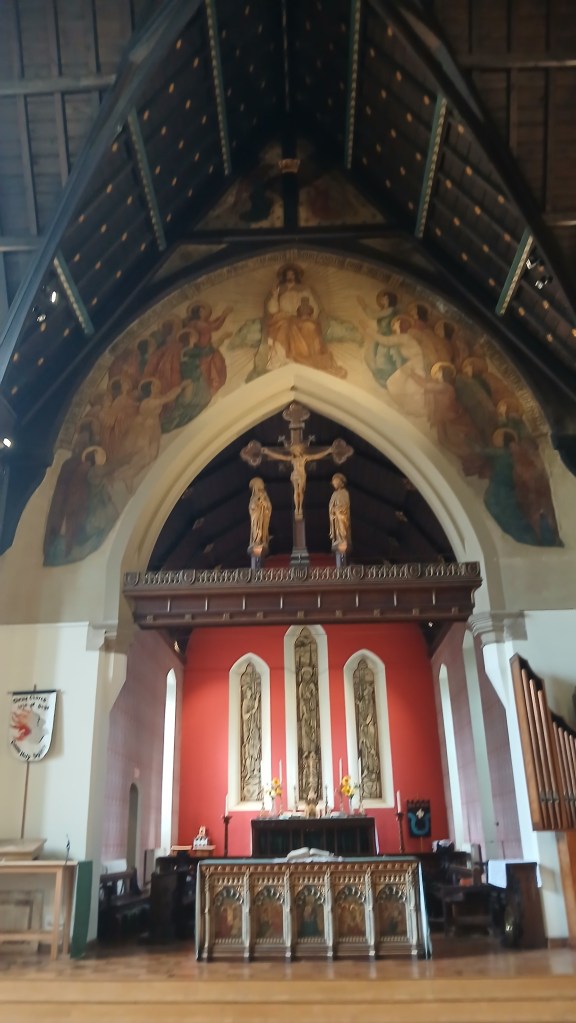
I also liked the cross-beamed ceiling
St Peter’s Barge: London’s Floating Church
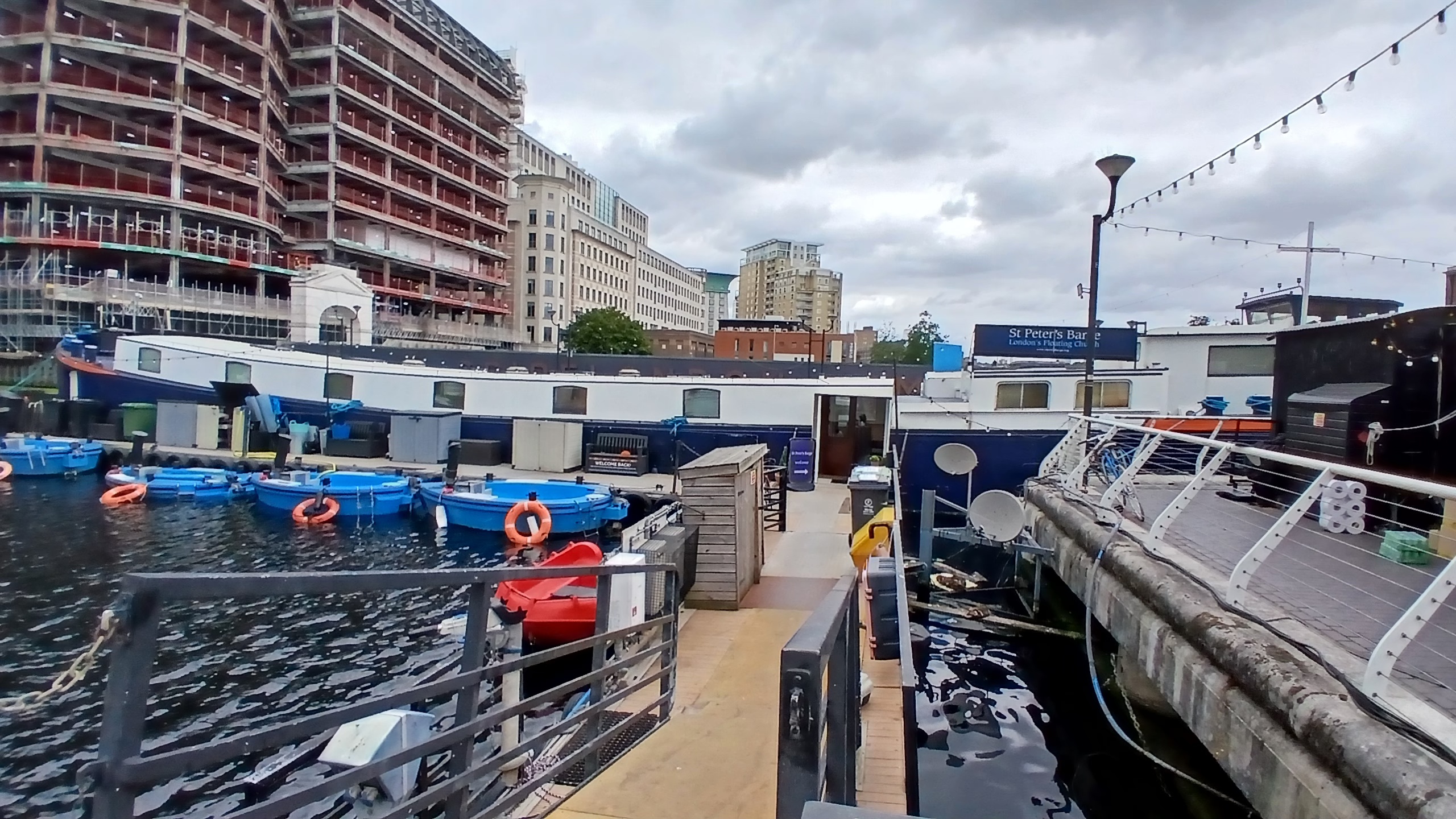
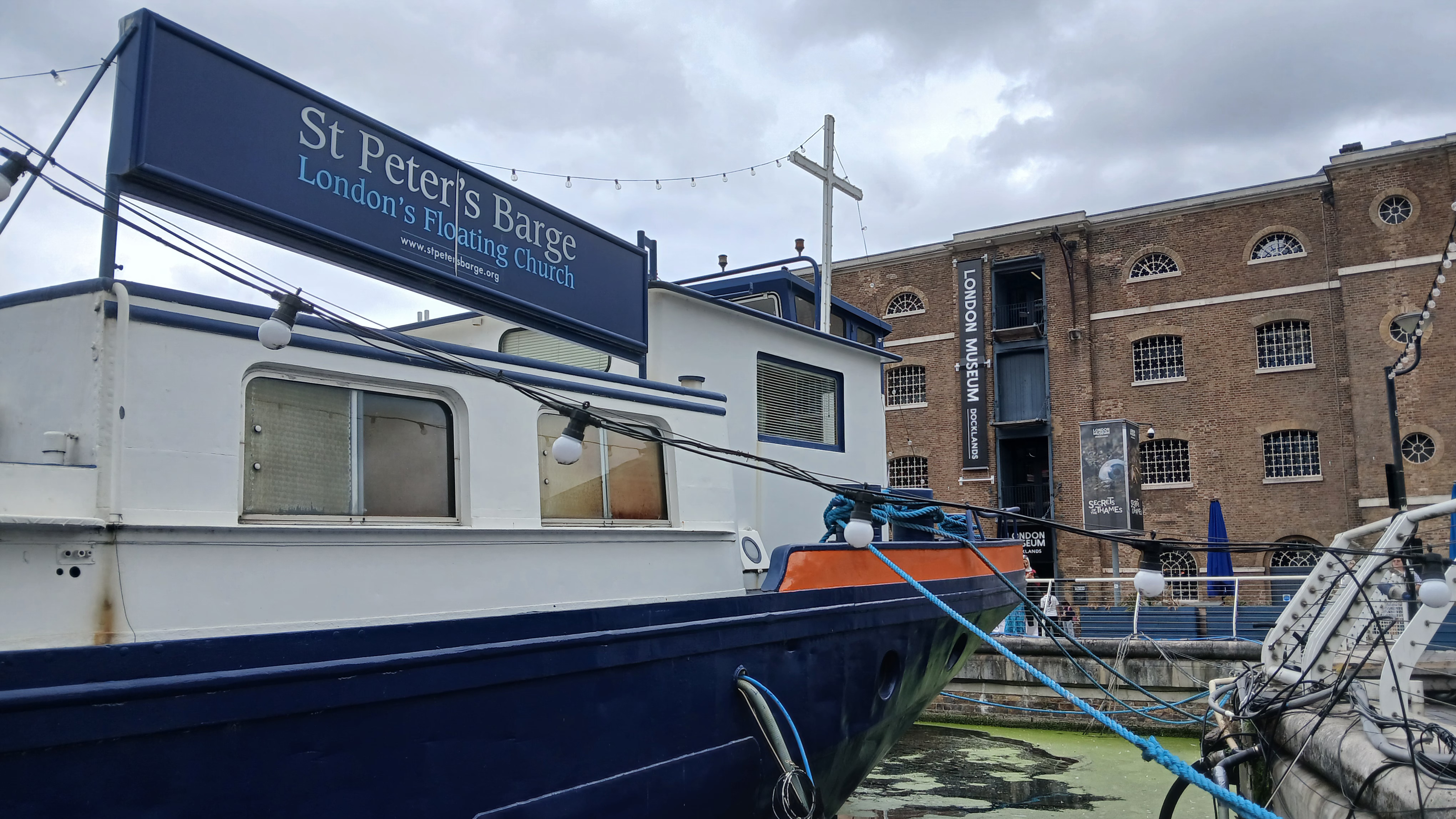
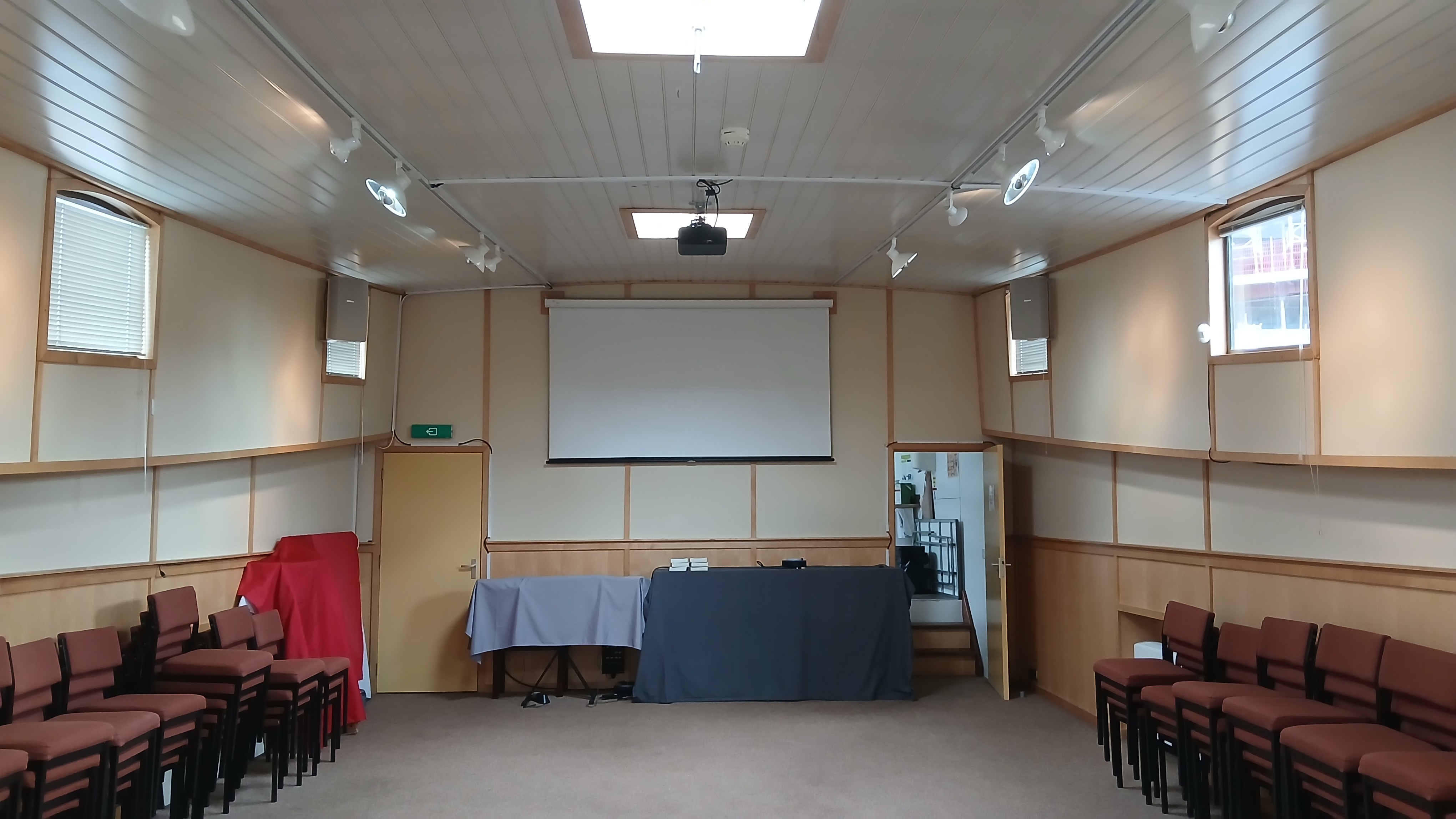
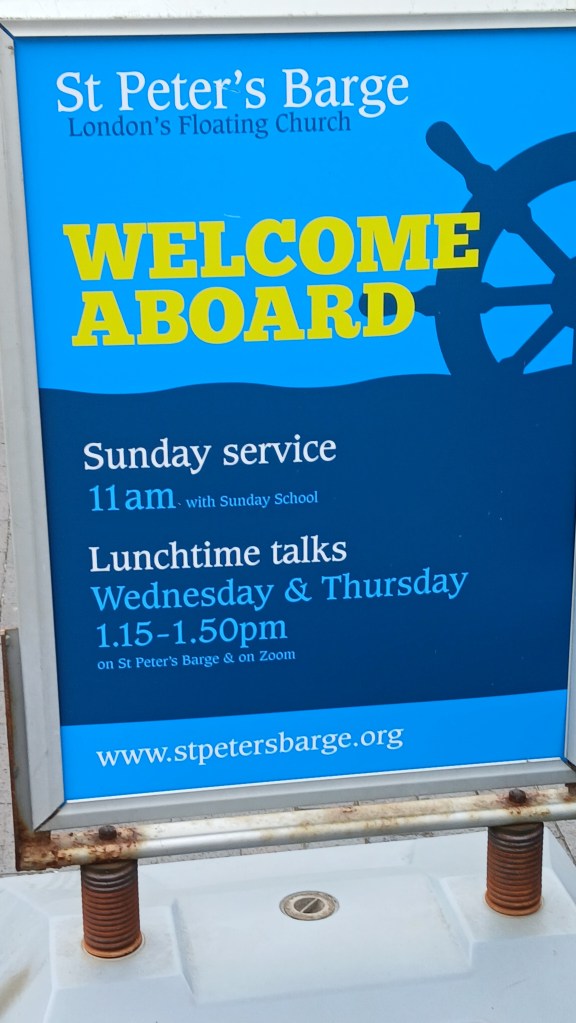
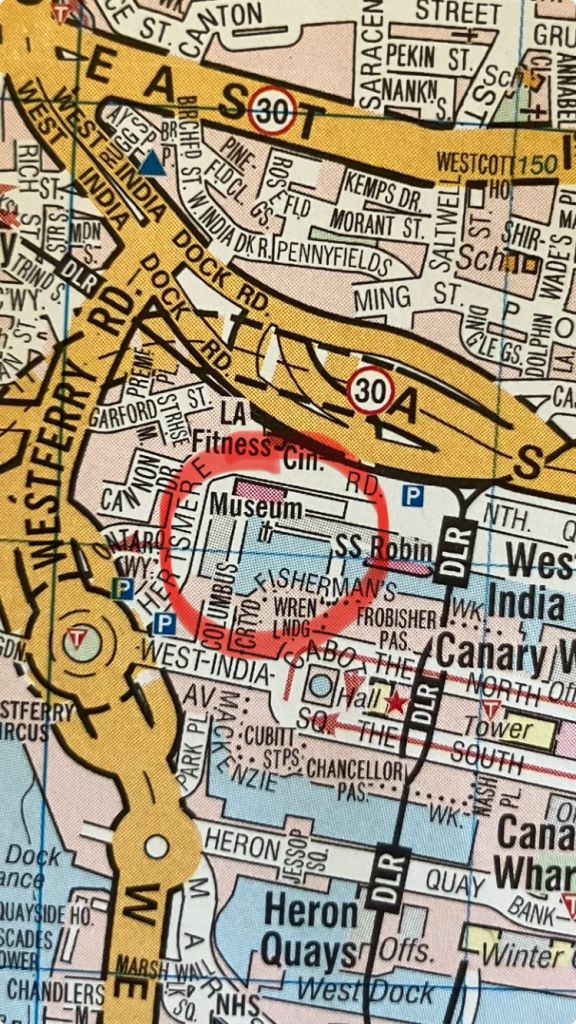
The most unusual of my visited churches, St Peter’s is unique in that it’s actually IN the dock, formerly West India Dock! The barge which houses a church is moored at West India Quay in the heart of the Canary Wharf business and financial district. A large part of this area lies within the parish of St Anne’s Limehouse, and following the redevelopment of the East London Docklands, St Anne’s started lunchtime outreach meetings in the pubs and bars for the 100,000 people working here. The project was supported by St Helen’s Bishopsgate in the City, but to grow the work, a permanent venue was needed; the vision to establish a floating church was realised with the formation of the St Peter’s Canary Wharf Trust. A Dutch freight barge was purchased in the Netherlands in 2003, refitted in situ and brought across the North Sea, where it has a permanent mooring here in the dock. A full-time Church of England minister was appointed in 2004; fast forward 21 years and St Peter’s holds regular Sunday morning services, including Sunday School for primary aged children in nearby London Docklands Museum – what a great place to have Sunday School! The lunchtime talks, part of the original outreach, take place on Wednesdays and Thursdays, and there are also cell groups, women’s and young people’s groups and a Toddler Group, appropriately named Little Ducklings. What a great location to ‘do church’!
Note: This month I visited four very different churches, each with a unique story to tell: histories of buildings and people and events from 300 years ago right up to the 21st century. As always, when I happened to meet church staff and volunteers (which happens a lot!) they were friendly and helpful. It’s one of the best parts of writing this Blog!


Wonderful account of the Docklands – thank you Clare
LikeLike