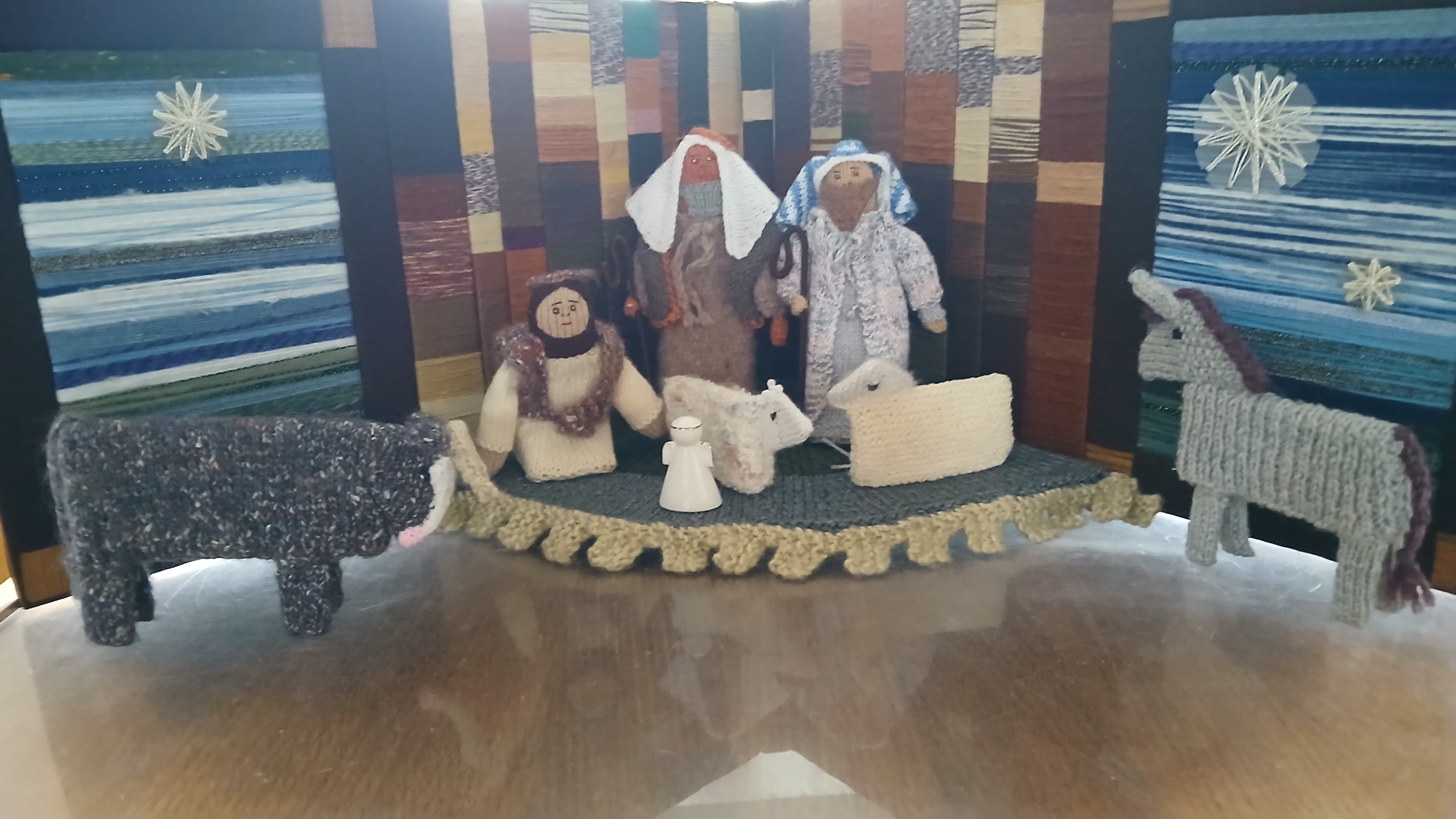
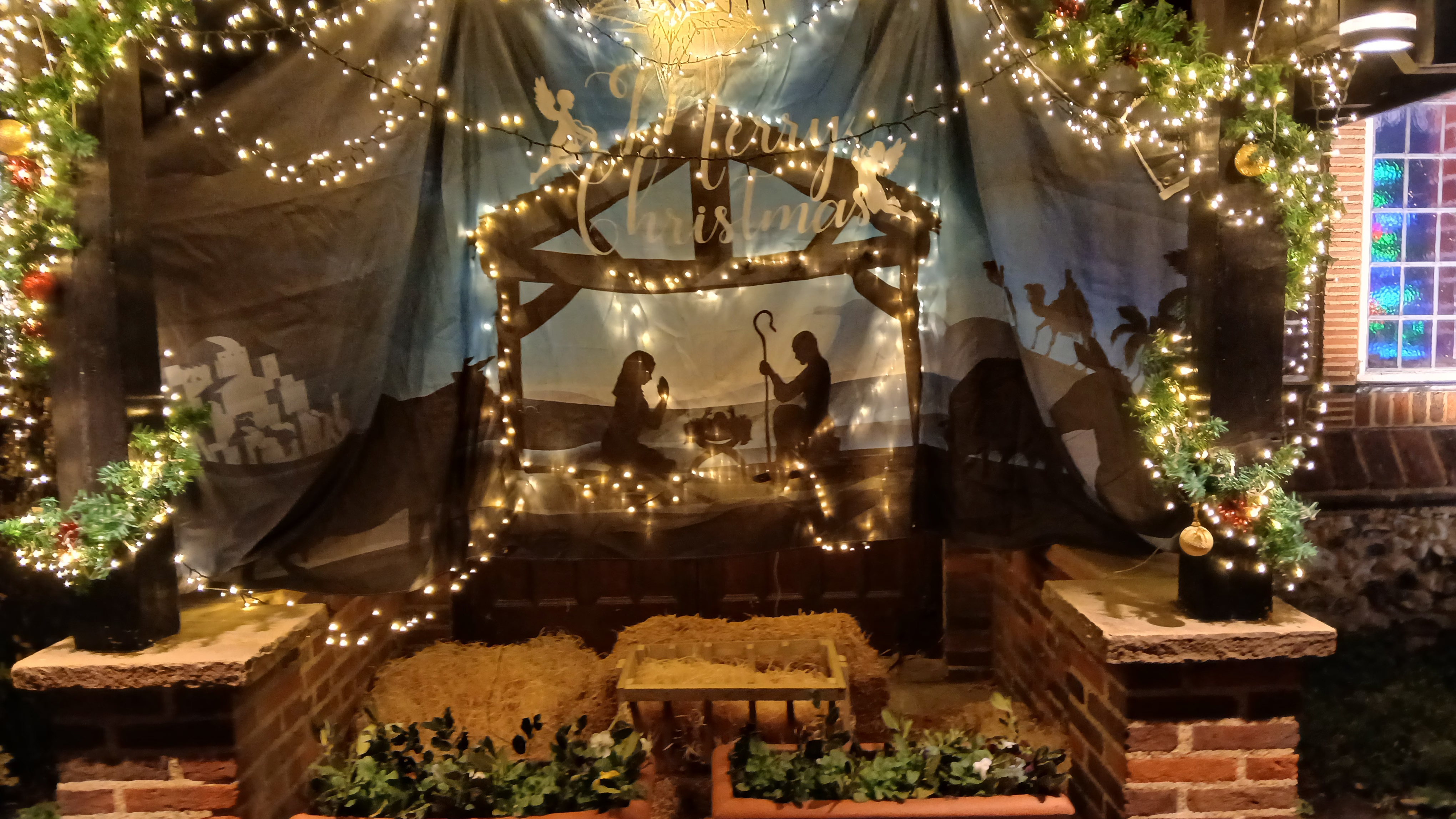
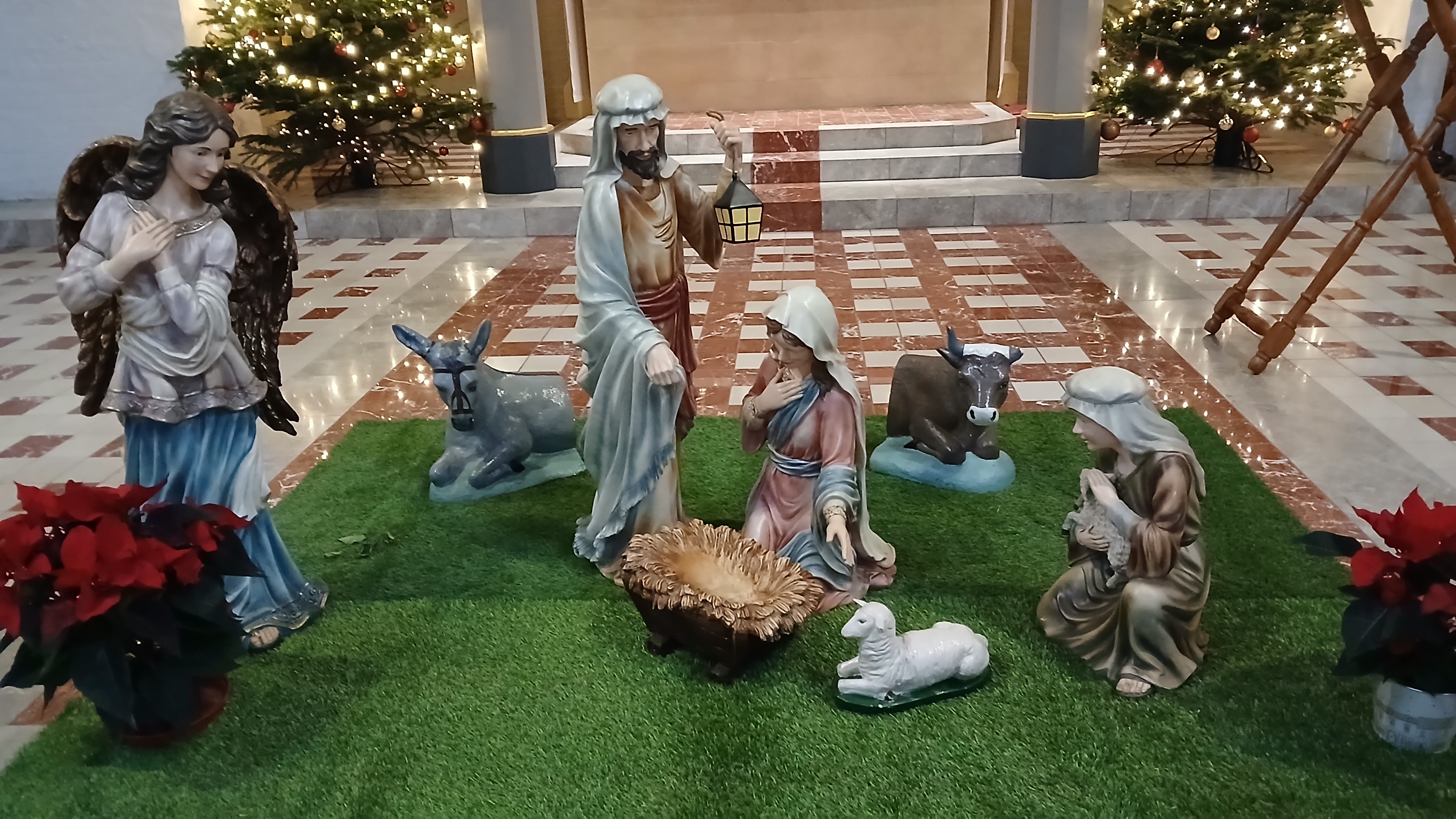
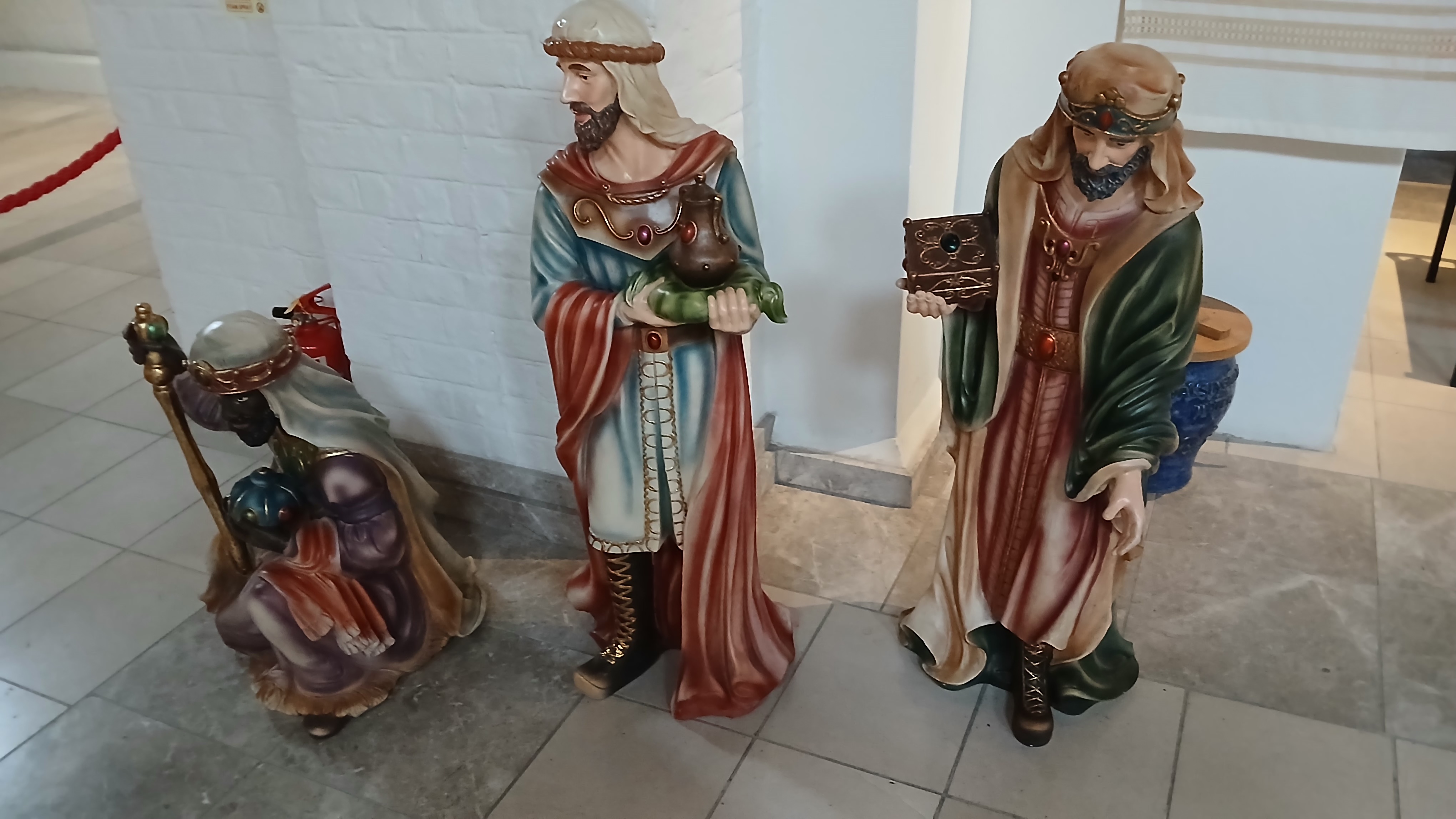
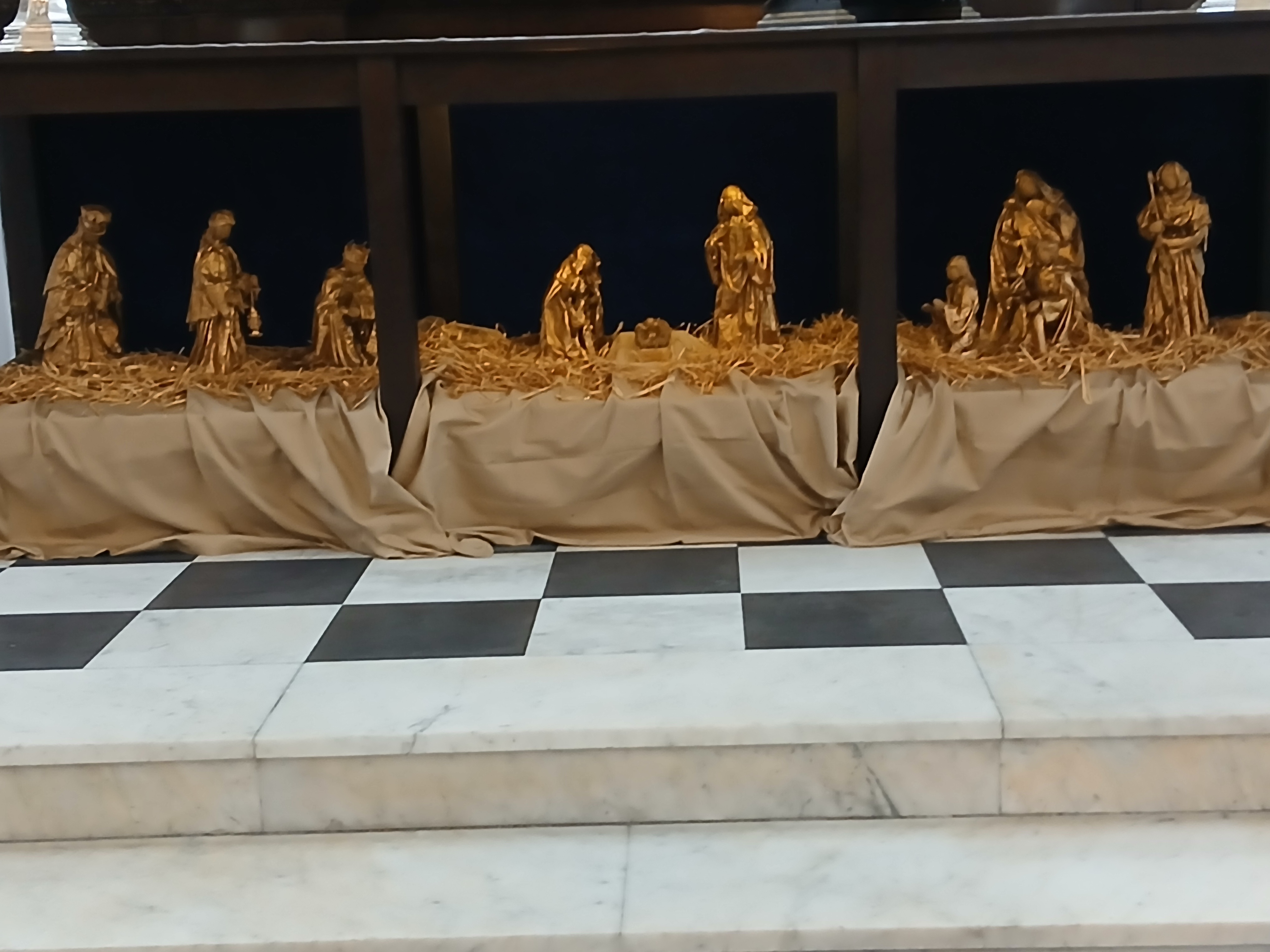
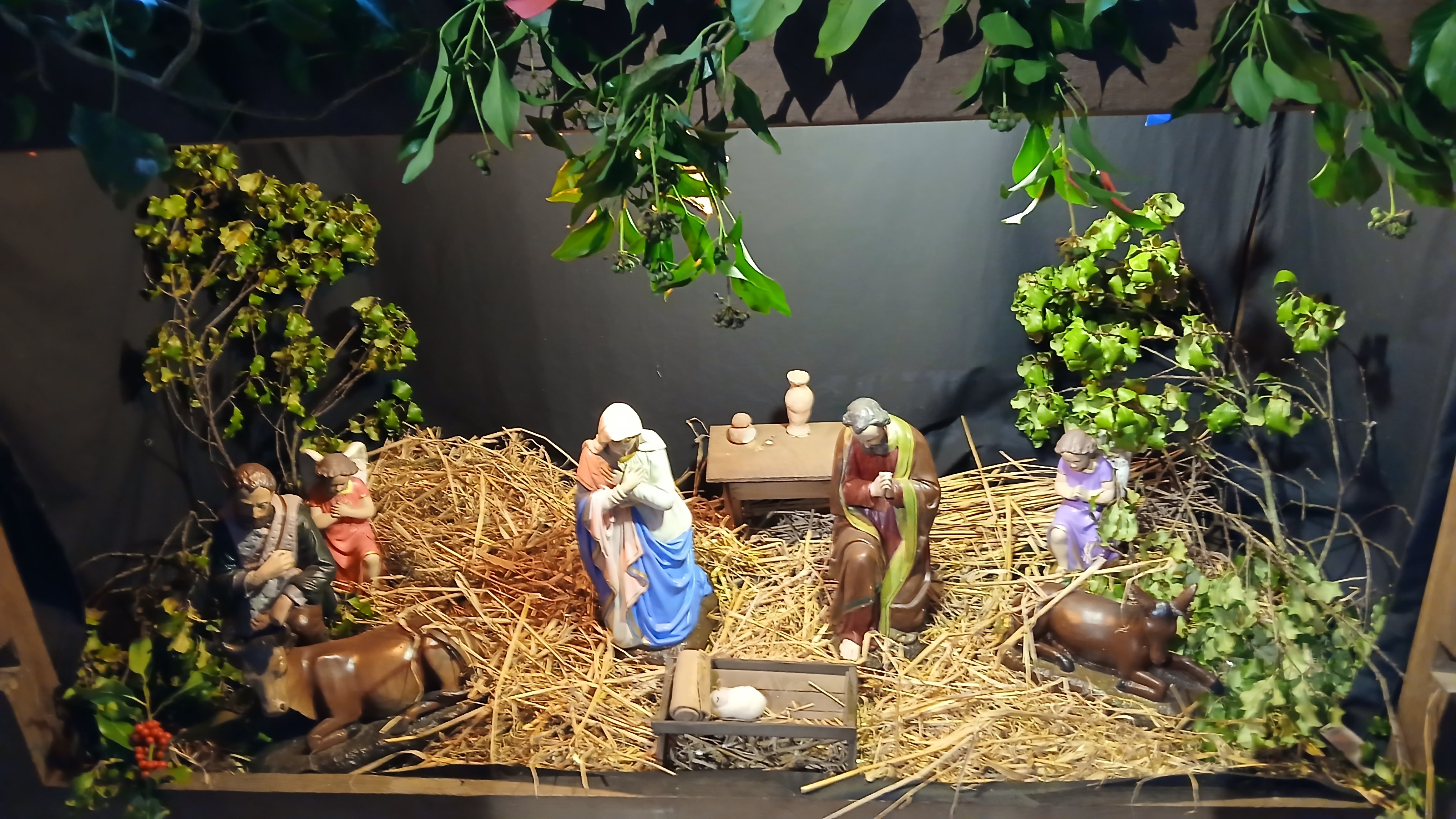
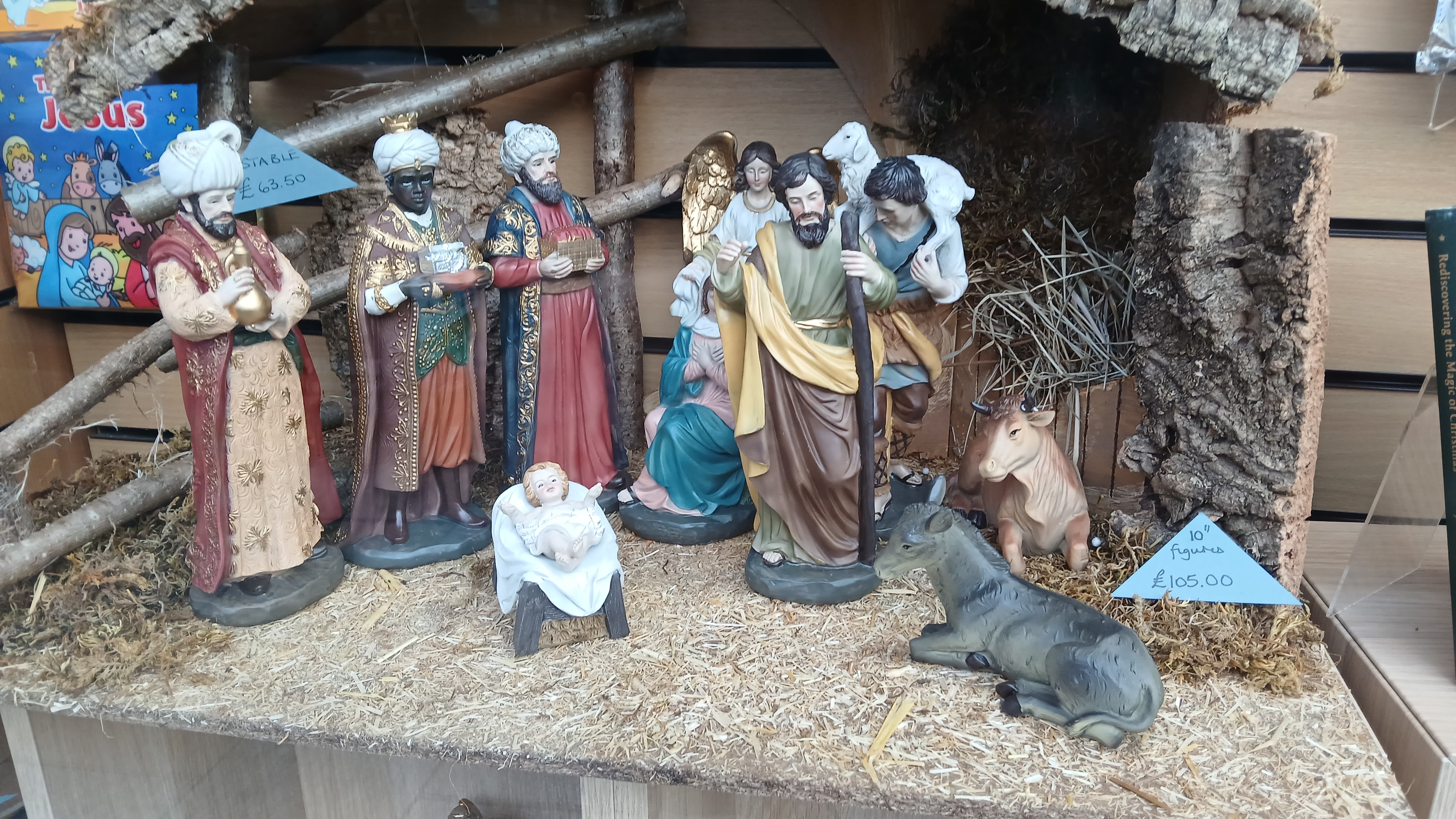
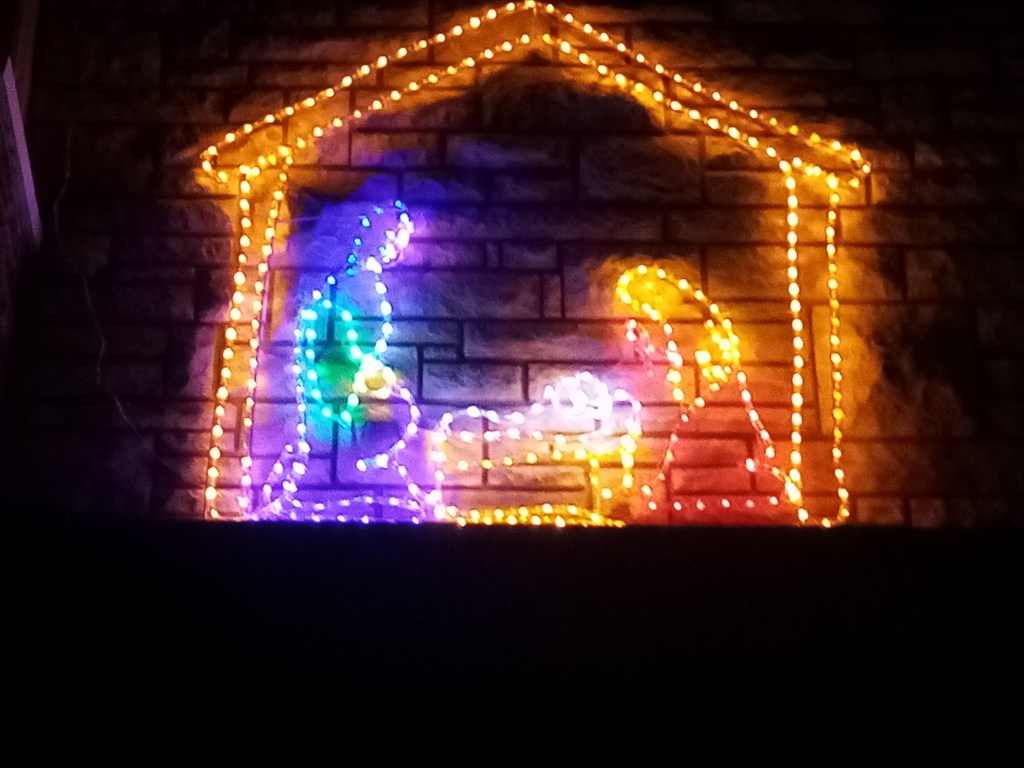
Here’s the usual round-up of Nativity scenes I’ve seen in and around the Capital. I would love to find a life-sized nativity outside a church, like the one in which Kevin hides in the film Home Alone. I’ll keep looking, meanwhile, this selection includes nativities from churches and a cathedral, a school and a shop – and a Christmas market!
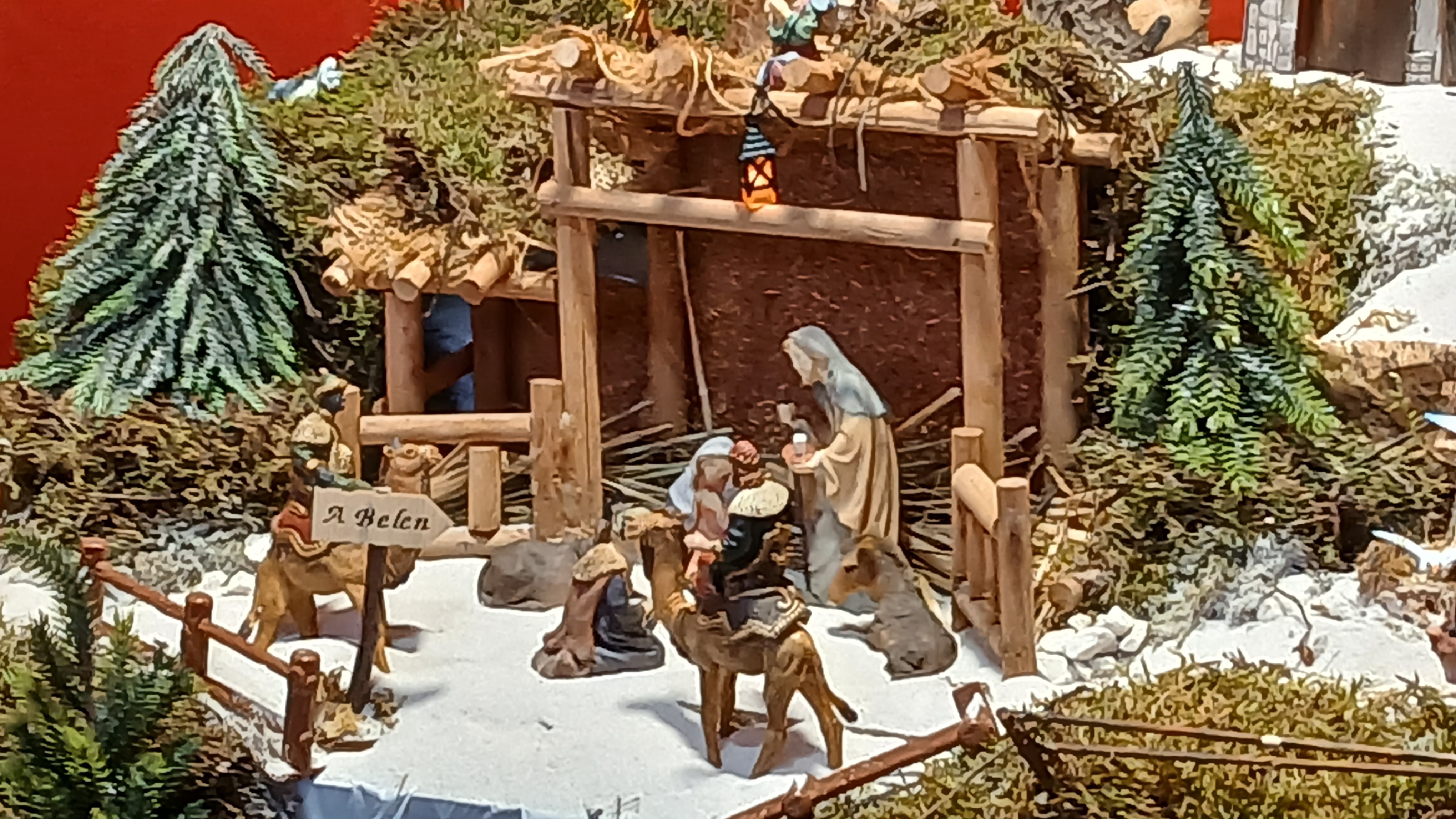
Nativity Scene at Lisbon Christmas Market
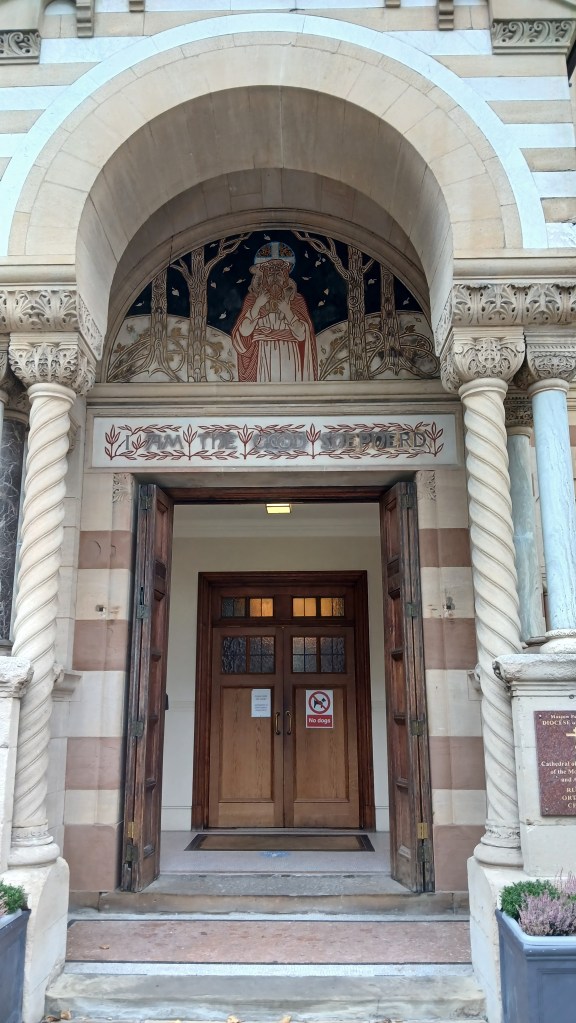
Knitted Nativity at Good Shepherd, Carshalton Beeches
Outdoor Nativity, Chiltern Church
Southwark Cathedral’s nativity designed by local school children
Southwark Catholic Church Nativity……
….with Wise Men waiting to arrive
Salvation Army Sutton table top nativity
St Lawrence Jewry, Guildhall Nativity
Nativity with Greenery, Chaldon Church
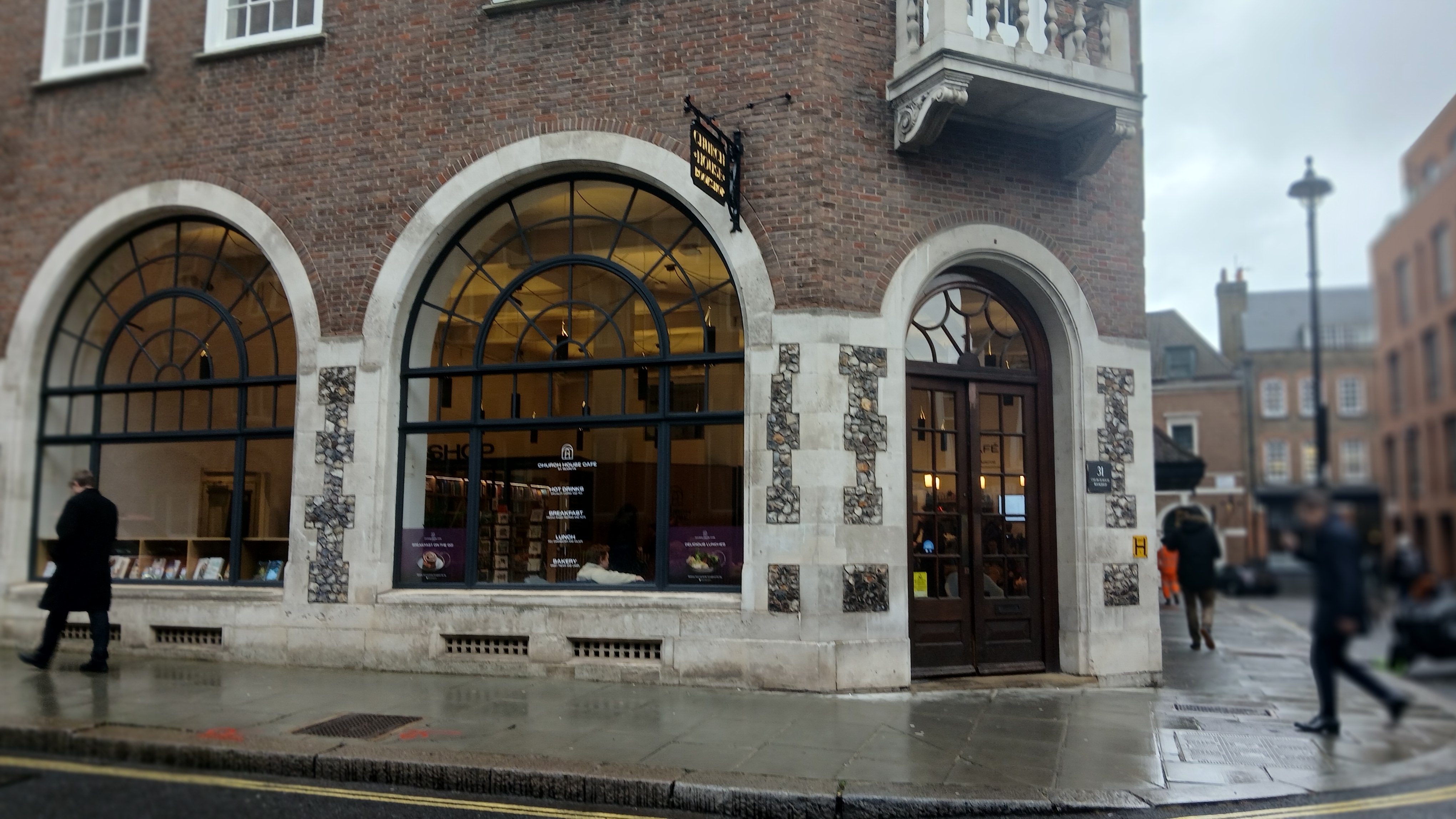
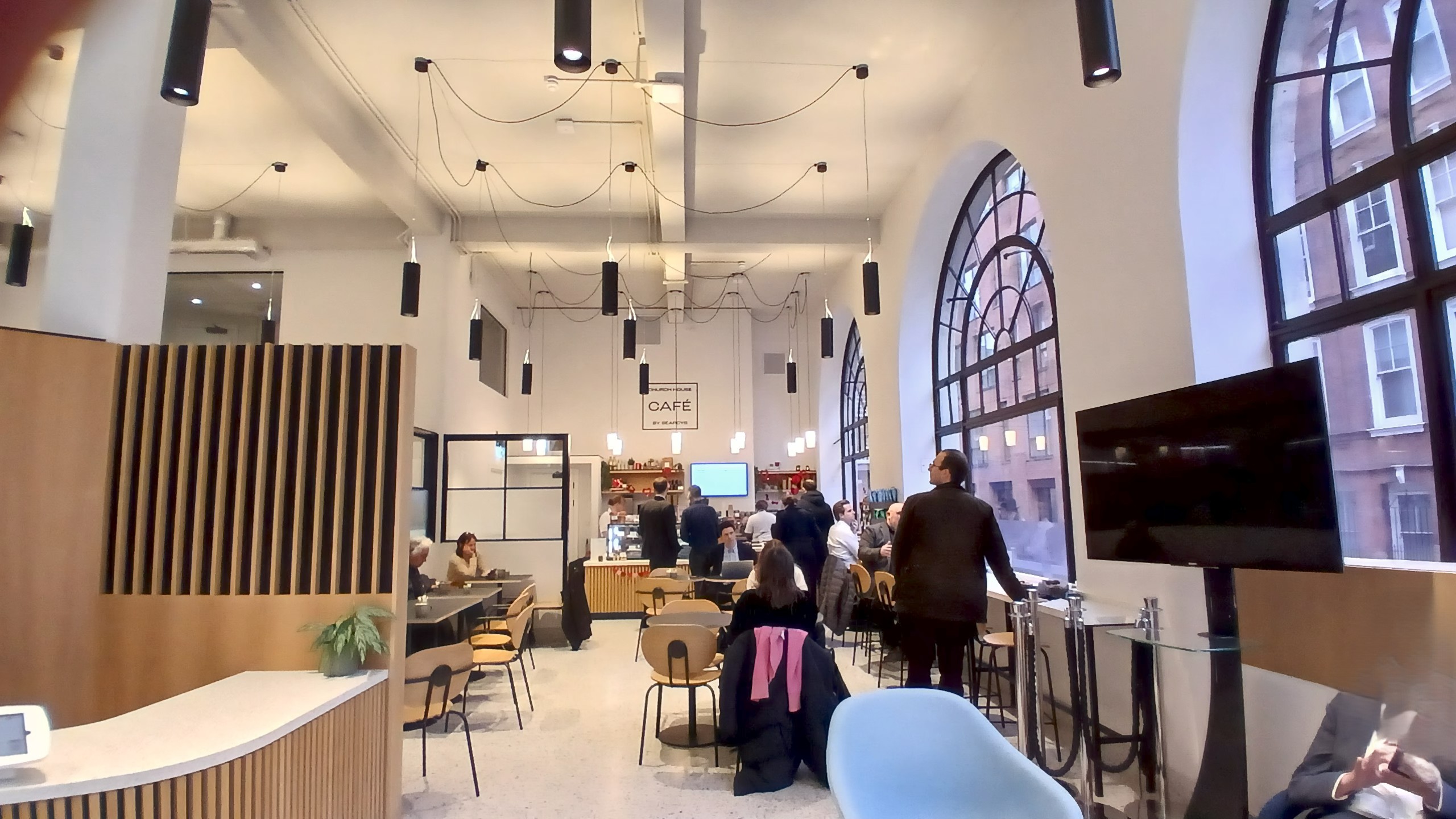
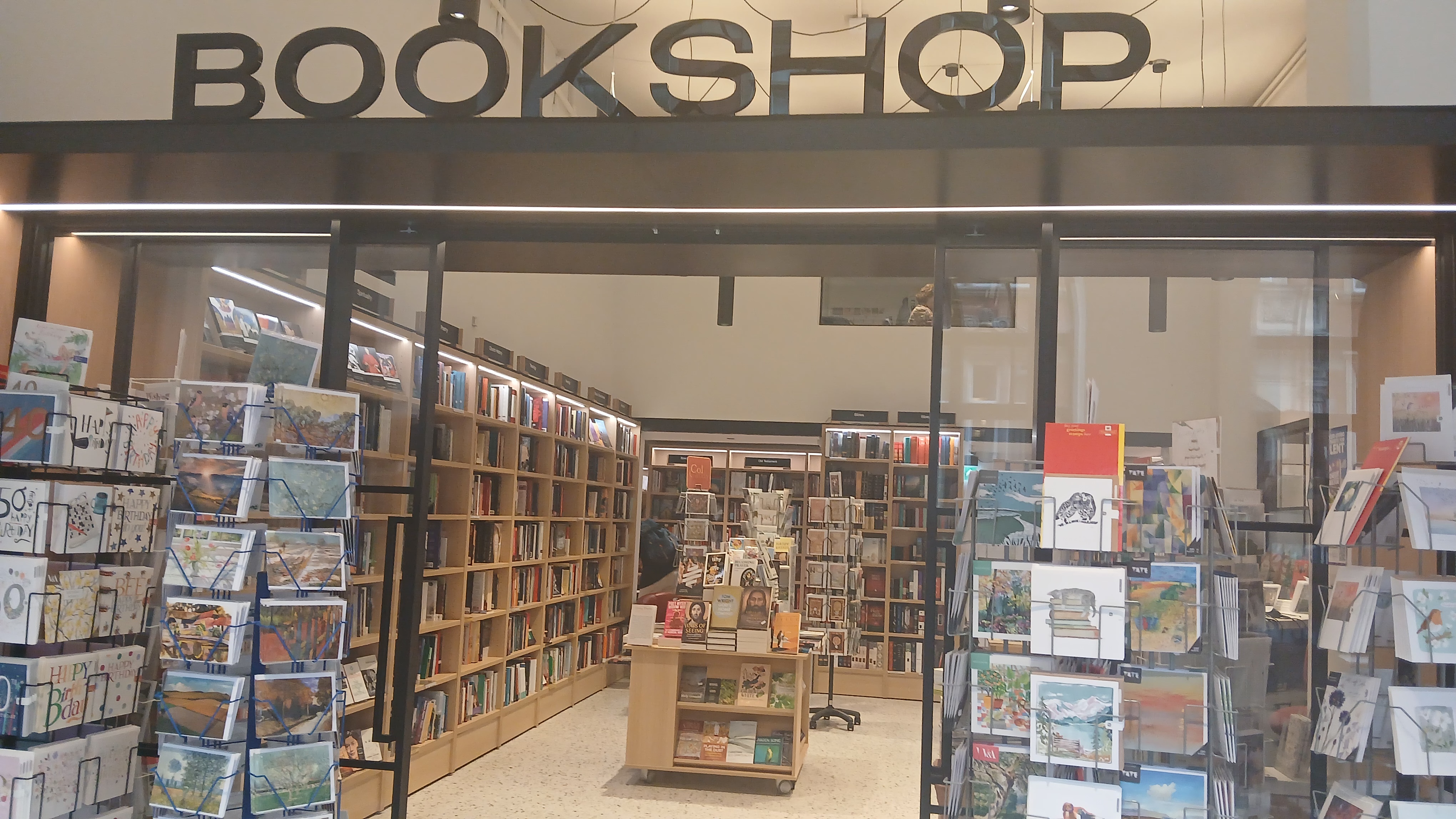
Oasis Bookshop Nativity
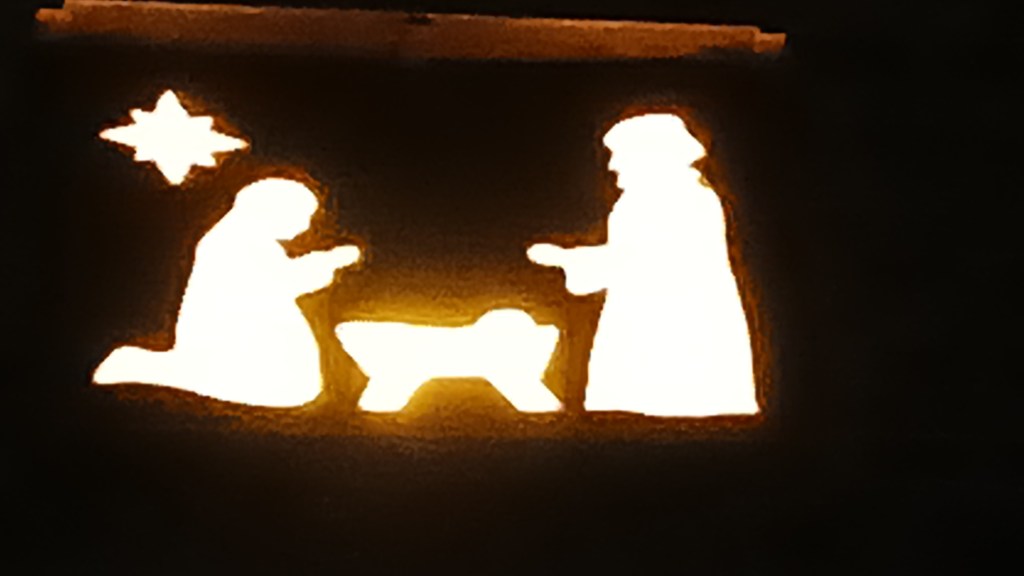
Illuminated nativities at Sutton Christian Centre and St Elphages RC Church, Wallington
For 2026 I’m going to continue with Christian London but I’m also looking further afield to churches and cathedrals in other cities that I’ve visited, or planned to visit. There’s so much beauty and history to be explored in Christian Britain and Christian Europe! Happy New Year to all!
The Eastern or Orthodox Christian denomination is the third largest after Catholic and Protestant and has approximately 300 million adherents. It is the primary denomination of many East European countries including Ukraine, Romania, Greece, Serbia and Cyprus as well as Russia and some regions of North Africa. The history of Orthodoxy is complicated; the most important event was the Great Schism of 1056 which led to separation between the church of the West, Catholicism, and the Eastern Byzantine Church, now known as Orthodox. However, my interest was aesthetic rather than spiritual: the lavish splendour of the church interiors – stepping into such churches is like stepping out of London and into Eastern Europe!
Source: Wikipedia
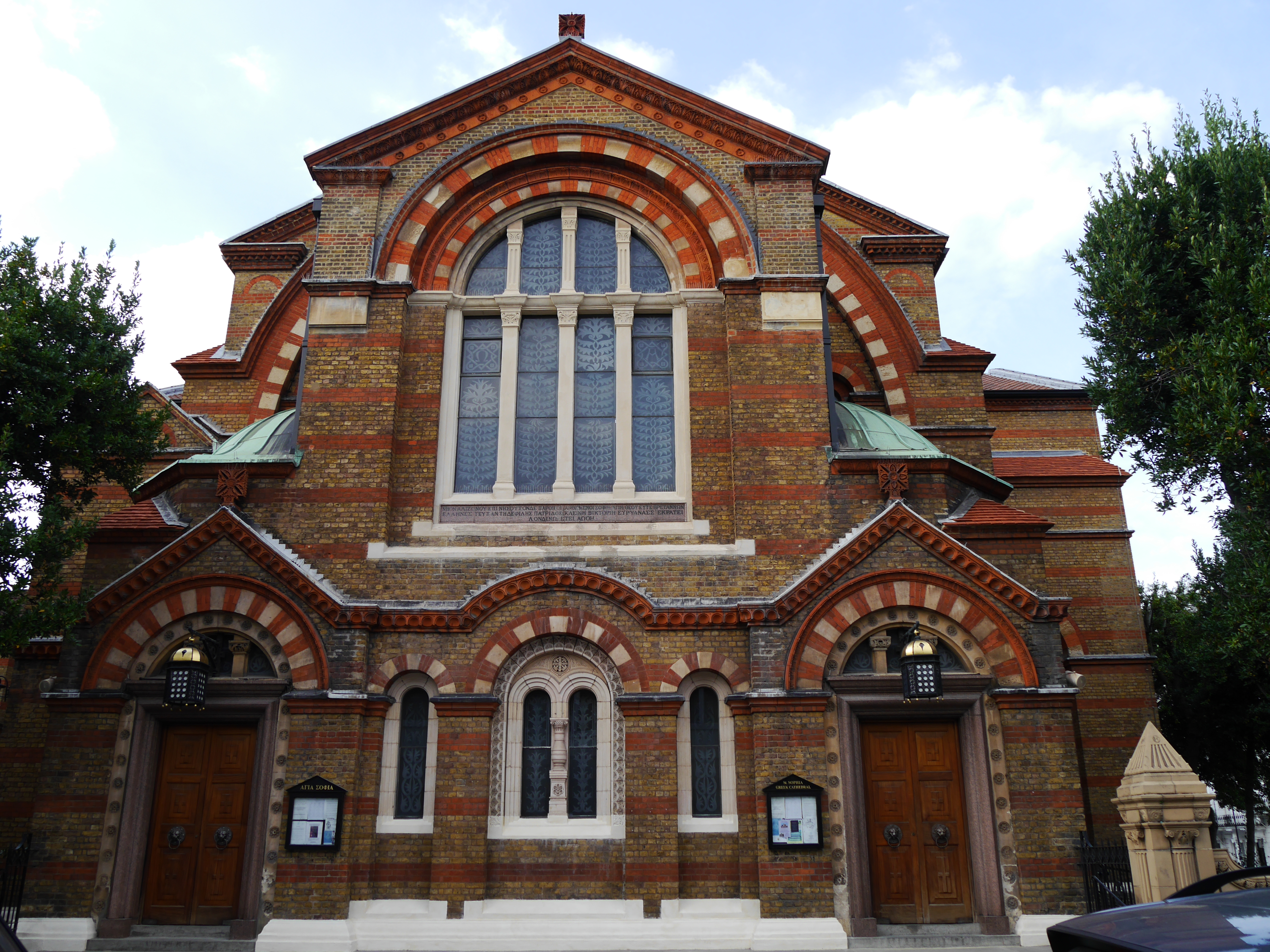
Greek Orthodox Cathedral, Bayswater
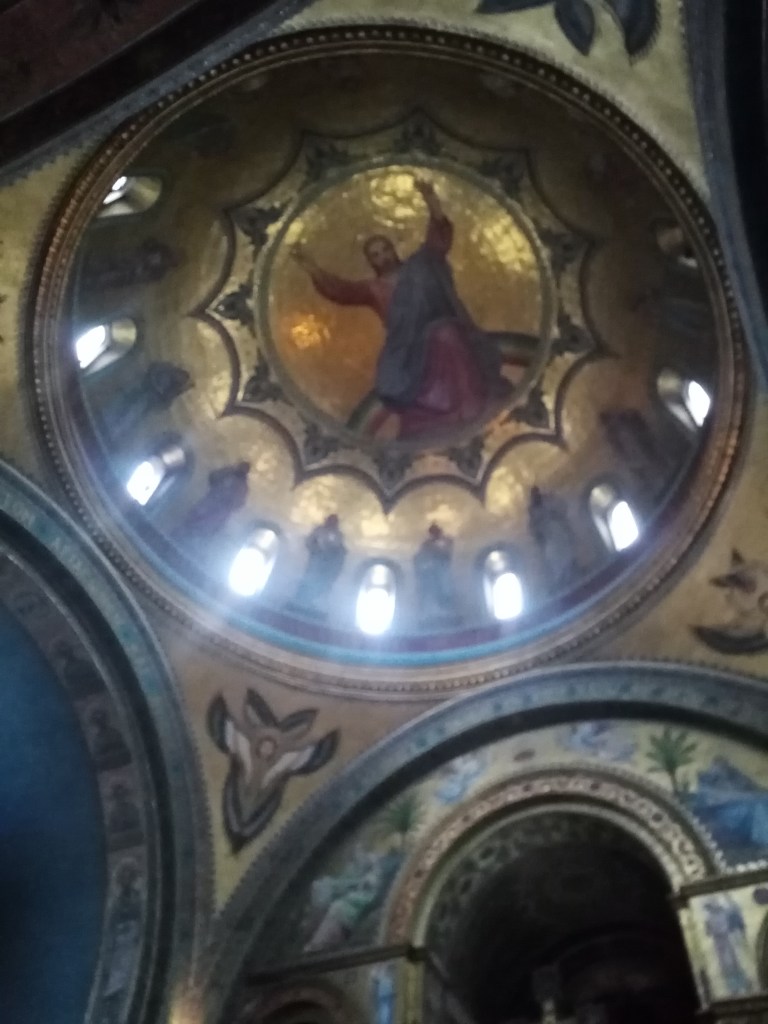
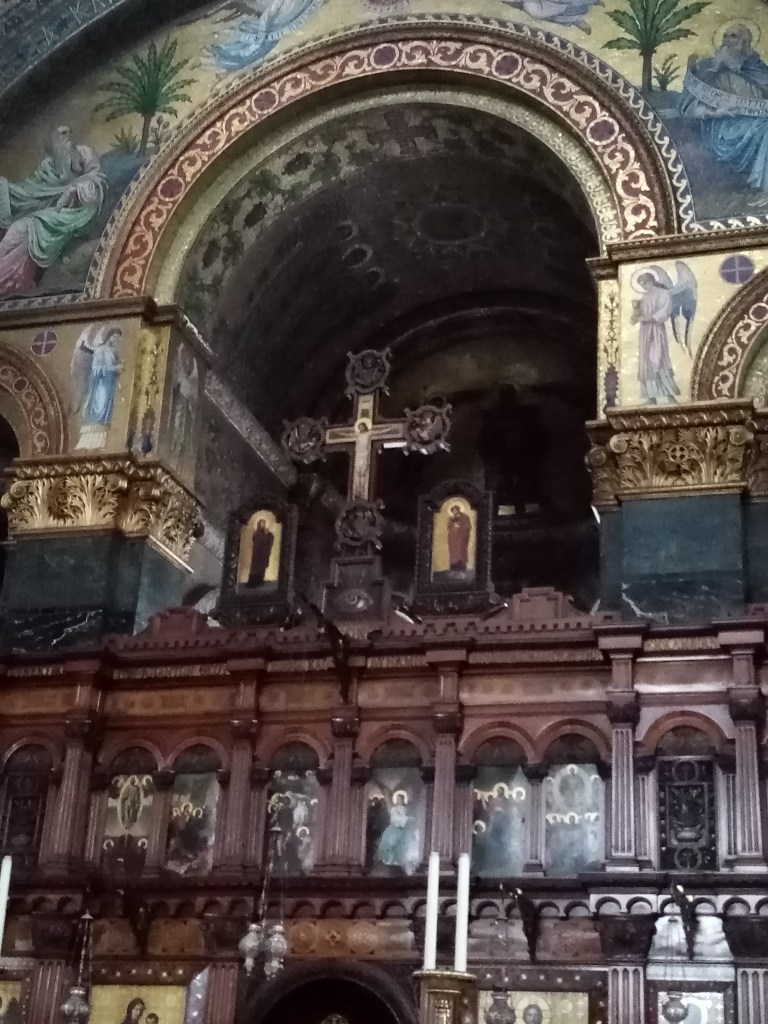
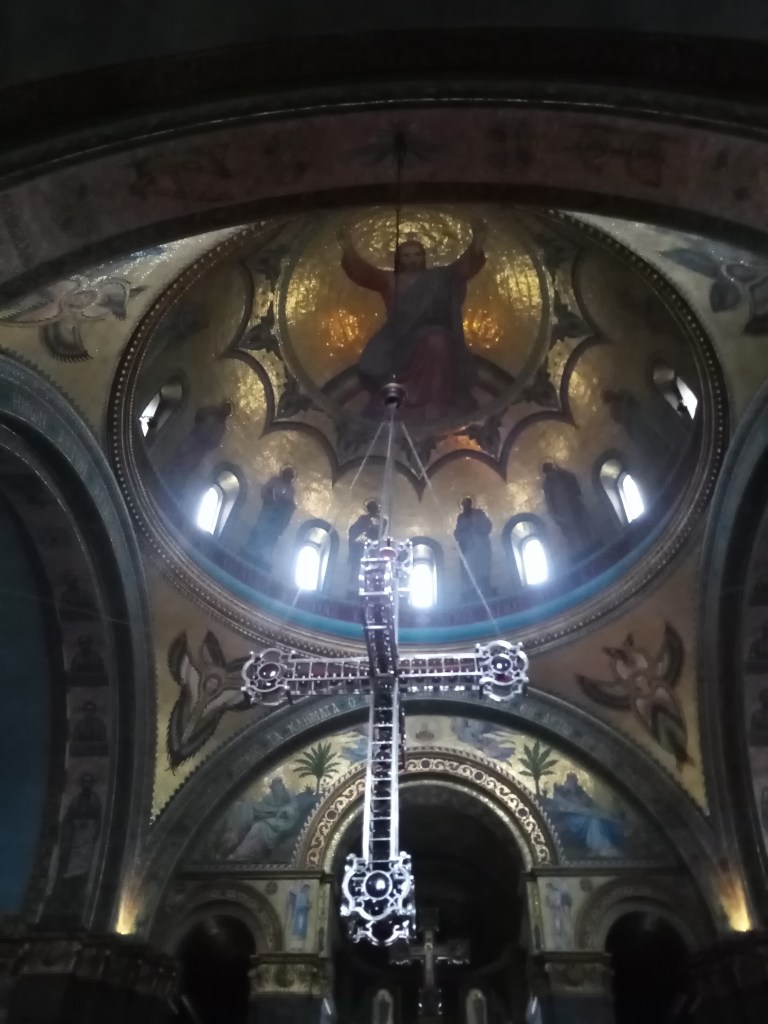
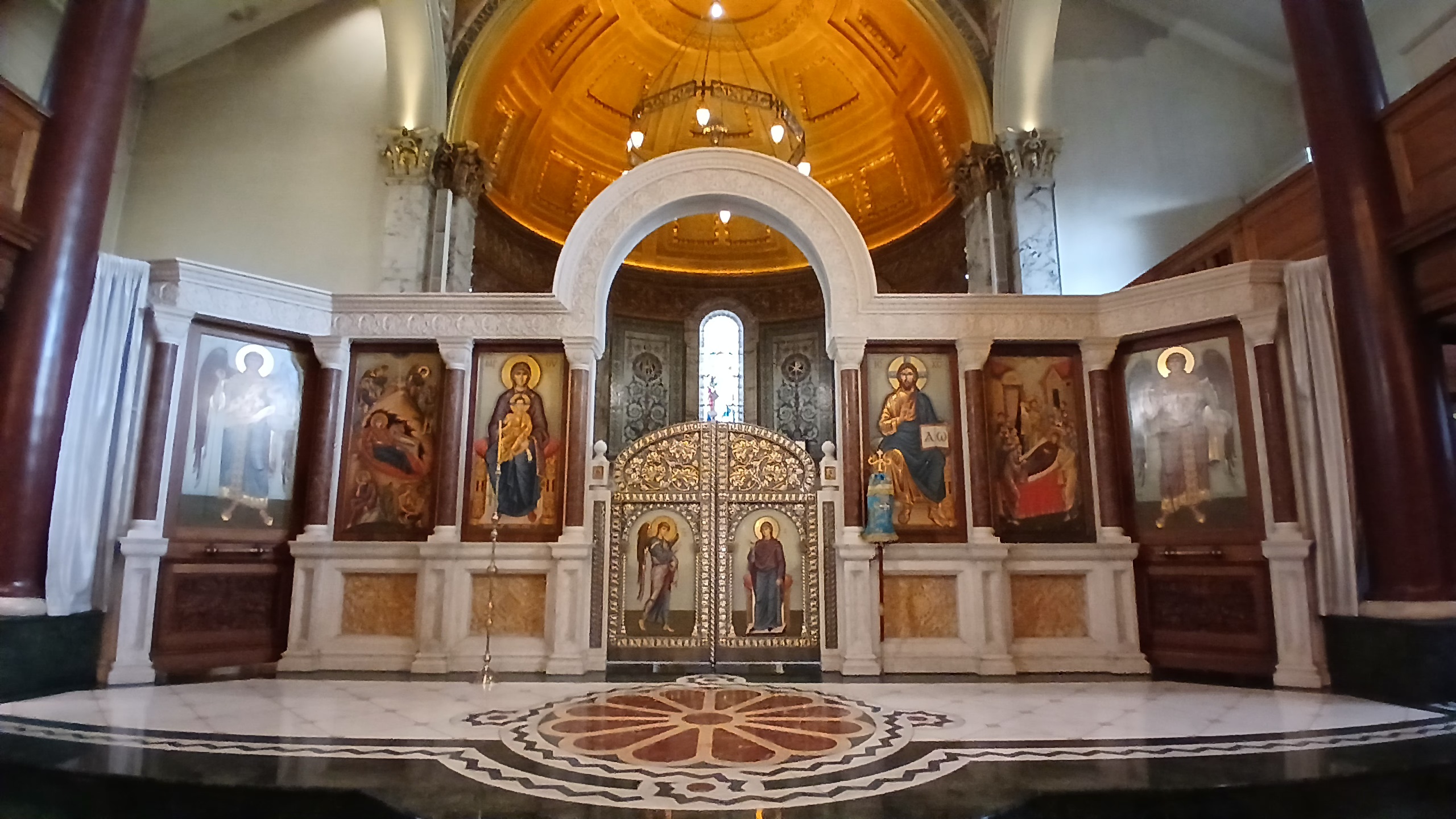
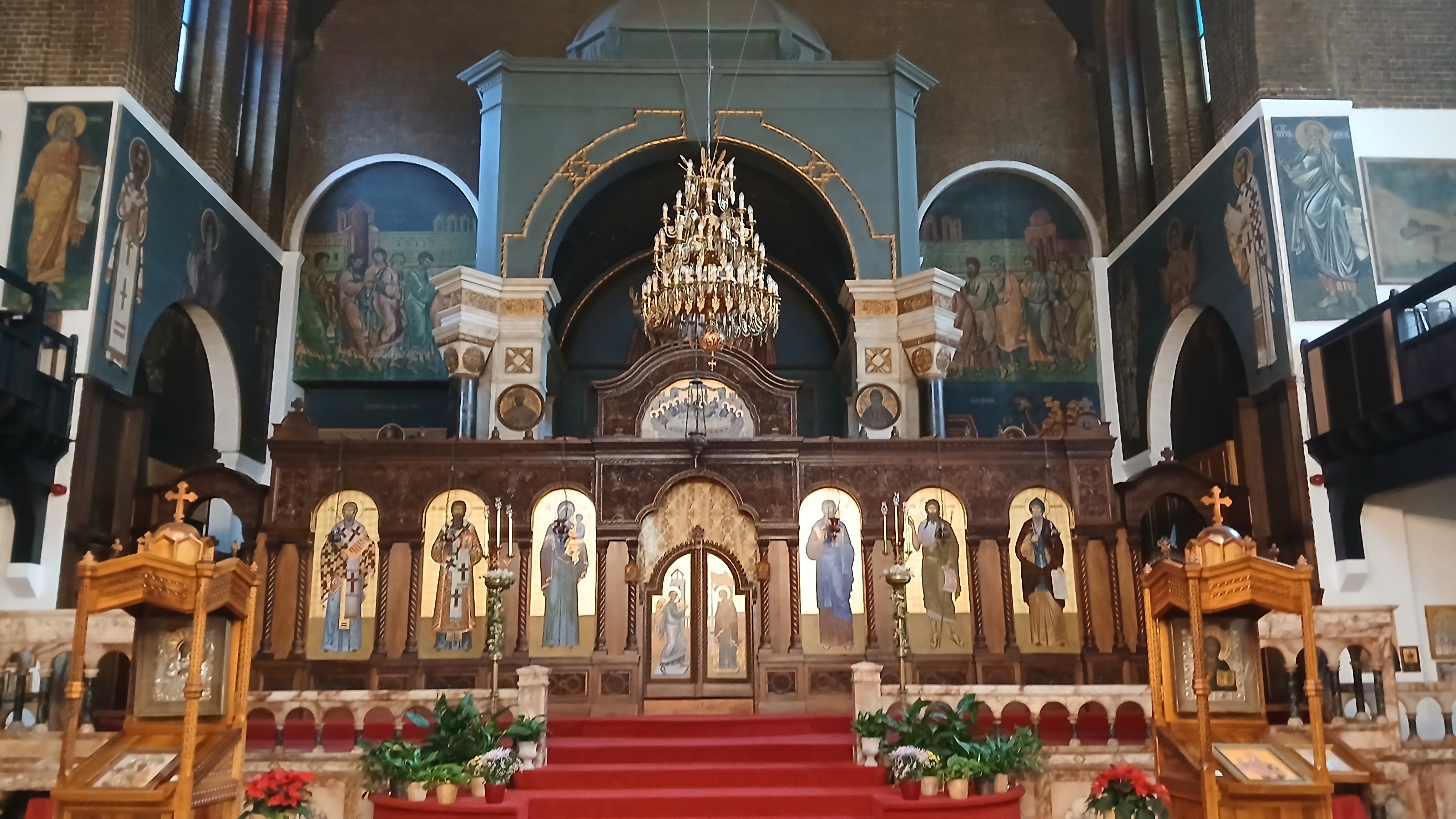
Also known as Saint Sophia Cathedral, this church in Bayswater has an interesting but quite ordinary exterior which hides its breathtakingly-beautiful interior. When I visited, an event (not an actual service) was taking place so all my shots are of the ceiling and above people’s heads, so my photos don’t really do it justice! The cathedral was consecrated as the Church of the Holy Wisdom in February 1882 to serve the prosperous Greek community which had settled around Bayswater and Notting Hill. The architectural style is Byzantine Revival by architect John Oldrid Scott, who was also responsible for St Stephen’s Greek Orthodox Chapel in West Norwood Cemetery, another one for me to visit! The interior is decorated with gold and polychromatic marble and the overall effect is spectacular.
Source: Wikipedia
Russian Orthodox Cathedral, Knightsbridge
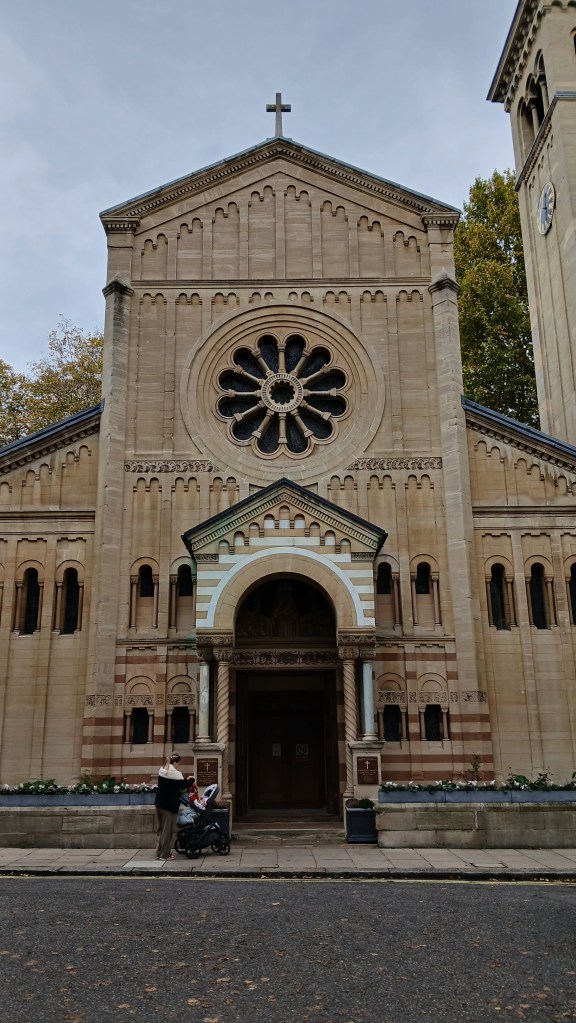
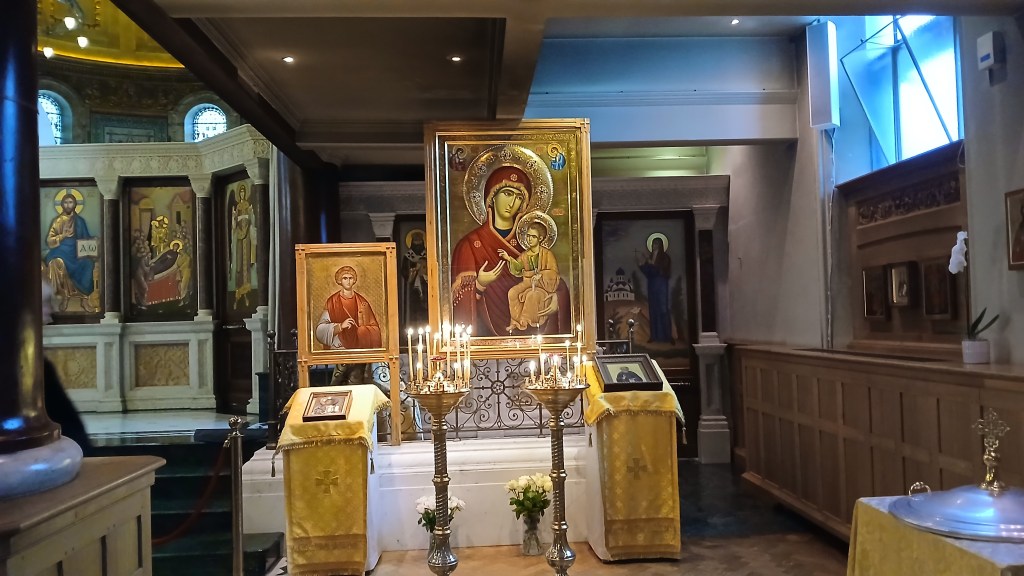
Also known as the Dormition of the Mother of God and All Saints, the building is the former Anglican church of a wealthy parish of the mid 1800s. The church was let to the Russian Orthodox Church and consecrated as an Orthodox church in 1956, again to serve the Russian community in the area. Finally in 1978 the building was purchased by the Russian Orthodox Diocese of Sourozh which covers Great Britain and Ireland. The Western façade was remodelled in 1891 to closely resemble that of the Basilica of San Zeno, Verona; the interior of the church is largely unchanged unchanged from the original Anglican church. When I visited, a baptism service was taking place, both the parents and the priest conducting the service seemed quite happy for people to be wandering around the church!
Source: Wikipedia
Serbian Orthodox Cathedral
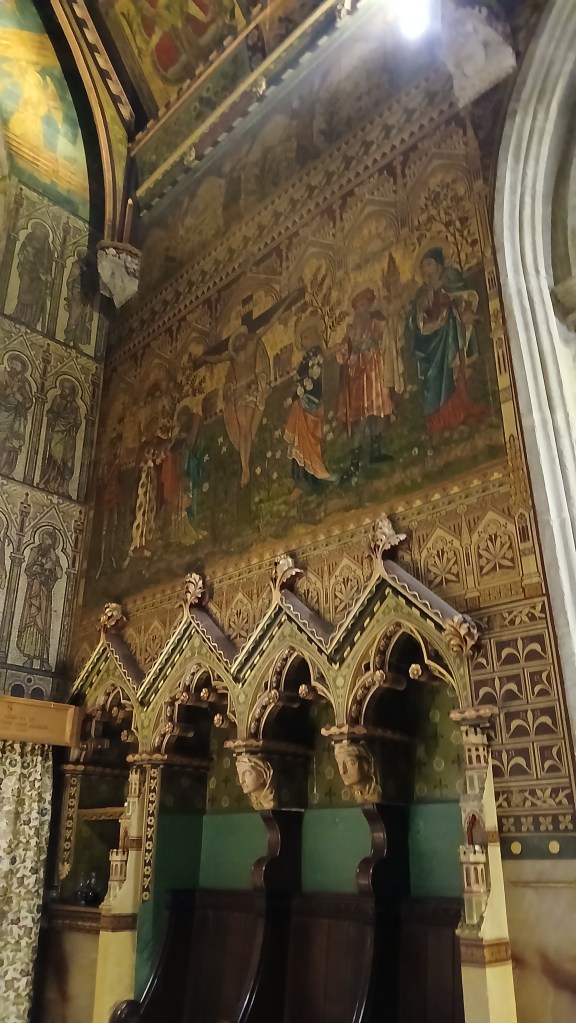
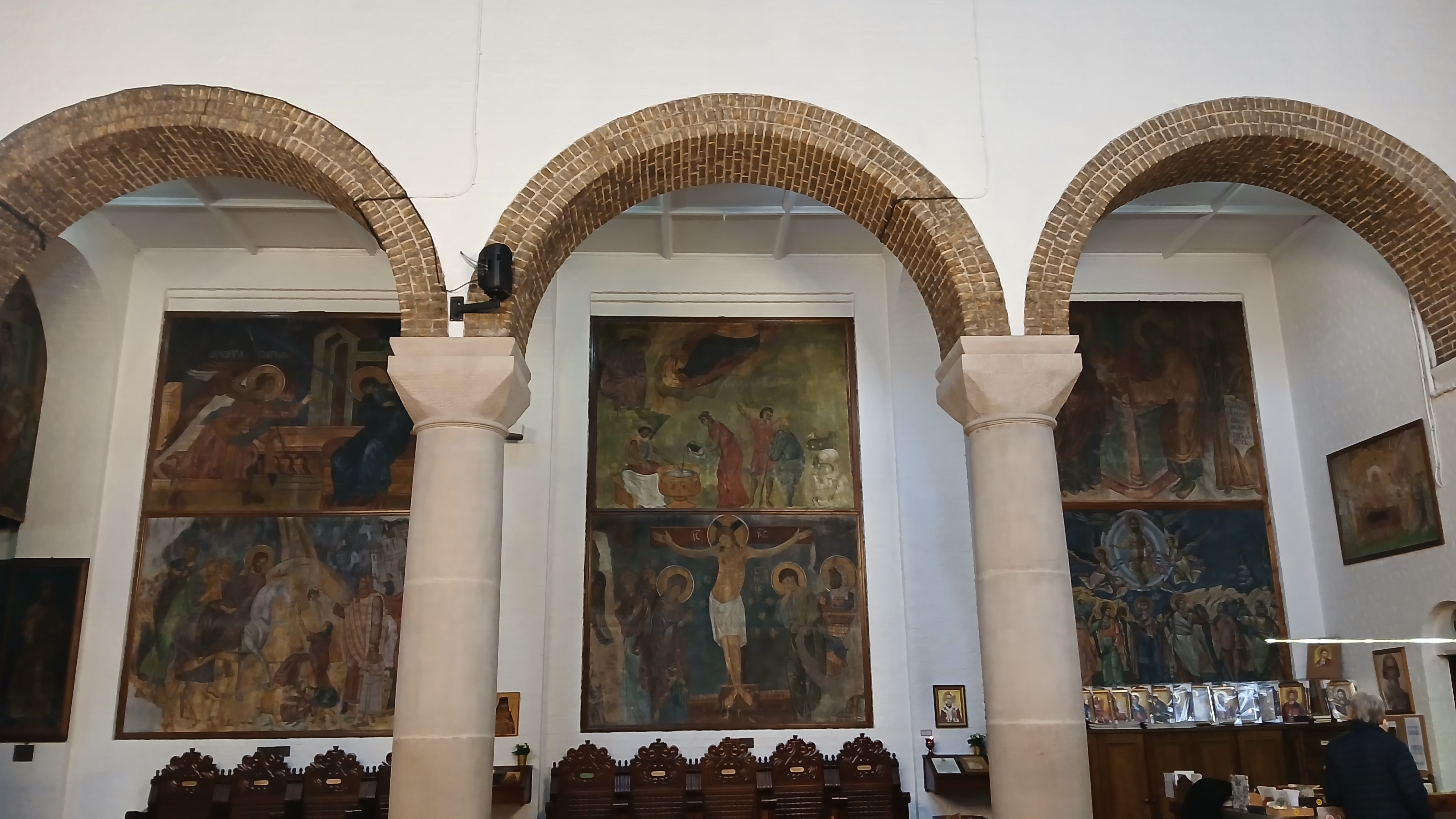
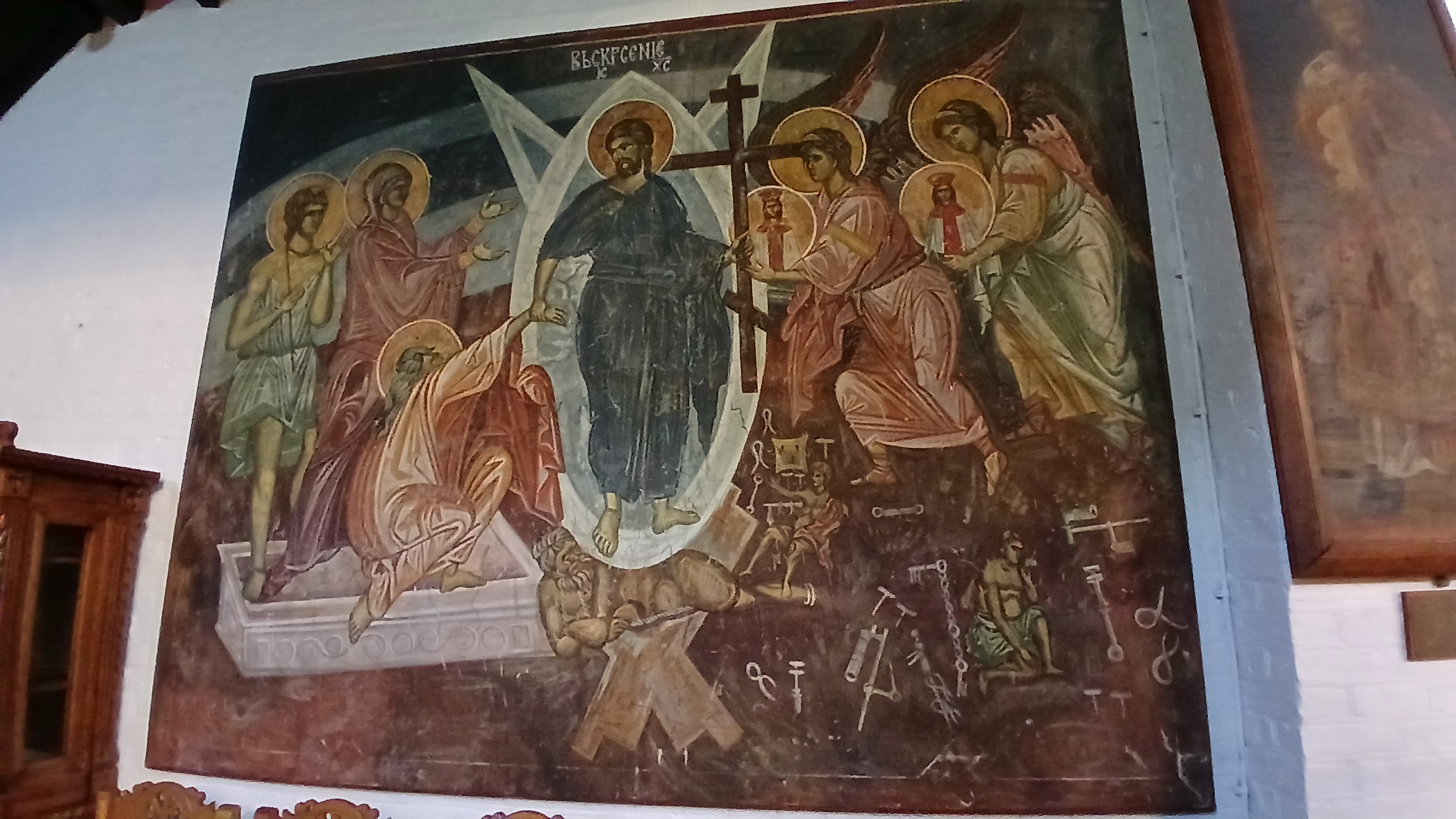
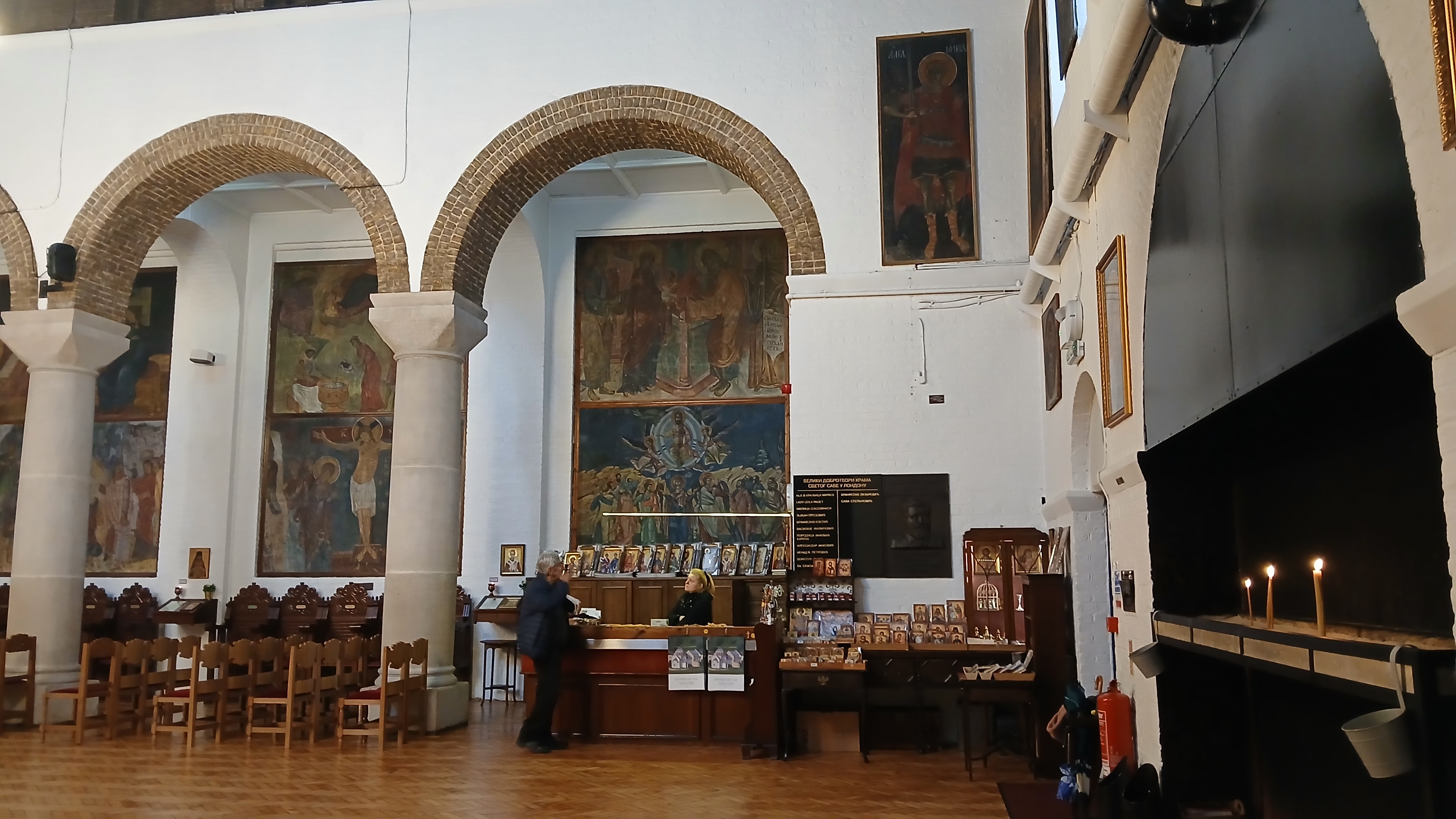
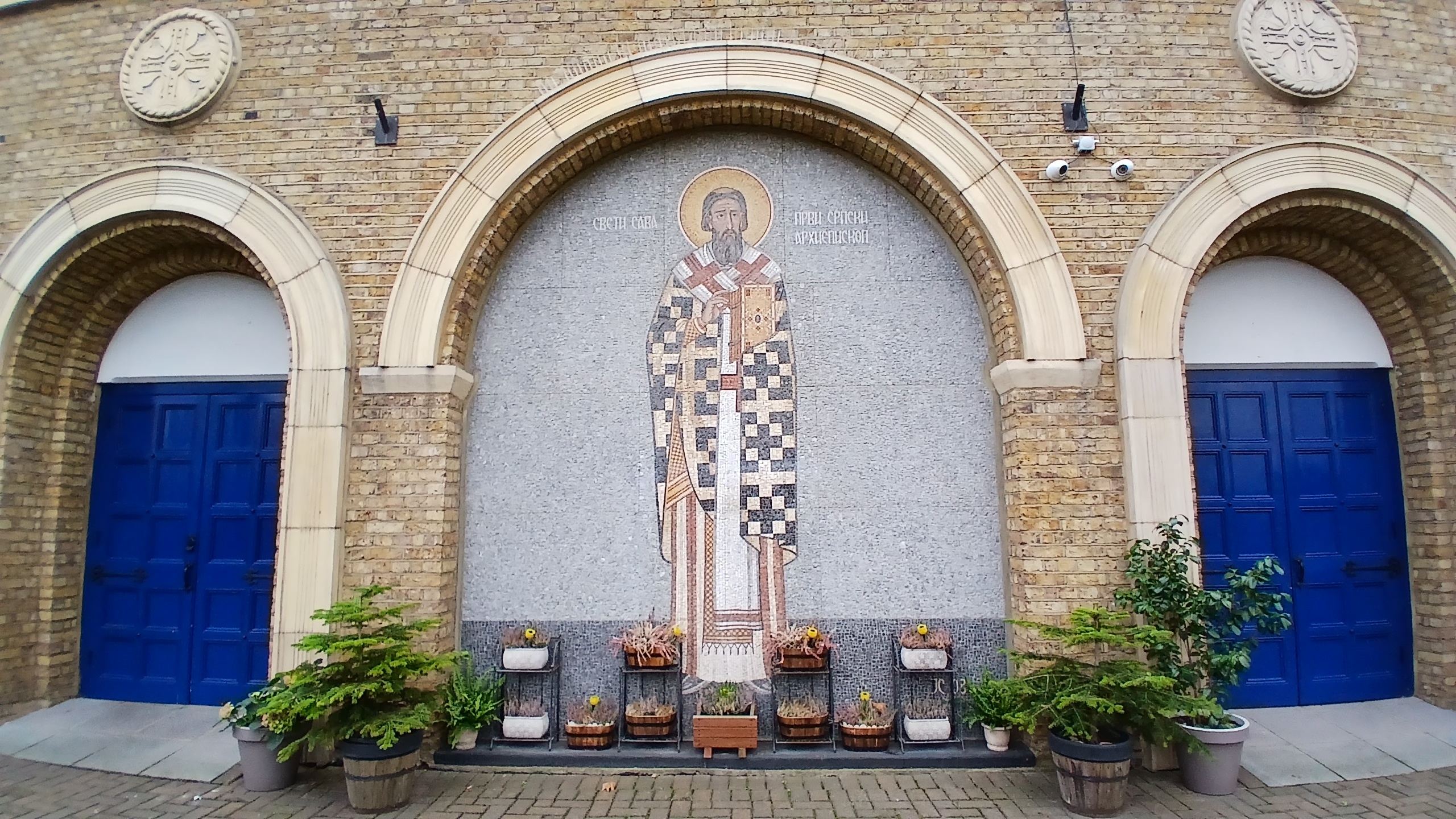
The Cathedral of St Sava, Notting Hill, is the seat of the Serbian Orthodox diocese in Great Britain and Ireland. Another former Anglican church built in 1903, after the Second World War, the church was purchased and adapted for the divine services of the Serbian Orthodox Church. Funds to buy the building were raised with the support of Queen Maria Karadjordjevic and British Lady Paget who was a great friend to the Serbian people in London, and by generous donations from the congregation. My favourite thing about the church is the large murals showing stories from the Bible, perhaps an alternative to stained glass windows. Adjacent to the church is the Community Centre which serves as the Headquarters of the Serbian Church, a Sunday School for children to learn the Serbian language and history, and also accommodates the St Sava Choir and ‘Rastko’ folk dance group.
Source: spclondon.org.uk; Wikipedia
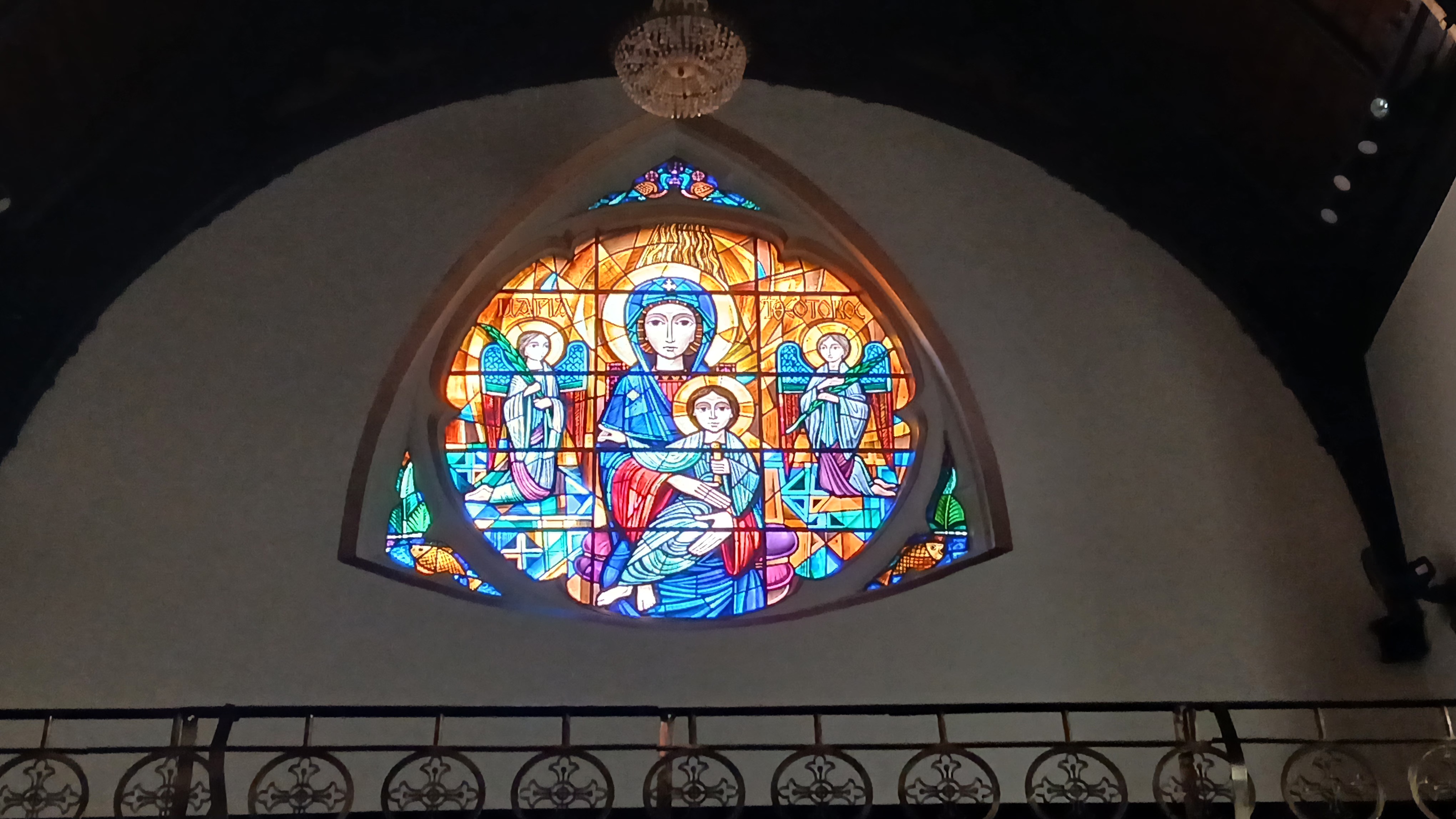
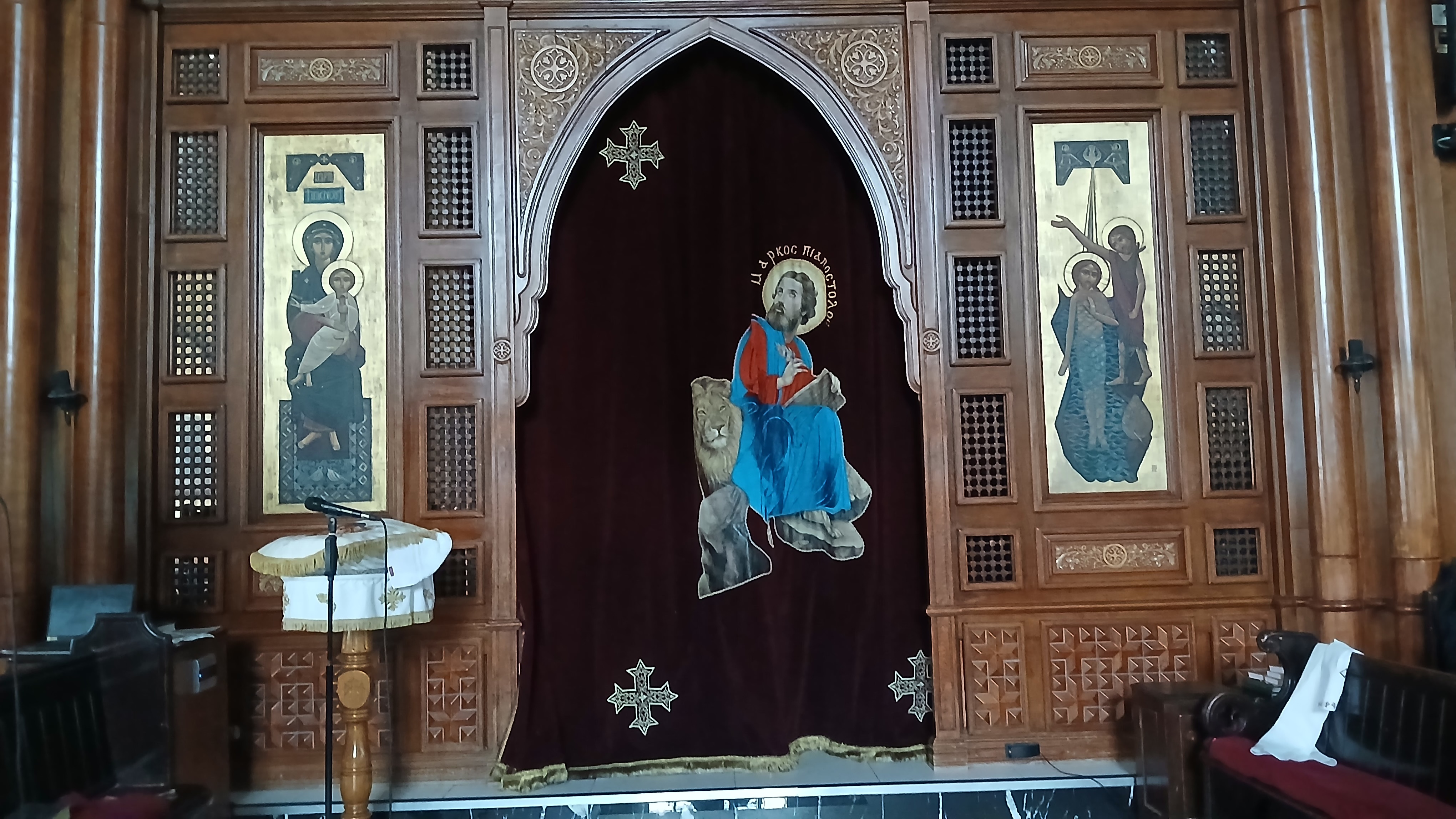
St Mark’s Coptic Orthodox Church, Kensington
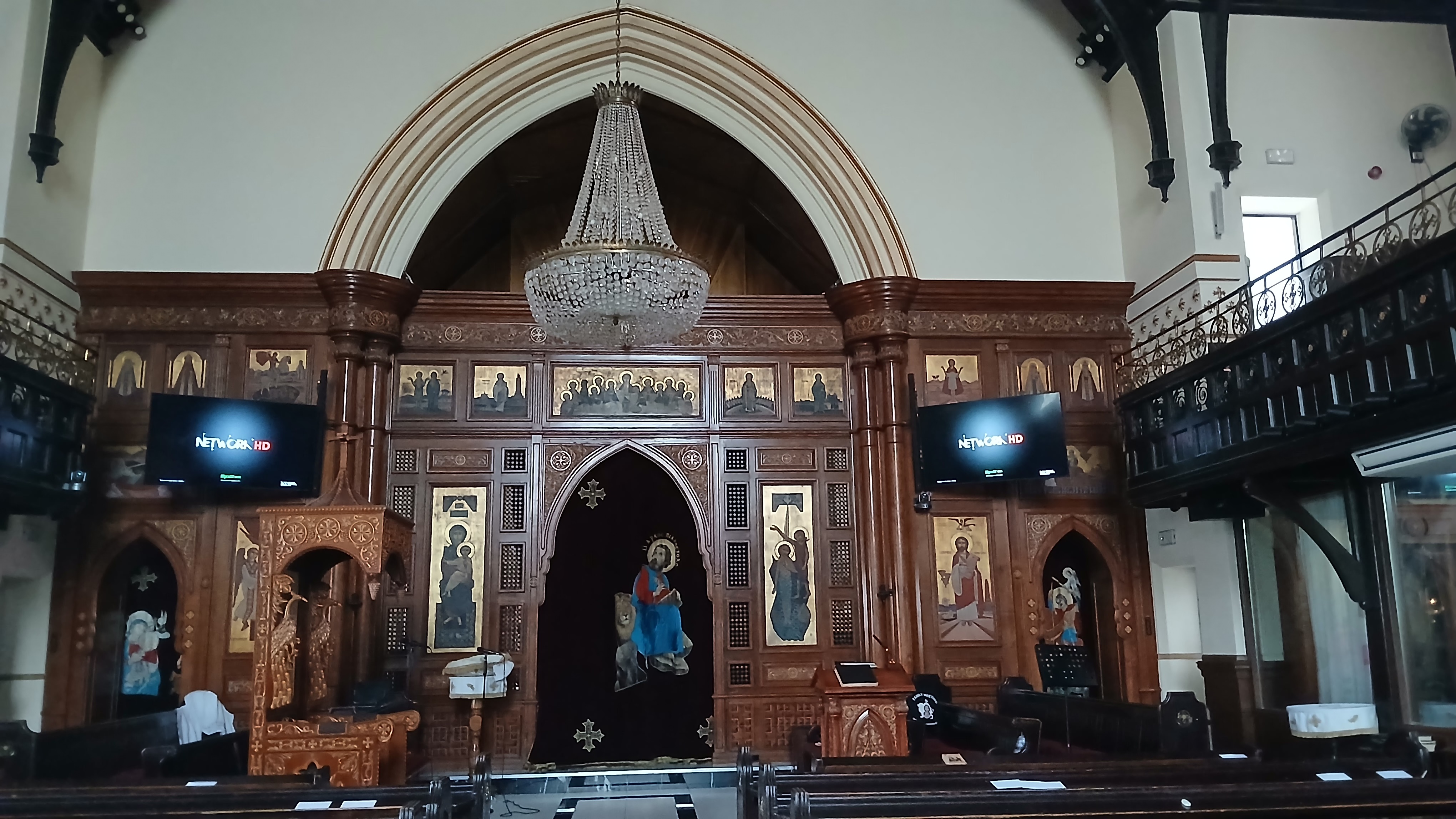
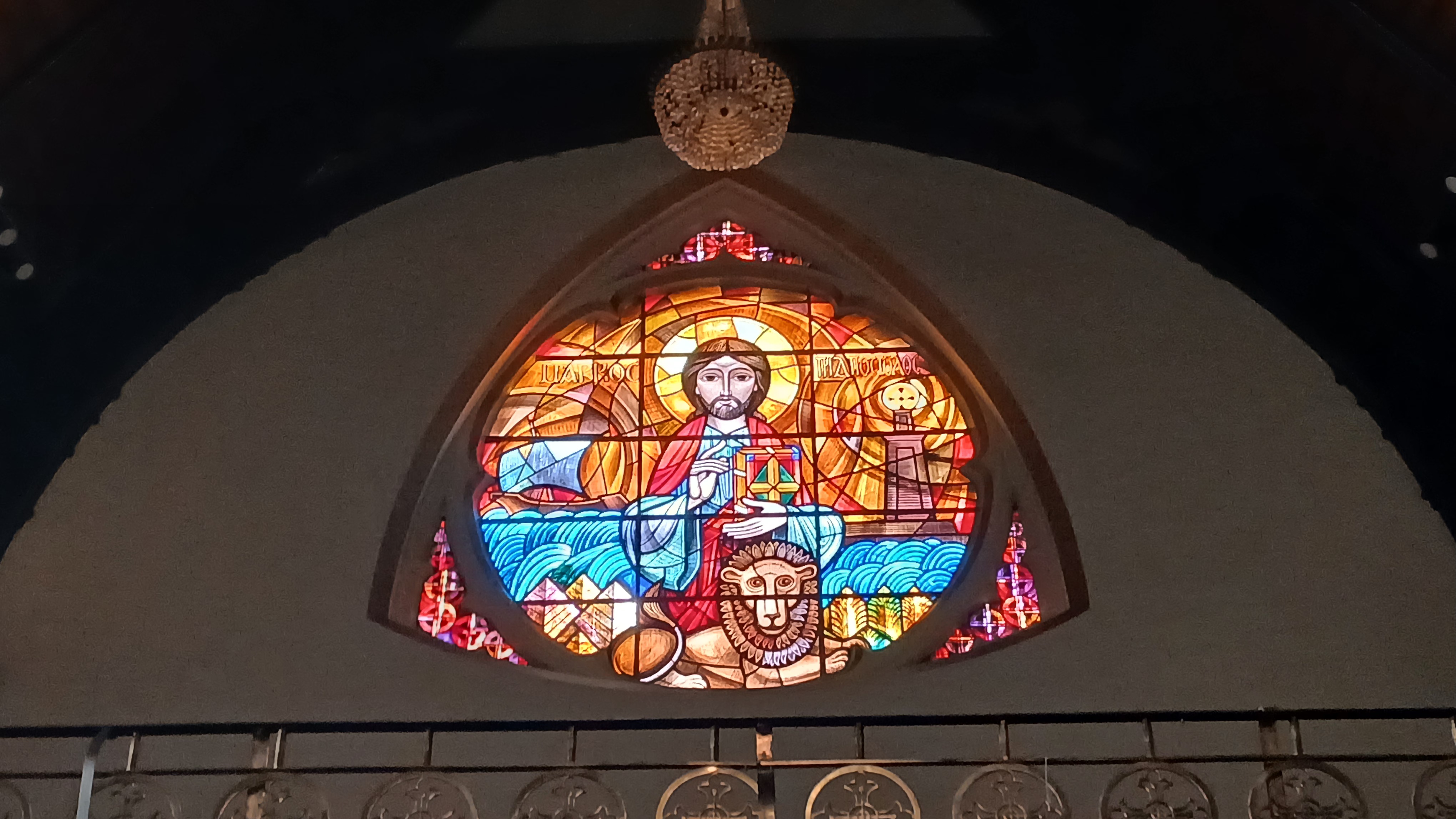
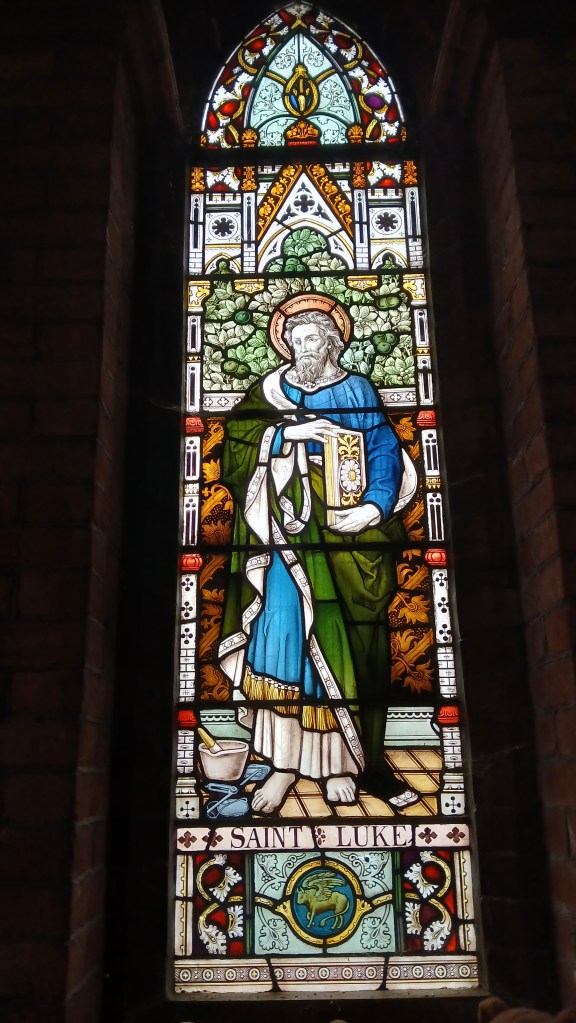
Formerly St John’s Presbyterian Church which opened in 1863, the building was purchased from the Scottish Presbyterians in 1975. It is dedicated to St Mark the Evangelist and was the first Coptic Orthodox church in Europe. Copts are a Christian denomination originating in North Africa, primarily modern Egypt. Mark was a missionary companion of Paul and is credited with establishing the church in Alexandria in the first century AD, later the Coptic Orthodox Church. St Mark is symbolised by a winged lion, presumably to represent Africa; hence the lion in the stained glass window in the church. I was shown round the church by a lovely lady called Nora, who told me that St Mark’s has a thriving Young Peoples’ Ministry that meets in the basement of the church which attracts a diverse group of young people – it’s run by her nephew! The church holds services in English and Arabic to cater for the diverse congregation.
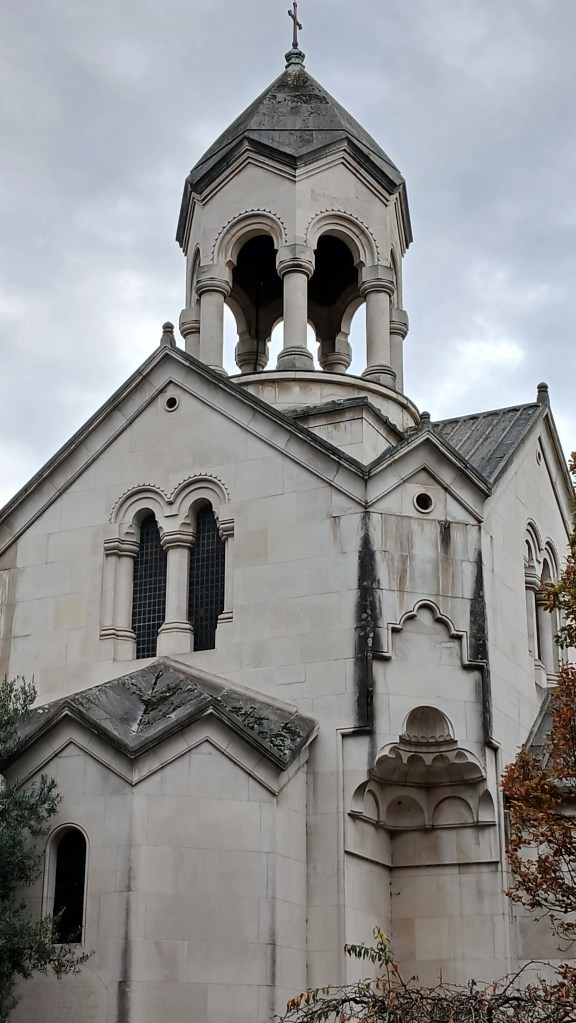
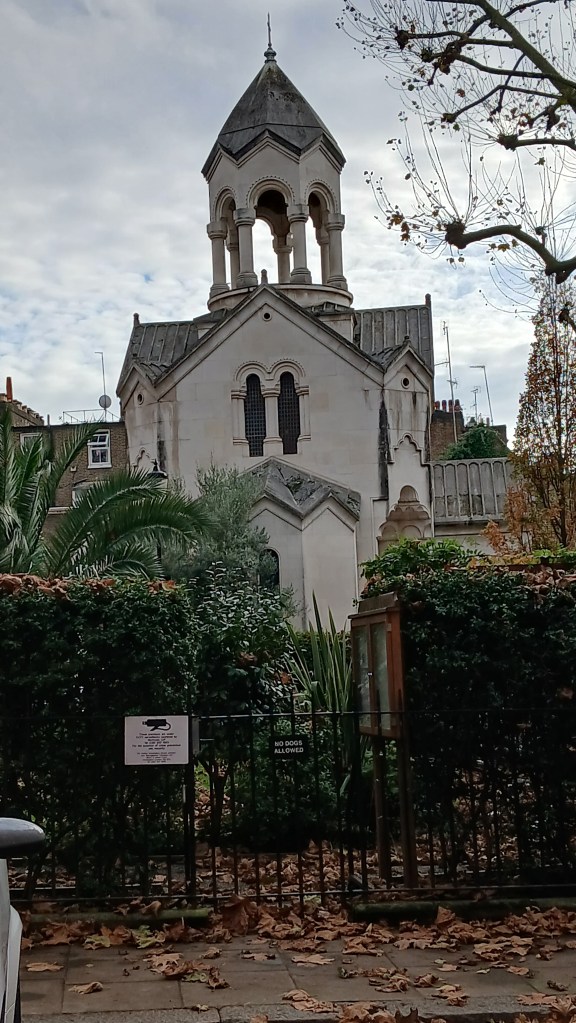
Lastly, I’ve included these two photos of St Sarkis Armenian Church, just off Kensington High Street. I was not able to visit, but I liked its Eastern design surrounded by Edwardian red-brick mansion blocks!
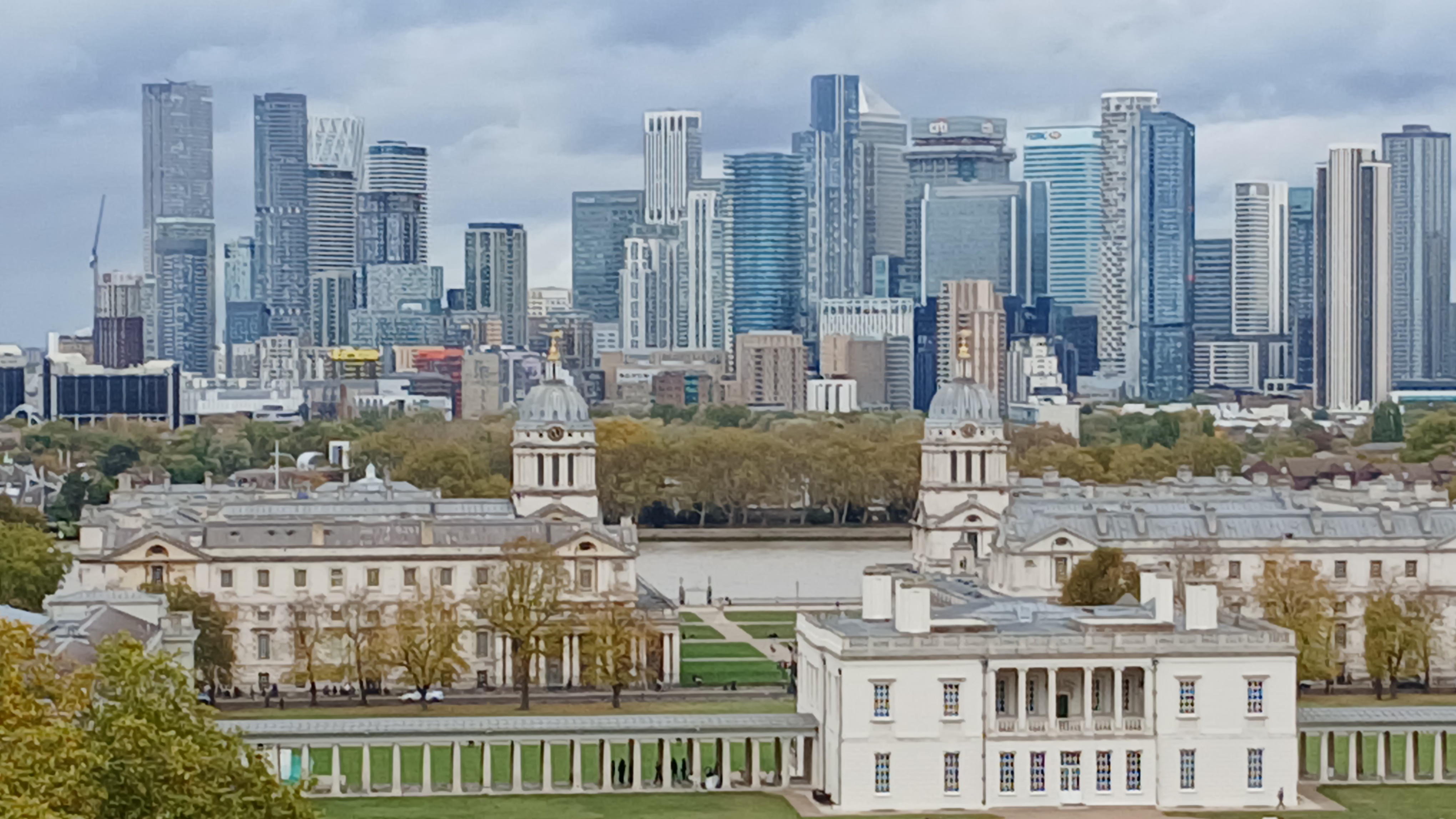
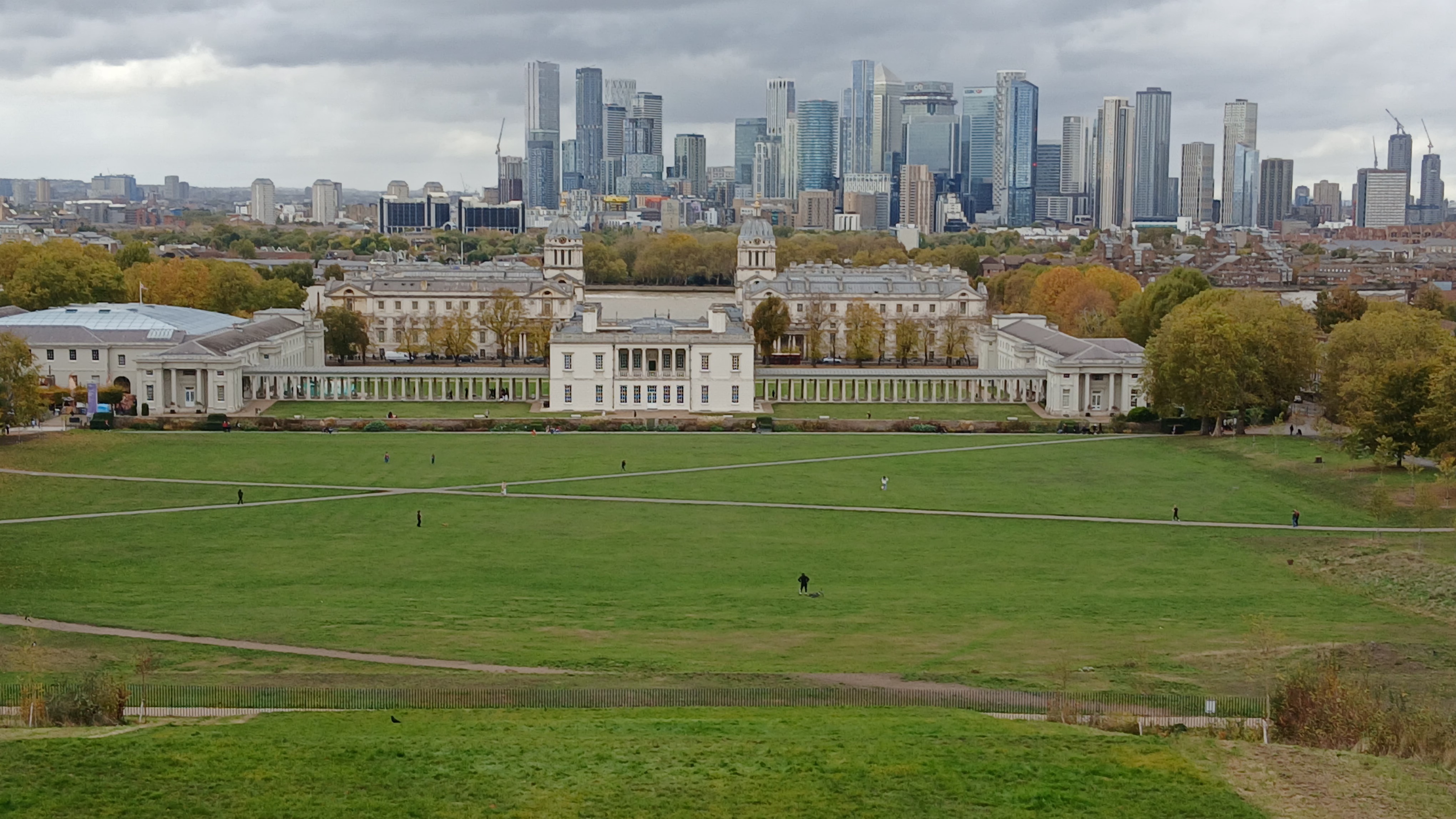
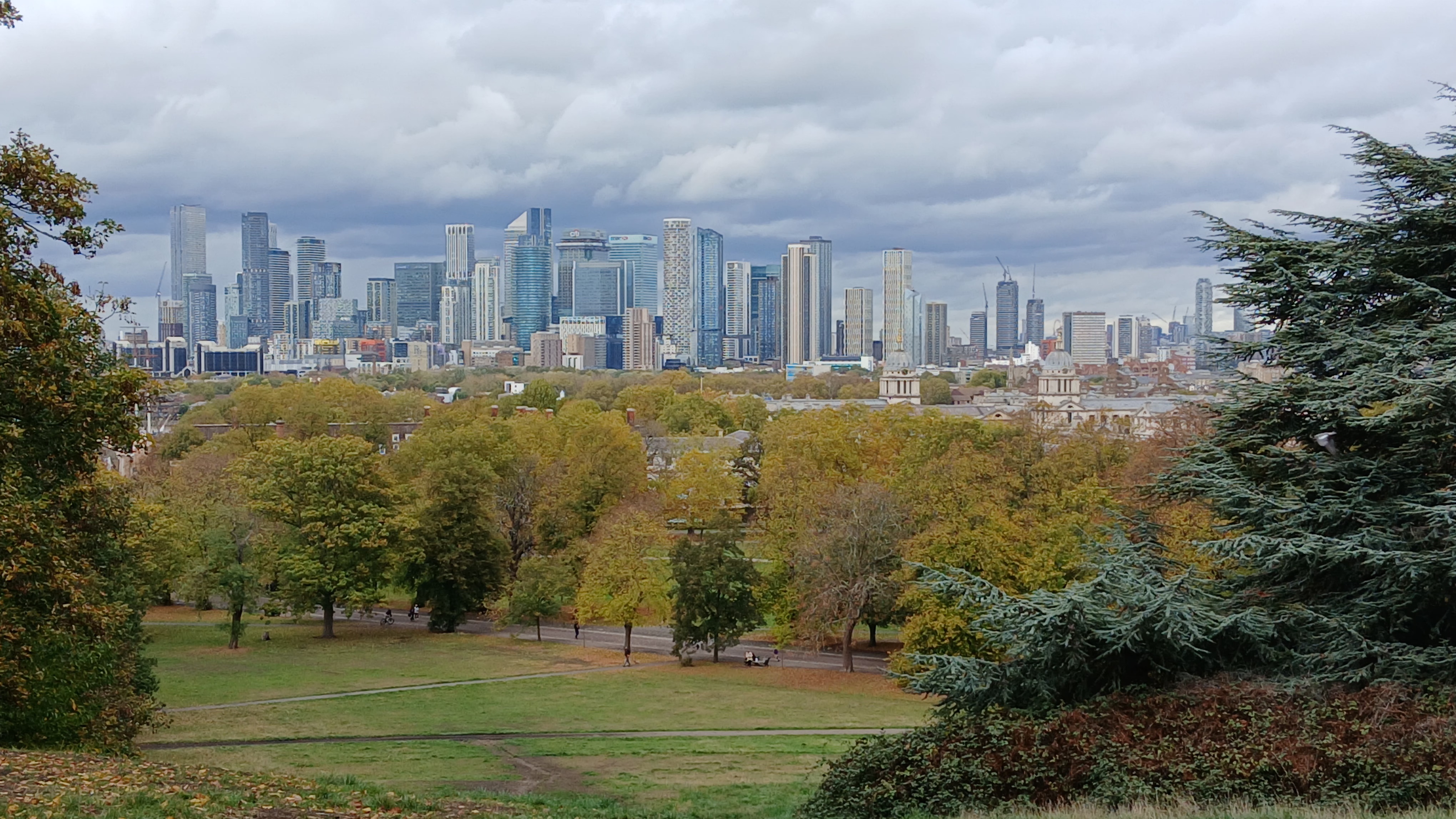
Some highs and lows this month – the highs were firstly travelling on the Uber Thames Clipper from London Bridge Pier to Greenwich Pier along the Eastern Thames historic riverbank. And secondly, visits to two beautiful and extraordinary churches. The low point was that I had planned to visit two other churches; both church websites stated that they would be open for the public to visit, both were shut. One of them was not only shut, but behind a locked gate, so I had to abandon this one; consequently there are only three churches this month. So I’ve finished with some views from the top of Greenwich Park at the Royal Observatory, I never get tired of views like the one above.
The Chapel of St Peter and St Paul, Old Royal Naval College
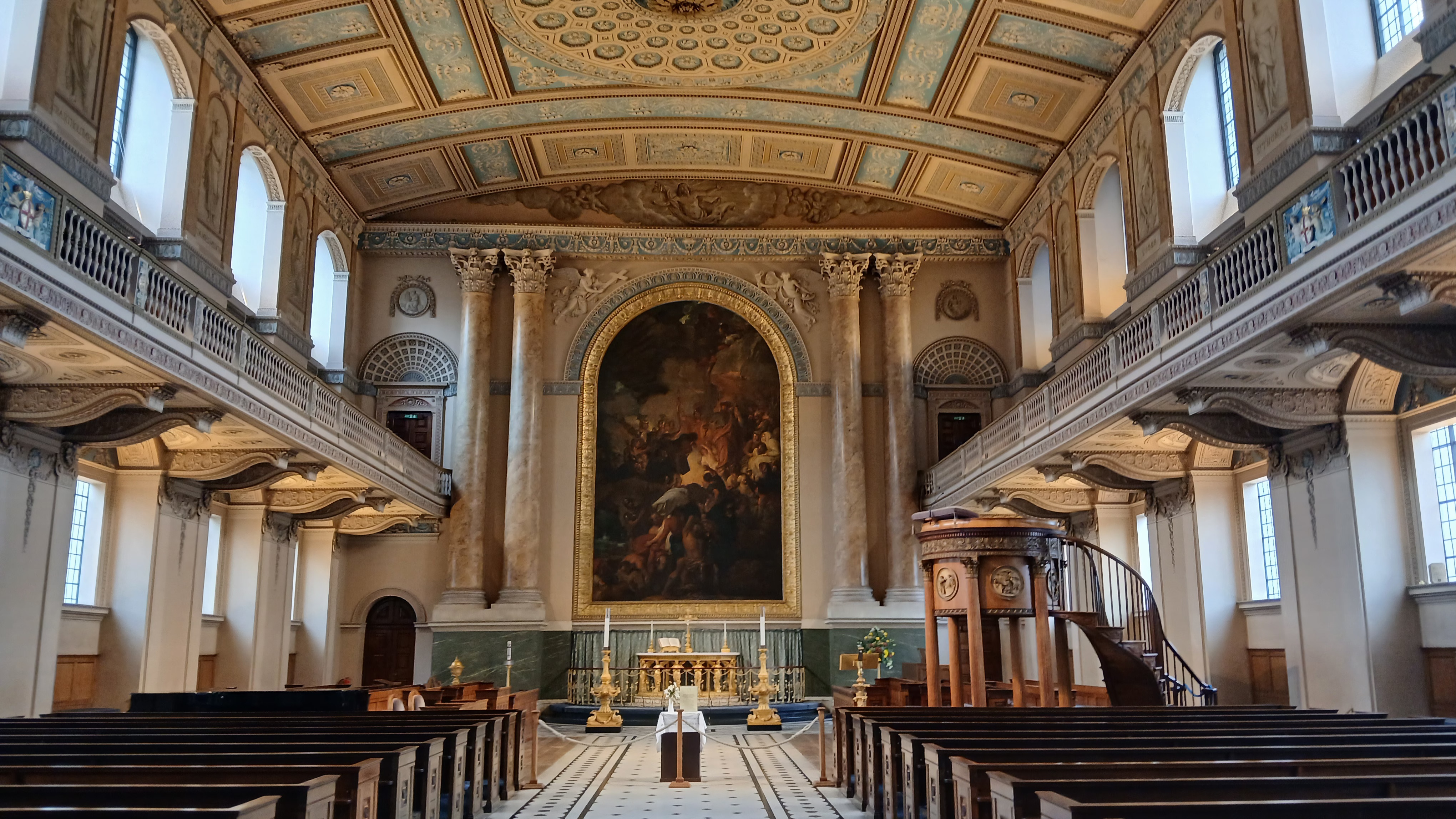
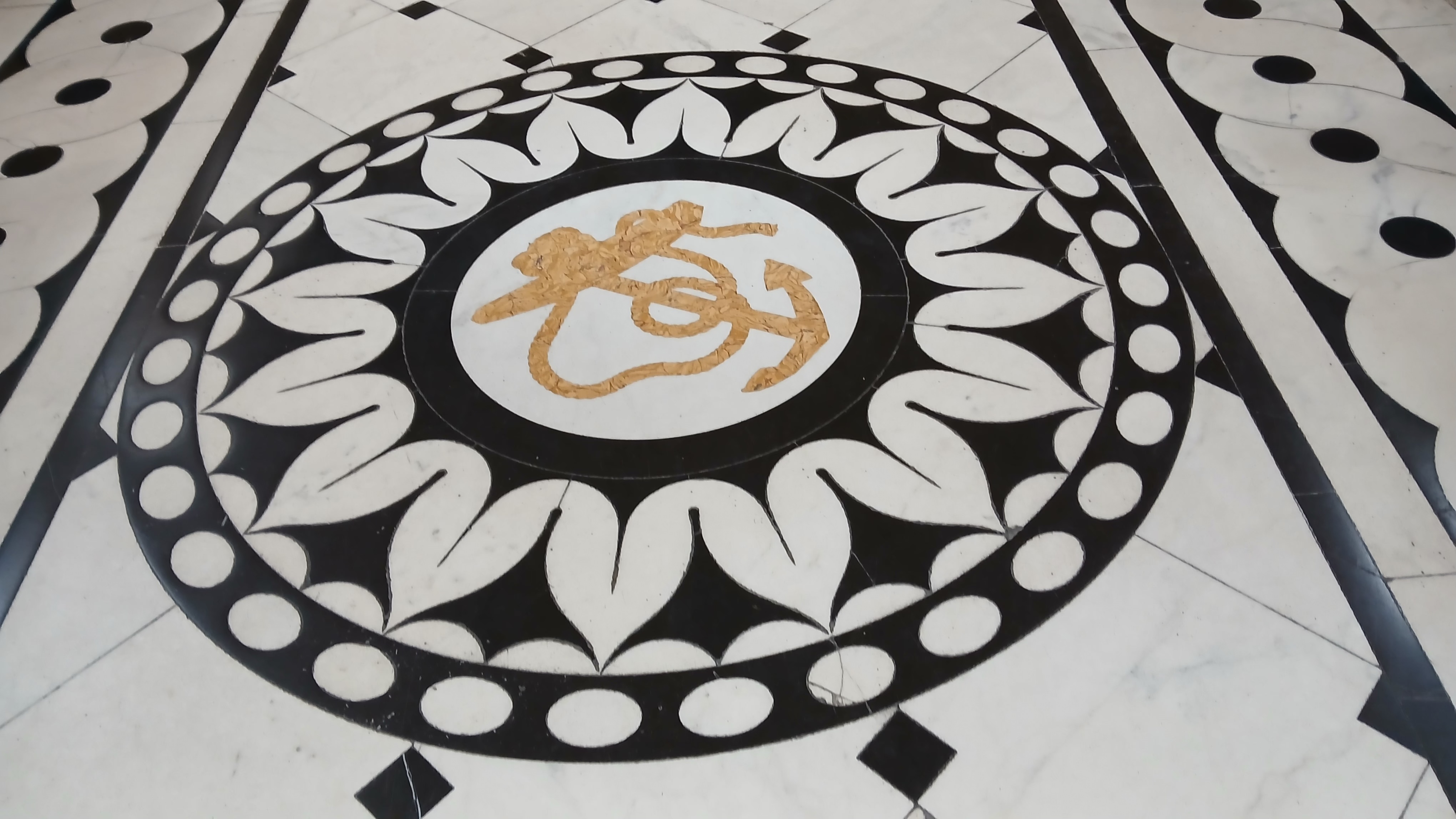
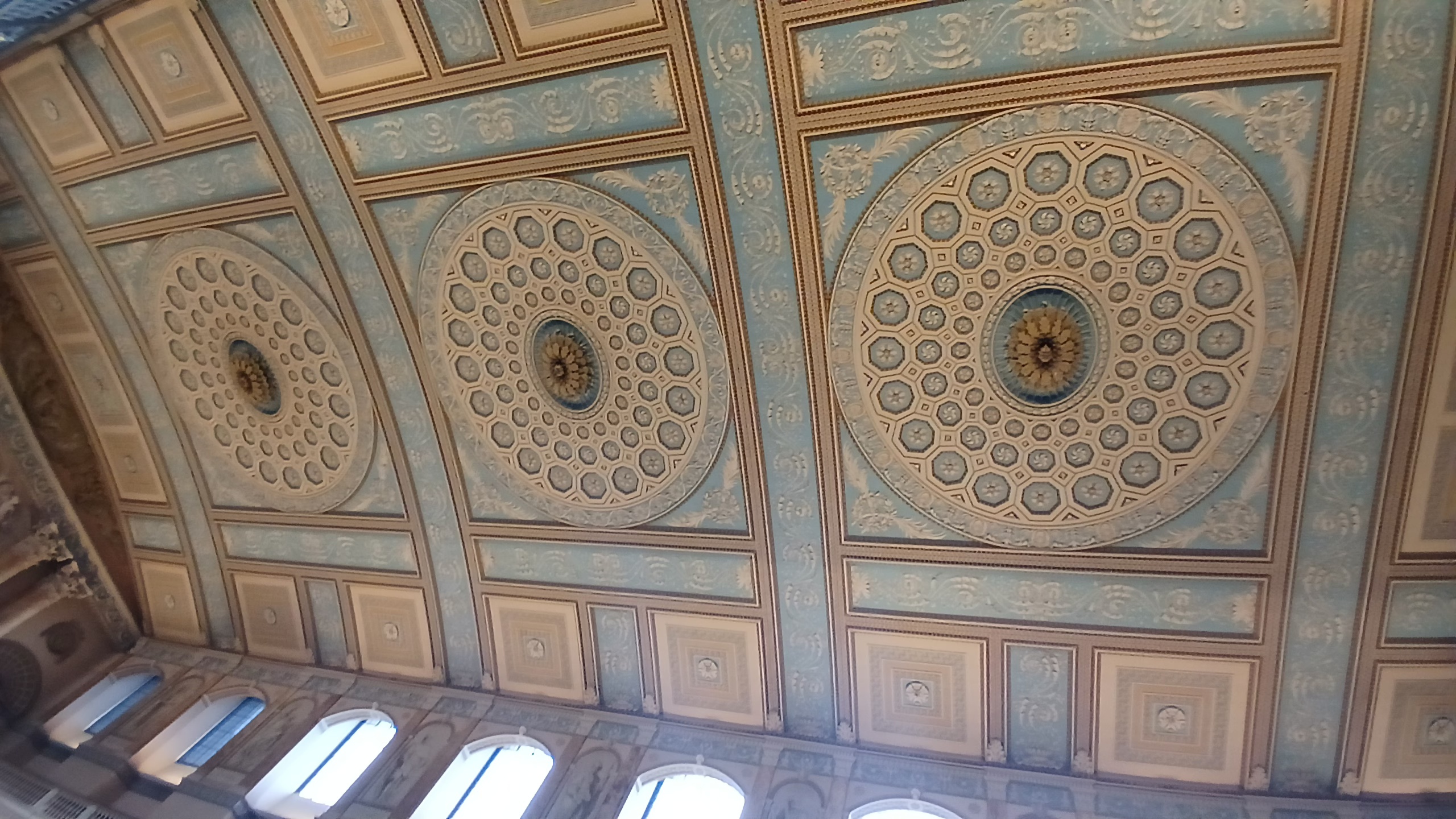
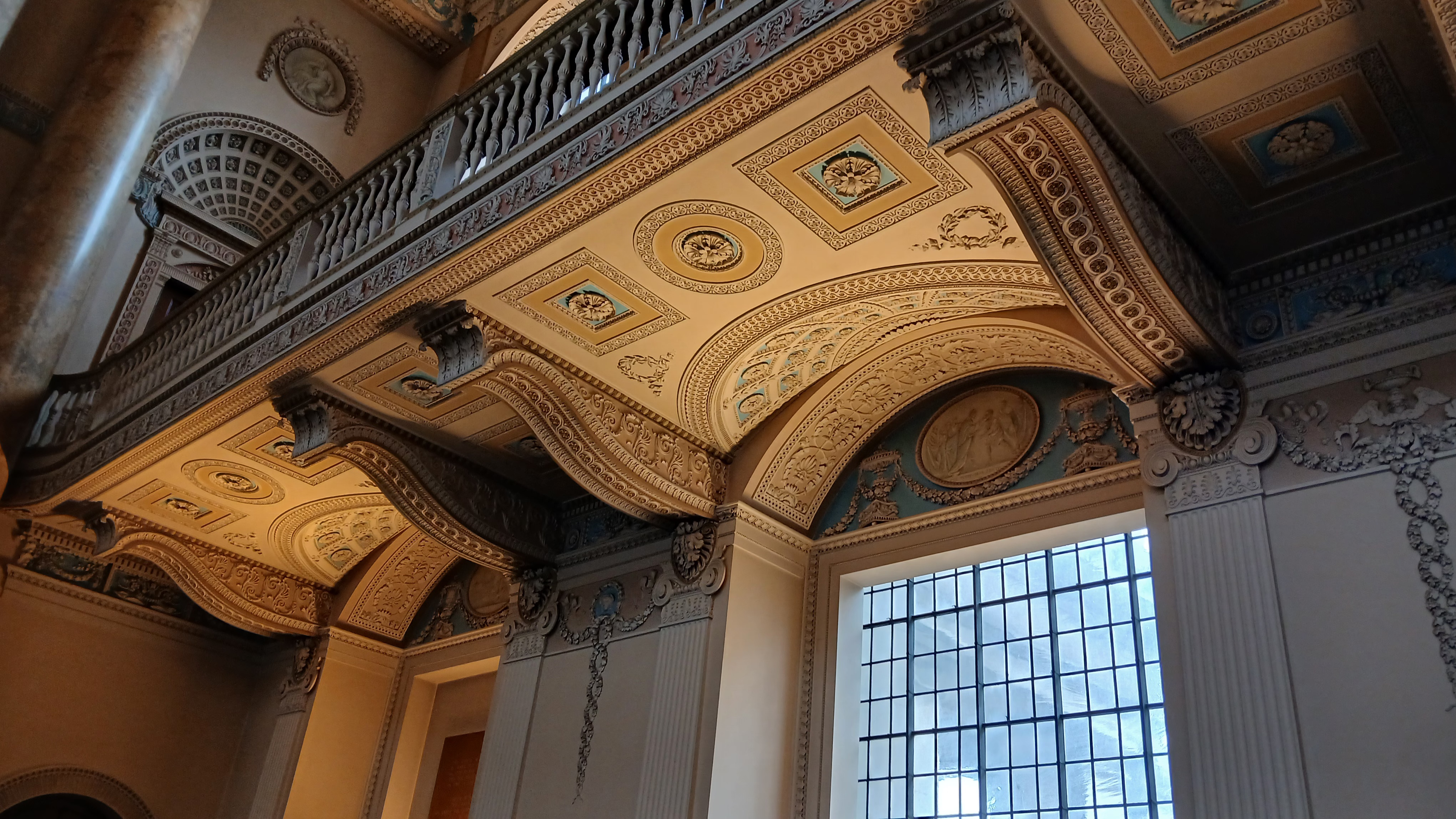
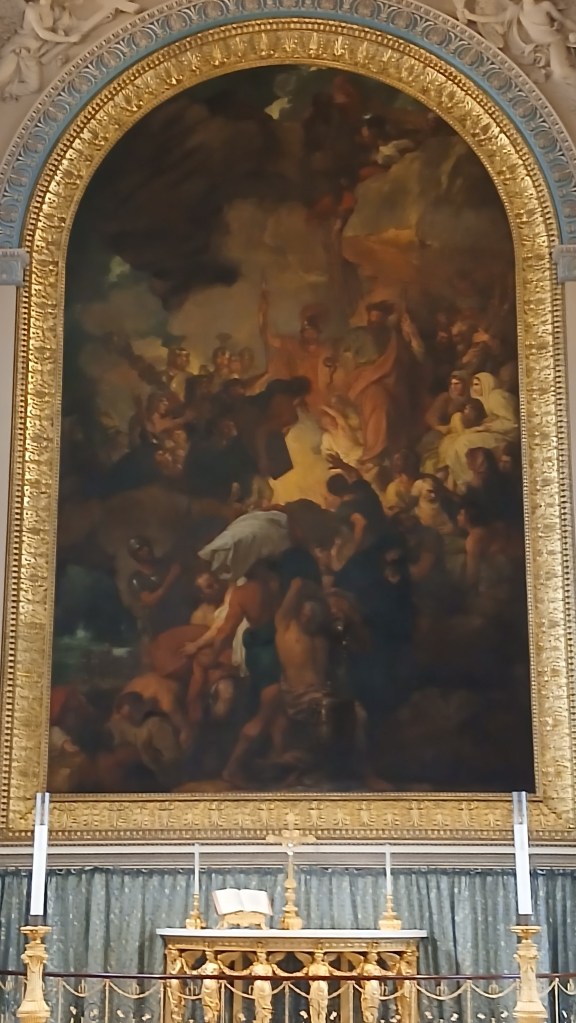
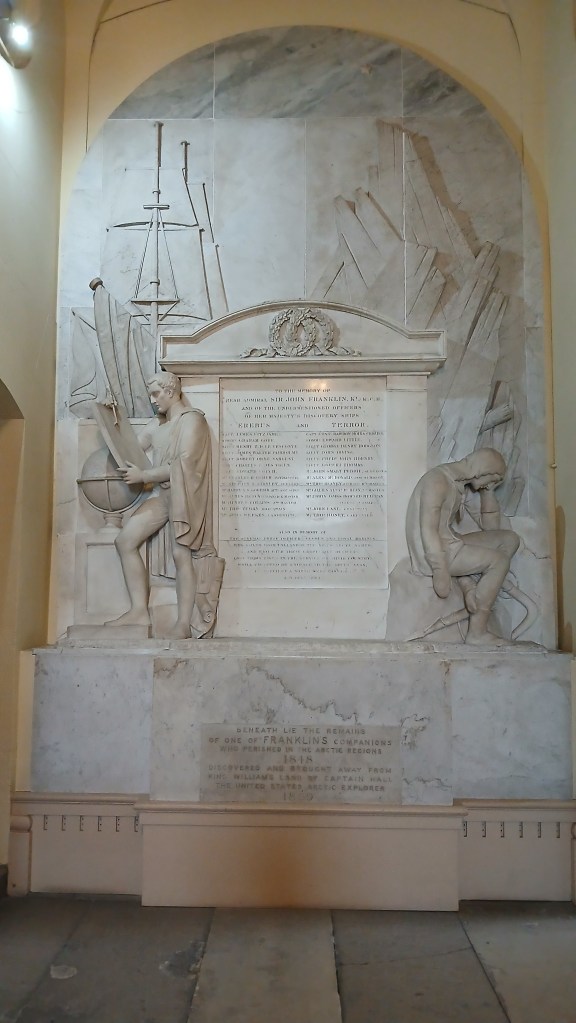
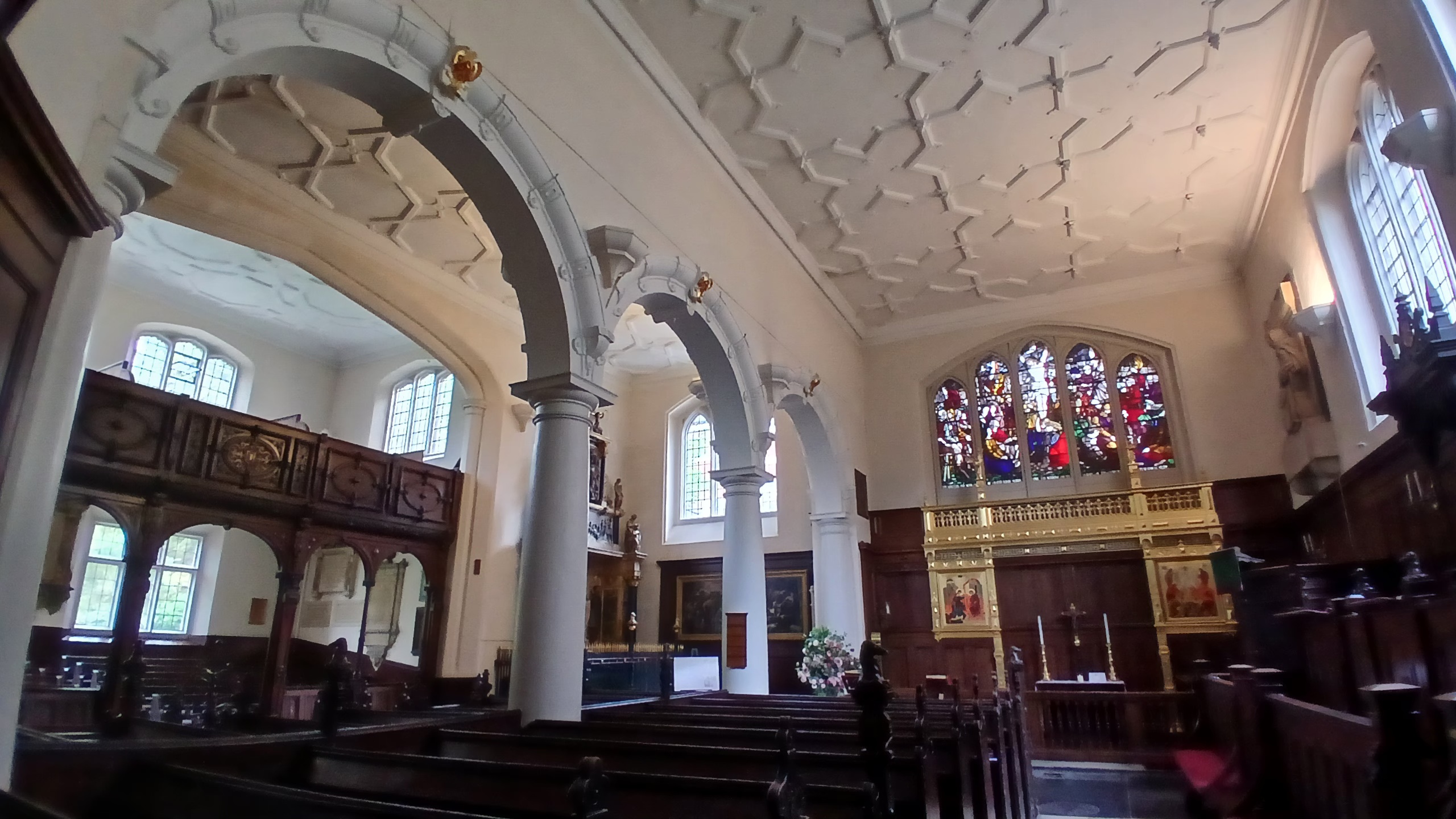
This beautiful chapel is located in one of the domed towers at the entrance to this UNESCO World Heritage Site. Formerly the site of a royal palace, the old college was designed by Sir Christopher Wren between 1696 and 1712 originally to serve as the Royal Navy’s hospital at Greenwich and later as a Navy training establishment. Following a fire, the chapel was rebuilt in 1779 by James ‘Athenian’ Stuart and is now considered to be ‘one of the finest neo-classical interiors in existence.’ The chapel has several sea-related features: the painting above the altar by Benjamin West ‘the Raphael of America’ depicts St Paul shipwrecked on the island of Malta and being miraculously healed after being bitten by a snake. (I found this very hard to make out!) This speaks of the rescue and protection of seafarers by God. There are also tiny sea creatures along the bottom edge of the balconies. The tiled floor is inlaid with an anchor and the relief monument in the entrance to the chapel depicts a ship, mountains (presumably on foreign shores) and a sailor with a chart and globe. The beautiful ceiling in Wedgewood-inspired blue and cream is a neo-classical design of squares and octagons and is echoed in the small ceilings under the balconies.
Sources: ornc.org; Wikipedia
St Alfege Church Greenwich
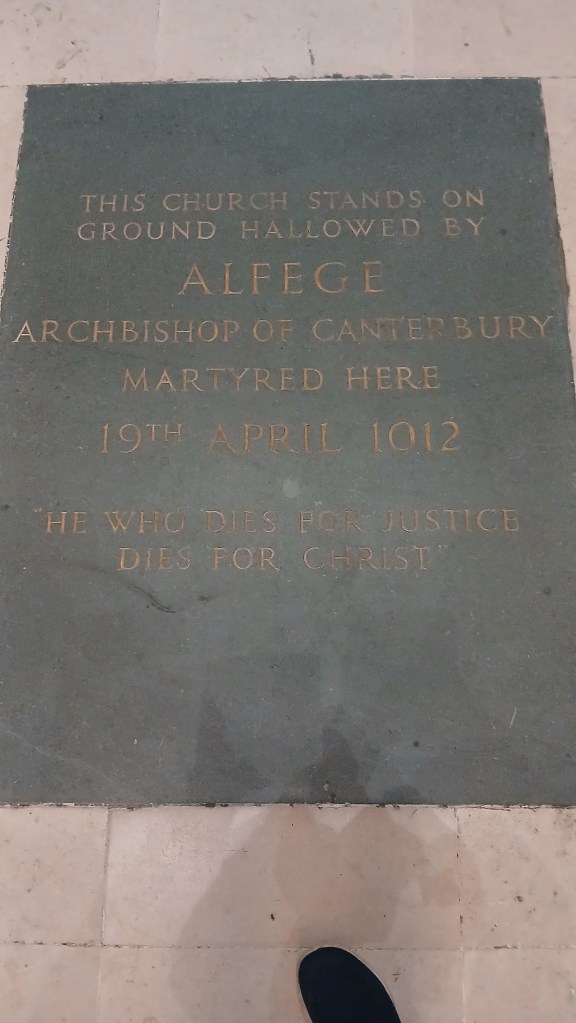
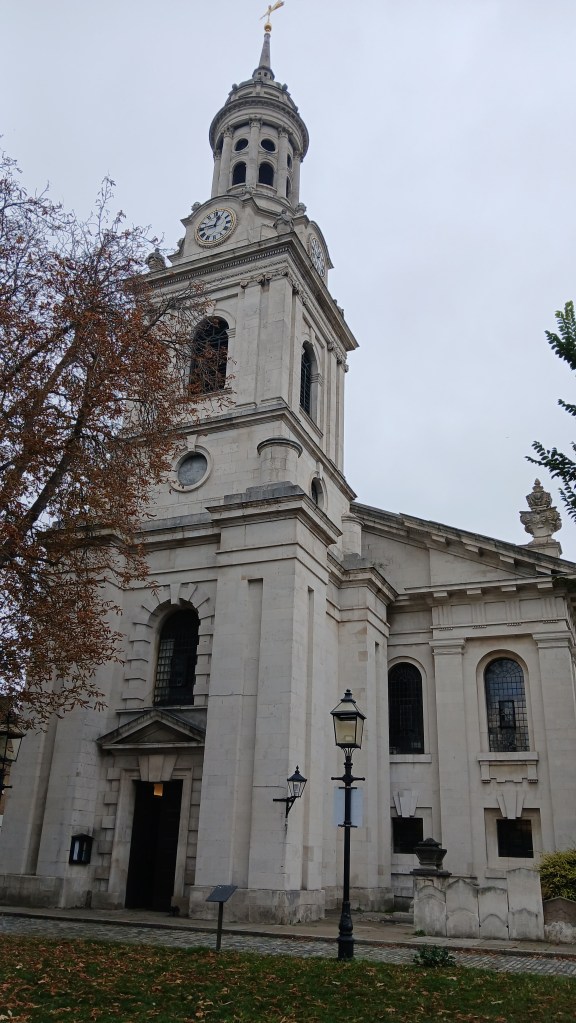
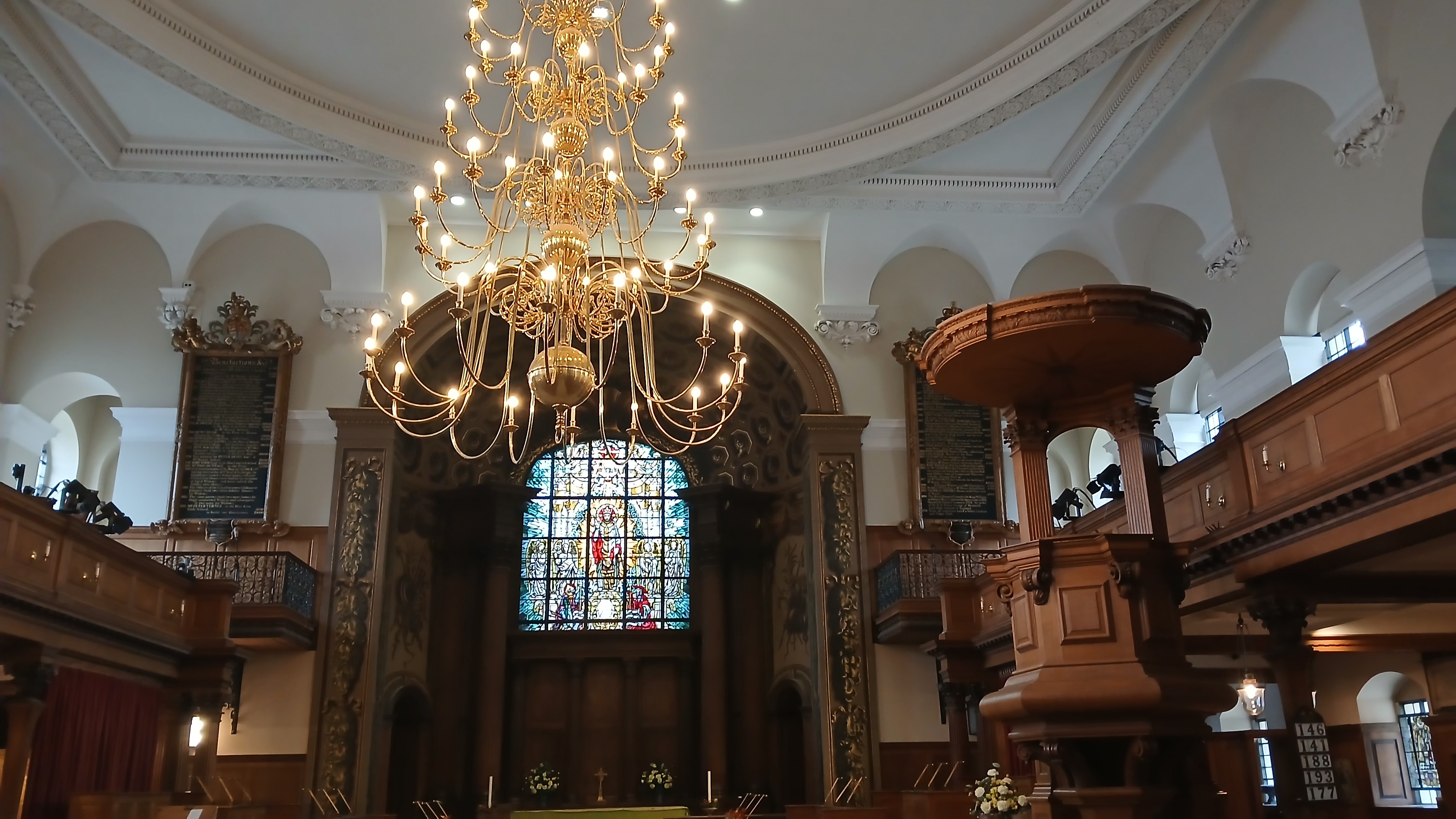
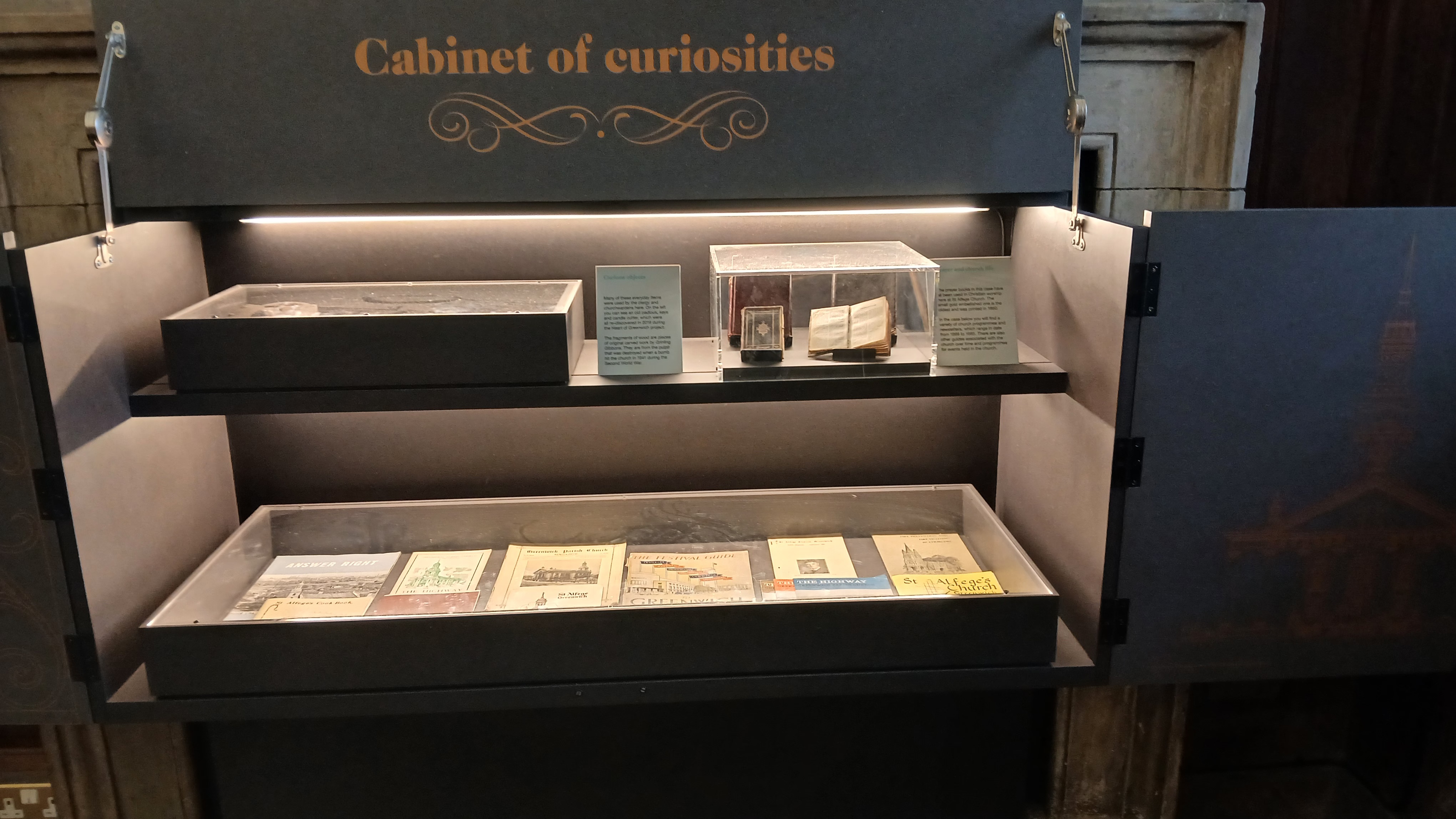
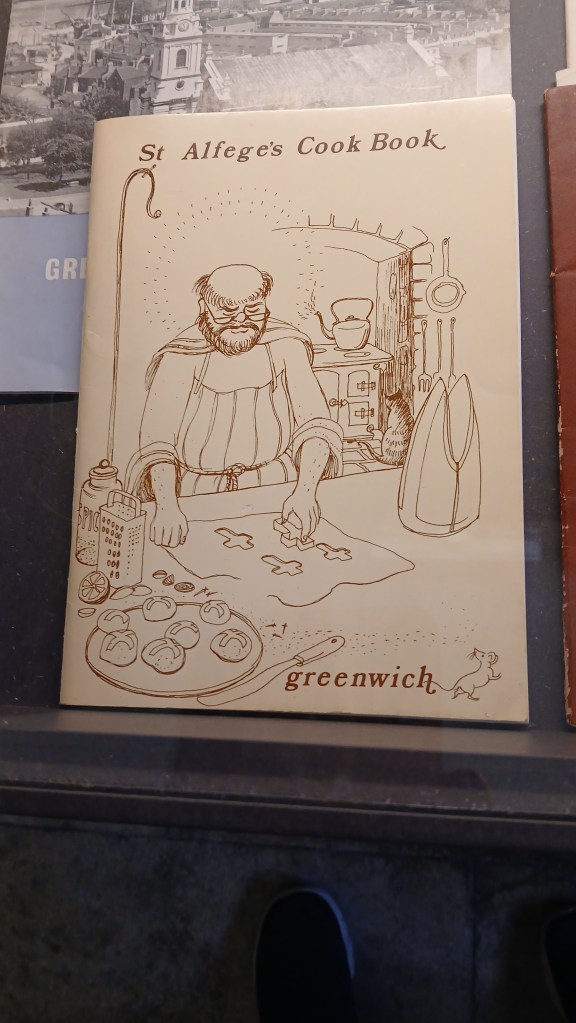
A plaque in the floor just in front of the altar records that Alfege, Archbishop of Canterbury, was martyred on this site in 1012. Also known as Alphage or Elphage, he was an Anglo-Saxon Bishop whose piety led to his promotion to the highest church office in England. In 1011 he was captured by Viking raiders and murdered the following year after refusing to allow himself to be ransomed. A church was erected here soon after and a second one in the 1200s which survived the next 500 years. In 1710 a violent storm hit the building and the roof collapsed and the structure was considered to be beyond repair. The current church was designed and built by architect Nicholas Hawksmoor and opened in 1718. Only the Medieval tower remains from the second church but this can’t be seen as it was encased in stone by Greenwich architect John James in 1730. He later added the bell tower and spire. Henry Vlll was baptised in the second church in 1491; 39 years later the same king had the church transferred to the Crown, in other words, to himself! In an annexe off the main church is a ‘Cabinet of Curiosities’ displaying items connected to the church including a collection of historical pamphlets and a St Alfege Cookbook.
Sources: Information plaques in the church; Wikipedia
Our Ladye Star of the Sea Catholic Church
This is one of the churches that was closed but I wanted to include it because of its curious name. I still don’t know why ‘Ladye’ is spelt with a Y but I found out that the church is dedicated to Stella Maris Latin for Mary as protector of those at sea. The church was built high on Crooms Hill next to Greenwich Park, half a mile from the Thames, with a tall spire as a landmark for seafarers on ships coming and going along the River from and to the open sea. The first church on the site was the Catholic Mission at Greenwich, a chapel principally serving Irish Catholic Naval pensioners at the Royal Naval Hospital. The church was built in 1793 in the back garden of the architect, James Taylor’s home. As the Catholic community grew, a fundraising appeal for a new, larger church was started in 1839 by Fr Richard North, priest to the Greenwich Mission from 1800 to 1860. The new church finally opened in December 1851 following several setbacks, including funding issues and also a gathering on Blackheath protesting against the building of a Catholic church in a time of strong anti-Catholic and anti-papacy feeling. It was difficult to get good photos of this tall, imposing church, but by climbing to the top of the hill at Greenwich Park I got a shot of the top of the church.
Source: Church website
Photos taken from the Royal Observatory
After visiting the church at Crooms Hill, I walked up to the Greenwich Royal Observatory and the Prime Meridian Line; unfortunately it was an overcast day with leaden skies. The views from here look out across the Old Royal Naval College and the Canary Wharf peninsula to the North and North-West to the City of London. Among the skyscrapers of the City you can just spot a diminutive St Paul’s Cathedral – and the South face of the Scalpel building looking like a Play button!
This month I visited a few more chapels in and around the City. The difference between a church and a chapel is that churches have a permanent congregation with a minister to conduct regular services, whereas chapels are usually smaller places of worship and don’t have regular services (although some do, as I found out.) There are chapels in the grounds of hospitals, schools, private residences, and these days, in airports and workplaces. However, the four I explored are in none of these places! One is in a former monastery, one is part of the Inns of Court, and two are part of larger churches.
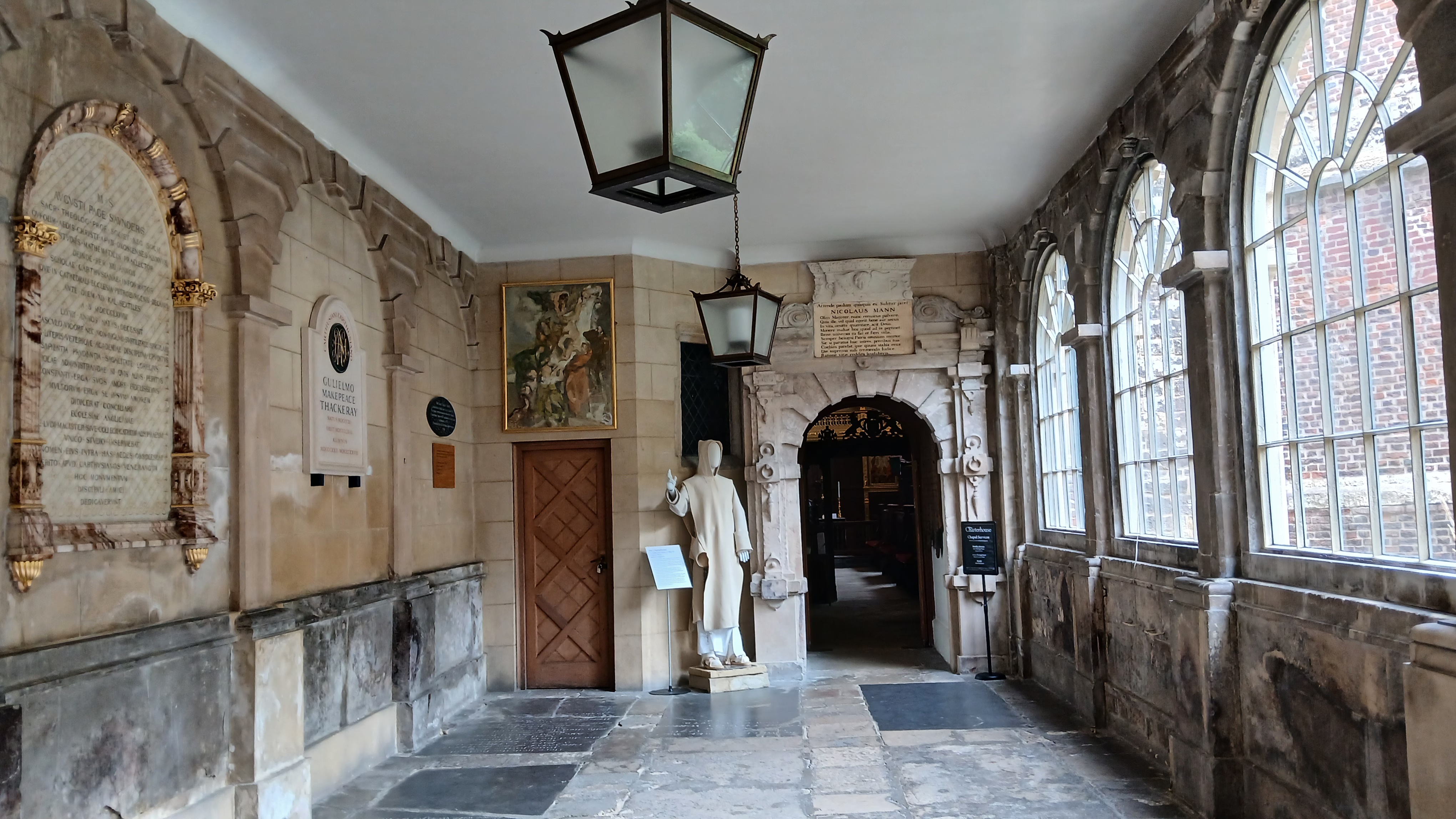
Chapel of the Charterhouse
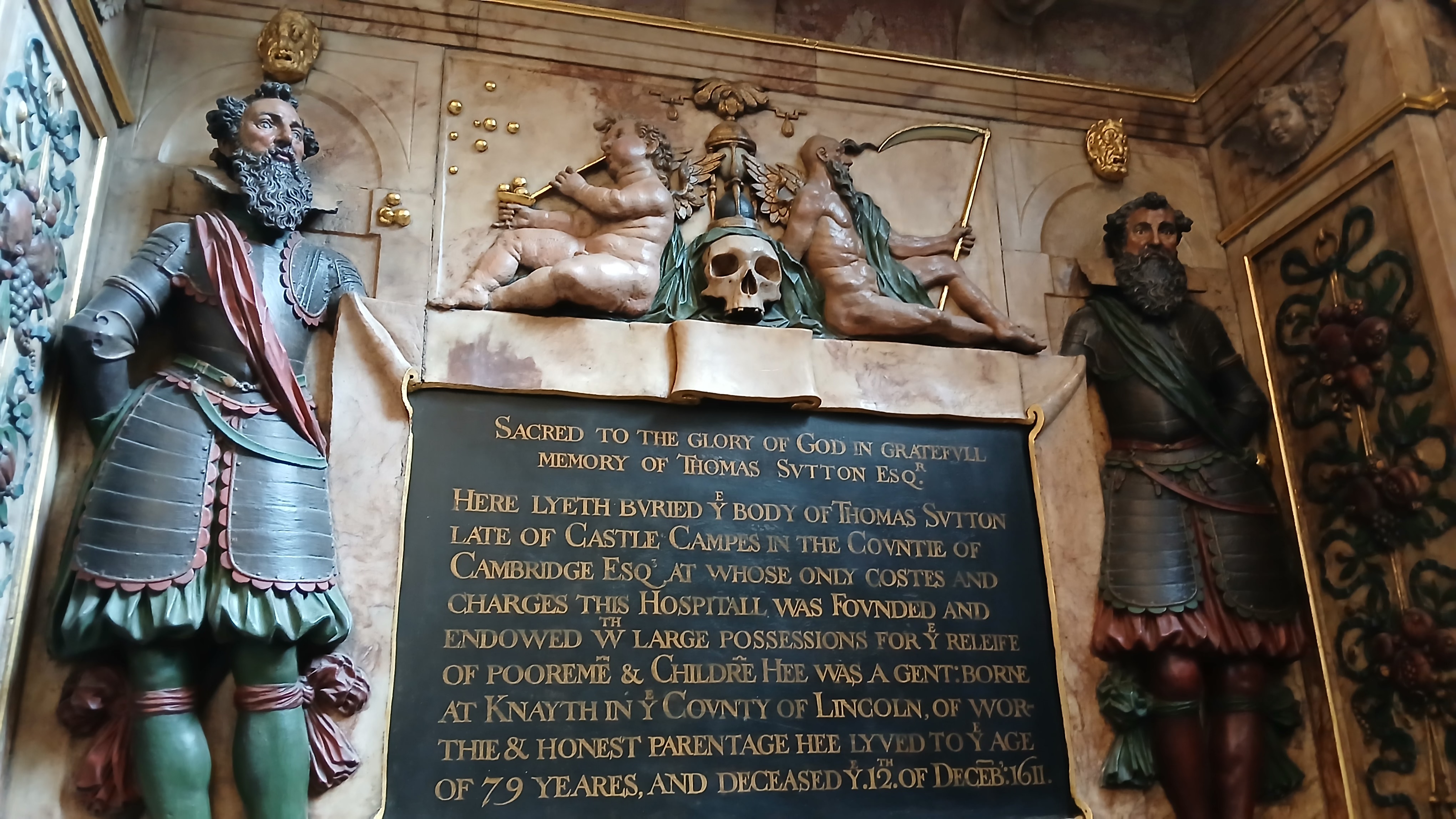
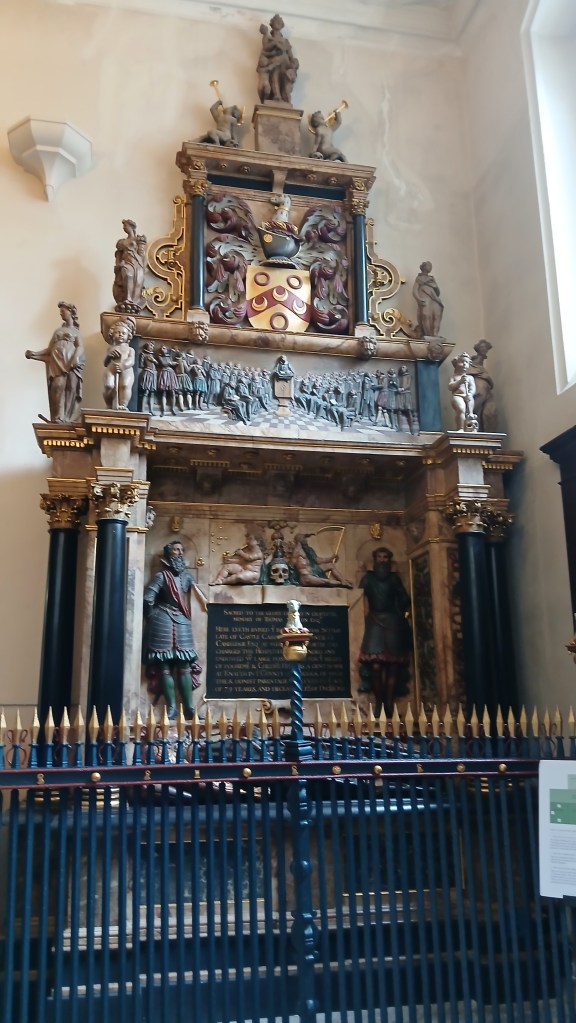
The history of the Charterhouse Chapel is intertwined with the Charterhouse itself. In 1348, land which is now Charterhouse Square was used as an emergency cemetery to bury victims of the first Great Plague, which claimed the lives of 60% of the population of London. Later a chapel was built as a place of prayer for the souls of the dead. When London was finally free of the plague, the then Bishop of London founded a Carthusian monastery, known as Charterhouses, on the site. This thrived until 1538 when Henry Vlll’s Act of Supremacy led to the Dissolution of the Monasteries. Thereafter the chapel was used to store Henry’s hunting and jousting equipment. The lovely entrance to the chapel was the last phase of the Carthusian building, completed in 1521 and therefore only used as part of the chapel for 17 years. However, it was later adapted for use as a private chapel for a Tudor mansion, built from the ruins of the monastery. Then in 1611 Thomas Sutton, a civil servant and businessman, bought the Charterhouse to establish a school and ‘hospital’ (almshouses) for 40 ‘poor boys’ and 80 ‘poor brothers’. The ‘brothers’, elderly single people, still occupy the almshouses, which in 2017, opened its doors to include female residents. The chapel houses a magnificent memorial to Thomas Sutton.
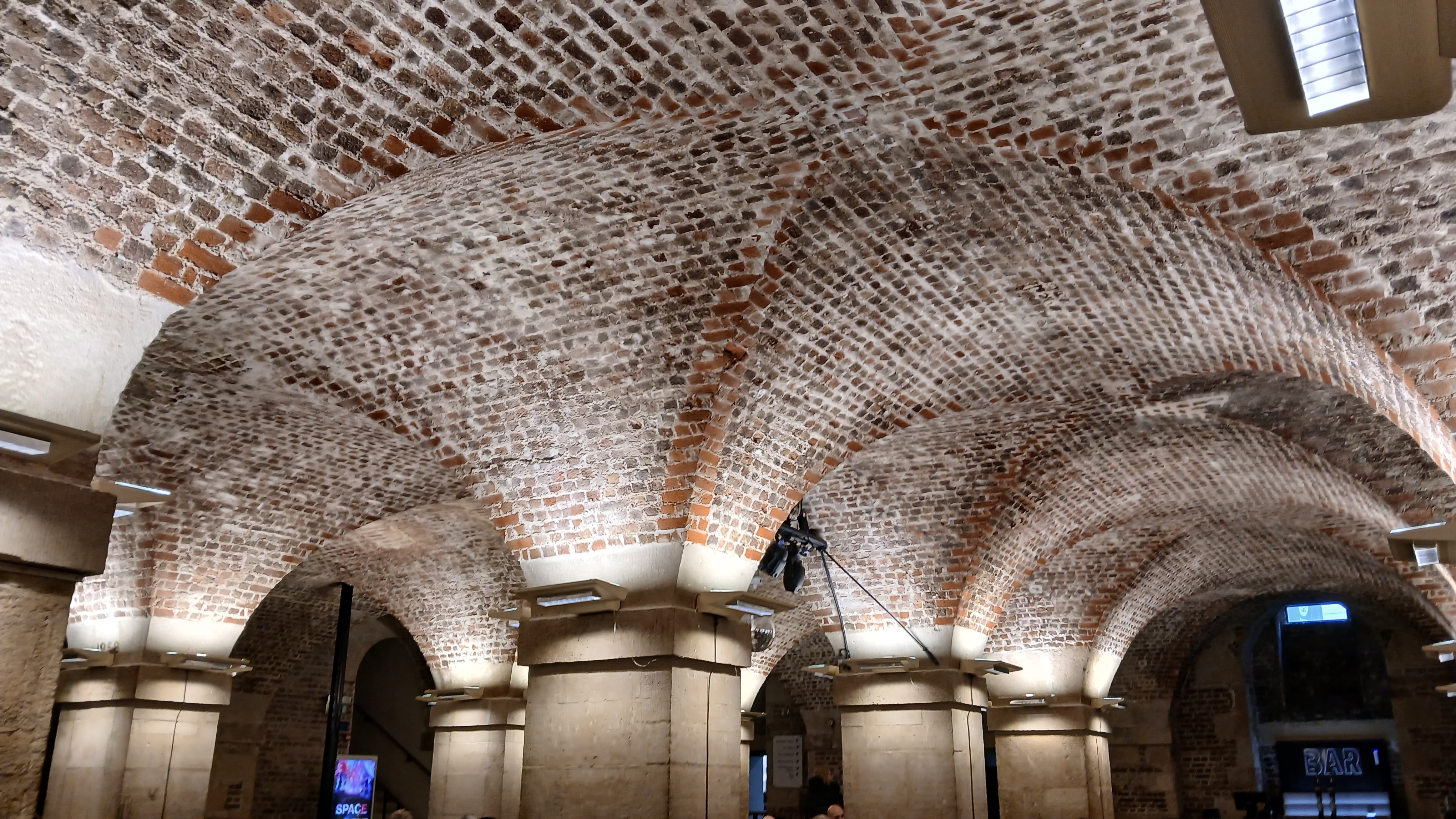
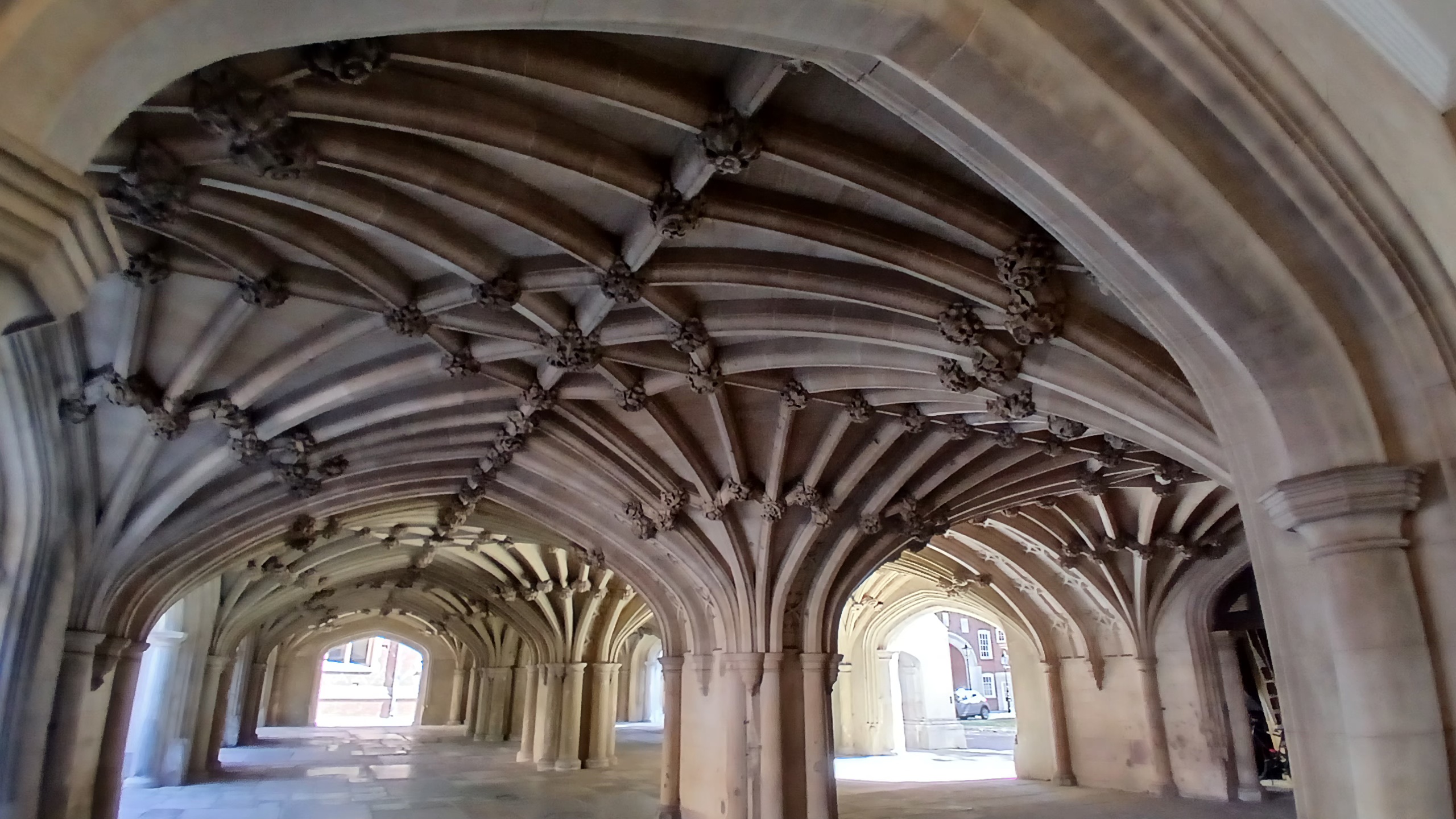
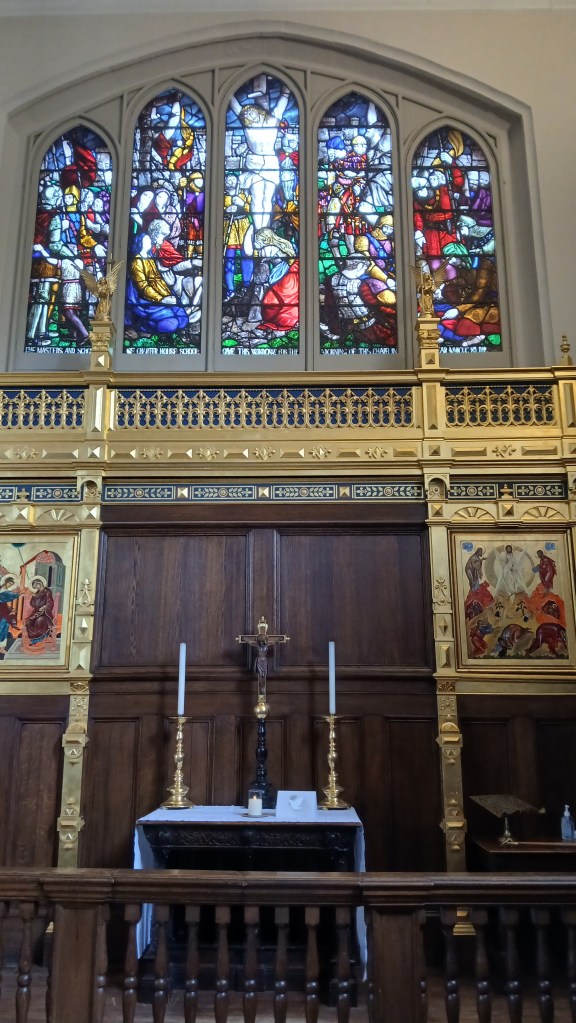
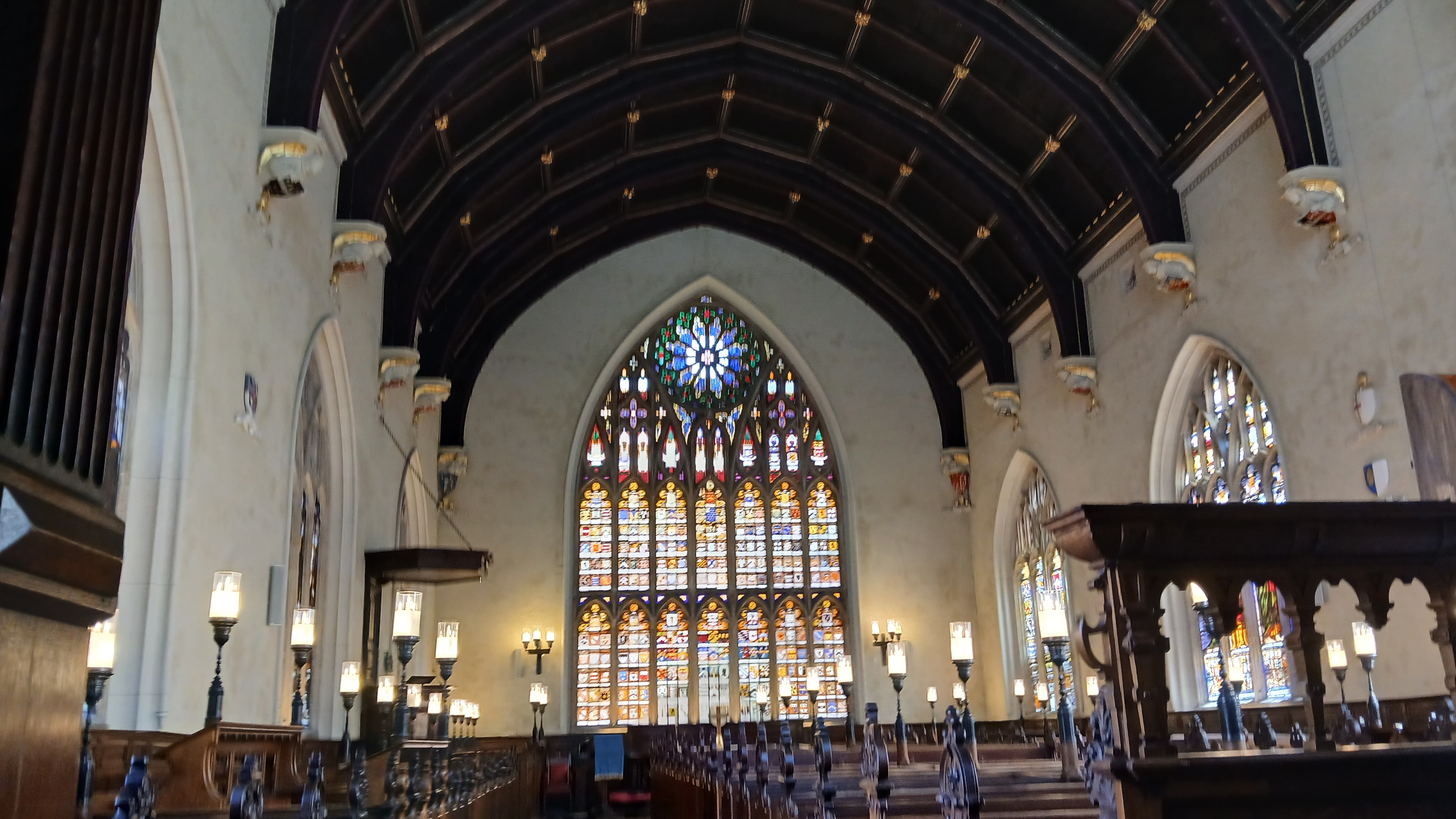
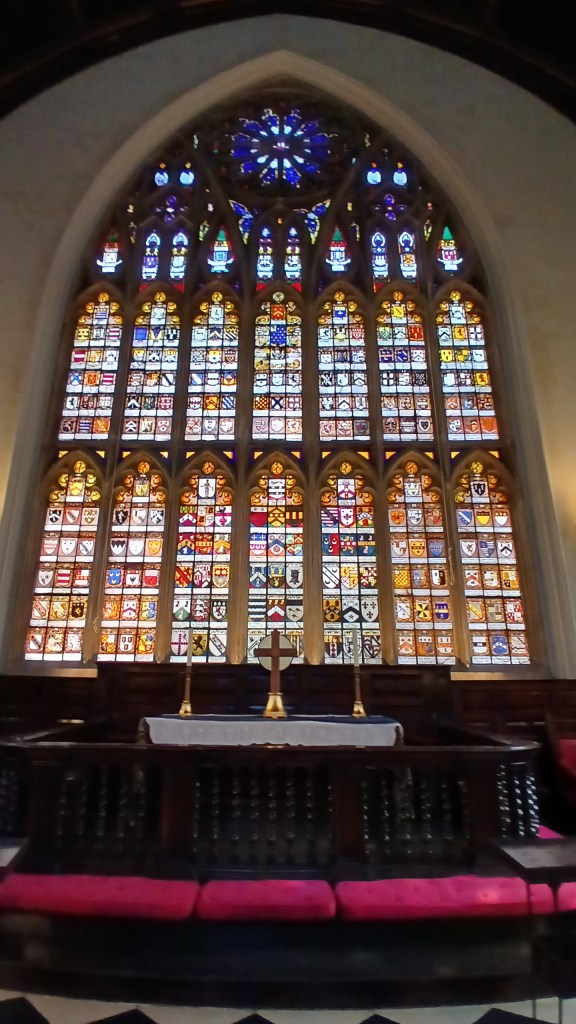
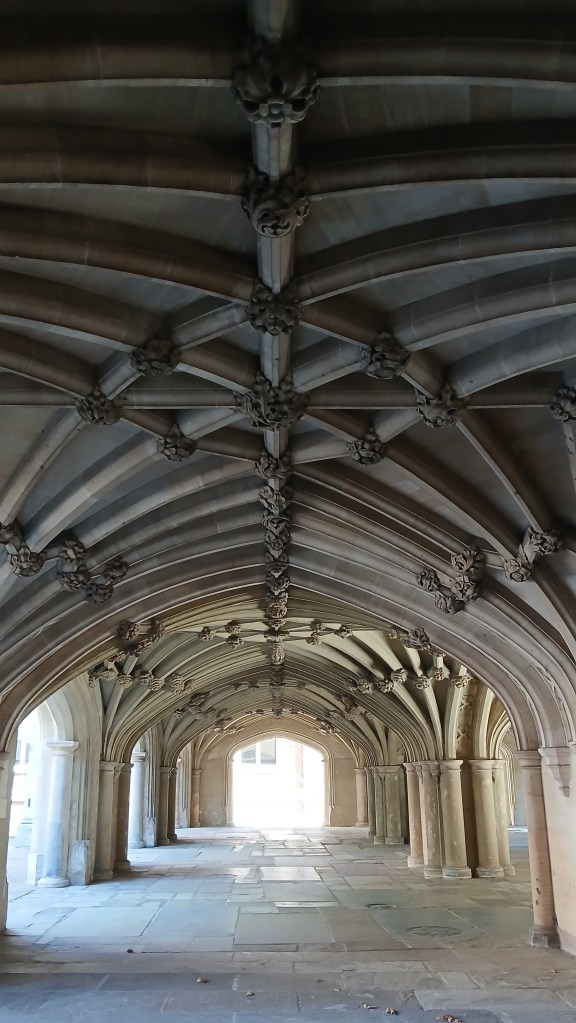
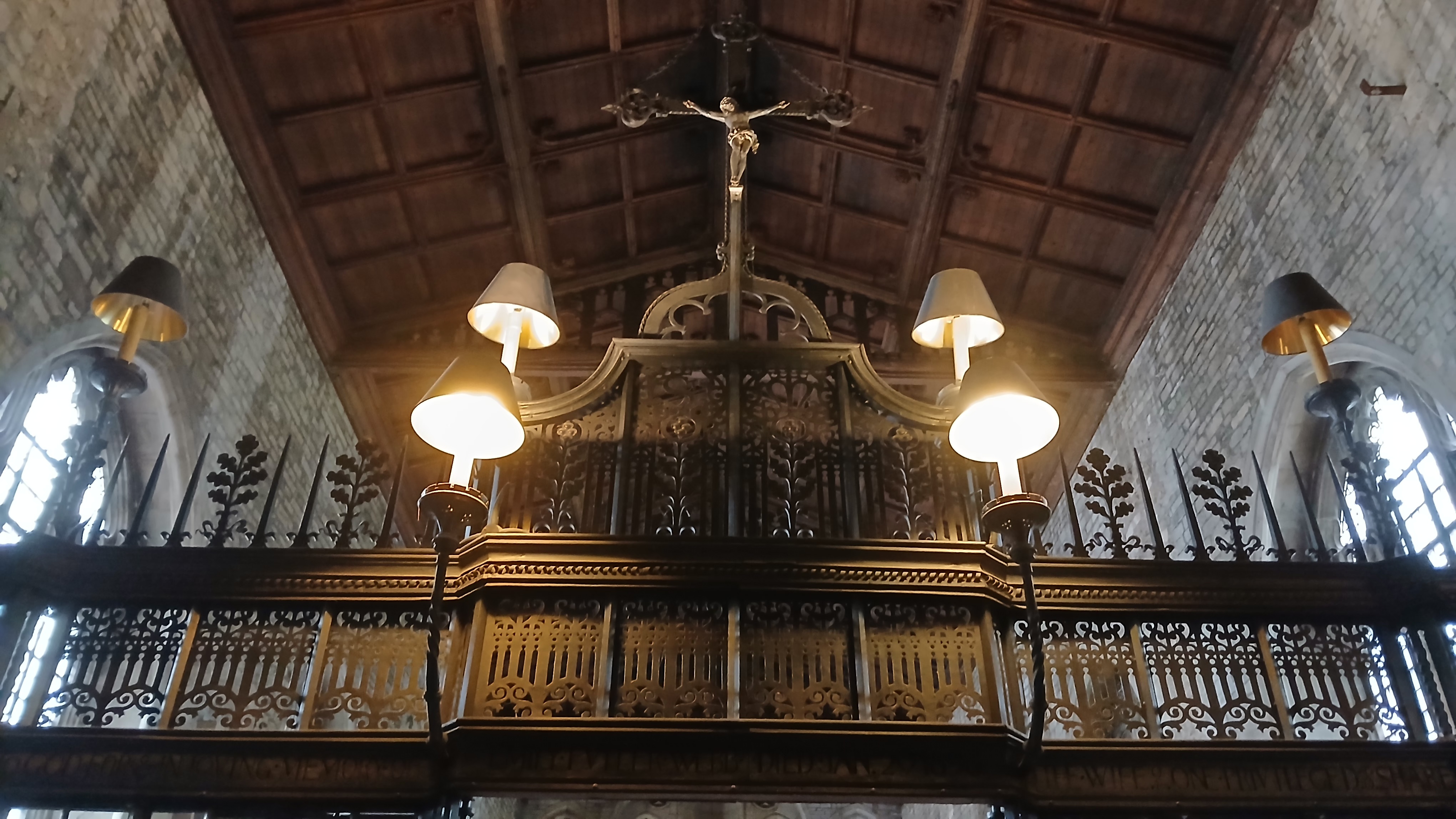
The most striking aspect of this chapel is the rib-vaulted ceiling of the undercroft. The current chapel was completed in in 1623, replacing the original chapel of the Bishops of Chichester, part of the Bishops’ Palace. It was a tradition of chapels in Bishops’ Palaces to be built above an undercroft, and this one is spectacular. The poet John Donne laid the foundation stone in 1620 as preacher of the Inn at that time. The chapel bell, cast in 1613, also has a connection with Donne. By ancient tradition, the bell is tolled at midday on the death of a bencher of the Inn. This practice is said to have inspired Donne’s poem ‘No Man is an Island.’ which concludes with the line ‘And therefore never send to know for whom the bell tolls; it tolls for thee.’ In the 18th century, the undercroft became known as a place for mothers to leave babies if they couldn’t care for them. These ‘foundling’ children were initially cared for by the Inn and given the surname Lincoln. The stained glass of the East window comprises the Coats of Arms of the Treasurers of the Inn, including that of William Pitt the Younger, Treasurer in 1794 and future Prime Minister. The chapel holds Sunday services during ‘legal terms’ and is licensed to perform weddings and baptisms for those ‘with a connection to the Inn.’
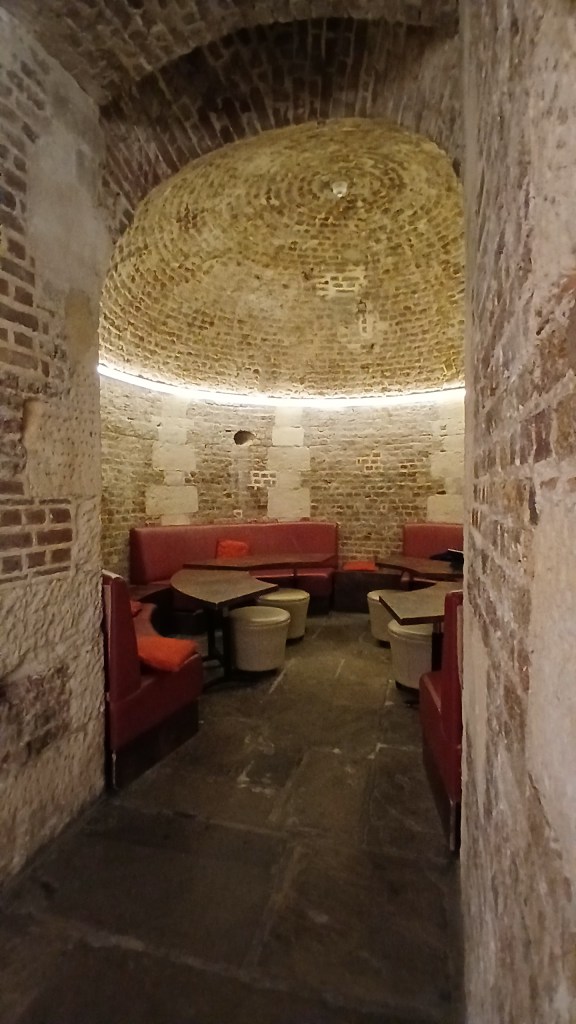
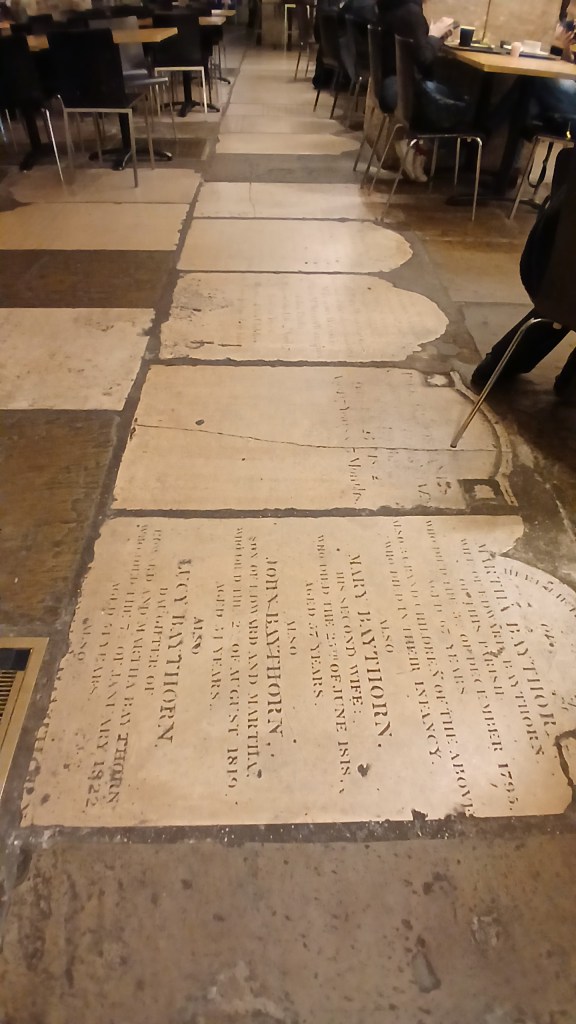
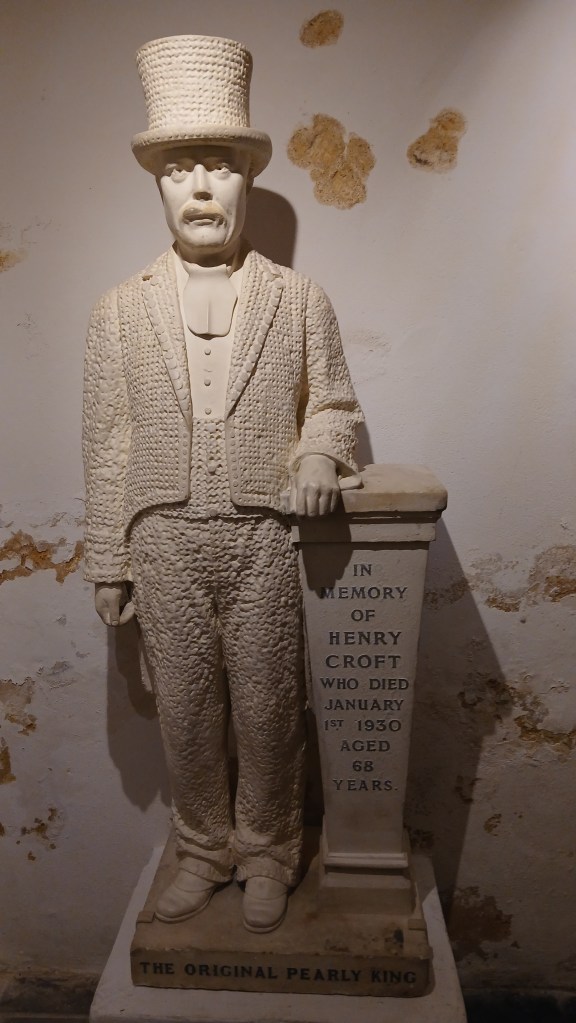
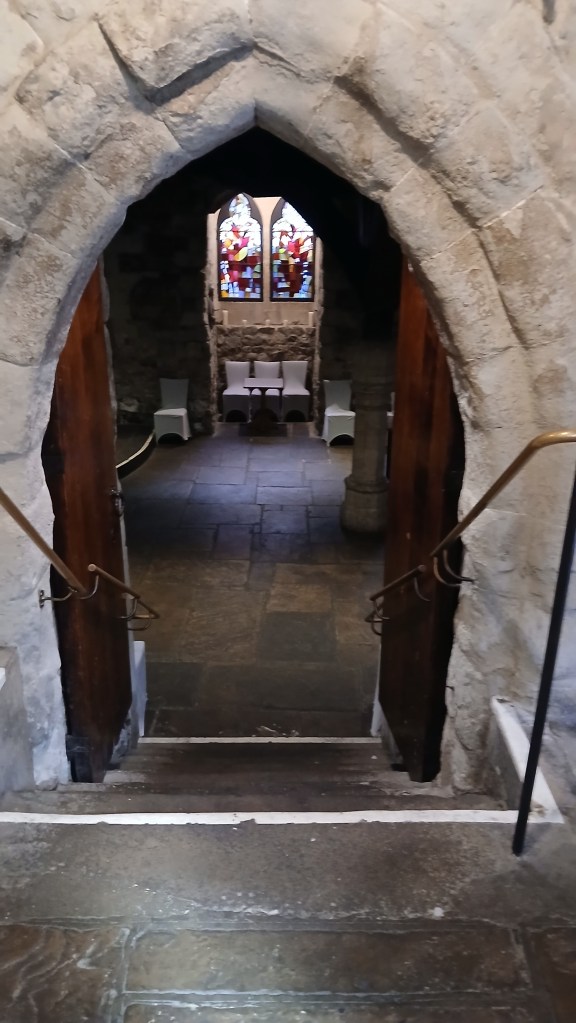
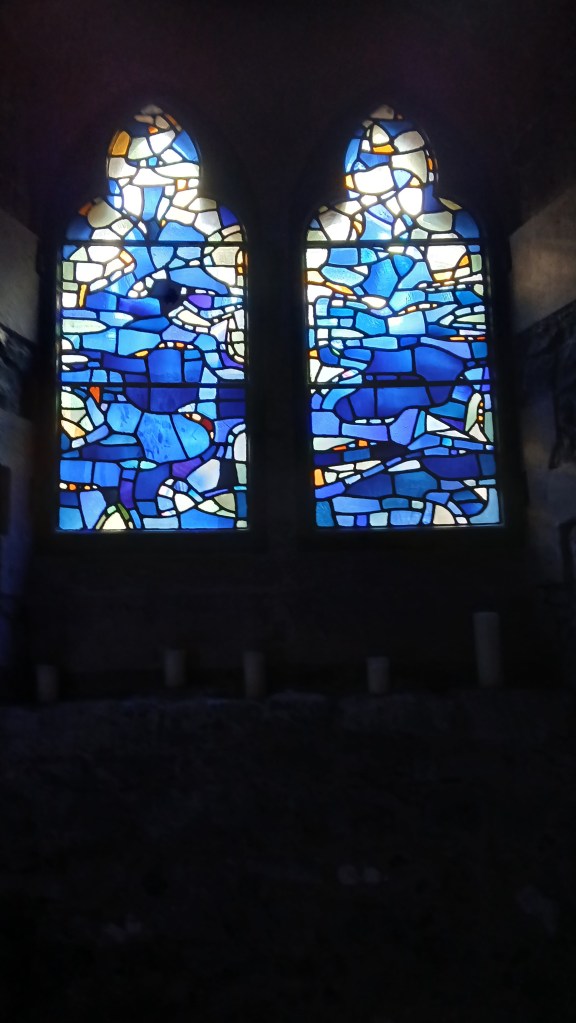
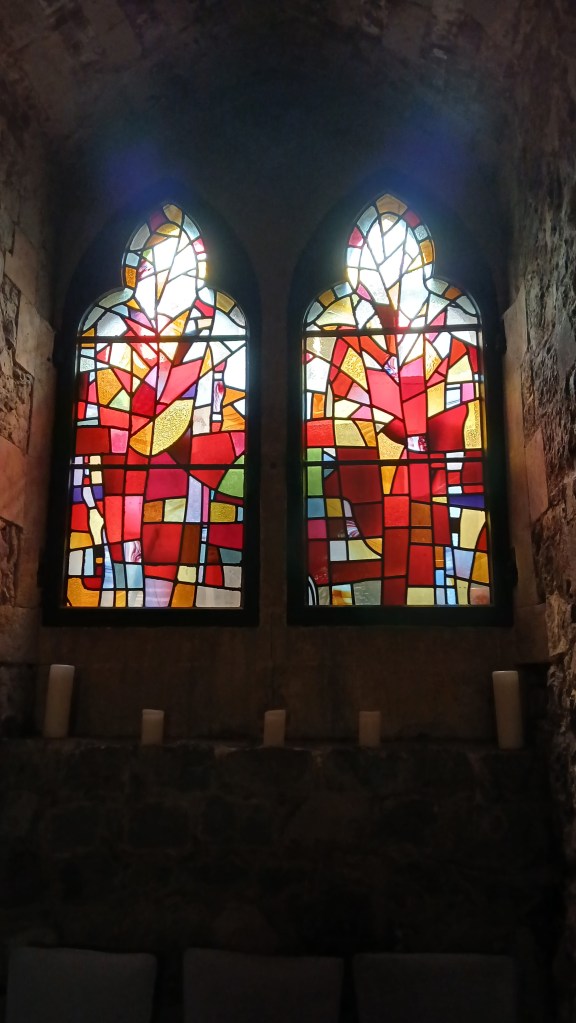
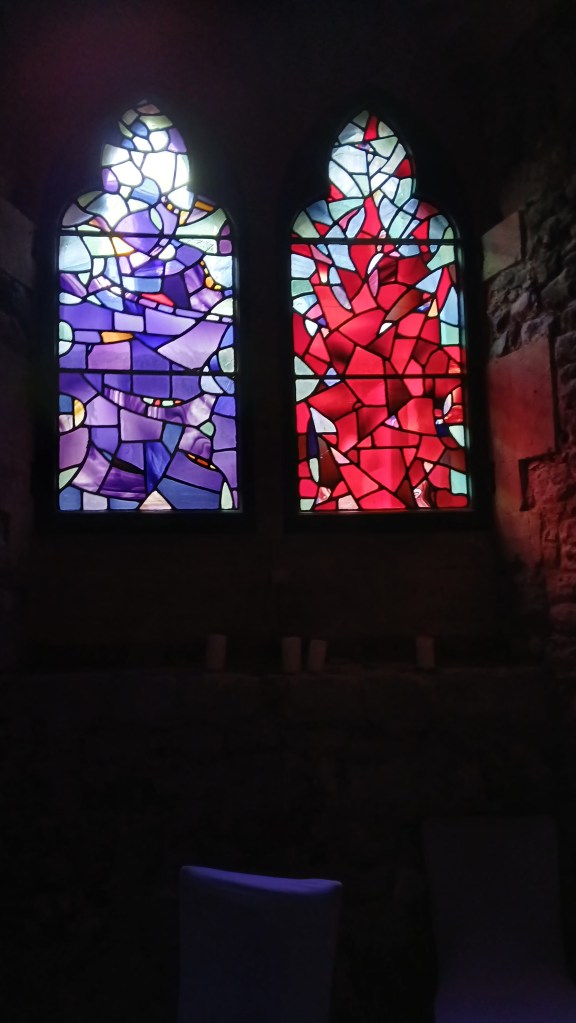
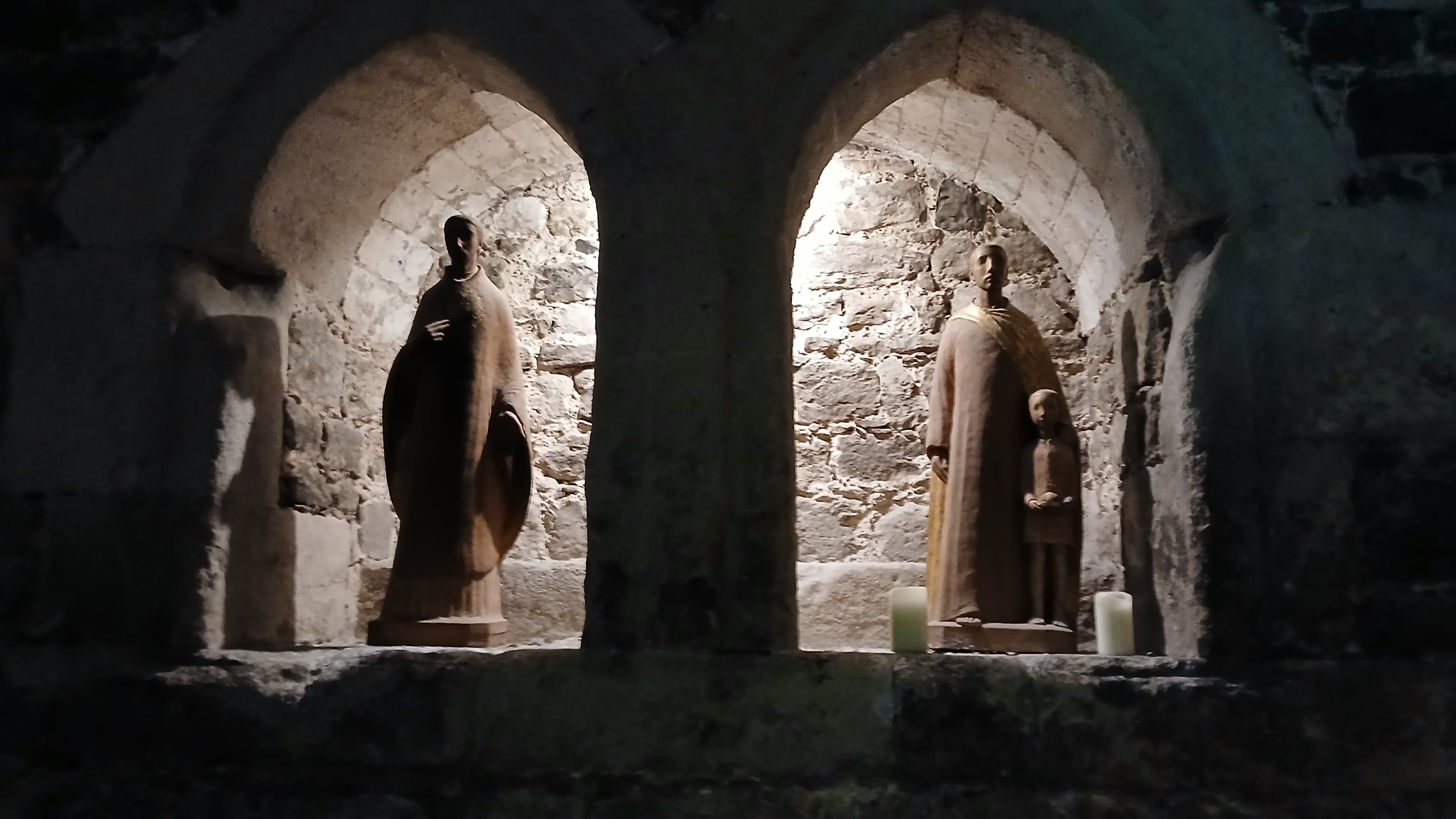
The chapel of St Etheldreda is all that remains of the London Palace of the Bishops of Ely. Around 1250 John le Francis, bishop of Ely, obtained a licence to build a chapel on land owned by St Paul’s Cathedral. Completed in 1290, the London palace grew up around the chapel, extending to 58 acres of farmland and gardens. So why did bishops from Ely and Chichester (Lincoln’s Inn Chapel) have palaces in London? From the 13th century, England’s bishops established households (albeit on a grand scale) in London in order to attend Parliament as many of them held civil, as well as clerical office. St Etheldreda, born about AD630, was the daughter of a Saxon king of East Anglia who founded Ely cathedral in Cambridgeshire. The chapel is unusual because it is a ‘double decker’ chapel, one built on top of the other. The upper chapel was the bishop’s private chapel, and the crypt or undercroft was a place of worship for local people. However, there is a theory that only the upper chapel was used as a church and the undercroft had other purposes. It’s possible that that it was divided into two or more rooms; there is evidence of a well and two chimneys within the walls, which suggests domestic use. Since the late 1800s the crypt has been used continually as a place of worship. My photos are of the atmospheric lower chapel with its beautiful modern stained glass windows.
Source: Booklet in the Chapel
Lady Chapel, St Bartholomew the Great
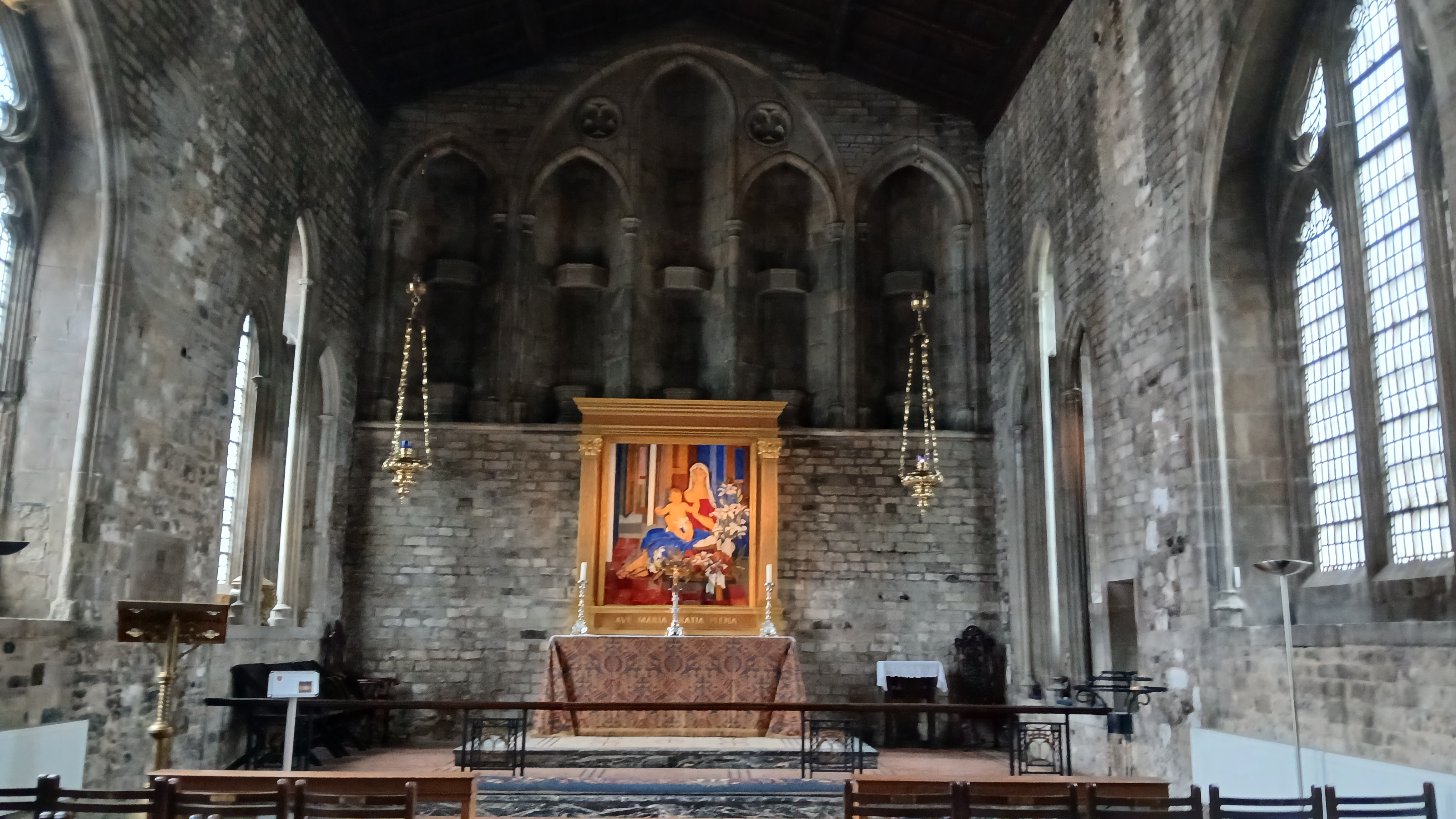
St Bart’s at Smithfields is another wonderfully atmospheric ancient church and on a recent visit, I came across the Lady Chapel. One of the miracles recorded in the Book of the Foundation of St Bart’s tells the story of a vision of the Virgin Mary in the 12th century to Cannon Hubert, one of the Austin (Augustine) Cannons living in the priory. She allegedly accused the cannons of laxity in devotion and worship to her and her Son Jesus. It was decided to build a much larger Lady Chapel at the East End of the church; chapels dedicated to saints are usually located in a side aisle. In the Reformation, Henry Vlll allowed St Bart’s to remain as a church and priory because of the attached hospital, but the Lady Chapel was separated from the main church and converted to commercial premises. By the 1700s it was a printer’s workshop and it was here that a young Benjamin Franklin began an apprenticeship as a trainee typesetter. The Lady Chapel was restored to the church in 1897 to be used again for worship and church services. A Eucharist service took place in the Lady Chapel on 21st September, in the week which celebrated Founder’s Day, marking 9002 years since the church was founded by Prior Rahere, councillor to Henry ll. The painting above the altar is of ‘Our Lady of Smithfield.’
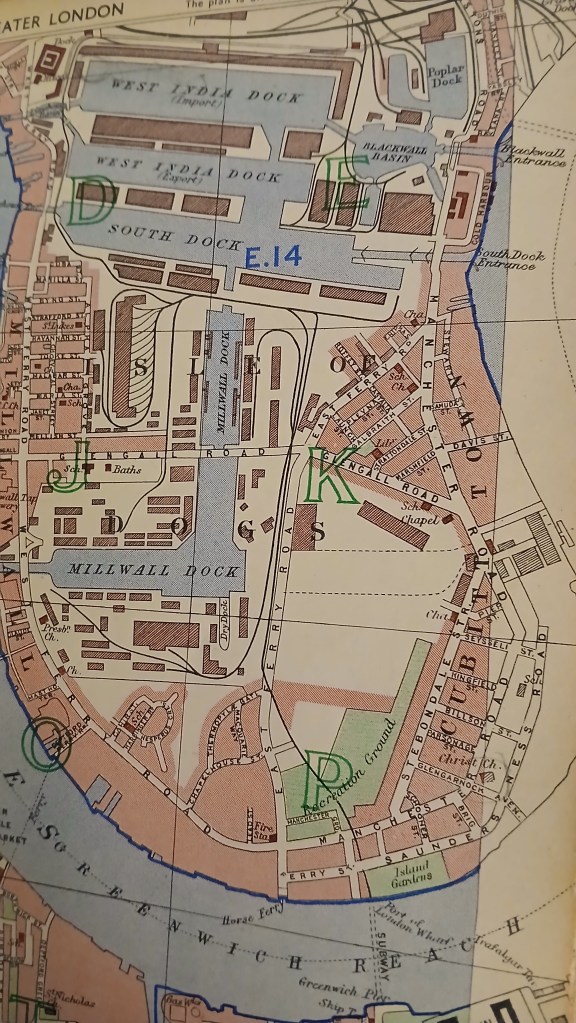
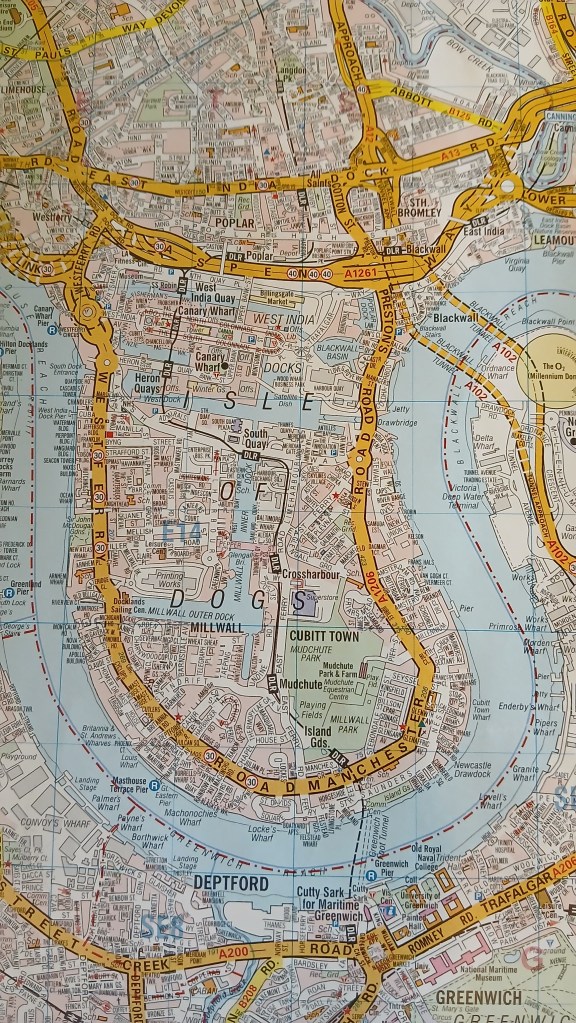
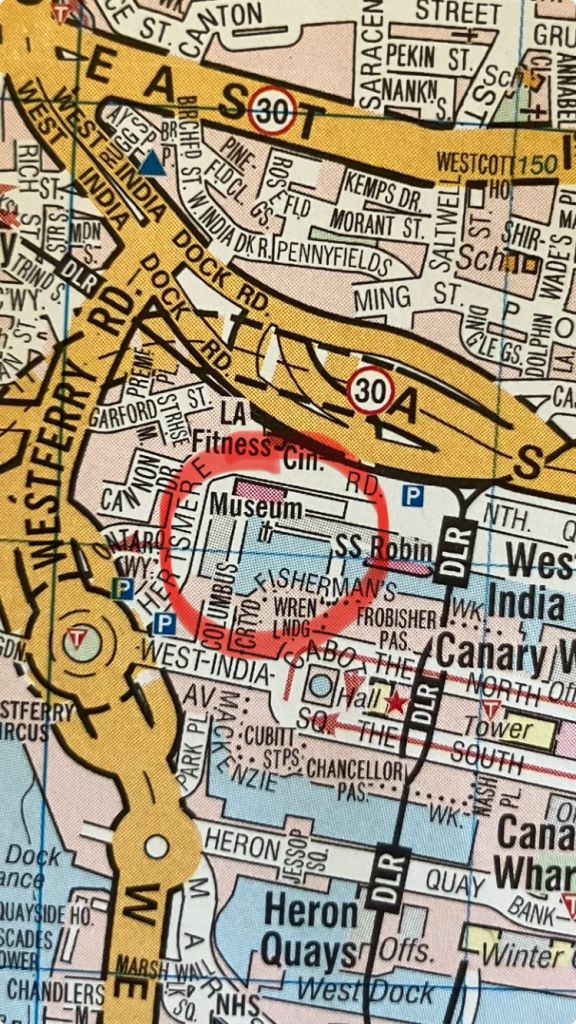
Another of my favourite parts of London is the historic Docklands. The instantly recognisable Isle of Dogs peninsula is shown above in a map from 1949 and a present day map. Once the world’s largest port, the Port of London was heavily bombed in World War Two; the docks and warehouses were damaged or destroyed along with much of the area’s housing. Plans to rebuild and redevelop the docks in the 1950s were abandoned due to the introduction of container ships worldwide; the River Thames and the docks themselves could not accommodate these much larger vessels. The docks closed and the area became derelict and poverty-ridden. Ambitious plans to regenerate the former docks were proposed in the early 1970s, when the name ‘London Docklands’ was first used in a Government report. The London Docklands Development Corporation managed the conversion of the area into residential, commercial and light industrial space in the 1980s and 90s and the Canary Wharf Project established a second business and financial district of London. Not without controversy, the LDDC was criticised at the time for favouring the construction of high-end luxury apartments rather than affordable housing for local people. Today, it’s also a tourist must-visit; there are the usual range of bars, eateries and shopping malls, plus the wonderful Museum of London Docklands, housed in a former warehouse. Two of the churches I visited are located somewhat to the west of Docklands but both have strong associations with the River and the docks.
Source: Wikipedia
St Mary’s, Rotherhithe
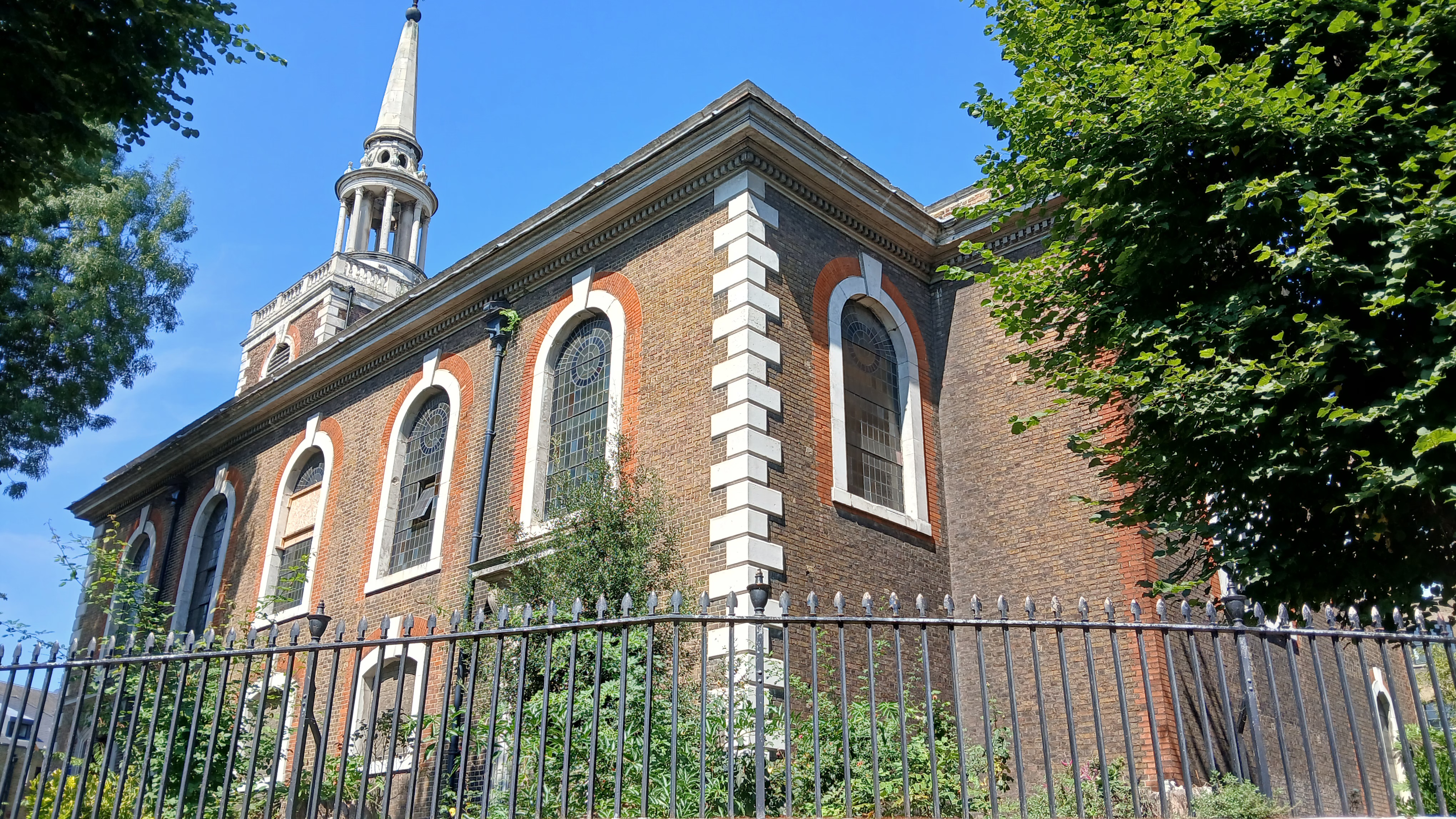
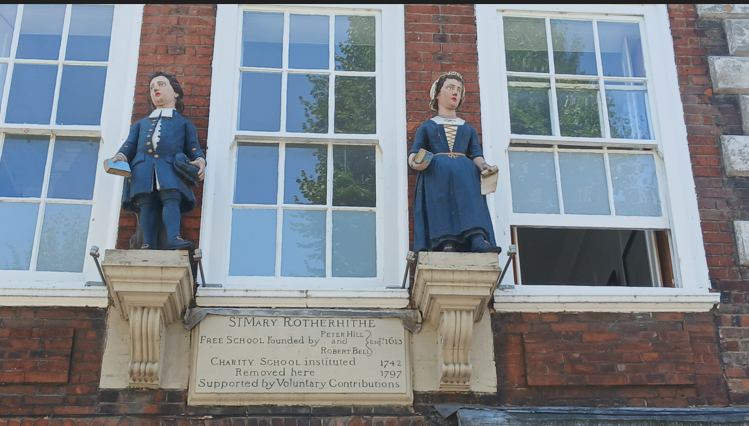
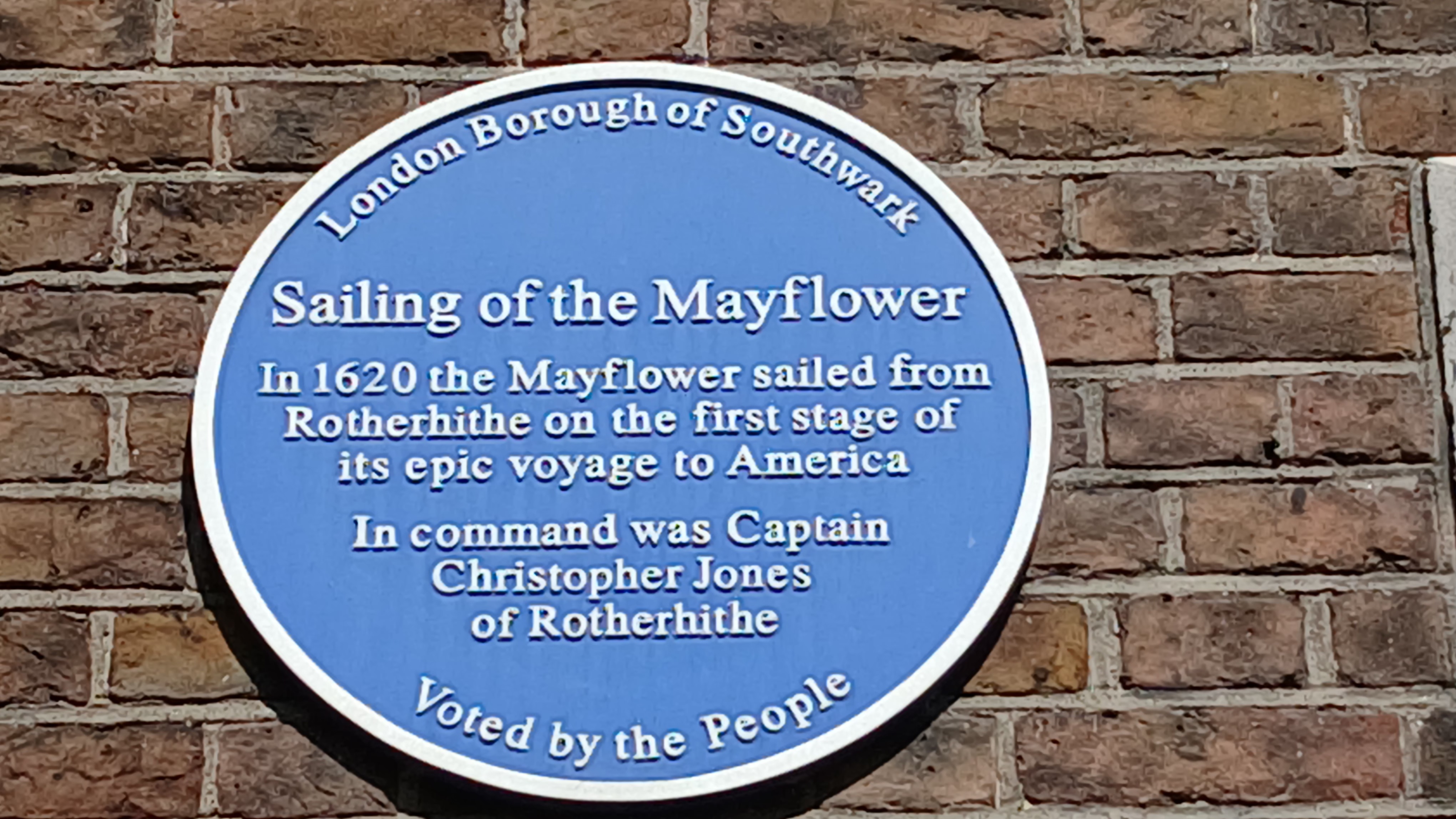
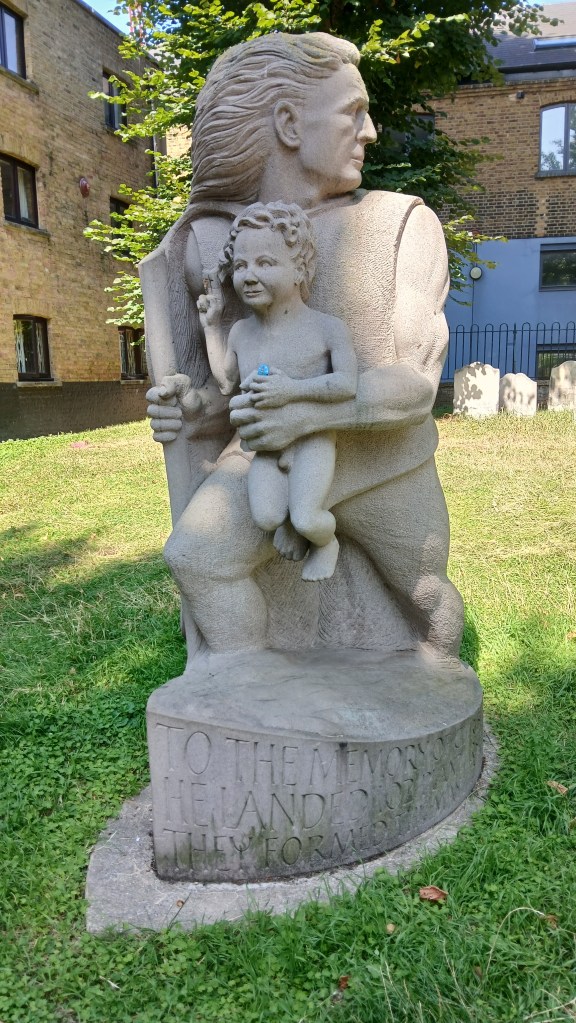
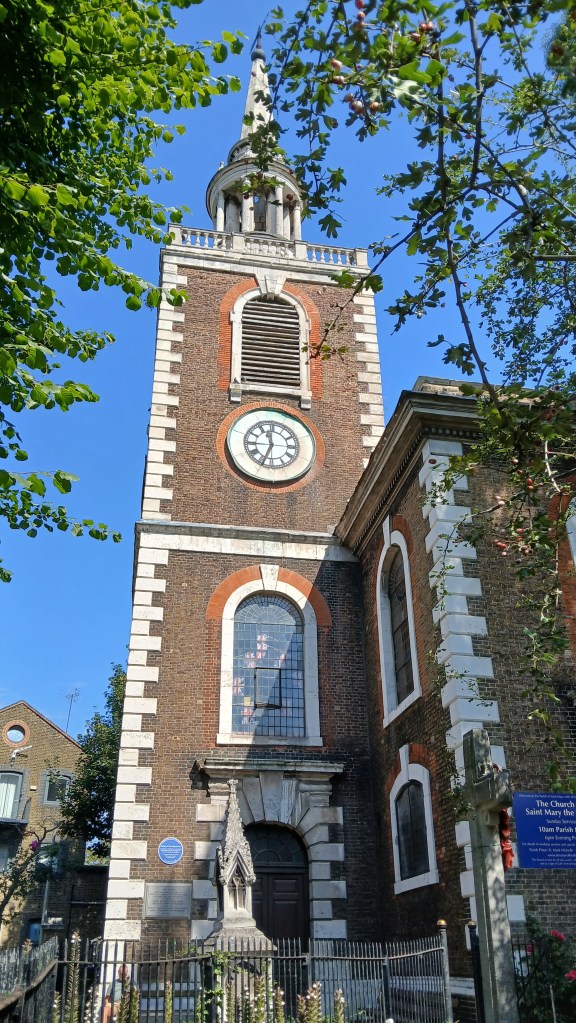
Situated on the south bank of the Thames, this church is close to the former Surrey Commercial Docks and the area is steeped in history: the nearby Brunel Museum charts the history of the Thames Tunnel, a Victorian feat of engineering constructed by Sir Marc Isambard Brunel. St Mary Rotherhithe Free School, founded in 1613 by mariners Robert Bell and Peter Hill for the education of the sons of seafarers, is located across the road from the church, which it predates. Although now located elsewhere, it is thought to be the oldest elementary school in London. On the wall of the church is a Blue Plaque commemorating the sailing of the Mayflower from Rotherhithe in 1620, and in the adjacent graveyard is a statue of the ship’s captain, Christopher Jones of Rotherhithe. The inscription on the statue reads: ‘To the memory of Christopher Jones, 1570 to 1622, Master of the Mayflower. He landed 102 planters and adventurers at Plymouth, Massachusetts 21st December 1620. They formed the Mayflower Company and the first permanent colony in New England.’ Interesting that they are referred to as Adventurers, not Pilgrims! The current church was constructed between 1714 and 1747, replacing a mediaeval building, but sadly I was not able to go inside.
Source: londonremembers.com
St Peter’s Wapping
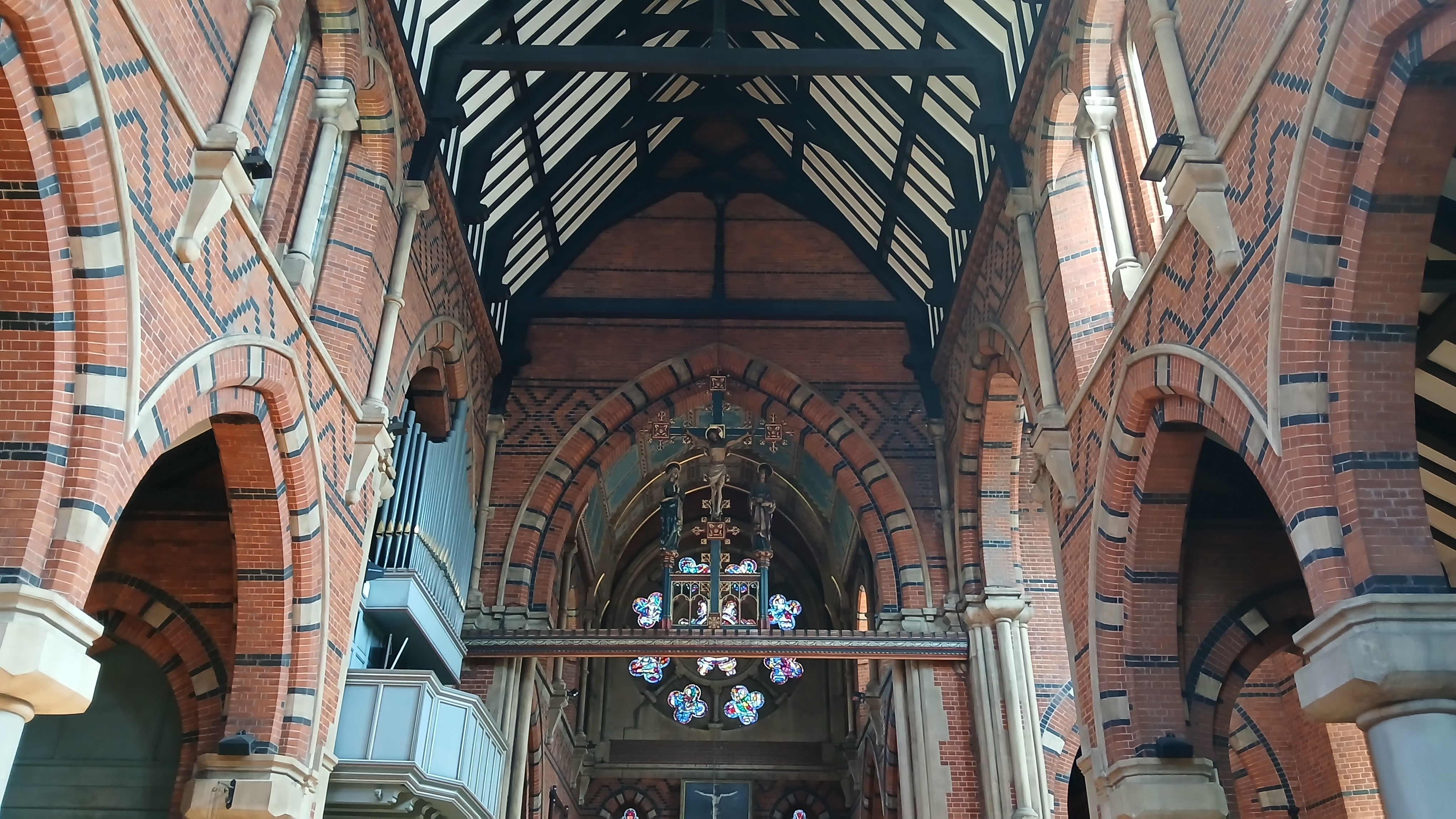
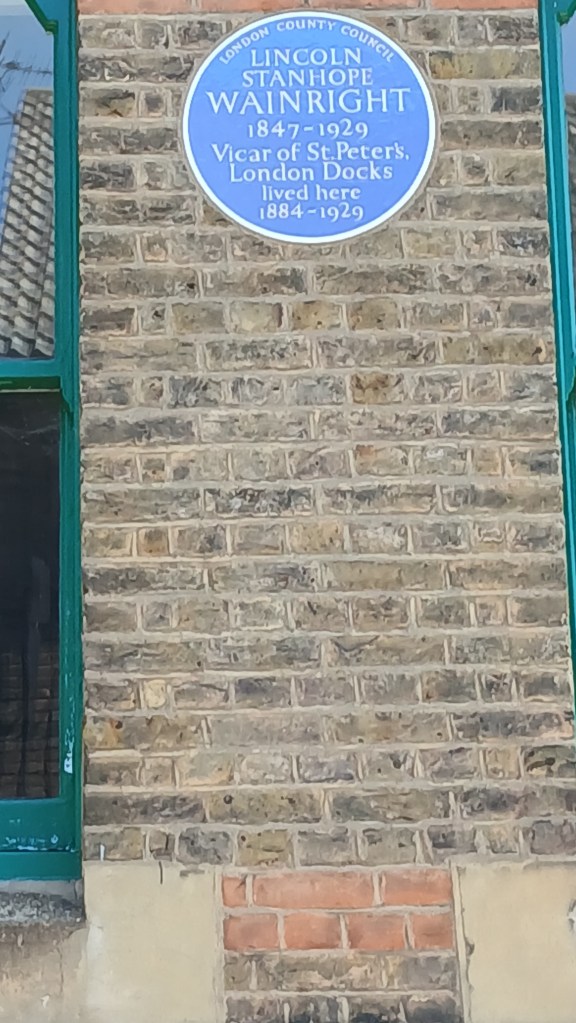
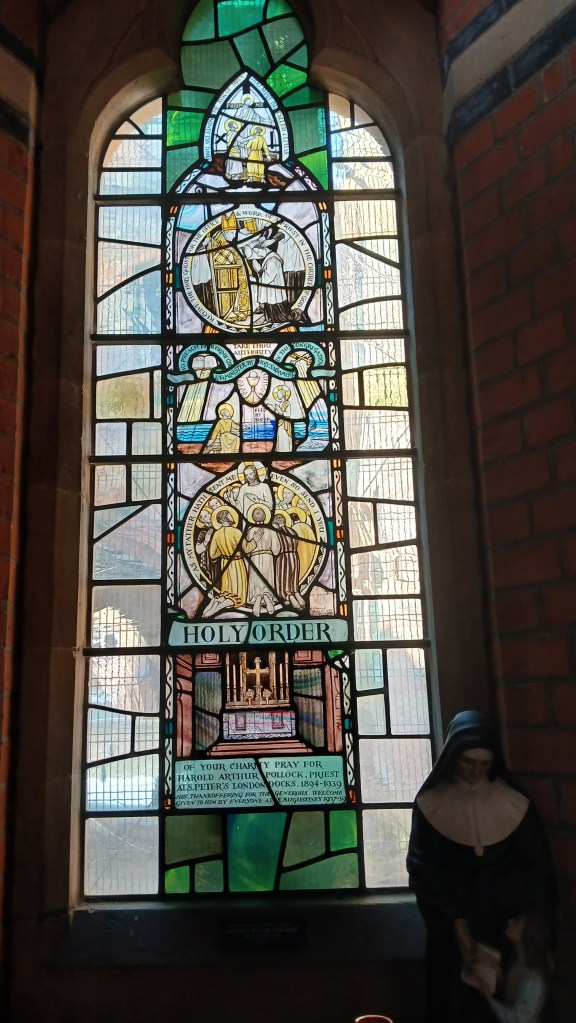
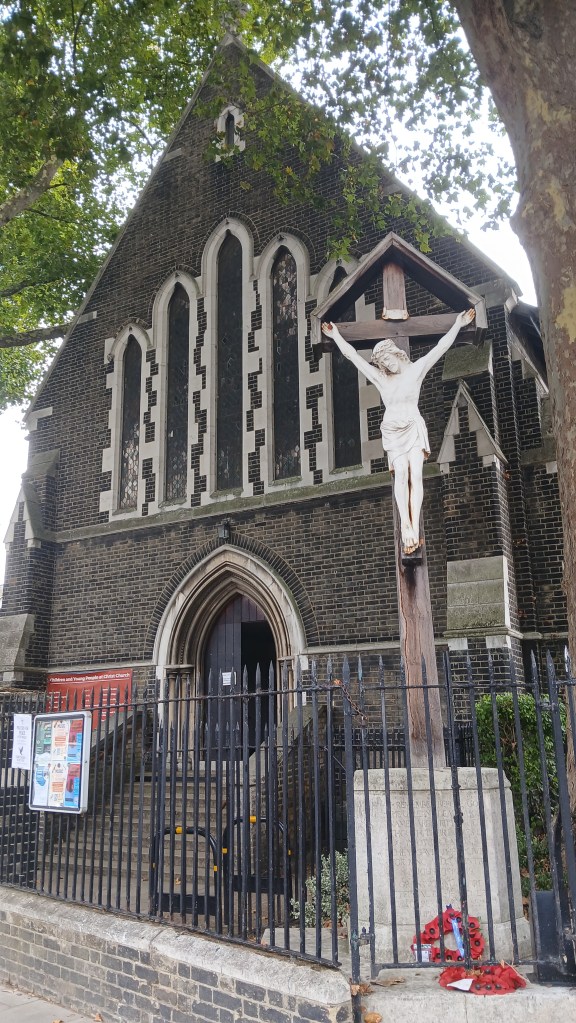
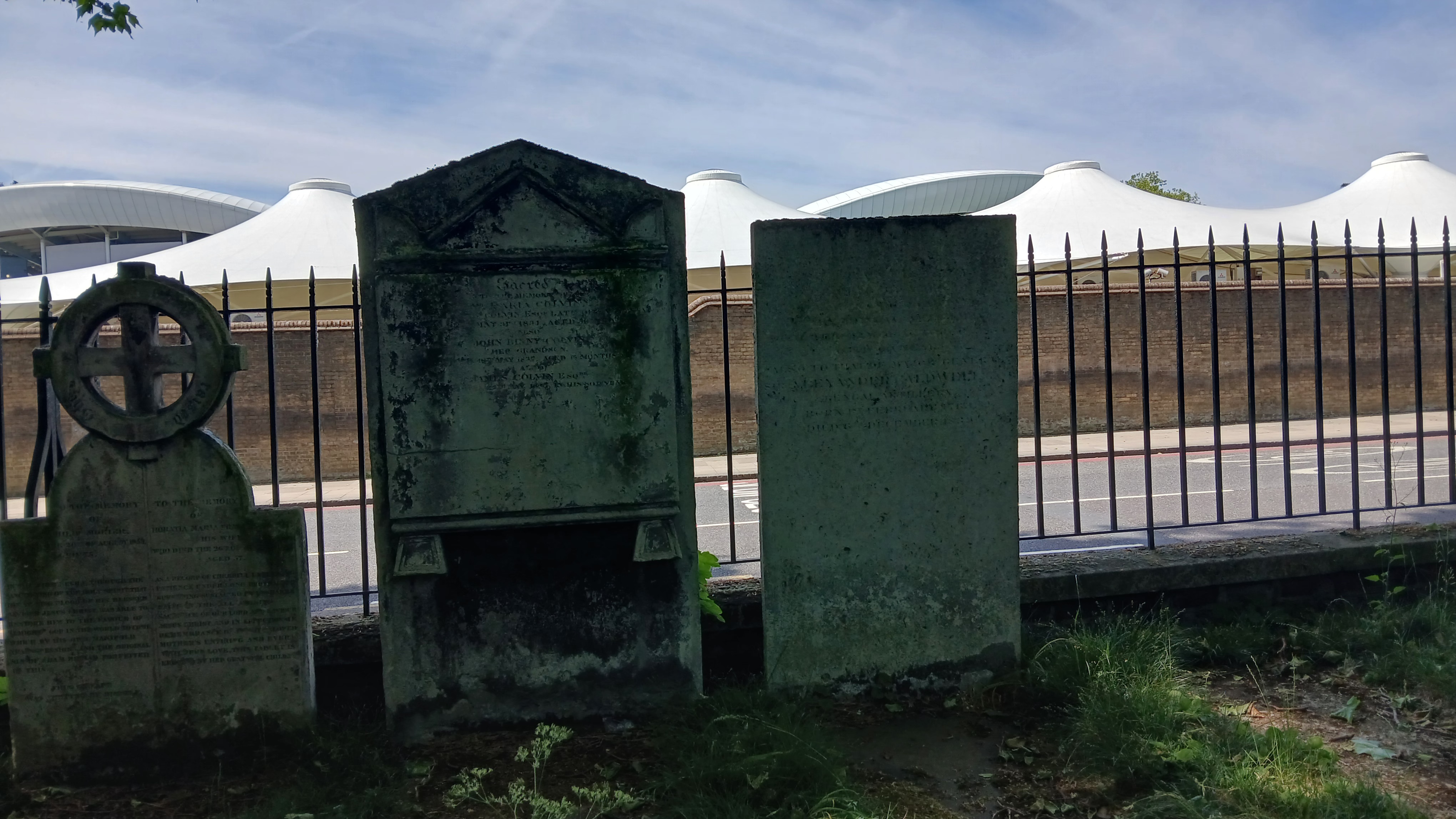
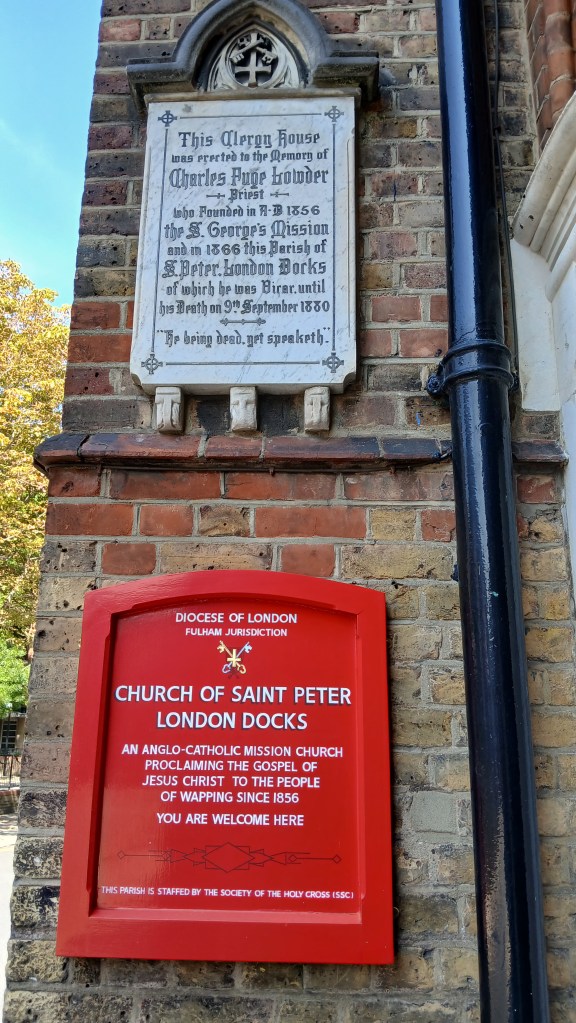
If only that Tunnel had still been in use, it would have been an exciting route from St Mary’s to St Peter’s just across the River. As it was, I travelled one stop on the Windrush Line. This church has a legacy of caring for the poorest people of the dockland area, with the first Anglican mission to the poor of London being founded here by members of the Society of the Holy Cross. Wapping was one of the poorest districts, inhabited by criminals, prostitutes and unskilled dock workers. Work began on the building of the church in 1856 by the Reverend Charles Lowder, and the church was consecrated in 1866. Soon afterwards the East End was struck by cholera and Rev. Lowder, the other clergy and the Sisters of Mercy worked tirelessly caring for the sick at great personal risk. Thereafter Rev. Lowder was called ‘the Father’ by local people as he seemed like the father of the community. The work among the poor continued with the setting up of schools and clubs for children, canteens offering affordable food, and spiritual support. In 1873 Lincoln Stanhope Wainwright became Rector of St Peter’s under Rev. Lowder and continued the parish work, even giving away his own food and clothing to the destitute. Another priest beloved by the community, when he died in 1929, one of his parishioners wrote ‘Docklands was washed with tears because this tiny but indomitable figure, shabby, untiring, spendthrift of love, would not serve them on Earth any more.’ I loved St Peter’s bright, colourful interior.
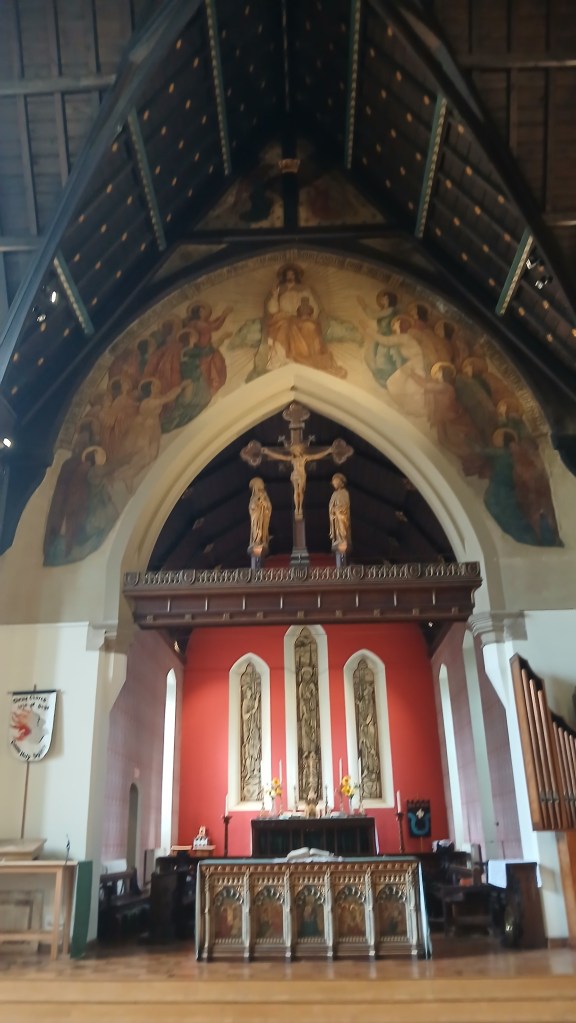
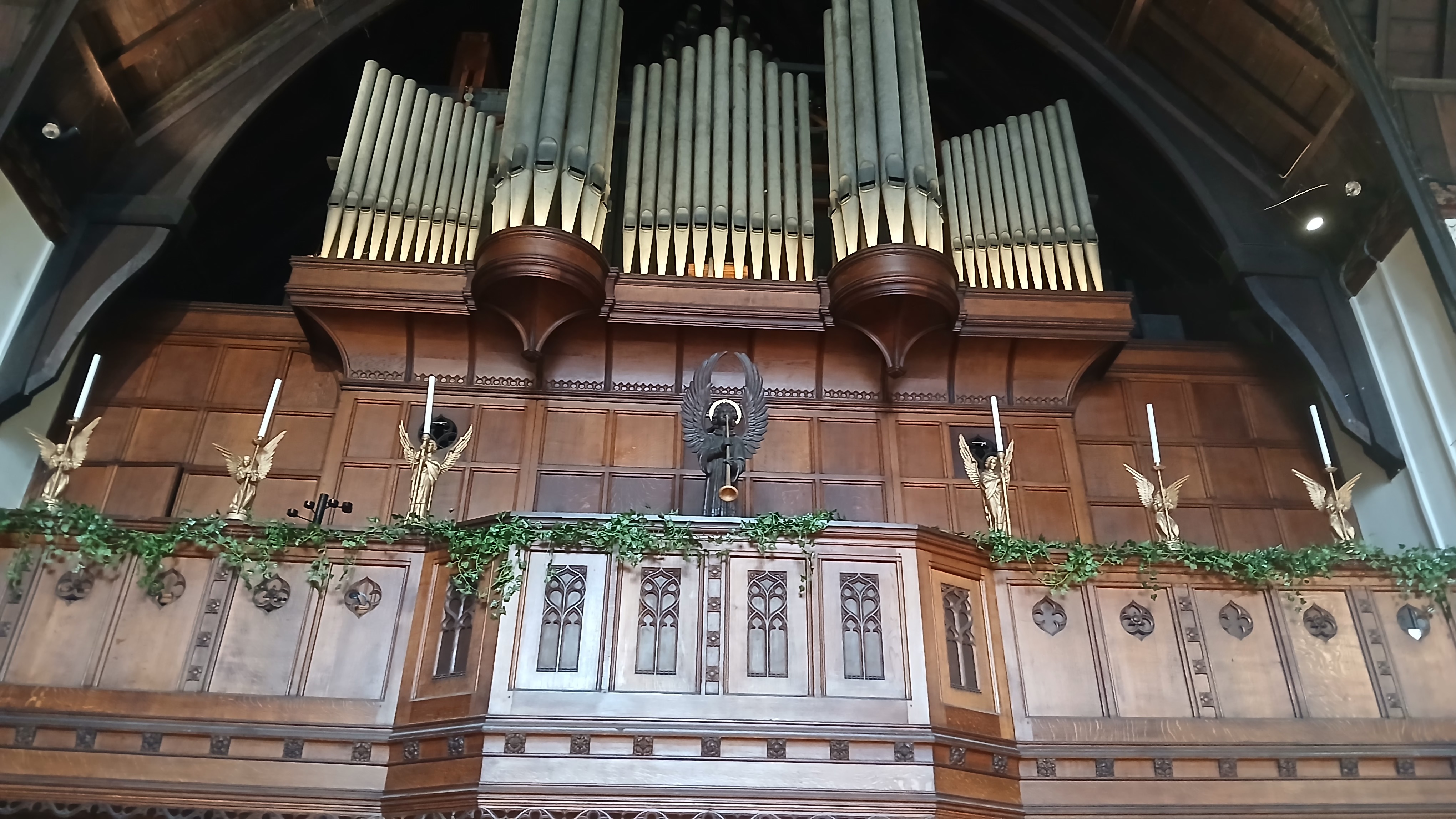
Travelling on the elevated Docklands Light Railway (DLR) is always fun and my journey to Island Gardens took me past Mudchute and Millwall Parks. This church is situated on Manchester Road at the tip of the Isle of Dogs peninsula, and the first thing I noticed when I arrived was that the church, the vicarage and a pub (the Waterman’s Arms) were the only buildings over 30 years old. The streets here have changed almost beyond recognition since the days of the docks. Building work on Christ Church began in 1852 by William Cubitt at his own expense on land donated by the Countess of Glengall and the church was consecrated in 1857. The church has some interesting features: the painted mural over the chancel arch was completed in 1914 and the wonderful organ with its decoration of angels was installed in 1911. A newsletter in the church informed me that the Vicar, Father Tom Pyke decided to celebrate Pentecost this year by having Scripture readings read by church members who speak languages other than English, literally ‘speaking in other tongues’ as the followers of Jesus did on the Day of Pentecost. The languages spoken by the multi-lingual congregation are: Welsh (Father Tom), French, Polish, Vietnamese, German, Hindi, Indonesian, Nepali, Zulu, Shona, Czech, Spanish, Urdu, Yoruba, Luganda, Farsi – and English. I wish I’d been at that service!
Source: Christ Church Isle of Dogs website: newsletter in church
I also liked the cross-beamed ceiling
St Peter’s Barge: London’s Floating Church
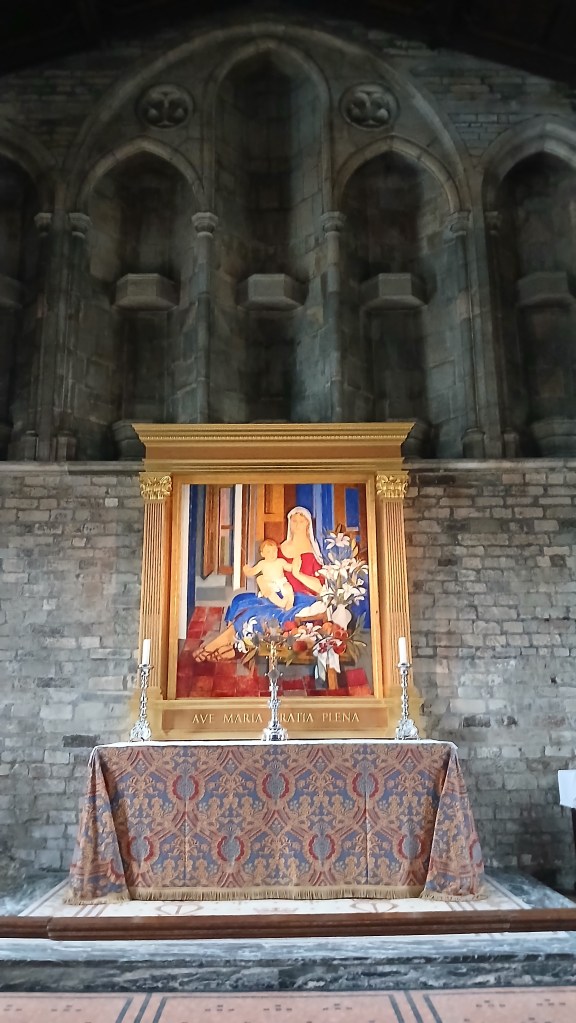
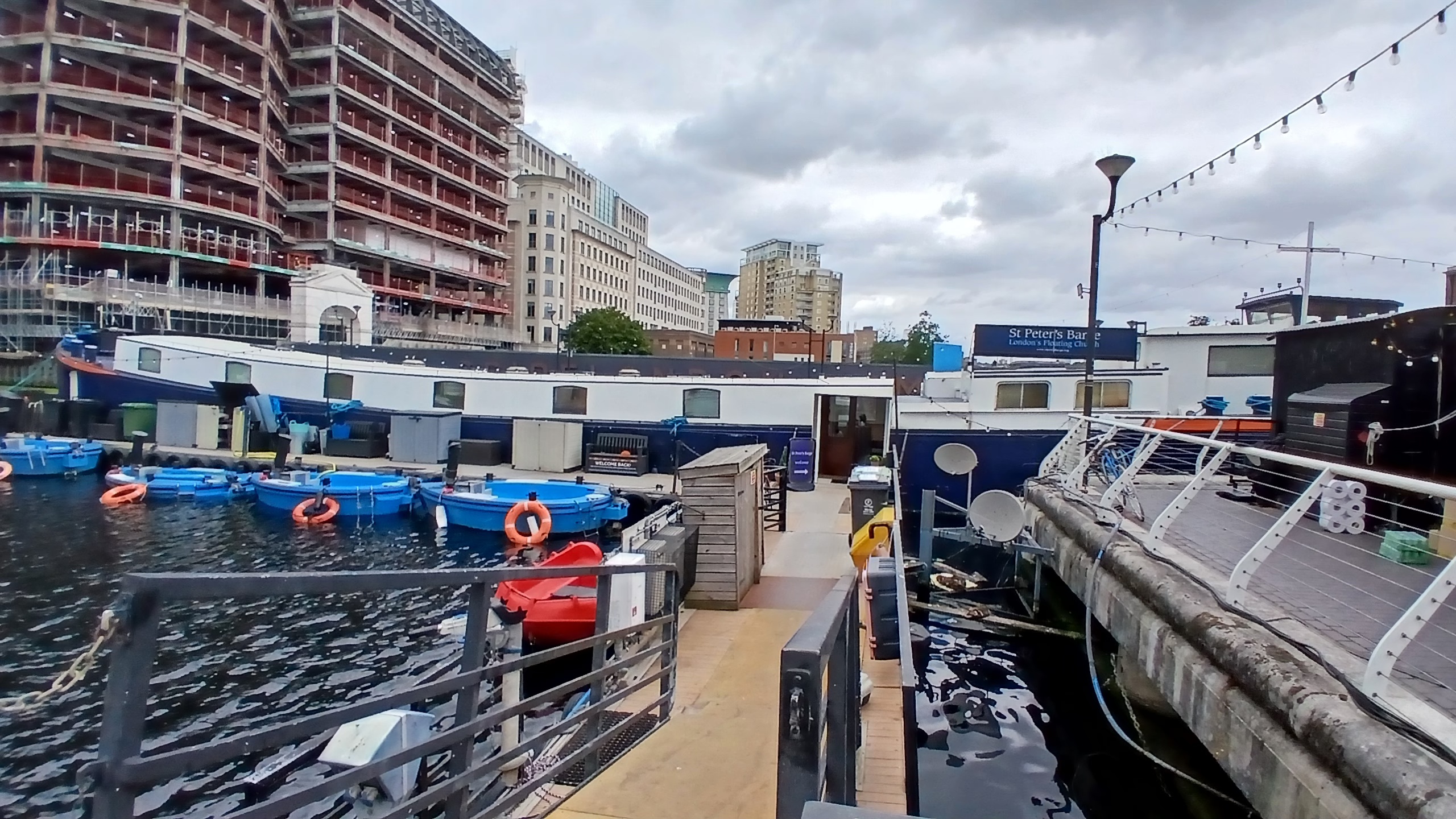
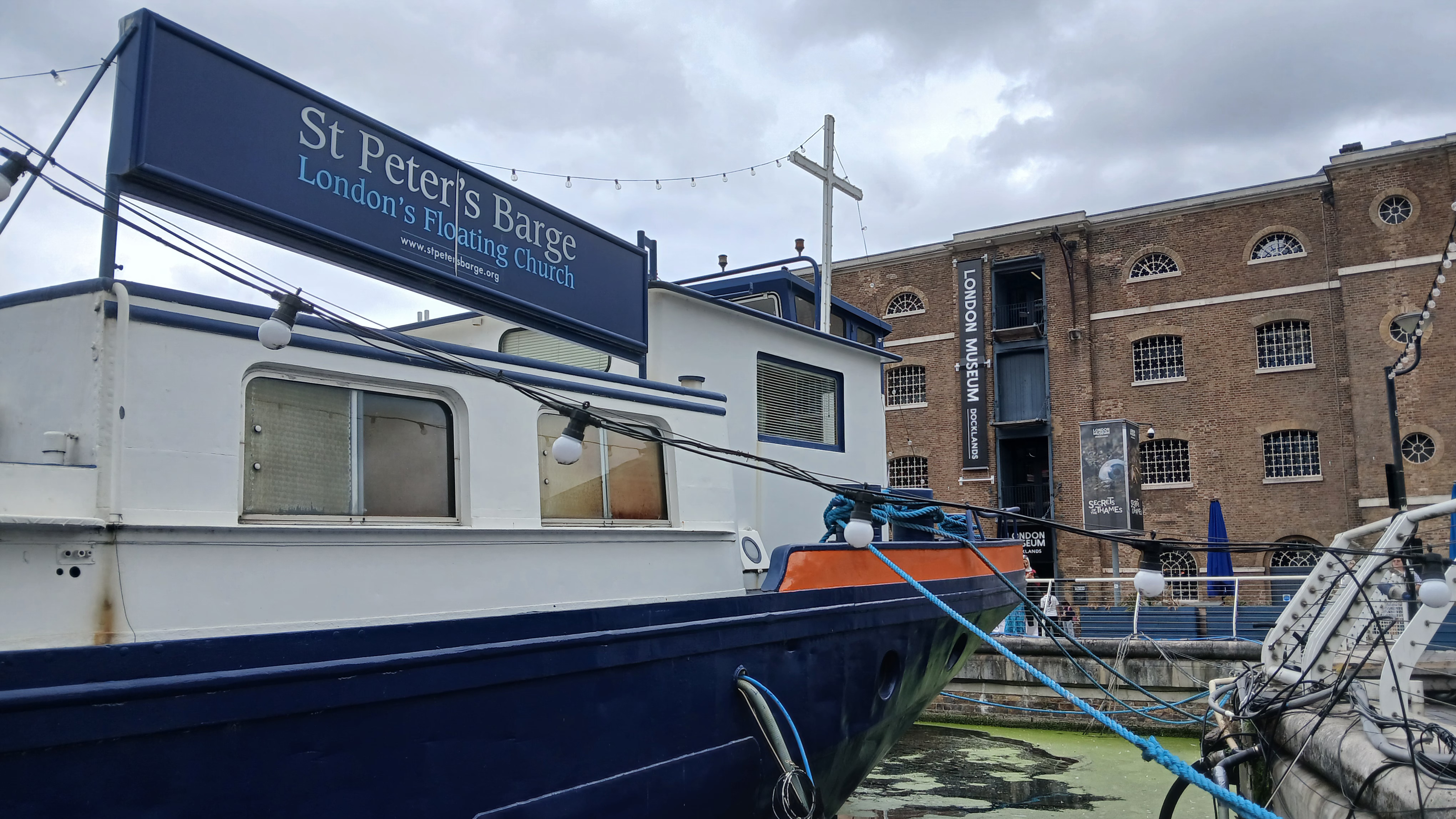
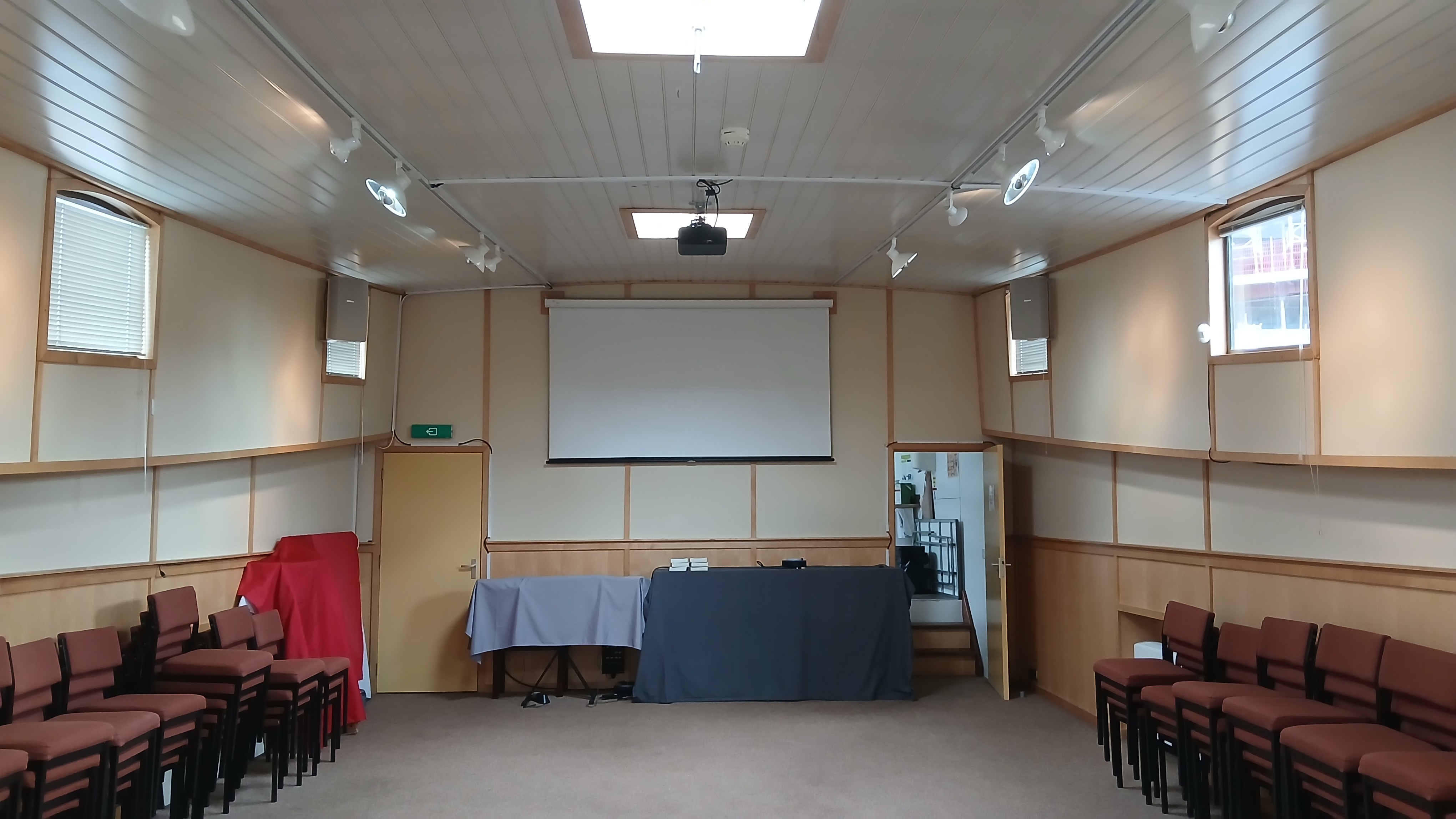
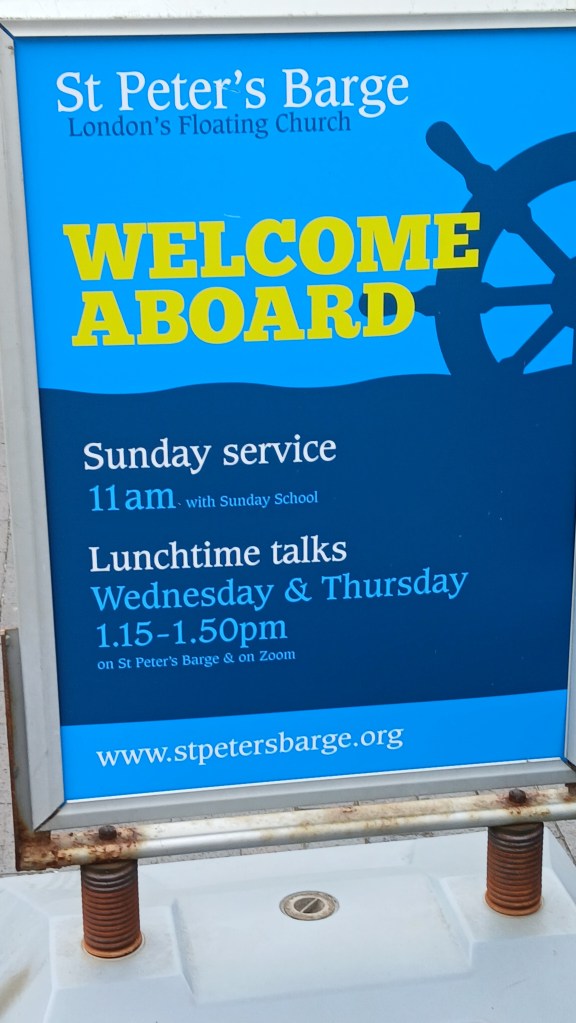
The most unusual of my visited churches, St Peter’s is unique in that it’s actually IN the dock, formerly West India Dock! The barge which houses a church is moored at West India Quay in the heart of the Canary Wharf business and financial district. A large part of this area lies within the parish of St Anne’s Limehouse, and following the redevelopment of the East London Docklands, St Anne’s started lunchtime outreach meetings in the pubs and bars for the 100,000 people working here. The project was supported by St Helen’s Bishopsgate in the City, but to grow the work, a permanent venue was needed; the vision to establish a floating church was realised with the formation of the St Peter’s Canary Wharf Trust. A Dutch freight barge was purchased in the Netherlands in 2003, refitted in situ and brought across the North Sea, where it has a permanent mooring here in the dock. A full-time Church of England minister was appointed in 2004; fast forward 21 years and St Peter’s holds regular Sunday morning services, including Sunday School for primary aged children in nearby London Docklands Museum – what a great place to have Sunday School! The lunchtime talks, part of the original outreach, take place on Wednesdays and Thursdays, and there are also cell groups, women’s and young people’s groups and a Toddler Group, appropriately named Little Ducklings. What a great location to ‘do church’!
With Docklands Museum in the background
Note: This month I visited four very different churches, each with a unique story to tell: histories of buildings and people and events from 300 years ago right up to the 21st century. As always, when I happened to meet church staff and volunteers (which happens a lot!) they were friendly and helpful. It’s one of the best parts of writing this Blog!
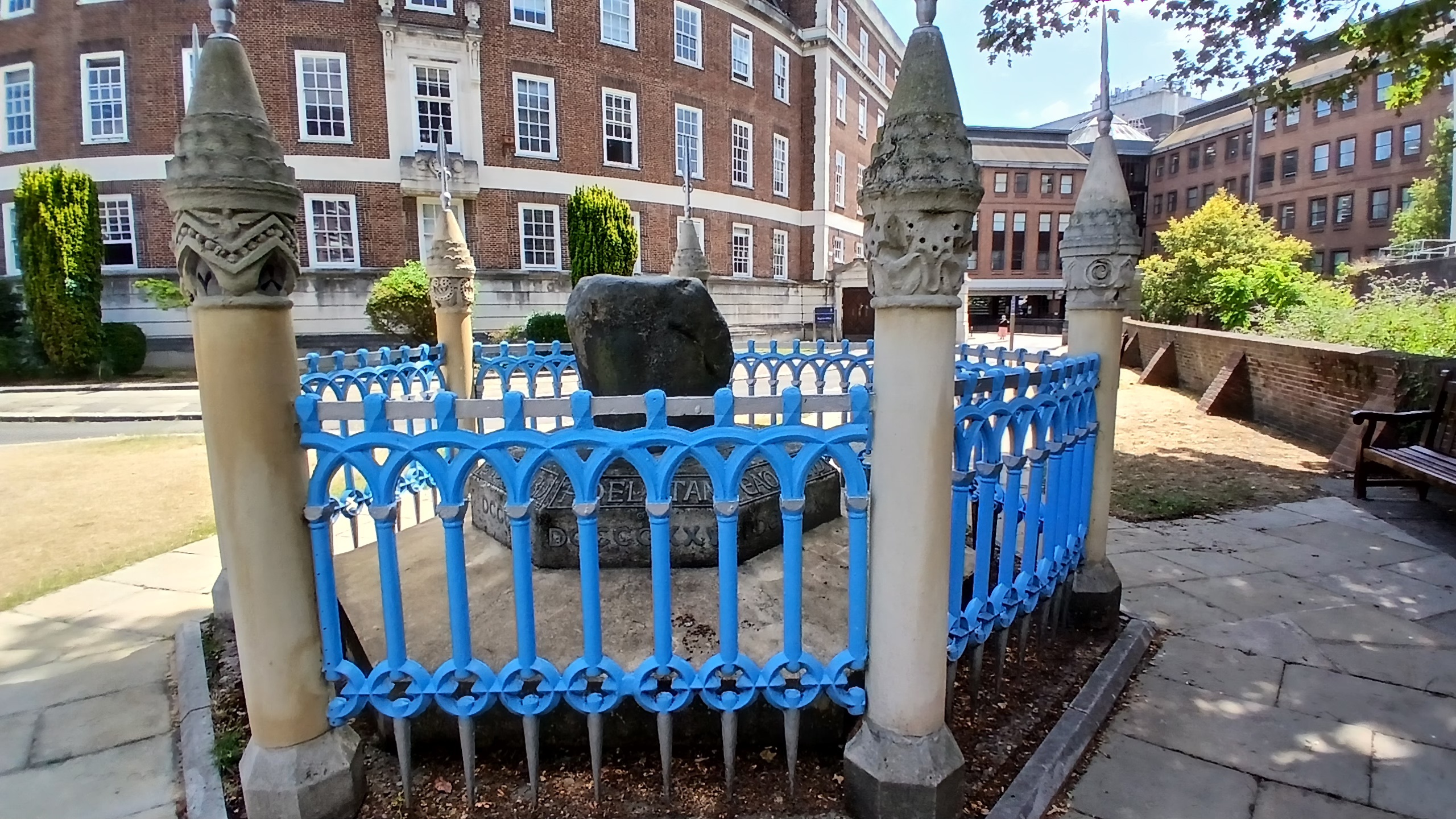
I visited Kingston this month, a town celebrated for its royal connections going back to 838AD when ‘Cyningestun’ was a royal estate of the Saxon Kings. At that time, Kingston was on an island in the River Thames on the border of the Kingdoms of Wessex and Mercia. It has been verified that seven 10th century Kings of England were crowned here on the site of the current All Saints Church. The second of these, Athelstan, was crowned in 925AD, 1,100 years ago this year, and Kingston has a series of year-long celebrations to mark this event. Outside Kingston Guildhall is the Coronation Stone (above) used in the coronation of at least three of the kings; the names of all seven are inscribed around the Stone. Kingston began as a settlement on the Thames, a strategic location for river trading and as a market town; the ancient Market Square still stands. I explored some of the churches in and around Kingston, and found that Christianity is thriving here in diverse ways.
Sources: Kingston 2025 Programme of Events; All Saints Church Kingston Guidebook
All Saints Church, Kingston
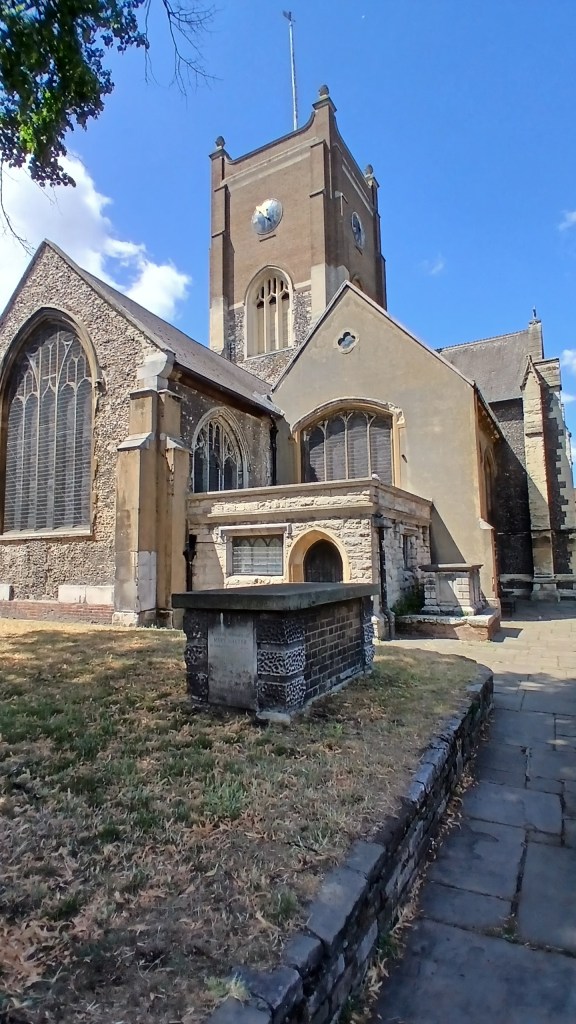
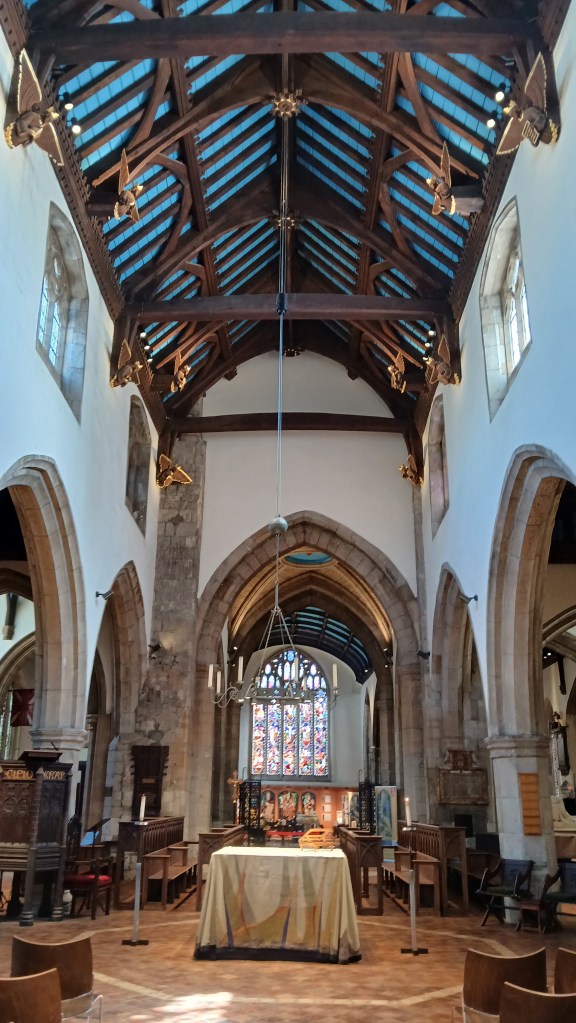
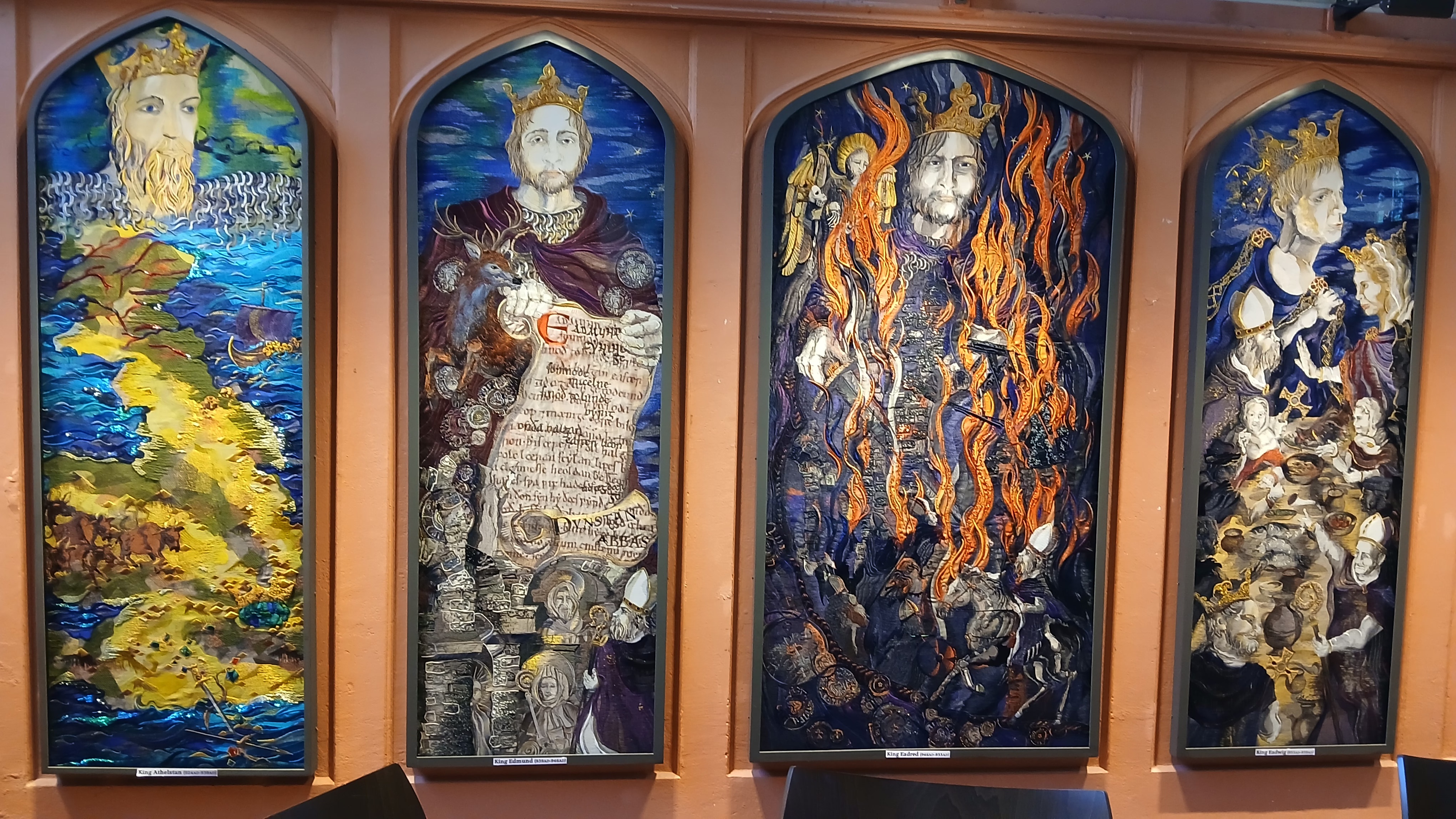
The parish church of All Saints was built in the 12th century, but even before its construction, the first ‘true’ King of England Athelstan was crowned at a former church, probably wooden, on this site. Athelstan united the Kingdoms of Wessex and Mercia and it is here that Church and Crown formally agreed to support each other. Athelstan’s coronation service laid the foundations for all coronation services since then, and Athelstan was the first monarch to have a crown placed on his head rather than a helmet. Nine centuries later, the church has been substantially altered and enlarged, with very little of the original building remaining. During 19th century restorations an original Norman door was uncovered but was considered too fragile to preserve and was destroyed. I don’t think that would happen today! Today the church is busy preparing for the 1,100 year anniversary celebratory events, one of the most exciting is the formal unveiling of seven embroidered panels of the seven kings. Four of these are already in situ in niches, the others are being completed, and the unveiling ceremony will be on September 4th – I’m hoping to go along! I wasn’t able to take many pictures of the interior because there were dozens of people there, but here are my favourite things in the church.
Sources: Kingston 2025 Programme of Events; All Saints Church Kingston Guidebook
The embroidered panels of four of the seven kings
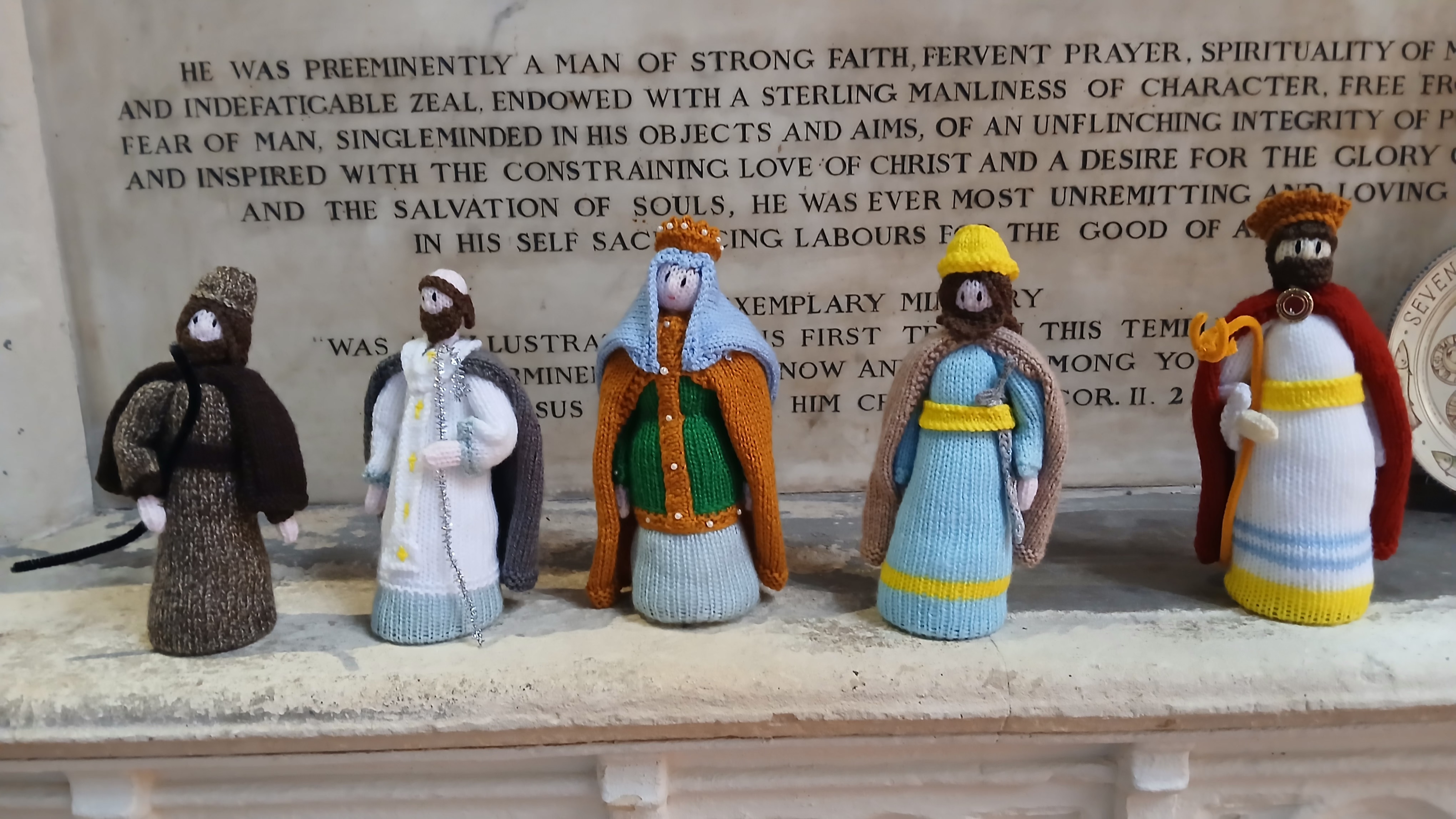
Some knitted kings!
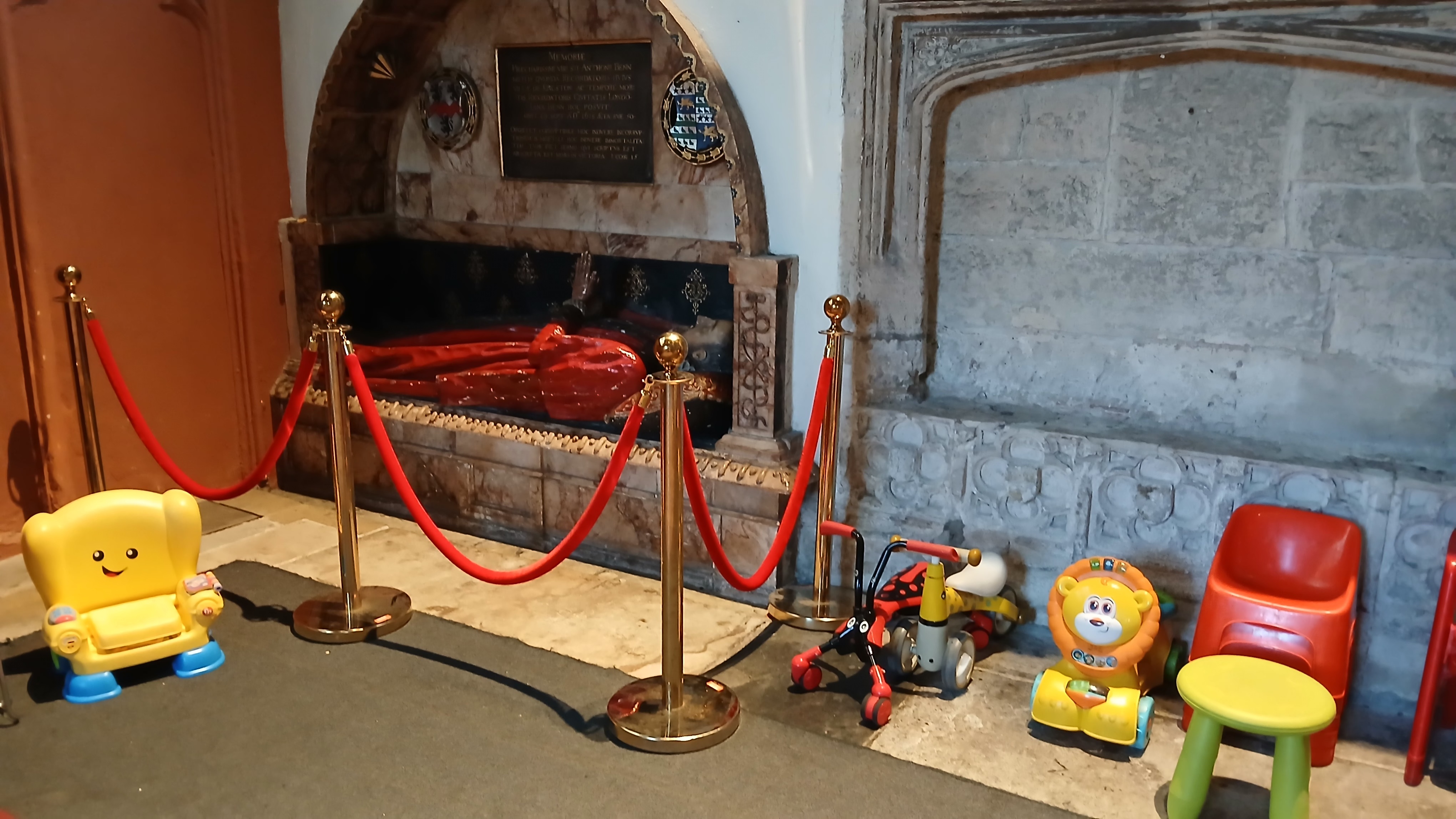
I love this – toys among the tombs!
St Luke’s, Kingston
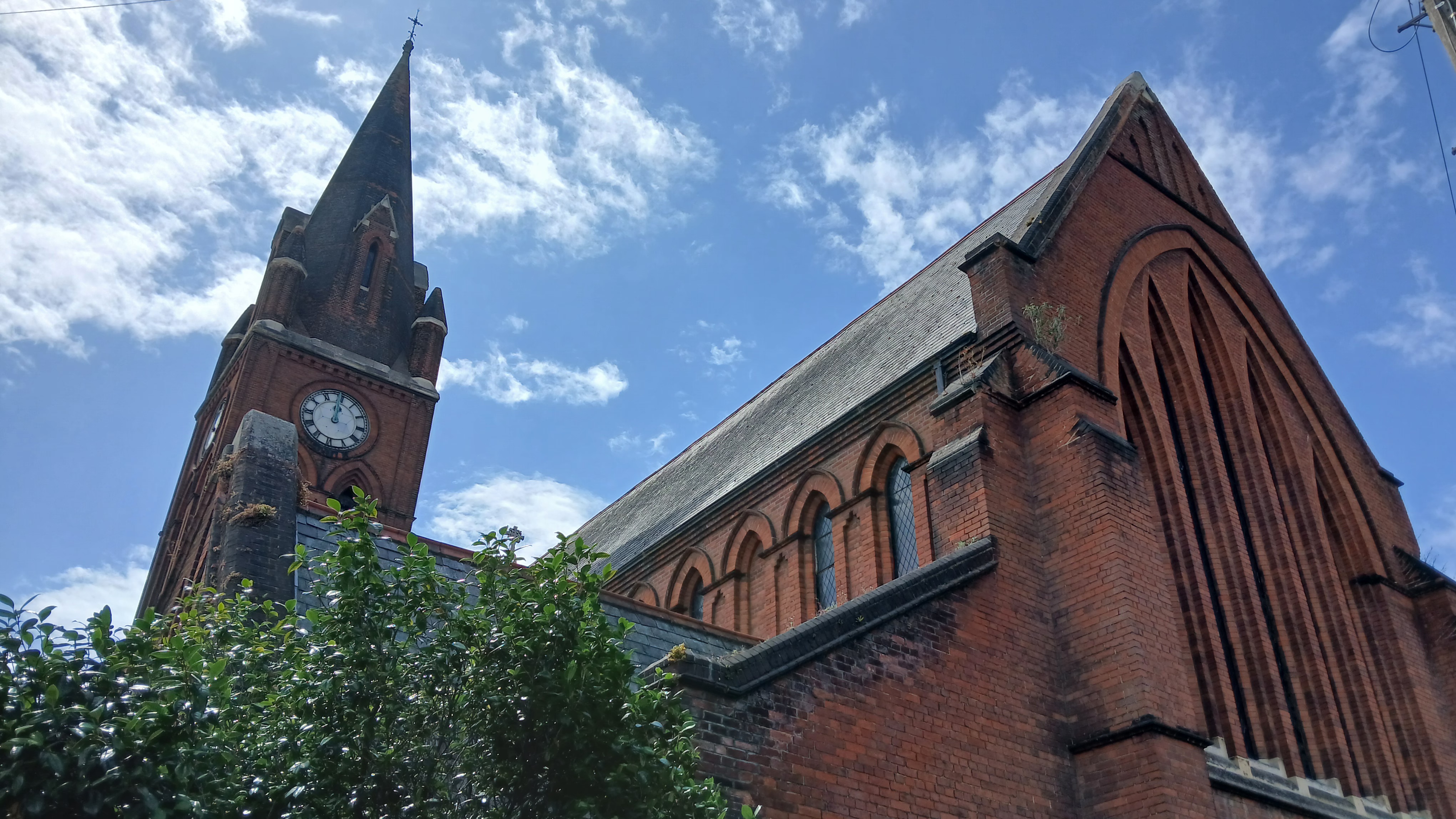
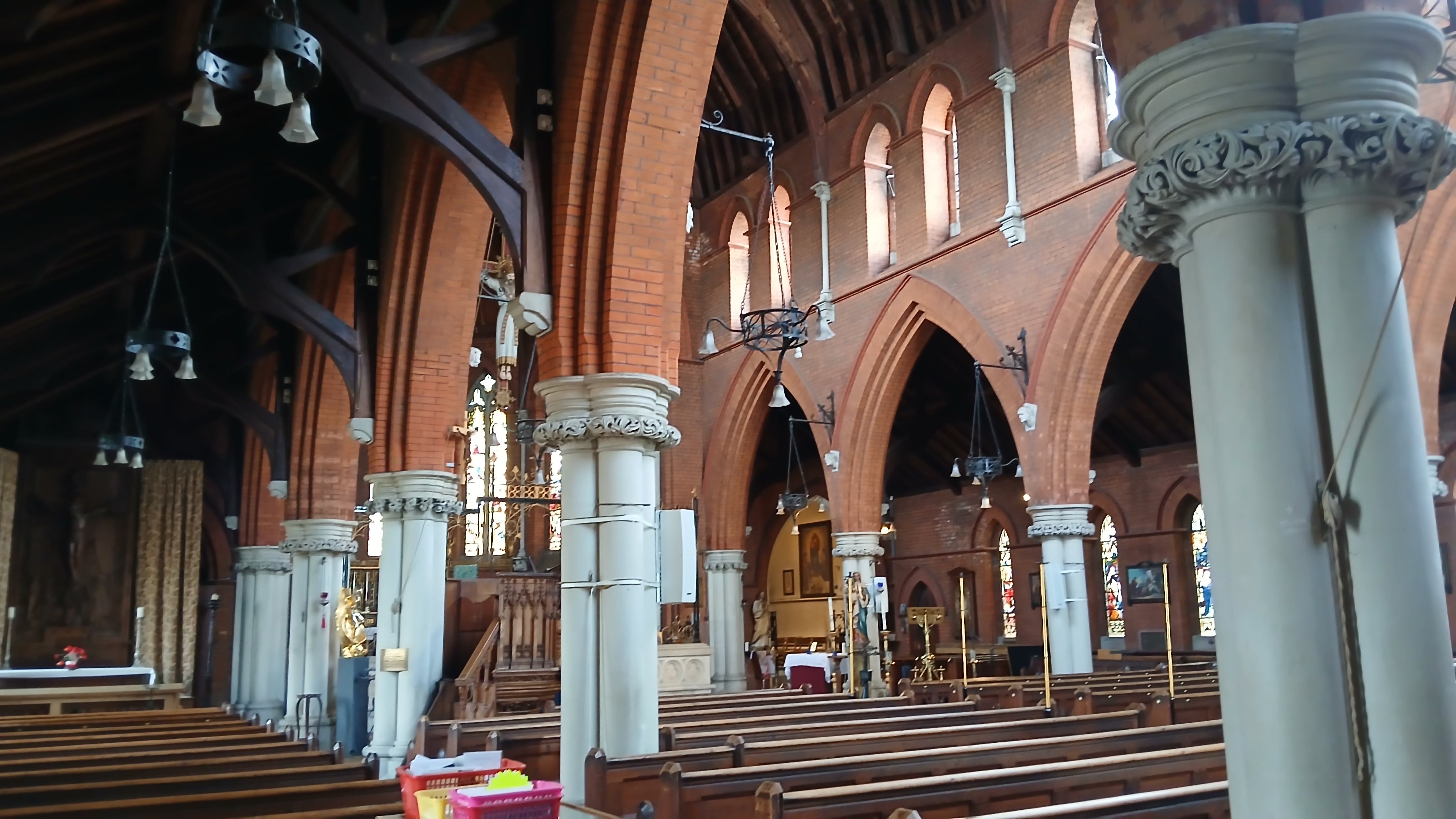
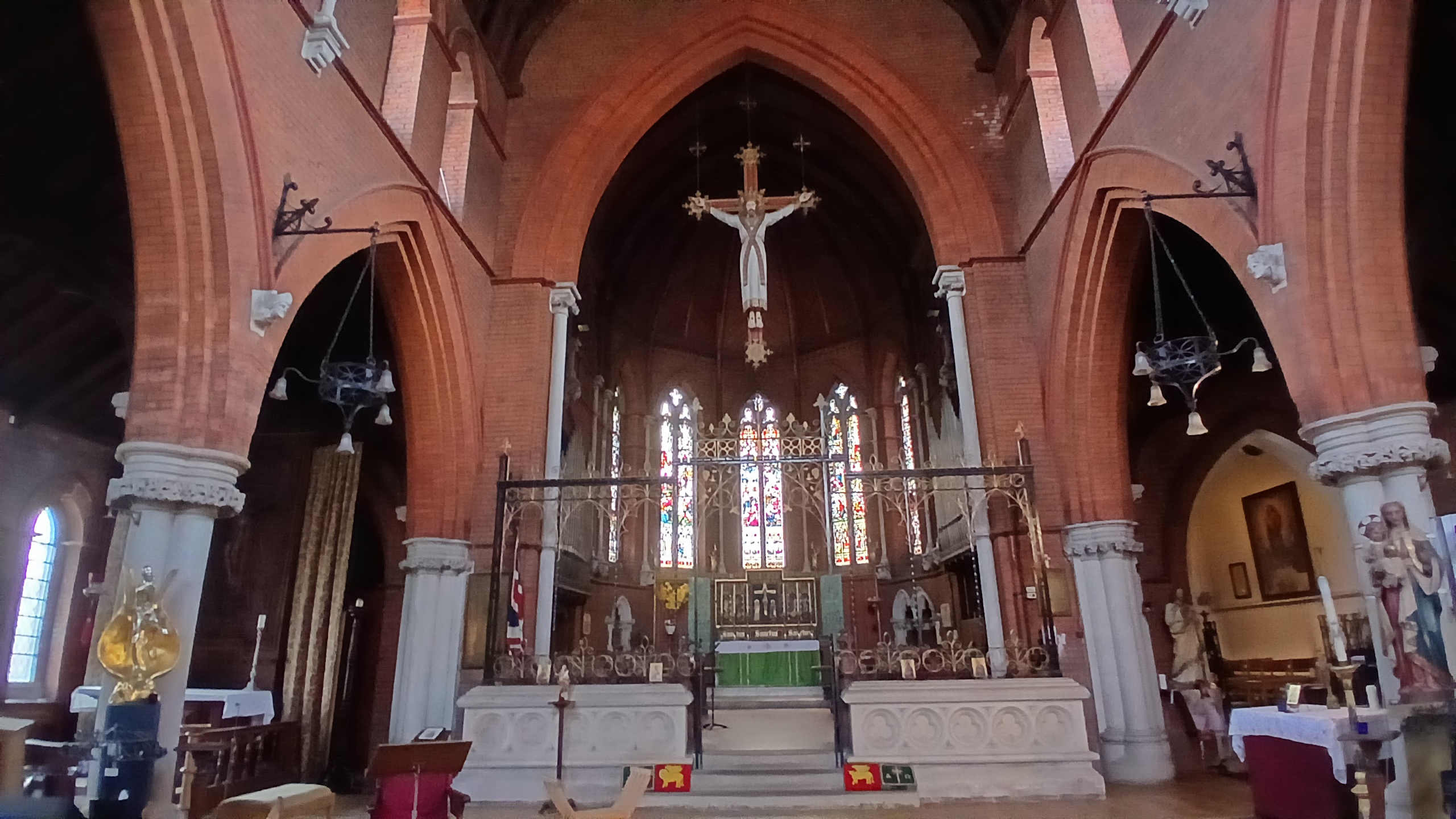
Every so often, I enter a church that looks very familiar. St Luke’s reminds me of churches I’ve visited in various locations from North London to Rome. The church is in the Anglo-Catholic tradition and this is reflected in the beautiful and detailed furnishings and decorations. There’s something special about stepping from a suburban, residential street into the quiet, peaceful beauty of a place of worship. St Luke’s has an interesting history: it was built between 1886 and 1887 to house railway workers living in the surrounding streets and working at nearby Kingston railway. The parish served by the church was poor, but the wife of the first vicar had good society connections and the church received sponsorship from Princess May Adelaide of Cambridge, granddaughter of King George lll and future mother of Queen Mary, wife of George V. This enabled the building of this prominent Grade ll Listed Victorian church. It was designed by Victorian architect practice Kelly & Ball which specialised in churches in the Italianate and Gothic Revival styles. Music has always been an important part of worship at St Luke’s and the church provides choral scholarships. Recent scholars have gone to Truro Cathedral and the Birmingham Conservatoire.
Sources: St Luke’s website; Wikipedia
Everyday Church, Kingston
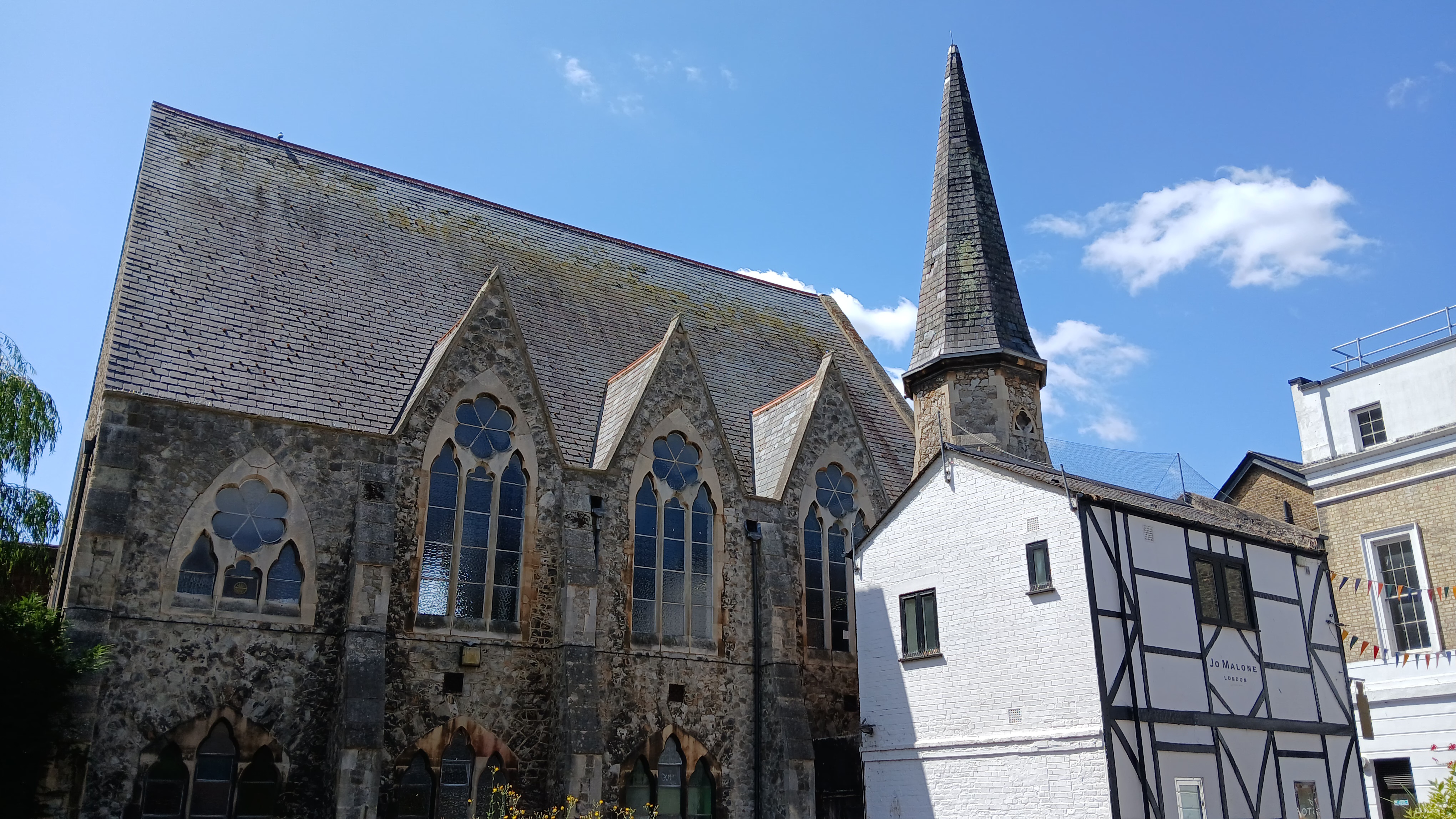
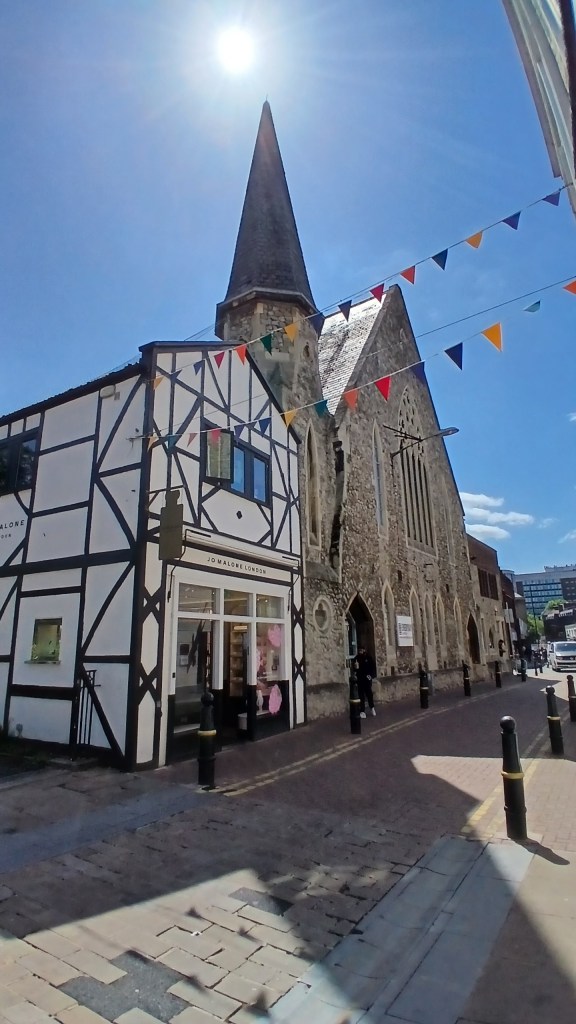
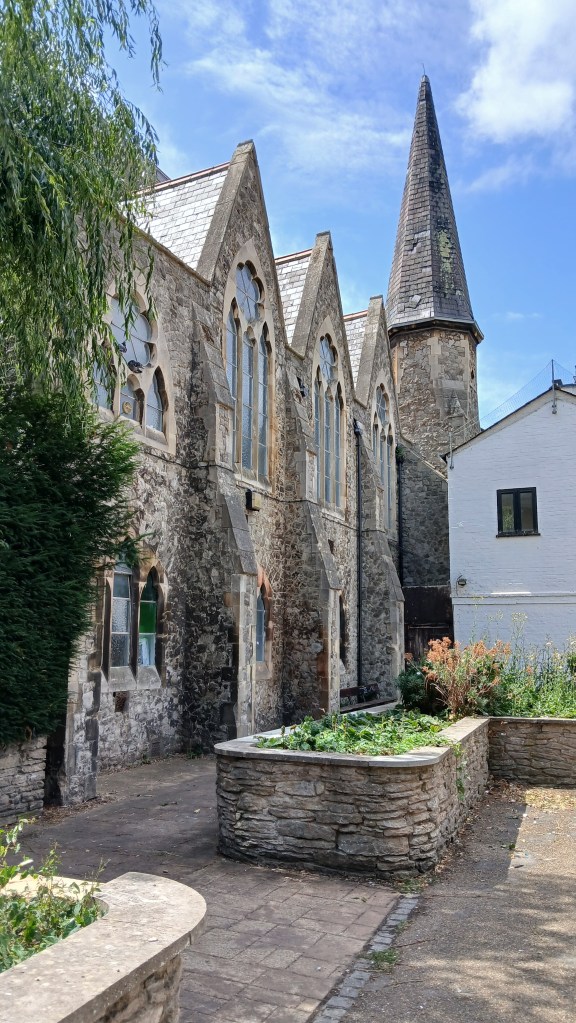
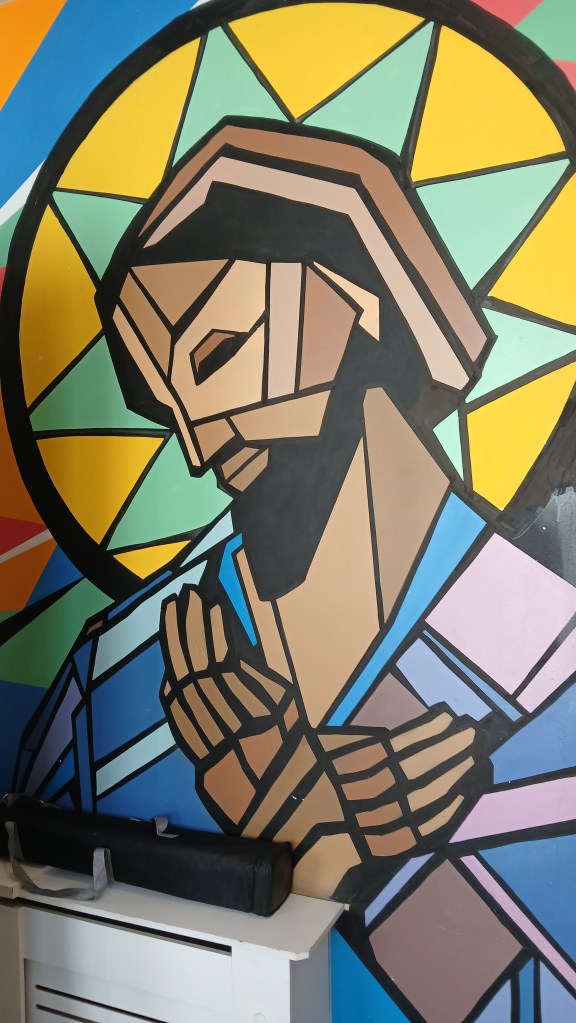
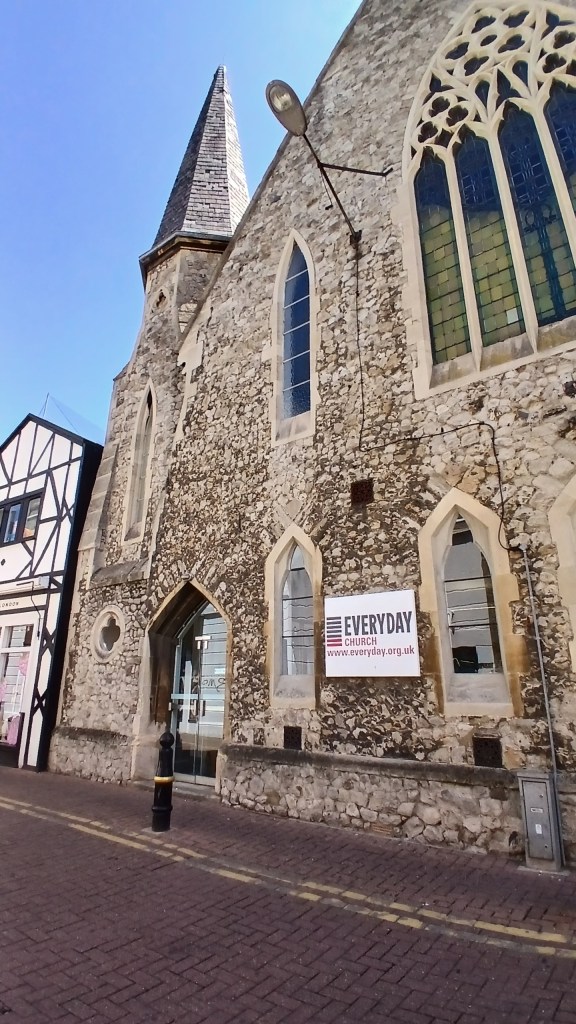
This was the only church I couldn’t venture inside as when I visited there was a very busy Foodbank in session, so obviously I couldn’t go in and take photographs, But what really interested me about this church was the outside. Located on Union Street in a busy shopping centre, the 1864 church building looks somewhat out of place, and then there’s the two storey Tudor looking building attached to it. This is actually an Edwardian structure with a Grade ll Listed mock-Tudor façade, built in 1909 for Jesse Boot’s new Boots Chemist shop. The shop has had several changes of use and is now a branch of Jo Malone’s high-end fragrance and toiletries store. So, selling similar products to its predecessor over 100 years ago! Back to the church: this was formerly Kingston Baptist Church, the first building was constructed in 1790, replaced by the present building in 1864. The church transitioned to Everyday Church in 2013 following a merger with Southfields and Queen’s Road Wimbledon Baptist Churches. Under the heading of ‘Social transformation’ the church engages in many and varied community-based activities: Foodbank sessions twice a week, CAP (Christians Against Poverty) courses, Street Pastors and Power the Fight (empowering communities to end youth violence.)
Sources: Church website; AI (yes, I have to admit I’m using AI as a source!)
St John’s, Hampton Wick
On Google Maps I noticed a church on the other side of the River, just across the road from Hampton Court Park, so I decided to take a look. This is St John’s, Hampton Wick, built to a design by architect Thomas Lapidge in 1829- 30 in the Gothic Revival Style. Lapidge also donated the land for the church and partly funded it. He also designed the present Kingston Bridge nearby. The church closed in 2000, but reopened five years later in 2010 as part of the Church of England’s church replanting scheme, and regular services resumed in December 2010. In 2024 St John’s partnered with St Mark’s, Teddington and the two churches share a vision for serving their respective communities. As their website states: ‘One church, two locations.’ When I arrived at the church a staff meeting was taking place, after which I chatted to Connor, who told me a bit about the church today. Connect Groups are at the heart of the two churches, and these are run at different times of the day, five days a week, for all ages, stages of faith and individual circumstances, including a Baby and Toddler Group and a Seniors Group. I think this church has a real vision for getting people to connect where they are, and to include everyone!
Sources: Connor (in the church); church website; Wikipedia
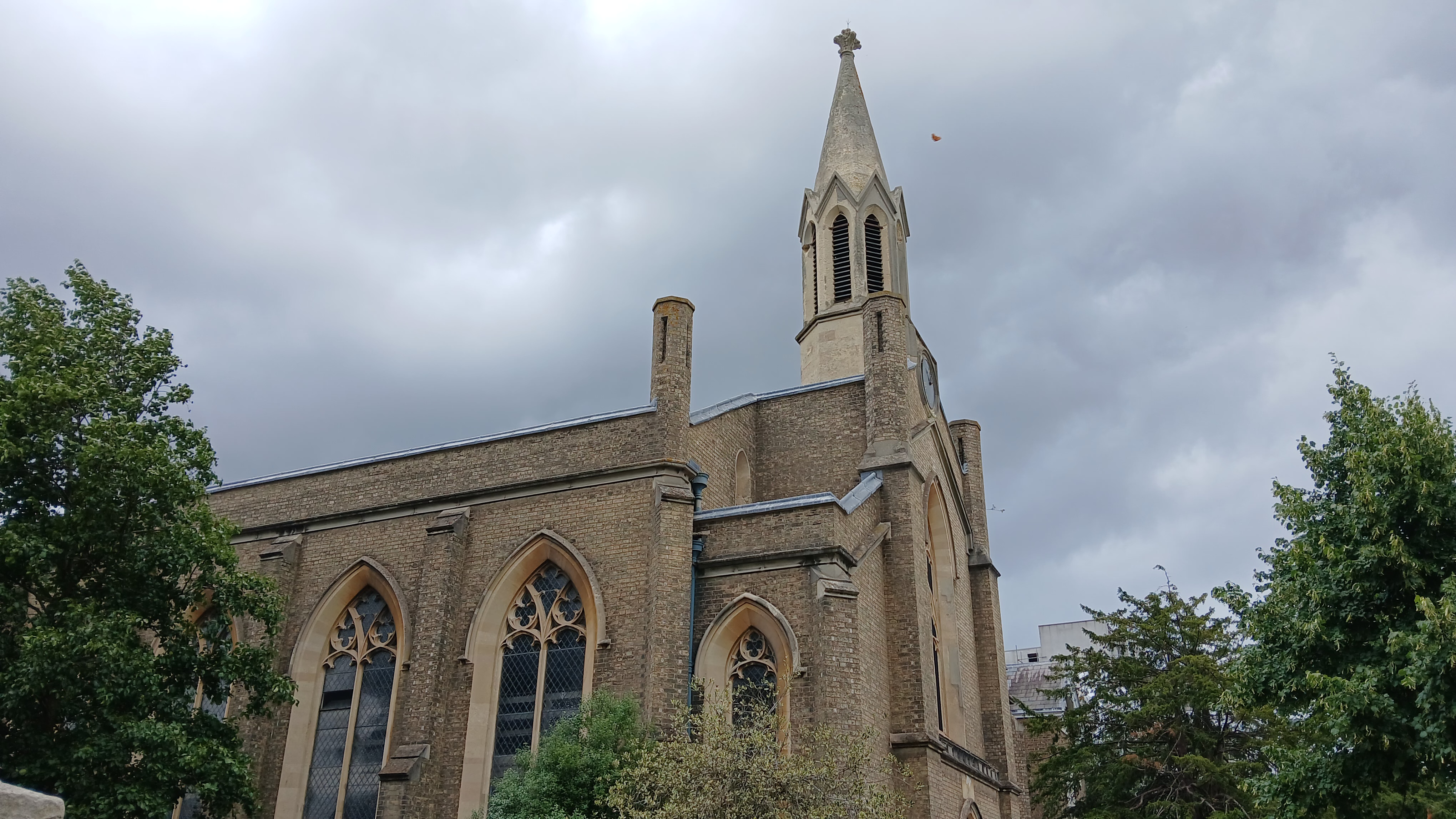
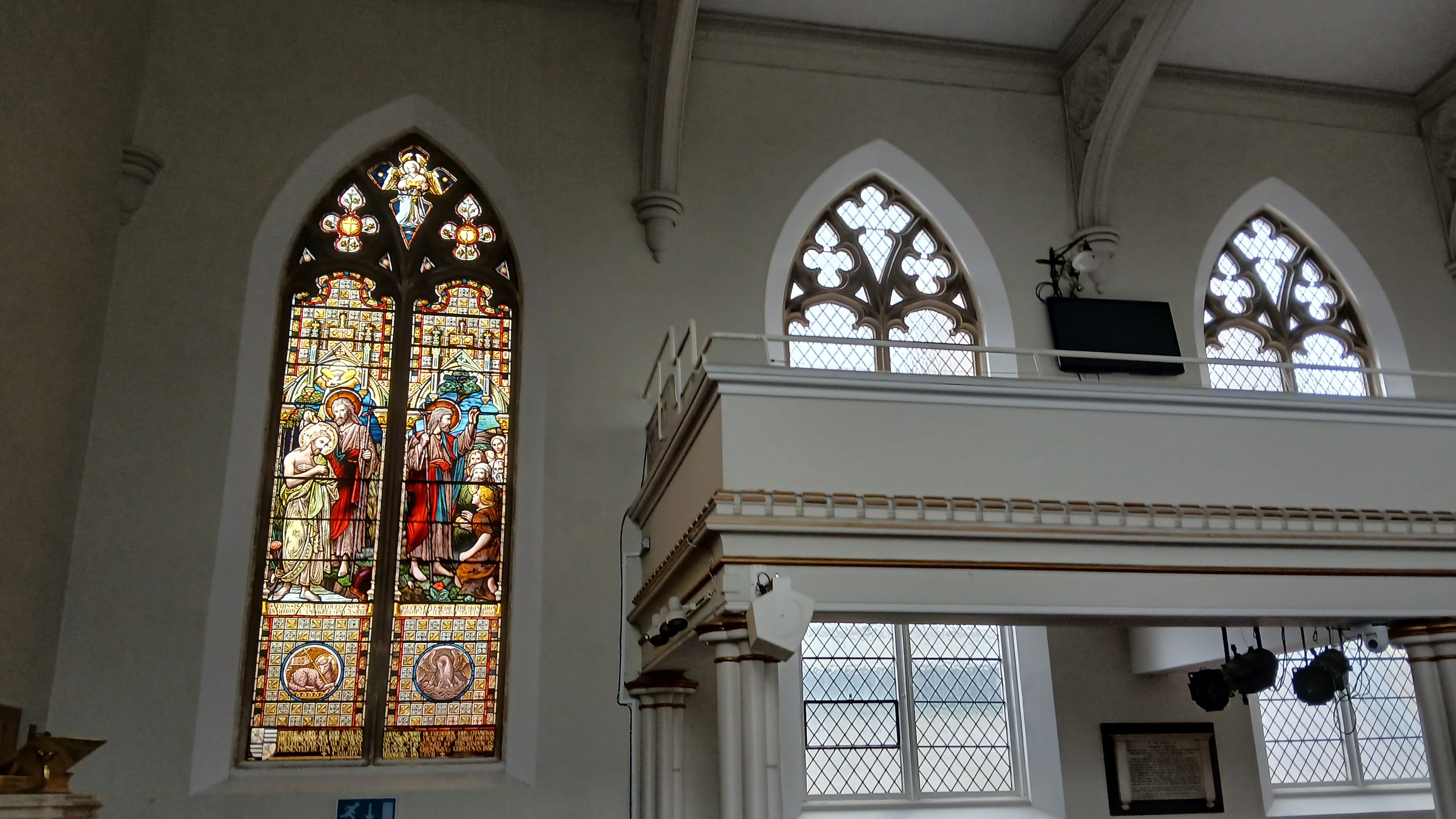
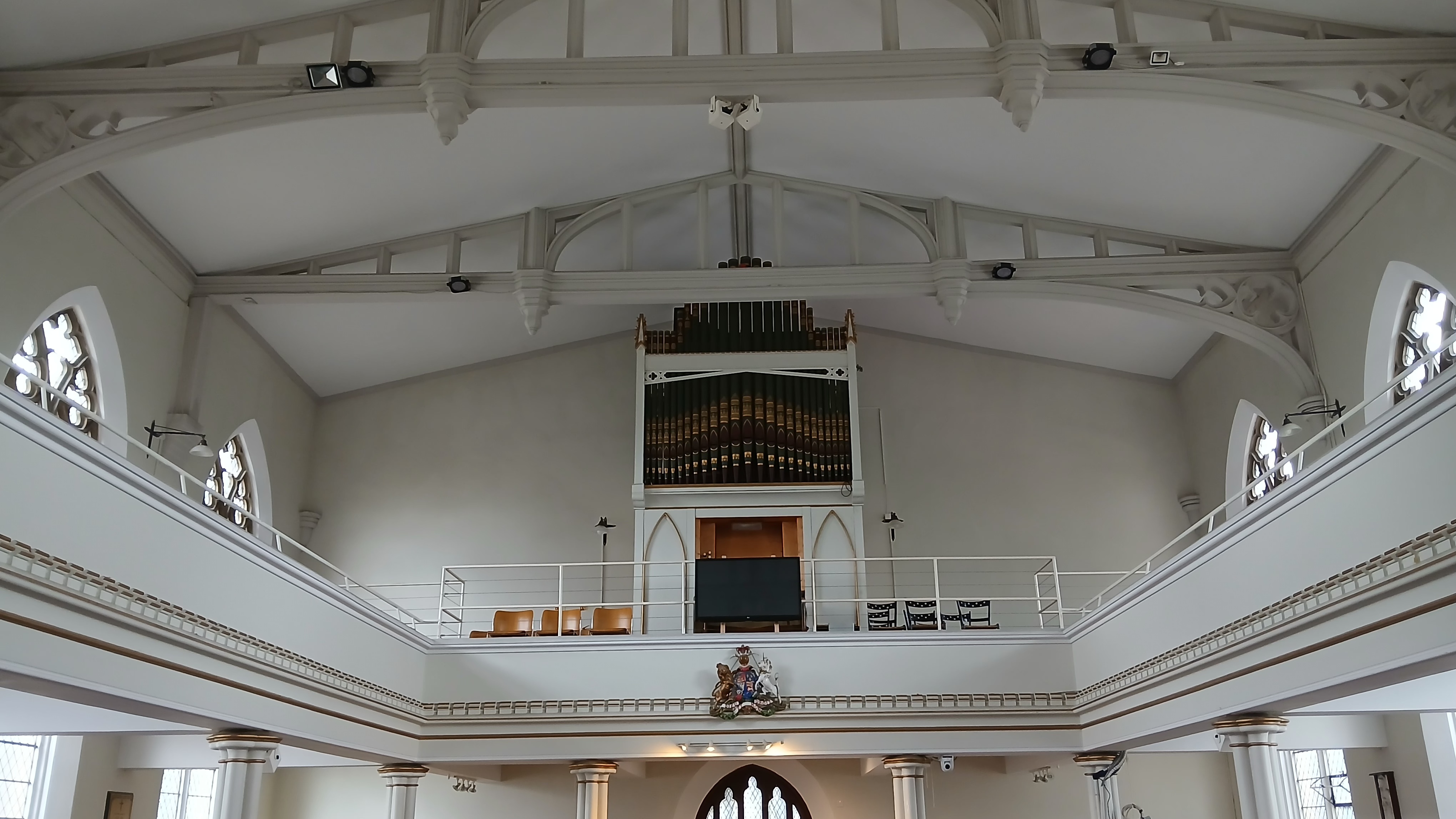
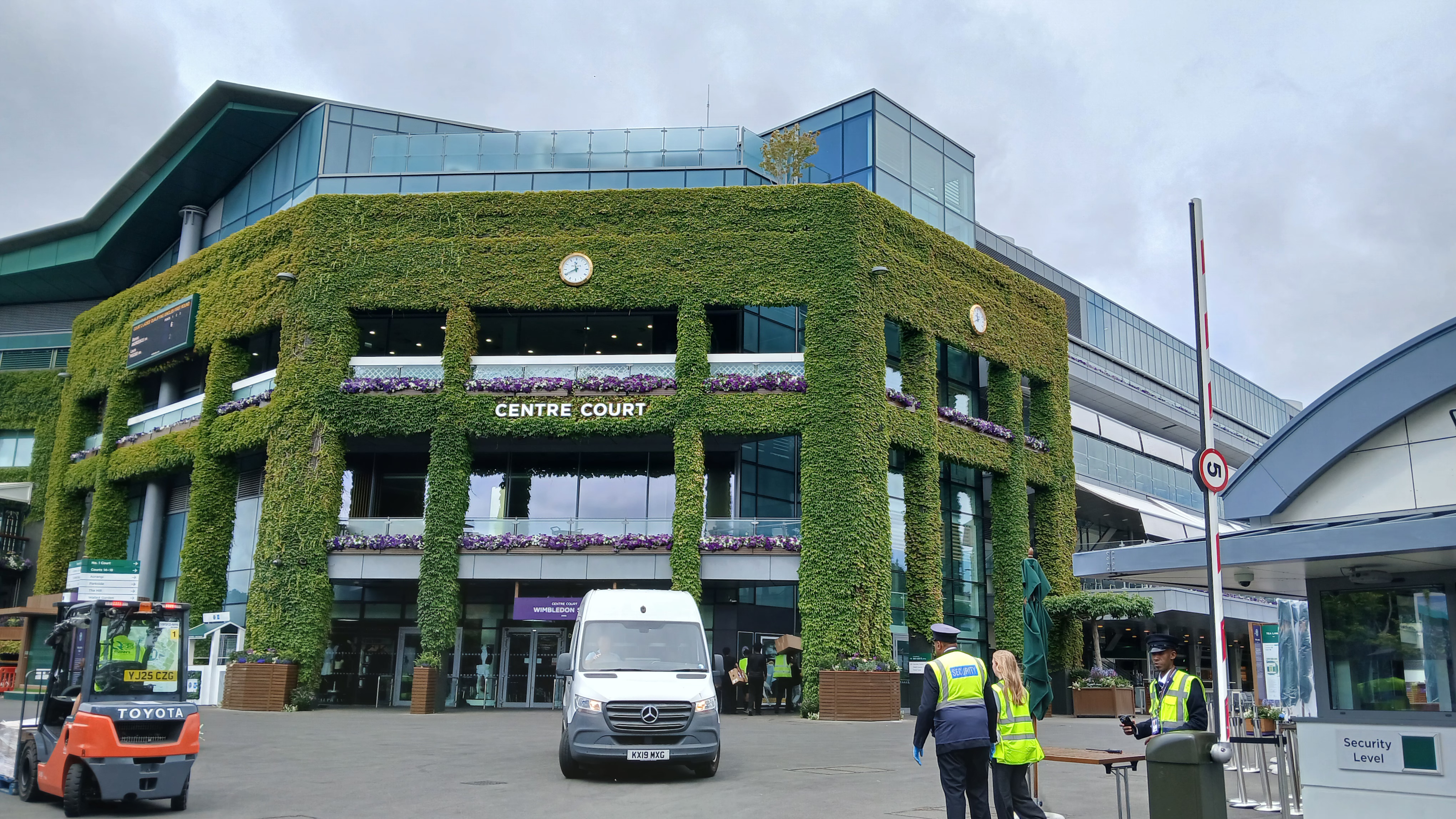
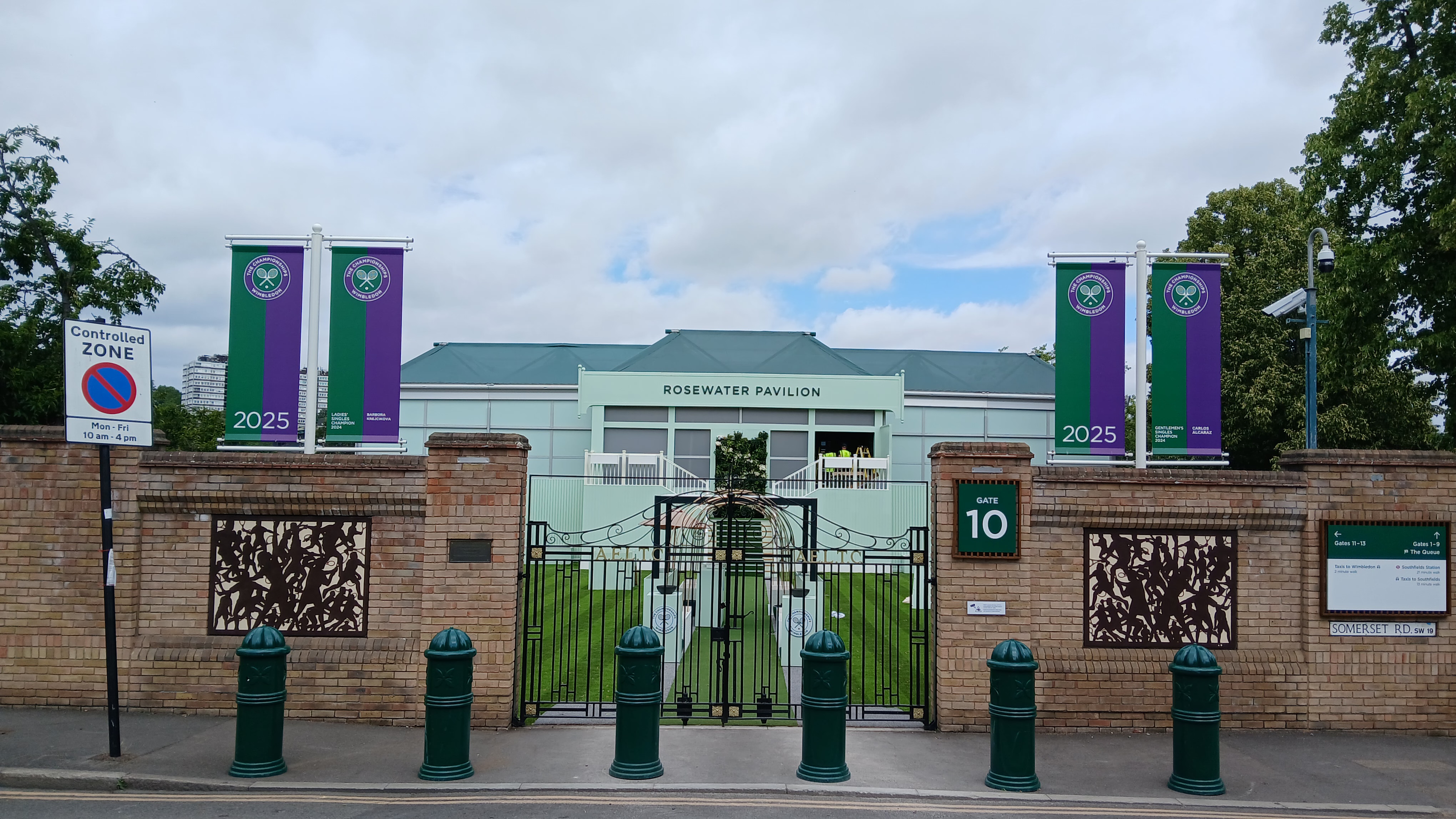
A very ten-uous link this month: I’m looking at churches closest to the All England Lawn Tennis and Croquet Club! The closest of these is 8 minutes’ walk away and actually rents out its adjacent field as a car park during the Championships. I took the opportunity to walk down Church Road last week to watch the busy preparations for the Tournament.
The Club was started as a private club for the popular sport of croquet in 1868. Its original ground was in Worple Road in Wimbledon Town, and the new sport of lawn tennis was introduced in 1875, with just one lawn set aside for this. The first Gentlemen’s Singles Championship was held in 1877 and was won by Spencer Gore, who is quoted as saying ‘Lawn tennis will never rank among our great games.’ Famous last words! In 1884 the Club added Ladies’ Singles and Gentlemen’s Doubles and in 1813 Ladies’ and Mixed Doubles. The Club moved to its present site in Church Road in 1922 and the current Centre Court dates from that year, much altered and improved over the years, with the installation of the sliding roof in 2009.
Source: Wikipedia
St Mary’s Church, Wimbledon Village
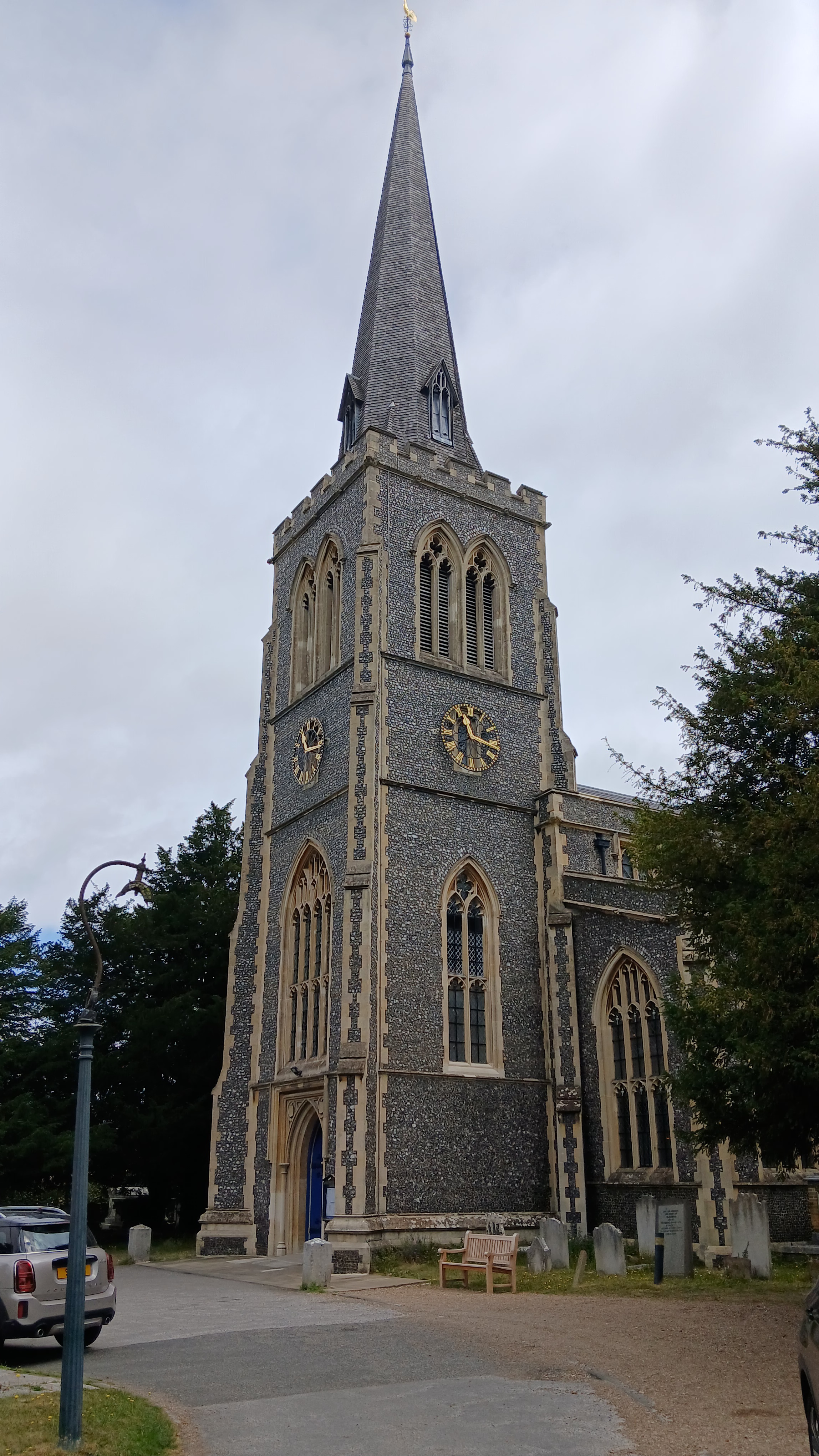
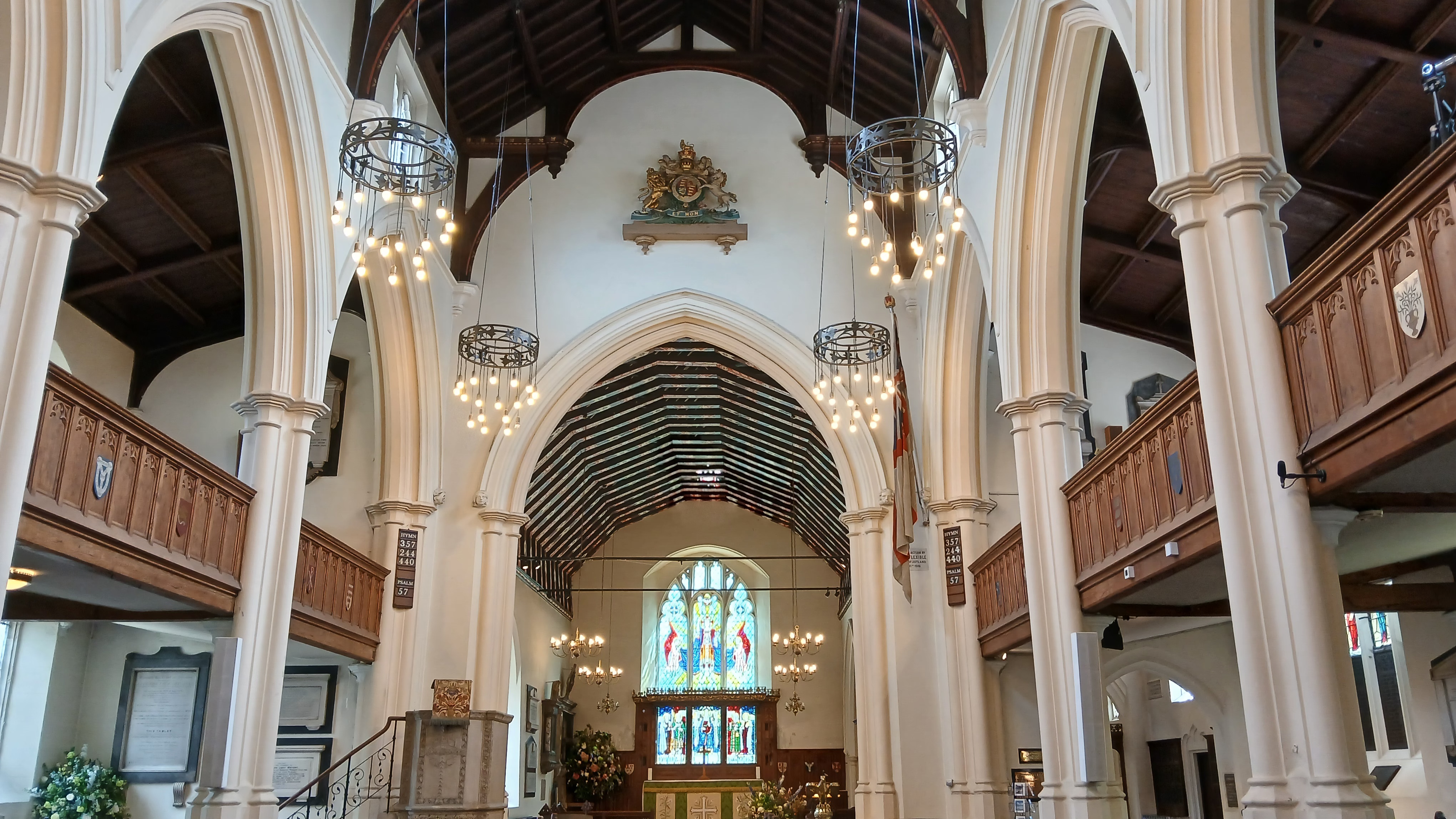
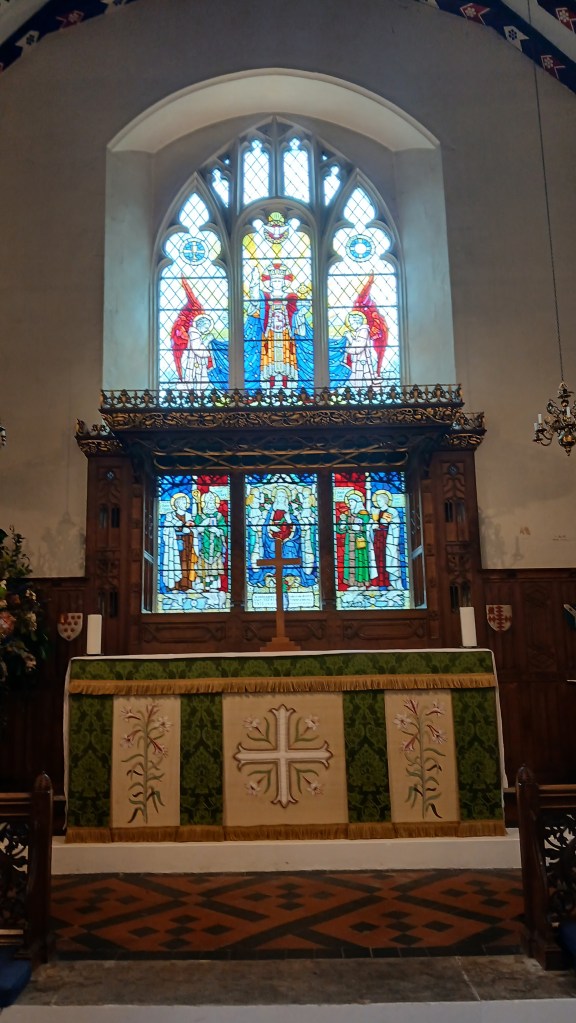
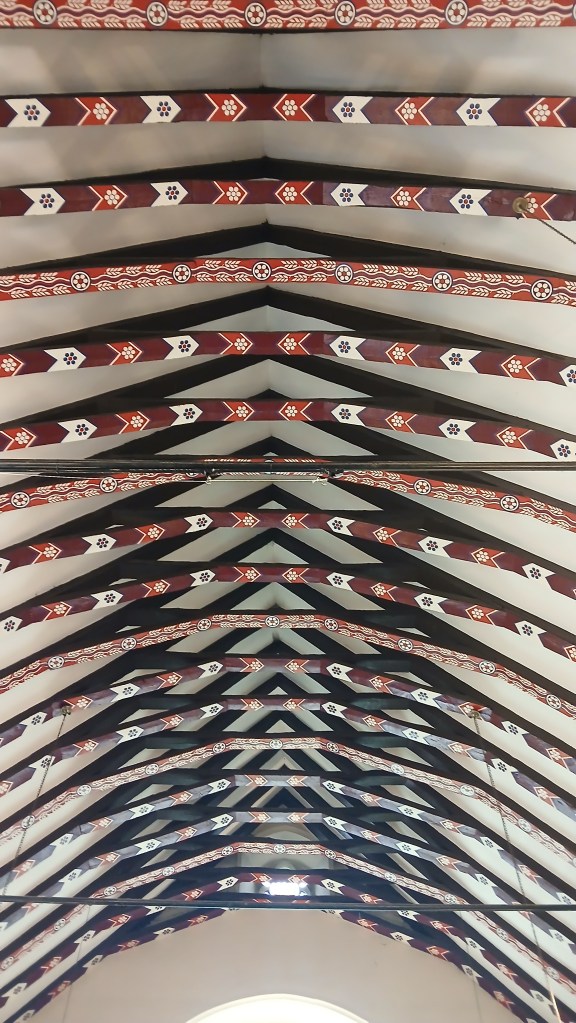
A large church on a substantial plot, this church looks quite rural from some viewpoints. The first church on the site was a simple wooden construction, serving a population of 100 in Wimbledon Village at the time of the Domesday Book, replaced by a stone building at the end of the 13th century. By the beginning of the 18th century the population of Wimbledon had increased only to 450 so the church remained adequate for the congregation. However, only 50 years later, from about 1750, the population of the whole country rapidly increased and the church building which was in urgent need of repair after 500 years of use, was substantially enlarged at a cost of £2,100. The arrival of the railway in 1838 and a doubling of the population to 2,600 made it necessary to provide a further 400 seats, and architects Messrs Scott and Moffat were chosen to extend the church and build a new tower and spire. Sir George Gilbert Scott went on to become one of the most prolific Victorian architects. In 1860 when the chancel (the altar part of the church) was being restored, some medieval rafters were discovered, having been covered over with a plaster ceiling. This beautiful artwork was carefully repainted by local architect Peter Bond in 1993.
Source: Church website
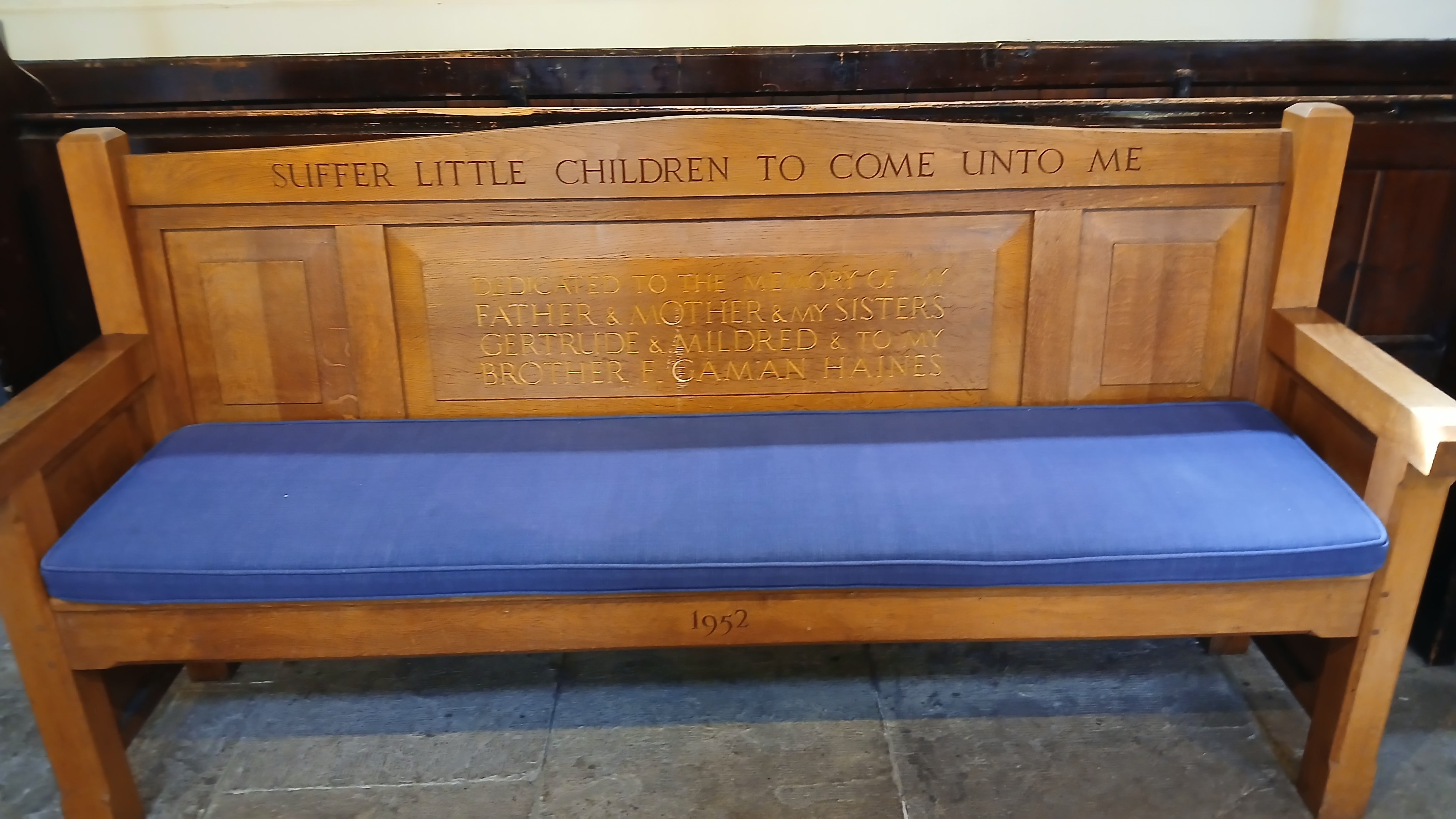
I particularly liked this bench’s inscription. It seems to be dedicated to the memory of a father, mother, brothers and sisters, possibly the siblings died as children. How sad.
St Luke’s, Wimbledon Park
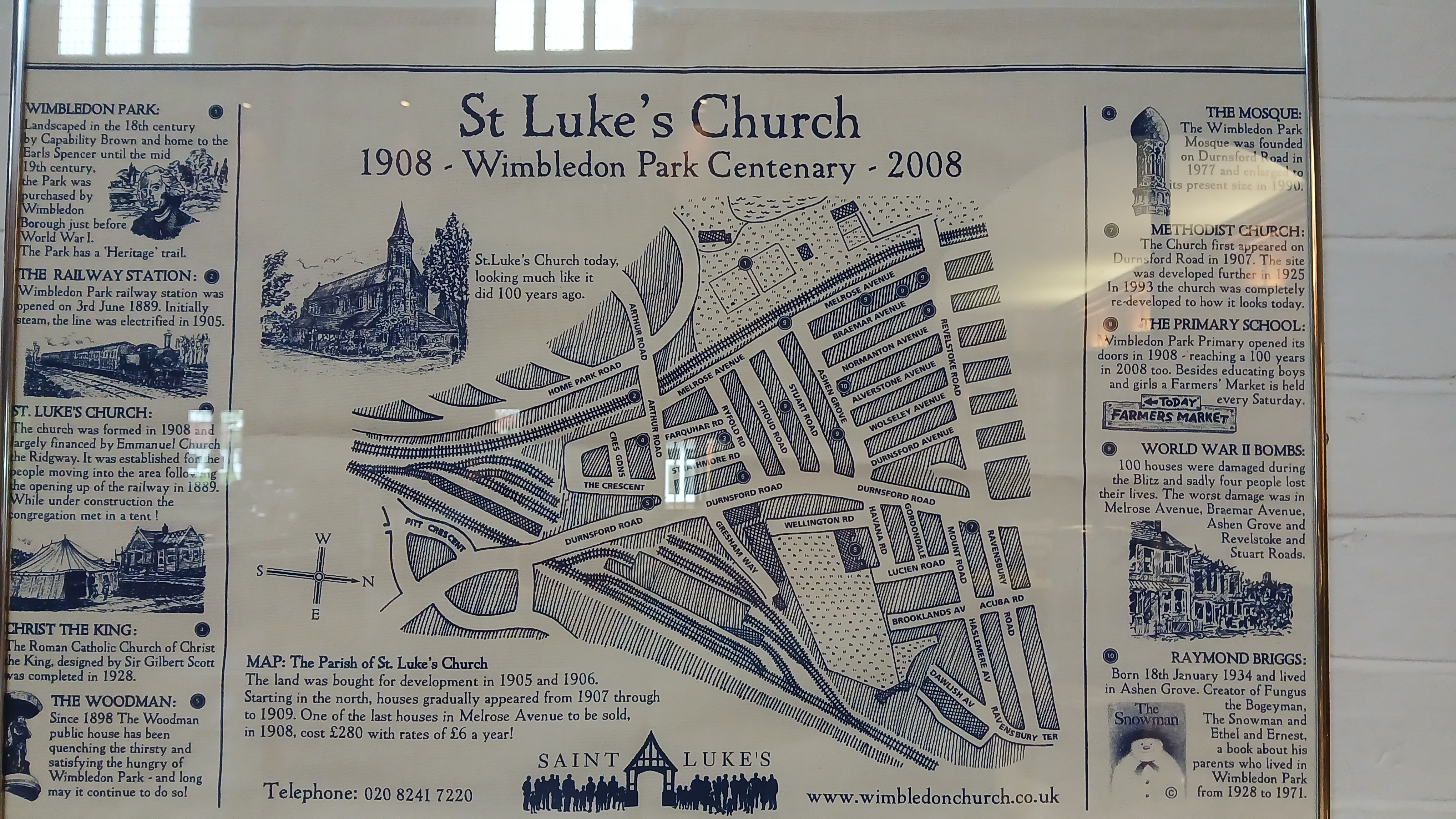
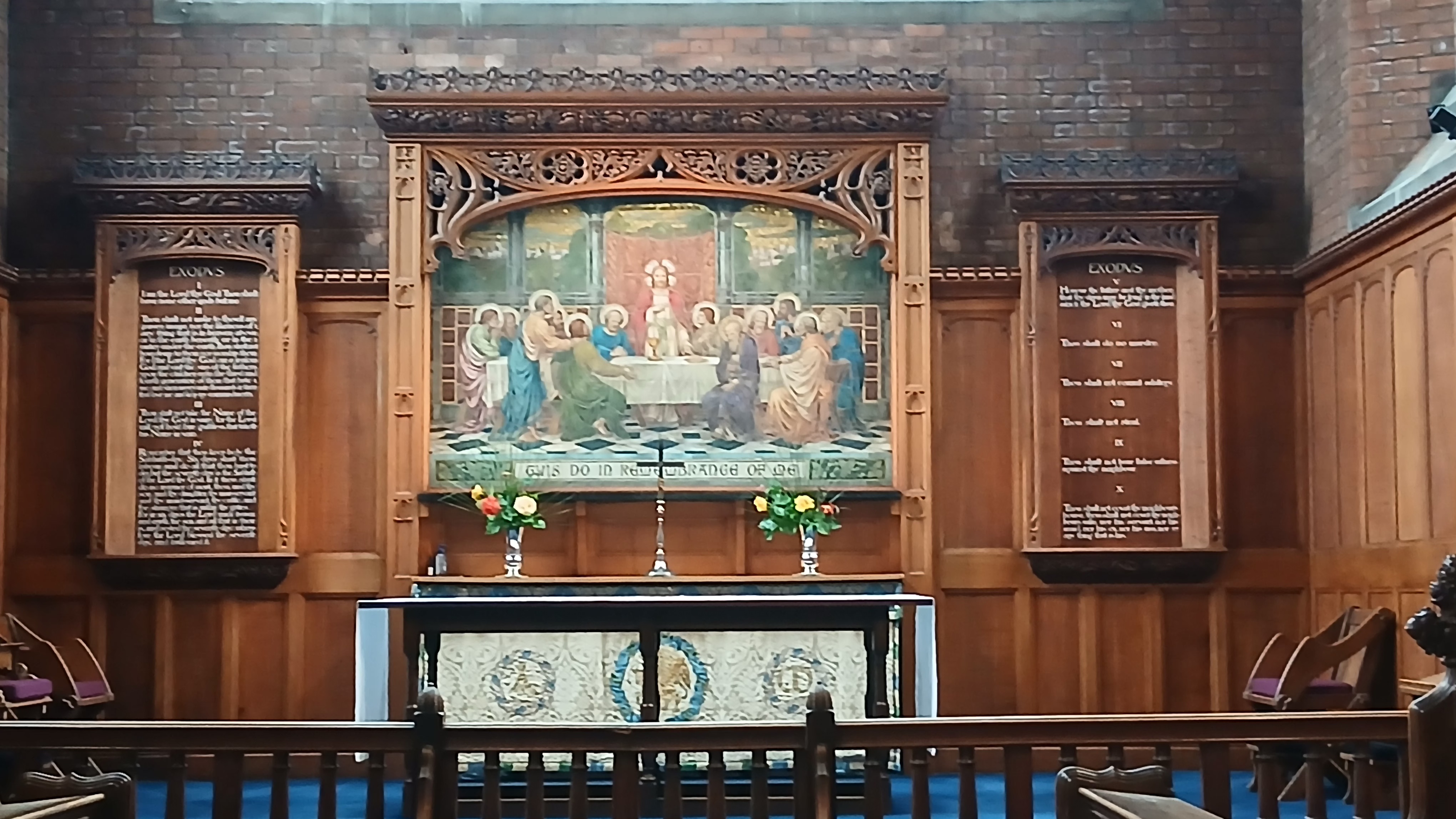
The second-closest church to the All England Club is St Luke’s, founded in 1908 as a Parish Church, built at the same time as the adjacent houses. The surrounding land was purchased for development in 1905/6, with the church being established for people moving into the new houses. Transport links to the capital were provided by the opening of Wimbledon Park railway station in 1889, originally steam powered and electrified in 1905, becoming a stop on the London Underground District Line (although it still runs overground at this point.) The lovely red brick church building was designed by architect Sir Thomas Graham Jackson and has a distinctive tower and spire. These made it easy for me to find the church and adds interest to this suburban residential street. In the spring of 1908 a marquee was erected and the congregation worshipped here before moving into the church hall and finally into the church itself. Thankfully, not much has changed inside or out since the early days, except the inevitable replacement of pews by chairs and the installation of audio-visual equipment.
Source: Church website
St Mark’s Wimbledon
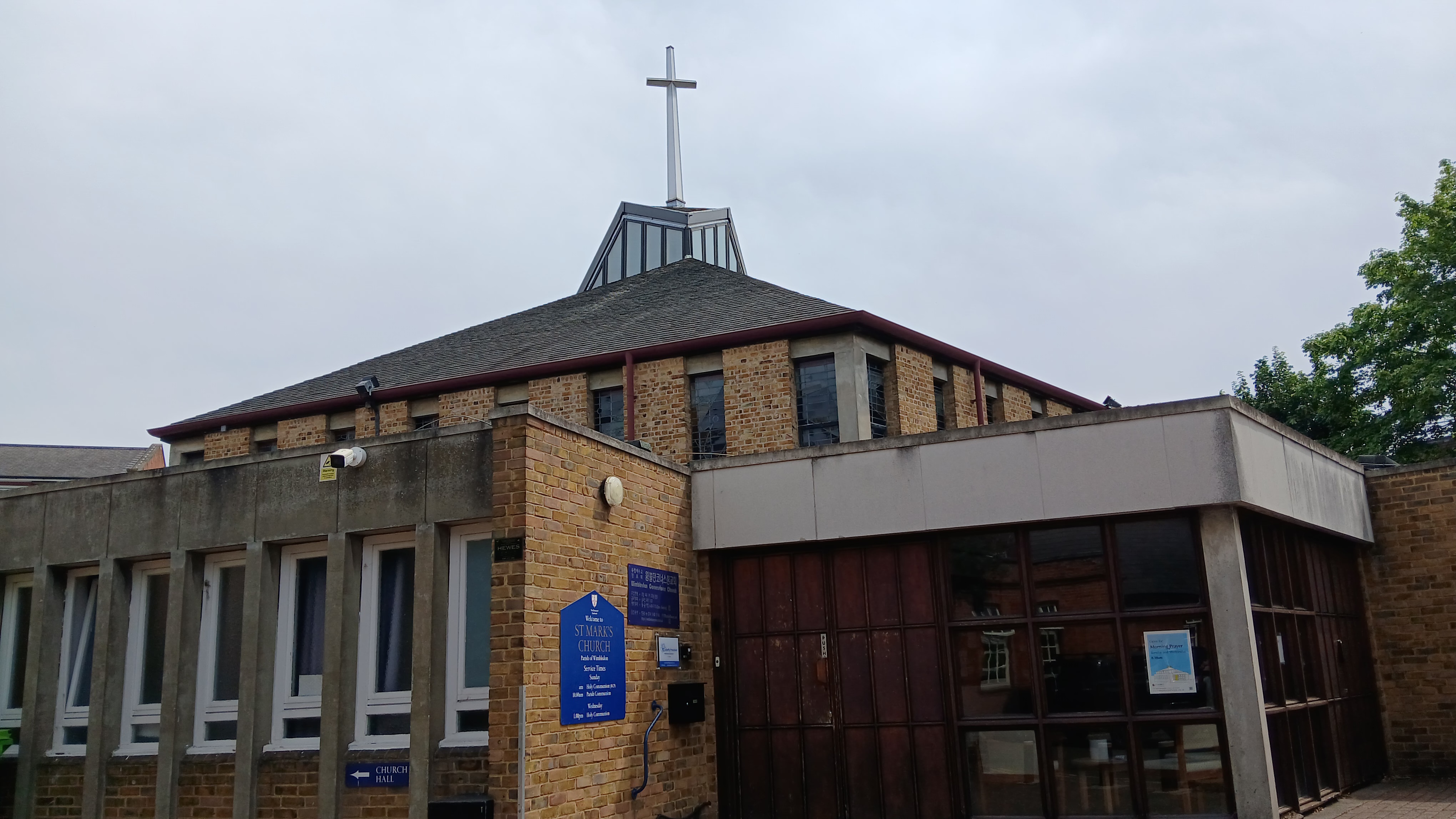
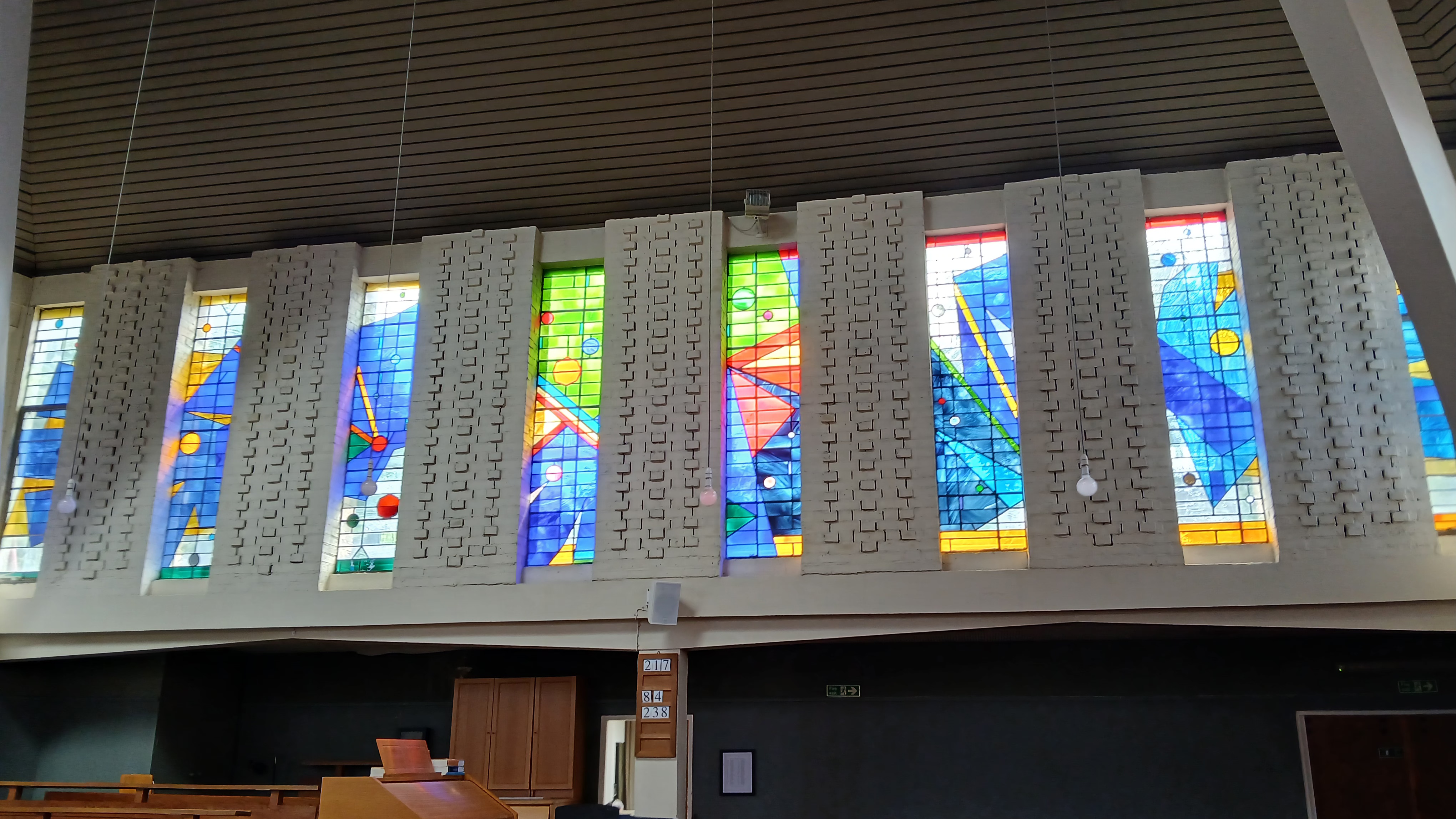
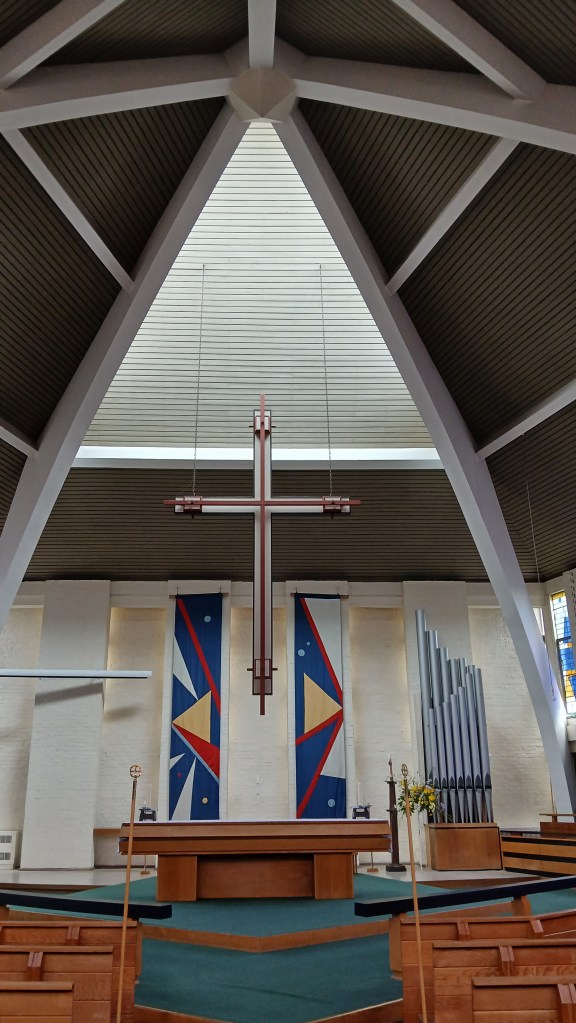
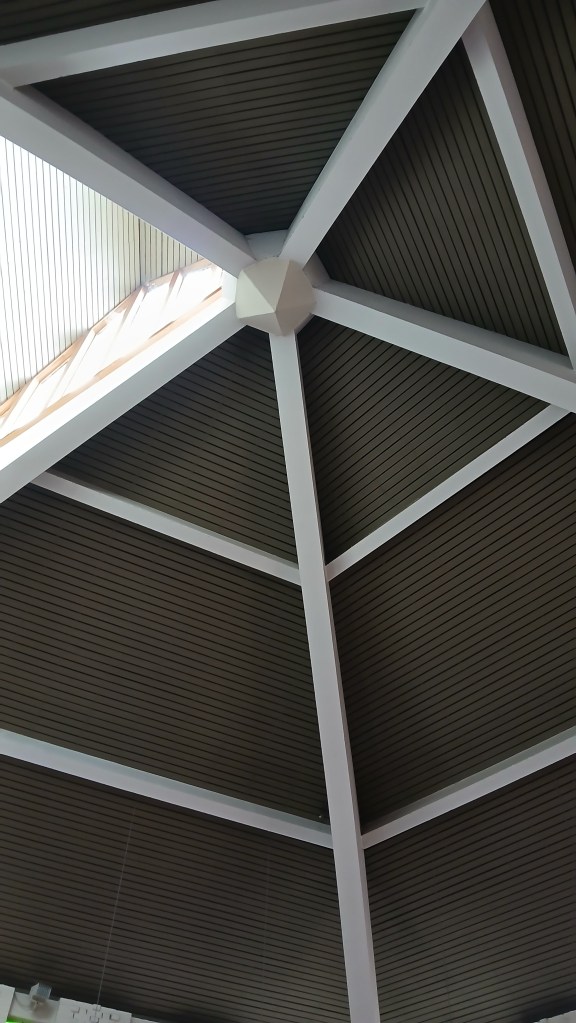
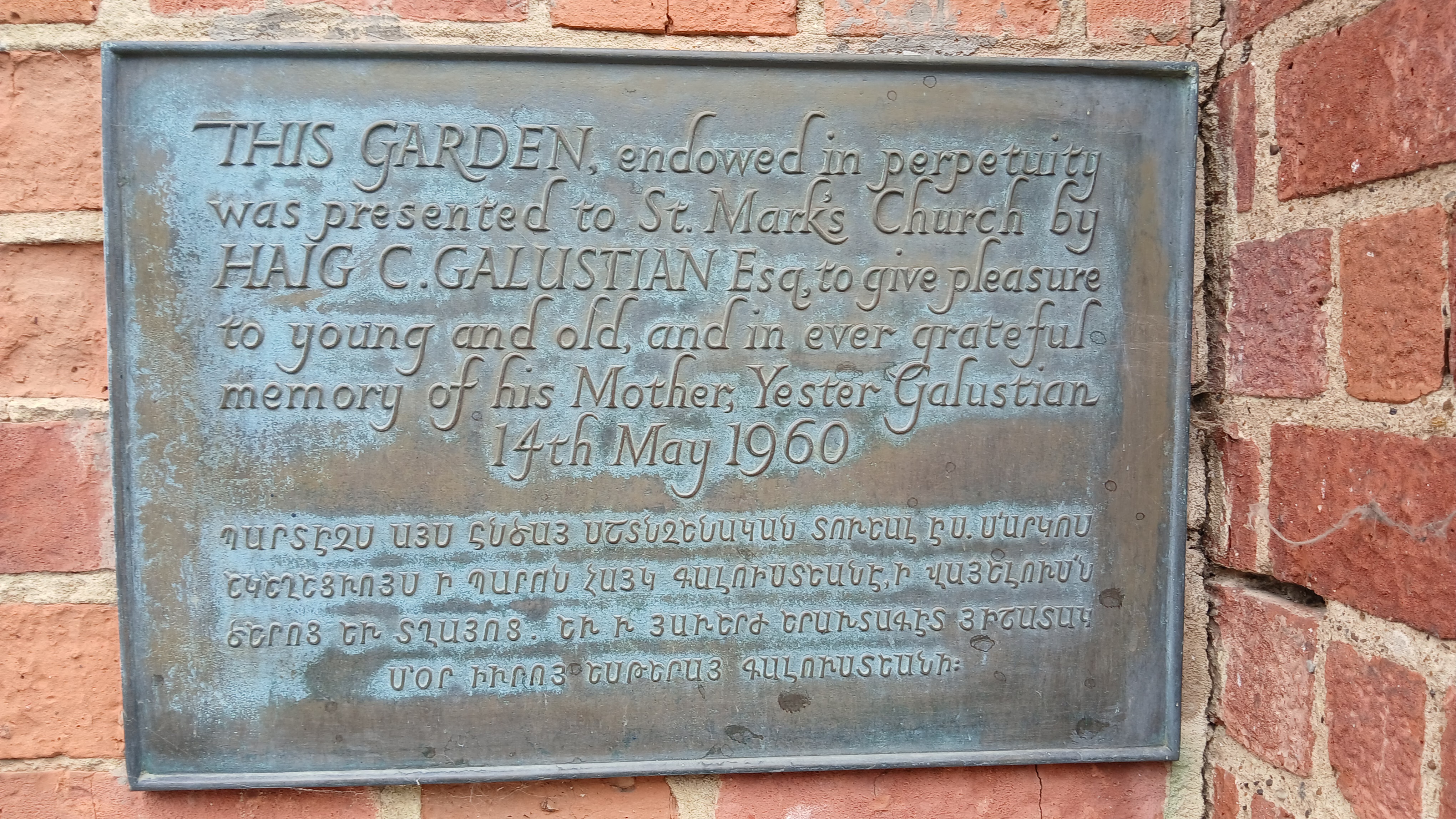
Back down the Hill in Wimbledon town centre is the Anglican church of St Marks. This one piqued my interest because it’s a mid-century modernist building which replaced a Victorian church which burnt down in 1966. The interior of St Marks is an absolute gem: the building is a pentagon shape, designed by architects Humphrys and Hurst and completed in 1969. A frieze of jewel-coloured glass runs along the upper part of four of the walls and behind the altar the fifth wall is a ‘tent-like, framed structure’ which allows light into the church. The five structural pillars which meet at the centre of the roof were constructed off-site and assembled in situ. The two banners which hang either side of the altar were designed by a member of the congregation to celebrate the 25th anniversary of the opening of the new building. Behind the church is a large garden which is shared by the church and the pre-school which is held in the church hall. The garden was the bequest of Mr Haig Galustian in memory of his mother and the plaque commemorating this is written in both English and Arabic.
Source: Church website and helpful church volunteer
Trinity URC, Mansell Road, Wimbledon
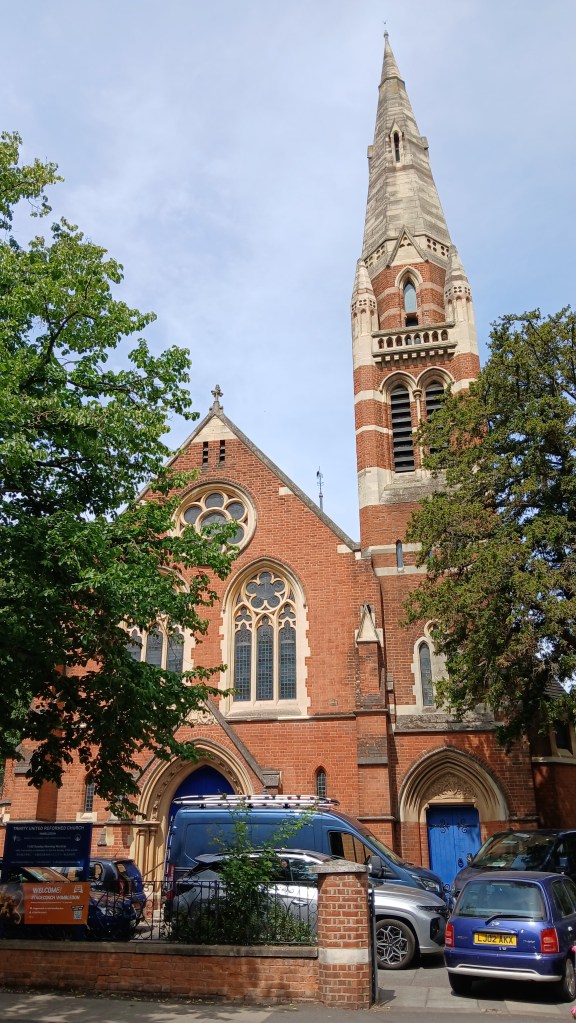
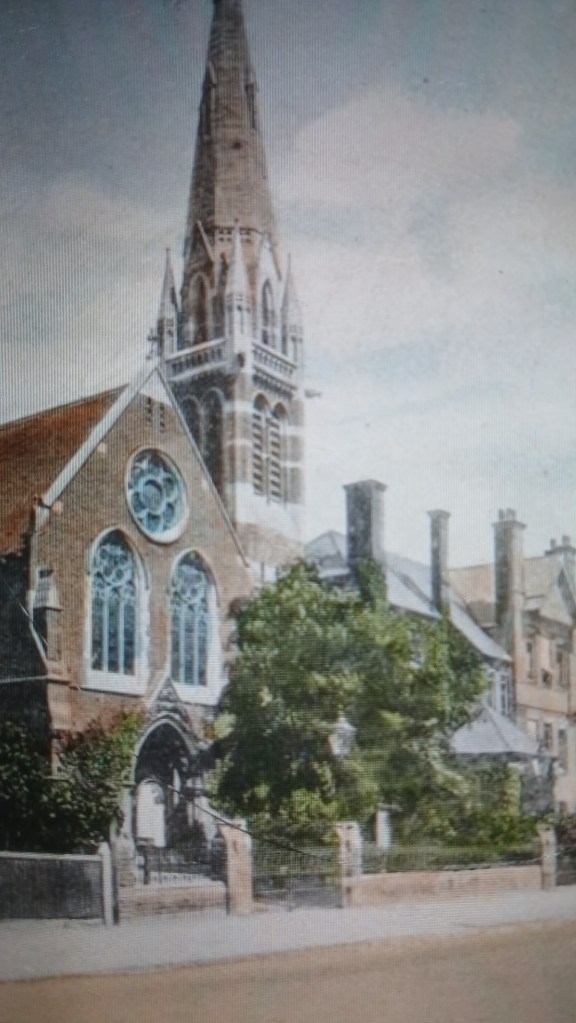
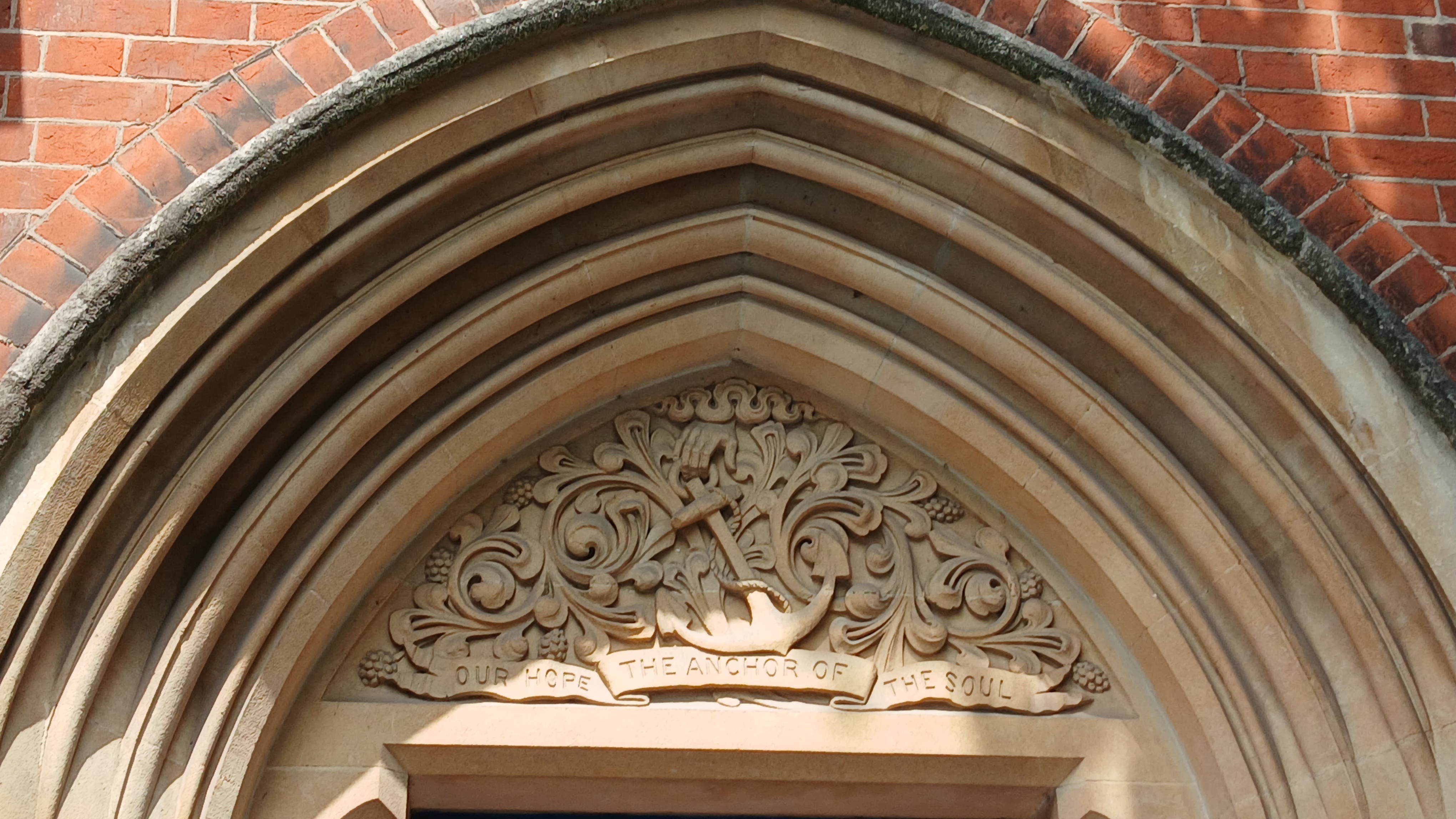
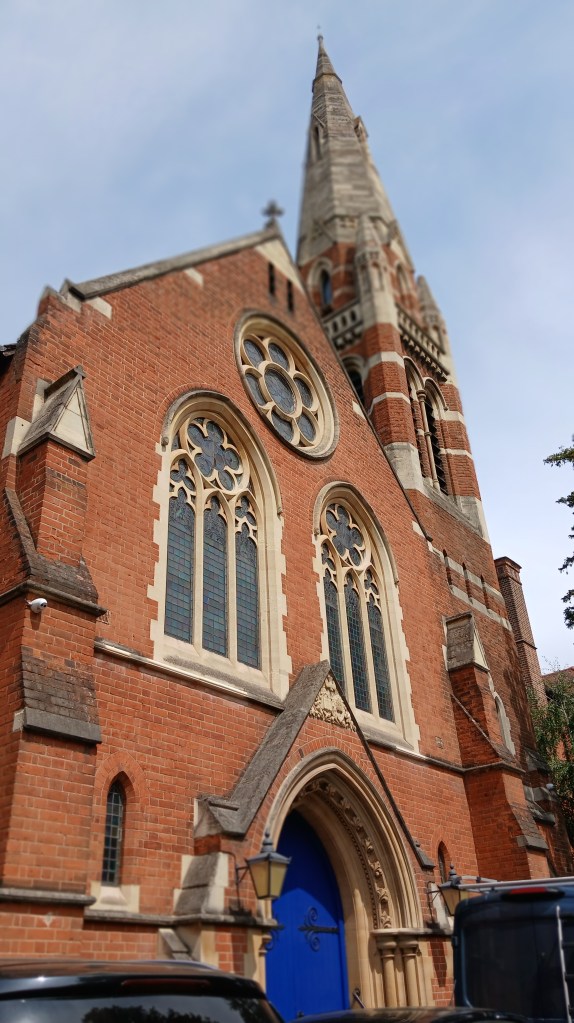
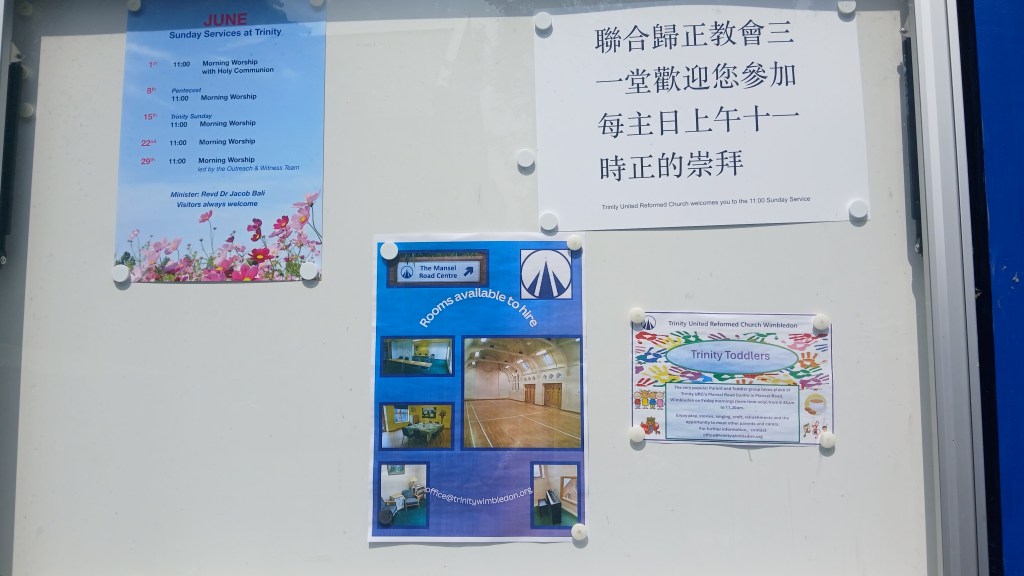
Also close to the town centre is another red brick church, Trinity URC, right next to Wimbledon GDST (independent girls’ school). On 30th October 1883 a group of ladies and gentlemen were invited to the home of Mr Patrick Kidd of Hill Road to discuss the establishment of a ‘Scotch Church’ in Wimbledon. The Presbytery of London was approached and as a result a ‘Preaching Station’ was formed – Trinity Presbyterian Church. The first congregation and Sunday School met in a hall in nearby St George’s Road, and as numbers grew, a permanent site for a new church was found in Mansell Road. Work started on what is now the Old Hall in 1886 and on the church building itself in 1890. There was a strong Scottish feel to the church as many of the members were ‘exiled Scots’. At this time, the church had a thriving Sunday School, held in the afternoons after the main service. As well as religious instruction, this provided social and educational activities for local children. 80 years later in 1972 the Presbyterian Church of England united with the Congregational Church to form the United Reformed Church. Today the church has a Chinese congregation which joins with the first part of the main service before moving to their own service in Cantonese.
Source: Church website
Note: photo credit for the first picture: the newly-built church, from the church website. I couldn’t go inside the church due to music exams taking place when I visited, hence exterior shots only.
Another group of gardens, green spaces which offer a peaceful retreat from the hectic pace of the City and its surroundings. These four are all called St John, three of them are linked, three are former burial grounds which were converted to gardens in the Victorian era, and these three are all now conservation areas or nature reserves All are open and free to visit during daylight hours.
St John’s Waterloo
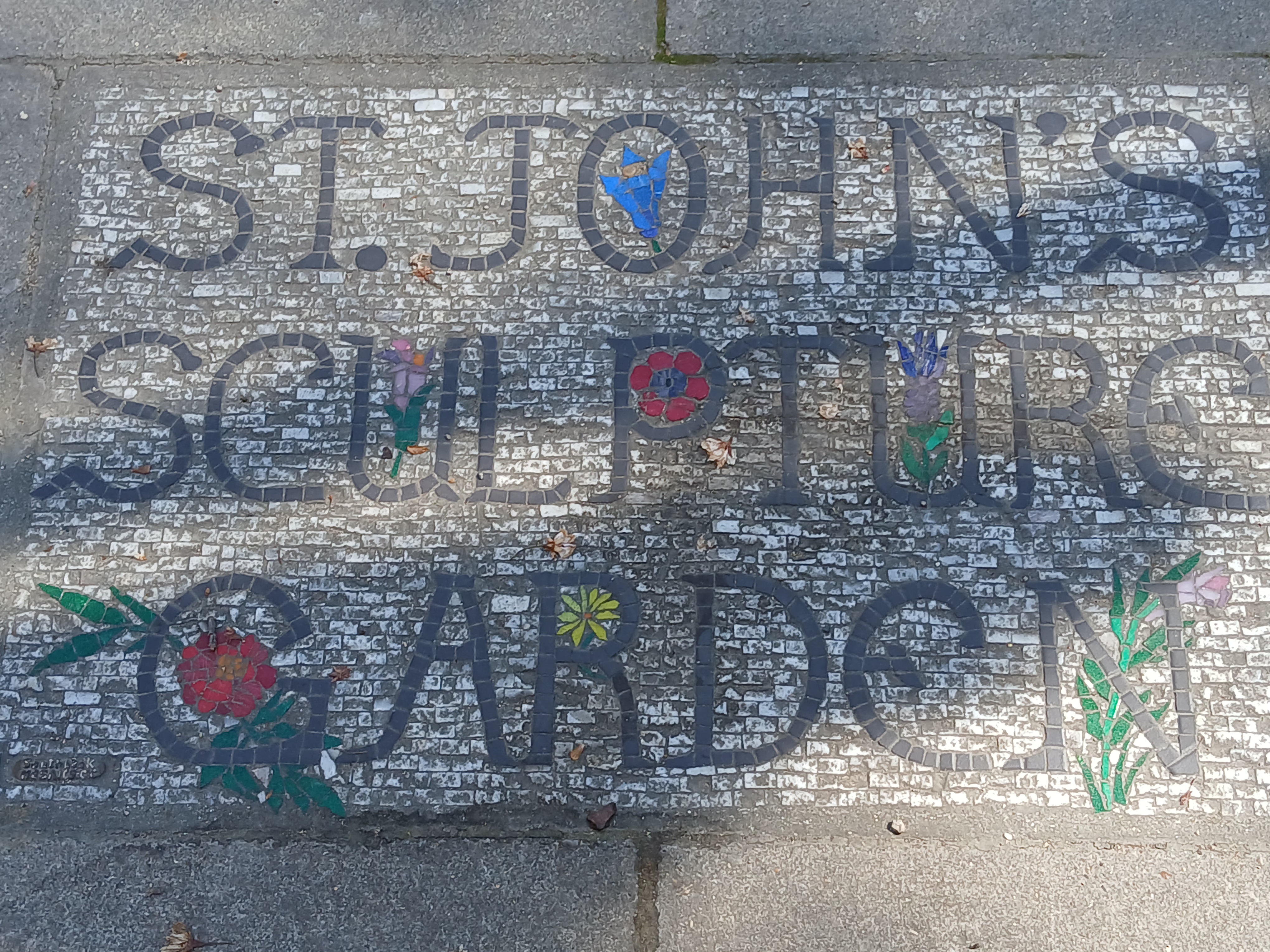
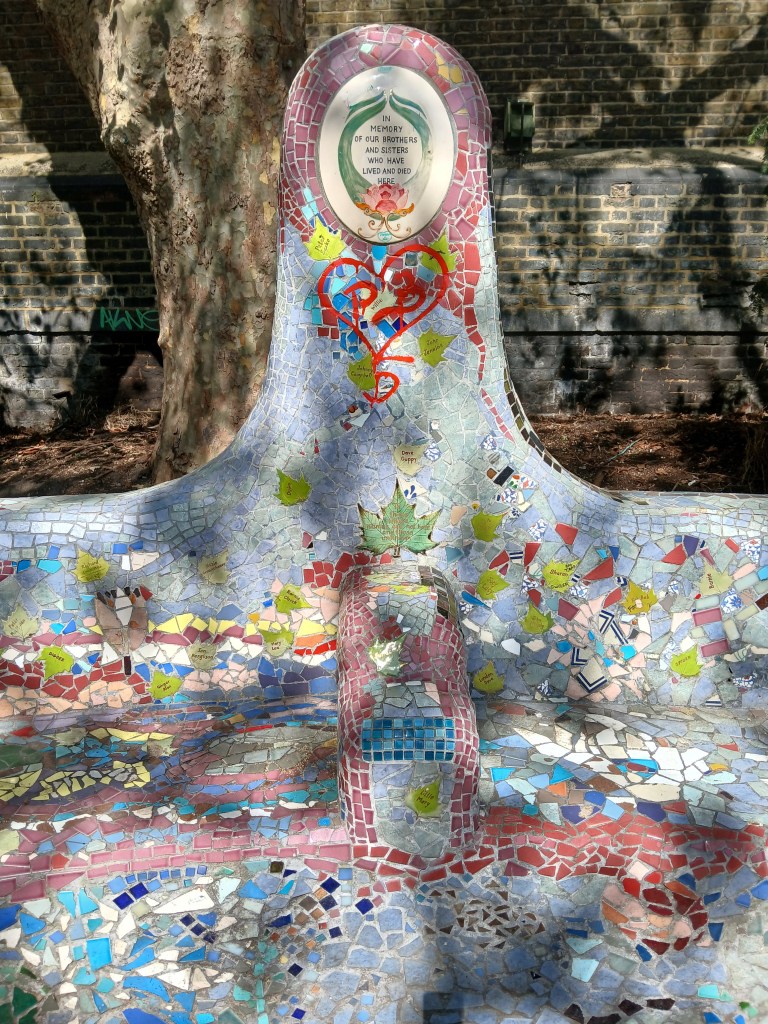
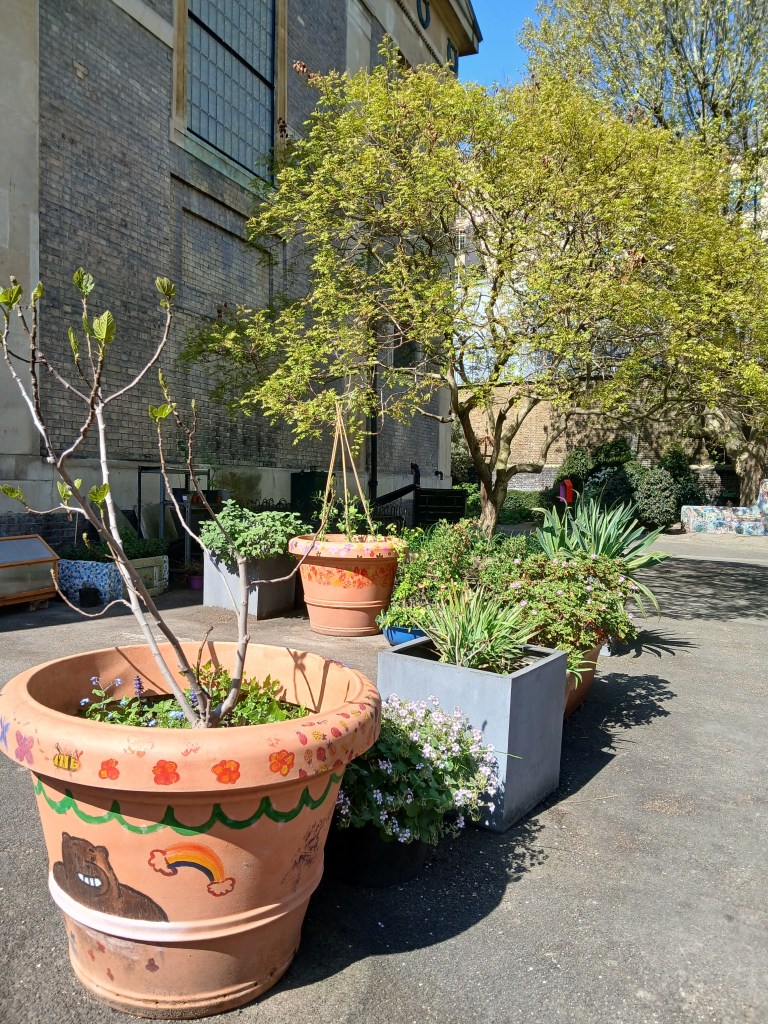
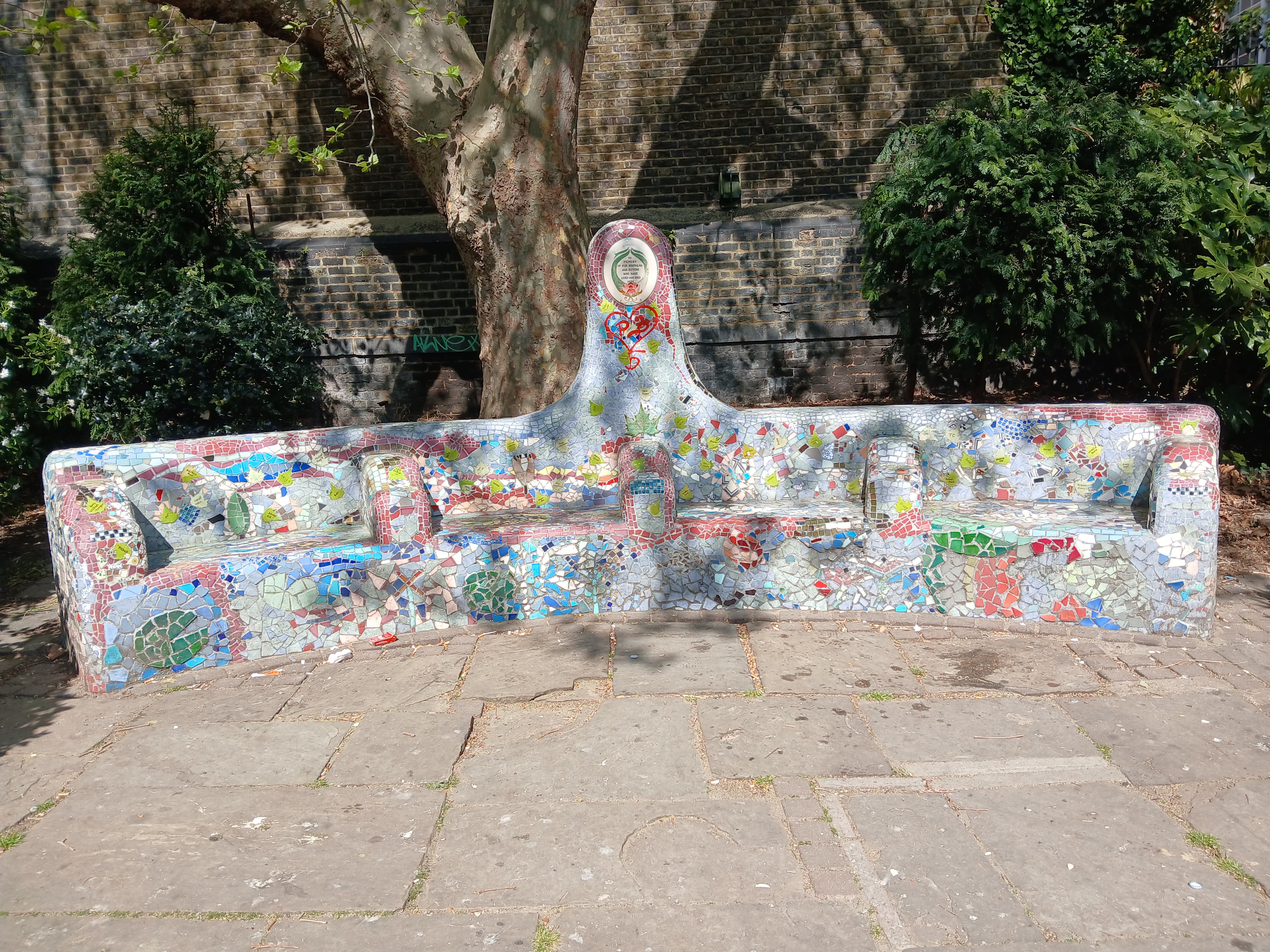
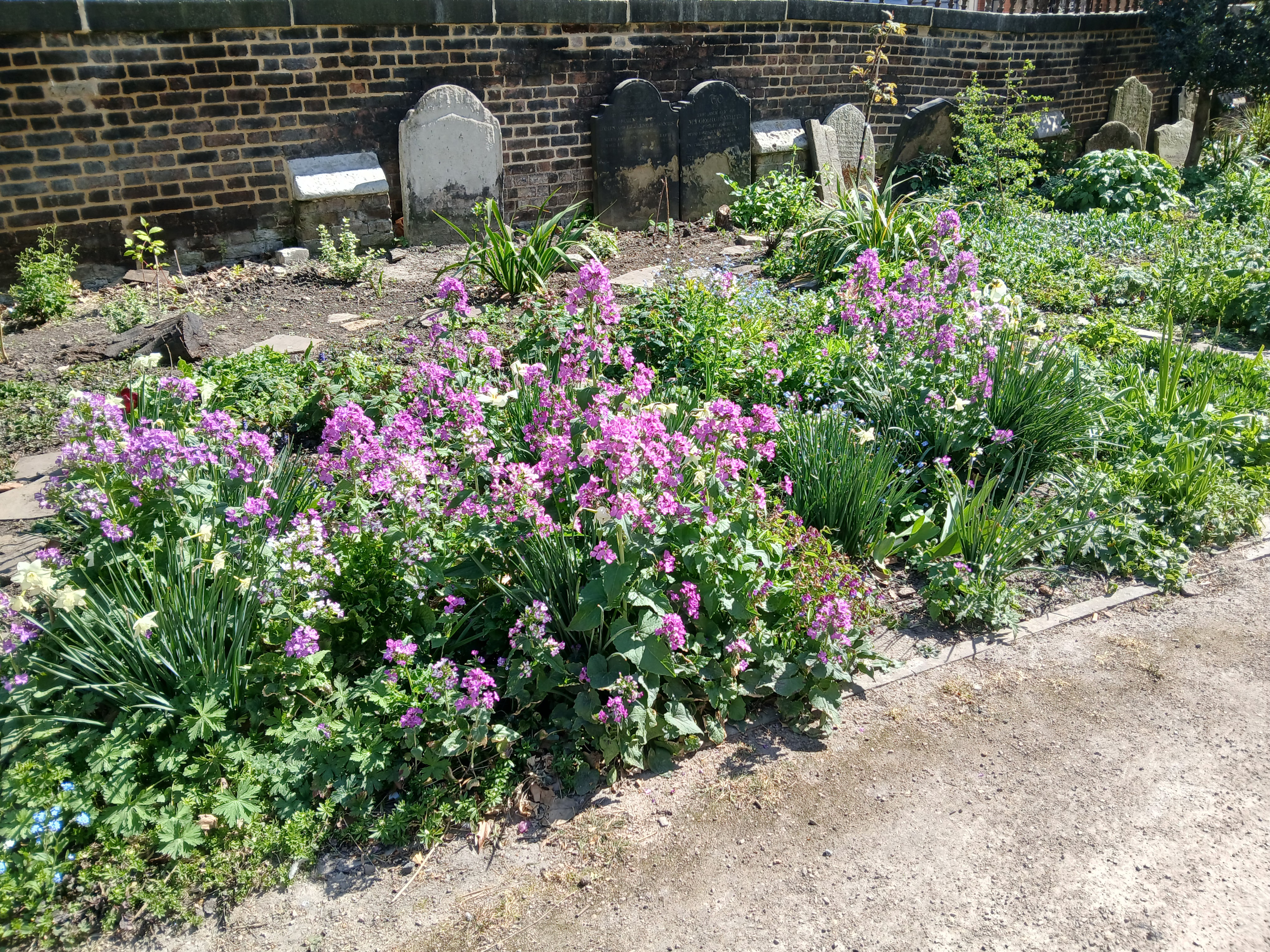
This garden lies on the site of the former churchyard of St John the Evangelist Church, Waterloo. The churchyard was closed to burials in the early 1800s and converted to a public garden in 1877. Octavia Hill, co-founder of the National Trust, and her sister Miranda, were passionate about the need for green spaces for Londoners to enjoy, and they were instrumental in the design and establishment of the garden. As with many former churchyards, some gravestones are stacked against a perimeter wall and there are pretty flowerbeds and herbaceous borders, one of which is maintained by London homeless charity, St Mungo’s. The crypt of the church was once the home of Southbank Mosaics (now the London School of Mosaic) and there are several mosaics hidden around the garden. Of particular interest is the bench, made of mosaic tiles and dedicated to homeless people who have died on the streets, who are named on the bench. The garden is managed by a community gardener and volunteers, and contains hedges that reduce air pollution and a wildlife garden to encourage birds and insects.
Sources: London: The Hidden Corners for Curious Wanderers; Jack Chesher@livinglondonhistory, Frances Lincoln Publishing, 2025
lambeth.gov.uk/parks/stjohnschurchgardens
St John’s Gardens, Islington
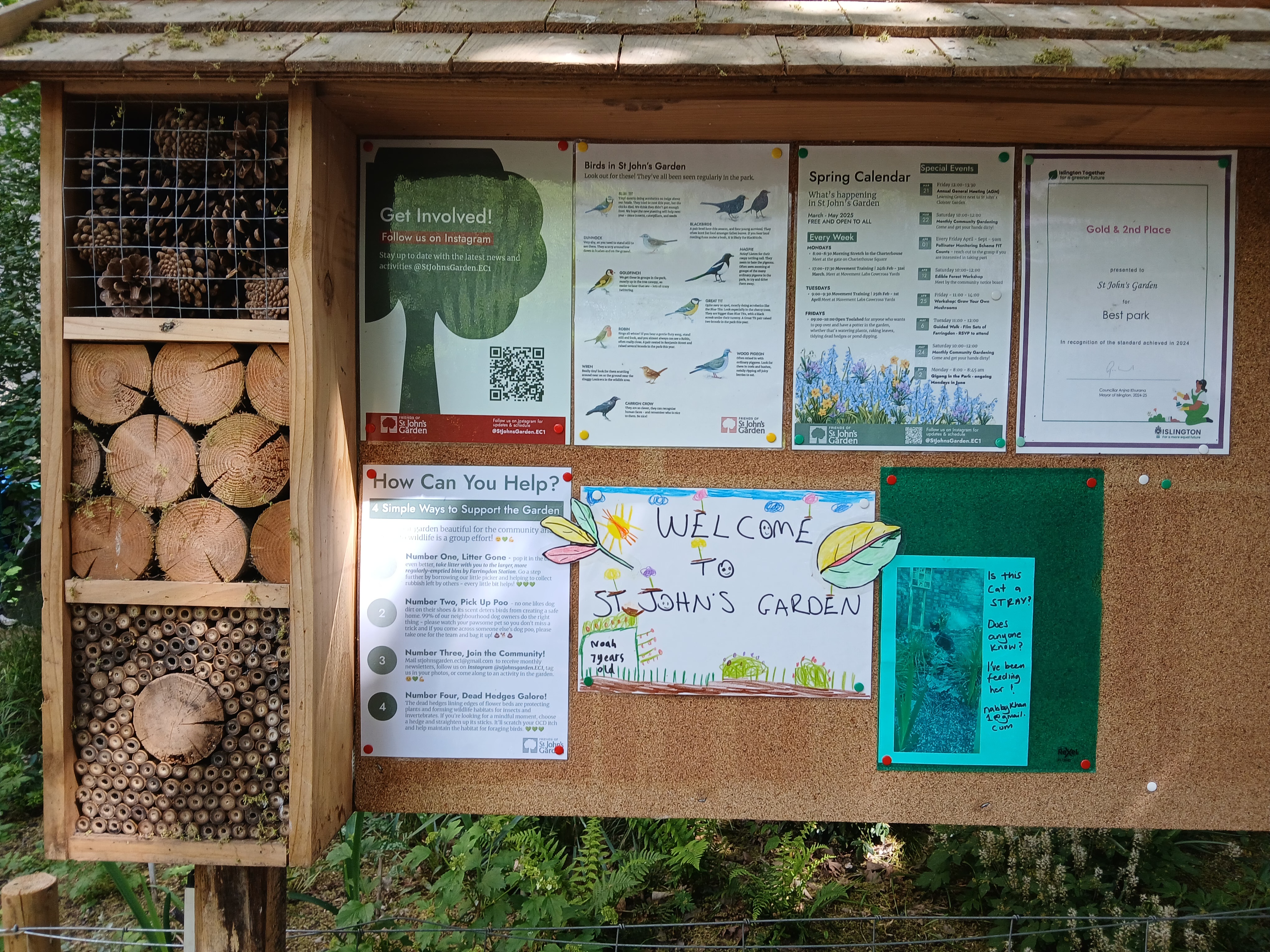
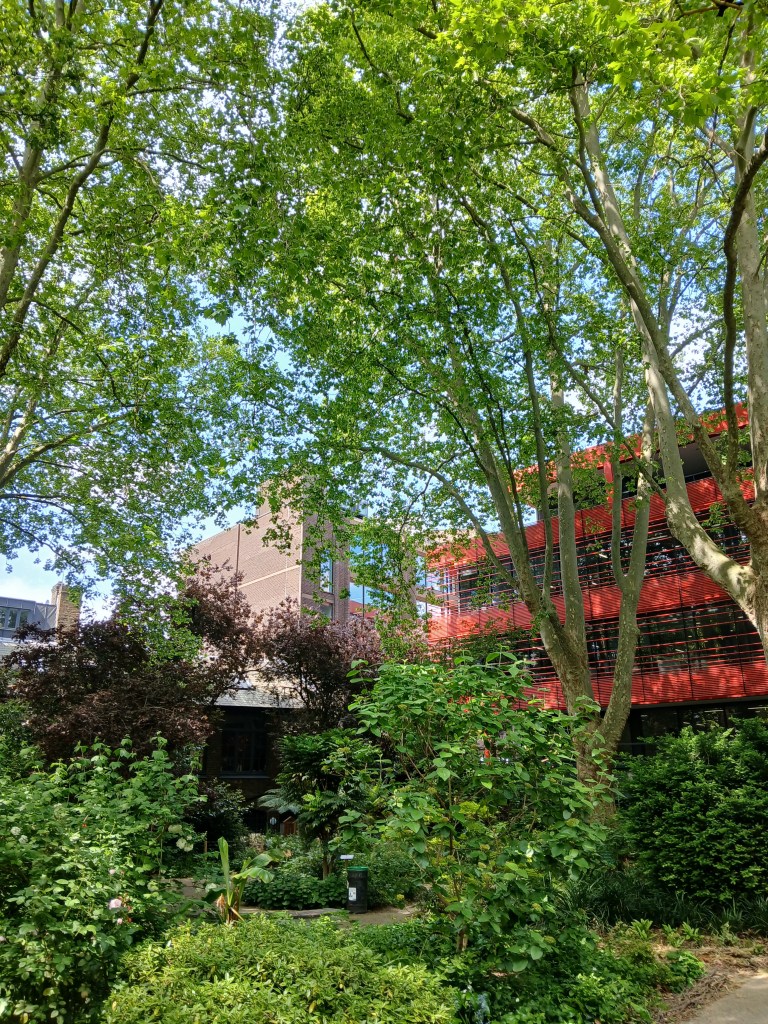
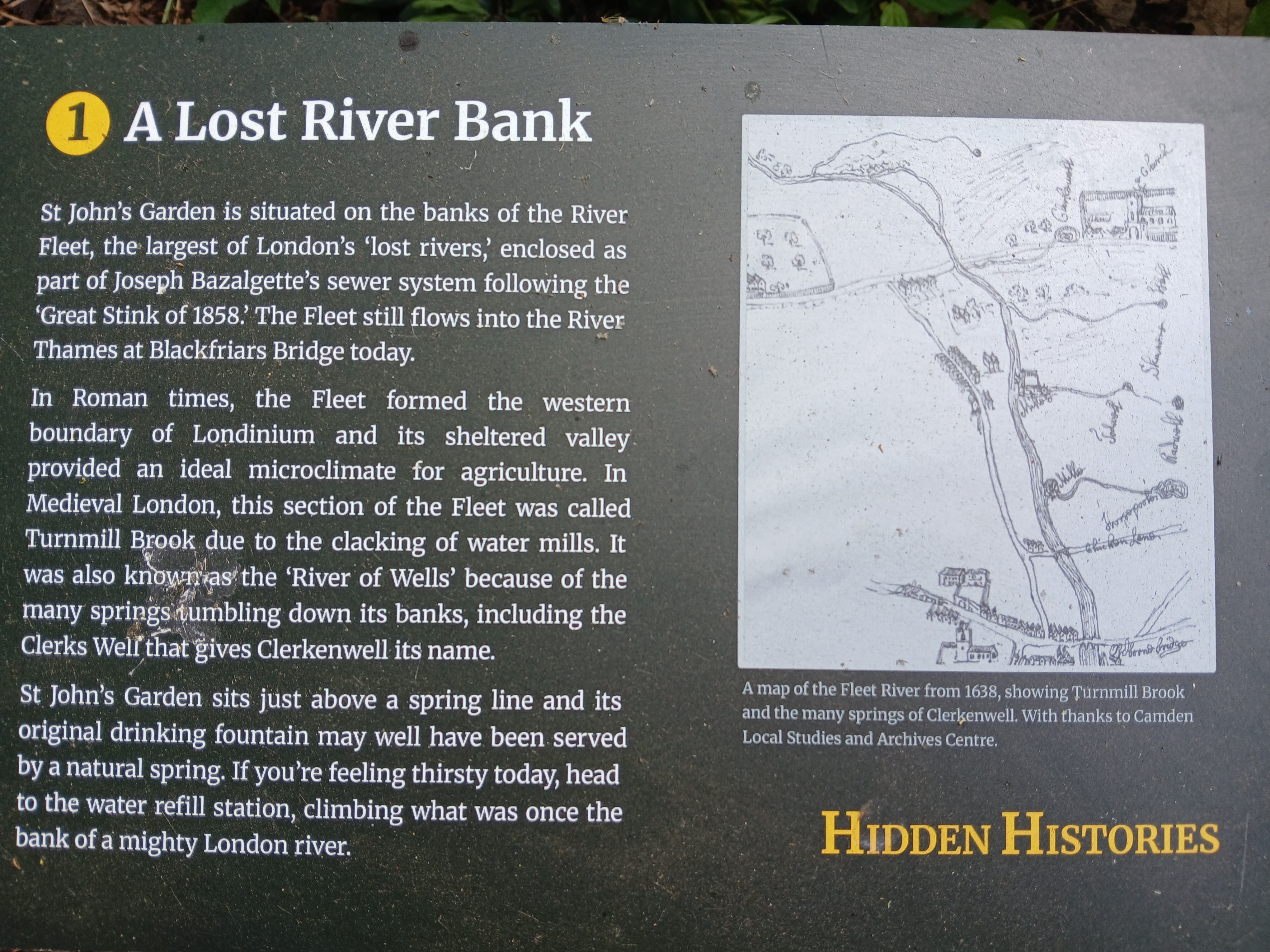
I actually thought that this garden and St John’s Priory Garden were the same place; in fact both were part of the medieval precincts of St John’s Priory which covered a large area of Clerkenwell. This garden is a former burial ground used mainly for the burial of the poor, which was later converted into a Victorian ornamental garden. During the intervening years between closure of the burial ground in 1854 and conversion to a public garden in 1870, the area was used as ‘a sort of waste ground on which pots and pans and refuse of all kinds, were flung from the neighbouring houses.’ Clerkenwell was a particularly deprived area of the City and the garden was intended to provide ‘a nook of greenery in this dingy and squalid part of London, where the workman may smoke his pipe in the dinner hour and feeble folk rest and chat in the summer sunshine.’ Today the garden is a designated Site of Importance for Nature Conservation, with year-round pollinating plants, bird boxes and bug hotels. When I visited there were office workers, construction workers and some retirees enjoying the spring sunshine – its original purpose lives on!
Source: londongardentrust.org
Noticeboard in the garden explaining the origins of Clerkenwell
St John’s Priory Garden
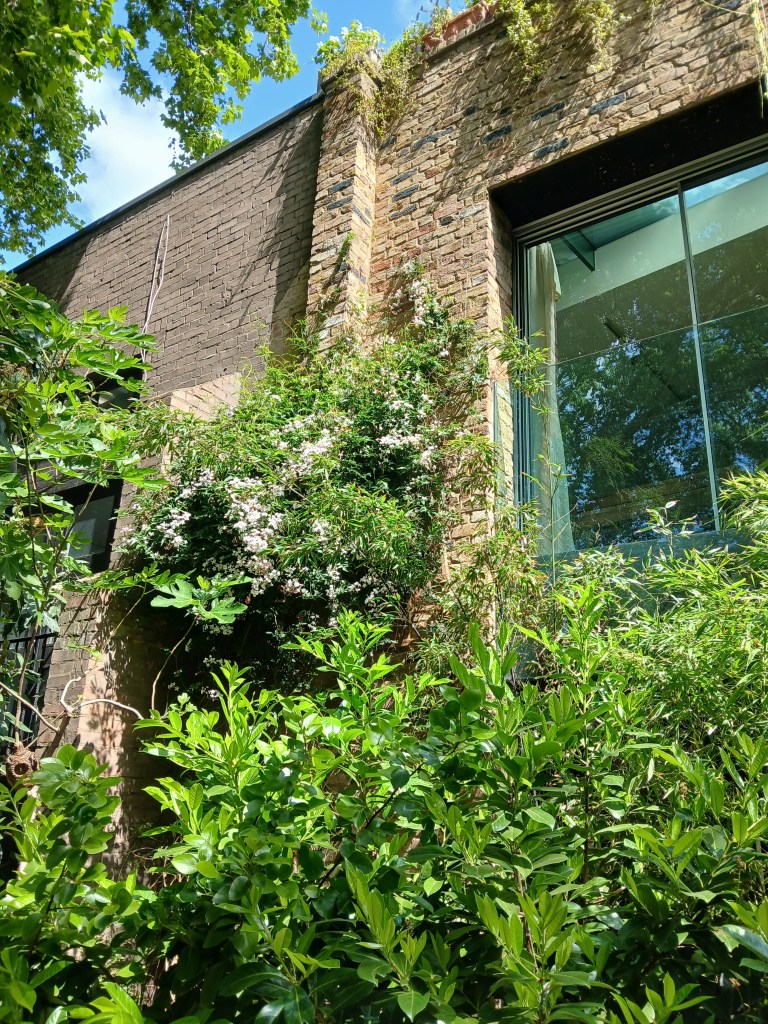
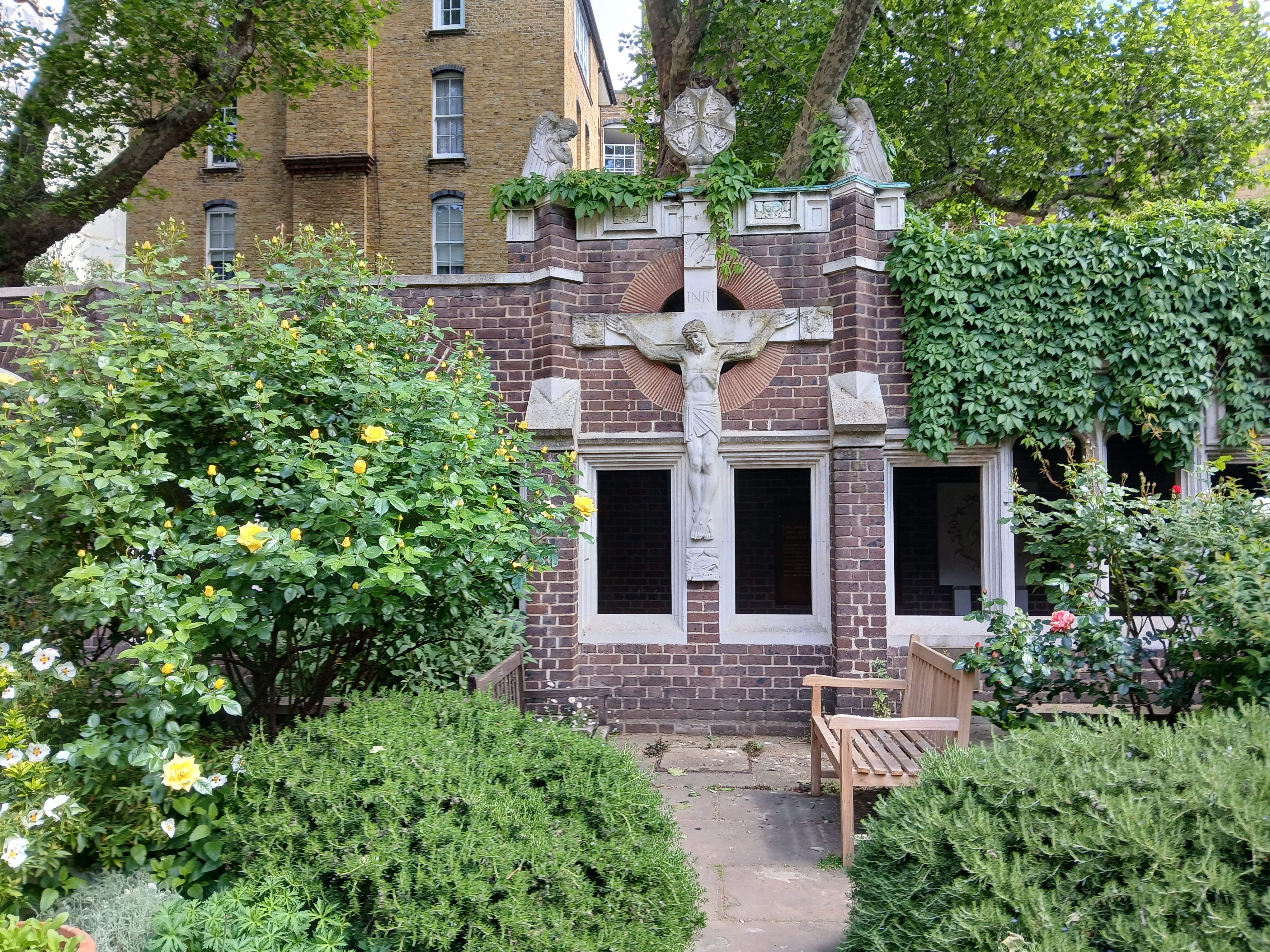
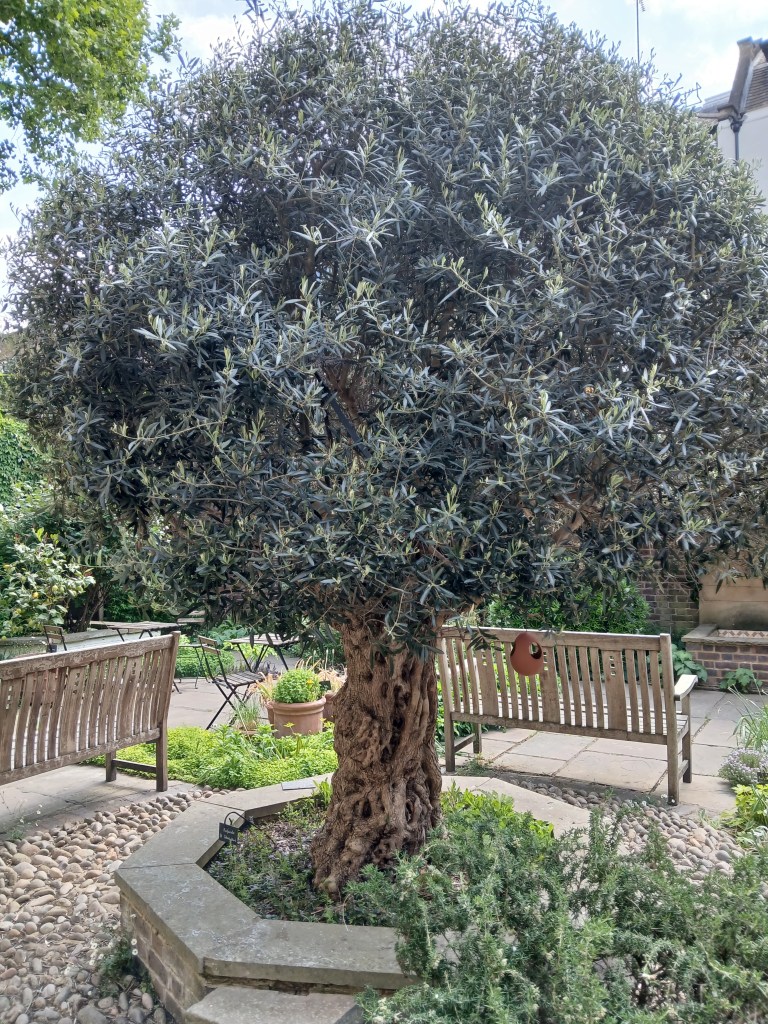
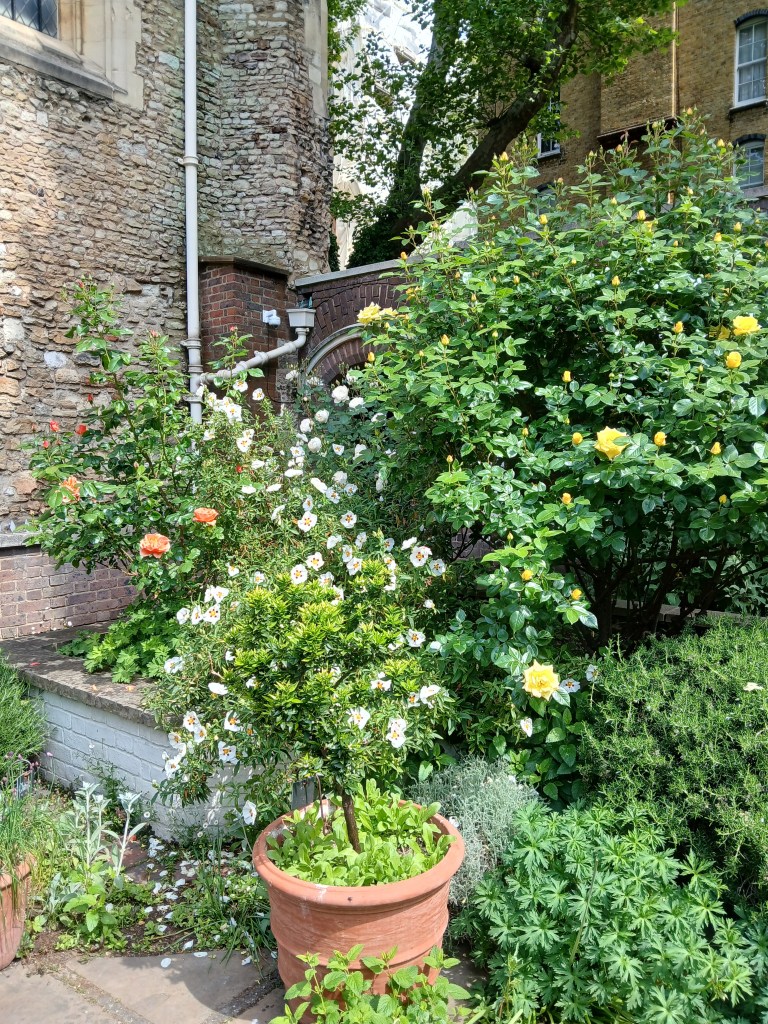
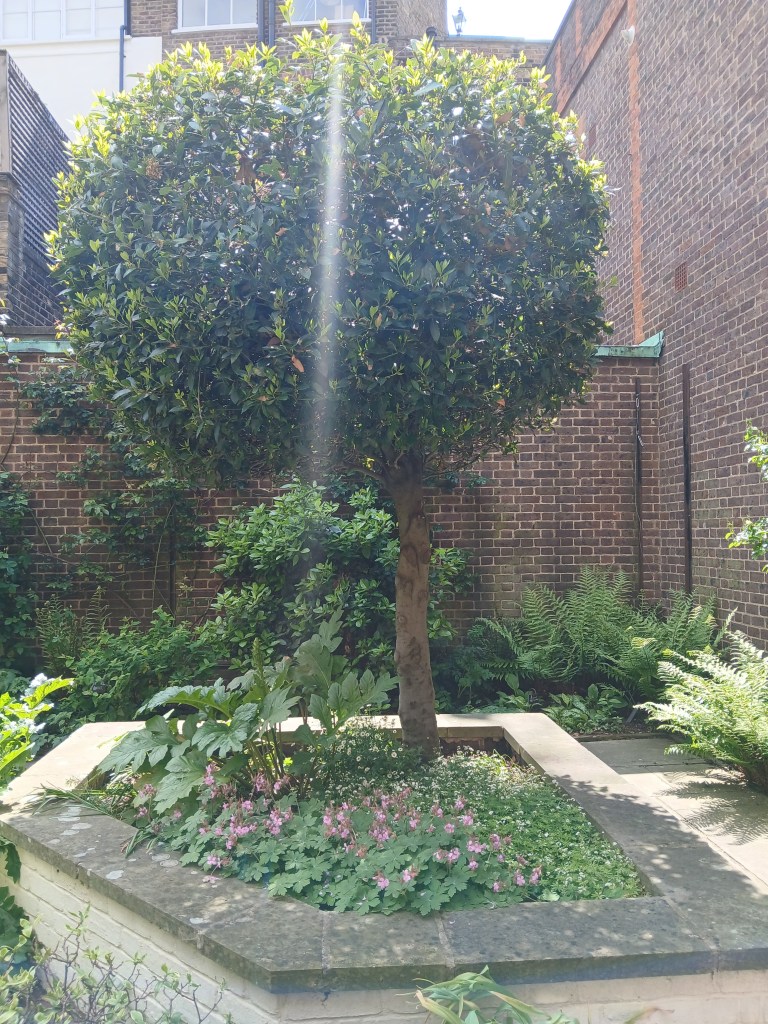
This garden is part of the Museum of the Order of St John at St John’s Gate. The Cloister Garden, as its known, has an outline of the original 12th century round church marked out with cobblestones and with an olive tree in its centre. The garden was established between 1955 and 1958 when the later church was restored after being bombed in 1941. Most famous today for being the foundation of St John’s Ambulance, the Order’s historic nursing and medical role is reflected in the garden by the planting of the medicinal herbs used in patient care in their medieval hospitals. As well as being a delightful place to wander and rest, it is also a memorial garden for members of the St John Foundation who lost their lives in two world wars. Adjacent to the garden, before entering it through an archway, there is a memorial chapel with remembrance plaques to the lost. When I visited in early May, the trees and shrubs were coming into flower in this ‘small but perfectly formed’ garden. There are also proportionately more benches than I’ve seen in any other public garden!
Source: Noticeboards in the Garden
St John’s Wood Church Garden
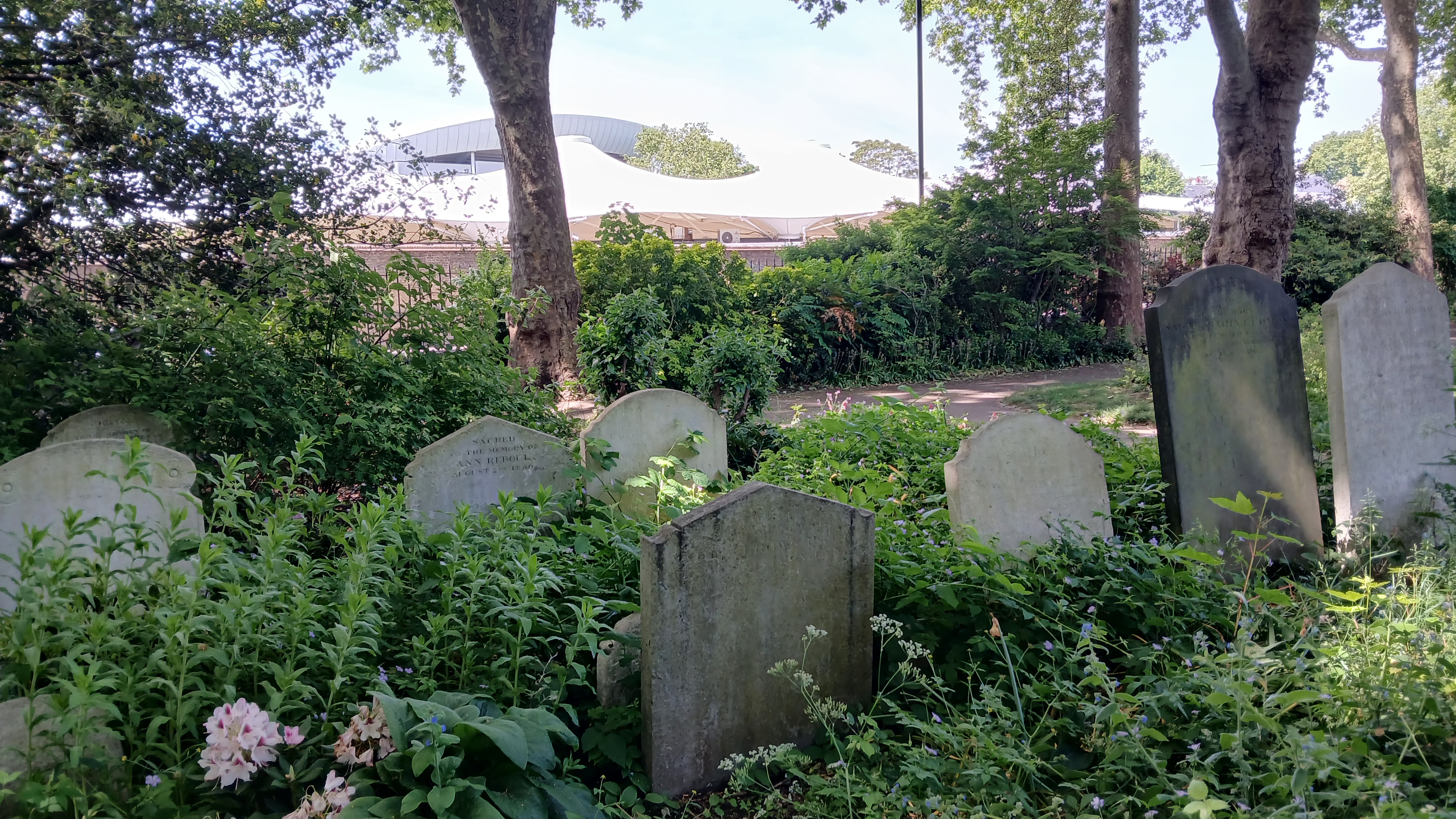
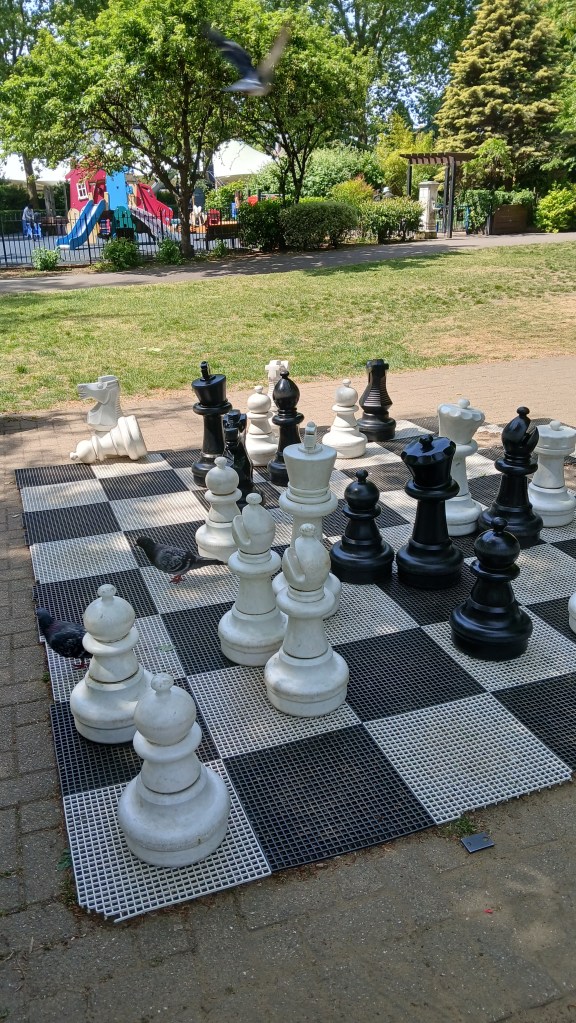
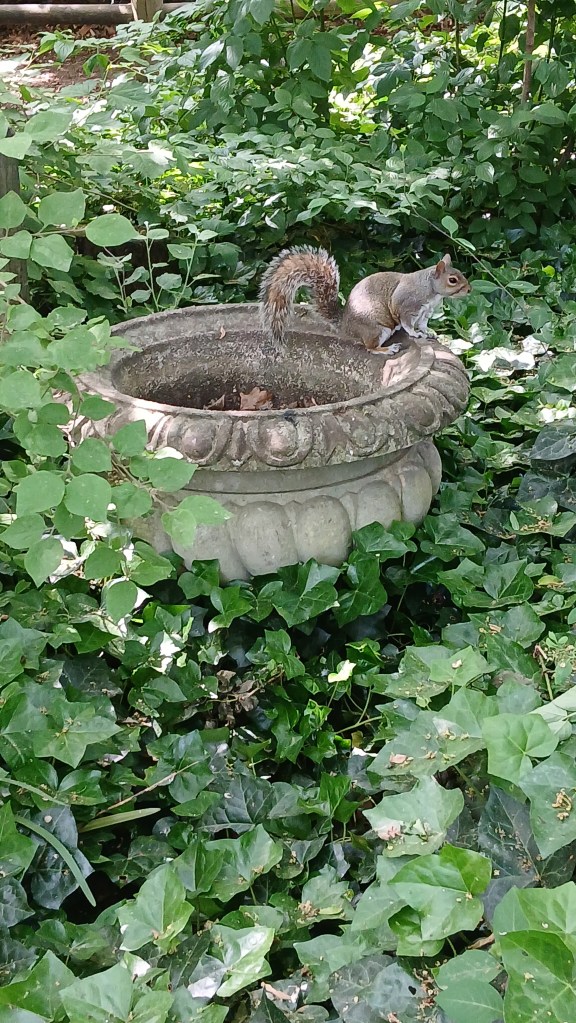
This church garden in NW8 has a connection with the Order of St John: the land was owned by the Order in medieval times. Following the Dissolution of the Monasteries the land passed to the Crown (i.e., Henry Vlll) was later sold into private ownership and finally sold back to the Church for the establishment of a new church and burial ground, which were both consecrated in 1814. The consecration ceremony was organised by a vestryman, one Thomas Lord, who had established his new cricket club on its final site only a few months before. He offered his newly erected cricket pavilion to provide the refreshments for the occasion. The burial grounds, on either side of a large grassed area, are still consecrated ground and one side is a nature reserve, the only Local Nature Reserve in the City of Westminster. On the other side, the latest, futuristic looking pavilion of Lord’s Cricket Ground can be seen from the graveyard. This lovely garden is so diverse: there’s a tropical garden with various types of palm tree, a children’s play park, a giant chess set and the aforementioned nature reserve, surprisingly quiet and secluded. Winding paths and benches are set amongst the gravestones, where I snapped a squirrel in an ornamental urn!
There are quite a few churches in the City which have been partially rebuilt following World War Two bomb damage or intentional demolition. Usually, the tower and sometimes walls remain, for example St Dunstan in the East and Greyfriars Priory which have been developed into beautiful gardens. The churches I’m featuring this month, however, consist of just the tower! Some of the towers have subsequently had a new building attached to them, usually due to change of use of the tower. This is always carried out ‘sympathetically’ to complement the existing tower, all of which are Grade One listed buildings. Here are five I know about, there may well be others.
St Mary Somerset
The first recorded church on this site was in the 12th century, destroyed in the 1666 Great Fire and one of 51 churches rebuilt by the office of Sir Christopher Wren. The main body of the church was demolished in 1871 and the parish was combined with St Nicholas Cole Abbey (the one that’s a café during the week, and a church on Sundays). The Union of Benefices Act of 1860 allowed parishes to be combined and churches to be demolished to make room for commercial premises, as the population of the City moved out to the suburbs. I like to think that the tower was preserved because of its eight Baroque pinnacles, which are probably the design of Nicholas Hawksmoor. Apparently they create an optical illusion, appearing to change heights when viewed from different viewpoints, I really should have tried that! This tower is on Upper Thames Street, which 900 years ago was much nearer to the bank of the River Thames. The parishes on the riverbank extended right into the Thames so that the churches could collect tithes (payments owed to the church) from the waterfront businesses, including from the numerous ferrymen plying their trade across a river with as yet only one bridge. The tower’s present-day use is a very tall, narrow private residence.
Sources: Wikipedia; lostlcp.com (lost London city churches project)
The bottom pic (from Lost London Churches Project) shows the parishes of the riverside churches extending half way across the River.
St Augustine, Watling Street
A ‘lone tower’ frequently overlooked because of its famous neighbour, St Augustine is situated at the end of the Roman Road Watling Street which ran from Canterbury to the City. Returning pilgrims would visit this church to give thanks to St Augustine of Canterbury for their safe journey home. The earliest church on this site dates from 1148, it was destroyed in the Great Fire and rebuilt to designs of Sir Christopher Wren. The tower, completed in 1695 is all that remains of Wren’s church, which had to be demolished due to bomb damage in the 1941 Blitz. Although damaged, the tower was restored and incorporated into a modernist building for the Cathedral Choir School in 1968. The original Choir School was established in 1123 in St Paul’s Churchyard, and was destroyed in the Great Fire along with the Cathedral itself. I think the ‘extension’ has been ‘sympathetically’ added to the tower, and the building has quite an open aspect with no surrounding tall buildings so it looks almost countrified!
Source: Wikipedia
St Alban Wood Street
Contrast St Augustine’s with the tower of St Alban which is dwarfed by the surrounding office blocks. There has been a church on this site for more than 1,000 years; the first was dedicated by Offa, the king of Mercia. It’s hard to imagine now that Offa’s palace was on the site and the original church was its chapel. The first written mention is ‘St Alban Wudestrate’ in around 1200 AD. Successive churches on this site have been particularly unlucky: the Saxon church was demolished in 1633, being in a poor condition beyond repair. The new church constructed by Inigo Jones was completely destroyed only 33 years later in the Great Fire and rebuilt by the office of Sir Christopher Wren, whose Gothic style tower is the only part of the church remaining today. Falling into disrepair again, George Gilbert Scott restored and extended the church in 1858, but disaster struck again when it was partially destroyed in the 1940 Blitz. Wren’s tower was designated Grade ll listed and the main part of the church was demolished in 1965. Today the tower is used for storage, presumably by the City of London Corporation; I glimpsed what looked like hi viz jackets in the lowest window! There is now a tiny flowerbed where the church once was.
Source: lostlcp.com
17th century meets 20th/21st century
St Martin Orgar
Situated in Martin Lane off Canon Street, this church is famous for being mentioned in the nursery rhyme ‘Oranges and Lemons’ about City of London church bells: ‘You owe me five farthings say the bells of St Martins’. The church was originally known as St Martin Candlewick Street, the Mediaeval name for Canon Street. The name of the church is said to derive from a Dane called Ordganus who donated the church to the canons of St Paul’s Cathedral. The original Saxon church was another one destroyed in the Great Fire, only part of the nave and the tower were left standing. The churchyard remained in use for burials and the parish was merged with nearby St Clement Eastcheap. ‘Oranges and lemons say the bells of St Clements.’ The remains of the church were restored and used by French Protestants until 1820, it was then demolished, including the tower, which was rebuilt in 1851. This is why the tower looks so much more modern than the other towers. The tower has been tastefully aligned with the next door building and the whole structure is now offices. The churchyard now has garden furniture for office workers to use, artificial grass and this strange sculpture.
Source: lostlcp.com
St Olave, Old Jewry
The most difficult to find of the towers, the churchyard of St Olave is down a tiny ally, off a street now known as Old Jewry, with a large tree trunk leaning over the entrance. Through a pair of black painted gates, a short path leads to the tower. This is one of several City churches dedicated to the 11th century patron saint of Norway, St Olaf. However, excavations carried out in 1985 when the tower was being repaired and repurposed revealed the foundations of an earlier Saxon church, possibly dating from the 9th century. In the Mediaeval era, the area was largely occupied by Jews who had their own synagogue in Old Jewry. In 1290 the Jewish population was expelled from England by King Edward 1st. Destroyed in the Great Fire and rebuilt by Sir Christopher Wren in 1671, the tower was unusually rebuilt as a separate structure. When Wren’s church was demolished in 1887, the tower was retained and incorporated into a new building which included a rectory for nearby St Margaret Lothbury. In 1986 the tower and adjacent building were converted to office premises (currently solicitors’ offices), taking the name St Olave’s House.
It’s that time of year again; all the daffodils are blooming, heralding the start of spring in their unique bright and beautiful style. This selection can be seen at churches and churchyards, burial grounds and war memorials.
Interesting fact about war memorials: some have a cross on top or engraved into the monument, while others are cenotaphs, which have a flat top, like the one at Carshalton Ponds. The word Cenotaph derives from the Greek Kenos, meaning Empty and Taphos, meaning Tomb. This seems particularly appropriate for Easter (!) but the term also means ‘buried elsewhere’. A cenotaph commemorates many individuals who have died, usually in a war, but also as a result of other mass deaths. War memorials in general started to appear in Britain in about 1920, to commemorate soldiers killed in the First World War, with names subsequently added in later conflicts.
Source: Wikipedia
The War Memorials:
Manor Park, Sutton; Carshalton Ponds; Wallington Green
The Churches:
Trinity Church, Sutton; St Mary’s, Beddington; All Saints, Carshalton; St Nicholas, Sutton; Front of All Saints, Carshalton
The Churchyards:
St Mary’s Beddington: St Nicholas, Sutton; St Peter’s Woodmansterne; Bandon Hill Cemetery, Beddington