Walk the Wandle

Wandle Trail Walk

Introduction

Two of my favourite things are walking and rivers.  I love walking because it counts as exercise and you can take time to look around and notice things you wouldn’t see if you were driving or cycling or even jogging. I love rivers because they are natural phenomena, but at the same time, historic, as over the centuries they are used for transport, industry and pleasure. Roads change over time: enlarging to carry more traffic, changing route, falling into disuse, but rivers tend to stay more or less the same.  And because river banks are relatively level, no steep inclines (which I don’t like), they are easy to stroll along in a leisurely fashion.  The downside of river walks is that they are linear rather than circular so you either have to walk all the way back or arrange transport to take you home!

So, to my epic journey along the Wandle Trail!  The Wandle is a fascinating river and thanks to the fabulous Trail you can stroll along its banks for almost all its length. Most of it is accessible for buggies and wheelchairs but there are a few muddy or narrow paths. I’ve divided the Walk into four sections, each taking about 1 hour to walk at a gentle pace.

These are the sections: Waddon Ponds to Wilderness Island

Wilderness Island to Morden Hall Park

Morden Hall Park to Plough Lane

Plough Lane to River Thames

I’m starting at Waddon Ponds, because that’s where you see the ACTUAL River emerge from the pond and begin its journey to the Thames; however, the ‘official’ start of the Wandle Trail is at East Croydon Station (who knew?) and goes down to Wandle Park via Old Palace, but no river to be seen.  I could have started at Wandle Park but THERE’S STILL NO RIVER THERE! There is a manmade channel but the river itself goes under the tram line and the A23, then into Mill Lane, still underground. However, Wandle Park is a very nice green space with a skate park, a wildlife pond and a bandstand on which in July you can see plays performed by CODA*, this year it was Shakespeare’s Much Ado about Nothing. There’s also a London Borough of Croydon sign which claims that this IS the source of the Wandle!

Before I start the sections, here are some interesting facts:

The Wandle flows through 4 London Boroughs: Croydon, Sutton, Merton and Wandsworth.

The Wandle is too shallow to be used for navigation (boats.)

BUT it’s very fast flowing which is why over time there have been more than 90 mills at various places along its banks. That’s a lot of industry.


The mills and other historical buildings have all been documented in other excellent publications** so I won’t be specifically mentioning them, but my focus is on what can be seen on the Wandle Trail so they do come up from time to time.  So, as Nancy Sinatra said: You ready boots? Start Walking!


*Croydon Operatic and Dramatic Association

**River Wandle Companion and Wandle Trail Guide, Bob Steel and Derek Coleman, Culverhouse Books

The Wandle Guide, The Wandle Group, Sutton Leisure Services


Words/phrases in bold indicate a photo (on separate page)
Walk the Wandle

Part One:  Waddon Ponds to Wilderness Island

 Waddon Ponds are in a little tucked-away park behind Purley Way, lots of different species of water birds, pretty flower beds, children’s play area. It’s next to Mill Lane, where there was once a flour mill and now it’s just various industries. Start walking along the path and immediately the River disappears behind a hedge but you can just hear it tinkling busily along.

Walking along this narrow path, somewhere you cross the borough boundary from Croydon to Sutton, then you cross the first Wandle bridge; at this point you could probably jump it! On this side you pass some bungalows which I think were for older Sutton Council tenants but which are now boarded up, the remains of their pretty gardens looking sad and neglected. And look! There’s a fake heron in a garden on your left, when I first saw it I thought it was real…..

Next you get to another bridge, cross over and there’s a building which I think is now offices and was formerly a flour mill (another one) and next door is the mill owner’s house with a Sutton Heritage Red Plaque (like a Blue Plaque but not quite as posh.)  The mill that was there originally is mentioned in the Domesday Book and was a corn mill and then a snuff mill. And here are the mill workers cottages, with the River Wandle babbling along in their front gardens, lovely! Then it’s a short walk along the aptly named Wandle Bank to your first road crossing, Hillier’s Lane. On the other side there are a couple of manmade concrete waterfalls with stones set in them, so even when you can’t see it you can hear the water rushing along.

Now we reach the lovely Beddington Park, the subject of many photos on Facebook, some interesting historic buildings and a wonderful clear shallow stream that everyone can remember playing in when they were children. I’m not sure if the Trail goes right beside the River as it gets very muddy on the banks, but that’s where we will walk, perhaps spotting a dog enjoying the stream. Over a couple of bridges and then we reach the metal curved bridge, which I’m sure was painted blue when I was young, though some say white, but now is definitely green, and looking a lot like Monet’s Garden (google it). The River then flows into the Lake, and from the banks you can see all kinds of water fowl with their cute babies in Spring.  And in the Grange Children’s Centre on the left there is something that really looks like a giant poo, sorry, but it does!   Moving swiftly on, the last time I was doing this part of the Trail I stopped to talk to these two guys who looked like they were fishing, but were actually collecting mosquito larvae in nets for a PHD in Entomology (the study of insects). The mosquitoes here don’t carry malaria, I was happy to discover.

Now we get to the part of the Trail where you can’t walk beside the River.  Wandle Side and Riverside Close invite you to follow them, but alas, they are private property and dead ends and you can’t get access to the River.  Never mind, we do get to see the colourful Elm Pond which has green dyed water (for some reason.) Then we go down Butter Hill, spotting The Lodge, Butter Hill on the way.  At the bottom of Butter Hill/Mill Lane, we pick up the other branch of the Wandle which has come from Carshalton Ponds. Strictly speaking you are supposed to go to The Ponds as part of the Trail, but I thought for this Walk I’d take the short cut and just do the 12 miles!

Over the bridge into Mill Lane, and what do we see under the railway arch? A small but very colourful Garden Centre, SOS Gardens, should I tell them I’m giving them free advertising? Next we see the strikingly yellow Strawberry Lodge (maybe it should be red?), built in the late 17th century for the gunpowder maker Josiah Dewye. This part of the Wandle had several mills: flour, snuff, corn, oh and I think Papermill Close gives a clue as to what else. Does anyone remember the Vinyls factory that used to be here? Now there are tasteful apartments which look a lot nicer and don’t smell of chemicals. And here we are at Wilderness Island, where you can actually get lost, I did. But we are not venturing inside today, we have a trail to walk!

Walk the Wandle

Wandle Trail Walk

Introduction

Two of my favourite things are walking and rivers.  I love walking because it counts as exercise and you can take time to look around and notice things you wouldn’t see if you were driving or cycling or even jogging. I love rivers because they are natural phenomena, but at the same time, historic, as over the centuries they are used for transport, industry and pleasure. Roads change over time: enlarging to carry more traffic, changing route, falling into disuse, but rivers tend to stay more or less the same.  And because river banks are relatively level, no steep inclines (which I don’t like), they are easy to stroll along in a leisurely fashion.  The downside of river walks is that they are linear rather than circular so you either have to walk all the way back or arrange transport to take you home!

So, to my epic journey along the Wandle Trail!  The Wandle is a fascinating river and thanks to the fabulous Trail you can stroll along its banks for almost all its length. Most of it is accessible for buggies and wheelchairs but there are a few muddy or narrow paths. I’ve divided the Walk into four sections, each taking about 1 hour to walk at a gentle pace.

These are the sections: Waddon Ponds to Wilderness Island

Wilderness Island to Morden Hall Park

Morden Hall Park to Plough Lane

Plough Lane to River Thames

I’m starting at Waddon Ponds, because that’s where you see the ACTUAL River emerge from the pond and begin its journey to the Thames; however, the ‘official’ start of the Wandle Trail is at East Croydon Station (who knew?) and goes down to Wandle Park via Old Palace, but no river to be seen.  I could have started at Wandle Park but THERE’S STILL NO RIVER THERE! There is a manmade channel but the river itself goes under the tram line and the A23, then into Mill Lane, still underground. However, Wandle Park is a very nice green space with a skate park, a wildlife pond and a bandstand on which in July you can see plays performed by CODA*, this year it was Shakespeare’s Much Ado about Nothing. There’s also a London Borough of Croydon sign which claims that this IS the source of the Wandle!

Before I start the sections, here are some interesting facts:

The Wandle flows through 4 London Boroughs: Croydon, Sutton, Merton and Wandsworth.

The Wandle is too shallow to be used for navigation (boats.)

BUT it’s very fast flowing which is why over time there have been more than 90 mills at various places along its banks. That’s a lot of industry.

The mills and other historical buildings have all been documented in other excellent publications** so I won’t be specifically mentioning them, but as my focus is on what can be seen on the Wandle Trail, they do come up from time to time.  So, as Nancy Sinatra said: You ready boots? Start Walking!

*Croydon Operatic and Dramatic Association

**River Wandle Companion and Wandle Trail Guide, Bob Steel and Derek Coleman, Culverhouse Books

The Wandle Guide, The Wandle Group, Sutton Leisure Services

 Words/phrases in bold indicate a photo (on separate page)
Articles 7 & 8: ‘All children have the right to a registered name, a nationality, an identity’

Article 7 (Registration, name, nationality, care): All children have the right to a legally registered name, recognised by the government. Children have the right to a nationality (to belong to a country). Children also have a right to know and, as far as possible, to be cared for by their parents.

Article 8 (Preservation of identity): Children have the right to an identity – an official record of who they are.  Governments should recognise their right to a name, a nationality and family ties.

How easy it is to take these rights for granted.  Most children, whether living with their birth parents, other relatives, in foster or adoptive families, or even in an informal care situation, enjoy these rights.  Their identity and the right to belong to their community and country is secure.  But what about children who, because of intolerable conflict situations in their country of birth, are removed to another, safe country, perhaps on another continent?  War has firstly violated their right to be cared for by their own parents, but they retain their identity as a citizen of that country, right?

A report by The Independent has the headline: ‘Hundreds of Afghans who grew up in UK face deportation to a country they “barely remember”.’  This refers to children who were sent to the UK to live with British foster parents; they went to school here, took GCSEs and A Levels and became active members of their communities. Sadly, they mostly had little or no contact with their country of birth. But as these young people reach the age of 18 they face deportation ‘to a country that they barely now remember’.  Under international law, the UK can’t send unaccompanied asylum-seeking minors back to their home country, instead it issues temporary leave to remain, which ends of course, on reaching adulthood.  It then becomes much harder for them to apply for permanent asylum in their adopted country.

What awaits them when they return to Afghanistan?  Often, they can’t trace their birth families, not having had contact whilst living in the UK. The article says: ‘Their Westernised mannerisms and accents also mean they are often regarded with suspicion…..and some…..have been left homeless, chased by the Taliban, kidnapped, ransomed and beaten.’  Those who remain in the UK, waiting for their application to be considered, are in limbo.  They can’t get a job, they can’t go to university.  The article doesn’t say whether they can remain living with their foster families, but in any case, this isn’t their country any more.  So, while these young adults have a registered name and they have ties to a ‘temporary’ family, they don’t ‘belong to a country’, surely a huge part of anyone’s identity.  Needless to say, both the UNHCR and the UK’s Children’s Commissioner’s office have criticised The Home Office’s policy towards asylum-seeking children.  You can read the full article here.

Yet another example of the trauma, devastation, even the ruination of young people’s lives caused by war.

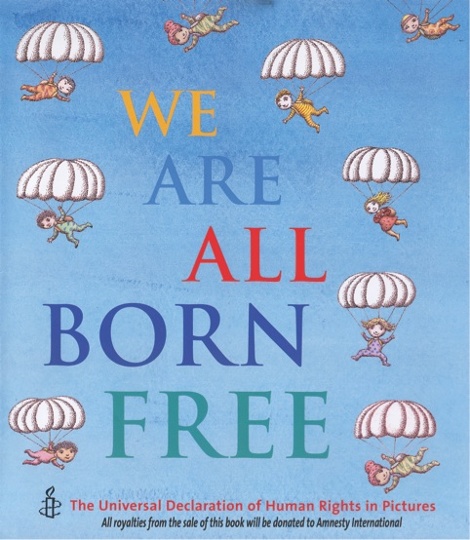
Image result for we are all born free book

‘We all have the right to belong to a country’

We are all born free: The Universal Declaration of Human Rights in Pictures

Published by Frances Lincoln Children’s Books www.franceslincoln.com in association with Amnesty International.

A

Article 6 (Survival and development): Children have the right to live. Governments should ensure that children survive and develop healthily.

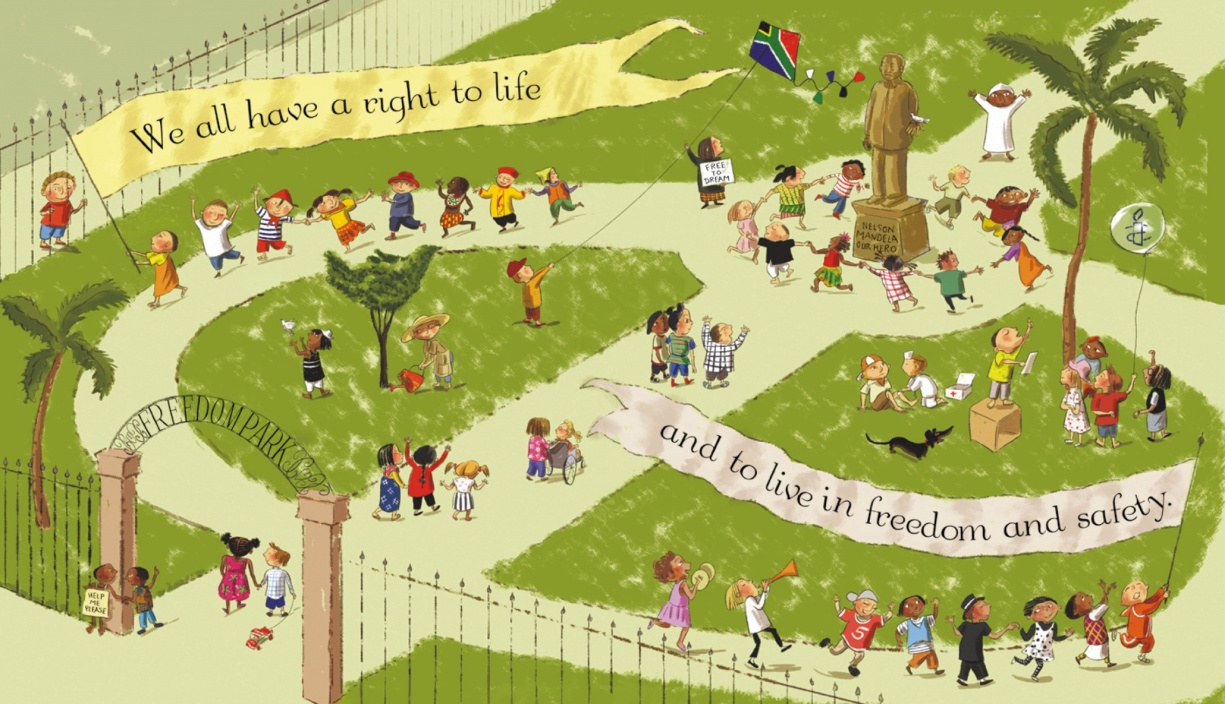
Article 6 reflects Article 3 of The Universal Declaration of Human Rights which states: ‘We all have the right to life, and to live in freedom and safety.’  I’ve got a beautiful book called ‘We are all born free: The Universal Declaration of Human Rights in Pictures.’* Each ‘Right’ is colourfully illustrated by a different artist.  The illustration for Article 3 is a picture of ‘Freedom Park’, a garden with children of all nationalities running, playing, parading with instruments, one is flying a kite, another watering a plant, others join hands dancing round a statue of Nelson Mandela.  The feeling is of enjoyment, being with your friends, in the uninhibited way that children do things.  I mean of course, children who are lucky enough to live in freedom, without daily fear for their lives and those of their families.

So the right to life isn’t just simply to stay alive, it’s about mental and physical health and emotional well being (as a Christian I would add spiritual well being).  On a training course recently I learned that by the age of two years, 75% of a child’s brain growth has occurred and that the experiences of the child up to that age physically affect brain structure.  A child who has experienced fear, pain, confusion, separation and loss of loved ones as a result of living with conflict will actually grow and develop differently than if they had not had those experiences.  Most children, whatever their environment will grow up loved and cared for to the best of their parents’ ability, which will give them a certain amount of resilience, but this will not, in the long term, protect them from the ‘risk factor’ of war.  This is a sobering thought, isn’t it?  Is any war worth that?

A video clip I was sent shows children aged about 8 to 12 in Syria talking about no longer being able to go to school, playing in the war damaged street, the deaths of friends and family.  Suddenly there was the sound of gunfire.  The children stood up unhurriedly and started to go inside.  One boy said calmly to the interviewer, ‘It’s a sniper, it’s normal’.  This was obviously an everyday occurrence, just an inconvenient interruption, not a cause for panic or fear.  Perhaps it once was, but now these children are desensitized.  In a few years’ time will they be wielding the guns?

I’m sorry this is such depressing reading, I have been deciding how, and even whether, to approach writing about this Article for some weeks.  But ultimately, it needs to be said, for the sake of the children.  And can I mention again the brilliant ongoing work by UNICEF, Save the Children, Tearfund, Christian Aid and many other organisations, to increase resilience and decrease some of the damage which war inflicts on the youngest, least powerful members of society.

34f23d50-e466-4e8a-af56-cc83ae38248c-470x540 823327fd-ed3a-42be-8136-008dde4cad54-2060x1185

*Published by Frances Lincoln Children’s Books www.franceslincoln.com in association with Amnesty International. One of my favourite books!

Articles 4 and 5: ‘Governments must help families protect children’s rights’

Article 4: Protection of Rights. Governments have a responsibility to take all available measures to make sure children’s rights are respected, protected and fulfilled.  Goes on to say countries should review their provision of social services, legal, health and educational systems, including funding for these services, and ensure the minimum standards of the Convention are met.  Also ‘they must help families protect children’s rights and create an environment where they can grow and reach their potential’.  This is linked with the next Article, so I’m including this in this post:

Article 5: Parental Guidance.  Governments should respect the rights and responsibilities of families to direct and guide their children so, as they grow, they learn to use their rights properly.  Crucially, ‘the Convention does not take responsibility for children away from their parents and give more authority to governments.’  Instead, governments should protect and assist families in their nurturing role.

I’ve put these two together because parents want the best for their children: a happy, healthy, safe and fulfilling life, and they rely on government provision and protection to enable them to do so.

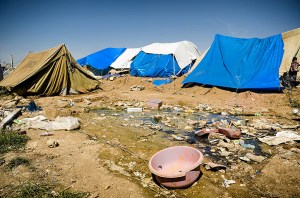
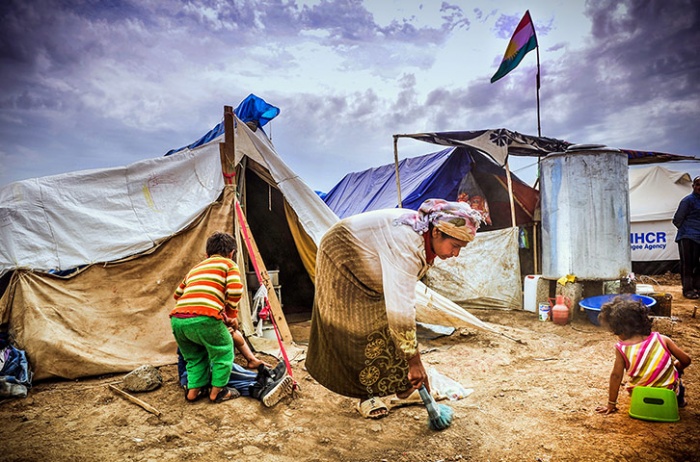
The Guardian newspaper ran a story about a mother and father and their four children who were forced to leave their home in Damascus, Syria because their ground floor apartment was situated in an area of intense fighting.  When their electricity and water supplies were cut off and they started to run out of food, they decided to make a run for it, taking with them only ID cards and money.  They fled to Iraq where they have been living for four years in a refugee camp. The children were terrified as the family escaped and embarked on a dangerous and exhausting journey to a camp accommodating 50,000 people but built for half that number.  They were safe but living conditions were unsanitary, the children desperately missed their home and they had nothing to do except play just outside the tent, as their mother Avine was scared to let them out of her sight.  A mum simply wanting to do the best for her children like millions all over the world, having to watch them grow up in a way far removed from what she hoped for them: ‘They have forgotten all about their home.  It makes me very sad.  I never imagined I’d bring up my children in a refugee camp.  Never.’  About the girls’ education she says: ‘Their lack of education was my biggest fear. I used to watch them playing outside in the mud and worry that they were going to end up illiterate.’

MDG Syrian refugees in Iraq

Four years on, things are much better for the family.  Avine has resumed the bridal salon business she had in Damascus – yes, people get married in refugee camps!   The family managed to pay a labourer to build them a small breezeblock house with their own facilities.  Avine has since had another baby, who has brought joy to the family. The older girls attend school and also had catch up classes for the two years they have missed and they also go to child resilience workshops to help them deal with the trauma they have experienced.   Avine says: ‘It is heartbreaking to have to leave your home….I won’t take my children back until the situation is settled and I do worry endlessly about them growing up in a refugee camp.’

In many ways, they are among the lucky ones.  Avine’s husband has gone to Germany, where they have relatives, to try to get residency for the family, although that is another loss the children have to deal with, albeit temporary.  Their quality of life is better than most.  But what shouts out to me when reading this article is the mother’s feelings of guilt and regret that she couldn’t do the best for her children, and her anguish that even now it might be too late to make up for that.

Not her fault, but that of the war that has torn her country apart.

 MDG-Syrian-refugees-in-Ir-011

Reference: http://www.theguardian.com/global-development/gallery/2013/jul/02/syrian-refugees-iraq-domiz-in-pictures#img-3

Article 3: ‘All adults should do what is best for children’

Article 3.  The best interests of the Child: ‘The best interests of children must be the primary concern in making decisions that may affect them.  All adults should do what is best for children. When adults make decisions, they should think about how their decisions affect children…..’

Years ago, we were a foster family for our local authority and during that time, we cared for children ranging from 10 months old to 12 years.  As the main carer, I was frequently involved in Care Plans and permanency planning for the children, and the proposed plans always kept the best interests of the child at the forefront.   This requires particular attention if children are below the age where they can participate and give their views about what was going to happen to them.  It often felt as if planning procedures were taking an unnecessarily long time, but in retrospect I can see how important it is to make the right decisions for each and every child.  Children don’t always have enough knowledge or life experience to make informed decisions about what should happen to them, so adults have to take the responsibility of getting it right.

I wanted to mention this to put into context the situation of children living in a conflict zone.  Sadly, such children are not at the forefront of their country’s policy making.  They are left to survive as best they can in circumstances which do not meet their physical, emotional, cognitive and spiritual needs.  The thing about war is, it’s always to provide a better future, a better place for children to grow up in.  Terrible things have to be endured for the glorious day, somewhere in the future.  But how can that be, if the legacy of war is landmines which will continue to maim and kill, long after the fighting is finished, as in Vietnam and Laos?  And that’s just the potential for physical harm; the psychological and emotional damage is equally devastating.  This quote from Father Manuel Musallam in the Gaza Strip:  ‘Children and adolescents have been hurt in body and spirit, unable to find joy, talk about peace or offer it to others.  How can we convince these kids not to hate Israelis?’  aisianews.it.   Will child victims of war ever have a ‘normal’ life again?

And think about those rights I talked about previously: if the local school has been bombed, there will be no education.  If the streets aren’t safe from mortar fire, there will be no place to play.  If it’s impossible to get to the health centre for basic health care, or worse, the hospital, for urgent medical treatment, even survival is threatened, and this is a daily experience for so many children.  Having said that, in some areas there are considerable efforts to work in the best interests of children.  Local communities are working alongside NGO’s (amazingly, given the circumstances) to organise evacuation programmes for women and children to places of safety; or to set up makeshift schools and health care centres, and even to provide play and activity programmes against a backdrop of fear, uncertainty and chaos.  These slightly more fortunate children can experience at least a degree of ‘normal life’.

normal_kids_out_in_spring

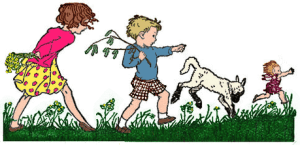
Is this how childhood should look, innocent and carefree?

‘All children have the right to be treated equally’

Article 2 is concerned with non-discrimination: ‘The Convention applies to all children, whatever their race, religion or abilities, whatever they think or say…….no child should be treated unfairly on any basis.’  I’ve left out a bit about language/gender/disability/culture/status of parents.

Of course in one sense war doesn’t discriminate, all children affected by war are at risk of trauma, injury and death.  And all children in a war zone are denied the right to education, healthcare, shelter, and a ‘normal’ childhood; they are definitely ‘treated unfairly’.

But further discrimination can be evidenced: poorer families are unable to move to safer areas because of low income/status.  These families struggle to survive at the best of times, they certainly don’t have the resources to move themselves and their possessions away from the conflict zone.   And you might remember the story about the Yazidi (Iraqi) father who was forced to abandon his 4 year old disabled son as the family fled from the advance of IS jihadists on their village.  The family travelled on foot for days over a mountain range and were unable to carry little Aziz any further.  Although, Aziz was rescued and taken to hospital in Syria, sadly he died.  His father was devastated, distraught, heartbroken.  But I don’t condemn him, he didn’t leave his son to die, war killed him.

‘How is it that women and girls make up the highest proportion of refugees and displaced populations and yet they are the least visible?’ asks David Miliband, former Labour politician and now CEO and president of the International Rescue Committee.  This question prefaces a report from the IRC entitled ‘Are we listening? Acting on our Commitments to Women and Girls affected by the Syrian conflict.’  And women and girls in conflict situations face much worse:  in Iraq they are captured and sold into sexual slavery by IS militants, considered to be the spoils of war. A 17 year old girl says:  ‘Nor do they spare the girls.  Some of our group are not even 13 years old….They say we are like goats bought at a market’.  Both these quotes are taken from an article in Premier Christianity, November 2014 issue: ‘The Female Cost of War’  (premierchristianity.org.uk).  In countries affected by war, the powerful will always exploit the vulnerable.

I talked in the first post about the BBC documentary by Lyse Doucette on the children who live constantly with the threat of violence and death.  At the end of the programme we see a girl, about 8 or 9, with one leg, supported on crutches.  She doesn’t have a prosthesis (artificial leg) and moves along the road with difficulty.  She stands and watches a group of her friends playing in the war ravaged street, chasing each other and sitting playing games with pebbles in the rubble.  She can’t join in their games but she doesn’t look sad, just resigned to her situation.  War has robbed her of her right to play and join in (Article 31.)   

We can clearly see that certain groups of children are more likely to experience discrimination than others.


What is a Child? (As defined by the UNCRC)

Article 1: Definition of a Child ‘…….a person below the age of 18, unless the laws of a particular country set the legal age of adulthood as younger’.*

normal_little_bugle_corp

For such countries, the Convention encourages them to consider increasing the age of majority to 18, however in practice, the Articles of the Convention apply to anyone under 18, regardless of the laws of their country.

Why is this important?  Because childhood is socially constructed; it is never an absolute.  An example: in certain countries, and historically in the UK, a girl of 12, 13, 14, 15 can be legally married to a man over the age of 18.  Under current UK law, this is not legal and the subsequent sexual relationship would be considered child abuse, resulting in a criminal conviction and possible imprisonment, placement on the Sex Offenders Register, debarment from certain jobs…..you get the picture.  In one country it’s illegal, in another, it’s the norm.  Perhaps in such countries a young female teenager isn’t considered capable of making responsible decisions for herself.  In that case, why is she getting married?  In the UK, those under 18 are protected under the Children Act 1989 (and subsequent Acts) from situations and activities that could potentially harm them; the UNCRC seeks to protect all the world’s children.

Let’s look at another example: my father-in-law started work at 14.  I’m not sure but I assume he worked a full day, though as an apprentice he wouldn’t have earned a ‘living’ wage (no Minimum Wage in those days.)  Considered an adult for the purposes of work, he couldn’t rent or buy a home, get married, drink alcohol, drive a car; and, not least, he couldn’t vote.  He paid Income Tax and National Insurance but played no part in deciding which political party should spend his hard earned contributions.  And he wouldn’t have, until he was 21!  Some people argue that the UK has gone too far the other way.  The age of majority is now 18, an age when some young people are just embarking on their university degrees, so all the responsibilities associated with adulthood (it’s argued) shouldn’t be given to ‘children’ still in full time education who can’t make ‘grown up’ decisions.  In some countries today children are working at 11 or 12, usually combining work with studying at school. There are countries in which full time secondary school education doesn’t finish til age 19.

Furthermore, all over the world there are religious and cultural celebrations of ‘Coming of Age’, for example, the Bar Mitzvah of the Jewish faith for boys aged 13.  Many of these originate thousands of years ago and don’t relate to modern times, but even today there are people groups who in practice set the age of adulthood at below 18.

The point I’m making is that the activities and responsibilities we associate with child/adulthood are flexible on the age to which they apply.  Therefore it’s important that the UNCRC is NOT flexible on its application: it’s everyone under the age of 18 years.  As we’ve seen, this is actually problematic in practice: ‘In many societies children’s births are not registered and they have no idea when they reach eighteen.  In other cultures, boys and girls marry much younger, often at puberty, they work as soon as is necessary and even have their own children, at ages which the UNCRC would still refer to as childhood’. (Understanding Childhood, Martin Woodhead and Heather Montgomery, The Open University, 2003.)  However, this Blog is not intended to apply policy or solve problems…….

*All ‘Article’ quotes are from http://www.unicef.org/arc/files/Rights_overview.pdf

Children in the Conflict Zone

What is the UNCRC?  (Section 2 of 2)

‘A legally-binding international agreement setting out the civil, political, economic, social and cultural rights of every child, regardless of their race, religion or abilities.’(savethechildren.org.uk.)  It was adopted by the UN in November 1989 and has to date received 194 ratifications from member states of the UN.  These states  ‘ have agreed to do everything they can to make the rights a reality for children around the world.’   Many of the Articles reflect the Universal Declaration of Human Rights, such as the right to education, the right to belong to a country, the right to freedom of conscience, association and beliefs.  NGOs such as Save the Children and UNICEF have powers to implement  the Articles of the UNCRC.

In May 2000, two optional protocols were added which I think are crucial to children’s rights when considering conflict situations, and more than 120 states have so far signed up to these.  They are: that governments ensure that those under 18 are not forcibly recruited into their armed forces (and if under 18s are members of the armed forces, that they do not take part in combat); and secondly that governments prohibit child prostitution, child pornography and the sale of children into slavery.

The UNCRC is concerned with Provision: e.g., the right to an adequate standard of living, education, health services.  Protection: e.g. from abuse and neglect, from sexual exploitation, from inappropriate forms of work.  Participation: e.g. the right to freedom of thought and expression, the right to have a say in decisions made about them.   I think it goes without saying that nations in a state of war are going to struggle to maintain the minimum standards recommended by the Convention, even if their previous Human Rights record was good.

There are 42 Articles, and a few more which are to do with how they should be implemented.  My plan is to look at most, but not all, of the Articles in turn and explore how they are violated by states or countries at war.   As I said last time, I’m not out to take sides, I’m blaming war itself, if you like.   Some of the Articles can be doubled up to form one blog entry, and some are not relevant, so I estimate it will take about six months to work through the Charter.  It’s going to be a bit of a challenge!   But first, we have to ascertain: What is a child and how is childhood defined, in order to determine who exactly the Convention refers to, and why.  This is the subject of the first Article  of the UNCRC and will be the subject of the next blog entry.