I’ve just returned from a trip interrailing around Central Europe, also known as Mitteleuropa in German. Travelling by train across multiple countries without visible borders is a fascinating, if somewhat exhausting experience: arriving at each new city and exploring its treasures before moving on to the next a few days later. Of course, top of my list for must-see places to visit were some of Europe’s beautiful churches and cathedrals, so these will be the subject of the Blog for the next few months.
Ah, Vienna! as Midge Ure of 80s band Ultravox once sung. A city of imperial rococo palaces, coffee-and-cake houses, concert halls, art galleries – and these two fabulous churches.
St Stephen’s Cathedral (Stephansdom)
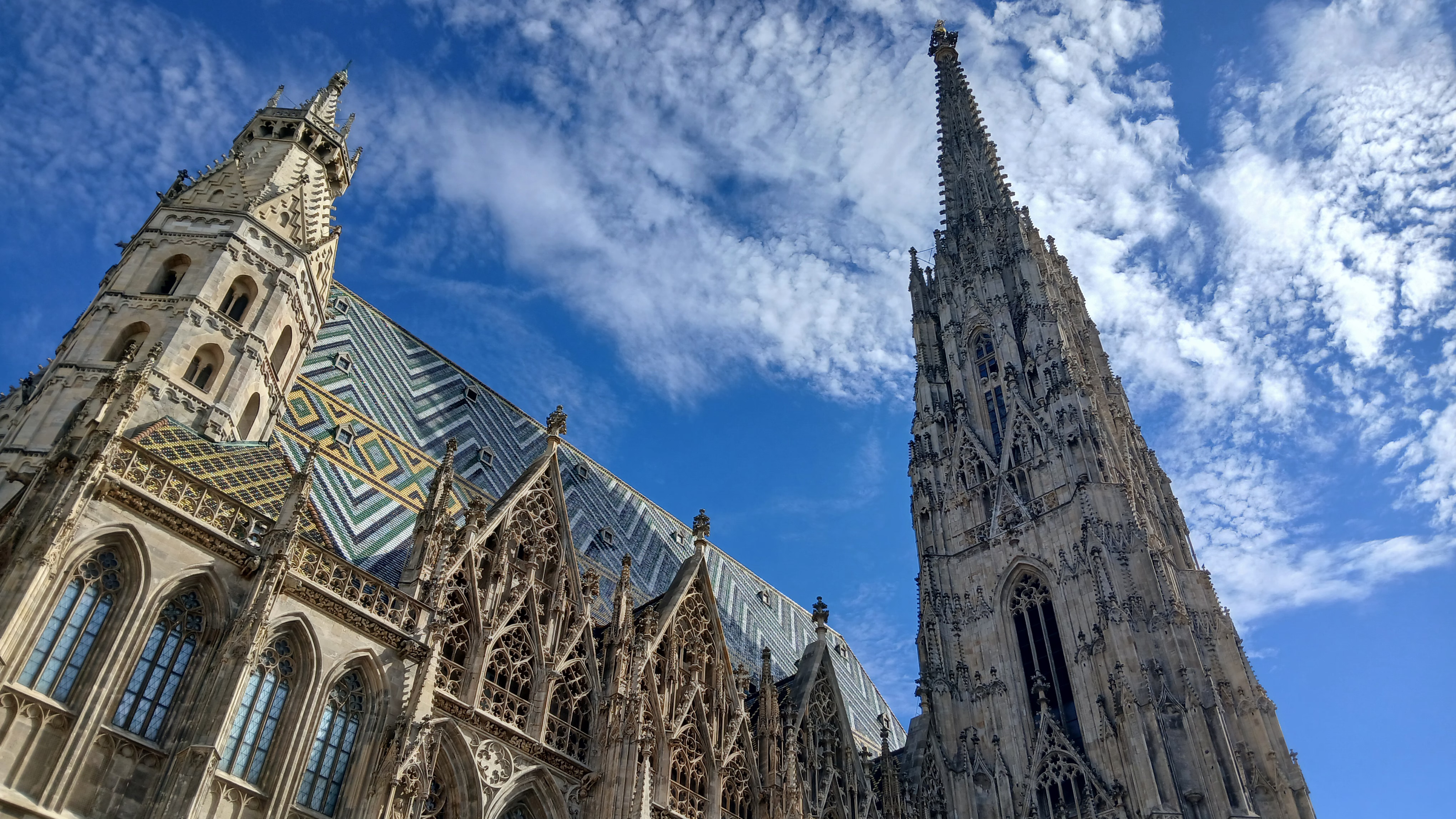
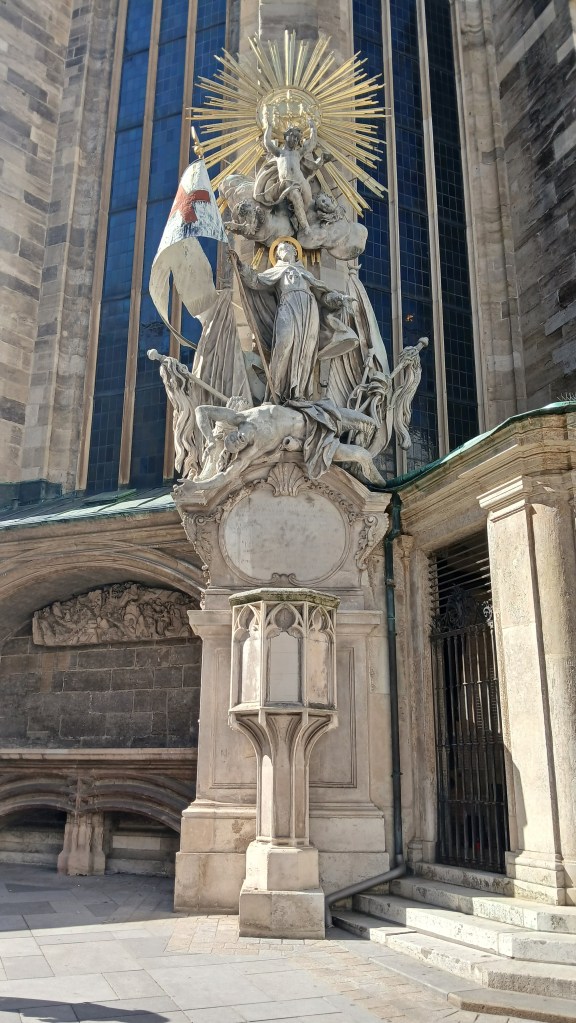
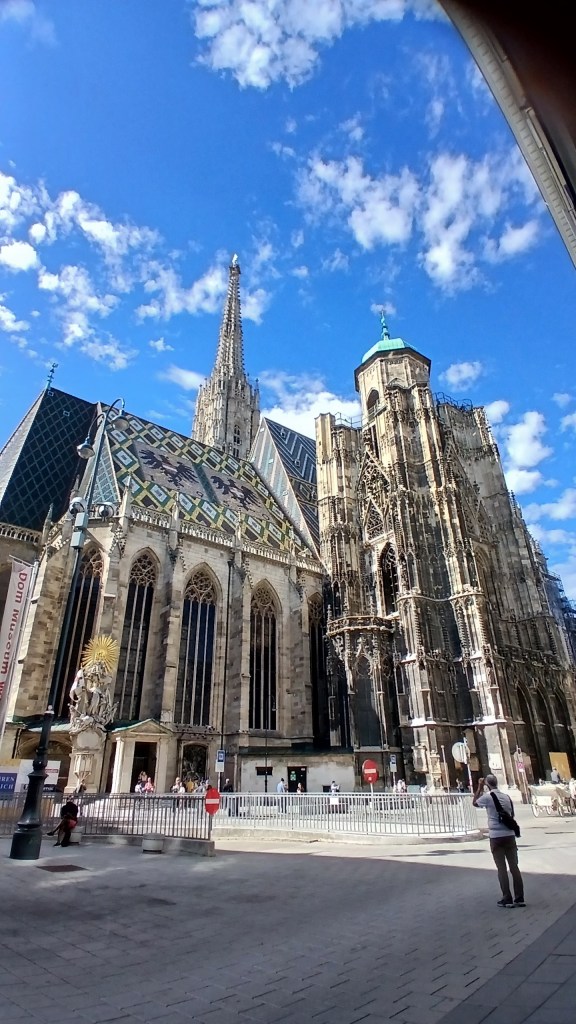
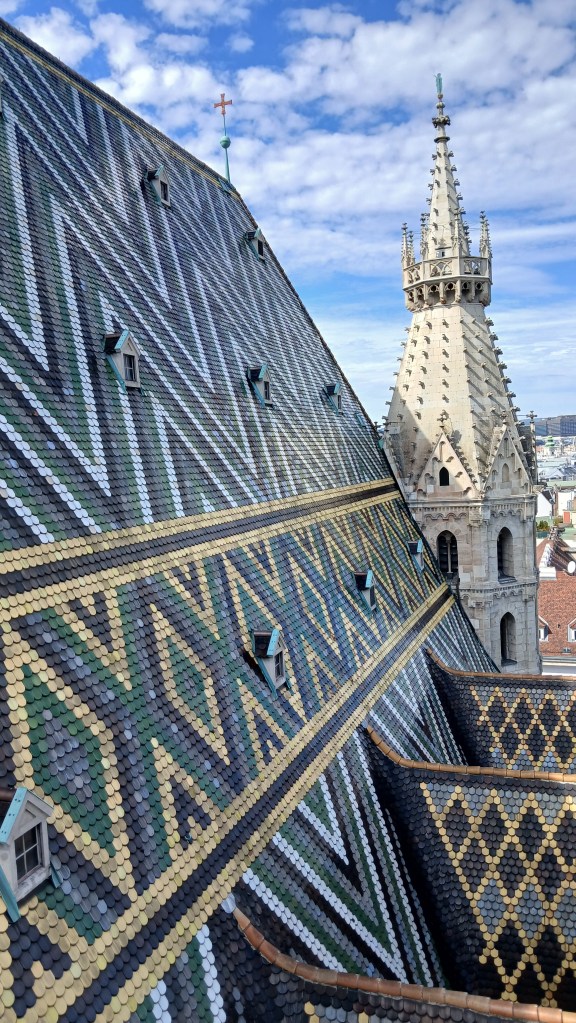
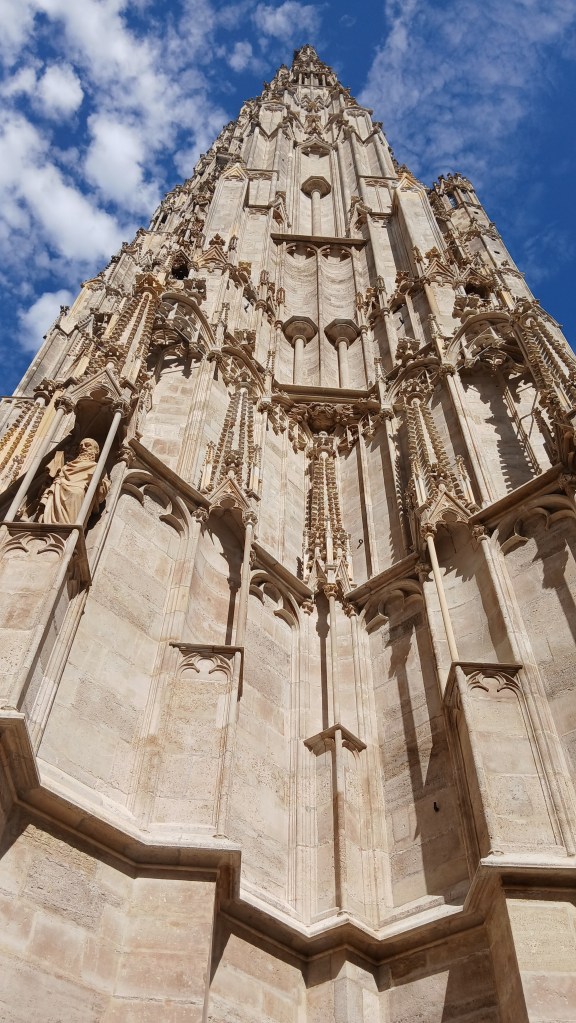
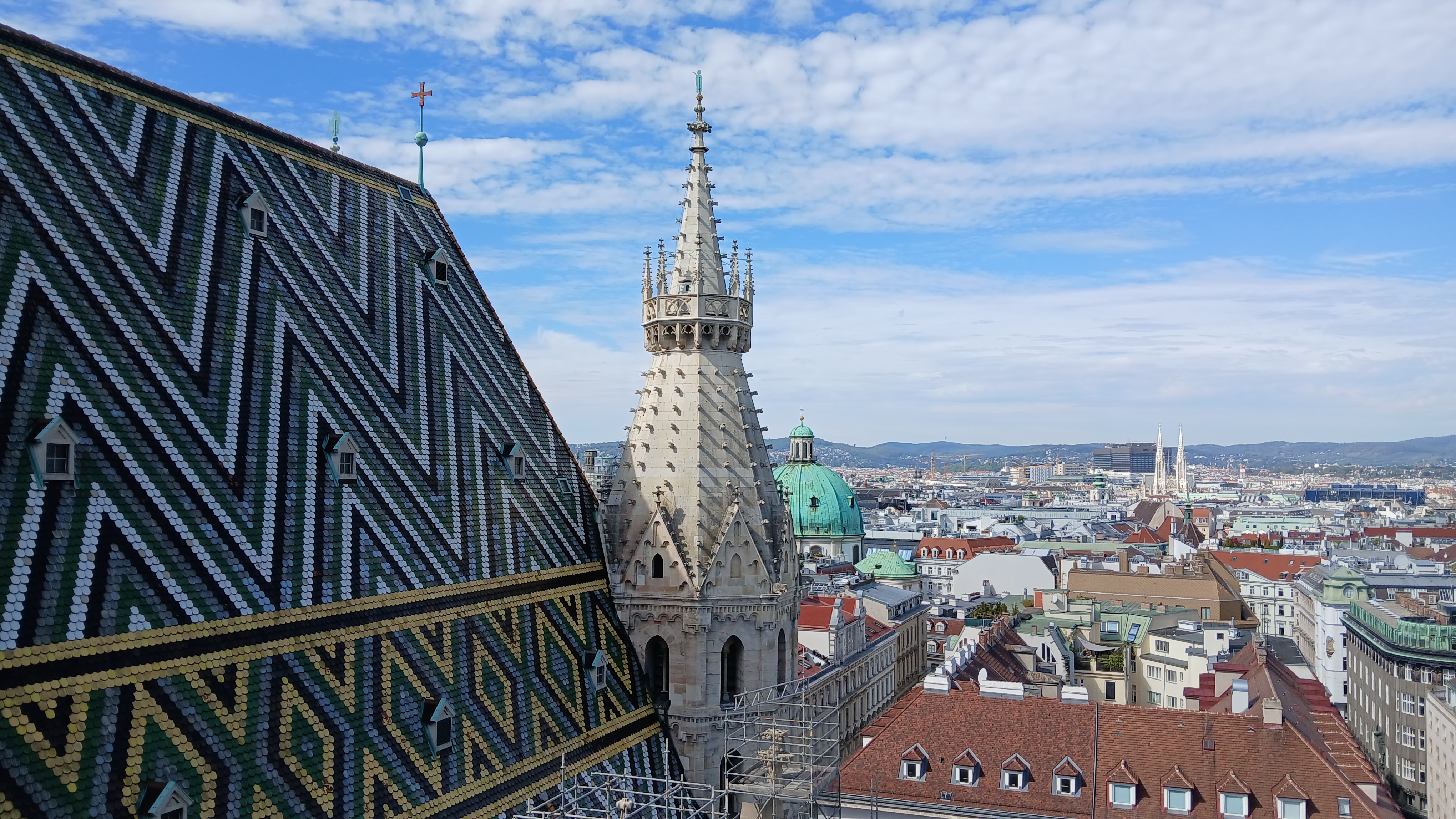
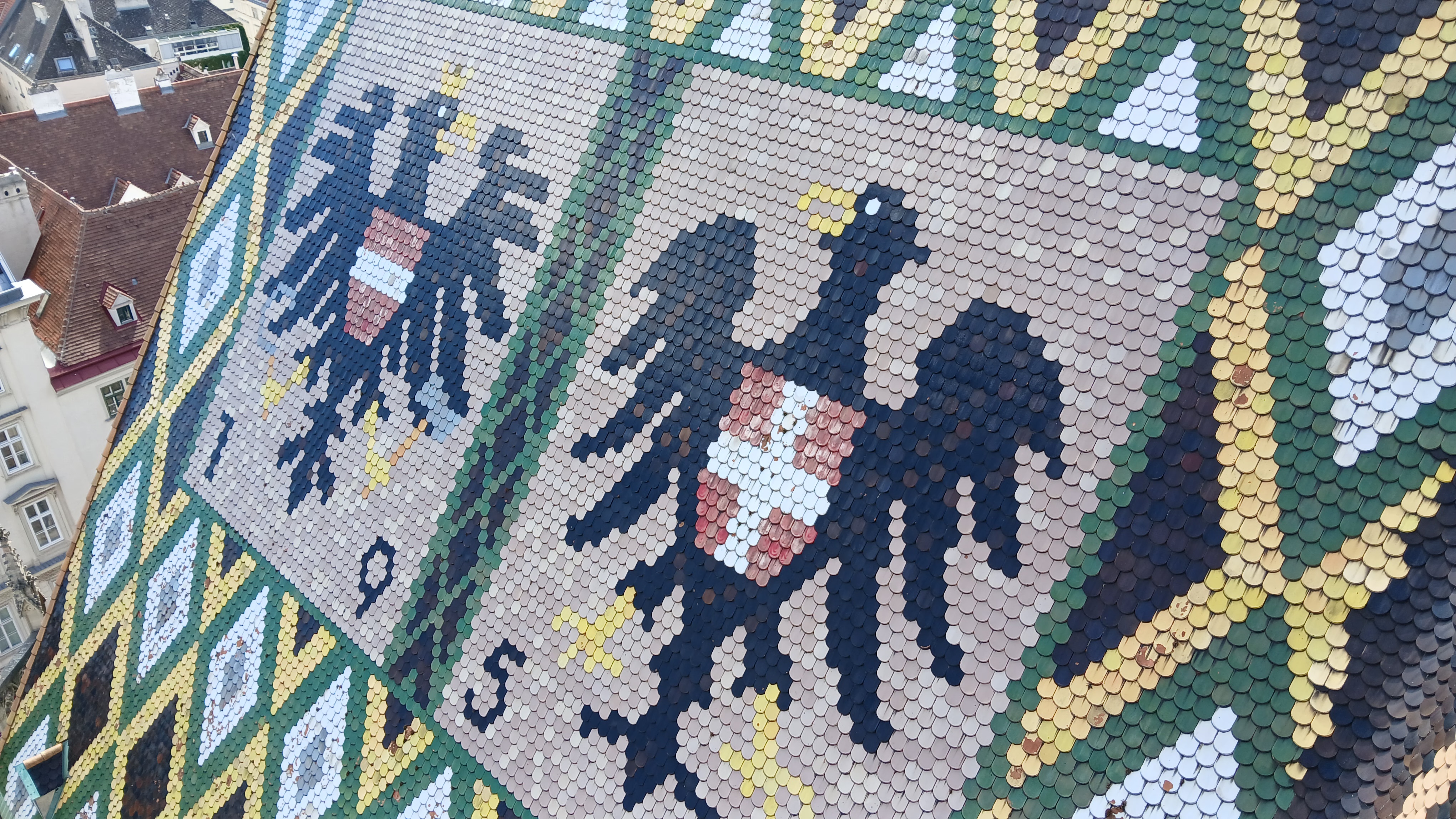
The colourful roof of the cathedral strikes you immediately it comes into view as you come round the corner into Stephansplatz, the large piazza or square at the geographical centre of Vienna. The cathedral is one of the tallest in the world, its South tower is a height of 136 metres (446 feet); it is affectionately known as Steffi by the inhabitants of Vienna. Today’s cathedral is Romanesque and Gothic in form and stands on the ruins of two earlier churches, the first a parish church founded in 1137 and replaced in 1230. Very little of the original church remains as there were extensive building programmes between the 14th and 18th centuries. The Archdiocese of Vienna was established in 1469, making St Stephen’s a cathedral, seat of the Archbishop of Vienna. A visit to the cathedral would not be complete without viewing the marvellous roof close at hand, by way of a convenient lift to a viewing platform, rather than the 256 steps to almost the top of the tower. The roof is 111 metres (364 feet) long and covered with 230,000 glazed tiles. On the North side the coats of arms of the City of Vienna and the Republic of Austria are depicted, this is the roof which can most easily be seen. The roof is so steep that it is kept clean by rainwater alone and is rarely covered by snow in Winter. Back at ground level, the Capistran pulpit is located outside the cathedral on the North West wall. A Franciscan Friar, Giovanni da Capestrano, is said to have preached here in 1456 against the Turkish invasion of Vienna, and the 18th century Baroque statue above the pulpit graphically depicts the Friar under a sunburst, trampling on a defeated Ottoman invader. Not sure how the good Friar would have responded to this!
Source: Wikipedia
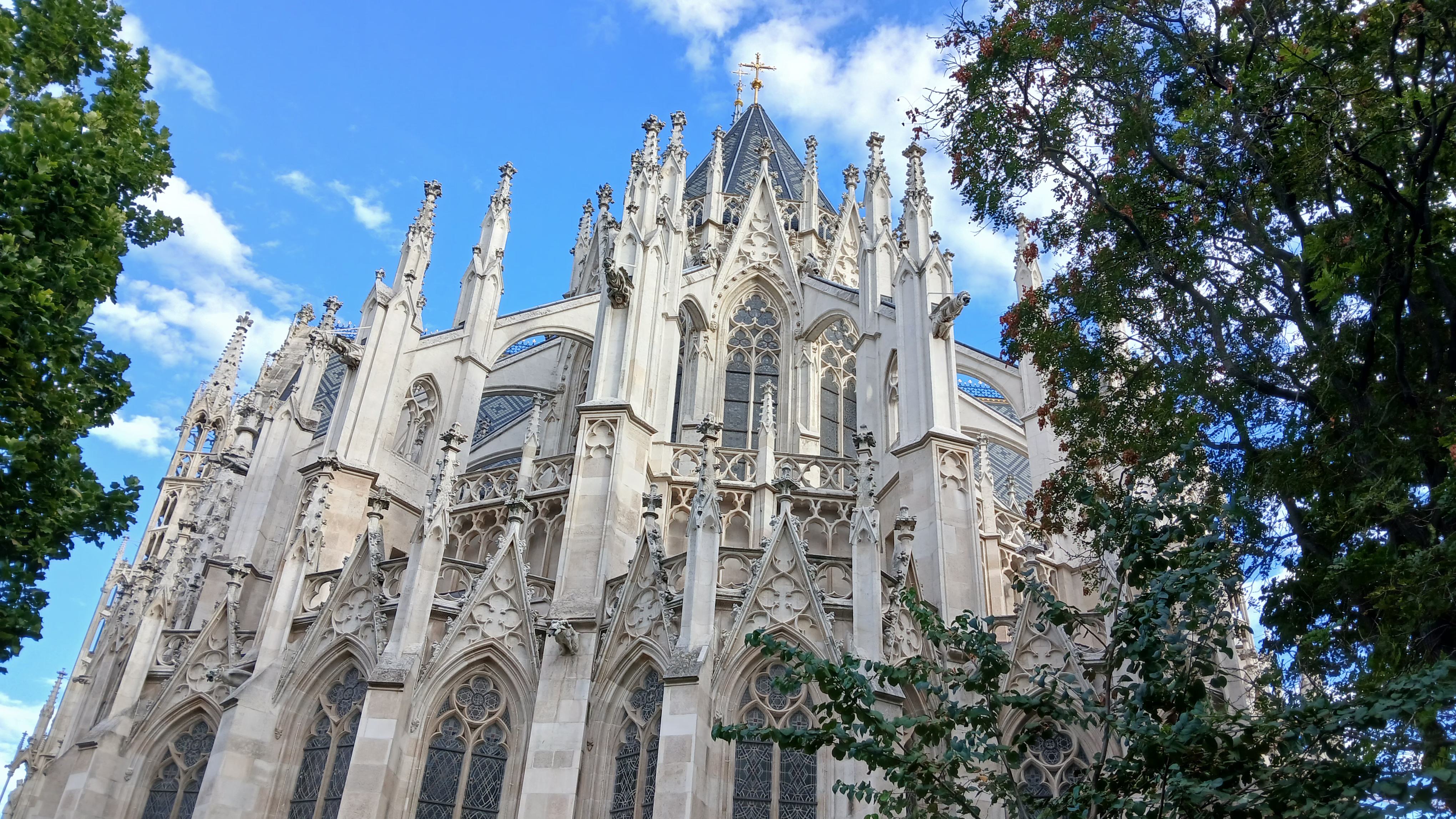
The Votive Church (Votivkirche)
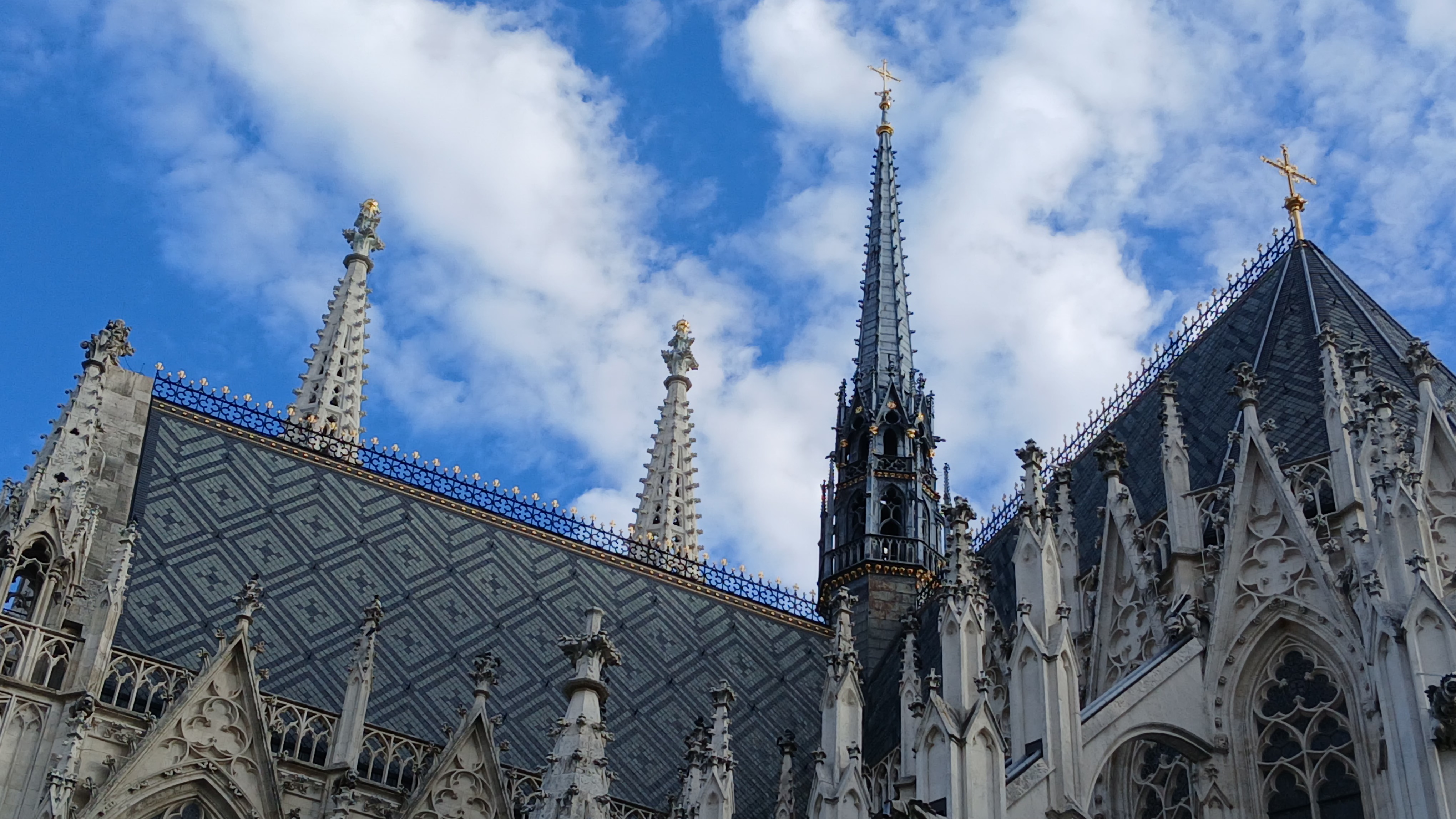
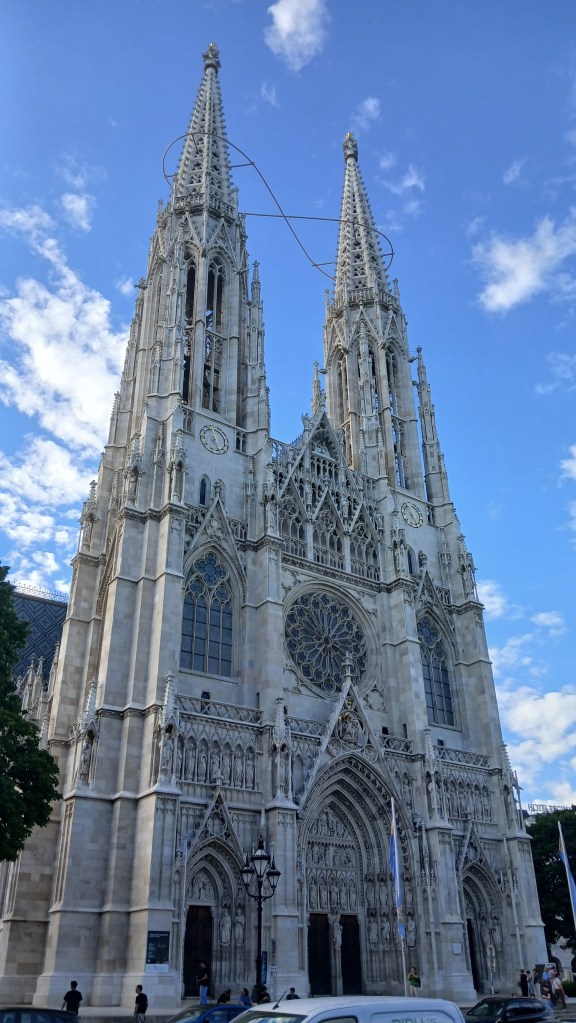
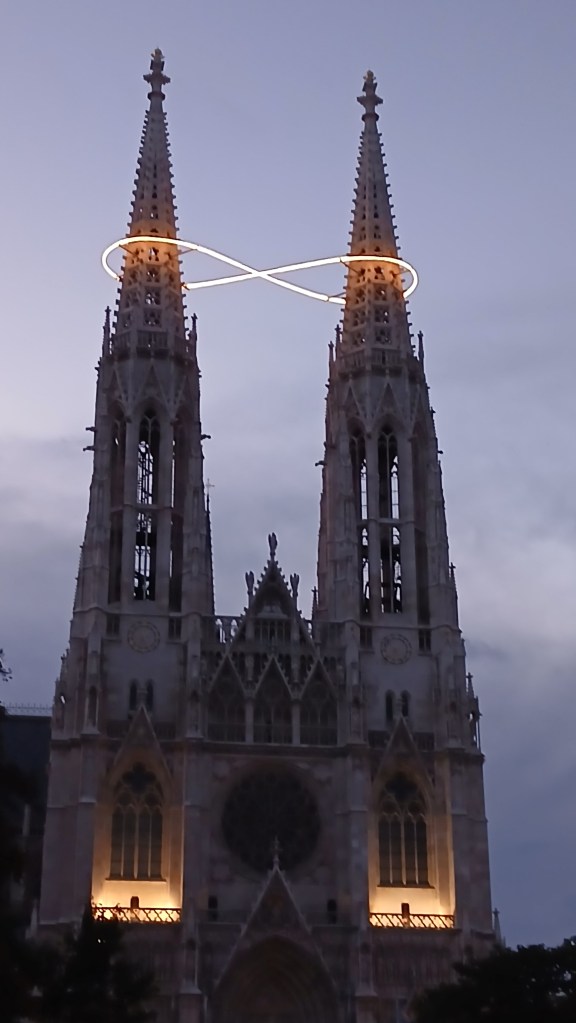
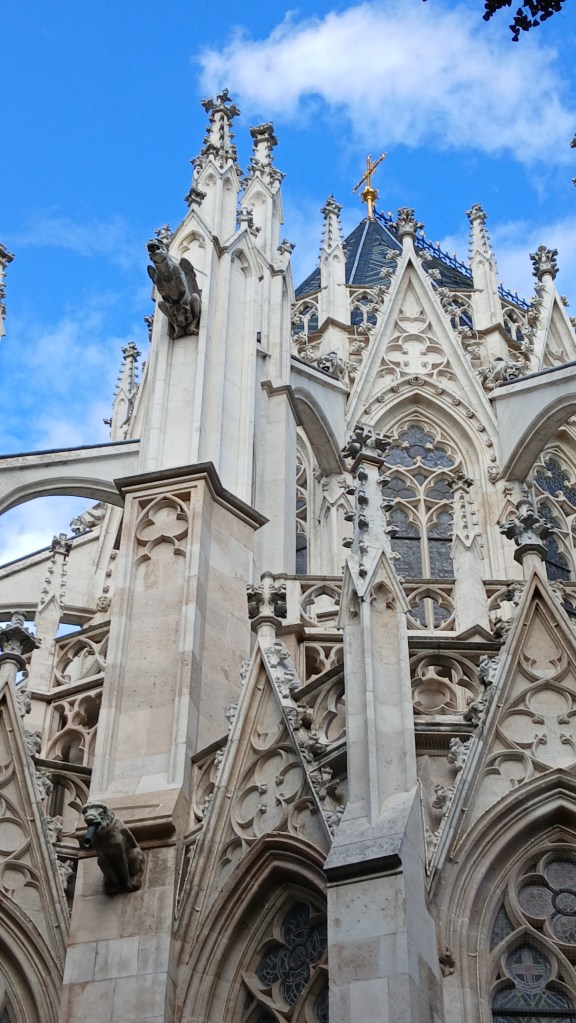
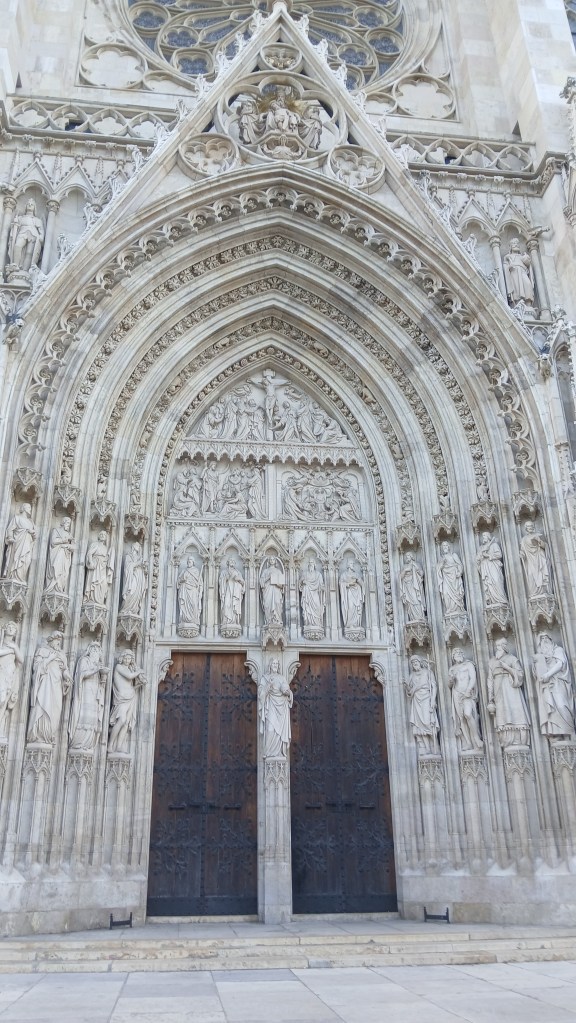
This pretty Neo-Gothic church is often mistaken for Stephansdom as the architectural style and roof tiling are similar. In fact, the age-difference between the two is more than 700 years. The church has an interesting origin: in 1853 an assassination attempt was made on Emperor Franz Joseph by a Hungarian nationalist. Although badly wounded, the Emperor survived the attack because the knife blow was deflected by the heavy embroidered collar he was wearing. Also a passer-by, Dr Joseph Ettenreich, came to the Emperor’s assistance and helped to overcome the assailant; he was later admitted to the nobility by the Emperor as a reward. After the unsuccessful assassination attempt the Emperor’s brother Maximillian decided to raise funds to establish a new church on the site of the attack; the church was to be a votive, or thanksgiving offering to God for sparing the Emperor’s life. In 1854 an architectural competition was established to decide the design of the proposed church. Projects were submitted from the Austrian Empire, Germany, England and France, and finally local boy Heinrich von Ferstel from Vienna was chosen as the successful architect, at the age of just 26. Construction began in 1856 and von Ferstal chose the neo-Gothic style, borrowing from the architecture of Gothic French cathedrals; for this reason it is often assumed to be an original Gothic church. The Votivkirche is made from white sandstone which looks beautiful, with its lacy turrets and spires, but needs constant renovation to protect it from pollution and acid rain which erodes the soft stone. At dusk, the church becomes even more beautiful with its permanent ‘Infinity of Light’ installation, it was worth waiting for!
Source: Wikipedia