Budapest: Thermal Baths, a Musical Fountain, a Castle on a Hill, the Blue Danube and Goulash! Also, a parliament building design based on London’s Houses of Parliament. The height of the Parliament’s dome 96m (315 feet) is exactly the same as St Stephen’s Basilica, apparently signifying that church and state have equal standing in Hungary. Budapest is a city of two halves divided by the River Danube: hilly Buda on one side with the city’s medieval quarter and the newer Pest on the other, with its parliament building, cathedral and lots of other interesting places to visit! We visited two churches, one in Buda and one in Pest.
St Stephen’s Basilica (Szent Istvan Bazilka)
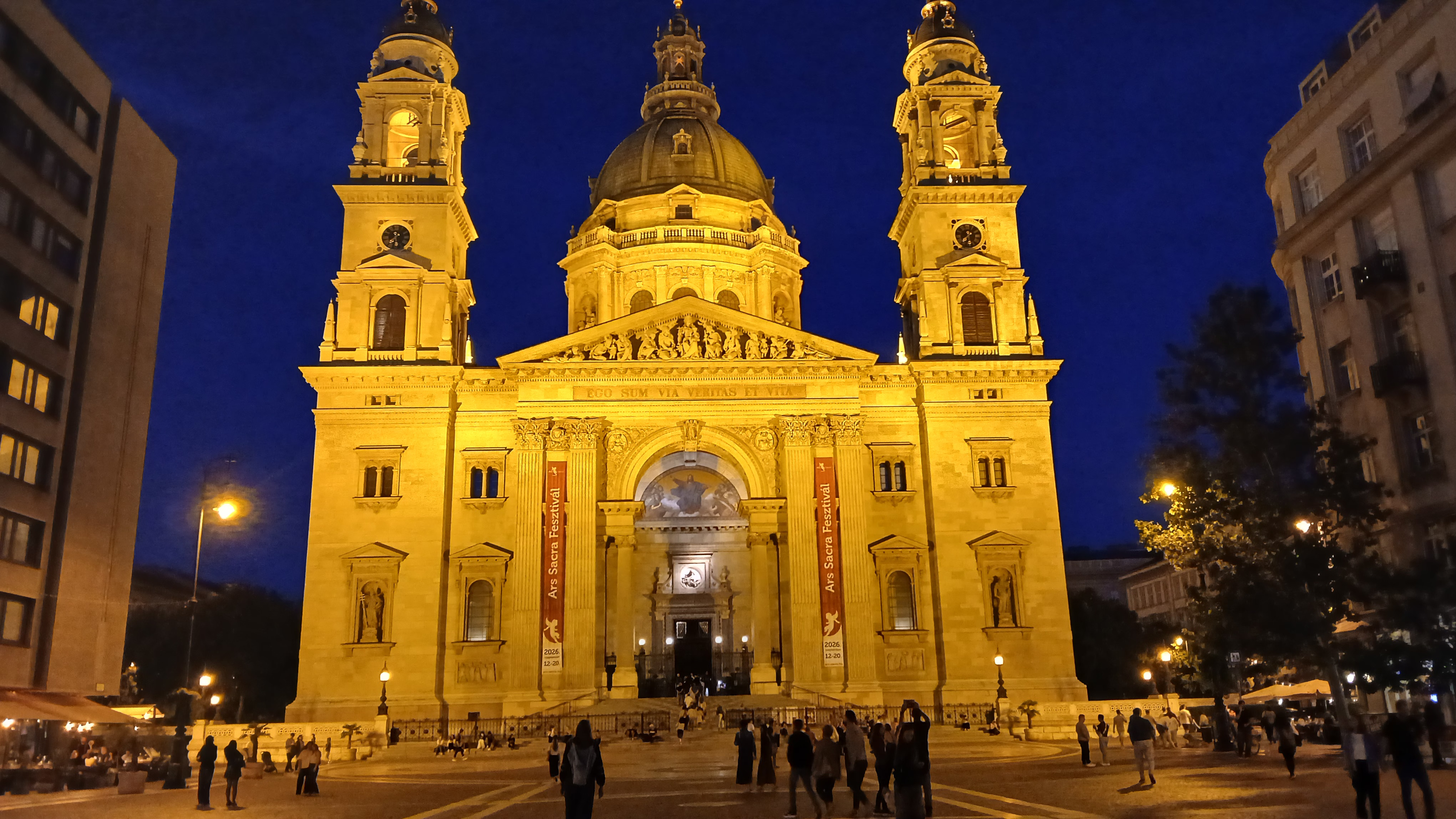
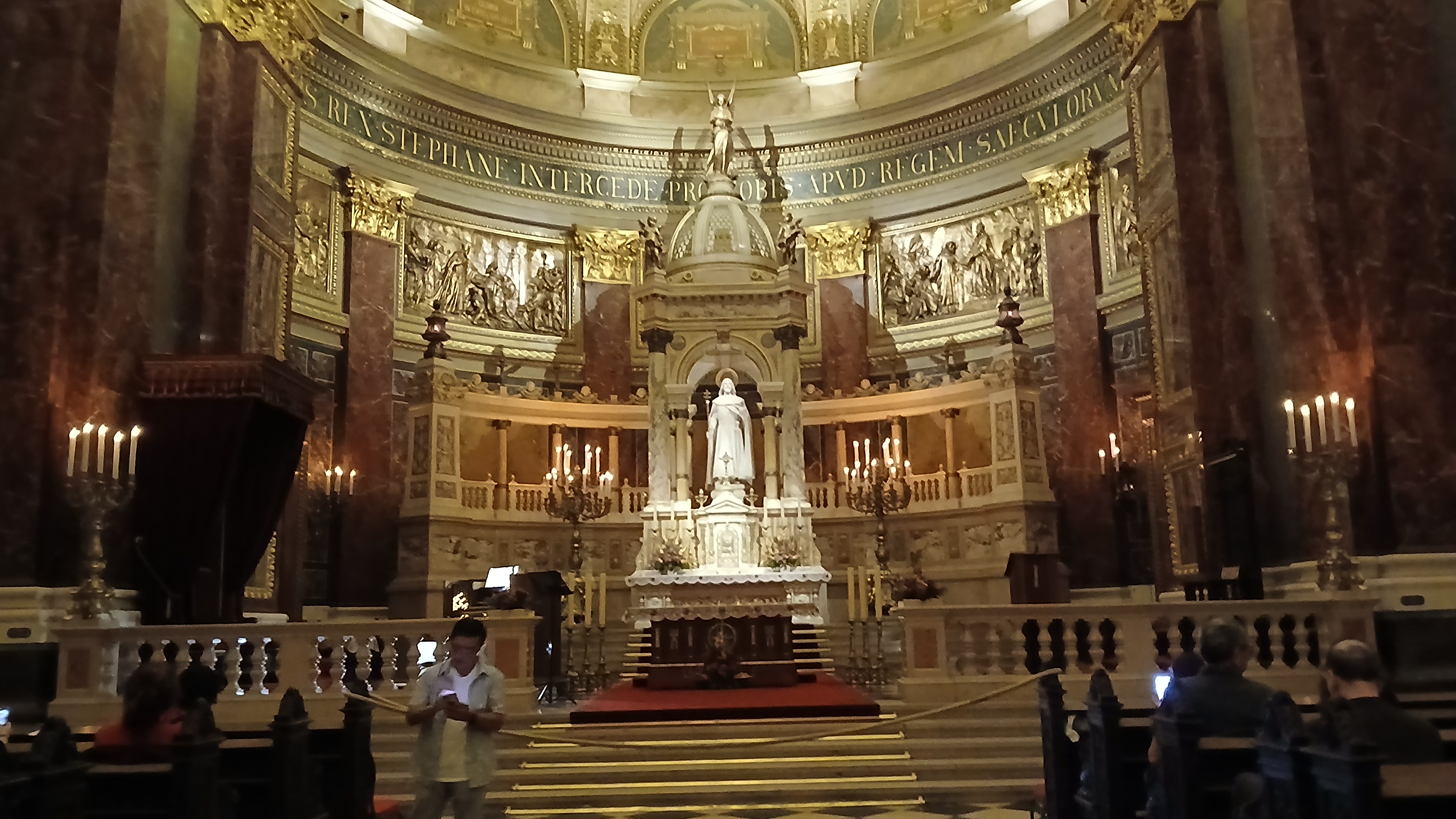
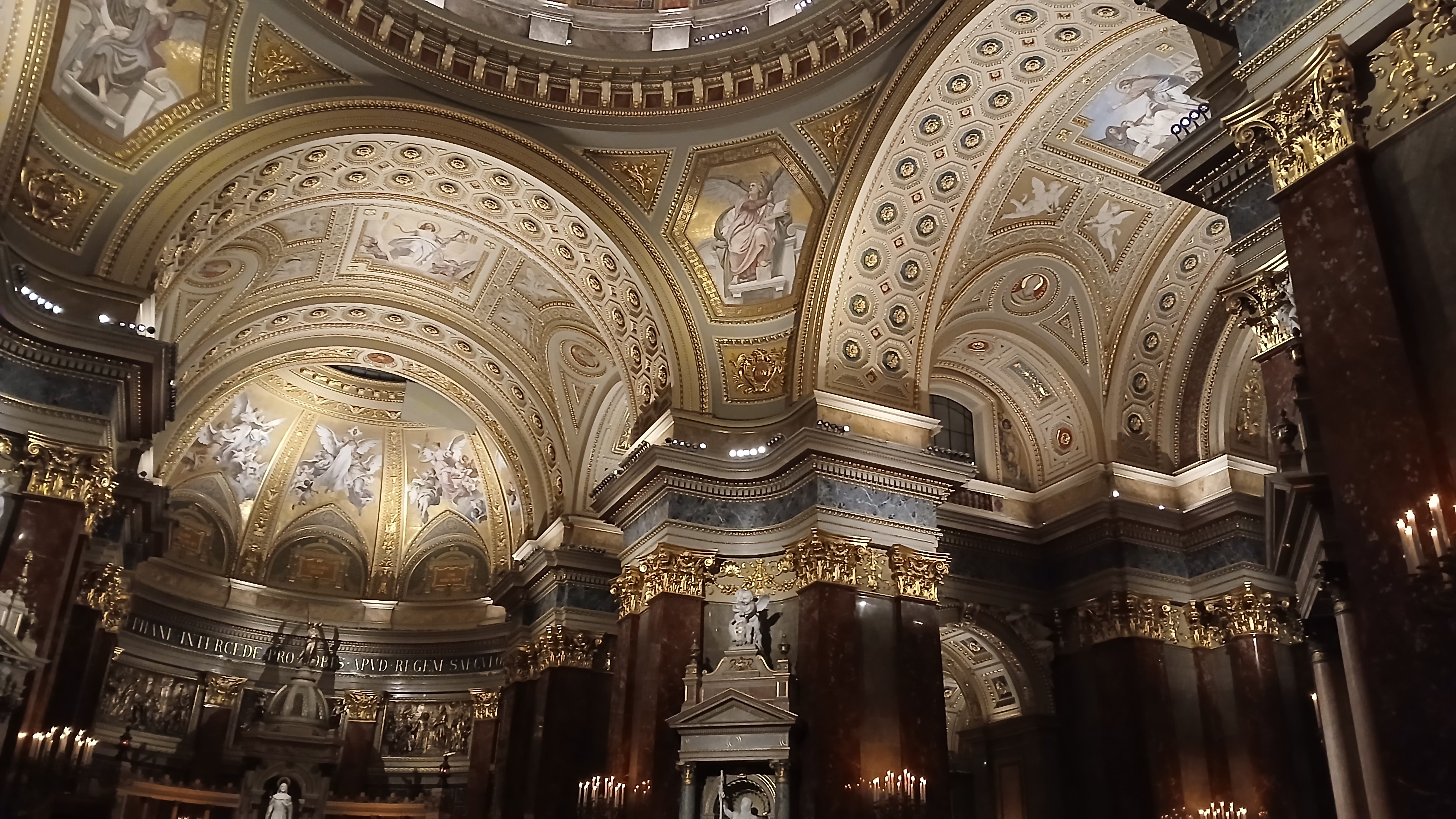
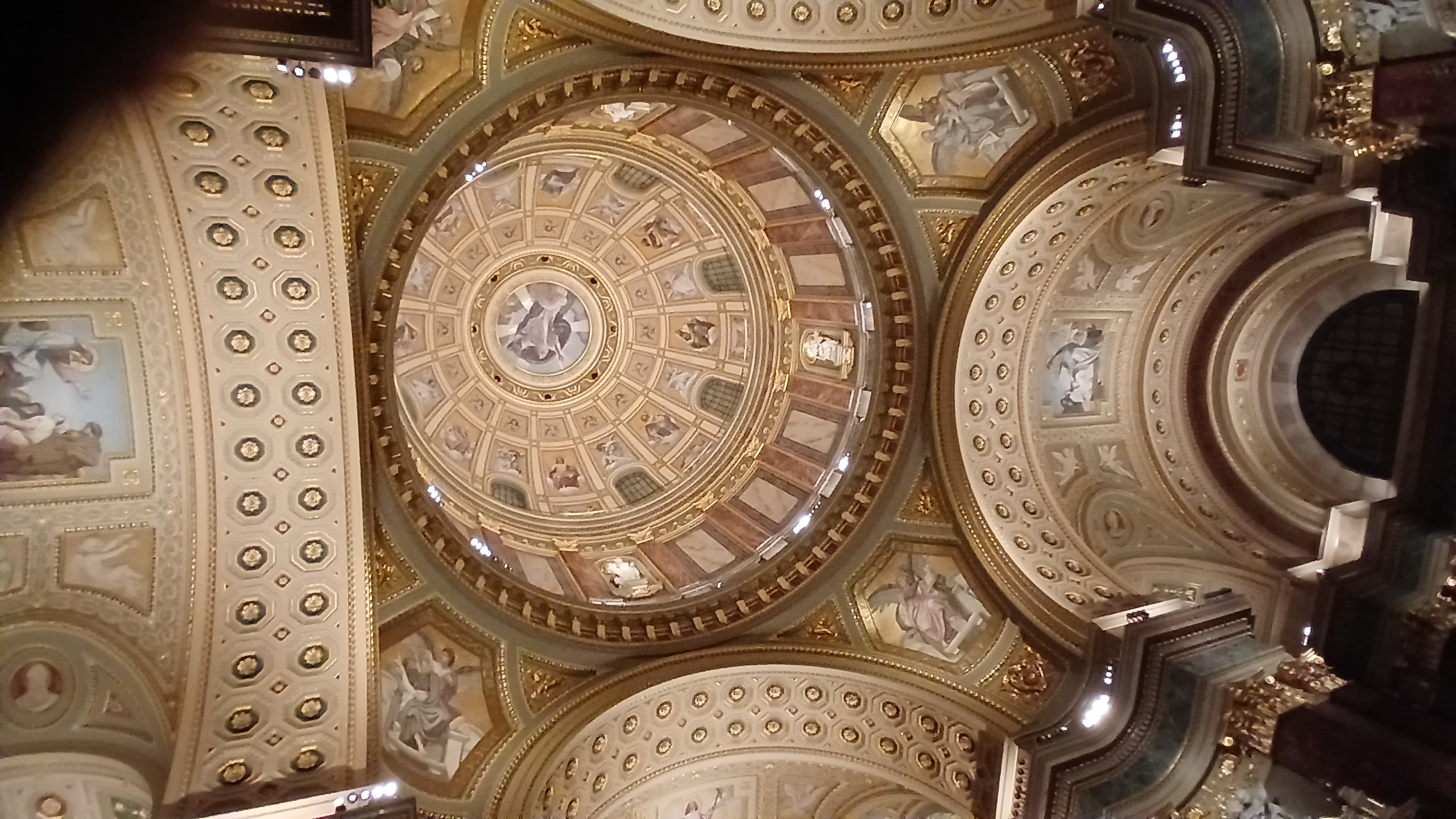
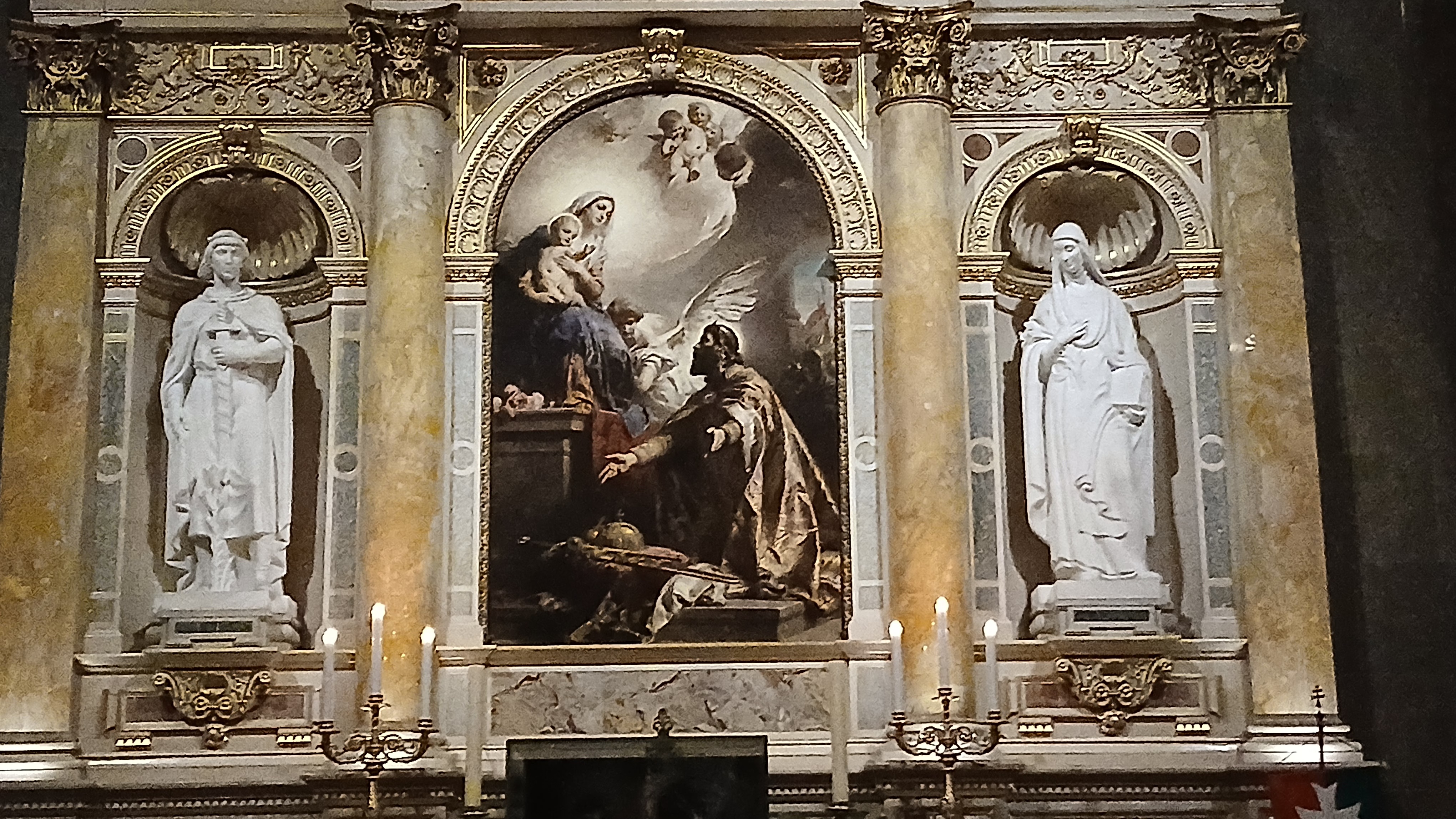
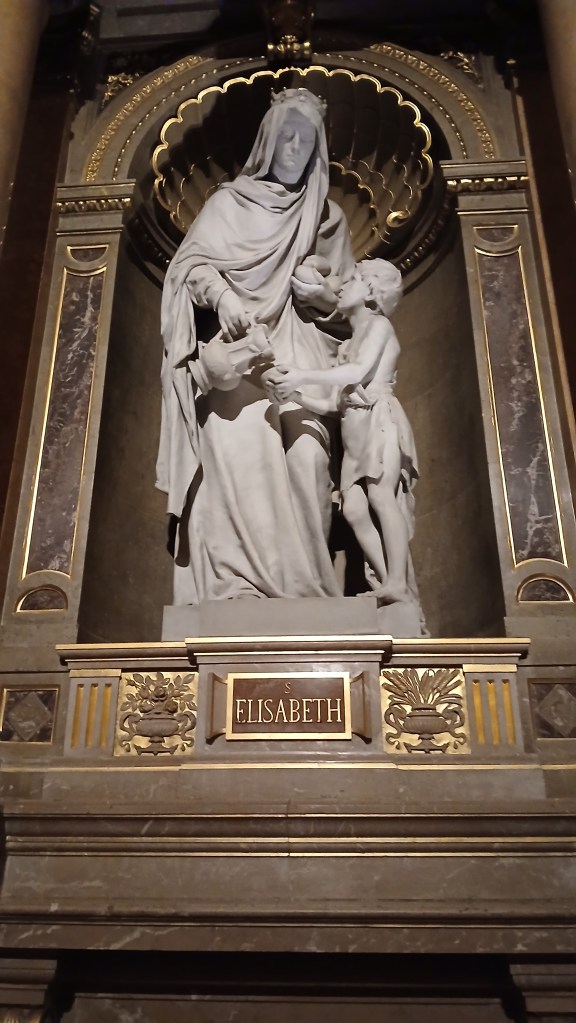
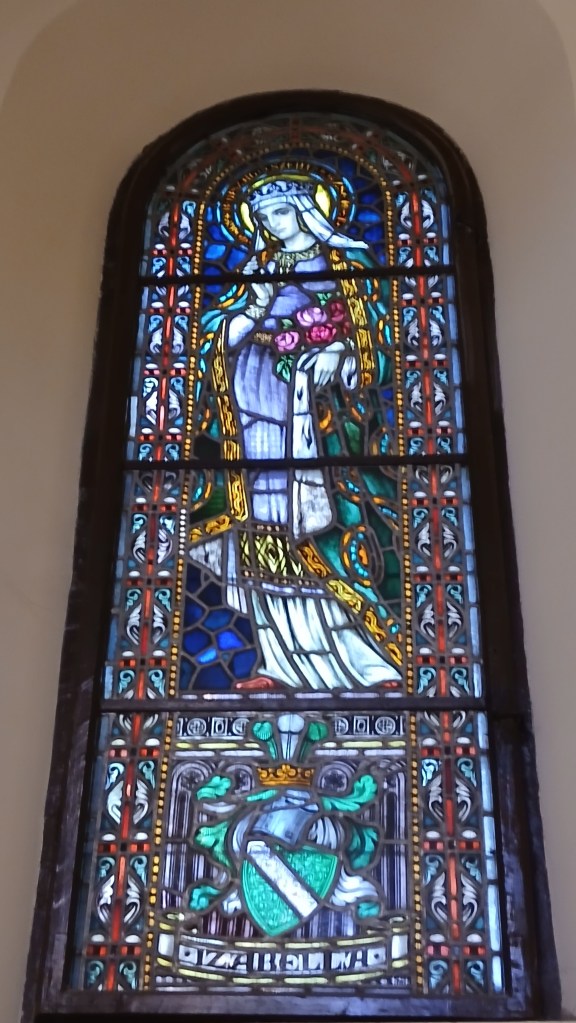
Budapest’s largest church is dedicated to Istvan, the first of Hungary’s Christian kings. This isn’t an ancient church; construction began in 1851 and was completed in 1905 with the Neo-Renaissance dome being added in 1867. It’s the third largest church in Hungary and houses an unusual relic: the mummified forearm of King Istvan, kept in the Chapel of the Holy Right Hand. The Basilica has a richly decorated interior and our visit was in the evening attending a classical music concert. The sumptuous surroundings and beautiful music together created an unforgettable experience. The Basilica contains many statues in alcoves, including one of St Elizabeth of Hungary, the subject of a charming legend. Widowed at age 20, Elizabeth had her dowry returned to her on her husband’s death. She used the money to establish a hospital where she cared for the sick herself, she also redistributed food from the rich to the poor. Legend has it that one day Elizabeth had some loaves of bread hidden under her cloak, stolen from the castle. When apprehended and ordered to open her cloak, the bread had miraculously turned into red and white roses, ‘The Miracle of the Roses.’ Although this is only a pretty legend, there is no doubt that Elizabeth was a ‘symbol of Christian charity’, as she is remembered by Hungarians. The stained-glass window of Elizabeth is from a small chapel I popped into.
Source: DK Eyewitness, Budapest; Wikipedia
Matyas (Matthias) Church
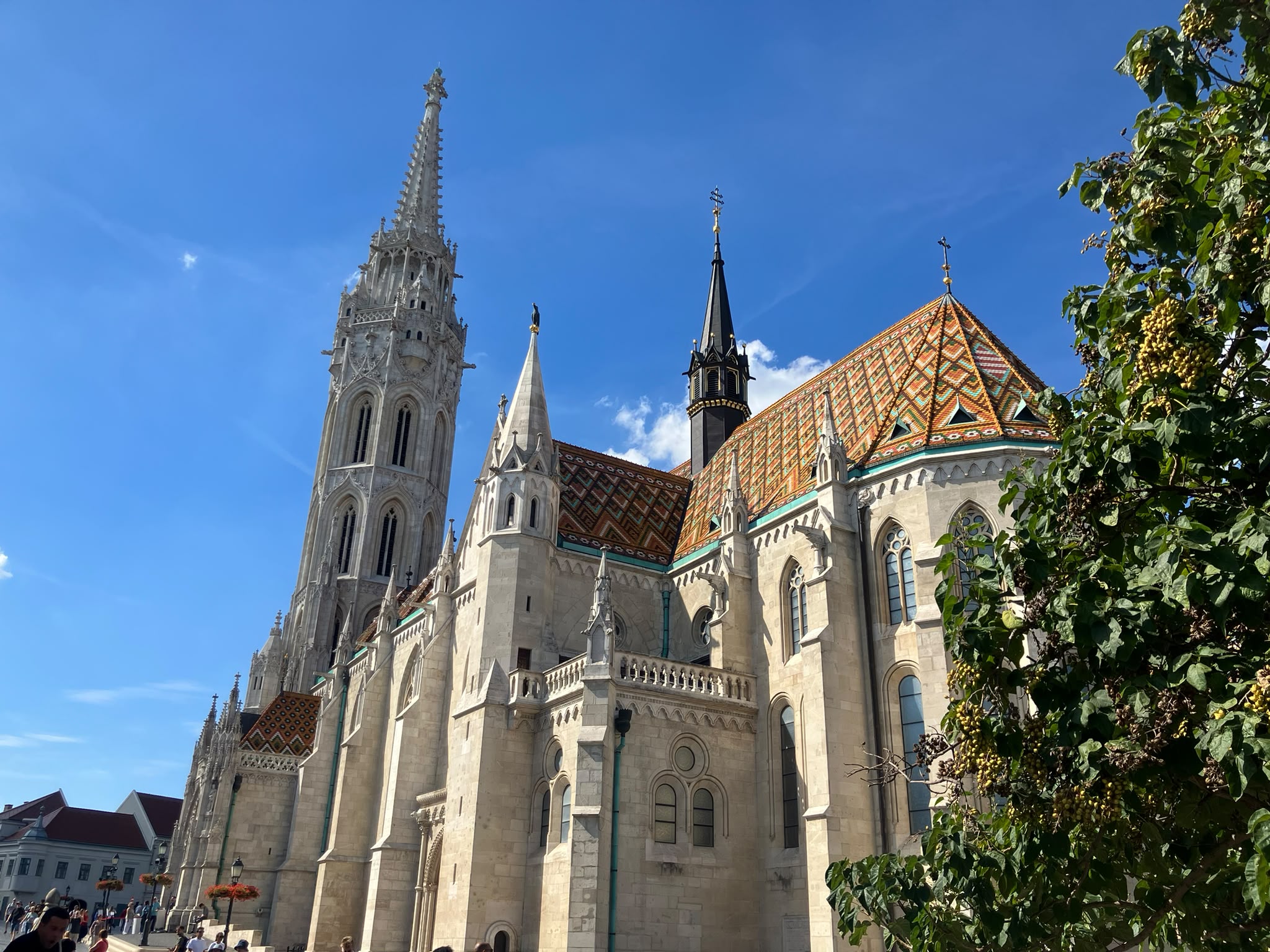
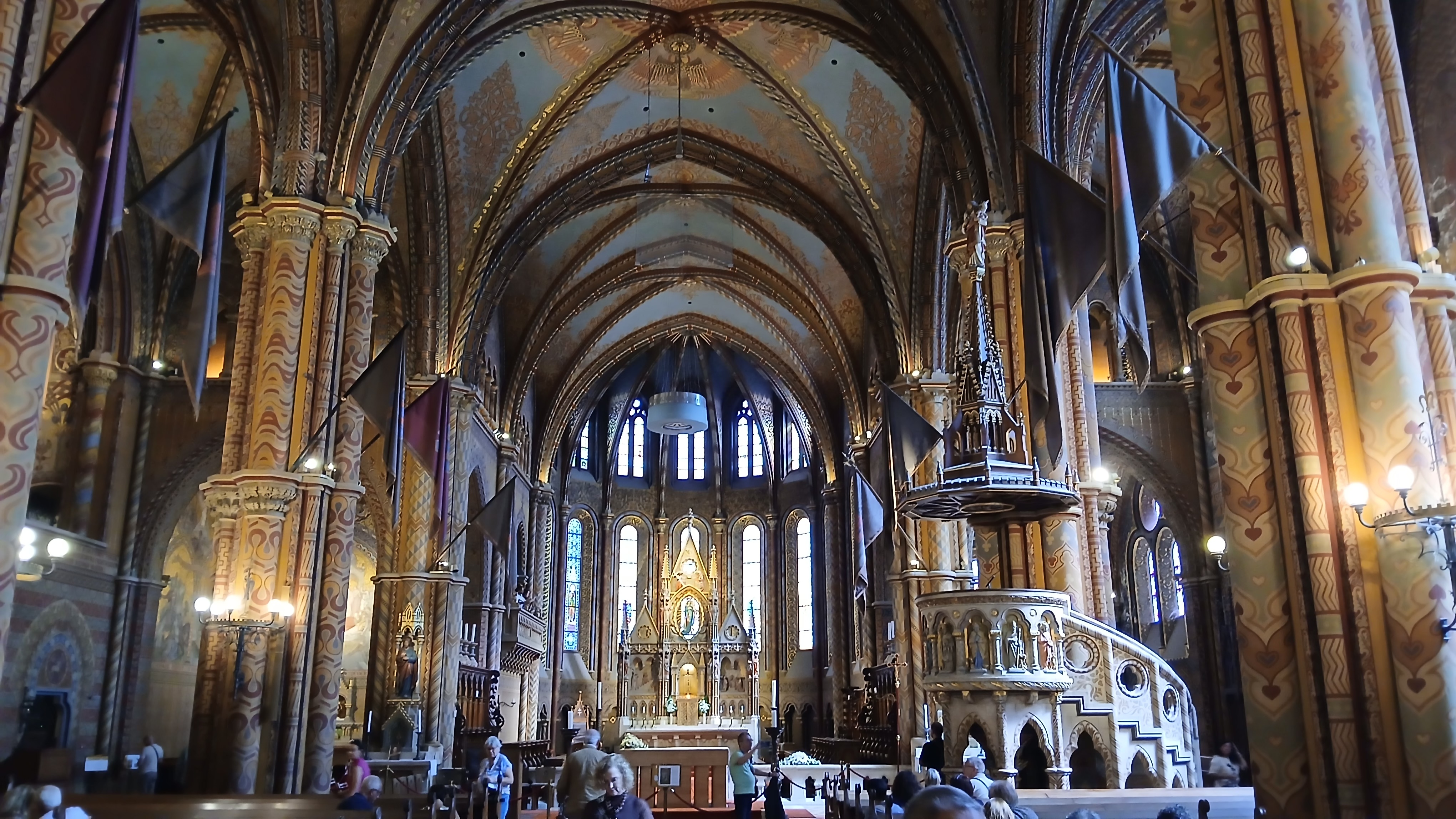
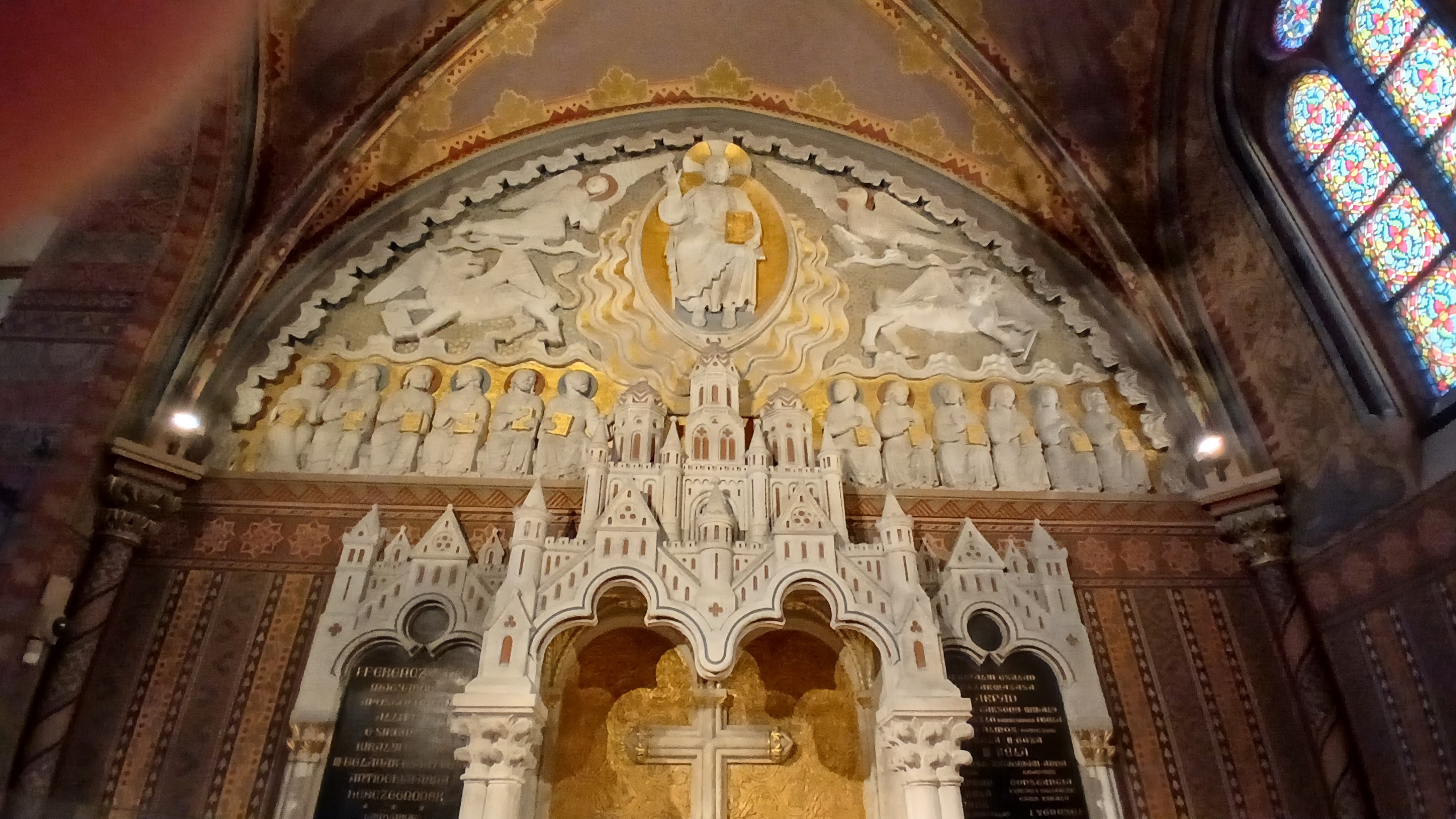
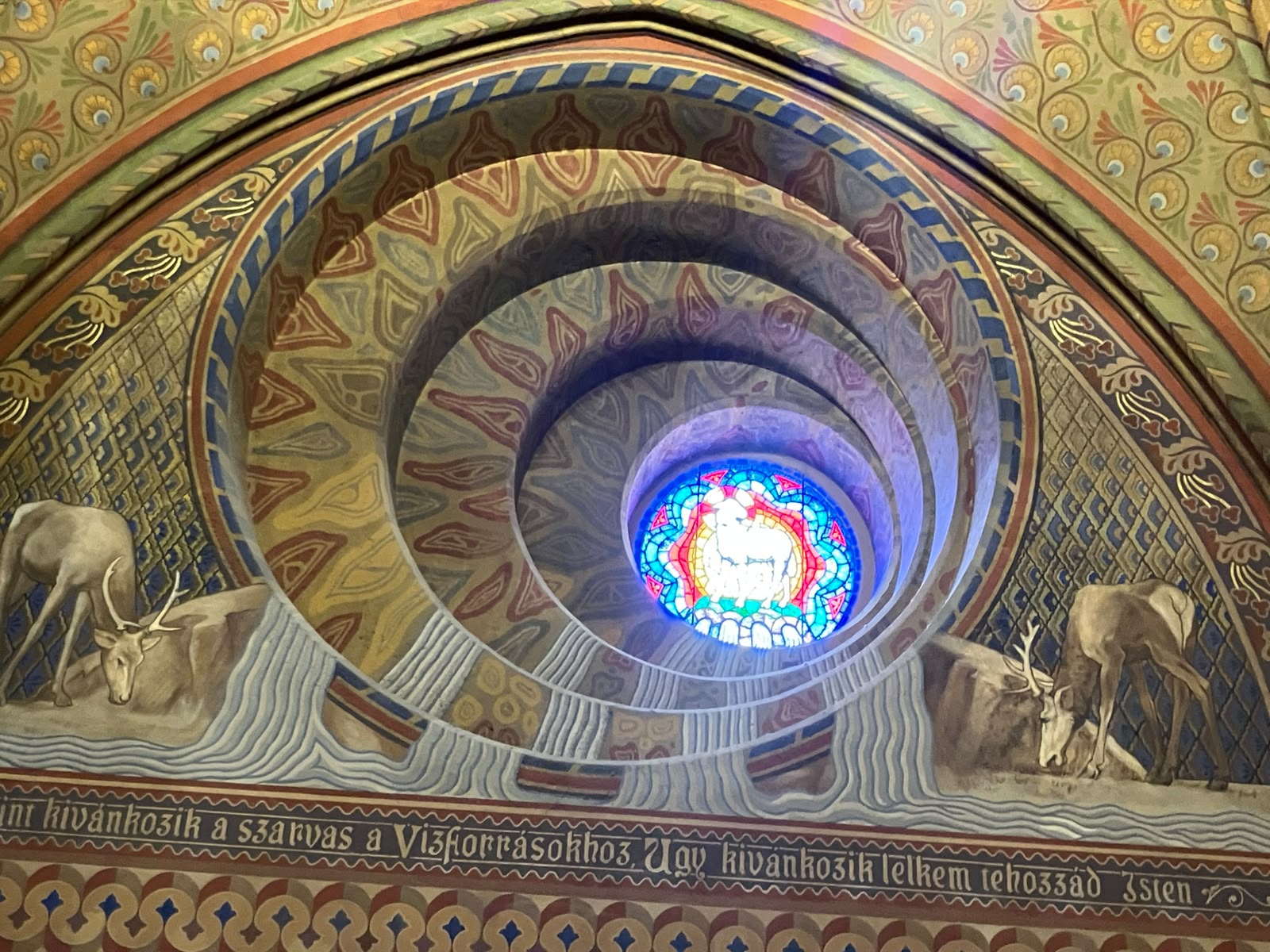
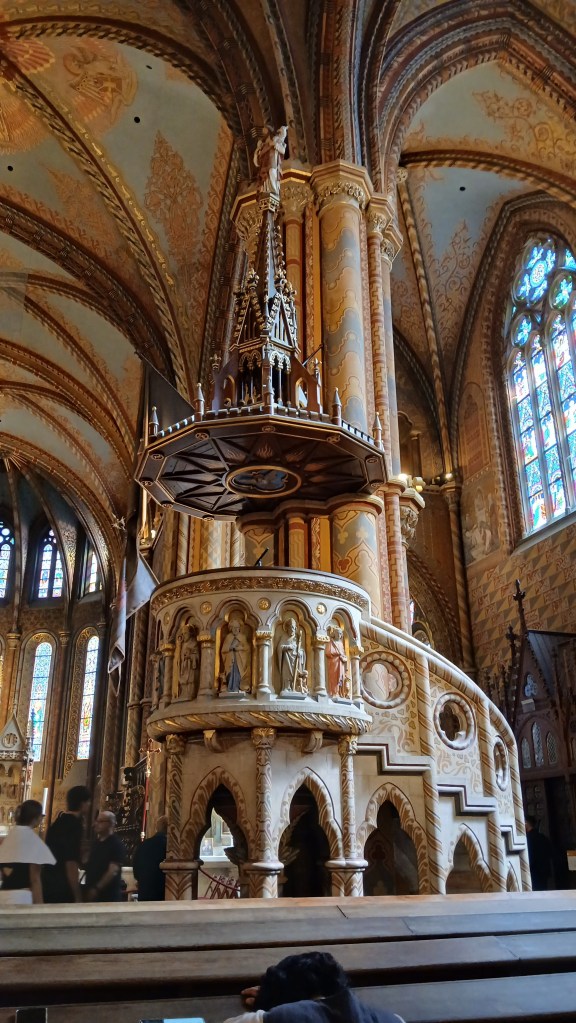
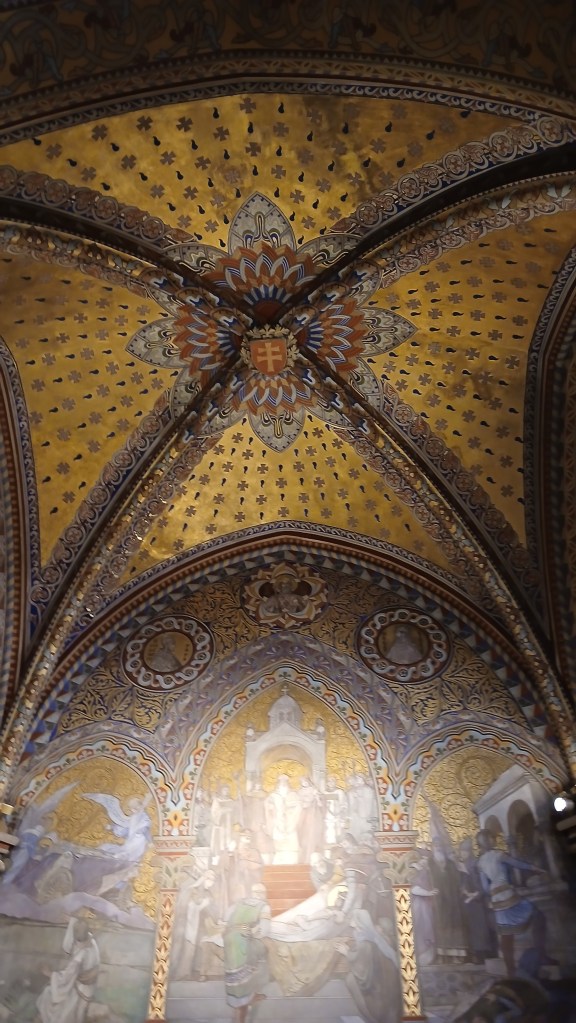
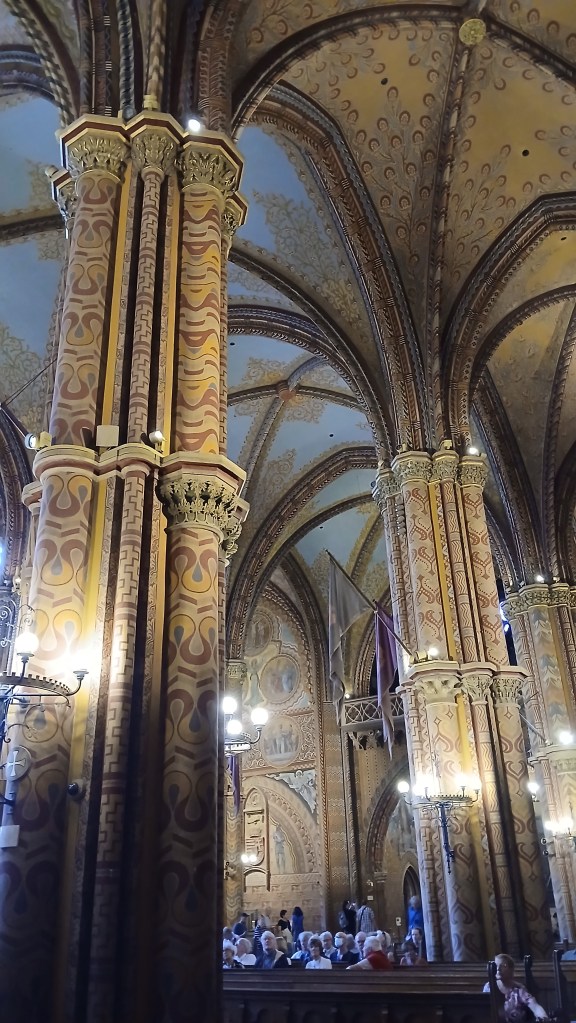
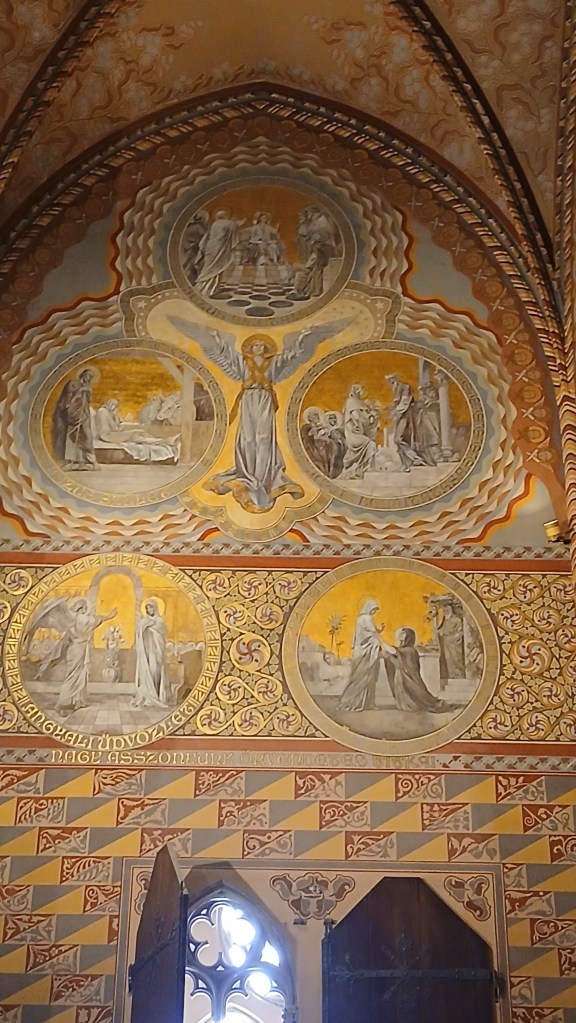
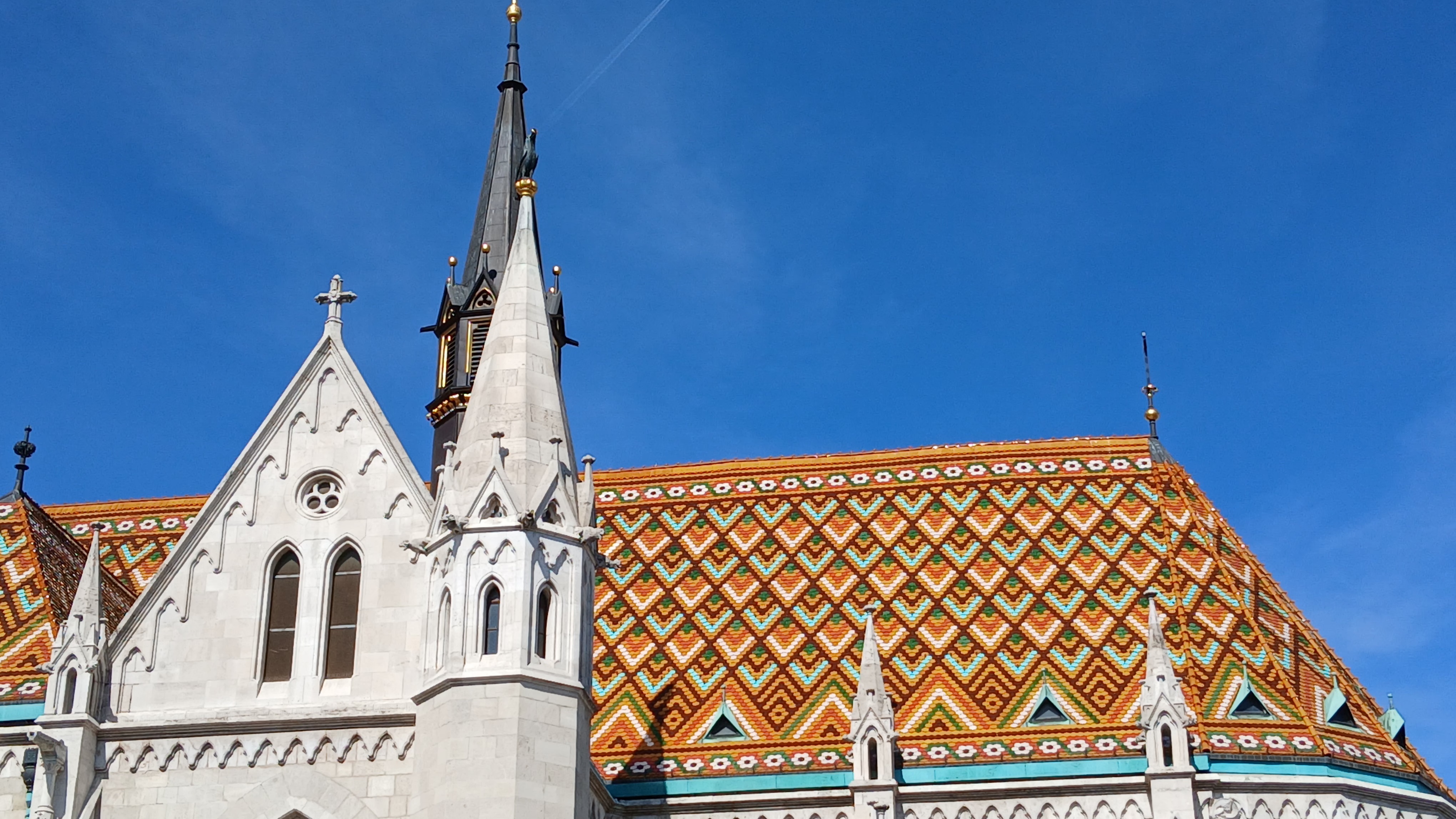
My guidebook describes Matyas Church as ‘utterly arresting’. I agree, the first sight of this beautiful building with its multicoloured glazed tile roof and striking Gothic spires, takes your breath away! The first church on this site, the Parish Church of our Lady Mary was built in the late 13th century; it was enlarged by King Matyas 200 years later during his reign and the church took his name. The early 16th century saw the beginning of the Ottoman invasion of Buda and in 1526 parts of the church, including the medieval roof, were destroyed and the building was converted into a mosque. Hard to believe, looking at the intricately decorated interior now, that the painted walls were plastered over and the altars and other fixtures were discarded. The church was not totally destroyed, as many were, and after the liberation of Buda in 1686, it was taken over by Jesuits and partly restored in the Baroque style. Nearly 200 years later a major rebuilding and restoration of the church took place. Prominent architect Frigyes Schulek was appointed to restore the church to its original 13th century Neo-Gothic plan, this was a massive project taking over 20 years, from 1873 to 1896. Unfortunately the church suffered damage in 1945 during the siege of Budapest which was repaired by the Hungarian state and further restoration has been carried out this century. Hence the incredibly beautiful interior and exterior we see today, among the exquisite features is the ‘God’s Lamb Window’, this was my favourite. Matyas Church hosts organ recitals and classical concerts, which we missed out on this time, we’ll simply have to visit Budapest again!
Sources: DK Eyewitness, Budapest; Wikipedia


Amazing photos, you are an accomplished photographer! Looks a fascinating trip.
C xx
LikeLike